
Choosing between Avoma and Otter for meeting intelligence comes down to five questions:
Do you need a tool that records and transcribes, or one that also coaches reps and tracks deal health?
Is your team sales-focused, or do you need meeting intelligence across education, media, recruiting, and other functions?
Are you willing to pay more per seat for revenue intelligence, or do you want affordable transcription that covers the basics?
Does your organization need structured sales methodology tracking (MEDDIC, SPICED), or is a clean transcript with action items enough?
Would your revenue team gain more from better meeting notes, or from connecting meeting insights to who your buyers are and what they're researching?
In short, here's what we recommend:
Avoma serves revenue teams that want meeting intelligence and sales coaching in one platform. Beyond recording and transcription, it offers AI call scoring, deal risk alerts, sales methodology tracking for frameworks like MEDDIC and SPICED, and a built-in scheduler with lead routing. At $19/user/month for the base plan, Avoma positions itself as the affordable alternative to enterprise conversation intelligence platforms. The trade-off: users report reliability concerns with the recording bot, and transcription accuracy lags behind modern standards.
Otter started as a transcription tool and has grown into something broader. With over 35 million users and $100M in annual revenue, Otter delivers fast transcription with specialized agents for sales, education, media, and recruiting. Its free plan with 300 monthly minutes is the easiest entry point, and most users are productive immediately. However, sales features like CRM sync and sales insights are locked behind the Enterprise plan, and action item detection remains inconsistent.
Both platforms capture what happens in meetings. But meeting intelligence is only one piece of the revenue puzzle. Knowing what a prospect said on a call matters more when you also know who else at that company is researching your category, what technologies they use, and which stakeholders you haven't reached.
ZoomInfo is an AI-powered GTM platform that includes conversation intelligence through Chorus and connects it to something neither Avoma nor Otter can offer: a B2B data foundation of 500M contacts, 100M companies, 135M+ verified phone numbers, and 200M+ verified business emails. ZoomInfo's GTM Context Graph (an intelligence layer that fuses your CRM records, call transcripts, and behavioral signals with this data) reveals not just what was said in a meeting, but why a deal is moving or stalling. For revenue teams that want meeting intelligence wired into prospecting, intent signals, and deal execution, ZoomInfo delivers the full picture through GTM Workspace for sellers, GTM Studio for marketers and RevOps, or APIs and MCP in any third-party tool.
If connecting conversation intelligence to the full context of your deals and accounts sounds like what your team needs, see how ZoomInfo works.
Avoma vs. Otter vs. ZoomInfo at a glance
Avoma | Otter | ZoomInfo | |
|---|---|---|---|
Primary focus | Meeting intelligence + revenue intelligence for GTM teams | Meeting transcription + AI agents across multiple use cases | AI GTM platform with conversation intelligence, B2B data, and deal execution |
Transcription languages | 50+ languages | English, French, Spanish, Japanese | English (via Chorus) |
Sales coaching | AI call scoring, custom scorecards, live answer assistant | Live coaching tips (Enterprise only) | Chorus call analysis, talk ratios, deal intelligence |
Revenue intelligence | Deal risk alerts, forecasting, win-loss analysis (add-on) | Sales Insights with BANT/MEDDIC (Enterprise only) | GTM Context Graph with intent signals, buyer behavior, and deal context |
CRM integrations | Salesforce, HubSpot, Pipedrive, Zoho, Copper | Salesforce, HubSpot (Enterprise only) | Salesforce, HubSpot, Microsoft Dynamics + 120+ marketplace integrations |
B2B data | None | None | 500M contacts, 100M companies, 135M+ verified phone numbers, 200M+ verified business emails |
Starting price | $19/user/month | $8.33/user/month (annual) | Consumption-based |
Free plan | 14-day free trial (no credit card) | Free forever (300 min/month) | ZoomInfo Lite (free forever, 10 monthly exports) + 7-day trial |
Best for | SMB revenue teams wanting coaching + intelligence on a budget | Individuals and teams needing fast, accessible transcription | Revenue teams that need meeting intelligence connected to prospecting, intent, and deal execution |
Meeting intelligence is table stakes; what you do with it separates these platforms
All three platforms record, transcribe, and summarize meetings. The difference is what happens next.
Otter treats the meeting as the end product. After a call, you get a transcript, a summary, and action items. The AI Chat feature lets you ask questions across conversations, and the platform organizes meetings into searchable channels. For a content creator, student, or journalist, that's the whole job. For a sales team, it's a starting point.
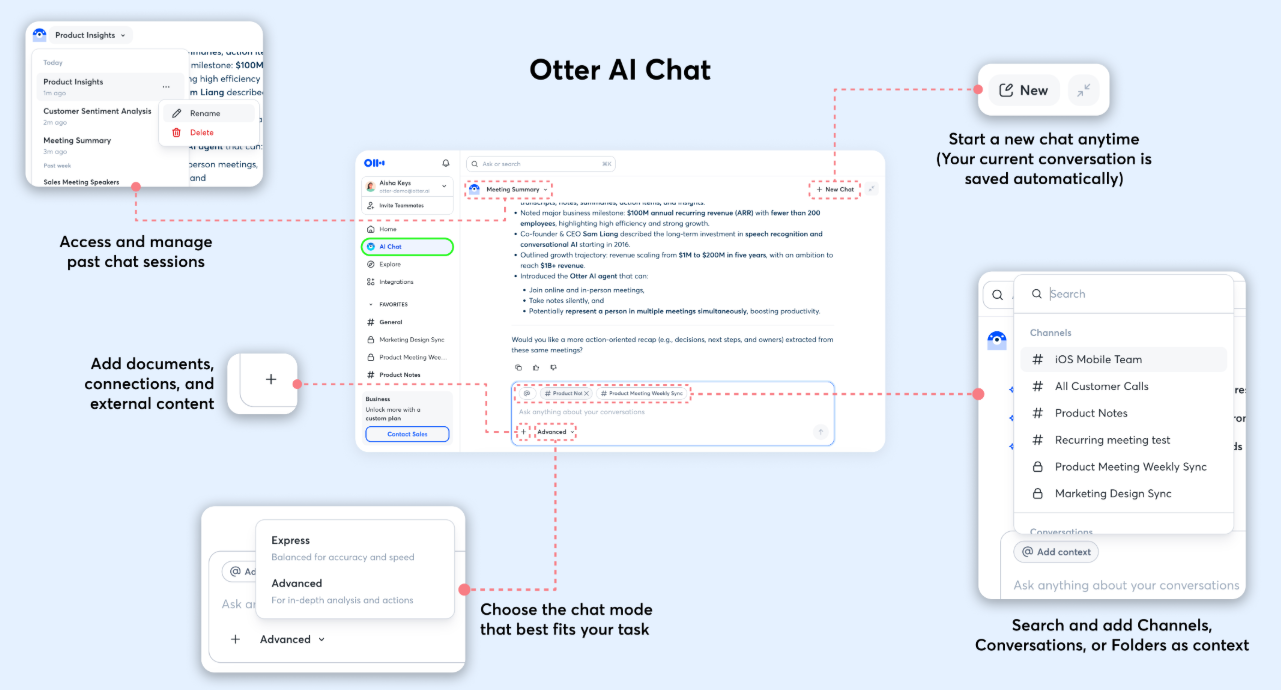
Source: Otter
Avoma extends the meeting into the sales workflow. After a call, the AI scores the conversation against coaching rubrics, tracks methodology topics, and flags deal risks based on conversation patterns. The transcript becomes an input to pipeline management, not just a record of what was said.
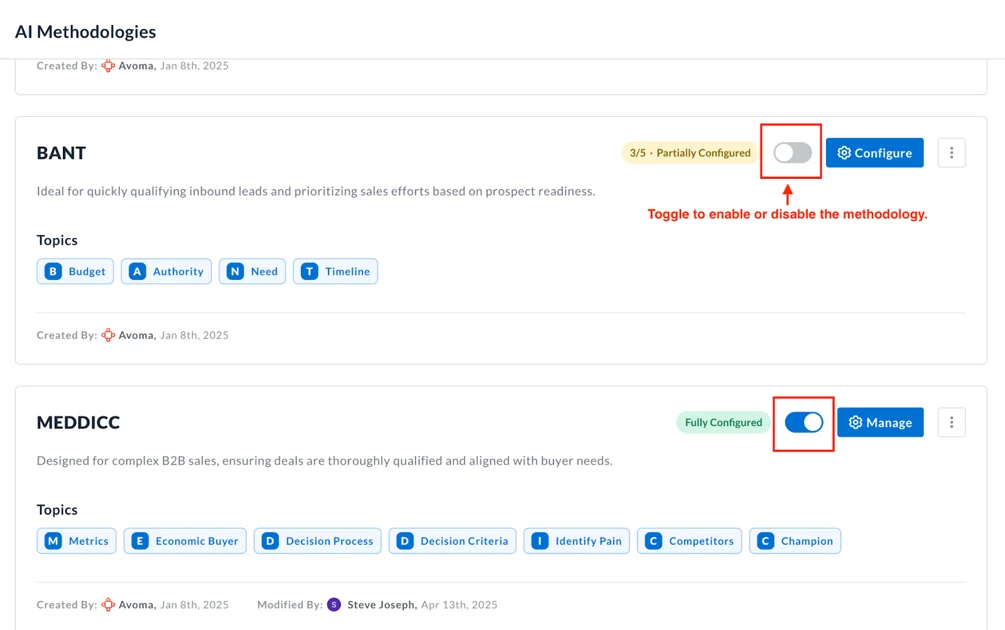
Source: Avoma
ZoomInfo goes further by connecting call intelligence to external market data. Through Chorus, ZoomInfo captures every customer call, meeting, and email. Unlike standalone meeting tools, that conversation data feeds into the GTM Context Graph, which fuses it with intent signals, company firmographics, org charts, and technographics.
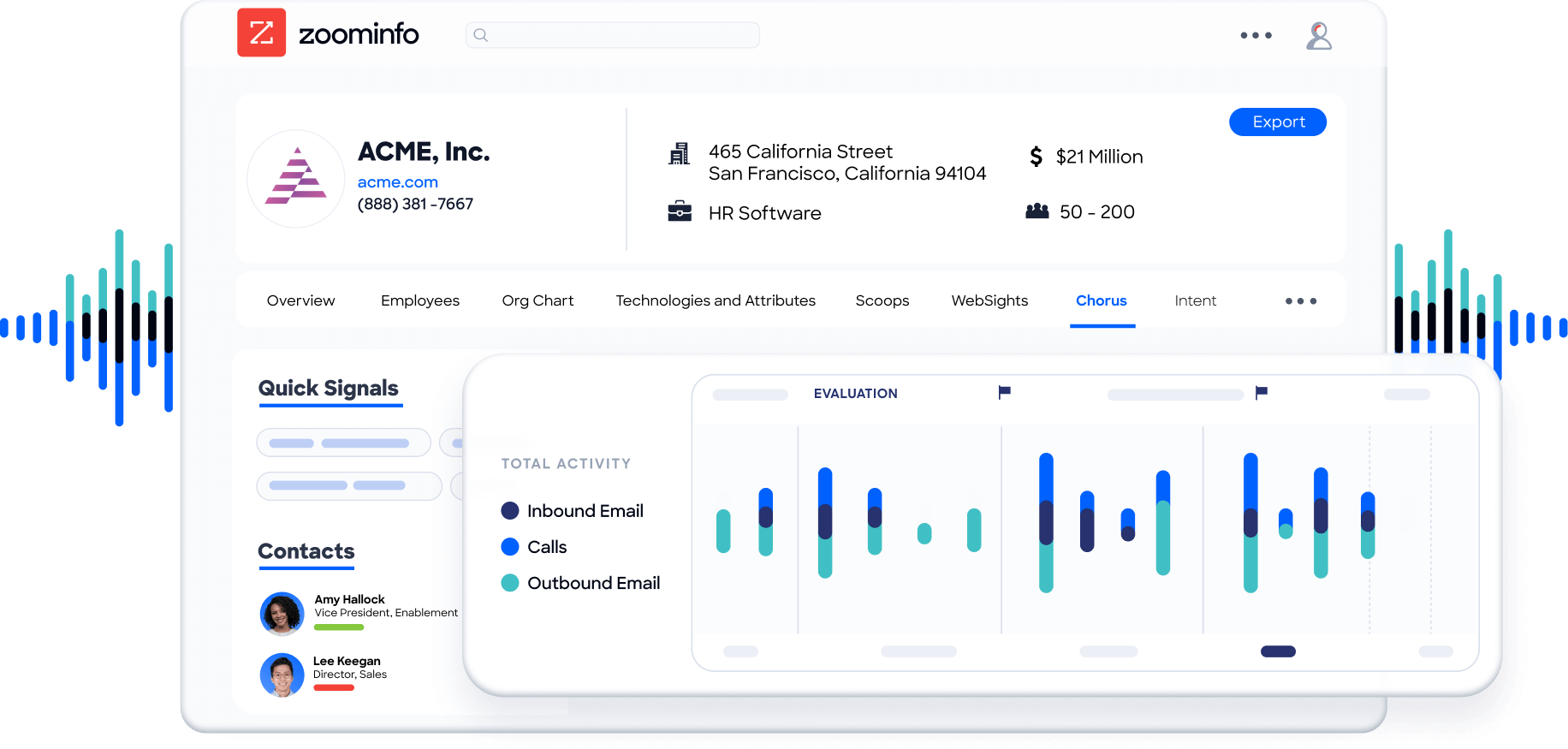
When your rep opens GTM Workspace before a call, they don't just see past meeting notes. They see that the company is researching competitors, that the VP of Finance who joined the last call was recently promoted, and that the account's tech stack points to a specific integration pain point.
Avoma goes deeper on sales coaching; Otter goes wider on use cases
If your primary need is training sales reps and improving call quality, Avoma has the edge.
Avoma's Conversation Intelligence add-on ($29/seat/month) includes AI call scoring with timestamped evidence from the transcript, so managers can jump to the moment a rep missed an opportunity. The platform ships with three scorecard templates for SDR prospecting, sales demos, and customer success calls, and teams can build custom scorecards.
The Live Answer Assistant surfaces talking points during calls when the AI detects trigger phrases, giving newer reps real-time help on objection handling.
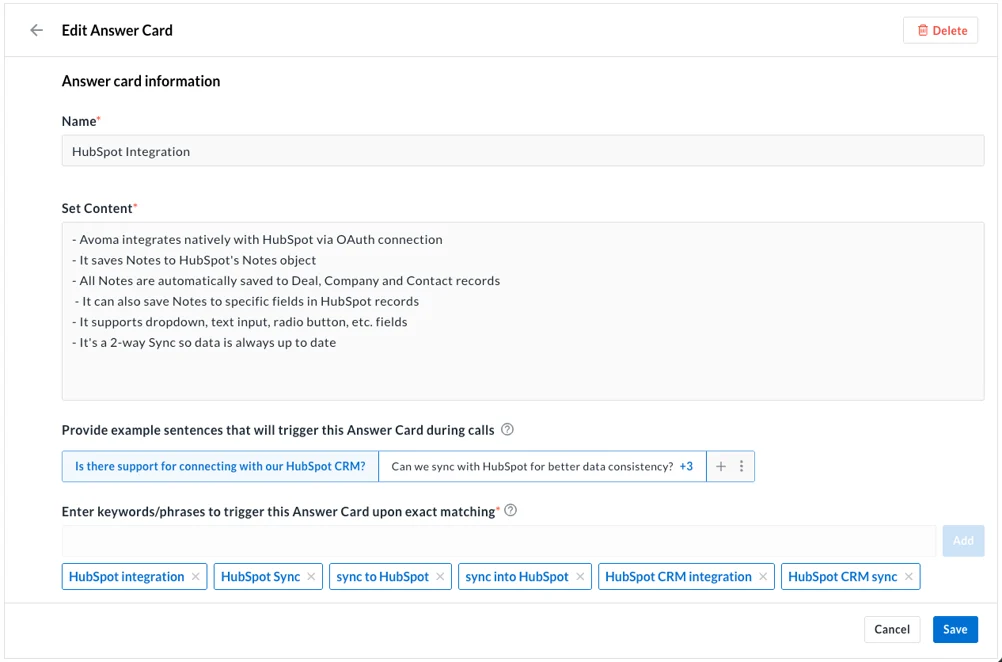
Source: Avoma
Otter's sales features work but cover less ground. Sales Insights categorize discussion points into frameworks like BANT and MEDDIC, and the platform offers live coaching tips during calls. But these features are available only on the Enterprise plan, which requires custom pricing and a minimum of 100 users for SSO. For smaller sales teams, that's a high bar.
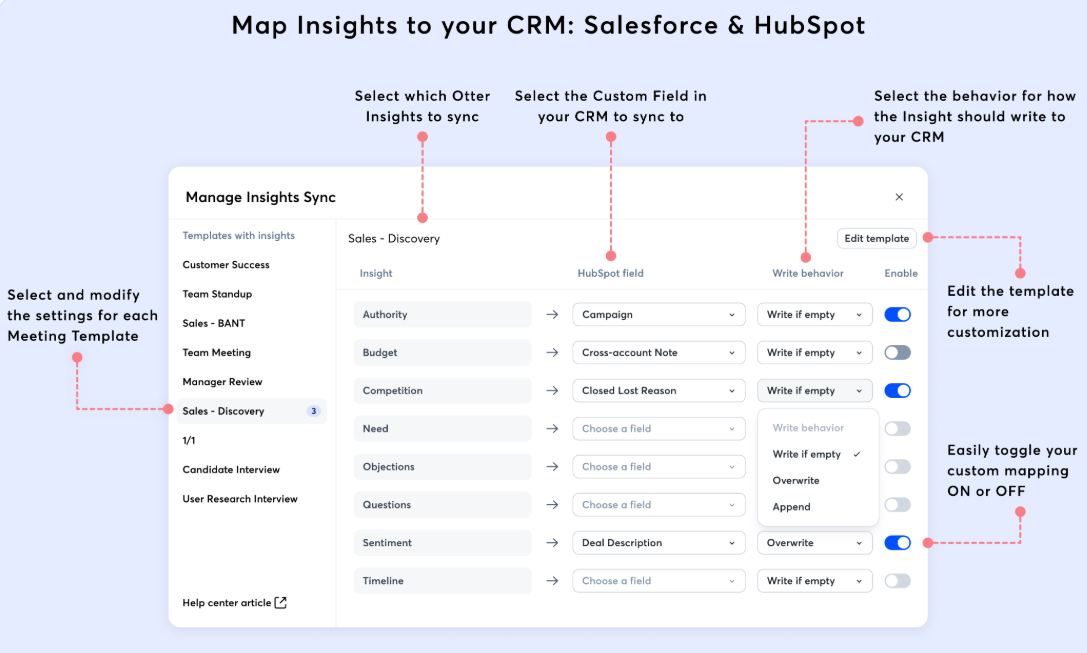
Source: Otter
Where Otter pulls ahead is versatility. Beyond sales, it offers agents for education (lecture transcripts, study guides, flashcard generation), media (interview transcription, quote extraction, content drafting), recruiting (candidate insights, sentiment analysis, Greenhouse integration), and SDR (lead qualification, automated demos).
If your organization needs meeting intelligence beyond the sales floor, Otter covers more ground.
Avoma is built for "knowledge professionals" and customer-facing leaders. That focus makes it stronger for sales coaching but limits its appeal outside the revenue function.
ZoomInfo connects conversations to the full buyer picture
Meeting intelligence tools tell you what happened on a call. ZoomInfo tells you what that means for the deal.
Through Chorus, ZoomInfo captures and analyzes customer calls with automatic recording, transcription, talk-ratio analysis, sentiment detection, and competitive mention tracking. The real value comes from what Chorus connects to.
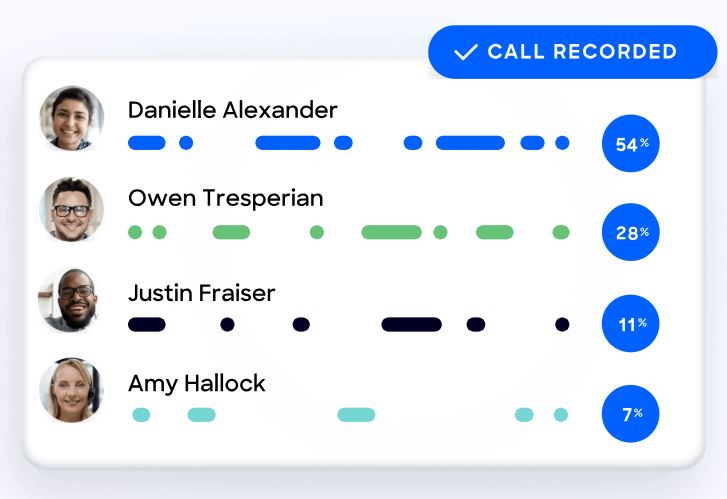
ZoomInfo's GTM Context Graph processes 1.5B+ data points daily, unifying call transcripts with CRM records, buyer intent signals, company firmographics, org charts, and technographics.
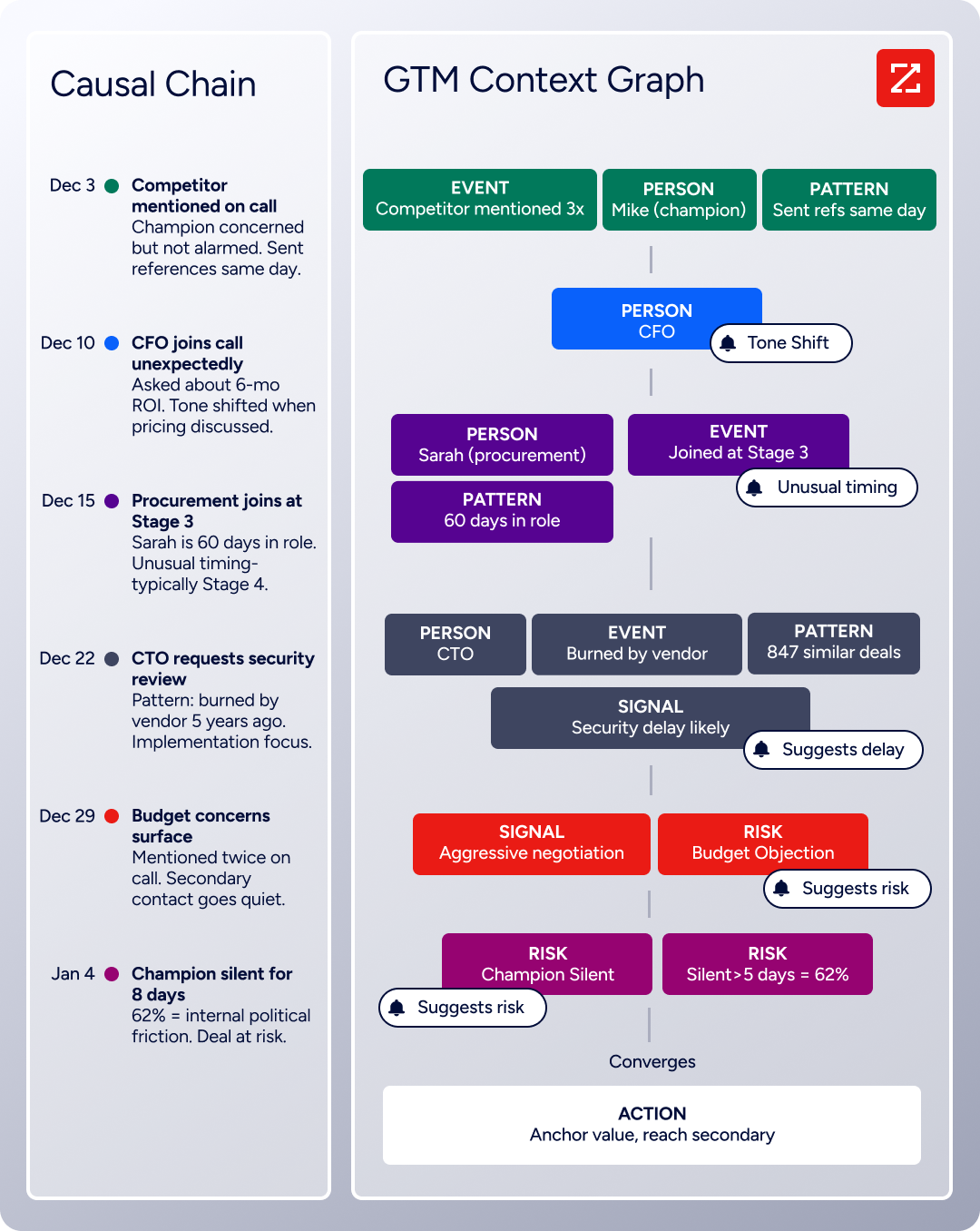
As ZoomInfo's Chief Product Officer Dominik Facher writes: "The CRM recorded the state change. It has no record of why it happened." The GTM Context Graph fills that gap by connecting conversation signals to deal outcomes across thousands of interactions.
In practice, a sales manager reviewing pipeline doesn't just see that a deal moved stages. They see that executive sponsorship entered the conversation, that the account is showing intent signals for a competitor, and that three new VPs were hired in the last quarter. That context is impossible to build from meeting transcripts alone.
Avoma's Revenue Intelligence add-on offers deal risk alerts and forecasting, but these come from conversation data and CRM fields.
Otter provides meeting summaries that teams can push to CRM but has no intelligence layer analyzing deal patterns.
Neither can tell you that the company visiting your pricing page this week also downloaded a competitor's whitepaper yesterday, or that the decision-maker on the last call just changed roles.
"That combination of our internal CRM data, external signals, and AI that's given all that context has helped us craft very specific account- and persona-based messages. And people have responded to them right away." (Toby Carrington, CBO, Seismic)
Transcription accuracy and reliability: the baseline that matters
No amount of intelligence features matter if the transcription itself is unreliable. Here's where all three stand.
Otter achieves 85-90% accuracy for clear audio, using a proprietary speech recognition engine built in-house rather than third-party APIs. The platform filters out filler words like "um" and "ah" for cleaner transcripts. Accuracy drops with background noise, heavy accents, or technical vocabulary, and users report frequent manual edits.
The Otter Notetaker bot records the internal audio stream rather than relying on device speakers, which improves quality for virtual meetings.
Avoma faces more criticism on reliability. Aggregated reviews put transcription accuracy around 80%, with particular struggles on non-native English speakers and technical terminology. More concerning are the bot reliability issues: reviews cite recorders joining calls 5-15 minutes late in 48% of cases, dropping mid-call in 31%, and failing to join at all in 27%.
Avoma has acknowledged these concerns and pointed to recent improvements, but reliability remains its most-cited weakness. The upside: Avoma offers real-time transcription in 50+ languages, far more than Otter's four.
ZoomInfo's Chorus is backed by 14 technology patents using proprietary ML for call analysis. Chorus processes audio from Zoom, Microsoft Teams, and Google Meet with automatic recording and transcription.
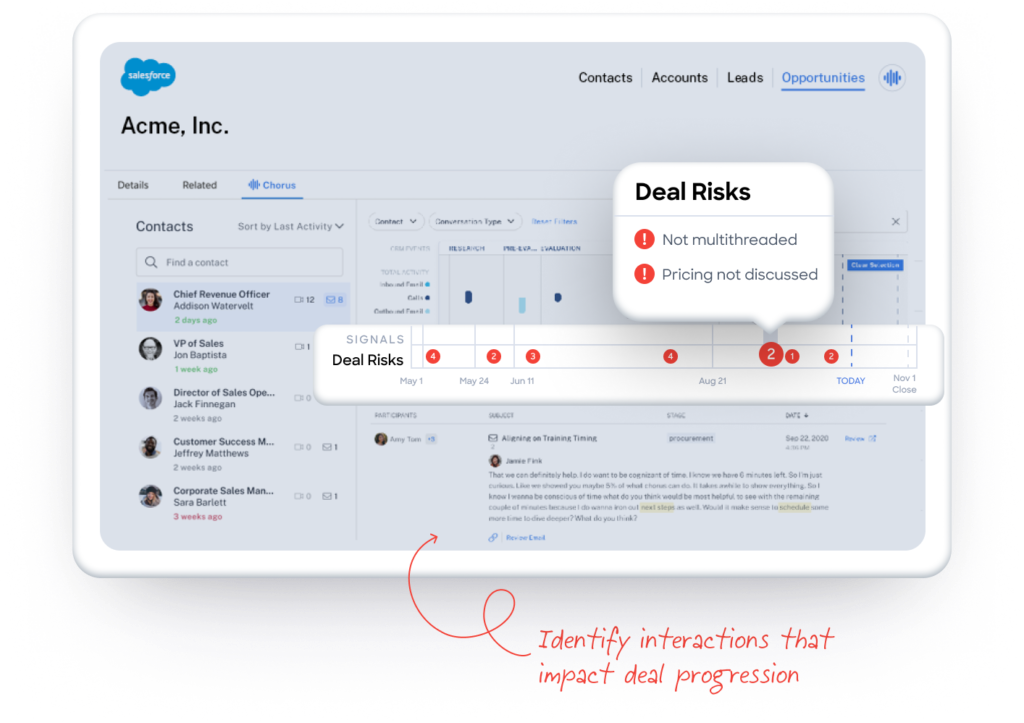
Because Chorus was built for sales conversations rather than general-purpose transcription, its analysis focuses on extracting actionable signals (competitive mentions, objection patterns, deal momentum) rather than producing reading-optimized transcripts.
The reliability difference matters most for teams with high call volumes. A recording bot that misses one in four calls isn't a minor annoyance for an organization running hundreds of sales calls per week; it's a data gap that undermines every downstream insight.
Pricing reveals different bets on who the buyer is
The pricing structures tell you who each platform is designed to serve.
Otter leads on accessibility. The free Basic plan provides 300 monthly minutes with no credit card required, enough for a few meetings a week. Pro at $8.33/user/month (annual) unlocks 1,200 minutes and 90-minute meetings. Business at $19.99/user/month removes all limits on meetings and recordings, adds admin features, and allows three concurrent meetings. Enterprise (custom pricing) adds sales features, CRM integrations, and HIPAA compliance.
The catch: Otter requires a minimum of 25 billed users on Business and 100 users for SSO on Enterprise. For a small sales team that wants CRM sync without a 100-seat commitment, those floors are steep.
Avoma prices by feature depth rather than usage limits. The Startup plan at $19/user/month (annual) includes unlimited transcription, AI summaries, and CRM sync for up to 25 seats. The Organization plan at $24/user/month adds custom templates, round-robin scheduling, and limited conversation intelligence for up to 100 seats. Enterprise at $39/user/month adds SSO, HIPAA, and designated support.
The real cost depends on add-ons. Conversation Intelligence costs $29/seat/month, Revenue Intelligence another $29/seat/month, and Lead Router adds $19/seat/month. A sales manager who needs coaching, deal risk alerts, and lead routing pays $24 + $29 + $29 + $19 = $101/user/month on the Organization plan. That approaches the enterprise platforms Avoma positions against.
Avoma does offer a structural pricing advantage: unlimited free collaborators. Only users who record meetings need paid seats. Marketers or executives who review transcripts and notes don't consume a license.
ZoomInfo uses consumption-based pricing with no publicly listed prices. It is a larger investment, but it replaces multiple point solutions: prospecting tools, intent data providers, conversation intelligence, and sales engagement. ZoomInfo Lite offers a permanent free tier with access to the B2B database, 10 monthly export credits, and basic website visitor identification, giving teams a way to evaluate the data before committing.
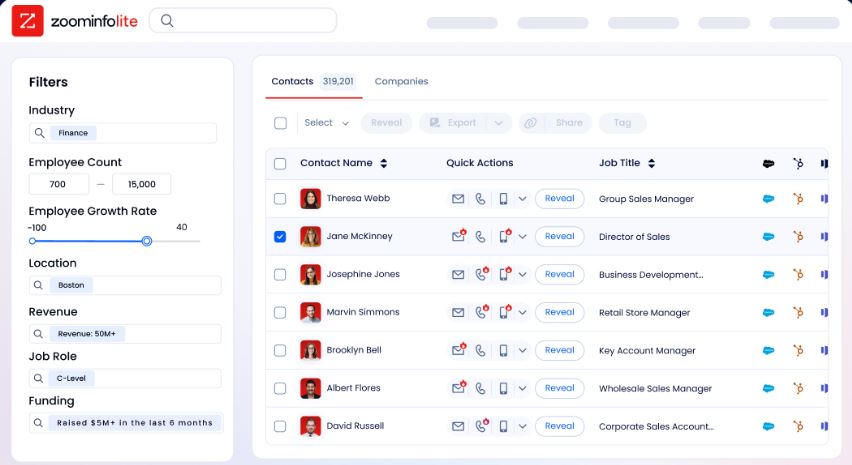
CRM integration depth varies significantly
All three platforms integrate with CRMs, but the depth differs.
Avoma offers native bi-directional CRM sync with Salesforce, HubSpot, Pipedrive, Zoho, and Copper. The platform detects key topics and updates custom CRM fields for sales methodologies like MEDDIC and SPICED without manual data entry.
The pipeline view with in-line CRM editing lets managers review deals and update fields without switching systems. Avoma also supports automated task creation from meeting action items in HubSpot.
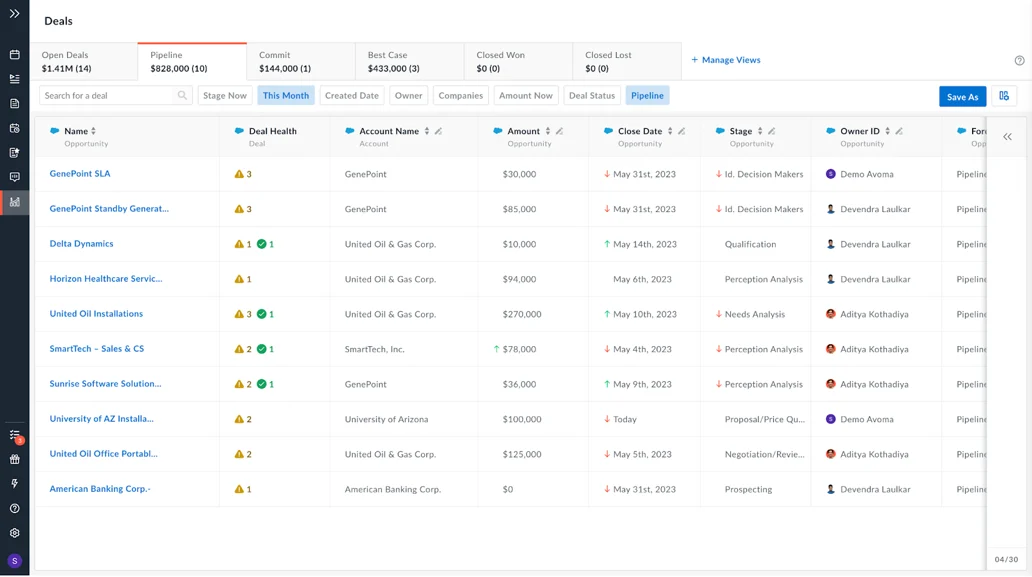
Source: Avoma
Otter supports CRM sync with Salesforce and HubSpot, pushing meeting notes and insights to deal records automatically. But this integration is restricted to Enterprise plans, and broader workflow automation depends on Zapier (available on Pro and above) for connections to Jira, Asana, and Zendesk. The public API is still in beta and requires contacting an account manager.
ZoomInfo operates at a different scale. The App Marketplace lists 120+ integrations spanning CRM, marketing automation, sales engagement, data warehouses, and cloud platforms. Beyond standard CRM sync, ZoomInfo enriches CRM records with verified contact data, company firmographics, intent signals, and technographics through automated workflows.
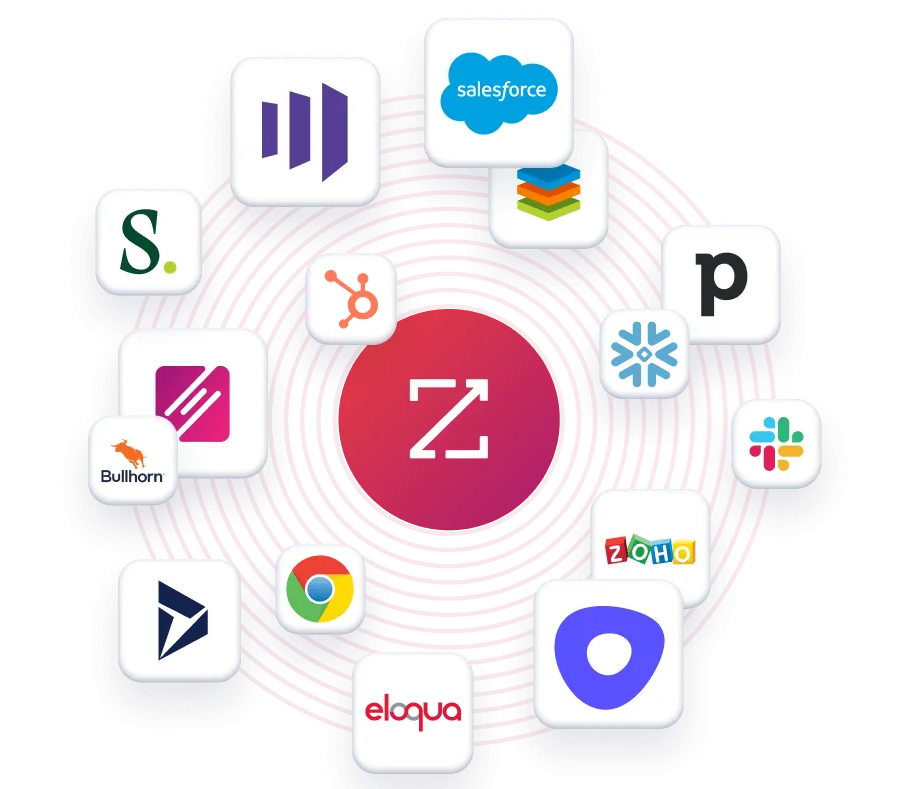
The Enterprise API provides programmatic access to ZoomInfo's intelligence, and the MCP server connects directly to AI tools like Claude and ChatGPT. Chorus call data syncs automatically to CRM with deal intelligence, competitive insights, and coaching metrics attached.
"The plug-and-play aspect of the API means I can integrate it very easily into any process and get information at a moment's notice." (Jerry Wilson, Senior Marketing Intelligence Analyst, BDO Canada)
Security and compliance for regulated industries
If your organization handles sensitive data, the compliance picture matters.
All three platforms hold SOC 2 Type II certification.
Avoma adds GDPR, HIPAA (Enterprise plan), and EU-US DPF compliance, with infrastructure hosted on AWS in the United States. The platform commits to not using customer data to train AI models.
Otter achieved HIPAA compliance in July 2025, available only on the Enterprise plan with a required Business Associate Agreement. SSO via SAML requires a minimum of 100 users. Enterprise admins can enforce two-factor authentication workspace-wide and configure custom data retention policies.
ZoomInfo carries the broadest certification stack: ISO 27001, ISO 27701, SOC 2 Type II, TRUSTe GDPR, and TRUSTe CCPA, all renewed annually. As a public company serving 35,000+ customers including financial institutions and healthcare organizations, ZoomInfo maintains registered data broker status in California and Vermont and a dedicated Trust Center.
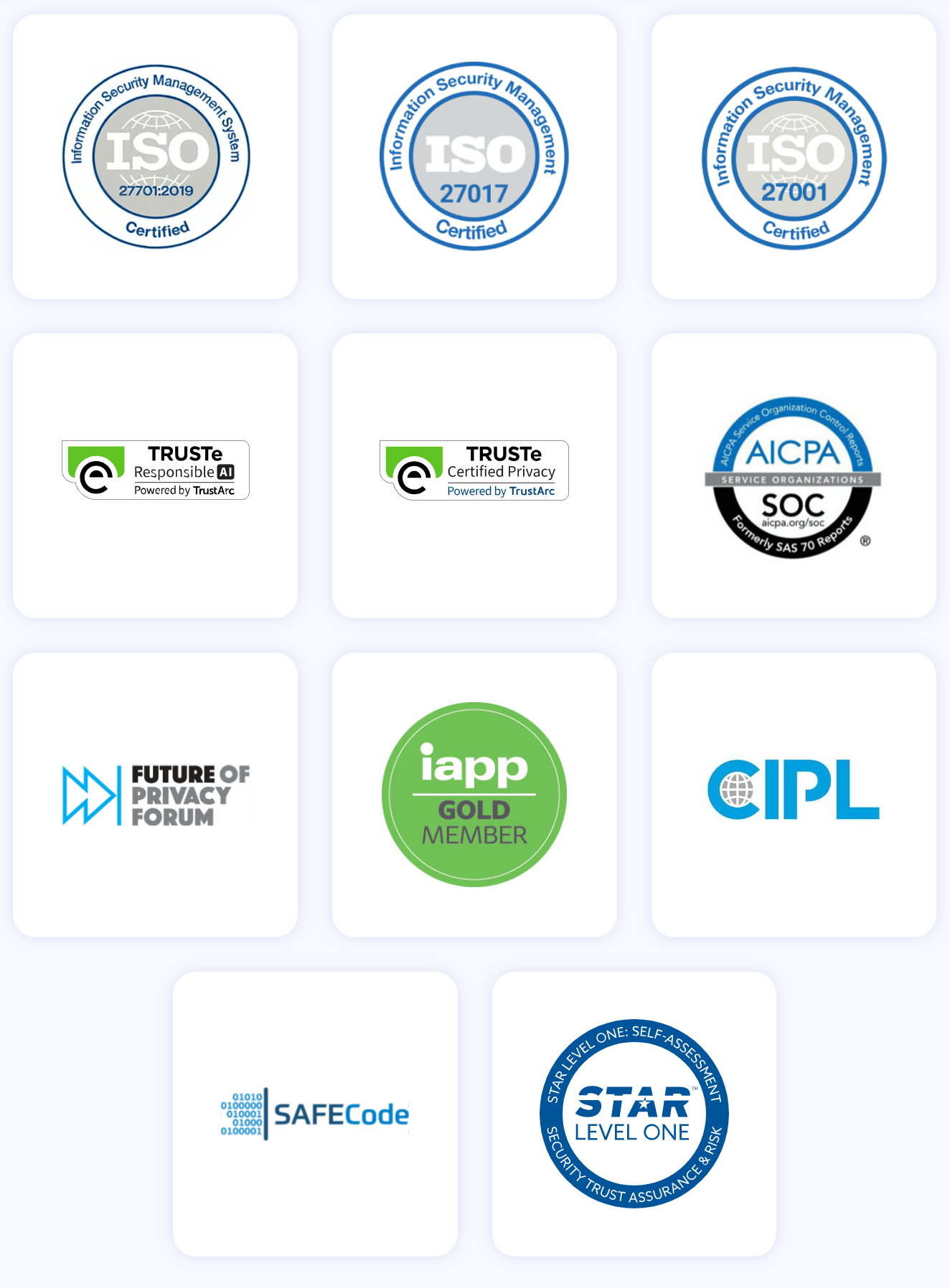
For regulated industries, ZoomInfo's compliance infrastructure is a clear advantage. Avoma's compliance is solid for an SMB-focused platform. Otter's compliance features are adequate but gated behind its highest tier.
Support quality reflects each platform's scale
Avoma offers email, live chat, and a Help Center with Monday-to-Friday availability and a 48-hour response commitment. Organization plan customers get a Customer Success Manager, and Enterprise customers get concierge onboarding and quarterly business reviews. G2 reviews rate Avoma's Quality of Support at 9.3, above both Gong (9.2) and Fireflies (8.8).
Otter provides prioritized support for Business and Enterprise plans and a Customer Success Manager for Enterprise customers. Phone support is not available, and customer service quality is a recurring pain point in reviews. TrustRadius users report no interaction from support teams and billing issues that went unresolved.
ZoomInfo provides support through its Help Center, ZoomInfo University with role-specific learning paths and certifications, a Modern GTM Community, direct phone support, and professional services through ZoomInfo Labs. The 90-day onboarding program won Rocketlane's Golden Comet award and produced a 25% improvement in satisfaction.

Avoma vs. Otter vs. ZoomInfo: Which should you choose?
The best platform depends on what your team needs from meeting intelligence and how far beyond the meeting room that intelligence needs to travel.
Choose Avoma if:
You're a small-to-mid-size revenue team that wants conversation intelligence without enterprise pricing
Sales coaching, call scoring, and methodology tracking are core to your management process
You need one platform for meeting notes, scheduling, coaching, and basic deal intelligence
Your team values transparent, published pricing and a 14-day free trial
Cross-functional collaboration between sales, CS, and marketing around meeting data matters
Choose Otter if:
You need affordable meeting transcription for individuals or small teams
Your use cases extend beyond sales (education, journalism, recruiting, general meetings)
A generous free plan and intuitive interface matter more than sales intelligence depth
You don't need CRM integration or are willing to commit to Enterprise for it
Fast, reliable transcription with AI-powered search across all conversations is the priority
Choose ZoomInfo if:
Your revenue team needs meeting intelligence connected to prospecting, intent data, and deal execution
You want conversation intelligence (Chorus) backed by the largest B2B data platform in the industry
Understanding why deals move or stall matters more than recording what was said
You're consolidating multiple GTM tools (data provider, intent, conversation intelligence, engagement) into one platform
Your organization needs enterprise-grade security, compliance, and integration depth
Explore how ZoomInfo connects meeting intelligence to the full GTM picture.
Meeting intelligence tools have made it easy to capture what happens on a call. But for revenue teams, the value isn't in the transcript. It's in what the transcript reveals about the deal, the account, and the opportunity.
Avoma brings coaching and pipeline context to your calls. Otter makes transcription fast and accessible for any team. ZoomInfo connects conversation intelligence to your market, your buyers, and your deals, turning meeting data into a signal that compounds across every GTM motion.
The question isn't just how to capture your meetings. It's what intelligence you need from them, and where that intelligence needs to go.
Avoma vs. Otter vs. ZoomInfo FAQ
What is the main difference between Avoma, Otter, and ZoomInfo?
Avoma is a meeting intelligence platform for revenue teams, combining AI transcription with sales coaching, call scoring, and deal risk alerts. Otter is a general-purpose meeting transcription tool with specialized agents for sales, education, media, and recruiting.
ZoomInfo is an AI GTM platform that includes conversation intelligence through Chorus and connects it to the industry's largest B2B data foundation, intent signals, and deal execution tools.
Which platform is cheapest for a small sales team?
Otter's free Basic plan (300 minutes/month) is the most accessible entry point, and its Pro plan costs $8.33/user/month with annual billing. Avoma starts at $19/user/month but includes unlimited transcription and CRM sync at that tier.
However, Avoma's conversation intelligence and revenue intelligence add-ons each cost an additional $29/seat/month, which can push per-user costs above $100/month for full functionality. ZoomInfo uses consumption-based pricing and is typically a larger investment suited to teams consolidating multiple tools.
Which platform has the best transcription accuracy?
Otter generally achieves 85-90% accuracy in clear audio using its proprietary speech recognition engine. Avoma's accuracy is reported at about 80%, with greater challenges on non-native English speakers and technical terminology. All platforms lose accuracy with background noise and heavy accents. Otter supports four languages (English, French, Spanish, Japanese), while Avoma supports 50+.
Can I use Otter for sales coaching like Avoma?
Otter offers Sales Insights that categorize discussion points into BANT and MEDDIC frameworks, along with live coaching tips during calls. These features are only available on the Enterprise plan, which requires custom pricing.
Avoma provides AI call scoring, custom scorecards, a live answer assistant, and talk-pattern analytics through its Conversation Intelligence add-on, available on any paid plan for $29/seat/month.
Does ZoomInfo offer meeting transcription and recording?
Yes, through Chorus. Chorus automatically records and transcribes customer calls, meetings, and emails across Zoom, Microsoft Teams, and Google Meet. Beyond transcription, Chorus analyzes talk ratios, sentiment, competitive mentions, and deal momentum.
The key difference: Chorus data feeds into ZoomInfo's GTM Context Graph, connecting what was said on a call to buyer intent signals, company attributes, and deal patterns across thousands of interactions.
Which platform has the best CRM integration?
ZoomInfo offers the deepest CRM integration through its App Marketplace with 120+ integrations, including native connections to Salesforce, HubSpot, and Microsoft Dynamics.
Beyond syncing meeting notes, ZoomInfo enriches CRM records with verified contact data, intent signals, and technographics. Avoma provides bi-directional CRM sync with five systems and can auto-update methodology fields from meeting content. Otter's CRM sync with Salesforce and HubSpot is limited to the Enterprise plan.
How do the platforms handle data security and compliance?
All three hold SOC 2 Type II certification. ZoomInfo carries the broadest compliance portfolio, including ISO 27001, ISO 27701, TRUSTe GDPR, and TRUSTe CCPA, all renewed annually. Avoma offers SOC 2 Type II, GDPR, and HIPAA compliance on its Enterprise plan. Otter achieved HIPAA compliance in July 2025, available only on the Enterprise plan with a signed Business Associate Agreement.
Which platform is best if I need more than just meeting intelligence?
ZoomInfo is the clear choice for teams that want meeting intelligence as part of a broader GTM strategy. Beyond conversation intelligence through Chorus, ZoomInfo provides B2B prospecting data, buyer intent signals, website visitor identification, account-based marketing tools, and AI-powered deal execution through GTM Workspace.
Avoma extends beyond transcription into scheduling, lead routing, and pipeline management. Otter stays focused on transcription and meeting organization, with agents for non-sales use cases like education and media.
Comparing Avoma and Otter? These related breakdowns go deeper:
