
Choosing between Brevo and Mailchimp for email marketing comes down to five questions:
Do you send to a large contact list at moderate frequency, or a smaller list at high frequency?
Do you need multichannel campaigns (SMS, WhatsApp, push) in one platform, or is email with optional SMS enough?
Is built-in transactional email (order confirmations, password resets) a requirement, or do you handle that separately?
Do you want a platform with a built-in CRM and sales tools, or do you primarily need marketing execution?
For B2B teams: do you already know who to target, or do you need help identifying in-market buyers and decision-makers?
In short, here's what we recommend:
Brevo fits businesses that want multichannel marketing and a basic CRM without paying per contact. Its send-volume pricing lets you build large contact lists without watching costs climb with every new subscriber.
Brevo consolidates email, SMS, WhatsApp, push notifications, live chat, and a sales CRM into one platform, replacing tools that would otherwise require separate subscriptions.
The trade-offs: its automation logic has a lower ceiling than dedicated platforms, reporting lacks granularity for performance analysis, and its US brand recognition still trails Mailchimp.
Mailchimp suits businesses that prioritize deliverability, ecommerce automation, and a large integration ecosystem.
With 24 years of sending data feeding its AI recommendations, 300+ integrations, and continued investment in ecommerce automation, Mailchimp gives teams a reliable platform backed by Intuit's financial data.
The trade-off is contact-based pricing that scales sharply as your list grows, a CRM that won't replace dedicated sales tools, and SMS availability limited to select countries.
Both platforms handle the execution side of email marketing: building, sending, and measuring campaigns. But for B2B teams, execution is only half the problem. The harder part is knowing which accounts are researching your product category, who the decision-makers are, and what message fits right now. That's the gap neither platform was built to close.
ZoomInfo is a B2B data and go-to-market platform that provides the intelligence your email marketing stack lacks.
With 500M contacts, 100M companies, 135M+ verified phone numbers, and 200M+ verified business emails, ZoomInfo gives marketing teams the data to build precise audiences.
Its buyer intent signals show which accounts are researching before they fill out a form. And GTM Studio lets marketers describe audiences in plain language and launch targeted campaigns without engineering support.
For B2B companies running campaigns through Brevo or Mailchimp, ZoomInfo turns list-based broadcasting into signal-timed outreach that reaches the right person when they're ready to buy.
If building campaigns on verified B2B data sounds like what's missing from your marketing stack, see how ZoomInfo works.
Brevo vs. Mailchimp vs. ZoomInfo at a glance
Brevo | Mailchimp | ZoomInfo | |
|---|---|---|---|
Primary focus | Multichannel marketing + CRM | Email & SMS marketing + ecommerce automation | B2B data intelligence + GTM orchestration |
Channels | Email, SMS, WhatsApp, push, chat, phone | Email, SMS (paid add-on) | Multi-channel orchestration via GTM Studio |
Automation | Visual workflow editor | Marketing Automation Flows (60+ templates) | Signal-triggered GTM plays |
CRM | Built-in sales CRM with deal pipelines | Lightweight marketing CRM | GTM Context Graph + CRM enrichment |
AI tools | Aura AI (4 agents) | Intuit Assist | GTM Context Graph + AI agents |
Integrations | 150+ | 300+ | 172+ marketplace partners + API/MCP |
Pricing model | By emails sent (unlimited contacts) | By contacts stored | Custom, consumption-based |
Free plan | 300 emails/day, unlimited contacts | 250 contacts, 500 emails/month | ZoomInfo Lite (permanent free tier) |
Best for | SMBs wanting multichannel + CRM in one | Ecommerce and content businesses | B2B teams needing data-driven targeting |
Brevo leads on multichannel breadth
If your marketing extends beyond email, Brevo covers more ground.
Brevo brings email, SMS, WhatsApp, web and mobile push notifications, live chat, chatbot, mobile wallet, and phone into a single platform. These channels live inside the same automation workflow editor.
A marketer can build a sequence that sends an email, waits 24 hours, follows up with an SMS, and triggers a WhatsApp message if neither gets a response, all in one drag-and-drop flow.
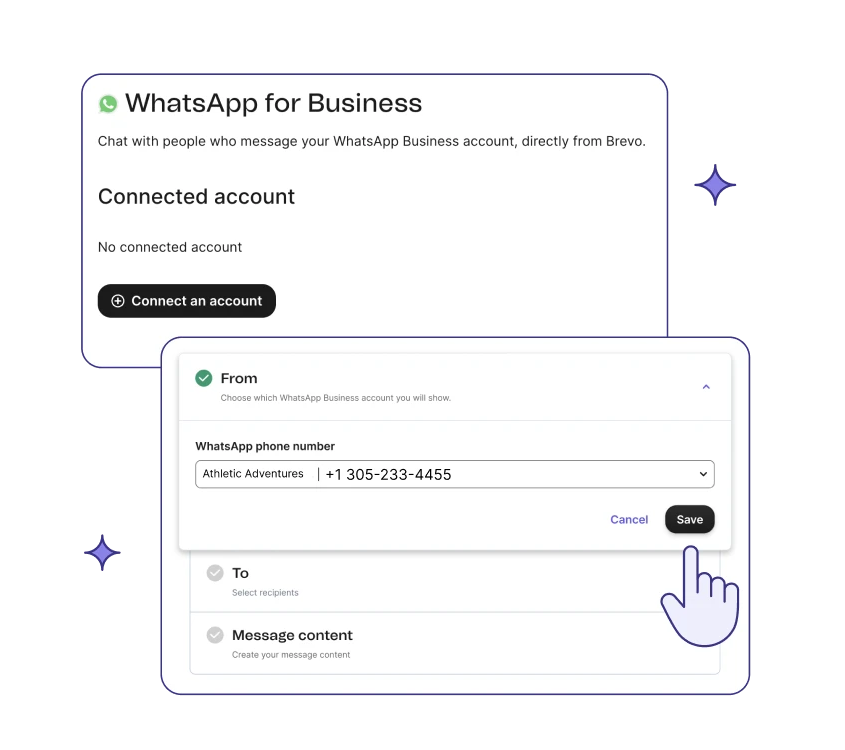
Brevo is a certified WhatsApp Business Solution Provider, giving businesses a direct integration with the WhatsApp Business API rather than routing through intermediaries.
Source: Brevo
WhatsApp campaigns support multimedia content and sit inside Brevo's automation workflows and Conversations inbox. Brevo reports a 98% average open rate for the WhatsApp channel.
Mailchimp's multichannel offering is narrower. Email is the core, with SMS as a paid add-on on Essentials and above. SMS is limited to select countries, and MMS is available only on Standard and Premium for US and Canada contacts. There's no native WhatsApp, push notification, or live chat.
Social posting and Google retargeting ads are available on Standard and Premium, but those are advertising channels, not direct messaging.

Source: Mailchimp
For businesses whose customers respond to WhatsApp or push notifications, or who want live chat and phone alongside email campaigns, Brevo's multichannel setup eliminates the need for separate tools. Mailchimp users who need those channels will need third-party integrations.
Mailchimp has the deeper ecommerce automation engine
Where Mailchimp pulls ahead is ecommerce. The platform has invested here, particularly with its February 2026 update that added the Site Tracking Pixel, expanded Shopify automations, dynamic product data in messages, and per-customer discount codes.
Mailchimp offers 45+ prebuilt ecommerce automations including abandoned cart recovery, back-in-stock notifications, post-purchase cross-sell sequences, and review request flows. Its abandoned cart flow populates the email template with the contact's specific cart items and a direct link back to checkout.
Mailchimp reports that users running Marketing Automation Flows generate 9x more revenue than bulk email senders.

Source: Mailchimp
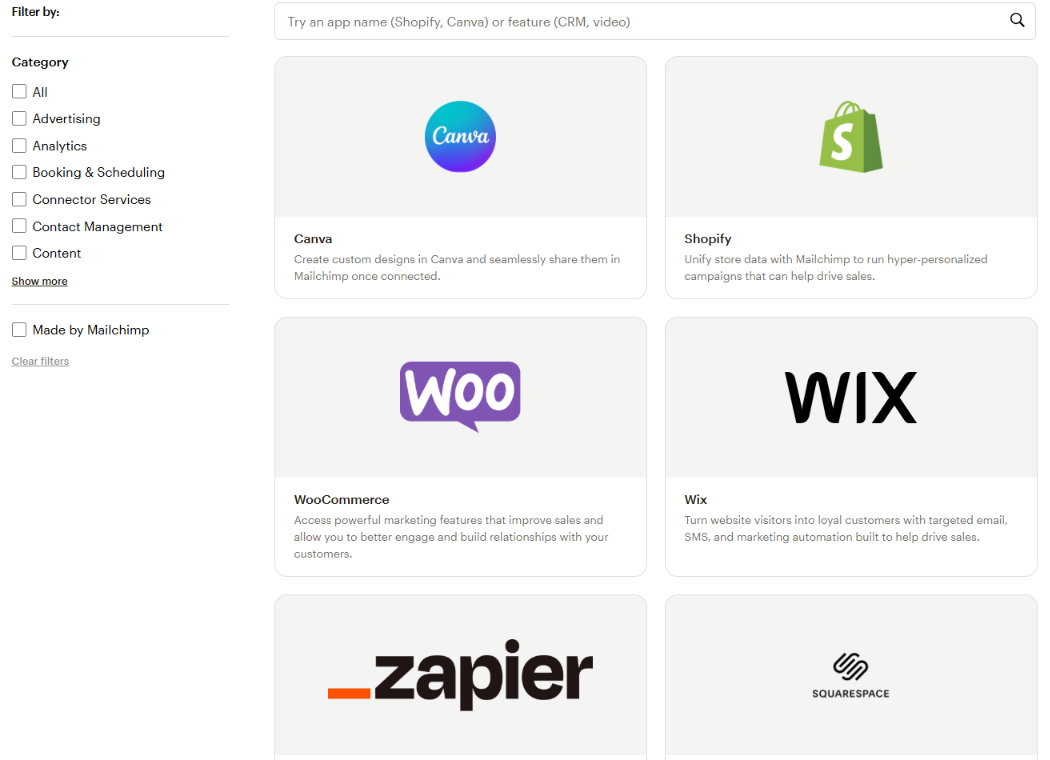
Mailchimp's 300+ integrations include connections with Shopify, WooCommerce, Squarespace, Square, and Wix. The QuickBooks integration connects invoice and revenue data with marketing audiences, a data source no standalone email tool can match.
Source: Mailchimp
Brevo covers ecommerce basics: abandoned cart recovery, product recommendations, and Shopify and WooCommerce integrations. It reports an average 10-15% revenue increase from its abandoned cart workflow.
But the automation library is smaller, and G2 reviewers note that multi-step workflows feel restrictive compared to more established platforms.
For online stores where purchase behavior drives most campaign triggers, Mailchimp's ecommerce tools are the stronger choice.
Brevo includes transactional email; Mailchimp charges extra
This matters for any business sending order confirmations, shipping notifications, password resets, or account verification emails.
Brevo includes transactional email on every paid plan, with a REST API, SMTP relay, webhooks, and unlimited log retention bundled in. The platform can send 120,000 emails per minute with a reported 99% delivery rate.
Transactional messaging extends to SMS and WhatsApp via the same API, so a business can send an order confirmation by email and a shipping alert by WhatsApp using one set of credentials.
Mailchimp treats transactional email as a separate paid add-on on Standard and Premium plans only, priced at $20 per 25,000-email block. It reports 99.99% transactional delivery rates, but the extra cost and plan restriction mean smaller businesses either pay more or look elsewhere for transactional sending.
For SaaS companies and ecommerce businesses that need marketing and transactional email in one place, Brevo's bundled approach saves money.
AI features reflect different strategies
Both platforms have invested in AI, with different approaches.
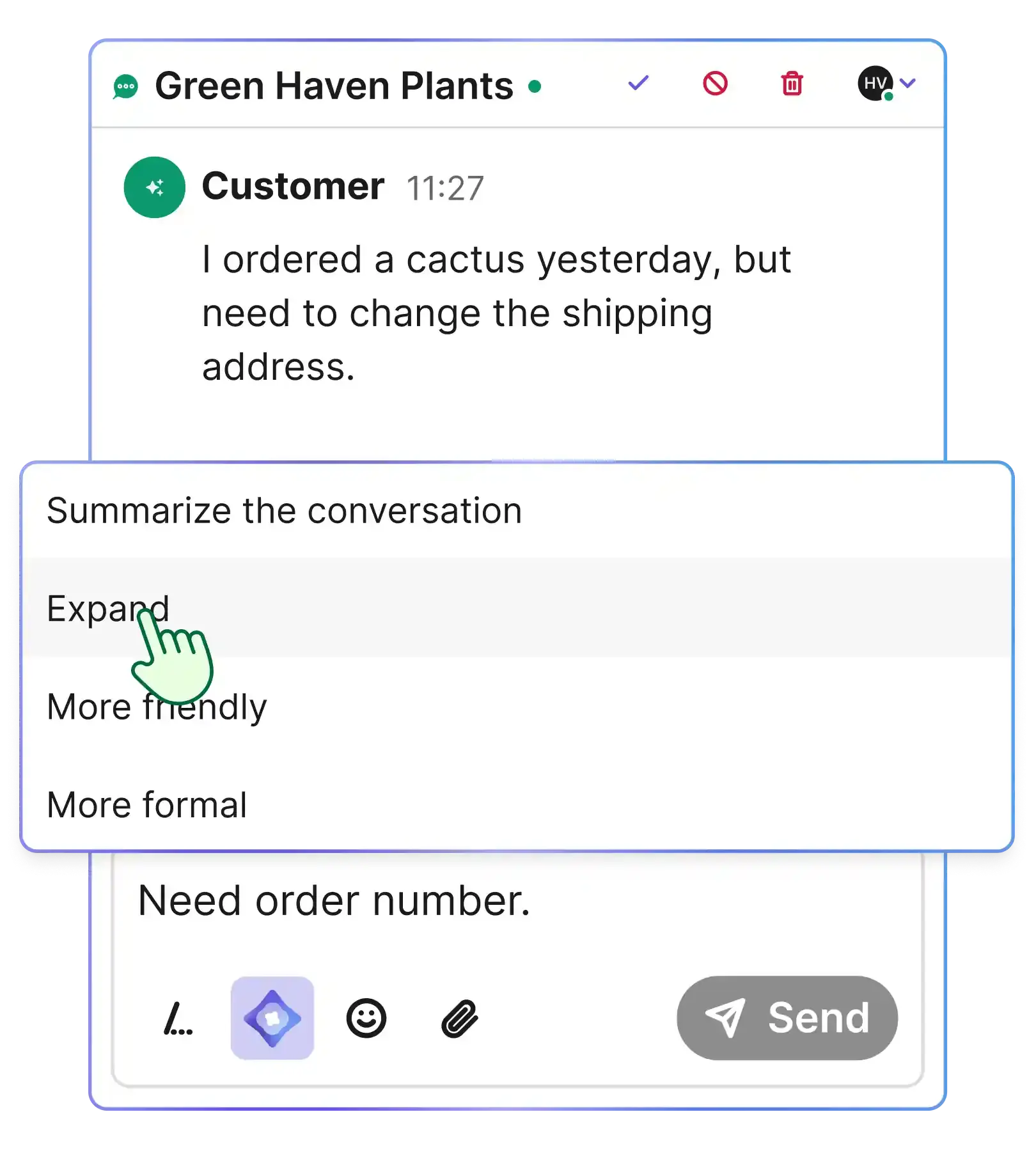
Brevo's Aura AI is organized as four agents: a Marketing Agent for content generation, segmentation, and send-time optimization; a Sales Assistant for contact enrichment and deal creation; a Data Analyst for natural-language queries; and a Conversations Agent for chat summaries.
Source: Brevo
Brevo has committed €50M over five years to AI and launched an MCP server that connects Brevo's data to external AI assistants like Claude and ChatGPT.
Mailchimp's Intuit Assist draws on the broader Intuit AI infrastructure shared across Mailchimp, QuickBooks, TurboTax, and Credit Karma. The platform reports 9.8 billion AI-generated emails sent in under a year.
As of February 2026, Mailchimp is the only marketing platform integrated with ChatGPT. Its Send Time Optimization uses historical click-rate trends, and its Subject Line Helper gives real-time feedback based on data from more than 10,000 emails sent every second.
Mailchimp's advantage is training data volume. Twenty-four years and 11 million users produce a feedback loop smaller platforms can't match. Brevo's advantage is breadth, extending AI into sales, data analysis, and conversations rather than email content alone.
Both platforms' AI helps you write better emails and send them at better times. Neither tells you whether the person you're emailing is actually in the market for what you sell.
The B2B intelligence gap both platforms share
Brevo and Mailchimp are campaign execution platforms. They help you design, send, and measure marketing messages. Both assume you already know who to target.
For B2C businesses and content creators, that assumption holds. Your subscribers opted in. Your customers bought something. Your audience exists in your list.
For B2B teams, it doesn't. The people who should hear from you haven't subscribed yet. The accounts researching your product category right now aren't in your CRM. The decision-makers at your target companies change roles, switch companies, and update their contact information faster than any static list can track.
This is where the gap shows. You can build a sophisticated automation in Brevo or Mailchimp, but if your list is incomplete, your contact data is stale, or you're targeting accounts that aren't in-market, the automation reaches the wrong people at the wrong time.
Neither platform was built to solve this. They don't maintain a B2B contact database. They don't track buyer intent signals. They don't resolve anonymous website visitors to companies. They don't map org charts or buying committees.
ZoomInfo fills the intelligence layer
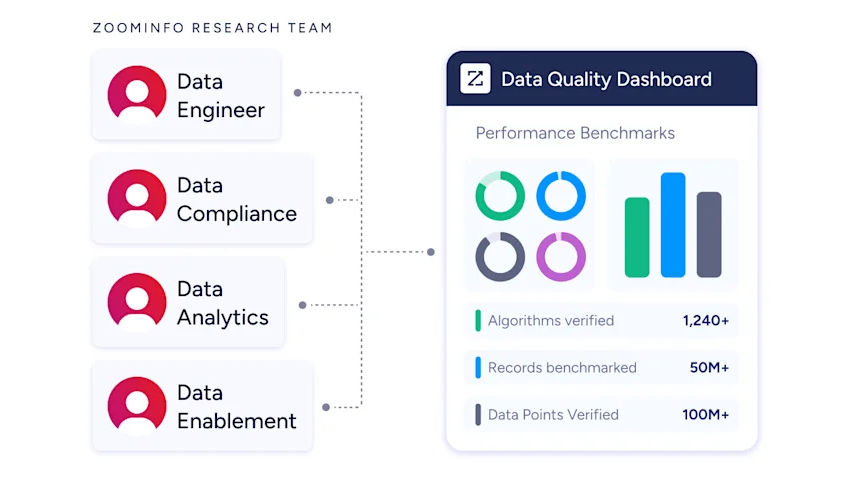
ZoomInfo is a B2B data and go-to-market platform built on a large, continuously verified data foundation. That data runs through a multi-source verification pipeline backed by 300+ human researchers and achieves up to 95% accuracy on first-party data.
Source: ZoomInfo
In a Fortune 500 competitive RFP analyzing 25 million contacts across vendors, the independent consultant concluded that "no other competitor came even close."
For email marketing teams, ZoomInfo solves three problems Brevo and Mailchimp can't:
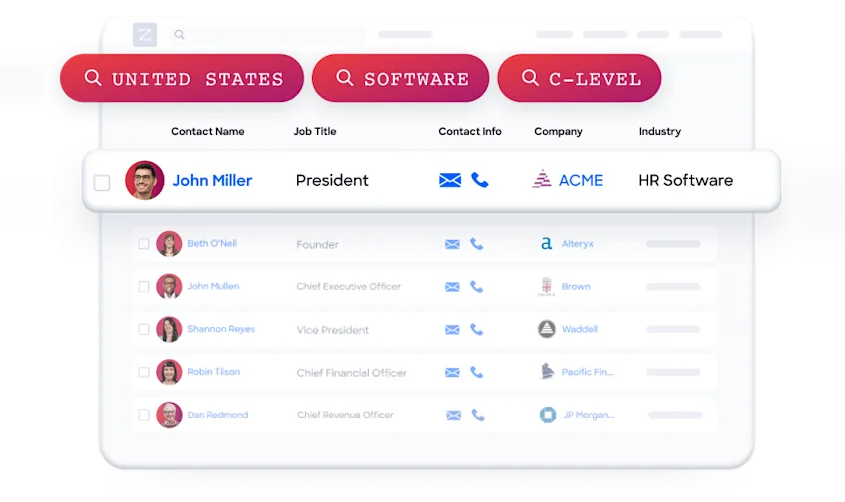
Building the right list. Instead of waiting for prospects to find you, ZoomInfo lets you find them. Contact & Company Search filters across 300+ company attributes (from industry and headcount to technology stack and department structure) to identify decision-makers who match your ideal customer profile.
Source: ZoomInfo
The contacts come with verified business emails and 120M direct-dial phone numbers, so your outreach reaches real people.
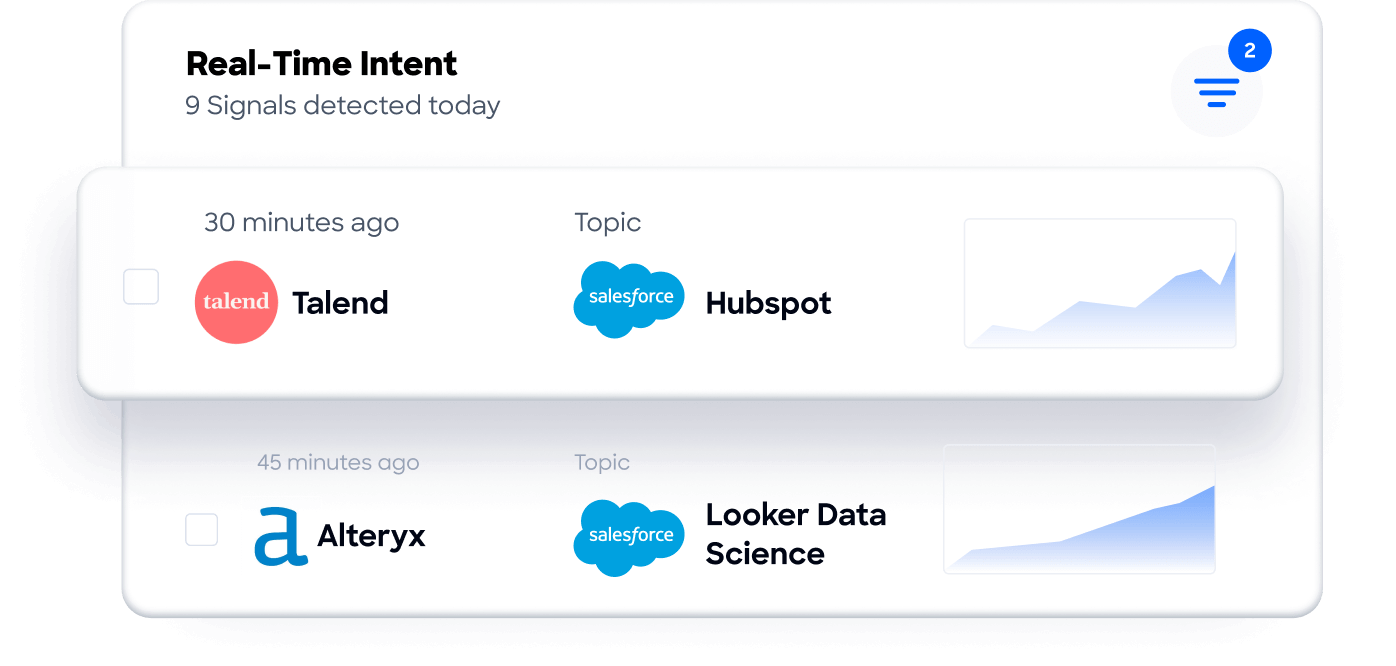
Timing your outreach. ZoomInfo Intent tracks signals from 210 million IP-to-Organization pairings and 6 trillion+ new keyword-to-device pairings sourced monthly to show which companies are researching topics relevant to your product.
Guided Intent, exclusive to ZoomInfo, identifies topics historically correlated with deal success rather than requiring manual topic selection. You target accounts showing buying signals, not just browsing behavior.
Source: ZoomInfo
Keeping your data clean. Contact data decays as people change jobs, companies restructure, and email addresses go stale.
ZoomInfo's GTM Context Graph processes 1.5B+ data points daily, keeping contact records current so the list you built six months ago doesn't fill with bounces and outdated titles.
"It's not just the data itself. It's more about the right data at the right time to help us reach out with the right message across that full buyer journey." (Chelsea Kenyon, Senior Director of Digital Strategy, Redwood Logistics)
ZoomInfo works with either platform, not instead of them
ZoomInfo doesn't replace Brevo or Mailchimp. It makes either one more effective.
The workflow is straightforward: use ZoomInfo to identify target accounts and contacts, enrich them with verified data, then push those contacts into your email platform for campaign execution.
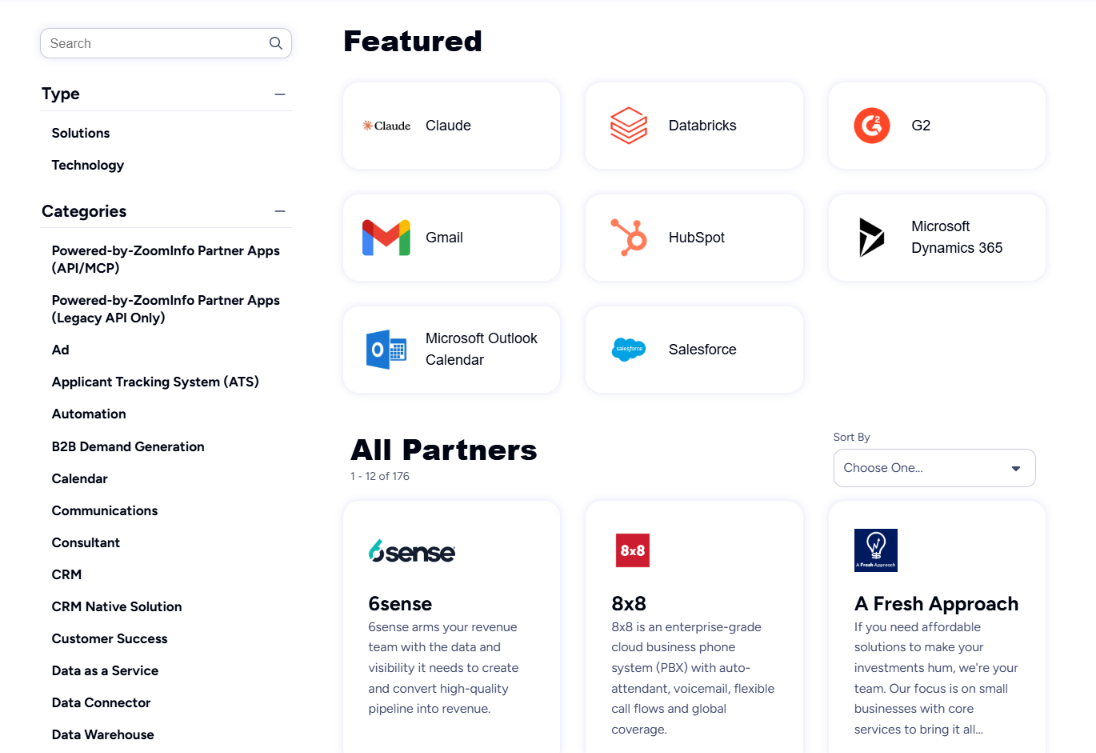
ZoomInfo integrates with major CRM and marketing automation tools through its App Marketplace of 172+ partner integrations, and its Enterprise API enables custom data flows into any system.
Source: ZoomInfo
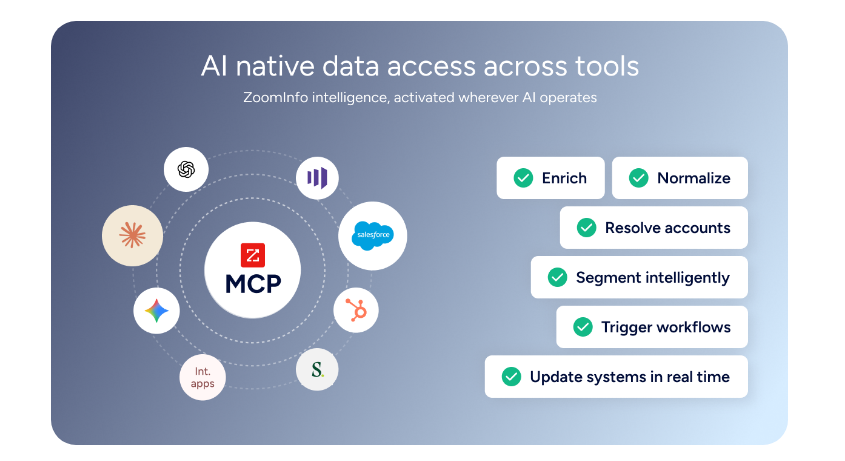
The ZoomInfo MCP server connects ZoomInfo's data to AI assistants (including Claude and ChatGPT) for natural-language access without custom coding.
Source: ZoomInfo
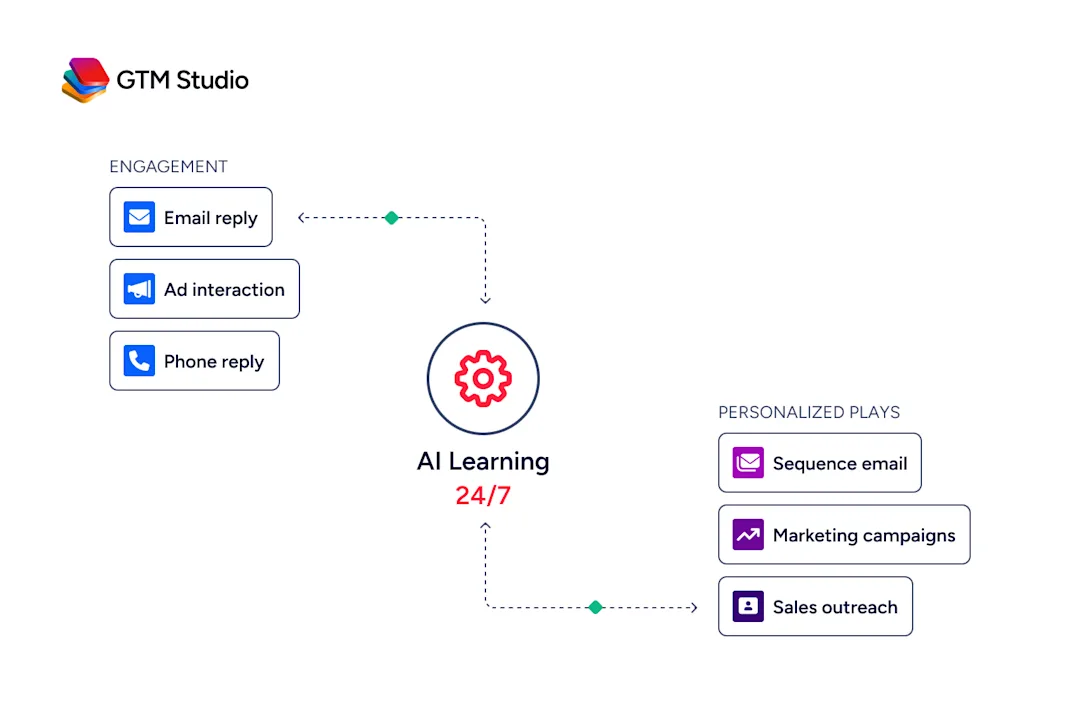
GTM Studio takes this further. Marketers describe audiences in plain language, and the AI-powered canvas builds, enriches, and activates those audiences across channels, with email, calls, ads, and direct mail triggered by buyer behavior.
Source: ZoomInfo
Campaigns that used to take 3 weeks to launch now take 30 minutes, without engineering support. Each campaign improves as clicks, opens, and replies feed back into targeting automatically.
For teams using Brevo or Mailchimp as their sending engine, ZoomInfo determines who enters those campaigns, when, and why. The campaign platform handles delivery. ZoomInfo handles targeting.
"We needed a solution that would allow us to streamline our processes and ensure that we were reaching the right people. It was about making our efforts more focused and impactful." (Jeremy Melius, Sr. Director of Marketing Operations, Impartner)
CRM and data management take different approaches
How each platform handles contact data reflects who it was built for.
Brevo includes a built-in Sales CRM with deal pipelines, task management, cloud-based phone with AI call summaries, meeting scheduling, and live chat, all feeding into a single contact record.

Source: Brevo
The Sales Free tier supports 50 open deals, one pipeline, and live chat at no extra cost, making it a functional CRM for small teams that want marketing and sales in one place.
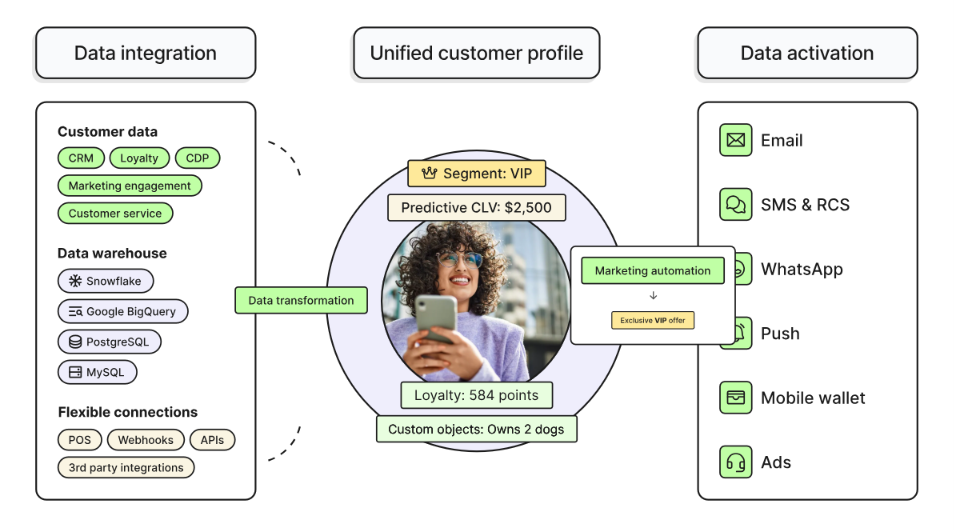
The Brevo Data Platform adds CDP capabilities: it ingests data from databases, data warehouses, and APIs, then unifies it through identity resolution and no-code data prep rules.
Source: Brevo
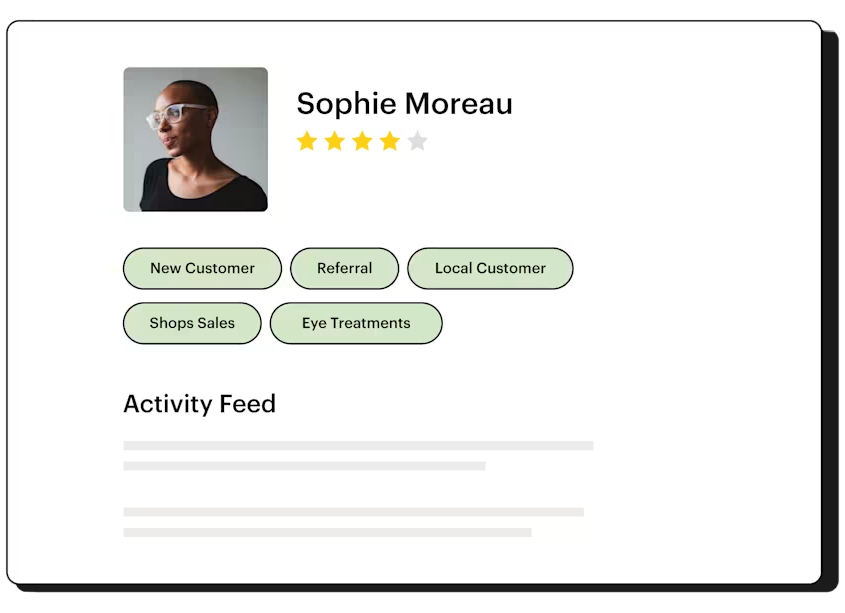
Mailchimp offers a Marketing CRM that works as a structured contact database rather than a pipeline tracker. Contact profiles consolidate email engagement, purchase history, and website behavior. Tags provide flexible labeling.
Source: Mailchimp
Predictive segmentation on Standard and Premium generates purchase likelihood, customer lifetime value, and churn risk scores per contact. It works for marketing segmentation but isn't designed for sales pipeline management.
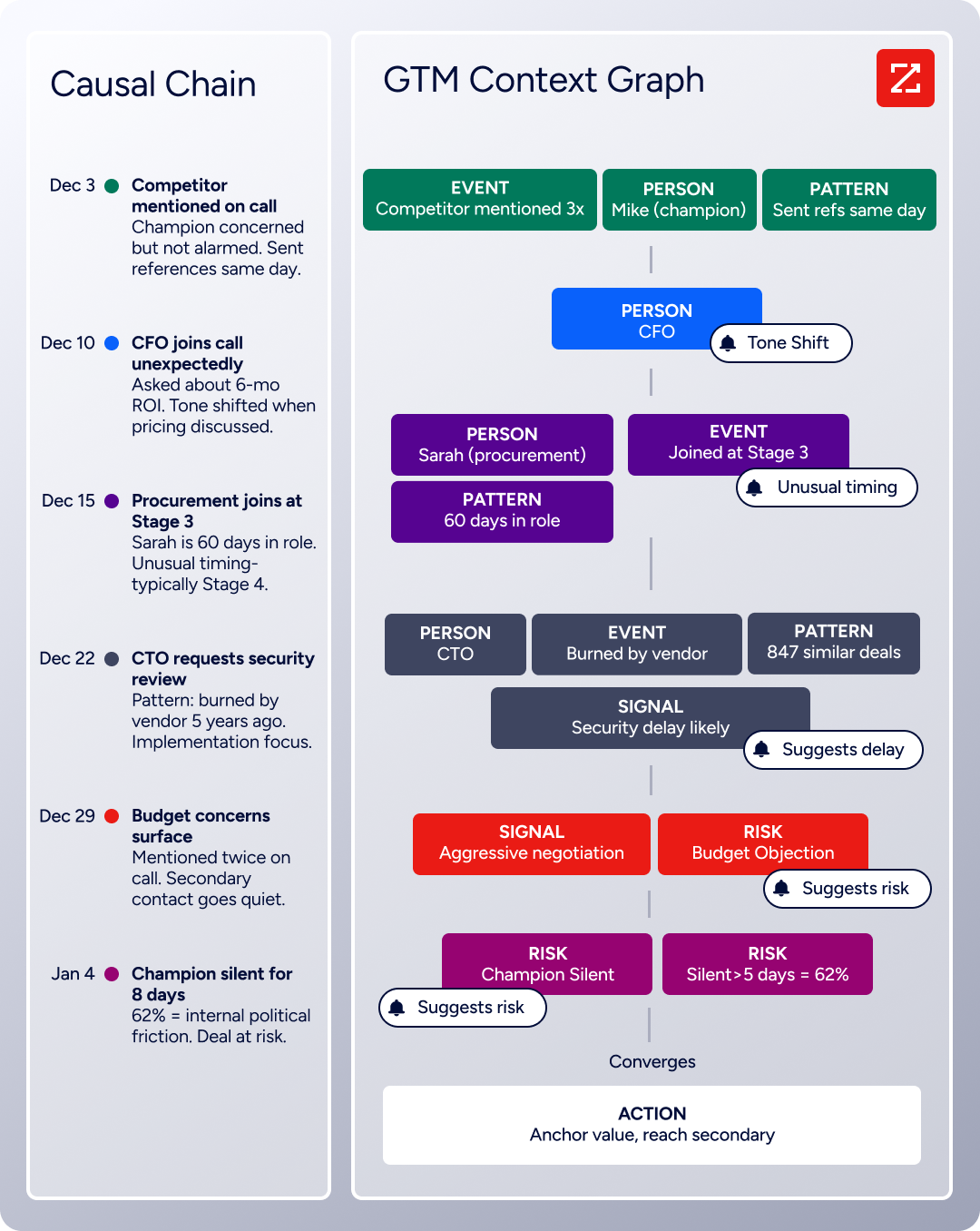
ZoomInfo operates at a different level. The GTM Context Graph combines ZoomInfo's third-party data with a customer's CRM records, conversation intelligence, email interactions, and behavioral signals into one layer that captures not just what happened in a deal, but why it happened.
Source: ZoomInfo
This isn't contact management. It's account intelligence at scale: mapping buying committees, tracking when champions change roles, and correlating intent signals with deal outcomes across thousands of accounts.
"That combination of our internal CRM data, external signals, and AI that's given all that context has helped us craft very specific account- and persona-based messages. And people have responded to them right away." (Toby Carrington, Chief Business Officer, Seismic)
The pricing models tell different stories
This is where Brevo and Mailchimp diverge most.
Brevo charges by email volume sent, not contacts stored. Contacts are unlimited on every plan, including Free.
The Starter plan begins at $9/month for 5,000 emails, and the Business plan starts at $18/month with marketing automation, A/B testing, and AI send-time optimization included.
The Professional tier jumps to $499/month but includes 150,000 emails, 10 user seats, WhatsApp campaigns, push notifications, and phone support. Annual billing saves 10%.
This model favors businesses with large lists and moderate send frequency. If you have 50,000 contacts but only email them twice a month, Brevo costs less than Mailchimp because you pay for the 100,000 emails you send, not the 50,000 contacts you store.
Mailchimp charges by contacts stored in the account. The Essentials plan starts at $13/month for 500 contacts with a 10x send multiplier (5,000 emails). Standard starts at $20/month and scales to $800/month at 100,000 contacts. Premium begins at $350/month with unlimited contacts and seats.
The contact-count model works for businesses with smaller, engaged lists. But costs climb as lists grow. Mailchimp bills based on the peak contact count reached during the billing period, not the count at month end, so cleaning your list after a surge doesn't lower that month's bill.
Both platforms carry add-on costs beyond the base price. Brevo charges separately for SMS by volume and destination country, and its Starter plan still shows Brevo's logo on outgoing emails unless you pay $10.80/month to remove it. Mailchimp charges separately for SMS credits (which expire monthly and don't roll over), and transactional email costs $20 per block of 25,000 emails on top of the marketing plan.
Deliverability and compliance
Both Brevo and Mailchimp take deliverability seriously, though their infrastructure and compliance approaches differ.
Mailchimp reports a greater than 99% average email deliverability rate and 99.99% transactional delivery rates. Its 24-year sending infrastructure, SOC 2 and ISO 27001 certifications, and PCI compliance provide enterprise-level security.
As part of Intuit, Mailchimp is certified under the EU-U.S. Data Privacy Framework with Standard Contractual Clauses built into its Data Processing Addendum. Two-factor authentication and tiered role-based access controls are available across plans.
Brevo reports a 99% deliverability rate and offers dedicated IPs for high-volume senders on Enterprise plans. Its European roots give it structural advantages for GDPR compliance: EU data residency by default, double opt-in support, and consent record management built into contact profiles.
Brevo holds ISO 27001:2022 and B Corp certifications.

Source: Brevo
However, Capterra reviewers report campaigns paused by an overly sensitive suspension algorithm even with healthy open rates, with slow support when resolving suspensions.
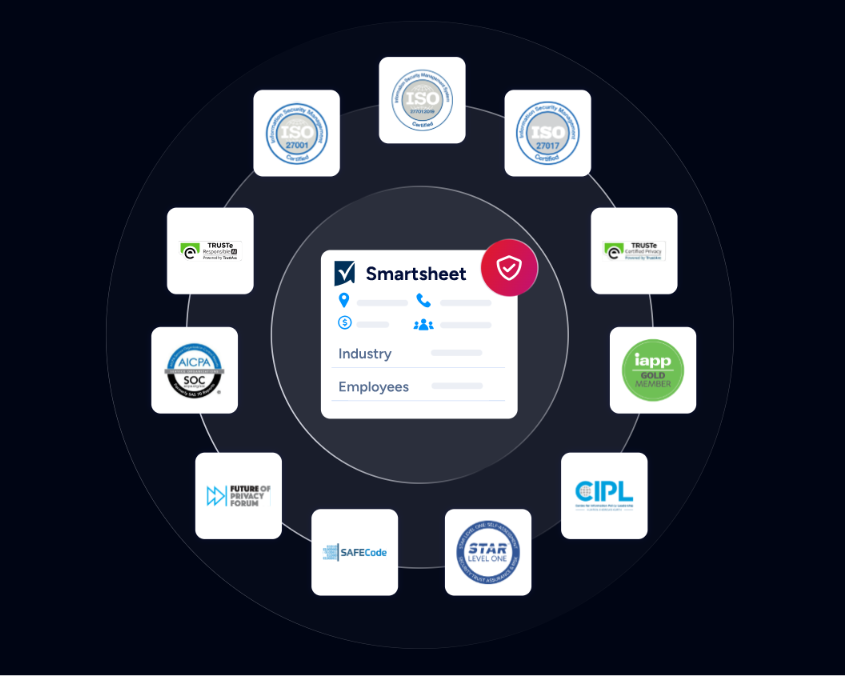
ZoomInfo maintains ISO 27001, ISO 27701, SOC 2 Type II, TRUSTe GDPR, and TRUSTe CCPA certifications, all renewed annually.
Source: ZoomInfo
As a registered data broker in California and Vermont, ZoomInfo operates under stricter regulatory oversight than most marketing platforms, with a dedicated Trust Center.
Brevo vs. Mailchimp vs. ZoomInfo: Which should you choose?
The choice depends on what problem you're solving and who you're selling to.
Choose Brevo if:
You want multichannel marketing (email, SMS, WhatsApp, push, chat) in one platform
Your contact list is large relative to your send frequency
You need transactional email included without a separate add-on
A built-in sales CRM would let you consolidate tools
GDPR compliance and EU data residency are requirements
Choose Mailchimp if:
Ecommerce automation is central to your marketing strategy
You want the largest integration ecosystem (300+ tools)
AI content and send-time optimization backed by large-scale training data matters
You're already in the Intuit ecosystem (QuickBooks, TurboTax)
A smaller, engaged contact list makes contact-based pricing reasonable
Add ZoomInfo if:
You're a B2B company whose target buyers aren't already on your email list
You need verified contact data for decision-makers at specific companies
Buyer intent signals would help you time campaigns to accounts that are in-market
Your current list data is incomplete, stale, or full of bounces
You want to move from broadcasting to targeted, signal-driven outreach
Explore ZoomInfo Lite for free, a permanent free tier with access to ZoomInfo's B2B database. No credit card or commitment required.
Brevo and Mailchimp are both capable campaign execution platforms. They handle the "how" of email marketing well. But for B2B teams, the "who" and "when" matter just as much. ZoomInfo provides the intelligence (verified data, intent signals, account context) that turns any email platform from a broadcasting tool into a targeting tool.
The most effective B2B marketing stacks don't rely on a single tool. They connect intelligence to execution. ZoomInfo supplies the intelligence. Brevo or Mailchimp handles the execution. Together, they close the gap between sending emails and sending the right email to the right person at the right time.
Brevo vs. Mailchimp vs. ZoomInfo FAQ
What is the main difference between Brevo and Mailchimp?
Brevo charges by email volume with unlimited contacts; Mailchimp charges by contacts stored. Brevo offers broader multichannel capabilities (email, SMS, WhatsApp, push, live chat, phone), while Mailchimp has deeper ecommerce automation with 45+ prebuilt flows and 300+ integrations.
Brevo includes transactional email on all paid plans; Mailchimp charges for transactional email as a separate add-on on Standard and Premium only.
Which platform is cheaper: Brevo or Mailchimp?
It depends on your list size and send frequency. Brevo costs less for businesses with large contact lists and moderate send frequency, since it charges by emails sent rather than contacts stored.
Mailchimp is more competitive for businesses with smaller, engaged lists. Brevo's free plan includes unlimited contacts with 300 emails per day; Mailchimp's free plan caps at 250 contacts and 500 emails per month.
How does ZoomInfo fit with Brevo or Mailchimp?
ZoomInfo doesn't replace either platform. It adds a B2B intelligence layer. ZoomInfo delivers verified contact data (500M contacts, 200M+ verified business emails), buyer intent signals, and account insights.
You use ZoomInfo to identify and enrich your target audience, then push those contacts into Brevo or Mailchimp for campaign execution. ZoomInfo integrates with major CRM and marketing platforms through its 172+ partner marketplace and Enterprise API.
Which platform has better marketing automation?
Mailchimp has the edge for ecommerce automation, with 60+ prebuilt flow templates, multiple starting points and branching on Standard and Premium plans, and Shopify integration that auto-populates abandoned cart emails with the customer's specific items.
Brevo's automation builder handles multichannel workflows (combining email, SMS, and WhatsApp steps in one flow) but G2 reviewers note it hits limitations with complex conditional logic compared to more established platforms.
Which platform is better for B2B email marketing?
For B2B campaign execution, both work. Brevo's built-in CRM and unlimited contacts make it practical for sales-marketing alignment on a budget. Mailchimp's Salesforce integration and predictive segmentation support account-targeted campaigns.
However, neither provides B2B-specific intelligence: verified decision-maker data, buyer intent signals, or account insights.
ZoomInfo fills that gap, making either platform more effective for B2B by ensuring campaigns reach verified contacts at in-market accounts.
Does Brevo or Mailchimp include a CRM?
Brevo includes a built-in Sales CRM with deal pipelines, task management, cloud-based phone with AI call summaries, meeting scheduling, and live chat. The Sales Free tier supports 50 open deals at no extra cost.
Mailchimp offers a Marketing CRM that works for contact segmentation, audience management, and purchase behavior tracking, but isn't designed for sales pipeline or deal management.
What are the AI capabilities of each platform?
Brevo's Aura AI includes four agents covering marketing content generation, sales assistance, data analysis, and conversation management.
Mailchimp's Intuit Assist generates email copy, recommends send times, and predicts customer behavior, drawing on data from more than 10,000 emails sent every second across 11 million users.
ZoomInfo's AI operates at the intelligence layer: its GTM Context Graph processes 1.5 billion data points daily to surface which accounts are in-market and why deals move, informing the targeting decisions that come before any email is written.
Which platform has better deliverability?
Mailchimp reports greater than 99% average email deliverability and 99.99% transactional delivery rates, backed by 24 years of sending infrastructure and SOC 2 and ISO 27001 certifications.
Brevo reports a 99% deliverability rate with dedicated IP options for enterprise senders, though some Capterra reviewers note an overly sensitive campaign suspension algorithm. Both platforms support DKIM, SPF, and DMARC authentication for sender reputation management.
Keep comparing Brevo:
