
Choosing between Brevo and GetResponse for email marketing comes down to five questions:
Do you want to pay based on how many emails you send, or how many contacts you store?
Do you need multichannel messaging (SMS, WhatsApp, live chat) alongside email, or is email your primary channel?
Are you focused on marketing campaigns, or do you also want to sell courses, host webinars, and monetize content?
How important is a built-in sales CRM versus a standalone marketing tool?
For B2B teams: do you already have the contact data and intent signals you need, or do you need help identifying who to target?
In short, here's what we recommend:
Brevo is a multichannel marketing platform that bundles email, SMS, WhatsApp, live chat, and a sales CRM. Its volume-based pricing charges by emails sent rather than contacts stored, making it cheaper for companies with large lists and moderate send frequency.
Brevo includes transactional email on all paid plans, offers a built-in Sales CRM, and recently introduced a Customer Data Platform and loyalty program builder. The platform serves 600,000+ customers, but reviewers note that its automation workflows feel restrictive compared to dedicated tools and that campaign analytics lack the granularity power users expect.
GetResponse combines email marketing with content monetization. Beyond email and automation, it includes a built-in webinar platform, an AI-powered course creator, and premium newsletters, letting creators build, market, and sell knowledge products in one place.
Its contact-based pricing with unlimited email sends rewards heavy senders, and the platform claims a 99% deliverability rate across 160+ countries. However, GetResponse's segmentation is limited to roughly 7 filters, SMS marketing is restricted to the Enterprise tier only, and multiple reviewers describe the interface as requiring too many clicks to navigate.
Both platforms handle campaign execution well. But for B2B teams, the harder problem isn't sending emails. It's knowing who to send them to, when those prospects are evaluating solutions, and what message will land. Neither Brevo nor GetResponse solves that problem on its own.
ZoomInfo is a B2B data and GTM platform built on a large data foundation: 500M contacts, 100M companies, 135M+ verified phone numbers, and 200M+ verified business email addresses.
Its GTM Context Graph processes 1.5B + data points daily, combining this data with your CRM records, conversation transcripts, and behavioral signals to reveal which accounts are in-market and why deals move forward. You can access that intelligence through GTM Workspace (for sellers), GTM Studio (for marketers and RevOps), or APIs and MCP to feed data into any email platform you choose.
If identifying the right B2B prospects and understanding their buying signals would make your email campaigns more effective, see how ZoomInfo works.
Brevo vs. GetResponse vs. ZoomInfo at a glance
Brevo | GetResponse | ZoomInfo | |
|---|---|---|---|
Core function | Multichannel marketing + Sales CRM | Email marketing + content monetization | B2B data intelligence + GTM execution |
Marketing channels | Email, SMS, WhatsApp, push, chat, phone | Email, SMS (Enterprise only), web push | Not an email sender; feeds data to email platforms |
Marketing automation | Visual workflows (Standard+) | Visual workflows (Marketer+) | GTM plays and signal-triggered workflows |
Ecommerce tools | Abandoned cart, transactional email, loyalty | AI product recommendations, conversion funnels, price drop campaigns | Account-based marketing, website visitor identification |
Content monetization | None | Courses, webinars, premium newsletters | N/A |
B2B data & intelligence | Basic CRM | None | 500M contacts, intent signals, buyer intelligence |
Pricing model | By emails sent (unlimited contacts) | By contacts stored (unlimited emails) | Consumption-based pricing |
Free plan | 300 emails/day, unlimited contacts | 500 contacts, 2,500 emails/month | ZoomInfo Lite (permanent, 10 exports/month) |
Best for | Multichannel marketers and ecommerce | Creators and content-driven businesses | B2B teams needing prospect intelligence |
Brevo covers more communication channels
Brevo's clearest advantage is channel breadth. From a single platform, you can run campaigns across email, SMS, WhatsApp, web and mobile push notifications, live chat, chatbot, mobile wallet, and phone.
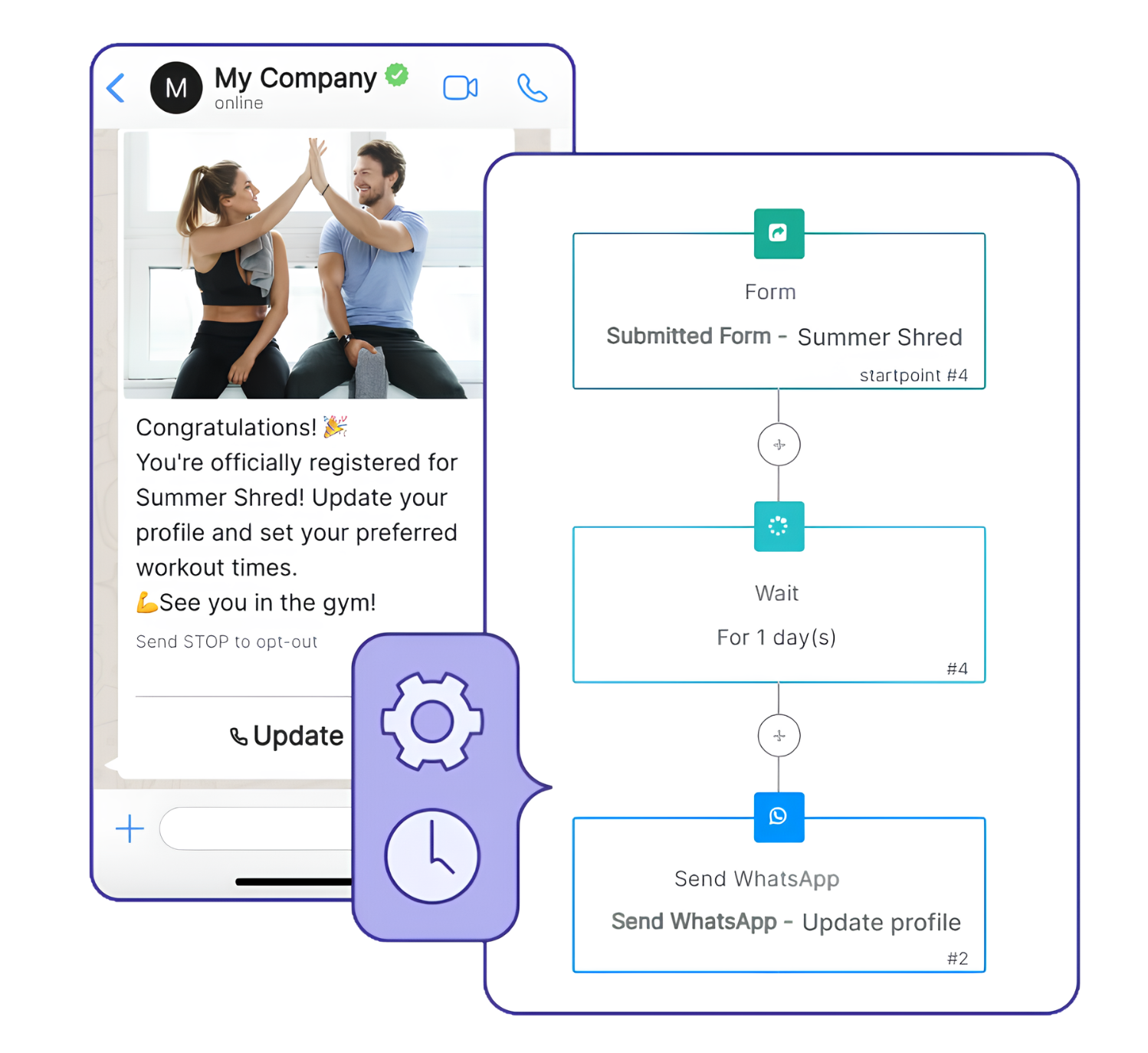
These channels work together inside one automation workflow: a sequence can send an email, wait 24 hours, and follow up with an SMS or WhatsApp message, all without switching tools or syncing data between platforms.
Brevo is a certified WhatsApp Business Solution Provider, giving it direct access to the WhatsApp Business API rather than routing through third-party intermediaries. WhatsApp campaigns support multimedia content, CTAs, and two-way reply management. Brevo cites a 98% average open rate for the channel.
Source: Brevo
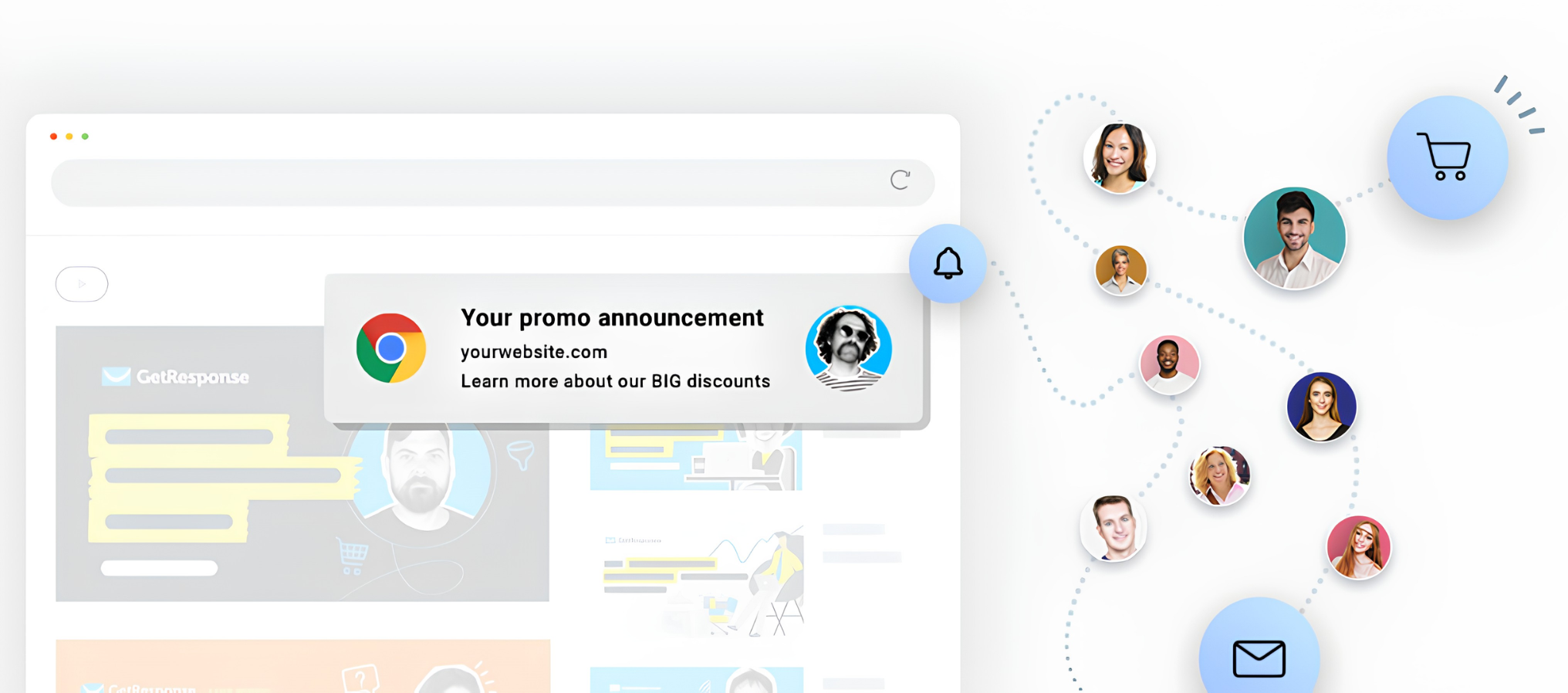
GetResponse's channel mix is narrower. Email is the primary channel. Web push notifications are available on Marketer and Creator plans, with an AI Web Push Generator that creates notification copy from keywords. But SMS marketing is restricted to the Enterprise tier, putting it out of reach for most users on standard plans. GetResponse has no WhatsApp capability, no live chat widget, and no VoIP phone.
Source: GetResponse
For businesses that need to reach customers across channels (particularly ecommerce and retail), Brevo has a clear edge. GetResponse fits businesses where email is the primary channel and adding more would create complexity without value.
GetResponse leads in content monetization
GetResponse has a capability Brevo doesn't offer at all: a built-in platform for selling knowledge.
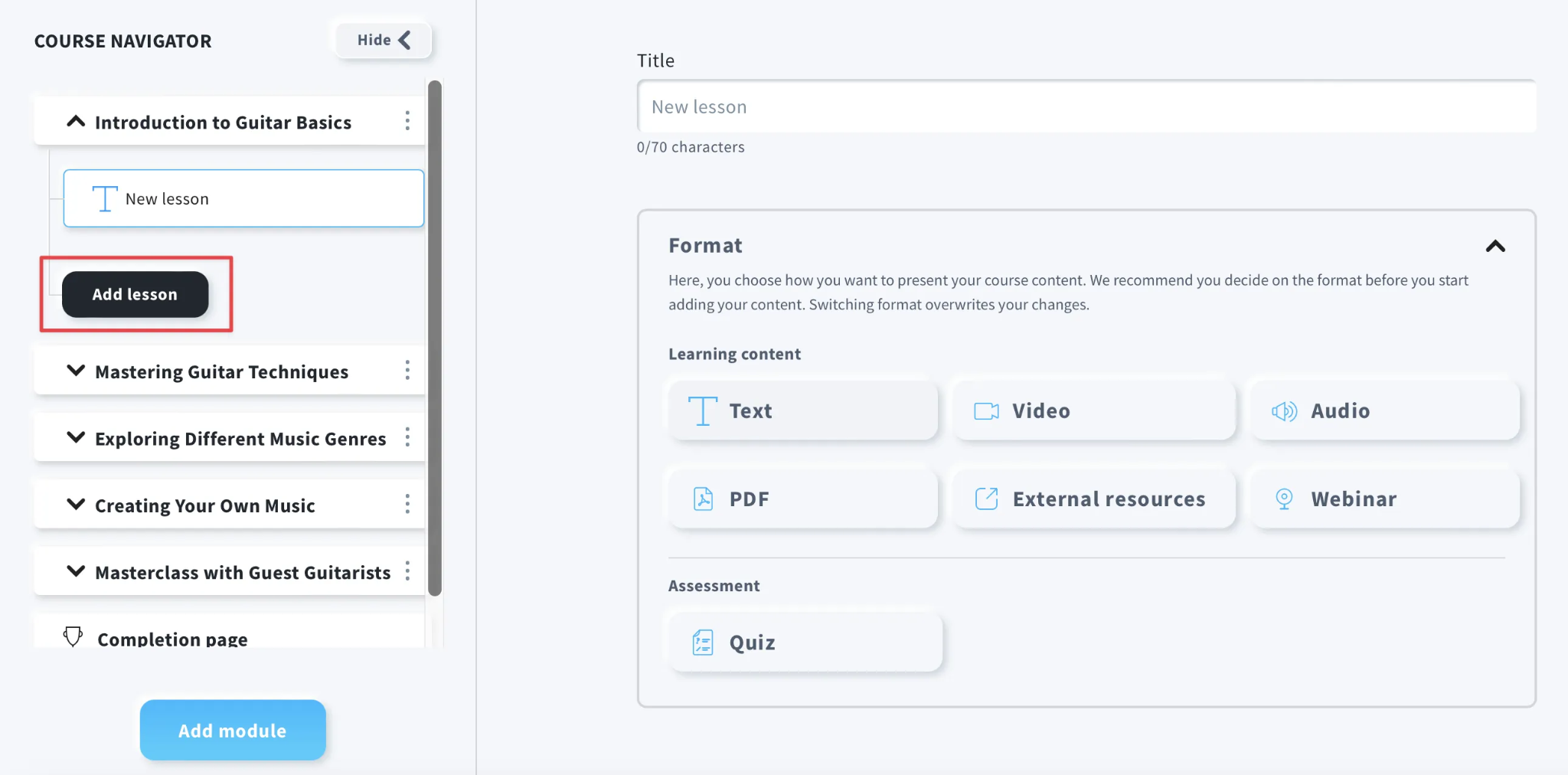
The AI Course Creator, powered by OpenAI, generates course structures from a topic prompt. Creators assemble modules from seven content types: text, PDF, video, audio, external resources, webinars, and quizzes.
Source: GetResponse
Students access courses through a dedicated Membership Area and the GetResponse Hub app. The platform supports completion certificates, student reviews, and up to 500 students on the Creator plan.
Premium newsletter subscriptions provide recurring revenue from exclusive content. The webinar platform supports up to 1,000 live attendees, screen sharing, interactive whiteboards, polls, and live streaming to Facebook and YouTube. Webinars can also run as pre-recorded sessions on a set schedule, capturing attendee email addresses automatically.
GetResponse positions this suite against Kajabi, Teachable, and Podia, calling it the only platform that combines an AI course creator, premium newsletters, webinars, email marketing, automation, and signup forms in one plan. The Creator plan at $69/month undercuts Kajabi's pricing while covering more ground.
Brevo has no course builder, no webinar hosting, and no premium newsletter functionality. If your business model involves selling courses, hosting webinars, or charging for newsletter content, GetResponse is the only choice between the two.
Both automate well, both hit ceilings
Brevo and GetResponse each offer visual workflow builders that handle common automation needs: welcome series, abandoned cart sequences, birthday emails, and re-engagement campaigns. The differences emerge when you push past mid-level complexity.
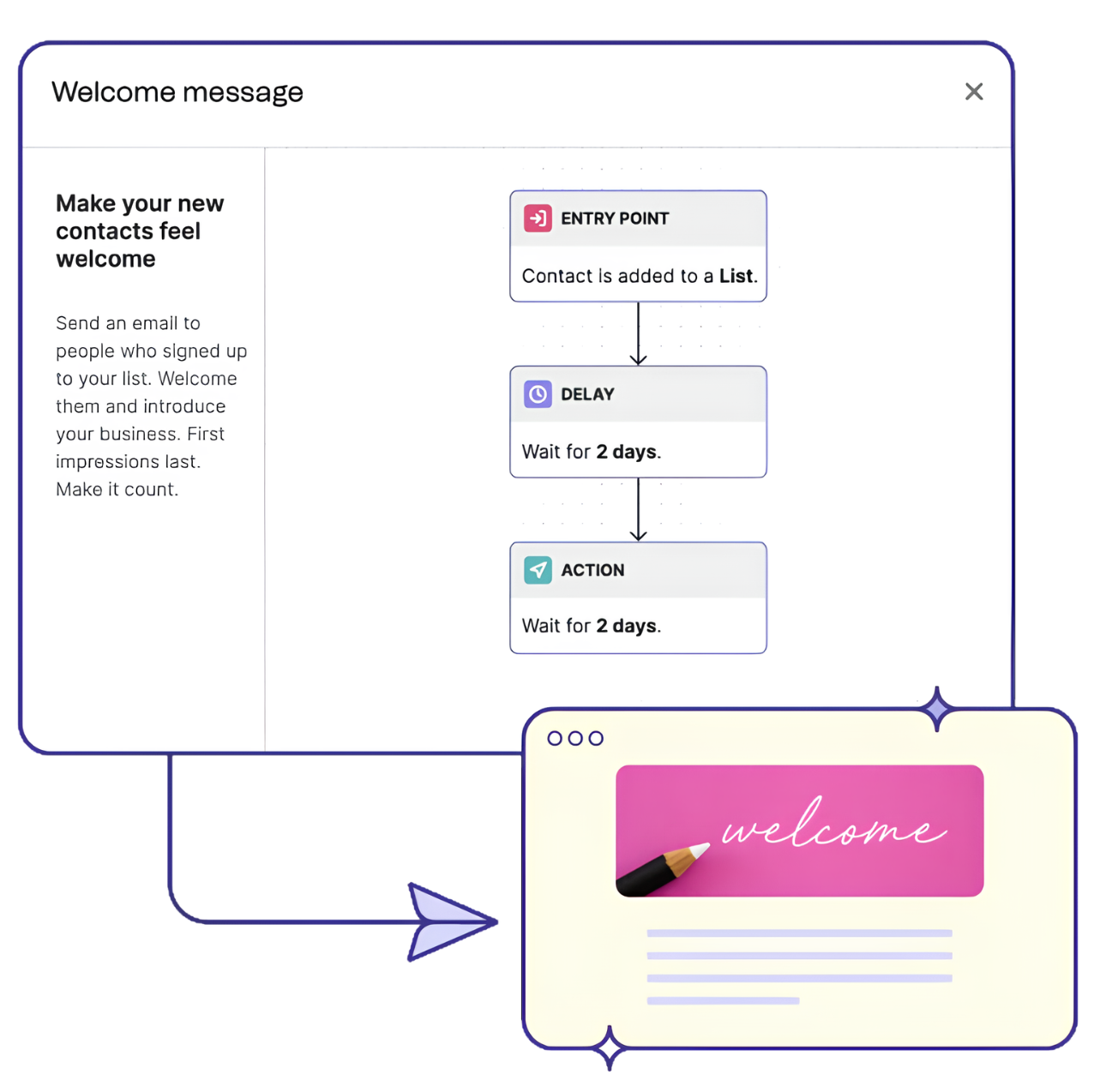
Brevo's automation system uses a drag-and-drop workflow editor with pre-built templates. Automation starts at the Standard plan ($18/month); the Free and Starter plans exclude it.
Source: Brevo
Brevo's multichannel advantage carries over here: a single workflow can send messages across email, SMS, and WhatsApp. The Aura AI Marketing Agent handles send-time optimization per contact, audience segmentation, and product recommendations within campaigns.
However, G2 reviewers and Capterra reviewers note that advanced multi-step workflows and dynamic segmentation feel restrictive compared to ActiveCampaign or HubSpot.
GetResponse's marketing automation supports a similar visual canvas with conditions, actions, and filters.

Source: GetResponse
It offers a distinctive dual-channel system: an Email channel for subscriber-based workflows and a Web channel that reacts to anonymous site visitors through popup, push, and behavioral triggers, all on the same canvas. Unlimited tags and real-time per-block statistics add visibility into how each step performs.
But GetResponse hits its own ceiling. G2 reviewer feedback highlights a segmentation limit of roughly 7 filters, and comparative data shows GetResponse scoring lower than ActiveCampaign for automation depth. For highly branched, multi-condition behavioral sequences, both platforms will leave power users wanting more.
Ecommerce tools take different approaches
Both platforms target ecommerce businesses, but they emphasize different parts of the customer lifecycle.
Brevo anchors on transactional messaging. Unlike many competitors that charge extra for transactional email, Brevo includes it on all paid plans: RESTful API, SMTP relay, outbound webhooks, and unlimited log retention, with a claimed capacity of 120,000 emails per minute.
For ecommerce stores, this means order confirmations, shipping updates, and password resets live on the same platform as marketing campaigns.
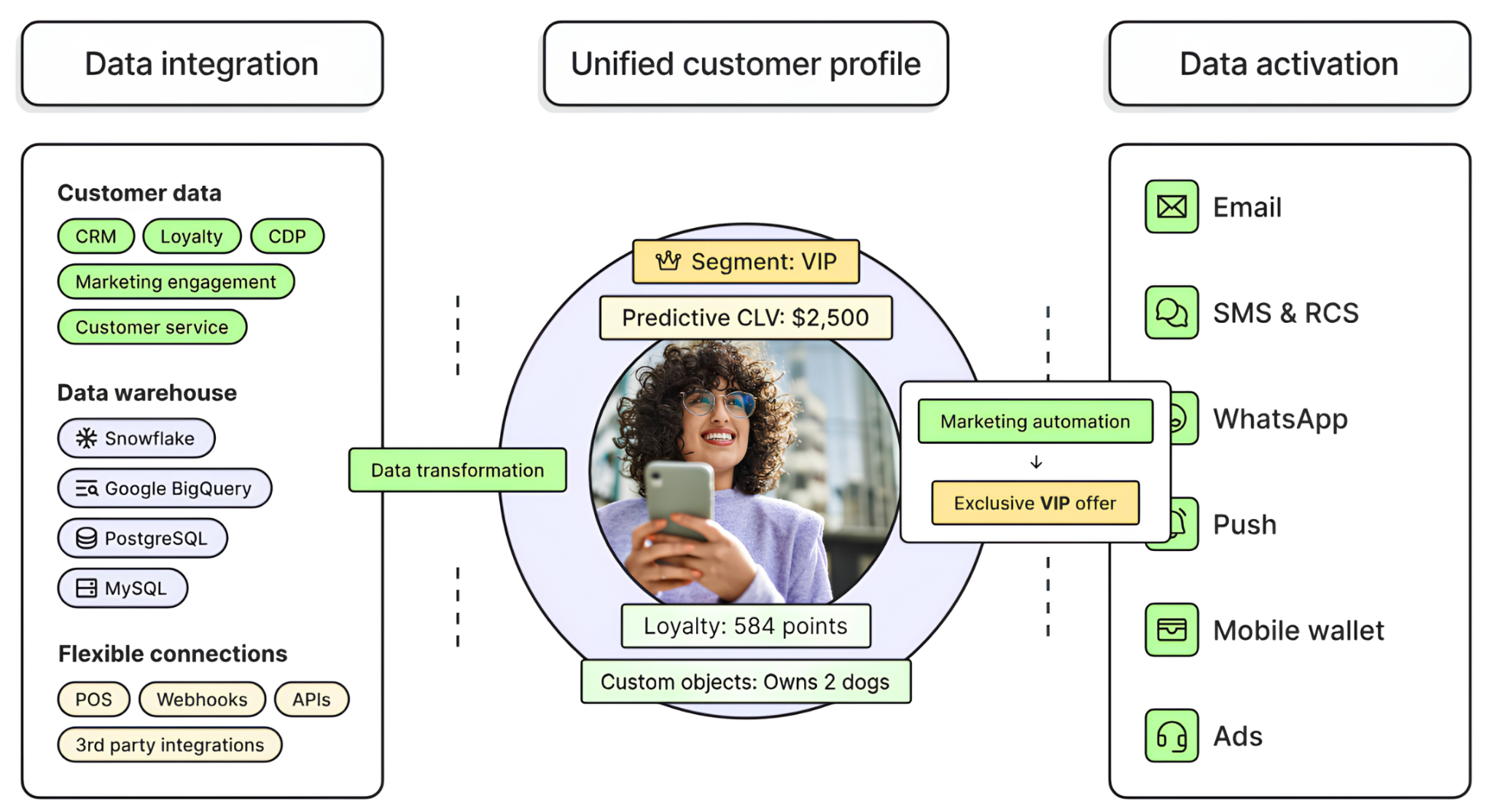
Brevo also offers abandoned cart recovery (citing an average 10-15% revenue increase from this workflow), a Customer Data Platform for combining online and offline purchase data, and a loyalty program builder with mobile wallet integration. Native ecommerce integrations cover Shopify, WooCommerce, BigCommerce, PrestaShop, and Magento.
Source: Brevo
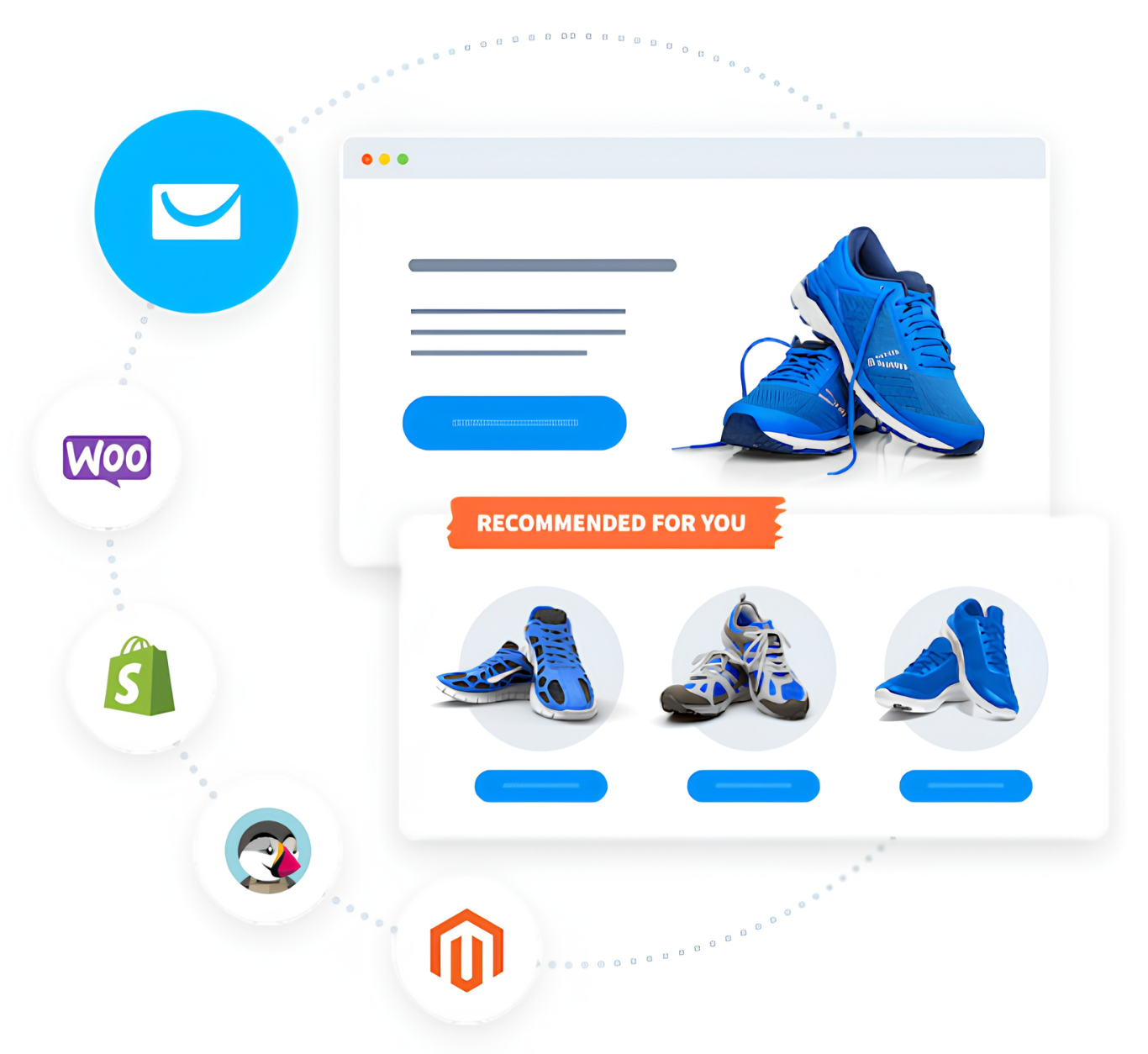
GetResponse focuses on conversion optimization. Its AI product recommendations engine works both on-site (via a single code snippet) and in email (via a drag-and-drop block).
Source: GetResponse
The Conversion Funnel builder connects ads, landing pages, signup forms, sales pages, upsell pages, and payment processing (Stripe, PayPal, Square, BlueSnap, PayU) into end-to-end selling flows using 30+ prebuilt templates.
A recently launched Price Drop Campaigns feature automatically notifies interested browsers when a product's price falls. GetResponse integrates with Shopify, WooCommerce, Magento, PrestaShop, BigCommerce, and Shoper.
The distinction: Brevo treats ecommerce as one piece of a broader multichannel platform that includes CRM, loyalty, and transactional messaging. GetResponse treats ecommerce as a conversion engine with AI-powered recommendations and full-funnel selling tools. Both integrate with the major ecommerce platforms; neither replaces a dedicated ecommerce marketing tool like Klaviyo for revenue analytics.
B2B teams need more than a sending platform
Brevo and GetResponse both assume you've already solved the "who" problem. They give you tools to capture leads through forms, landing pages, and popups, then nurture those leads through email and automation. For B2C businesses and ecommerce stores, that's often enough. Customers arrive through advertising, organic search, or referrals, and the email platform takes over from there.
For B2B teams, the equation is different. Your total addressable market might be 5,000 companies. The buying committee at each one has four to eight people. Reaching the right person at the right time with the right message requires intelligence that no email marketing platform provides on its own.
ZoomInfo fills this gap. Where Brevo and GetResponse help you send campaigns, ZoomInfo helps you decide who should receive them.
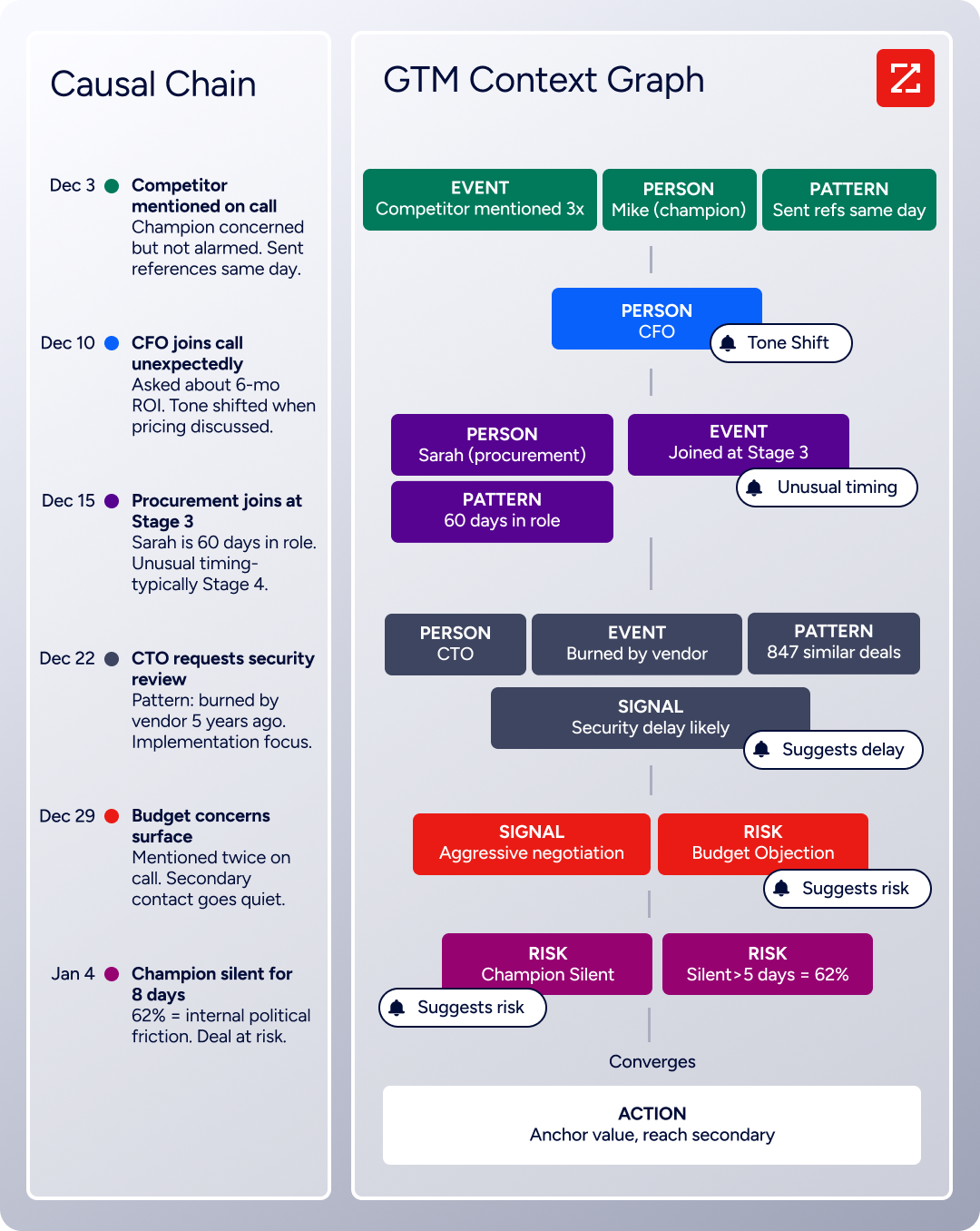
The GTM Context Graph turns raw data into usable insight. It combines ZoomInfo's 500M contacts and 100M company profiles with your CRM records, conversation transcripts, and behavioral signals. The result: an intelligence layer that captures not just what happened in a deal, but why it happened.
Source: ZoomInfo
A CRM records that a deal moved stages. The GTM Context Graph reasons that the CFO joining the last call, combined with ROI-focused questions, matches the pattern behind closed-won deals in your segment.
Buyer Intent data tracks signals from 210 million IP-to-Organization pairings, revealing which companies are researching solutions in your category. Guided Intent, exclusive to ZoomInfo, identifies topics historically correlated with deal success rather than requiring manual topic selection.
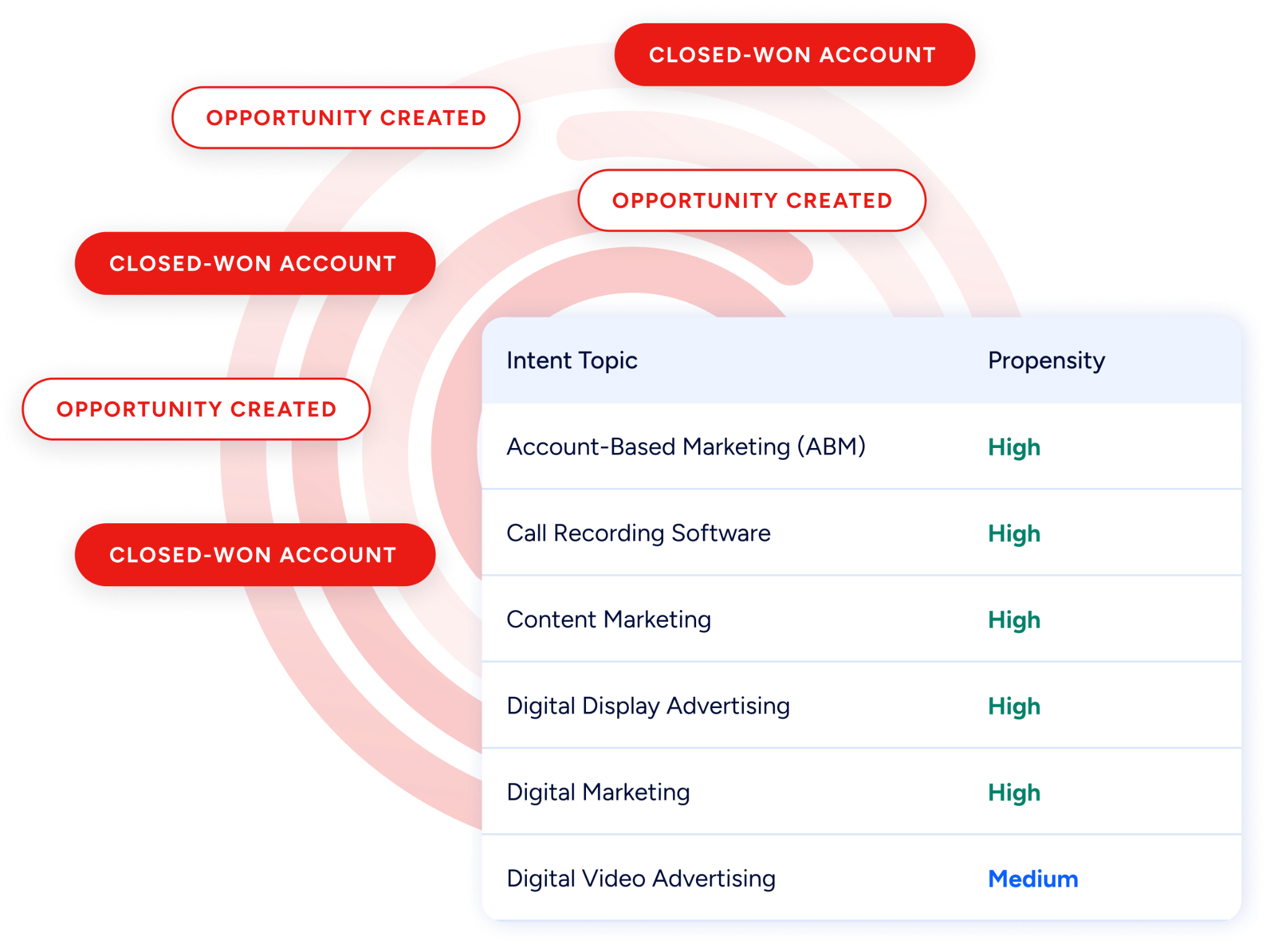
Source: ZoomInfo
This means your email campaigns through Brevo or GetResponse can target accounts that are actually in-market, not accounts that filled out a form six months ago.
ZoomInfo delivers this intelligence through three paths: GTM Workspace for sellers who need AI-drafted outreach and deal execution, GTM Studio for marketers and RevOps building audience segments and GTM plays, and APIs and MCP that feed ZoomInfo data into any platform, including your email marketing tool of choice.
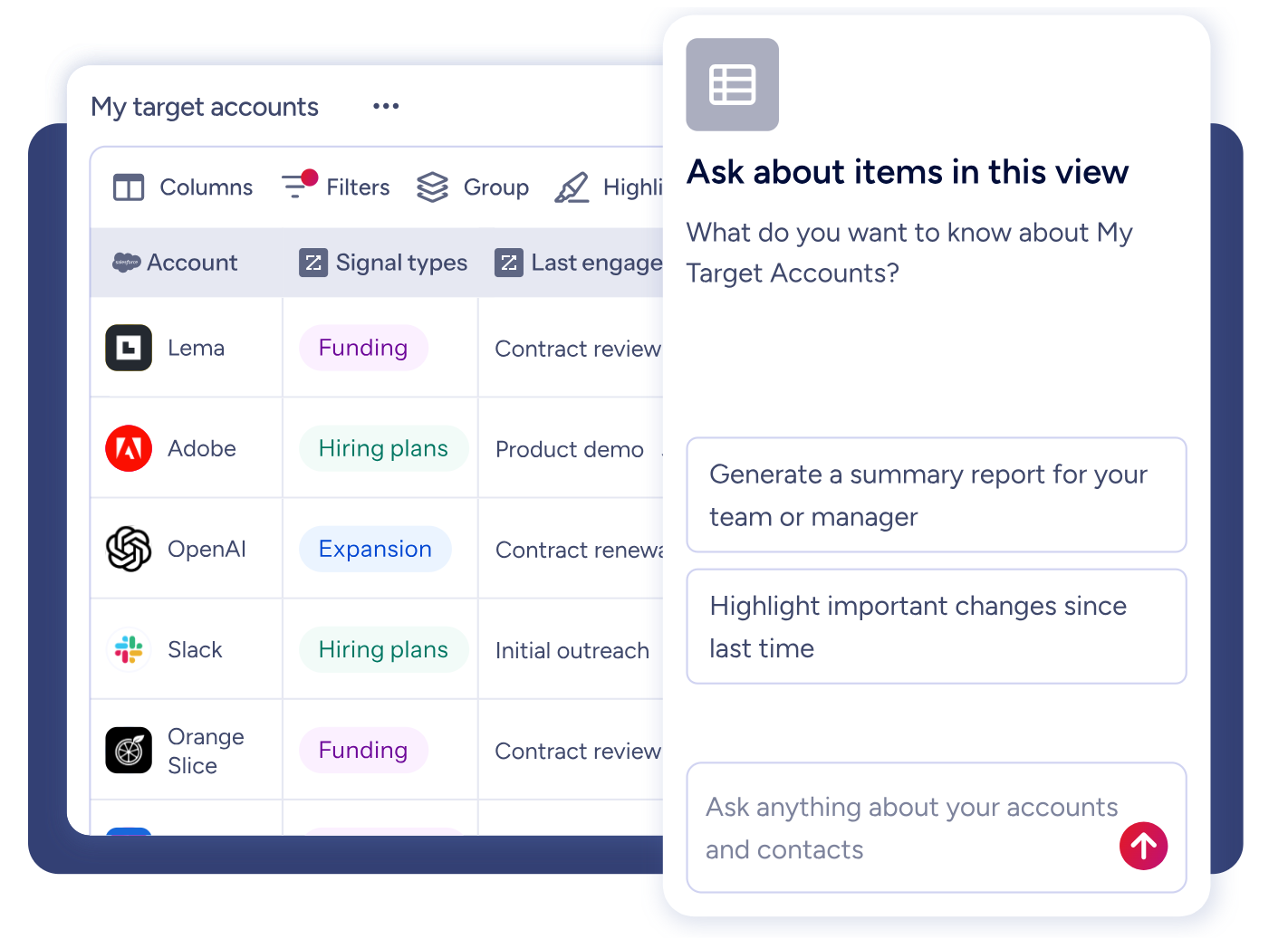
Source: ZoomInfo
The data quality is externally validated. In a Fortune 500 competitive RFP analyzing 25 million contacts across vendors, an independent consultant concluded that "no other competitor came even close." ZoomInfo has been named a Gartner Magic Quadrant Leader for ABM Platforms for two consecutive years and a Forrester Wave Leader for Intent Data Providers.
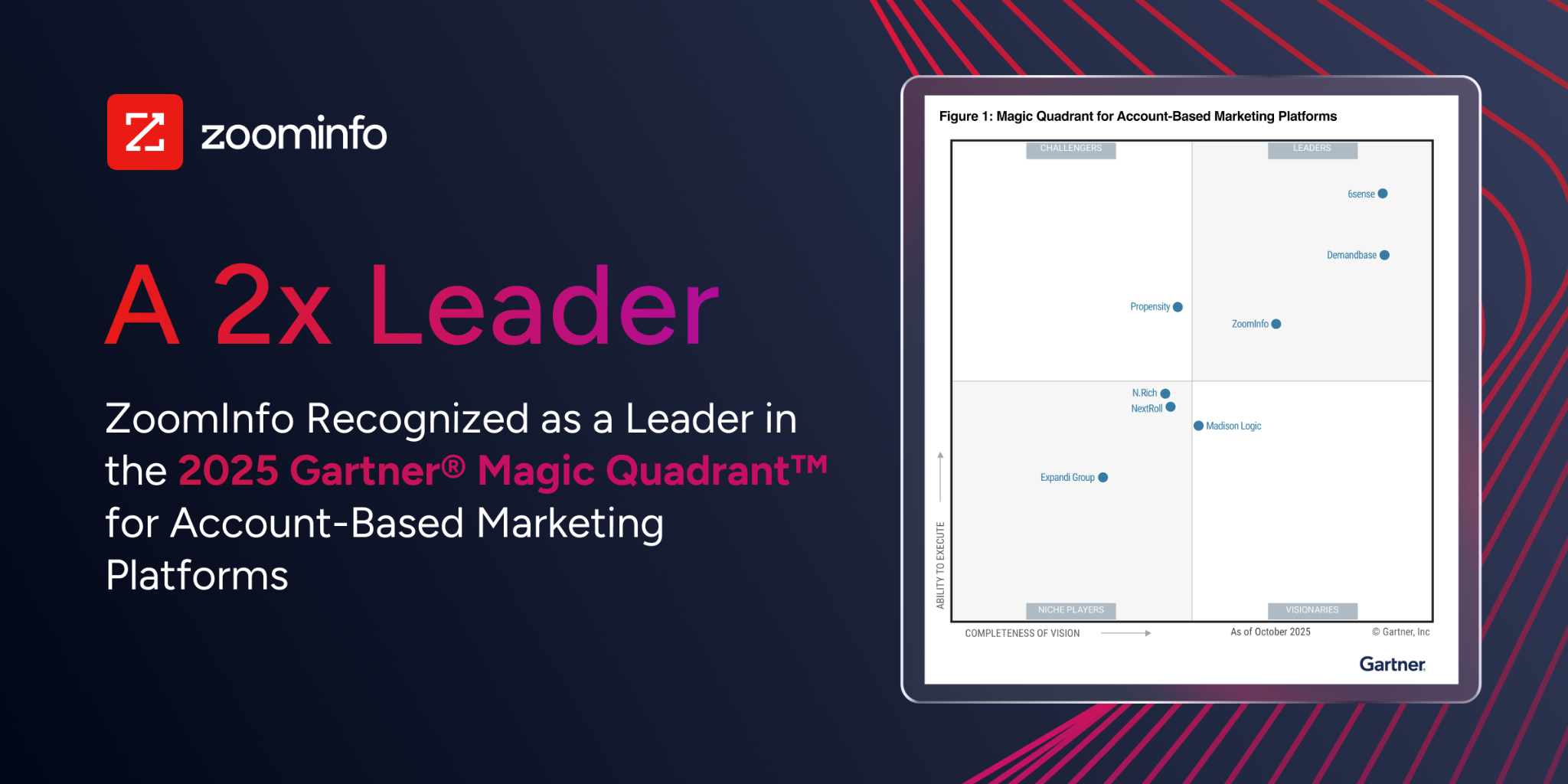
Source: ZoomInfo
Redwood Logistics achieved a 99% reduction in cost-per-click and a 310% increase in clickthrough rate by using ZoomInfo's data and intent signals to target accounts across the buyer journey. (Redwood Logistics)
For B2B teams using Brevo or GetResponse, adding ZoomInfo means shifting from "send emails to whoever signed up" to "send emails to the decision-makers at companies that are evaluating solutions like yours right now."
Volume pricing vs. contact pricing changes who saves money
Brevo and GetResponse price in opposite directions. Which costs less depends on how your business uses email.
Brevo charges by emails sent per month, with unlimited contacts on every plan including Free. The Free tier allows 300 emails per day. Paid plans start at $9/month for 5,000 emails (Starter) and $18/month for 5,000 emails (Standard, which adds automation and A/B testing).
A volume slider scales the price as you increase your monthly quota. Brevo's own comparison content claims savings of up to 9x versus Mailchimp in certain high-volume scenarios.
GetResponse charges by contacts stored, with unlimited email sends on all paid plans. Plans start at $19/month for 1,000 contacts (Starter), $59/month (Marketer), and $69/month (Creator). Prices increase at defined list size thresholds: 1K, 2.5K, 5K, 10K, 25K, 50K, and 100K contacts.
The practical impact: if you have a large contact list but send a modest number of campaigns per month, Brevo will be cheaper. If you have a smaller list but send daily newsletters or automated sequences, GetResponse's unlimited sending removes any per-message anxiety.
Two pricing traps worth knowing. On Brevo, the Starter plan displays the Brevo logo on outgoing emails unless you pay an $10.80/month add-on to remove it (Standard and above include removal by default).
On GetResponse, the same email address on two different lists counts as two contacts, which can push you into a higher tier unexpectedly. GetResponse also enforces a strict no-refund policy on annual plans: cancel mid-year and you forfeit the remaining months.
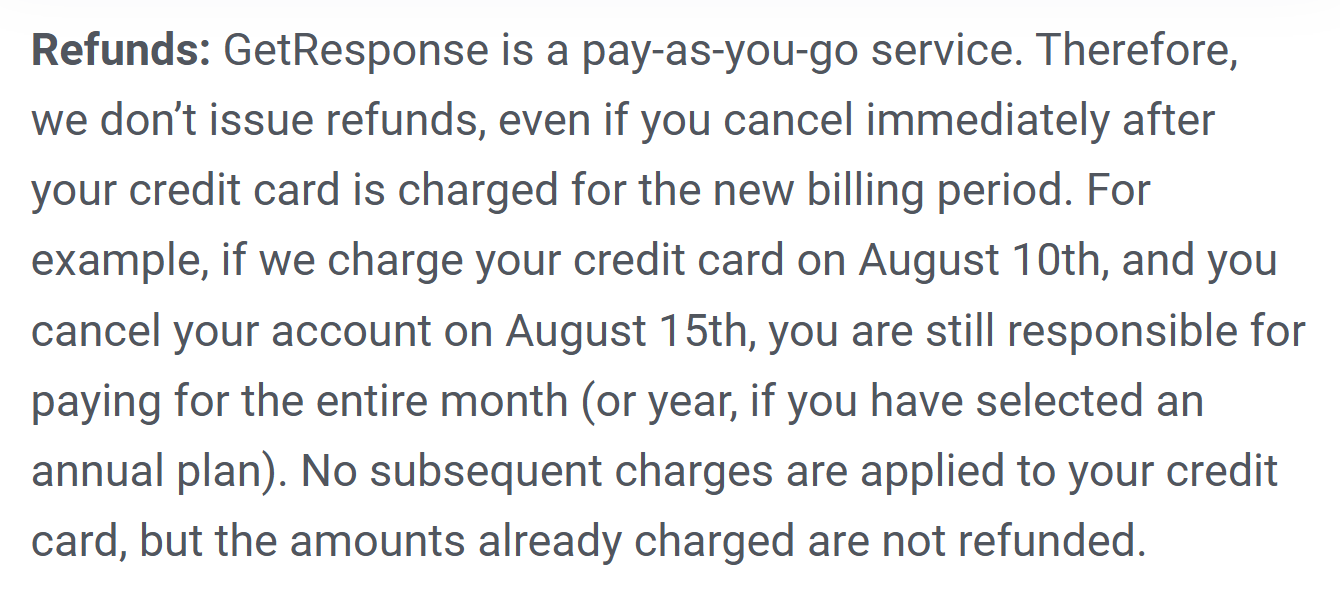
Source: GetResponse
Both offer annual billing discounts: Brevo gives 10% off, while GetResponse saves roughly 18% on annual plans.
Brevo vs. GetResponse vs. ZoomInfo: Which should you choose?
The right choice depends on what kind of business you're running and what problem you need to solve.
Choose Brevo if:
You need multichannel campaigns across email, SMS, WhatsApp, and live chat from one platform
You have a large contact list and want pricing based on sends, not list size
You need transactional email and marketing campaigns on a single bill
A built-in sales CRM and loyalty program would replace separate tools
Your team values channel breadth over automation depth
Choose GetResponse if:
You want to sell courses, host webinars, or charge for premium newsletters alongside email marketing
You send frequently to a smaller list and want unlimited email sends
AI-powered tools for email generation, landing pages, and product recommendations matter
Conversion funnels with built-in payment processing would replace a separate sales page tool
You're a creator or small business focused on audience growth and monetization
Add ZoomInfo if:
You're a B2B team that needs to identify, prioritize, and reach decision-makers at target companies
Your campaigns would improve if you knew which accounts are researching your category
You want verified contact data (direct dials, business emails) instead of hoping prospects find your forms
You need an intelligence layer that works across your GTM stack, not just email
Your sales and marketing teams need shared visibility into buyer intent and deal context
See how ZoomInfo's data and intelligence can strengthen your marketing stack.
Seismic attributed 39% of active pipeline to opportunities identified or influenced by ZoomInfo signals, boosting productivity by 54%. "That combination of our internal CRM data, external signals, and AI has helped us craft very specific account- and persona-based messages. And people have responded to them right away." (Seismic)
Brevo and GetResponse both do their jobs well: executing campaigns, automating customer journeys, and engaging audiences across channels. The question isn't which is "better" in the abstract. It's which pricing model, channel mix, and feature set match how your business actually operates.
For B2B teams, the deeper question is whether you have the intelligence to know who you should be targeting in the first place. That's a problem neither email platform was designed to solve, and the one ZoomInfo was built for.
Brevo vs. GetResponse vs. ZoomInfo FAQ
What is the core difference between Brevo, GetResponse, and ZoomInfo?
Brevo is a multichannel marketing platform that combines email, SMS, WhatsApp, live chat, and a sales CRM, with pricing based on email volume. GetResponse is an email marketing and content monetization platform with built-in webinars, course creation, and premium newsletters, priced by contacts stored.
ZoomInfo is a B2B data intelligence platform that provides verified contact data, buyer intent signals, and AI-powered GTM tools. It complements either email platform by telling B2B teams who to target and when.
Which platform is cheaper: Brevo or GetResponse?
It depends on your list size and sending frequency. Brevo charges by emails sent with unlimited contacts, starting at $9/month. GetResponse charges by contacts stored with unlimited email sends, starting at $19/month for 1,000 contacts.
Brevo is typically cheaper for businesses with large lists and moderate send frequency. GetResponse is more cost-effective for heavy senders with smaller lists. Both offer annual billing discounts (10% for Brevo, roughly 18% for GetResponse).
Does either platform include a CRM?
Brevo includes a built-in Sales CRM with deal pipelines, meeting scheduling, a cloud-based phone with AI call summaries, and a live chat widget. The basic CRM (50 open deals, 1 pipeline) comes at no extra cost on base plans. GetResponse does not offer a native CRM.
B2B teams needing sales intelligence and CRM enrichment should consider ZoomInfo, which integrates with Salesforce, HubSpot, and Microsoft Dynamics.
Can I sell courses or host webinars on either platform?
Only GetResponse offers these features. Its Creator plan ($69/month) includes an AI-powered course builder, webinar hosting for up to 1,000 live attendees, premium newsletter subscriptions, and a creator profile page. Brevo has no course, webinar, or content monetization capabilities.
Which platform supports more marketing channels?
Brevo supports more channels: email, SMS, WhatsApp (as a certified WhatsApp Business Solution Provider), web and mobile push notifications, live chat, chatbot, mobile wallet, and VoIP phone.
GetResponse supports email and web push notifications on standard plans, with SMS limited to the Enterprise tier. GetResponse has no WhatsApp integration, no live chat widget, and no phone functionality.
How does ZoomInfo work alongside Brevo or GetResponse?
ZoomInfo is not an email sending platform. It provides B2B contact data and buyer intelligence that inform your email campaigns. You use ZoomInfo to identify target accounts, find decision-maker contact information, and detect intent signals showing which companies are researching solutions.
That data then feeds into Brevo or GetResponse for campaign execution. ZoomInfo's APIs and MCP server allow programmatic data delivery into any marketing tool.
What are the main automation limitations of each platform?
Brevo's automation workflows and campaign analytics are less sophisticated than dedicated tools like ActiveCampaign or HubSpot, with reviewers citing restrictive advanced workflows. GetResponse limits segmentation to roughly 7 filters and scores lower than ActiveCampaign on automation depth in G2 comparative data. Neither platform matches the behavioral automation granularity of enterprise-tier tools.
Which platform has a better free plan?
Both offer permanent free plans. Brevo's free plan includes 300 emails per day with unlimited contacts and access to the drag-and-drop editor, templates, and basic analytics. GetResponse's free plan supports 500 contacts with 2,500 newsletter sends per month and includes a 14-day premium feature trial.
ZoomInfo Lite is also permanently free, with access to the B2B database and 10 monthly export credits. None of the free plans require a credit card.
More Brevo comparisons:
