

Choosing between Brevo and Constant Contact for your marketing often comes down to five questions:
Are you a B2B company that needs to find and reach the right prospects, or a local business that already knows its audience?
Do you need multichannel marketing across email, SMS, and WhatsApp, or mainly email with some social scheduling?
Do you need sophisticated automation, or will simple, pre-built workflows do?
Do you want unlimited contacts with pay-per-send pricing, or plans organized by contact count?
Is knowing who to target and when they're ready to buy more important than the tool you use to reach them?
In short, here's what we recommend:
Brevo is a multichannel marketing platform for growing businesses that need more than email. It covers email, SMS, WhatsApp, web push, live chat, and phone from a single interface, with a built-in CRM and transactional messaging on paid plans.
Brevo charges by emails sent rather than contacts stored (contacts are unlimited on every plan, including Free), which makes it cheaper than contact-count competitors for businesses with large lists.
Where Brevo falls short is automation depth: users who need complex multi-step behavioral workflows will hit limits compared to platforms like ActiveCampaign.
Constant Contact is the go-to for small businesses and nonprofits that want reliable email marketing with live phone support. Founded in 1995, it has three decades of name recognition and a claimed 97% deliverability rate.
Its built-in event management tools (RSVP, ticketing, payment processing) are a real differentiator for organizations running regular events.
However, Constant Contact charges by contact count, which gets expensive at scale, and its automation is limited: the Standard plan allows only three active paths using pre-built templates, with a single trigger per path.
Both platforms help you send marketing messages. But for B2B teams, the harder problem isn't sending, it's targeting. Which accounts are researching solutions right now? Who are the decision-makers? What message will land? Neither Brevo nor Constant Contact was designed to answer those questions.
ZoomInfo is a B2B intelligence and go-to-market platform that fills the data gap upstream of email. Built on a B2B dataset of 500M contacts, 100M companies, 135M+ verified phone numbers, and 200M+ verified business emails, ZoomInfo's GTM Context Graph (an intelligence layer processing 1.5B+ data points daily) combines this data with your CRM records, conversation transcripts, and behavioral signals to show not just what happened in your pipeline, but why.
For B2B marketing and sales teams, ZoomInfo replaces guesswork in audience targeting with verified data and real-time buying signals, then delivers that intelligence through GTM Workspace for sellers, GTM Studio for marketers and RevOps, or APIs and MCP in any other tool.
If intelligence-driven marketing sounds like the missing piece for your B2B team, see how ZoomInfo works.
Brevo vs. Constant Contact vs. ZoomInfo at a glance
Brevo | Constant Contact | ZoomInfo | |
|---|---|---|---|
Primary focus | Multichannel marketing & CRM | Email marketing & event management | B2B data intelligence & GTM execution |
Channels | Email, SMS, WhatsApp, push, chat, phone | Email, SMS, social scheduling | Email, display ads, LinkedIn, phone, direct mail |
Automation | Visual workflows (Standard+) | Limited paths with single triggers | AI-powered GTM plays and workflows |
CRM | Built-in sales CRM with deal pipelines | Basic contact management | Sales intelligence + CRM integrations |
Data intelligence | Contact profiles from your list | Contact profiles from your list | 500M contacts, intent signals, buying committees |
Pricing model | By emails sent (unlimited contacts) | By contact count | Consumption-based (custom-quoted) |
Starting price | Free / $9/mo (Starter) | $12/mo (Lite, 500 contacts) | Free (Lite) / custom-quoted (paid) |
Free plan | Yes (300 emails/day, unlimited contacts) | No (30-day trial only) | Yes (ZoomInfo Lite, permanent) |
Best for | Growing SMBs needing multichannel marketing | Local businesses, nonprofits, beginners | B2B teams needing intelligence-driven outreach |
Brevo leads on multichannel marketing, Constant Contact keeps it simple
Brevo and Constant Contact both call themselves multichannel, but the gap in channel coverage is wide.
Brevo treats email, SMS, WhatsApp, web push, mobile push, live chat, chatbot, phone, and mobile wallet as first-class channels, all managed from one interface. A single automation workflow can send an email, wait 24 hours, then follow up with an SMS, with no third-party integration needed.
As a certified WhatsApp Business Solution Provider, Brevo gives businesses direct access to the WhatsApp Business API, and the channel sits inside the same automation builder and conversation inbox as email and SMS.
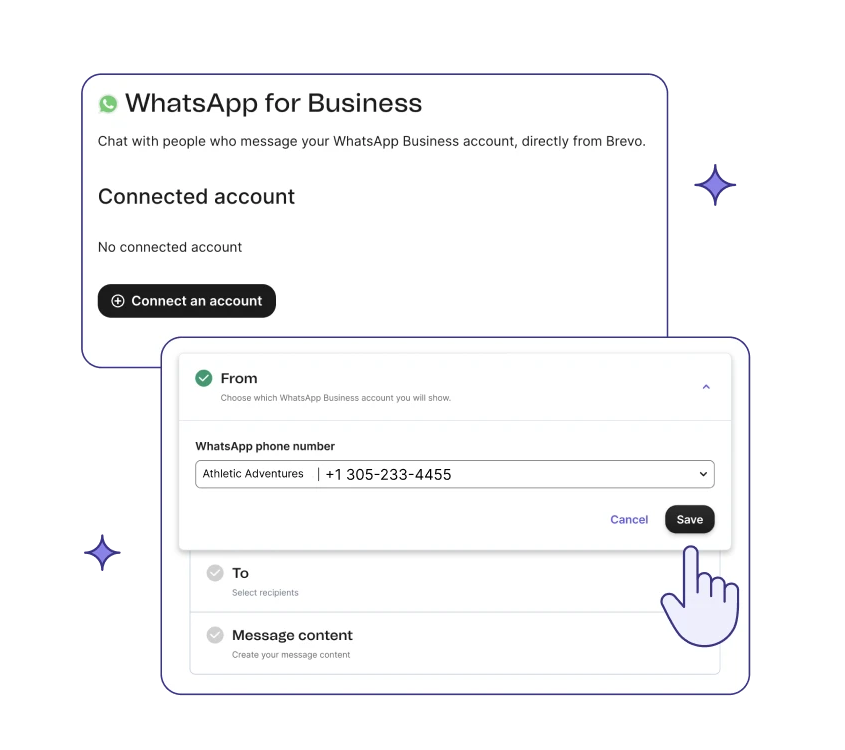
Source: Brevo
Transactional messaging is included on paid plans. Order confirmations, shipping updates, and password resets flow through the same API and SMTP infrastructure as marketing campaigns, with a stated capacity of 120,000 emails per minute.
For e-commerce and SaaS companies, having transactional and marketing email under one roof eliminates a separate vendor.
Constant Contact covers email, SMS, and social media scheduling (Facebook, Instagram, LinkedIn, TikTok). SMS is a paid add-on starting at $10/month for 500 messages, and it's available only to US and Australian customers. No WhatsApp. No push notifications. No transactional email infrastructure.
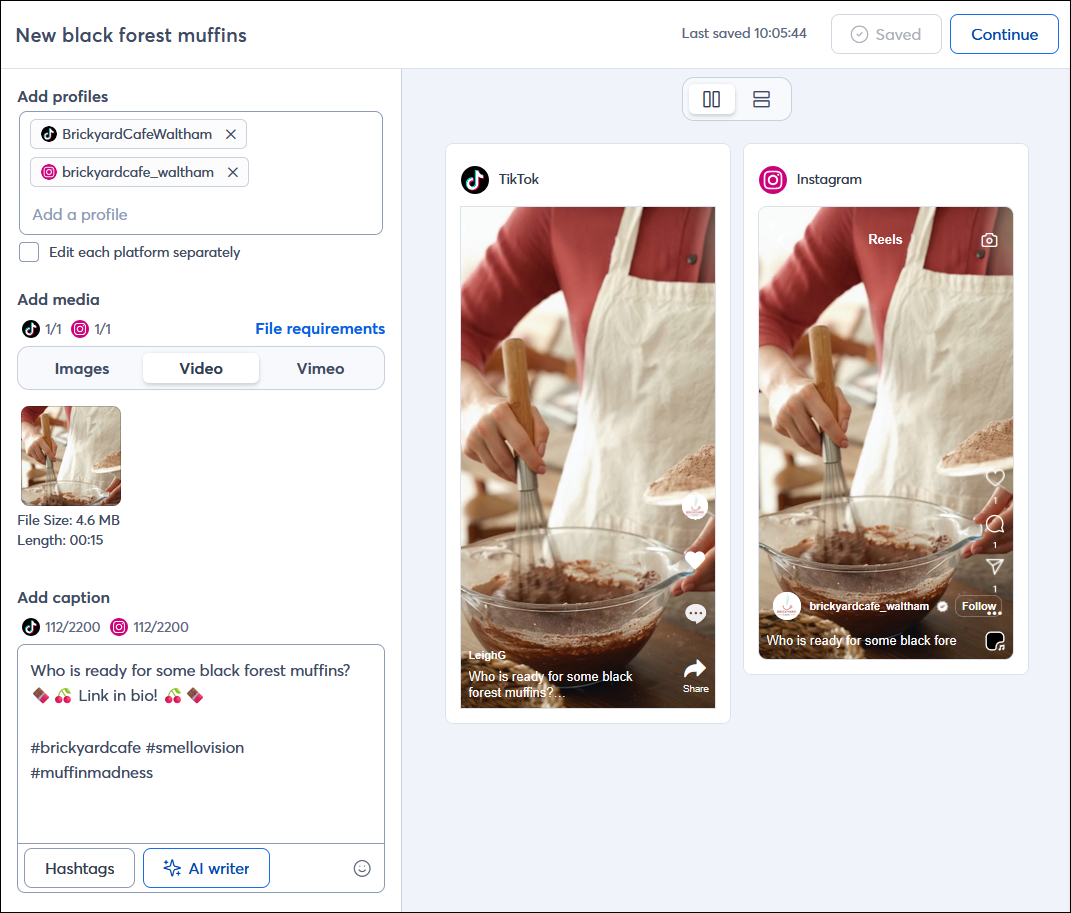
Source: Constant Contact
What Constant Contact does offer that Brevo doesn't is built-in event management with ticket sales, RSVP tracking, Stripe and PayPal payment processing, and automatic attendee-to-contact-list syncing.
For nonprofits running fundraisers or local businesses hosting workshops, this eliminates the need for a separate events platform. The social media tools are also more developed, with a Canva integration for cross-platform publishing and Facebook Lead Ads that feed directly into the contact list.
ZoomInfo approaches channels differently because the platform serves a different purpose. Rather than sending newsletters, ZoomInfo orchestrates B2B outreach across email, display ads, LinkedIn, phone, and direct mail, triggered by buyer behavior and intent signals.
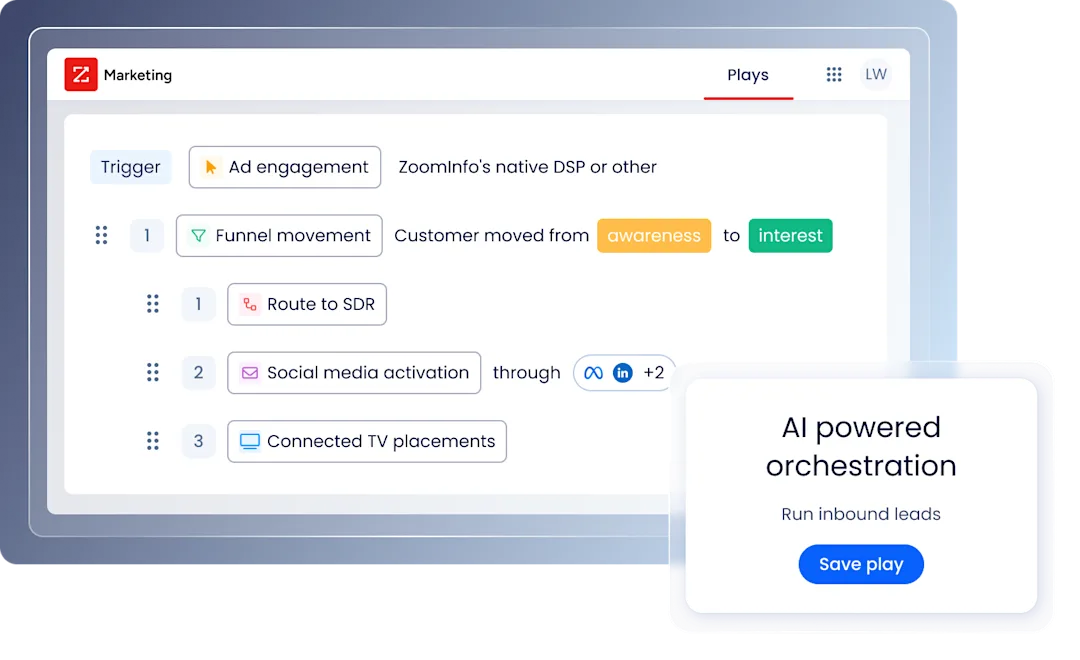
Source: ZoomInfo
GTM Studio lets marketers launch multi-channel plays that target accounts matching proven win patterns, while GTM Workspace gives sellers AI-drafted outreach based on full account context.
The distinction matters: Brevo and Constant Contact broadcast to your existing list. ZoomInfo identifies who should be on your list in the first place, then reaches them across the channels most likely to connect.
Automation depth varies from basic to AI-driven
This is where the three platforms diverge most sharply.
Constant Contact's Automation Path Builder uses a drag-and-drop canvas with three step types: send actions (email or SMS), rule steps (time delays and conditional splits), and contact actions (update fields, add tags). Each path supports a single trigger and up to 50 steps.
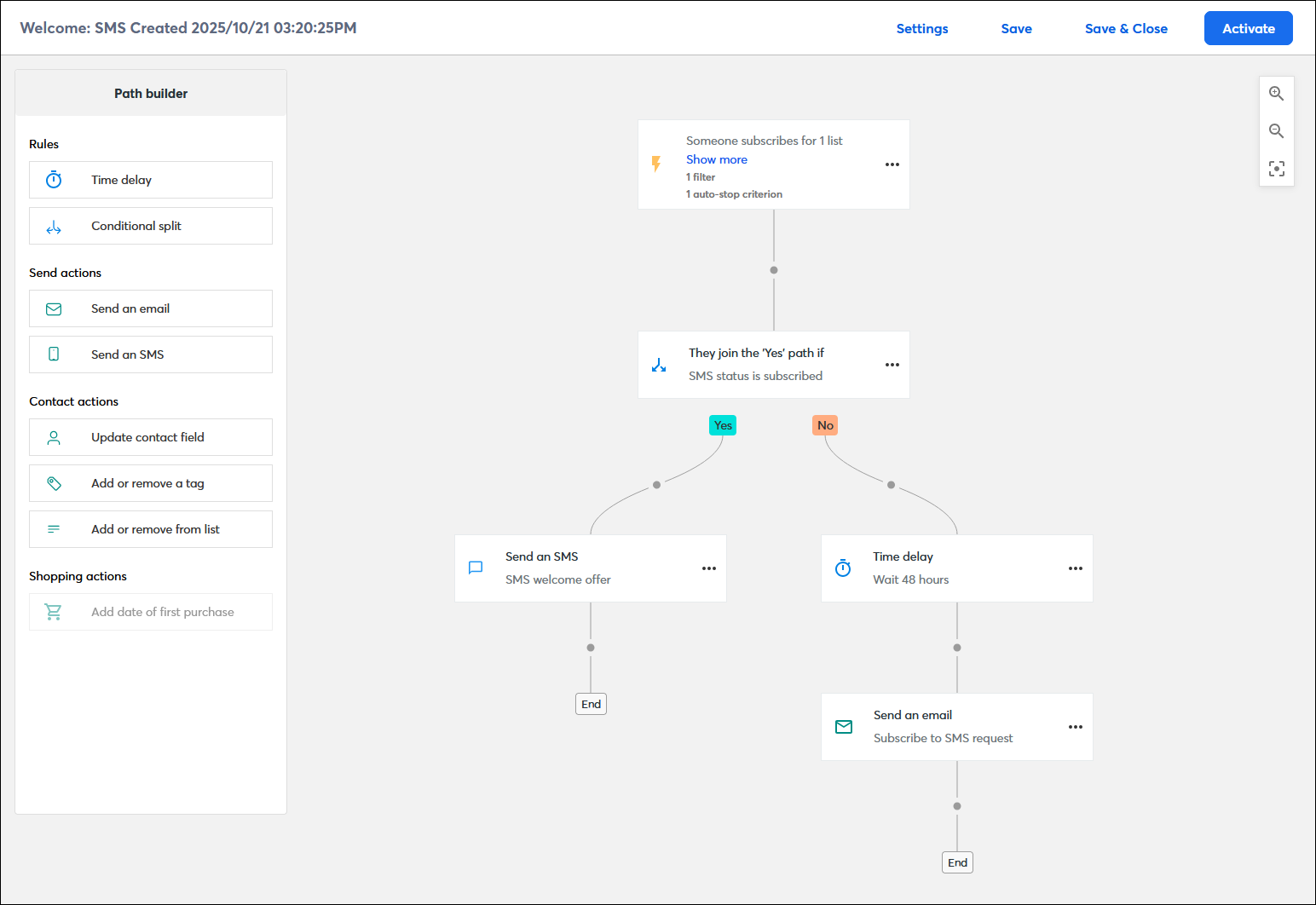
Source: Constant Contact
The real constraint is plan-gated access: Lite allows one active path, Standard allows three (pre-built templates only), and only Premium unlocks custom paths and unlimited automations.
For welcome series and birthday emails, this works. For anything requiring multi-trigger logic, behavioral branching, or lead scoring, you'll need either the Premium plan or a different platform.
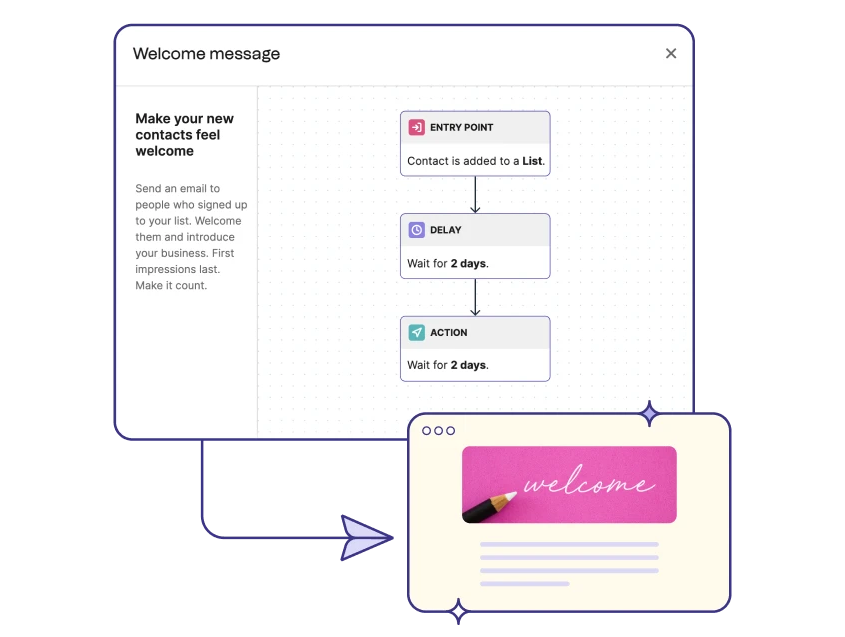
Brevo opens up automation at the Standard plan ($18/month), with a visual workflow editor and pre-built templates for welcome series, abandoned cart recovery, and re-engagement.
Source: Brevo
Workflows can span channels (an email followed by an SMS in the same sequence) and trigger on contact activity, form submissions, link clicks, or e-commerce events. The Free plan includes automation for up to 2,000 contacts.
Brevo's automation is more flexible than Constant Contact's, but it has a ceiling. G2 reviewers note that advanced multi-step workflows and dynamic segmentation feel restrictive compared to ActiveCampaign or HubSpot.
For most small businesses, Brevo's automation is more than adequate. For teams running complex behavioral campaigns, the limitations surface.
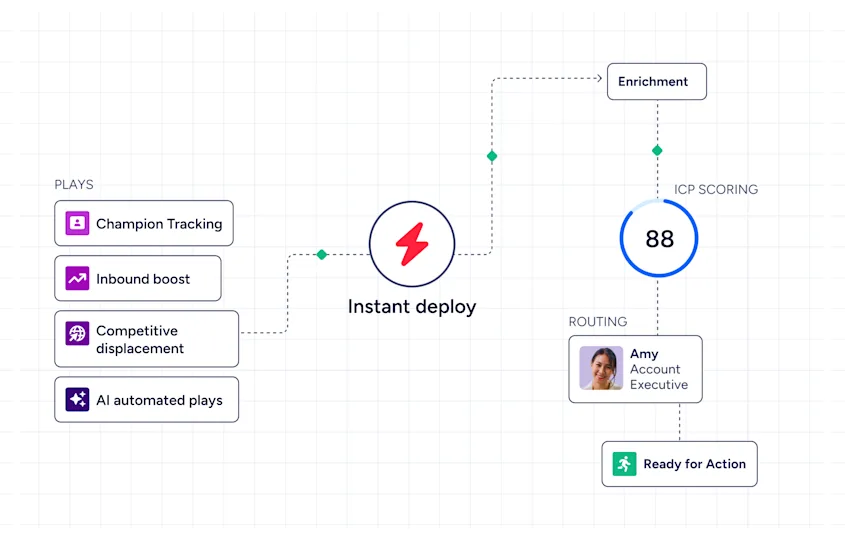
ZoomInfo operates at a different level. Instead of automating email sequences based on subscriber behavior, ZoomInfo automates go-to-market motions based on buying signals and account intelligence.
GTM Studio provides pre-built GTM plays (inbound acceleration, champion tracking, competitive displacement, ICP targeting) that launch in one click and improve as prospects respond.
Source: ZoomInfo
When an account's intent score spikes, a decision-maker changes jobs, or a competitor is mentioned in a call transcript, the system triggers coordinated outreach across channels automatically.
The difference isn't just sophistication. It's what drives the trigger. Brevo and Constant Contact automate based on what subscribers do with your emails. ZoomInfo automates based on what's happening in the market, inside your accounts, and across your pipeline.
Seismic's sales team attributed 39% of active pipeline to opportunities identified or influenced by ZoomInfo signals, with 54% productivity gains and 11.5 hours saved per week per seller. (Seismic)
For B2B teams, the real gap is data intelligence
Brevo and Constant Contact reach the people already on your list. Neither helps you figure out who should be on it.
Both platforms store the contacts you import or capture through forms. Both let you segment by demographics, engagement history, and purchase behavior. Brevo adds a Customer Data Platform that unifies data from multiple sources with no-code cleaning tools. Constant Contact offers ten segmentation categories covering email behavior, SMS activity, website visits, and shopping data.
But none of this answers the B2B marketer's core questions: Which companies are researching solutions in my category right now? Who are the decision-makers at those companies, and how do I reach them? What does the buying committee look like, and which stakeholders are engaged?
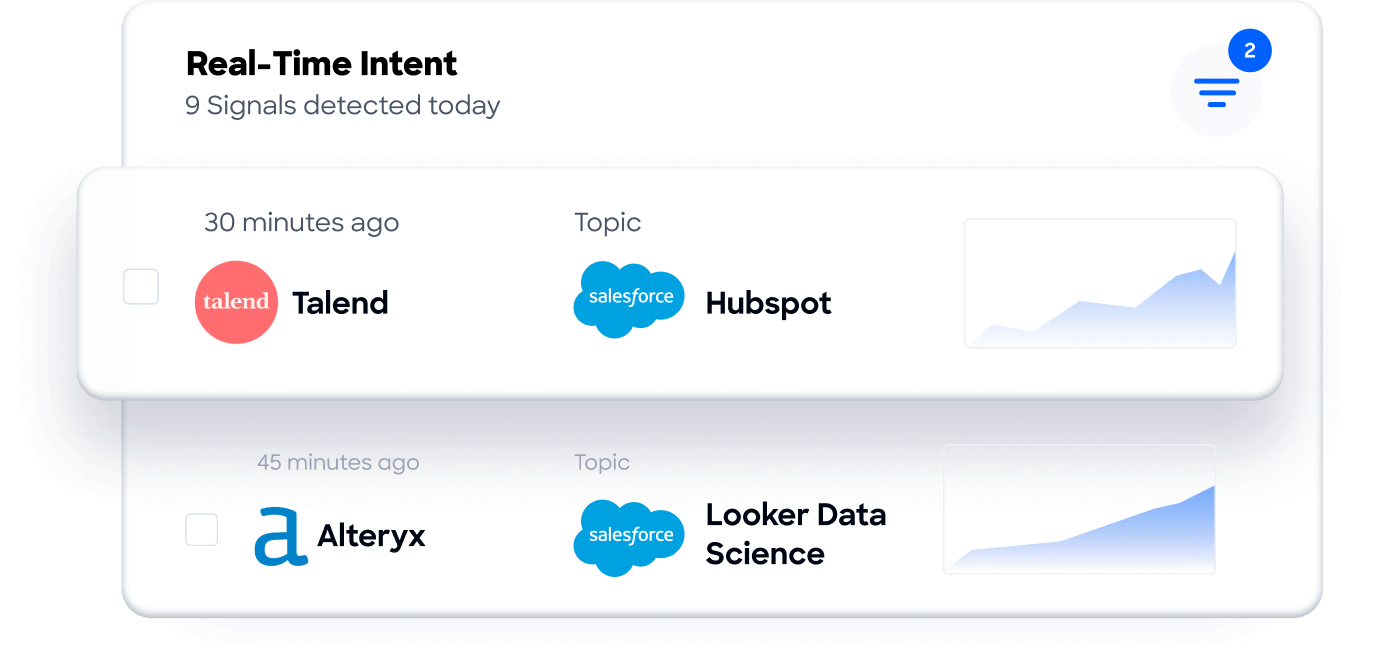
ZoomInfo was built to answer these questions. The platform's intent data tracks signals from 210 million IP-to-Organization pairings and 6 trillion+ new keyword-to-device pairings sourced monthly.
Guided Intent, exclusive to ZoomInfo, identifies topics historically correlated with deal success rather than requiring manual topic selection.
Source: ZoomInfo
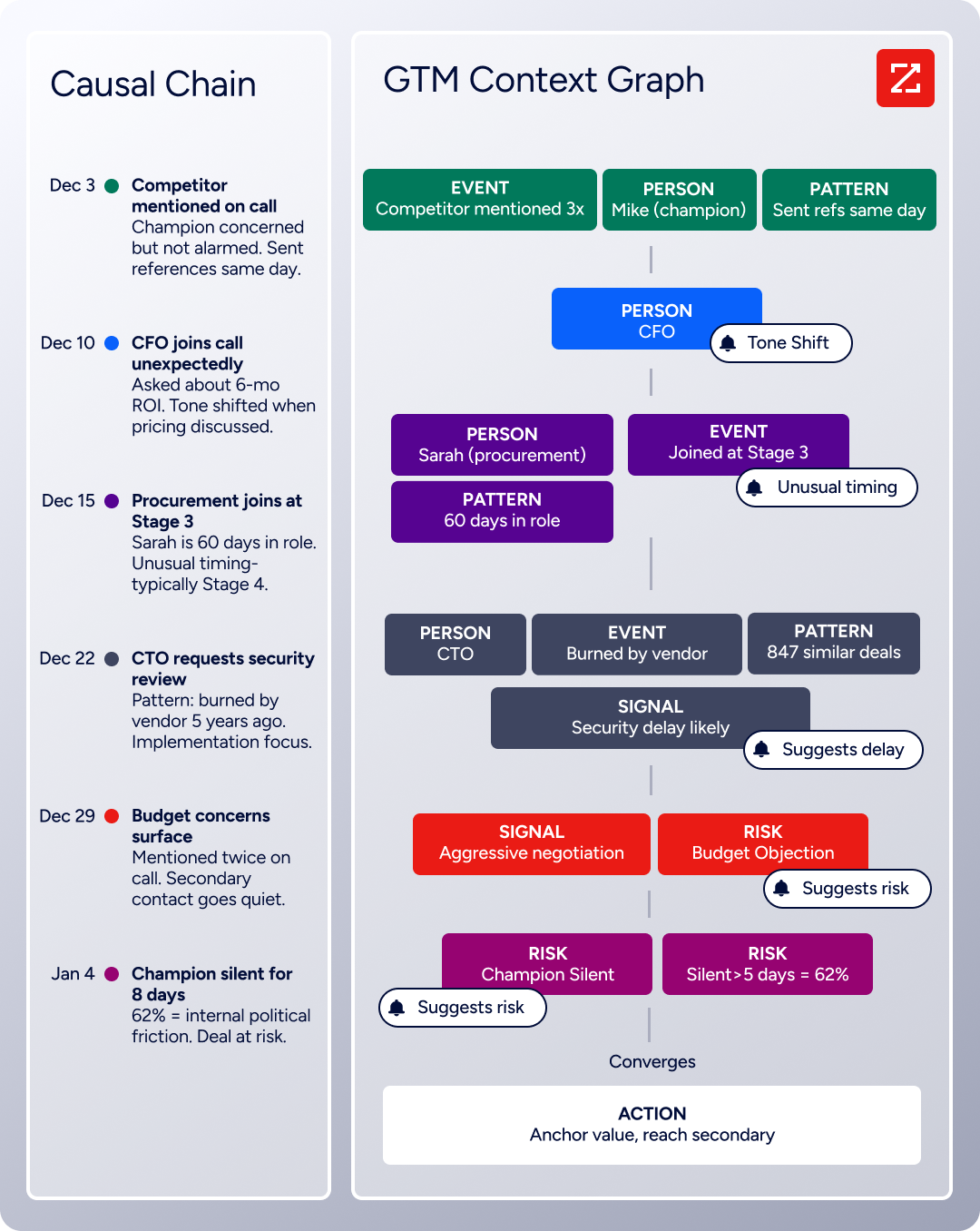
ZoomInfo's GTM Context Graph goes deeper. This intelligence layer processes 1.5B+ data points daily, combining ZoomInfo's B2B data with your CRM records, conversation intelligence from calls and meetings, and behavioral signals.
Source: ZoomInfo
The result isn't a list of prospects. It's contextual intelligence about why deals move or stall, which patterns predict success, and what actions to take next.
For B2B marketers running account-based campaigns, this changes the equation. Instead of building audiences from your existing list and hoping the right people see your emails, ZoomInfo identifies accounts showing buying intent, maps the decision-makers, and delivers that intelligence to your marketing and sales teams.
Redwood Logistics achieved a 99% reduction in cost-per-click and 310% increase in clickthrough rate using ZoomInfo's data-driven audience targeting. "It's not just the data itself. It's more about the right data at the right time to help us reach out with the right message across that full buyer journey." (Redwood Logistics)
CRM and sales tools serve different markets
All three platforms include CRM or sales-adjacent features, but the depth and purpose differ.
Brevo's Sales Platform includes Kanban-style deal pipelines, a built-in cloud phone with AI call summaries, a meeting scheduler with payment collection, and a live chat widget that automatically adds contacts to the CRM.
The Aura AI Sales Assistant handles contact enrichment, deal creation from conversations, and sales email drafting. A free Sales tier (50 open deals, one pipeline) is included on base plans at no extra cost.
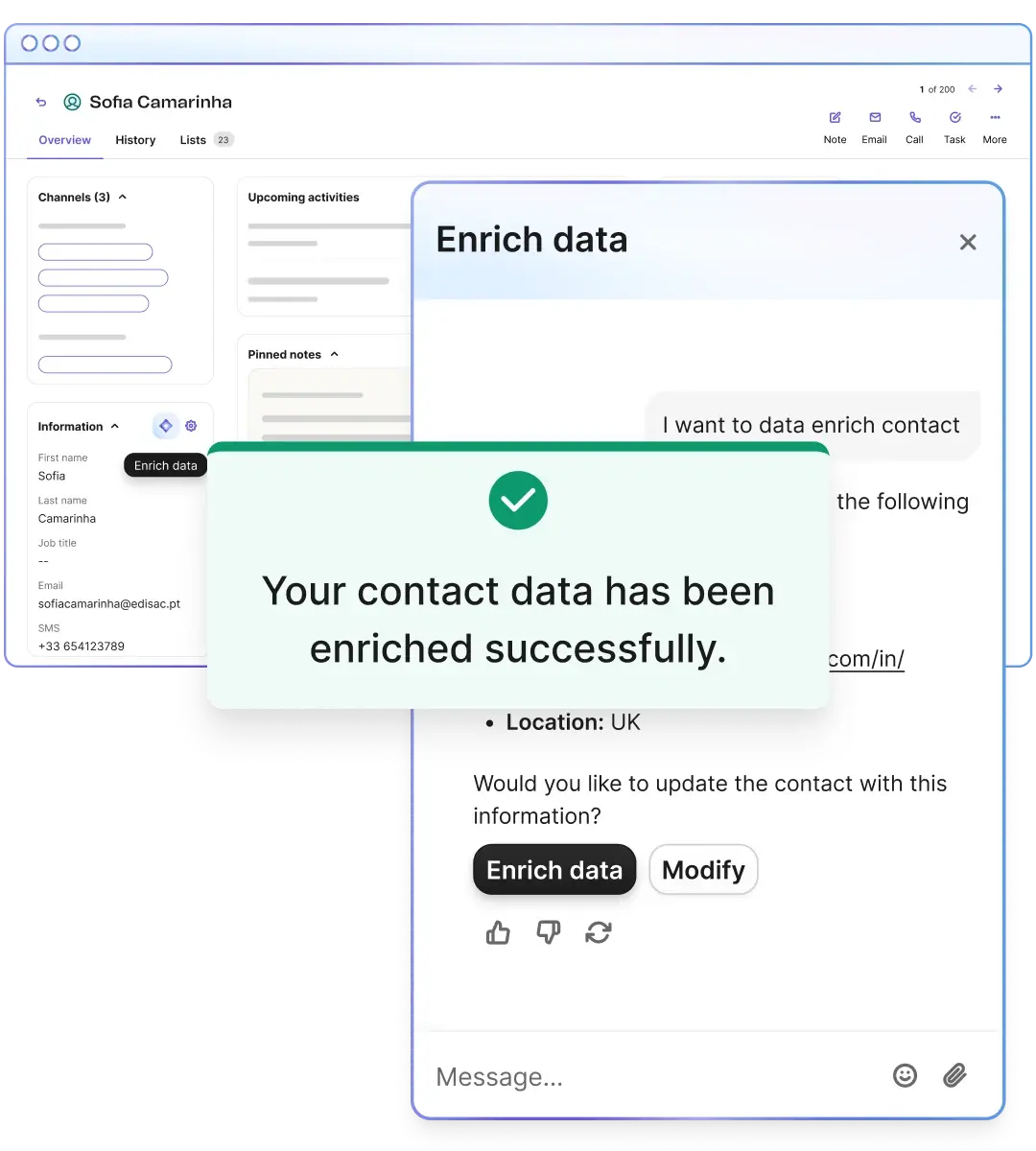
Source: Brevo
For small teams managing a modest sales pipeline alongside their marketing, Brevo's CRM is functional and convenient. Everything lives in one platform: the email campaign, the follow-up sequence, the deal pipeline, and the customer conversation.
The trade-off is depth. Brevo's CRM is still maturing compared to dedicated sales tools.
Constant Contact offers basic contact management (lists, tags, segments) but no real CRM. The 2021 SharpSpring acquisition brought marketing automation and CRM capabilities, but these haven't been integrated into the core SMB product.
For sales pipeline management, Constant Contact users typically rely on a separate tool.
ZoomInfo approaches sales from the intelligence layer up. GTM Workspace gives sellers a complete book-of-business view that combines CRM data, ZoomInfo's contact database, conversation history, and market intelligence in one interface.
Rather than manually researching accounts, sellers receive AI-generated account briefs, pre-drafted outreach, and a live Action Feed that surfaces in-market buyers with recommended next steps.
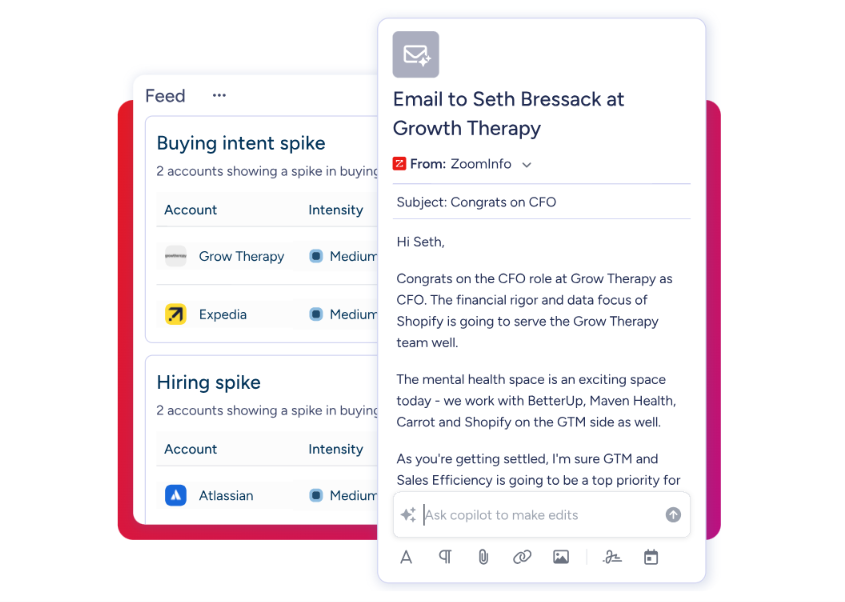
Source: ZoomInfo
ZoomInfo doesn't replace your CRM. It integrates with Salesforce, HubSpot, and Microsoft Dynamics, enriching your existing records with verified data and buying signals. The value isn't in managing deals (your CRM does that). It's in knowing which deals to pursue, who to involve, and what to say.
"Anything that minimizes our team's need to switch contexts is beneficial. ZoomInfo offers a single view, eliminating the need to navigate between systems." (Spekit)
AI capabilities reflect each platform's ambitions
All three platforms have invested in AI, but the implementations reflect different goals.
Constant Contact moved early on SMB-focused AI. Its AI Content Generator combines a proprietary data layer with OpenAI's ChatGPT to generate email drafts, social posts, and SMS messages from a short prompt.
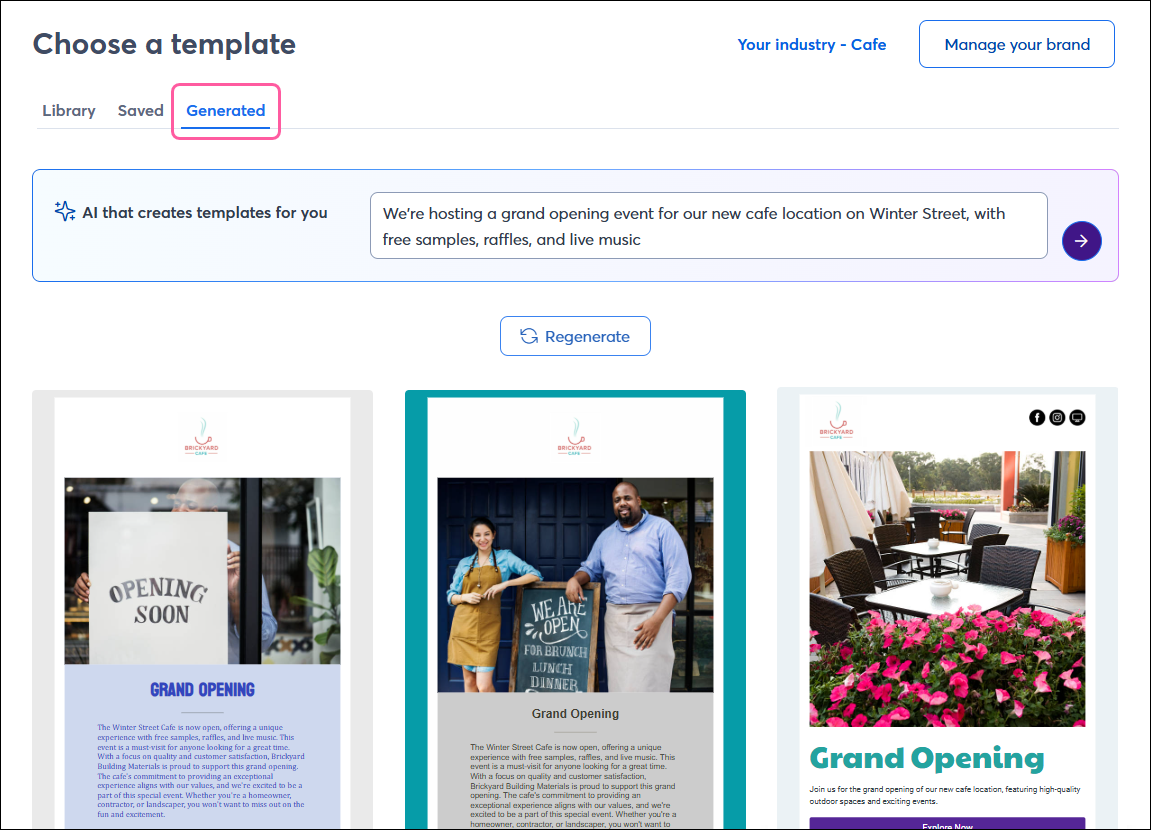
Source: Constant Contact
The Campaign Builder produces a recommended campaign (channels, content, timing) from a stated goal.
In June 2026, a ChatGPT app integration launched, letting users create campaigns through natural-language conversation. Internal data shows customers using AI features send emails 23% faster on average.
The AI is practical and well-suited to busy small business owners who need a draft, not a blank page.
Brevo's Aura AI is organized as four agents: Marketing Agent (content generation, AI segmentation, predictive send-time optimization, product recommendations), Sales Assistant (contact enrichment, deal creation, email drafting, call transcripts), Data Analyst (natural-language data queries), and Conversations Agent (chat summarization, tone-adaptive replies).
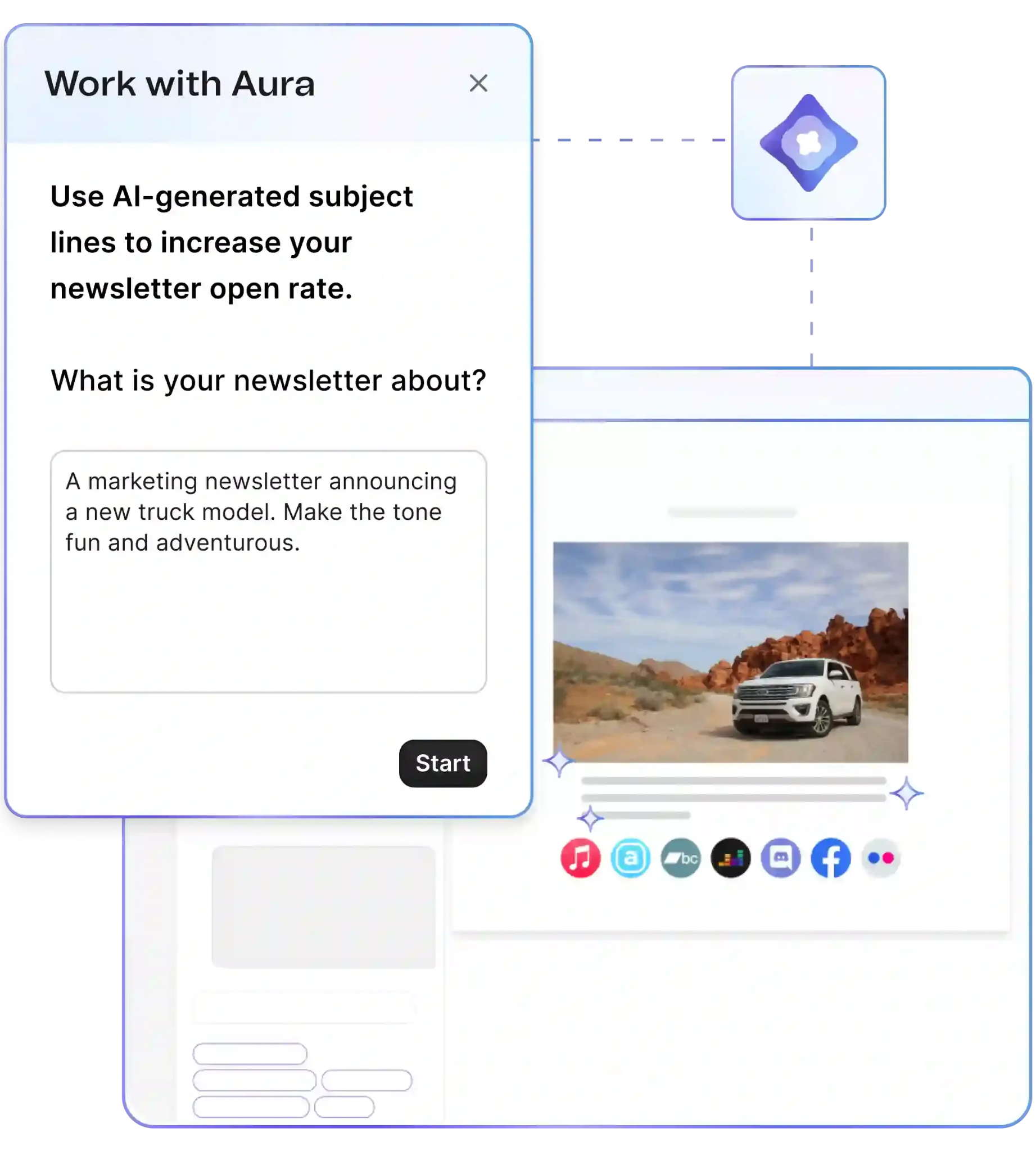
Source: Brevo
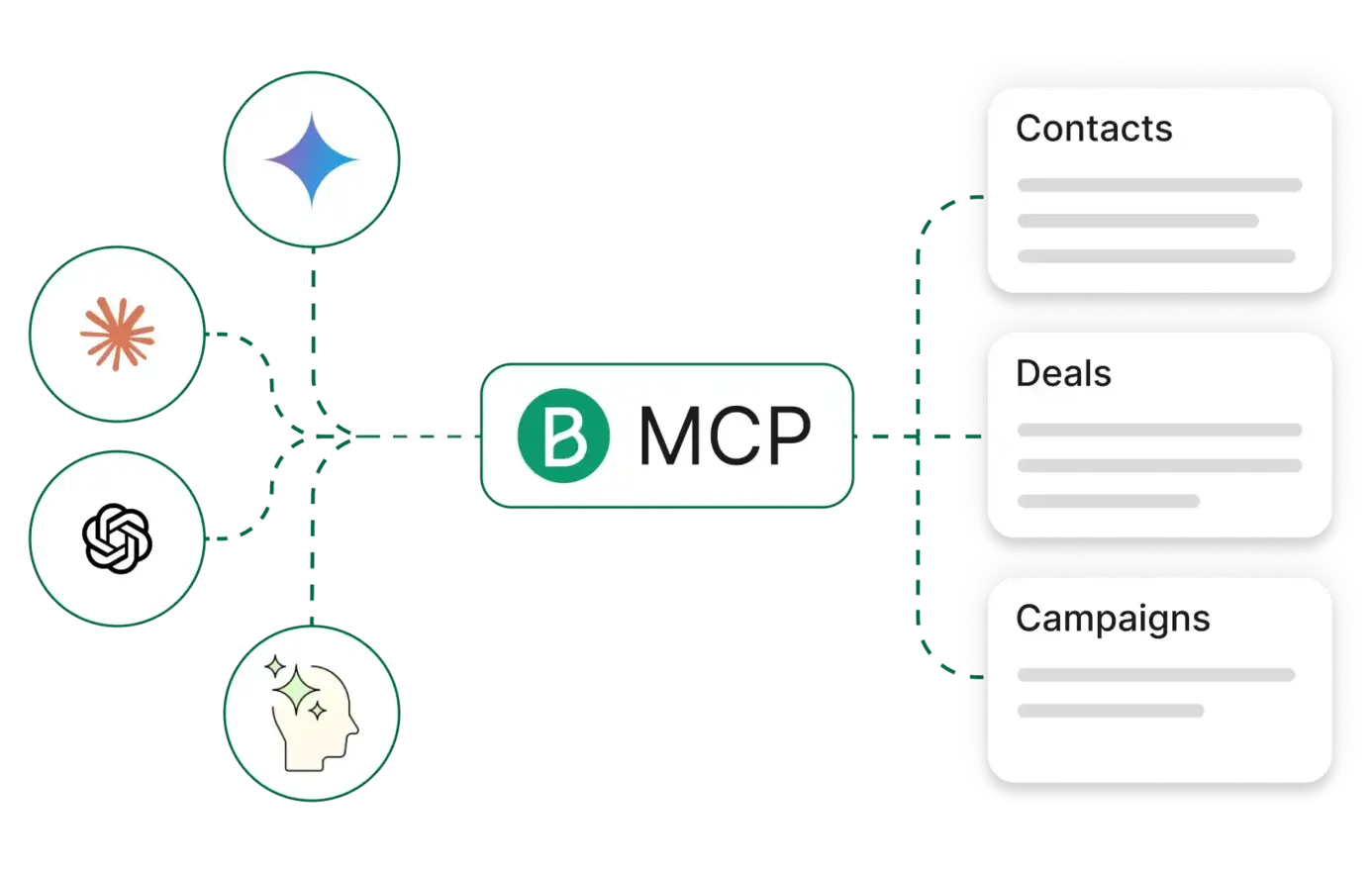
Brevo has also released an MCP server that lets AI assistants connect to Brevo's data for campaign management and reporting.
Source: Brevo
Brevo's AI is broader in scope than Constant Contact's, reflecting the platform's wider feature set.
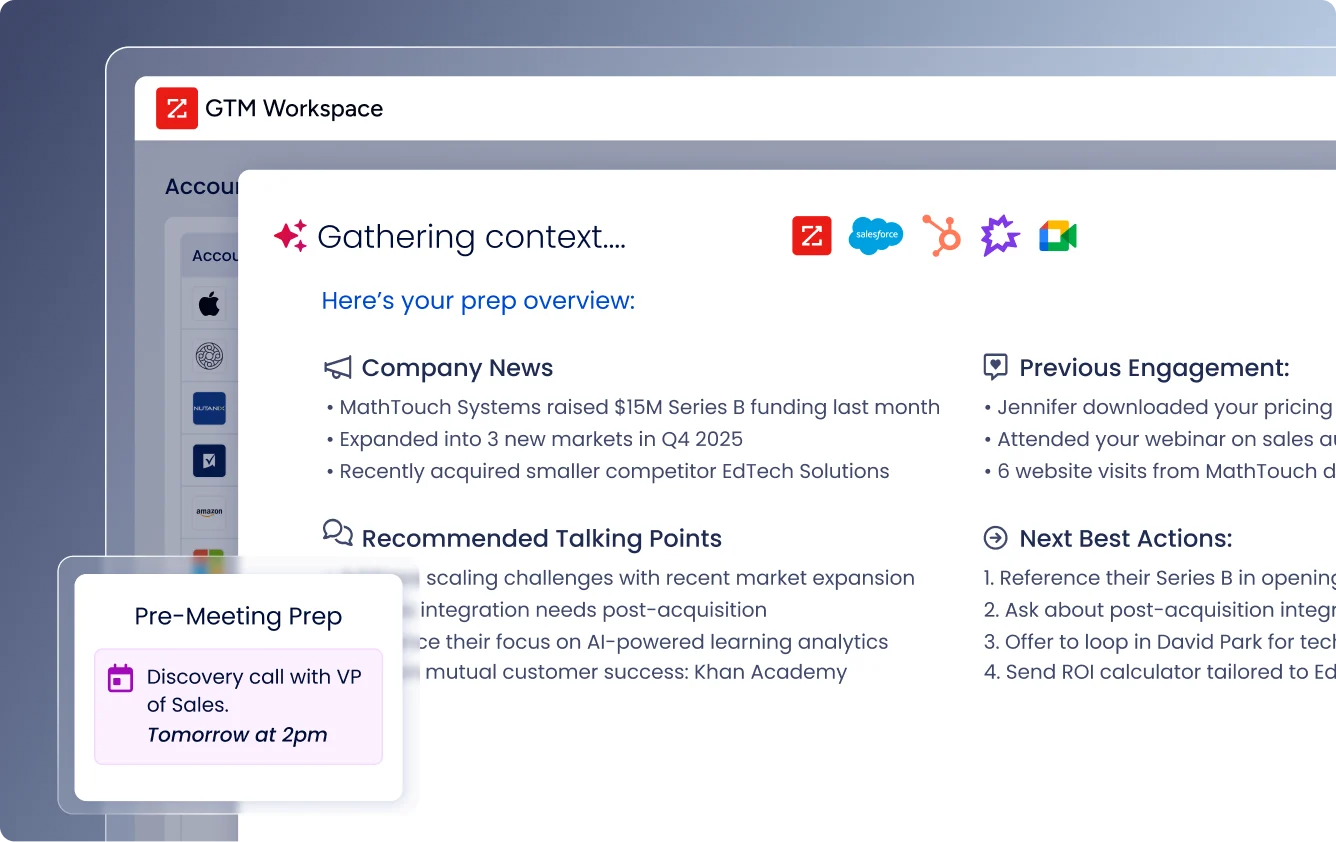
ZoomInfo's AI runs on a different foundation. Built on Anthropic's Claude, the AI agents in GTM Workspace don't just generate content.
They research accounts, identify buying committees, monitor market signals, draft personalized outreach based on conversation history and account context, and update your CRM automatically.
Source: ZoomInfo
The AI in GTM Studio lets marketers describe audiences in natural language and launch multi-channel plays instantly, with the system improving as prospects respond.
The key difference: Brevo and Constant Contact use AI to help you write and send messages faster. ZoomInfo uses AI to determine who to contact, when to engage, and what to say, then acts on that intelligence.
Pricing models reveal who each platform is for
The way each platform charges tells you who it was designed for.
Brevo prices by email volume, not contact count. Contacts are unlimited on every plan, including Free. The Free plan includes 300 emails per day with no credit card required.
Starter begins at $9/month for 5,000 emails. Standard, which adds automation, A/B testing, and AI send-time optimization, starts at $18/month. Professional jumps to $499/month but includes 150,000 emails, 10 user seats, WhatsApp campaigns, and phone support.
This model rewards list building. A business with 50,000 contacts sending a monthly newsletter pays the same as one with 5,000 contacts at the same send volume. For companies with large but lightly engaged lists, Brevo can cost a fraction of what contact-count competitors charge.
Constant Contact charges by contact tier and plan level. The Lite plan starts at $12/month for up to 500 contacts but reaches $80/month at 5,000 contacts. Standard starts at $35/month for 500 contacts and hits $110/month at 5,000.
Premium begins at $80/month and climbs to $200/month for 5,000 contacts. The escalation is steep, and billing is anchored to your highest-ever contact count, meaning deleting contacts doesn't lower your bill.
Worse: if you exceed your send limits for two consecutive months, Constant Contact automatically upgrades your account to the next tier without asking. The permanent free plan was removed in June 2025, replaced by a 30-day trial capped at 100 total emails.
The trade-off for this cost is phone support on every paid plan and a 30% prepay discount for nonprofits. For small organizations with modest lists who value human support, the math works. For growing businesses, it becomes a tax on success.
ZoomInfo uses consumption-based pricing that is custom-quoted based on seats, credit volume, features, and contract length. There are no published dollar amounts.
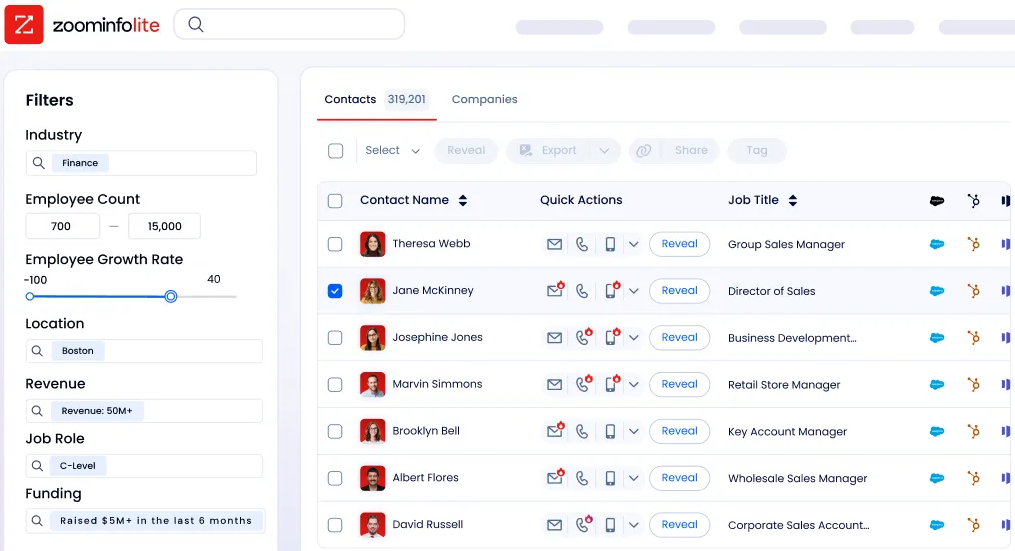
A permanent free tier, ZoomInfo Lite, provides access to ZoomInfo's B2B database with 10 monthly export credits at no cost. Paid plans span Sales, Marketing, and Enterprise tiers, each with deeper access to intent signals, AI features, and integrations.
Source: ZoomInfo
ZoomInfo is a different investment category than Brevo or Constant Contact. You're not paying for email sends or contact storage. You're paying for verified B2B intelligence: accurate contact data, buying intent signals, company technographics, and AI-driven prioritization.
For B2B teams, the ROI calculation is different: a ZoomInfo subscription is measured against pipeline generated, not emails sent.
Support and ease of use match each platform's audience
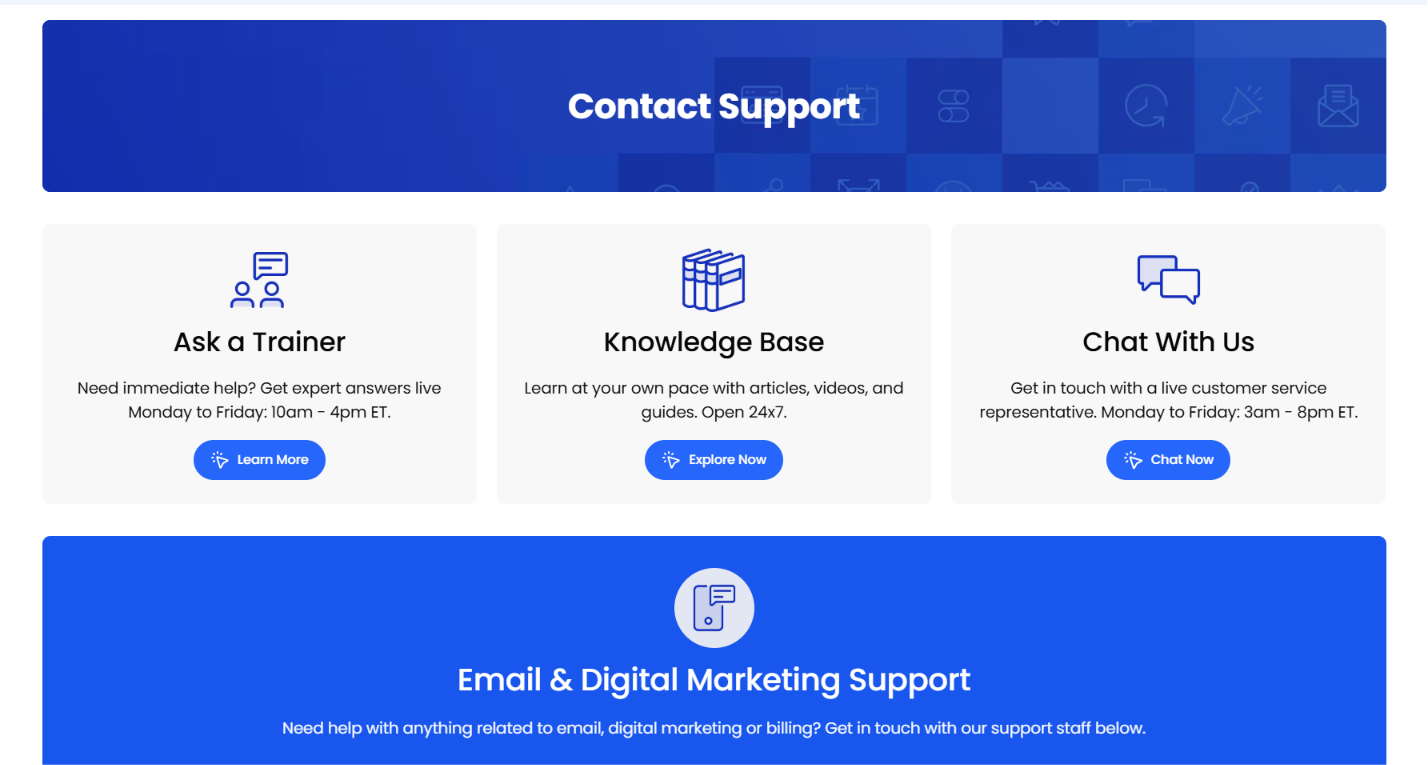
Constant Contact leads with human support. Phone support is available six days a week on all paid plans, a differentiator that Capterra reviewers consistently highlight. Live chat runs Monday through Friday. An "Ask a Trainer" program provides guided help sessions.
Source: Constant Contact
The interface is built for non-technical users, with 200+ email templates and guided onboarding. Constant Contact holds a 4.1/5 on G2 and 4.3/5 on Capterra.
One friction point: cancellation requires a phone call. There is no self-serve cancellation online.
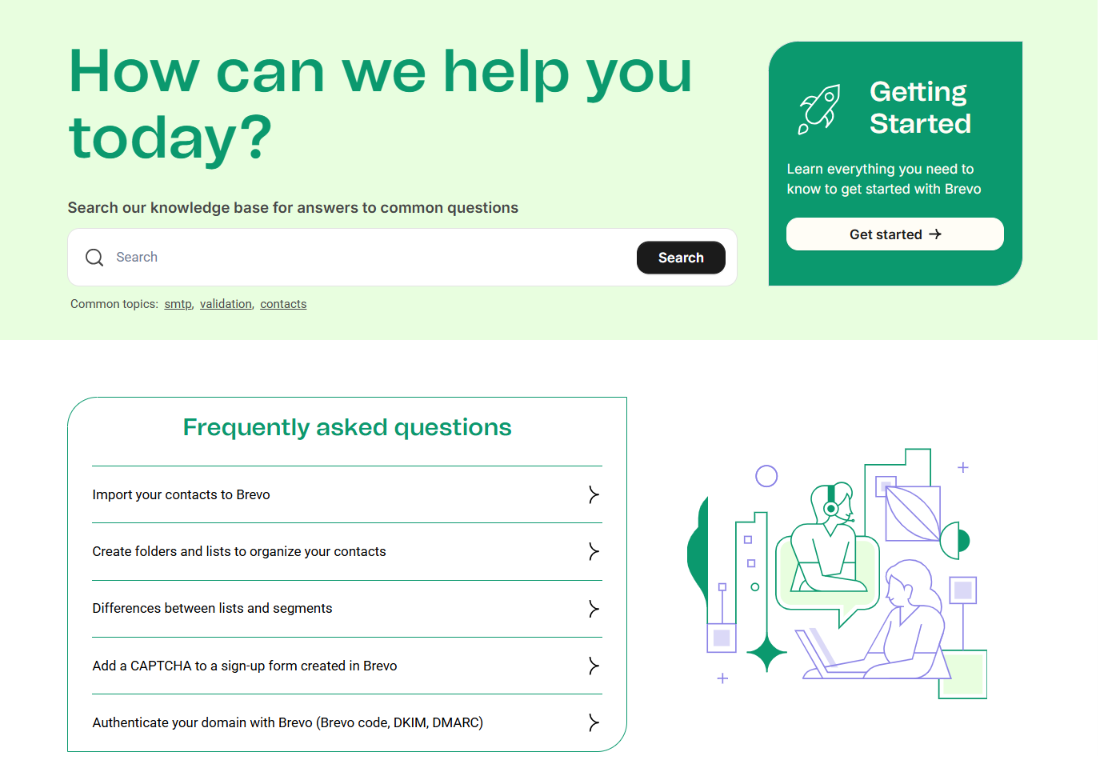
Brevo tiers its support by plan. Free and Starter plans get email support and access to the Help Center and community forum.
Source: Brevo
Phone support requires the Professional plan ($499/month), which also includes a Deliverability Specialist. Enterprise customers get a dedicated Customer Success Manager and tailored onboarding.
Brevo earns a 4.5/5 on G2 across 2,500+ reviews and has received G2 awards for "Fastest Implementation Enterprise" and Capterra's "Ease of Use 2026."
The platform is available in six languages and offers free training through Brevo Academy. For day-to-day email marketing, the learning curve is low. Complexity increases as you move into CRM, WhatsApp, loyalty programs, and the Customer Data Platform.
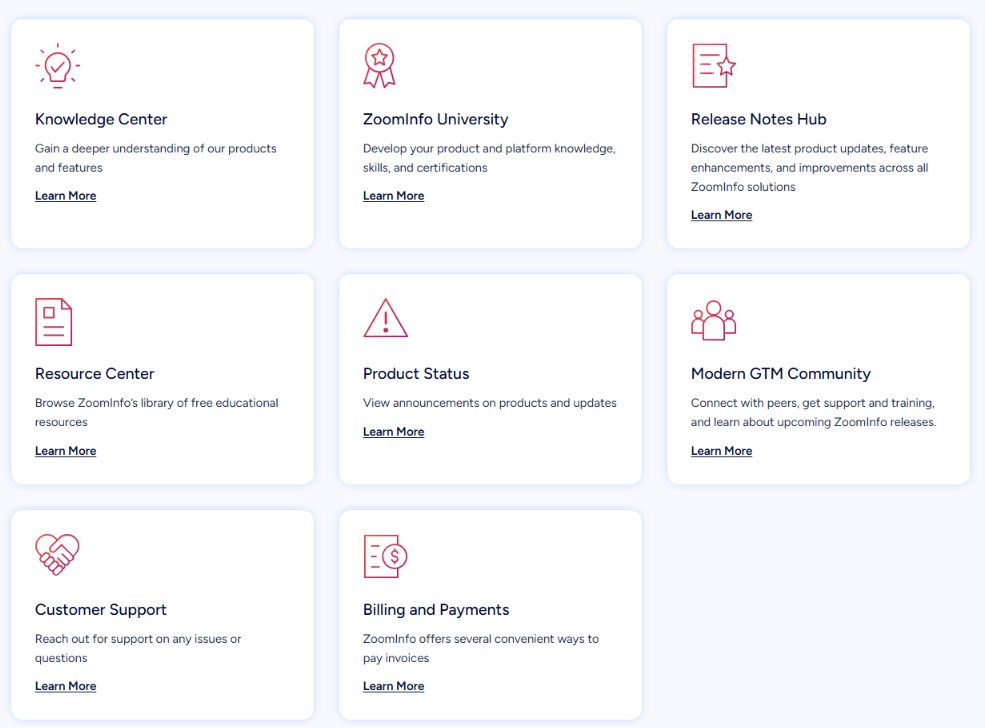
ZoomInfo provides support through its Help Center, ZoomInfo University (with role-specific learning paths and certifications), and direct phone support.
Source: ZoomInfo
Enterprise plans include a dedicated customer service manager. The platform's breadth (data intelligence, conversation intelligence, marketing orchestration, sales execution) means onboarding takes more investment.
ZoomInfo redesigned its onboarding from 30 to 90 days, producing a 25% improvement in customer satisfaction scores. The platform earned Gartner Customers' Choice status with a 4.7/5.0 average rating.
Brevo vs. Constant Contact vs. ZoomInfo: Which should you choose?
The right platform depends on what problem you're solving.
Choose Brevo if:
You need multichannel marketing across email, SMS, WhatsApp, and chat
You have a large contact list and want to avoid per-contact pricing
Automation and transactional email in one platform matter to you
You're a growing business looking for an affordable all-in-one marketing tool
GDPR compliance and EU data residency are requirements
Choose Constant Contact if:
You're a nonprofit, local business, or complete beginner to email marketing
Phone support on your first day is important to you
You run regular events and need built-in ticketing and RSVP management
Your list is small enough that contact-based pricing is reasonable
You value simplicity and a familiar interface over feature depth
Choose ZoomInfo if:
You're a B2B company and your marketing depends on reaching the right accounts
You need verified contact data, buying intent signals, and company intelligence to fuel campaigns
Your sales and marketing teams need shared intelligence, not just shared contact lists
You want AI that determines who to target and when, not just AI that drafts copy
You need your intelligence layer to work across your CRM, marketing tools, and custom applications via APIs and MCP
See how ZoomInfo's data and intelligence can improve your go-to-market, start with a free trial.
Brevo and Constant Contact are effective tools for marketing communication. For B2C companies, local businesses, and organizations with established audiences, either platform delivers real value at its price point. But for B2B teams, the biggest constraint on marketing performance usually isn't the email tool. It's the quality of the data feeding it and the intelligence guiding where to aim. ZoomInfo addresses that constraint directly, with a data and intelligence foundation that makes every downstream tool (whether Brevo, Constant Contact, or anything else) more effective.
"ZoomInfo gives us the information we need to execute. We don't have to go through and spend our time digging. It's already there, so we can be three steps ahead." (Vensure)
Brevo vs. Constant Contact vs. ZoomInfo FAQ
What is the core difference between Brevo, Constant Contact, and ZoomInfo?
Brevo is a multichannel marketing platform covering email, SMS, WhatsApp, live chat, and CRM, priced by email volume with unlimited contacts. Constant Contact is an email marketing platform with built-in event management and phone support, priced by contact count. ZoomInfo is a B2B data intelligence and go-to-market platform that provides verified contact data, buying intent signals, and AI-driven execution across sales and marketing, priced on a consumption basis.
Which platform is cheapest for a growing email list?
Brevo, because it charges by emails sent, not contacts stored. All plans include unlimited contacts, and the free plan allows 300 emails per day indefinitely. Constant Contact charges by contact tier and anchors billing to your highest-ever contact count, making it progressively more expensive as your list grows. ZoomInfo is custom-priced for enterprise B2B use cases and is not directly comparable on a per-email basis.
Does Constant Contact have a free plan?
No. Constant Contact removed its permanent free plan in June 2025 and replaced it with a 30-day free trial limited to 100 total email sends. Brevo offers a permanent free plan with 300 emails per day and unlimited contacts. ZoomInfo offers ZoomInfo Lite, a permanent free tier with access to the B2B database and 10 monthly export credits.
Which platform has the best automation capabilities?
ZoomInfo has the most sophisticated automation, using AI-driven GTM plays that trigger based on buying signals, intent data, and account intelligence across multiple channels. Brevo offers solid marketing automation with visual workflows spanning email and SMS, available from its Standard plan. Constant Contact's automation is the most limited: the Standard plan allows only three active paths using pre-built templates, each with a single trigger and no custom path creation.
Can ZoomInfo work alongside Brevo or Constant Contact?
Yes. ZoomInfo's data and intelligence can feed into any marketing platform through its API, MCP server, and native integrations. B2B teams commonly use ZoomInfo to identify target accounts and verified contacts, then run campaigns through their email marketing platform. ZoomInfo integrates with Salesforce, HubSpot, and Microsoft Dynamics, and its data can be exported to any system.
Which platform is best for nonprofits?
Constant Contact is the strongest fit for nonprofits, offering a 30% prepay discount, built-in event management with ticketing and RSVP, and phone support on every paid plan. Brevo's free plan and low-cost tiers also work well for budget-constrained organizations. ZoomInfo is designed for B2B sales and marketing teams and is not typically used by nonprofits.
How does email deliverability compare across the three platforms?
Constant Contact claims a 97% email deliverability rate and maintains a dedicated deliverability team that monitors signups and list uploads. Brevo claims a 99% deliverability rate for enterprise email sending and offers dedicated IPs and a Deliverability Specialist on Professional plans and above. ZoomInfo is not primarily an email sending platform, but its data accuracy (up to 95% on first-party data with 200M+ verified business email addresses) improves deliverability for outbound campaigns by ensuring you're emailing valid, verified addresses.
Which platform offers the best data and contact intelligence?
ZoomInfo is in a different category here. It maintains 500M contacts, 100M companies, 135M+ verified phone numbers, and 200M+ verified business emails, with buyer intent signals tracking 210 million IP-to-Organization pairings. Brevo and Constant Contact store only the contacts you import or capture through forms and do not provide third-party contact discovery, intent data, or company intelligence.
More Brevo comparisons:
