

Choosing between Brevo and MailPoet for email marketing comes down to five questions:
Is your website built on WordPress, or do you use another platform (or several)?
Do you need just email, or do you want SMS, WhatsApp, and live chat from the same tool?
Are you running a WooCommerce store where purchase-behavior automation matters most?
Do you prefer managing everything from your WordPress dashboard, or would you rather use a standalone marketing platform?
Is your email marketing B2B outbound or B2C ecommerce and content-driven newsletters?
Here's what we recommend:
Brevo is a marketing platform that puts email, SMS, WhatsApp, live chat, and CRM in one place. Its multichannel automation builder lets you send an email, wait a day, then follow up via SMS, all in a single workflow. Brevo charges by emails sent rather than contacts stored, so a growing subscriber list doesn't raise your bill. A permanent free plan offers 300 emails per day with unlimited contacts. The trade-off: automation and reporting lag behind dedicated marketing automation platforms, and the email editor can feel unstable on complex layouts.
MailPoet is the email marketing plugin built for WordPress. It runs inside your WordPress admin. No separate app, no external login, no syncing subscriber data to a third party. For WooCommerce stores, it offers abandoned cart recovery, first-purchase follow-ups, product-specific automations, and a transactional email customizer that brands every order confirmation and shipping notification. The free Starter plan covers 500 subscribers with the MailPoet Sending Service included. But MailPoet only works on WordPress, handles email only, and its automation can't match standalone platforms for complex multi-step sequences.
Both platforms solve the "how do I send marketing emails" problem well. But for B2B companies, there's a question neither answers: are you emailing the right people at the right time? Sending campaigns to outdated contacts or uninterested prospects wastes budget regardless of which platform you choose. That's where data intelligence becomes essential.
ZoomInfo is a B2B data and go-to-market platform that provides verified contact data and buyer signals so your email campaigns reach the right people. With 200M+ verified business email addresses and intent data that shows when companies are researching solutions like yours, ZoomInfo solves the upstream problem: knowing who to email and when. Its GTM Context Graph combines your CRM records with third-party intelligence to identify the buyers most likely to respond. ZoomInfo's data flows into your marketing stack through API and MCP integrations, making whichever email platform you choose more effective.
If building campaigns on verified B2B data sounds like the missing piece, see how ZoomInfo works.
Brevo vs. MailPoet vs. ZoomInfo at a glance
Brevo | MailPoet | ZoomInfo | |
|---|---|---|---|
Core approach | Standalone multichannel marketing platform | WordPress-native email plugin | B2B data intelligence platform |
Channels | Email, SMS, WhatsApp, push, chat, phone | Email only | Data, intent signals, sales and marketing automation |
Platform requirement | None (web-based SaaS) | WordPress required | None (web-based + API/MCP) |
CRM included | Yes (built-in sales CRM) | No | Yes (GTM Workspace + sales CRM) |
Ecommerce integrations | Shopify, WooCommerce, BigCommerce, Magento, PrestaShop | WooCommerce only | N/A (B2B focused) |
Automation | Visual multichannel workflows, AI send-time optimization | 30+ WordPress/WooCommerce triggers, If/Else branching | AI-powered GTM plays and signal-triggered workflows |
Pricing model | By emails sent (unlimited contacts) | By subscriber count | Custom, consumption-based |
Free plan | 300 emails/day, unlimited contacts | 500 subscribers, 5,000 emails/month | ZoomInfo Lite (permanent, 10 credits/month) |
Best for | Businesses wanting multichannel marketing in one platform | WordPress and WooCommerce site owners | B2B teams needing verified buyer data and intent signals |
SaaS platform vs. WordPress plugin: two different worlds
This is the fundamental choice in the comparison, and it shapes everything else.
Brevo is a standalone web application. You sign up, open your browser, and start building campaigns. It doesn't care whether your website runs on WordPress, Shopify, Squarespace, or a custom CMS. Your contacts, templates, and automations live on Brevo's servers. If you migrate your website to a different platform next year, your email marketing stays where it is.

Source: Brevo
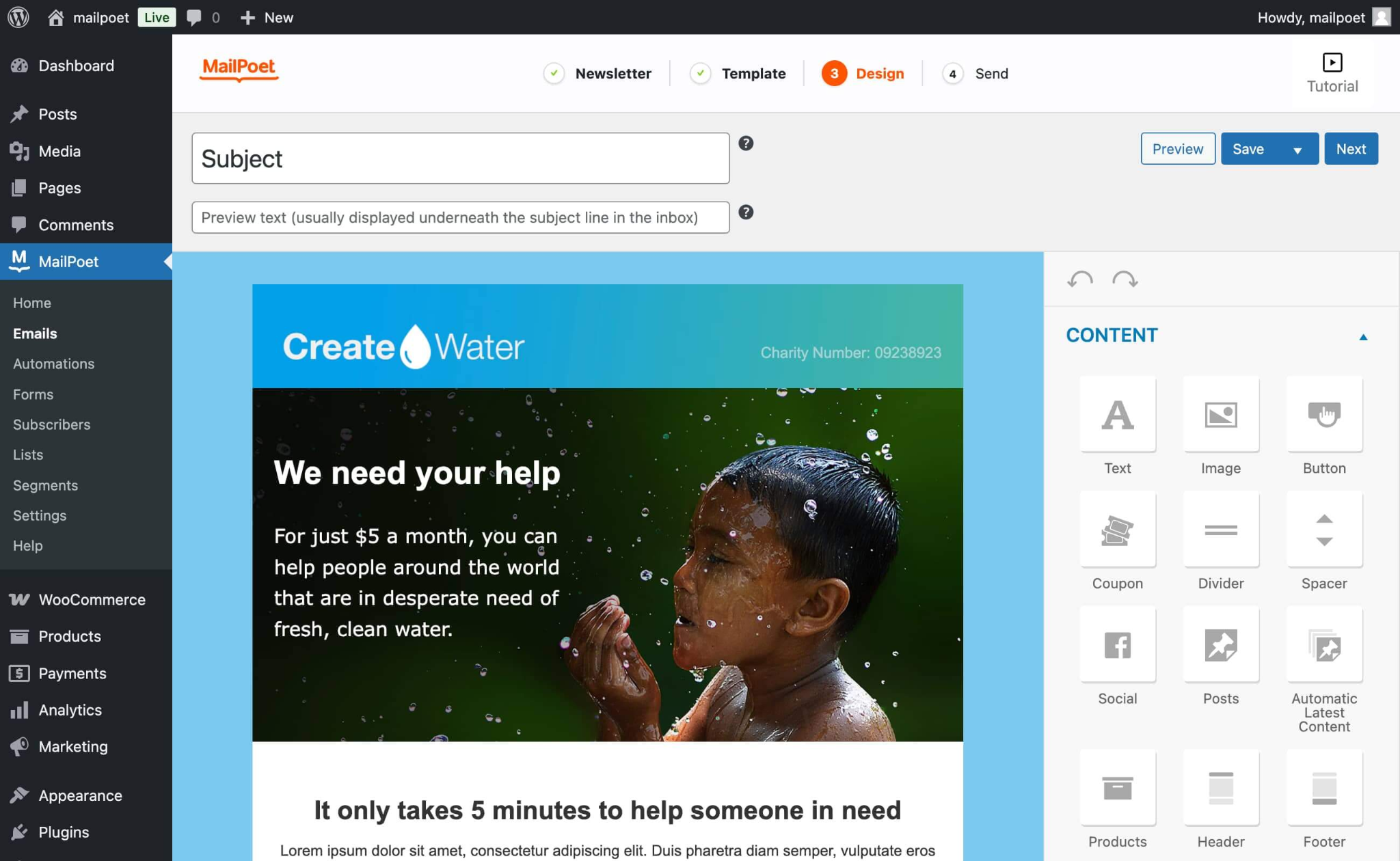
MailPoet is a WordPress plugin. You install it from the WordPress.org directory, and it appears as a menu item in your WordPress admin. Newsletter creation, subscriber management, automation setup, and campaign stats all happen without leaving wp-admin.
Source: WordPress
MailPoet reads from your WordPress database, so posts, pages, WooCommerce products, and custom post types appear in your emails with a few clicks rather than copy-paste cycles.
Each approach's strength is the flip side of the other. Brevo's independence means flexibility but also separation: you're always switching between your website and your marketing platform, syncing data through integrations. MailPoet's WordPress residency means no context-switching but total platform lock-in. Move away from WordPress, and your entire email operation moves with it.
For businesses with multiple web properties or plans to change platforms, Brevo's SaaS model is safer. For WordPress-committed businesses that want everything in one dashboard, MailPoet removes friction that Brevo can't.
Brevo speaks every channel; MailPoet speaks WordPress fluently
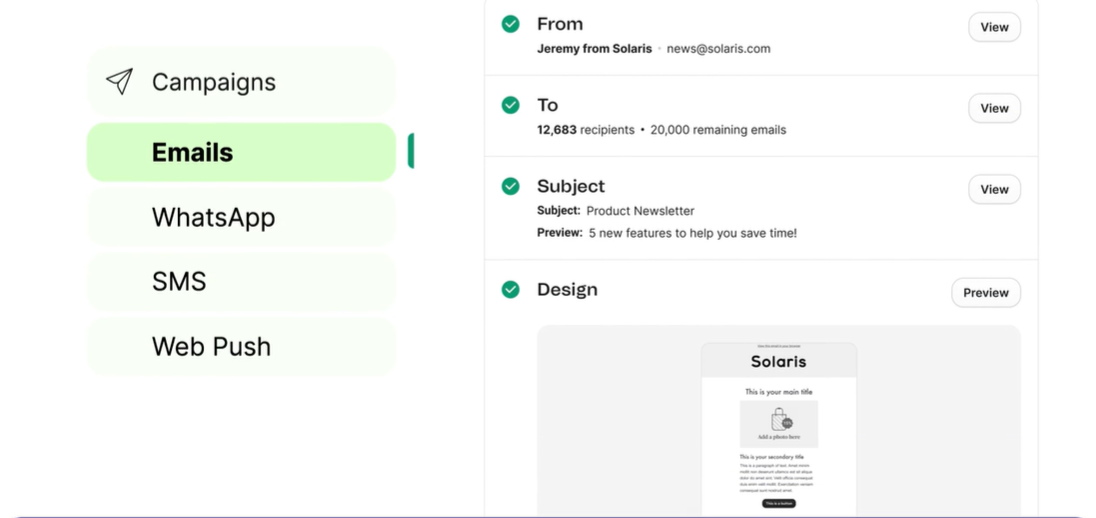
Brevo's main advantage is channel breadth. From a single automation workflow, you can send an email, wait 24 hours, send an SMS follow-up, then trigger a WhatsApp message if neither was opened. Email, SMS, WhatsApp, web and mobile push, live chat, chatbot, and phone all live in the same interface.
Source: Brevo
Brevo is also a certified WhatsApp Business Solution Provider, giving you direct access to the WhatsApp Business API rather than routing through intermediaries.
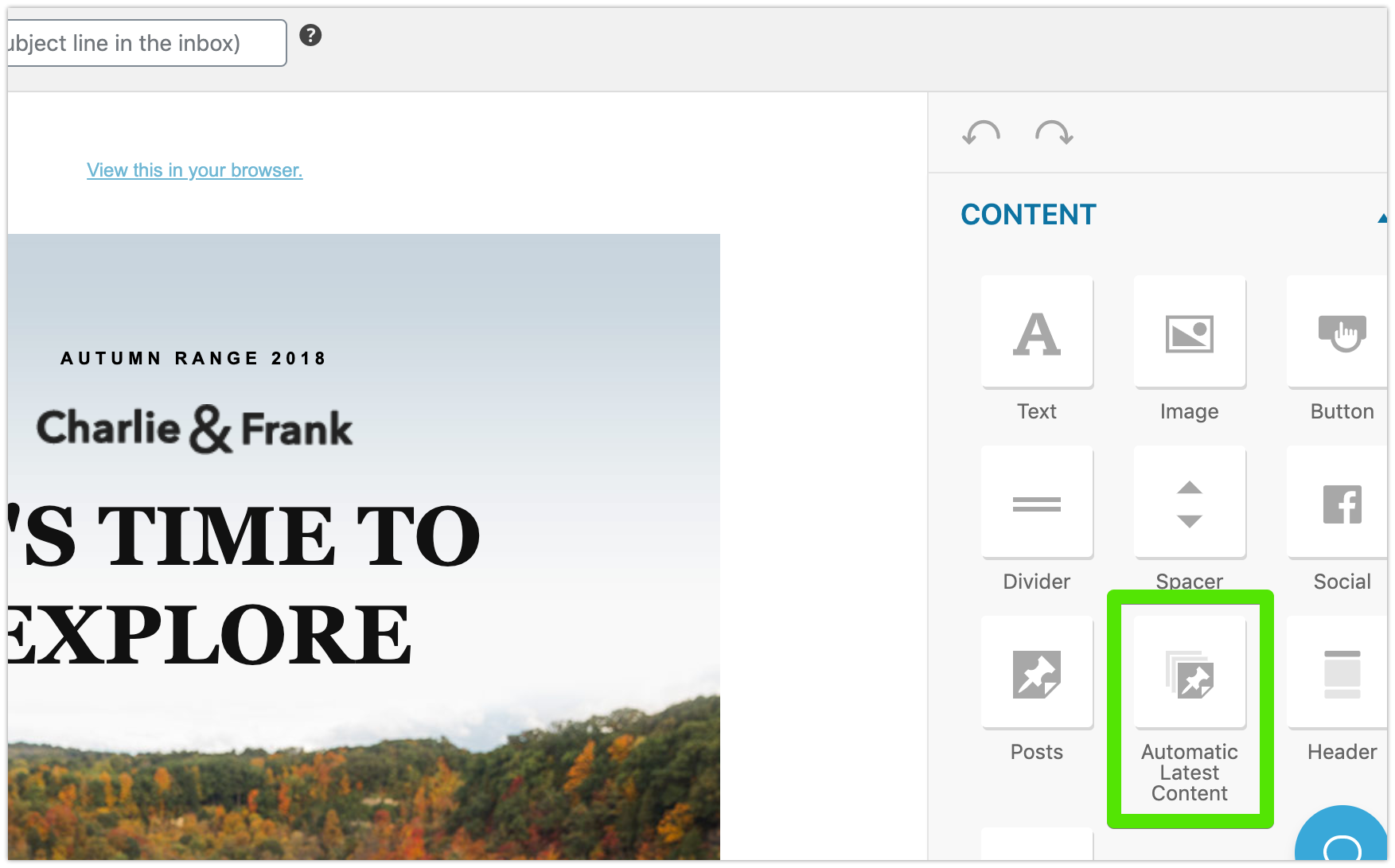
MailPoet does email and only email. No SMS, no WhatsApp, no push notifications. What it does instead is go deep on what email can do inside WordPress. The Automatic Latest Content block queries the WordPress database at send time and populates the newest published content (filtered by post type, category, or tag) without you touching the email after setup.
Source: MailPoet
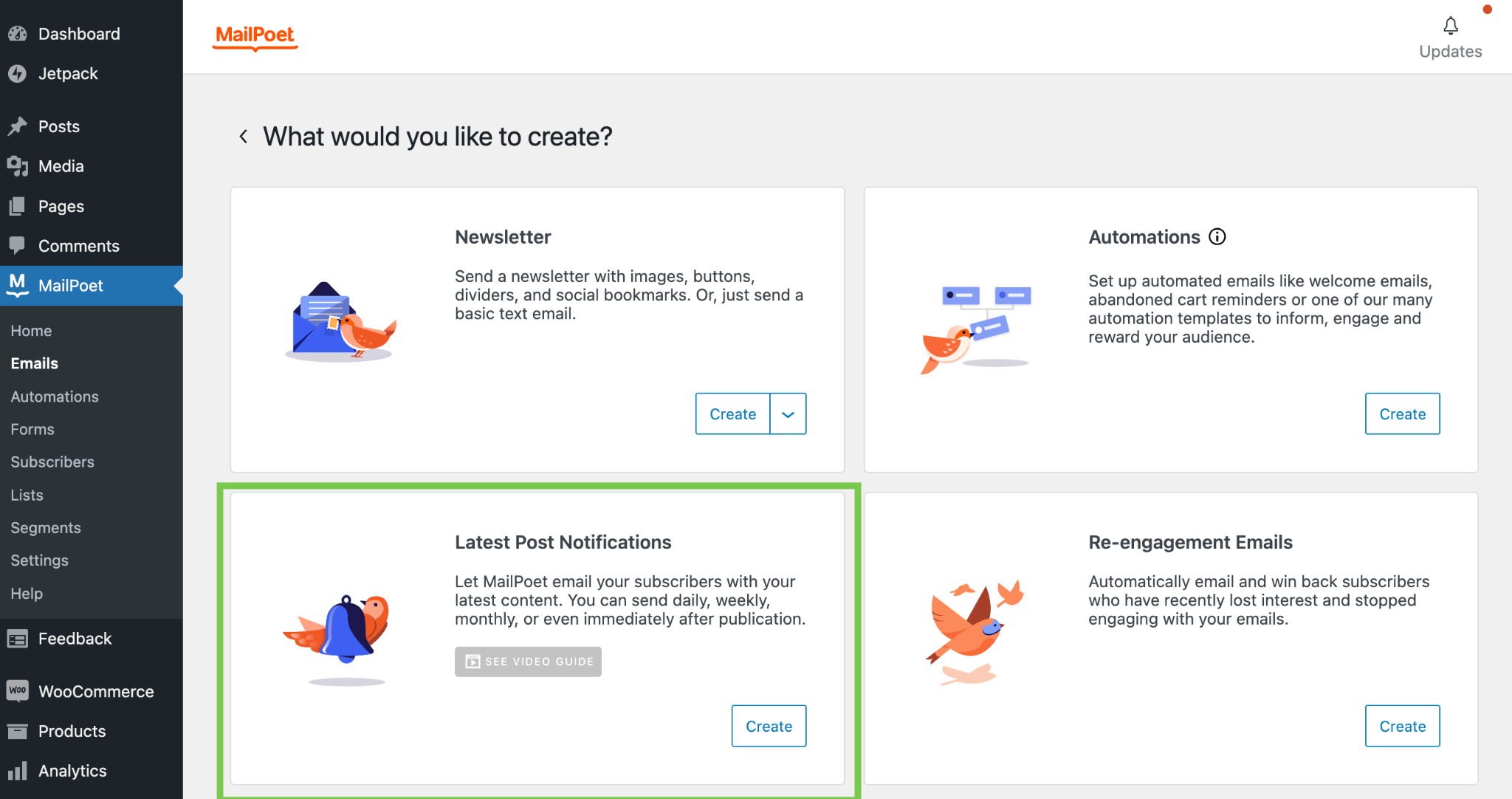
Latest Post Notifications fire when you publish, on a daily digest, or weekly, with no RSS feed or external polling required.
Source: MailPoet
This isn't a feature-count contest. A restaurant running SMS promotions alongside email campaigns needs Brevo's multichannel toolkit. A blogger who publishes three times a week and wants subscribers to get each post needs MailPoet's WordPress-native content insertion. The question is which channels your audience responds to.
Ecommerce: platform breadth vs. WooCommerce depth
Both platforms serve ecommerce businesses, but they define "ecommerce" differently.
Brevo integrates with Shopify, WooCommerce, BigCommerce, PrestaShop, and Magento. It supports abandoned cart recovery across these platforms, with automated email sequences that Brevo says produce an average 10–15% revenue increase.
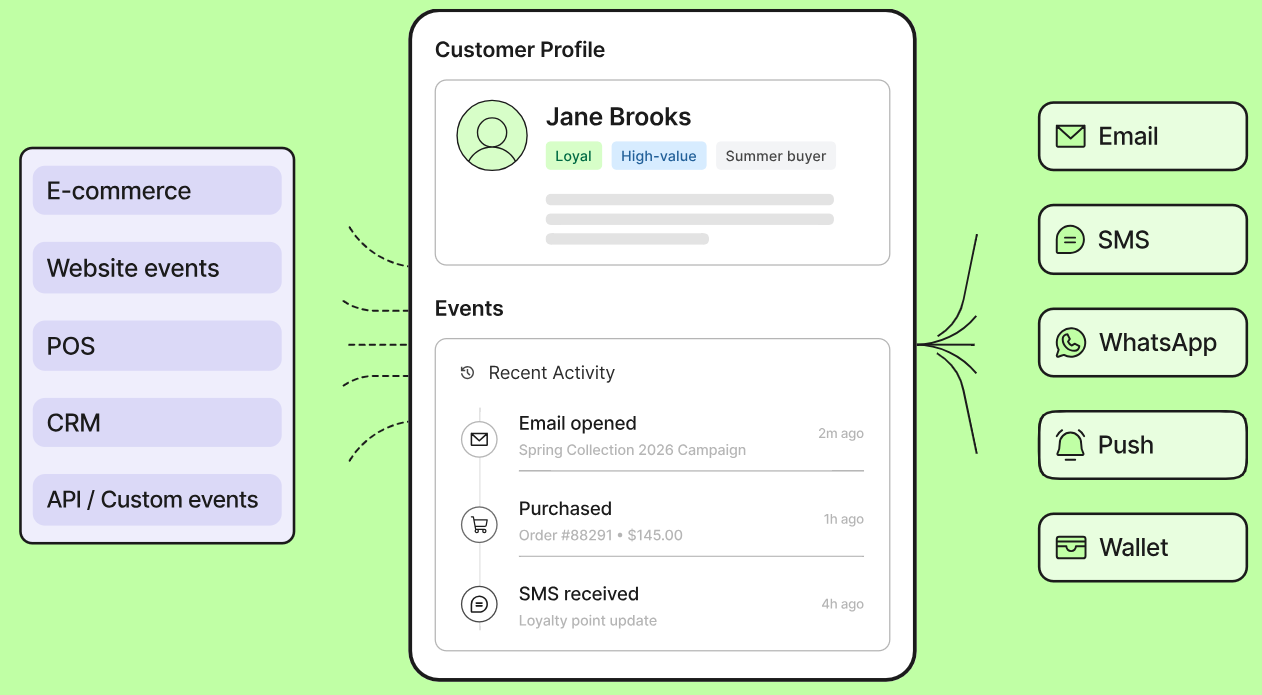
Brevo also offers a loyalty program builder, product recommendation personalization, and a Customer Data Platform that unifies online and offline purchase data. If your ecommerce business spans multiple platforms or might switch from WooCommerce to Shopify, Brevo keeps your marketing independent of your storefront.
Source: Brevo
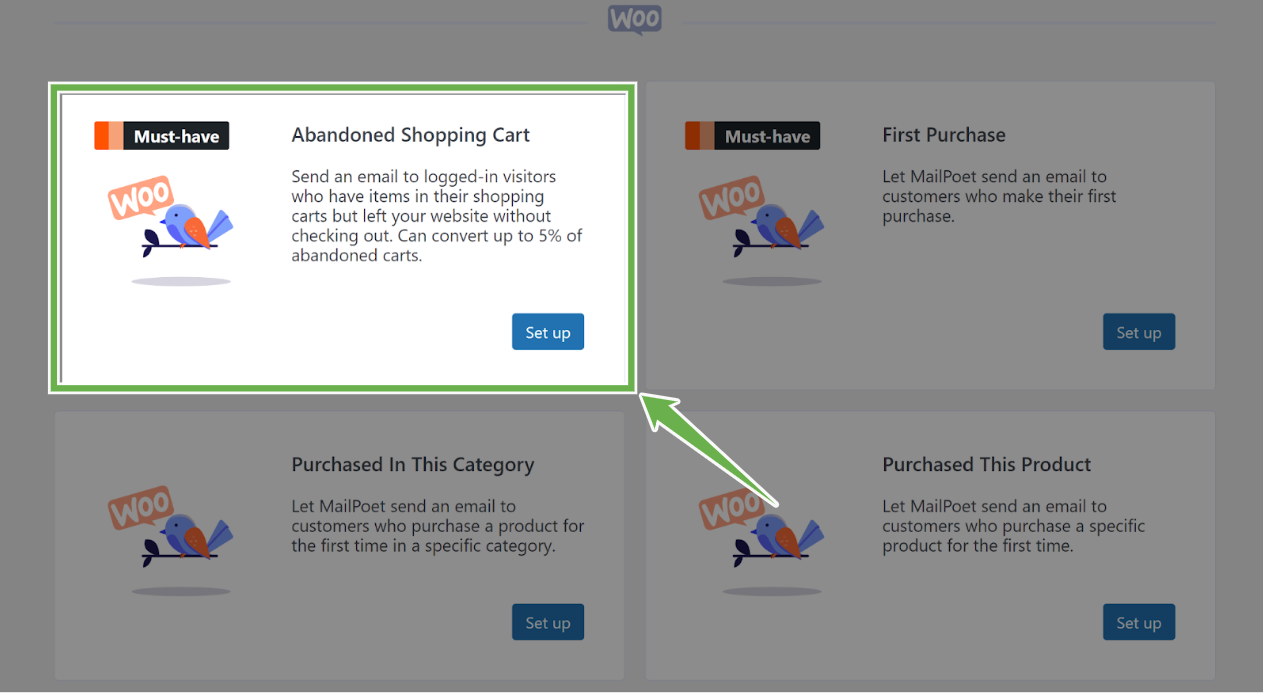
MailPoet goes narrower but deeper on WooCommerce. Its abandoned cart system uses cookie-based tracking to identify guest shoppers who are existing subscribers, extending cart recovery beyond logged-in users.
Source: MailPoet
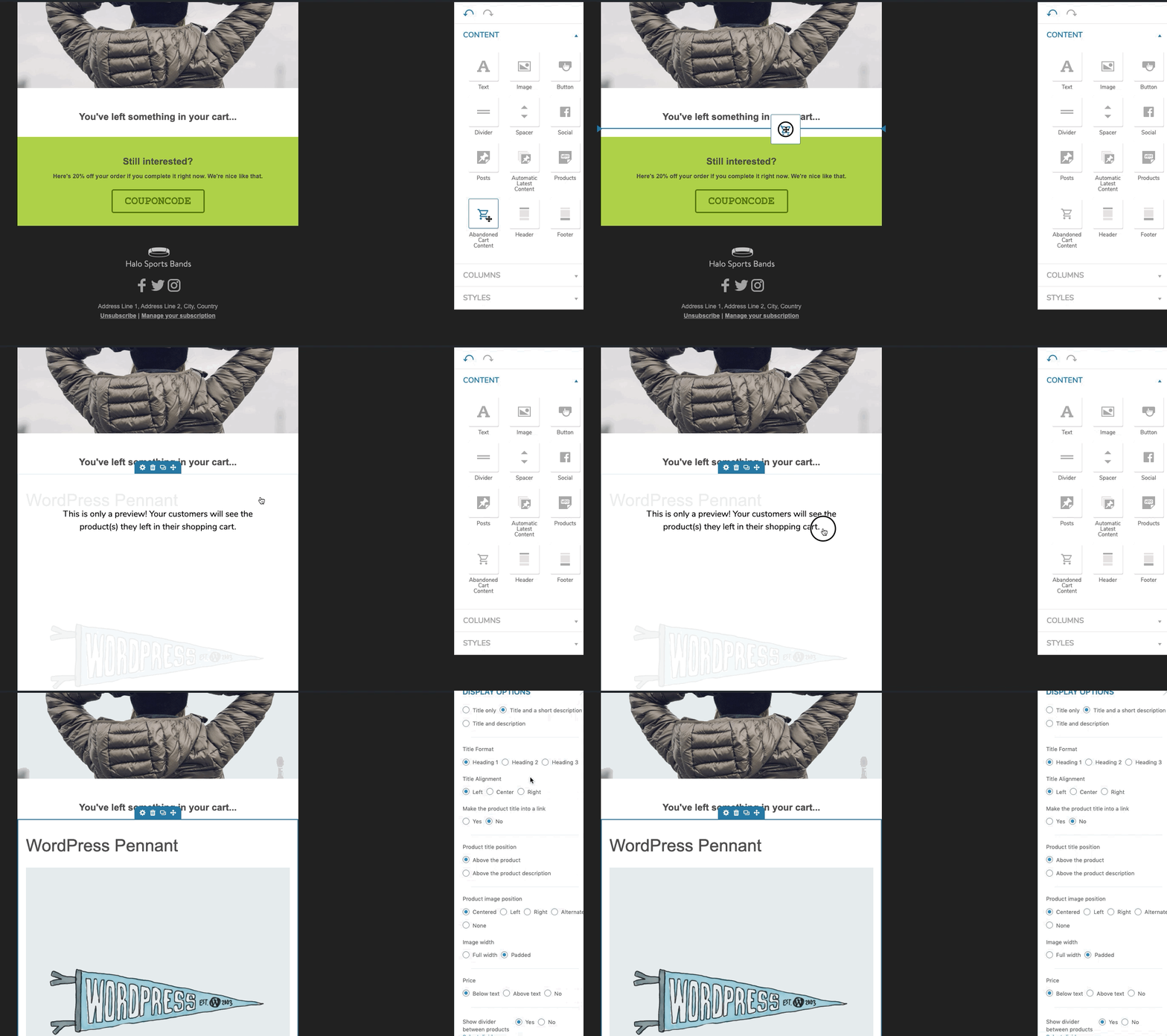
The Abandoned Cart Content Widget inserts the actual products from each customer's cart at send time. Purchase-triggered automations fire on first purchase, specific products, or entire categories.
Source: MailPoet
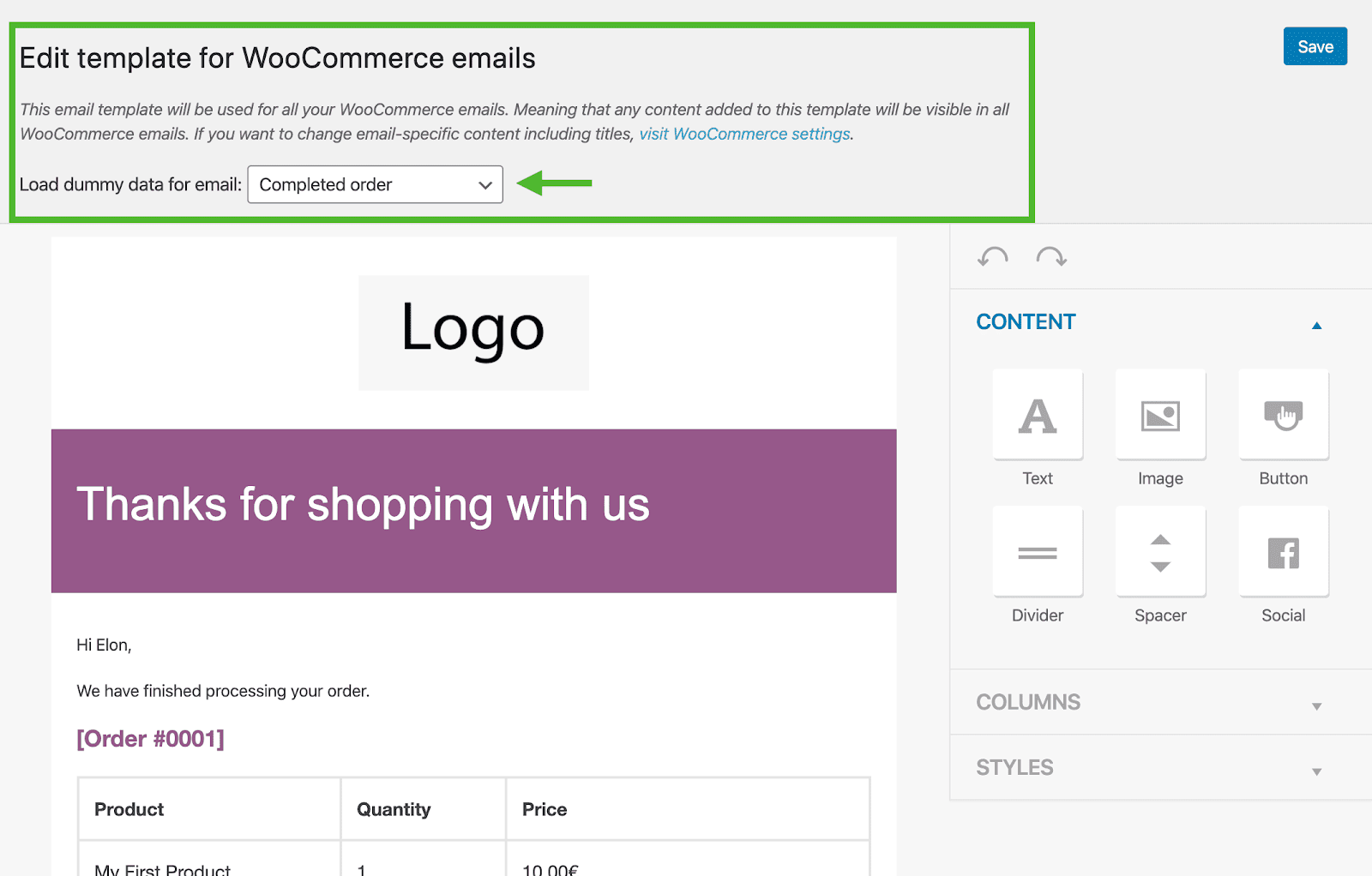
The WooCommerce Email Customizer lets you brand every transactional email with your store's design, and a single template propagates across all WooCommerce email types without editing each one.
Source: MailPoet
MailPoet's purchase-behavior segmentation adds another layer: filter subscribers by product purchased, category, coupon used, payment method, order count, lifetime spend, average order value, and purchase date ranges, with combinable any/all/none logic. This depth of WooCommerce segmentation matches what you'd find in dedicated ecommerce CRMs.
MailPoet also replaces your separate SMTP plugin for WooCommerce transactional emails. One install handles promotional campaigns, behavioral automations, and order confirmations.
The trade-off is clear: Brevo supports more ecommerce platforms with capable automation. MailPoet supports only WooCommerce but covers it completely (marketing through transactional email) in a single WordPress plugin.
Automation: multichannel breadth vs. WordPress-native triggers
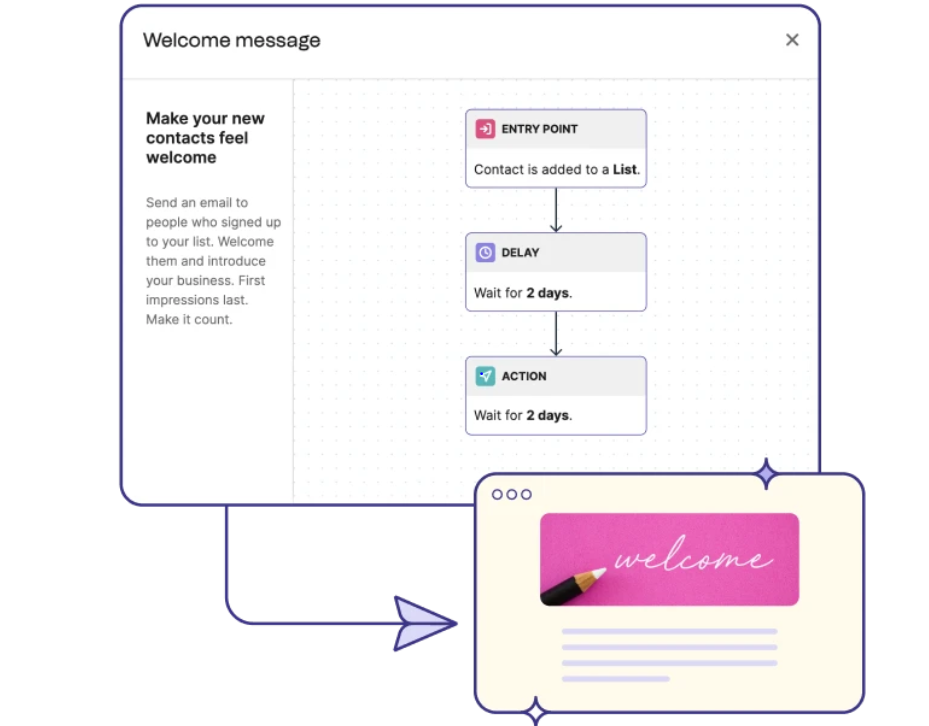
Brevo's visual workflow builder supports cross-channel sequences with triggers based on list membership, form submissions, link clicks, cart abandonment, and date-based events.
Source: Brevo
The Aura AI Marketing Agent adds predictive send-time optimization per recipient, auto-segments audiences from real-time data, and generates email content from natural-language prompts.

Source: Brevo
The Standard plan includes A/B testing for subject lines and content. One note: Brevo excludes automation from the Free and Starter plans, so you need at least the Standard tier ($18/month) to access workflows.
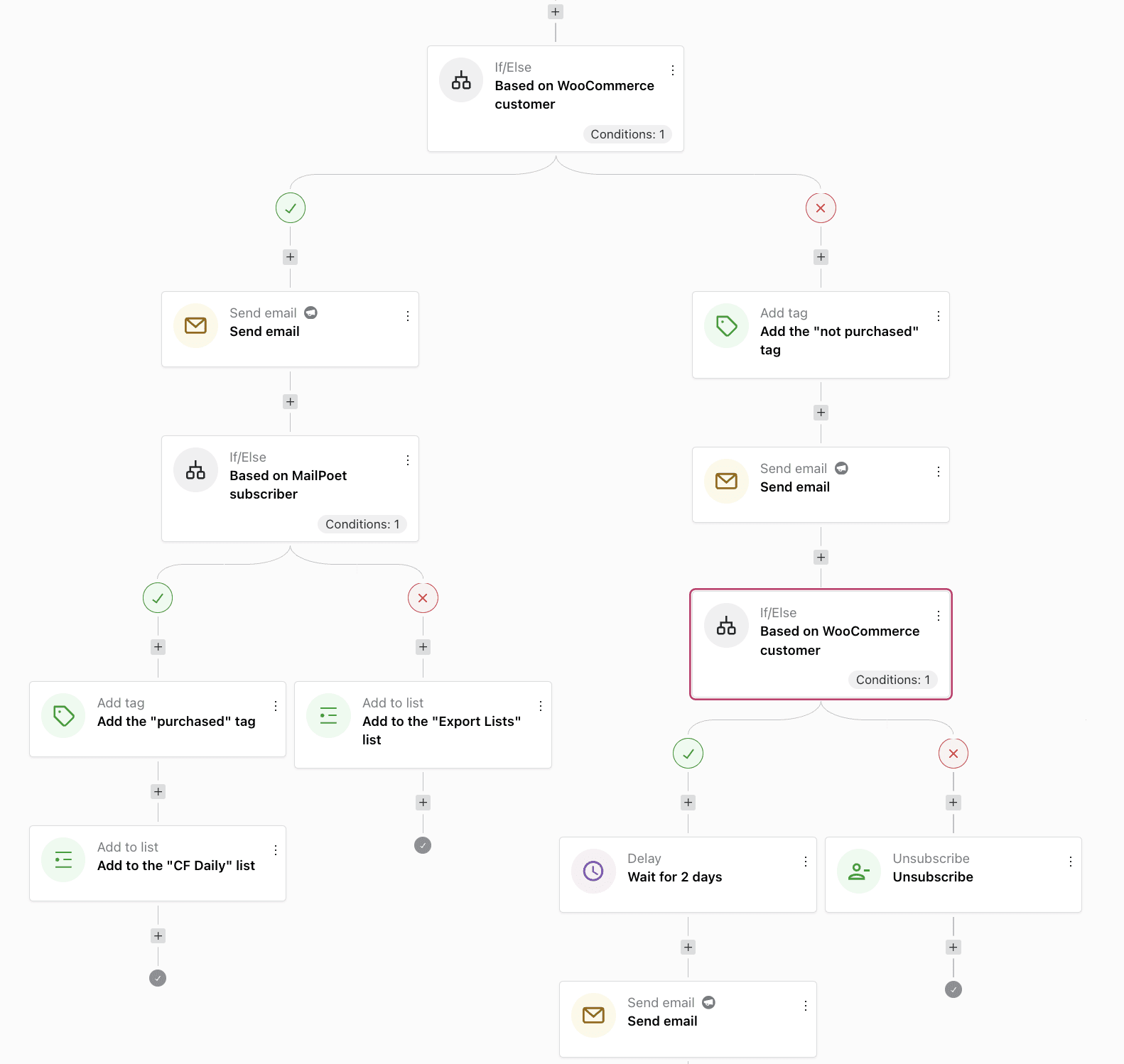
MailPoet's automation runs on 30+ triggers spanning subscribers, WordPress users, WooCommerce orders, and customer lifecycle events (including WooCommerce Subscriptions and Bookings). Workflows support If/Else branching, delays, tagging, list management, and admin notifications.
Source: MailPoet
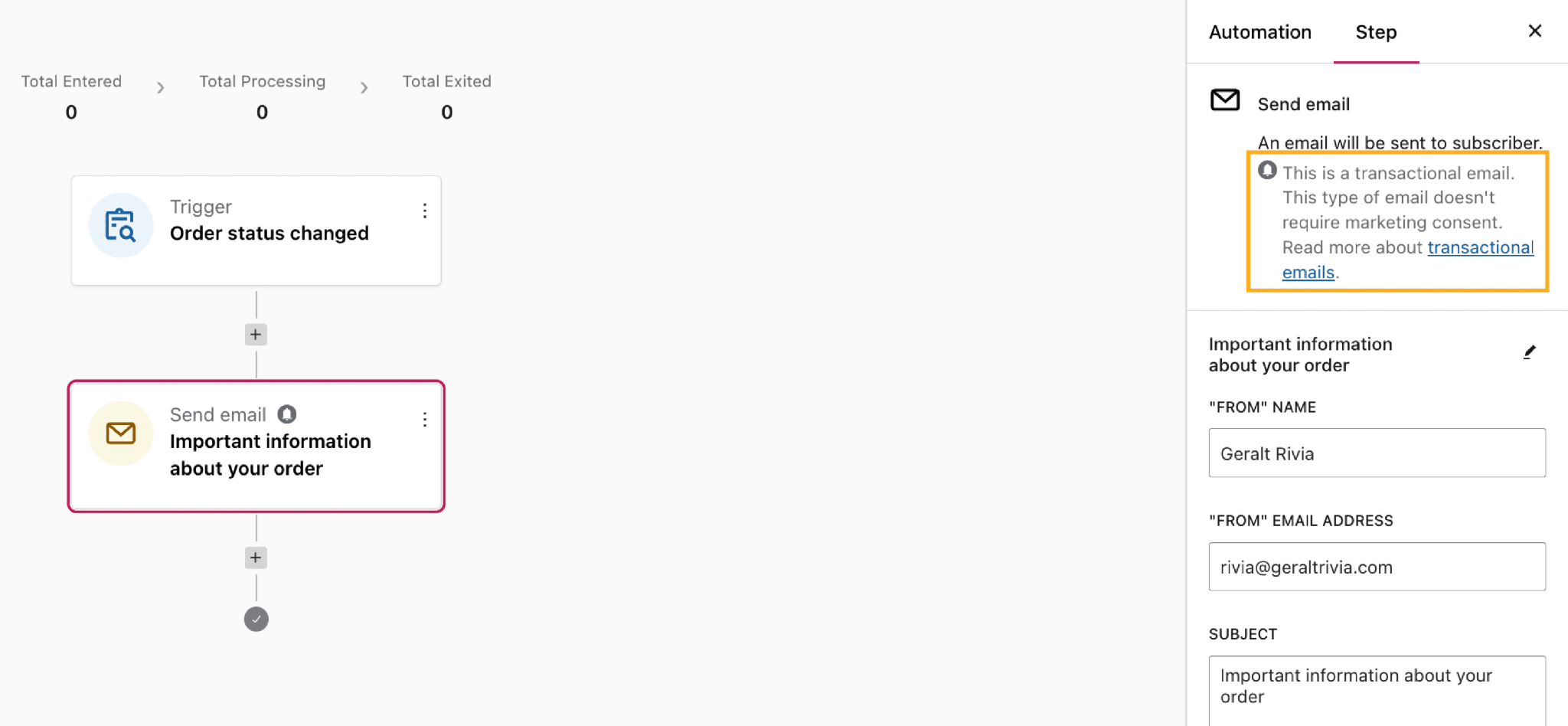
A notable feature: MailPoet classifies each automation email as transactional or marketing based on trigger type and whether a delay precedes the send. An immediate abandoned cart email reaches the customer regardless of subscription status (classified as transactional); adding a delay reclassifies it as marketing and sends it only to opted-in subscribers.
Source: MailPoet
This GDPR-aware guardrail runs automatically in the workflow builder.
MailPoet also supports custom triggers via WordPress action hooks, letting developers fire automations from any site event (a membership upgrade, a course completion, a support ticket resolution). This extensibility is unique to WordPress-native architecture.
Where both platforms fall short is advanced automation.
G2 reviewers note MailPoet "is not yet at the level of systems like ActiveCampaign in terms of flows, tag management, and automation." Brevo faces similar criticism: reviewers report that multi-step workflows feel restrictive compared to ActiveCampaign or HubSpot.
Neither platform is an automation-first tool. Both serve users whose primary need is sending good emails efficiently, not building complex behavioral journey maps.
Pricing: email volume vs. subscriber count
Brevo and MailPoet use different pricing models, and which saves you money depends on how you use email.
Brevo charges by emails sent per month, with unlimited contacts on every plan:
Free: 300 emails/day (approximately 9,000/month), unlimited contacts
Starter: from $9/month (5,000 emails/month)
Standard: from $18/month (5,000 emails/month, includes automation and A/B testing)
Professional: from $499/month (150,000 emails/month, 10 seats, WhatsApp, push, phone support)
MailPoet charges by subscriber count, with unlimited sends on paid plans:
Starter (Free): 500 subscribers, 5,000 emails/month
Business: from $10/month (500 subscribers, unlimited emails, MailPoet Sending Service included)
Creator: from $8/month (500 subscribers, bring your own SMTP)
Agency: from $30/month (500 subscribers per site, up to 50 WordPress installations)
The economic difference is real. A business with 50,000 contacts that sends a monthly newsletter (50,000 emails) pays Brevo based on that volume. The same business on MailPoet pays based on 50,000 subscribers regardless of frequency, and at that list size, MailPoet's per-subscriber pricing scales steeply.
Conversely, a business with 500 contacts that sends daily (15,000 emails/month) gets unlimited sends on MailPoet's $10/month Business plan but needs a higher Brevo tier to handle the volume.
Brevo's model rewards large lists with moderate send frequency. MailPoet's model rewards small lists with frequent sending. Neither is universally cheaper.
One more pricing note: Brevo includes transactional email via REST API and SMTP relay on any paid plan, supporting applications beyond WordPress. MailPoet includes transactional email through its sending service, but only for WooCommerce emails within WordPress. For non-WordPress transactional needs, Brevo is the more versatile option.
For B2B teams, the real bottleneck is data
Brevo and MailPoet both handle email execution well. But for B2B companies running outbound prospecting, lead nurturing, or account-based campaigns, the harder problem sits upstream: who should you email, and when?
A marketing team can build a polished Brevo automation or a well-timed MailPoet sequence. But if 20% of the contact list has changed jobs since it was compiled, the campaign generates bounces instead of pipeline. If the timing ignores whether prospects are evaluating solutions, even accurate emails land in indifferent inboxes.
ZoomInfo fills this gap. As a B2B data and go-to-market platform, ZoomInfo provides the data layer that sits underneath your email marketing:
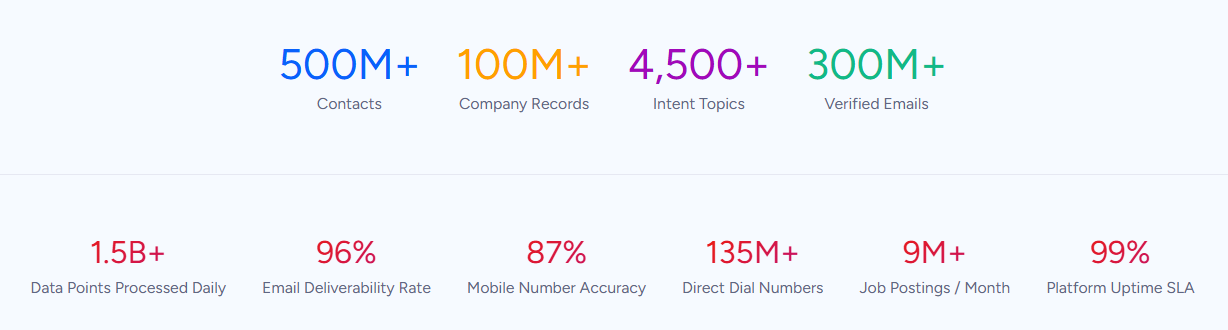
Verified contact data at scale. 500M contacts and 200M+ verified business email addresses, maintained through a multi-source pipeline backed by 300+ human researchers with up to 95% accuracy on first-party data. In a Fortune 500 competitive RFP analyzing 25 million contacts across vendors, the independent consultant concluded that "no other competitor came even close."
Buyer intent signals. ZoomInfo Intent tracks signals from 210 million IP-to-Organization pairings and 6 trillion+ new keyword-to-device pairings sourced monthly, showing when companies are researching your category before they fill out a form or visit your pricing page.

Contextual intelligence. The GTM Context Graph processes 1.5B+ data points daily, combining your CRM records, conversation transcripts, and behavioral signals with ZoomInfo's third-party intelligence. The result: not just who to contact, but why a given account is worth contacting now.
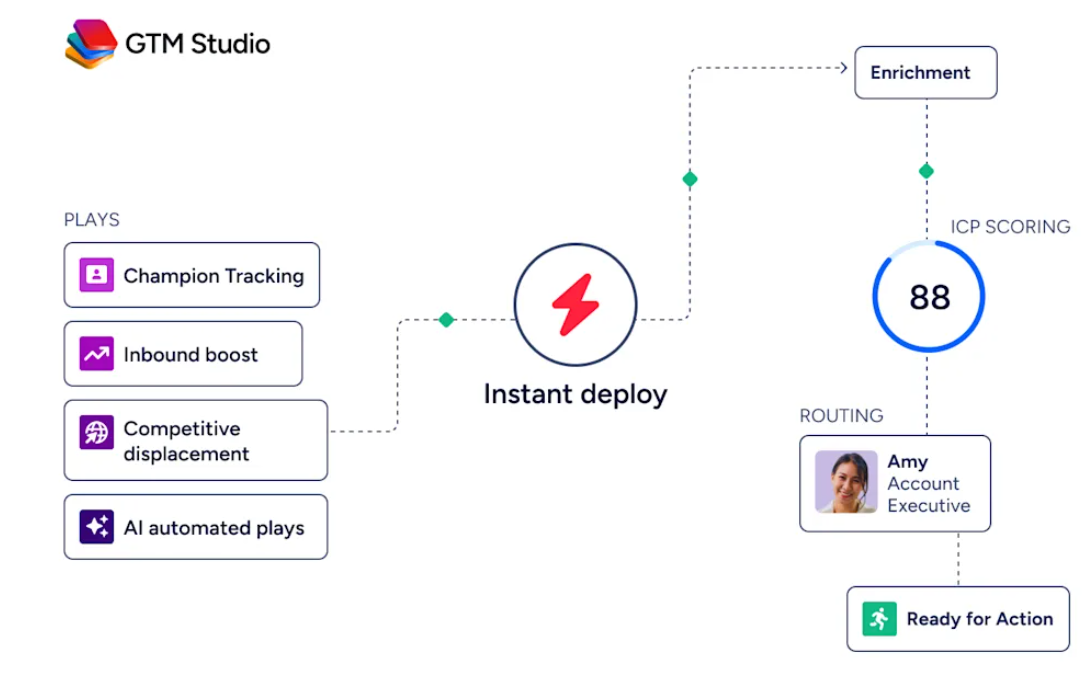
For marketing teams, GTM Studio lets you describe audiences in plain language, enrich them with verified data, and launch multi-channel plays without engineering tickets.
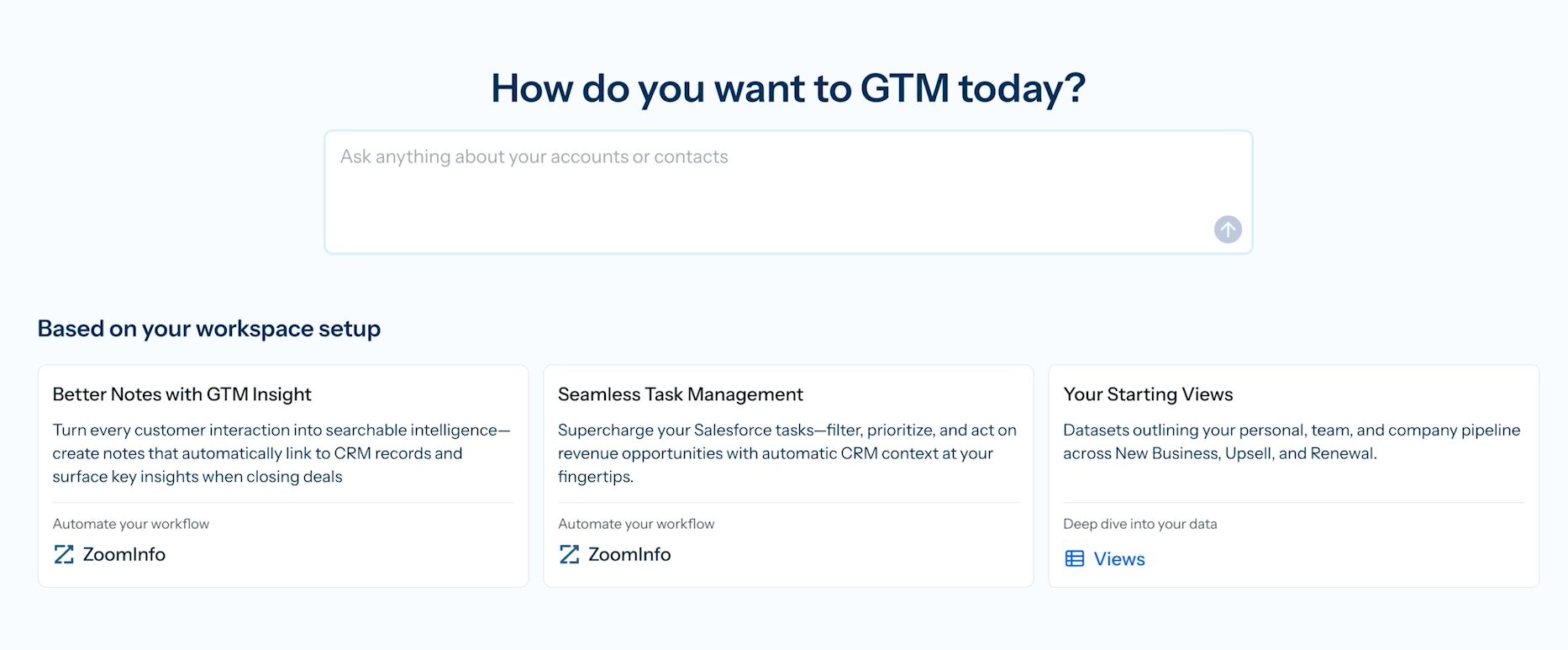
For sellers, GTM Workspace delivers prioritized accounts with AI-drafted outreach that addresses the concerns the intelligence engine identified.
ZoomInfo's data reaches any email platform through APIs, MCP integrations, and native connectors for Salesforce, HubSpot, and 120+ other tools.
SpringDB used ZoomInfo's enriched data to achieve 2x–3x increases in campaign conversions, a 300% increase in database usability, and 30–50% uplift in average deal size. (SpringDB)
This isn't about replacing Brevo or MailPoet. It's about ensuring the contacts entering those platforms are verified, current, and worth your campaign spend. For B2C and content-focused email marketing, Brevo and MailPoet are self-sufficient. For B2B companies where contact accuracy and timing determine ROI, ZoomInfo provides the data foundation that makes either platform more effective.
Brevo vs. MailPoet vs. ZoomInfo: Which should you choose?
The right choice depends on your platform, your channels, and whether your challenge is sending emails or finding the right people to email.
Choose Brevo if:
You need email, SMS, WhatsApp, and other channels from one platform
Your website isn't on WordPress, or you want platform-independent marketing
You have a large contact list but moderate send frequency
You want a built-in CRM and sales pipeline alongside your marketing tools
You need transactional email API access for non-WordPress applications
Choose MailPoet if:
Your website runs on WordPress and you want everything in your admin dashboard
You operate a WooCommerce store and need abandoned cart, post-purchase, and transactional email in one plugin
You publish content regularly and want automated post notifications tied to your publishing schedule
You have a smaller subscriber list and want unlimited sends at a low monthly cost
GDPR compliance with data stored in your own WordPress installation matters to your team
Add ZoomInfo if:
You run B2B marketing campaigns where contact accuracy and timing determine ROI
You need verified business email addresses and direct-dial phone numbers at scale
Buyer intent signals would help you prioritize which accounts to target
You want a data layer that feeds into any email platform, CRM, or AI agent
Your team is ready to move from batch-and-blast to signal-driven outreach
See how ZoomInfo's data powers smarter campaigns, or start with ZoomInfo Lite for free.
Email marketing platforms handle the delivery. Data intelligence determines what's worth delivering. For B2C and content businesses, Brevo or MailPoet is the complete stack. For B2B teams, pairing either platform with ZoomInfo's verified data and intent signals is the difference between sending emails and generating pipeline.
Brevo vs. MailPoet vs. ZoomInfo FAQ
What is the fundamental difference between Brevo and MailPoet?
Brevo is a standalone SaaS platform that handles email, SMS, WhatsApp, live chat, CRM, and more, independent of any website platform. MailPoet is a WordPress plugin that runs inside the WordPress admin dashboard. Brevo works with any website; MailPoet requires WordPress. Brevo covers multiple channels; MailPoet focuses on email but integrates tightly with WordPress content and WooCommerce data.
Which is cheaper: Brevo or MailPoet?
It depends on your list size and send volume. Brevo charges by emails sent with unlimited contacts, so a business with 50,000 contacts sending one monthly newsletter pays only for 50,000 emails. MailPoet charges by subscriber count with unlimited sends on paid plans, so that same business pays based on 50,000 subscribers regardless of frequency.
Brevo's free plan offers 300 emails per day with unlimited contacts. MailPoet's free plan covers 500 subscribers with 5,000 emails per month.
Can I use MailPoet if my website isn't on WordPress?
No. MailPoet is a WordPress plugin and cannot run on any other platform. If your website runs on Shopify, Squarespace, Wix, or a custom CMS, Brevo or another standalone email platform is your only option among these two.
Which platform is better for WooCommerce stores?
MailPoet. It offers abandoned cart recovery with dynamic cart content rendering, first-purchase and product-specific automations, a transactional email customizer that brands all WooCommerce system emails from a single template, and purchase-behavior segmentation by product, category, coupon, payment method, and lifetime spend.
Brevo supports WooCommerce through its integration but doesn't match MailPoet's depth for WooCommerce-specific workflows and transactional email customization.
How does ZoomInfo fit into an email marketing stack?
ZoomInfo is not an email marketing platform. It is a B2B data intelligence platform that provides verified contact data, buyer intent signals, and account intelligence.
For B2B companies, ZoomInfo sits upstream of your email platform (identifying who to target and when), then feeds that data into Brevo, MailPoet, or any other tool through API and MCP integrations. B2C and content-focused businesses typically don't need ZoomInfo alongside their email platform.
Which platform handles GDPR compliance better?
Both take GDPR seriously, in different ways. Brevo was built in Paris with GDPR-native architecture: double opt-in, consent records, and EU data residency by default. MailPoet stores subscriber data inside the user's own WordPress installation rather than on a third-party server, which some European businesses prefer for data sovereignty. Both offer consent management tools, data export, and erasure capabilities.
Do Brevo and MailPoet both offer transactional email?
Yes. Brevo provides a REST API and SMTP relay for transactional messages on any paid plan, supporting use cases beyond marketing (order confirmations, password resets, shipping alerts from any application). MailPoet includes transactional email through its sending service and WooCommerce Email Customizer, but only for emails originating from WordPress. For non-WordPress transactional email, Brevo is the more capable option.
Which platform has better email deliverability?
Brevo claims a 99% delivery rate for enterprise sending and offers dedicated IPs on its Enterprise plan. MailPoet reports a 98.5% delivery rate through the MailPoet Sending Service, which handles SPF and DKIM authentication and manages bounce and complaint suppression.
Both provide solid deliverability infrastructure, though Brevo's inbox placement can fluctuate, and MailPoet's sending service includes a 48-hour approval process that screens new senders before granting access.
Keep comparing Brevo:
