
Choosing between Brevo and Iterable for your marketing automation often comes down to five questions:
Are you an SMB that needs affordable multichannel marketing, or an enterprise brand running lifecycle programs across millions of users?
Do you need a platform you can start using today with a free plan, or are you prepared for a sales-led buying process and dedicated implementation?
Is your priority sending campaigns across email, SMS, and WhatsApp from one tool, or orchestrating behavior-driven journeys with AI that adapts in real time?
How important is built-in CRM and sales tooling alongside your marketing automation?
Does your marketing strategy depend on identifying and reaching B2B buyers before they fill out a form?
In short, here's what we recommend:
Brevo is the all-in-one marketing platform built for growing businesses that want email, SMS, WhatsApp, live chat, CRM, and transactional messaging under one roof without enterprise pricing. Its send-volume pricing model (you pay by emails sent, not contacts stored) makes it cheaper than competitors for companies with large lists.
Brevo's AI layer, Aura, handles content generation, send-time optimization, and auto-segmentation. With a permanent free plan, 150+ integrations, and a built-in sales CRM, Brevo lets SMBs and mid-market teams consolidate their stack.
The trade-off: automation workflows hit a complexity ceiling compared to enterprise tools, reporting lacks the granularity for detailed performance analysis, and the platform is still building brand recognition in the U.S. market.
Iterable is the enterprise cross-channel engagement platform designed for consumer brands running lifecycle marketing at scale. Built for multichannel orchestration (not email with channels bolted on), Iterable's Journey Builder and Nova AI suite let marketing teams build adaptive, behavior-driven campaigns across email, SMS, push, in-app, web push, and WhatsApp without engineering dependency.
The trade-off: Iterable has no public pricing, no free tier, and no self-serve signup. Users consistently flag reporting as weak, and the platform requires real onboarding investment.
Both platforms solve different marketing execution problems. But neither solves the upstream intelligence problem: knowing which accounts are in-market, who the decision-makers are, and what signals indicate buying readiness. That's where a different kind of platform enters the picture.
ZoomInfo is an AI-powered go-to-market platform that operates at the intelligence layer above marketing automation.
Built on a B2B data foundation of 500M contacts, 100M companies, 135M+ verified phone numbers, and 200M+ verified business email addresses, ZoomInfo's GTM Context Graph processes 1.5B+ data points daily, fusing this data with your CRM records, conversation transcripts, and behavioral signals to reveal not just what's happening in your pipeline, but why.
For B2B teams that need to identify in-market accounts, build buying committees, and activate intelligence across any tool, ZoomInfo delivers that context through GTM Workspace for sellers, GTM Studio for marketers and RevOps, or APIs and MCP in any front-end.
If your marketing results depend on reaching the right buyers at the right time, see how ZoomInfo's GTM intelligence works.
Brevo vs. Iterable at a glance
Brevo | Iterable | ZoomInfo | |
|---|---|---|---|
Primary focus | All-in-one marketing, sales & messaging for SMBs and mid-market | Enterprise cross-channel lifecycle marketing | B2B go-to-market intelligence and activation |
Channels | Email, SMS, WhatsApp, push, live chat, phone, mobile wallet | Email, SMS/MMS, push, in-app, web push, WhatsApp, embedded | Email, display ads, LinkedIn, Meta, Connected TV, direct mail |
AI capabilities | Aura AI (content, segmentation, send-time, product recs) | Nova AI (predictive audiences, channel decisioning, agentic agents) | GTM Context Graph + AI agents (account research, outreach, signal detection) |
CRM included | Yes (built-in sales CRM with deal pipelines) | No native CRM | GTM Workspace with CRM integration |
Transactional email | Included on all plans (API + SMTP) | Supported alongside marketing sends | Not applicable |
Pricing model | Volume-based (emails sent), unlimited contacts | Custom enterprise contracts, no public pricing | Consumption-based, custom-quoted |
Free plan | Yes (300 emails/day, unlimited contacts, permanent) | No free plan or self-serve trial | ZoomInfo Lite (permanent free tier) + 7-day trial |
Starting price | $9/month (Starter) | Enterprise-only, demo required | Custom-quoted |
Best for | Growing businesses consolidating marketing and sales tools | Enterprise B2C brands running complex lifecycle programs | B2B teams needing buyer intelligence and account-based activation |
Two different platforms for two different problems
Brevo and Iterable look similar on the surface. Both send emails, both support SMS, both have automation builders. But they serve different buyers solving different problems.
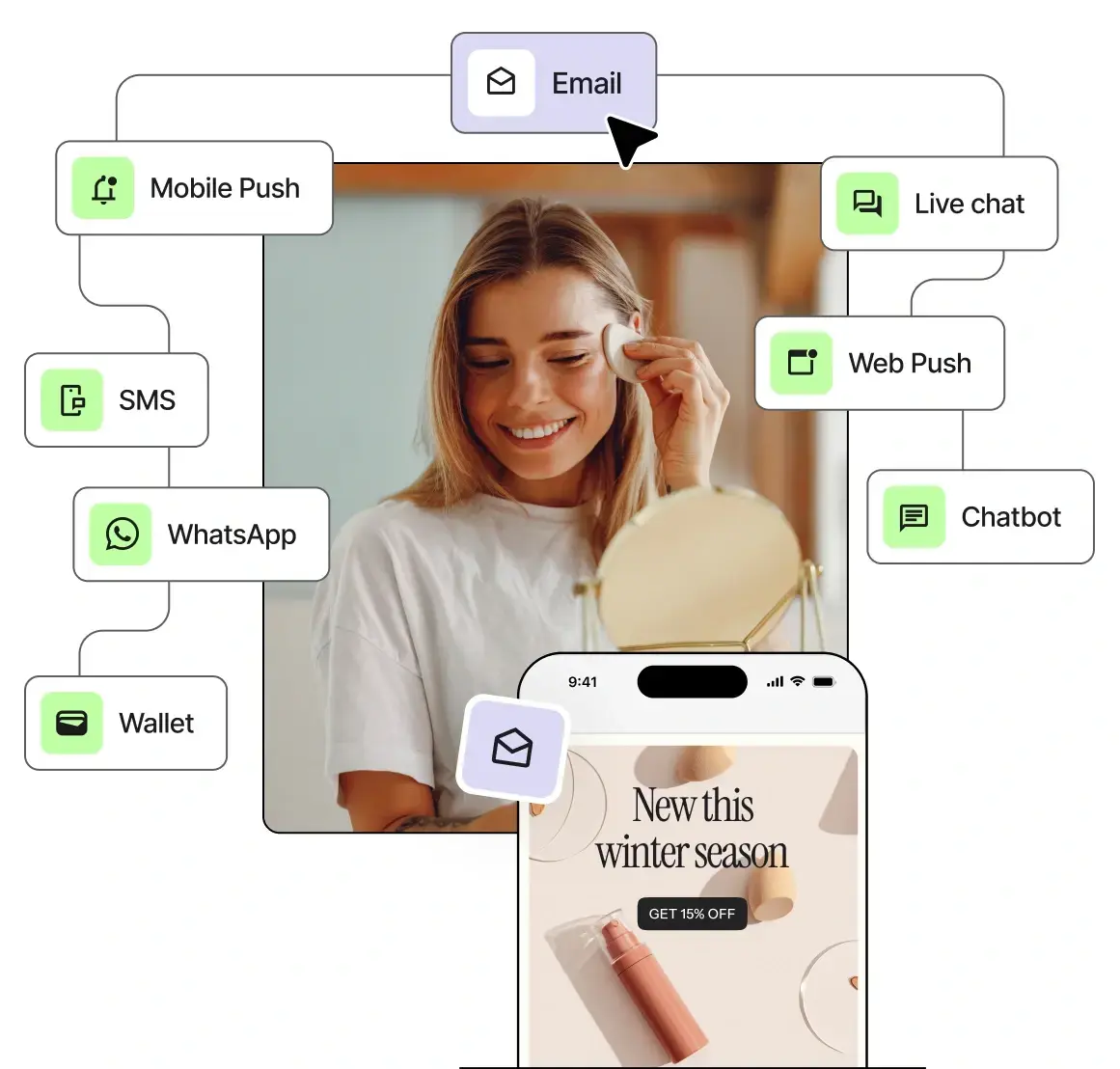
Brevo answers the question: "How do I run all my marketing and sales communications from one affordable platform?" It's built for a marketing manager at a 50-person company who currently pays for Mailchimp, a separate SMS tool, a standalone CRM, and maybe a live chat widget. Brevo replaces all four.
Source: Brevo
The permanent free plan lets teams start without budget approval, and the send-volume pricing means a company with 100,000 contacts sending twice a month pays the same as one with 10,000 contacts sending at the same frequency.
Iterable answers a different question: "How do I orchestrate personalized lifecycle experiences across every channel for millions of consumers?" It's built for a Director of Lifecycle Marketing at a consumer brand like Fabletics or HelloFresh, managing welcome sequences, cart abandonment, re-engagement, and win-back programs that adapt to real-time behavioral signals.
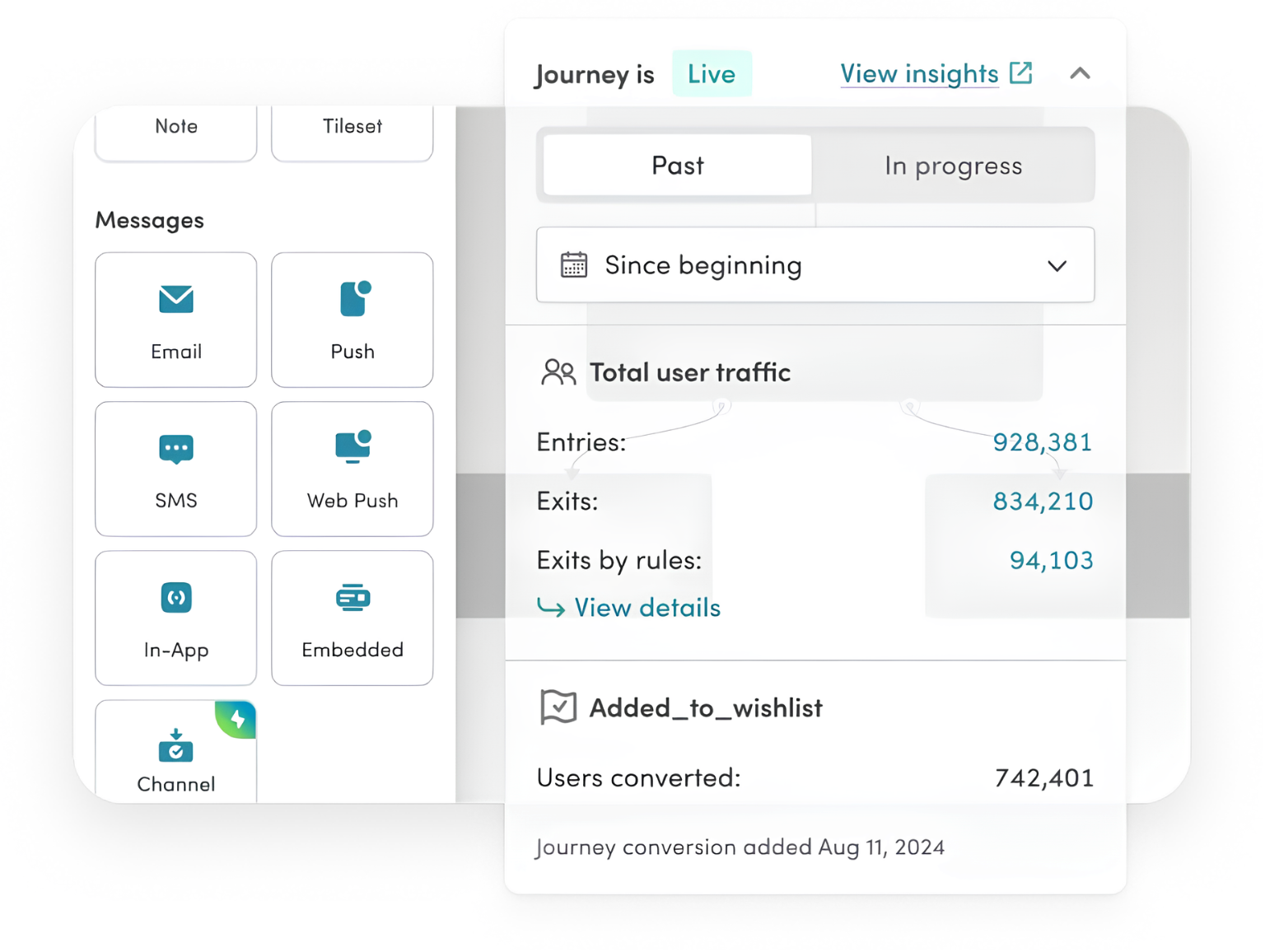
Iterable's Journey Builder doesn't just send messages in sequence. It uses Nova AI to determine the best channel, timing, and content for each individual.
Source: Iterable
Neither platform, however, answers the question B2B go-to-market teams ask first: "Who should we be targeting, and which accounts are ready to buy?" That's the gap ZoomInfo fills, not as a replacement for marketing automation, but as the intelligence layer that makes every downstream campaign more effective.
Brevo wins on breadth and accessibility
Brevo packs broad functionality into a platform that starts at $9/month. The feature list reads like a consolidation pitch: email campaigns, SMS, WhatsApp as a first-class channel (Brevo is a certified WhatsApp Business Solution Provider), web and mobile push notifications, live chat, chatbot, VoIP phone, meeting scheduling, CRM deal pipelines, transactional email via API and SMTP, a customer data platform, and a loyalty program.
For a mid-market business paying separate bills for five or six tools, Brevo's consolidation value is real.
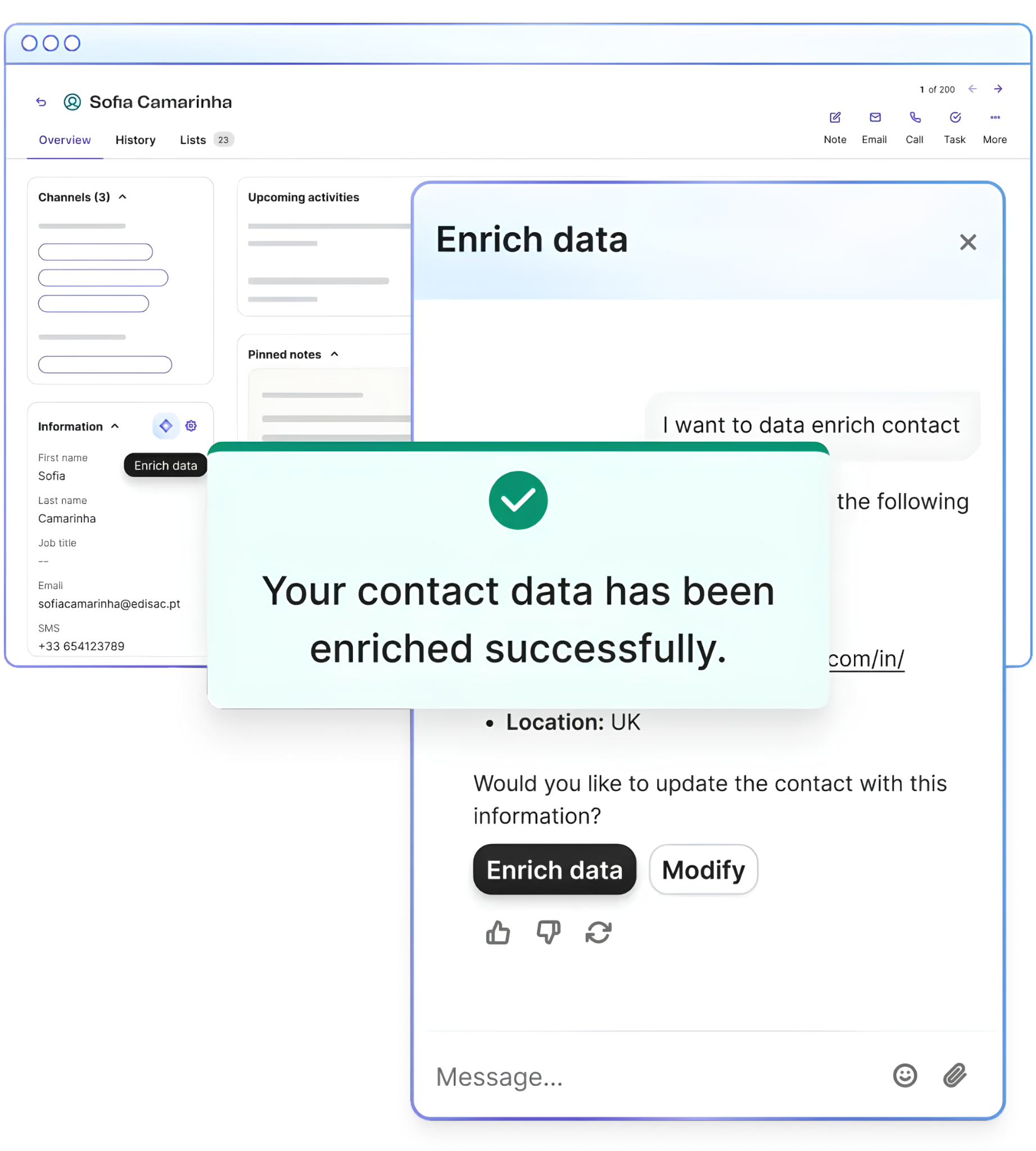
The Sales Platform deserves attention because it's unusual for a marketing automation tool to include it. Brevo's CRM features Kanban deal pipelines, cloud-based phone with AI-generated call summaries, meeting scheduling with payment collection, and a shared inbox. It's not Salesforce, but for teams that don't need Salesforce, it eliminates another subscription.
Source: Brevo
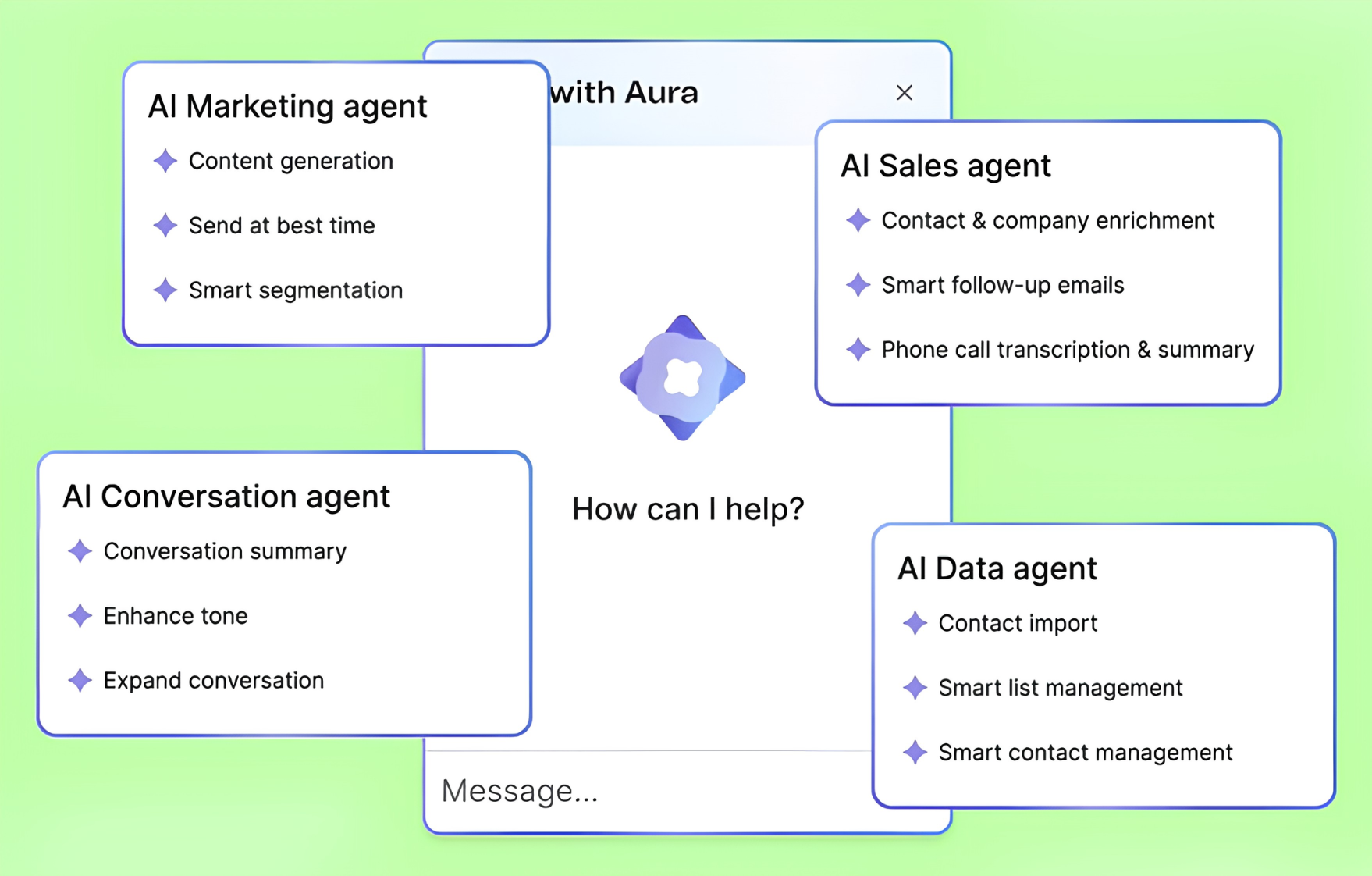
Brevo's AI layer, Aura, spans four agents: a Marketing Agent for content generation and send-time optimization, a Sales Assistant for contact enrichment and deal creation, a Data Analyst for natural-language data queries, and a Conversations Agent for chat summarization. The MCP Server that connects Brevo's data to AI assistants like Claude is an infrastructure bet most competitors haven't made.
Where Brevo falls short is depth. G2 reviewers consistently note that advanced multi-step workflows and conditional branching feel restrictive compared to dedicated automation platforms. Reporting lacks the granularity needed for conversion-level analysis. And the email editor occasionally suffers from stability issues under heavy use.
Iterable wins on lifecycle sophistication and AI
Iterable operates in a different weight class. Where Brevo offers breadth at an accessible price, Iterable offers depth for teams that need it.
The Journey Builder is the centerpiece. Built around a visual canvas where marketers connect tiles across email, SMS, push, in-app, web push, and WhatsApp, it orchestrates experiences that adapt to individual behavior in real time. Journey Assist generates journey structures from natural-language descriptions, including the branching logic, delays, and conditions (not just message copy).
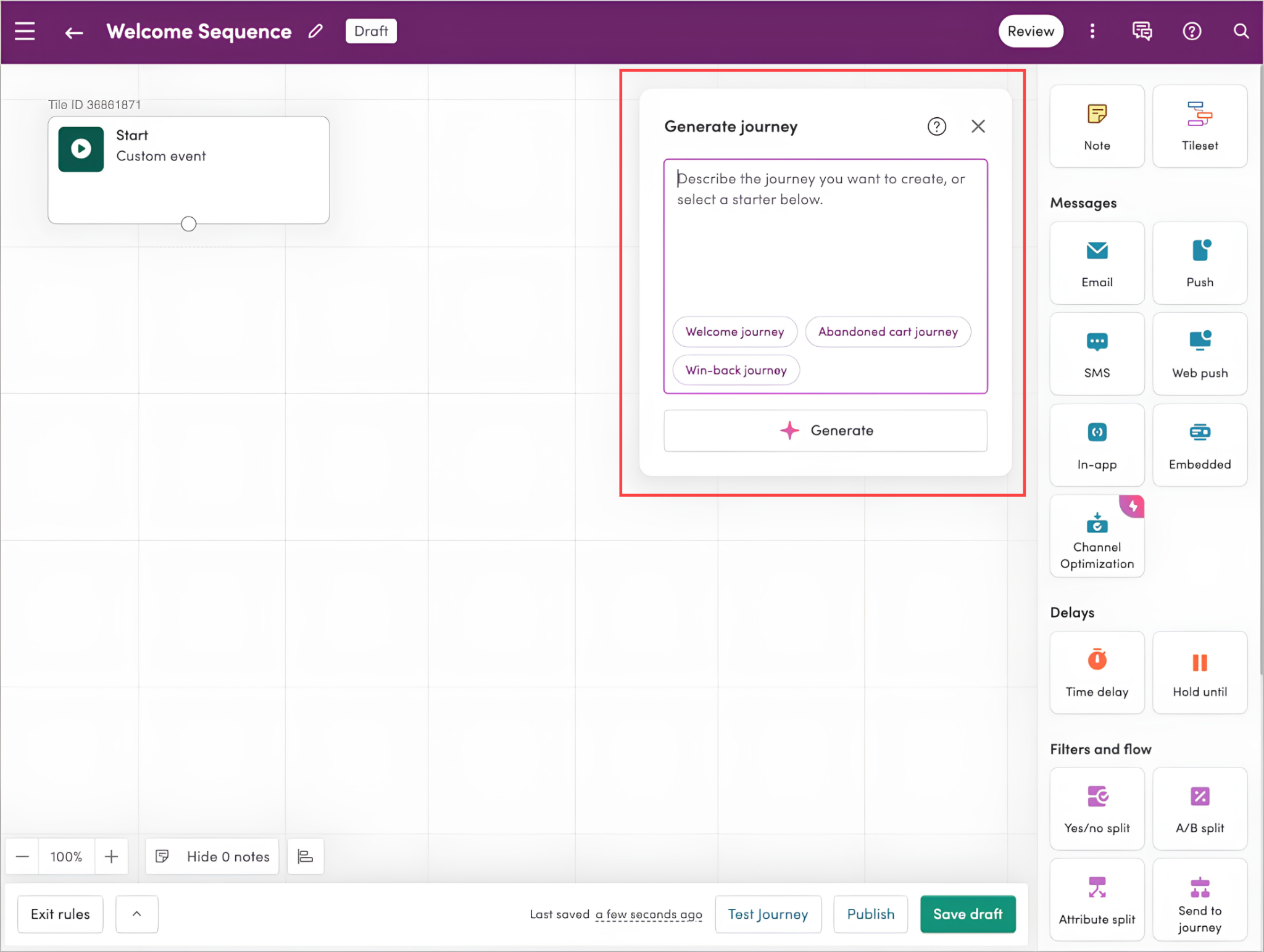
Source: Iterable
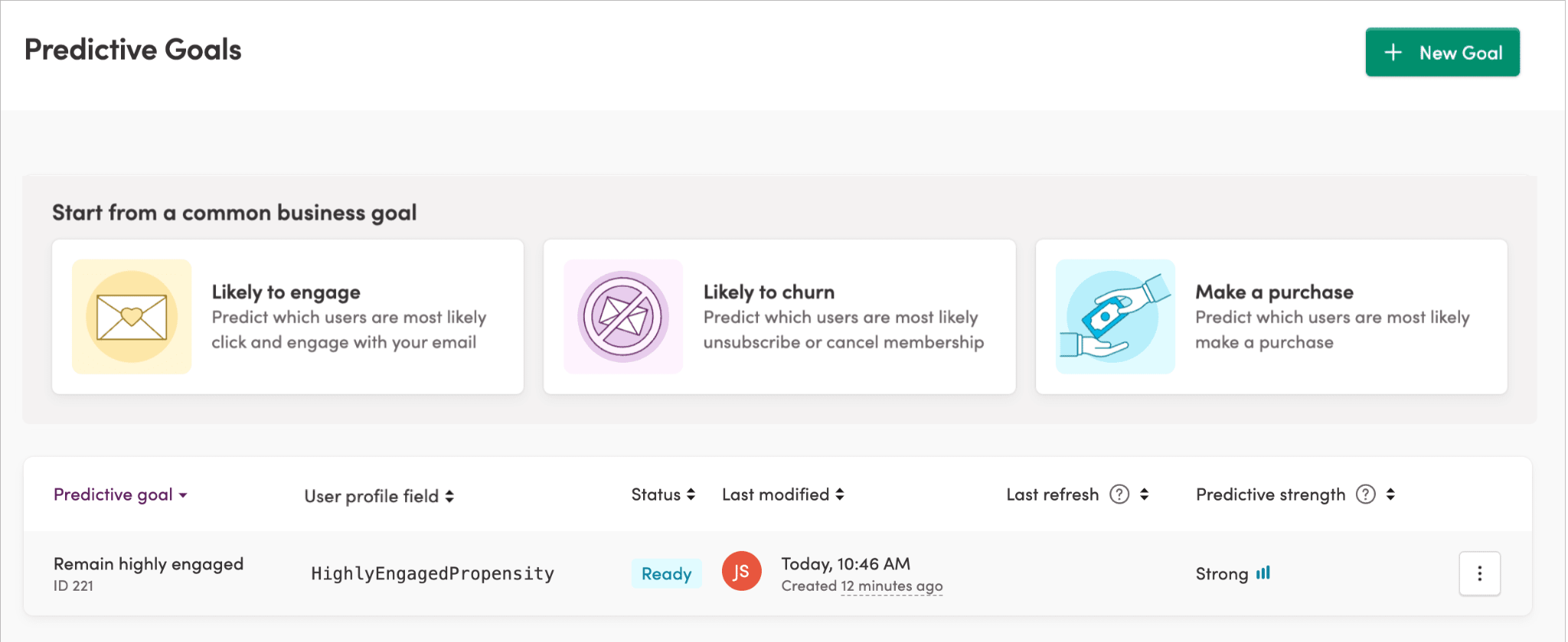
The Nova Intelligence suite goes beyond content generation into decision-making. Predictive Goals score every user on their probability of completing a defined business outcome (purchase, churn, app download) using any combination of system events and custom properties.
Channel Decisioning selects the best channel and send frequency per individual. Brand Affinity classifies contacts as loyal, positive, neutral, or negative based on cross-channel engagement with time-weighted decay.
The weaknesses are equally consistent. Reporting is Iterable's most persistent pain point. G2 reviewers describe out-of-the-box analytics as shallow, with multi-currency revenue tracking that aggregates all revenue into a single sum regardless of currency.
The drag-and-drop email builder has constraints that often require falling back to raw HTML. And the steep learning curve, combined with no free tier and no public pricing, creates a high barrier to evaluation.
Channel coverage comparison
Both Brevo and Iterable support multiple channels, but the architecture and depth differ.
Brevo covers email, SMS, WhatsApp (as a certified Business Solution Provider), web and mobile push, live chat, chatbot, VoIP phone, and mobile wallet.
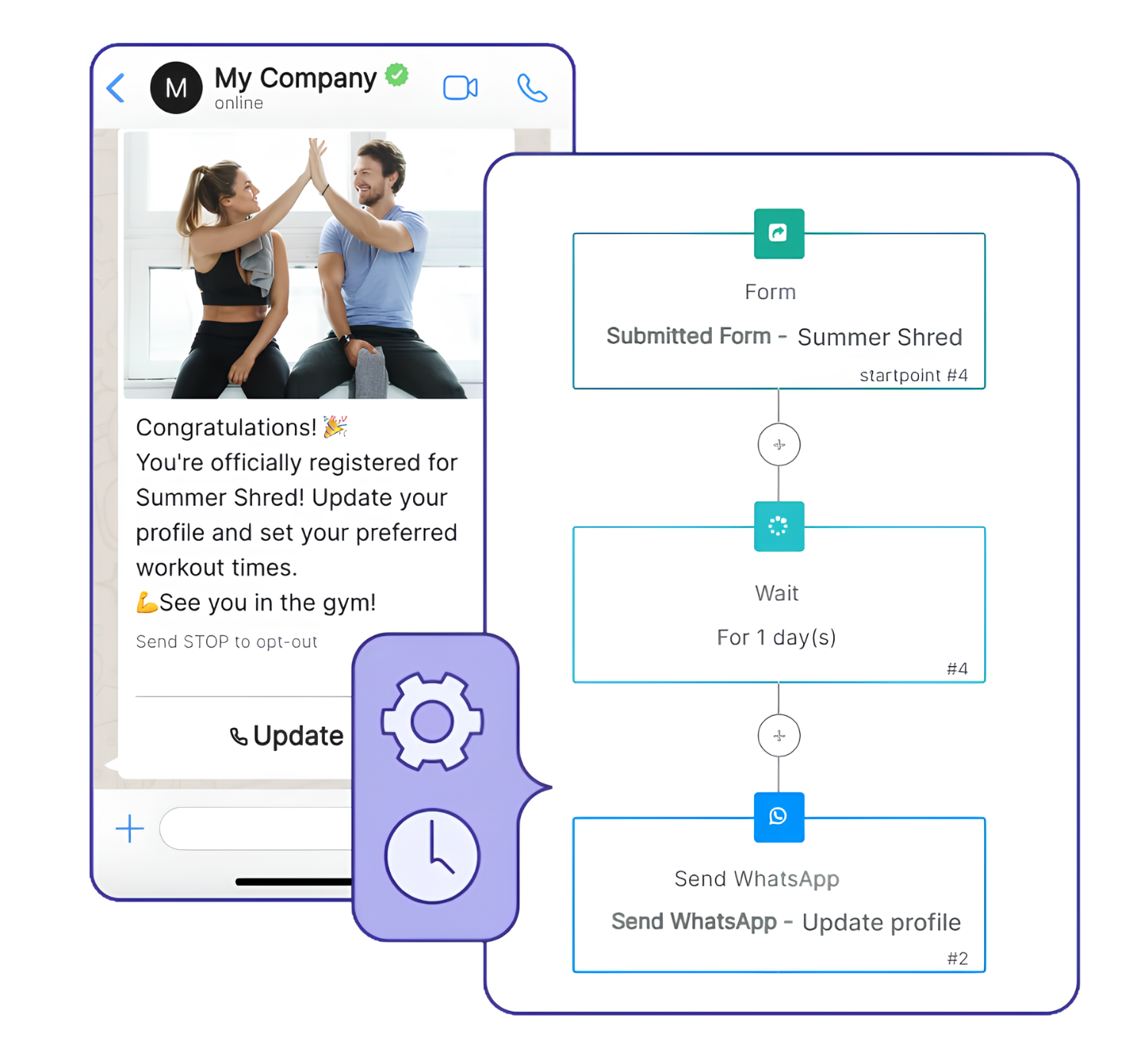
Source: Brevo
The mobile wallet capability stands out: digital loyalty cards in Apple Wallet and Google Wallet with a 95% average card retention rate, compared to typical app retention numbers. WhatsApp sits inside the same automation workflow editor as email and SMS, so a single journey can send an email, wait, and follow up via WhatsApp.
Iterable covers email, SMS/MMS, mobile push, web push, in-app messages, embedded messages, WhatsApp, and Mobile Inbox. The mobile capabilities run deeper than Brevo's.
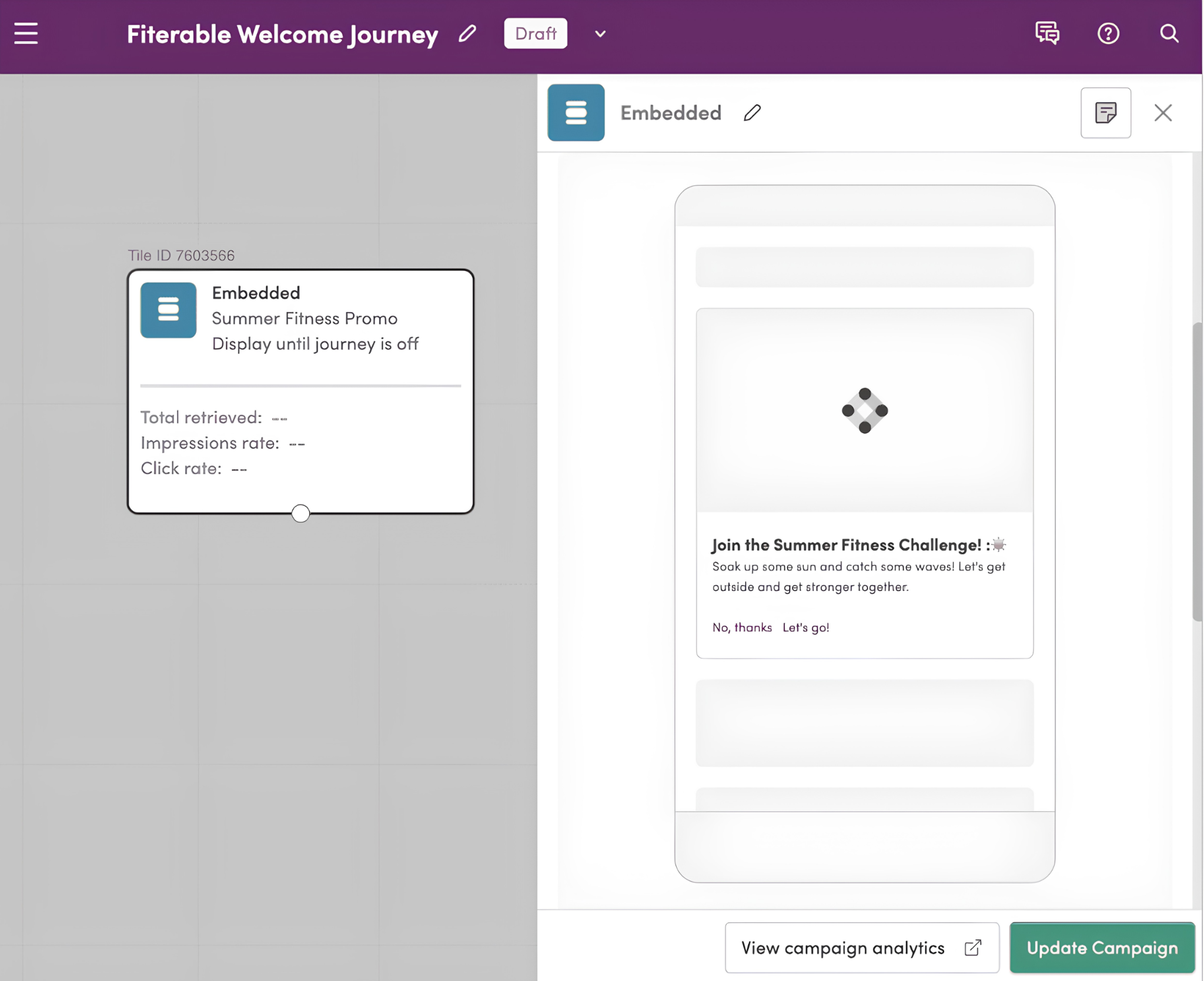
Source: Iterable
Native SDKs for iOS, Android, and React Native support rich push notifications with images and tappable action buttons, in-app messages with animations and deep links, and embedded messages that render natively inside app UIs. The Unknown User Activation feature, launched in Spring 2026, extends engagement to anonymous high-intent website visitors before they convert.
ZoomInfo operates across different channels entirely: display advertising via a native DSP, LinkedIn, Meta, Google, Connected TV, email sequences, phone, and direct mail.
These activate through GTM Studio based on buyer signals and account intelligence, not marketing automation workflows. The channel strategy is account-based: when a target account shows intent signals, GTM Studio can simultaneously trigger display ads, SDR outreach, and email sequences.
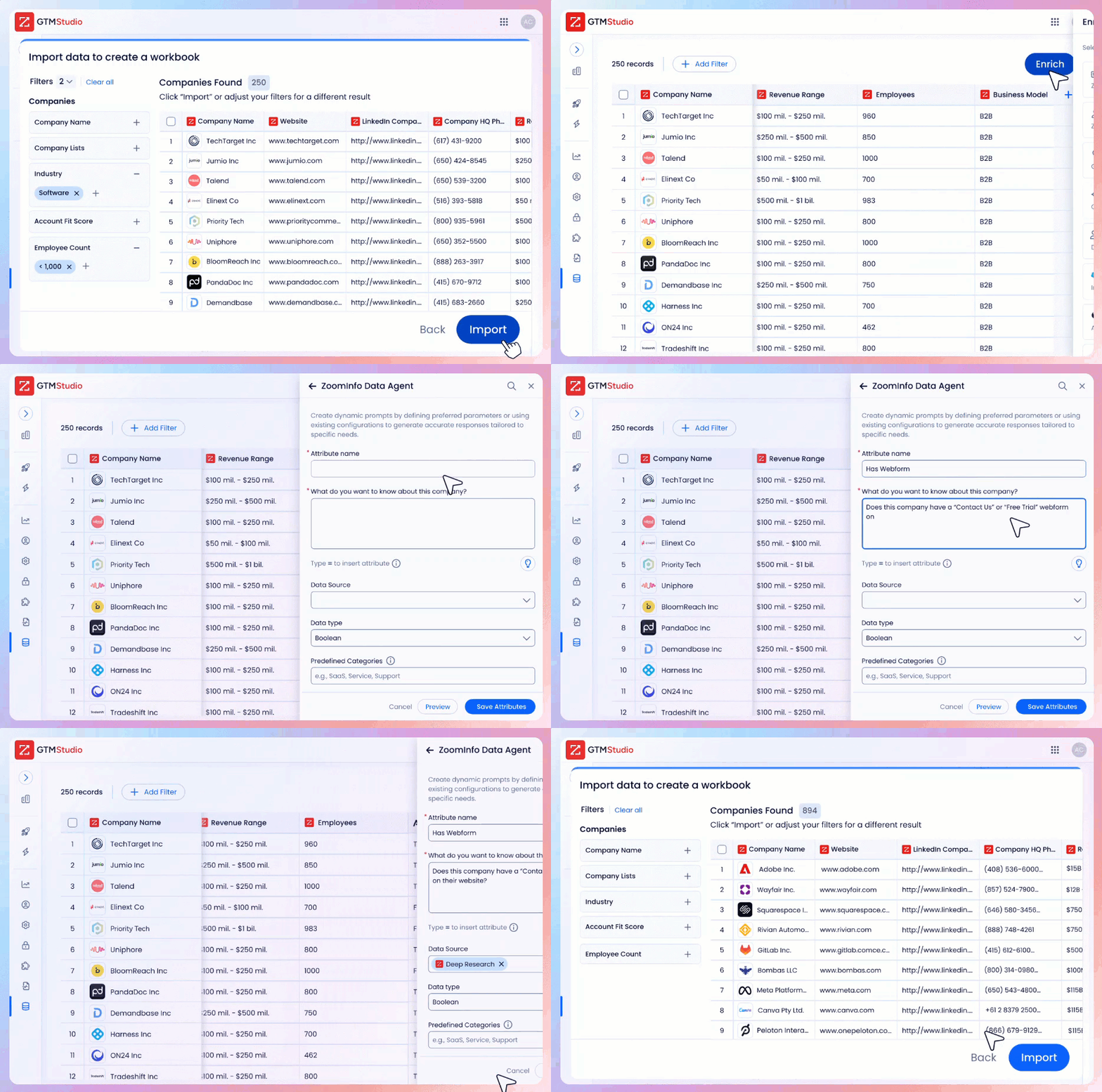
Source: ZoomInfo
Seismic's Chief Business Officer noted: "That combination of our internal CRM data, external signals, and AI that's given all that context has helped us craft very specific account- and persona-based messages. And people have responded to them right away." (ZoomInfo)
Data and intelligence capabilities
This is where the three platforms diverge most sharply, because they have different relationships to data.
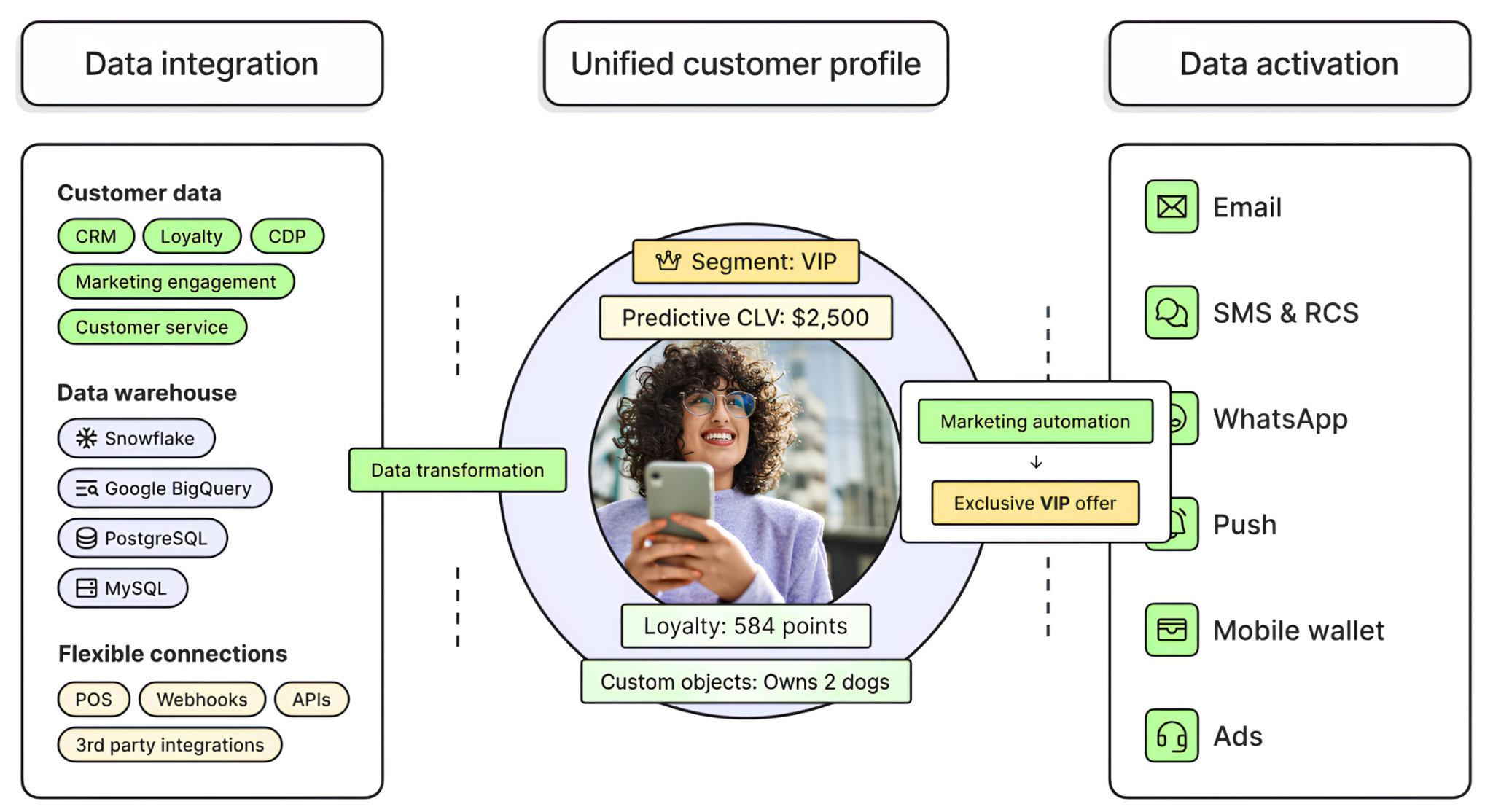
Brevo manages customer data through its Data Platform (BDP), a native CDP that ingests data from databases, data warehouses, and APIs, then resolves identities and applies scoring models like RFM and LTV.
Source: Brevo
The no-code Dataprep layer lets marketers clean and transform data without SQL. It's a functional CDP for companies that want to unify their online and offline customer data, but it works with data you already have. It doesn't generate new intelligence about accounts you don't yet know.
Iterable stores user data in a flexible schema that supports nested data and real-time activation. Integrations with CDPs like Segment and Hightouch (including Smart Ingest for zero-copy data activation from warehouses) connect Iterable to external data sources.
Predictive Goals and Brand Affinity generate behavioral intelligence from engagement data. Like Brevo, Iterable works with data about people who have already identified themselves.
Source: Iterable
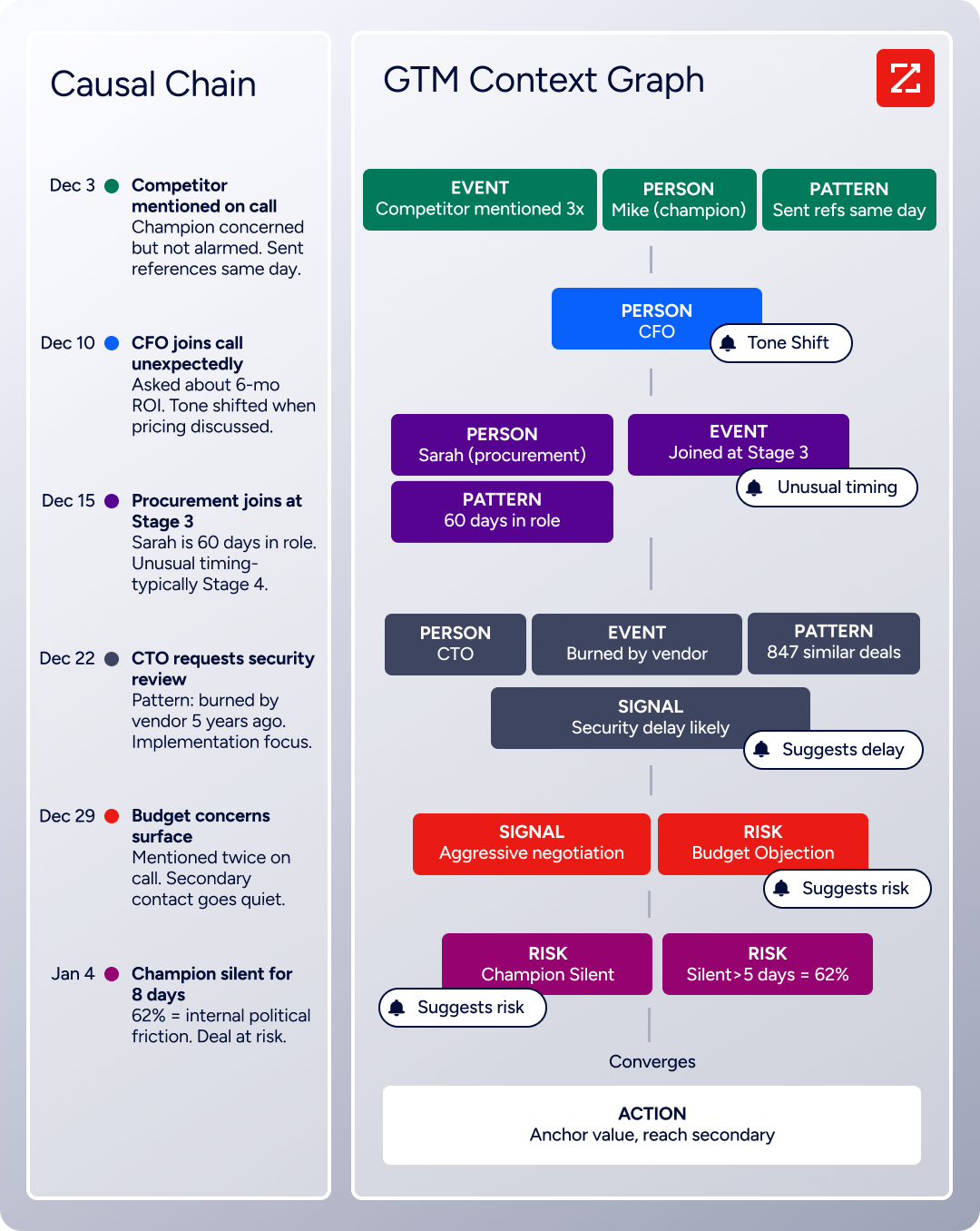
ZoomInfo operates at a different layer. Its GTM Context Graph processes 1.5B + data points daily, fusing third-party B2B intelligence (500M contacts, 100M companies) with a customer's own CRM records, conversation transcripts, and behavioral signals.
Source: ZoomInfo
The intelligence it generates is prospective: which accounts are researching your category, who the decision-makers are, what signals indicate buying readiness, and why deals are moving or stalling.
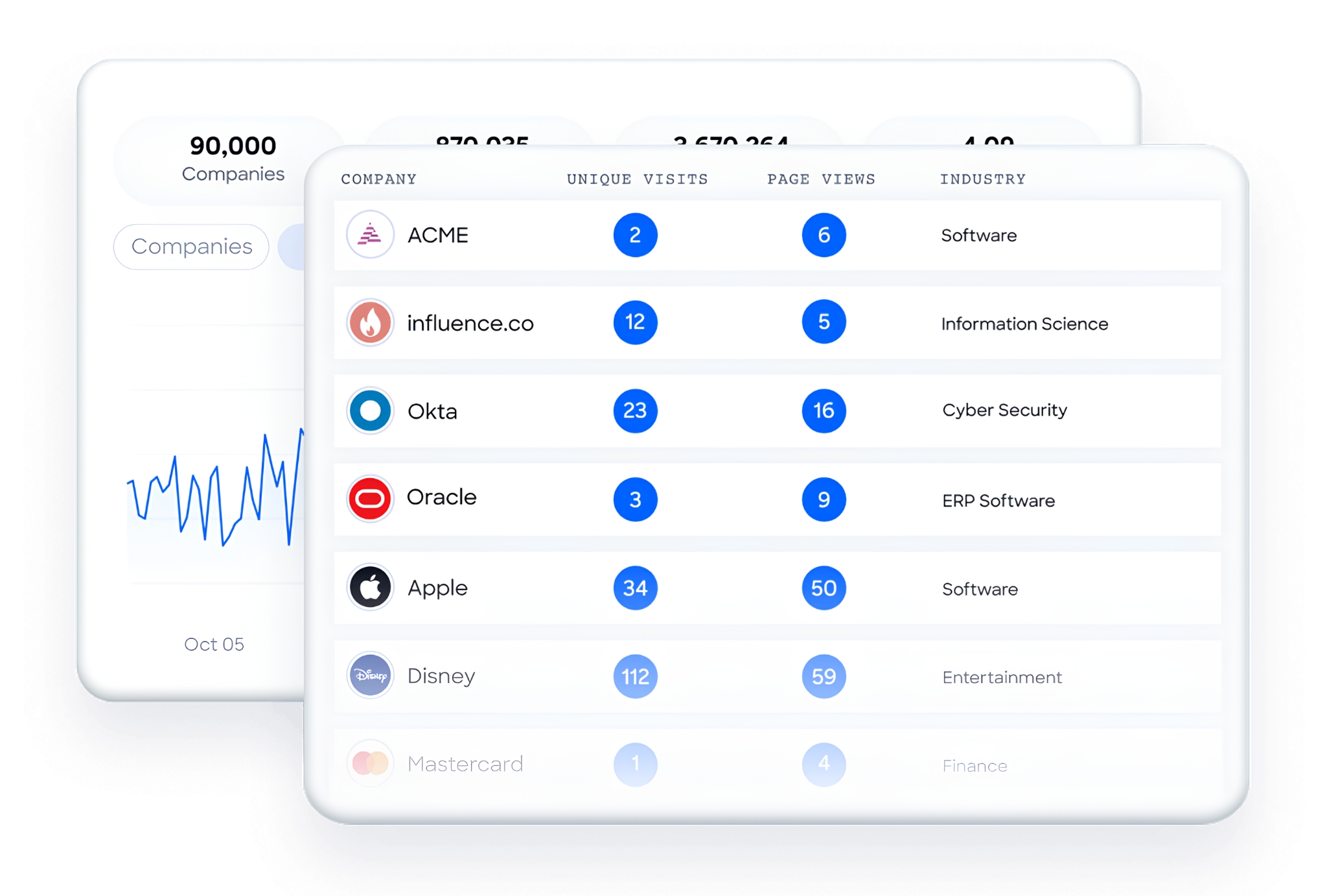
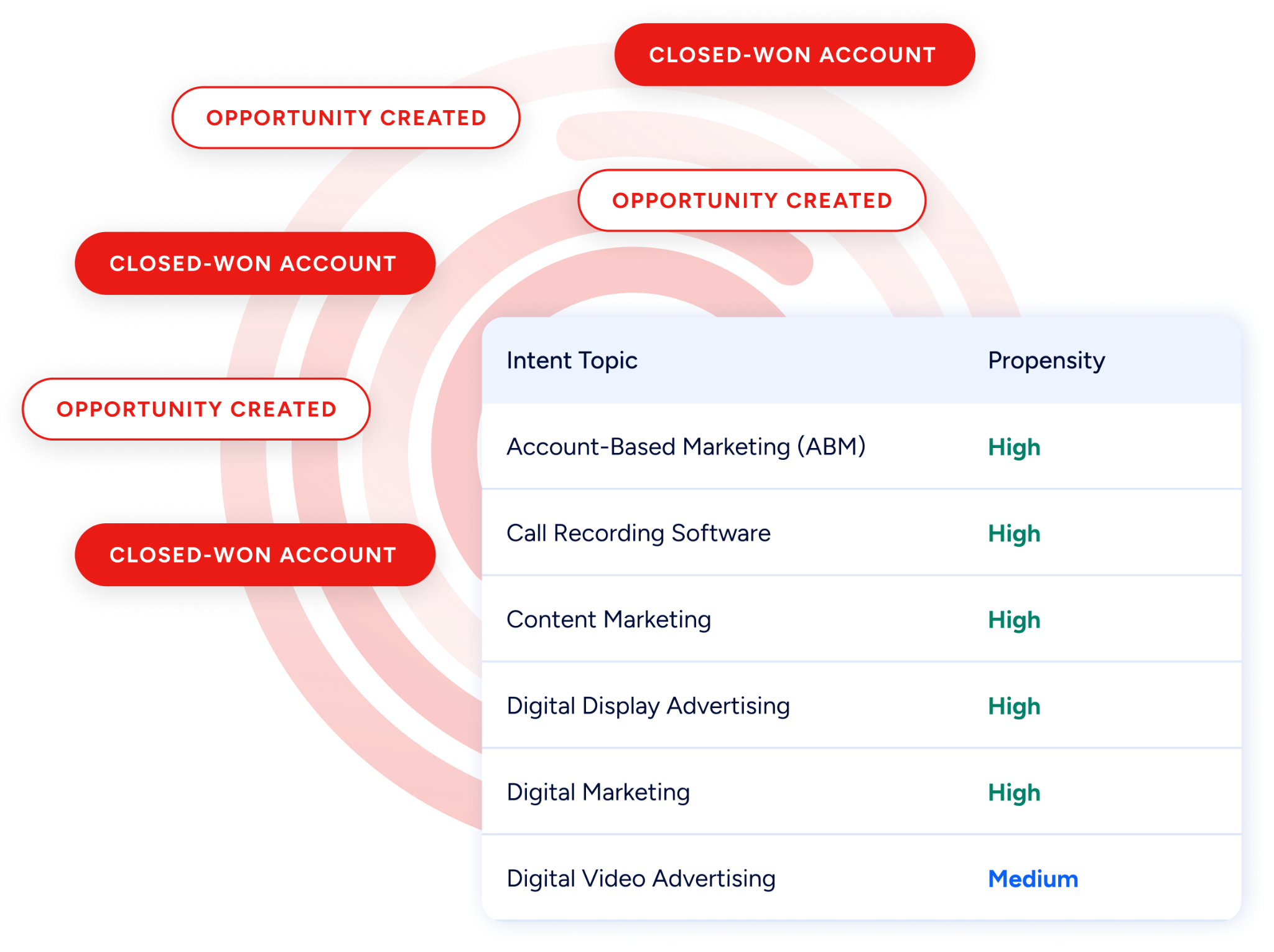
Buyer Intent data tracks signals from 210 million IP-to-Organization pairings and 6 trillion+ new keyword-to-device pairings monthly. WebSights identifies the companies behind anonymous website visits. Guided Intent identifies topics historically correlated with deal success rather than requiring manual topic selection.
Source: ZoomInfo
For B2B marketing teams, this creates a different workflow entirely. Instead of waiting for prospects to enter your database through form fills and then marketing to them, ZoomInfo identifies the accounts already in-market and feeds that intelligence into whatever tools you use for activation, including Brevo or Iterable.
Automation and AI approach
Brevo's automation is built around a visual drag-and-drop workflow editor with pre-built templates for welcome series, abandoned cart recovery, birthday emails, and lead scoring. Workflows can dispatch messages across multiple channels within a single automation.
The Aura AI Marketing Agent generates content, optimizes send times per contact, auto-segments audiences, and delivers product recommendations. The automation is accessible (the free plan includes automation for up to 2,000 contacts) but reviewers consistently note the complexity ceiling for advanced conditional branching.
Source: Brevo
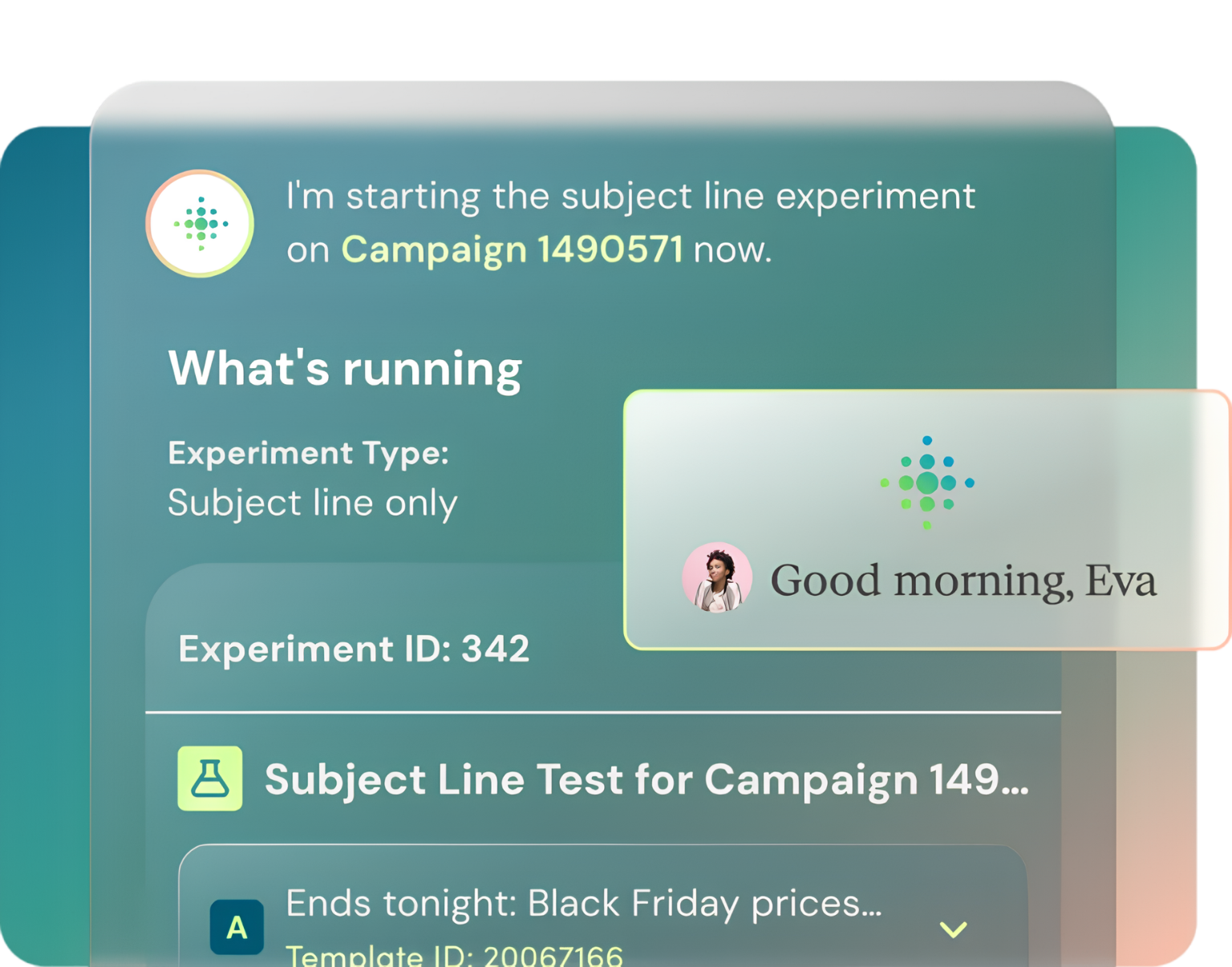
Iterable's automation operates through two layers. The Journey Builder handles multi-step lifecycle orchestration with filter tiles, branching logic, webhooks for external system integration, and embedded conversion tracking.
Nova AI adds the adaptive layer: Channel Decisioning determines the best channel and frequency per individual in real time, Predictive Goals score users on any custom outcome, and the Nova Agent (GA as of Spring 2026) handles campaign setup, copy generation, journey building, template QA, and performance analysis via natural language.
Source: Iterable
The key difference: Iterable's AI targets the decision-making bottleneck (which segment, which channel, which timing), not just content creation.
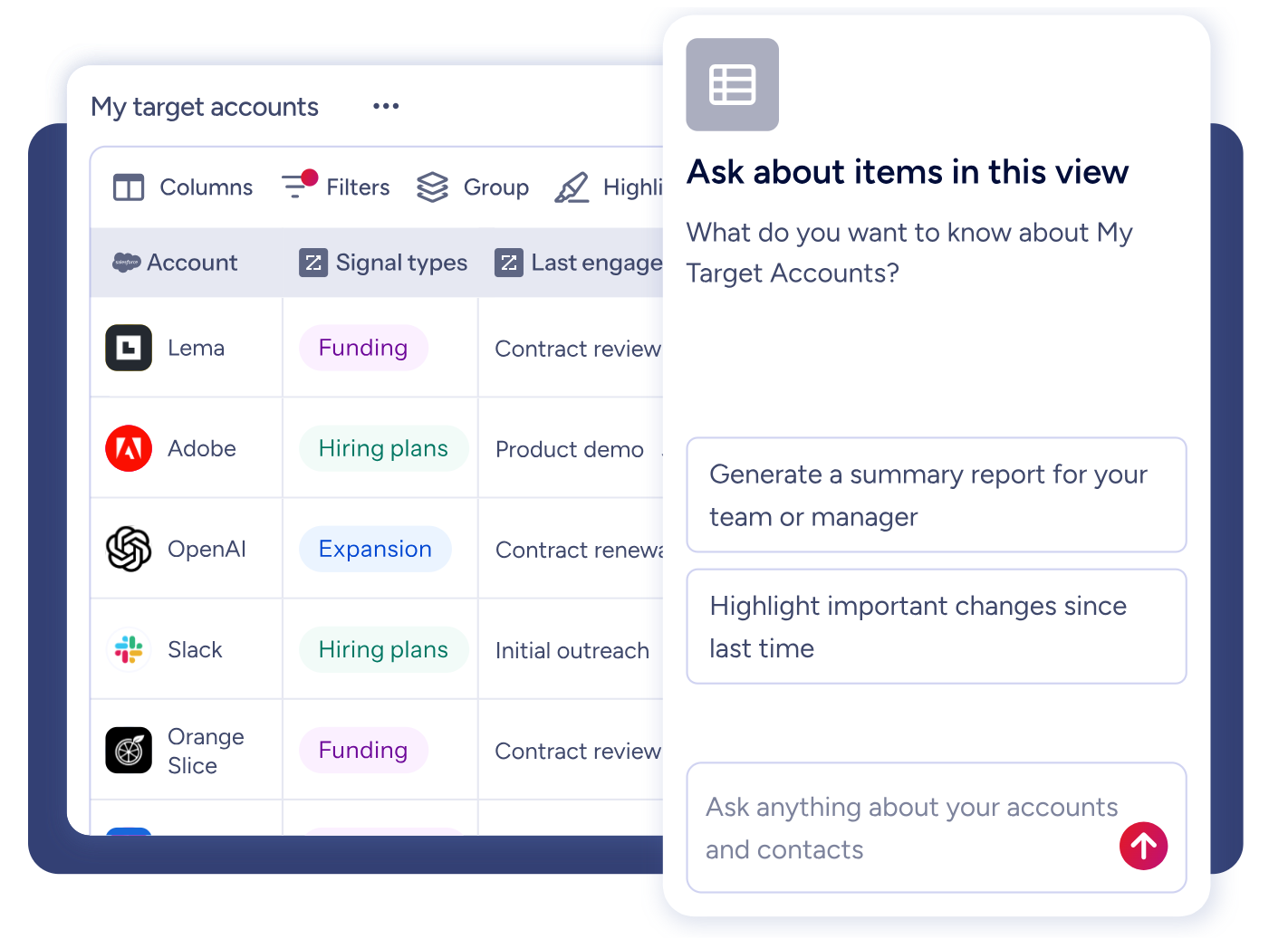
ZoomInfo's AI operates at the account intelligence level. GTM Workspace AI agents research accounts, generate personalized outreach, monitor signals, draft follow-ups, and update CRM, all drawing from the GTM Context Graph.
Source: ZoomInfo
GTM Studio lets marketers describe audiences in natural language, launch multi-channel plays, and activate campaigns that improve as prospects respond. Where Brevo and Iterable automate what happens after a lead enters your system, ZoomInfo automates the identification of who should enter your system in the first place.
Pricing tells you who each platform is built for
The pricing models reveal the target buyer as clearly as any feature comparison.
Brevo uses send-volume pricing with unlimited contacts on every plan:
Free - 300 emails/day, unlimited contacts, no credit card required
Starter - from $9/month for 5,000 emails/month
Standard - from $18/month, adds automation, A/B testing, and AI send-time optimization
Professional - from $499/month for 150,000+ emails/month, adds WhatsApp, push, phone support, and a dedicated Deliverability Specialist
Enterprise - custom pricing for 1M+ contacts
The model rewards list growth. A company with 200,000 contacts that sends a monthly newsletter pays the same base rate as one with 5,000 contacts sending at the same volume. SMS and WhatsApp credits are billed separately.
Iterable doesn't publish pricing at all. There's no pricing page, no self-serve signup, and no free trial. The only entry point is booking a demo. Contracts are enterprise-negotiated, with fees that are non-refundable and non-cancellable. Usage cannot be decreased mid-term. Multi-year commitments carry pricing advantages. Professional services are optional and separately priced.
The pricing gap reflects their different markets. A 10-person marketing team at a growing ecommerce brand can start with Brevo for free and scale to $18/month. That same team would need a budget approval process, a sales demo cycle, and a contract negotiation to even evaluate Iterable.
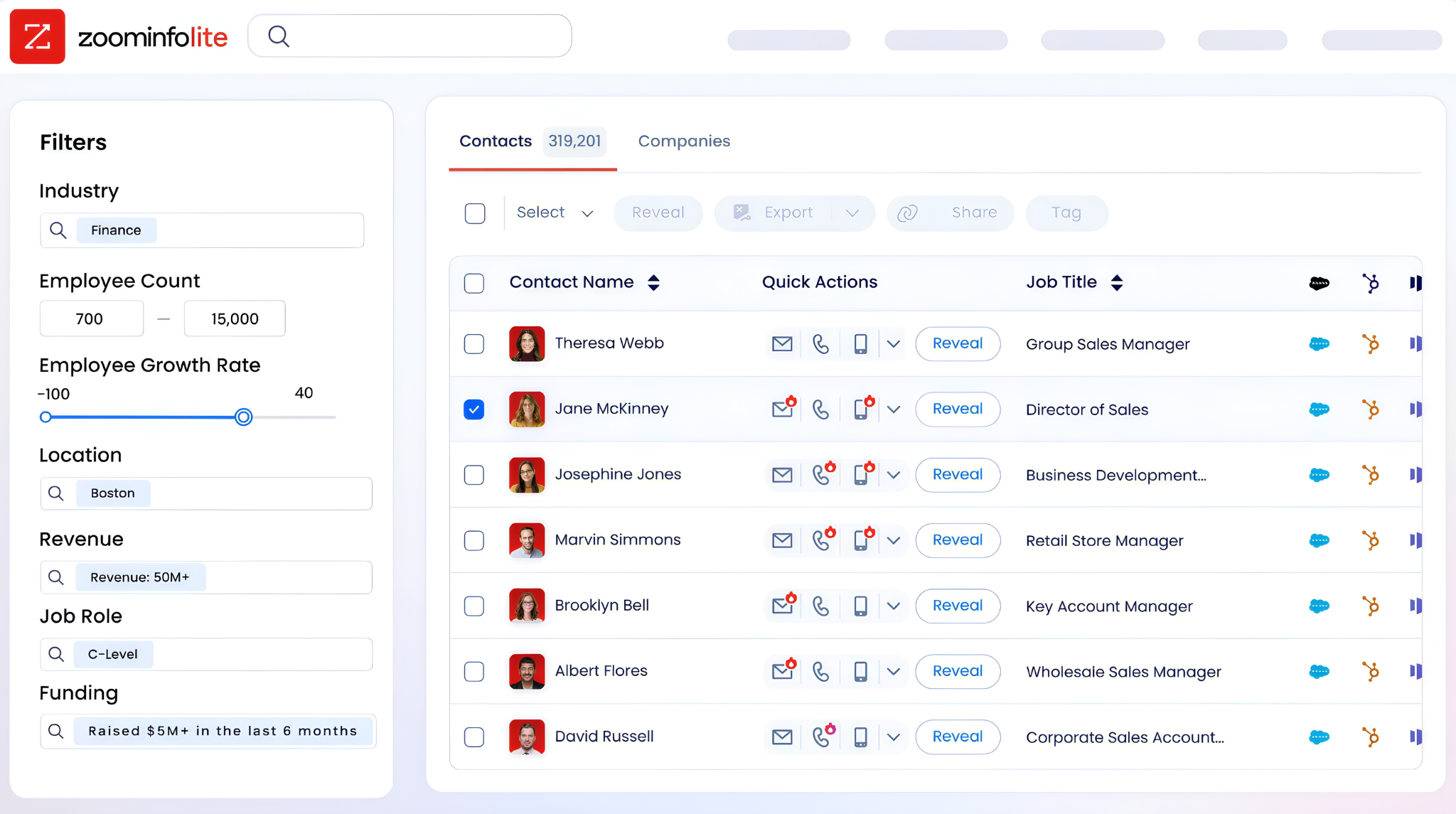
ZoomInfo uses consumption-based pricing with Sales, Marketing, and Chorus product lines. ZoomInfo Lite is a permanent free tier with access to the B2B database, 10 monthly export credits, and WebSights Lite. A 7-day free trial is also available for the full platform. Enterprise pricing is custom-quoted based on seats, credits, and feature access.
Source: ZoomInfo
Integrations and technical infrastructure
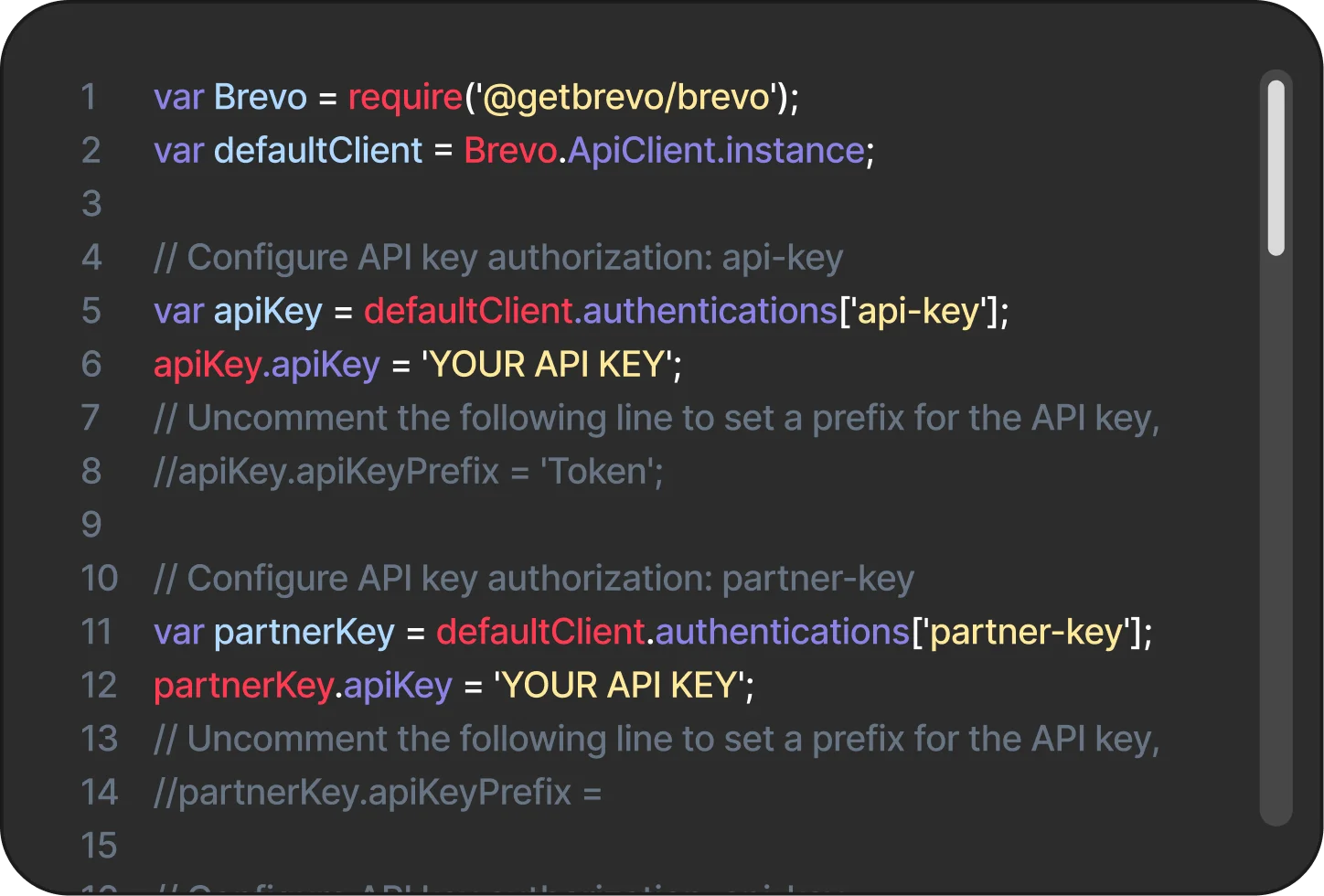
Brevo connects to 150+ third-party tools through its marketplace, covering Shopify, WooCommerce, BigCommerce, WordPress, Salesforce, Stripe, Zapier, and Make. The REST API exposes the full platform programmatically (transactional email, SMS, WhatsApp, contacts, CRM, loyalty, and custom events)
Source: Brevo
Official SDKs cover Node.js, PHP, Python, Java, C#, Go, and Ruby. API access is available on every plan, including Free. Rate limits scale by tier, from 1,000 email sends per second on the general tier to 6,000 on Enterprise.
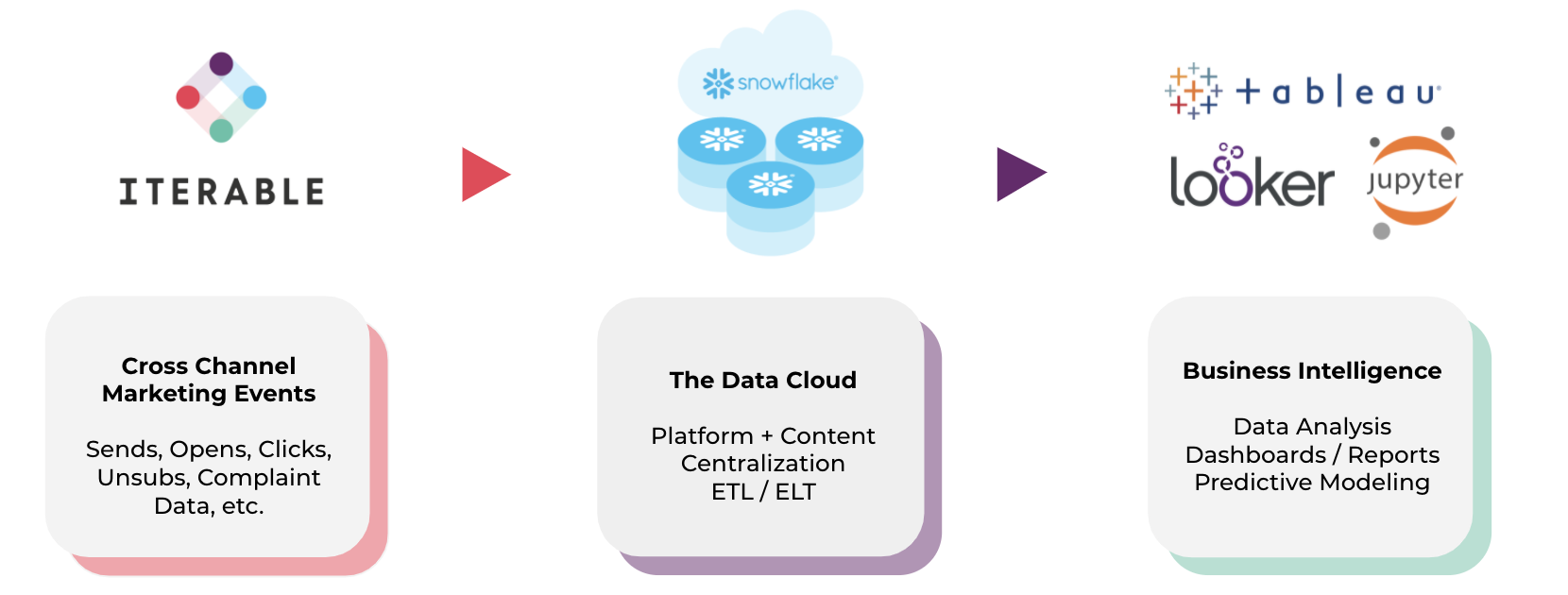
Iterable maintains a technology partner directory with 125+ integrations, including Segment, Hightouch, Snowflake, Amplitude, Shopify, and Zapier. The REST API covers users, events, campaigns, lists, and catalogs with project-scoped API keys. Native SDKs exist for iOS, Android, React Native, and Web.
The Snowflake Secure Data Sharing integration enables zero-copy data access, and the Databricks CustomerLake partnership signals deeper data platform integration. API access is bundled into enterprise contracts.
Source: Iterable
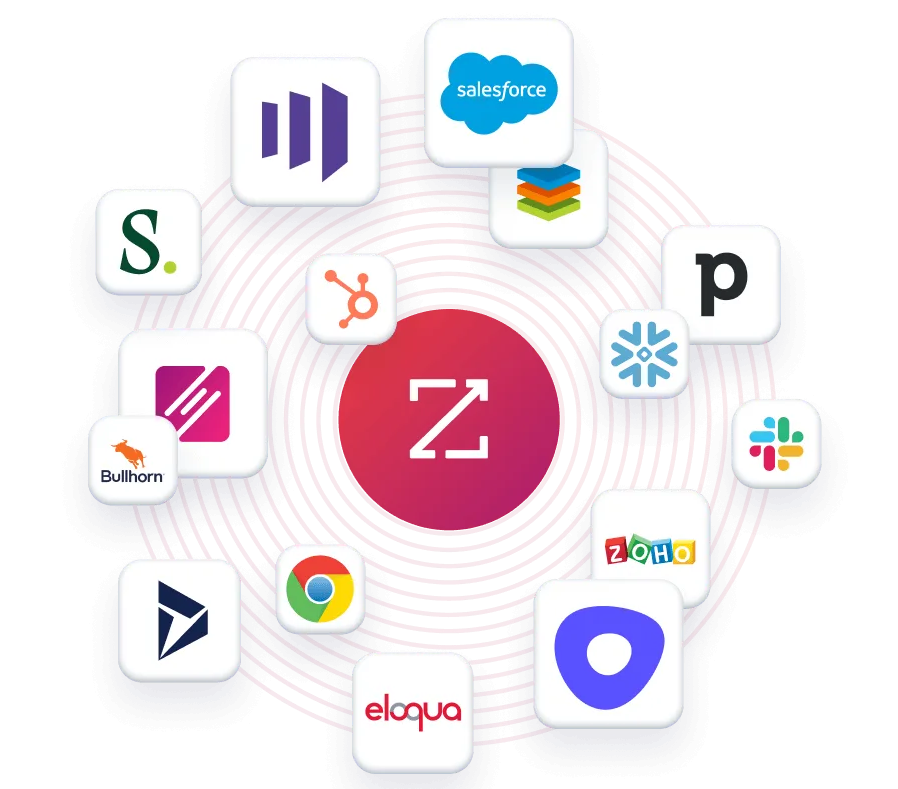
ZoomInfo operates the ZoomInfo Marketplace with 172+ integrations, plus direct data delivery into AWS, Google Cloud, Snowflake, and Databricks.
Source: ZoomInfo
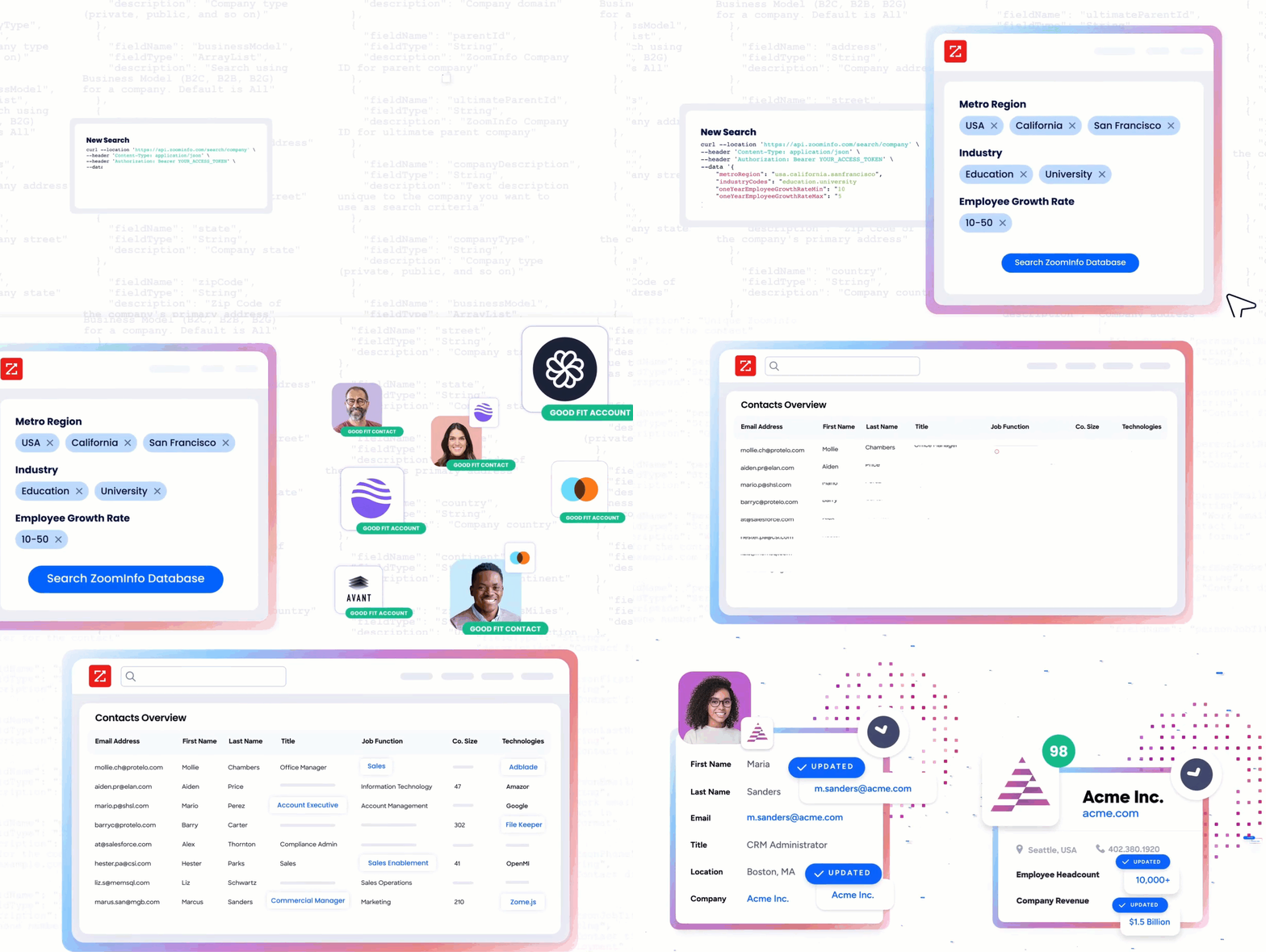
The Enterprise API covers search, enrichment, AI intelligence (account summaries, lookalike expansion, contact recommendations), marketing audience management, and engagement signals. The MCP server connects AI assistants like Claude and ChatGPT directly to ZoomInfo's B2B data. API access is included in all relevant plans.
Source: ZoomInfo
Who each platform serves best
The choice between Brevo, Iterable, and ZoomInfo isn't about which is "better." Each solves a different problem for a different buyer.
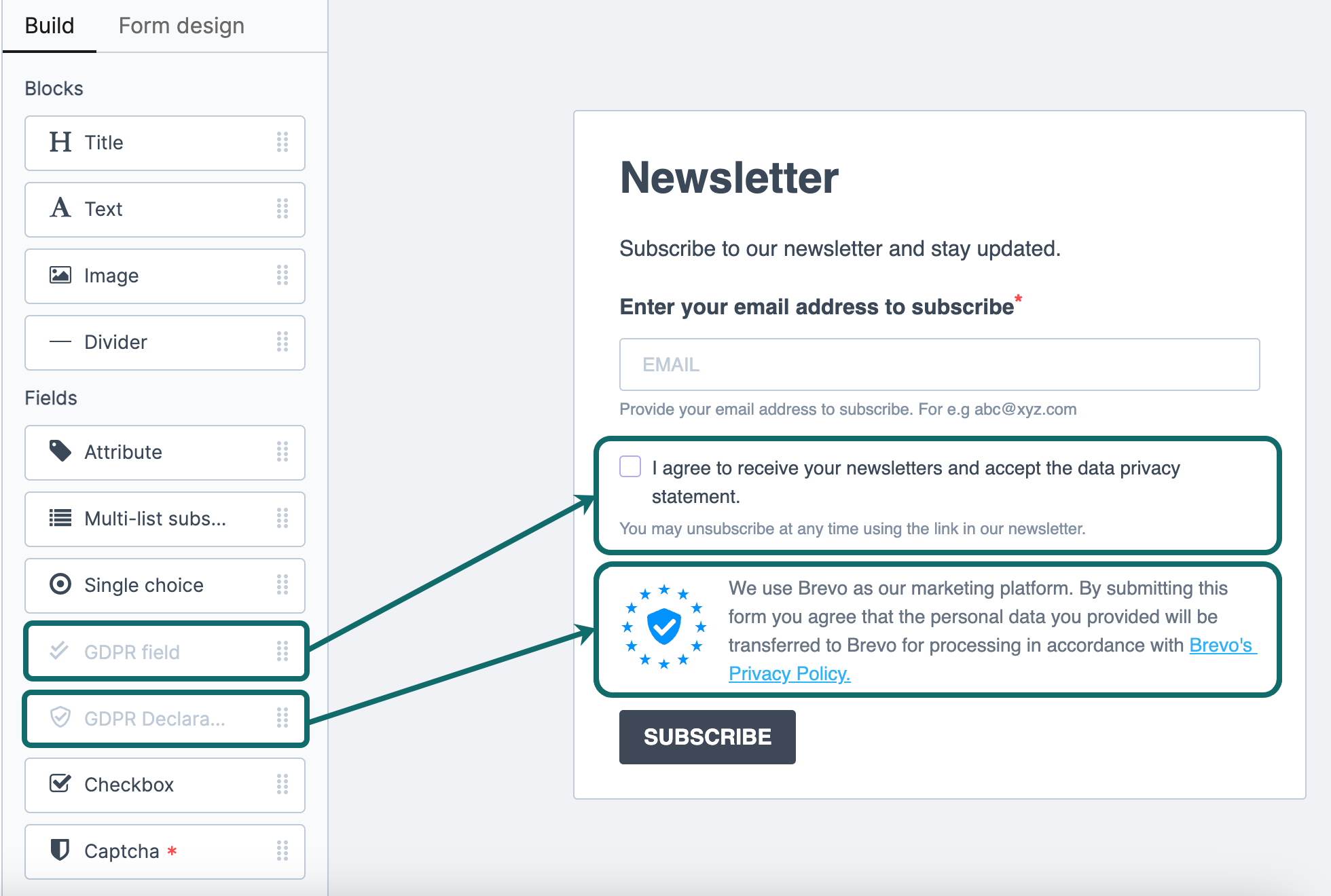
Brevo's ideal customer is an SMB or mid-market business (1 to 500 employees) that needs to consolidate email, SMS, WhatsApp, CRM, and transactional messaging onto one affordable platform. European companies get strong value from Brevo's GDPR-native architecture and EU data residency.
Source: Brevo
Ecommerce businesses benefit from native Shopify and WooCommerce integrations plus abandoned cart workflows. Teams that want to start free and scale without per-contact penalties find Brevo's pricing model attractive.
Iterable's ideal customer is a mid-to-large B2C enterprise running complex lifecycle programs across millions of consumers. Consumer apps (Zwift, ClickUp), fintech (Brigit), online marketplaces (SeatGeek), retail (Fabletics, HelloFresh), and media publishers (Washington Post, The Athletic) are the core verticals.
Marketing teams that want to reduce engineering dependency while increasing personalization will find Iterable's combination of no-code tools and AI decisioning compelling.
ZoomInfo's ideal customer is a B2B company whose revenue depends on identifying, reaching, and engaging the right accounts.
Enterprise and upper mid-market organizations, including Adobe, Snowflake, Thomson Reuters, and Databricks, use ZoomInfo as the intelligence layer powering their go-to-market motion. Sales, marketing, and RevOps teams that need verified contact data, buyer intent signals, and AI-driven account intelligence use ZoomInfo to fuel everything downstream.
Source: ZoomInfo
Brevo vs. Iterable vs. ZoomInfo: Which should you choose?
Choose Brevo if:
You need email, SMS, WhatsApp, CRM, and transactional messaging in one platform
Your budget is under $500/month for marketing tools
You want to start for free and scale without per-contact pricing penalties
Your automation needs are straightforward: welcome series, abandoned cart, nurture sequences
You're a European business that requires GDPR-native architecture and EU data residency
You value speed to launch over automation depth
Choose Iterable if:
You're an enterprise B2C brand running complex lifecycle programs at scale
Your marketing team needs to build adaptive, multichannel journeys without engineering support
AI-driven channel decisioning, predictive audiences, and behavioral scoring are priorities
You have the budget for enterprise-contracted software and implementation support
Mobile engagement (in-app, push, embedded messaging) is central to your strategy
Choose ZoomInfo if:
Your revenue depends on identifying and engaging B2B buyers before they fill out a form
You need verified contact data, buyer intent signals, and account intelligence at scale
Your marketing strategy is account-based, targeting specific companies and buying committees
You want intelligence that flows into any tool via APIs and MCP, not locked inside one platform
Your sales and marketing teams need shared context on who to target, when to engage, and why
Start with ZoomInfo Lite for free or book a demo to see the full platform.
Brevo and Iterable both execute marketing campaigns well, one affordably for growing businesses, the other with sophistication for enterprise brands. But for B2B teams, the most important question isn't how you send messages. It's whether you're sending them to the right accounts at the right time.
ZoomInfo answers that question with intelligence that sits upstream of any marketing platform, ensuring that every campaign, sequence, and outreach motion starts with the buyers most likely to convert.
Smartsheet's Senior Manager of Sales Technology Enablement put it directly: "ZoomInfo is our one source of truth for account data, and even more so for contact data. There's no other provider in the market that provides you with that level of detail." (ZoomInfo)
Brevo vs. Iterable vs. ZoomInfo FAQ
What is the core difference between Brevo, Iterable, and ZoomInfo?
Brevo is an all-in-one marketing and sales platform for SMBs and mid-market businesses, combining email, SMS, WhatsApp, CRM, and transactional messaging with send-volume pricing starting at $9/month. Iterable is an enterprise cross-channel engagement platform for B2C brands running complex lifecycle marketing with AI-driven journey orchestration.
ZoomInfo is a B2B go-to-market intelligence platform that identifies in-market accounts, surfaces buyer intent signals, and provides verified contact data, operating upstream of marketing automation to ensure campaigns reach the right buyers.
Which platform is cheapest to get started with?
Brevo is the most accessible, with a permanent free plan that includes 300 emails per day, unlimited contacts, and no credit card required. ZoomInfo offers ZoomInfo Lite, a permanent free tier with access to its B2B database and 10 monthly export credits. Iterable has no free plan, no public pricing, and no self-serve signup. Evaluation requires booking a sales demo and negotiating an enterprise contract.
Can Brevo or Iterable replace each other?
Not easily. Brevo is designed for SMBs and mid-market teams that need affordable multichannel marketing with built-in CRM. Iterable is designed for enterprise B2C brands running sophisticated lifecycle programs with AI-driven personalization across millions of users.
A company outgrowing Brevo's automation ceiling might evaluate Iterable, but would face a large jump in cost and implementation complexity. A company considering Iterable for simple campaign sends would be overpaying for capabilities it doesn't need.
How does ZoomInfo fit into a marketing stack that already uses Brevo or Iterable?
ZoomInfo operates at the intelligence layer, not the execution layer. It identifies which accounts are in-market, who the decision-makers are, and what signals indicate buying readiness.
That intelligence can feed into Brevo or Iterable (or any other marketing automation tool) through APIs, integrations, or data exports, improving targeting accuracy and campaign ROI without replacing the tools that execute the campaigns.
Which platform has the best AI capabilities?
Each platform applies AI to a different problem. Brevo's Aura AI handles content generation, send-time optimization, auto-segmentation, and product recommendations. Iterable's Nova AI targets the decision-making bottleneck: determining the best channels, timing, and audiences per individual, plus autonomous journey building via the Nova Agent.
ZoomInfo's AI operates at the account intelligence level, powering account research, buyer signal detection, outreach generation, and CRM automation through the GTM Context Graph. The "best" depends on whether your bottleneck is content creation, campaign decisioning, or buyer identification.
Which platform has better reporting and analytics?
Neither Brevo nor Iterable is strong on reporting. Brevo's analytics cover opens, clicks, bounces, and click heatmaps, but lack granularity for conversion-level analysis and multi-campaign comparison. Iterable's reporting is its most consistently criticized weakness.
G2 and TrustRadius reviewers describe shallow out-of-the-box analytics, broken multi-currency revenue tracking, and limited cross-channel attribution. Both platforms typically require a separate BI tool for detailed analysis.
Which platform handles transactional email best?
Brevo includes transactional email on all plans, with a REST API, SMTP relay, webhooks, and a claimed 99% delivery rate at 120,000 emails per minute. Iterable supports transactional messaging alongside marketing sends through the same platform. ZoomInfo does not handle transactional email; it focuses on go-to-market intelligence rather than message delivery.
Is Iterable worth the premium over Brevo for email marketing?
It depends on what you need. If your primary use case is sending email campaigns with basic automation, Brevo delivers strong value at a fraction of the cost.
If you need adaptive lifecycle journeys across six or more channels with AI-powered send-time optimization, predictive audiences, and behavioral scoring at enterprise scale, Iterable's capabilities justify the investment. The question is whether your marketing complexity has outgrown what Brevo can support.
See how Brevo stacks up elsewhere:
