
Choosing between Consensus and Navattic for demo automation comes down to five questions:
Do you need interactive video demos with buyer-driven personalization, or clickable HTML product tours that replicate your actual UI?
Is uncovering hidden stakeholders inside existing deals more valuable than generating new leads from your website?
Are you willing to invest weeks in demo content production, or do you need to build and publish demos in hours?
Does your team need a full-funnel platform covering live demos, AI agents, and async tours, or a focused tool that does interactive demos well?
Do you know who to demo to and when, or are you sending demos into the dark?
In short, here's what we recommend:
Consensus serves enterprise presales teams running high-volume demo operations. Its on-demand video demos let buyers choose which features matter to them, then assemble a personalized video playlist on the spot. The real value is Demolytics®, an analytics engine that tracks every person who views or forwards a demo, surfacing hidden stakeholders that never appear in a CRM. With the June 2026 acquisition of Saleo, Consensus now covers the full demo spectrum: async video, interactive tours, and live product demos. However, demo creation involves more clicks and steps than users would like, pricing starts at $600/month with no self-serve trial, and complex demos can take 3-4 weeks to produce.
Navattic is the demo tool product marketers enjoy using. Its no-code builder captures pixel-perfect HTML replicas of your product, preserving hover states, animations, and scroll behavior. Copilot AI generates demo copy from captured screens and scores quality against platform benchmarks. The trade-offs: maintaining demos for fast-changing products is time-consuming, mobile experiences can feel clunky, and Agent Demos (launched March 2026) are still maturing.
Both platforms deliver demos well. But neither answers the question that comes first: which accounts are in-market, which stakeholders matter, and what they care about before you send a single demo. That intelligence is what separates demos that close deals from demos that collect dust.
ZoomInfo is a B2B intelligence and go-to-market platform that gives demo automation tools the buyer data they need to work. With 500M contacts, 100M companies, 135M+ verified phone numbers, and 200M+ verified business email addresses, ZoomInfo maps your addressable market. Its GTM Context Graph combines ZoomInfo's B2B data with your CRM records, conversation transcripts, and behavioral signals to show not just who your buyers are, but why deals move or stall.
ZoomInfo integrates directly with Navattic to enrich visitor data and turn demo engagement into intent signals, and connects with Consensus through shared CRM and sales engagement integrations. The result: your demo automation runs on real buying intelligence instead of guesswork.
If verified buyer data sounds like the missing piece in your demo strategy, see how ZoomInfo works with a free trial.
Consensus vs. Navattic vs. ZoomInfo at a glance
Consensus | Navattic | ZoomInfo | |
|---|---|---|---|
Core approach | Video demos with buyer-driven personalization | HTML-captured interactive product tours | B2B buyer intelligence and GTM execution |
Primary user | Presales / Solutions Engineering teams | Product Marketing / Growth teams | Sales, Marketing, and RevOps teams |
Demo creation speed | 1-2 days (simple), 3-4 weeks (complex) | Hours to days | N/A (powers the intelligence behind demos) |
Stakeholder discovery | Demolytics® tracks forwarded views | Buyer circle detection on shares | Maps buying committees via 500M+ contacts |
AI capabilities | AI video creation, scripting, voiceovers, AI agents | Copilot for generation, editing, review; Agent Demos | GTM Context Graph, AI-drafted outreach, intent signals |
Free option | No free plan or trial | Free Starter plan (1 demo, permanent) | ZoomInfo Lite (permanent free) + 7-day trial |
Starting price | $600/month | Not published (free tier available) | Custom-quoted |
CRM integration | Salesforce, HubSpot | Salesforce, HubSpot | Salesforce, HubSpot, Dynamics 365 |
Best for | Enterprise presales scaling demo capacity | Marketing-led product experiences | Identifying and prioritizing who to demo to |
They solve different halves of the same problem
Consensus and Navattic both answer the question: "How do we show our product at scale?" Neither answers the question that comes first: "Who should we be showing it to?"
That sequence matters. A demo platform without buyer intelligence is a loudspeaker without an audience. You can build a personalized, interactive product experience, but if you send it to the wrong person at the wrong time, the engagement data you get back is noise.
Consensus lets the demo itself surface information. When a champion forwards a DemoBoard to colleagues, Demolytics® tracks every new viewer, building a picture of the buying group organically.
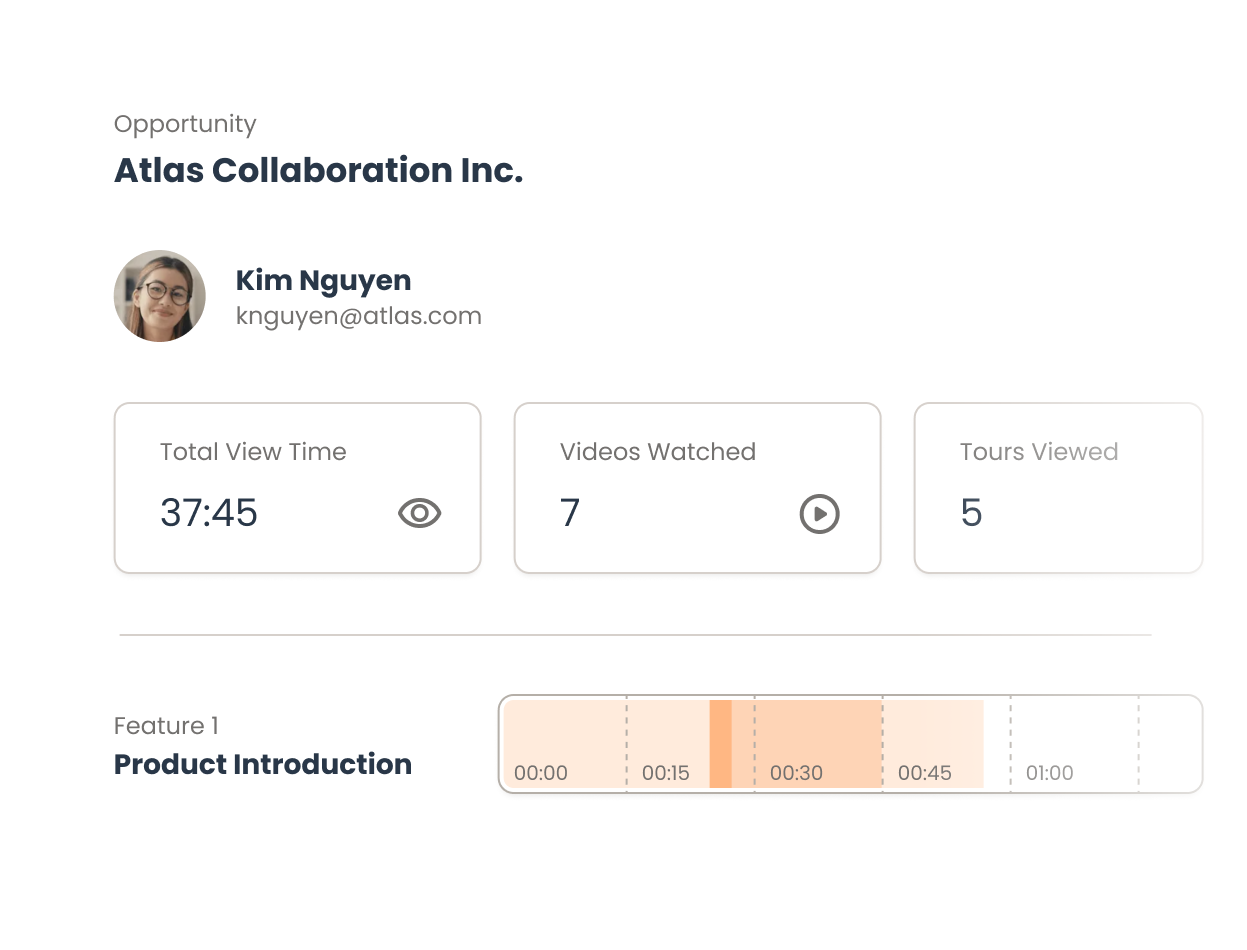
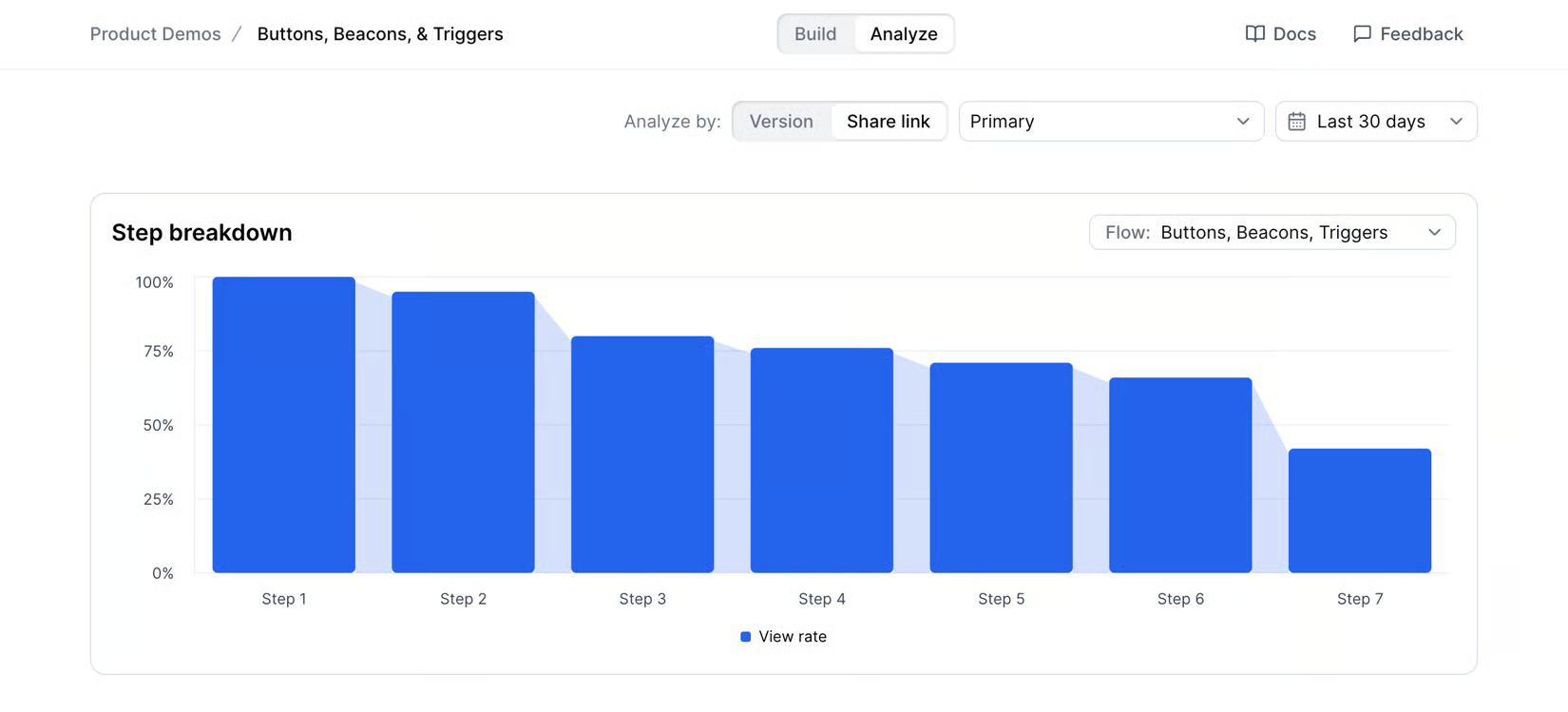
Navattic generates intelligence through website engagement.
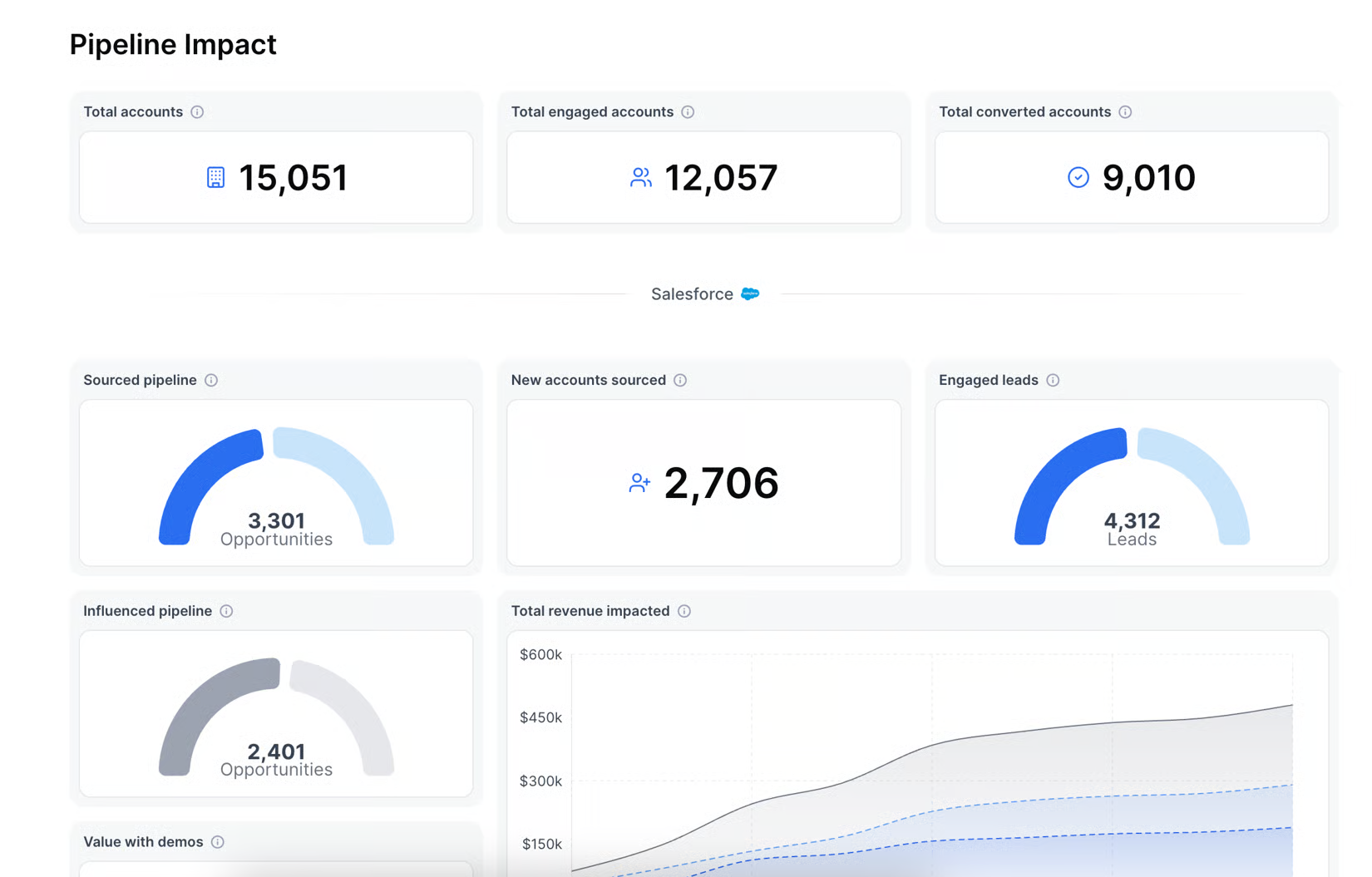
The Pipeline Impact dashboard connects demo views to CRM deal creation and stage progression. But like Consensus, this intelligence is reactive: it tells you what happened after someone interacted with a demo, not which accounts you should target in the first place.
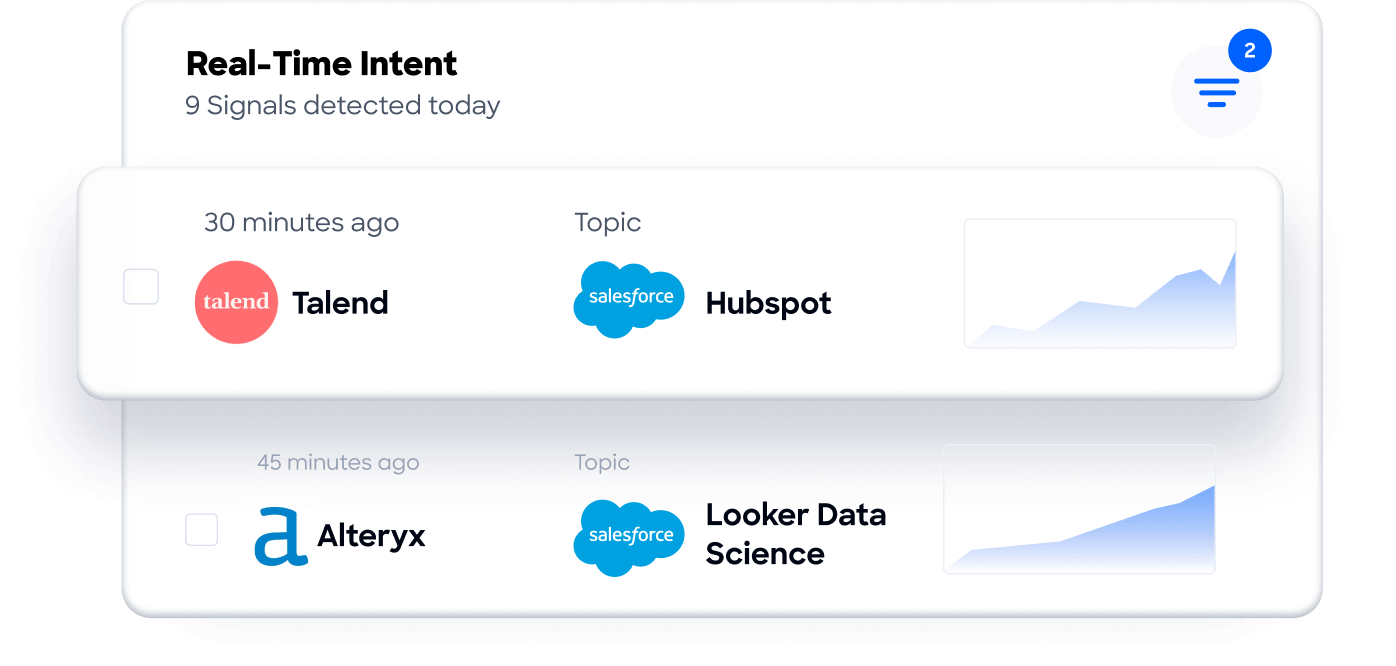
ZoomInfo operates upstream. Before a prospect sees a demo, ZoomInfo's Buyer Intent data tracks signals from 210 million IP-to-Organization pairings to identify which companies are researching solutions like yours.
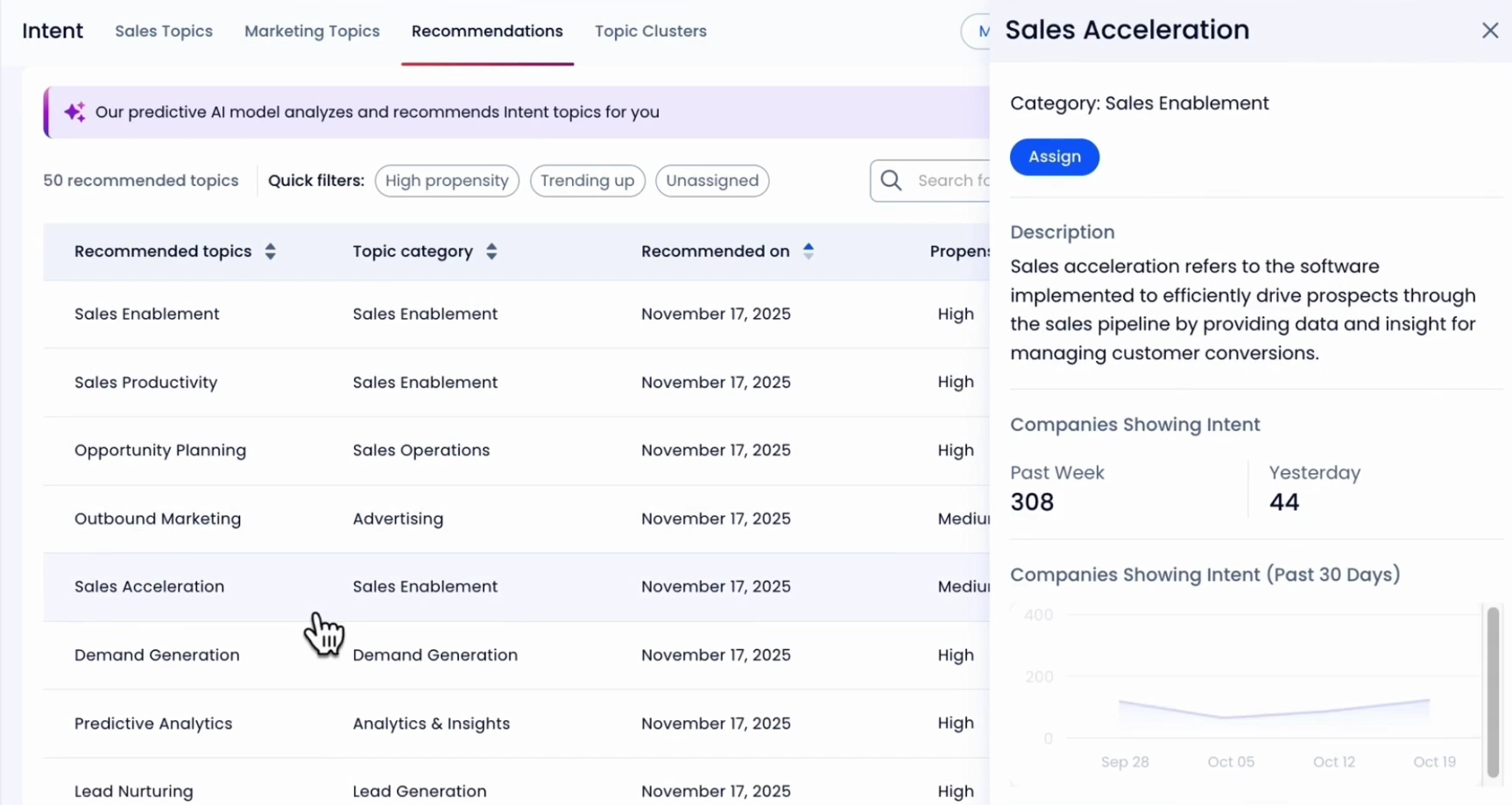
Guided Intent, exclusive to ZoomInfo, identifies topics historically correlated with your deal success rather than requiring you to guess which keywords matter.
Source: ZoomInfo
Combined with org charts, direct dials, and verified emails for buying committee members, your presales team knows who to target before building a single demo.
Seismic's sales team attributed 39% of active pipeline to opportunities identified or influenced by ZoomInfo signals, and boosted productivity by 54%. (Seismic case study)
Consensus goes deep on video, Navattic goes deep on interactive HTML
The demo formats these platforms produce are different, and each choice has consequences.
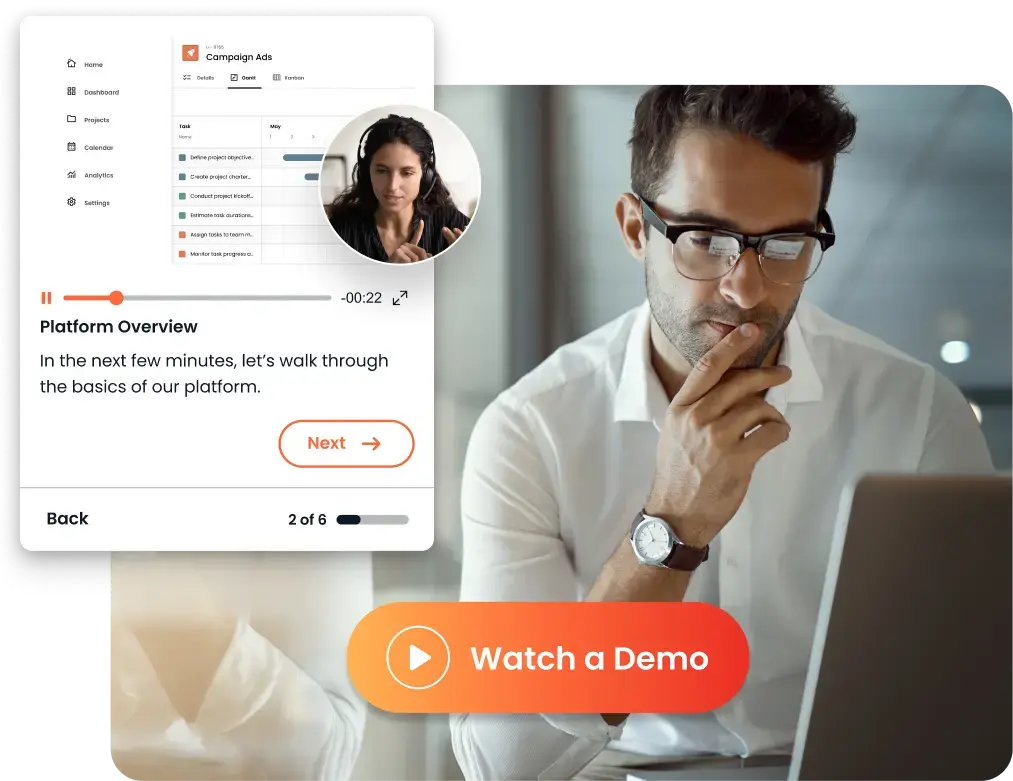
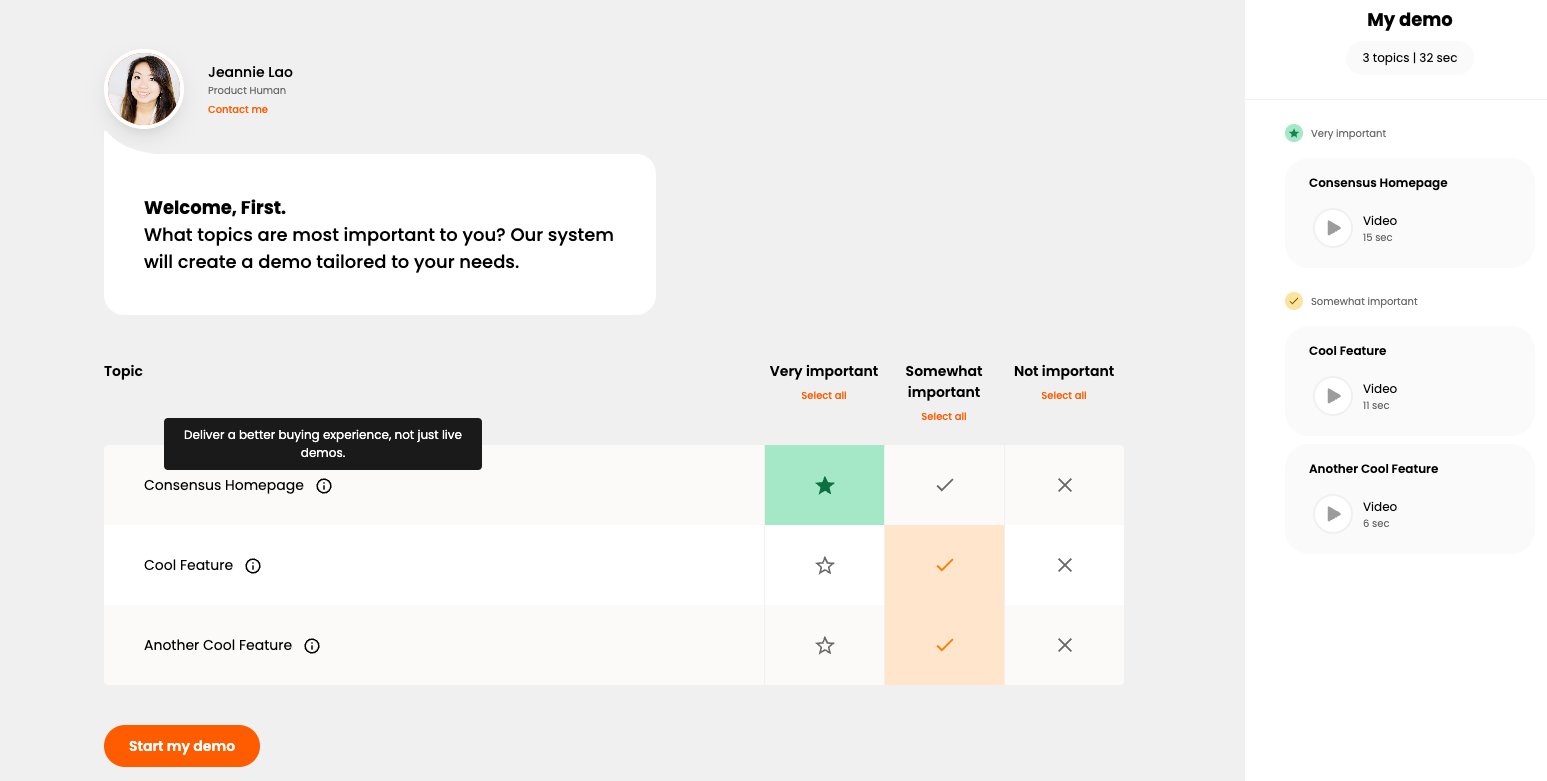
Consensus built its platform around video. Presales teams record product walkthroughs, segment them by feature, and package them into DemoBoards where buyers rate each feature's importance before watching.
Source: Consensus
The DemoPlayer assembles a custom video playlist: features rated "Very Important" play the long version, "Somewhat Important" plays a shortened clip, and "Not Important" features are skipped. Two viewers sent the same demo link watch different content at different lengths.
Source: Consensus
This personalization model works for complex enterprise software where a guided narrative matters more than hands-on exploration.
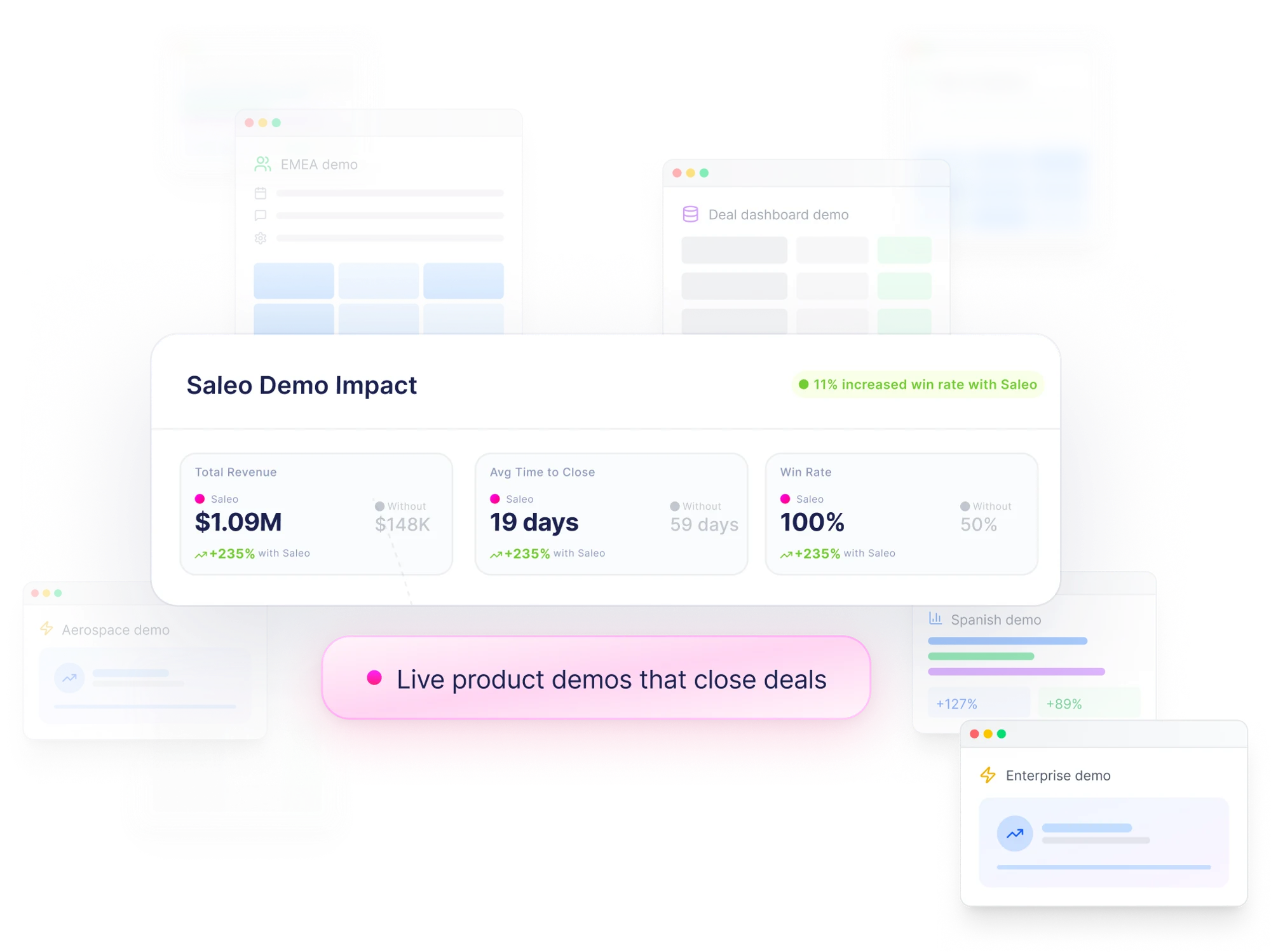
Since acquiring Saleo in June 2026, Consensus has expanded into interactive product tours and a live demo platform that lets reps demo in the native product with AI-generated personalized data. The breadth is notable, though the newer capabilities are still being integrated.
Source: Consensus
Navattic took the opposite approach. Instead of recording a video, Navattic captures the product itself as interactive HTML, preserving hover states, animations, and scroll interactions.
Buyers click through the actual product UI, not a recording of it. 86% of top-performing demos on the platform use HTML web captures rather than static screenshots.
This matters for products where the feel of the interface is part of the value proposition. When a prospect clicks through an HTML-captured demo of your dashboard, they experience the product's responsiveness and visual design firsthand.
Navattic's Capture Editor lets teams edit text, swap images, blur sensitive data, and personalize content without touching the live product.
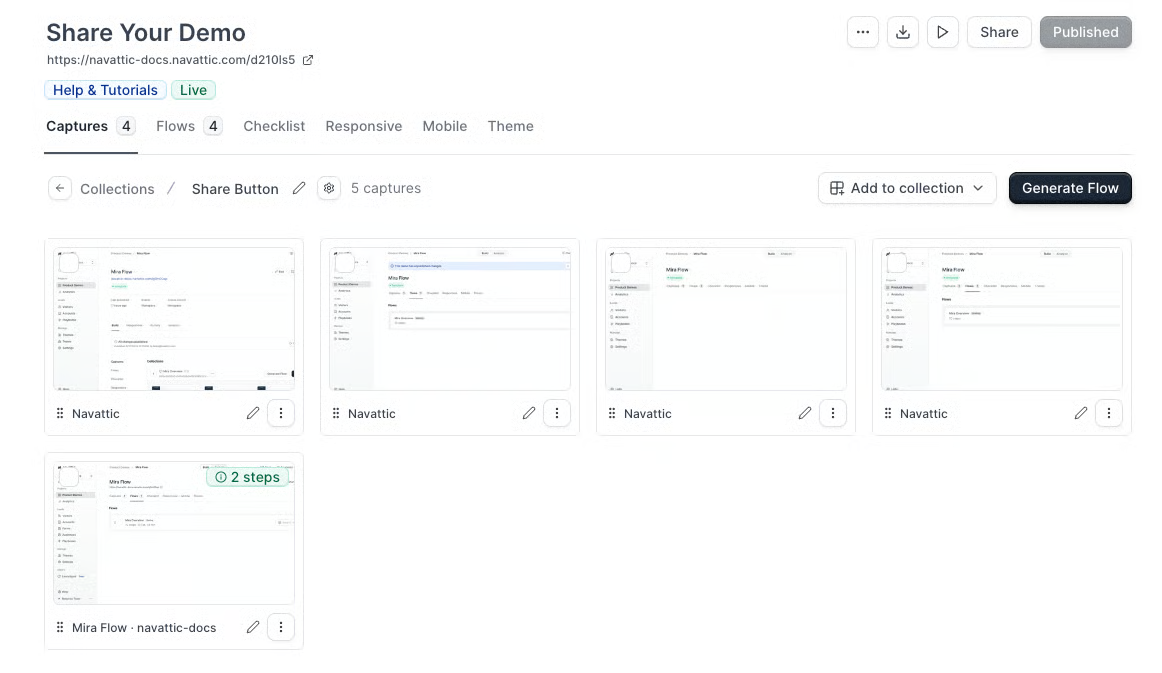
Source: Navattic
The downside is maintenance. Every time your product UI changes, affected demo steps need re-capturing or editing. G2 reviewers flag this as Navattic's top weakness for fast-moving products. Consensus faces a similar production challenge: its own 2026 report notes that 55% of demo creators cite bandwidth as their primary constraint.
Stakeholder discovery: organic vs. intentional
Seeing who's involved in a buying decision is where both platforms add real value. They just find those stakeholders differently.
Consensus engineered virality into every demo. An "Invite Others" CTA sits at the bottom of every DemoBoard, and Consensus calls it "one of the highest-leverage features in the platform."
When a champion shares a demo internally, every new viewer is tracked, their feature priorities captured, and their engagement mapped.
The Buyer Matrix visualizes feature priority alignment across the buying group, showing sellers which features matter most to each person without a discovery call.
Per-viewer heatmaps reveal second-by-second watch behavior, and Buyer Reactions let prospects leave timestamped feedback during playback.
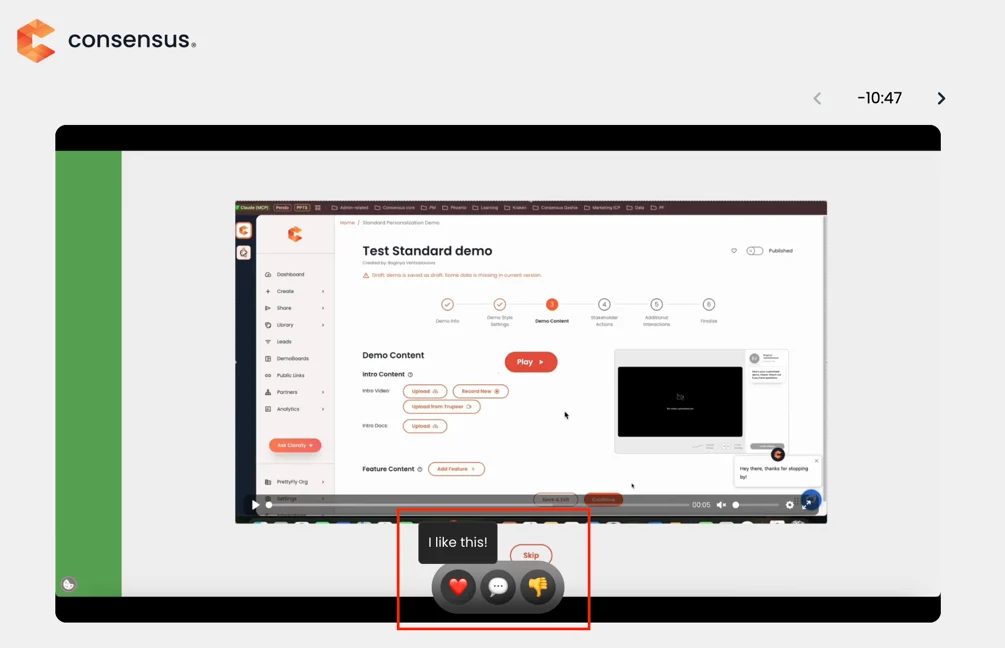
Source: Consensus
Navattic's Launchpad provides buyer circle discovery for sales teams. When a demo is forwarded internally, new stakeholders trigger rep notifications and expand the visible buyer circle.
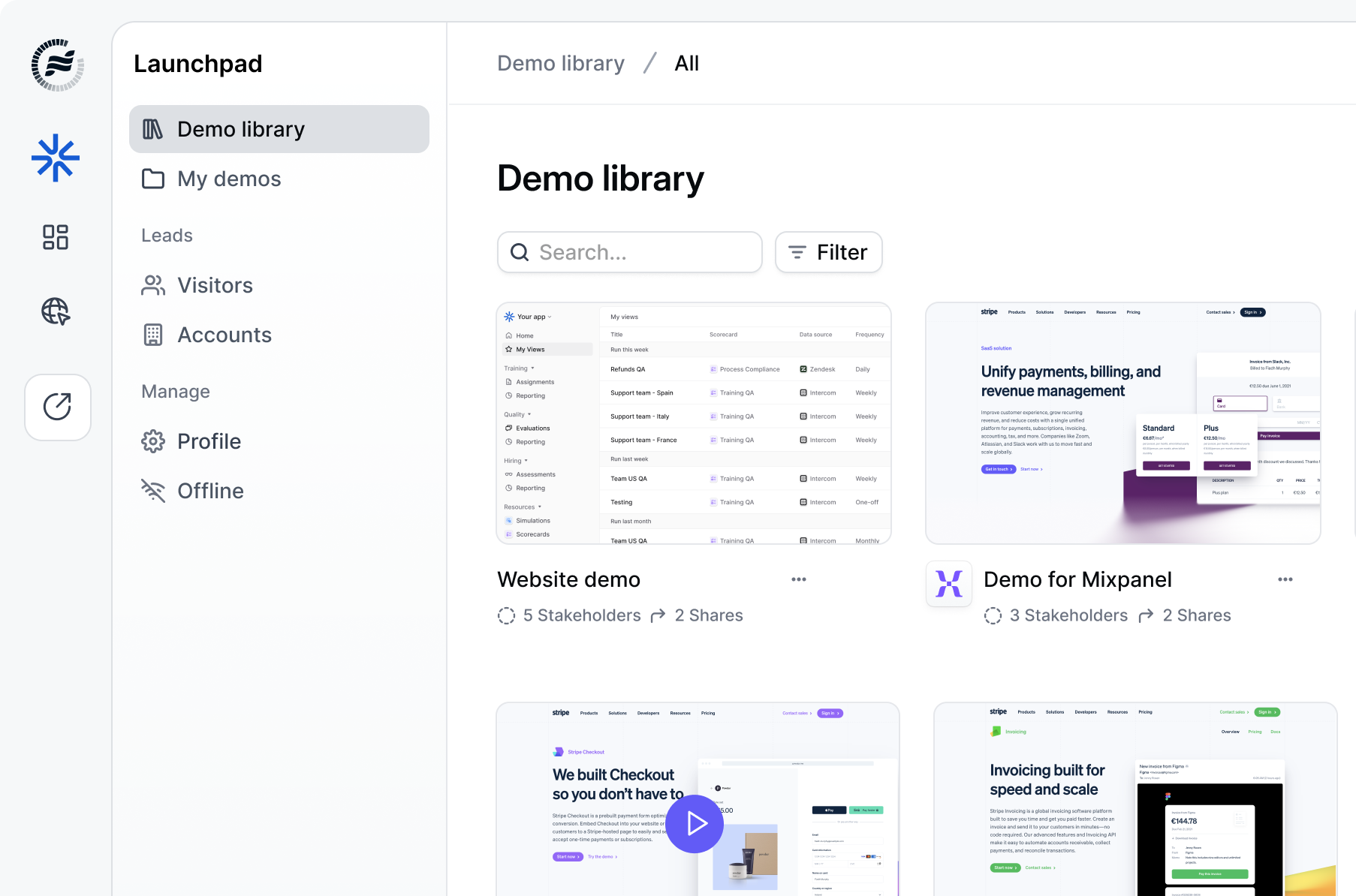
Source: Navattic
Interest Level demos let prospects rate feature areas as High, Medium, or Low interest, giving reps quantitative intent data before a live call.
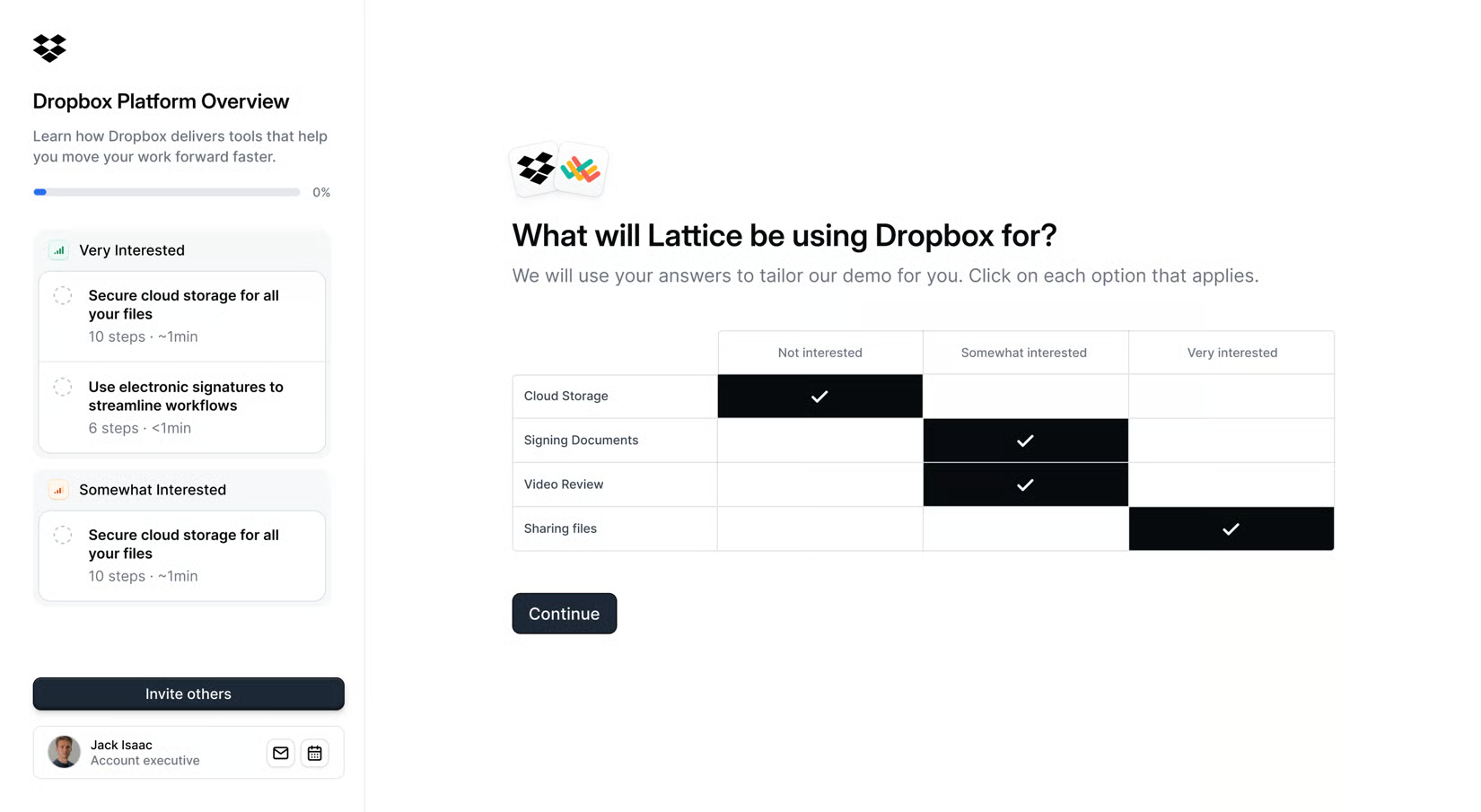
Source: Navattic
The difference is architectural. Consensus captures deeper engagement data per viewer (heatmaps, reactions, feature ratings at the video-segment level).
Navattic captures broader context through its CRM integrations, with the Pipeline Impact dashboard connecting demo views to sourced pipeline, influenced pipeline, and revenue impact by account.
Source: Navattic
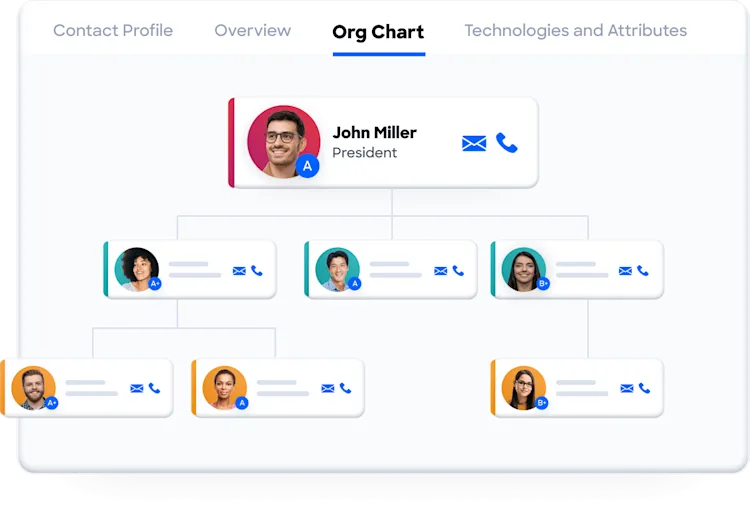
ZoomInfo adds the layer neither provides alone: the complete buying committee mapped before any demo is sent.
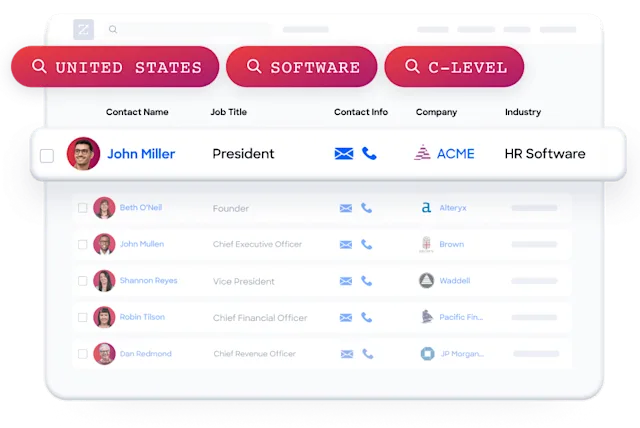
With 300+ company attributes, department org charts, and verified direct contact information for decision-makers, ZoomInfo lets presales teams identify every relevant stakeholder proactively.
Source: ZoomInfo
Where Consensus and Navattic discover stakeholders as they engage with demos, ZoomInfo identifies them in advance using company attributes, technographic signals, and intent data.
Source: ZoomInfo
ZoomInfo integrates directly with Navattic, enriching visitor and account data with ZoomInfo profiles and feeding demo engagement back as an intent signal.
This creates a closed loop: ZoomInfo identifies the right accounts, Navattic delivers the demo experience, and engagement data flows back to ZoomInfo to inform the next action.
AI capabilities reflect different priorities
Both platforms have invested in AI, but their approaches reveal what each considers the core bottleneck.
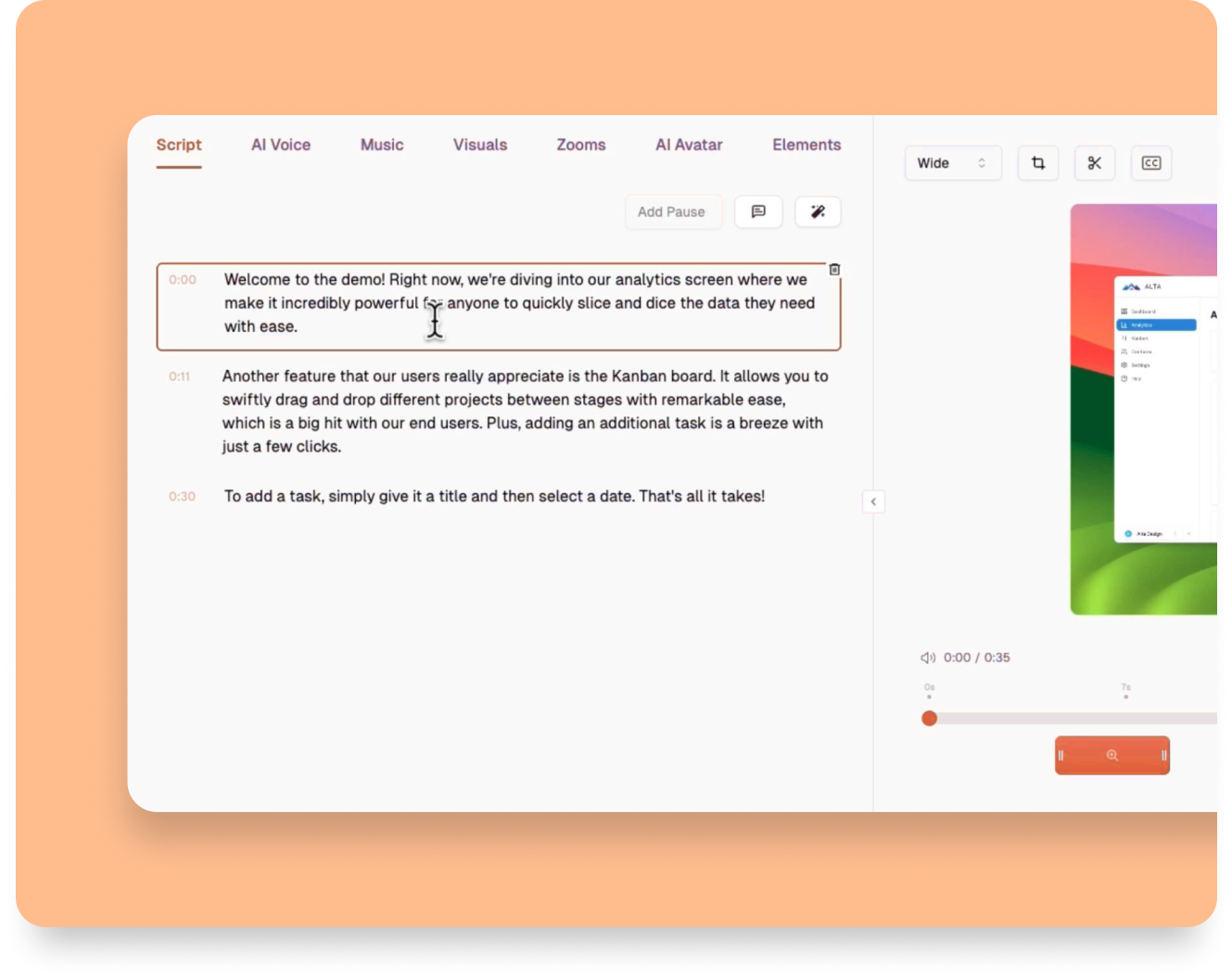
Consensus treats AI as a production accelerator. AI Video Content converts raw recordings into polished demos automatically. AI Scripting and Voiceovers generate narration using OpenAI's tts-1-hd model.
Source: Consensus
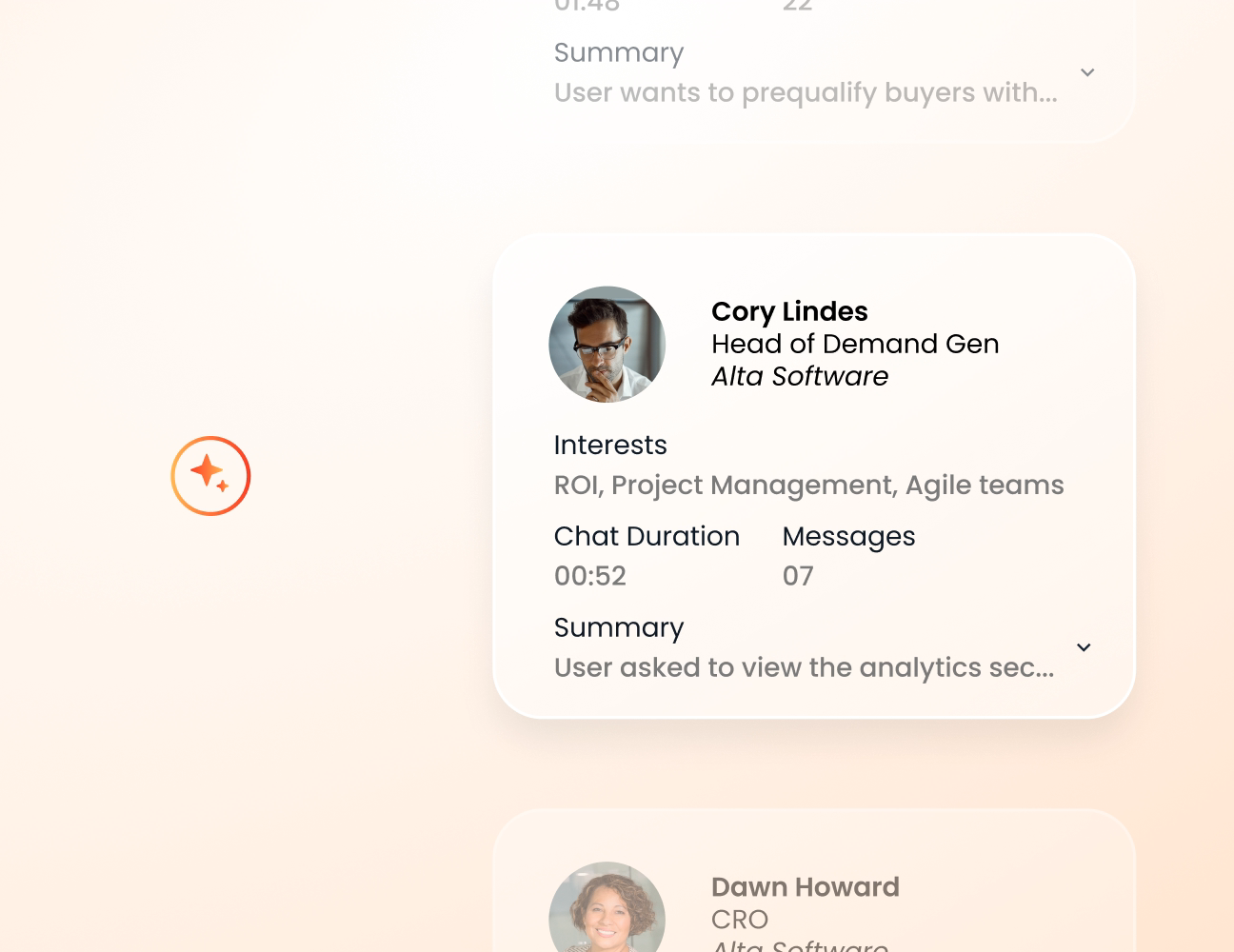
The AI Data Editor handles bulk updates to demo data. Consensus AI Agents go further: a Marketing Agent engages inbound leads around the clock, a Sales Agent delivers interactive product experiences and handles technical questions, and an Enablement Agent trains reps automatically.
Source: Consensus
The MCP server lets AI assistants like Claude and ChatGPT access Consensus demo libraries and create DemoBoards through natural language, making demos a data source inside an AI agent's reasoning loop.
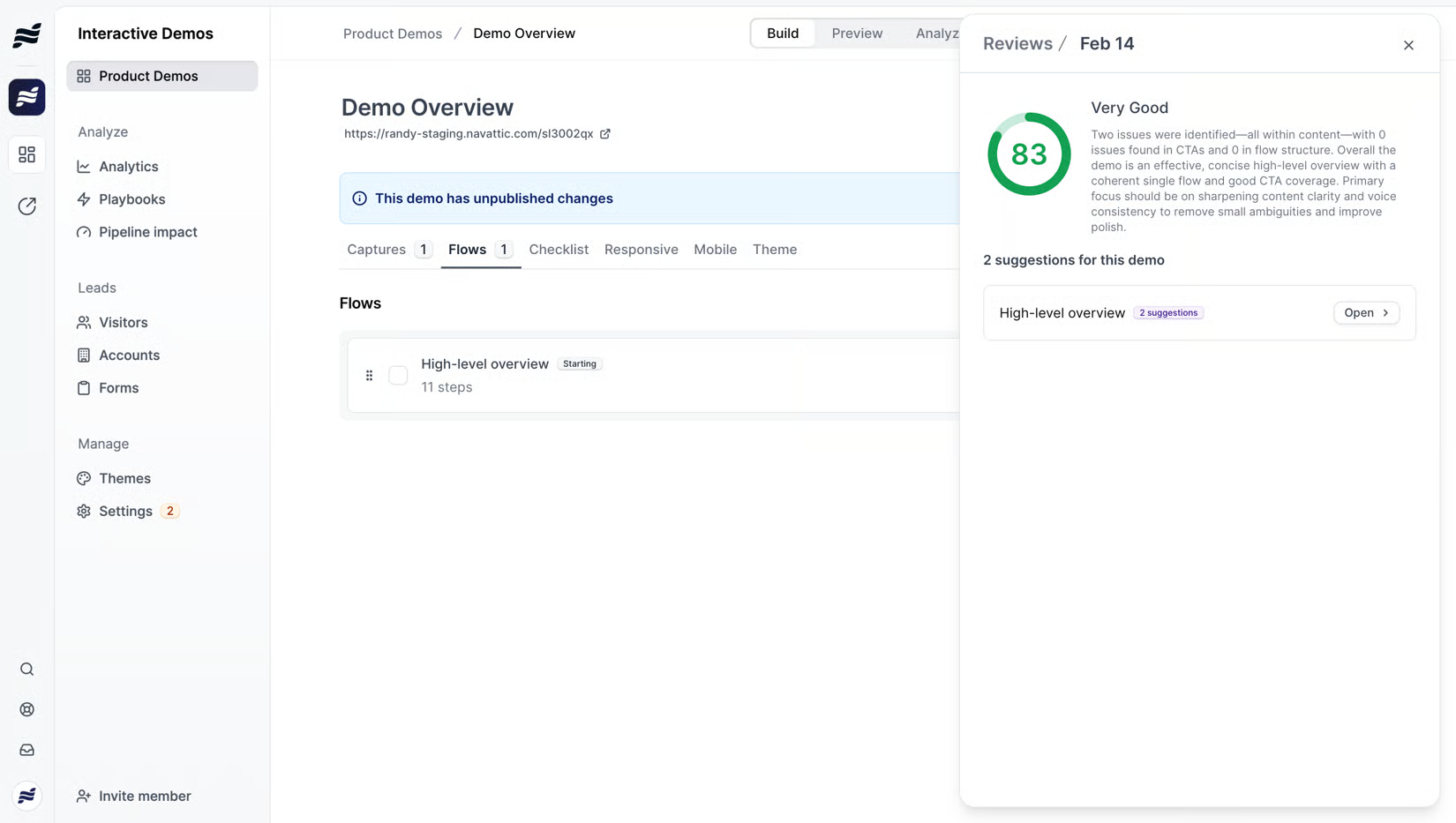
Navattic focuses AI on the build workflow. Copilot Generate creates a first demo draft by analyzing captured product screens, trained on best practices from high-performing demos on the platform.
Copilot Prompt lets users edit copy via natural language. Copilot Review scores finished demos against quality benchmarks and suggests improvements.
Source: Navattic
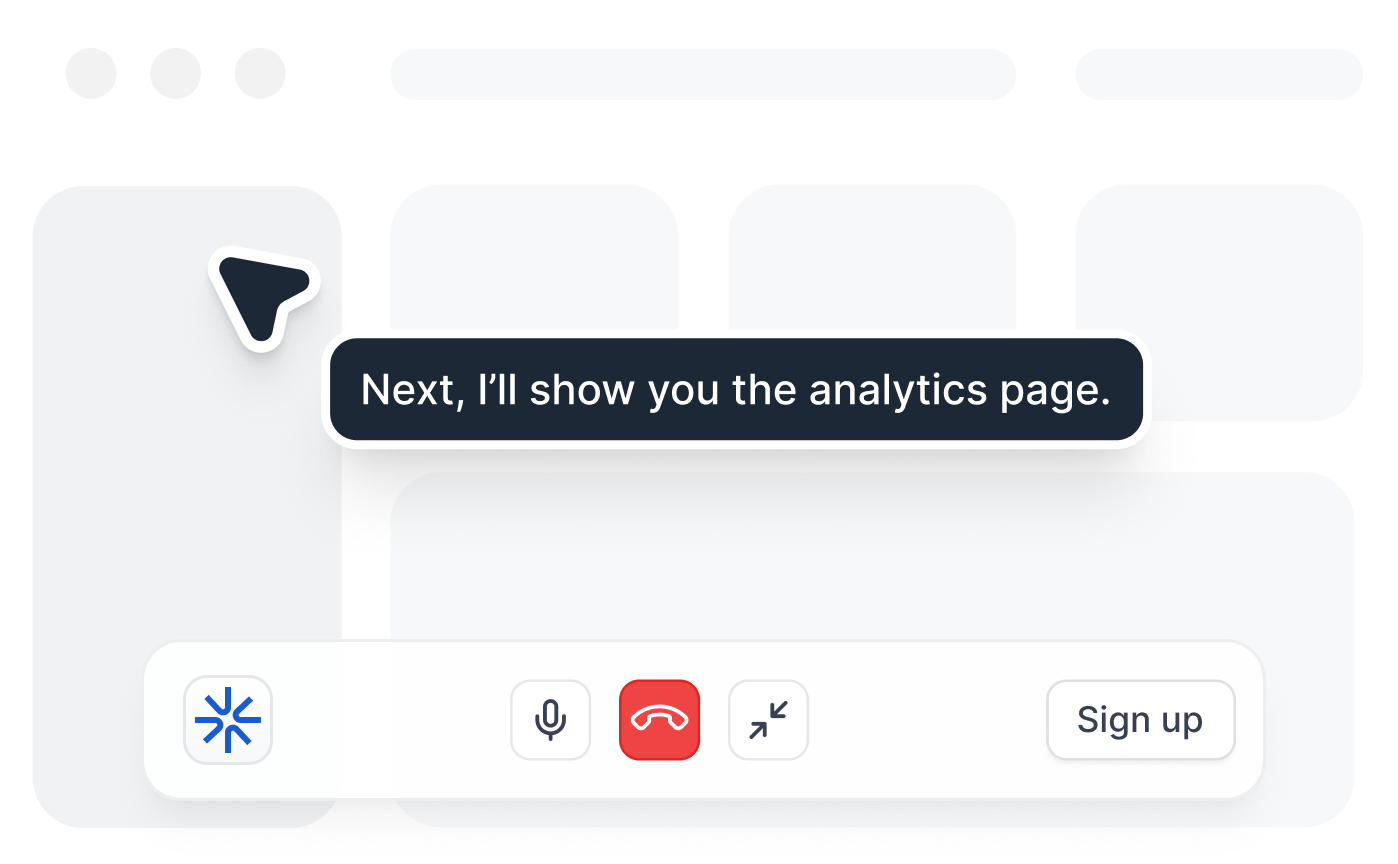
Agent Demos, launched March 2026, take this further: AI agents that run live product walkthroughs, answer prospect questions in any language, and qualify leads without a human present.
Source: Navattic
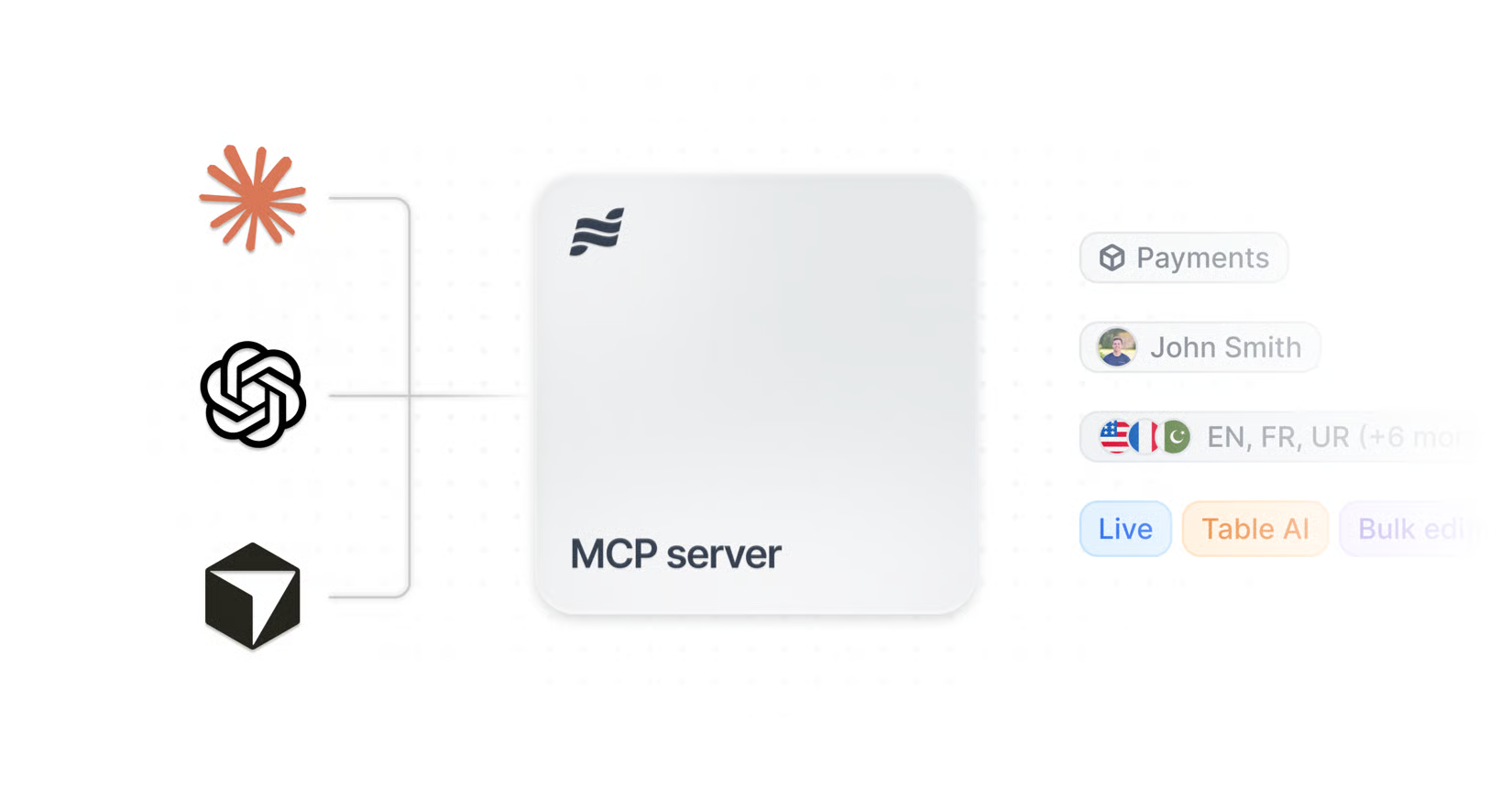
Both platforms also offer MCP servers for AI tool integration. Navattic's MCP exposes 60+ tools for analytics querying, demo building, and share link creation.
Source: Navattic
ZoomInfo's AI operates at the intelligence layer. The GTM Context Graph, processing 1.5B+ data points daily, unifies CRM data, conversation transcripts, intent signals, and behavioral data to reveal why deals move or stall.
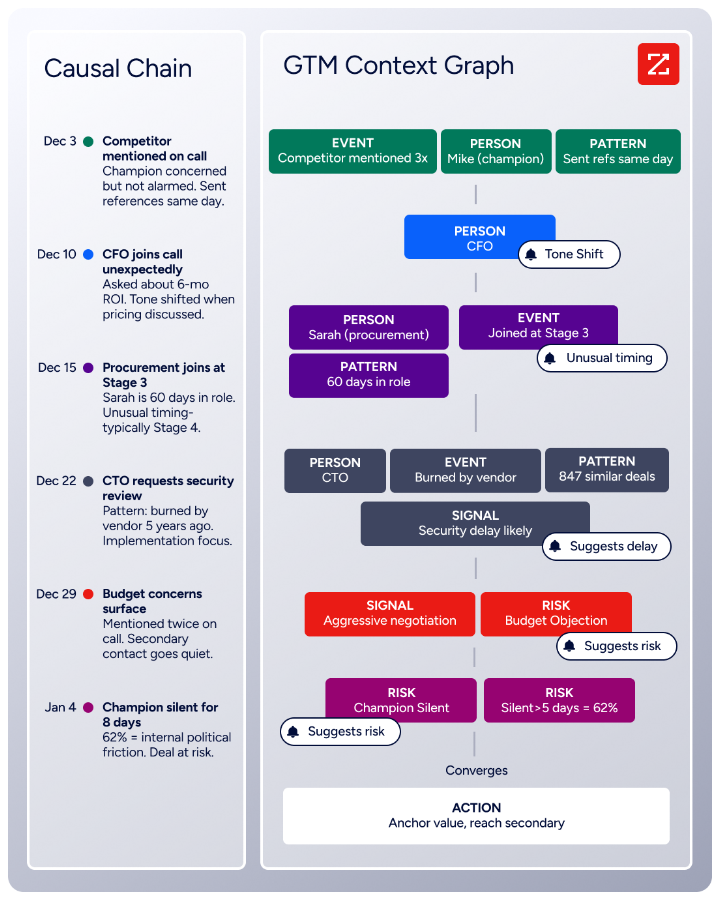
Source: ZoomInfo
GTM Workspace gives sellers AI-drafted outreach that addresses specific buyer concerns.
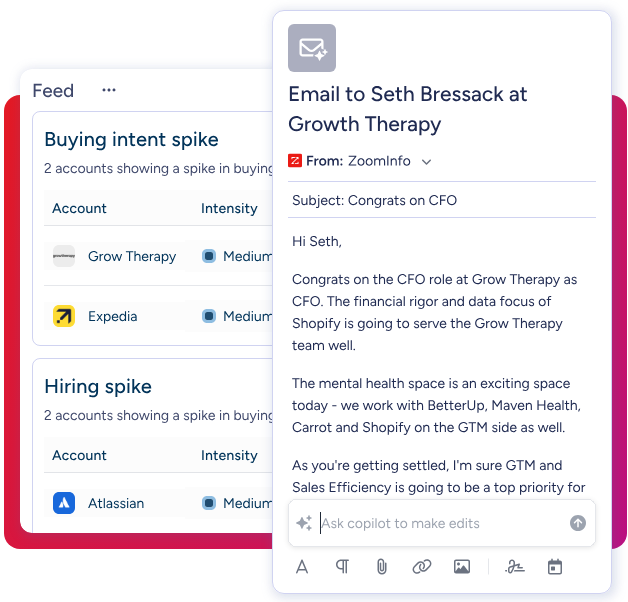
Source: ZoomInfo
GTM Studio lets marketers describe audiences in plain language and launch plays targeting accounts that match proven win patterns.
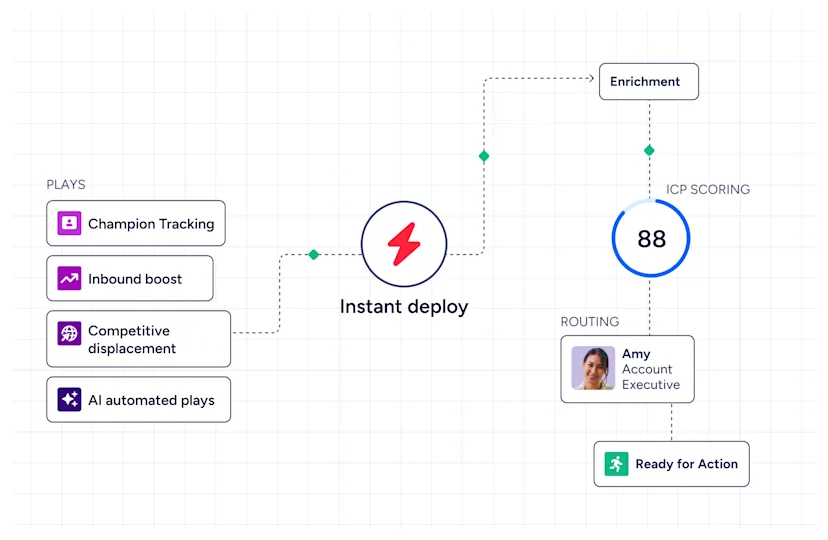
Source: ZoomInfo
Where Consensus and Navattic apply AI to improve demos, ZoomInfo applies AI to improve every go-to-market decision, including which demos to send and to whom.
Pricing transparency varies widely
Pricing is where frustration starts for buyers doing early-stage research.
Consensus does not publish a self-serve pricing page. The pricing page shows only a contact form. However, blog posts disclose three tiers: Starter from $600/month (5 seats), Pro from $1,250/month, and Enterprise at custom pricing. No free trial or free plan is available.
The Terms of Service require 90 days' written notice to prevent automatic renewal and state that fees are "non-cancelable and non-refundable."
Navattic offers the most accessible entry point. The permanent free Starter plan includes 1 seat, 1 demo, and unlimited views, with no time limit. Paid plans (Base with 5 seats, Growth with 10 seats) are not priced publicly; both require contacting sales. Enterprise is custom-quoted.
Navattic's Terms of Service cap price increases at renewal to 5% with 60 days advance notice, and require only 7 days' notice to prevent auto-renewal, a buyer-friendly window.
ZoomInfo uses custom-quoted, consumption-based pricing with no published prices. It offers two free entry points: ZoomInfo Lite, a permanent free tier with access to the B2B database and 10 monthly export credits, and a 7-day free trial of the full platform.
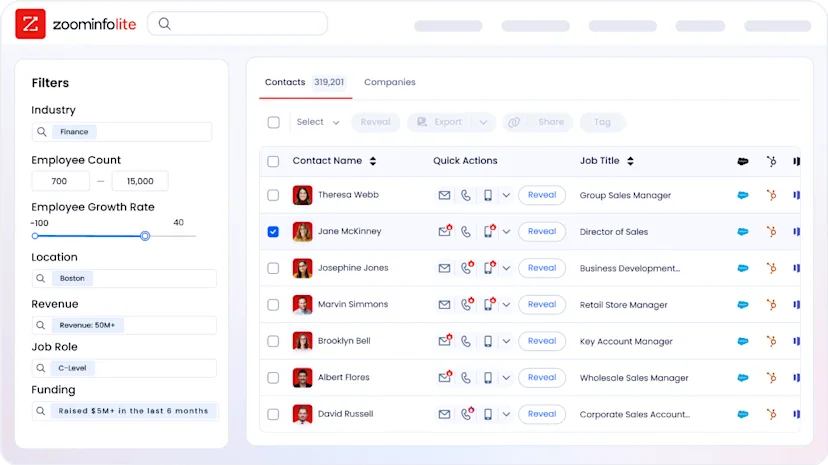
Source: ZoomInfo
Paid plans span Sales, Marketing, and Operations product lines with Professional, Advanced, and Enterprise tiers.
For teams evaluating demo automation tools, the relevant comparison is between Consensus and Navattic. ZoomInfo's pricing reflects a different category: it's the underlying intelligence infrastructure, not an alternative line item to demo software.
Integration ecosystems determine how well they fit your stack
Where each platform connects tells you which workflows it powers.
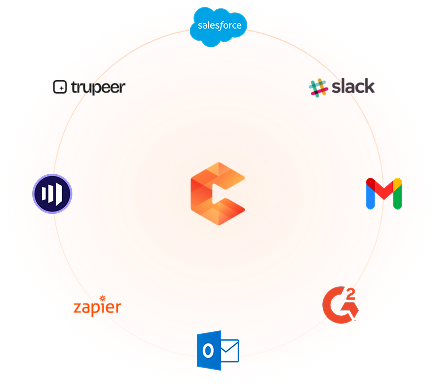
Consensus integrates natively with Salesforce (its deepest connector, with a dedicated managed package), HubSpot, Salesloft, Outreach, Marketo, Eloqua, Pardot, Gong, Slack, Gmail, Outlook, Highspot, and G2.
Source: Consensus
The Salesforce integration writes demo engagement data directly into opportunities. The Gong integration uses an AI Briefer that extracts customer sentiment from calls and recommends personalized demos. Zapier support (listed as beta) extends connectivity to 500+ applications.
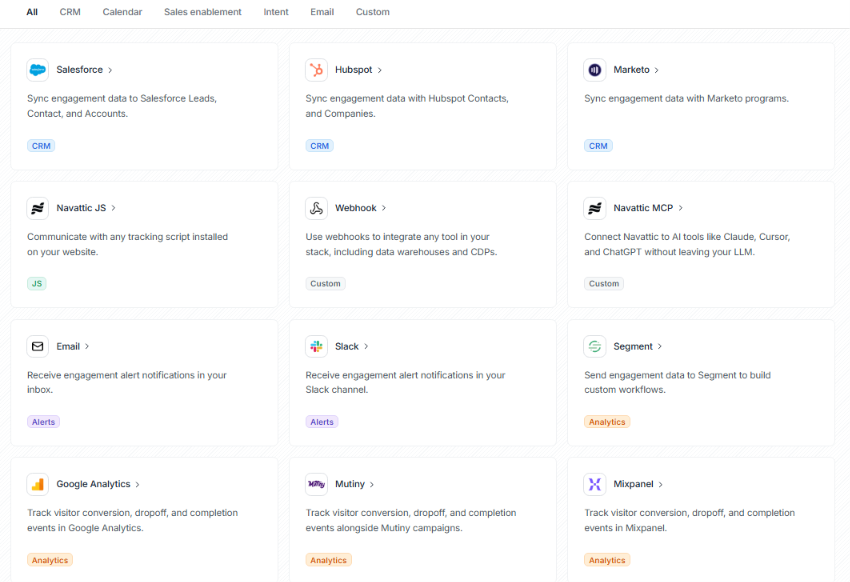
Navattic covers a similar stack with a few additions: HubSpot, Salesforce, Marketo, Pardot, Segment, and 25+ more.
Source: Navattic
What stands out is Navattic's intent data and ABM integrations: ZoomInfo, 6sense, Demandbase, Pocus, and Unify all connect to feed demo engagement into broader intelligence platforms.
The Launchpad Chrome Extension integrates with Gmail, Outlook, Outreach, Salesloft, LinkedIn, and Salesforce, following reps across the web.
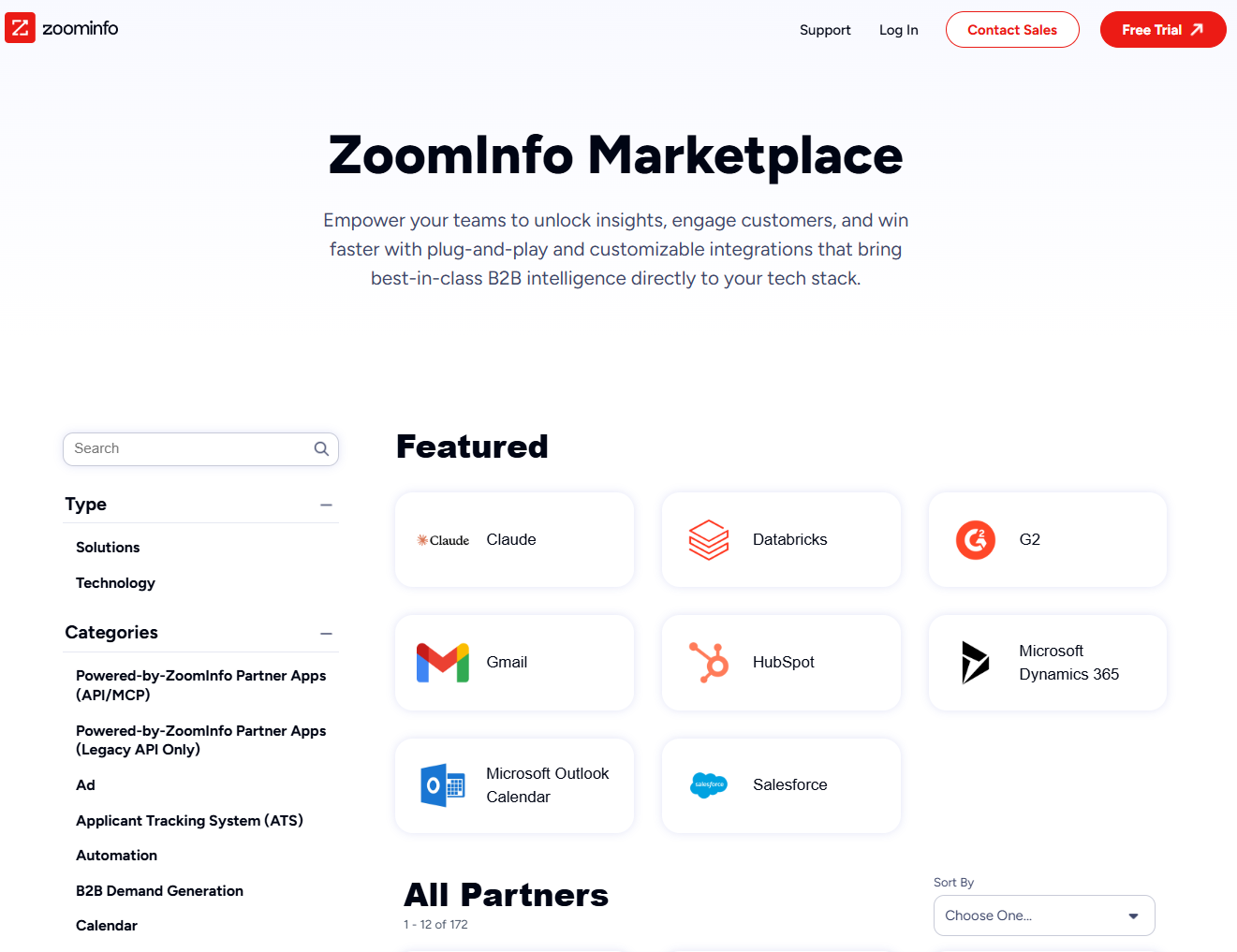
ZoomInfo's App Marketplace lists 172+ integration partners spanning CRM, marketing automation, sales engagement, data warehouses, communications, and AI tools.
Source: ZoomInfo
For this comparison, ZoomInfo's role as an integration target matters most: both Navattic (directly) and Consensus (via shared CRM integrations) can receive ZoomInfo's enrichment data and feed engagement signals back.
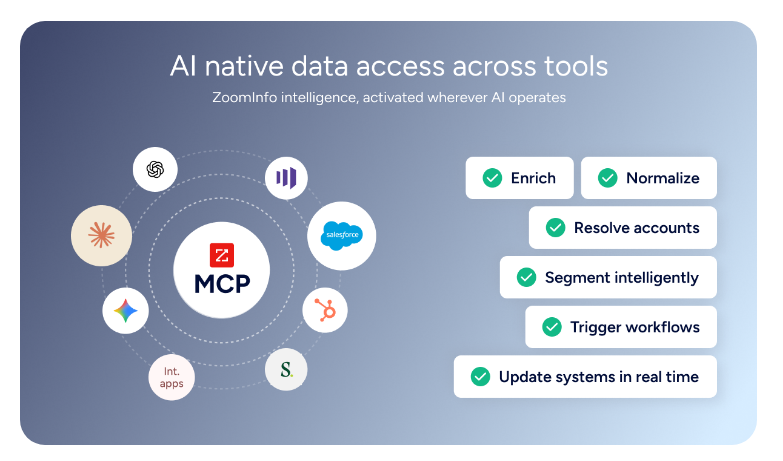
ZoomInfo's MCP server and Enterprise API make its intelligence accessible to any custom tool or AI agent.
Source: ZoomInfo
"The plug-and-play aspect of the API means I can integrate it very easily into any process and get information at a moment's notice." Jerry Wilson, Senior Marketing Intelligence Analyst, BDO Canada, who achieved an 87% reduction in time spent on data dashboard updates. (BDO Canada case study)
Security and compliance for enterprise buyers
Enterprise security teams will evaluate all three platforms before approving procurement.
Consensus holds SOC 2 Type 2 attestation and aligns with GDPR, CCPA, and the U.S. Data Privacy Framework.
Infrastructure runs on Amazon AWS and Oracle Cloud Infrastructure. SAML 2.0 SSO is supported across Okta, Azure AD, Google Workspace, and others.
Development follows OWASP Secure Coding Practices, and the company conducts annual third-party penetration testing.
Navattic is SOC 2 Type II certified (examined by the Johanson Group) and GDPR compliant. Data is encrypted with AES-256 at rest and TLS 1.3+ in transit.
SSO is available on Growth tier and above. One architectural distinction worth noting: Navattic captures static HTML snapshots of applications, so demo viewers never interact with the actual product or its data. AI features do not use demo content to train models.
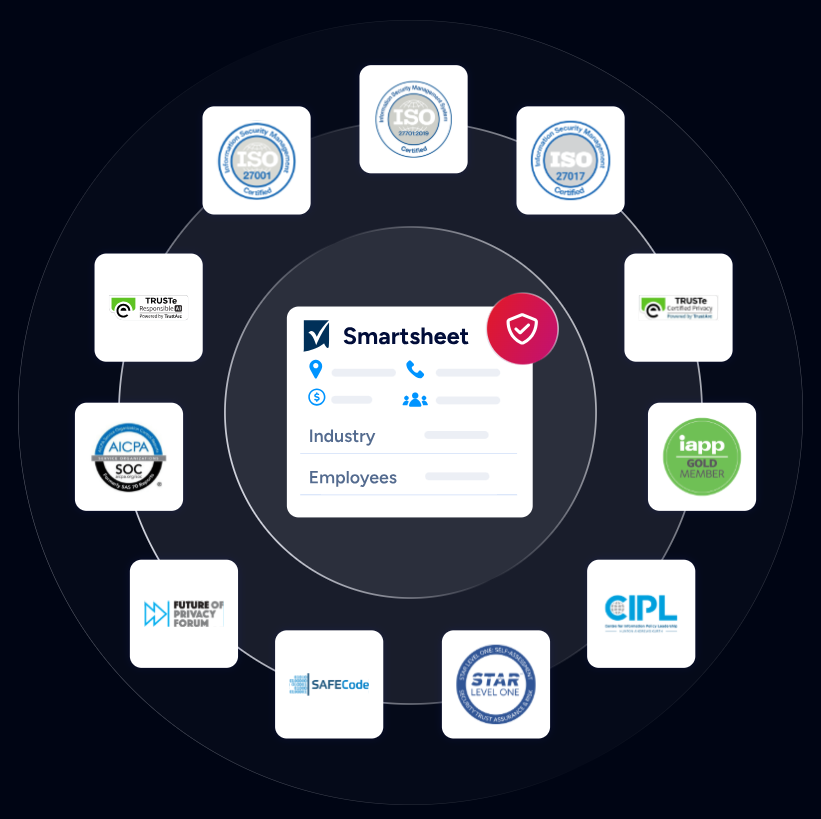
ZoomInfo holds the broadest certification stack: ISO 27001, ISO 27701, SOC 2 Type II, TRUSTe GDPR, and TRUSTe CCPA, all renewed annually. ZoomInfo is a registered data broker in California and Vermont, with a dedicated Trust Center.
Source: ZoomInfo
For regulated industries, ZoomInfo's certifications cover both privacy (ISO 27701, GDPR, CCPA) and information security management (ISO 27001), which may satisfy requirements that SOC 2 alone does not address.
Consensus vs. Navattic vs. ZoomInfo: Which should you choose?
The choice depends on what stage of the buyer journey you're trying to improve.
Choose Consensus if:
Your presales team runs dozens of repetitive demos per week and needs to scale without adding headcount
Uncovering hidden stakeholders inside active deals is a top priority
You want a single platform covering async video demos, interactive tours, and live demos
Buyer analytics (heatmaps, feature ratings, reaction tracking) matter to your sales process
You're willing to invest in demo content production for long-term ROI
Choose Navattic if:
Product marketing owns the demo experience and wants to build without engineering help
Your primary goal is converting website visitors into qualified leads through self-serve product exploration
You need a demo tool your reps can share independently via Launchpad without SE involvement
Your product's interface is a selling point and you want buyers to experience it firsthand
A free plan to evaluate the product before committing matters to your buying process
Add ZoomInfo if:
You want to know which accounts are in-market before spending presales time on demos
Mapping the full buying committee proactively (not just the contacts who view a demo) is important
You need verified direct dials and business emails for the stakeholders your demos surface
You want demo engagement data to flow into an intelligence layer that powers your entire GTM motion
You're building a revenue engine where data quality determines every downstream action
See how ZoomInfo's buyer intelligence powers your demo strategy with a free trial.
The most effective demo programs don't choose between great demos and great intelligence. They use both. Navattic or Consensus delivers the product experience. ZoomInfo delivers the buyer intelligence that tells you who needs that experience, when they need it, and what they care about most. Together, they turn demo automation from a content exercise into a revenue engine.
"It's not just the data itself. It's more about the right data at the right time to help us reach out with the right message across that full buyer journey." Chelsea Kenyon, Senior Director of Digital Strategy, Redwood Logistics. (Redwood Logistics case study)
Consensus vs. Navattic vs. ZoomInfo FAQ
What is the core difference between Consensus, Navattic, and ZoomInfo?
Consensus is an enterprise demo automation platform centered on personalized video demos and stakeholder analytics via Demolytics.
Navattic is a demo automation platform focused on no-code, interactive HTML product tours used mainly by product marketing and growth teams.
ZoomInfo is a B2B intelligence platform that identifies in-market accounts, maps buying committees, and provides verified contact data.
Consensus and Navattic automate demo delivery; ZoomInfo provides the buyer intelligence that makes those demos targeted and timely.
Which platform is better for presales teams: Consensus or Navattic?
Consensus was built with presales as the primary user. Its buyer-driven video personalization, Demolytics stakeholder tracking, and recently acquired live demo platform make it the stronger fit for presales and solutions engineering teams running high-volume demo operations.
Navattic's Launchpad helps sales reps share demos independently, but the core product leans toward marketing and product teams. Either can serve presales, but Consensus has deeper roots in that workflow.
Can I use ZoomInfo with Consensus or Navattic?
ZoomInfo integrates directly with Navattic, enriching visitor and account data with ZoomInfo profiles and using demo engagement as an intent signal within ZoomInfo.
Consensus does not have a direct ZoomInfo integration, but both platforms share CRM integrations with Salesforce and HubSpot, letting data flow between them indirectly.
In both cases, ZoomInfo adds the upstream intelligence that identifies which accounts to target and which stakeholders to reach.
Which platform offers a free plan or trial?
Navattic offers a permanent free Starter plan with 1 seat and 1 demo, plus unlimited views. ZoomInfo offers ZoomInfo Lite, a permanent free tier with access to its B2B database and 10 monthly export credits, plus a separate 7-day free trial of paid features. Consensus does not offer a free plan or publicly available trial; all pricing requires a sales conversation.
How do the platforms compare on demo analytics?
Consensus provides the deepest per-viewer analytics through Demolytics: second-by-second heatmaps, feature priority ratings across the buying group, timestamped buyer reactions, and stakeholder discovery tracking.
Navattic offers engagement tracking with session data, interest level ratings, buyer circle detection, and a Pipeline Impact dashboard connecting demos to CRM pipeline.
ZoomInfo provides buying intent signals, account-level engagement tracking, and conversation intelligence analytics, but does not provide demo-specific engagement data since it is not a demo platform.
What does Consensus cost compared to Navattic?
Consensus starts at $600/month for the Starter tier (5 seats), with a Pro tier starting at $1,250/month. Navattic's paid tier pricing is not published, though the free Starter plan provides a no-cost entry point.
Both platforms gate Enterprise pricing behind sales conversations. Consensus offers no free tier or trial, while Navattic's permanent free plan lets teams evaluate the tool before committing.
Which demo platform has stronger AI features?
Both platforms have invested in AI. Consensus offers AI video production, scripting, voiceovers, a data editor, and AI Agents that engage buyers autonomously.
Navattic offers Copilot for demo generation, natural-language editing, quality review, AI voiceovers, AI avatars, and Agent Demos for autonomous live product walkthroughs.
Consensus covers more of the demo lifecycle; Navattic's Copilot is more tightly integrated into the build workflow with features like quality scoring against platform benchmarks. Both offer MCP servers for AI tool connectivity.
Do I need both a demo platform and ZoomInfo?
That depends on your current GTM maturity. If your team already knows who to demo to and has reliable contact data, a demo platform alone may suffice. But if you're sending demos without confidence in whether the account is in-market or whether you're reaching the right stakeholders, ZoomInfo fills that gap. Companies using both benefit from a closed loop: ZoomInfo identifies the opportunity, the demo platform delivers the experience, and engagement data flows back to inform the next action.
Related breakdowns to help you choose:
