
Choosing between Crustdata and MixRank for your B2B data needs often comes down to five questions:
Are you building AI agents that need real-time data feeds, or licensing bulk datasets to power internal platforms?
Does your team have the engineering resources to integrate raw API data into production systems?
Do you need mobile app and SDK intelligence, or is your focus on company and people data?
Are you looking for a data infrastructure layer alone, or a platform that also handles prospecting, outreach, and pipeline execution?
Is your priority data freshness measured in minutes, or coverage measured in hundreds of millions of records?
In short, here's what we recommend:
Crustdata is built for technical teams constructing AI-powered sales, recruiting, and investment platforms that depend on fresh data. Its API delivers real-time company and people data across 1 billion people profiles and 60 million companies, with crawlers that fetch data at the moment of request. The Watcher API sends webhook notifications when a prospect changes jobs, raises funding, or posts on social media.
For AI agent builders who need sub-minute signals, Crustdata is hard to beat. But without transparent pricing, a self-serve UI, or a free tier, teams without dedicated developers and budget for custom integration will find the platform out of reach.
MixRank serves enterprise data teams that need wholesale datasets delivered as raw infrastructure. Founded in 2011, the company has built a petabyte-scale operation covering 800M+ employee profiles, 70M+ companies, and 80M+ websites, all refreshed hourly.
Its standout capability is mobile app intelligence: 20M+ iOS and Android apps decompiled to reveal 30,000+ SDKs, with historical records dating back to 2013. MixRank is the data wholesaler behind other data companies. But annual contracts starting at $24,000/year, no self-serve UI, and no publicly disclosed security certifications limit its appeal to large organizations with dedicated data engineering teams.
Both platforms solve the same core problem: getting accurate B2B data into technical systems. But they're both infrastructure layers, not complete go-to-market solutions. For teams that need the data and the tools to act on it, there's a third option.
ZoomInfo is a GTM platform built on a large verified B2B dataset: 500M contacts, 100M companies, 135M+ verified phone numbers, and 200M+ verified business emails. That data feeds the GTM Context Graph, which combines your CRM records, conversation transcripts, and behavioral signals with the 1.5B+ data points ZoomInfo processes daily.
The result: the AI drafting your follow-up knows why a deal stalled, and your targeting reflects patterns from deals you've actually won. Your team accesses this through GTM Workspace (for sellers), GTM Studio (for marketers and RevOps), or APIs and MCP (for custom tools and AI agents). For organizations that want verified data and the tools to turn it into pipeline, ZoomInfo provides both.
If you want B2B data that powers your go-to-market motion (not just your data pipeline), see how ZoomInfo works.
Crustdata vs. MixRank vs. ZoomInfo at a glance
Crustdata | MixRank | ZoomInfo | |
|---|---|---|---|
Primary focus | Real-time data APIs for AI agents | Wholesale data infrastructure for data teams | AI GTM platform |
People data | 1B profiles, 300M in database | 500M contacts, 200M+ verified emails, 135M+ verified phones | |
Company data | 100M companies | ||
Data freshness | Real-time (live crawl on request) | Hourly updates | Continuous (28M domains scanned daily) |
Data verification | Automated multi-source aggregation | Web-scraped from 50+ public sources | 300+ human researchers, multi-source ML pipeline, up to 95% accuracy |
Mobile SDK intelligence | No | No | |
Intent signals | Social posts, job changes, funding | No native intent | 210M IP-to-Org pairings, 6T+ keyword-to-device signals monthly |
GTM execution tools | No | No | GTM Workspace, GTM Studio, Chorus, Chat, Marketing, Workflows |
Pricing transparency | Custom quotes only | APIs from $1,000/month; feeds custom-quoted | Custom quotes; free tier available (ZoomInfo Lite) |
Security certifications | GDPR/CCPA compliant; no disclosed SOC 2 or ISO | ISO 27001, ISO 27701, SOC 2 Type II, TRUSTe GDPR/CCPA | |
Best for | AI agent builders, technical GTM teams | Enterprise data teams, mobile ad tech, data platform companies | Sales, marketing, and RevOps teams across the full GTM motion |
Two data infrastructure layers vs. a complete GTM platform
Crustdata and MixRank are different products from ZoomInfo, even though all three deal in B2B data.
Crustdata and MixRank are data infrastructure. They pipe raw company and people data into technical systems via APIs and flat files. Neither offers a prospecting interface, outreach automation, deal intelligence, or campaign orchestration. They assume you'll build those layers yourself or plug the data into other tools.
ZoomInfo is data plus everything that sits on top of it. The same dataset that powers API calls also powers AI-generated outreach in GTM Workspace, campaign orchestration in GTM Studio, conversation intelligence through Chorus, and buyer intent monitoring. The GTM Context Graph connects all of it.
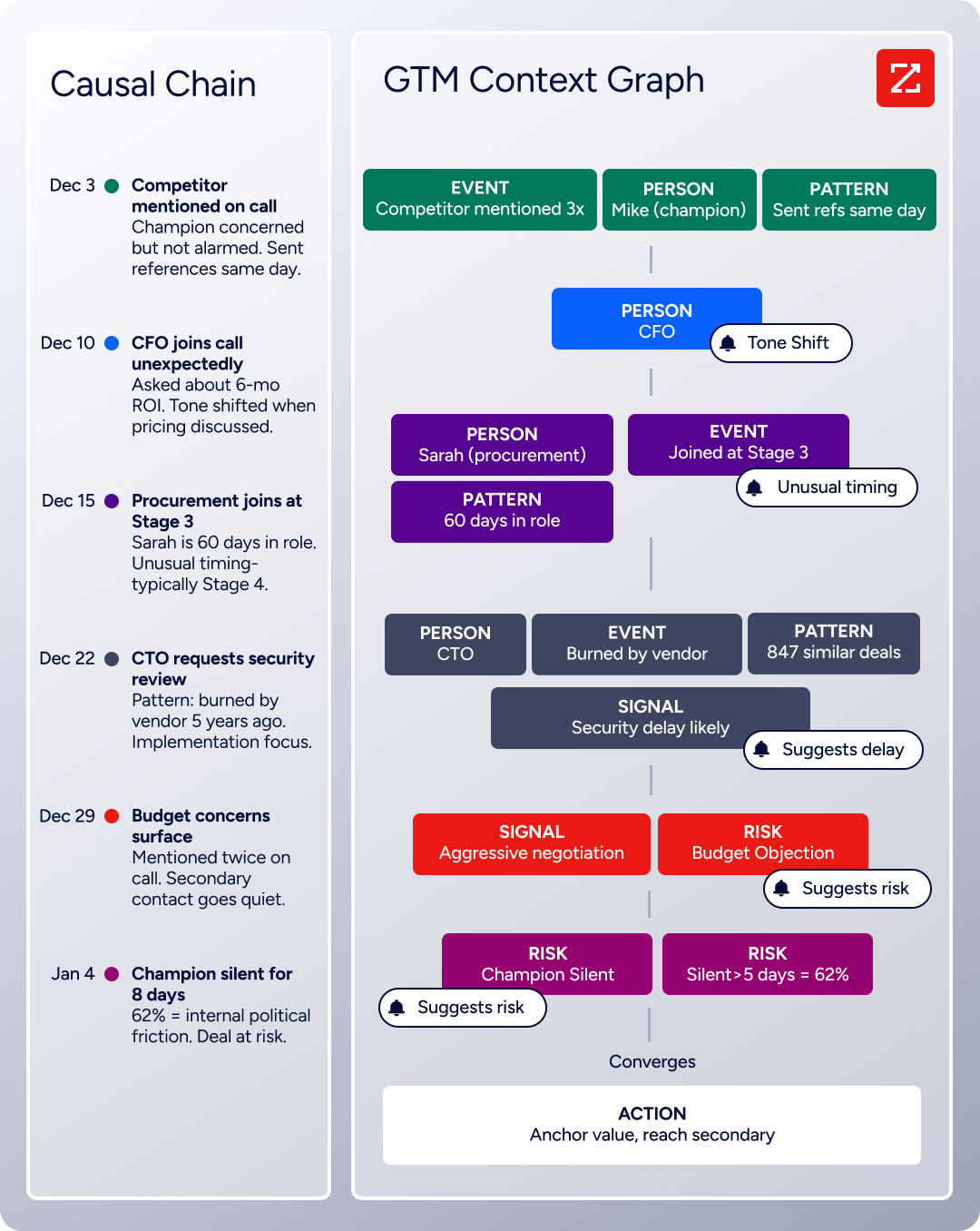
Source: ZoomInfo Context Graph
This distinction matters because the right choice depends on what you're building. If you're constructing a proprietary data product or powering AI agents, Crustdata and MixRank are well suited. If you're running a go-to-market team that needs to find, engage, and close deals, ZoomInfo provides the data and the tools to act on it in one platform.
Crustdata wins on real-time freshness, MixRank on bulk coverage
Data freshness is where Crustdata and MixRank diverge.
Crustdata triggers live crawlers at the moment of an API request, pulling data fresh from the web. The enrichment you get back reflects what's publicly available now, not last week or last month. The tradeoff is latency: real-time company enrichment takes up to 10 minutes per profile versus instant results from cached data.
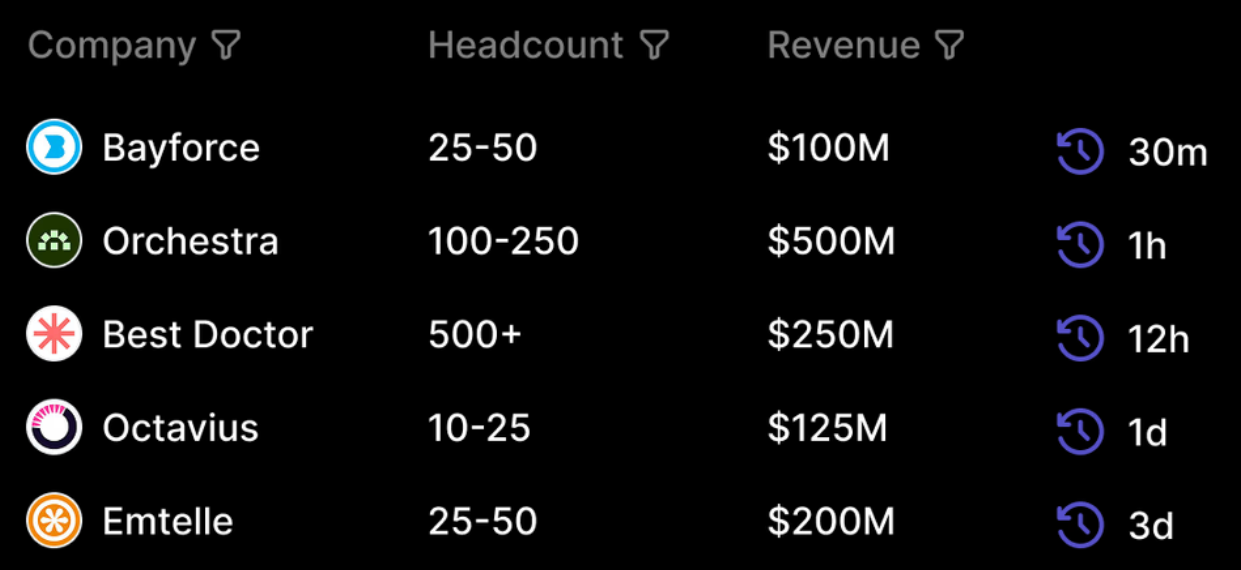
Source: Crustdata Enrichment
For teams building AI SDRs or investment tools, where stale data means lost opportunities, that freshness is worth the wait.
MixRank takes the opposite approach: massive-scale continuous crawling delivered on a schedule. The people dataset processes 125M+ profile updates per month and delivers refreshed records hourly. Web technographics update almost every minute. The company doesn't wait for your API call to crawl; it crawls everything constantly and delivers the latest snapshot.
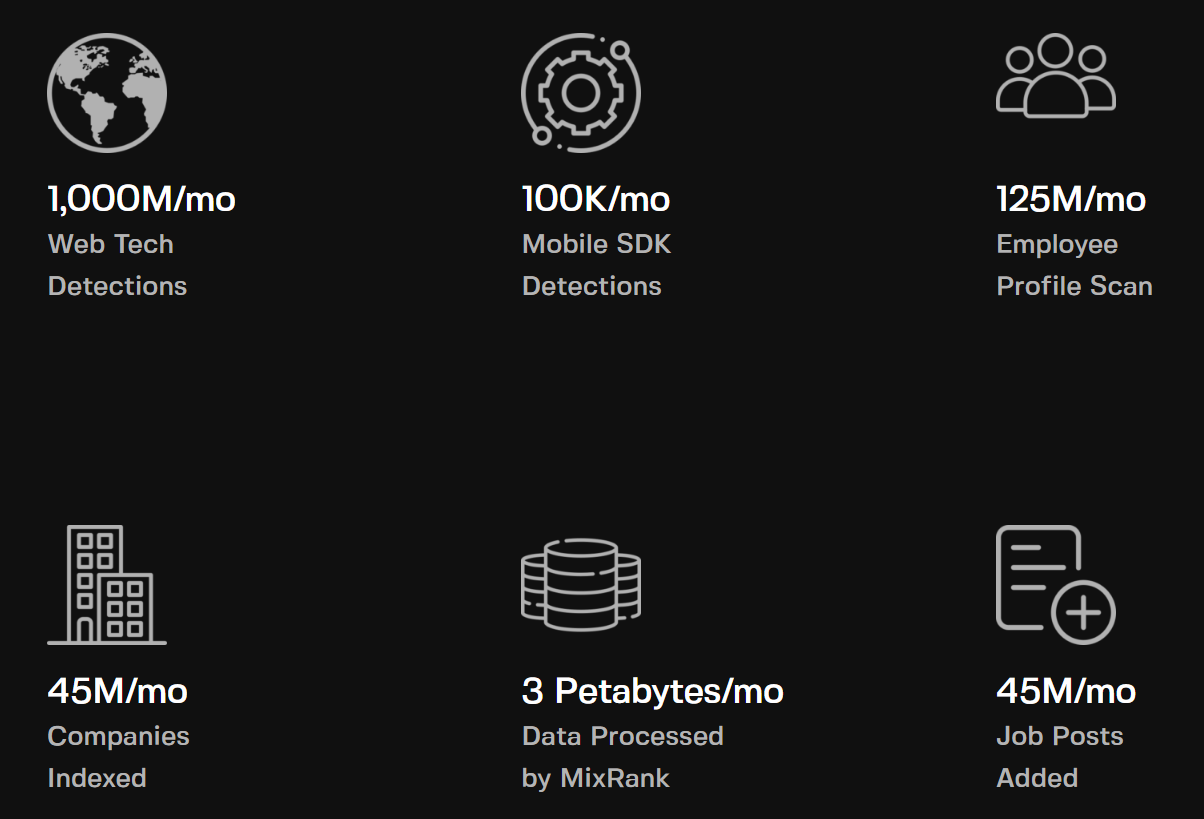
Source: MixRank Data
For data teams licensing bulk feeds to power their own platforms, this always-on pipeline means they never wait for a single-record lookup.
ZoomInfo takes a third approach. Rather than raw crawl speed, ZoomInfo invests in verification. Its pipeline scans 28 million site domains daily through automated ML, supplements with 300+ human researchers, and achieves up to 95% accuracy on first-party data. When a sales rep dials a direct number from ZoomInfo, it rings. When an email is sent, it lands.
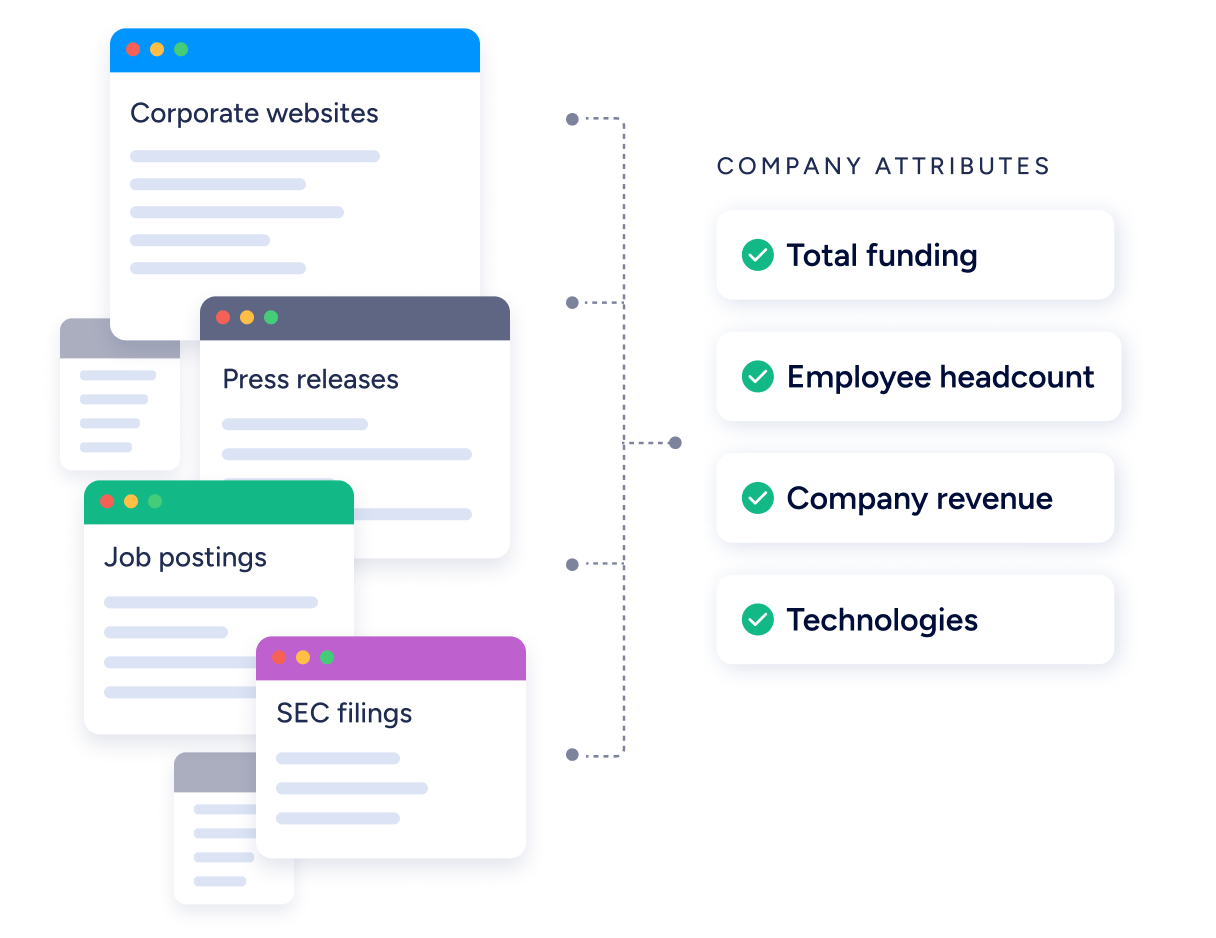
Source: ZoomInfo Scanning
For go-to-market teams, verified accuracy matters more than raw freshness, because a fast but wrong phone number wastes more time than a slightly older but correct one.
"ZoomInfo gives us the information we need to execute. We don't have to go through and spend our time digging. It's already there, so we can be three steps ahead."
William Kenimer, Vice President of Revenue Operations, Vensure (ZoomInfo Case Study)
MixRank's mobile SDK intelligence has no equivalent
MixRank has one capability that neither Crustdata nor ZoomInfo offers: mobile app and SDK intelligence.
The company decompiles and analyzes every app it finds across the App Store and Play Store, running static and dynamic analysis to identify every SDK embedded in each binary. The result is a dataset covering 20M+ iOS and Android apps and 30,000+ SDKs, with 150,000 app-SDK scans per day and historical records dating to 2013.

Source: MixRank Mobile SDK
For mobile SDK vendors, ad networks, and app analytics companies, this data is essential. If you sell an SDK and need to know which apps use your competitor's product, MixRank is the only platform in this comparison that answers that question. An analyst team catalogs the 30,000 SDKs by hand, inspecting millions of lines of code for accuracy.
Crustdata doesn't cover mobile app intelligence.
ZoomInfo tracks 30,000+ web technologies across 200+ categories on 30+ million companies, but focuses on web technographics rather than mobile app decompilation.
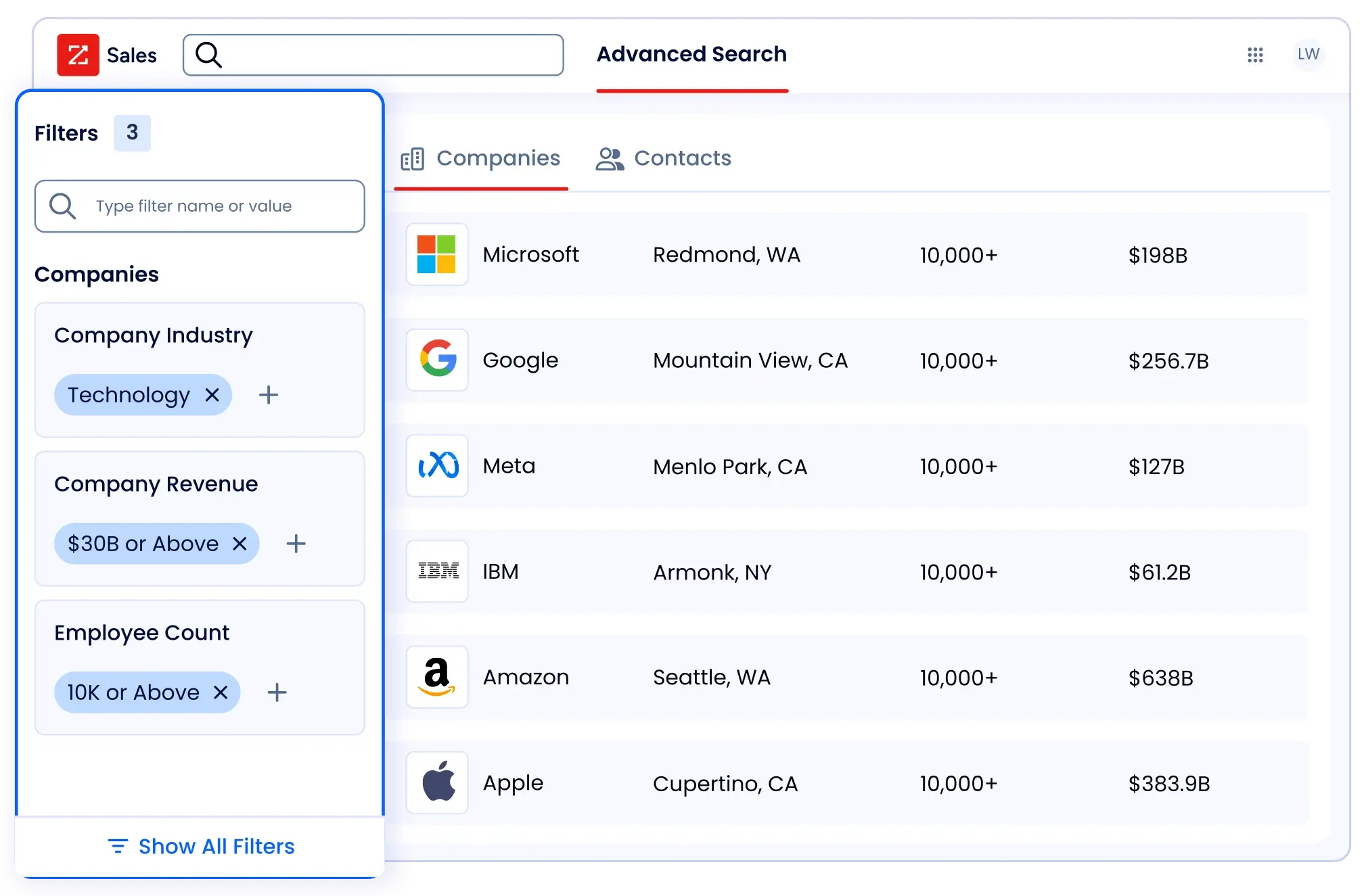
Source: ZoomInfo Technographics
If mobile SDK intelligence is your primary use case, MixRank is the clear choice. If web technographics tied to company attributes and buying signals are what you need, ZoomInfo's coverage is broader and integrated into workflows you can act on.
Crustdata's Watcher API stands out for signal-based workflows
Crustdata's Watcher API is its standout feature. Rather than polling for updates on a schedule, you subscribe to specific events (job changes, funding rounds, hiring spikes, social posts) and receive webhook notifications the moment they occur.
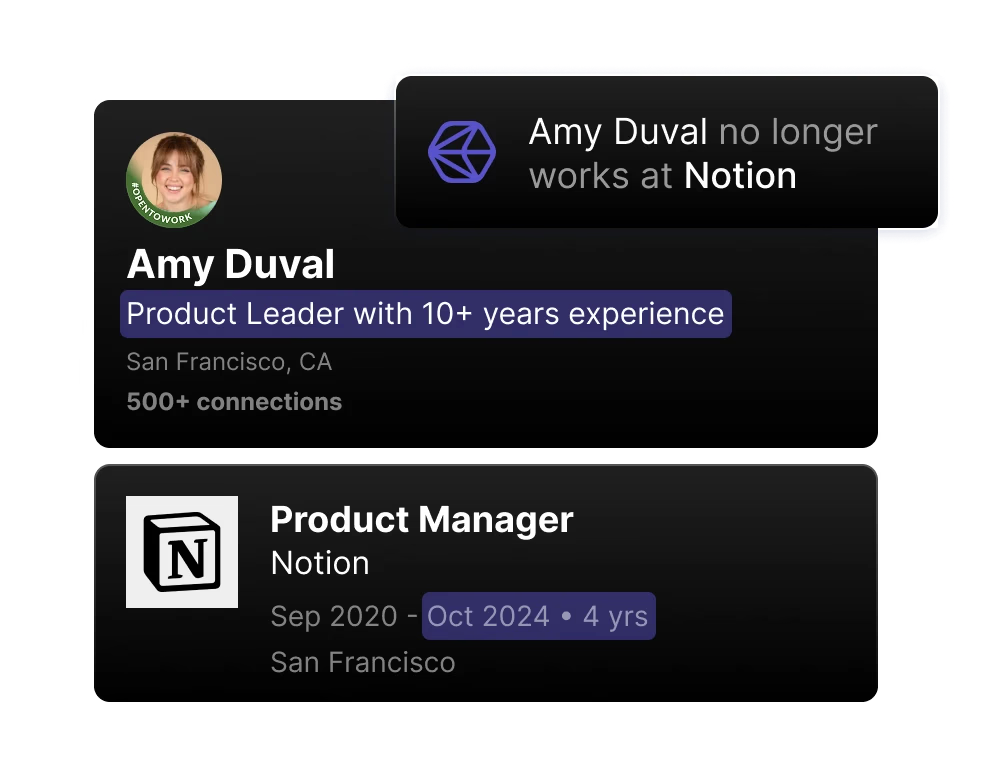
Source: Crustdata Watcher API
This push architecture is built for AI agents and automated workflows. An AI SDR can receive a webhook when a target prospect gets promoted, generate a personalized congratulatory message, and fire it off, all without a human touching the system. The Watcher API covers 11+ watch types spanning company growth, hiring patterns, funding events, social media, and personnel changes.
MixRank doesn't offer webhook infrastructure. Its data delivery is batch-oriented: API calls, flat files, or hosted PostgreSQL tables. You can build your own monitoring by polling the API, but the infrastructure for real-time push notifications doesn't exist natively.
ZoomInfo handles signals differently. Buyer Intent data tracks 210 million IP-to-Org pairings and 6 trillion+ new keyword-to-device pairings monthly, identifying when companies actively research topics related to your product. Guided Intent, exclusive to ZoomInfo, identifies the topics historically correlated with your closed-won deals, rather than requiring you to select topics manually.

Source: ZoomInfo Intent Data
Website visitor tracking (WebSights) resolves anonymous traffic to companies with contact details attached. GTM Workspace's Action Feed delivers a live stream of in-market buyers with pre-drafted actions for each signal.

Source: ZoomInfo WebSights
The difference: Crustdata tells you something changed. ZoomInfo tells you what changed, why it matters, and what to do about it.
"That combination of our internal CRM data, external signals, and AI that's given all that context has helped us craft very specific account- and persona-based messages. And people have responded to them right away."
Toby Carrington, Chief Business Officer, Seismic (ZoomInfo Case Study)
Data delivery and technical integration
All three platforms deliver data programmatically, but the experience varies.
Crustdata is API-first with a RESTful architecture using Bearer token authentication. The API covers company search (95+ filters), people search (60+ filters), enrichment, job listings, social posts, and the Watcher webhook system. Documentation includes code examples per endpoint and detailed response schemas.
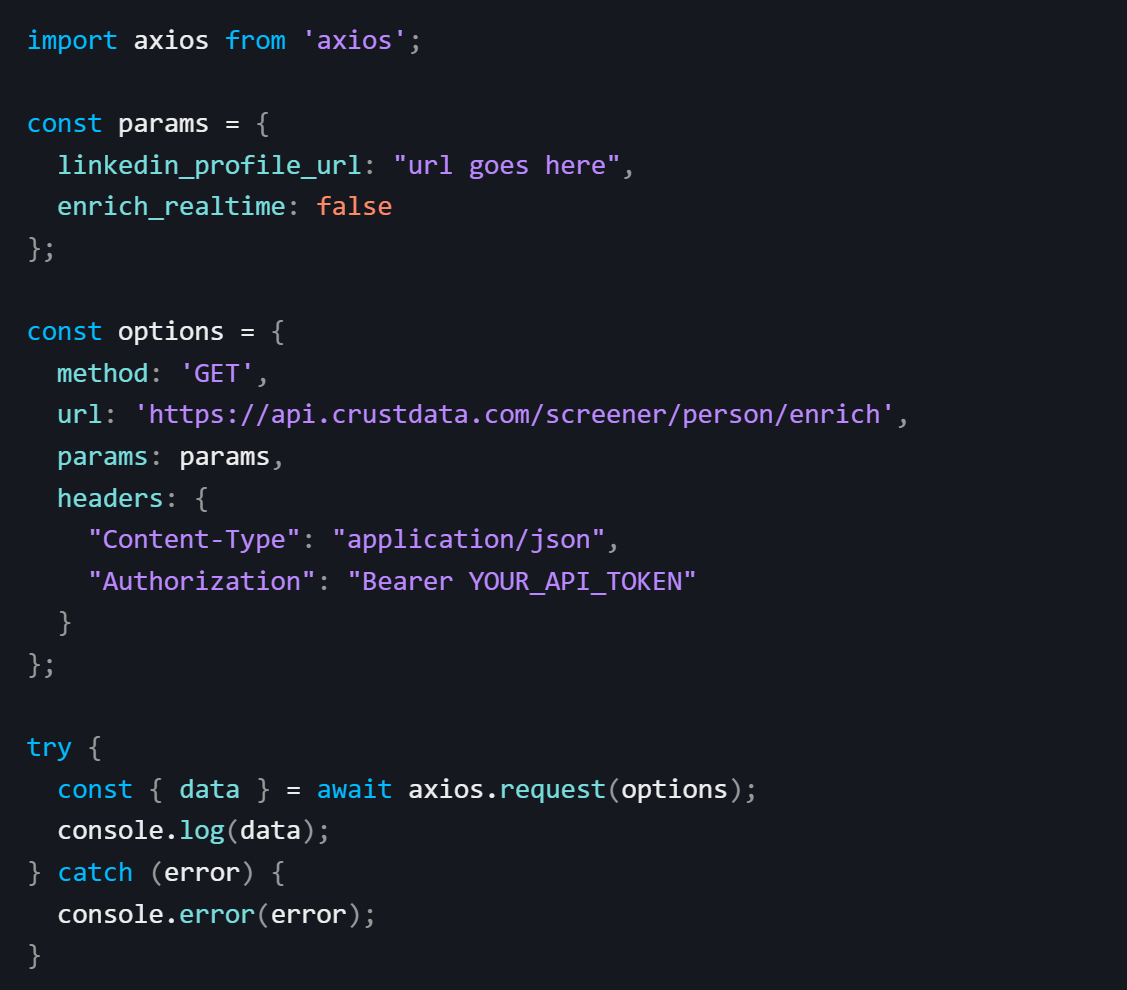
Source: Crustdata API
Every customer gets a dedicated Slack channel staffed by 4-5 Crustdata team members. CRM integrations cover Salesforce, HubSpot, and Marketo. For developers, the onboarding is clean. For non-developers, there's no self-serve path.
MixRank offers the most delivery options for data teams: REST API, flat files (CSV/Parquet/JSONL), or shared PostgreSQL databases with integrations into Snowflake, BigQuery, and Redshift. The API uses key-based authentication embedded in the URL path, with no OAuth overhead. But the API documentation is a single long-scroll reference page with no interactive sandbox.
Beyond the API, the only named native integration is Salesforce for the Mobile Apps platform. Support runs through a single email address with no live chat or phone.

Source: MixRank Terms of Service
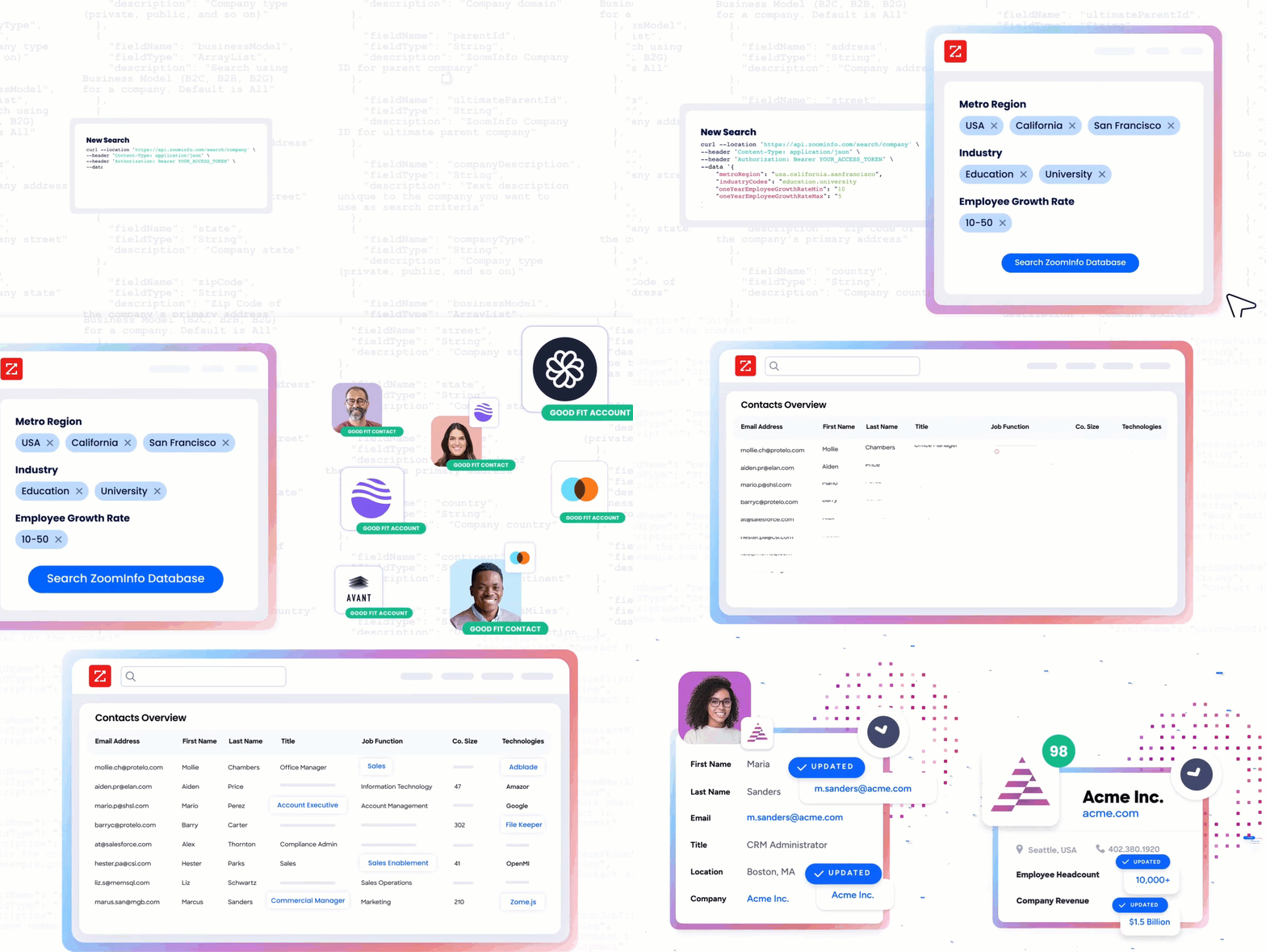
ZoomInfo has the largest integration ecosystem. The App Marketplace lists 120+ integrations across CRMs (Salesforce, HubSpot, Dynamics), marketing automation (Marketo, Eloqua), sales engagement (Salesloft, Outreach), and data warehouses (Snowflake, BigQuery, Redshift).
The Enterprise API covers search, enrichment, AI intelligence (account summaries, lookalikes, contact recommendations), audience management, and engagement data. The MCP server connects AI models to ZoomInfo data through natural language, with no custom coding beyond configuration. API access is included in all plans.
Source: ZoomInfo API
For pure API consumers building custom data products, Crustdata and MixRank are focused and capable. For teams that need data flowing into CRMs, marketing tools, and AI agents without dedicated engineering, ZoomInfo's pre-built integrations remove the build work.
"The plug-and-play aspect of the API means I can integrate it very easily into any process and get information at a moment's notice."
Jerry Wilson, Senior Marketing Intelligence Analyst, BDO Canada (ZoomInfo Case Study)
Pricing and contract structures
Pricing transparency differs sharply across these three platforms.
MixRank is the most transparent. Data API products start at published rates: $1,000/month for Enrich, Match, and Posts; $1,500/month for LiveScan, on annual contracts with volume tiers of 250K, 500K, or 1M calls/month. Data feed pricing requires custom quotes. The Mobile Apps platform offers tiered plans (Core, Professional, Enterprise) with free trials, though prices aren't listed.
Annual contracts are the default, with 60-day advance notice required for cancellation and non-refundable fees. Review platforms cite a starting price of $24,000/year.
Crustdata operates on a credit-based pricing model with no published rates. Real-time enrichment costs 5 credits per profile; database enrichment costs 1 credit. But the dollar cost per credit isn't disclosed. Developers can test endpoints through a free trial, and the company describes its model as having no hidden platform taxes. Prospective customers need to book a demo for custom quotes.
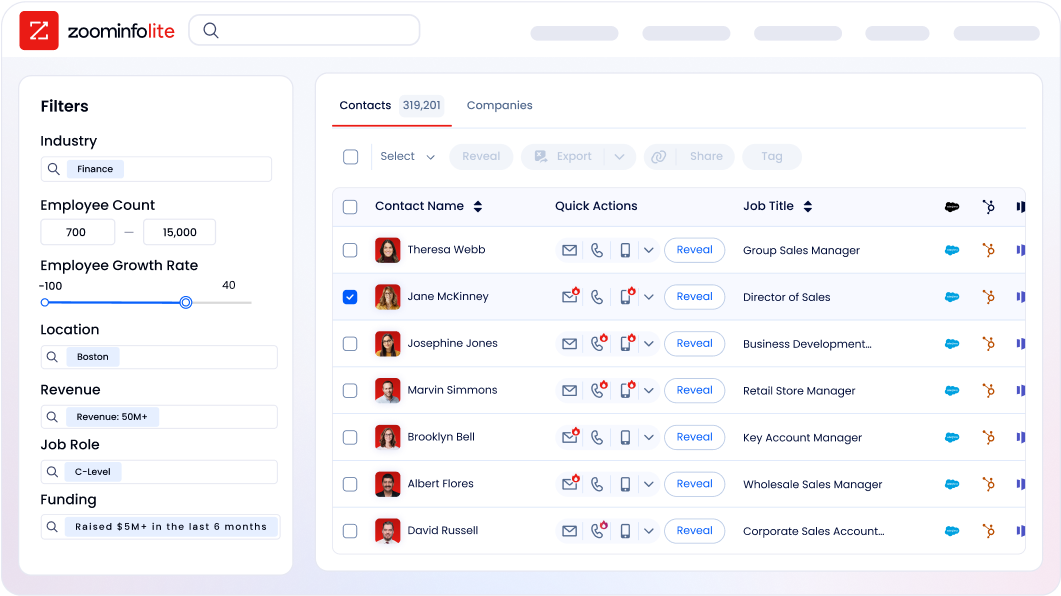
ZoomInfo uses a custom-quoted model based on seats and credits. ZoomInfo doesn't publish prices. However, it offers two free entry points that neither competitor matches: ZoomInfo Lite (a permanent free tier with 10 monthly export credits, database access, a Chrome extension, and website visitor tracking) and a 7-day free trial of the full platform.
Source: ZoomInfo Lite
For organizations evaluating the platform, these free options reduce the commitment risk that opaque pricing creates.
The pricing comparison requires honest context. ZoomInfo costs more than either Crustdata or MixRank because it does more. Comparing the price of a data API to the price of a full GTM platform is comparing the cost of ingredients to the cost of a restaurant meal. The right question is whether you need the ingredients or the meal.
Security and compliance for enterprise procurement
Enterprise procurement teams care about certifications. The gap here is significant.
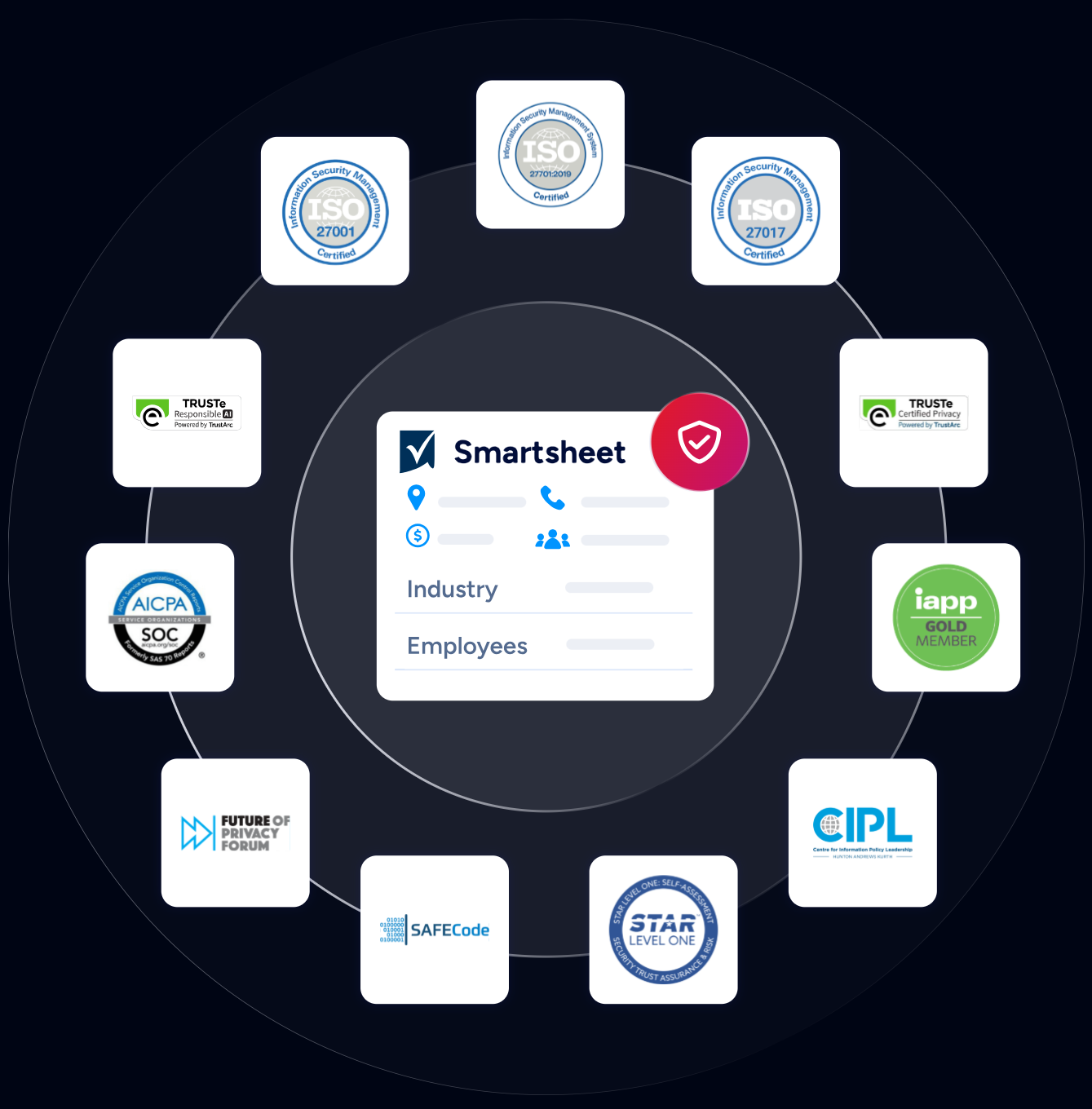
ZoomInfo holds the broadest set of certifications: ISO 27001, ISO 27701, SOC 2 Type II, and TRUSTe GDPR and CCPA, all renewed annually. It's a registered data broker in California and Vermont and maintains a Trust Center. For regulated industries (financial services, healthcare, government), this compliance infrastructure is a prerequisite.
Source: ZoomInfo Data Sources
Crustdata is SOC 2 certified and GDPR/CCPA compliant. For a company founded in 2023 with 20 employees, achieving SOC 2 early signals commitment to enterprise readiness.
MixRank states GDPR and CCPA compliance and offers a Privacy Redaction API for automated DSAR requests. However, no public page references SOC 2, ISO 27001, or equivalent third-party certifications. For a company serving Oracle, Meta, and Amazon, this gap may be managed through private security reviews, but it creates friction in procurement processes that require documented certifications.

Source: MixRank Privacy Policy
Who each platform is built for (and who it's not for)
The clearest way to compare these platforms is by who benefits from each one.
Crustdata is built for AI agent builders and technical GTM teams. The company positions itself as "Google for AI agents" and "People and Company Search for AI." Its ideal customers build AI SDRs, recruiting platforms, and investment tools that need real-time data feeds. Customers include Y Combinator (powering founder discovery), HubSpot founder Dharmesh Shah's agent.ai, and Ryan Reynolds' MNTN.
It's not for teams without engineering resources, budget-conscious SMBs, or organizations that need a prospecting interface rather than raw APIs.
MixRank is built for enterprise data teams that license wholesale datasets. The company describes itself as infrastructure used by "every large data company" in the industry. Customer logos include Oracle, Meta, Intel, Amazon, and Adobe. The mobile SDK intelligence is valuable for mobile technology vendors, ad networks, and app analytics companies.
It's not for small businesses, individual sales reps, or anyone who needs a UI-based prospecting tool.
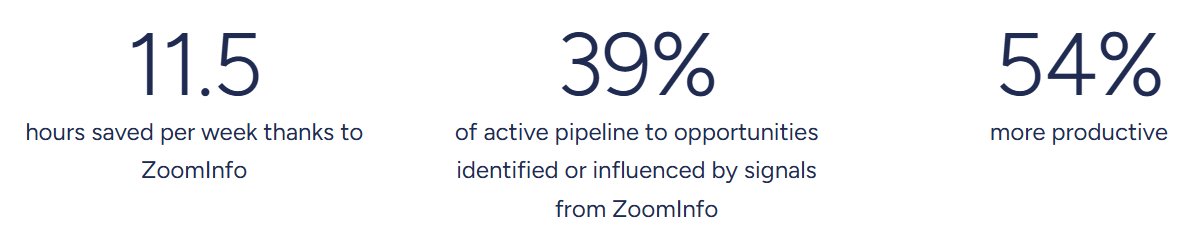
ZoomInfo is built for go-to-market teams across the full revenue cycle. Enterprise customers include Adobe, Snowflake, Seismic, Thomson Reuters, and Databricks. The platform serves five personas: sales development, account executives, account management, RevOps, and demand generation.
Source: ZoomInfo Seismic
With ZoomInfo Lite as a free entry point and paid tiers from Professional to Enterprise, it accommodates teams from individual contributors to large organizations. For companies building AI agents or custom data products, APIs and MCP deliver the same data available in ZoomInfo's native products.
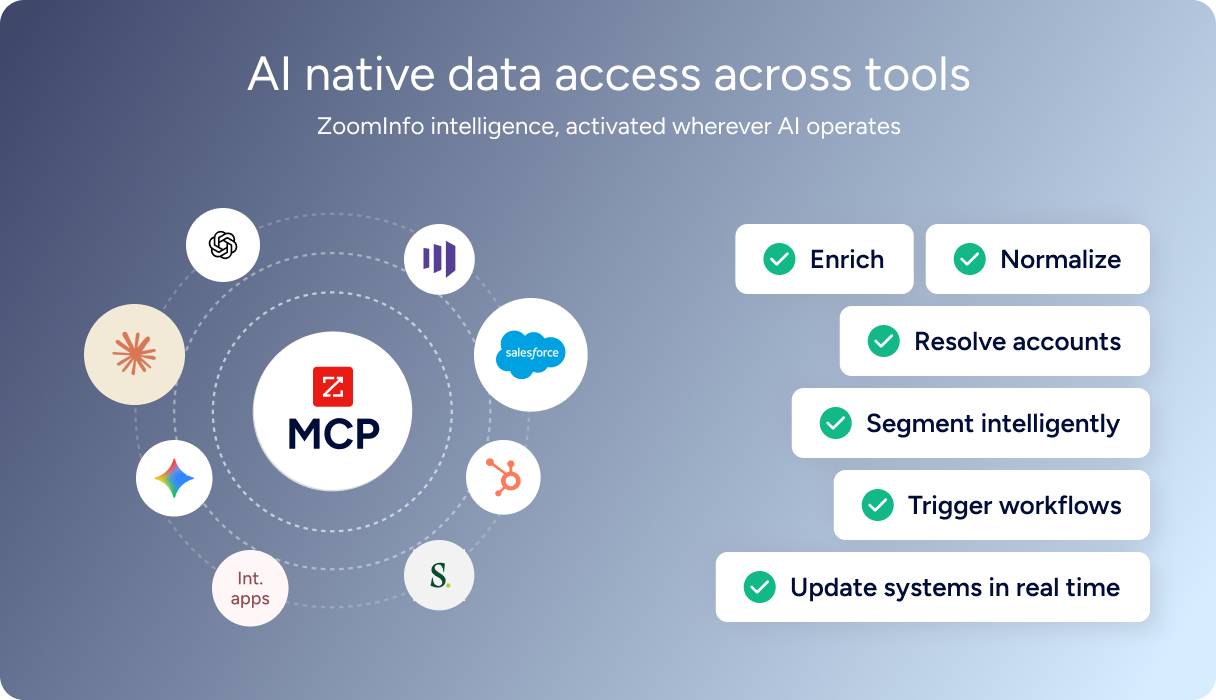
Source: ZoomInfo MCP
"ZoomInfo is our one source of truth for account data, and even more so for contact data. There's no other provider in the market that provides you with that level of detail."
Thor Sanderson, Senior Manager of Sales Technology Enablement, Smartsheet (ZoomInfo Case Study)
Crustdata vs. MixRank vs. ZoomInfo: Which should you choose?
The best platform depends on what you're building and who's using it.
Choose Crustdata if:
You're building AI agents or automated workflows that need real-time data feeds
Your team has developers who can integrate and maintain API connections
Signal-based outreach (webhook-triggered, context-aware) is central to your strategy
You need the freshest data available on companies and people, even if it takes minutes to fetch
You're comfortable with custom pricing and no self-serve UI
Choose MixRank if:
You're licensing wholesale datasets to power your own data product or platform
Mobile app and SDK intelligence is a primary use case
Your data engineering team can ingest flat files, API feeds, or hosted PostgreSQL tables
You need petabyte-scale historical data with hourly refresh across companies, people, and web technologies
Annual contracts starting at $24,000/year fit your budget
Choose ZoomInfo if:
You need verified B2B data and the tools to act on it in one platform
Your sales team needs direct dials that ring, emails that land, and AI-drafted outreach
Your marketing team needs intent signals, audience orchestration, and campaign execution without engineering tickets
Your RevOps team needs data quality, enrichment, and workflow automation across CRMs and engagement tools
You want API and MCP access to power custom AI agents alongside native GTM products
See ZoomInfo's platform in action with a free trial, or start with ZoomInfo Lite at no cost.
Crustdata and MixRank are strong choices for their niches: real-time AI agent infrastructure and wholesale enterprise data feeds. But for most go-to-market teams, the challenge isn't just getting data into a system. It's turning that data into pipeline, revenue, and retained customers.
ZoomInfo's combination of verified B2B data, the GTM Context Graph that reasons across it, and access through native products and open APIs is what makes it a GTM platform rather than another data provider.
Crustdata vs. MixRank vs. ZoomInfo FAQ
What is the core difference between Crustdata, MixRank, and ZoomInfo?
Crustdata is an API-first data platform built for AI agents, delivering real-time company and people data through live web crawling triggered at the moment of request. MixRank is a wholesale data infrastructure provider serving enterprise data teams with bulk datasets covering people, companies, web technographics, and mobile app SDK intelligence.
ZoomInfo is a GTM platform that combines a large verified B2B dataset with execution tools for sales, marketing, and RevOps, including AI-powered prospecting, intent signals, campaign orchestration, and conversation intelligence.
Which platform has the largest and most accurate B2B dataset?
ZoomInfo has the largest verified dataset: 500M contacts, 100M companies, 135M+ verified phone numbers, and 200M+ verified business email addresses, maintained by 300+ human researchers with up to 95% accuracy on first-party data.
MixRank covers 800M+ employee profiles and 70M+ companies but relies on automated web scraping without human verification. Crustdata covers 1 billion people profiles and 60 million companies with automated multi-source aggregation. Raw record counts don't tell the full story since verification determines whether the data is usable for outreach.
Which platform is best for building AI agents or custom data products?
Crustdata is built for AI agent builders, with real-time APIs, webhook-based signal delivery via the Watcher API, and sub-2-second response times for enrichment requests. MixRank serves companies licensing bulk data feeds to power their own products, with flexible delivery through API, flat files, and hosted PostgreSQL tables.
ZoomInfo provides API and MCP access across all plans, enabling AI agents and custom applications to use the same data that powers ZoomInfo's native products.
Does any platform offer mobile app and SDK intelligence?
Only MixRank covers mobile app and SDK intelligence, with 20M+ iOS and Android apps and 30,000+ SDKs cataloged by hand with records dating back to 2013. MixRank decompiles app binaries through static and dynamic analysis to detect every SDK present in each app. Neither Crustdata nor ZoomInfo offers this capability.
How does pricing compare across the three platforms?
MixRank has the most transparent pricing, with API products starting at $1,000/month on annual contracts and data feeds requiring custom quotes. Review platforms cite a starting price of $24,000/year. Crustdata uses a credit-based model without published dollar rates.
ZoomInfo uses custom-quoted seat-and-credit pricing, but offers a permanent free tier (ZoomInfo Lite with 10 monthly export credits) and a 7-day free trial of the full platform, which neither competitor matches.
Which platform has the strongest security and compliance certifications?
ZoomInfo holds the broadest certification stack: ISO 27001, ISO 27701, SOC 2 Type II, and TRUSTe GDPR and CCPA certifications, all renewed annually. Crustdata is SOC 2 certified and GDPR/CCPA compliant. MixRank states GDPR and CCPA compliance and offers a Privacy Redaction API for DSAR requests, but does not publicly disclose SOC 2, ISO 27001, or equivalent third-party certifications.
Can I use these platforms without a development team?
ZoomInfo is the only platform accessible without engineering resources, offering native web interfaces (GTM Workspace for sellers, GTM Studio for marketers and RevOps), a Chrome extension, a mobile app, and 120+ pre-built integrations.
Crustdata is API-first with no self-serve UI, requiring developers to integrate and maintain connections. MixRank delivers data through APIs, flat files, and PostgreSQL, targeting data engineering teams at enterprises.
Which platform is best for sales prospecting and outreach?
ZoomInfo is the clear choice for sales prospecting. It combines verified contact data (120M direct-dial phone numbers, 200M+ verified emails) with buyer intent signals, AI-generated outreach, and CRM integrations in one platform. GTM Workspace gives sellers prioritized accounts, pre-drafted actions, and buying group intelligence without switching tools.
Crustdata and MixRank are data infrastructure layers that provide raw data but no prospecting UI, outreach automation, or deal intelligence.
Keep comparing your options:
