
Choosing between Crustdata and ScrapIn for your B2B data infrastructure usually comes down to these five questions:
Are you building AI agents that need real-time company and people data, or do you primarily need LinkedIn profile enrichment?
Does your team have engineers who can integrate and maintain API connections, or do you need a platform that non-technical users can operate?
Do you need just raw data, or do you also need verified contact information (direct-dial phone numbers and validated emails) to actually reach buyers?
Is signal detection (job changes, funding rounds, hiring spikes) something you want built in, or are you prepared to build that logic yourself?
Are you solving a data infrastructure problem, or a go-to-market execution problem?
In short, here's what we recommend:
Crustdata is a strong choice for technical teams building AI-powered sales, recruiting, or investment platforms that need fresh data delivered through APIs. Its real-time enrichment architecture pulls live data from over a dozen sources, covering 1 billion people and 60 million companies.
The Watcher API pushes webhook notifications on job changes, funding rounds, and hiring signals as they happen, not on a weekly digest. But Crustdata is infrastructure, not a finished product. There's no user-facing dashboard for sales reps, no transparent pricing, and you'll need developers to integrate and maintain every connection.
ScrapIn works well for developers who need LinkedIn data enrichment without managing their own scraping infrastructure. It processes 300 million API requests per month with 98.8% uptime and sub-2-second response times, returning structured person and company profiles from LinkedIn in real time. ScrapIn recently merged into Reverse Contact, a larger identity resolution platform.
ScrapIn offers no verified email delivery, no phone numbers, no intent signals, and no CRM integrations. It's a data pipe, and everything downstream is your responsibility.
Both platforms solve real problems for technical teams. But they solve narrow problems. If your goal is a complete B2B data foundation with verified contact information, buying signals, and execution tools built on top, neither platform covers the full picture. That's where ZoomInfo comes in.
ZoomInfo is a full-stack GTM platform that pairs verified contact data (500M contacts, 100M companies, 135M+ verified phone numbers, and 200M+ verified business email addresses) with buyer intent signals, conversation intelligence, and execution tools.
ZoomInfo's GTM Context Graph processes 1.5B+ data points daily, combining your CRM records, conversation transcripts, and behavioral signals with its B2B data to show what's happening in your accounts and why. Teams access this intelligence through GTM Workspace (for sellers), GTM Studio (for marketers and RevOps), or APIs and MCP for custom tools and AI agents.
For teams that need data and go-to-market execution in one platform, ZoomInfo replaces the patchwork of point solutions.
If a GTM data and intelligence platform sounds like what your team needs, see ZoomInfo in action.
Crustdata vs. ScrapIn vs. ZoomInfo at a glance
Crustdata | ScrapIn | ZoomInfo | |
|---|---|---|---|
Core approach | Real-time B2B data APIs for AI agents | LinkedIn data enrichment API | Full-stack GTM platform |
People coverage | |||
Company coverage | |||
Verified phone numbers | No | No | |
Verified emails | No | Partial, unverified | 200M+ verified business emails |
Signal/intent data | Watcher API (webhooks) | No | Buyer intent, website visitors, hiring signals |
CRM integrations | No native integrations | ||
Non-technical user access | No (API-only) | No (API-only) | Yes (GTM Workspace, GTM Studio, browser extension) |
Pricing transparency | Custom quotes only | Custom quotes; free Lite tier available | |
Compliance | GDPR, CCPA; SOC 2 in progress | ||
Best for | AI agent builders, VC deal sourcing | Developers needing LinkedIn data | Full GTM teams (sales, marketing, RevOps) |
Raw data vs. verified contacts you can reach
This is the most important difference between these three platforms, and worth understanding before anything else.
Crustdata and ScrapIn are data aggregation APIs. They pull information from public sources and return it in structured JSON. Crustdata aggregates from 10+ sources and delivers 250+ company datapoints per profile. ScrapIn scrapes LinkedIn in real time and returns career history, skills, education, and employer details. Both return useful data for building internal tools and AI applications.
Neither platform verifies the contact information it returns. ScrapIn returns email addresses only when they happen to be publicly listed on a LinkedIn profile, and does not validate them for deliverability. Neither platform provides phone numbers.
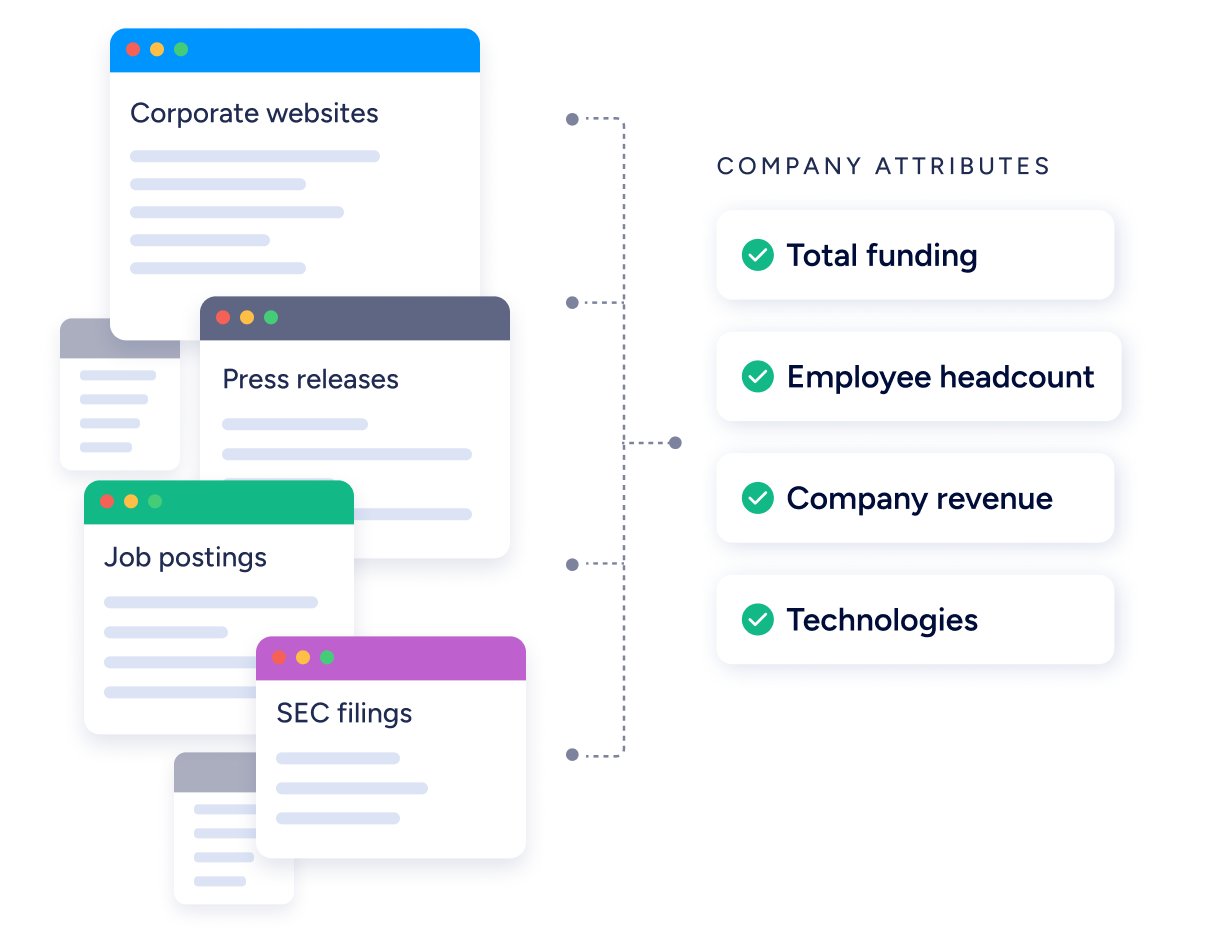
ZoomInfo approaches data differently. Its verification pipeline combines automated ML scanning of 28 million site domains daily, third-party partner data covering 95 million businesses, a network of 200,000+ contributing users, and a Data Training Lab of 300+ human researchers. The result is up to 95% accuracy on first-party data across 120M direct-dial phone numbers and 200M+ verified business email addresses.
Source: ZoomInfo Scanning
For teams building AI agents or internal data products, raw data from Crustdata or ScrapIn may be sufficient. For teams that need to actually contact prospects (call them, email them, and have those messages land), the difference between aggregated public data and verified contact data is the difference between having information and being able to act on it.
In a Fortune 500 competitive RFP analyzing 25 million contacts across vendors, the independent consultant concluded that "no other competitor came even close." (ZoomInfo Q4 2025 Earnings Call)
Real-time data freshness: similar promise, different implementations
All three platforms emphasize data freshness, but through different architectures.
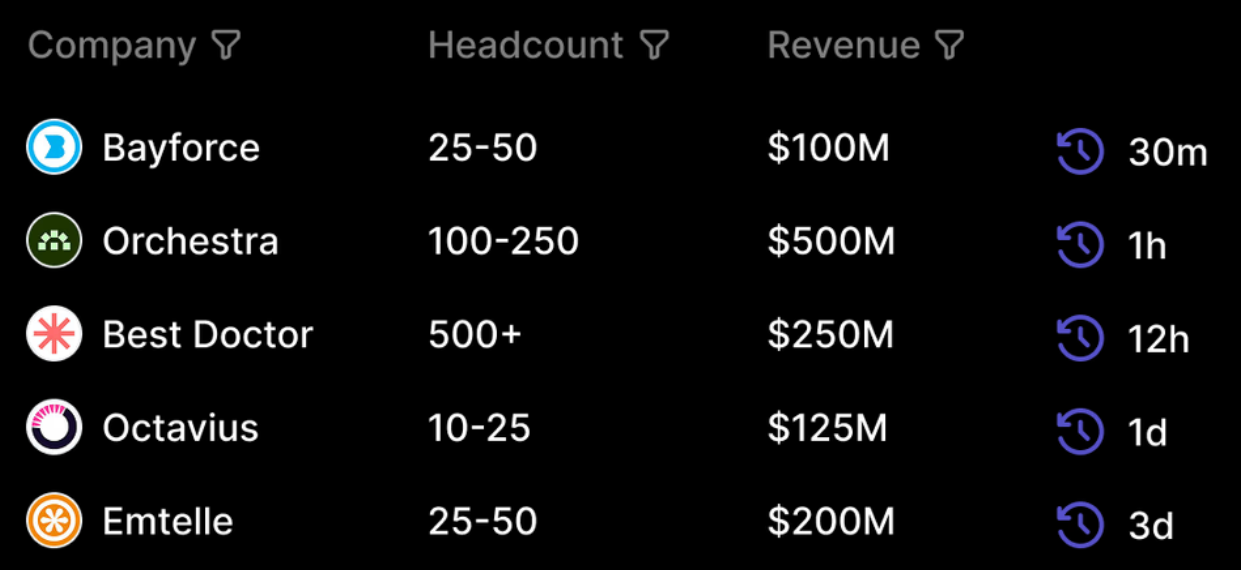
Crustdata offers two modes for every API endpoint. Real-time enrichment triggers live web crawlers at the moment of your request, pulling the freshest possible data with up to 10 minutes of latency per company profile and 5 credits per profile. Database enrichment returns cached records updated within 24 hours for 1 credit per profile.
Source: Crustdata Enrichment
This dual-mode approach lets customers choose between freshness and cost on every call, which is useful for high-volume workflows where not every record needs a live pull.
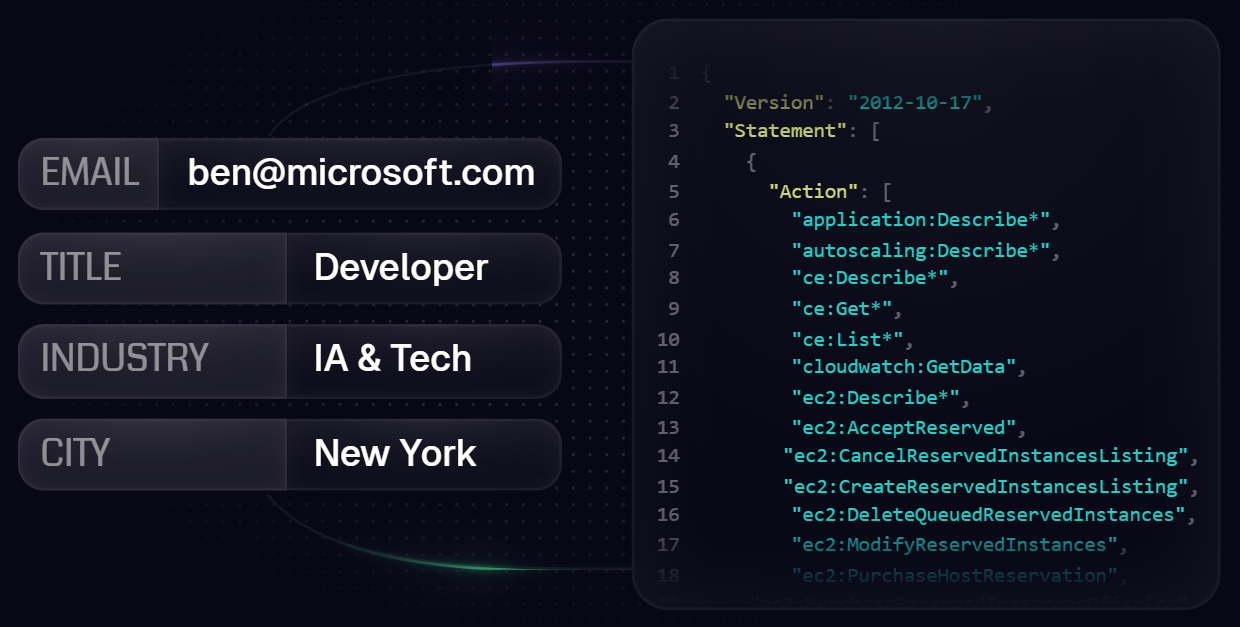
ScrapIn scrapes LinkedIn in real time on every API call. There is no cached database behind it. The founding team built ScrapIn after a months-old dataset showed contacts at companies they had left. Response times are under 2 seconds, and every profile returned reflects the current state of its LinkedIn source.
Source: ScrapIn API
But ScrapIn's freshness is only as good as LinkedIn's data, and coverage is limited to what's publicly available on that single platform.
ZoomInfo monitors continuously rather than scraping on demand. Its automated ML pipeline scans 28 million site domains daily, processes 1.5B+ data points daily through the GTM Context Graph, and uses human researchers to validate changes.
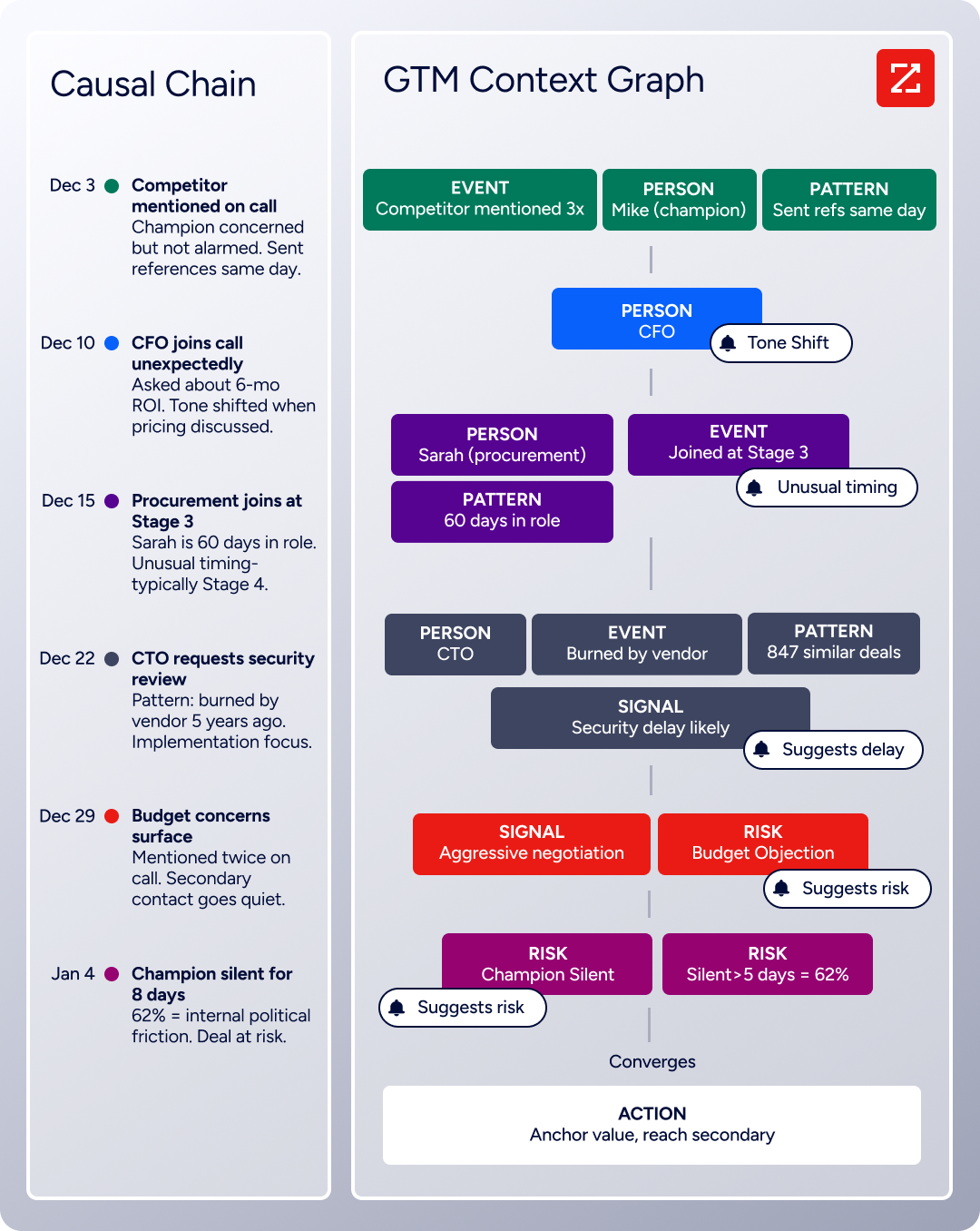
Source: ZoomInfo Context Graph
The result is a database that stays current without forcing the customer to choose between fresh-but-slow and cached-but-fast. When a contact changes jobs, ZoomInfo's Contact Tracker sends alerts automatically.
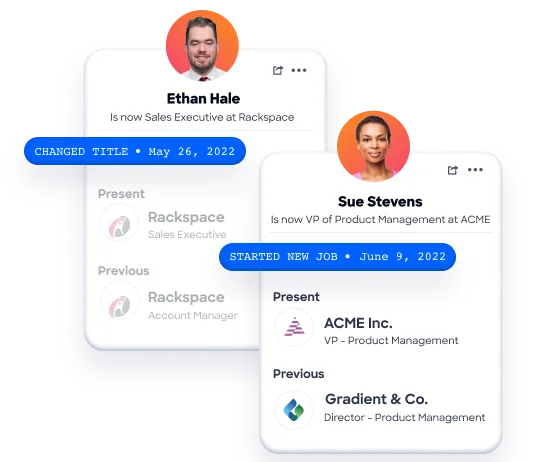
Source: ZoomInfo Contact Tracker
The trade-off is architectural. Crustdata and ScrapIn give you the freshest possible snapshot of a single record at the moment you ask. ZoomInfo gives you a continuously maintained database that's always reasonably current across its entire 500M+ contact base, without requiring you to trigger individual refreshes.
Signal detection separates data platforms from intelligence platforms
Knowing who someone is and where they work is the baseline. Knowing when they're ready to buy, when they just got promoted, or when their company just raised a round is what turns data into action.
Crustdata's Watcher API is the stronger signal tool of the two. It monitors job changes, funding rounds, hiring surges, social posts, and custom events, pushing webhook notifications in real time rather than batching them weekly. The Watcher API supports 11+ distinct watch types and is designed for AI SDRs and automated workflows.
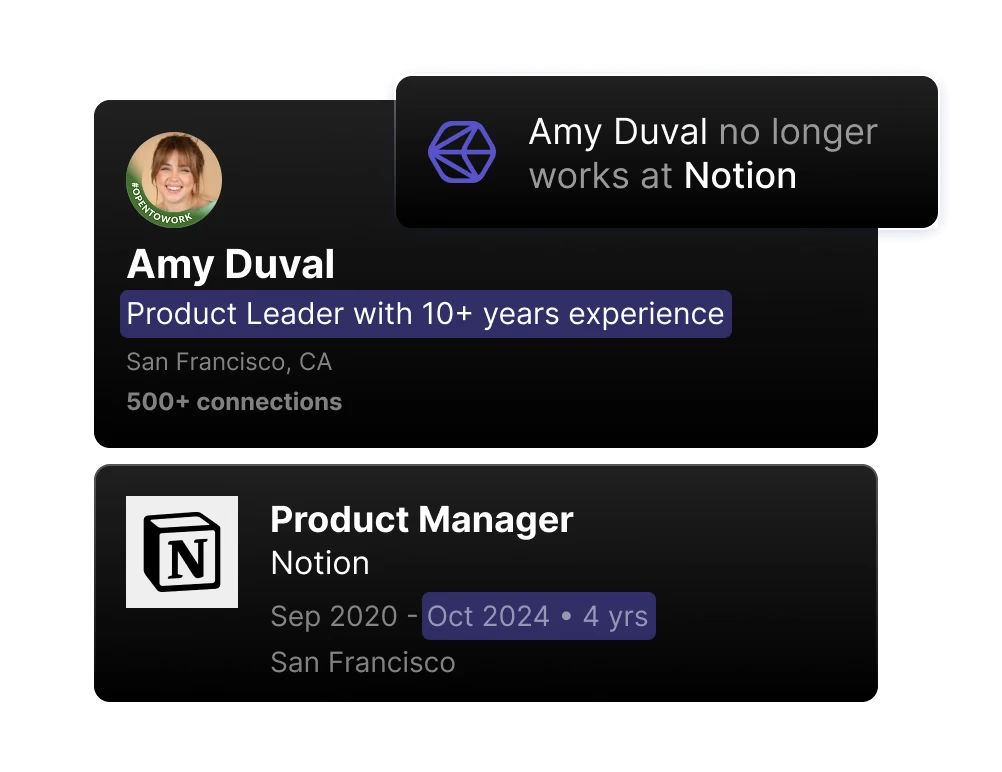
Source: Crustdata Watcher API
Some users report noise without good filtering when monitoring multiple signals, so expect to invest engineering effort in alert prioritization and deduplication.
ScrapIn has no signal layer. The API returns raw LinkedIn fields (profile data, posts, engagement metrics), but interpreting those fields into useful signals (a job change, a hiring spike, an engagement pattern) is the buyer's responsibility. The Person Social Activities endpoints can surface recent posts and reactions (raw material for signal detection), but the customer must build the detection logic.
ZoomInfo goes further. Buyer Intent tracks signals from 210 million IP-to-Organization pairings and 6 trillion+ new keyword-to-device pairings sourced monthly. Guided Intent, exclusive to ZoomInfo, identifies topics historically correlated with deal success rather than requiring manual topic selection. WebSights resolves anonymous website visitors to companies and buying team members.

Source: ZoomInfo Intent Data
The GTM Context Graph layers these third-party signals with your CRM data, conversation intelligence, and behavioral patterns to surface not just that a signal fired, but why it matters for your specific deals.
The difference: Crustdata tells you a prospect changed jobs. ZoomInfo tells you a prospect changed jobs, their new company is researching your category, three members of the buying committee visited your pricing page this week, and the signal pattern matches accounts that closed in Q3.
Seismic attributed 39% of active pipeline to opportunities identified or influenced by ZoomInfo signals, with their sales team reporting 54% productivity gains. (Seismic Case Study)
Who can actually use these platforms?
Crustdata and ScrapIn are developer tools. ZoomInfo serves the entire GTM team.
Crustdata is API-first infrastructure, not a point-and-click platform. Every interaction happens through REST API calls. The documentation is thorough, with request parameters, response schemas, and code examples. All customers get dedicated Slack channels staffed by 4-5 Crustdata team members. But if your team lacks developers to build and maintain the integration, Crustdata is not a viable option.
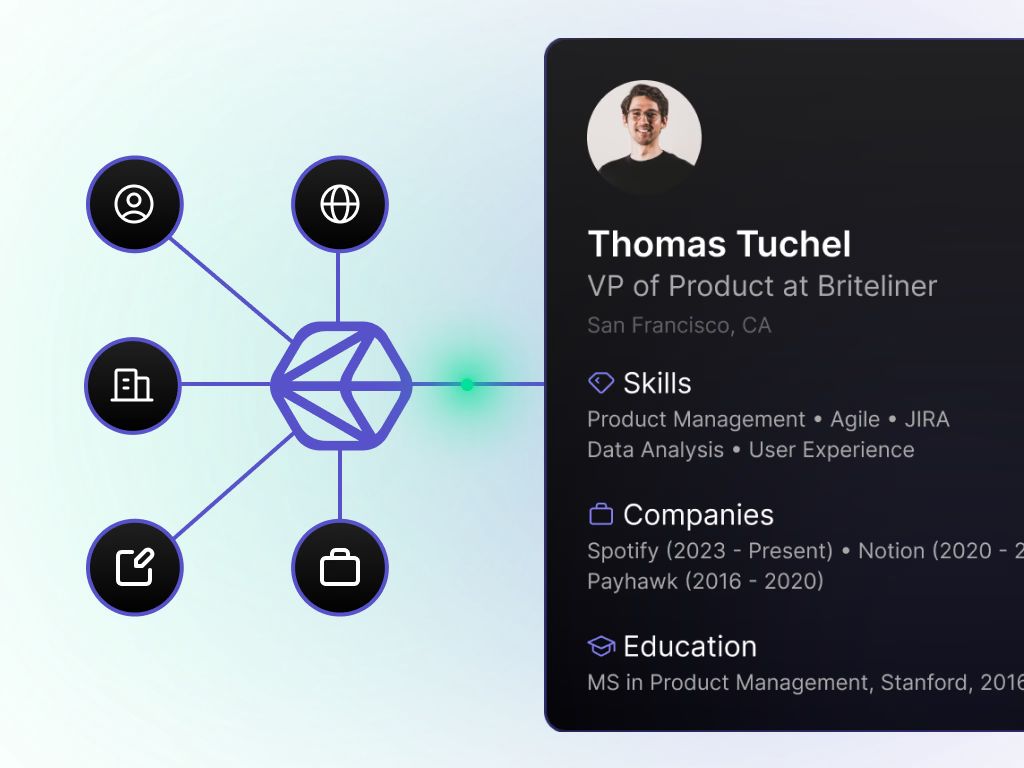
Source: Crustdata API
ScrapIn follows the same pattern. The API is clean and the credit model simple (1 credit per successful call), but there's no dashboard for non-technical users. G2 reviewers note the UI/UX is "not fully developed." Full API documentation is gated behind signup, which slows technical evaluation.
ZoomInfo provides three ways in, covering both technical and non-technical users:
GTM Workspace gives sellers one view where AI-prioritized accounts, drafted outreach, and deal context come together. No API knowledge required.
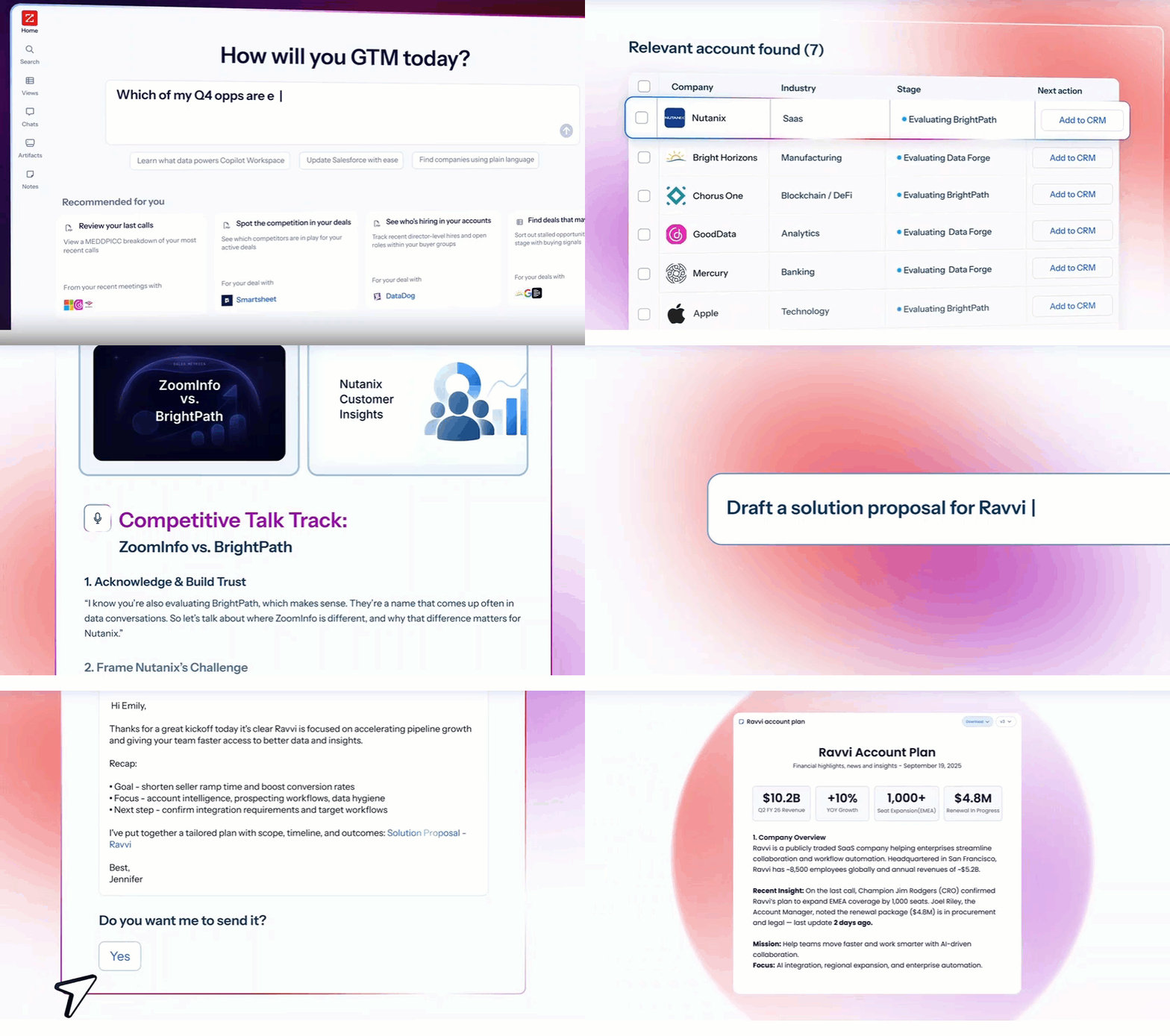
Source: ZoomInfo GTM Workspace
GTM Studio lets marketers and RevOps teams build audiences in natural language, launch multi-channel campaigns, and measure pipeline impact without engineering tickets.
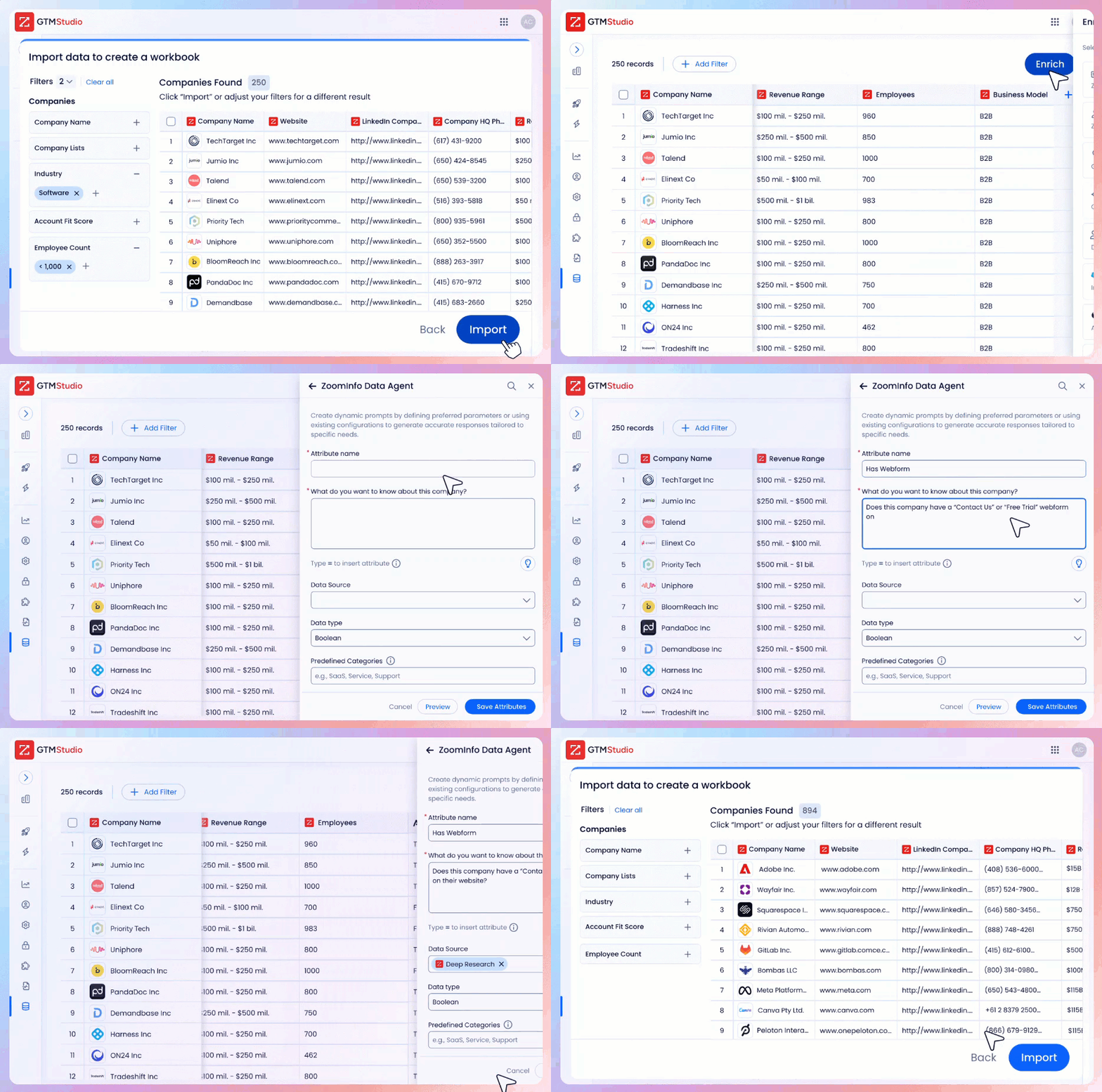
Source: ZoomInfo GTM Studio
APIs and MCP expose the same data and intelligence to any custom tool, AI agent, or third-party platform.
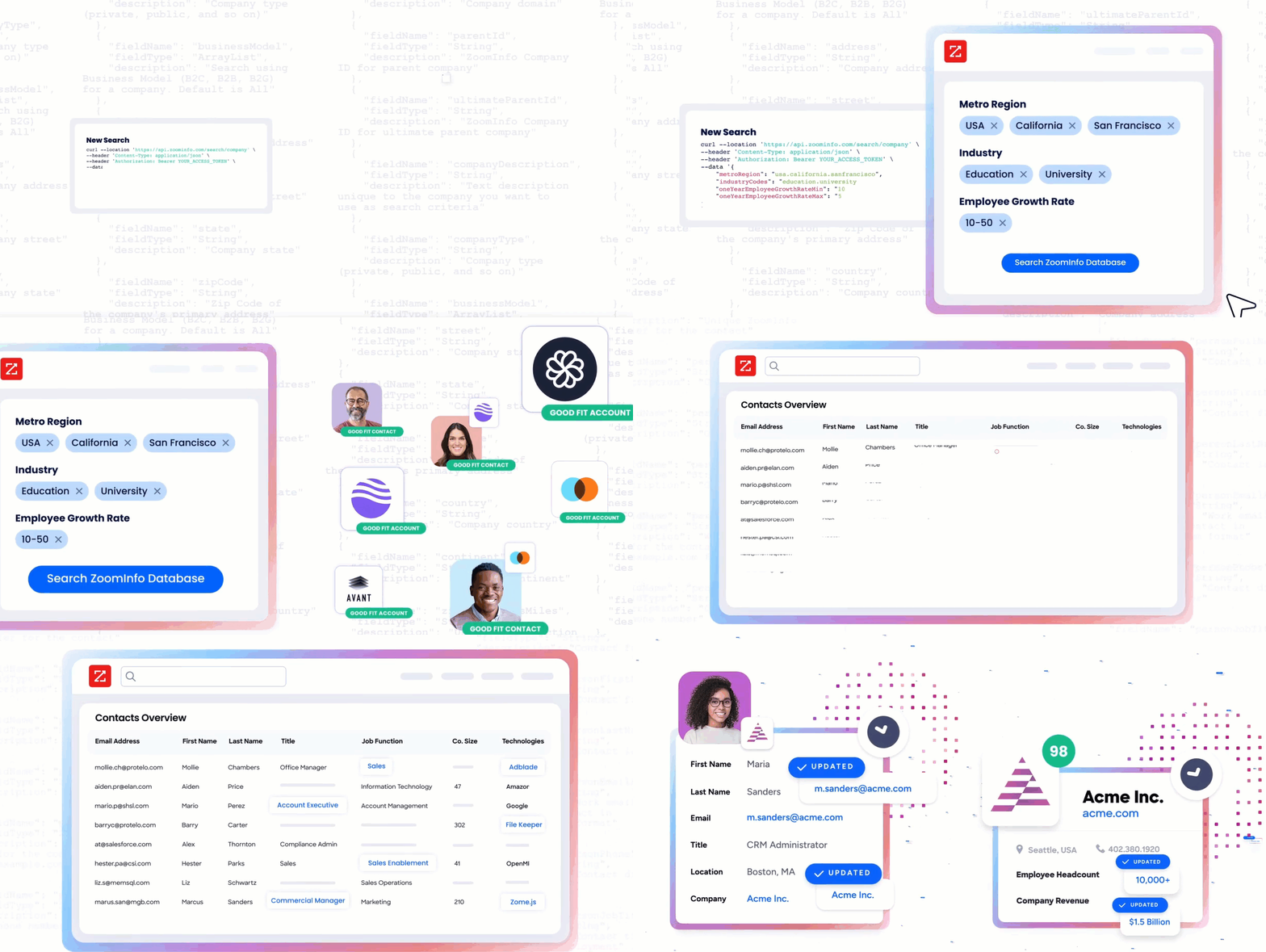
Source: ZoomInfo API
A sales rep can prospect in GTM Workspace, a marketer can run campaigns in GTM Studio, and an engineer can feed the same data into a custom AI agent through MCP, all drawing from the same GTM Context Graph.
"Anything that minimizes our team's need to switch contexts is beneficial. ZoomInfo offers a unified view, eliminating the need to navigate between systems." - Ben Perceval, RevOps Manager, Spekit (Spekit Case Study)
Pricing and entry points reflect different markets
Crustdata uses a credit-based API pricing model with monthly and annual plans. Real-time enrichment costs 5 credits per company profile; database enrichment costs 1 credit per profile.
Crustdata does not publish tier pricing or credit costs, and directs high-volume prospects to sales. The lack of public pricing makes budgeting harder, particularly for startups and smaller teams.
ScrapIn is more transparent. The $30 paid 7-day trial gives access to the full API with low rate limits. Pay-as-you-go starts at $500 with credits valid for 12 months. Enterprise annual contracts include higher rate limits and Slack support at custom pricing. Each successful API call consumes 1 credit across all endpoints, keeping the billing model straightforward. No free tier exists.
ZoomInfo doesn't publish paid-tier prices, but offers two free entry points that neither competitor matches. ZoomInfo Lite is a permanent free tier (not a trial) with access to the B2B database, 10 monthly export credits, contact searches, the Chrome extension, and WebSights Lite for website visitor identification.
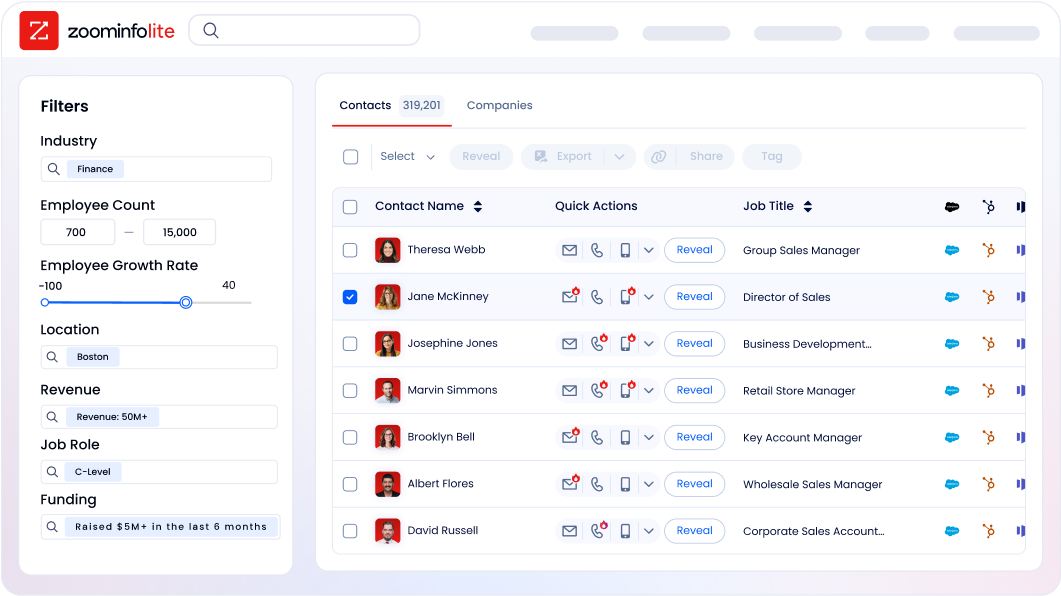
Source: ZoomInfo Lite
A separate 7-day free trial opens the full platform. Paid plans use a seat-and-credit model, with pricing depending on users, credit volume, features, and contract length. API access is included in all relevant plans.
ZoomInfo costs more than either Crustdata or ScrapIn. That's not surprising given the breadth difference. The question is whether you'd end up spending as much or more assembling the equivalent capabilities from multiple vendors: a data API from Crustdata or ScrapIn, plus an email verification service, plus a phone data provider, plus an intent data vendor, plus a CRM integration layer, plus an execution platform.
Compliance and security matter at enterprise scale
Enterprise procurement teams evaluate compliance certifications before technical features.
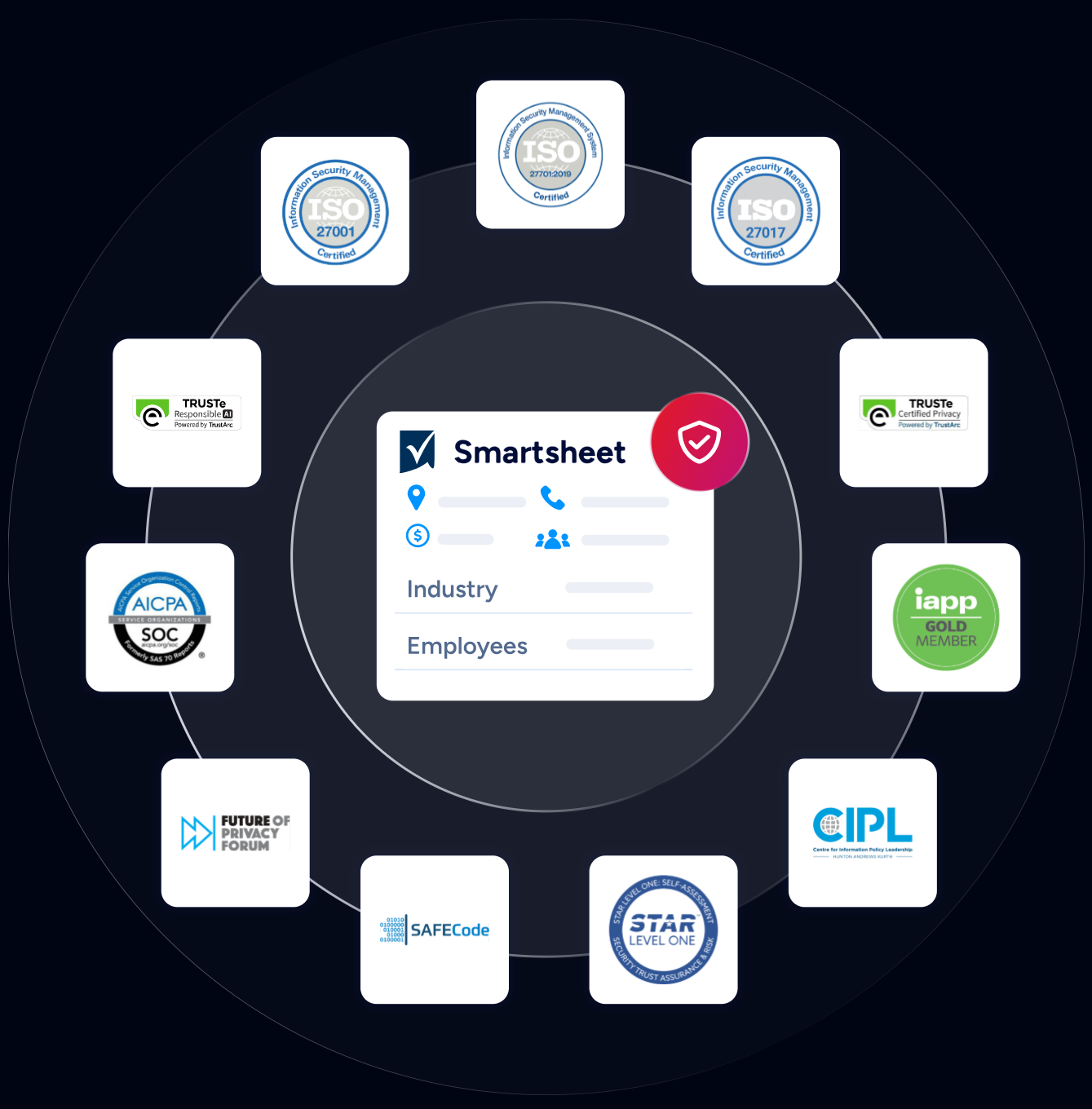
ZoomInfo holds the broadest certification set: ISO 27001, ISO 27701, SOC 2 Type II, TRUSTe GDPR, and TRUSTe CCPA, all renewed annually. ZoomInfo is a registered data broker in California and Vermont and maintains a dedicated Trust Center. For regulated industries (financial services, healthcare, government contractors), these certifications are often required.
Source: ZoomInfo Data Sources
Crustdata reports being SOC 2 certified, GDPR- and CCPA-compliant. As a YC-backed company with $6M in seed funding, it's building out compliance, but its third-party validation is narrower than ZoomInfo's.
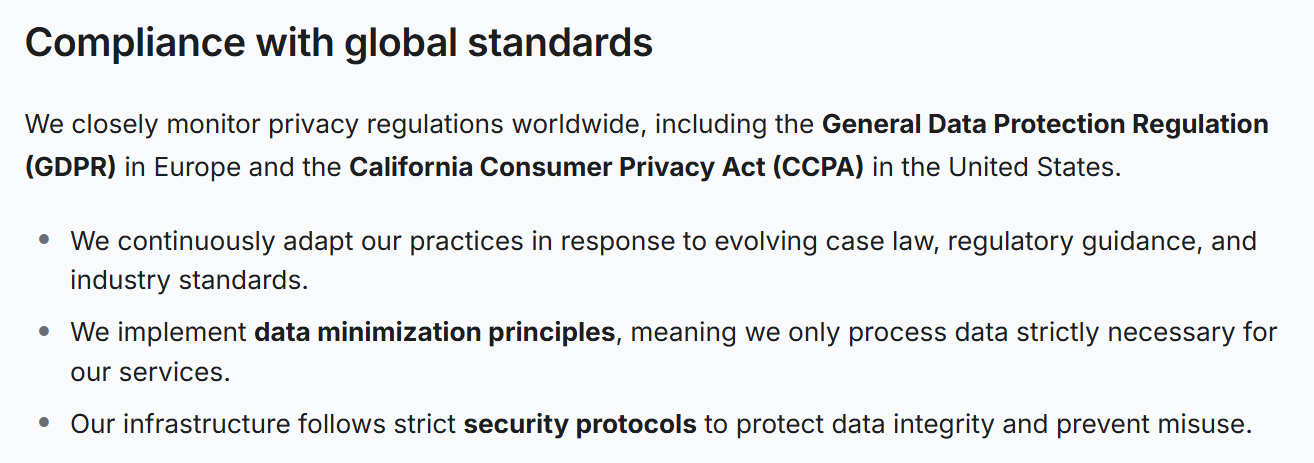
ScrapIn is GDPR and CCPA compliant with documented data processing agreements and encryption standards (AES-256 at rest, TLS 1.2 in transit). ScrapIn lists SOC 2 and ISO 27001 as in-progress under the Reverse Contact merger. Enterprise buyers who require these certifications should verify current status directly.
Source: ScrapIn Compliance
Both Crustdata and ScrapIn operate in a gray area with respect to LinkedIn's Terms of Service when scraping at scale. LinkedIn scraping is common in the B2B data industry, but high-volume usage may attract platform-level restrictions. ZoomInfo's data collection methods rely on a combination of sources rather than scraping any single platform.
The integration gap separates infrastructure from execution
Crustdata lists native integrations for Salesforce, HubSpot, Marketo, and other major CRM/marketing platforms, plus webhook functionality for custom workflows. This is sufficient for teams with engineering resources to build and maintain integration pipelines.
ScrapIn has no native CRM integrations, no Zapier/Make app, and no publicly documented webhook support. Teams must build every connection themselves. Enterprise plans include higher rate limits and Slack support, but the integration work remains the customer's responsibility.
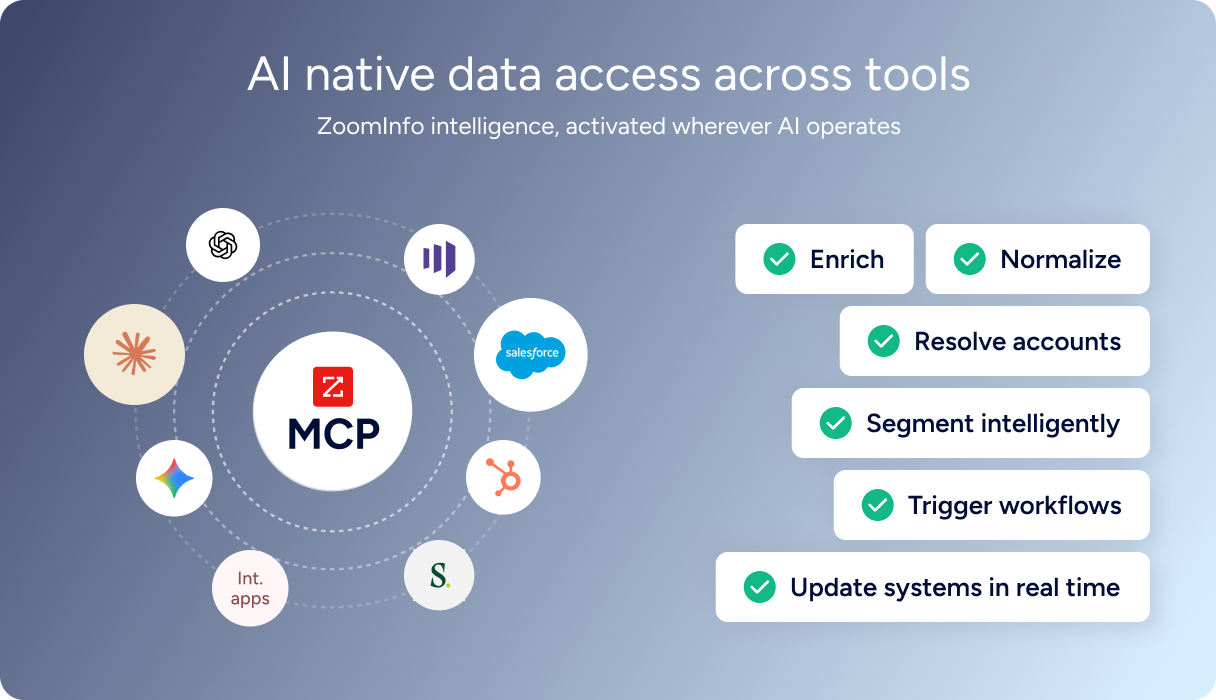
ZoomInfo's App Marketplace lists 120+ integrations across CRM, marketing automation, sales engagement, revenue intelligence, and data warehouse categories, including Salesforce, HubSpot, Microsoft Dynamics 365, and Snowflake. The MCP server connects AI models directly to ZoomInfo data with no custom coding beyond one-time server configuration.
Source: ZoomInfo MCP
The practical difference is setup time. A team using Crustdata or ScrapIn needs to build the integration layer, the data routing logic, the CRM sync, and the execution workflow. A team using ZoomInfo gets pre-built integrations that work immediately and a 90-day onboarding program that produced a 25% improvement in customer satisfaction scores.
"The plug-and-play aspect of the API means I can integrate it very easily into any process and get information at a moment's notice." - Jerry Wilson, Senior Marketing Intelligence Analyst, BDO Canada (BDO Canada Case Study)
Crustdata vs. ScrapIn vs. ZoomInfo: Which should you choose?
The right platform depends on what you're building and who needs to use it.
Choose Crustdata if:
You're building AI agents, AI SDR platforms, or internal data products that need real-time B2B data via API
Your team has developers who can integrate and maintain API connections
Webhook-based signal detection (job changes, funding rounds, hiring patterns) is central to your workflow
You need data infrastructure for a platform you're building, not a finished GTM tool
You can handle contact verification, email validation, and phone number sourcing separately
Choose ScrapIn if:
You primarily need LinkedIn profile and company data delivered as clean, structured JSON
You're a developer or technical team building an enrichment pipeline or data product
Real-time LinkedIn scraping (not cached data) matters for your use case
Your budget for B2B data is limited and you need predictable, per-credit pricing
You can layer in additional providers for email verification, phone numbers, and signal detection
Choose ZoomInfo if:
Your team needs verified contact data (direct-dial phones, validated emails) to actually reach prospects
You want buyer intent signals, conversation intelligence, and GTM execution in one platform
Sales reps, marketers, and RevOps teams all need access, not just developers
You're building AI agents or custom tools and want the same data available via API and MCP
Compliance certifications (ISO 27001, SOC 2 Type II) are required by your procurement process
You want a platform that works immediately with your CRM, rather than building integrations from scratch
Try ZoomInfo free with ZoomInfo Lite or request a full platform demo.
Crustdata and ScrapIn solve real problems for technical teams building data-powered applications. They're good at what they do.
But for organizations where the goal isn't just to aggregate data but to turn it into pipeline, closed deals, and revenue, ZoomInfo provides the full infrastructure: broad B2B data, an intelligence layer that explains what's happening in your accounts, and execution tools that put the data to work for every team.
The choice between a data pipe and a GTM platform depends on whether you're building the machine or trying to drive it.
Crustdata vs. ScrapIn vs. ZoomInfo FAQ
What is the main difference between Crustdata, ScrapIn, and ZoomInfo?
Crustdata is an API-first B2B data platform built for AI agent builders, providing real-time company and people data from multiple sources with webhook-based signal detection. ScrapIn is a LinkedIn-focused data enrichment API that scrapes live profile data without requiring a LinkedIn account.
ZoomInfo is a full-stack GTM platform that combines a large B2B data foundation (500M contacts, 100M companies, 135M+ verified phone numbers, 200M+ verified emails) with buyer intent signals, conversation intelligence, and execution tools for sales, marketing, and RevOps teams.
Which platform provides verified phone numbers and email addresses?
Only ZoomInfo provides verified contact data at scale, with 120M direct-dial phone numbers and 200M+ verified business email addresses, backed by up to 95% accuracy on first-party data.
Crustdata does not offer verified phone numbers or emails. ScrapIn returns email addresses only when they are publicly listed on a LinkedIn profile, and those emails are not validated for deliverability. ScrapIn does not offer phone numbers.
Do I need developers to use these platforms?
Crustdata and ScrapIn are developer-only tools with no graphical interface for non-technical users.
ZoomInfo offers three access modes: GTM Workspace for sellers, GTM Studio for marketers and RevOps (neither requires technical skills), and APIs plus MCP for developers and AI agent builders. ZoomInfo can serve an entire GTM organization, while Crustdata and ScrapIn require engineering resources for every interaction.
Which platform has the best real-time data capabilities?
All three emphasize data freshness but use different methods. Crustdata triggers live web crawlers on API request with up to 10 minutes latency per company profile. ScrapIn scrapes LinkedIn in real time on every call with sub-2-second response times.
ZoomInfo continuously monitors and updates its database by scanning 28 million site domains daily and processing 1.5B + data points through its GTM Context Graph. Crustdata and ScrapIn provide the freshest snapshot per request; ZoomInfo maintains a continuously current database at scale.
How does pricing compare across the three platforms?
ScrapIn is the most transparent, starting at $30 for a 7-day trial and $500 for pay-as-you-go credits valid for 12 months. Crustdata uses a credit-based model but does not publish specific pricing.
ZoomInfo does not publish paid tier pricing but offers a permanent free tier (ZoomInfo Lite with 10 monthly export credits) and a 7-day free trial. ZoomInfo costs more than either competitor, reflecting its broader feature set: data, signals, intelligence, and execution.
Which platform is best for building AI agents or internal data products?
Crustdata is designed for this use case, positioning itself as the data layer for AI agents with real-time APIs, webhook-based signal monitoring, and high-volume programmatic access. ScrapIn also serves this market for LinkedIn-specific data needs.
ZoomInfo's APIs and MCP server provide the same data and GTM Context Graph intelligence to any AI agent or custom application, plus verified contact data and buyer intent signals that neither Crustdata nor ScrapIn offer.
What compliance certifications does each platform hold?
ZoomInfo holds the broadest certification set: ISO 27001, ISO 27701, SOC 2 Type II, TRUSTe GDPR, and TRUSTe CCPA, all renewed annually. Crustdata reports SOC 2, GDPR, and CCPA compliance. ScrapIn is GDPR and CCPA compliant, with SOC 2 and ISO 27001 certifications listed as in-progress under the Reverse Contact merger.
Can I use Crustdata or ScrapIn together with ZoomInfo?
Yes. Some teams use API-focused tools like Crustdata or ScrapIn for specific data enrichment tasks while relying on ZoomInfo as their primary GTM platform for verified contacts, intent signals, and execution.
ZoomInfo's API access is included in all relevant plans, and its MCP server allows any AI agent to consume ZoomInfo data directly, so teams building custom applications can layer multiple data sources as needed.
Related breakdowns to help you choose:
