
If you're comparing DealCloud vs. Salesforce, you're weighing two different CRM philosophies. One was built for dealmakers in financial services. The other was built to serve every industry on earth.
But the comparison only tells part of the story. Before you choose where to manage your relationships and pipeline, consider what's feeding those systems with intelligence. That's a different problem, and neither CRM solves it on its own.
The real questions you should be asking are:
Do you need a CRM designed for deal-making, fundraising, and financial services compliance, or will a configurable horizontal platform work?
How much time and budget can you invest in implementation and ongoing customization?
Is built-in conflict-of-interest screening and regulatory compliance a hard requirement?
Are your sellers spending more time entering data into your CRM than originating deals?
Does your current system tell you who to contact next and when an account is ready to buy, or does it just record what already happened?
In short, here's what we recommend:
DealCloud is the CRM built for investment banks, private equity firms, venture capital funds, and other financial services organizations.
Its pre-configured data structures for deals, funds, and engagements mean firms can manage pipeline, relationship intelligence, fundraising, and compliance in one platform without months of customization. Named clients include Raymond James, Goldman Sachs, JP Morgan, Carlyle Group, and Hamilton Lane.
The trade-off: DealCloud requires a 4-6 month implementation, carries enterprise-level pricing with no public rate card, and its vertical focus means teams outside financial services will find little to work with.
Salesforce is the #1 CRM by market share, serving over 150,000 companies across every industry. With Sales Cloud, Service Cloud, Marketing Cloud, Data Cloud, and the Agentforce AI platform, it offers broad coverage.
Salesforce also provides a dedicated Financial Services Cloud with industry-specific data models. But that breadth comes with complexity: meaningful configuration requires dedicated administrators, over 70% of implementations are partner-led, and pricing can escalate quickly across multiple clouds and add-ons.
Both platforms give you a system of record. They track deals, contacts, and activities. But a CRM is only as good as the data inside it, and neither DealCloud nor Salesforce was built to solve the core challenge of go-to-market intelligence: knowing which accounts are in-market right now, having verified contact data for the right buyers, and understanding why deals move or stall.
ZoomInfo is an AI-powered GTM platform that provides the intelligence layer both CRMs lack. Built on a B2B data platform spanning 500M contacts, 100M companies, 135M+ verified phone numbers, and 200M+ verified business emails, ZoomInfo's GTM Context Graph combines this data with your CRM records, conversation transcripts, and behavioral signals to reveal not just what happened in a deal, but why.
That intelligence reaches your team through the GTM Workspace for sellers, GTM Studio for marketers and RevOps, or APIs and MCP that pipe the same data into any CRM, tool, or AI agent you already use.
If adding a verified data and intelligence layer to your CRM sounds like the missing piece, see how ZoomInfo works with your existing tools.
DealCloud vs. Salesforce vs. ZoomInfo at a glance
DealCloud | Salesforce | ZoomInfo | |
|---|---|---|---|
Core function | Vertical CRM for financial services | Horizontal CRM for any industry | B2B data intelligence and GTM execution |
AI capabilities | Intapp Assist and Celeste (deal-context AI) | Agentforce (autonomous AI agents) | GTM Context Graph and AI agents (data + context + execution) |
B2B contact database | 14M+ companies, 200M+ contacts (via Intapp Data) | No native B2B database | 500M contacts, 135M+ verified phones, 200M+ verified emails |
Buyer intent signals | Limited (relationship signals only) | Limited (requires third-party data) | Native intent from 210M IP-to-org pairings and 6T+ keyword signals monthly |
Implementation time | 4-6 months typical | Weeks to 12 months depending on scope | Deploys in weeks |
Compliance features | Built-in conflict screening, ethical walls, audit trails | Salesforce Shield (premium add-on) | ISO 27001, ISO 27701, SOC 2 Type II, GDPR/CCPA validated |
Pricing transparency | Custom only, no public pricing | Published tiers from $25-$550/user/month | Custom consumption-based; free tier available |
Integrations | Microsoft ecosystem, 12+ financial data providers | 9,000+ AppExchange apps | 120+ integrations, API and MCP for any tool |
Best for | Investment banks, PE, VC, private credit | Enterprises across all industries | Revenue teams needing verified data, intent signals, and AI-powered prospecting |
Vertical depth vs. horizontal breadth: Two different CRM philosophies
DealCloud and Salesforce sit at opposite ends of the CRM design spectrum.
DealCloud was founded in 2010 by two former deal professionals who saw that generic CRMs couldn't handle the relationship-driven workflows of dealmaking.
The platform's data model is pre-structured around deals, funds, campaigns, mandates, and investor relationships. When Raymond James deployed DealCloud across 700+ users in 6 departments, they didn't spend months configuring custom objects. The platform already spoke their language.
That vertical depth extends to compliance. DealCloud includes built-in conflict screening, ethical information barriers, and audit trails as native features. For regulated firms handling material non-public information, this isn't optional. Intapp won enterprise deals against "well-funded AI start-ups" specifically because of compliance capabilities unavailable in generic tools.
Salesforce takes the opposite approach.
Its platform is a blank canvas configurable for virtually any business process. The Financial Services Cloud adds industry-specific data models and workflows, and Salesforce reports 3.2 billion financial accounts powered through that cloud.
But even with Financial Services Cloud, firms still need to build or buy the deal-specific workflows (investment committee tracking, LP reporting, fundraising pipelines) that DealCloud ships out of the box.
The breadth advantage is real. Salesforce's 9,000+ AppExchange apps and 14+ million installs mean there's a pre-built solution for nearly any business need. For firms that span multiple industries or need marketing automation, commerce, and service alongside CRM, Salesforce can consolidate everything under one roof.
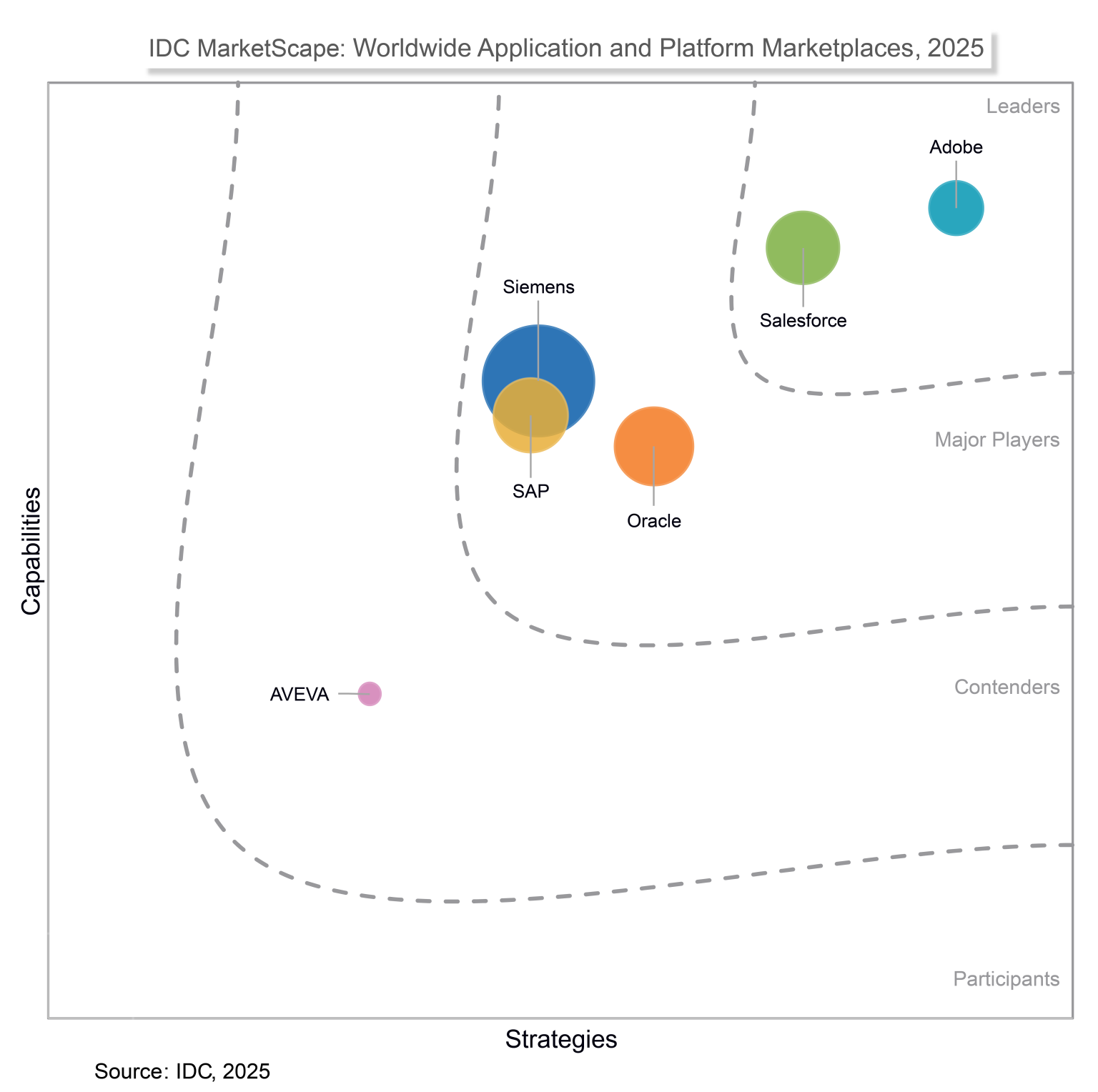
Source: Salesforce
The choice between DealCloud and Salesforce comes down to a platform that already fits your financial services workflows versus a platform that can be shaped to fit anything, given enough time and budget.
Both CRMs share a common blind spot: go-to-market intelligence
Here's what neither platform was designed to solve.
DealCloud tracks relationships. Salesforce tracks opportunities.
Both record what your team enters. But neither tells you which companies are researching solutions like yours right now. Neither maintains a verified database of direct-dial phone numbers and business emails for the buyers you need to reach. Neither can flag that a target account's CFO just changed jobs, or that a competitor's customer is showing intent signals that suggest they're evaluating alternatives.
This is the gap ZoomInfo fills.
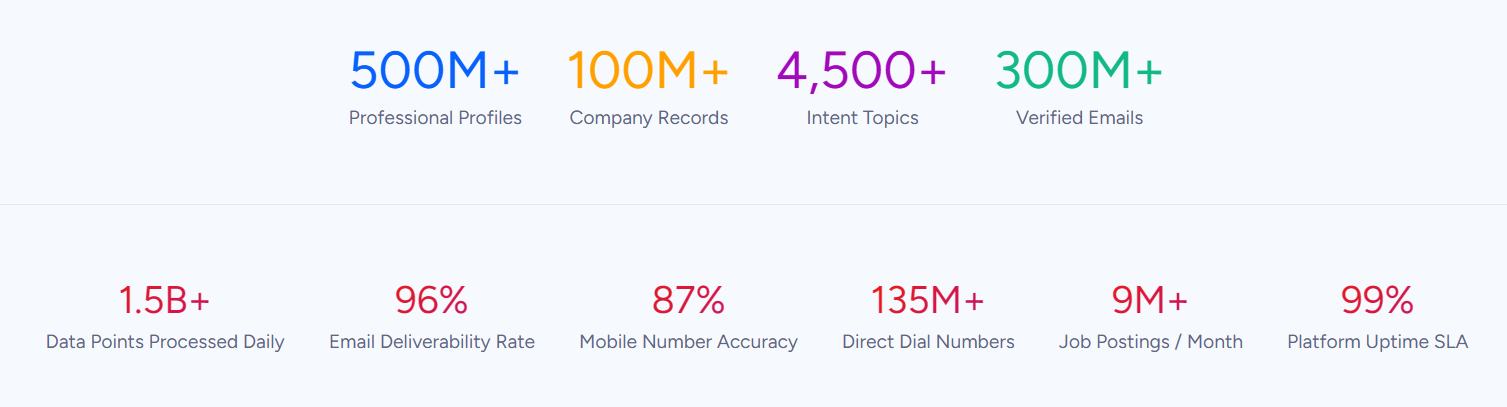
The platform's B2B data spans 500M contacts and 100M companies, verified through a multi-source pipeline backed by 300+ human researchers with up to 95% accuracy on first-party data. In a Fortune 500 competitive RFP analyzing 25 million contacts across vendors, an independent consultant concluded that "no other competitor came even close."
DealCloud does integrate with 12+ financial services data providers through DataCortex (PitchBook, Preqin, FactSet, S&P Global, and others).
This gives deal teams access to market intelligence within their workflow. But DataCortex covers financial data, not the broader B2B contact intelligence, buyer intent signals, and technographic data that drive modern go-to-market execution.
Salesforce has Data Cloud for unifying customer data and Agentforce for AI-powered actions.

Source: Salesforce
But Data Cloud unifies your existing data; it doesn't generate new intelligence about accounts and buyers you haven't engaged yet. You still need an external source for verified contact data, intent signals, and company intelligence.
ZoomInfo works alongside both platforms. It integrates directly with Salesforce and delivers data through APIs and MCP that can feed any CRM, including DealCloud. The intelligence is the same regardless of where it's consumed.
Seismic attributed 39% of active pipeline to opportunities identified or influenced by ZoomInfo signals, with sales teams reporting 54% productivity gains. Chief Business Officer Toby Carrington noted: "That combination of our internal CRM data, external signals, and AI that's given all that context has helped us craft very specific account- and persona-based messages." (Seismic case study)
For a deeper look at how Salesforce and ZoomInfo stack up as GTM tools, see our Salesforce vs. ZoomInfo comparison.
AI capabilities take three different approaches
All three platforms have invested heavily in AI, but each starts from a different foundation, which shapes what its AI can do.
DealCloud's AI operates through Intapp Assist and the newer Intapp Celeste agentic platform.
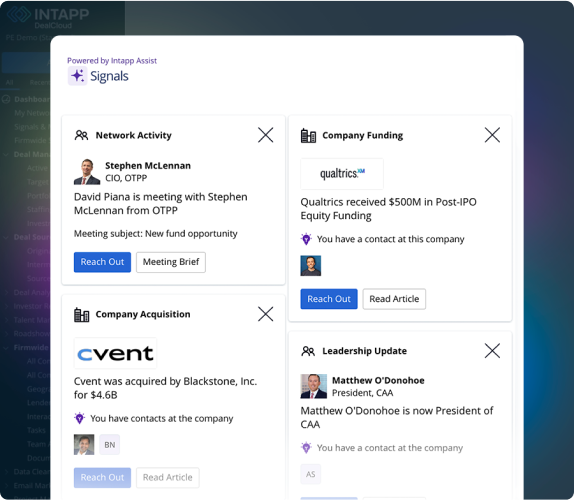
Source: Intapp
The AI draws on the firm's pipeline history, contact interactions, and third-party market data to stay aware of deals, relationships, and market conditions. Specific capabilities include relationship signals (job changes, cooling contacts, company news), AI-generated deal summaries, outreach drafting, and document ingestion that converts uploaded documents into structured CRM data.
Celeste adds agentic workflows with compliance guardrails built into every agent action, including ethical walls and information barriers.
Salesforce's AI centers on Agentforce.
Agentforce's Atlas Reasoning Engine powers autonomous AI agents that handle tasks across sales, service, marketing, and commerce. Pre-built agents include SDR agents, sales coaches, and personal shoppers.
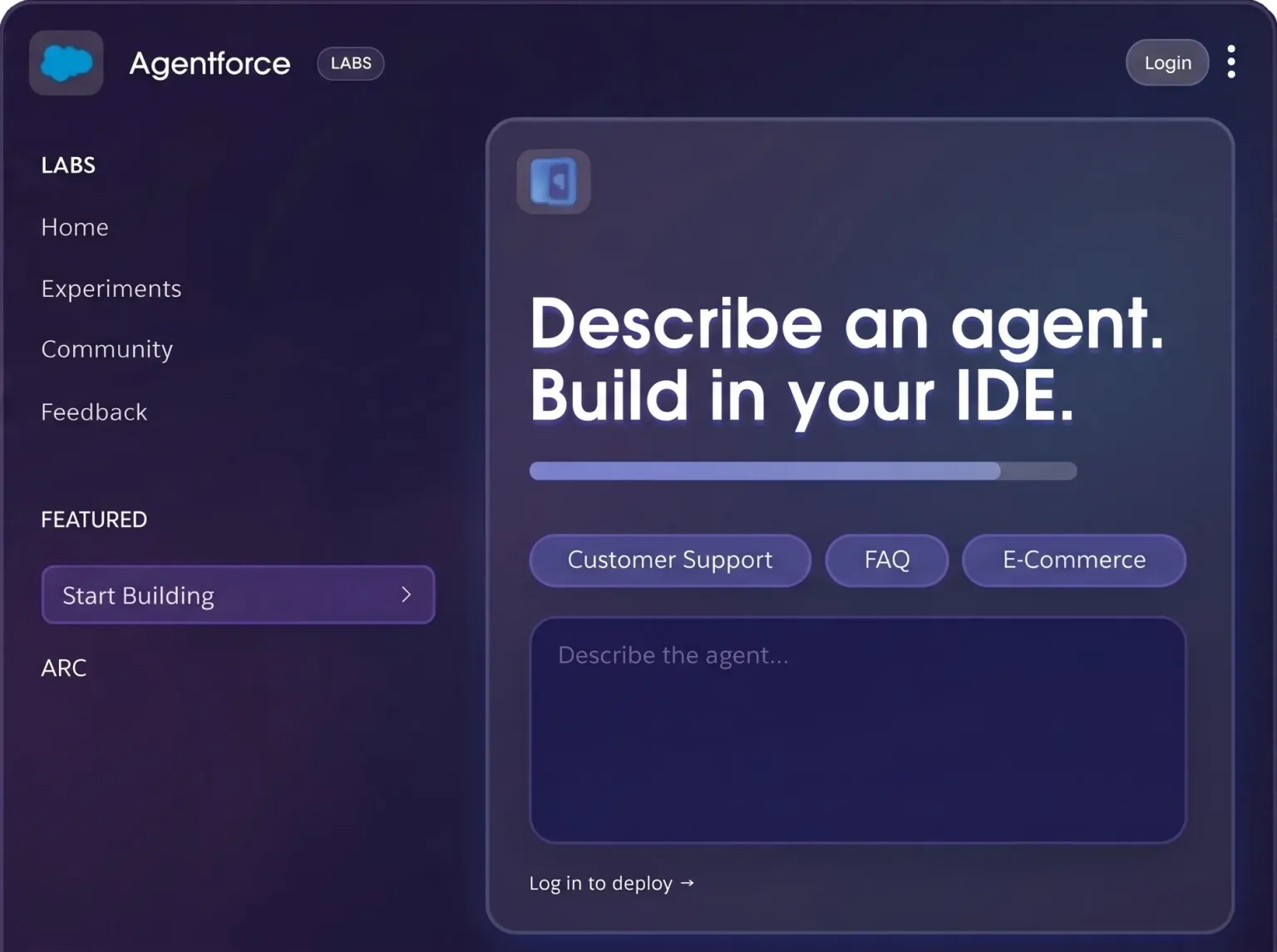
Source: Salesforce
The Einstein Trust Layer provides zero data retention with LLM partners, PII masking, and audit trails. Salesforce reports that Agentforce resolves 85% of support requests without human escalation. The breadth is notable, but the AI's effectiveness depends on the quality of data inside Salesforce, which Benioff himself acknowledged: "You have got to get your data right."
ZoomInfo's AI is built on a different foundation: the GTM Context Graph, which processes 1.5B+ data points daily.
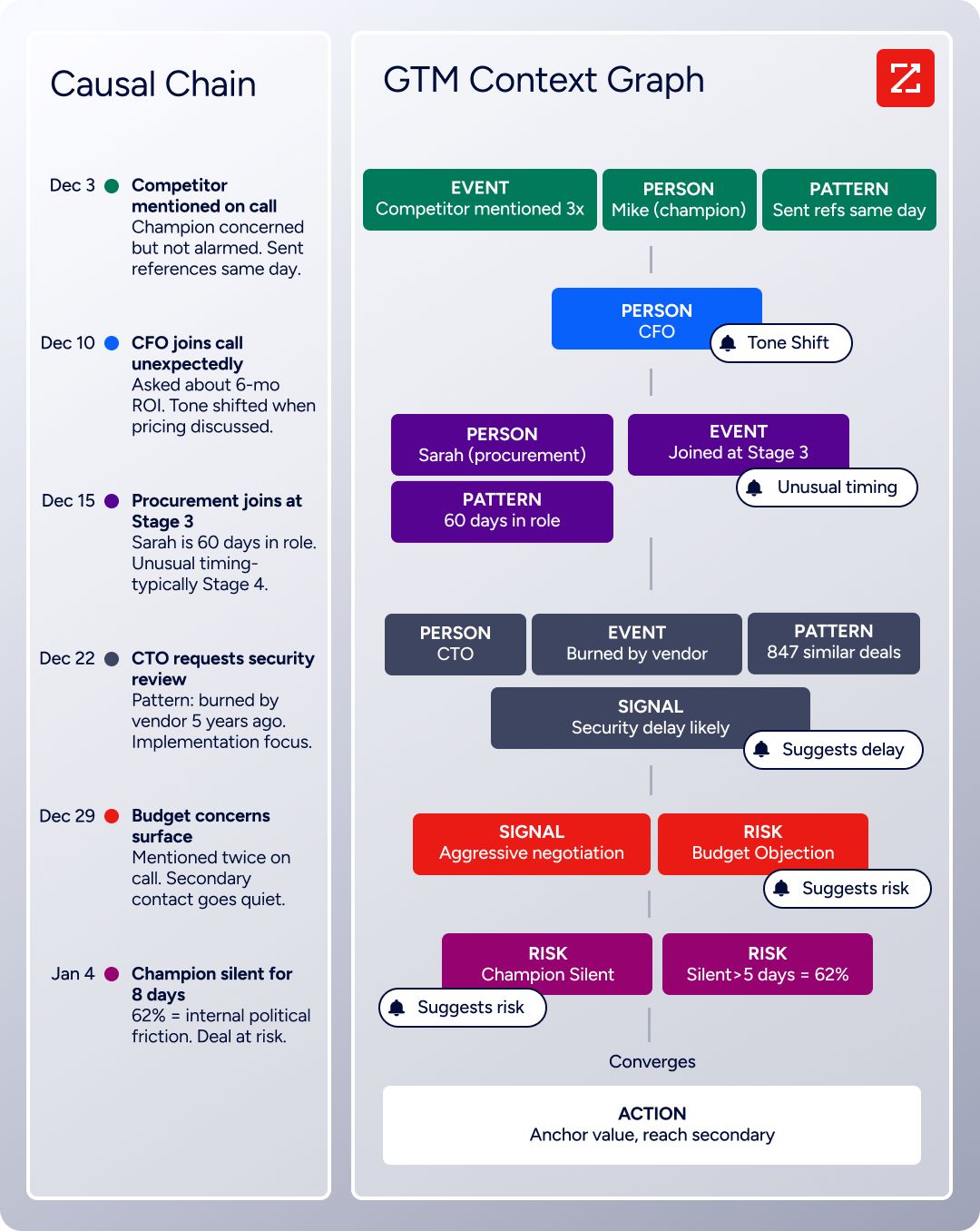
Unlike CRM-based AI that reasons over internal records, the GTM Context Graph combines a customer's CRM data, conversation transcripts, email interactions, and behavioral signals with ZoomInfo's third-party intelligence to capture not just what happened in a deal, but why it happened.
The AI in GTM Workspace uses this context to show sellers who to contact, when to engage, and what to say. GTM Studio lets marketers and RevOps build audience segments in natural language and launch multi-channel plays targeting accounts that match proven win patterns.
The distinction matters. DealCloud's AI excels within financial services deal execution. Salesforce's AI excels at automating workflows across its application suite. ZoomInfo's AI excels at the intelligence layer: identifying which accounts deserve attention, verifying the contacts to reach, and providing the context that turns data into action.
Implementation and learning curve
How quickly each platform delivers value differs considerably.
DealCloud implementations typically run 4-6 months and require substantial internal resources.
Raymond James's implementation took 4.5 months (considered a success), including migrating 10 years of data from Salesforce. Some reviewers note that "initial promises of guidance on best practices fell very short."
Once deployed, the platform's dense interface can overwhelm new users. Intapp has addressed this with a 2025 UX redesign that reduced visual clutter and added AI assistance, plus Intapp University for structured training.
Salesforce implementation timelines range from weeks for a basic Sales Cloud setup to 3-12 months for enterprise multi-cloud deployments.
The learning curve is one of the steepest in enterprise software. Trailhead offers 1,500+ badges and 6+ million learners, but the volume of features, configuration options, and administrative requirements means most organizations need dedicated Salesforce administrators from day one. The 20-million-member Trailblazer Community helps, but its size also reflects how much support users need.
ZoomInfo deploys faster.
CEO Schuck has stated that GTM Workspace "deploys in weeks, not months". ZoomInfo redesigned its onboarding into a structured 90-day program covering planning, technical implementation, education, and adoption, which produced a 25% improvement in satisfaction.
ZoomInfo University provides role-specific learning paths and certifications. For teams that only need data enrichment, the Enterprise API and MCP server can connect to existing systems without disrupting current workflows.

BDO Canada's Senior Marketing Intelligence Analyst Jerry Wilson noted: "The plug-and-play aspect of the API means I can integrate it very easily into any process and get information at a moment's notice." The firm cut time spent on data dashboard updates by 87%. (BDO Canada case study)
Pricing and total cost of ownership
Each platform's pricing model reflects its target buyer.
DealCloud does not publish pricing.
The sole entry point is a "Schedule a Demo" form that routes to sales. The platform requires a minimum of five users per deployment. On top of the subscription, an Enterprise Offering add-on adds dedicated cloud storage, sandbox environments, and enhanced access controls at an additional fee.
Factor in the 4-6 month implementation (which requires internal resources and often professional services), and total cost of ownership is substantial. DealCloud is priced for mid-market to large financial services firms with enough deal volume to justify the investment.
Salesforce publishes tier pricing that appears straightforward until you build a real deployment.
Sales Cloud starts at $25/user/month (Starter Suite) and climbs to $550/user/month (Agentforce 1). But the published price is the beginning of the cost conversation, not the end. Agentforce consumption bills separately at $2/conversation or $500 per 100,000 Flex Credits. Data Cloud credits start at $500 per 100,000 credits.
The Premier Success Plan adds 30% of net license fees for dedicated support. Add Financial Services Cloud, Marketing Cloud, and partner-led implementation, and enterprise deployments can reach six or seven figures annually. Salesforce acknowledged its pricing model "needed to be easier to understand, more predictable, and more flexible" in a September 2025 update.
ZoomInfo uses a consumption-based pricing model with custom quoting.
Pricing scales around seats, credit volume, API consumption, and AI activity. Sales plans come in Professional, Advanced, and Enterprise tiers.
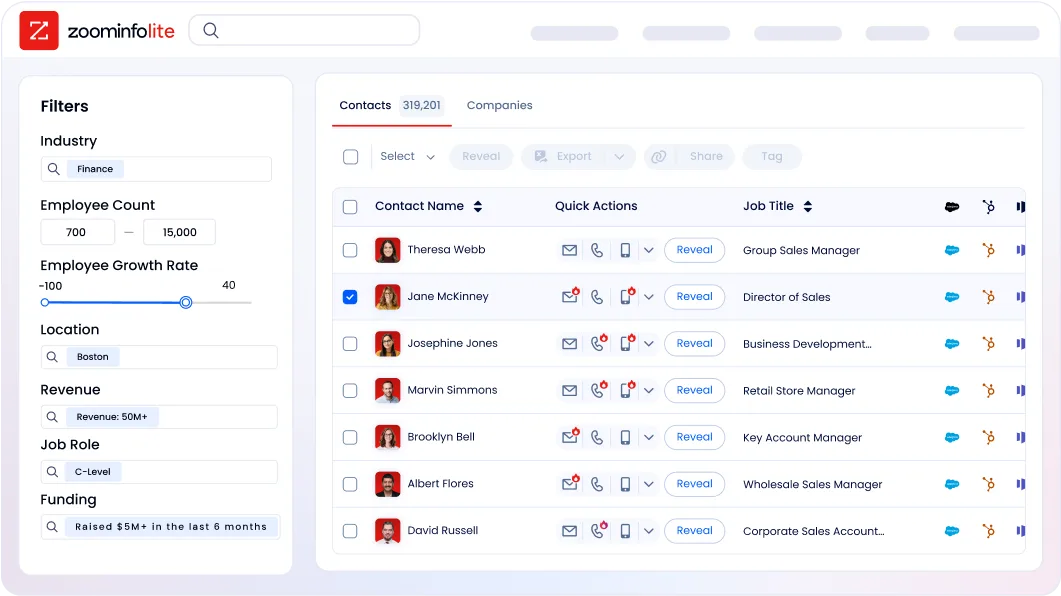
ZoomInfo also offers two free entry points: ZoomInfo Lite, a permanent free tier with access to the B2B database, 10 monthly export credits, and basic features; and a 7-day free trial with full platform access. No credit card is required for either. This lets teams evaluate ZoomInfo's data quality before committing, something neither DealCloud nor Salesforce offers.
Integrations and ecosystem
DealCloud integrates tightly with the Microsoft ecosystem (Outlook, SharePoint, Teams) and connects to 12+ financial services data providers through DataCortex: PitchBook, Preqin, FactSet, S&P Global, Moody's Analytics, BoardEx, and others.
The Intapp Integration Service provides middleware for connecting to external systems. DealCloud also offers a REST API with endpoints for data management, schema, user management, and relationship intelligence. But reviewers note limited pre-built third-party integrations, and some firms report being told to build their own APIs.
Salesforce has the largest enterprise app ecosystem in the world.
AppExchange spans 9,000+ apps with 14+ million installs. MuleSoft provides enterprise integration with hundreds of pre-built connectors. Native integrations cover Google Workspace, Microsoft Outlook and Teams, and Slack. The API surface is extensive: REST, SOAP, Bulk, Metadata, Tooling, and Pub/Sub APIs. For organizations with complex integration needs, Salesforce is hard to match.
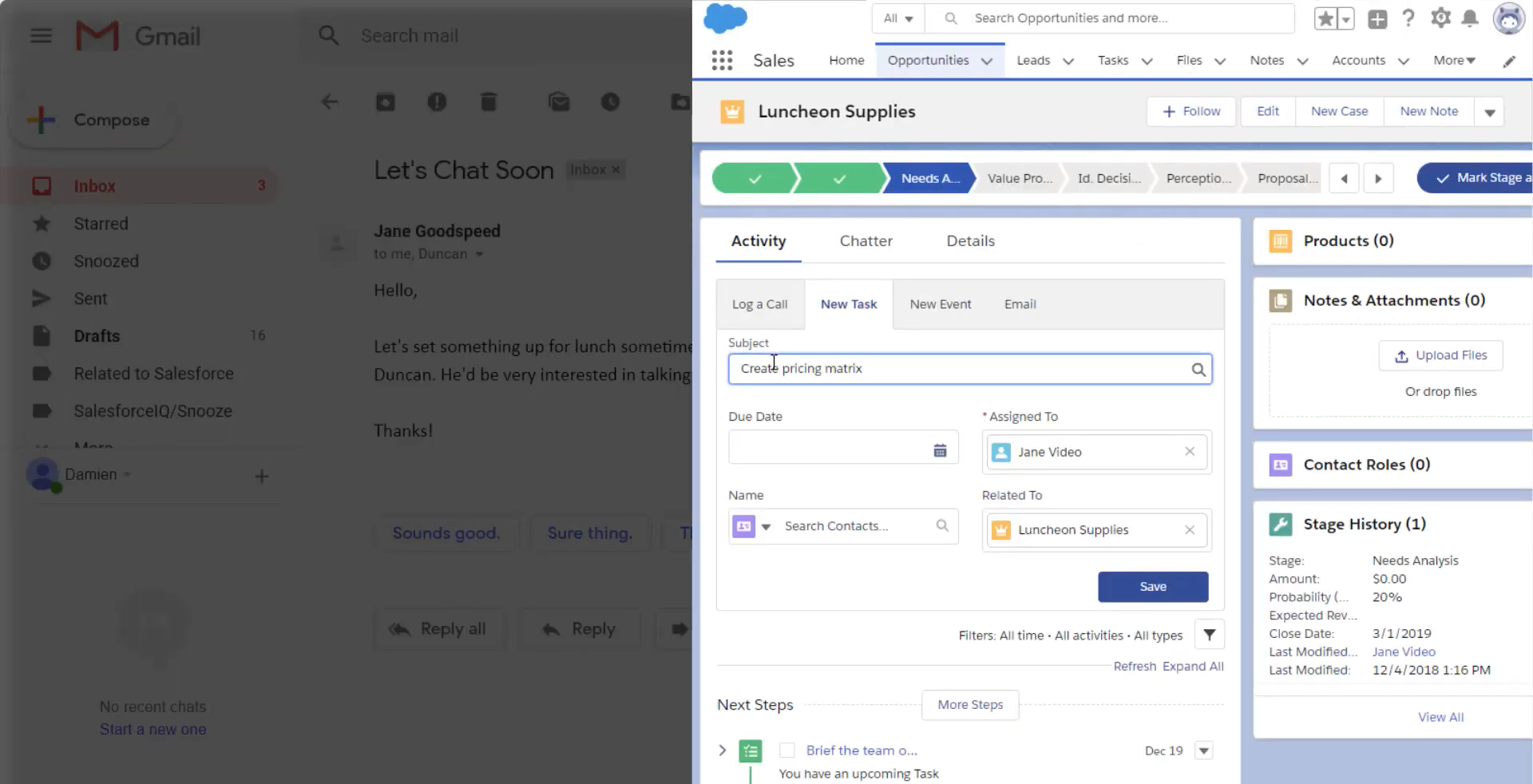
Source: Salesforce
ZoomInfo takes a different approach: it's designed to work inside your existing stack rather than replace it.
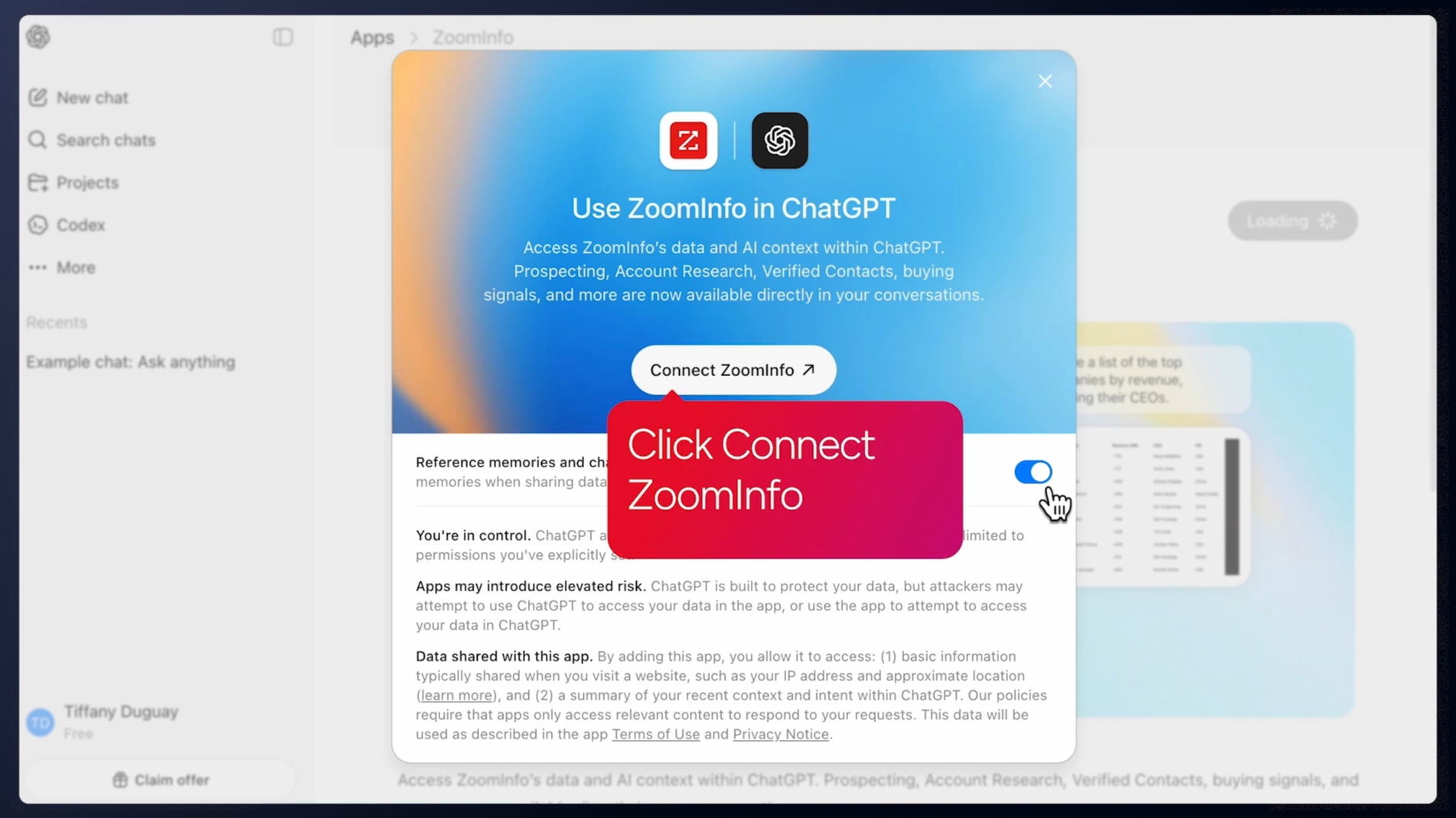
The ZoomInfo App Marketplace lists 120+ integrations across CRM, marketing automation, sales engagement, and data warehouse categories, including native connectors for Salesforce, HubSpot, Microsoft Dynamics 365, and Snowflake.
The Enterprise API exposes search, enrich, AI intelligence, and audience management endpoints. The MCP server connects AI models directly to ZoomInfo's data as a native tool, currently supporting Claude and ChatGPT. API access is included in all relevant plans, reinforcing the principle that ZoomInfo's intelligence shouldn't be locked inside any single interface.
Source: ZoomInfo
Smartsheet's Senior Manager of Sales Technology Enablement Thor Sanderson put it plainly: "ZoomInfo is our one source of truth for account data, and even more so for contact data. There's no other provider in the market that provides you with that level of detail." (Smartsheet case study)
Relationship intelligence: Different strengths for different needs
All three platforms claim relationship intelligence capabilities, but each approaches the problem differently.
DealCloud excels at tracking firm-wide relationship strength within existing networks.
Its Relationship Intelligence engine passively harvests metadata from Microsoft Exchange and Google Workspace, scoring relationships daily based on communication frequency, recency, and type. The scoring spans the entire firm's network, so a managing director can discover that a junior analyst has a strong connection to a target company's CFO.
DealCloud also captures contact signatures, titles, and company information automatically, keeping records current without manual data entry. For financial services firms where "who knows whom" can determine whether you win a mandate, this is valuable.
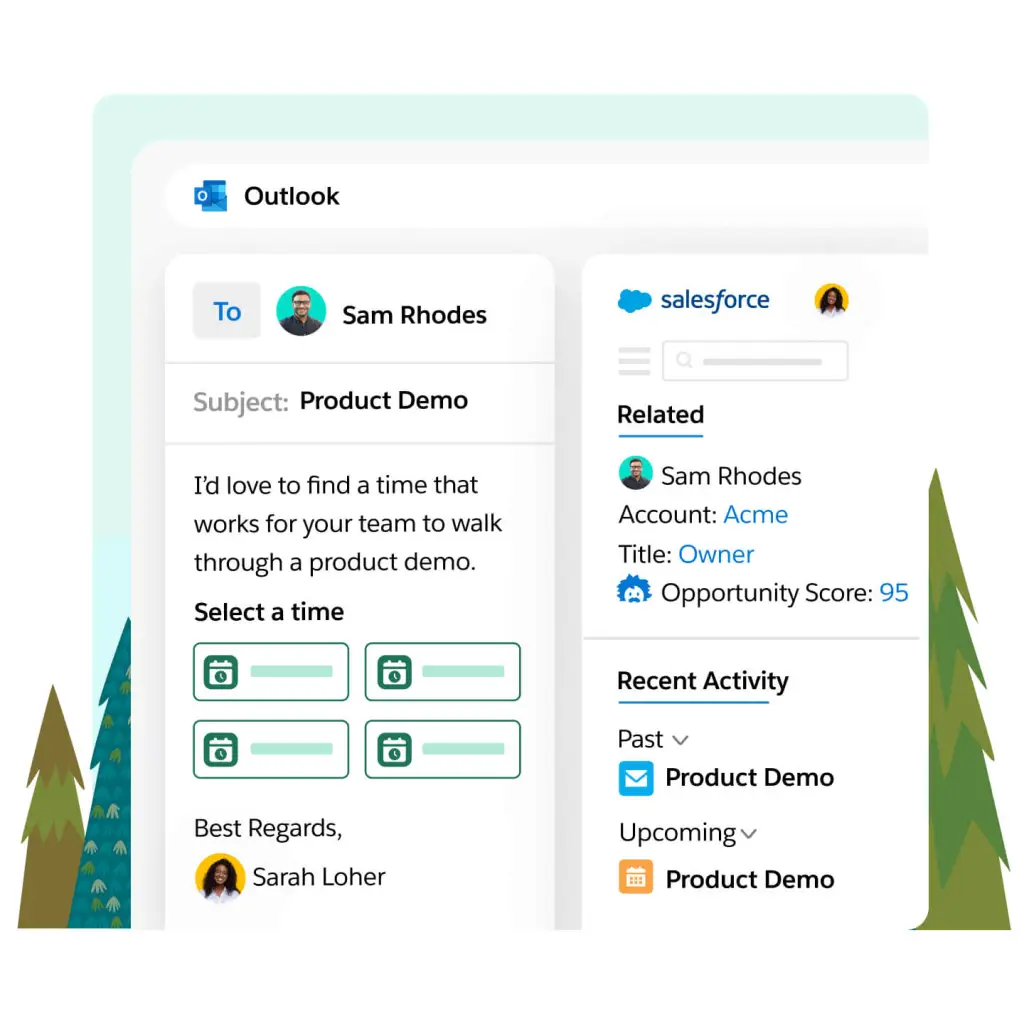
Salesforce tracks relationships through Einstein Activity Capture (auto-syncing emails and calendar from Gmail and Outlook) and Einstein Relationship Insights.
Source: Salesforce
The data flows into account and opportunity records, giving sales teams visibility into engagement history. Salesforce's strength is connecting relationship data to the broader customer lifecycle: marketing touches, service interactions, and commerce activity all live on the same platform.
ZoomInfo approaches relationship intelligence from the outside in.
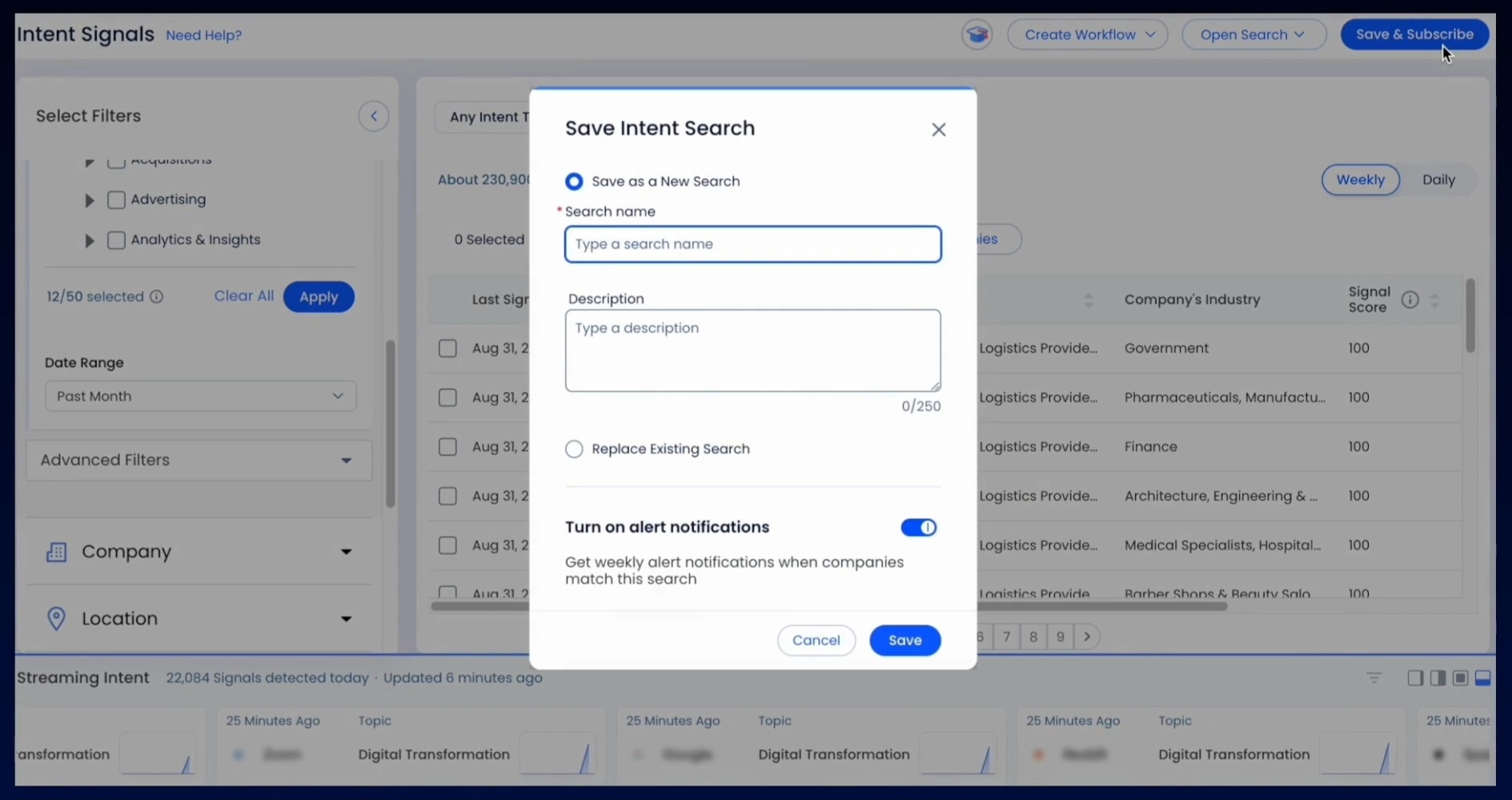
Rather than tracking relationships you already have, ZoomInfo identifies the relationships you should be building. Buyer Intent data tracks signals from 210 million IP-to-Organization pairings and 6 trillion+ keyword-to-device pairings monthly to reveal which companies are researching solutions.
Source: ZoomInfo
Guided Intent, exclusive to ZoomInfo, identifies topics historically correlated with deal success rather than requiring manual topic selection. When an account shows intent, ZoomInfo provides verified direct dials and business emails to reach the right buyers, plus department org charts showing decision-maker hierarchies.
The GTM Context Graph then connects these external signals with internal CRM and conversation data to explain why a deal is moving.
The practical difference: DealCloud tells you how strong your existing relationships are. Salesforce tells you what's happened across your customer lifecycle. ZoomInfo tells you which new relationships to build and when accounts are ready to buy.
Levanta CEO Ian Brodie described the shift: "ZoomInfo's not just a contact data company anymore. They've built a full system of execution. GTM Intelligence actually works the list, writes the outreach, triggers the play, and helps drive predictable growth." (Levanta case study)
Security and compliance
For financial services firms handling sensitive deal data, security and compliance aren't features. They're requirements.
DealCloud has the deepest compliance capabilities for financial services.
The platform includes built-in audit trails, ethical information barriers, conflict-of-interest screening, and role-based access controls as native features. It integrates with Intapp Conflicts for AI-powered conflict clearance and Intapp Walls for information barriers. Certifications include ISO 27001, ISO 27017, ISO 27018, ISO 27701, CSA STAR, SOC 1, and SOC 2.
DealCloud runs on Microsoft Azure with AES-256 encryption at rest and regional data residency across four login regions (US, EU, AE, AP). For firms subject to FINRA, SEC, or MiFID II requirements, these capabilities are built into the deal workflow rather than added on.
Salesforce offers enterprise-grade security through its core platform and premium add-ons.
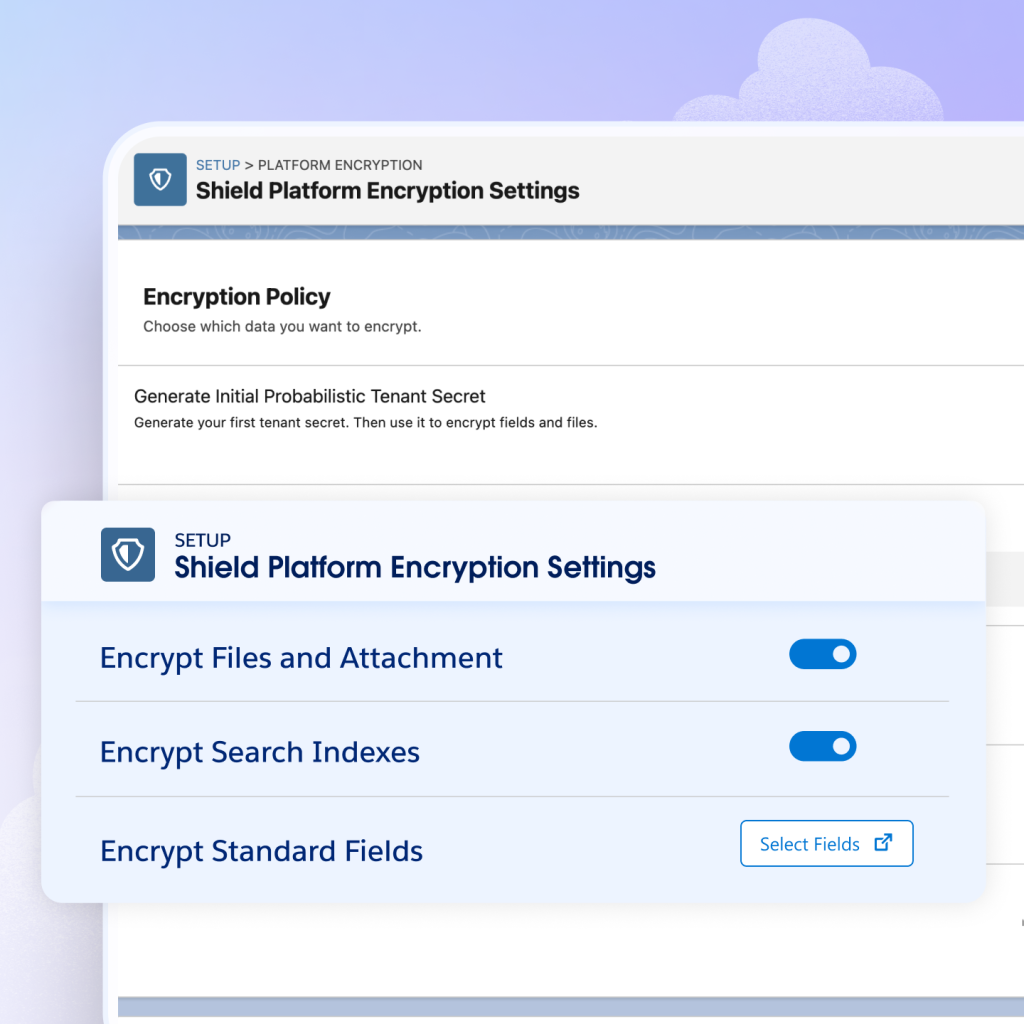
Certifications include ISO 27001/27017/27018, SOC 1/2/3, FedRAMP, and HITRUST. Salesforce Shield adds event monitoring, platform encryption with BYOK, field audit trail, and data detect (PII pattern matching) at an additional cost. The Einstein Trust Layer provides zero data retention with LLM partners and PII masking for AI interactions. Hyperforce enables regional data residency.
Source: Salesforce
These are strong capabilities, but financial-services-specific compliance features (conflict screening, ethical walls) require custom development or third-party apps.
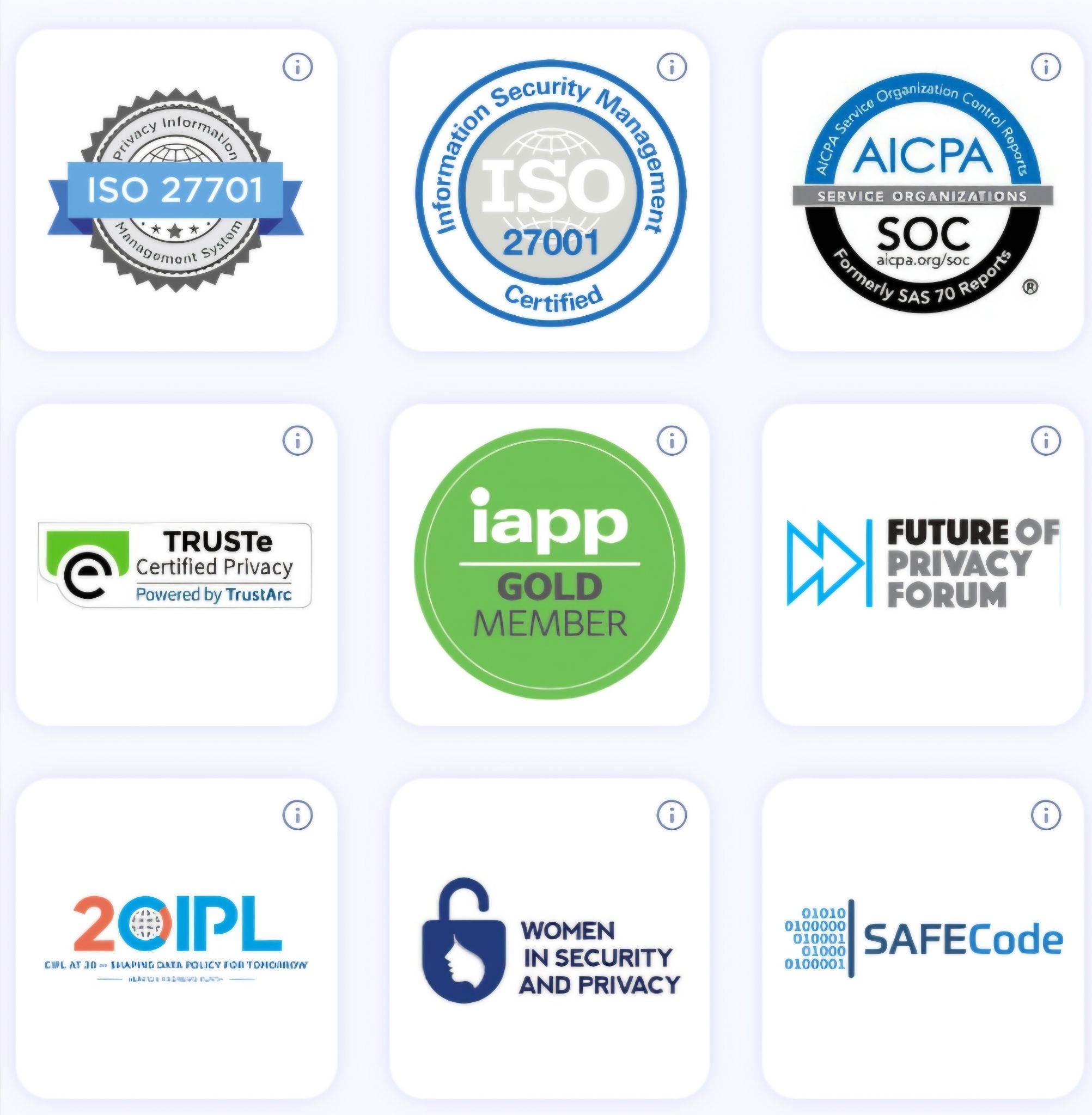
ZoomInfo maintains certifications renewed annually: ISO 27001, ISO 27701, SOC 2 Type II, TRUSTe GDPR and CCPA validations.
Source: ZoomInfo
ZoomInfo is a registered data broker in California and Vermont, with compliance management built into the data layer. For enterprises in regulated industries, these certifications matter because the data flowing from ZoomInfo into your CRM needs to meet the same standards as the CRM itself.
DealCloud vs. Salesforce vs. ZoomInfo: Which should you choose?
The right choice depends on your industry, workflow, and what problem you're solving.
Choose DealCloud if:
You're an investment bank, PE firm, VC fund, or private credit team
Built-in conflict screening and regulatory compliance are non-negotiable
You want a CRM with pre-configured financial services data structures
Your team needs fundraising and investor relations management in the same platform
You can invest 4-6 months in implementation and have the budget for enterprise pricing
Choose Salesforce if:
You need a CRM that spans multiple industries and business functions
A broad ecosystem and 9,000+ AppExchange integrations matter to you
You require marketing automation, commerce, and service alongside sales
Your team has (or can hire) dedicated Salesforce administrators
You want the flexibility to customize every aspect of the platform
Add ZoomInfo if:
Your CRM records what happened, but you need intelligence about what should happen next
Verified contact data, buyer intent signals, and company intelligence would accelerate your pipeline
You want AI that reasons across both internal CRM data and external market signals
You need to enrich your CRM data automatically rather than relying on manual research
You want an intelligence layer that works regardless of which CRM you choose
Start with ZoomInfo Lite for free or request a 7-day full trial to test the data quality yourself.
This isn't a three-way either/or decision. DealCloud and Salesforce are CRM platforms. ZoomInfo is the intelligence layer that makes whichever CRM you choose more effective. The firms getting the most from their CRM investment pair it with verified data and real-time buying signals rather than relying on their sales team to manually research every account and keep every record current.
Your CRM is the system of record. ZoomInfo is the system of intelligence. The best go-to-market teams use both.
DealCloud vs. Salesforce vs. ZoomInfo FAQ
What is the core difference between DealCloud, Salesforce, and ZoomInfo?
DealCloud is a vertical CRM designed for financial services firms, with pre-built data structures for deals, funds, and compliance workflows.
Salesforce is the largest horizontal CRM, serving over 150,000 companies across every industry with a configurable platform and broad app ecosystem.
ZoomInfo is a B2B data intelligence and GTM execution platform that provides verified contact data, buyer intent signals, and AI-powered insights to help revenue teams identify and engage the right accounts. ZoomInfo works alongside either CRM as the intelligence layer.
Which platform is best for investment banking and private equity firms?
DealCloud is the strongest fit for financial services CRM. Its data model is pre-configured for deal pipeline, fundraising, investor relations, and compliance workflows, so firms avoid months of custom configuration. Raymond James, Goldman Sachs, Carlyle Group, and Hamilton Lane all use DealCloud.
These firms still benefit from adding ZoomInfo for verified B2B contact data and buyer intent signals that DealCloud does not natively provide at scale.
How does pricing compare across the three platforms?
DealCloud does not publish pricing; all plans are custom-quoted with a five-user minimum and typically require substantial implementation investment.
Salesforce publishes tier pricing from $25 to $550 per user per month for Sales Cloud, but real-world costs escalate quickly with add-ons for Agentforce, Data Cloud, Marketing Cloud, and the Premier Success Plan.
ZoomInfo uses consumption-based pricing with custom quoting, but offers a permanent free tier (ZoomInfo Lite) and a 7-day free trial, letting teams evaluate data quality before committing.
Can ZoomInfo integrate with both DealCloud and Salesforce?
ZoomInfo has a native Salesforce integration on its App Marketplace, providing direct data enrichment, contact syncing, and workflow automation within Salesforce.
For DealCloud and other systems, ZoomInfo's Enterprise API and MCP server deliver the same data and intelligence into any CRM, tool, or AI agent. API access is included in all relevant ZoomInfo plans.
Which platform has the best AI capabilities?
Each platform's AI excels in a different area. DealCloud's Intapp Assist and Celeste provide deal-context AI with built-in compliance guardrails for financial services.
Salesforce's Agentforce offers the broadest AI agent capabilities across sales, service, marketing, and commerce, with $800M ARR and 29,000 deals closed.
ZoomInfo's GTM Context Graph provides the deepest intelligence layer, processing 1.5B+ data points daily to reveal not just what happened in a deal but why, and powers AI-generated outreach, account prioritization, and buying group identification.
Which platform deploys fastest?
ZoomInfo deploys in weeks, with a structured 90-day onboarding program.
Salesforce ranges from weeks for a basic setup to 3-12 months for complex enterprise deployments, with over 70% of implementations led by partners.
DealCloud implementations typically take 4-6 months and require substantial internal resources.
Do I need all three platforms, or should I pick one?
DealCloud and Salesforce are CRM platforms that serve the same function (managing relationships and pipeline), so most organizations choose one based on industry fit and breadth requirements.
ZoomInfo serves a different function (data intelligence and GTM execution) and works alongside whichever CRM you choose. Combining a CRM with ZoomInfo's intelligence layer addresses both the system-of-record need and the data quality gap that limits most CRM deployments.
What buyer intent capabilities does each platform offer?
DealCloud provides relationship signals (job changes, cooling contacts, company news) through Intapp Assist, focused on existing relationships.
Salesforce can surface intent through Data Cloud and third-party AppExchange integrations, but has no native B2B intent data.
ZoomInfo offers the most comprehensive intent capabilities, tracking signals from 210 million IP-to-Organization pairings and 6 trillion+ keyword-to-device pairings monthly, with an exclusive Guided Intent feature that identifies topics historically correlated with deal success.
See how Salesforce compares against other CRMs and platforms:
