
Choosing between Drift and HubSpot for your go-to-market needs often comes down to five questions:
Do you need a conversational marketing tool, or a platform that covers marketing, sales, service, and CRM?
Is your primary challenge converting anonymous website visitors into meetings, or managing the full customer lifecycle from first touch to renewal?
How important is it that your buyer data, intent signals, and outreach tools share one intelligence layer?
Are you comfortable with a platform on a confirmed sunset path, or do you need a long-term investment?
Do you want AI that automates chat conversations, or AI that understands why your deals move?
In short, here's what we recommend:
Drift is Salesloft's conversational marketing product, built to convert anonymous website visitors into qualified pipeline through AI chat, visitor deanonymization, and real-time meeting booking.
Its Bionic Chatbots train on your content and reportedly build 50% more pipeline than traditional decision-tree bots. But Drift is on a confirmed sunset path, with no new contracts and 1mind named as its successor.
For teams already on Salesloft, Drift still works as a website conversion layer. For anyone else, the runway is shrinking.
HubSpot is a customer platform spanning marketing automation, sales pipeline management, customer service, content creation, and CRM, all connected through a shared data layer.
With 288,706 customers and $3.13 billion in annual revenue, HubSpot offers breadth that Drift can't match. Its Breeze AI layer adds agents for prospecting, customer service, and data analysis.
But HubSpot's pricing complexity (per-seat, per-hub, with mandatory onboarding fees) and its historical positioning as an SMB tool mean enterprise buyers should evaluate carefully whether the depth matches the breadth.
Both platforms address pieces of the go-to-market puzzle. Drift handles the first website conversation. HubSpot manages the lifecycle after that. But neither starts with the layer that determines whether your go-to-market motions reach the right people: verified buyer data and the intelligence to know which accounts are worth pursuing.
ZoomInfo is an AI GTM platform built on B2B data covering 500M contacts, 100M companies, 135M+ verified phone numbers, and 200M+ verified business emails.
Where Drift deanonymizes website visitors at the company level, ZoomInfo identifies buyers across your entire addressable market, whether or not they visit your site.
Where HubSpot stores customer data you already have, ZoomInfo's GTM Context Graph fuses your CRM records, conversation transcripts, and behavioral signals with third-party intelligence to reveal not just what happened in a deal, but why it happened.
Your team accesses that intelligence through GTM Workspace for sellers, GTM Studio for marketers and RevOps, or APIs and MCP in any front-end.
If better data and better intelligence sound like the missing piece in your GTM stack, see how ZoomInfo works with a free trial.
Drift vs. HubSpot vs. ZoomInfo at a glance
Drift | HubSpot | ZoomInfo | |
|---|---|---|---|
Core function | Conversational marketing / AI chat | All-in-one CRM and customer platform | AI GTM platform with B2B data and intelligence |
Primary strength | Website visitor conversion via chat | Marketing, sales, and service in one platform | B2B data and buyer intelligence |
AI capabilities | Bionic Chatbots, visitor intent scoring | Breeze agents (prospecting, service, data) | GTM Context Graph, AI agents for sellers and marketers |
Data foundation | Reverse-IP visitor deanonymization | CRM data you input + enrichment | 500M contacts, 100M companies, 135M+ verified phones |
Buyer intent | Real-time website visitor scoring | Limited native intent | Intent signals from 210M IP-to-org pairings, 6T+ keyword signals |
Pricing transparency | No public pricing; enterprise minimums reportedly $2,500+/mo | Published tiers starting at $0/free; Professional from $800-890/mo | Custom-quoted; free tier (ZoomInfo Lite) and 7-day trial available |
Platform status | Confirmed sunset; no new contracts | Active, growing (19% YoY revenue) | Active, $1.25B annual revenue |
Best for | Existing Salesloft customers needing website chat | SMB to mid-market teams wanting one platform | B2B revenue teams that need verified data, intent signals, and AI execution |
The data gap shapes everything else
Before comparing chat features or CRM capabilities, ask a more basic question: how good is the data powering your go-to-market motions?
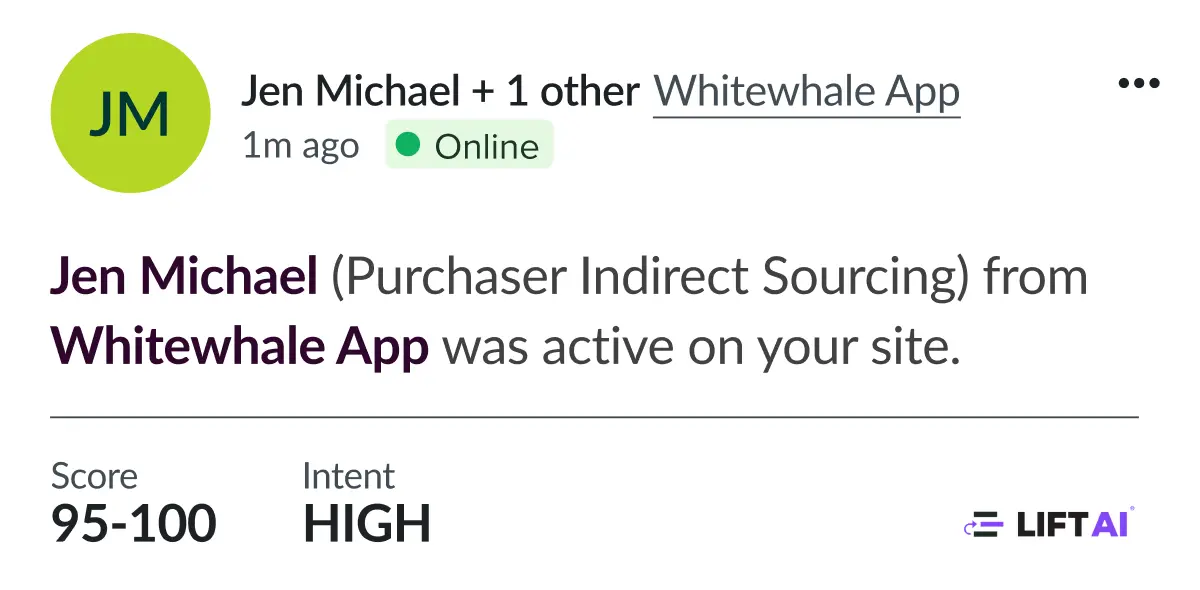
Drift uses reverse-IP lookup to identify companies behind anonymous website sessions. This tells you that someone from Acme Corp visited your pricing page. It doesn't tell you who visited, what their role is, whether they make decisions, or whether Acme Corp is in-market for what you sell.
Drift Engage surfaces company name, location, and account history, but only for visitors who arrive at your site. The 98% of your addressable market that hasn't visited? Invisible.
Source: Drift
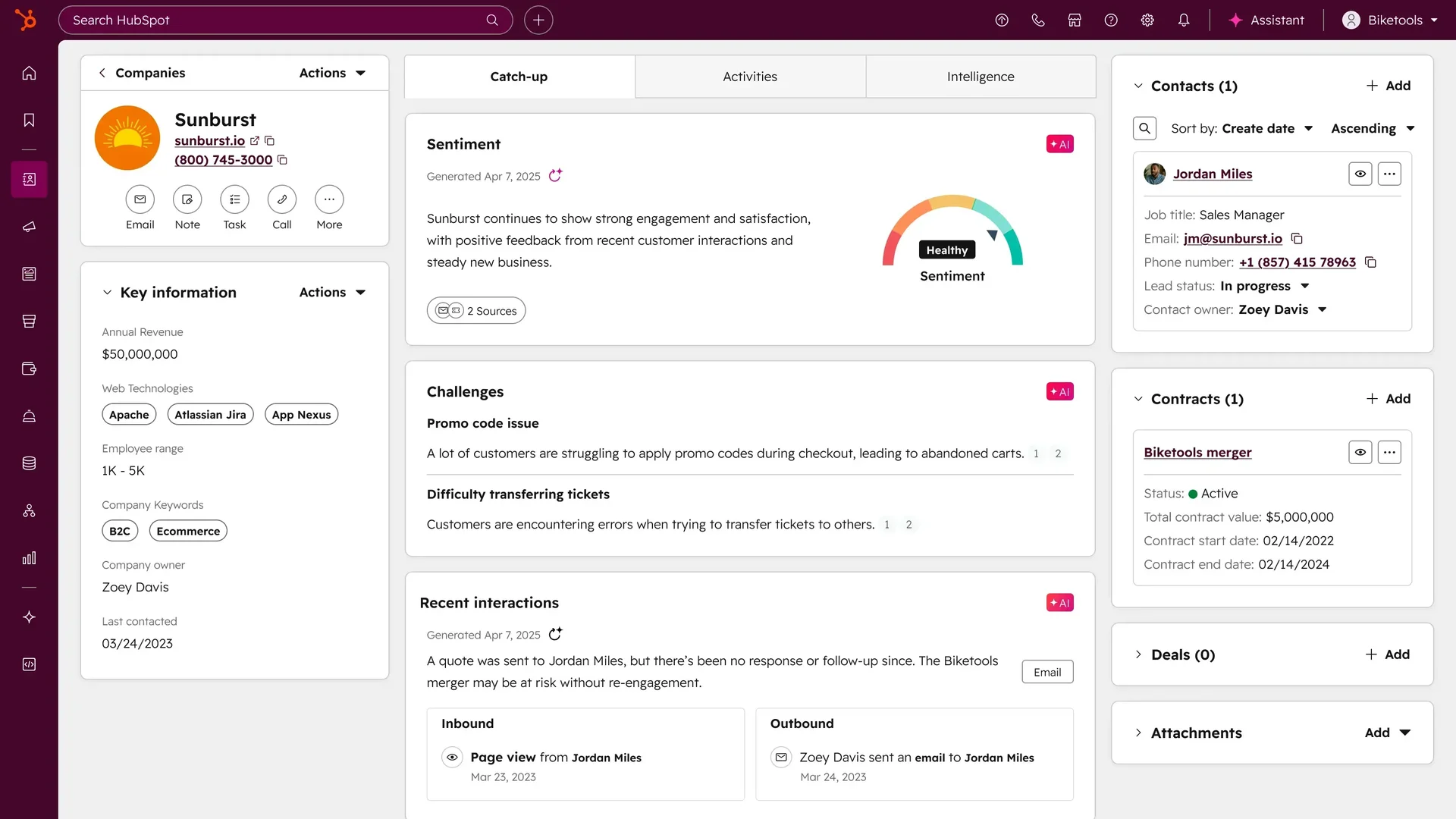
HubSpot stores and manages the contacts you've already captured. Its Smart CRM acts as a shared data layer across marketing, sales, and service, and its Data Hub offers enrichment and deduplication tools.
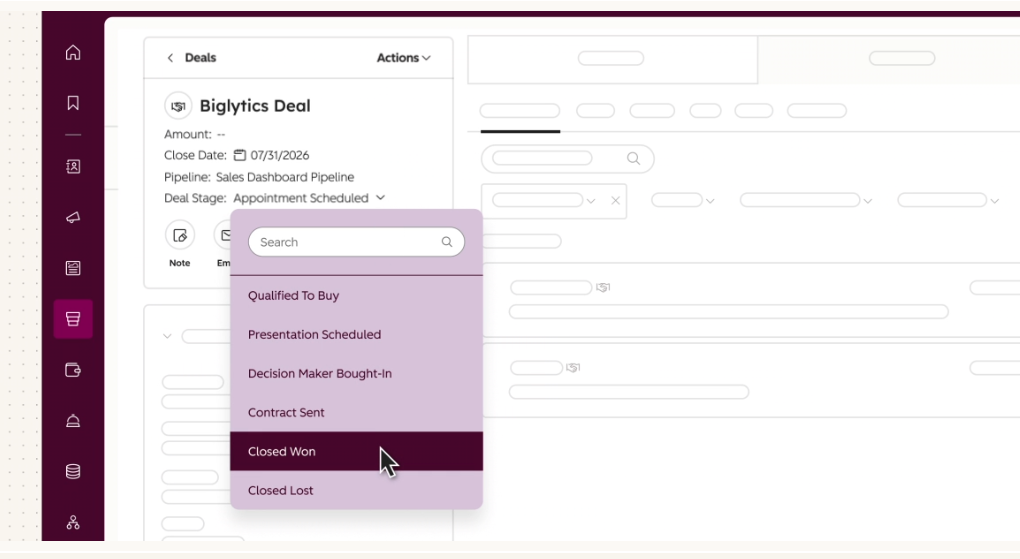
But HubSpot's enrichment pulls from conversations, email threads, and third-party sources to fill gaps. The CRM is only as good as what's been entered or enriched into it.
Source: HubSpot
ZoomInfo starts from a different position. Instead of waiting for buyers to find you (Drift) or relying on data you've already collected (HubSpot), ZoomInfo maintains the largest B2B data platform in the industry.

That data runs through a multi-source verification pipeline backed by 300+ human researchers, reaching up to 95% accuracy on first-party data.
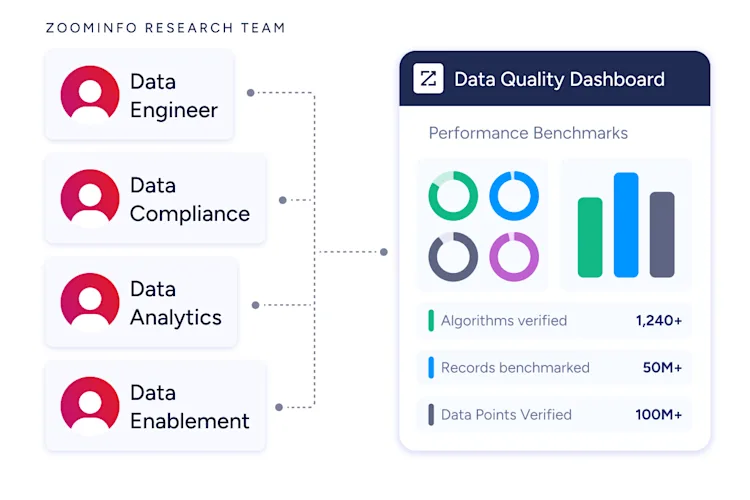
Source: ZoomInfo
In a Fortune 500 competitive RFP analyzing 25 million contacts across vendors, an independent consultant concluded that "no other competitor came even close."
The practical difference: Drift helps you talk to visitors who show up. HubSpot helps you manage contacts you've acquired. ZoomInfo tells you who to pursue across your entire market, with verified contact data to reach them.
Vensure scaled prospecting with ZoomInfo's data: "We don't have to go through and spend our time digging. It's already there, so we can be three steps ahead." (Vensure)
Conversational marketing: Drift's specialty, HubSpot's add-on, ZoomInfo's data-powered approach
Drift built the conversational marketing category. Its AI Chat Agent engages visitors around the clock with personalized conversations, qualifies leads, and books meetings without a live rep.
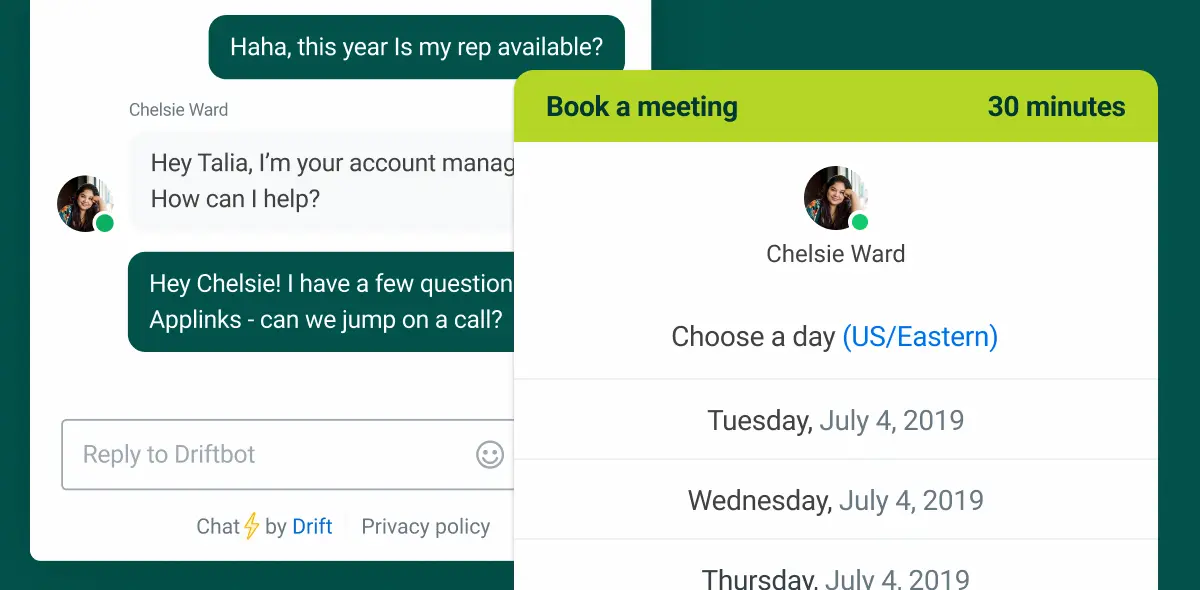
Source: Drift
Bionic Chatbots train on your website content and update automatically as that content changes, reportedly cutting playbook design time by over 60 hours.
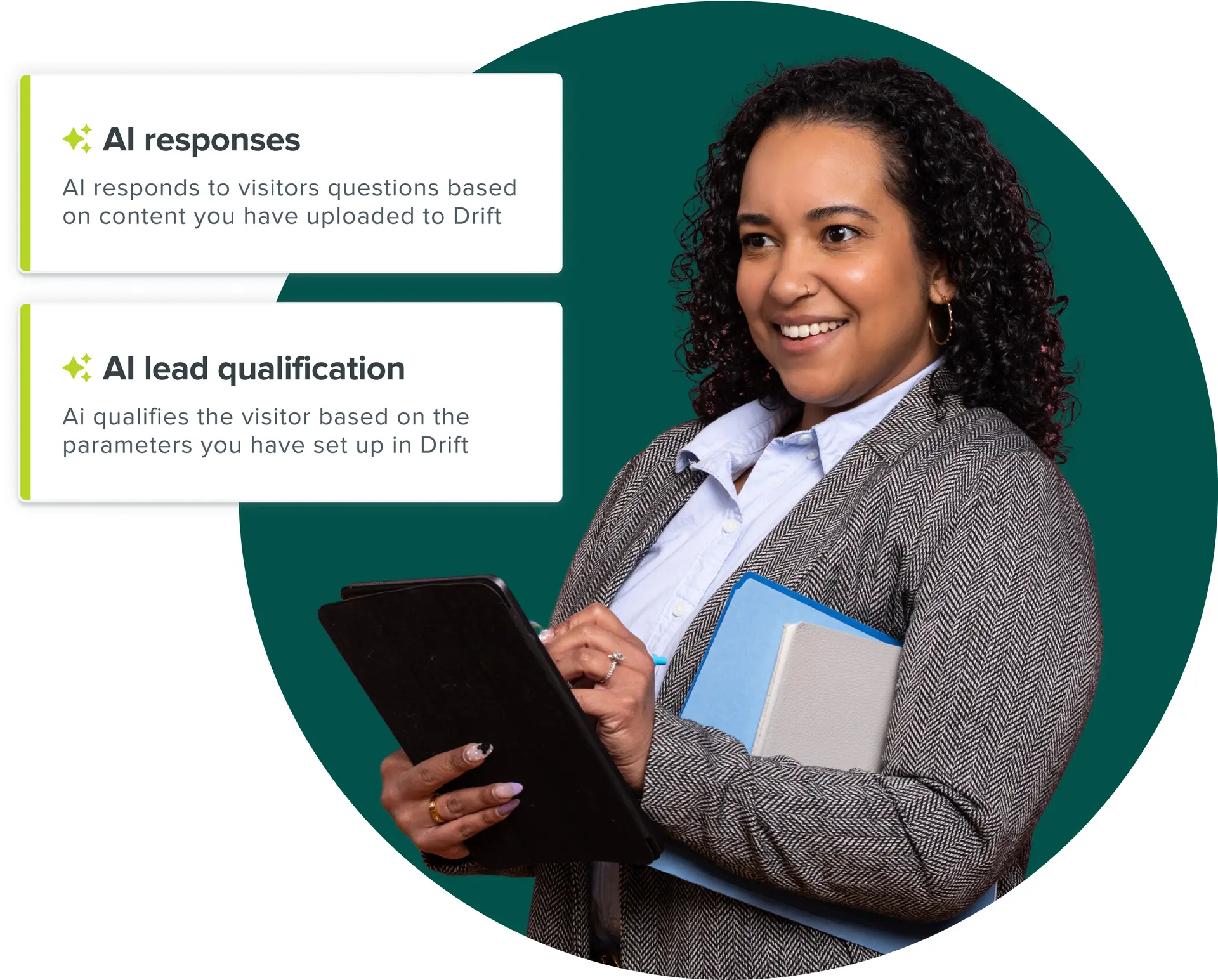
Source: Drift
Fastlane identifies high-value visitors in real time and connects them to a live rep, skipping the typical 24-48 hour SDR follow-up lag.
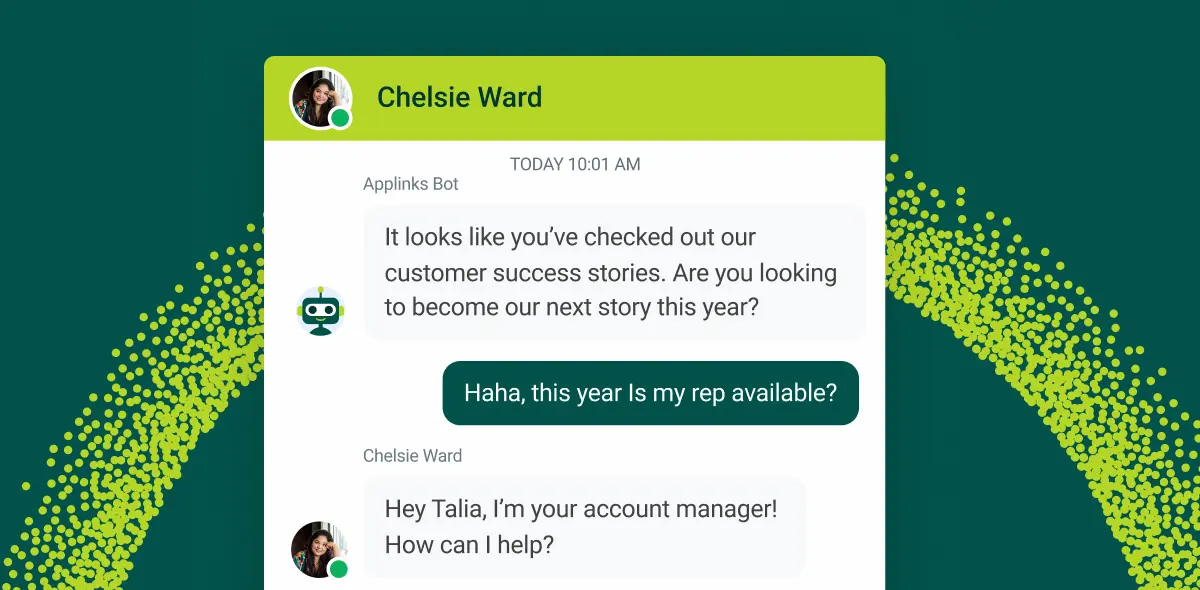
Source: Drift
For teams already invested in Salesloft, this integration is Drift's strongest asset. Qualifying chat interactions route directly into the seller's Rhythm workflow as prioritized actions with full conversation context. The seller doesn't have to monitor a separate chat queue.
HubSpot includes chatbots and live chat as part of its broader platform, but they're one feature among hundreds rather than the core product. HubSpot's chatbot builder connects to the CRM so conversations can trigger workflows and enrich contact records.
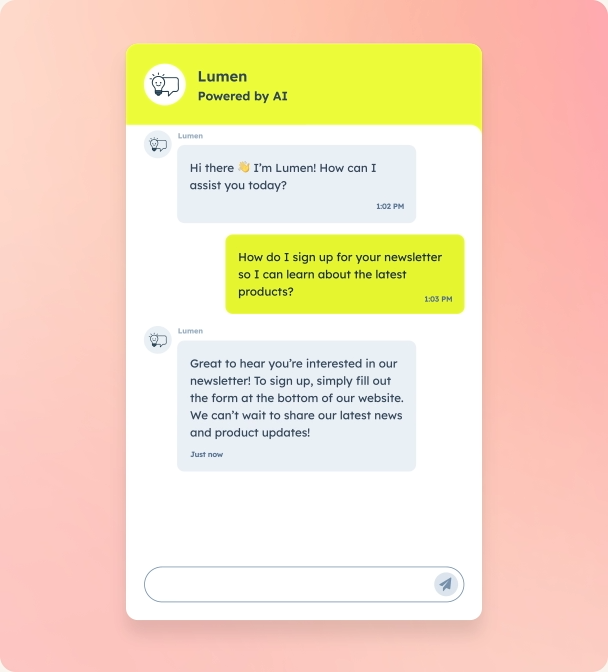
The Breeze Customer Agent resolves customer inquiries across chat, WhatsApp, Facebook, email, and voice.
Source: HubSpot
But HubSpot's chat capabilities lean toward customer service and lead capture, not the real-time qualification and meeting booking workflow that defined Drift.
ZoomInfo approaches website conversations differently. ZoomInfo Chat identifies the company behind anonymous sessions using ZoomInfo's data before the visitor types a message.

Source: ZoomInfo
Routing rules fire based on company attributes and intent signals, not just what the visitor says in the chat. One customer reported 30% more engagement compared to their previous vendor.
But ZoomInfo's larger value here isn't the chat widget itself. It's the ability to identify and pursue high-intent accounts regardless of whether they visit your website, through buyer intent data that tracks signals from 210 million IP-to-Organization pairings and 6 trillion+ keyword-to-device pairings sourced monthly.
AI capabilities reveal different priorities
All three platforms use AI. What they use it for tells you who they're built for.
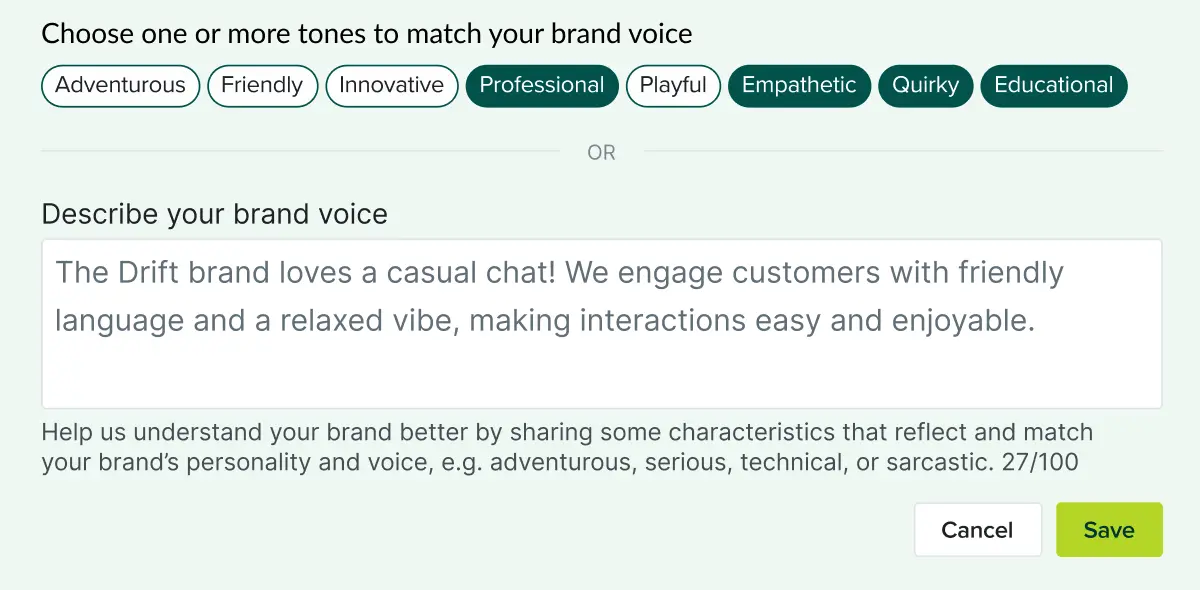
Drift's AI focuses on one thing: converting website visitors into pipeline. Bionic Chatbots generate brand-aligned conversations from ingested content.
Source: Drift
Drift Engage scores visitor intent in real time. The AI qualifies leads, routes them to the right rep, and books meetings. It does this well, but the application is narrow. Once the meeting is booked, Drift's AI has done its job.
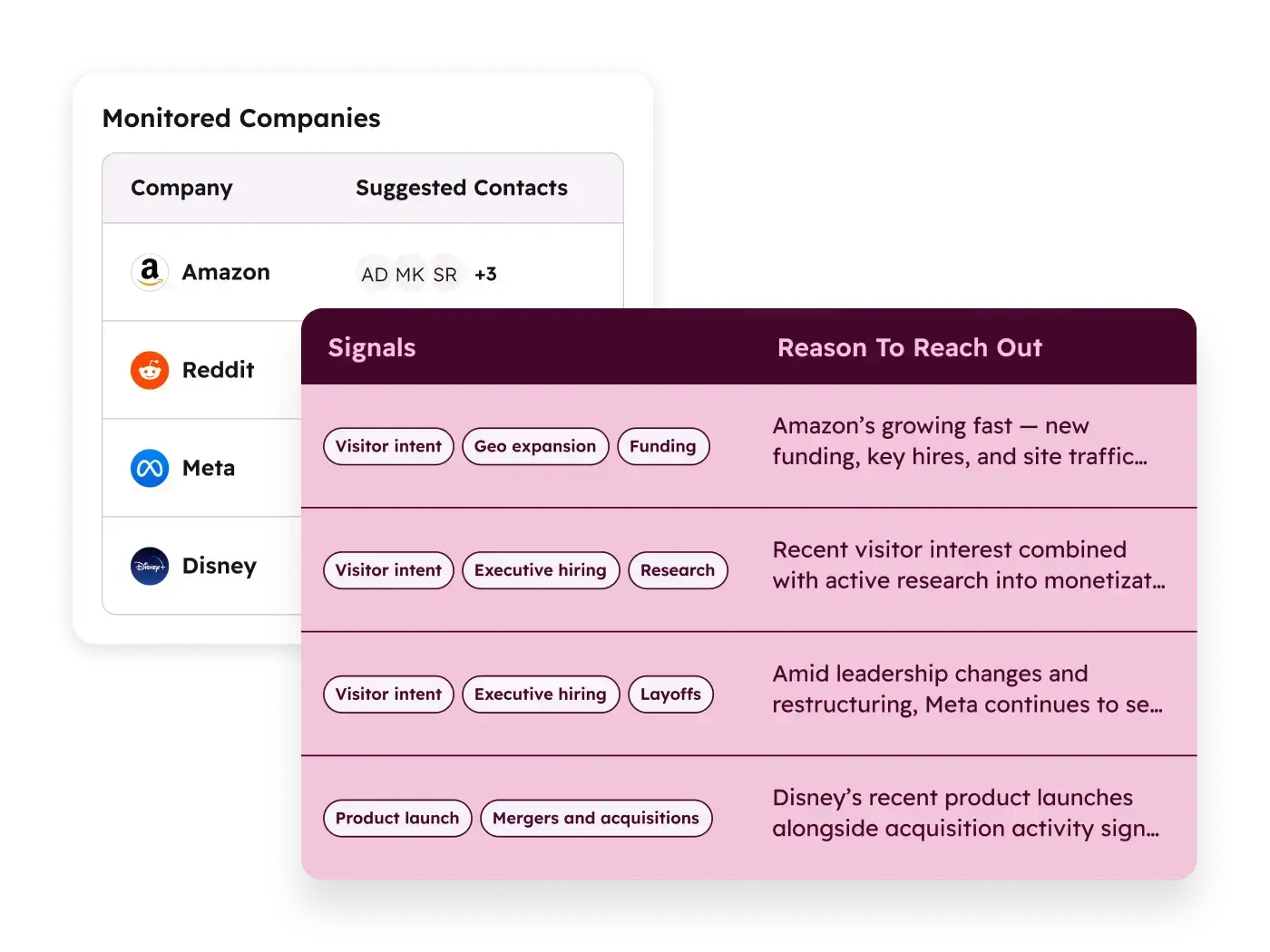
HubSpot's Breeze AI spans the full customer lifecycle. The Prospecting Agent monitors buying signals and drafts personalized outreach.
Source: HubSpot
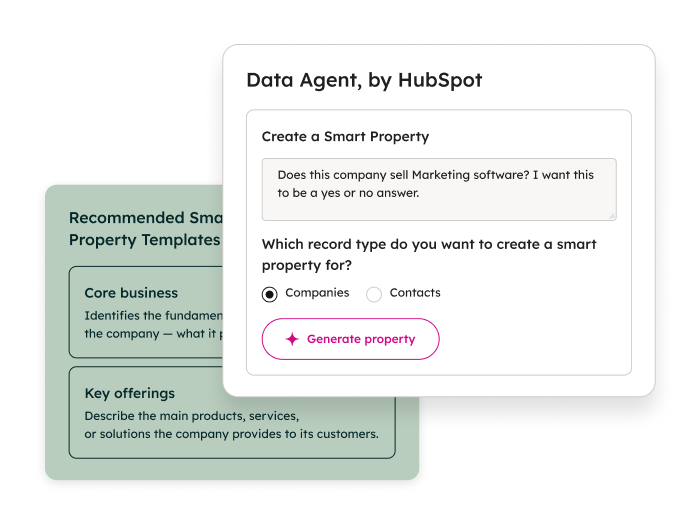
The Customer Agent handles support conversations. The Data Agent answers natural-language questions about your CRM data.
Source: HubSpot
The breadth is wide. But several features (AI-Powered Segmentation, Personalization, Marketing Studio, Knowledge Base Agent) remain in Beta as of the Fall 2025 Spotlight, so enterprise readiness varies by feature.
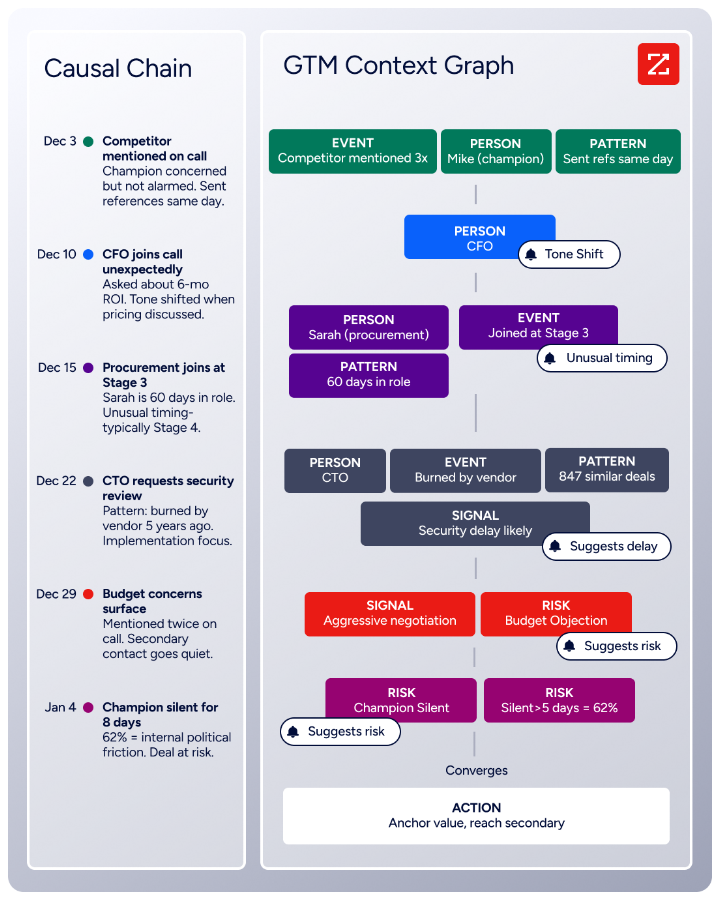
ZoomInfo's AI operates on a different foundation. The GTM Context Graph processes 1.5B+ data points daily, fusing ZoomInfo's third-party data with your CRM records, conversation transcripts, and behavioral signals.
Source: ZoomInfo
The result isn't chatbot automation or anomaly detection. It's contextual reasoning about why deals move or stall. As ZoomInfo's CPO Dominik Facher wrote: "The CRM recorded the state change. It has no record of why it happened."
The GTM Context Graph captures that "why" by connecting executive participation on calls, competitive mentions, intent signal spikes, and hiring patterns into patterns that predict outcomes.
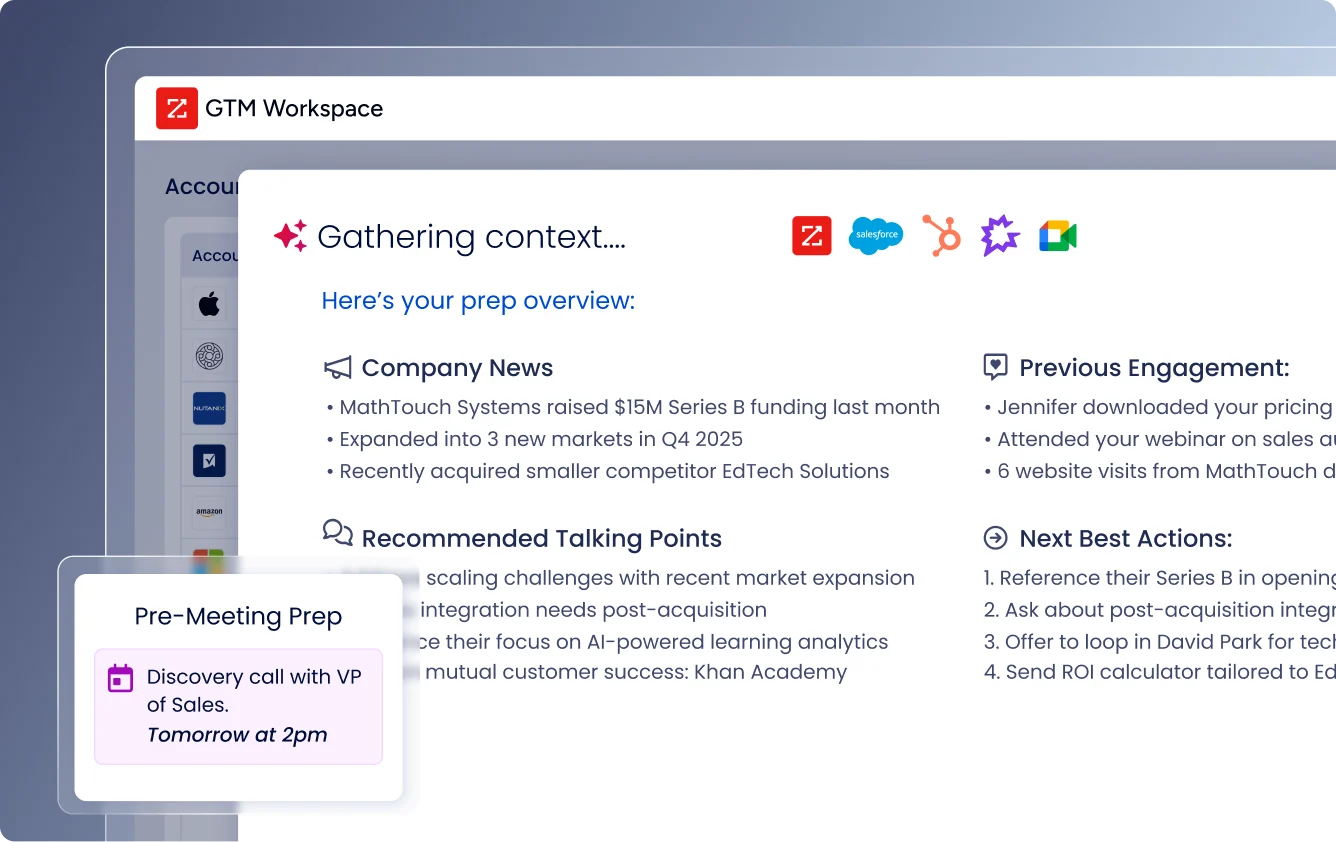
In GTM Workspace, this intelligence surfaces as prioritized accounts with AI-drafted outreach that addresses specific concerns the reasoning engine identified.
Source: ZoomInfo
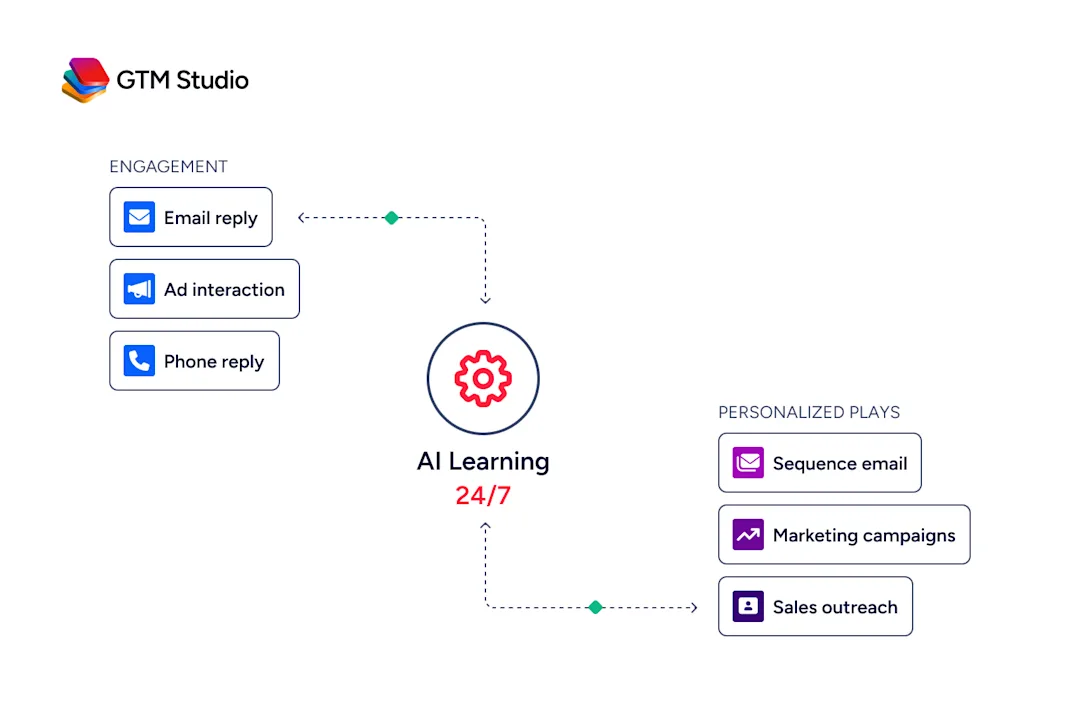
In GTM Studio, marketers describe audiences in plain language and launch plays against accounts matching proven win patterns. Thomson Reuters increased closed-won deals by 40% and achieved 115% average quota attainment each month using GTM Workspace.
Source: ZoomInfo
Seismic attributed 39% of active pipeline to opportunities identified or influenced by ZoomInfo signals, reporting 54% productivity gains and 11.5 hours saved per week per seller. (Seismic)
Platform scope and the integration question
Drift is a single-function product inside Salesloft's revenue orchestration platform. Its value multiplies if you're on Salesloft (Cadence, Rhythm, Conversations, Deals, Forecast).
If you're not on Salesloft, you get a chat tool that integrates with your CRM but loses its strongest differentiator: the native connection between chat signals and seller workflows.
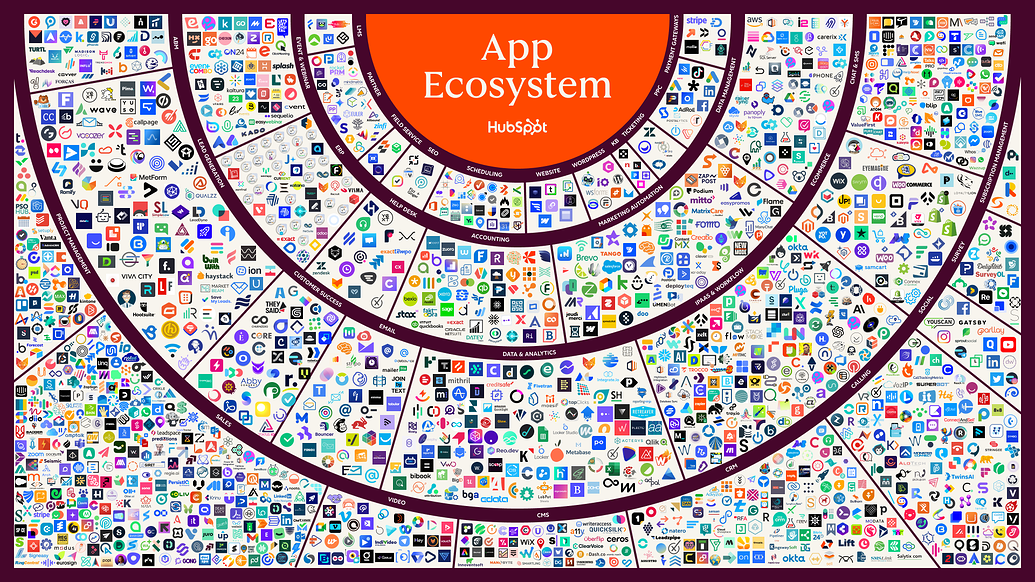
HubSpot is the broadest platform of the three. Marketing Hub, Sales Hub, Service Hub, Content Hub, Data Hub, Commerce Hub, and the Smart CRM all share one data layer. With over 2,000 app integrations and 2.5 million active installs, the ecosystem is large.
Source: HubSpot
For companies that want marketing automation, CRM, customer service, and content management in one place, HubSpot eliminates tool sprawl. The tradeoff: breadth sometimes comes at the expense of depth in any single area.
ZoomInfo takes a different architectural approach. Rather than trying to replace every tool in your stack, ZoomInfo acts as the intelligence layer that makes your stack smarter. APIs and MCP expose ZoomInfo's data and GTM Context Graph to any tool, any AI agent, any custom application.
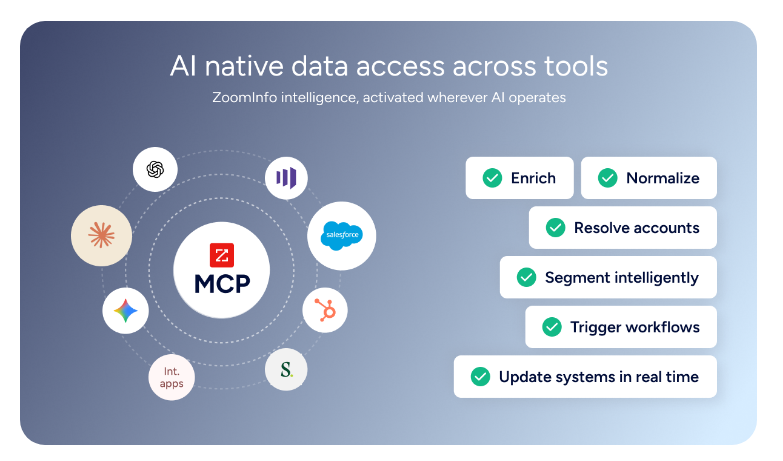
Source: ZoomInfo
The ZoomInfo App Marketplace includes integrations with Salesforce, HubSpot, Microsoft Dynamics 365, and 120+ other tools. CEO Henry Schuck described a large financial services firm building an internal app using ZoomInfo's MCP server: "That's a surface area we would never see before."
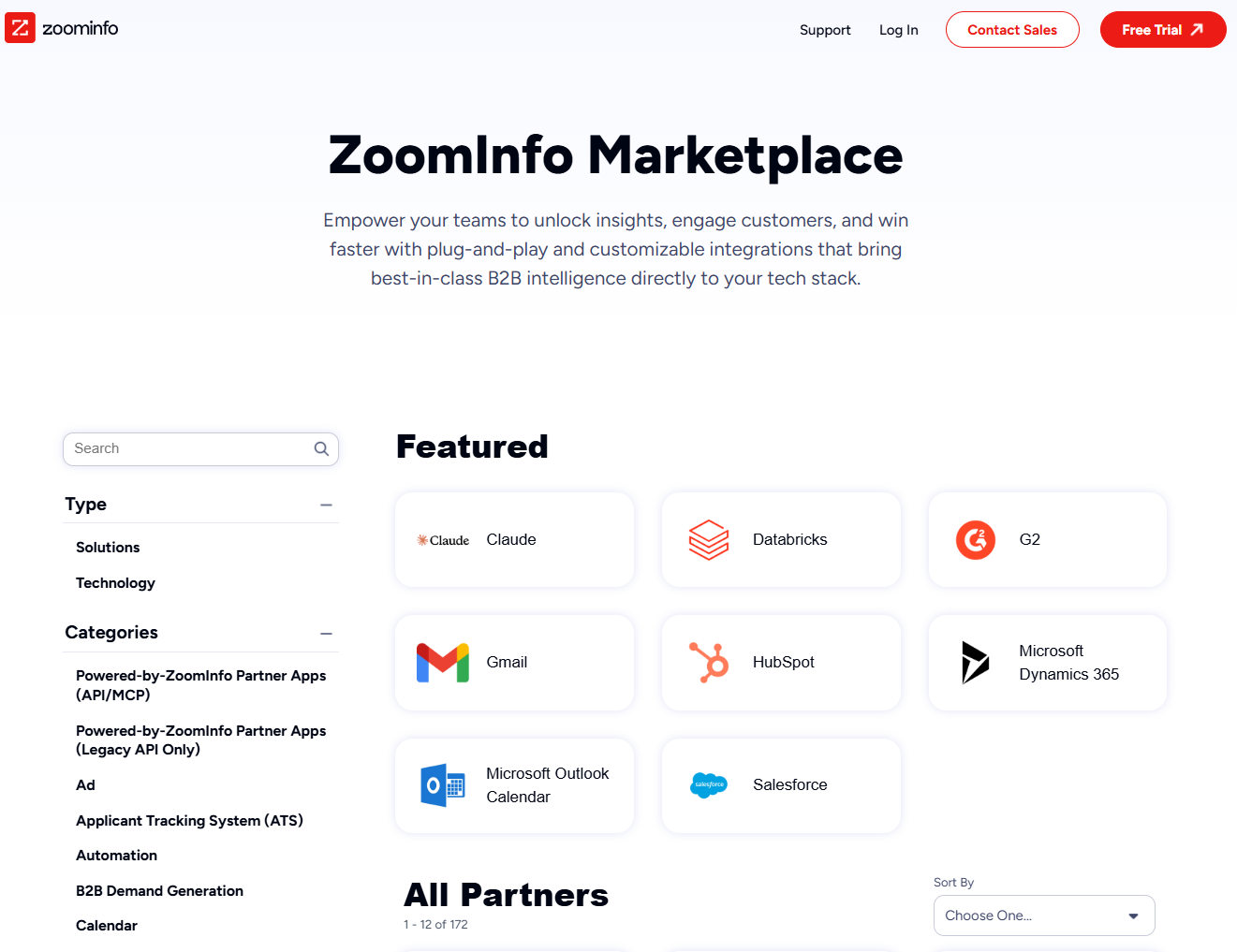
Source: ZoomInfo
This means ZoomInfo isn't competing to replace HubSpot as your CRM or Drift as your chat tool. It's the data and intelligence foundation that both of those tools lack on their own.
BDO Canada activated ZoomInfo's data within their internal systems: "The plug-and-play aspect of the API means I can integrate it very easily into any process and get information at a moment's notice," achieving an 87% reduction in time spent on data dashboard updates. (BDO Canada)
For a deeper look at how HubSpot and ZoomInfo stack up as standalone platforms, see our HubSpot vs. ZoomInfo comparison.
Pricing tells you who each platform is built for
Drift publishes no pricing. Enterprise minimums are widely reported at $2,500+/month with custom quotes required.
Multiple G2 reviewers describe unexpected cost spikes from usage-based overages on seats, contacts, and conversation caps. No free trial or free plan exists. Given the confirmed sunset, prospective buyers should factor migration costs into any evaluation.
HubSpot offers a permanent free tier with basic CRM, forms, and landing pages. Paid plans scale by hub and by seat:
Hub | Starter | Professional | Enterprise |
|---|---|---|---|
Marketing Hub | $20/seat/mo | $800-890/mo (3 seats included) | $3,600/mo (5 seats included) |
Sales Hub | $20/seat/mo | $90-100/seat/mo | $150/seat/mo |
Service Hub | $20/seat/mo | $90-100/seat/mo | $150/seat/mo |
Mandatory onboarding fees apply at Professional and Enterprise tiers: $3,000 for Marketing Hub Professional, up to $7,000 for Marketing Hub Enterprise.
A hidden cost worth noting: when subscribing to multiple hubs at different tiers, all Core Seats are billed at the highest tier.
ZoomInfo uses custom-quoted, consumption-based pricing. No dollar amounts are published for paid tiers.
But ZoomInfo offers two free entry points that neither Drift nor HubSpot's competitors typically match: ZoomInfo Lite, a permanent free tier with access to ZoomInfo's B2B database and 10 monthly export credits, and a 7-day free trial of the full platform.
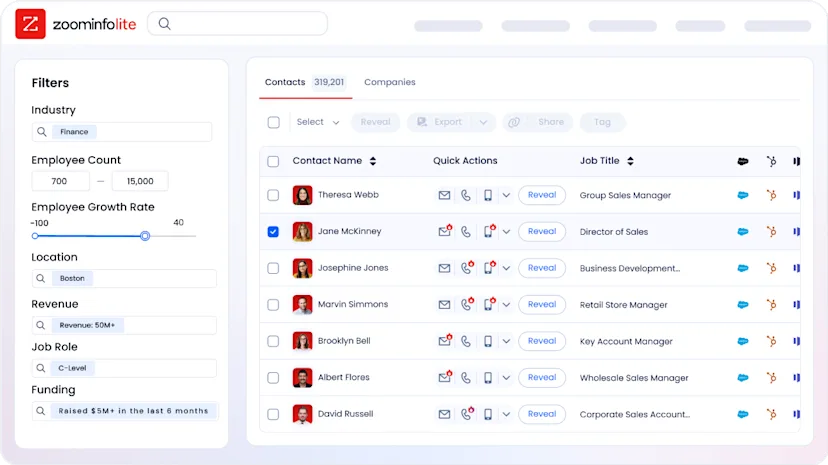
Source: ZoomInfo
Paid plans are organized into Sales (Professional, Advanced, Enterprise) and Marketing (Marketing Demand, ABM Lite, ABM Enterprise), with Chorus and Chat priced separately. API access is included in all relevant plans.
The sunset factor: Drift's biggest risk
This is the most important consideration for anyone evaluating Drift as a new purchase: Salesloft announced a partnership with 1mind and confirmed that Drift will be gradually sunsetted, with 1mind named as the exclusive AI successor.
Salesloft is issuing no new Drift contracts. No hard end-of-life date has been published, but feature investment has stopped.
For existing Drift customers on Salesloft, the question is when to migrate, not whether to. For anyone evaluating a new conversational marketing tool, Drift carries migration risk that HubSpot and ZoomInfo do not.
HubSpot, as a $3.13 billion public company growing 19% year over year, is not going anywhere.
ZoomInfo, with $1.25 billion in annual revenue and $455 million in free cash flow, has the financial stability to keep investing across all three pillars.
Reporting and attribution compared
Drift offers ROI Reporting that connects chat engagement to pipeline and revenue outcomes. You can track which playbooks, on which pages, convert into meetings and deals.
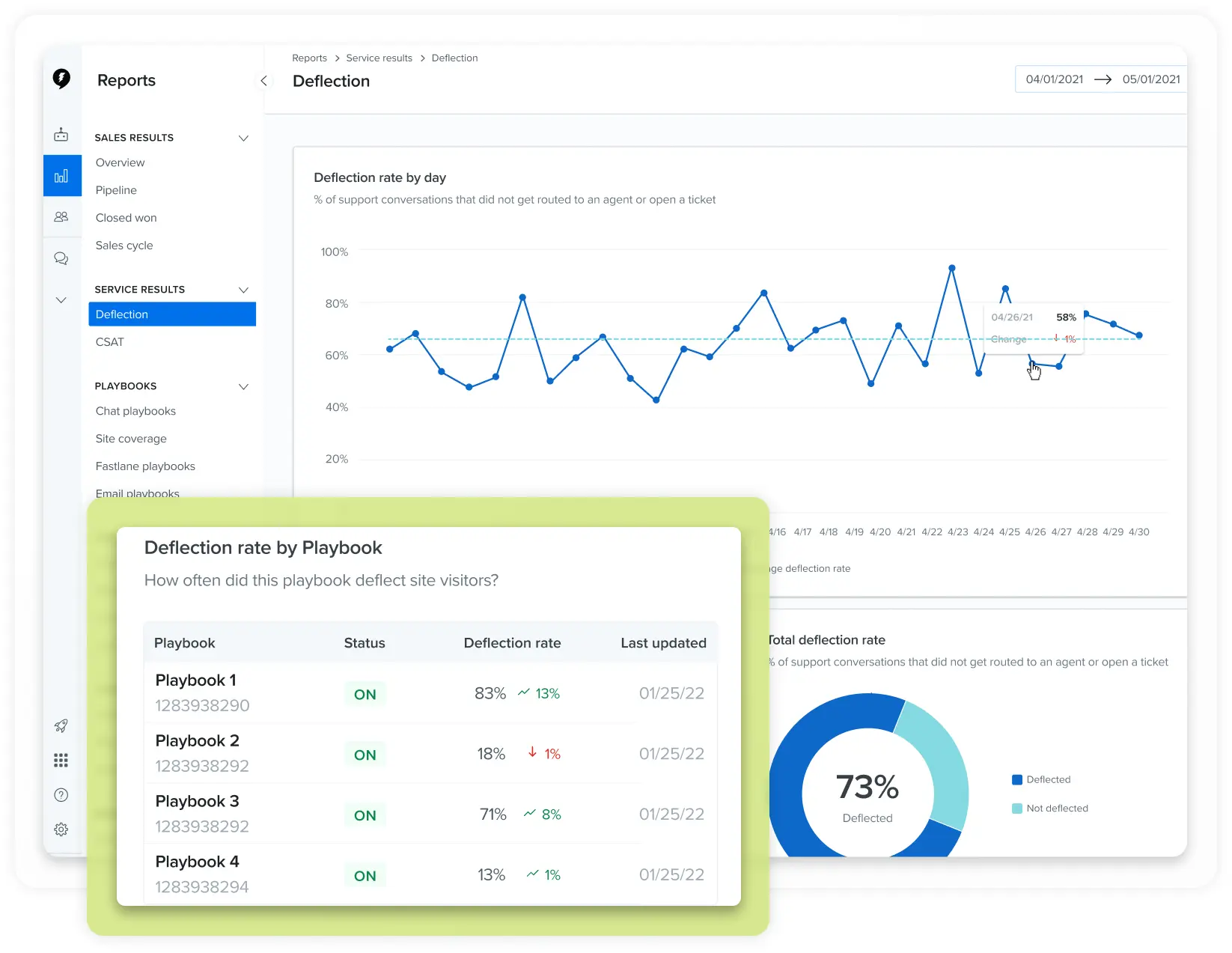
Source: Drift
Drift Analytics surfaces the specific messages, topics, and questions appearing across web conversations, giving content teams insight into what buyers actually ask. Because Drift is part of Salesloft, its data also flows into Command Center, Salesloft's executive analytics hub.
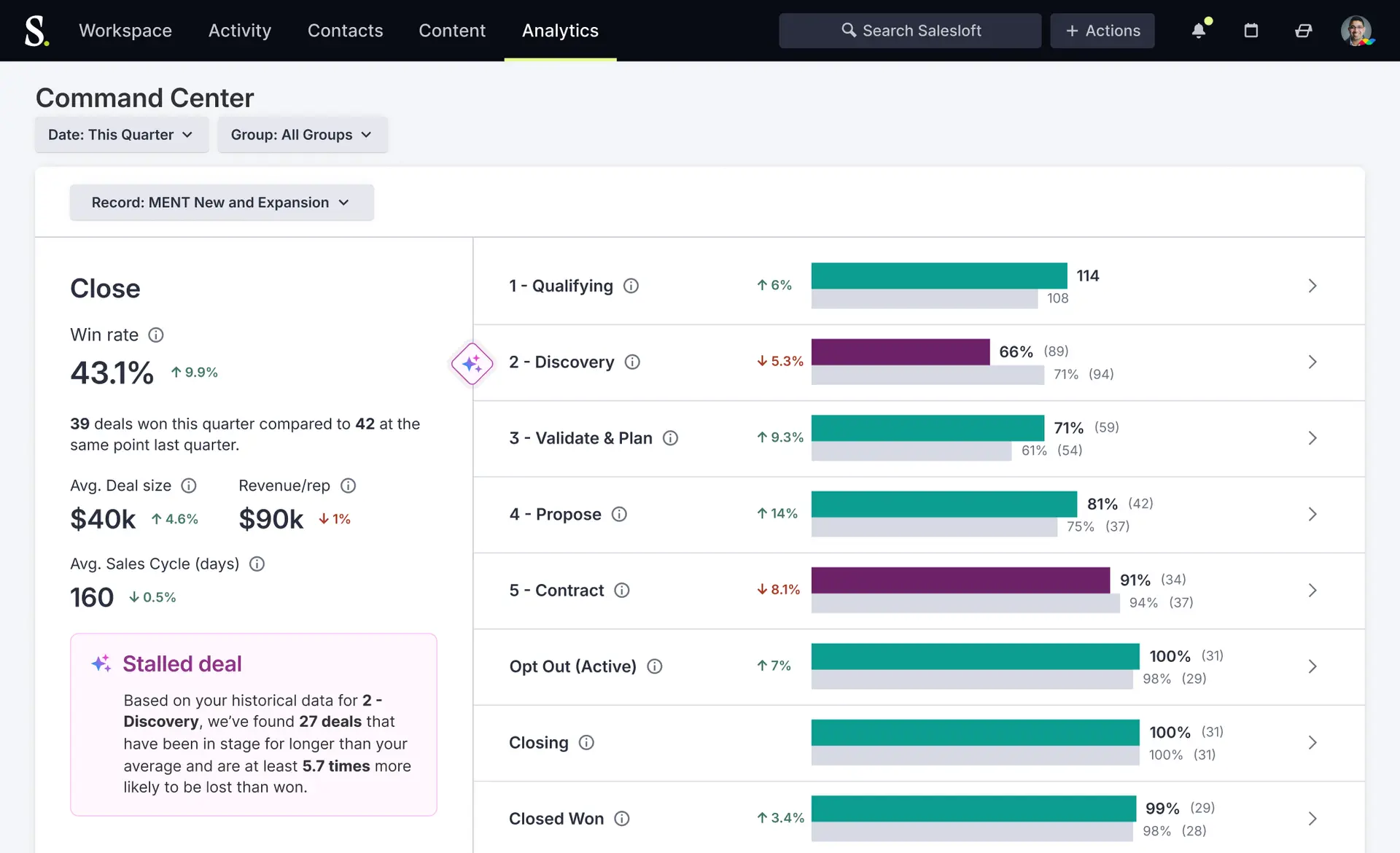
Source: Drift
For chat-specific attribution, this works well. But it only covers one channel.
HubSpot provides Advanced Marketing Reporting with multi-touch revenue attribution and customer journey analytics across all its hubs. Because marketing, sales, and service data share one CRM, you can trace a contact from first web visit through closed deal and renewal.
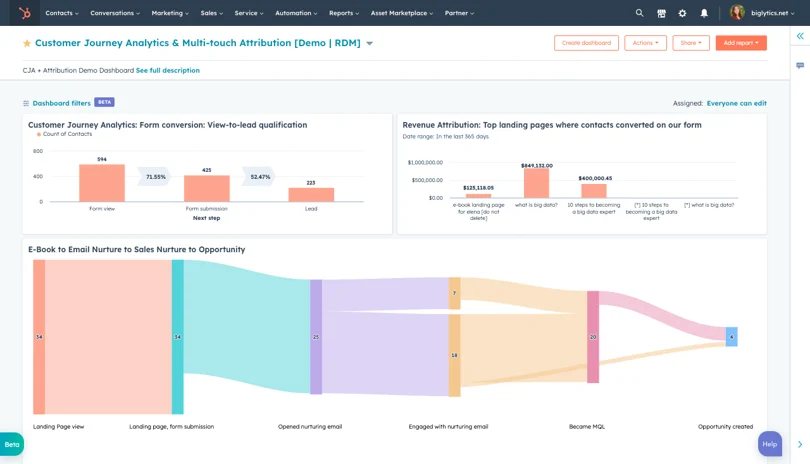
Source: HubSpot
The weakness: HubSpot's reporting only covers what happens inside HubSpot. Activities in external tools require integration to be visible.
ZoomInfo approaches analytics from the intelligence layer. GTM Studio provides dashboards tracking engagement, funnel progression, and top-performing segments.
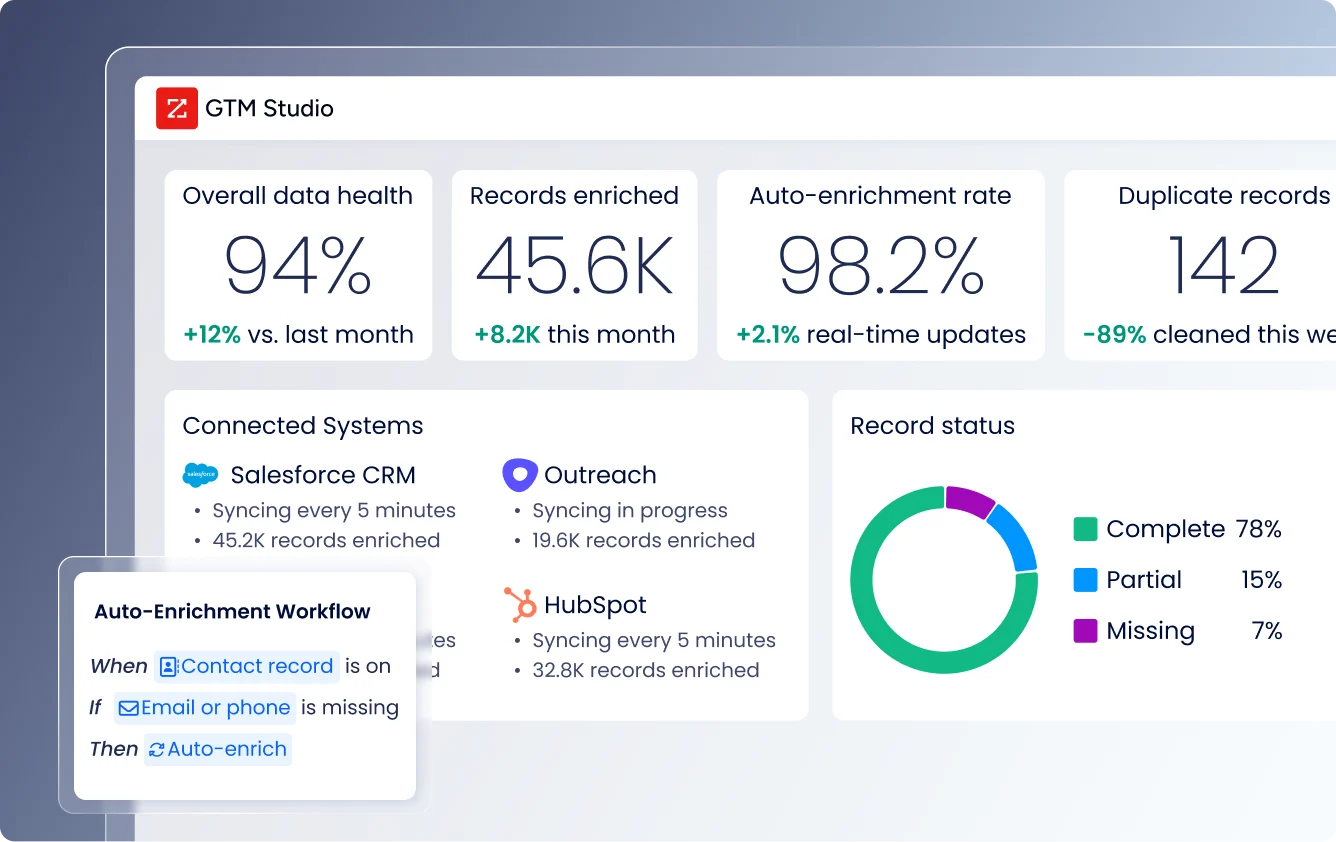
Source: ZoomInfo
GTM Workspace gives sellers real-time visibility into account signals and deal context.
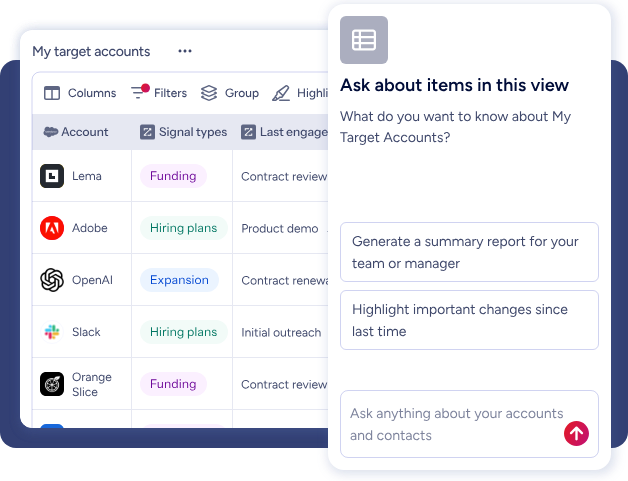
Source: ZoomInfo
But ZoomInfo's reporting advantage isn't just dashboards. It's the ability to attribute outcomes to specific signals and patterns through the GTM Context Graph, revealing which combinations of intent signals, contact engagement, and deal behaviors predict success.
Who each platform serves best
Drift is built for B2B revenue teams at mid-market to enterprise companies running an inbound motion through their website, specifically teams already on or planning to adopt Salesloft.
Drift's economics work best when a single converted meeting is worth thousands of dollars. It is not built for small businesses, B2C companies, customer support, or companies with low website traffic.
HubSpot serves the widest range. Its free CRM and Starter tiers work for solopreneurs and small businesses. Professional and Enterprise tiers target scaling companies with 20 to 2,000+ employees.
HubSpot is strongest for B2B SaaS, professional services, and agencies using content marketing and inbound methodology.
It is not ideal for companies needing heavy customization (where Salesforce wins), ERP-adjacent functionality, or heavily regulated industries where compliance depth matters more than ease of use.
ZoomInfo targets enterprise and upper mid-market B2B organizations. Named customers include Adobe, Microsoft, Snowflake, PayPal, and JPMorgan.
The platform serves sales (prospecting, pipeline), marketing (ABM, demand gen, advertising), and RevOps (data quality, lead routing, workflow automation). ZoomInfo is not for B2C companies or organizations without an outbound or data-enrichment need.
Drift vs. HubSpot vs. ZoomInfo: Which should you choose?
The right platform depends on which problem you're trying to solve.
Choose Drift if:
You're already on Salesloft and need a website conversion layer integrated with your seller workflows
Your primary challenge is converting anonymous website visitors into meetings
You have dedicated RevOps resources to configure and maintain complex playbooks
You accept the migration risk of a platform on a confirmed sunset path
Choose HubSpot if:
You need marketing, sales, service, and CRM in one platform with a shared data layer
You're an SMB or mid-market company that values ease of use alongside growing functionality
You want a free tier to start with and the option to scale across hubs
Your team doesn't need B2B prospecting data or intent signals
Choose ZoomInfo if:
Verified B2B data is the foundation your GTM motions need
You want AI that understands why deals move, not just what happened in your CRM
You need buyer intent signals that cover your full addressable market, not just website visitors
You want intelligence that works everywhere: in ZoomInfo's own products, in your CRM, or in any custom tool via API and MCP
You're building a long-term GTM stack that compounds in value as it learns
See how ZoomInfo's data and intelligence can improve your go-to-market with a free trial.
These three platforms aren't interchangeable. Drift solves a specific website conversion problem (within Salesloft). HubSpot manages the customer lifecycle across marketing, sales, and service. ZoomInfo provides the data and intelligence layer that determines whether your go-to-market motions target the right buyers with the right message at the right time. For B2B revenue teams serious about pipeline generation and deal acceleration, starting with the best possible data isn't optional. It's the prerequisite for everything else working.
Drift vs. HubSpot vs. ZoomInfo FAQ
What is the core difference between Drift, HubSpot, and ZoomInfo?
Drift is a conversational marketing tool focused on converting anonymous website visitors into qualified pipeline through AI chat and real-time meeting booking.
HubSpot is a customer platform covering marketing, sales, service, content, and CRM in one system.
ZoomInfo is an AI GTM platform built on B2B data covering 500M contacts and 100M companies, providing buyer intelligence, intent signals, and AI execution tools for revenue teams.
Is Drift still available for new customers?
Drift is on a confirmed sunset path. Salesloft announced a partnership with 1mind as Drift's exclusive AI successor, and is issuing no new Drift contracts. No hard end-of-life date has been published, but feature investment has stopped. Existing customers should plan their migration timeline.
Which platform has the best data for B2B prospecting?
ZoomInfo leads by a wide margin. Its database covers 500M contacts, 100M companies, 135M+ verified phone numbers, and 200M+ verified business email addresses, verified through a pipeline backed by 300+ human researchers.
In a Fortune 500 competitive RFP analyzing 25 million contacts across vendors, an independent consultant concluded that no other competitor came close.
HubSpot's CRM manages data you've already captured and enriches it from conversations and third-party sources. Drift's data is limited to reverse-IP visitor identification on your website.
How do the pricing models compare?
Drift has no public pricing, with enterprise minimums reportedly starting at $2,500+/month.
HubSpot offers a permanent free tier with paid plans starting at $20/seat/month for Starter editions, scaling to $3,600/month for Marketing Hub Enterprise (plus mandatory onboarding fees of $3,000 to $7,000).
ZoomInfo uses custom-quoted consumption-based pricing with a permanent free tier (ZoomInfo Lite with 10 monthly export credits) and a 7-day free trial. None publish exact enterprise pricing.
Can ZoomInfo work alongside HubSpot or Drift?
Yes. ZoomInfo integrates with HubSpot through its App Marketplace, enriching CRM records with verified contact data, company attributes, and intent signals. ZoomInfo's API and MCP access let it power any tool in your stack.
The ZoomInfo-Salesloft partnership also connects ZoomInfo's buyer signals to Salesloft Rhythm, which benefits teams using Drift within Salesloft. ZoomInfo is designed as an intelligence layer that enhances your existing tools rather than replacing them.
Which platform offers the best AI capabilities?
Each platform applies AI differently. Drift's AI powers chatbots and visitor intent scoring for website conversion.
HubSpot's Breeze AI includes agents for prospecting, customer service, and data analysis across its platform, though several features remain in Beta.
ZoomInfo's GTM Context Graph processes 1.5B+ data points daily, fusing CRM records, conversation intelligence, and behavioral signals with third-party data to reason about why deals move or stall, then surfaces that intelligence through AI agents in GTM Workspace and GTM Studio.
Which platform is best for account-based marketing?
ZoomInfo is the strongest for ABM. It is a Leader in the Gartner Magic Quadrant for ABM Platforms for two consecutive years and a Leader in the Forrester Wave for Intent Data Providers.
Its native demand-side platform deploys display ads based on 300+ company attributes, and GTM Studio launches ABM plays targeting accounts that match proven win patterns.
HubSpot offers marketing automation and audience segmentation but lacks ZoomInfo's depth in intent data and contact-level identification. Drift supports account-based chat experiences but only for visitors who reach your website.
What happens to my data if I need to switch platforms?
HubSpot allows contact and company exports and has a documented cancellation process, though you can only cancel paid subscriptions at the end of the commitment term.
Drift's data portability is an open question given the sunset; customers should clarify data export terms with Salesloft.
ZoomInfo's API-first architecture and MCP access make data consumption flexible across tools, though exported credit-based data is subject to contract terms.
Comparing Drift and HubSpot? These related breakdowns go deeper:
