
Forma.ai has positioned itself as the AI-native challenger in enterprise sales compensation. Where legacy tools like Xactly and SAP Callidus require technical teams and outside consultants to manage every plan change, Forma.ai lets compensation teams describe what they want in plain language and deploy it in days instead of months.
The platform combines incentive compensation, territory planning, and quota management in a single system, so changes in one area cascade automatically to the others.
To write this Forma.ai review, we've analyzed it extensively. We believe it's the ideal choice if:
You manage complex, multi-layered sales compensation at enterprise scale
You need to compress comp plan rollout timelines from months to days
You want AI-assisted plan configuration without requiring SQL or technical skills
You need territory, quota, and incentive management in one connected platform
You value included professional services and dedicated support
However, Forma.ai might not be the right fit if:
You have simple commission structures with fewer than 100 payees
You want self-serve access without a sales engagement process
You need a tool your sellers use daily to find and engage prospects
You require independent market intelligence to inform territory design
You want to connect compensation performance to buying signals and pipeline data
Forma.ai excels at designing and managing the strategy behind sales performance, but the other half of the equation (finding the right buyers, building pipeline, and executing against those comp plans) requires different tools.
This is where ZoomInfo fits: a go-to-market platform with broad B2B data, buyer intent signals, and AI seller tools that help reps hit the targets Forma.ai sets for them.
We've included a look at ZoomInfo later in this Forma.ai review as a complementary platform that connects comp strategy to sales execution. If you want to see how better data can drive quota attainment, start with ZoomInfo's free trial.
What is Forma.ai?
Forma.ai is an AI-powered enterprise Sales Performance Management (SPM) platform founded in 2016 by Nabeil Alazzam in Toronto, Canada. Alazzam spent years at ZS Associates as a sales force effectiveness consultant, working with Fortune 500 companies on compensation design.
He saw the same problem repeatedly: changes to compensation structures took six to eight months to implement, regardless of which ICM platform the company used.
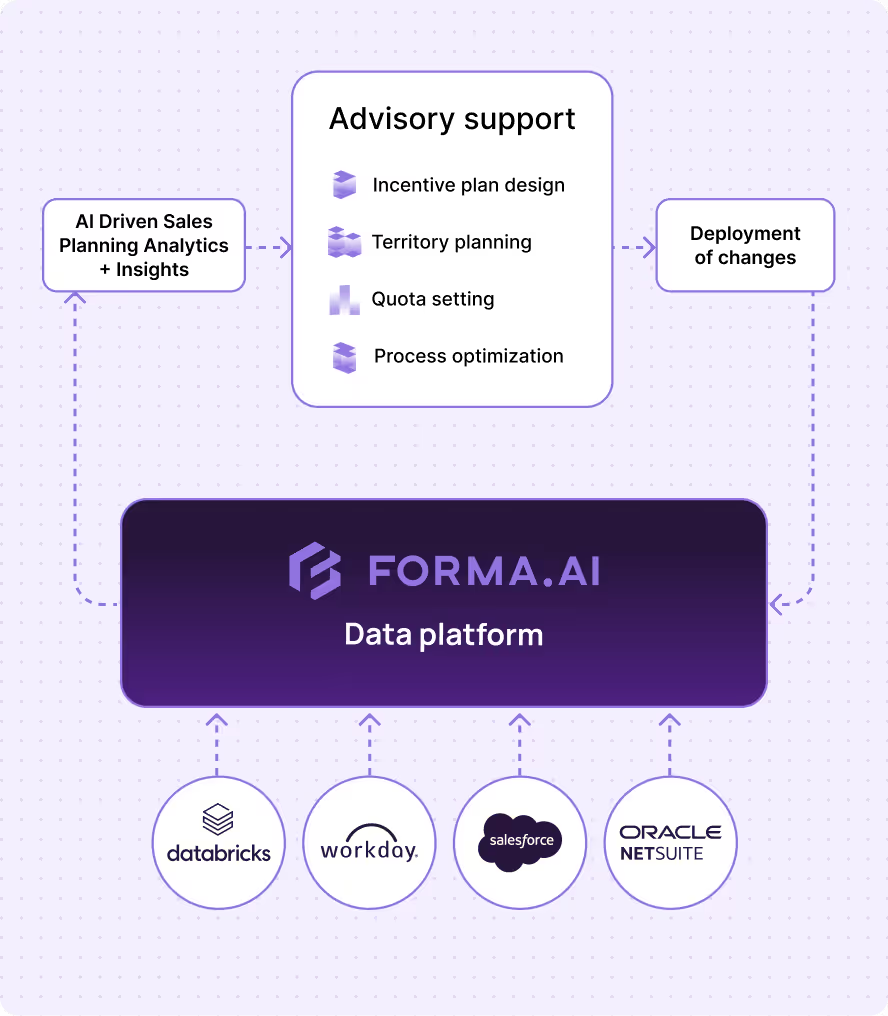
The platform consists of three modules running on a shared data layer with 600+ pre-built integrations:
Forma Operator handles incentive compensation management: designing, automating, and tracking comp programs
Forma Architect covers territory and quota planning: data-driven sales coverage and quota allocation
Forma Prophet provides sales planning advisory and analytics: ML-powered revenue intelligence paired with embedded strategy consulting
Forma.ai targets enterprise go-to-market leadership, including sales compensation professionals, sales operations, sales leadership, finance, and HR.
The company has raised approximately $58M in funding, including a $45M Series B led by ACME Capital in May 2022, and has processed over $25 billion in commissions through its platform.
Forma.ai Pros & Cons
Pros | Cons |
|---|---|
AI-powered, no-code plan configuration | Initial setup takes time for complex comp structures |
Unified ICM, territory, and quota planning | Enterprise-only pricing with no self-serve option |
Real-time scenario modeling with live data | Can feel less intuitive for new users during onboarding |
Professional services included in license | Overkill for organizations with simple or static comp plans |
Native sales crediting integrated with ICM | CSV-only data import templates (no native Excel support) |
Seller-facing dashboards with earnings visibility | No prospecting, pipeline, or engagement tools for sellers |
Enterprise-grade audit trails and SOX compliance | Not designed for organizations with fewer than ~100 payees |
Forrester Wave Strong Performer and Customer Favorite (Q1 2025) | No public knowledge base or self-serve documentation |
Forma.ai Review: How It Works & Key Features
Forma Operator: AI-powered incentive compensation that eliminates manual rule building.
Forma Operator is the core of the platform. It solves a specific problem in enterprise sales compensation: most ICM tools require technical staff to configure every change, creating bottlenecks, errors, and months-long deployment cycles.
Source: Forma.ai
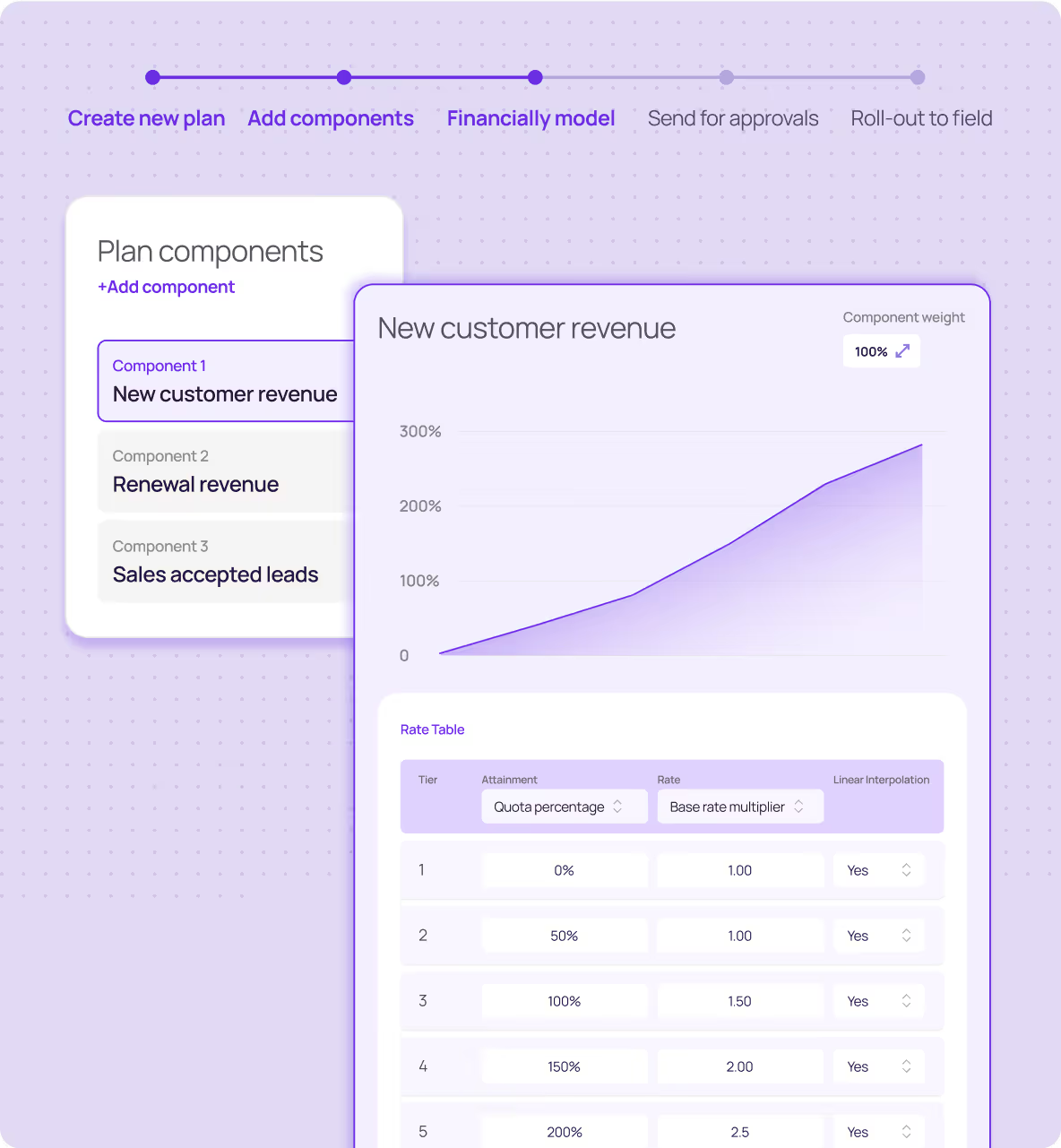
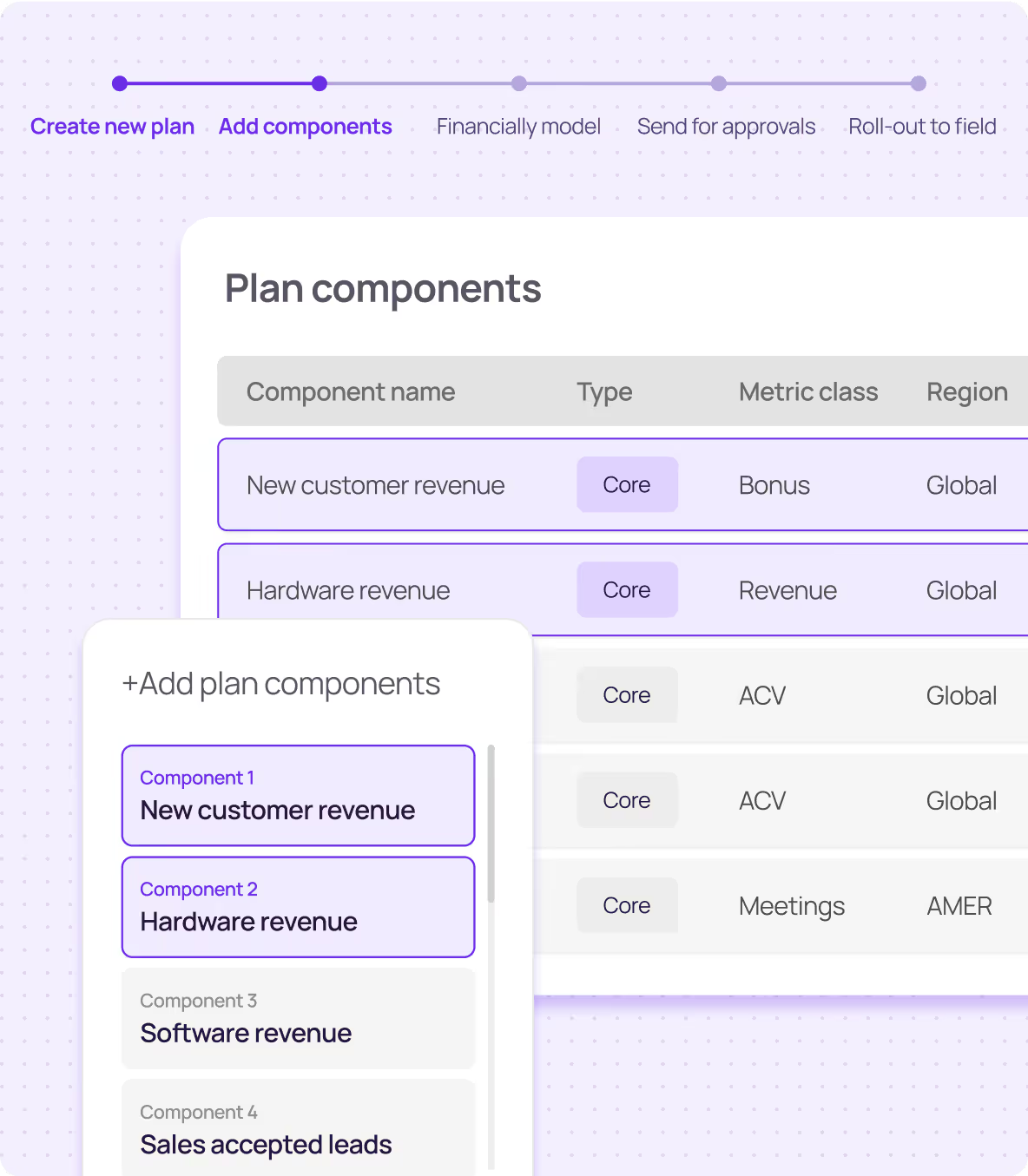
Operator is built around a unified rule structure, a proprietary data model that standardizes SPM data so users define parameters rather than build formulas from scratch. The workflow starts with plan design, where users assemble incentive plans from a template library.
Source: Forma.ai
For novel components, users describe compensation logic in plain language and AI translates it into a validated, reusable plan component.
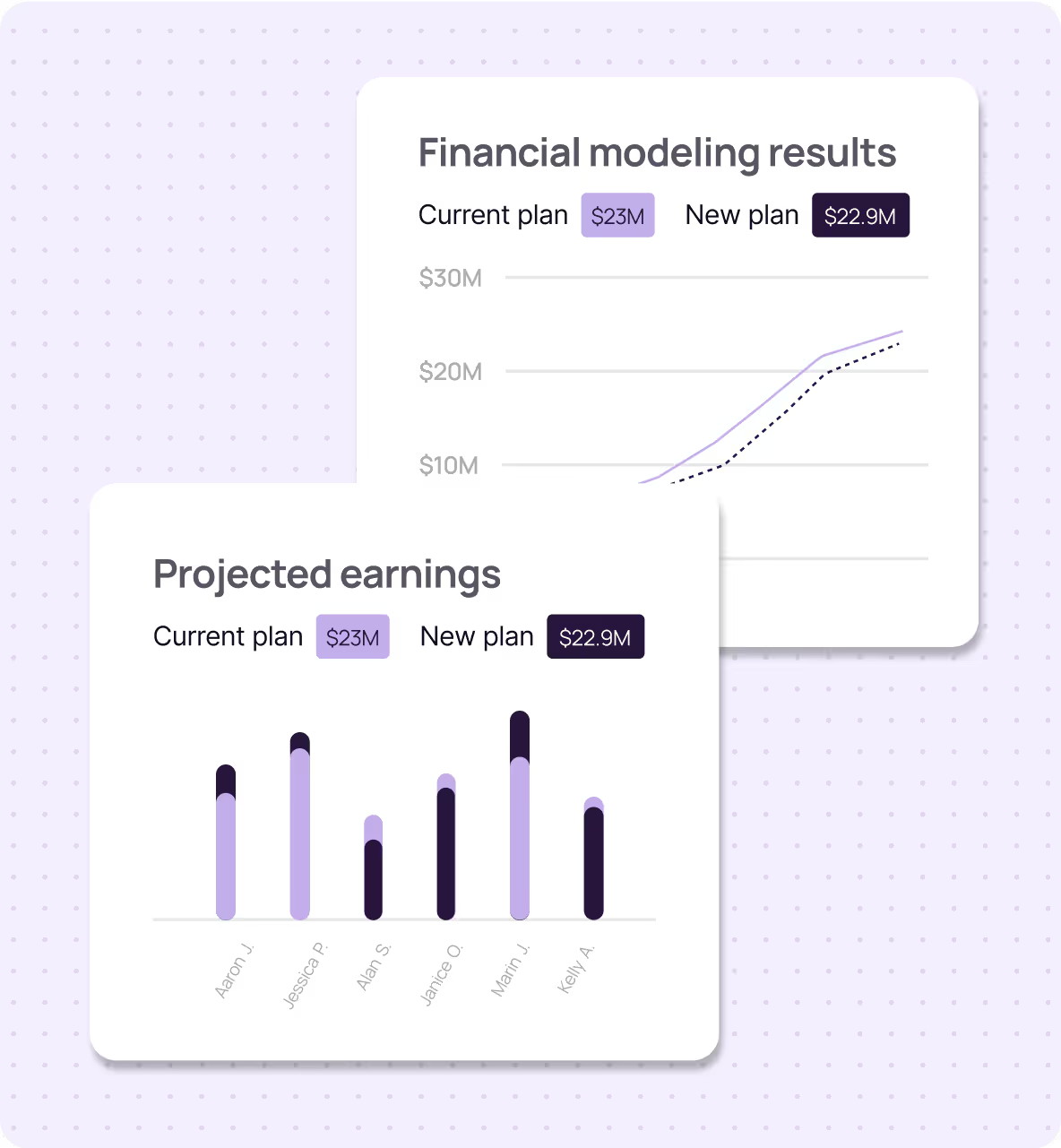
Before deploying any change, teams can simulate compensation changes with real data in the platform, running multiple what-if scenarios without affecting live commission runs. Once validated, changes go live instantly without rebuilding rules or migrating sandboxes.
Source: Forma.ai
The scale is proven. Autodesk processes 100M+ transaction lines for incentive plan calculations across 2,500+ payees and 1,900 channel partners on the platform. Compared to its previous setup (two legacy platforms plus a home-grown system), Autodesk's comp team can now define, configure, and customize any plan type for rollout in days.
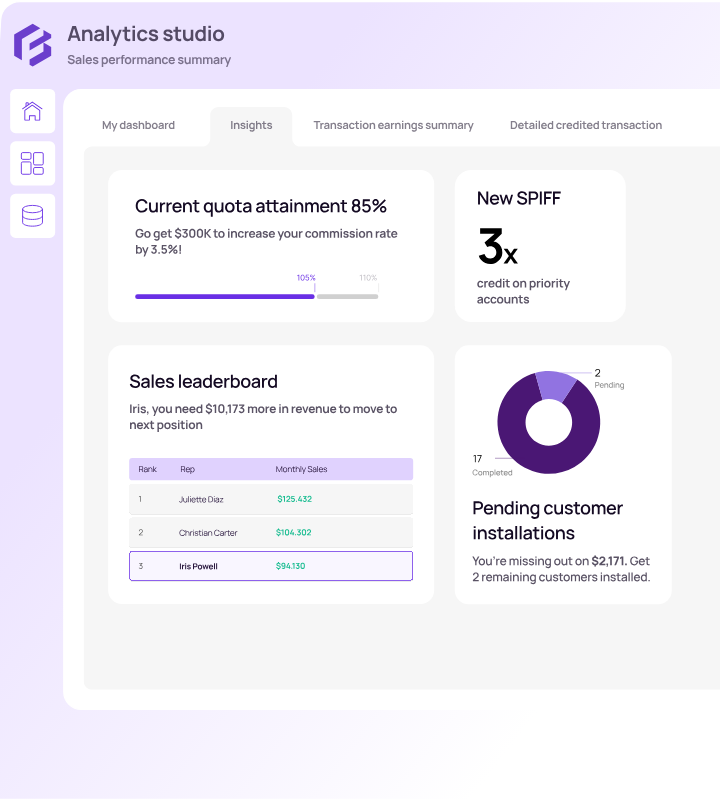
Each seller gets a performance dashboard tailored to their comp plan, showing earnings, pipeline impact, leaderboard standings, and President's Club qualification status.
Detailed commission statements with drill-down capabilities and a built-in dispute management flow reduce the friction that typically consumes comp analysts' time.
Compliance features include ASC 606 reporting integrated with ICM calculations, automatically updating amortization schedules as commission runs process, plus full auditability of every user interaction.
Forma Architect: Territory and quota planning that connects directly to compensation execution.
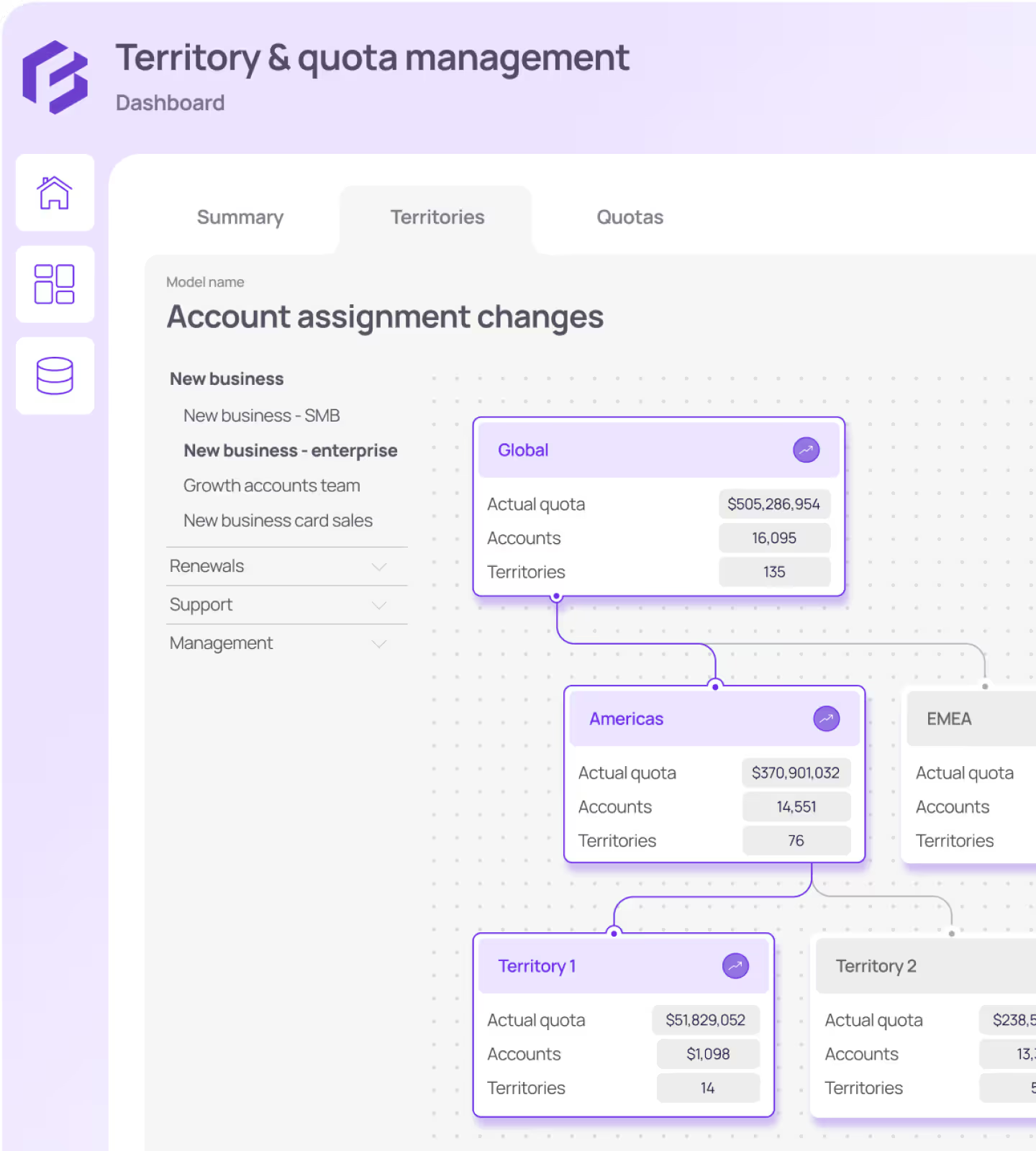
Forma Architect addresses the reality that most enterprise sales organizations plan territories and quotas through spreadsheets and disconnected tools (done once a year, driven by gut feel, and completely disconnected from the ICM systems that execute those plans).
Source: Forma.ai
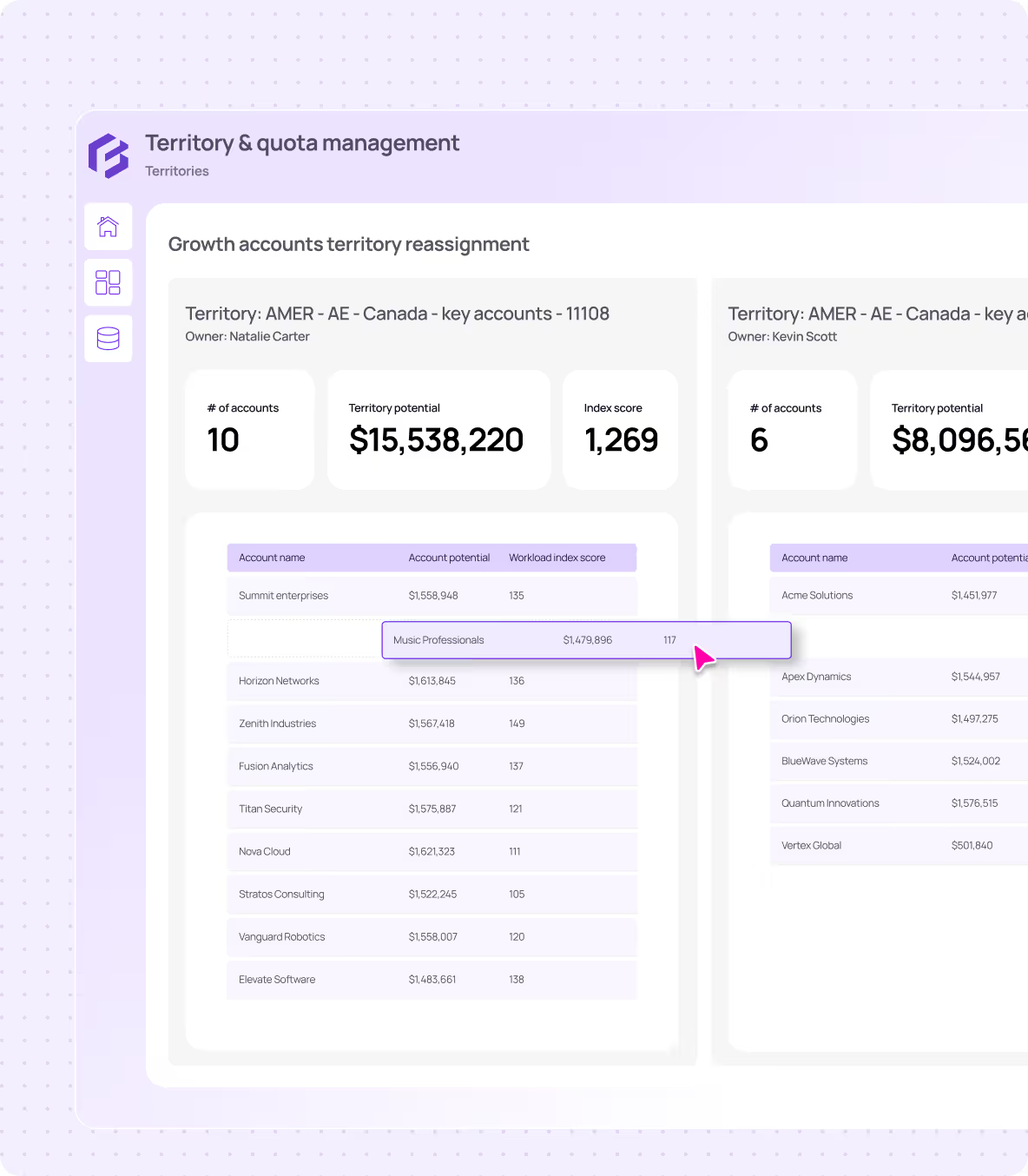
Architect operates as a connected planning workspace. AI-driven insights assess account potential and workload to align seller capacity with market demand. Planners define territory structures by geography, named accounts, product lines, overlays, or management hierarchies.
Source: Forma.ai
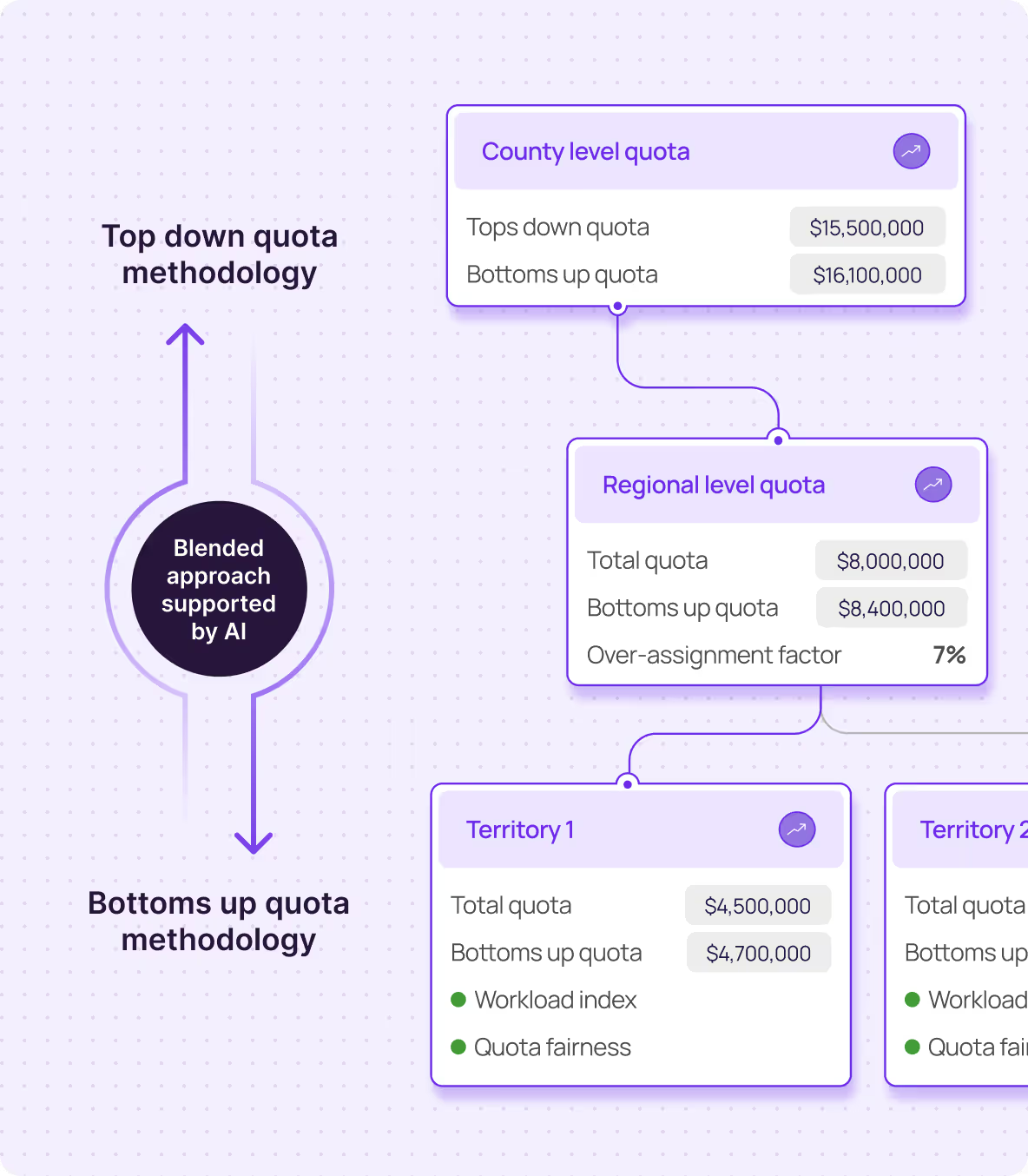
For quota setting, Architect connects top-down targets with bottoms-up, data-driven quotas and cascades updates automatically. Modeling factors in opportunity, historical trends, seasonality, and performance benchmarks. The platform automates ramps, proration, and updates for new hires, role shifts, and terminations.
Source: Forma.ai
The most notable feature is the native connection with Forma Operator. When territories or quotas change, those changes cascade instantly to incentive calculations, keeping crediting rules, plan documents, and payouts accurate without manual reconciliation. Teams can test and model changes in the platform, then deploy them instantly.
Forma Prophet: Embedded advisory and ML-powered analytics connected to live data.
Forma Prophet is a hybrid of software and human expertise. It combines machine learning models with an embedded team of data scientists and strategy consultants who deliver ongoing advisory informed by live platform data.
Source: Forma.ai
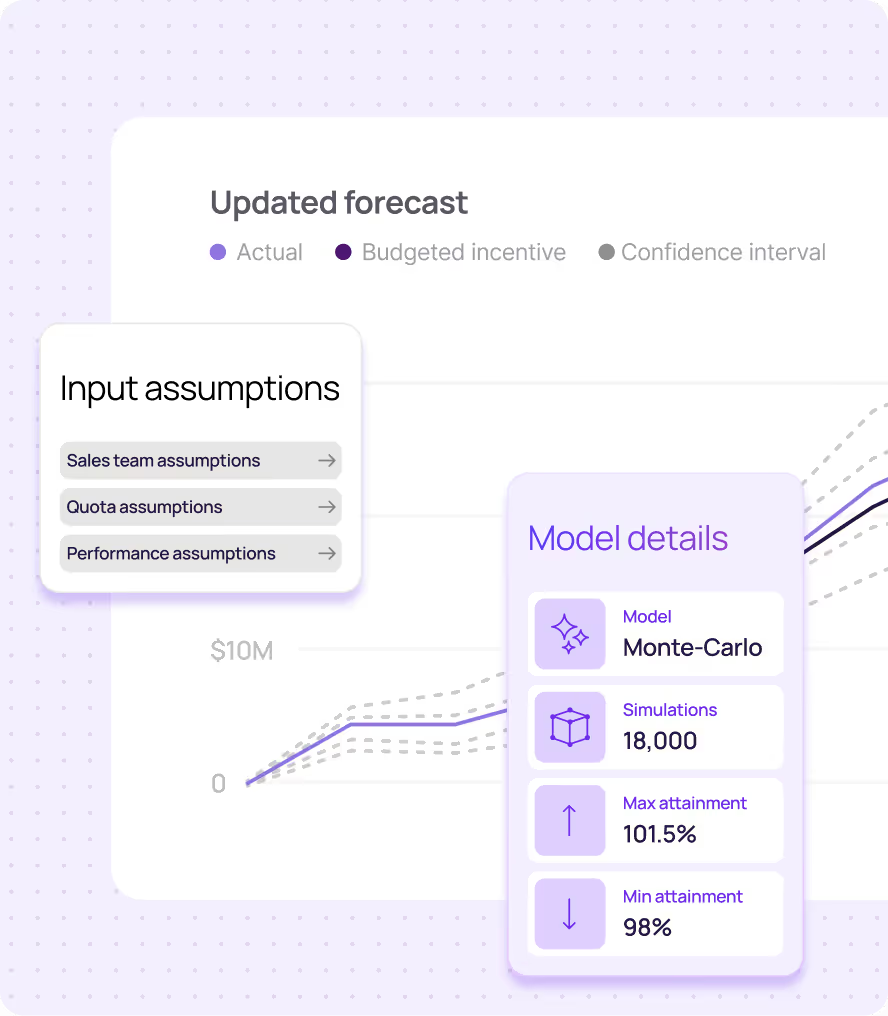
The analytics layer includes customer insight modeling that identifies unaddressed revenue potential, Monte Carlo simulation that tests performance scenarios for new incentive structures, and continuous monitoring of incentive program effectiveness, quotas, and territories.
What separates Prophet from traditional consulting is that the advisory is ongoing and integrated, informed by live analytics rather than periodic reviews of static exports. At Autodesk, this shifted the comp analyst role from process management to strategic advising, with analysts now providing data insights and performance coaching to sales managers.
Source: Forma.ai
Prophet is also platform-agnostic and works alongside data from any existing SPM system, including spreadsheets, Xactly, or SAP. It delivers the most value when combined with Operator and Architect, where strategy and execution are connected.
Pricing: Enterprise-only, custom-quoted, with professional services included.
Forma.ai does not publish standard pricing tiers. The company uses a custom model with three pricing components:
Onboarding & Implementation (a one-time fee covering enterprise setup)
CompOps Platform (an ongoing subscription with feature scope set per customer)
AI-Configurator (an additional component priced by configuration capability needed)
There is no free trial, free plan, or self-serve sign-up. All engagement starts with a demo request and sales conversation.
A notable inclusion: professional services support is bundled into the license fee, so customers don't pay separately for ongoing consulting. This contrasts with competitors like Xactly and SAP Callidus, where implementation and ongoing services from system integrators can add significant cost beyond the software license. Forma.ai claims the lowest total cost of ownership in the enterprise ICM category.
Where Forma.ai Falls Short
Forma.ai is a strong platform for its intended purpose, but several gaps appear when you consider the full lifecycle of sales performance. These aren't design flaws; they reflect a platform built for comp strategy rather than sales execution.
No tools for the sellers who need to hit those targets. Forma.ai designs comp plans and gives sellers dashboards showing their progress. But it offers nothing to help sellers find the right prospects, identify buying committees, or engage decision-makers.
Once quotas are set and territories assigned, sellers still need separate tools to build the pipeline that drives attainment. The gap between "here's your target" and "here's how to reach it" falls entirely to other platforms.
Territory planning without independent market intelligence. Forma Architect balances territories using data you bring to it, but it doesn't assess market potential on its own.
Without real-time company data, technology adoption, or intent signals feeding into territory models, coverage decisions may not reflect actual market opportunity.
A territory that looks balanced on historical sales data could be missing whitespace that a B2B data platform would reveal.
No upstream signal detection. Forma.ai tracks compensation metrics (earnings, quota attainment, commission accuracy) but doesn't capture the signals that predict whether a seller will hit their number.
Buying intent from target accounts, executive hiring patterns, competitive evaluations, technology adoption changes: these leading indicators of pipeline health exist outside Forma.ai's scope.
Comp teams can see that a rep is behind on quota but can't diagnose whether market conditions or account engagement patterns explain why.
Enterprise-only accessibility. Forma.ai is built for large organizations with complex compensation structures. This means no self-serve option, no free trial, no public pricing, and an onboarding process that requires dedicated implementation support.
For mid-market companies exploring SPM platforms, the inability to evaluate the product before entering a sales process creates a barrier.
Organizations with fewer than roughly 100 payees or simple commission structures will find the platform more than they need.
Onboarding investment. G2 reviewers note that initial setup takes meaningful time and has a learning curve, particularly for organizations unfamiliar with Forma.ai's data model.
The dedicated support model helps, but the ramp-up period is real, especially for teams transitioning from spreadsheets or simpler tools.
These are natural consequences of building a platform focused on compensation strategy. But they leave a clear opening for complementary tools that connect the data, intelligence, and execution sellers need to convert well-designed comp plans into revenue.
Completing the Sales Performance Loop: ZoomInfo
Forma.ai answers the question "how should we pay and organize our sales team?" ZoomInfo answers the one that follows: "how do sellers find, prioritize, and engage the right buyers to hit those targets?"
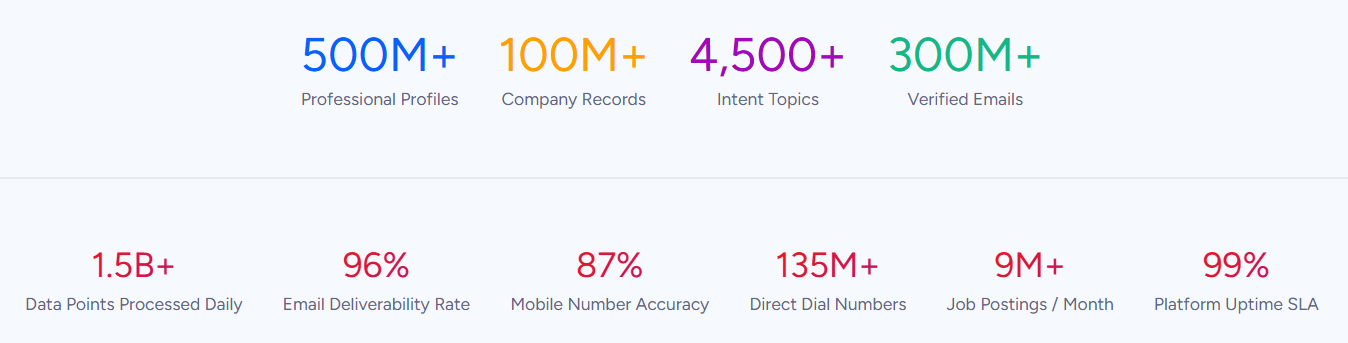
ZoomInfo is a go-to-market platform built on a broad B2B data foundation: 500M contacts, 100M companies, 135M+ verified phone numbers, and 200M+ verified business email addresses.
Source: ZoomInfo
Its GTM Context Graph, an intelligence layer processing 1.5B+ data points daily, combines this data with CRM records, conversation transcripts, and behavioral signals to show the full context behind every account.
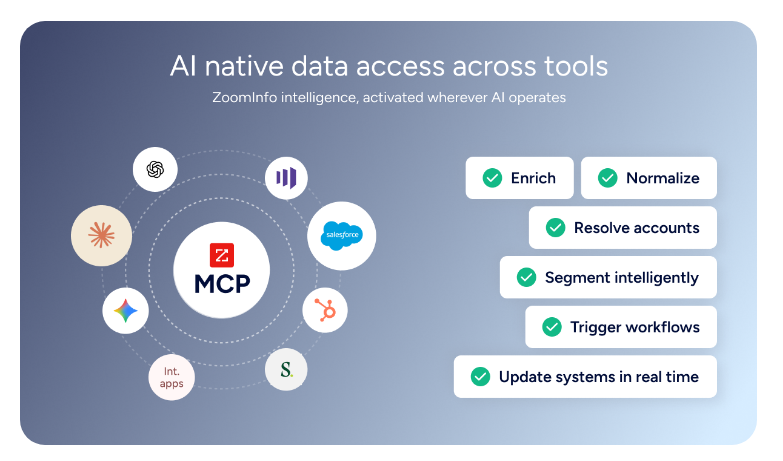
That context gives AI the fuel to reveal not just what happened, but why, and what to do next. Sellers access this intelligence through the GTM Workspace, marketers and RevOps through GTM Studio, and any other tool through APIs and MCP.
Where Forma.ai manages the internal mechanics of sales performance, ZoomInfo provides the external intelligence and execution that drives the pipeline behind it.
Comprehensive B2B Data: The market intelligence that territory and quota planning needs.
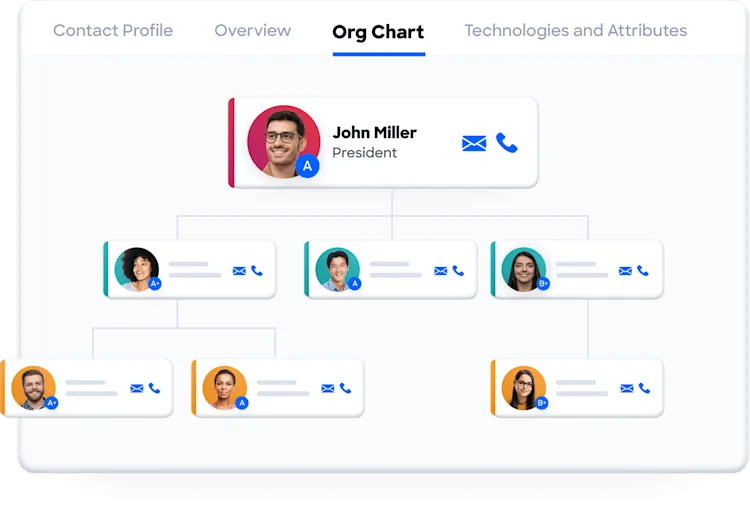
Territory and quota decisions are only as good as the data informing them. ZoomInfo's data platform covers three dimensions: identity data (who buyers are and how to reach them), company context (100M companies with firmographics, org charts, and technographics tracking 30,000+ technologies across 200+ categories), and dynamic signals revealing when accounts are actively in-market.
Source: ZoomInfo
This data is verified at scale. A multi-source pipeline backed by 300+ human researchers reaches up to 95% accuracy on first-party data. In a Fortune 500 competitive RFP analyzing 25 million contacts across vendors, the independent consultant concluded that "no other competitor came even close."
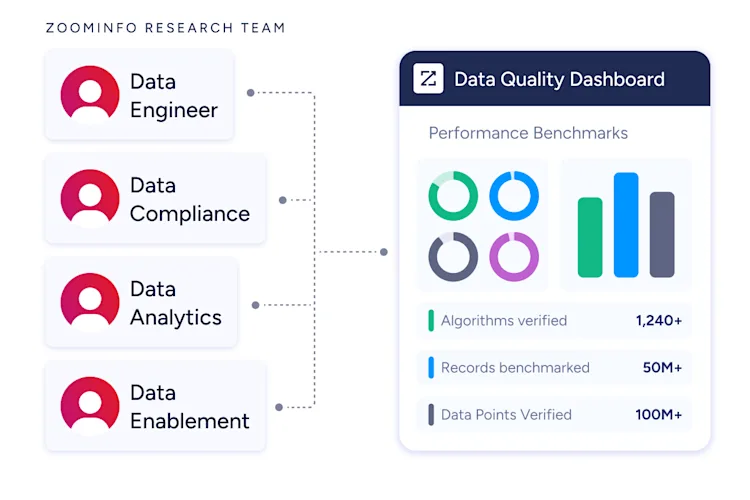
For organizations using Forma.ai to design territories, ZoomInfo's company and technology data provides the independent market intelligence that Architect doesn't generate on its own.
Understanding company size, technology adoption, parent-child hierarchies, and departmental structure across a total addressable market means territory boundaries reflect actual opportunity rather than historical sales patterns alone.
"We're right in the middle of re-architecting all of our data. ZoomInfo has been a major thought leader and partner in how we approach segmentation, territory planning, and hierarchy clarity." (Palo Alto Networks)
Buyer Intent and Signals: Leading indicators that predict quota attainment.
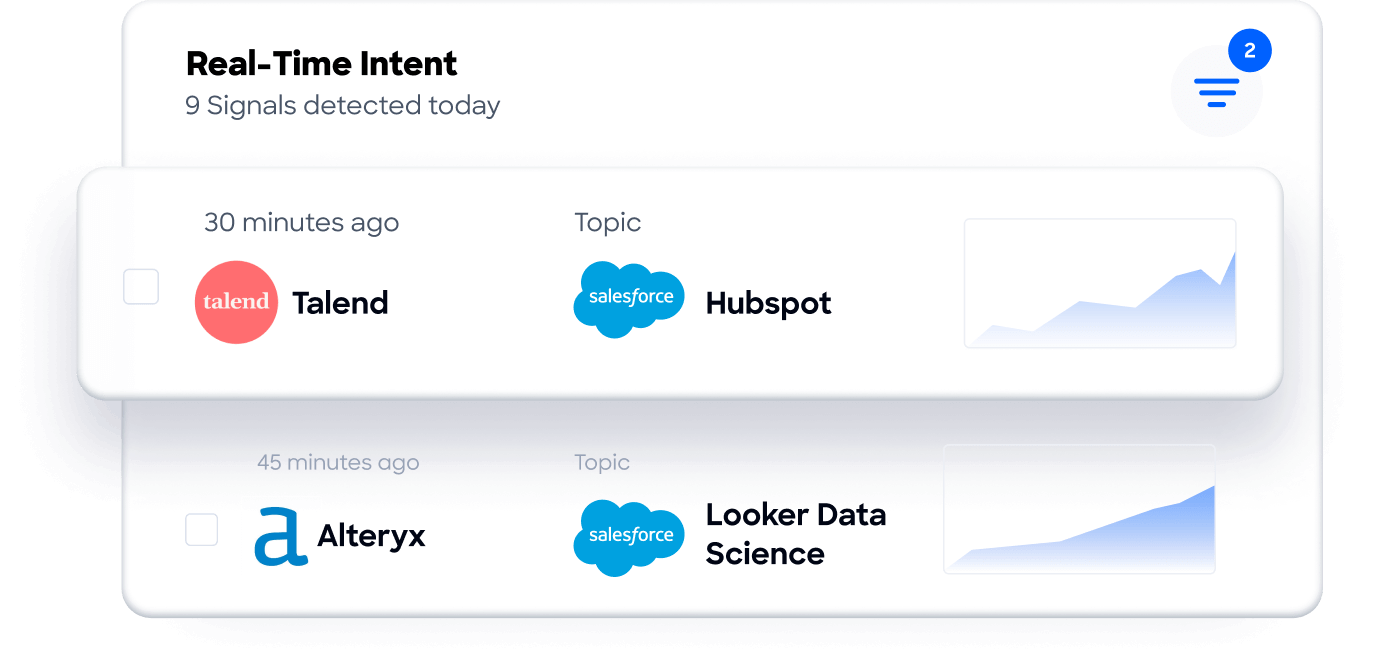
Forma.ai tracks trailing indicators (commission accuracy, quota attainment, earnings progress). ZoomInfo surfaces leading indicators: which accounts are actively researching solutions, which companies are hiring in relevant departments, and which prospects are visiting competitor websites.
ZoomInfo Intent tracks signals from 210 million IP-to-Organization pairings and 6 trillion+ new keyword-to-device pairings monthly.
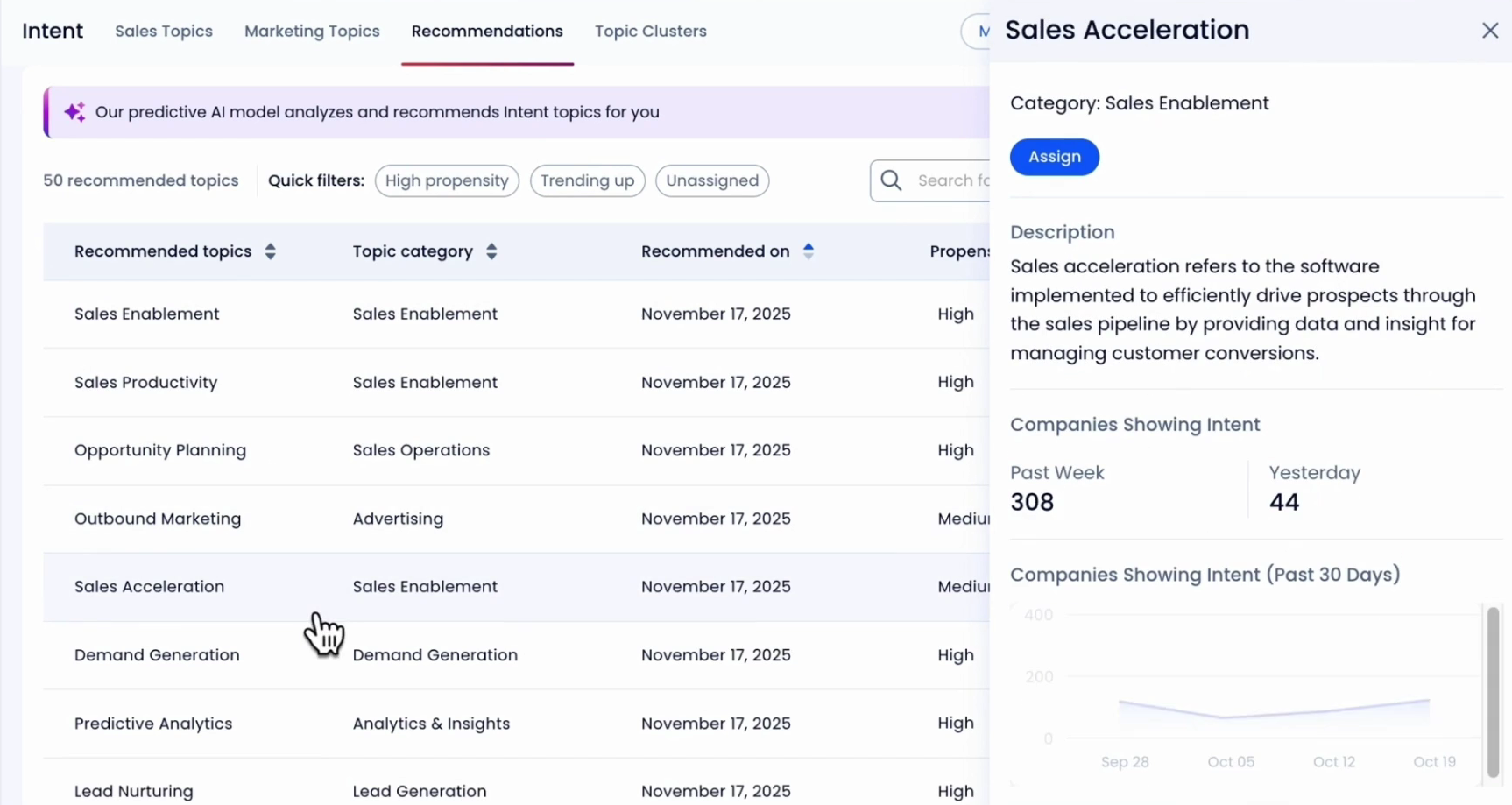
Guided Intent, exclusive to ZoomInfo, identifies topics historically correlated with deal success rather than requiring manual topic selection.
Source: ZoomInfo
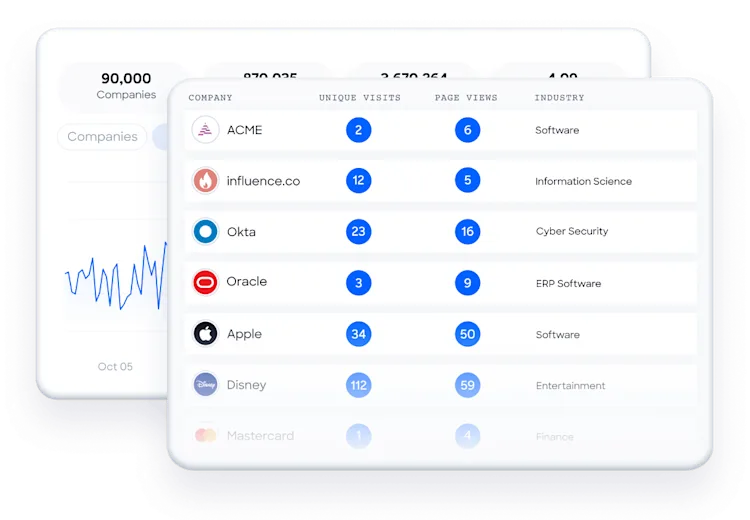
WebSights resolves anonymous website traffic to companies, identifying buying teams and providing direct contact information.
Source: ZoomInfo
The GTM Context Graph fuses these signals with CRM data and conversation intelligence to capture the context behind deal movement. A CRM records that a deal moved stages.
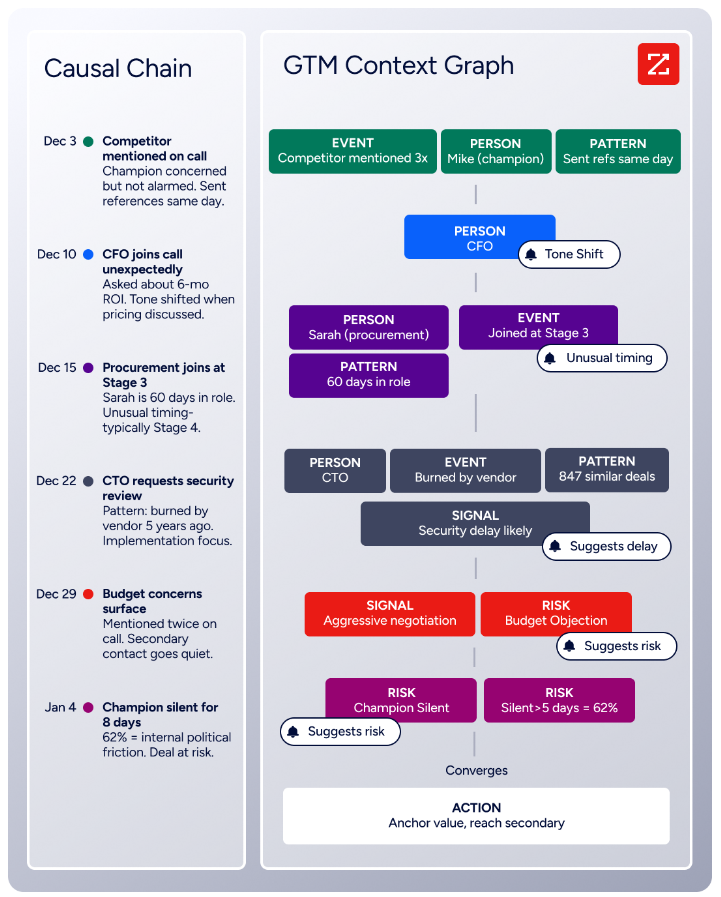
The GTM Context Graph reveals that it moved because executive sponsorship entered the conversation with ROI-focused questions, matching patterns behind closed-won deals in the segment.
Seismic's sales team attributed 39% of active pipeline to opportunities identified or influenced by ZoomInfo signals, with sellers saving 11.5 hours per week and reporting 54% higher productivity. (Seismic)
AI-Powered Seller Execution: The daily workspace reps use to hit their numbers.
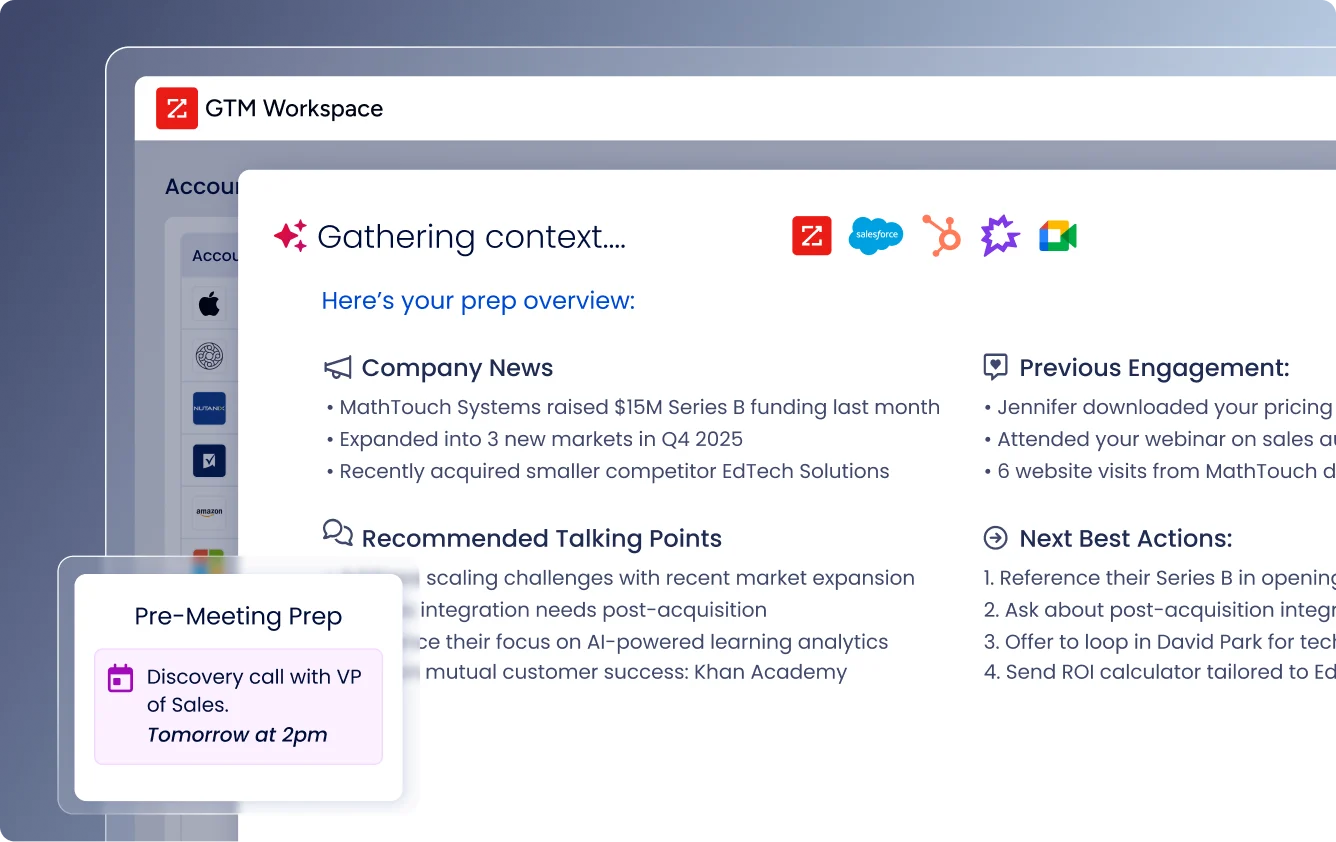
GTM Workspace is the seller's front-end to ZoomInfo's intelligence. It pulls CRM data, buyer signals, conversation history, and market intelligence into a single view, cutting the context-switching that eats into selling time.
Source: ZoomInfo
AI agents handle account research, outreach drafting, CRM updates, and signal monitoring, answering three questions for every rep: who to contact, when to engage, and what to say.
Source: ZoomInfo
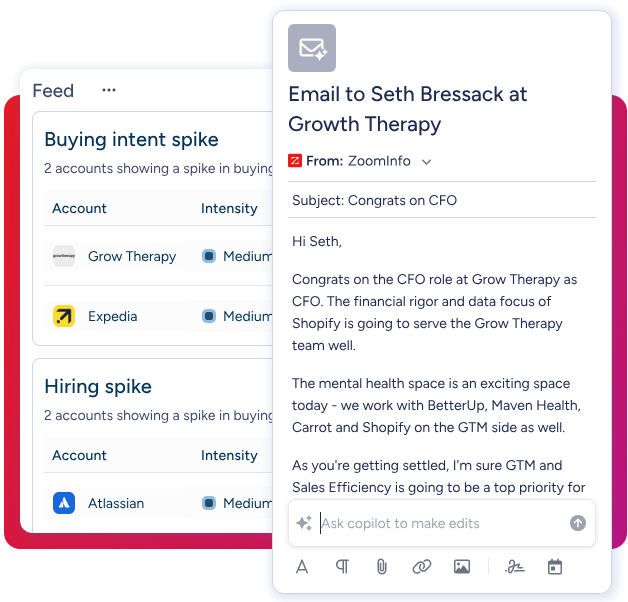
The Action Feed delivers a live stream of in-market buyers matched to target criteria, with pre-drafted actions on every signal (G2 comparisons, funding events, executive hires).
Source: ZoomInfo
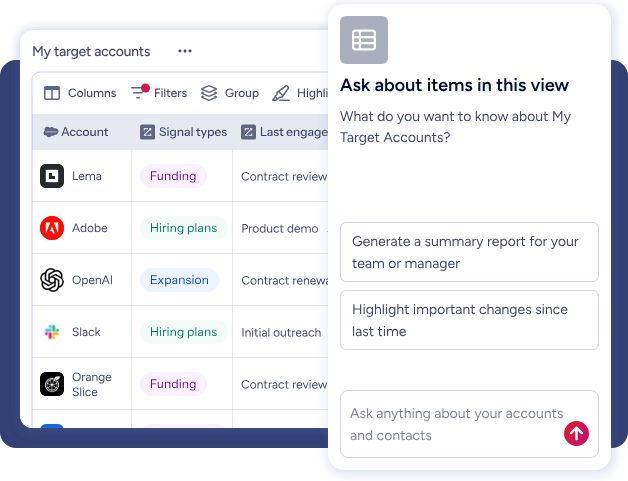
Views provide dynamic, spreadsheet-style interfaces combining CRM data with real-time buying signals, so reps can filter for intent spikes, technology changes, or personnel movements across their book of business.
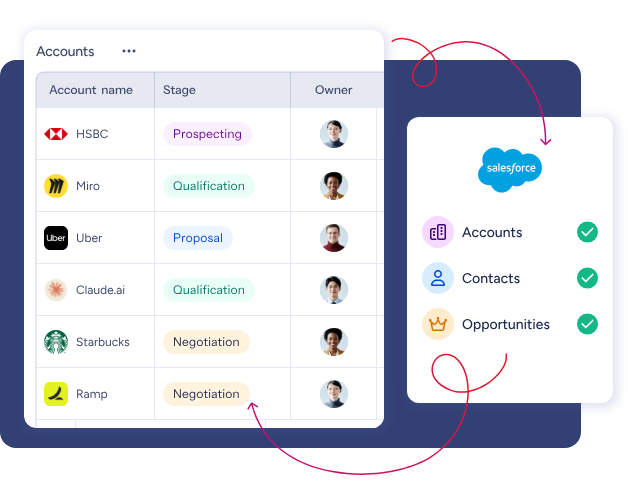
For comp teams using Forma.ai, GTM Workspace is the execution engine on the other side of their plans. Forma.ai sets the targets and tracks attainment. GTM Workspace helps sellers generate the pipeline and close the deals that drive attainment.
"ZoomInfo's not just a contact data company anymore. They've built a full system of execution. GTM Intelligence works the list, writes the outreach, triggers the play, and helps drive predictable growth." (Levanta)
Universal Access: Intelligence that flows into any tool or workflow.
ZoomInfo's data and intelligence are not locked inside a single application. APIs and MCP expose the same GTM Context Graph to any custom agent, internal tool, or partner platform. API access is included in all relevant plans, and the MCP server currently supports Claude and ChatGPT with more tools noted as coming soon.
Source: ZoomInfo
This means organizations can feed ZoomInfo's market intelligence into their existing GTM stack, including the data sources behind Forma.ai's territory and quota models. Rather than relying solely on internal historical data for planning, revenue operations teams can enrich their planning data with verified company data, technographics, and intent signals.
"The plug-and-play aspect of the API means I can integrate it very easily into any process and get information at a moment's notice." (BDO Canada)
Forma.ai and ZoomInfo: How They Fit Together
Aspect | Forma.ai | ZoomInfo |
|---|---|---|
Primary focus | Sales compensation design and management | B2B data, intelligence, and seller execution |
Core problem solved | How to design, deploy, and optimize comp plans | How to find, prioritize, and engage buyers |
Target users | Comp analysts, Sales Ops, Finance, HR | Sales reps, Marketing, RevOps, GTM Engineers |
Territory planning | AI-balanced territories based on customer data | Independent market intelligence across 100M companies |
Quota management | Top-down/bottoms-up reconciliation and modeling | Intent signals and pipeline data that predict attainment |
Seller-facing tools | Earnings dashboards and commission statements | AI-powered prospecting, outreach, and deal execution |
Signal detection | Compensation metrics (trailing indicators) | Buyer intent, website visits, hiring patterns (leading indicators) |
Data platform | 600+ pre-built integrations for comp data | 500M contacts, 135M+ verified phones, 200M+ emails |
AI application | Plan configuration and scenario modeling | Account research, outreach drafting, signal prioritization |
Pricing model | Custom enterprise quotes; no public pricing | Custom consumption-based pricing; free tier available |
Analyst recognition | Forrester Wave Strong Performer (Q1 2025) | Gartner MQ Leader (ABM, 2024 & 2025); Forrester Leader (Intent Data, Q1 2025) |
Best used for | Designing the comp strategy | Executing against it |
Final Verdict
Forma.ai and ZoomInfo serve different but connected parts of the sales performance equation. The choice isn't between them; it's about recognizing what each does and where it fits in your stack.
Choose Forma.ai if your organization has outgrown spreadsheets and legacy ICM tools for managing sales compensation.
If your comp team spends months deploying plan changes, if calculation errors create disputes and overpayments, or if territory and quota planning happens in disconnected spreadsheets that never talk to your incentive system, Forma.ai solves those problems at enterprise scale.
The AI-powered plan configuration, real-time scenario modeling, and unified territory-quota-ICM architecture make it a strong choice for organizations with complex compensation structures and large payee populations.
Add ZoomInfo if you want the data and intelligence that helps sellers hit the targets Forma.ai sets. While Forma.ai optimizes what sellers are paid and where they sell, ZoomInfo provides the market intelligence, buyer intent signals, and execution tools that drive pipeline and revenue.
Together, they form a more complete system: Forma.ai designs the comp strategy, and ZoomInfo powers the execution that makes those plans produce results.
Get started with ZoomInfo here.
The strongest sales organizations don't just design better comp plans. They pair those plans with the data and tools that make targets achievable. Forma.ai handles the first half. ZoomInfo handles the second.
Forma.ai FAQ
What is Forma.ai used for?
Forma.ai is an enterprise Sales Performance Management platform used to design, automate, and optimize sales compensation plans, territories, and quotas.
It replaces legacy ICM tools and spreadsheet-based processes with AI-powered plan configuration, real-time scenario modeling, and automated calculation and crediting.
The platform is built for organizations with complex, multi-layered compensation structures and typically hundreds to thousands of payees.
How much does Forma.ai cost?
Forma.ai does not publish pricing. The company uses a custom, quote-based model with three components: a one-time onboarding and implementation fee, an ongoing CompOps Platform subscription, and an AI-Configurator component priced by configuration capability needed.
Professional services are included in the license fee, which contrasts with competitors that charge separately for implementation and consulting. The company claims the lowest total cost of ownership in the enterprise ICM category.
Does Forma.ai offer a free trial?
No. Forma.ai does not offer a free trial, free plan, or self-serve sign-up. All engagement begins with a demo request and a sales conversation. This enterprise-only approach reflects the platform's focus on complex compensation environments that require dedicated implementation support.
How long does Forma.ai take to implement?
Implementation timelines vary based on the complexity of the compensation structures being migrated. G2 reviewers note that initial setup takes meaningful time, especially for organizations with complex incentive plans and teams unfamiliar with the platform's data model.
However, Forma.ai includes implementation specialists in the license to manage the process. Autodesk, which migrated from two legacy ICMs plus a home-grown system, launched plans at fiscal year start for the first time in several years after implementation.
What companies use Forma.ai?
Published customers include Autodesk (2,500+ payees, 1,900 channel partners), WEX, Hootsuite, B.Braun, Solventum, Stryker, Penumbra, Trustpilot, Procom, and Edmentum. The platform has processed over $25 billion in commissions. A global medical technology case study describes managing compensation across 40+ countries on the platform.
Does Forma.ai integrate with CRMs and other tools?
Yes. Forma.ai references 600+ pre-built integrations on its homepage, covering CRM, ERP, HRIS, payroll, and custom data sources. The platform includes ETL capabilities to load, validate, clean, and transform data from any number of sources. Specific CRM and ERP integration partners are not listed on the public website, so prospective buyers should confirm compatibility with their stack during the sales process.
How is Forma.ai different from Xactly or SAP Callidus?
Forma.ai positions itself as an AI-native alternative to legacy ICM platforms. The core difference is a unified data model that allows no-code plan configuration through natural language, rather than requiring technical formula construction.
Published comparisons claim 87% reduction in plan rollout timelines, 91.7% reduction in calculation run-time, and 93.8% reduction in commission errors versus Xactly.
The platform also bundles professional services into the license, while legacy vendors typically require separate consultant spend for implementation and ongoing management.
Can Forma.ai help sellers find prospects or build pipeline?
No. Forma.ai focuses on the strategy and administration side of sales performance: compensation design, territory planning, quota management, and analytics. It does not include prospecting tools, contact databases, engagement automation, or buyer intent signals.
For those capabilities, organizations typically pair their SPM platform with a go-to-market intelligence platform like ZoomInfo, which provides B2B contact and company data, buyer intent signals, and AI-powered seller tools.
Researching Forma.ai? These comparisons and alternatives help you decide:
