
Choosing between Forma.ai and CaptivateIQ for sales performance management comes down to five questions:
Do you need a platform your comp team can configure on its own, or one where vendor experts handle configuration with you?
How complex are your commission structures, and how often do they change mid-year?
Is territory and quota planning a separate problem you want solved in the same system?
Do you need AI that builds plan logic from plain language, or AI that explains payouts and detects anomalies?
Does your GTM data flow cleanly into your compensation system, or are your sales teams still working with incomplete account and contact intelligence upstream?
In short, here's what we recommend:
Forma.ai serves enterprises with large, complex sales organizations that need flexibility and strategic advisory alongside their ICM tool. Its unified data model translates compensation requirements into rule logic without coding, and a team of data scientists and strategy consultants comes included in the license. The trade-off: Forma.ai has a steeper learning curve, limited self-service for certain admin tasks, and is not designed for organizations with simple, static comp plans.
CaptivateIQ gives compensation teams a no-code canvas to build and manage complex commission structures independently, without waiting on IT or vendor services. Its SmartGrid engine processes 10M+ source transactions in 12 seconds, and a suite of AI agents explains payouts to reps in plain English, reducing commission inquiry tickets. The trade-off: initial setup demands significant internal investment, performance can slow at scale with large models, and there is no native iPaaS connector support (Zapier, Workato, Make).
Both platforms solve the same core problem: getting commissions right, fast, and transparently. But neither solves the problem that comes before commissions: making sure your sales team is working the right accounts with accurate contact data and timely buying signals. That upstream intelligence determines whether your comp plans actually drive the outcomes you designed them for.
ZoomInfo is a GTM platform built on a B2B data foundation of 500M contacts, 100M companies, 135M+ verified phone numbers, and 200M+ verified business email addresses. Its GTM Context Graph processes 1.5B+ data points daily, combining this data with your CRM records, conversation transcripts, and behavioral signals to show not just what happened in a deal, but why. For revenue operations leaders managing both sales execution and compensation, ZoomInfo provides the account intelligence, intent signals, and territory data that feeds directly into how you design quotas, balance territories, and measure whether your incentive spend drives the right behaviors. Your team can access this intelligence through GTM Workspace for sellers, GTM Studio for marketers and RevOps, or APIs and MCP in any other front-end.
If connecting your upstream GTM intelligence to downstream compensation planning sounds like the missing piece in your revenue operations, see how ZoomInfo works.
Forma.ai vs. CaptivateIQ at a glance
Forma.ai | CaptivateIQ | ZoomInfo | |
|---|---|---|---|
Primary focus | AI-powered SPM with embedded strategy consulting | No-code ICM + sales planning platform | AI GTM platform (data, signals, execution) |
Plan configuration | AI translates plain language into rule logic; vendor-managed model | No-code SmartGrid canvas; admin self-service | N/A (upstream data and signals) |
Territory & quota planning | Forma Architect (native module) | CaptivateIQ Planning (native module) | GTM Context Graph feeds territory and quota data |
AI capabilities | AI plan configuration, Monte Carlo simulations, Prophet advisory | AI agents for payout explanation, anomaly detection, plan building | GTM Context Graph, AI account research, intent signals |
Implementation model | Hands-on; professional services bundled in license | Self-service with implementation support; services billed separately | Deploys in weeks; dedicated onboarding |
Pricing transparency | Quote-only; no published tiers | Quote-only; per-seat + setup fee | Quote-only; consumption-based |
Analyst recognition | Forrester Wave Strong Performer & Customer Favorite (Q1 2025) | Forrester Wave Leader (Q1 2025); Gartner Customers' Choice (2024) | Forrester Wave Leader (Intent Data, Q1 2025); Gartner MQ Leader (ABM, 2024 & 2025) |
Best for | Enterprises with complex, frequently changing comp plans needing strategic advisory | Mid-market to enterprise teams wanting admin self-sufficiency over commission management | Revenue teams needing B2B data, intent signals, and GTM execution |
Two different philosophies on plan configuration
The core architectural difference between Forma.ai and CaptivateIQ is who owns plan configuration and how the system handles complexity.
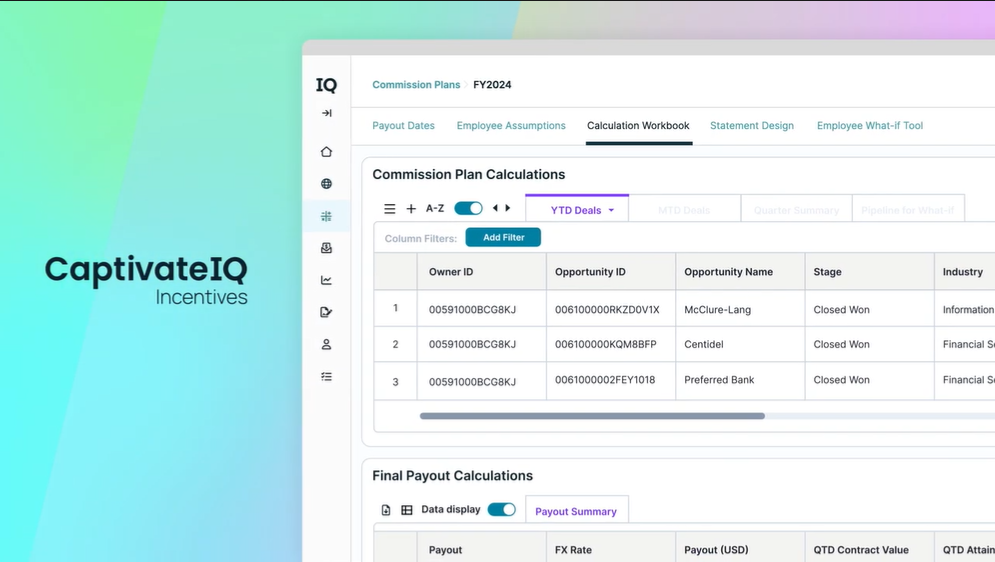
CaptivateIQ built its platform around admin self-sufficiency. The SmartGrid engine gives compensation teams a spreadsheet-like canvas where they build commission logic using a no-code interface.
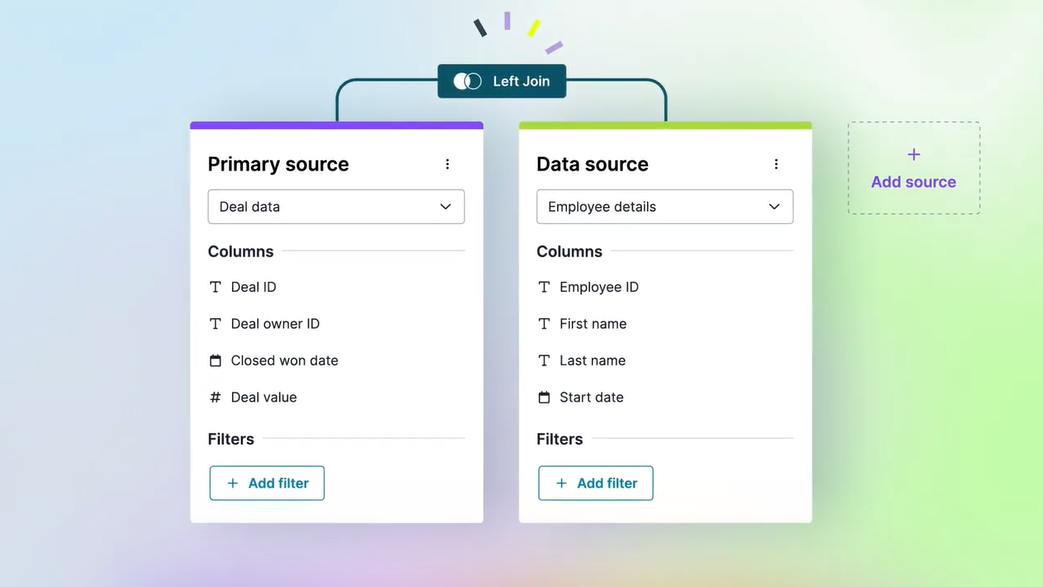
Source: CaptivateIQ
The Guided Plan Builder walks admins through step-by-step plan setup, and the platform supports up to 7,000 simultaneous plans.
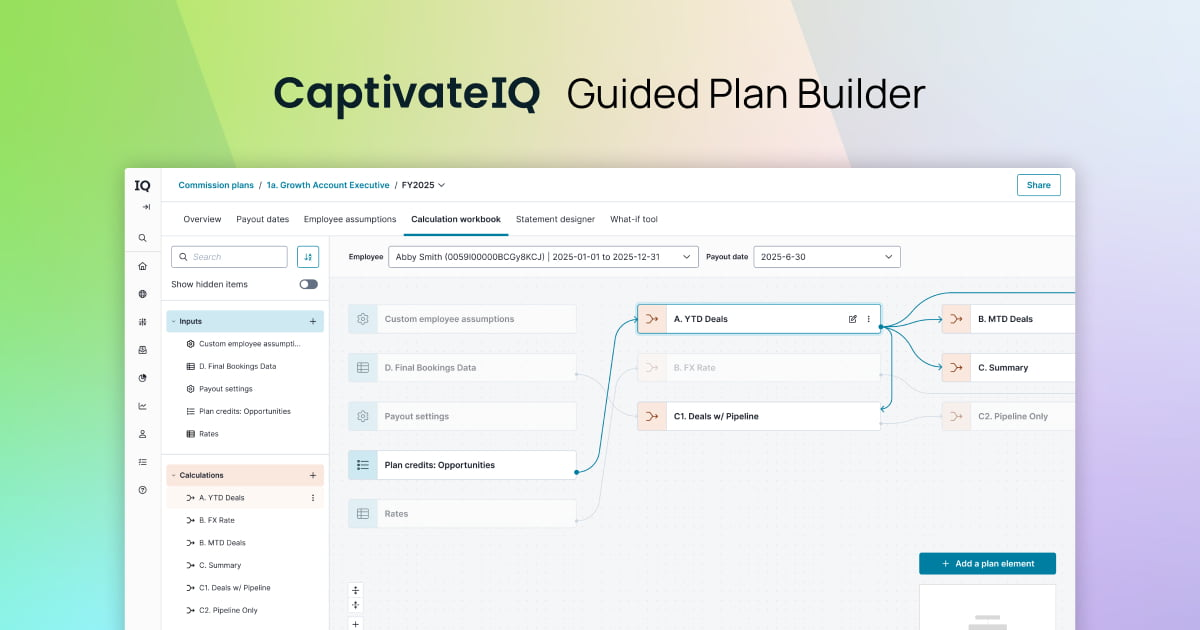
Source: CaptivateIQ
The philosophy is clear: put the power in the admin's hands. Comp teams can update tiers, accelerators, splits, and overlays without filing IT tickets or waiting on vendor consultants.
This flexibility comes with a trade-off. G2 reviewers consistently note that CaptivateIQ is a "white canvas," meaning initial setup requires real time and internal expertise.
You need to understand how your plans are structured before the system becomes productive. Cycling from month to month after initial setup is described as "a significant lift."
Forma.ai takes a different approach. Instead of giving admins a blank canvas, the platform uses a unified data model that translates compensation requirements into rule logic automatically.
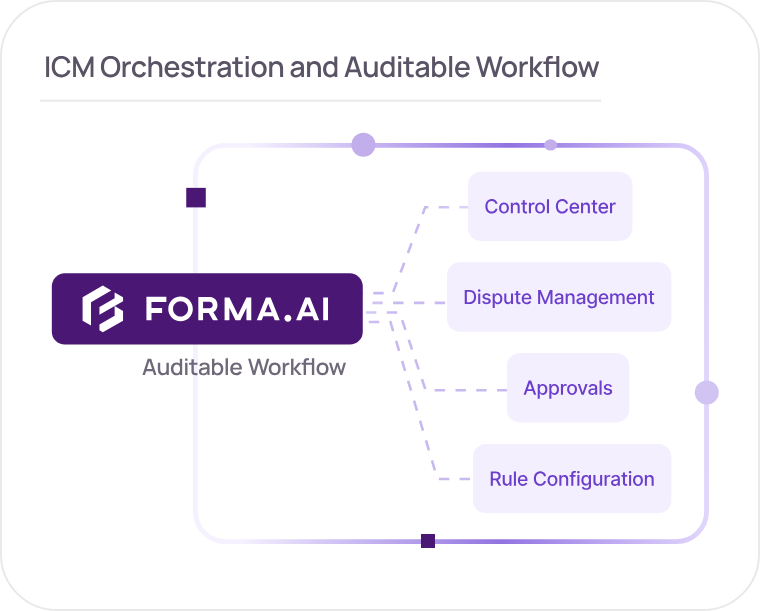
Source: Forma.ai
Users define parameters and select from a template library; for anything custom, they describe the compensation logic in plain language and AI translates it into a validated plan component. No formulas, no manual rule building.
The trade-off for Forma.ai is a steeper initial learning curve and, according to some G2 reviewers, less intuitive onboarding compared to CaptivateIQ. The managed model also means certain admin tasks may require going through the Forma.ai team rather than being fully self-service.
Commission processing speed and scale
Both platforms handle enterprise volumes, but the benchmarks differ.
CaptivateIQ's SmartGrid engine processes worksheets with 10M+ source transactions in 12 seconds and powers over 6.25 trillion real-time calculations per month across its customer base. The platform can load up to 50M records per data sync.
However, G2 reviewers flag that page load times can slow when viewing monthly metrics or working with large commission models. Pages reportedly query the database in real time even when underlying data only refreshes daily.
Forma.ai demonstrates its processing through customer scale rather than raw calculation numbers. Autodesk processes 100M+ transaction lines for incentive plan calculations across 2,500+ payees and 1,900 channel partners.
For organizations evaluating speed, the practical question is whether processing runs fast enough to support real-time scenario modeling and mid-cycle plan changes without batch delays. Both platforms deliver on this compared to legacy ICM tools, but CaptivateIQ publishes more granular processing benchmarks while Forma.ai emphasizes outcome metrics.
Territory and quota planning: the expansion both platforms made
Until recently, most ICM tools handled only the commission calculation step. Territory design and quota setting lived in spreadsheets or separate planning tools. Both Forma.ai and CaptivateIQ have expanded to cover the full planning-to-payout cycle, but with different approaches.
CaptivateIQ Planning launched in 2024-2025, covering sales capacity planning, quota setting, and territory management. The structural advantage: because Planning sits inside the same platform as Incentives, quota changes automatically sync to compensation structures.
Source: CaptivateIQ
No manual reconciliation when plans change mid-cycle. The Planning module supports both top-down and bottom-up quota methodologies, and a Rev Planning Agent lets users describe territory assignment goals in natural language.
Forma Architect has been part of Forma.ai's product suite as a core module from earlier in the platform's evolution. It uses AI-driven insights that assess account potential and workload to match seller capacity with market demand. Like CaptivateIQ, changes to territories or quotas cascade instantly to incentive calculations in Forma Operator.
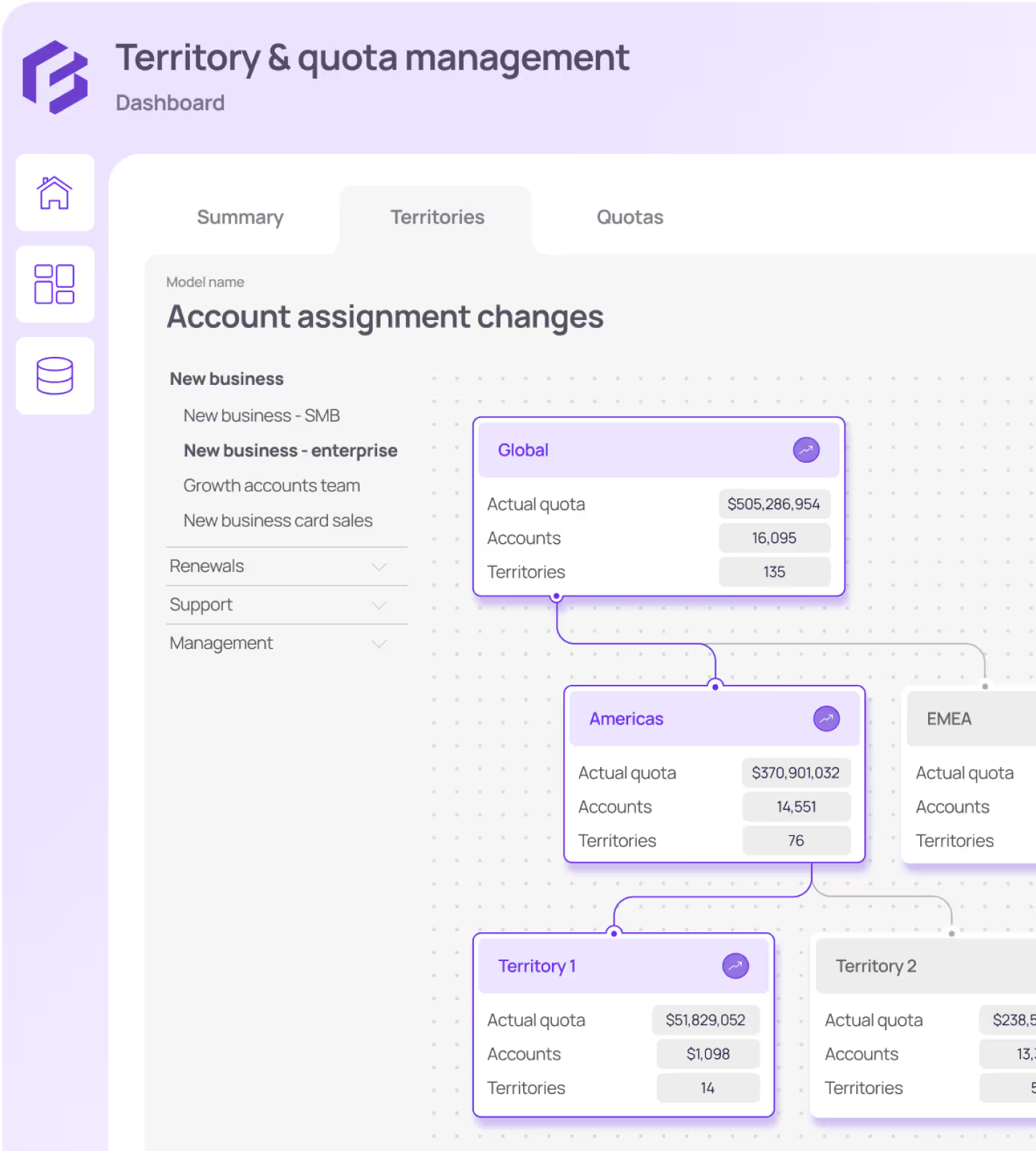
Source: Forma.ai
Forma Architect adds manager refinement workflows that let sales leaders adjust territory and quota within predefined guardrails, and supports collaborative planning where global teams work simultaneously across models.
Both platforms frame their planning modules as a direct response to the same pain: fragmentation between planning tools and ICM tools creates data silos, manual reconciliation, and slow annual planning cycles.
The differentiation is in the supporting layer. CaptivateIQ pairs planning with its SmartGrid calculation engine and AI agents. Forma.ai pairs planning with its embedded advisory team and Monte Carlo simulation modeling through Forma Prophet.
Where upstream GTM intelligence fits
Territory design and quota setting don't happen in a vacuum. The quality of those decisions depends on the data feeding them: how well you understand your addressable market, which accounts show buying intent, and whether your coverage model matches actual opportunity distribution.
This is where ZoomInfo enters the picture as a complementary tool, not as an alternative to either ICM platform.
ZoomInfo's GTM Context Graph processes 1.5B+ data points daily, combining its B2B database with a customer's CRM records, conversation intelligence, and behavioral signals.
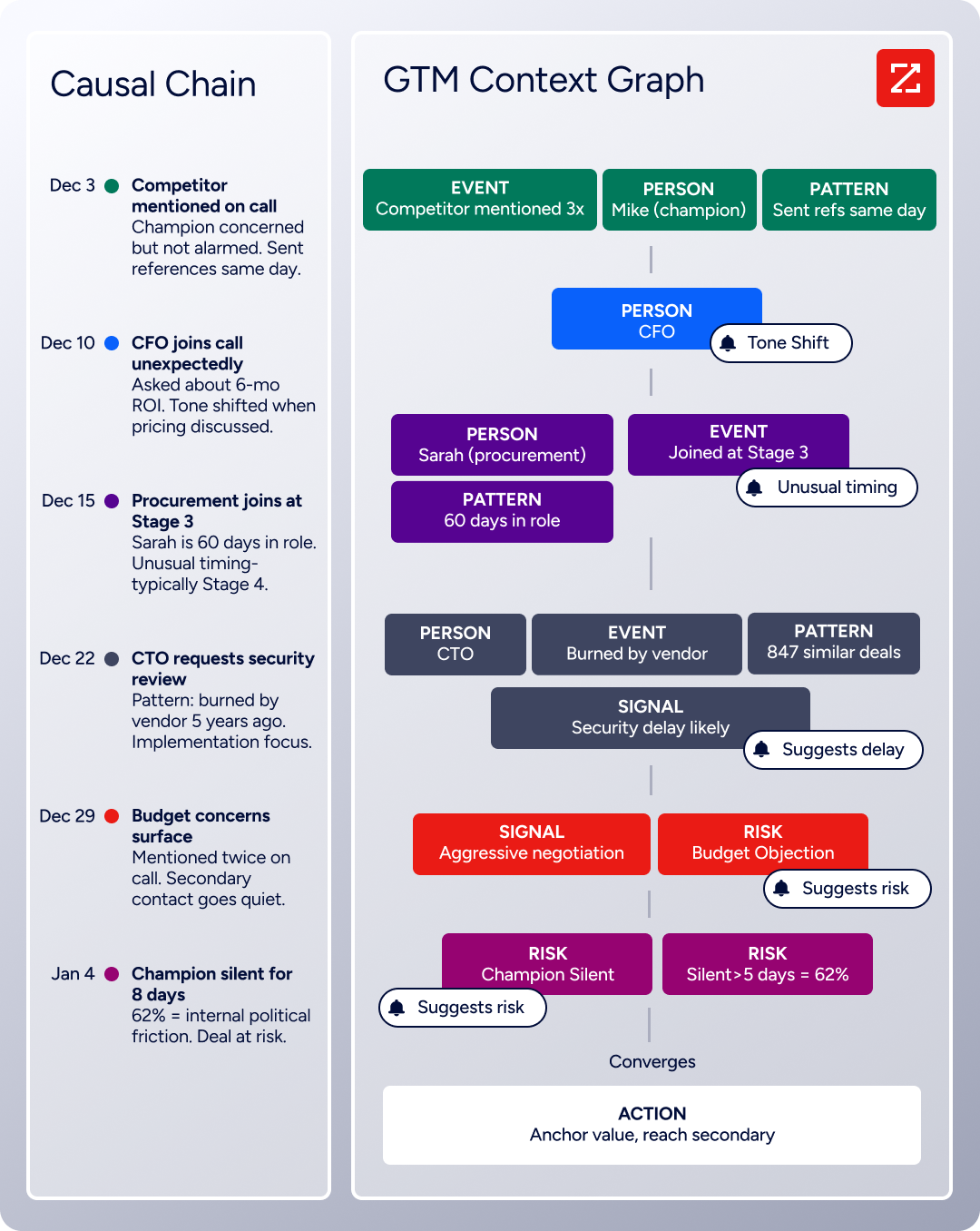
For RevOps leaders who also own territory and quota planning, this intelligence answers questions that no ICM platform can: Which accounts in our territory are actively researching solutions? Which segments have untapped whitespace? Where are the coverage gaps between our sales capacity and actual market demand?
The practical connection works like this. ZoomInfo's company data, technographic profiles, and intent signals inform how territories should be carved and where quotas should be set. Once those decisions are made, they flow into Forma.ai or CaptivateIQ for compensation execution.
Without accurate upstream data, even the best comp plan will misfire: quotas set against stale market data produce unattainable targets, and territories built on incomplete account intelligence create coverage gaps that no incentive structure can fix.
"ZoomInfo's not just a contact data company anymore. They've built a full system of execution. GTM Intelligence actually works the list, writes the outreach, triggers the play, and helps drive predictable growth." (Ian Brodie, CEO & Co-Founder, Levanta)
AI capabilities compared
All three platforms use AI, but for different purposes.
CaptivateIQ recently launched CaptivateIQ Agents, a suite of three AI agents: Comp Builder (builds comp plans from natural language), Comp Ops (explains payouts in plain English and manages approvals), and Rev Planning (configures territory logic from natural language goals). The agents operate on live data within the same permission and approval framework as the rest of the platform.
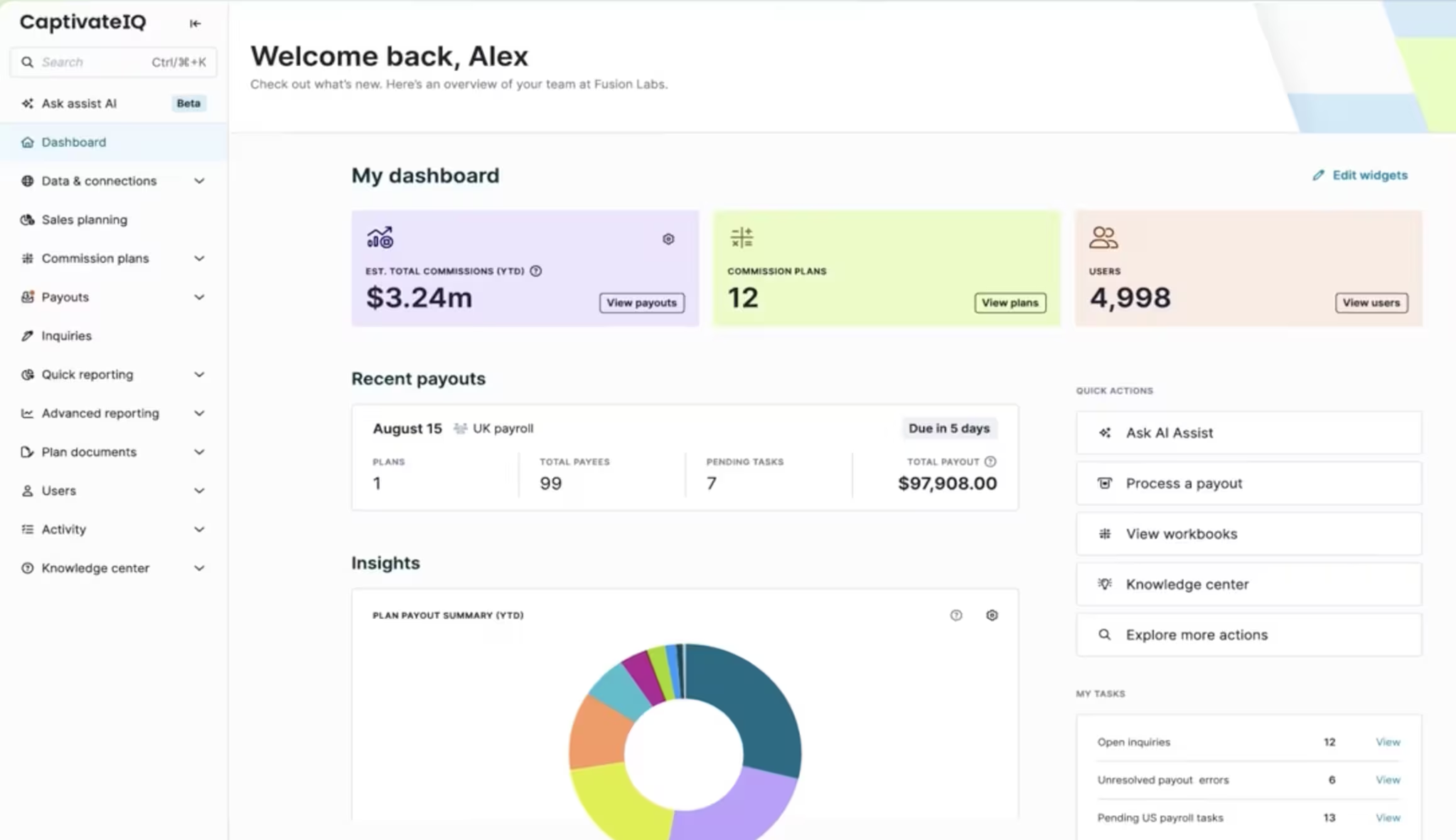
Source: CaptivateIQ
A CaptivateIQ MCP Server is announced as coming soon, which would let third-party AI tools access live compensation data.
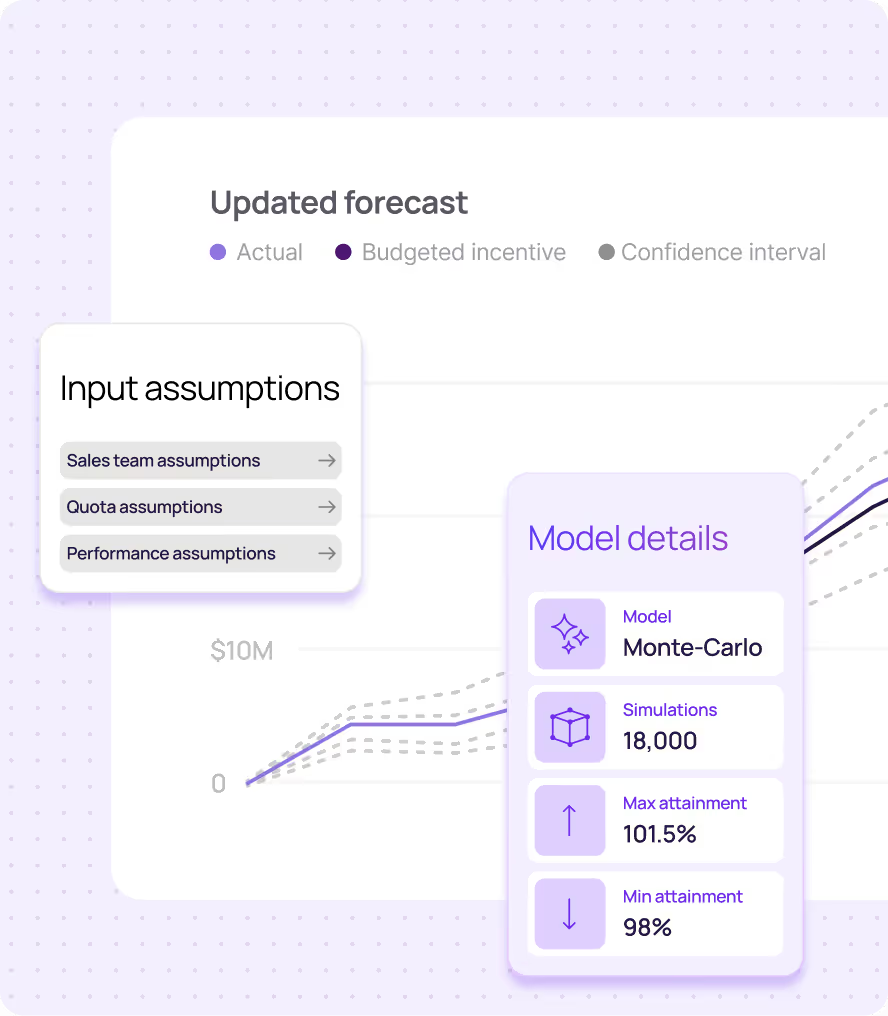
Forma.ai uses AI at the configuration layer. The platform translates plain-language requirements into validated plan components automatically. Forma Prophet adds machine learning models for customer insight modeling, Monte Carlo simulation of incentive scenarios, and ongoing effectiveness monitoring.
Source: Forma.ai
These models are trained on customer-specific data, not generic benchmarks. The AI layer is paired with human advisory: Forma.ai's data scientists and strategy consultants interpret results and recommend actions alongside the platform's automated outputs.
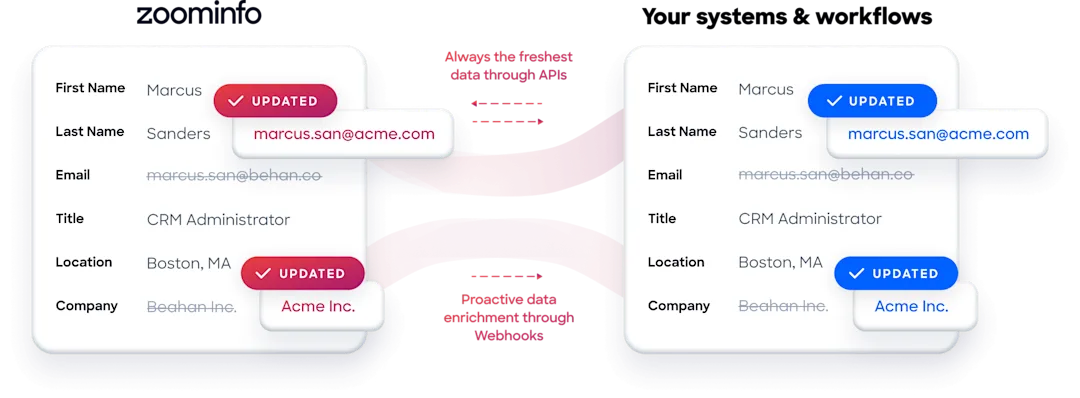
ZoomInfo applies AI to the upstream GTM problem. The GTM Context Graph captures not just CRM state changes but the reasons behind them, extracted from conversation intelligence, email interactions, and behavioral signals.
For compensation planning, this means RevOps teams can see which selling motions produce results and why, then feed those insights into territory and incentive design. ZoomInfo's API exposes this intelligence programmatically, and the MCP server makes it available to any AI agent.
Seller-facing transparency and dispute reduction
One of the most expensive hidden costs in sales compensation is shadow accounting: reps spending hours verifying their own commission statements because they don't trust the system. Both Forma.ai and CaptivateIQ address this directly.
CaptivateIQ provides AI-generated "explainable statements" that trace every payout from source transaction through applied logic. The AI converts calculation logic into plain-English narratives citing exact plan clauses and underlying transactions. Reps can run natural-language what-if analysis and receive predictive payout forecasts.
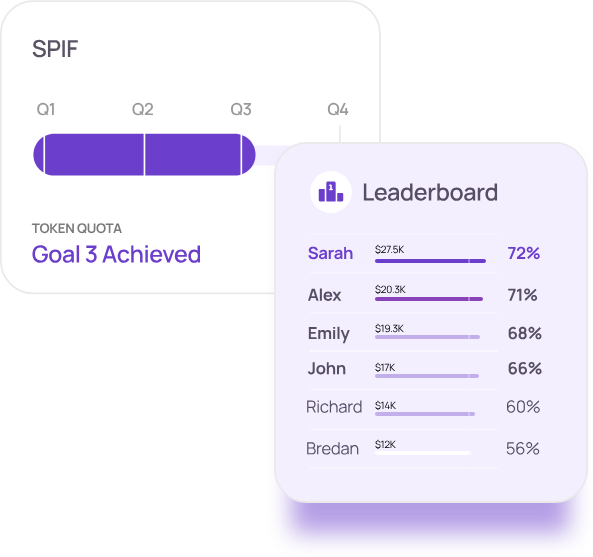
Forma.ai delivers real-time dashboards showing pipeline impact, progress toward team-based incentives, and leaderboard standings tailored to each rep's comp plan. Detailed commission statements with drill-down capabilities pair with a built-in dispute management flow.
Source: Forma.ai
Both platforms achieve similar outcomes through different mechanisms. CaptivateIQ leans on AI-generated explanations that translate complex logic into plain language. Forma.ai emphasizes interactive dashboards and drill-down statements.
For organizations where commission disputes consume meaningful finance and ops bandwidth, either approach represents a clear improvement over spreadsheet-based statements or legacy ICM exports.
Implementation and support models
This is where the two platforms diverge most sharply.
CaptivateIQ operates a tiered support model. Basic Support comes with every subscription: bug resolution, general product questions, and configuration guidance, with 24-hour response for general guidance and 6-hour response for system-impaired issues. Commission plan configuration support (help designing and building plan logic) is not included in Basic Support and requires upgrading to Premier or Elite tiers.
Implementation and custom configuration work is billed separately under a Statement of Work. CaptivateIQ expects admins to own their builds, with support available when they get stuck.
Forma.ai bundles professional services into the license fee. There is no separate consultant spend. The company employs former ZS Associates consultants (the same firm where the founder worked) who function as an extension of the customer's comp team. This model provides ongoing strategic guidance alongside technical support: not just answering "how do I configure this?" but "should I configure this?"
Implementation is hands-on: Forma.ai's team works directly with customers to transform data, build plans, and go live.
The right model depends on organizational capacity. CaptivateIQ fits teams with strong internal comp ops expertise who want control and speed. Forma.ai fits organizations that want vendor expertise embedded in their process, especially those without dedicated compensation engineering resources.
Integrations and data infrastructure
CaptivateIQ publishes a full integrations directory with 19 pre-built native connectors spanning CRM (Salesforce, HubSpot, Microsoft Dynamics), data warehouses (Snowflake, Amazon Redshift, BigQuery), ERP (NetSuite), HRIS (Workday, ADP, BambooHR), and accounting platforms (QuickBooks, Xero, Stripe, Zuora). An Open API at developers.captivateiq.com provides custom integration capability. All native integrations are inbound data sources feeding SmartGrid.
The notable gap: CaptivateIQ is not available on Zapier, Workato, or Make, a recurring complaint among users needing workflow automation outside the platform.
Forma.ai claims 600+ integrations on its homepage (the integrations product page references 200+ integrations). Integration categories include CRM, ERP, HRIS, and custom data sources. However, Forma.ai does not publish a named connector directory or a public API.
Integration setup is a managed process where the Forma.ai team works with customers to ensure data feeds are accurate and fit their data model. This approach trades self-service flexibility for managed reliability.
ZoomInfo operates as an upstream data source that both platforms can consume. Its Enterprise API and MCP server expose company, technographic, intent, and contact data to any system. For RevOps teams using either Forma.ai or CaptivateIQ, ZoomInfo data can feed territory planning models with account intelligence that neither ICM platform generates on its own.
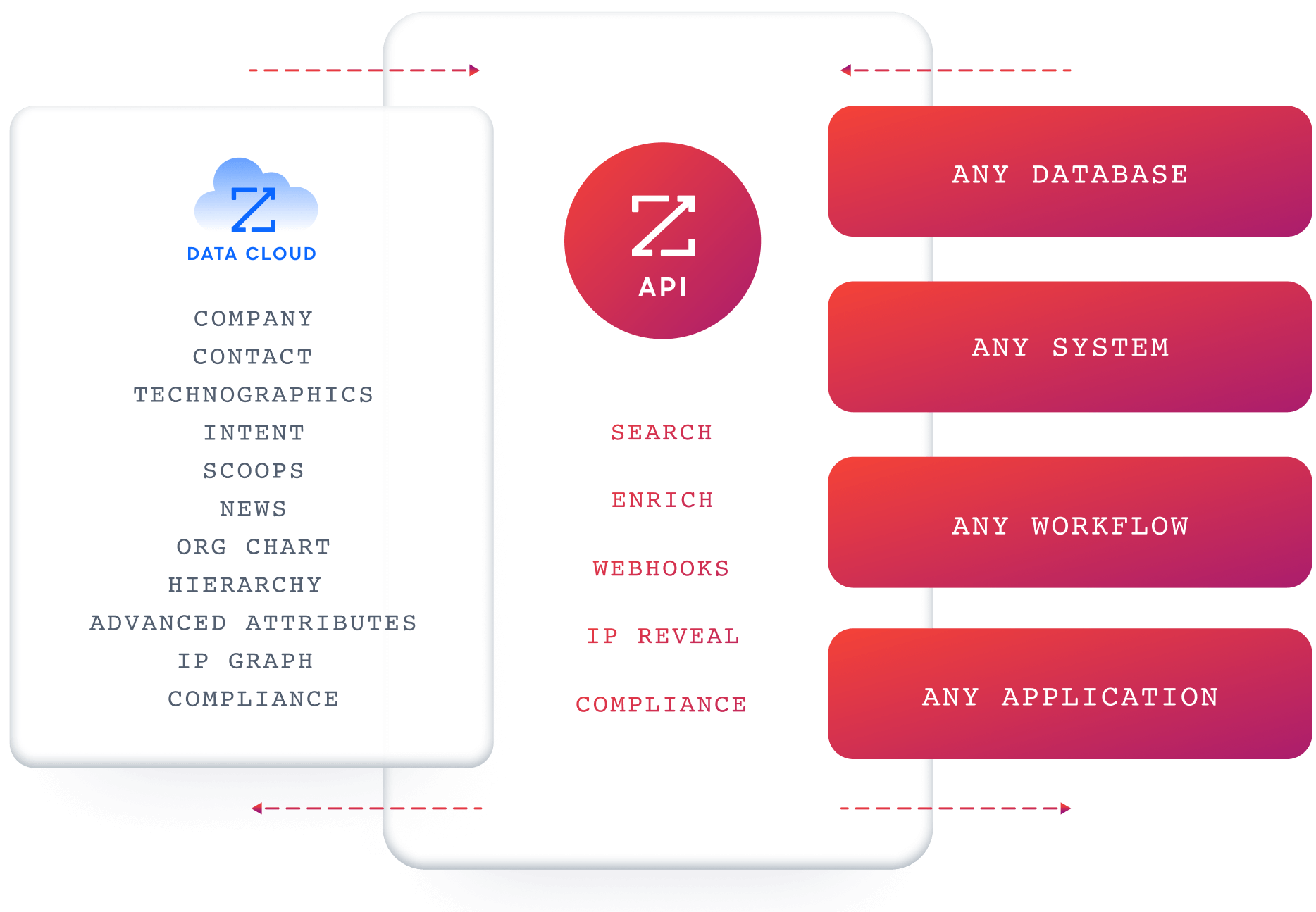
The ZoomInfo App Marketplace lists 172+ integration partners, and API access is included in all relevant plans.
"The plug-and-play aspect of the API means I can integrate it very easily into any process and get information at a moment's notice." (Jerry Wilson, Senior Marketing Intelligence Analyst, BDO Canada)
Compliance and audit controls
For public companies and organizations in regulated industries, SOX compliance and audit readiness are non-negotiable buying criteria.
CaptivateIQ has a dedicated SOX compliance page with six controls: segregation of duties, change control with statement locking, complete audit logging, granular role-based access controls, customizable SOX compliance reporting, and data protection (AES-256 at rest, TLS 1.2 in transit). The platform undergoes annual SOC 1 and SOC 2 audits. ASC 606 reporting is available as an add-on subscription.
Forma.ai provides a dedicated SOX compliance solution built on four pillars: immutable audit trails, granular permissions down to individual data field level, governance and controls, and SOC2 Type 1 & 2 compliance plus encryption and third-party penetration testing. ASC 606 reporting is integrated with ICM calculations, automatically updating amortization schedules as commission runs process, with no add-on required.
Both platforms meet enterprise compliance requirements. The practical difference: Forma.ai includes ASC 606 reporting natively, while CaptivateIQ charges for it separately. For finance teams in public companies where ASC 606 compliance is mandatory, this cost distinction matters at contract negotiation.
ZoomInfo maintains ISO 27001, ISO 27701, SOC 2 Type II, TRUSTe GDPR, and TRUSTe CCPA certifications, all renewed annually. For enterprises evaluating data providers alongside their ICM stack, ZoomInfo's compliance posture supports regulated industry requirements.
Pricing: what's known and what's hidden
Neither Forma.ai nor CaptivateIQ publishes prices. Both require custom quotes through their sales teams.
CaptivateIQ uses per-seat pricing based on the number of payees, plan complexity, and integrations required, plus a one-time setup fee. Three products (Incentives, Planning, Catalyst) are priced separately. Known add-on costs include ASC 606 reporting, Premier/Elite support tiers, integration connector fees, and professional services.
Forma.ai structures pricing around three components: Onboarding & Implementation (one-time), CompOps Platform (ongoing subscription), and AI-Configurator (level-variable). Professional services are bundled into the license, so there is no separate consultant spend.
This bundling makes direct price comparison difficult: Forma.ai's license may appear higher, but CaptivateIQ's total cost must include separately billed implementation, configuration services, and support upgrades.
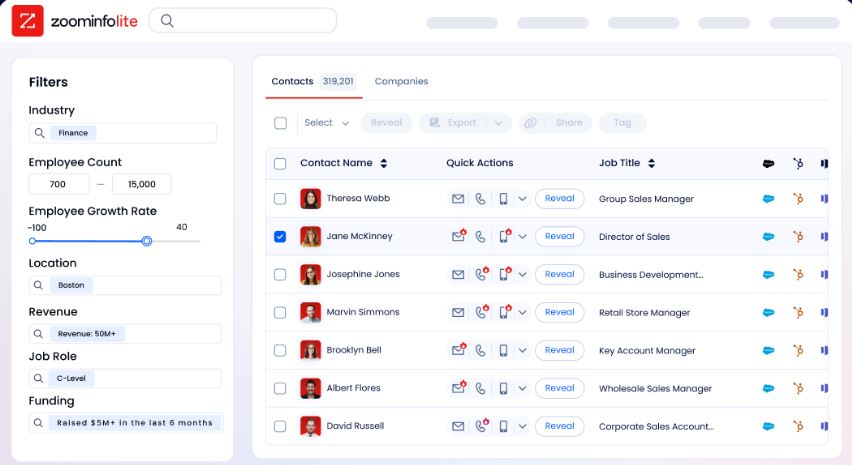
ZoomInfo uses consumption-based pricing with no published dollar amounts. A permanent free tier (ZoomInfo Lite) and 7-day free trial provide entry points that neither ICM platform offers.
Forma.ai vs. CaptivateIQ vs. ZoomInfo: Which should you choose?
These three platforms solve different parts of the revenue operations puzzle. Here's how to decide.
Choose Forma.ai if:
You have a large sales organization with 200+ payees and frequently changing comp plans
You want vendor expertise embedded in your process, not just available on a support ticket
Monte Carlo simulation and data science-driven plan optimization matter to your strategy
You prefer AI that configures plans automatically over a blank canvas you build yourself
Your team needs territory, quota, and ICM unified with continuous planning, not annual cycles
Choose CaptivateIQ if:
Your comp team has strong internal expertise and wants full control over plan configuration
Self-service administration without vendor dependency is a priority
You need AI agents that explain payouts to reps and reduce commission disputes
Your organization values fast time-to-value and admin independence over embedded advisory
Analyst validation matters: CaptivateIQ is a Forrester Wave Leader and Gartner Customers' Choice
Add ZoomInfo if:
Your territory and quota planning suffers from incomplete account intelligence or stale market data
You need intent signals and company data to inform where quotas should be set and how territories should be carved
Your sales team spends too much time researching accounts instead of selling
You want a single GTM intelligence layer that feeds both your upstream execution and downstream compensation decisions
You need programmatic access to B2B data through APIs and MCP for any tool in your stack
See how ZoomInfo's GTM intelligence connects the data layer your compensation platform depends on.
The most effective revenue operations teams don't treat GTM execution and sales compensation as separate problems. The data that powers prospecting and territory design is the same data that determines whether quotas are fair, territories are balanced, and incentive spend drives the right behaviors.
Forma.ai and CaptivateIQ each offer a strong path to automated, transparent commission management. ZoomInfo provides the upstream intelligence that makes those comp plans work as intended.
Forma.ai vs. CaptivateIQ vs. ZoomInfo FAQ
What is the core difference between Forma.ai and CaptivateIQ?
Forma.ai uses a unified data model where AI translates plain-language compensation requirements into validated rule logic, paired with embedded strategy consulting from data scientists included in the license. CaptivateIQ gives compensation admins a no-code SmartGrid canvas to build and manage commission plans independently, with professional services available separately.
Both handle complex enterprise compensation at scale, but Forma.ai emphasizes vendor-managed configuration while CaptivateIQ emphasizes admin self-sufficiency.
How does ZoomInfo relate to Forma.ai and CaptivateIQ?
ZoomInfo is not a competing ICM platform. It is a complementary tool that operates upstream in the go-to-market workflow. ZoomInfo provides B2B data, intent signals, and account intelligence that inform territory design, quota setting, and account prioritization. That data flows into Forma.ai or CaptivateIQ, where it influences how compensation plans are structured and executed.
ZoomInfo solves the "who to sell to and when" problem; Forma.ai and CaptivateIQ solve the "how to pay for it" problem.
Which platform is easier to implement?
CaptivateIQ positions itself as having the fastest implementation among enterprise SPM solutions, claiming teams are "up and running in a matter of weeks instead of months." However, G2 reviewers note that initial setup can take 4-6 months for complex deployments due to the blank canvas approach.
Forma.ai's implementation is hands-on with vendor involvement bundled into the license, which can reduce internal resource strain but involves a learning curve around their data model. ZoomInfo deploys in weeks with dedicated onboarding support.
Which platform handles the most complex commission structures?
Both handle complex plans, but through different architectures. Forma.ai's unified data model and AI-driven configuration are designed for organizations where plan logic changes frequently and structures span multiple entities, channel partners, and overlay roles.
Autodesk runs 2,500+ payees across 2,500+ unique compensation components through Forma.ai. CaptivateIQ's SmartGrid supports up to 7,000 unique simultaneous plans and its no-code interface lets admins build multi-tier accelerators, split credit, and hierarchy-based rules independently.
Do any of these platforms offer a free trial?
Neither Forma.ai nor CaptivateIQ offers a self-serve free trial or free plan. Both require booking a demo and receiving a custom quote. CaptivateIQ offers interactive product tours via Navattic for prospective buyers to explore the interface. ZoomInfo offers both a permanent free tier (ZoomInfo Lite with 10 monthly export credits) and a 7-day free trial with core platform access, no credit card required.
How do Forma.ai and CaptivateIQ handle SOX compliance?
Both platforms provide enterprise-grade SOX compliance controls including segregation of duties, change control with statement locking, complete audit trails, and granular role-based access. Both undergo annual SOC 1 and SOC 2 audits. The key difference is ASC 606 reporting: Forma.ai includes it natively at no additional cost, while CaptivateIQ charges for it as an add-on subscription.
Which platform has better analyst recognition?
CaptivateIQ was named a Leader in the Forrester Wave for Sales Performance Management Solutions for Incentive Compensation, Q1 2025, receiving the highest possible scores in 12 of 26 criteria. It also holds a Gartner Peer Insights Customers' Choice distinction for 2024. Forma.ai was named a Strong Performer and the only Customer Favorite in the same Forrester Wave Q1 2025 evaluation.
ZoomInfo holds separate analyst recognition as a Forrester Wave Leader for Intent Data Providers and a Gartner Magic Quadrant Leader for ABM Platforms.
Can I use ZoomInfo data inside Forma.ai or CaptivateIQ?
ZoomInfo's Enterprise API and MCP server expose account intelligence, company attributes, and intent signals that can feed into either platform's planning modules. CaptivateIQ supports data ingestion from CRMs, ERPs, and data warehouses via its native connectors and Open API. Forma.ai ingests data from CRM, ERP, and HRIS sources through its managed integration process.
In both cases, ZoomInfo data would typically flow through a CRM or data warehouse that connects to the ICM platform rather than through a direct native connector.
See how Forma.ai compares to other platforms:
