
Choosing between HighLevel and HubSpot comes down to a question most comparisons skip: what kind of business are you running, and who are you selling to?
These platforms overlap on the surface (both have CRMs, both automate marketing, both offer AI features), but they were built for different buyers solving different problems. The questions that matter are:
Are you a marketing agency serving multiple clients, or a single company managing your own go-to-market?
Do you need to white-label and resell your platform under your own brand, or use it internally?
Is your market B2B enterprise sales with longer buying cycles, or local and consumer-facing businesses?
Do you prioritize flat, predictable pricing, or are you willing to pay more per seat for deeper CRM capabilities?
How important is verified buyer intelligence (direct dials, intent signals, buying committee mapping) versus marketing automation features?
In short, here's what we recommend:
HighLevel is the platform for marketing agencies that want to consolidate their client delivery tools and build a recurring SaaS revenue stream. Its flat-fee pricing with unlimited contacts and users, white-label capabilities, and built-in tools (CRM, funnels, email, SMS, reputation management, scheduling, courses) let a single agency operator manage dozens of client accounts without per-seat costs adding up.
The trade-offs: its interface can overwhelm non-technical users, platform stability is a recurring concern in reviews, and the CRM lacks the depth needed for complex B2B sales cycles.
HubSpot is the CRM platform for scaling B2B companies that want marketing, sales, and service teams working from shared customer data. Its Smart CRM connects six product hubs (Marketing, Sales, Service, Content, Data, Commerce) on a single data layer, with Breeze AI agents handling tasks from prospect research to customer support.
The trade-off is pricing complexity: per-seat charges, mandatory onboarding fees at Professional and Enterprise tiers, and a mixed-tier seat billing rule that inflates costs when departments use different hub tiers.
Both platforms execute well. But execution is only as good as the intelligence behind it. If your contact records are incomplete, your outreach reaches the wrong people, or you can't tell which accounts are researching solutions like yours, automation won't close the gap. For B2B teams, the missing ingredient isn't another marketing tool. It's knowing who to target and when they're ready to buy.
ZoomInfo is an AI GTM platform that gives sales reps the context to walk into every call knowing why the deal is moving, who's championing it, and what's likely to happen next. Marketers can describe audiences in plain language and launch plays against accounts that match proven win patterns, without engineering support. Leaders can see deal risk before it shows up in CRM stage fields.
That depth comes from the GTM Context Graph, an intelligence layer built on a B2B data foundation of 500M contacts, 100M companies, 135M+ verified phone numbers, and 200M+ verified business emails.
It processes 1.5B + data points daily by unifying CRM records, conversation transcripts, and behavioral signals with ZoomInfo's third-party intelligence. Teams access it through GTM Workspace for sellers, GTM Studio for marketers and RevOps, or APIs and MCP in any front-end.
If building your go-to-market on verified data and real buying signals sounds right, see how ZoomInfo works.
HighLevel vs. HubSpot vs. ZoomInfo at a glance
HighLevel | HubSpot | ZoomInfo | |
|---|---|---|---|
Primary focus | Agency marketing & white-label SaaS | CRM & marketing for scaling companies | B2B data intelligence & GTM execution |
Target buyer | Marketing agencies, local SMBs | SMB to enterprise B2B companies | Enterprise B2B sales & marketing teams |
CRM model | Unlimited contacts, flat pricing | Smart CRM with AI enrichment, per-seat pricing | GTM Context Graph with 500M contacts |
AI capabilities | Voice AI, Conversation AI, Content AI | Breeze AI agents across all hubs | GTM Context Graph, AI agents, intent signals |
White-label | Full SaaS reselling | No | No |
B2B data depth | Basic CRM contacts only | CRM data + limited enrichment | 500M contacts, intent signals, org charts |
Pricing | $97–$497/mo flat fee | Starts free, scales to $3,600+/mo per hub | Custom-quoted, consumption-based |
Best for | Agencies serving local/SMB clients | B2B companies wanting a unified platform | B2B teams needing intelligence-driven GTM |
Built for different buyers, designed for different problems
The most important thing to understand about HighLevel and HubSpot is that they were built for different customers.
Shaun Clark, Varun Vairavan, and Robin Alex founded HighLevel in 2018 to solve an agency problem: too many tools, too much complexity, and too little visibility into what drives client growth. The platform's defining feature is its white-label SaaS model.
Agencies don't just use HighLevel; they rebrand and resell it to clients as their own software. HighLevel calls these agency owners "SaaSPreneurs," and the model has produced results: agencies using SaaS Mode have generated over $96 million in revenue reselling the platform.
Dharmesh Shah and Brian Halligan co-founded HubSpot in 2006 at MIT. Their thesis: buyers had changed, researching online before ever talking to sales instead of responding to cold calls and ads. HubSpot coined "inbound marketing" and built a platform around it.
Today HubSpot calls itself "the agentic customer platform" for scaling companies, with CRM, marketing automation, sales tools, customer service, content management, and commerce tied together through a shared data layer.
The result is two platforms with different design priorities. HighLevel optimizes for agencies managing many client accounts at a flat cost. HubSpot optimizes for individual companies that need marketing, sales, and service teams operating from one customer record.
Neither platform, however, was built to generate the B2B buyer intelligence that drives enterprise prospecting. Their CRMs store what you already know about your contacts.
ZoomInfo starts from what you don't know: who the decision-makers are, how to reach them, whether they're in-market, and what their buying patterns look like.
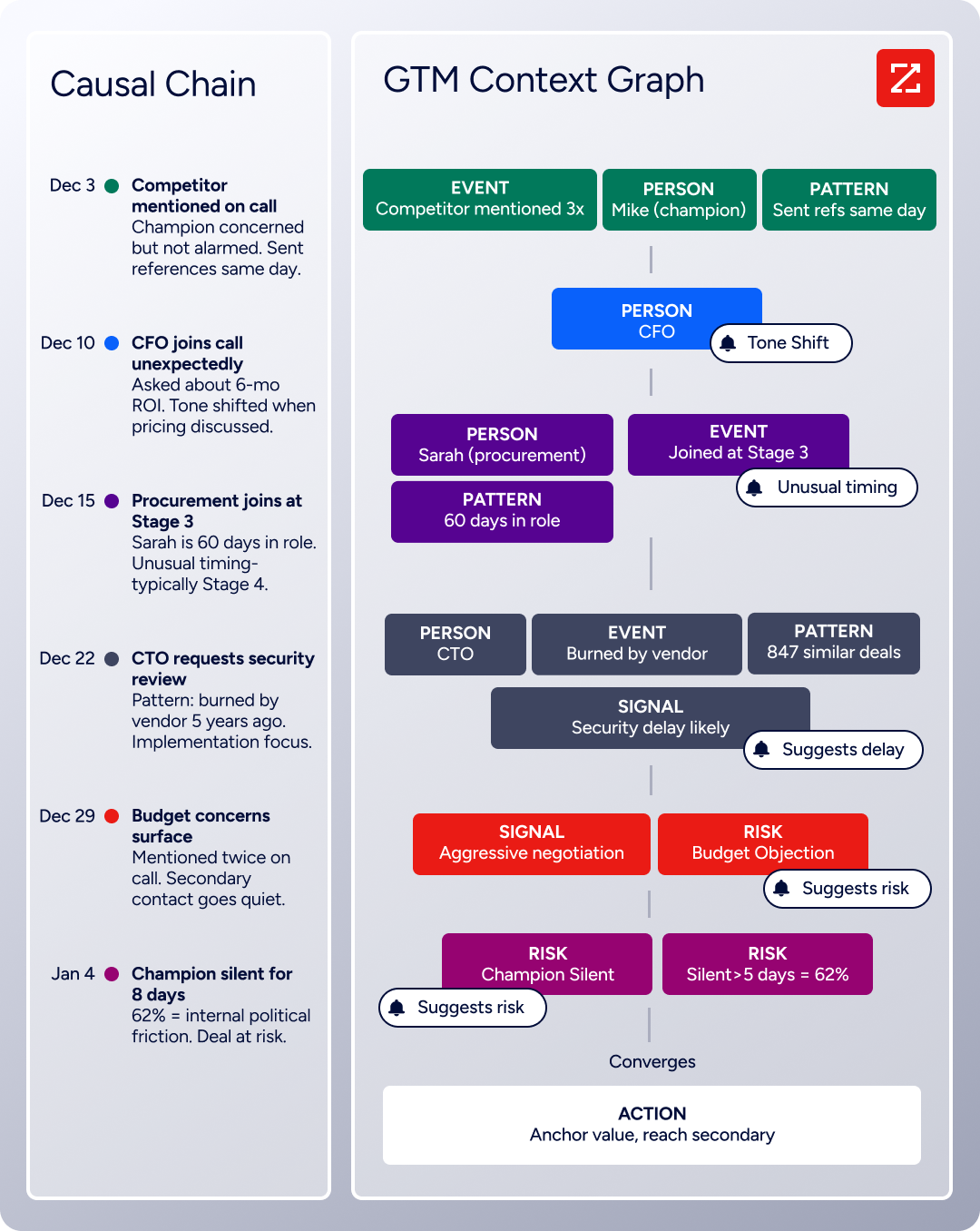
Its GTM Context Graph, an intelligence layer that processes 1.5B + data points daily, fuses ZoomInfo's B2B data with your first-party data to build a continuously updated picture of your accounts that neither HighLevel nor HubSpot can replicate from internal data alone.
Source: ZoomInfo
CRM and pipeline management take different approaches
HighLevel's CRM is built around the agency model. All plans include unlimited contacts and users, so an agency with 50 clients and thousands of contacts pays the same monthly fee. Pipelines use a visual Kanban board with drag-and-drop stages, deal values, and smart tags for quick classification.
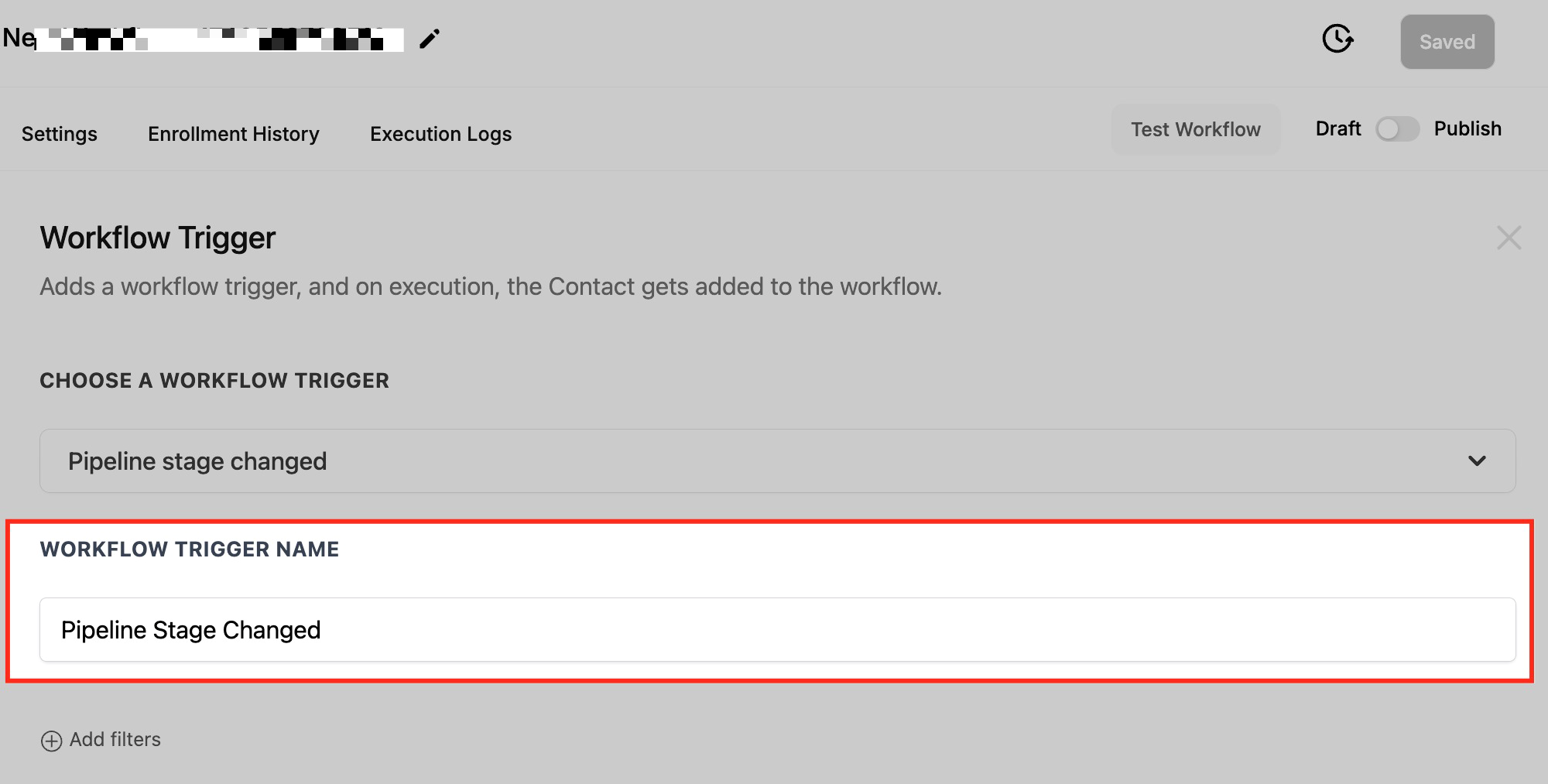
When an opportunity moves between stages, native workflow triggers can fire SMS sequences, email sends, or task assignments without any third-party tool.
Source: HighLevel
The strength is operational simplicity at scale. One agency operator can clone client setups via Snapshots, manage isolated pipelines per sub-account, and track engagement scoring across contacts, all for a flat fee. The limitation is depth: HighLevel's CRM wasn't designed for complex B2B sales cycles with multi-threaded deal rooms, custom objects, or enterprise reporting.
HubSpot's Smart CRM takes the opposite approach. It supports up to 15 million contacts (expandable to 50 million), custom objects, field-level permissions, and sandbox test environments.
Source: HubSpot
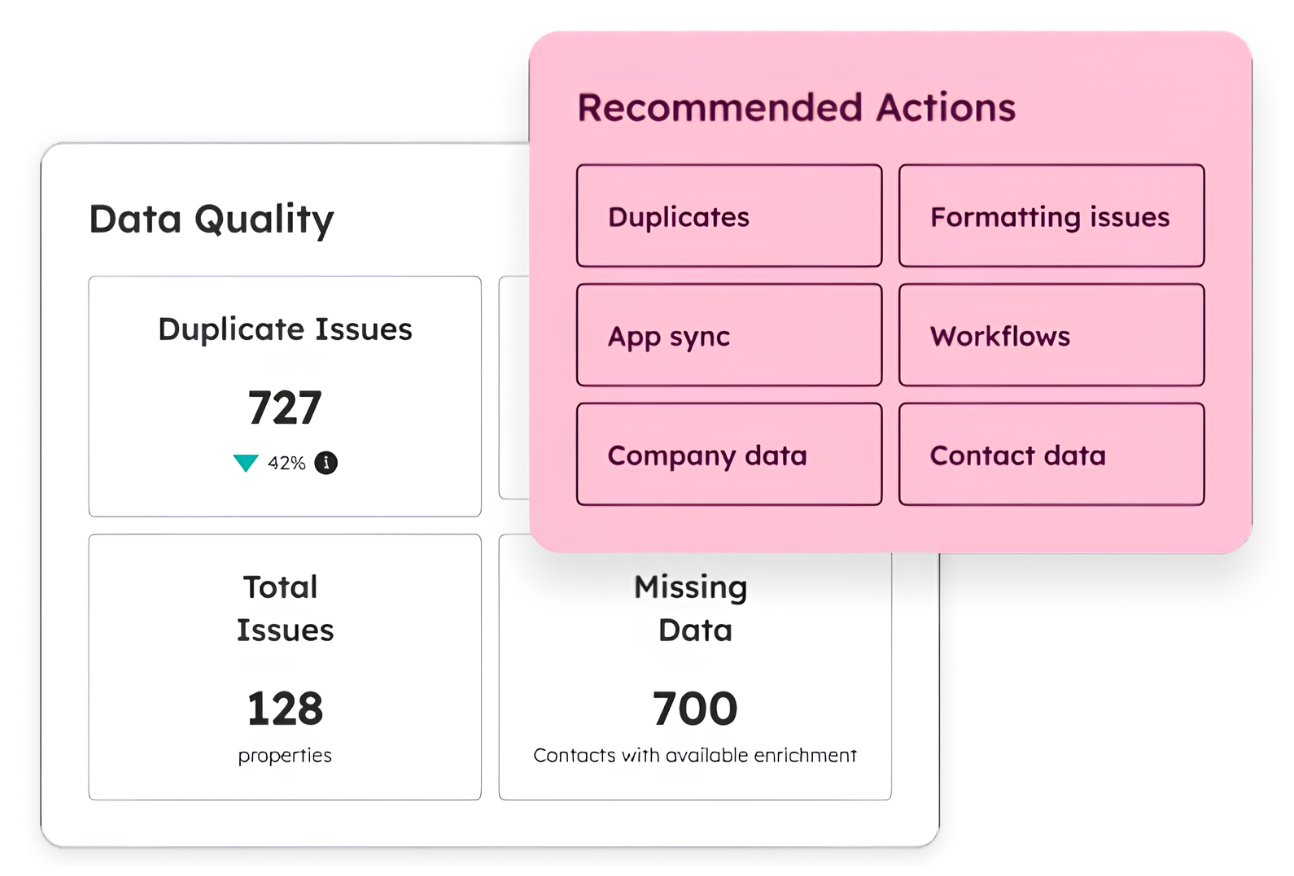
Its AI enriches records automatically from email threads, recorded calls, and web data, and identifies duplicate records continuously. The Data Agent answers natural-language questions about customers by searching CRM records, call recordings, and documents.
HubSpot's CRM depth comes at a cost. Per-seat pricing means every additional user adds to the bill, and mandatory onboarding fees ($3,000–$7,000 depending on the hub) create upfront friction.
But for B2B companies with dedicated sales teams, the unified data model (where a contact's marketing engagement, deal history, and support tickets all appear on one record) provides context that HighLevel's simpler CRM structure doesn't.
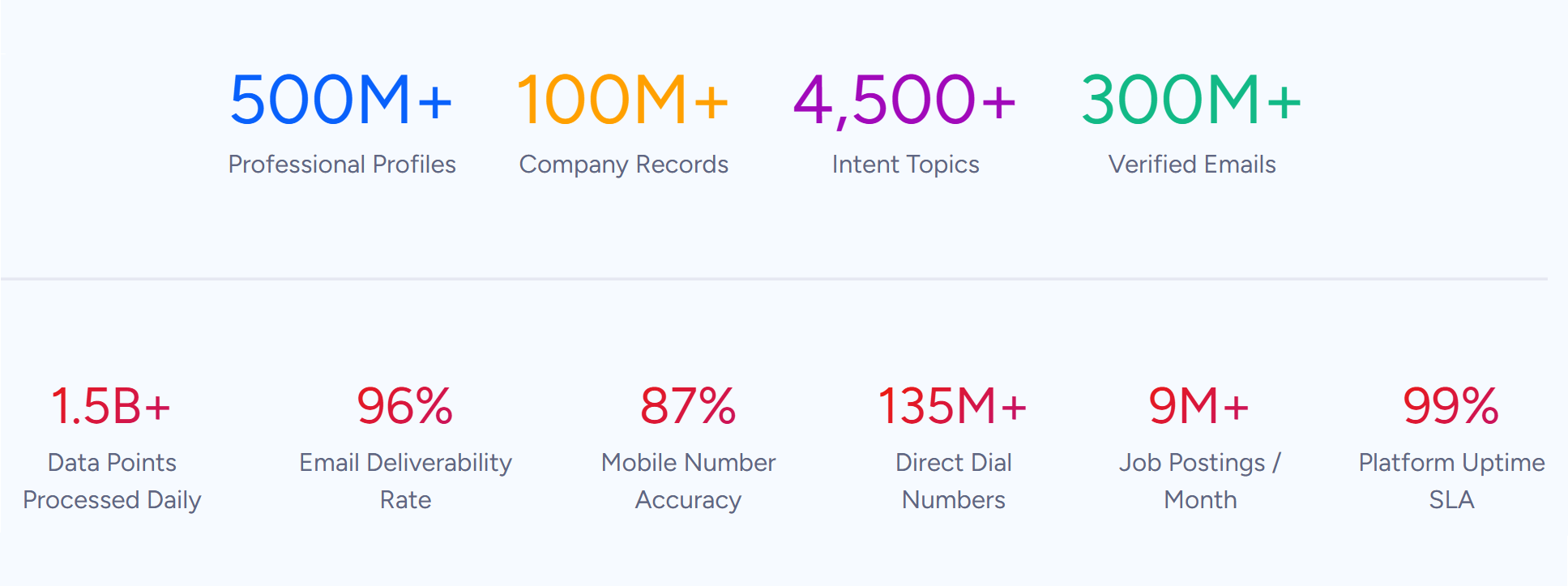
ZoomInfo operates at a different level. Rather than storing the contacts you've already collected, ZoomInfo provides access to 500M contacts and 100M companies with 135M+ verified phone numbers and 200M+ verified business email addresses.
Source: ZoomInfo
Its data goes through a multi-source verification pipeline backed by 300+ human researchers, reaching up to 95% accuracy on first-party data. In a Fortune 500 competitive RFP analyzing 25 million contacts across vendors, an independent consultant concluded that "no other competitor came even close."
SpringDB saw 2x–3x increases in campaign conversions and a 30–50% uplift in average deal size using ZoomInfo's enriched data. Founder and CEO John Kotsuros: "You'll get 10x the value if you think of ZoomInfo as a full platform and not just a tool for one team." (SpringDB Case Study)
Marketing automation and workflows reflect each platform's DNA
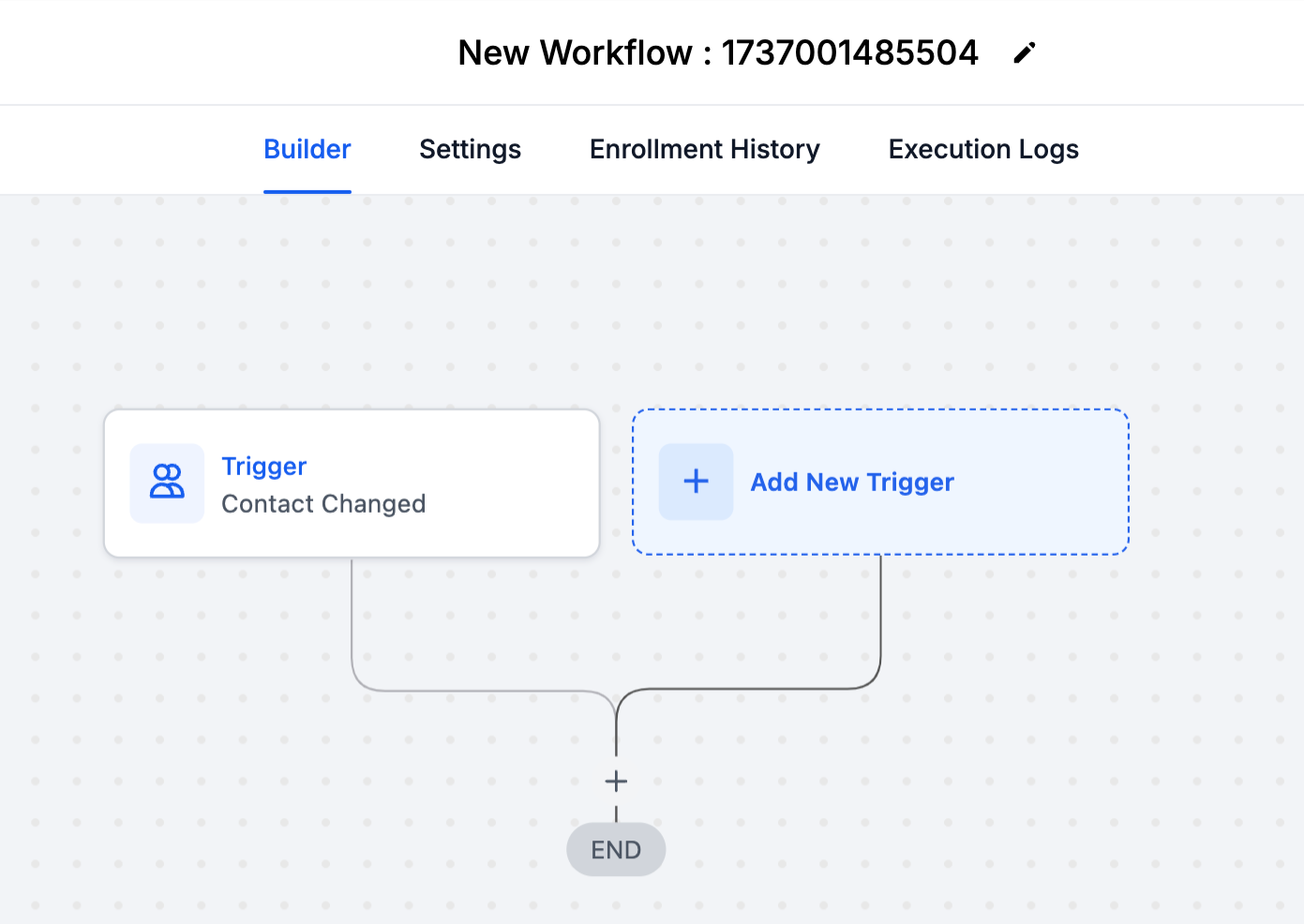
HighLevel's automation engine is designed for multi-channel client campaigns. Its workflow builder spans 14 trigger categories and 13 action categories, covering contact events, appointments, pipeline movements, payments, e-commerce, IVR, Facebook and Instagram comments, courses, and communities. The platform logged 42.7 million workflows in 2025 with 125 billion executions.
Source: HighLevel
What sets HighLevel apart is native cross-channel execution without middleware. A single workflow can send an SMS, trigger an email, drop a ringless voicemail, post to Facebook Messenger, send a WhatsApp message, and update a CRM field, all from 16 native communication actions without connecting Zapier or Make.
For agencies running lead nurture sequences across channels for local businesses, this removes the integration complexity of multi-tool stacks.
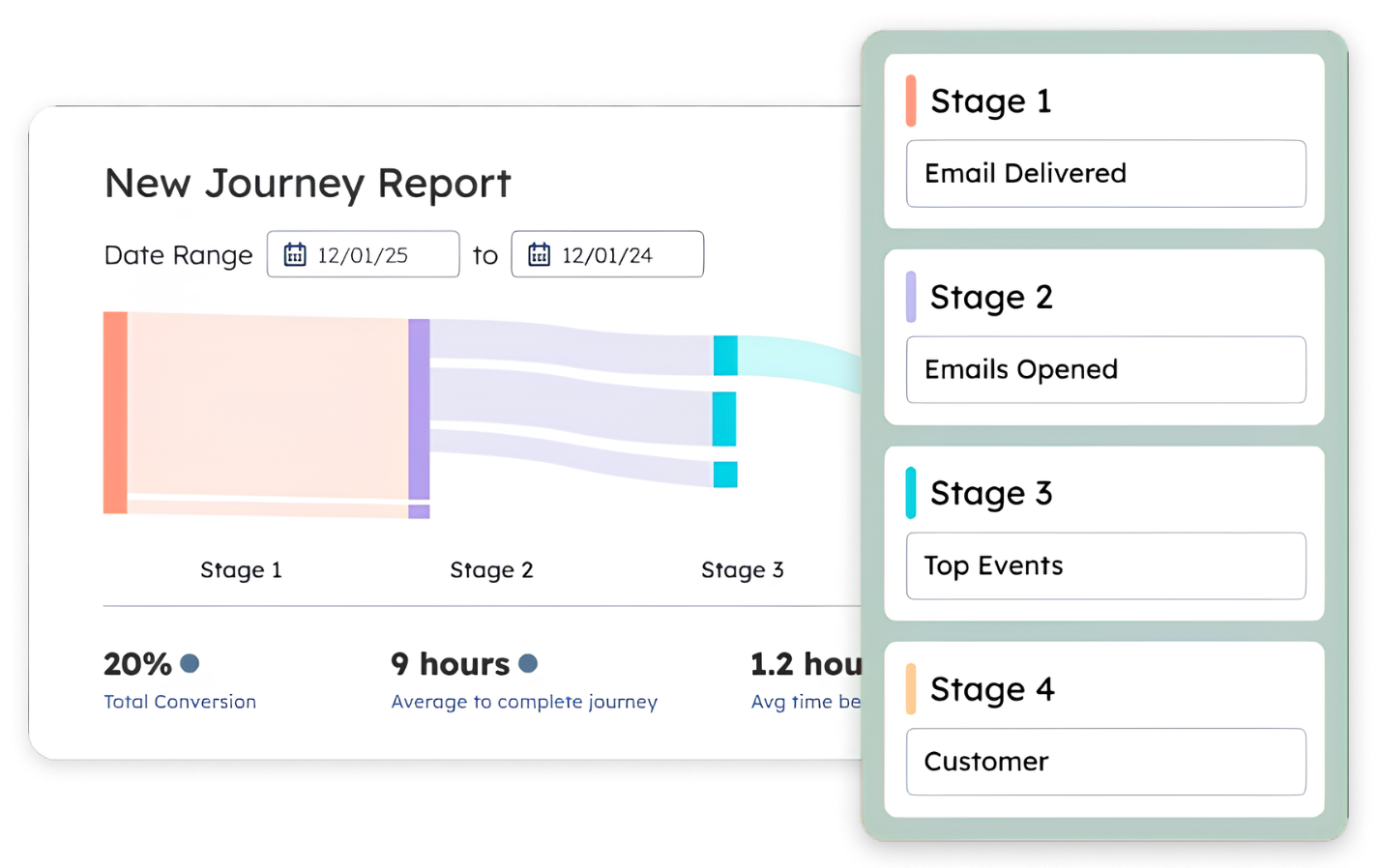
HubSpot's Marketing Hub approaches automation differently. Its workflow builder supports multi-step, branching nurture sequences triggered by contact behavior, lifecycle stage changes, and form submissions.
Source: HubSpot
The real differentiator is the shared data layer. Because marketing, sales, and service all operate on the same contact record, a marketing workflow can trigger on a support ticket resolution or a deal stage change, not just email opens or form fills.
HubSpot also invests in content-driven marketing. Content Hub includes an AI content writer, content remix (turning one blog post into social posts, email copy, and video scripts), and Answer Engine Optimization tools for ranking in AI-generated search results. Marketing Hub includes audience segmentation, multi-touch revenue attribution, and a Salesforce bi-directional sync.
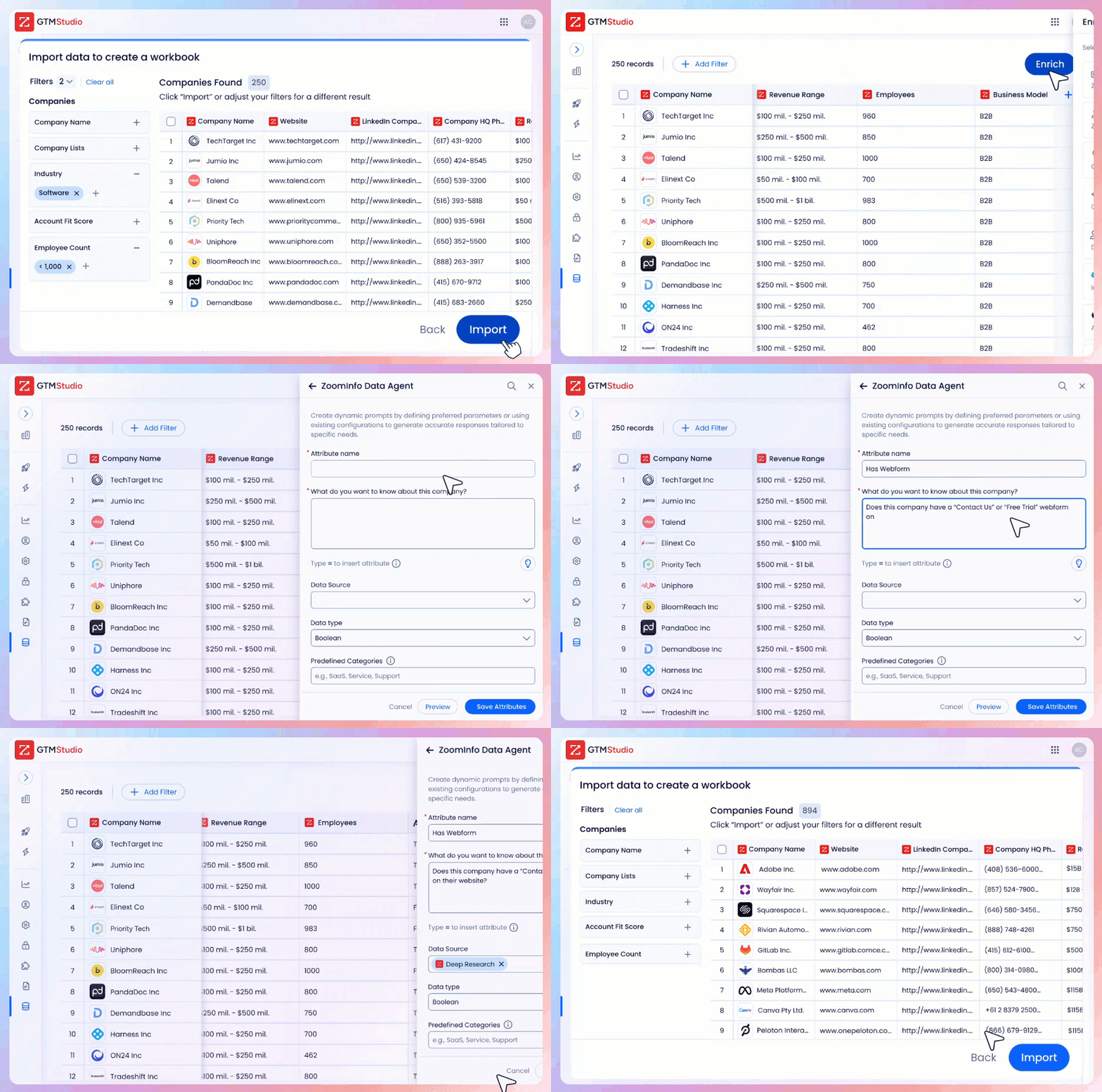
Both platforms automate the execution side of marketing. ZoomInfo automates the intelligence side. GTM Studio lets marketers and RevOps teams describe audiences in natural language, enrich them with first- and third-party data, and launch multi-channel plays (email, calls, ads, direct mail) triggered by buyer behavior.
Source: ZoomInfo
Pre-built GTM plays cover inbound acceleration, champion tracking, competitive displacement, and ICP targeting. Expansion plays that used to take three weeks now launch in 30 minutes without engineering support.
AI capabilities show divergent strategies
All three platforms have invested in AI, but their approaches reveal different priorities.
HighLevel positions AI as "the operational foundation" of its platform, organized around three layers. Voice AI handles inbound and outbound calls around the clock, executing actions during calls (booking appointments, updating CRM fields, triggering workflows, transferring calls).
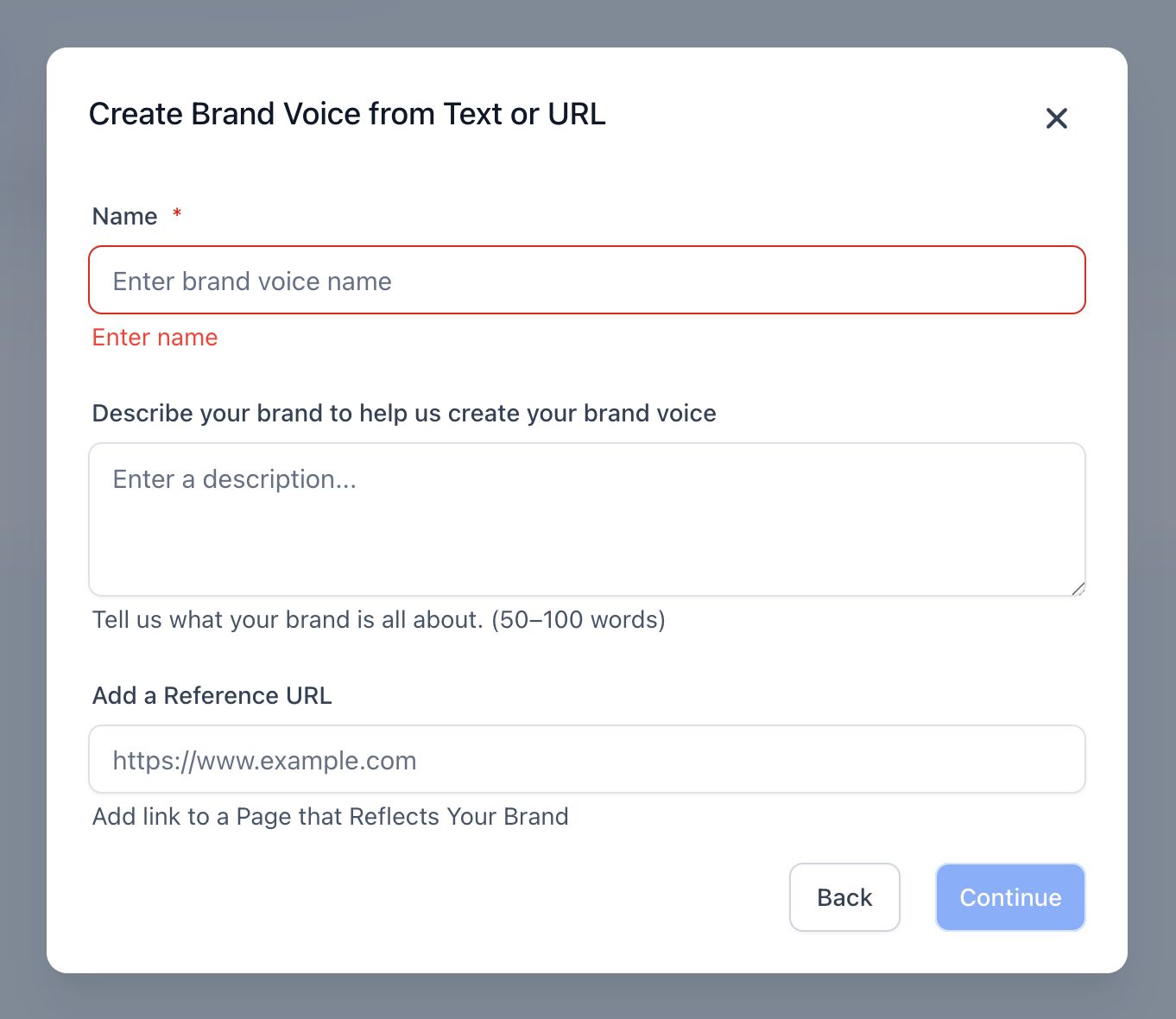
HighLevel processed over 7 million AI voice calls in 2025. Conversation AI automates text-based interactions across SMS, web chat, and social messaging. Content AI generates marketing copy across the platform with a Brand Voice feature trained from text or URL.
Source: HighLevel
For agencies, the AI Employee add-on ($97/month per sub-account) bundles these capabilities into a flat-rate package, making per-client AI costs predictable. Agencies can also rebill AI usage with markup to clients, turning AI into a revenue line.
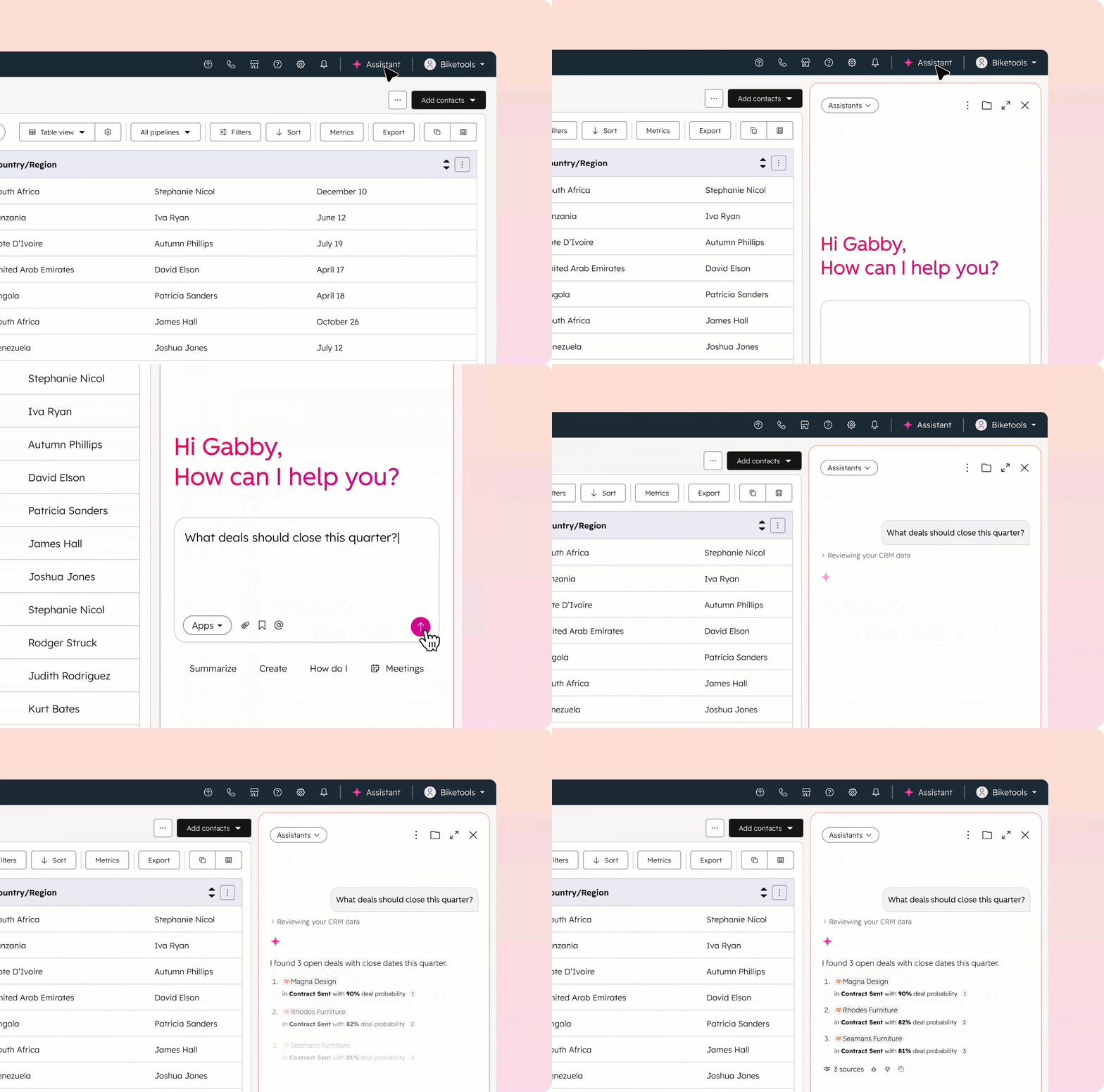
HubSpot's AI layer, Breeze, takes an agent-based approach. Named agents handle distinct workflows: the Customer Agent resolves customer inquiries across chat, email, WhatsApp, and voice. The Prospecting Agent monitors buying signals (leadership changes, funding rounds, engagement spikes) and drafts personalized outreach.
Source: Hubspot
The Data Agent answers natural-language questions about customers by searching CRM records, call recordings, and documents. The advantage: each agent has access to HubSpot's full CRM data, so recommendations are contextual rather than generic.
Both platforms use AI to make existing workflows faster. ZoomInfo's AI does something different: it reasons about why deals move or stall. The GTM Context Graph doesn't just record that a deal moved to Stage 4. It captures that the CFO joined the last call, asked about six-month ROI, and that this pattern matches closed-won deals in the segment.
As ZoomInfo's CPO Dominik Facher writes: "The CRM recorded the state change. It has no record of why it happened." The GTM Context Graph captures what CRMs cannot: the connections between signals, conversations, and outcomes across thousands of deals.
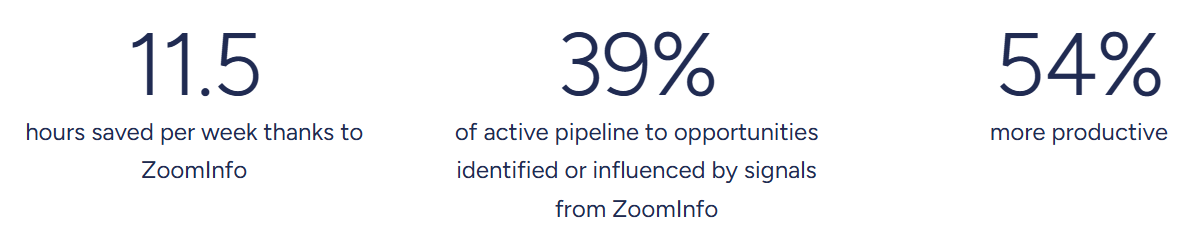
Seismic attributed 39% of active pipeline to ZoomInfo signals and boosted sales productivity by 54%. CBO Toby Carrington: "That combination of our internal CRM data, external signals, and AI that's given all that context has helped us craft very specific account- and persona-based messages." (Seismic Case Study)
Source: ZoomInfo
Pricing models reveal each platform's economics
HighLevel uses flat-fee tiers that scale with capability, not usage:
Plan | Monthly | What it adds |
|---|---|---|
Starter | $97 | 3 sub-accounts, unlimited contacts/users, all core features |
Unlimited | $297 | Unlimited sub-accounts, user reporting, white-label desktop |
Agency Pro | $497 | SaaS Mode (white-label reselling), split testing, custom objects, advanced API |
The flat-fee model is HighLevel's strongest commercial argument against HubSpot. An agency managing 30 clients with thousands of contacts pays $297 or $497 per month. No per-seat multiplier, no contact tier overage.
But usage-based costs for telephony (SMS, calls), AI Employee ($97/month per sub-account), HIPAA compliance ($297/month), and premium support ($500/month) can push a configured setup well above headline pricing.
HubSpot's pricing is more complex. The free CRM provides real utility (unlimited contacts up to 1 million records, basic email, forms, and chatbot) with no time limit. Paid tiers layer on per-seat and per-hub charges:
Hub | Starter | Professional | Enterprise |
|---|---|---|---|
Marketing Hub | $890/mo (3 seats included) | $3,600/mo (5 seats included) | |
Sales Hub | |||
Service Hub |
Add mandatory onboarding fees ($3,000 for Marketing Hub Pro, $7,000 for Enterprise; $1,500–$3,500 for Sales and Service Hub), and a hidden cost worth noting: when subscribing to multiple hubs at different tiers, all Core Seats are billed at the highest-tier rate. A company using Marketing Hub Professional and Sales Hub Enterprise pays Enterprise rates on every seat, not just sales seats.
ZoomInfo uses consumption-based pricing with custom quoting and no publicly listed prices. Costs scale around seats, monthly credit volume (1 credit = 1 contact or company export), features, and contract length.
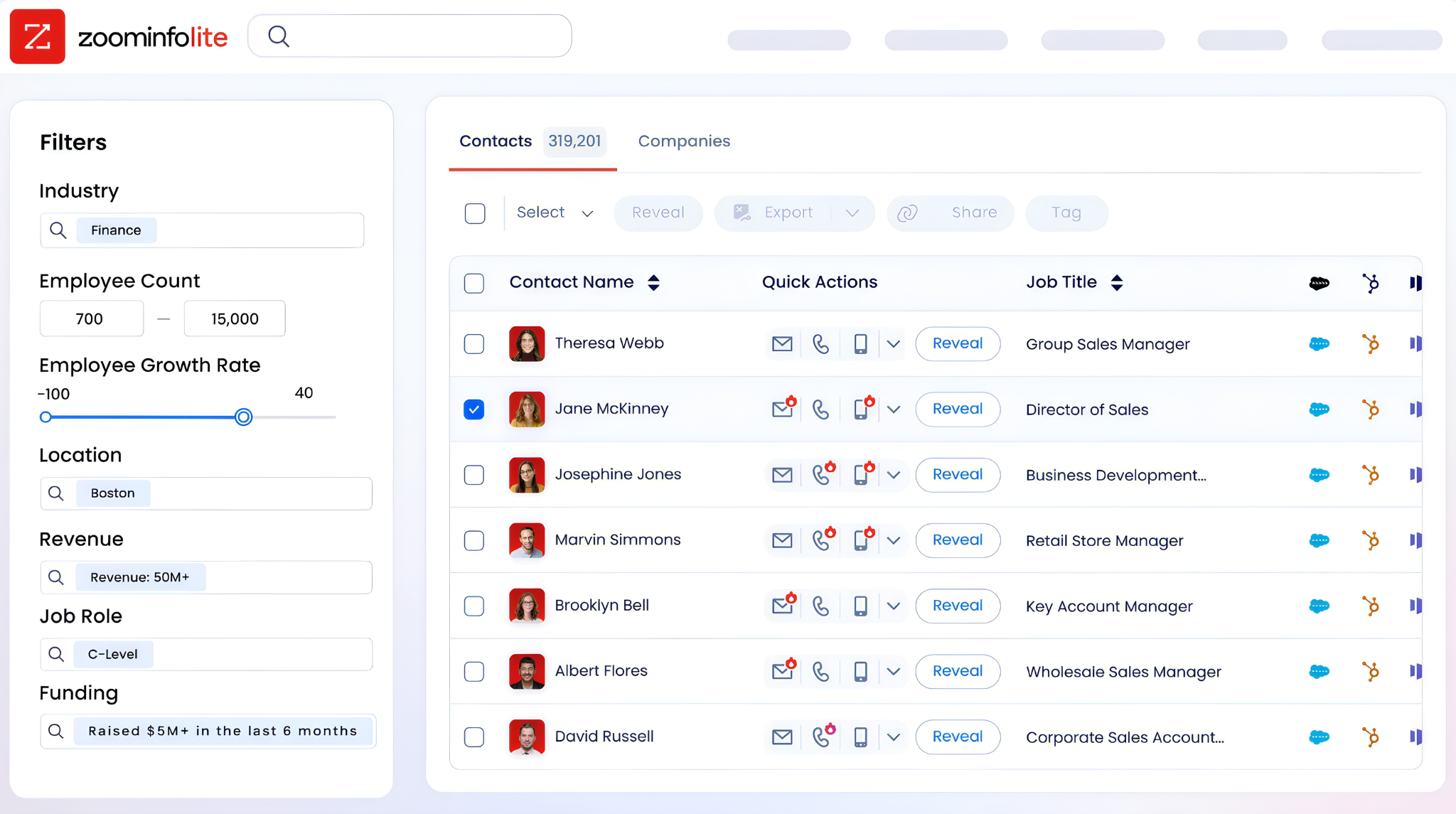
ZoomInfo Lite provides a permanent free tier with access to the B2B database, 10 monthly export credits, and basic search and filtering, with no credit card required. ZoomInfo is priced for enterprise buyers, but documented outcomes (Seismic's 54% productivity gains, SpringDB's 2x–3x conversion increases) show measurable return.
Source: ZoomInfo
The data intelligence gap both platforms leave open
This is where the comparison shifts from "which platform has better features" to "what's missing from both."
HighLevel and HubSpot are execution platforms. They help you send emails, build funnels, manage pipelines, and automate follow-ups. What they don't do is tell you who you should target in the first place, or whether those targets are in-market right now.
HighLevel's CRM stores the contacts you collect through forms, calls, and manual entry. HubSpot's CRM does the same, with some AI enrichment from email threads and web data. But neither provides:
Verified direct-dial phone numbers for decision-makers at target accounts (ZoomInfo offers 135M+ verified phone numbers and 120M direct dials)
Buyer intent signals showing which companies are researching your category (ZoomInfo Intent tracks 210 million IP-to-Organization pairings and 6 trillion+ keyword-to-device pairings monthly)
Technographic data profiling the tech stacks of 30+ million companies across 30,000+ technologies
Org charts and buying committee mapping showing who influences purchase decisions and how to reach them
Conversation intelligence that captures why deals move or stall, not just that they did (Chorus records and analyzes all customer calls, meetings, and emails)
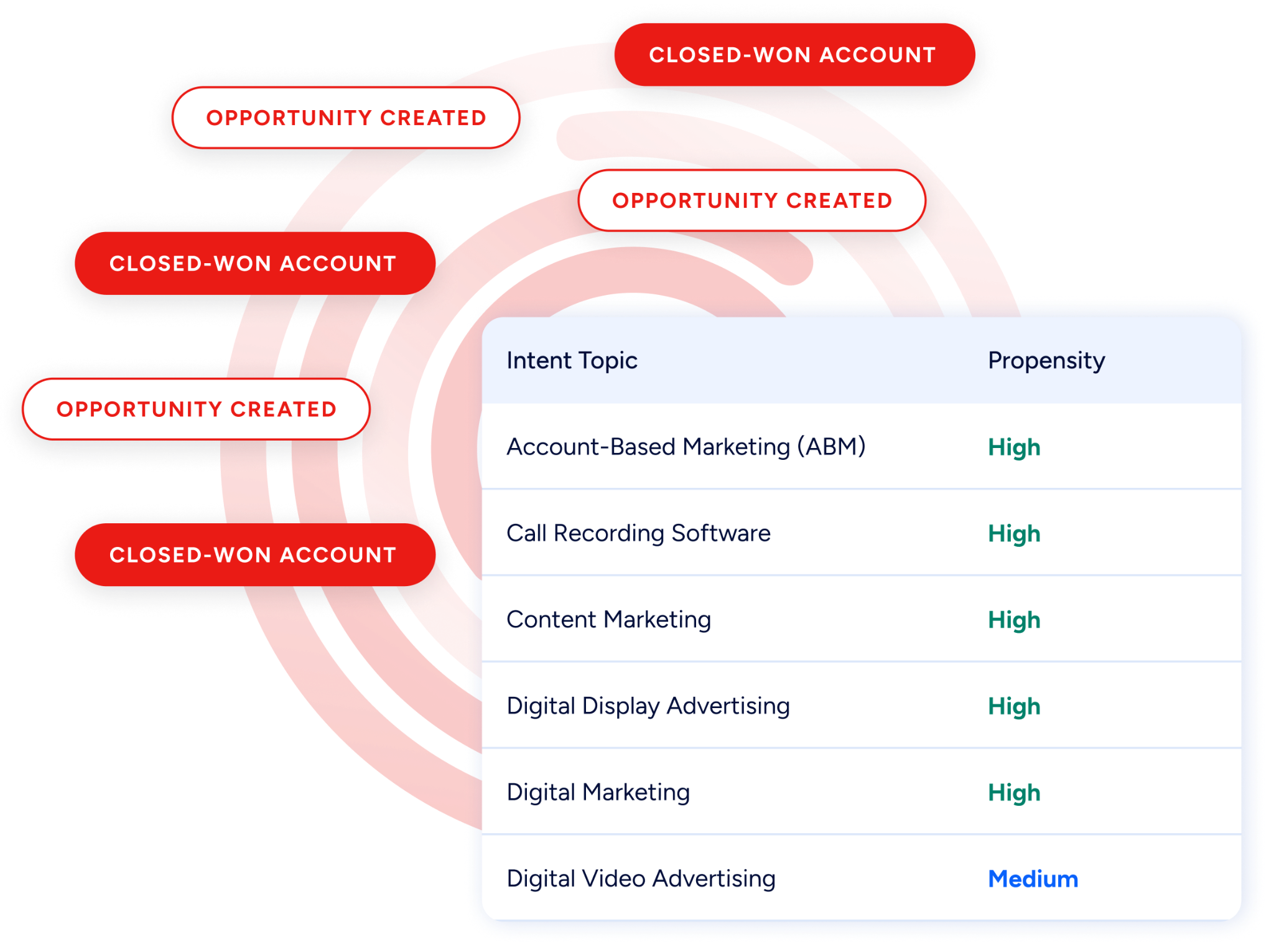
Source: ZoomInfo
For B2B companies with outbound sales motions, this gap is the difference between automating outreach to a list you hope is accurate and executing against verified contacts who show real buying signals.
ZoomInfo's GTM Workspace gives sellers a single surface where prioritized accounts, AI-drafted outreach, and deal execution converge. Its AI agents are built on Anthropic's Claude and draw on ZoomInfo's data and the GTM Context Graph to answer three questions: who to contact, when to engage, and what to say.
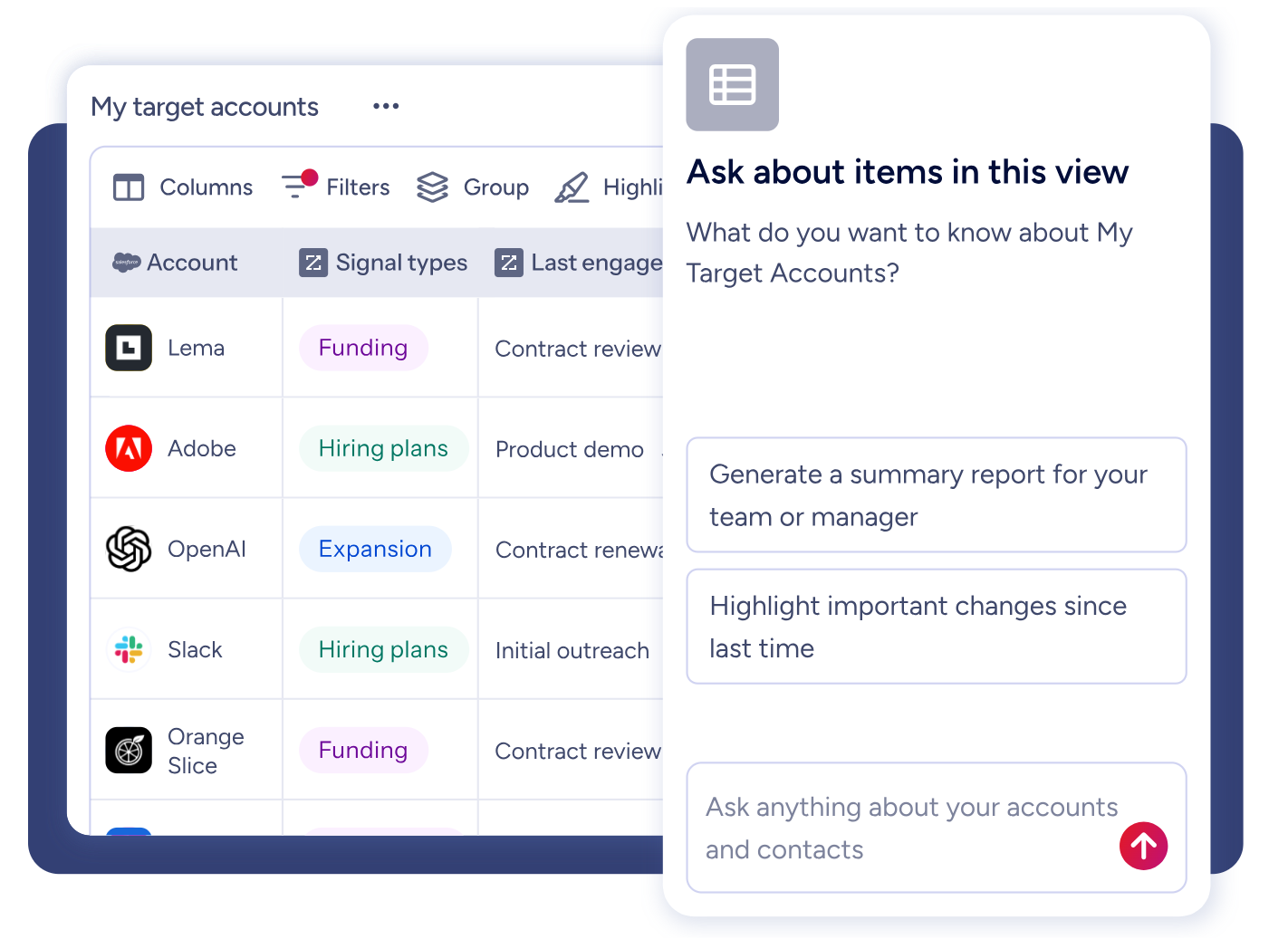
Source: ZoomInfo
Levanta CEO Ian Brodie: "ZoomInfo's not just a contact data company anymore. They've built a full system of execution, where GTM Intelligence works the list, writes the outreach, triggers the play, and helps drive predictable growth." (Levanta Case Study)
For a closer look at how HubSpot and ZoomInfo stack up on data, CRM depth, and go-to-market intelligence, see our HubSpot vs. ZoomInfo comparison.
Integration ecosystems determine how well each platform plays with others
HighLevel takes a self-contained approach. Its App Marketplace connects to 500+ tools, and integrations with Zapier and Make extend connectivity further. But HighLevel's design philosophy is replacement, not integration.
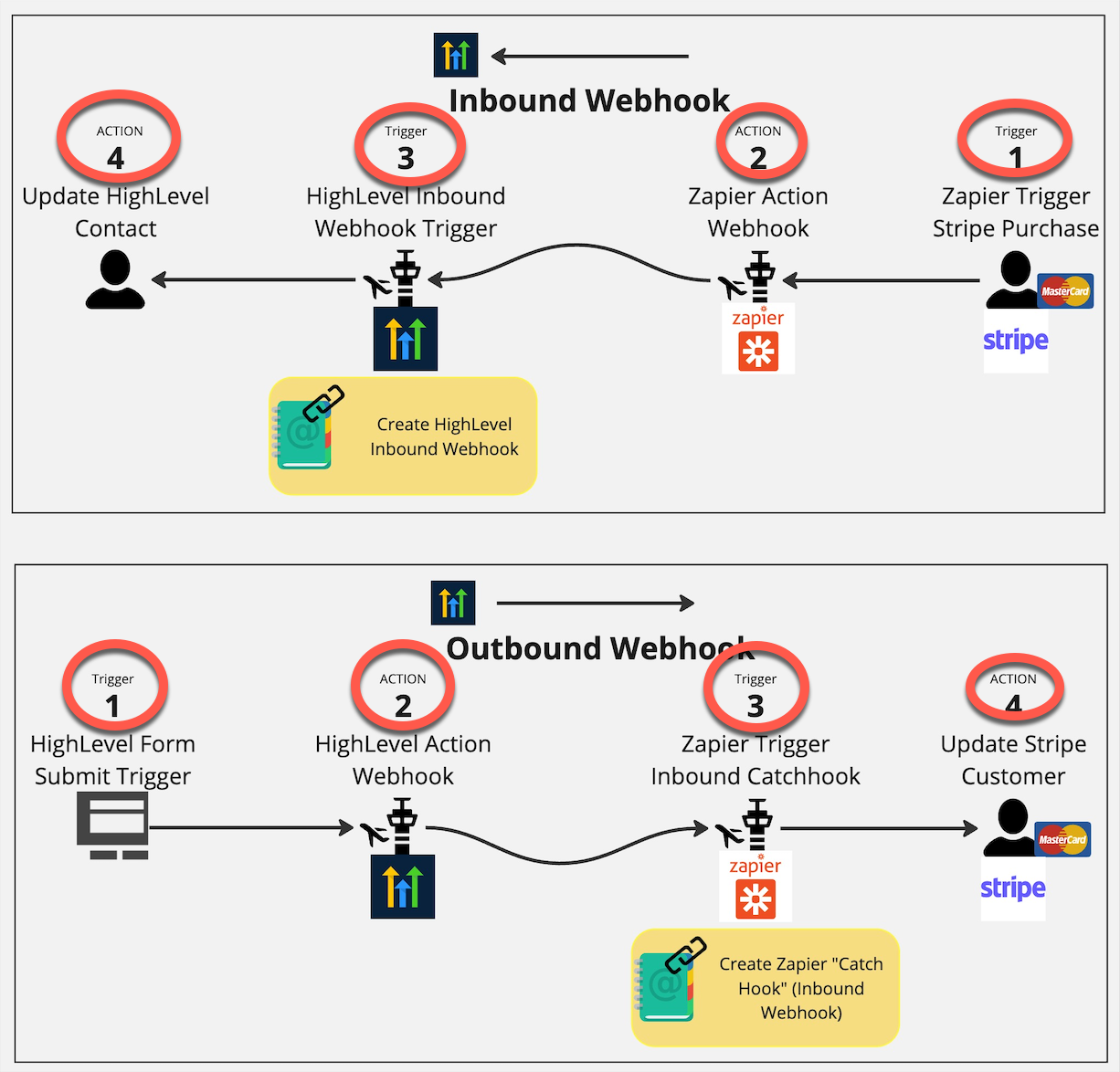
Source: HighLevel
It aims to be the only platform agencies need, replacing separate CRMs, email tools, funnel builders, schedulers, and reputation managers. The REST API (v2, with v3 in development) provides programmatic access, though API access requires the Unlimited plan ($297/month) at minimum.
HubSpot leans into ecosystem. The App Marketplace has over 2,000 integrations with 2.5 million active installs, and a developer platform supports custom app development, UI extensions, and CMS development.
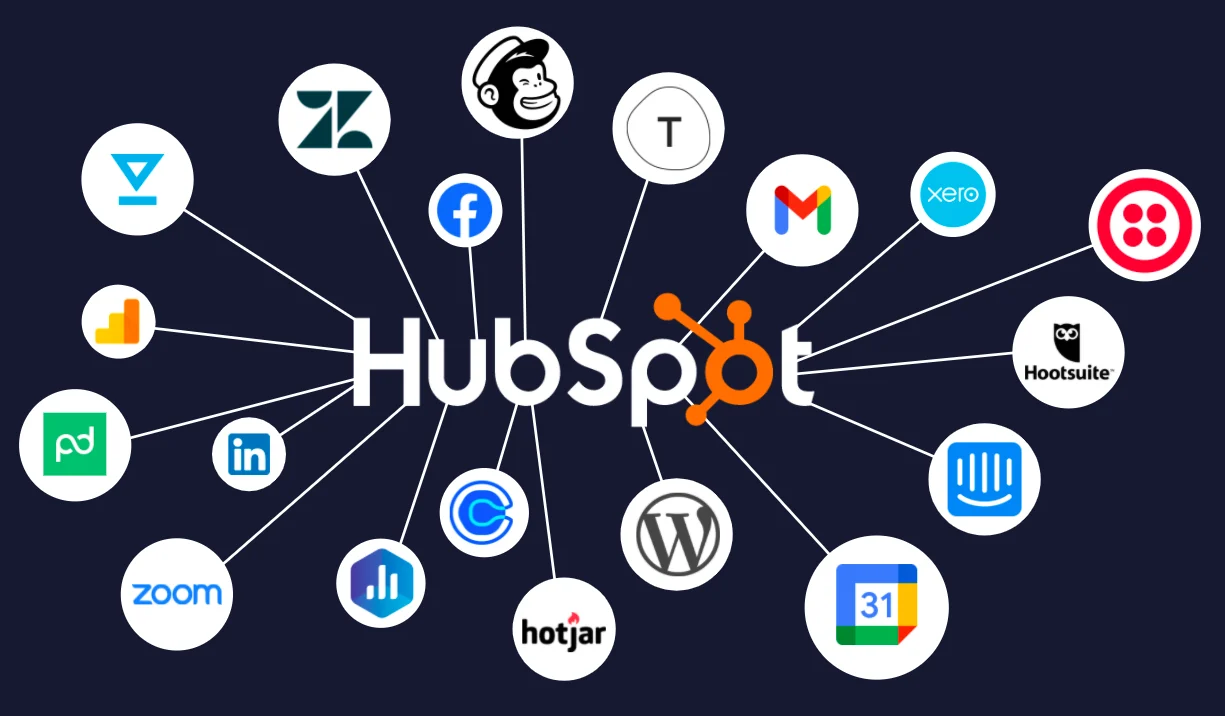
Source: Hubspot
HubSpot's date-based API versioning (shipping twice yearly with 18-month support windows) gives developers predictable stability. Official SDKs cover six languages (PHP, Java, Ruby, Go, TypeScript, Python), and a remote MCP server gives AI agents direct CRM access.
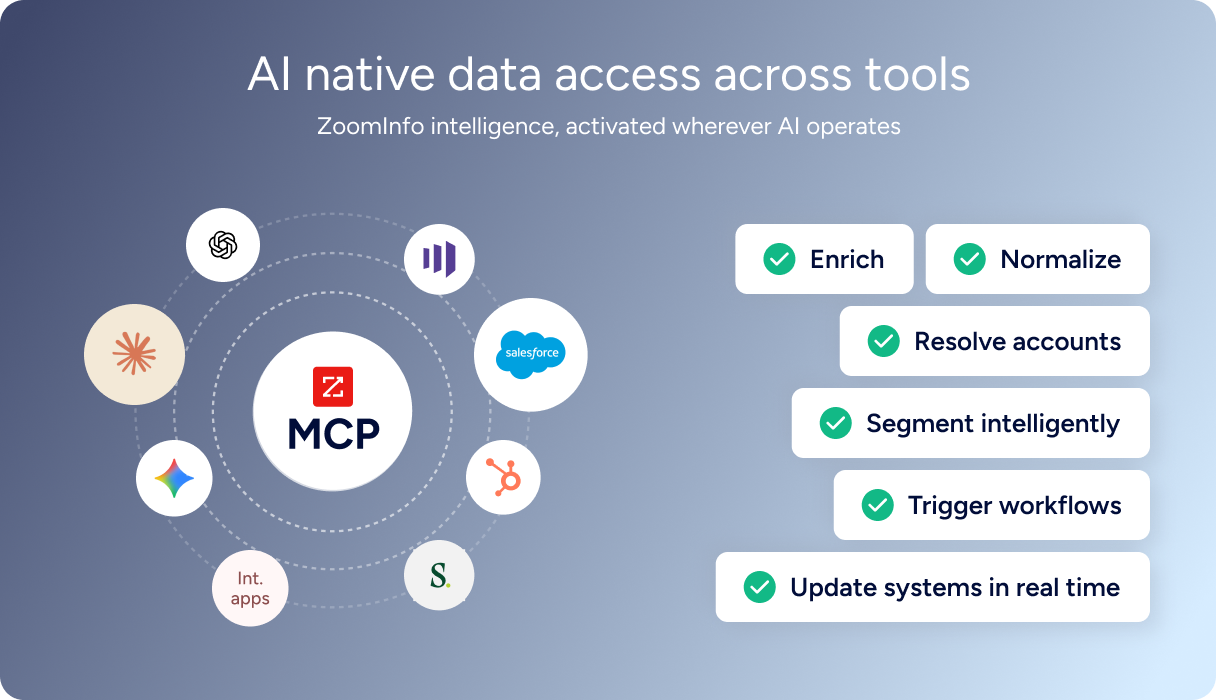
ZoomInfo treats integration as infrastructure. API access is included in all relevant plans, and the ZoomInfo MCP server connects AI models to ZoomInfo's B2B data with no custom coding beyond one-time configuration.
Source: ZoomInfo
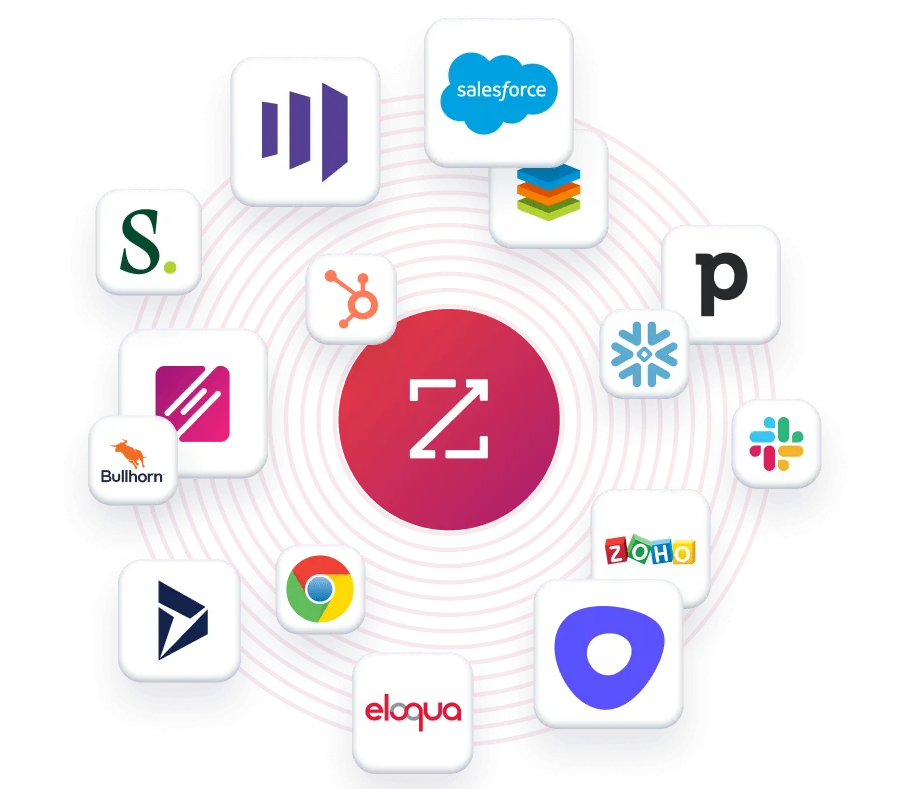
The Marketplace lists 172+ integration partners including native integrations with Salesforce, HubSpot, and Microsoft Dynamics 365. Cloud data delivery flows into AWS, Google Cloud, Snowflake, and Databricks.
Source: ZoomInfo
The integration story matters most for B2B teams that need ZoomInfo's intelligence flowing into whatever execution platform they choose. ZoomInfo works alongside HubSpot through a native integration, and its data powers prospecting, enrichment, and routing inside the CRM the team already uses.
Smartsheet's Senior Manager of Sales Technology Enablement Thor Sanderson: "ZoomInfo is our one source of truth for account data, and even more so for contact data. There's no other provider in the market that provides you with that level of detail." (Smartsheet Case Study)
HighLevel vs. HubSpot vs. ZoomInfo: Which should you choose?
The right platform depends on your business model, your market, and the problem you're solving.
Choose HighLevel if:
You run a marketing agency serving multiple local or SMB clients
White-labeling the platform as your own SaaS product is a revenue priority
Flat pricing with unlimited contacts and users matters more than CRM depth
You need built-in tools for reputation management, course hosting, and appointment scheduling
Your clients are local service businesses (contractors, dental, fitness, real estate)
Choose HubSpot if:
You need marketing, sales, and service teams working from one shared CRM
Your go-to-market relies on inbound content, lead nurture, and lifecycle marketing
You want a mature integration ecosystem with 2,000+ apps
You're a B2B company scaling from startup to enterprise
You can absorb per-seat pricing and mandatory onboarding costs
Choose ZoomInfo if:
Your go-to-market depends on outbound prospecting and identifying in-market buyers
You need verified contact data (direct dials, business emails) at scale, not just what's already in your CRM
Intent signals, buying committee mapping, and conversation intelligence would change how your team sells
You want intelligence that flows into any tool (HubSpot, Salesforce, custom AI agents) through APIs and MCP
You're a B2B company where data quality directly determines pipeline quality
Try ZoomInfo free or request a demo.
HighLevel and HubSpot both do important work. HighLevel gives agencies the tools to deliver marketing services efficiently. HubSpot gives B2B companies a unified platform to manage the full customer lifecycle.
But for B2B teams where finding the right buyer at the right time is the bottleneck, ZoomInfo provides the intelligence foundation that makes every downstream tool (whether it's HighLevel, HubSpot, or something else) more effective.
The question isn't which platform has the most features. It's whether your go-to-market is built on verified intelligence or assumptions.
HighLevel vs. HubSpot vs. ZoomInfo FAQ
What is the core difference between HighLevel, HubSpot, and ZoomInfo?
HighLevel is a marketing platform designed for agencies, with white-label SaaS reselling, flat-fee pricing, and tools spanning CRM, funnels, SMS, email, reputation management, and scheduling. HubSpot is a CRM platform for scaling B2B companies, connecting marketing, sales, service, content, data, and commerce hubs on a shared data layer with Breeze AI agents.
ZoomInfo is an AI GTM platform providing 500M contacts, 100M companies, buyer intent signals, and a GTM Context Graph (an intelligence layer that reveals why deals move) accessible through its own products or any third-party tool via API and MCP.
Which platform is cheapest to get started with?
HubSpot offers the most accessible entry point with a permanent free CRM (unlimited contacts up to 1 million records, basic tools, no time limit). ZoomInfo Lite is also free with 10 monthly export credits and access to the B2B database. HighLevel has no free plan but offers a 14-day free trial on any paid tier, with plans starting at $97/month.
At scale, HighLevel's flat-fee model is often cheapest for agencies managing multiple clients, while HubSpot's per-seat pricing can climb as teams grow.
Can ZoomInfo work alongside HighLevel or HubSpot?
ZoomInfo integrates natively with HubSpot through a featured marketplace integration, letting enriched contact and company data flow into HubSpot's CRM. ZoomInfo also integrates with Salesforce, Microsoft Dynamics, and 172+ other tools through its marketplace.
For HighLevel users, ZoomInfo data can connect through Zapier or Make, or through the ZoomInfo API. The ZoomInfo MCP server lets any MCP-compatible AI agent access ZoomInfo data without custom coding.
Which platform is best for a marketing agency?
HighLevel was built for agencies. Its white-label SaaS model lets agencies rebrand the platform and sell it to clients under their own name, with flat pricing that includes unlimited sub-accounts on the Unlimited plan ($297/month).
Agencies can clone client setups via Snapshots, manage isolated CRM environments per client, and rebill AI and telephony costs with markup. HubSpot offers a Solutions Partner program for agencies but does not support white-labeling. ZoomInfo serves agencies that work with B2B clients needing prospecting and data intelligence.
Which platform has the best AI capabilities?
Each platform applies AI differently. HighLevel's AI is strongest in customer communication: Voice AI handles inbound and outbound calls autonomously, Conversation AI manages text-based interactions, and Content AI generates marketing copy with brand-specific tone. HubSpot's Breeze AI operates as specialized agents (Customer Agent, Prospecting Agent, Data Agent) with access to full CRM context.
ZoomInfo's AI focuses on intelligence: the GTM Context Graph captures why deals move or stall by fusing CRM data, conversation transcripts, and third-party signals, then powers AI-drafted outreach and account prioritization in GTM Workspace.
How does pricing scale for a growing B2B company?
HighLevel's flat-fee model stays predictable regardless of contact or user count, though add-on costs (AI Employee at $97/month per sub-account, telephony, HIPAA compliance) can accumulate. HubSpot's costs scale with team size (per-seat charges), contact volume (marketing contacts tier overages), and hub tier, with a mixed-tier seat rule that bills all seats at the highest hub tier.
ZoomInfo uses consumption-based pricing scaled around seats, credit volume, and features, with annual contracts and custom quoting.
Which platform offers the deepest B2B data?
ZoomInfo has no close competitor on B2B data depth. Its database covers 500 million contacts, 100 million companies, 135 million+ verified phone numbers, and 200 million+ verified business email addresses, with up to 95% accuracy on first-party data. HubSpot's Smart CRM enriches records from email threads and web data but does not provide a third-party contact database at this scale.
HighLevel's CRM stores the contacts you capture through forms and manual entry but generates no external intelligence. For B2B prospecting, only ZoomInfo provides the verified contacts, intent signals, technographics, and org chart data needed for targeted outbound.
Is HighLevel or HubSpot better for B2B enterprise sales?
HubSpot is the stronger choice for B2B enterprise sales, with custom objects, field-level permissions, sandbox environments, deal forecasting, and a Smart CRM supporting up to 50 million contacts. HighLevel's CRM, while functional for pipeline tracking, was designed for agency client management rather than complex B2B sales cycles.
For enterprise B2B teams where data-driven prospecting and deal intelligence are priorities, ZoomInfo adds the intelligence layer that makes either CRM more effective, with GTM Workspace giving sellers a dedicated AI-powered surface for account research, signal monitoring, and outreach.
See how Gohighlevel stacks up elsewhere:
