
Choosing between ClickDimensions vs. HubSpot for your B2B marketing often comes down to these five questions:
Are you committed to Microsoft Dynamics 365 as your CRM, or open to switching?
Do you need just marketing automation, or a full platform covering sales, service, and content too?
How important is knowing which companies are actively researching solutions like yours right now?
Does your team have the resources to maintain a separate CRM and marketing platform, or do you need them in one place?
Is your priority executing campaigns efficiently, or targeting the right buyers at the right moment?
In short, here's what we recommend:
ClickDimensions (now branded as Click) is the marketing automation suite built exclusively for organizations running Microsoft Dynamics 365. Everything lives inside the CRM: email campaigns, automation workflows, lead scoring, social publishing, web forms, and reporting all operate on Dynamics data without connectors or middleware. For Dynamics teams, this means no data sync issues and no context switching. That said, ClickDimensions only works with Dynamics 365, user reviews cite a steep learning curve and dated interface elements, and pricing requires a sales conversation with no public tiers.
HubSpot offers the full customer platform: CRM, marketing, sales, service, content, data management, and commerce in a single system serving over 288,000 customers across 135+ countries. Its generous free tier, intuitive interface, and ecosystem of 2,000+ app integrations make it accessible for teams of nearly any size. However, costs compound quickly as you add seats, hubs, and contacts, with mandatory onboarding fees at Professional and Enterprise tiers that catch many buyers off guard.
Both platforms excel at campaign execution. But here's what neither addresses directly: knowing who to target, when they're ready to buy, and what they care about. Your marketing automation is only as effective as the intelligence feeding it. Without accurate contact data, buyer intent signals, and account context, even the best campaigns reach the wrong people at the wrong time.
ZoomInfo is an all-in-one AI GTM platform built on the industry's most comprehensive data foundation: 500M contacts, 100M companies, 135M+ verified phone numbers, 120M direct-dial phone numbers, and 200M+ verified business emails. Its GTM Context Graph processes 1.5B+ data points daily, unifying this data with your CRM records, conversation transcripts, and behavioral signals to reveal not just what's happening with your accounts, but why. That intelligence drives AI that identifies which accounts are actively in-market, who the decision-makers are, and what messaging will resonate.
Marketers use GTM Studio to build and launch plays in natural language. Sellers use GTM Workspace for AI-powered account execution. And because ZoomInfo offers API and MCP access alongside native integrations with both Dynamics 365 and HubSpot, it works alongside either platform or as your primary GTM system.
If intelligence-driven go-to-market sounds like what your team needs, start a free trial to see the platform in action.
ClickDimensions vs. HubSpot vs. ZoomInfo at a glance
ClickDimensions | HubSpot | ZoomInfo | |
|---|---|---|---|
Primary focus | Marketing automation for Dynamics 365 | All-in-one CRM and customer platform | All-in-one AI GTM platform |
CRM approach | Lives inside Dynamics 365 | Built-in Smart CRM | Integrates with Salesforce, HubSpot, Dynamics |
B2B contact database | None (uses CRM data) | CRM-based (you build it) | 500M contacts, 200M+ verified emails |
Buyer intent data | Not available | Limited | 210M IP-to-org pairings, 6T+ signals/month |
Marketing automation | Journey builder inside Dynamics | Workflows with full CRM integration | GTM Studio with AI orchestration |
Sales tools | Lead scoring only | Full Sales Hub with AI agents | GTM Workspace with AI agents |
AI capabilities | AI copy tools, chatbot agents | Breeze AI across all hubs | GTM Context Graph, specialized AI agents |
Free option | Demo only | Generous free tier | ZoomInfo Lite (permanent) + 7-day trial |
Starting price | Not published | $15/seat/month (Starter) | Custom-quoted |
Best for | Dynamics 365 marketing teams | Growing businesses wanting unified CRM | B2B teams needing intelligence-driven GTM |
Three platforms, three philosophies
These three products solve related problems from fundamentally different starting points.
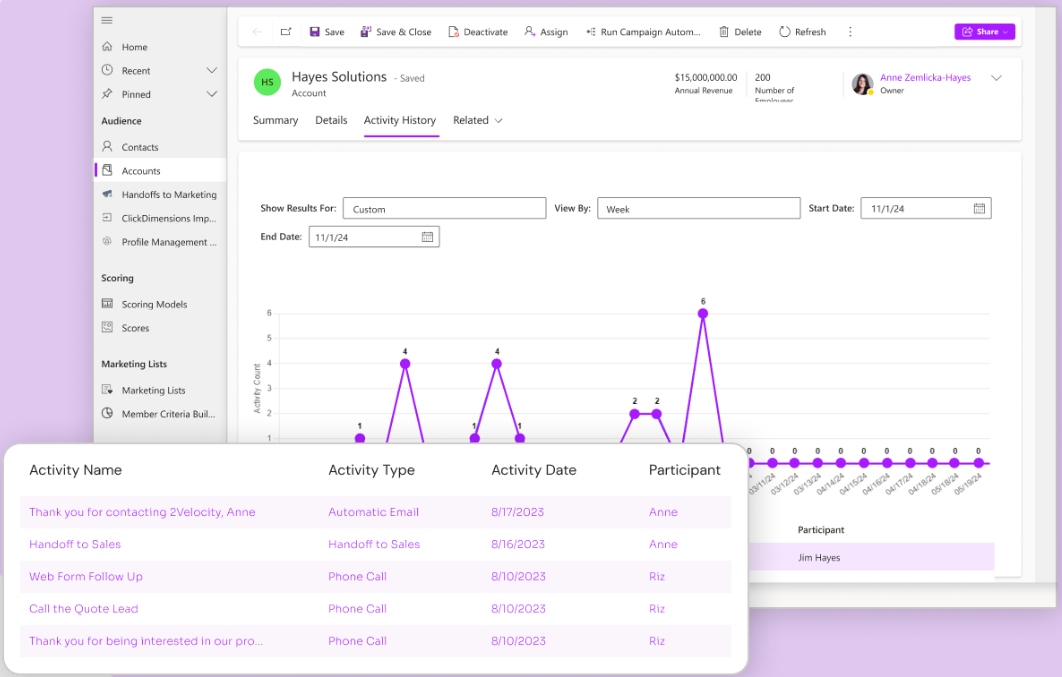
ClickDimensions began with a gap: Microsoft Dynamics 365 had no native marketing automation. Founded in 2010 in Atlanta, Georgia, ClickDimensions built its entire product inside Dynamics rather than connecting to it externally. That architectural choice defined everything that followed. The platform reads and writes directly to CRM records in real time, with no third-party APIs or data transfers. It's marketing automation for organizations that have already chosen Microsoft. Today it serves over 2,500 customers worldwide, backed by Volaris Group and its buy-and-hold ownership model.
Source: ClickDimensions
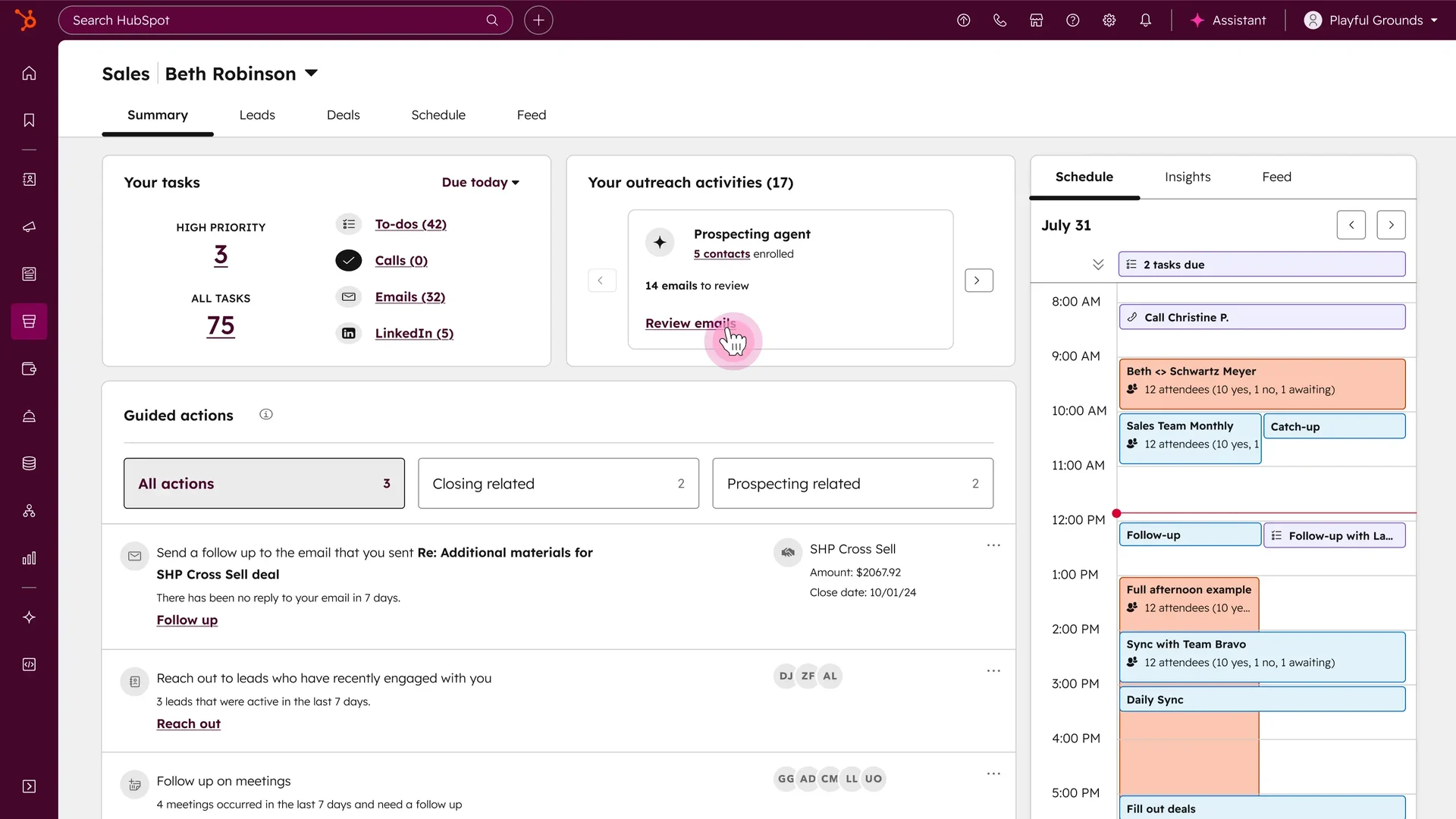
HubSpot started from the opposite premise: most businesses don't have a CRM yet, or have one they don't like. Co-founded in 2006 around the "inbound marketing" thesis, HubSpot grew from a marketing blog tool into a publicly traded company with $3.13B in annual revenue. Today it offers eight natively integrated products (Marketing Hub, Sales Hub, Service Hub, Content Hub, Data Hub, Commerce Hub, Smart CRM, and Breeze AI), all sharing a single data layer. The pitch: replace your fragmented stack with one connected platform.
Source: Hubspot
ZoomInfo asks a different question entirely: before you send a single campaign, do you know who your buyers are, whether they're actually in-market, and what they care about? Founded in 2007 as DiscoverOrg, ZoomInfo built the industry's most comprehensive B2B data platform over nearly two decades. That data foundation, verified by 300+ human researchers and achieving up to 95% accuracy, now powers the GTM Context Graph, an intelligence layer that captures why deals move or stall, not just that they did.
The philosophical split matters because it determines what each platform is good at and what it leaves to someone else.
ClickDimensions keeps everything inside Dynamics
If your organization runs Dynamics 365, ClickDimensions eliminates one of marketing's most persistent headaches: data sync. The platform is the only natively built marketing automation product for Dynamics 365, meaning contact records, campaign performance, and engagement data all reside within the CRM without middleware.
The advantages of this approach are concrete. Contact records update in real time, so segmentation lists and personalization tokens always reflect current CRM state. When a prospect fills out a web form, a new Lead or Contact record is automatically created in Dynamics, with UTM parameters written directly to the CRM record for campaign attribution. The platform covers email marketing (250+ pre-built templates), marketing automation with a drag-and-drop journey builder, social media scheduling via Click Social, SMS (via Twilio, BulkSMS, or MessageMedia), lead scoring, web forms, landing pages, surveys, and event integrations with GoToWebinar, Zoom, Webex, Cvent, Eventbrite, and Teams.
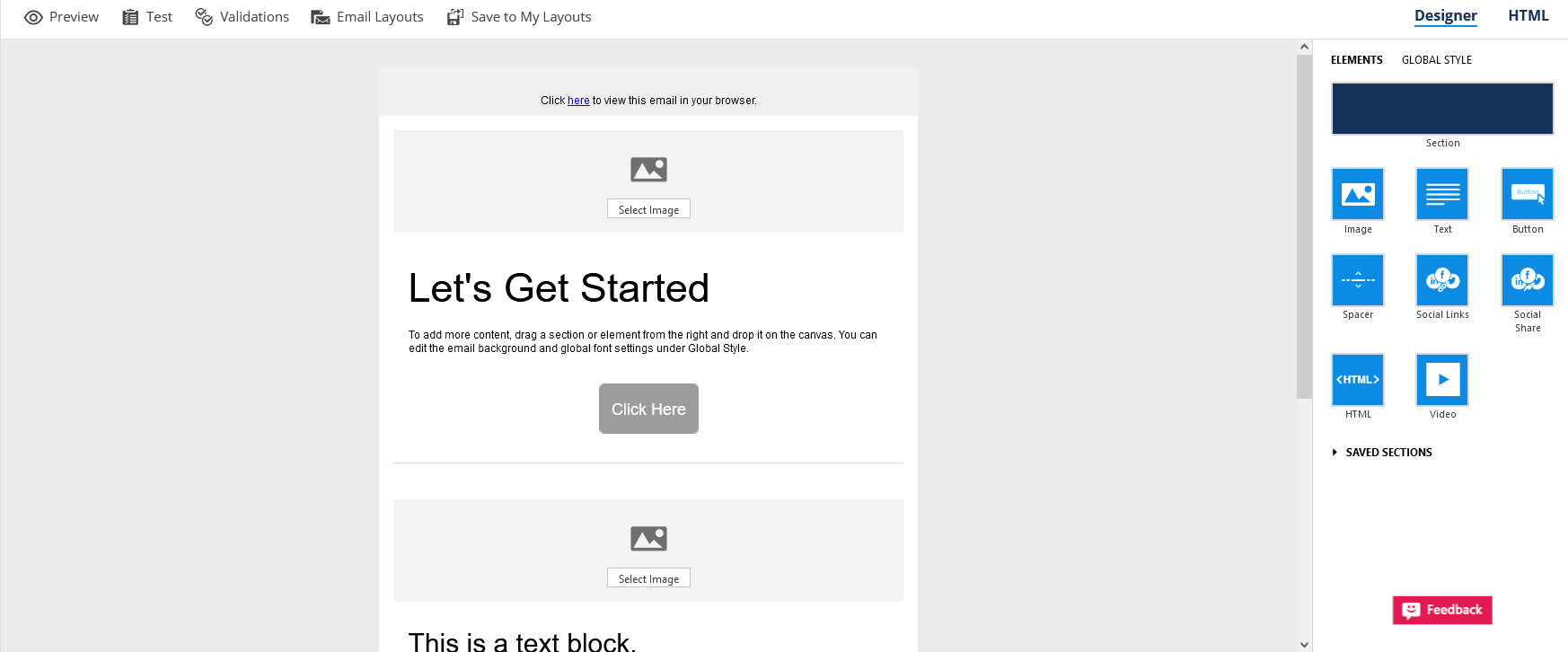
Source: ClickDimensions
The tradeoffs are natural consequences of the architectural choice. ClickDimensions is exclusively viable for Dynamics 365 users; organizations running any other CRM are categorically excluded. G2 reviewers describe a steep learning curve and note that the interface can feel inconsistent in places, particularly in the automation builder. SMS functionality relies on third-party providers rather than being natively built. And pricing is entirely opaque, with no published tiers and all terms negotiated via Order Form.
HubSpot unifies marketing, sales, and service in one platform
Where ClickDimensions goes deep on one CRM, HubSpot aims to be the CRM. Its Smart CRM is the foundation for every Hub, meaning marketing, sales, and service teams all work from the same contact records, deal pipelines, and interaction histories.
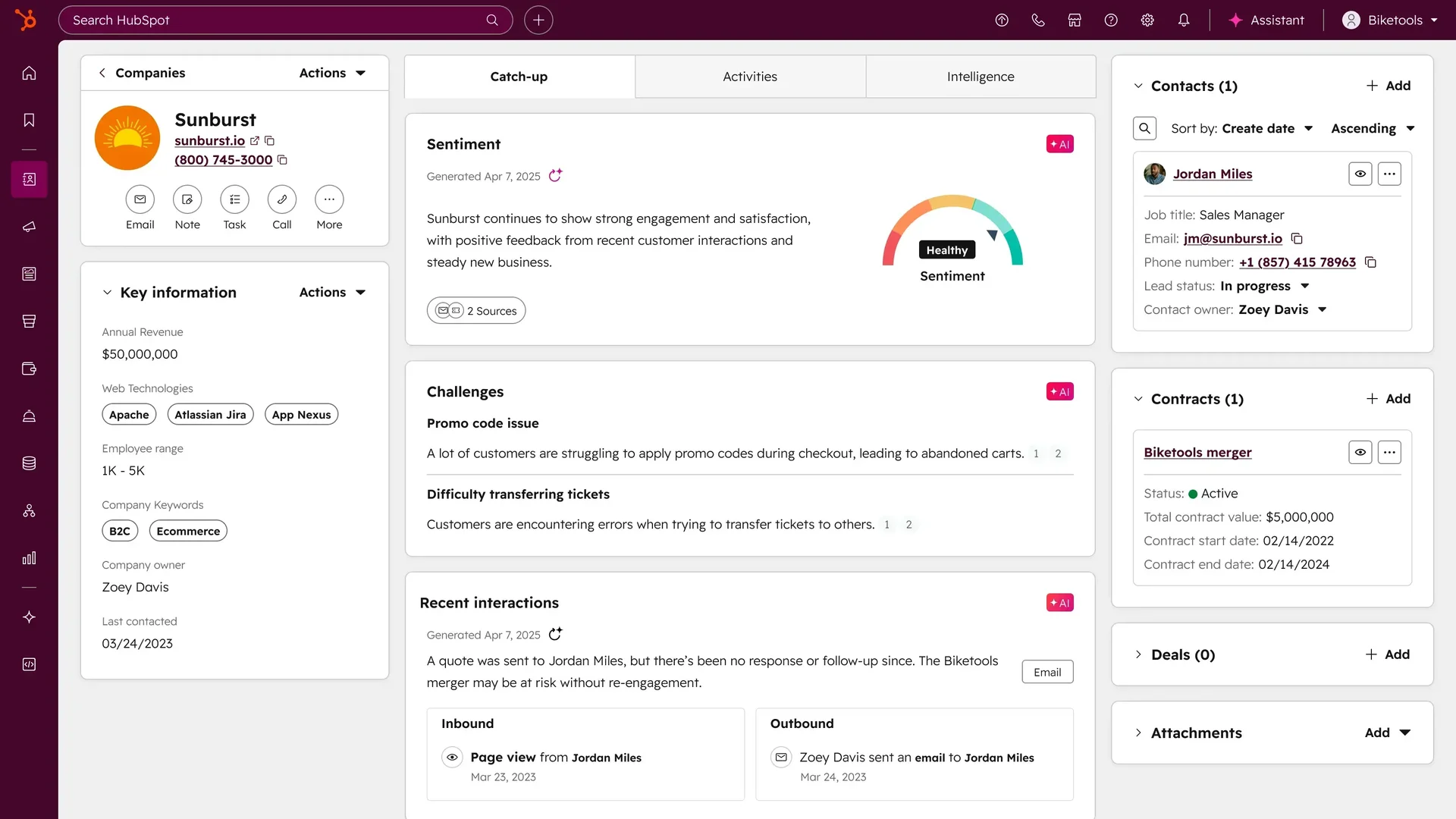
Source: Hubspot
Marketing Hub alone covers email marketing, marketing automation with visual workflows, landing pages, forms, social media management, ad management, audience segmentation, and multi-touch attribution. When connected to Sales Hub, marketing-qualified leads flow directly into deal pipelines. When connected to Service Hub, customer support interactions feed back into marketing segmentation. HubSpot positions this as its core advantage: "When you use two or more Hubs together, data is automatically connected, enabling you to track the entire customer journey" from first website visit to closed deal.
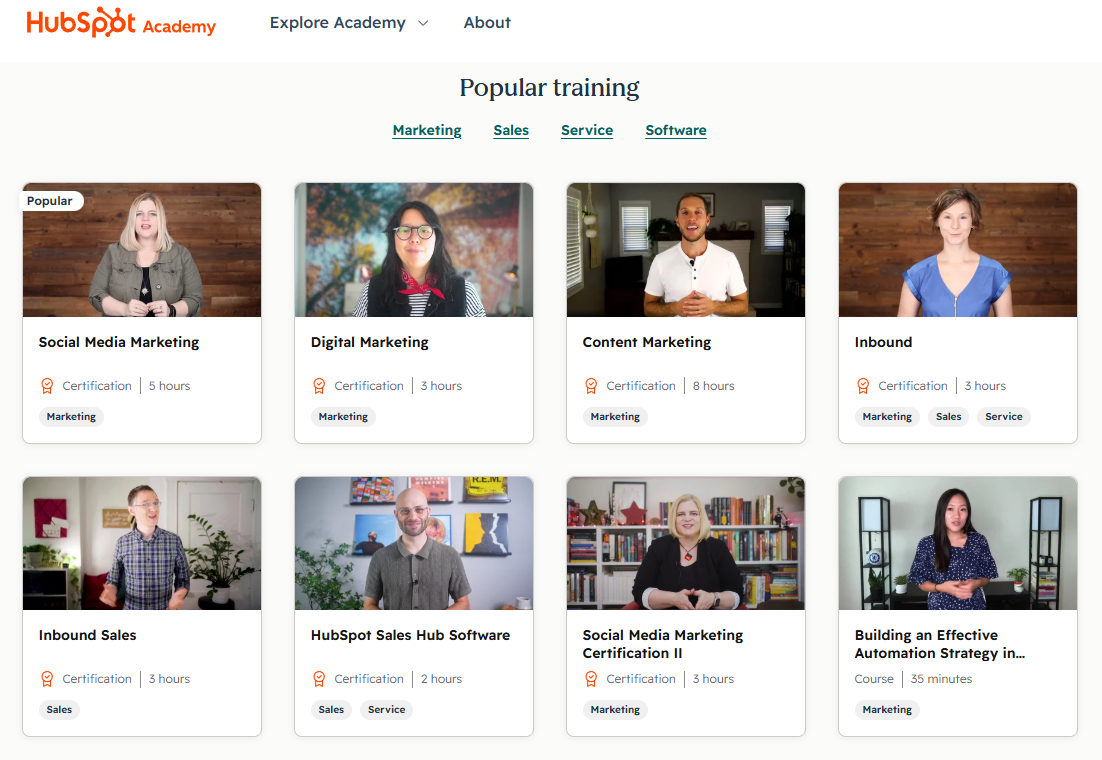
The ecosystem reinforces this. Over 2,000 app integrations with 2.5 million active installs connect HubSpot to virtually any tool a marketing team uses. HubSpot Academy has certified over 200,000 professionals, all for free. The permanently free CRM tier gives new users a genuine on-ramp with no time limit.
Source: Hubspot
HubSpot's limitations surface at scale. The per-seat, per-hub pricing model means total costs escalate as teams grow. Marketing Hub Professional runs $800/month (annual) with a $3,000 mandatory onboarding fee. Enterprise climbs to $3,600/month with a $7,000 onboarding fee. When subscribing to multiple Hubs at different tiers, all Core Seats are billed at the rate of the highest tier, a hidden cost that catches many organizations off guard. And while HubSpot manages your customer data well, it relies on you to bring that data in. Its CRM holds the contacts you've captured through forms, imports, and integrations, but it doesn't tell you about the thousands of potential buyers you haven't reached yet.
ZoomInfo fills the intelligence gap both platforms leave
This is where the comparison shifts. ClickDimensions helps you market to the contacts in your Dynamics CRM. HubSpot helps you market to the contacts in its Smart CRM. But who populates those databases, and how do you know which of those contacts are actually ready to buy?
For most B2B companies, the answer is a patchwork of form fills, trade show scans, manual research, and purchased lists of uncertain quality. The result: campaigns that reach a fraction of the addressable market, with no visibility into whether those contacts are in-market.
ZoomInfo solves this at the source. The platform's B2B data covers 500M contacts, 100M companies, 135M+ verified phone numbers, 120M direct-dial phone numbers, and 200M+ verified business email addresses. That breadth has been externally validated: in a Fortune 500 competitive RFP analyzing 25 million contacts across vendors, the independent consultant concluded that "no other competitor came even close."
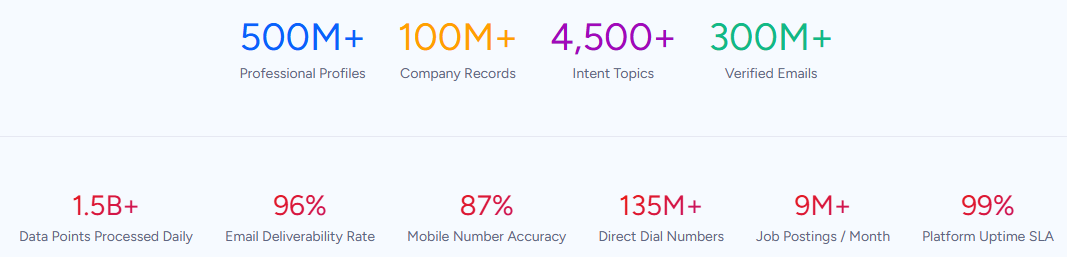
But comprehensive contact data alone isn't the full picture. ZoomInfo's Buyer Intent tracks signals from 210 million IP-to-Organization pairings and 6 trillion+ new keyword-to-device pairings sourced monthly, revealing which companies are actively researching solutions in your category. Guided Intent, exclusive to ZoomInfo, identifies topics historically correlated with deal success rather than requiring you to guess which keywords matter.
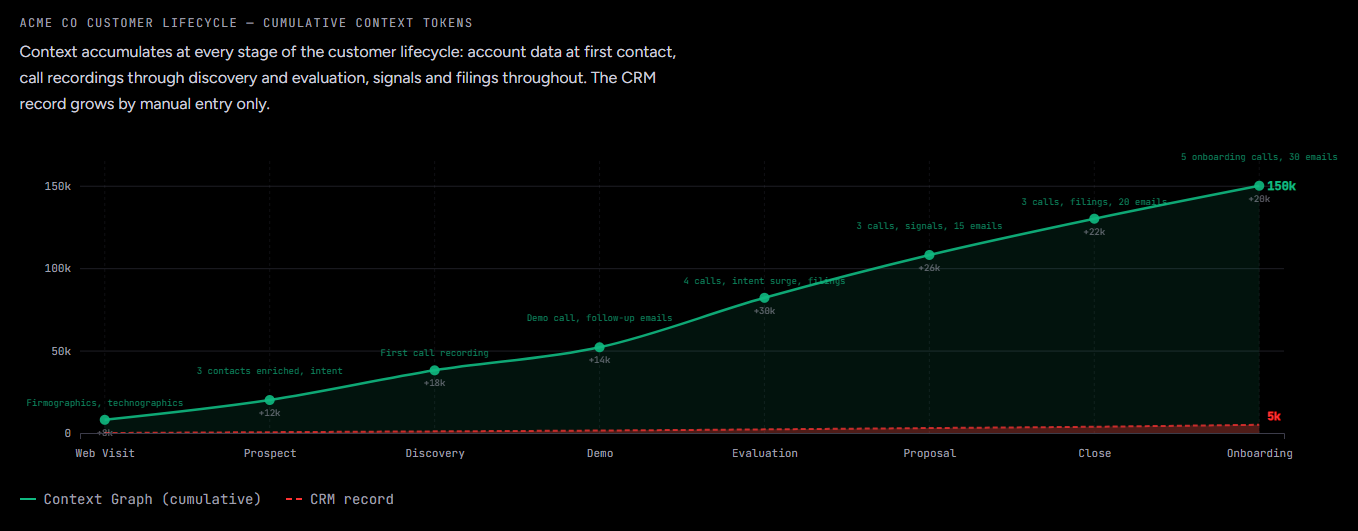
The GTM Context Graph takes this further by fusing ZoomInfo's third-party data with your CRM records, conversation transcripts, and behavioral signals, processing 1.5B+ data points daily. As ZoomInfo's CPO Dominik Facher writes, a CRM records that a deal moved from stage 3 to 4, but "the CRM recorded the state change. It has no record of why it happened." The GTM Context Graph captures that context, making the signals behind deal movement actionable.
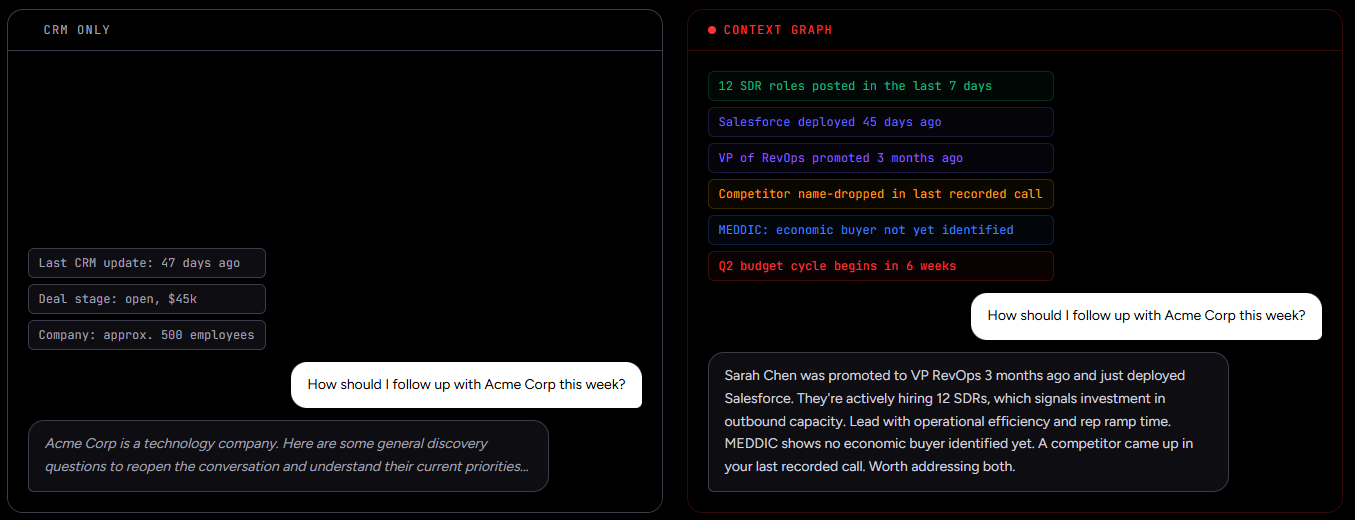
Because ZoomInfo integrates natively with Salesforce, HubSpot, and Dynamics 365, this intelligence flows directly into whichever CRM you run. It can enrich your existing ClickDimensions campaigns with verified contacts, or feed HubSpot's marketing automation with intent-qualified leads.
"It's not just the data itself. It's more about the right data at the right time to help us reach out with the right message across that full buyer journey." — Chelsea Kenyon, Senior Director of Digital Strategy (Redwood Logistics)
For a closer look at how HubSpot and ZoomInfo compare head-to-head on data, AI, and pricing, see our HubSpot vs. ZoomInfo comparison.
Marketing automation: execution vs. orchestration
All three platforms automate marketing campaigns, but the scope and intelligence behind that automation differ considerably.
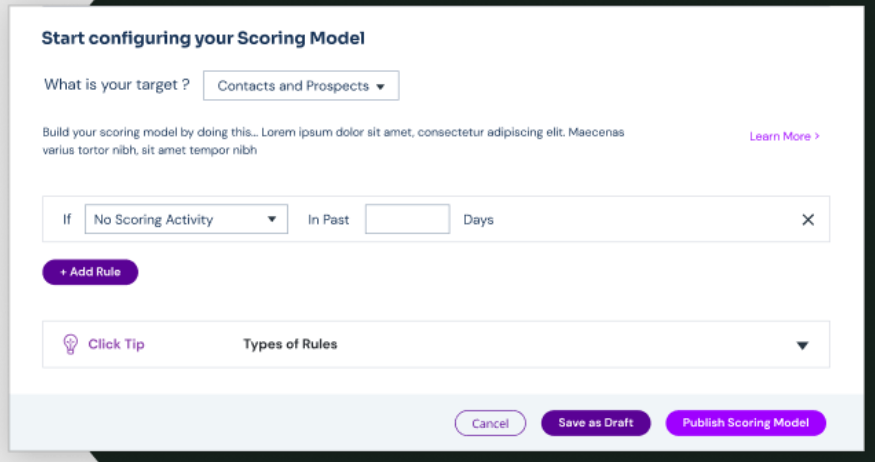
ClickDimensions builds automation around CRM data events. Its drag-and-drop journey builder triggers emails and SMS based on form submissions, page visits, email link clicks, and CRM field changes. Dynamic Segmentation monitors live Dynamics data continuously and auto-enrolls contacts when they meet predefined criteria, eliminating static list management.
Lead scoring assigns points for email reads, form submissions, and event attendance, then automatically routes contacts to specific workflows based on score thresholds. For Dynamics teams running nurture sequences, event workflows, and lead qualification, this is effective and self-contained.
Source: ClickDimensions
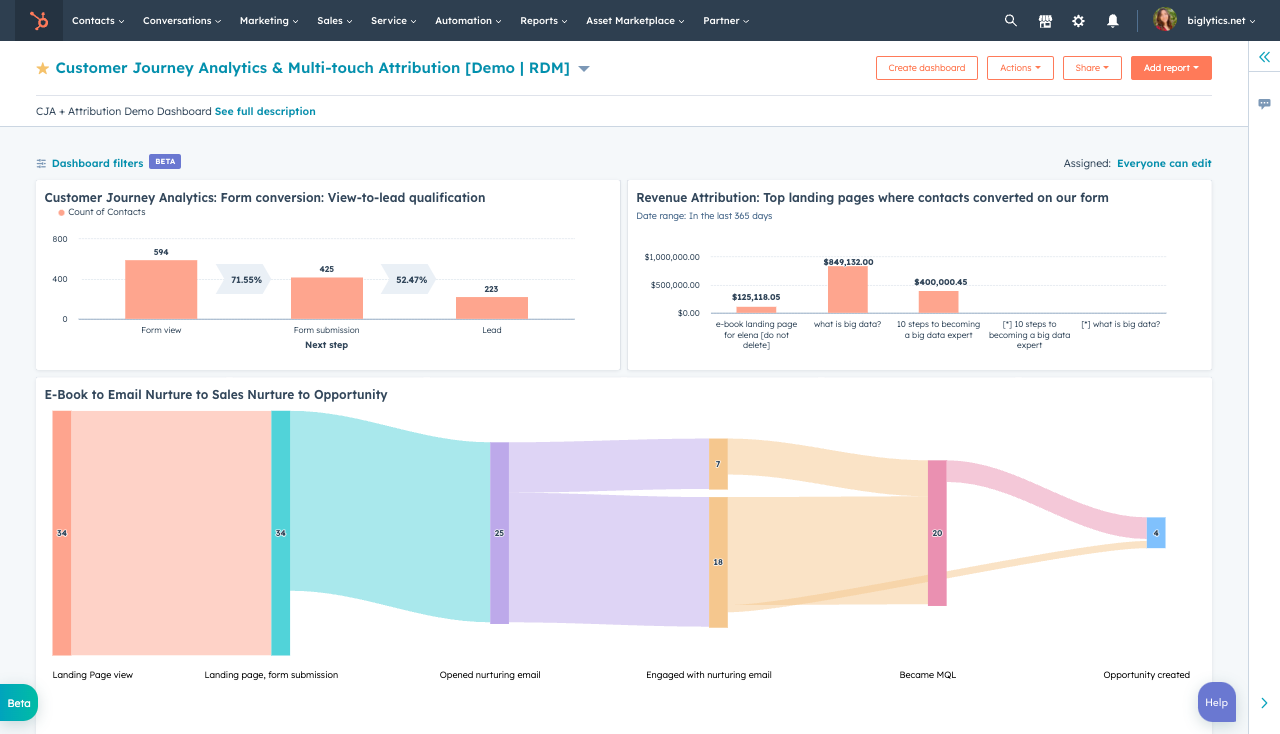
HubSpot extends automation across the entire customer lifecycle. Marketing automation Workflows trigger personalized emails, internal notifications, and CRM updates based on contact behavior, lifecycle stage, and form fills. Because these workflows share data with Sales Hub and Service Hub, a marketing-qualified lead can automatically create a deal, assign a sales rep, and schedule a follow-up task without manual handoff.
Advanced Marketing Reporting ties campaign activity directly to revenue using multi-touch attribution and customer journey analytics. The breadth is genuine: few platforms let a marketer trace a blog visit to a closed deal in a single interface.
Source: Hubspot
ZoomInfo's GTM Studio reframes automation around intelligence rather than just execution. Instead of building campaigns around lists you already have, GTM Studio lets marketers describe audiences in natural language, enrich with first- and third-party data, and launch multi-channel plays (email, calls, ads, direct mail) triggered by buyer behavior. Pre-built GTM plays for inbound acceleration, champion tracking, competitive displacement, and ICP targeting launch in one click. The plays run continuously, self-improving as every click, open, and reply refines targeting automatically. Expansion plays that used to take 3 weeks now launch in 30 minutes, without engineering support.
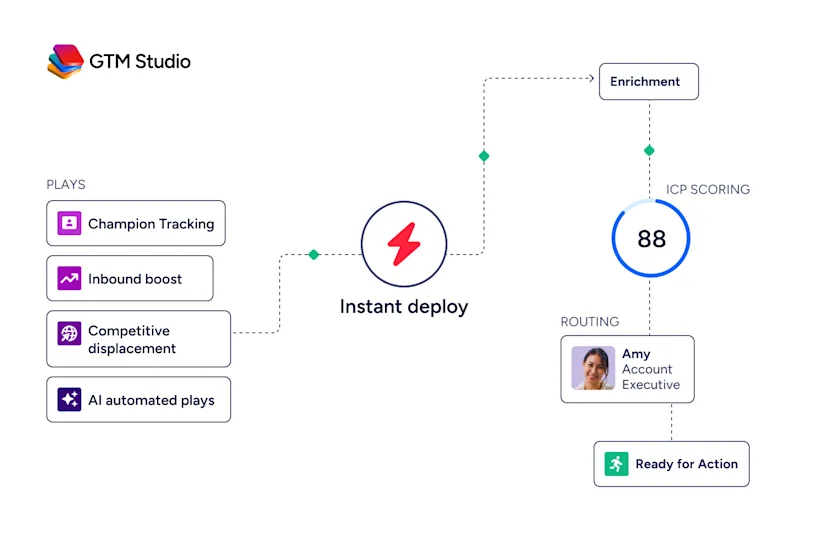
The difference in practice: ClickDimensions and HubSpot automate the campaigns you've designed. ZoomInfo helps you identify which campaigns to run, who to target, and when to trigger them, then automates execution across channels.
"We needed a solution that would allow us to streamline our processes and ensure that we were reaching the right people. It was about making our efforts more focused and impactful." — Jeremy Melius, Sr. Director of Marketing Operations (Impartner)
AI capabilities reflect different foundations
All three platforms have invested in AI. What separates them is the data those AI systems draw on.
ClickDimensions has launched an AI Workforce consisting of specialized agents: Tim (website chat and lead capture), Clara (internal sales enablement), and Lexi (customer support). Each agent is specialized for a specific function with a defined persona, rather than being a general-purpose chatbot. The platform also includes AI copy tools for generating email and social content. Click also offers to build custom agents tailored to an organization's specific goals. The AI operates within the Dynamics 365 ecosystem, drawing on CRM data for personalization.

Source: ClickDimensions
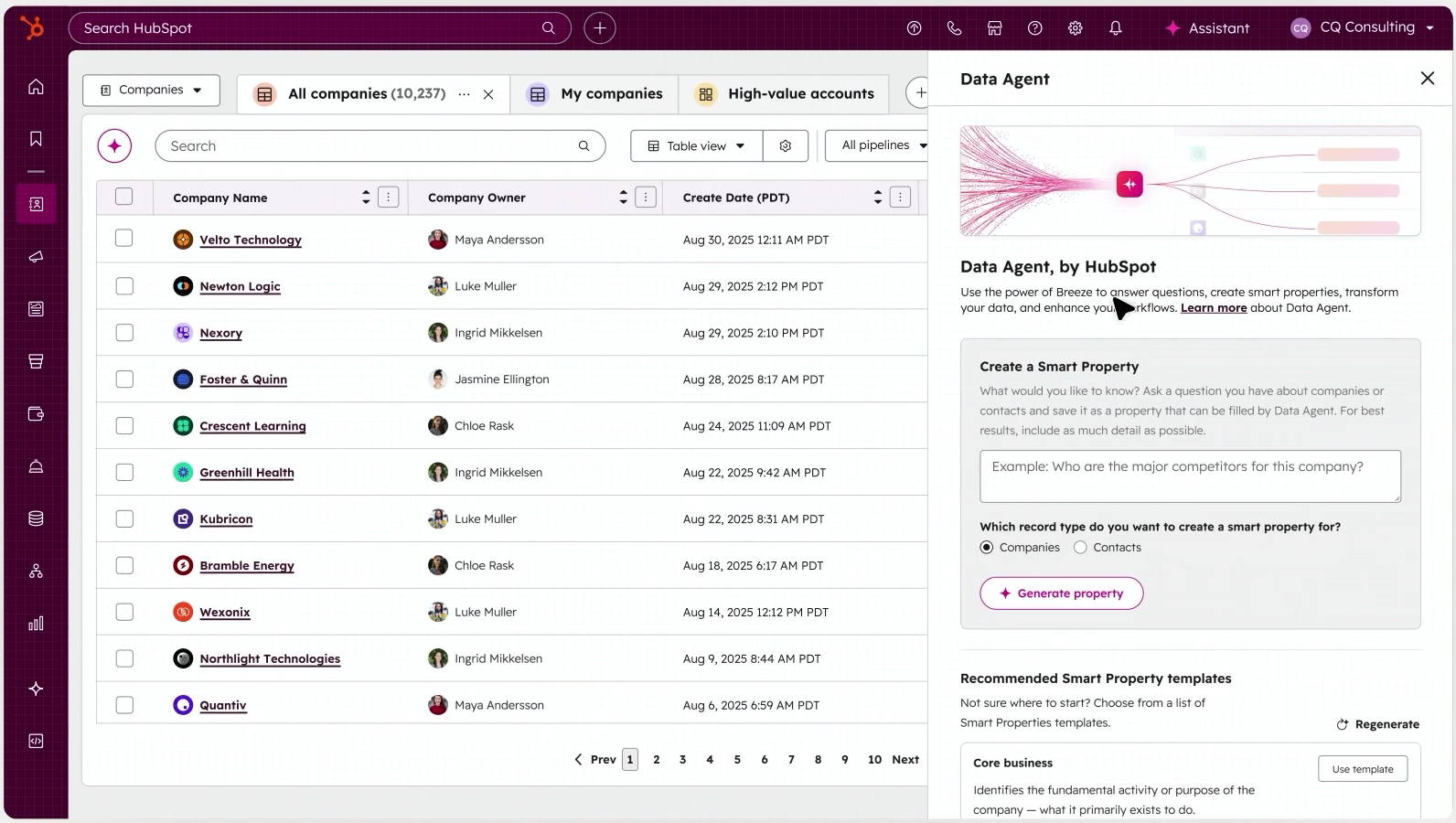
HubSpot's Breeze is an AI layer running across all Hubs. The Customer Agent resolves over 50% of customer conversations autonomously. The Prospecting Agent monitors buying signals and drafts personalized outreach using the complete HubSpot customer history. The Data Agent answers natural-language questions about CRM data. Breeze benefits from HubSpot's broad platform data: it references deal history, support tickets, and marketing engagement when generating recommendations. However, its intelligence is limited to data already inside HubSpot. If a contact isn't in the CRM, Breeze doesn't know about them.
Source: Hubspot
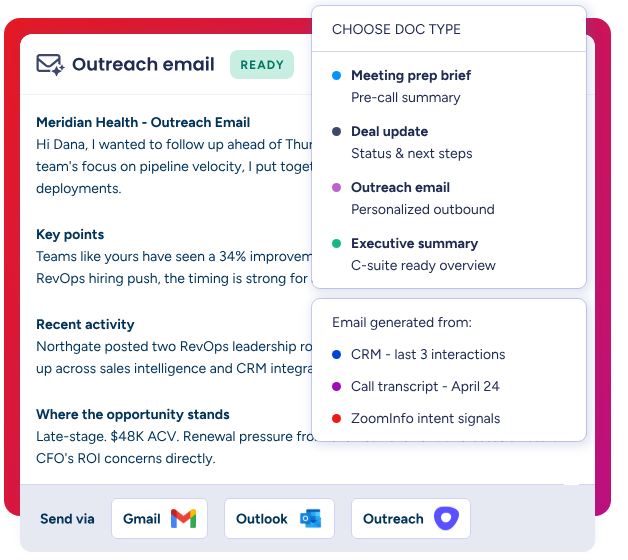
ZoomInfo's AI is built on the GTM Context Graph, which fuses the industry's most comprehensive B2B dataset with customer CRM data, conversation intelligence (via Chorus), and behavioral signals. This means ZoomInfo's AI reasons across your internal data and external intelligence simultaneously.
The AI agents in GTM Workspace handle account research, outreach generation, CRM updates, and signal monitoring, all powered by context no single-platform AI can match. The distinction matters most when you consider what AI can actually do for your team. ClickDimensions' AI helps you create content within Dynamics. HubSpot's AI helps you work smarter within HubSpot. ZoomInfo's AI tells you things you couldn't know from your CRM alone: which accounts are actively in-market, who the decision-makers are, and what messaging will resonate based on patterns across thousands of deals.
"That combination of our internal CRM data, external signals, and AI that's given all that context has helped us craft very specific account- and persona-based messages. And people have responded to them right away." — Toby Carrington, Chief Business Officer (Seismic)
CRM integration: native, built-in, or universal
How each platform relates to your CRM reveals another fundamental difference.
ClickDimensions doesn't integrate with your CRM. It is part of your CRM. Built on Dataverse and Azure, the platform shares the same data layer as Dynamics 365. No third-party APIs, no data transfers, no sync lag. For Dynamics shops, it's the simplest possible architecture. But it's also the most constrained: if you ever move away from Dynamics, ClickDimensions goes with you nowhere.
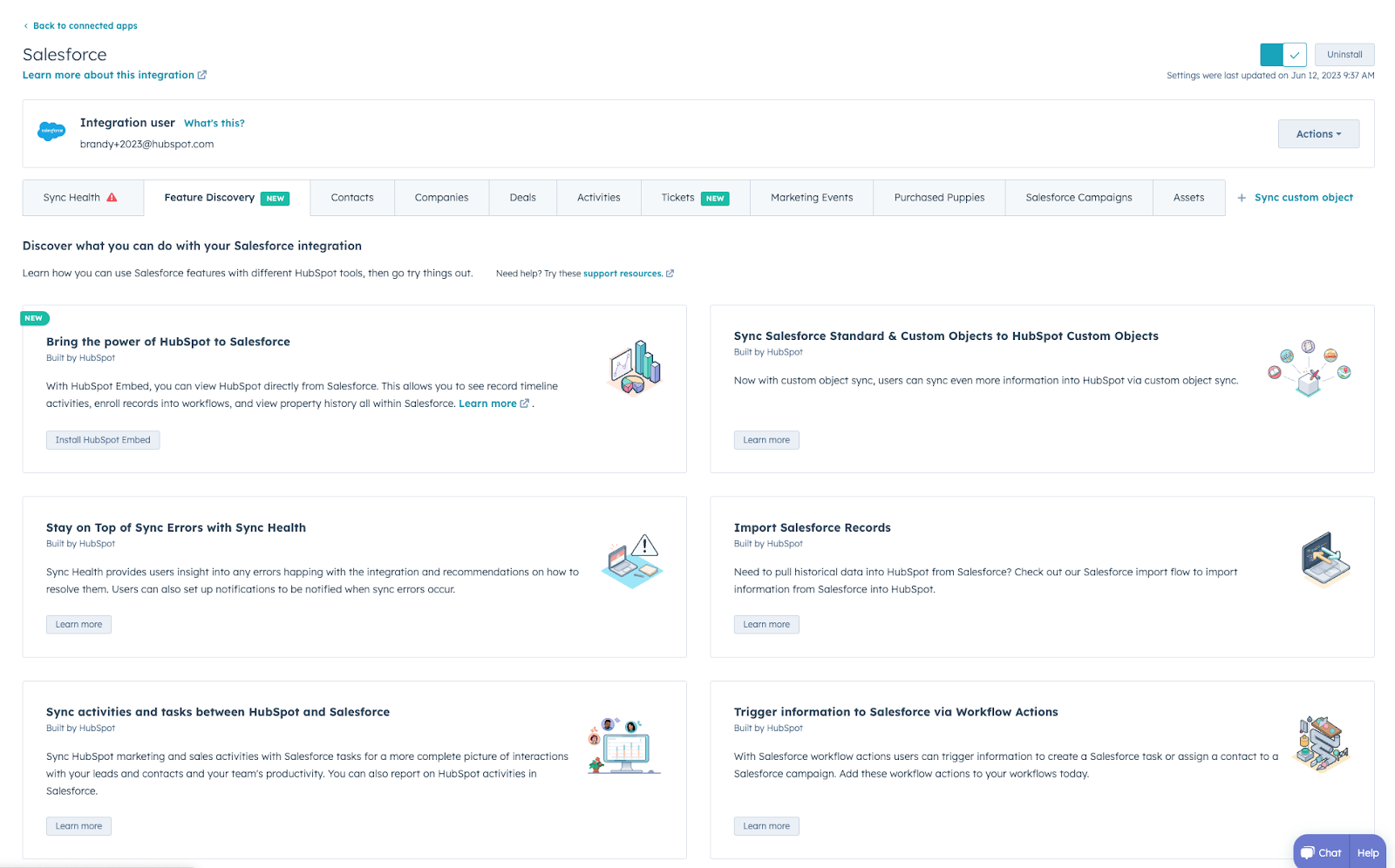
HubSpot is its own CRM. There's nothing to integrate on the marketing-to-CRM path, since marketing data flows automatically to sales and customer service teams within the same system. For organizations using Salesforce alongside HubSpot, a bidirectional sync is available. The tradeoff is that adopting HubSpot's marketing often means adopting its CRM, or maintaining two systems in parallel.
Source: Hubspot
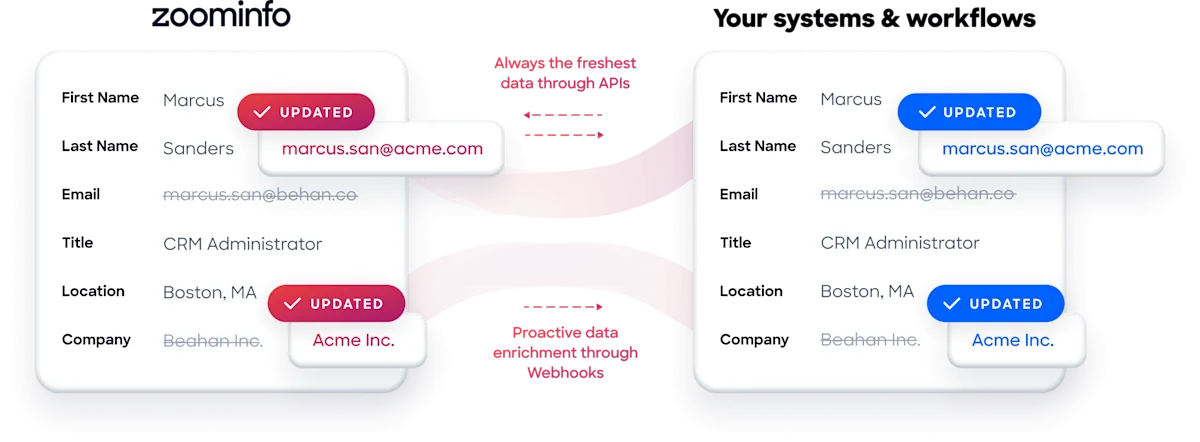
ZoomInfo takes a CRM-agnostic approach, integrating natively with Salesforce, HubSpot, and Dynamics 365, plus 120 additional integrations across marketing automation, sales engagement, data warehouses, and communications platforms. API access and MCP extend ZoomInfo's intelligence into any custom tool or AI agent. API access is included in all relevant plans. This universality means your choice of CRM never limits your access to intelligence, and switching CRMs doesn't mean starting over on your data foundation.
"ZoomInfo is our one source of truth for account data, and even more so for contact data. There's no other provider in the market that provides you with that level of detail." — Thor Sanderson, Senior Manager of Sales Technology Enablement (Smartsheet)
Pricing structures reveal the target buyer
Each platform's pricing tells you exactly who they're built for.
ClickDimensions publishes no pricing. The pricing page routes to a sales contact form. All terms are set on a negotiated Order Form, and Microsoft Dynamics 365 licenses are a prerequisite, meaning total cost includes both the ClickDimensions subscription and underlying Microsoft licensing. The contract structure adds friction: subscriptions auto-renew unless you provide 60 days' written notice, and opting out of auto-renewal triggers a 10% surcharge on the Order Form value. Fees are non-refundable.
HubSpot offers transparent tiered pricing that gets expensive at scale. Marketing Hub starts with a free plan, moves to Starter at $15/seat/month (annual), then Professional at $800/month with a $3,000 mandatory onboarding fee, and Enterprise at $3,600/month with a $7,000 onboarding fee. Marketing contacts beyond the included tier trigger immediate billing ($250 per 5,000 contacts at Professional). The mixed-tier seat cost rule, where all Core Seats bill at the highest tier if you mix Hub editions, can significantly inflate costs for organizations that don't need Enterprise features across every department.
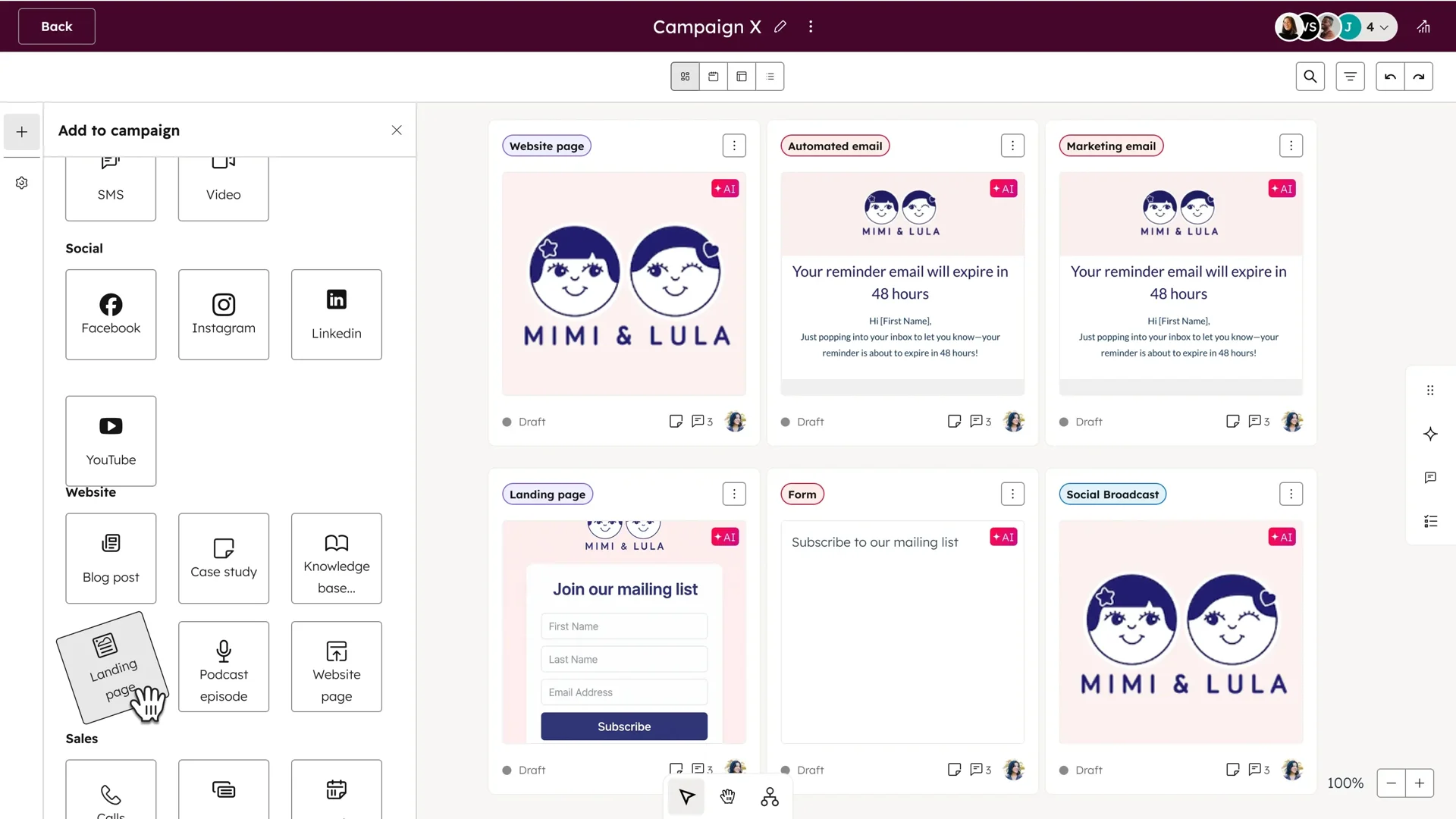
Source: Hubspot
ZoomInfo uses consumption-based pricing with no published prices. Customers pay based on usage patterns, number of seats, credit volume, and features selected. However, ZoomInfo offers two free entry points: ZoomInfo Lite, a permanent free tier with access to the B2B database and 10 monthly export credits, and a 7-day free trial with full platform access.
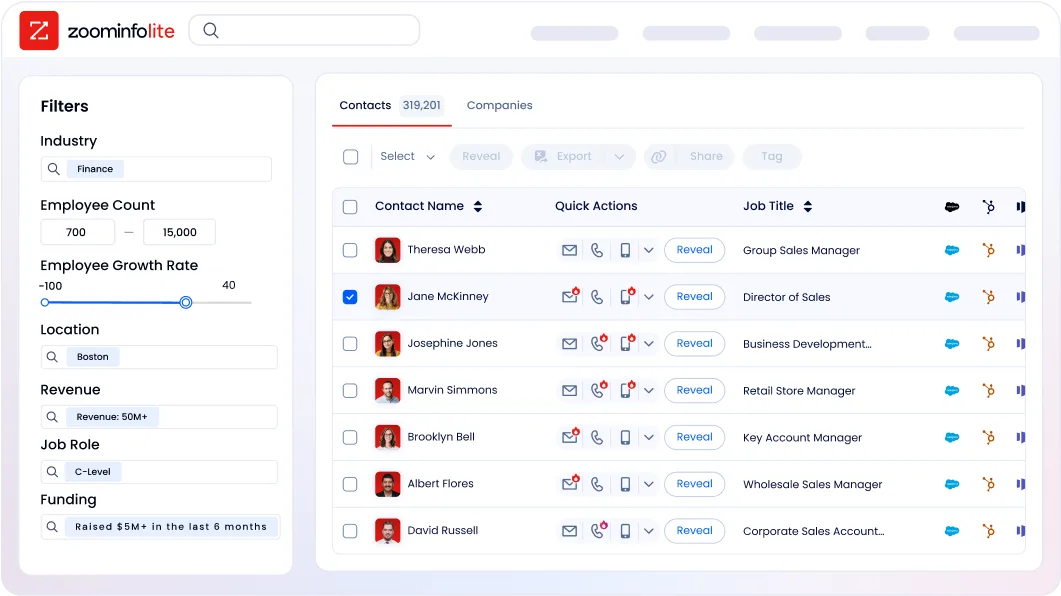
For budget-conscious teams, HubSpot's free tier is the most generous starting point. For Dynamics-locked organizations, ClickDimensions eliminates the cost of a separate CRM but adds an opaque software layer on top of Microsoft licensing. For B2B teams where targeting accuracy directly impacts revenue, ZoomInfo's pricing reflects the value of reaching verified, in-market buyers rather than broadcasting to stale lists.
ClickDimensions vs. HubSpot vs. ZoomInfo: Which should you choose?
The right platform depends on where your team's biggest constraint actually lies.
Choose ClickDimensions if:
Your organization runs Microsoft Dynamics 365 and won't change CRMs
You need marketing automation that shares a data layer with your CRM natively
Your marketing team is small and focused on email, forms, and lead nurture
You value the simplicity of having everything inside one system, even at the cost of scope
You're comfortable negotiating pricing without published benchmarks
Choose HubSpot if:
You want CRM, marketing, sales, and service unified in one platform
Your team values ease of use and fast time to value
You're building your customer database primarily through inbound channels
You need a large integration ecosystem for your existing tools
You're comfortable with per-seat, per-hub pricing that scales with your organization
Choose ZoomInfo if:
Your campaigns are limited by incomplete contact data and poor targeting
You need to know which accounts are actively in-market before they fill out a form
You want AI-powered go-to-market built on verified B2B intelligence, not just CRM data
You need a platform that works with Dynamics 365, HubSpot, Salesforce, or any CRM
Your sales and marketing teams need shared intelligence on accounts, contacts, and buying signals
Start with ZoomInfo Lite for free, or request a demo to see the full platform in action.
ClickDimensions and HubSpot both solve the execution side of marketing well, each for different audiences and CRM commitments. But the highest-performing B2B teams don't just execute campaigns. They know exactly who to target, when to engage, and what to say. That intelligence layer, built on verified data and real buying signals, is what separates pipeline from noise.
ClickDimensions vs. HubSpot vs. ZoomInfo FAQ
What is the core difference between ClickDimensions, HubSpot, and ZoomInfo?
ClickDimensions is a marketing automation suite built exclusively for Microsoft Dynamics 365, operating natively inside the CRM with no external connectors. HubSpot is an all-in-one customer platform combining CRM, marketing, sales, service, and content tools in a single system serving over 288,000 customers. ZoomInfo is an all-in-one AI GTM platform built on the industry's most comprehensive B2B dataset (500M contacts, 100M companies) and the GTM Context Graph, designed to help teams identify and reach verified buyers at the right moment.
Can I use ZoomInfo alongside ClickDimensions or HubSpot?
Yes. ZoomInfo integrates natively with Microsoft Dynamics 365, HubSpot, and Salesforce, among over 120 other platforms. It can enrich your existing CRM contacts with verified data, feed intent-qualified leads into your marketing automation workflows, and provide buyer signals that trigger campaigns in either ClickDimensions or HubSpot. Many B2B teams use ZoomInfo as the intelligence layer powering their execution platform of choice.
Which platform is cheapest to get started with?
HubSpot offers the most generous free tier, with a permanent free CRM supporting unlimited contacts and basic marketing tools. ZoomInfo Lite is also permanently free, providing access to the B2B database with 10 monthly export credits. ClickDimensions has no free tier or public pricing; all terms require a sales conversation, and the platform requires an existing Microsoft Dynamics 365 license.
Which platform has the strongest AI capabilities?
ZoomInfo's AI operates on the broadest data foundation, combining 500M contacts and 100M companies with your CRM records, conversation intelligence, and behavioral signals through the GTM Context Graph, processing 1.5B+ data points daily. HubSpot's Breeze AI runs across all its Hubs but is limited to data inside HubSpot's own CRM. ClickDimensions offers AI copy tools and specialized agents (Tim for website chat, Clara for sales enablement, Lexi for support) that operate within the Dynamics 365 ecosystem.
Is ClickDimensions only for Dynamics 365 users?
Yes. ClickDimensions is built exclusively for Microsoft Dynamics 365 and cannot work with any other CRM. Organizations running Salesforce, HubSpot CRM, or any non-Dynamics system cannot use it. HubSpot includes its own CRM. ZoomInfo integrates with Salesforce, HubSpot, Dynamics 365, and over 120 other platforms.
Which platform provides buyer intent data?
ZoomInfo is the clear leader in buyer intent, tracking signals from 210 million IP-to-Organization pairings and 6 trillion+ keyword-to-device pairings monthly, recognized as a Leader in the Forrester Wave for Intent Data Providers B2B (Q1 2025). Its Guided Intent feature identifies topics historically correlated with deal success without manual configuration. HubSpot offers behavioral tracking within its own platform but lacks dedicated third-party intent intelligence. ClickDimensions does not offer buyer intent data.
How do the platforms handle data quality?
ZoomInfo maintains data quality through a proprietary collection and verification system backed by 300+ human researchers, achieving up to 95% accuracy. HubSpot's Data Hub includes AI-powered duplicate detection and auto-enrichment within its CRM. ClickDimensions inherits whatever data quality exists in your Dynamics 365 instance, with no independent verification or enrichment layer.
Which platform is best for account-based marketing?
ZoomInfo is designed specifically for ABM, recognized as a Leader in the Gartner Magic Quadrant for ABM Platforms in both 2024 and 2025. GTM Studio enables marketers to define audiences in natural language, enrich with first- and third-party data, and activate plays across channels. HubSpot supports ABM through audience segmentation and ad targeting but lacks ZoomInfo's depth of contact data and intent signals. ClickDimensions supports targeted campaigns within Dynamics but does not offer dedicated ABM capabilities.
Comparing ClickDimensions and HubSpot? These related breakdowns go deeper:
