

Choosing between Hightouch and GrowthLoop for customer data activation comes down to five questions:
Do you have a mature cloud data warehouse with clean, well-modeled customer data, or are you still building that foundation?
Is your priority activating the broadest range of data types across your marketing stack, or compressing campaign cycles with AI automation?
Do you need a platform your marketers can operate on their own, or will your data team stay involved in every build?
How important is it that your platform also handles event collection, identity resolution, and real-time personalization?
Is your bottleneck activating the data you have, or having the right data to activate in the first place?
In short, here's what we recommend:
Hightouch is the more mature composable CDP, built by former Segment engineers who saw firsthand why traditional CDPs fail.
With 250+ integrations, warehouse-native architecture across Snowflake, Databricks, BigQuery, and Redshift, and a Gartner Magic Quadrant Leader designation as of January 2026, Hightouch covers the full data activation lifecycle: event collection, identity resolution, audience building, journey orchestration, real-time personalization, and AI decisioning powered by reinforcement learning.
For data-mature enterprises that need broad activation across their marketing stack, Hightouch is the strongest pick.
GrowthLoop is the composable CDP betting hardest on AI-driven marketing automation. Its Compound Marketing Engine combines warehouse-native audience building with specialized AI agents that suggest segments, build journeys, and optimize campaigns using Bayesian multi-armed bandits.
For enterprise marketing teams that want AI to compress campaign cycles from months to days, GrowthLoop's agent-based approach is worth serious consideration.
Both platforms activate warehouse data well. But they share a fundamental assumption: that your warehouse already contains high-quality data worth activating. For B2B companies, that assumption often doesn't hold. Incomplete contact records, stale company data, and missing buying signals mean even the best activation platform works with gaps. That's where a different approach matters.
ZoomInfo is an AI GTM platform that solves the upstream problem composable CDPs leave to you: data quality and intelligence.
Built on 500M contacts, 100M companies, 135M+ verified phone numbers, and 200M+ verified business emails, ZoomInfo provides the B2B data foundation that makes activation meaningful.
Its GTM Context Graph combines this data with your CRM records, conversation transcripts, and behavioral signals to reveal not just what happened in your pipeline, but why.
With GTM Studio, ZoomInfo offers its own audience building and campaign orchestration, letting B2B teams define audiences in natural language, launch multi-channel plays, and measure pipeline impact without needing a separate composable CDP.
If your real bottleneck is having the right B2B data and intelligence (not just activating what's already in your warehouse), see how ZoomInfo powers your GTM.
Hightouch vs. GrowthLoop vs. ZoomInfo at a glance
Hightouch | GrowthLoop | ZoomInfo | |
|---|---|---|---|
Core approach | Composable CDP + Agentic Marketing Platform | Composable CDP + Compound Marketing Engine | AI GTM platform |
Data architecture | Warehouse-native, zero data copy | Warehouse-native, zero data copy | Proprietary B2B data + customer data unified via GTM Context Graph |
Audience building | No-code Customer Studio + SQL mode | No-code visual builder + AI Studio agents | Natural language via GTM Studio + 300+ company attributes |
AI capabilities | Reinforcement learning (contextual bandits) | Bayesian multi-armed bandits (Thompson Sampling) | GTM Context Graph + AI agents (powered by Anthropic Claude) |
Integration count | 250+ destinations | 50+ destinations | 120+ App Marketplace integrations + Enterprise API + MCP |
Identity resolution | Deterministic + probabilistic (warehouse-native) | Not a standalone feature | Entity resolution via 20+ years of B2B data unification |
Pricing model | Usage-based (active syncs); free tier available | Quote-only (record volume tiers) | Custom-quoted (consumption-based); free Lite tier available |
Best for | Data-mature enterprises needing broad activation | Enterprise marketers wanting AI-driven campaign automation | B2B teams needing data + intelligence + execution |
Both platforms bet on the same architecture
Hightouch and GrowthLoop share a core conviction: your data warehouse should be the single source of truth, and your CDP should sit on top of it rather than beside it.
Both connect directly to Snowflake, Databricks, BigQuery, and Redshift. Both query data in place without copying it into a proprietary store. Both frame this as the answer to traditional CDPs that duplicate data, introduce governance risk, and take months to implement.
The similarity runs deep. Both let marketers build audiences without SQL, export segments to advertising and marketing platforms, and run experiments with holdout groups. Both have journey orchestration canvases. Both support real-time and batch activation.
Where they diverge is in what they've built around that shared foundation.
Hightouch started as a Reverse ETL tool in December 2020 and expanded outward. It now covers event collection, identity resolution (both deterministic and probabilistic), real-time personalization with a sub-30ms API, content assembly, and AI Decisioning.
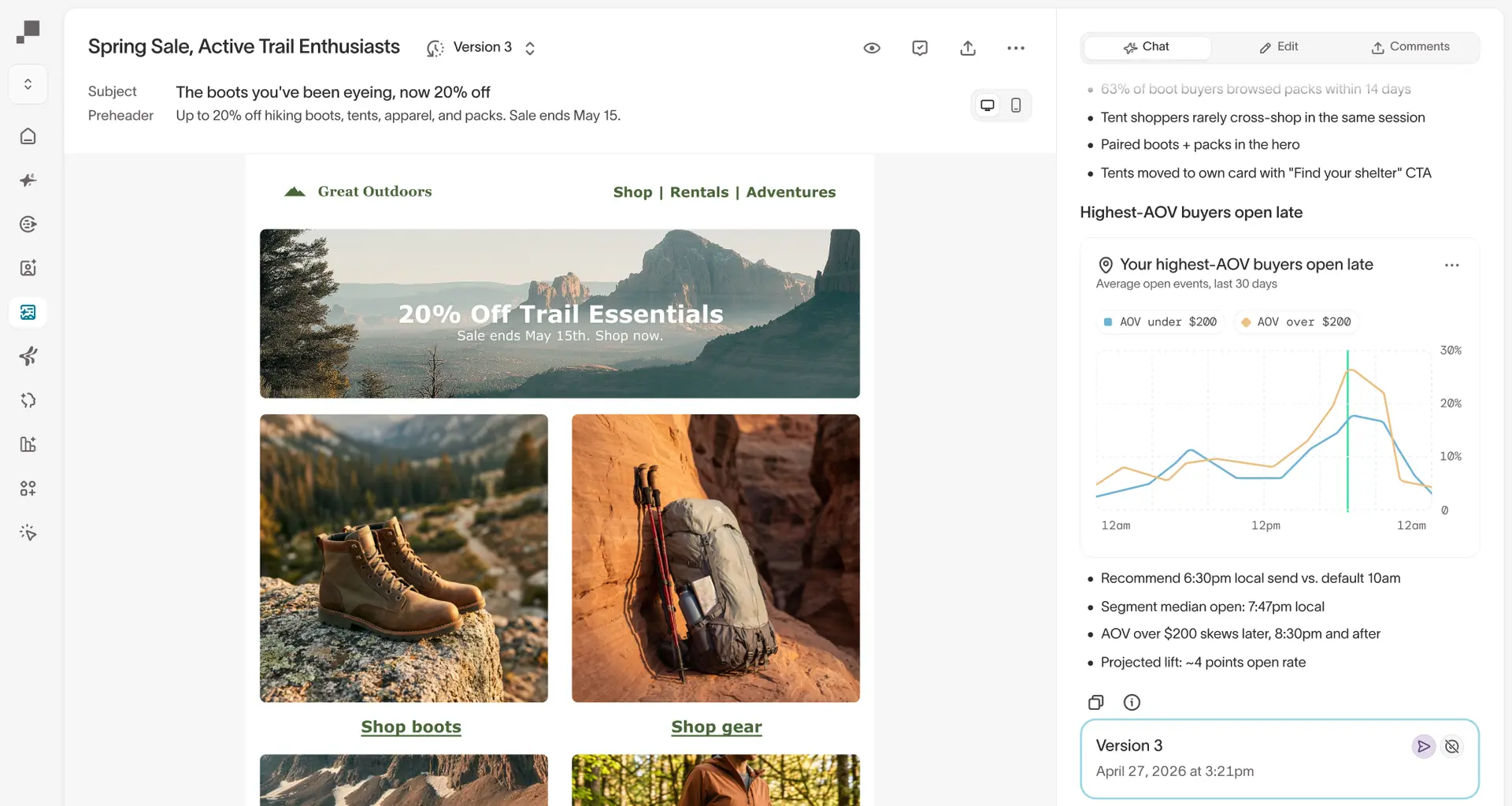
Source: Hightouch
The product surface is broad: from data pipeline infrastructure to personalized customer experience.
GrowthLoop started as a composable CDP (originally called Flywheel Software) and expanded upward into AI.
Its Compound Marketing Engine wraps audience building, journey orchestration, and measurement in an AI layer where specialized agents (Data, Audience, Journey, Insight, Research, Schema) work together under a Supervisor Agent to suggest, build, and optimize campaigns.
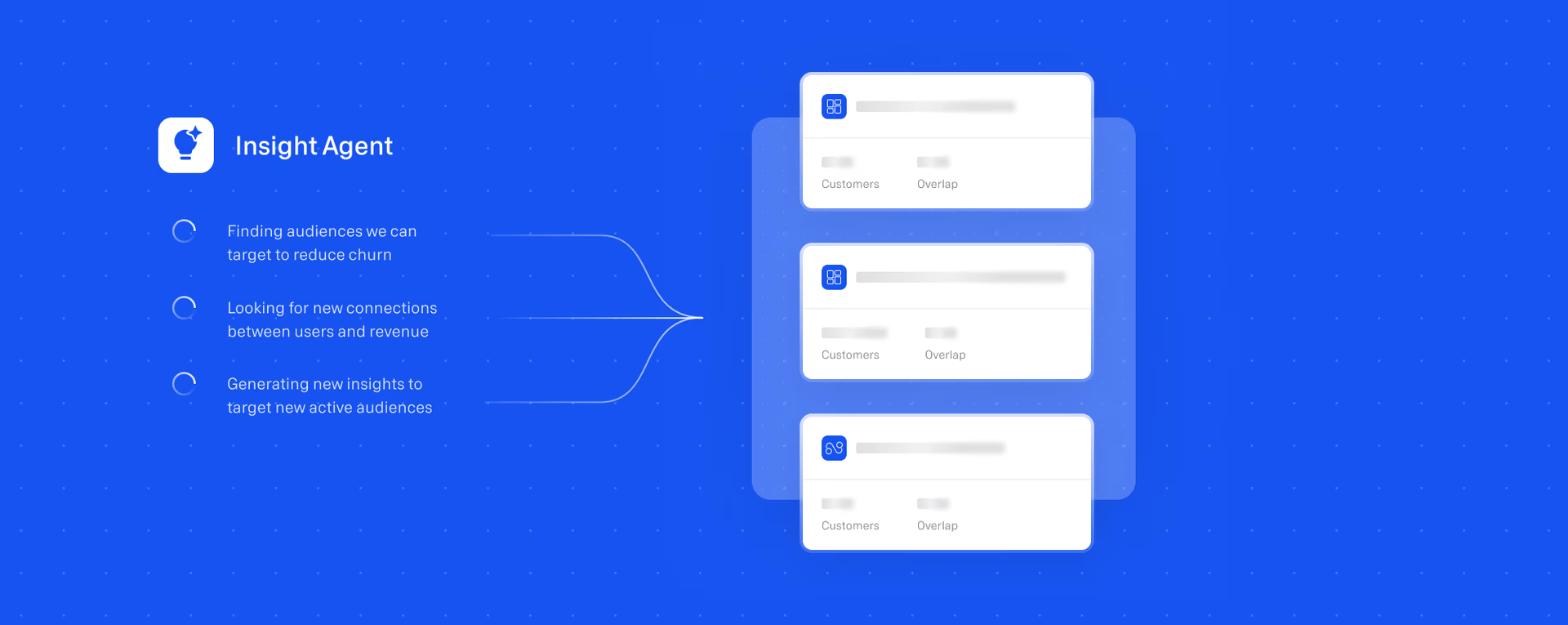
Source: GrowthLoop
The product surface is narrower but goes deeper on AI coordination.
The question for buyers: which expansion matters more? Hightouch's breadth across the activation lifecycle, or GrowthLoop's depth in AI-driven campaign automation?
Audience building: breadth versus agents
This is the feature both platforms put front and center, and where the daily experience differs most.
Hightouch's Customer Studio gives marketers a visual builder for defining audiences by filtering on events, attributes, and computed traits. Audience size updates in real time as filters change. A full SQL mode sits alongside the visual interface for teams that need more control.
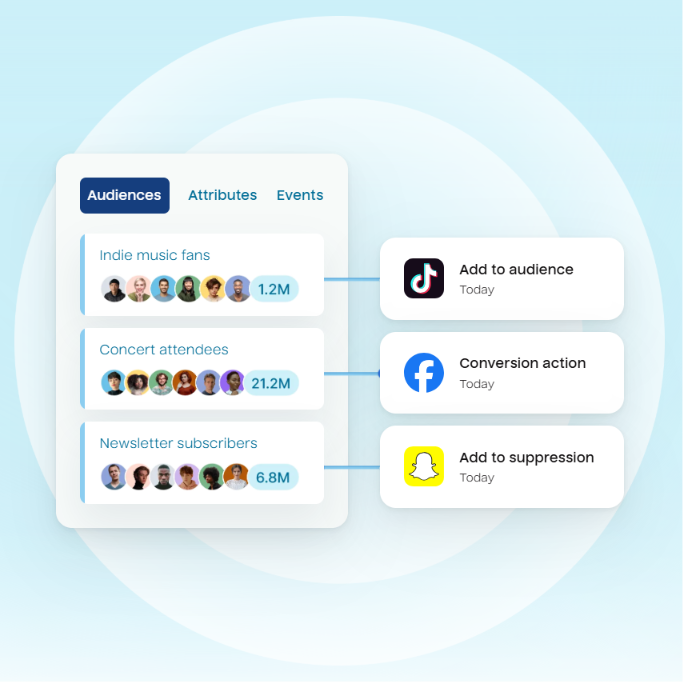
Source: Hightouch
The traits engine lets users create calculated fields (lifetime value, percentile rankings, behavioral scores) without code.
Hightouch also offers Audience Splits for multivariate testing with holdout groups, breakdowns for visualizing characteristic distributions within segments, and overlap analysis between audiences.
GrowthLoop's Audiences takes a similar no-code approach but layers on AI Studio, where marketers describe their target audience in plain language and the Audience Agent constructs a segment ready for activation.
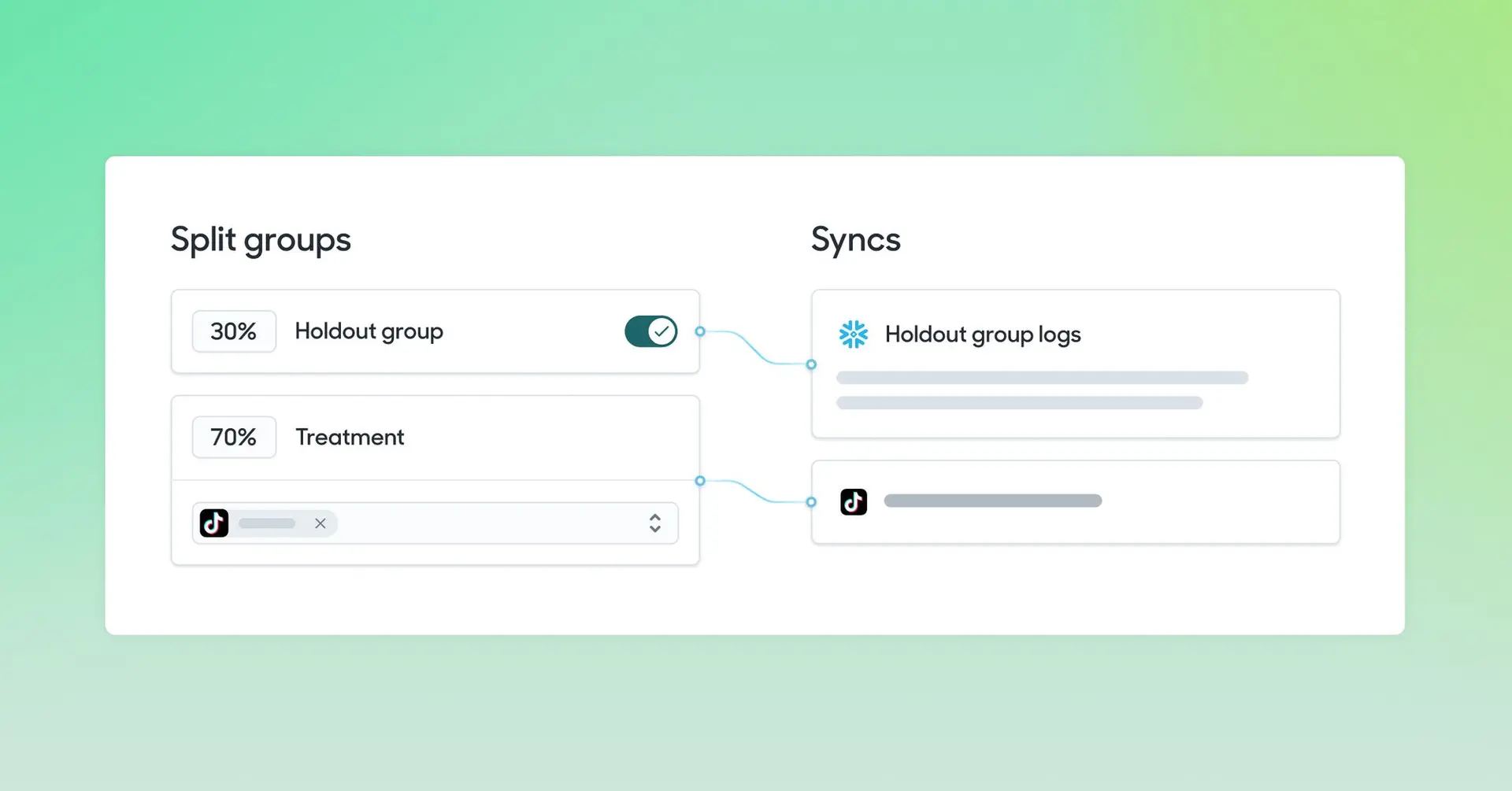
Source: GrowthLoop
An always-on Audience Discovery feature surfaces high-value segments based on evolving customer behavior without the marketer asking.
The Central Audience Hub manages all audiences with tagging, sharing, cloning, and approval workflows, plus overlap detection color-coded by percentage to prevent double-targeting.
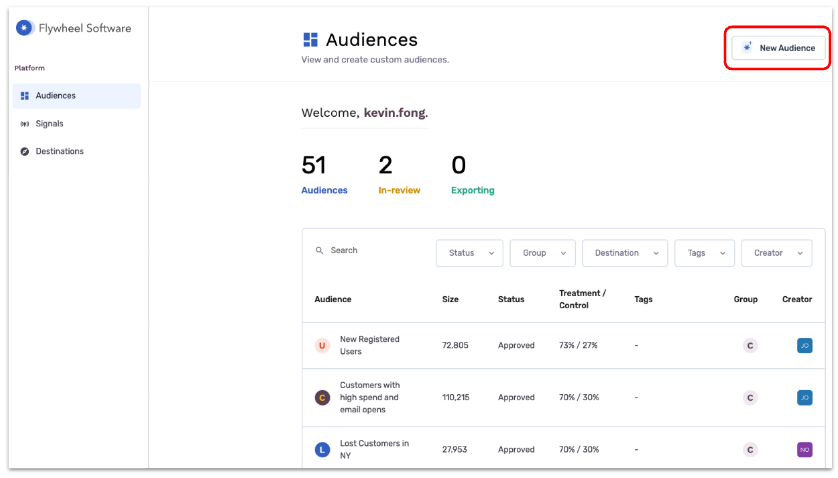
Source: GrowthLoop
ZoomInfo's GTM Studio approaches audience building from a different angle. Instead of activating data already in a warehouse, GTM Studio lets marketers define audiences using natural language, enriched with ZoomInfo's B2B intelligence: 500M contacts, 300+ company attributes, buyer intent signals, and technographics. The audiences aren't limited to what's in your warehouse.
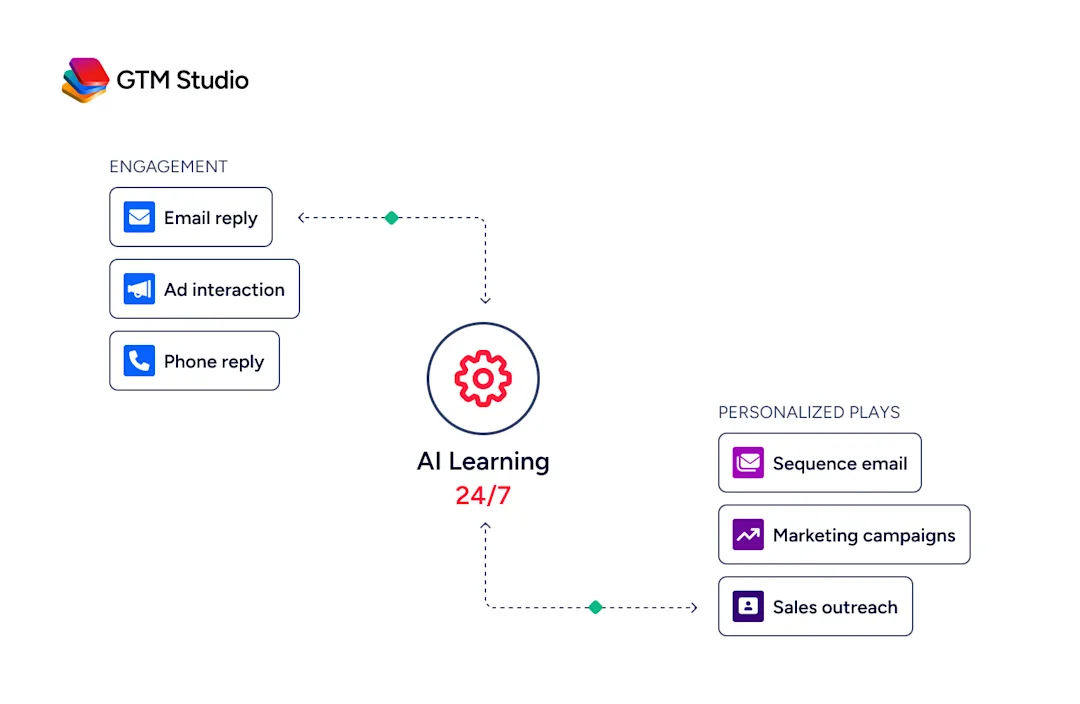
Source: ZoomInfo
GTM Studio draws from the GTM Context Graph, which combines your CRM data with ZoomInfo's third-party intelligence, so a marketer can target accounts showing buying signals for a competitor's product while matching your ideal customer profile, all without filing a data team request.
SpringDB saw 2x to 3x increases in campaign conversions across channels and a 300% increase in database usability after deploying ZoomInfo as their data foundation. (SpringDB Case Study)
AI decisioning: reinforcement learning versus Bayesian bandits
Both platforms have moved beyond A/B testing into continuous AI optimization. The engineering approaches differ in meaningful ways.
Hightouch's AI Decisioning uses reinforcement learning with a contextual multi-armed bandit. For each customer, the agent evaluates their full feature data (drawn from the warehouse) and decides between exploiting a proven variant and exploring a new one.

Source: Hightouch
LLMs supplement the RL engine by semantically tagging content variants so the system can generalize learnings across message categories rather than treating each as an opaque option.
The key architectural choice: Hightouch's RL agents access the full warehouse feature matrix (offline purchases, product usage, support history, and anything else in the warehouse), not just the limited profile data available in an ESP.
GrowthLoop's Composable AI Decisioning uses a Bayesian multi-armed bandit with Thompson Sampling, executed entirely in SQL within the customer's warehouse.
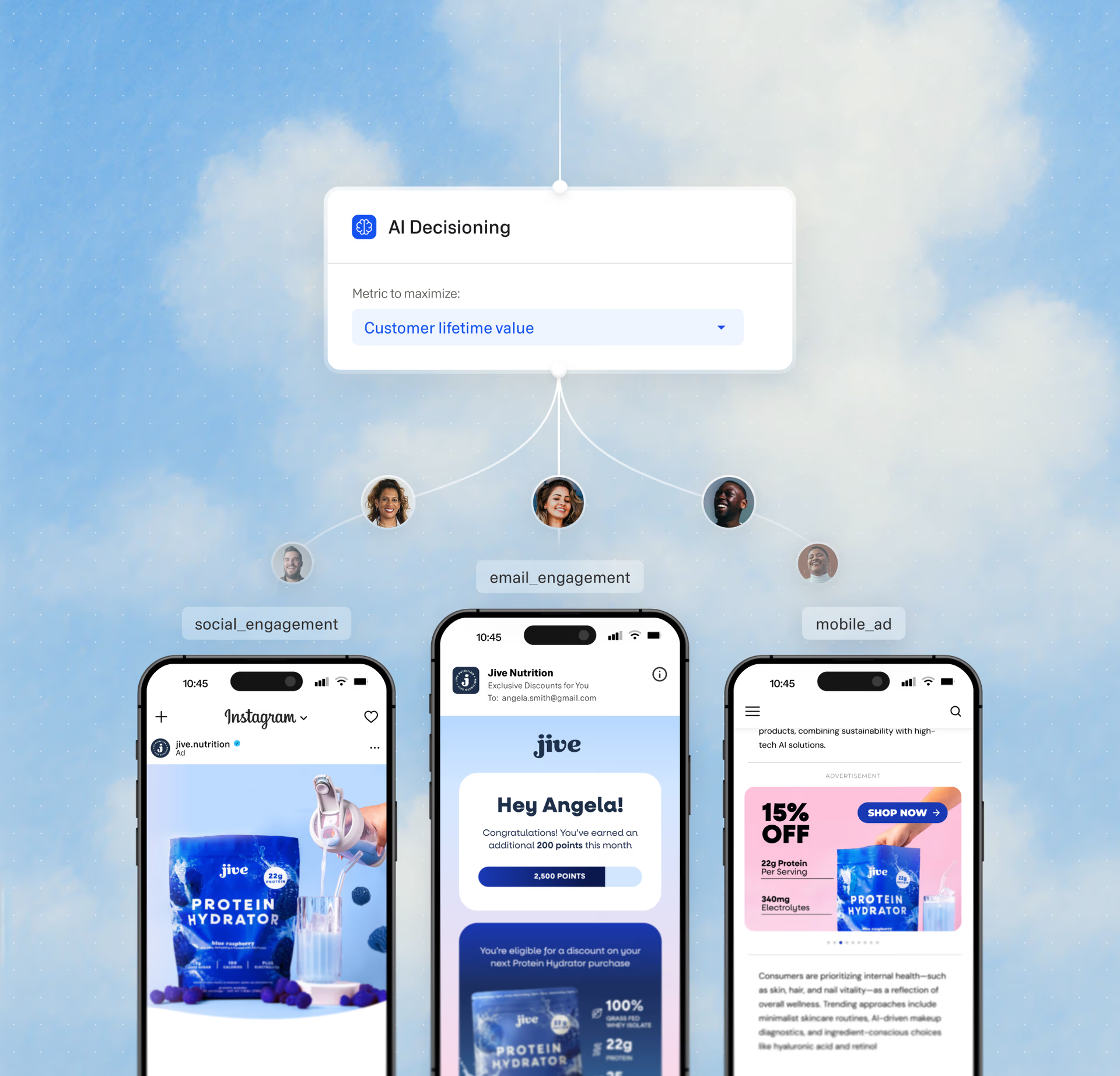
Source: GrowthLoop
The Decisioning Node inside Universal Journeys supports both global optimization (one best variant for everyone) and 1:1 personalization (individual routing based on up to 25 customer attributes). Training and inference happen concurrently with no separate training schedule.
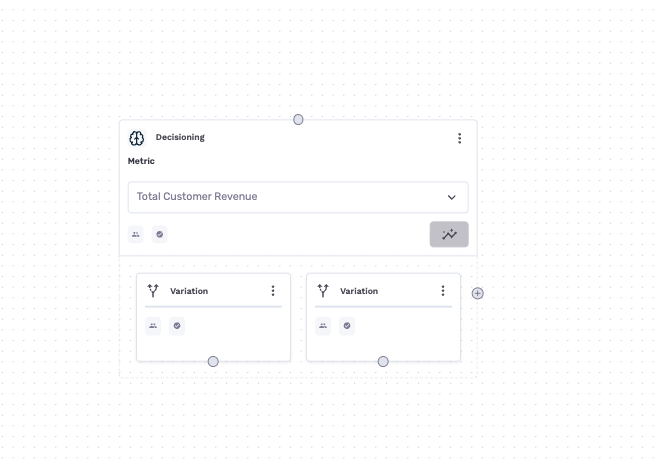
Source: GrowthLoop
GrowthLoop's differentiator is the Agentic Context Graph, which stores the causal history of every action-outcome pair directly in the warehouse. New campaigns launch with evidence from past campaigns rather than blind exploration, eliminating cold-start problems.
GrowthLoop also emphasizes causal inference over correlation, using holdout-based incrementality measurement to distinguish marketing-driven outcomes from organic behavior.
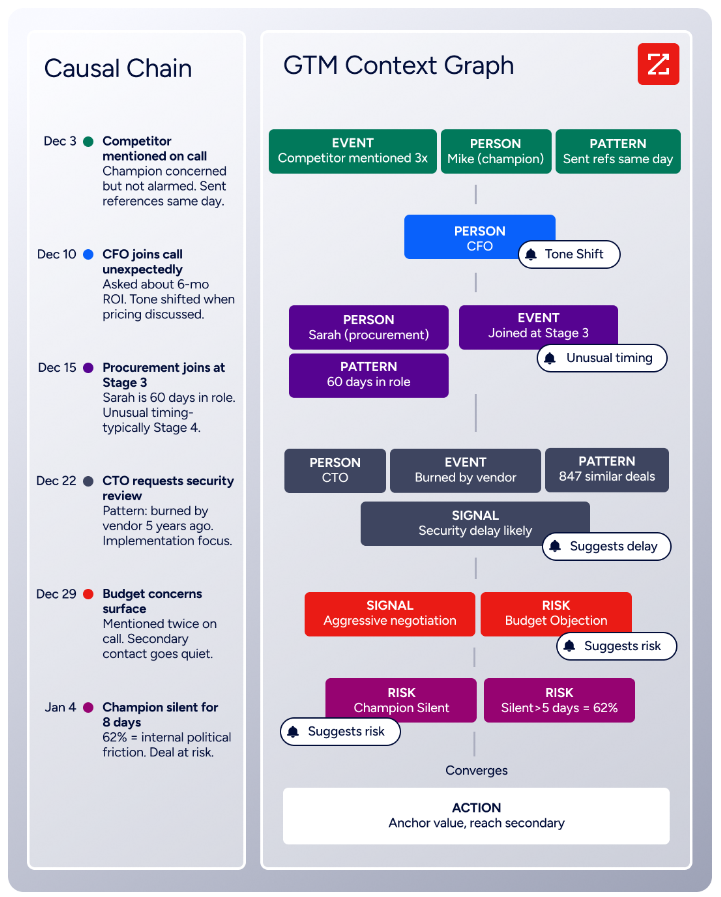
ZoomInfo applies AI to a different problem. Rather than optimizing message variants within campaigns, ZoomInfo's GTM Context Graph reasons across the full go-to-market motion by unifying CRM data, conversation intelligence from Chorus, intent signals, and behavioral data.
Source: ZoomInfo
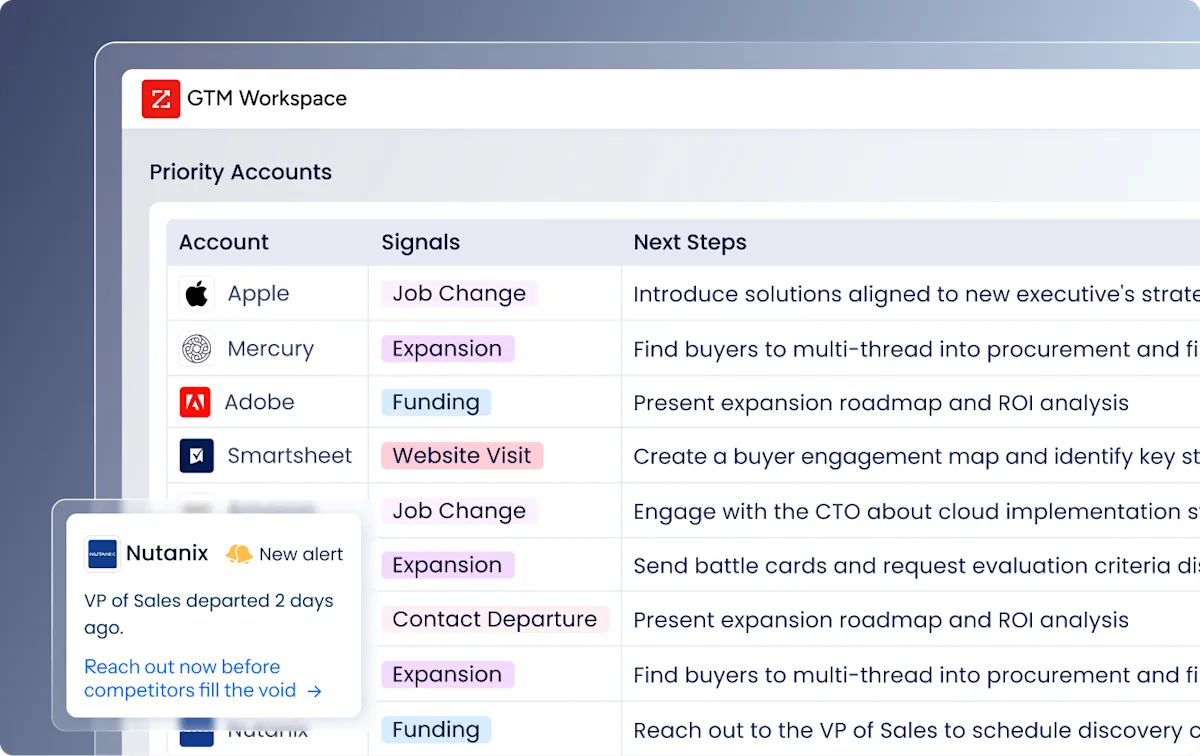
It captures why deals move or stall. AI agents in GTM Workspace and GTM Studio act on this intelligence to prioritize accounts, draft personalized outreach, and launch plays targeting accounts that match proven win patterns.
Source: ZoomInfo
Seismic attributed 39% of active pipeline to opportunities identified or influenced by ZoomInfo signals, and their sales team reported 54% productivity gains. (Seismic Case Study)
The data quality problem composable CDPs don't solve
Both Hightouch and GrowthLoop activate warehouse data well. Neither creates that data.
This matters more than it appears. A composable CDP is only as good as the data it sits on. If your warehouse has stale contact records, incomplete company data, or no buying intent signals, the best audience builder will produce mediocre segments.
An AI engine trained on incomplete data will optimize toward incomplete conclusions.
For B2C companies with rich transaction logs, event streams, and product usage data already flowing into their warehouse, this is less of an issue. The data foundation exists.
For B2B companies, the picture is different. B2B customer data is harder to maintain. Contacts change jobs. Company hierarchies shift through mergers and restructuring. Buying committees include stakeholders who may never have visited your website or opened an email.
The signals that matter most (whether a company is researching solutions, which competitors they're evaluating, what technologies they run) often don't live in your warehouse at all.
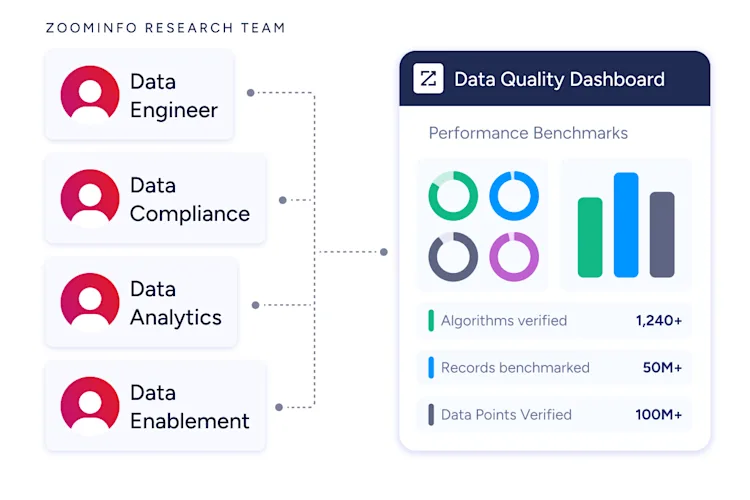
ZoomInfo addresses this gap at scale. Its data platform spans 500M contacts, 100M companies, 135M+ verified phone numbers, and 200M+ verified business emails, maintained through a multi-source pipeline backed by 300+ human researchers and reaching up to 95% accuracy on first-party data.
Source: ZoomInfo
Buyer Intent data tracks signals from 210 million IP-to-Organization pairings and 6 trillion+ keyword-to-device pairings sourced monthly.
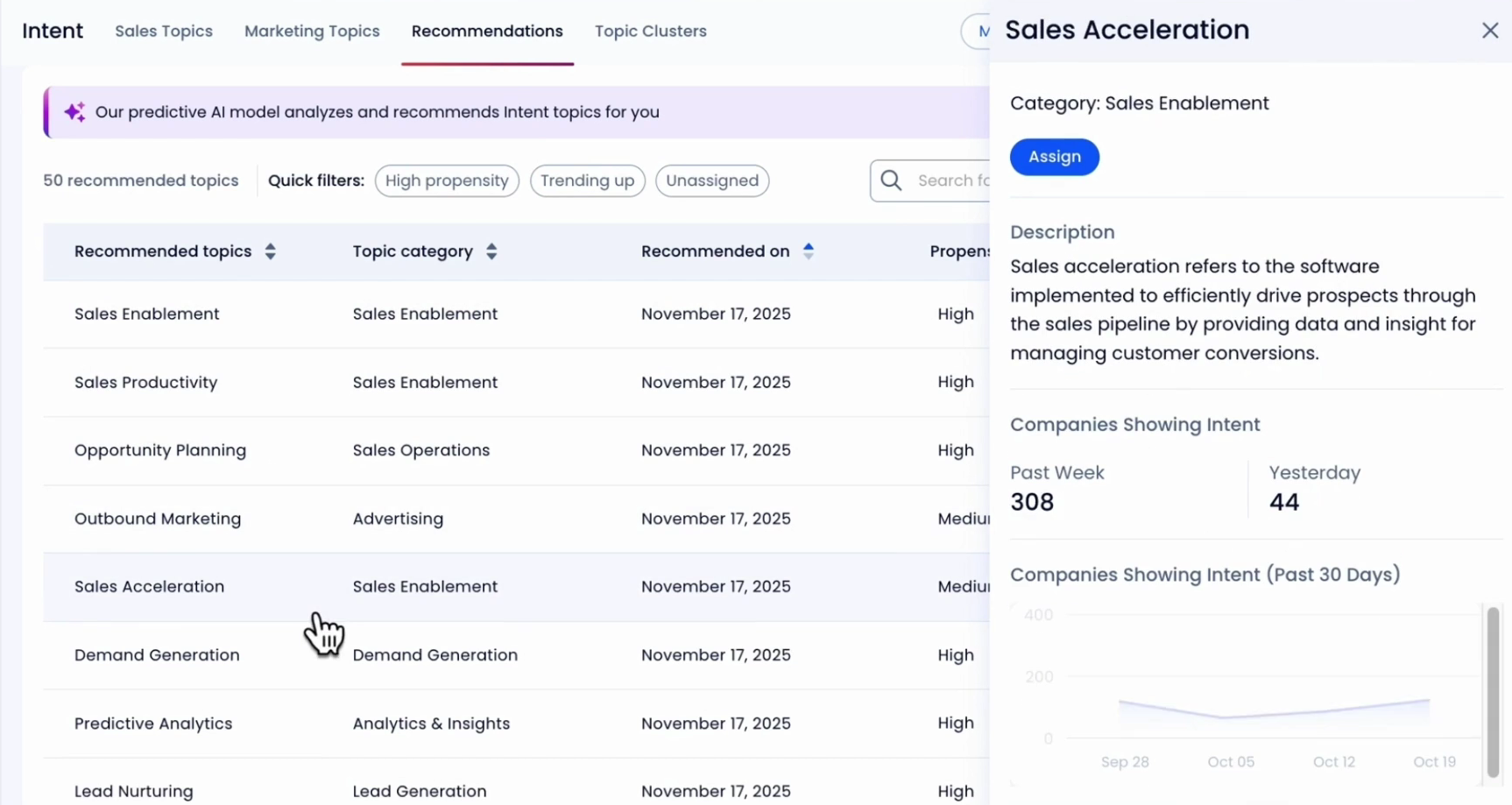
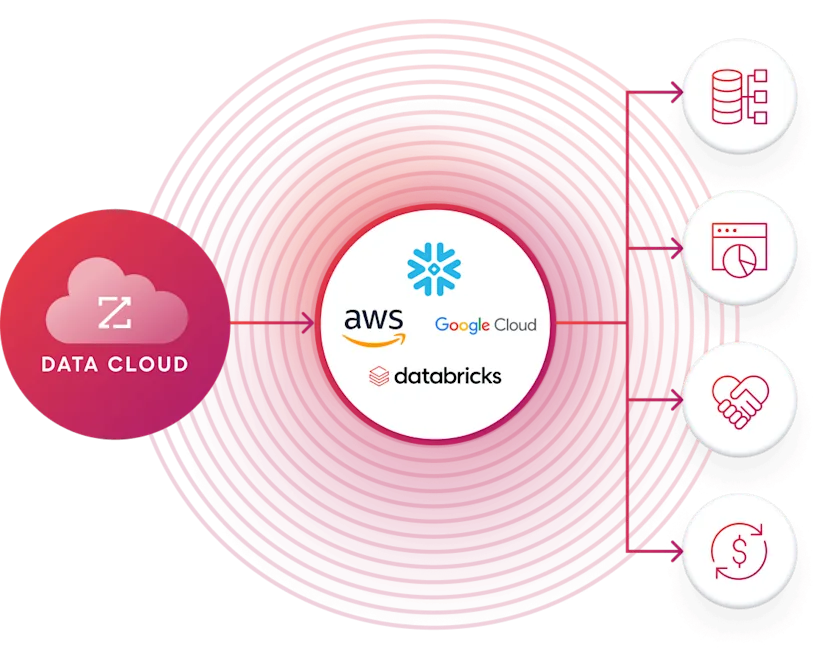
This data can flow into your warehouse via Enterprise APIs and Cloud Partners integrations with AWS, Snowflake, Google Cloud, and Databricks, enriching the foundation that Hightouch or GrowthLoop then activates.
Source: ZoomInfo
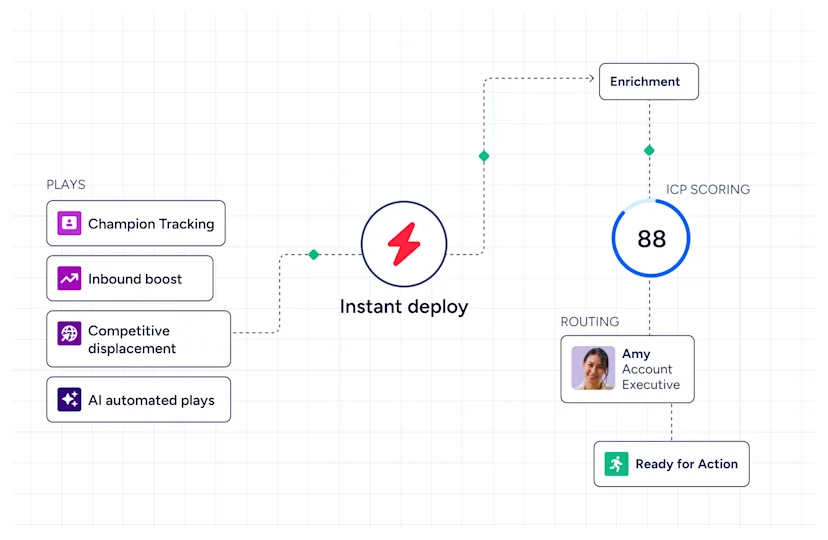
Or, for B2B teams that want to consolidate, ZoomInfo's GTM Studio provides audience building, campaign orchestration, and multi-channel activation natively, without requiring a separate composable CDP.
Source: ZoomInfo
Redwood Logistics achieved a 99% reduction in CPC and a 310% increase in CTR after targeting audiences built on ZoomInfo's data insights. (Redwood Logistics Case Study)
Integration ecosystem and platform maturity
The breadth of integrations determines how much of your existing stack each platform can reach.
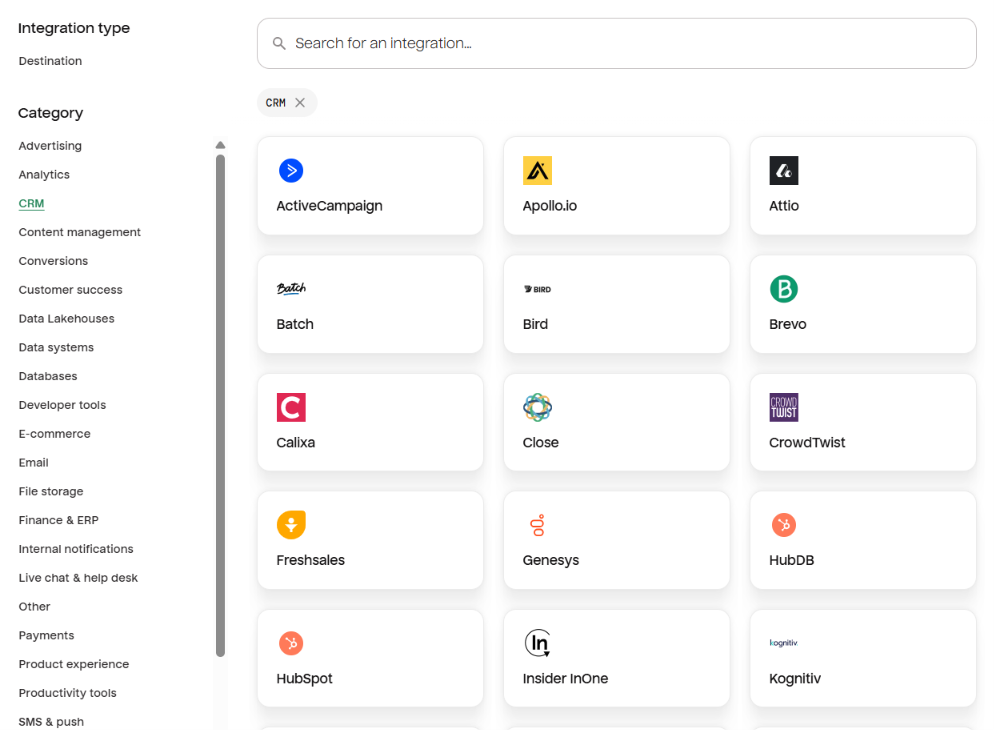
Hightouch leads with 250+ managed connectors spanning advertising, CRM, marketing automation, customer success, analytics, and data infrastructure.
Source: Hightouch
The list includes Salesforce, HubSpot, Google Ads, Meta, Iterable, Braze, Klaviyo, Marketo, The Trade Desk, TikTok, Snapchat, and Adobe Experience Platform.
Beyond syncing audiences, Hightouch offers conversion syncs (sending offline conversions back to ad platforms for better attribution), personalization syncs (pushing attributes to ESPs for dynamic content), and a REST API.
The Events SDK covers 12 languages and platforms and offers backward-compatible migration from Segment.
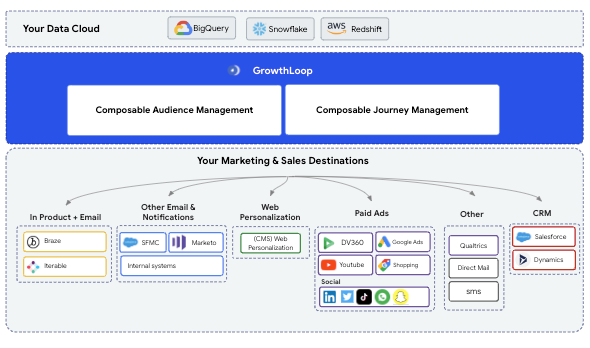
GrowthLoop offers 50+ destination connectors covering advertising (Google Ads, Meta, LinkedIn, TikTok, The Trade Desk, Amazon Ads), email and messaging (Braze, Klaviyo, Iterable, Salesforce Marketing Cloud), CRM (Salesforce, HubSpot, Microsoft Dynamics), and data storage.
Source: GrowthLoop
GrowthLoop also supports conversion syncs, personalization syncs, and a public API. The connector catalog is roughly one-fifth the size of Hightouch's.
For teams using common ad and marketing platforms, the coverage is sufficient. For teams with niche tools in their stack, verify the destinations catalog before committing.
ZoomInfo connects through its App Marketplace with 120+ partner integrations (including Salesforce, HubSpot, Microsoft Dynamics 365, Snowflake, Outreach, and Salesloft), its Enterprise API for programmatic access to search, enrichment, and intelligence endpoints, and its MCP server for connecting AI agents directly to ZoomInfo's B2B data.
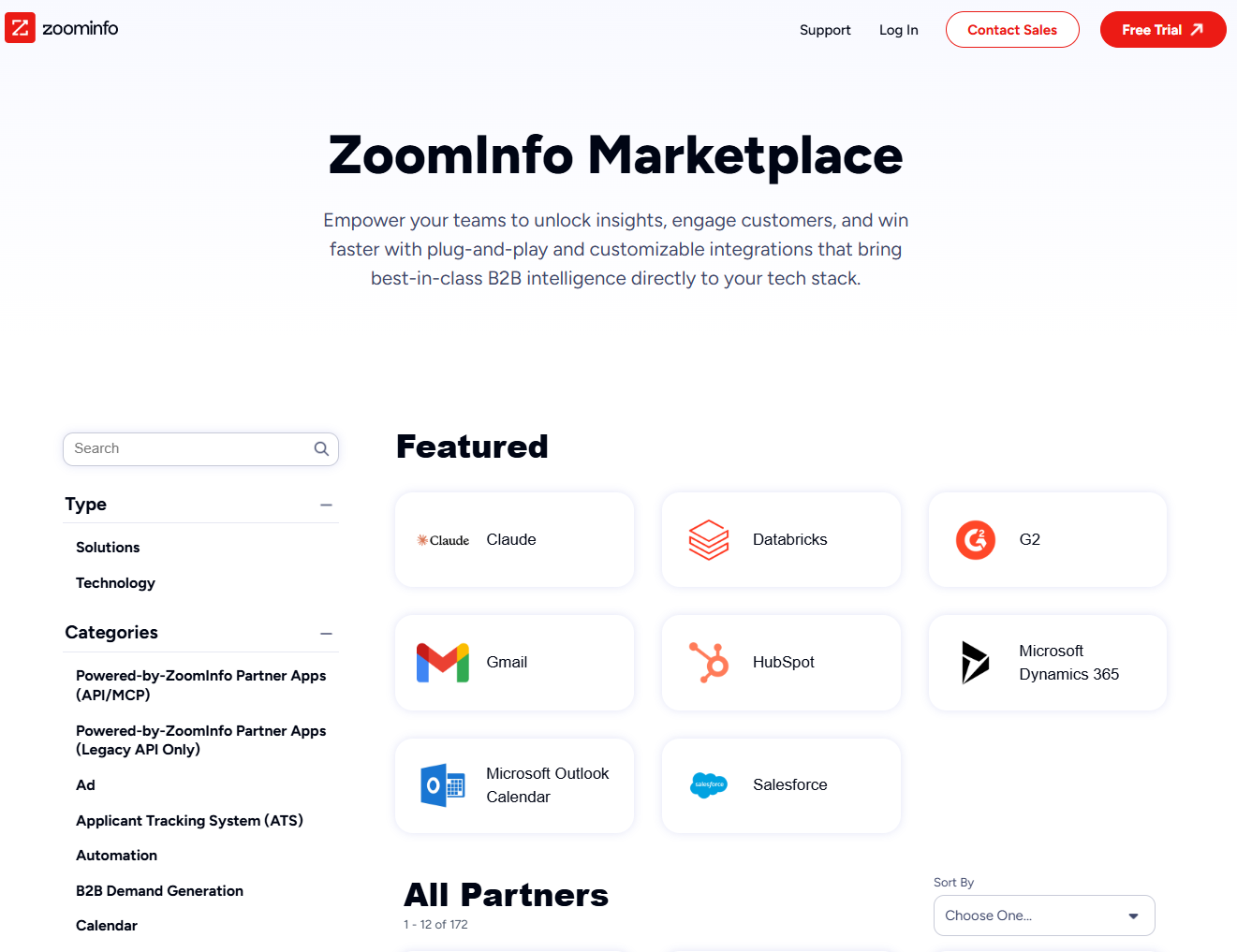
Source: ZoomInfo
The MCP server supports Claude and ChatGPT, with additional platforms noted as forthcoming. ZoomInfo also delivers data directly into warehouses via Cloud Partners integrations with AWS, Google Cloud, Snowflake, and Databricks.
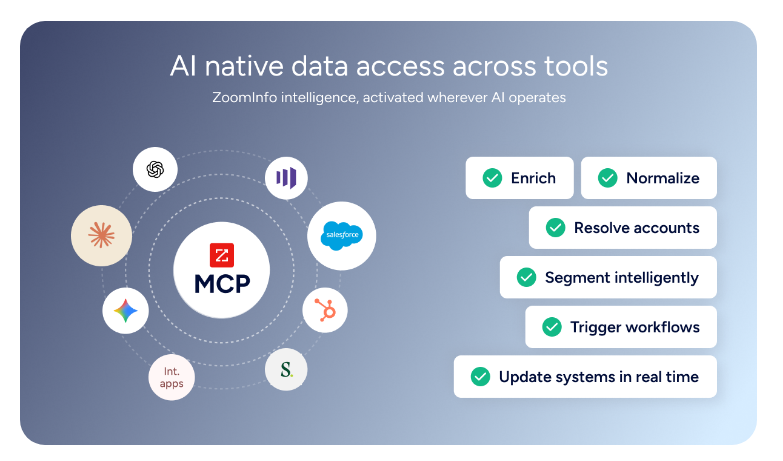
Source: ZoomInfo
Pricing transparency varies widely
How each platform charges says as much about their target market as their feature list.
Hightouch is the most transparent of the three. It offers a permanent free tier with 2 active syncs per month, unlimited destinations, and unlimited user seats, capped at hourly sync frequency.
Paid plans use usage-based pricing anchored to active syncs (any sync that has run at least once in the previous calendar month). The Composable CDP business tier and AI Decisioning are quote-based.
The upside: no MTU caps and no per-seat charges on paid plans. The risk: G2 reviewers note costs can escalate quickly as data volume and destination count increase.
GrowthLoop is opaque on pricing. All three tiers (Basic up to 1M records, Growth up to 10M, Enterprise above 10M) have no published dollar amounts.
The upside: unlimited users and unlimited destinations at every tier, and most features available across all plans. The main differentiator between tiers is support: Basic and Growth get email plus Slack, while Enterprise adds a dedicated Solutions Architect and Data Engineering Support.
Customers also bear their own cloud warehouse compute costs on top of the GrowthLoop subscription, a meaningful line item for organizations running large query volumes.
ZoomInfo uses custom-quoted, consumption-based pricing with no published prices for paid tiers. However, ZoomInfo offers two free entry points: ZoomInfo Lite (a permanent free tier with access to the B2B database and 10 monthly export credits) and a 7-day free trial of the full platform.
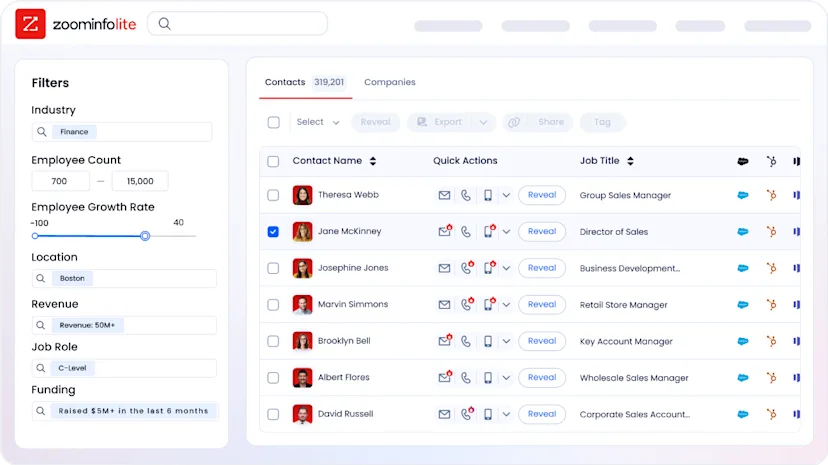
Source: ZoomInfo
Paid plans span Sales, Marketing, and standalone products, each with their own tier structures (Professional, Advanced, Enterprise). Pricing factors include seats, credit volume, features, and contract length.
For all three platforms, expect a sales conversation before understanding total cost of ownership.
Hightouch vs. GrowthLoop vs. ZoomInfo: Which should you choose?
The right platform depends on what's actually constraining your marketing.
Choose Hightouch if:
You have a mature data warehouse and need broad activation capabilities
Your stack includes niche tools that require wide integration coverage (250+ connectors)
You need identity resolution, event collection, and real-time personalization alongside audience activation
Your team wants reinforcement learning to optimize 1:1 customer experiences at scale
You value a permanent free tier and usage-based pricing you can start small with
Choose GrowthLoop if:
Your priority is AI-driven campaign automation that compresses marketing cycles
You operate a commerce media network or retail media business
You want AI agents that suggest audiences, build journeys, and optimize campaigns
Causal incrementality measurement matters to your marketing leadership
Your data warehouse is on Google BigQuery and you want the tightest integration
Choose ZoomInfo if:
Your bottleneck is B2B data quality, not data activation
You need contact data, company intelligence, and buying intent signals that don't exist in your warehouse today
You want audience building, campaign orchestration, and multi-channel execution in one platform without a separate composable CDP
Your go-to-market spans both sales and marketing, and you need intelligence that connects both motions
You want data and intelligence accessible via APIs and MCP inside any tool, including AI agents
Start with ZoomInfo Lite for free, or request a demo of the full platform.
For B2B companies with mature warehouses and a clear need for marketing data activation, Hightouch or GrowthLoop will serve you well. But for teams whose real constraint is the quality and completeness of their go-to-market data, ZoomInfo solves a problem composable CDPs were never designed to address, while offering its own activation capabilities that can stand alone or complement any data stack.
Snowflake uses ZoomInfo data for at least one-third of the most critical features in their Account Propensity Scoring model. Accounts monitored using ZoomInfo-powered scores showed 90% higher opportunity open rates and 2x higher customer conversion rates. (Snowflake Case Study)
Hightouch vs. GrowthLoop vs. ZoomInfo FAQ
What is the core difference between Hightouch, GrowthLoop, and ZoomInfo?
Hightouch and GrowthLoop are composable CDPs that sit on top of your existing data warehouse to activate customer data for marketing. Hightouch offers broader activation with 250+ integrations, identity resolution, event collection, and reinforcement learning-based AI decisioning.
GrowthLoop focuses on AI-driven campaign automation with specialized agents that build audiences and optimize journeys using Bayesian multi-armed bandits.
ZoomInfo is an AI GTM platform that provides the B2B data foundation (500M contacts, 100M companies, intent signals) and its own marketing activation via GTM Studio, solving the upstream data quality problem that composable CDPs depend on but don't address.
Do I need a data warehouse to use any of these platforms?
Hightouch and GrowthLoop both require an existing cloud data warehouse (Snowflake, Databricks, BigQuery, or Redshift) with modeled customer data. This is a hard prerequisite.
ZoomInfo does not require a customer-maintained data warehouse. It provides its own B2B data platform and can deliver data into your warehouse, CRM, or other tools via APIs, MCP, and Cloud Partners integrations.
Which platform has stronger AI capabilities?
Each applies AI to a different problem. Hightouch uses reinforcement learning with contextual multi-armed bandits to optimize individual customer experiences across message, channel, timing, and offer.
GrowthLoop uses Bayesian multi-armed bandits with Thompson Sampling for journey optimization and emphasizes causal inference through its Agentic Context Graph, which stores the causal history of every campaign action and outcome.
ZoomInfo's GTM Context Graph applies AI across the entire go-to-market motion, reasoning about deal patterns, buying signals, and account intelligence to power both sales and marketing execution.
How do the pricing models compare?
Hightouch offers the most accessible entry point with a permanent free tier (2 active syncs, unlimited destinations).
GrowthLoop is entirely quote-based with no published prices, organized by customer record volume.
ZoomInfo offers a permanent free tier (ZoomInfo Lite with 10 monthly exports) and a 7-day trial, with paid plans custom-quoted based on consumption. All three require a sales conversation for full pricing details on paid tiers.
Which platform is best for B2B companies specifically?
ZoomInfo is built for B2B, with data covering 500M contacts, 100M companies, buyer intent signals, technographics, and org charts.
Hightouch and GrowthLoop are data-model-agnostic, activating whatever is in your warehouse regardless of whether it's B2B or B2C.
For B2B companies, warehouse data is often incomplete (missing contacts, stale company data, no intent signals), which limits what a composable CDP can accomplish. ZoomInfo fills that gap directly.
Can ZoomInfo work alongside Hightouch or GrowthLoop?
Yes. ZoomInfo's data can flow into your data warehouse via Enterprise APIs and Cloud Partners integrations with Snowflake, Databricks, AWS, and Google Cloud. Once in the warehouse, that enriched data is available for Hightouch or GrowthLoop to activate.
For teams that want both ZoomInfo's B2B intelligence and a composable CDP's activation breadth, the platforms are complementary rather than competing.
Which platform handles identity resolution?
Hightouch has a dedicated Identity Resolution feature supporting both deterministic (exact matching) and probabilistic (AI-powered fuzzy matching) modes, with results stored in the customer's warehouse.
It can also resolve custom entities beyond people, including households, B2B accounts, and products. GrowthLoop does not offer a standalone identity resolution product.
ZoomInfo performs entity resolution across its B2B data platform using two decades of data unification infrastructure, resolving contacts and companies across sources at scale.
What industries are each platform strongest in?
Hightouch is strongest in retail and e-commerce, media and entertainment, financial services, and B2B SaaS, with customers including Spotify, PetSmart, Warner Music Group, and Grammarly.
GrowthLoop has particular strength in commerce media networks, retail media, sports and entertainment, and telecom, with customers including NASCAR, Allegro, and Ford.
ZoomInfo serves B2B companies across the board, with particular depth in SaaS, financial services, professional services, and manufacturing, counting Adobe, Snowflake, Seismic, and Thomson Reuters among its customers.
See how Hightouch compares to other platforms:
