
Choosing between Hightouch and RudderStack for your customer data infrastructure comes down to five questions:
Do you need a platform marketers can operate directly, or one built for data engineers who write code?
Is your primary goal activating warehouse data for marketing campaigns, or building the data pipelines that feed everything downstream?
How mature is your data warehouse, and how much of your customer data already lives there?
Do you need AI-driven campaign optimization, or data infrastructure with full customization?
Is the data in your warehouse complete enough to act on, or do you need to enrich it with external B2B intelligence before activation matters?
In short, here's what we recommend:
Hightouch is the right choice for marketing-led organizations that already have a well-modeled data warehouse and want to activate that data across their tools without engineering tickets. Its Composable CDP sits on Snowflake, Databricks, or BigQuery, giving marketers self-serve audience building, journey orchestration, and real-time personalization. The AI Decisioning product uses reinforcement learning to optimize every message, channel, and send time at the individual level. Hightouch earned a Leader position in the Gartner Magic Quadrant for Customer Data Platforms in January 2026, and its customer list (Spotify, PetSmart, Warner Music Group, Grammarly) reflects its strength with large B2C enterprises. The trade-off: advanced use cases still require SQL, pricing can climb with data volume, and the platform assumes your warehouse data is already clean and well-modeled.
RudderStack is built for data engineering teams that want full control over their customer data pipelines. Its open-source, code-first architecture handles event collection, real-time transformations, identity resolution, and warehouse activation in one platform. Over 75% of RudderStack customers use Transformations, its in-pipeline code execution feature, which speaks to the engineering depth of its user base. RudderStack performs well at scale and costs less than Segment for high-volume pipelines. The trade-off: non-technical teams cannot self-serve, the integration catalog has gaps compared to larger competitors, and there's no independent analyst recognition from Gartner or Forrester.
Both platforms solve the data activation problem well. But they share a limitation: they move and activate data that already exists in your warehouse. Neither provides the B2B data itself. If your warehouse is missing contacts, company intelligence, or buying signals, even the best activation pipeline delivers incomplete results. That gap is where a different kind of platform becomes essential.
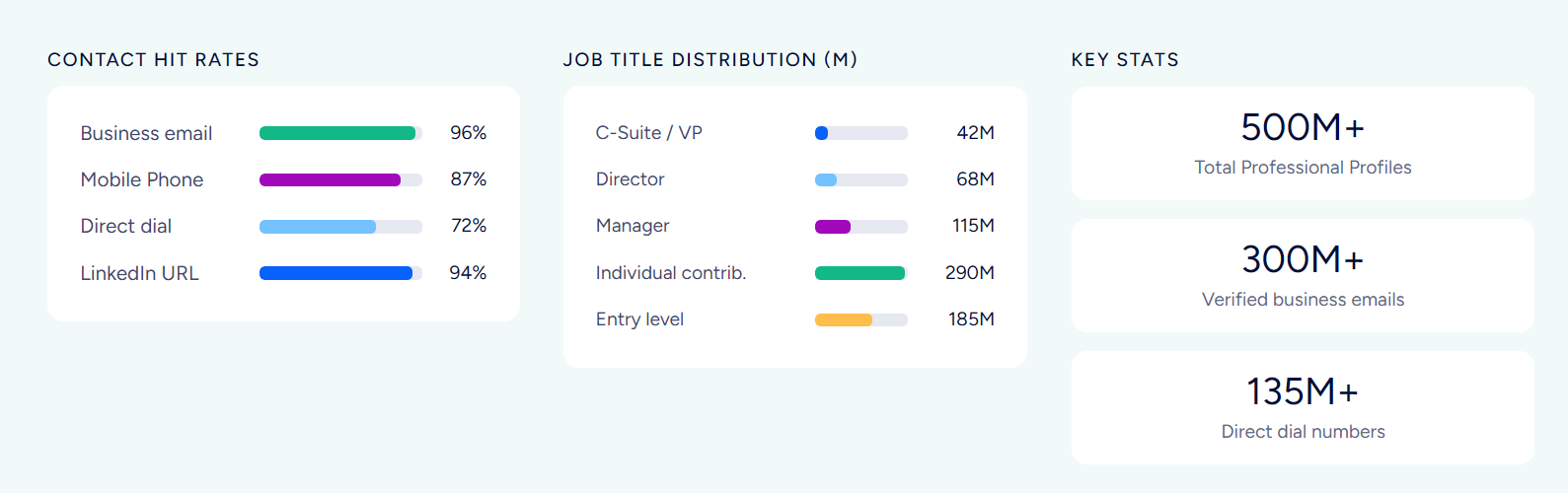
ZoomInfo is a GTM platform that provides the B2B data layer both Hightouch and RudderStack need to work from. With 500M contacts, 100M companies, 135M+ verified phone numbers, and 200M+ verified business email addresses, ZoomInfo's dataset feeds into any data warehouse or downstream tool via Enterprise APIs and MCP. But ZoomInfo isn't just a data vendor. Its GTM Context Graph combines this B2B intelligence with your CRM records, conversation transcripts, and behavioral signals to reveal not just what happened in a deal, but why. For teams that want activation without building a separate data pipeline, GTM Studio lets marketers and RevOps build audiences in natural language and launch multi-channel plays directly, while GTM Workspace gives sellers an AI-powered workspace. For B2B organizations, ZoomInfo can work alongside Hightouch or RudderStack as the intelligence layer, or replace parts of the activation stack entirely.
If your GTM strategy needs better B2B data, see how ZoomInfo works.
Hightouch vs. RudderStack vs. ZoomInfo at a glance
Hightouch | RudderStack | ZoomInfo | |
|---|---|---|---|
Core function | Warehouse-native CDP and data activation | Customer data infrastructure and event pipelines | B2B data, intelligence, and GTM execution |
Primary user | Marketers and data teams | Data engineers and data scientists | Sales, marketing, and RevOps teams |
Data model | Reads from your warehouse; never stores data | Routes to your warehouse; never stores data | Provides 500M contacts, 100M companies; delivers via API, MCP, or native products |
Activation approach | 250+ managed connectors from warehouse to tools | 200+ destinations from event stream and warehouse | GTM Studio (audiences and plays), GTM Workspace (seller execution), APIs/MCP (any tool) |
AI capabilities | Reinforcement learning for 1:1 campaign optimization | Positioning as "customer context engine for AI era" | GTM Context Graph with AI agents across sales and marketing |
Identity resolution | Deterministic + probabilistic, warehouse-native | Profiles product with declarative YAML configs | 500M contact profiles with verified identities |
Self-serve for non-technical users | Customer Studio (no-code audience builder) | Limited; engineering intermediation required | GTM Studio (natural language audience building) |
Free tier | 2 active syncs, permanently free | 250K monthly events, permanently free | ZoomInfo Lite (permanent free access to B2B database) |
Analyst recognition | Gartner MQ Leader for CDPs (2026) | Snowflake "One to Watch" (2024) | Gartner MQ Leader for ABM (2024, 2025); Forrester Leader for Intent Data (2025) |
They solve different layers of the same problem
The confusion between Hightouch and RudderStack exists because both are warehouse-native and both reject the traditional CDP model. But they operate at different layers of the data stack, and understanding that distinction saves months of misaligned implementation.
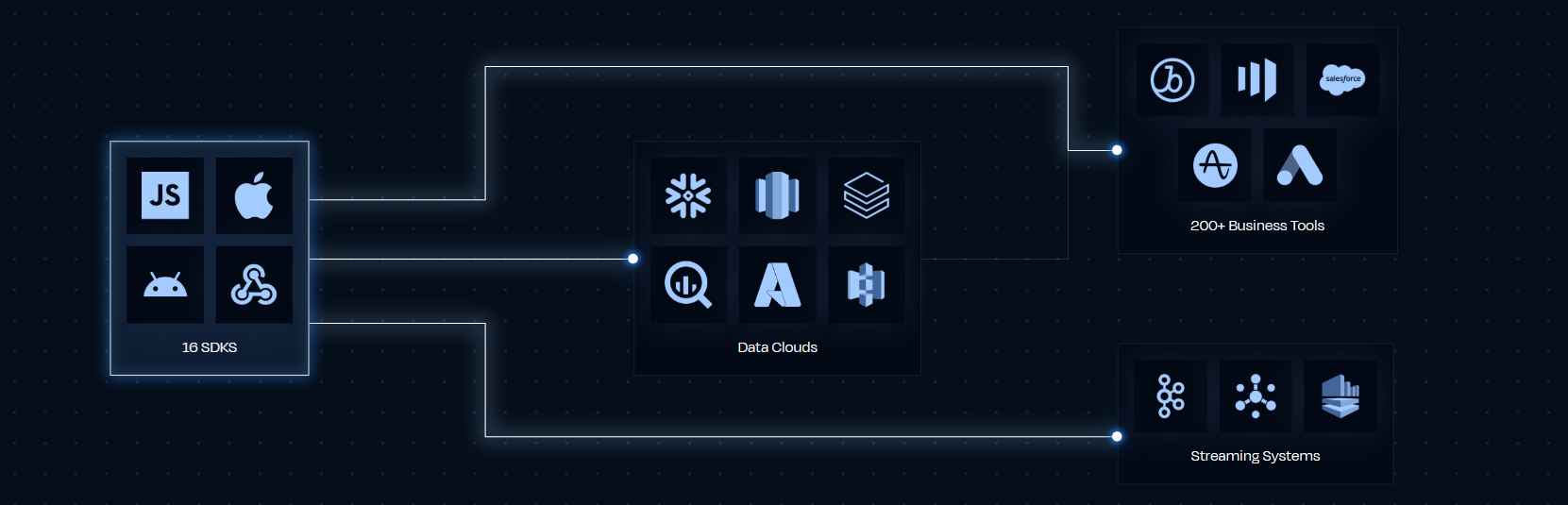
RudderStack is the plumbing. It collects events from your website, mobile app, and server-side applications via 16+ SDKs, transforms them in real time with JavaScript or Python, and routes them to your data warehouse and 200+ downstream destinations simultaneously. It also handles identity resolution through Profiles and activates warehouse data via Reverse ETL. RudderStack covers the full data lifecycle: collection, transformation, storage, identity, and activation.
Source: RudderStack
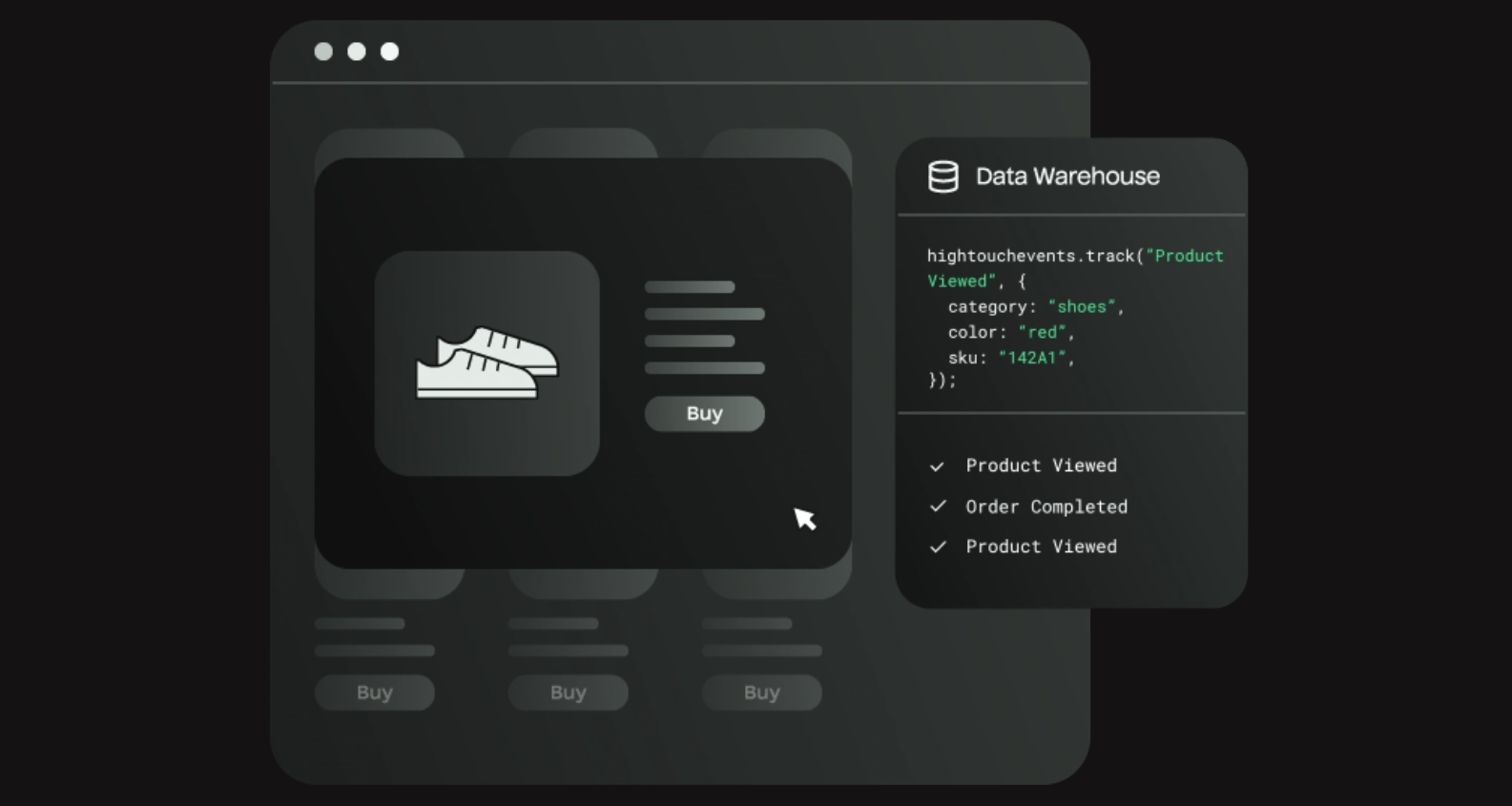
Hightouch is the activation layer. It assumes the data is already in your warehouse (collected by RudderStack, Fivetran, Segment, or another pipeline tool) and focuses on making that data actionable. Customer Studio lets marketers build audiences without SQL. Journeys orchestrates multi-channel campaigns. AI Decisioning optimizes what to send, when, and to whom. Hightouch also collects events via Hightouch Events, but this product is newer and positioned as a complement to its core activation capabilities.
Source: Hightouch
In practice, many companies use both: RudderStack to collect and pipe data into the warehouse, Hightouch to activate it for marketing. They're not always competitors; they're often adjacent tools in the same stack.
ZoomInfo operates at the data and intelligence layer. Neither Hightouch nor RudderStack generates data. They move, transform, and activate what already exists. ZoomInfo provides the raw material: 500M contacts, 135M+ verified phone numbers, 200M+ verified business email addresses, plus company firmographics, technographics, org charts, and buying intent signals. For B2B companies, the quality of everything downstream depends on the completeness of the data upstream. The best activation pipeline in the world delivers mediocre results if the contact records it draws from are stale or incomplete.
Marketer self-service vs. engineering control
This is where the day-to-day experience diverges most sharply.
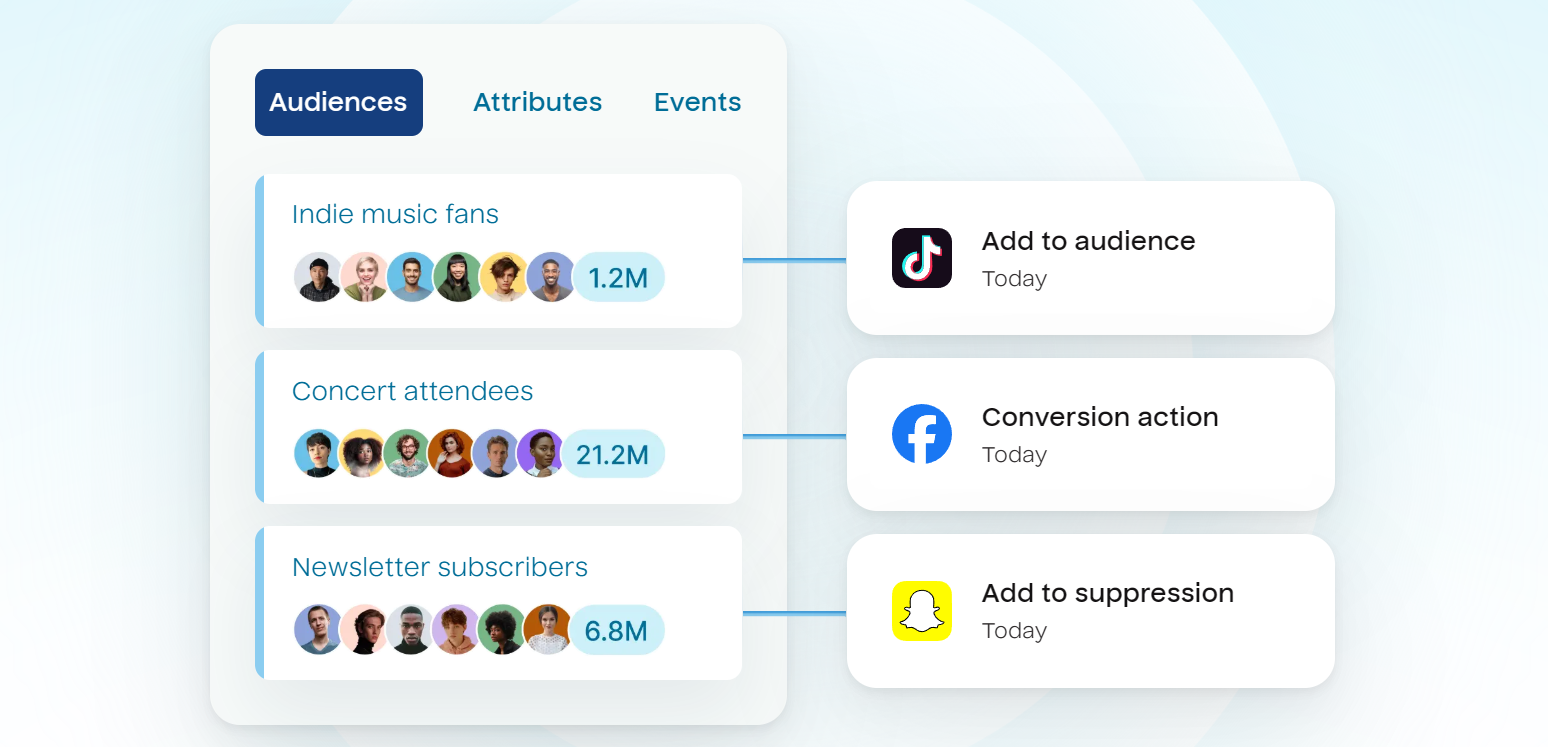
Hightouch was designed for marketers to operate independently. Customer Studio's visual audience builder lets non-technical users filter by events, attributes, and computed traits without writing SQL. Audience size previews update in real time as filters change. Traits (calculated fields like lifetime value or RFM tiers) are created in seconds without code. The platform's documentation separates onboarding paths for platform admins, data teams, and "marketers and business users," reflecting its dual-audience design.
Source: Hightouch
That said, the SQL wall is real. G2 reviewers note that advanced logic and complex transformations still require SQL, which means marketing teams without data engineering support will hit limits on what they can build alone. Hightouch's AI agents in the Agentic Marketing Platform are the company's answer to this gap, but the product is still maturing.
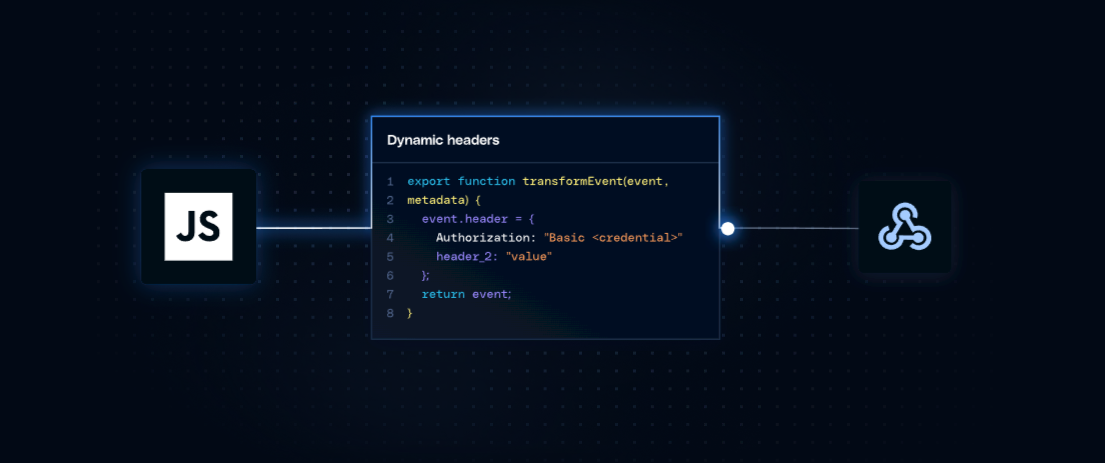
RudderStack makes no pretense of marketer self-service. Real-time transformations are written in JavaScript or Python. SQL models for Reverse ETL are managed via Rudder CLI with YAML configs. The platform assumes users who are comfortable with VS Code and GitHub workflows. TrustRadius reviewers flagged "clunky SDKs requiring additional manual effort" and "custom development needed for certain integrations." The Profiles Cohorts feature offers some no-code audience building, but it's a governed subset of what data teams pre-define, not true self-service.
Source: RudderStack
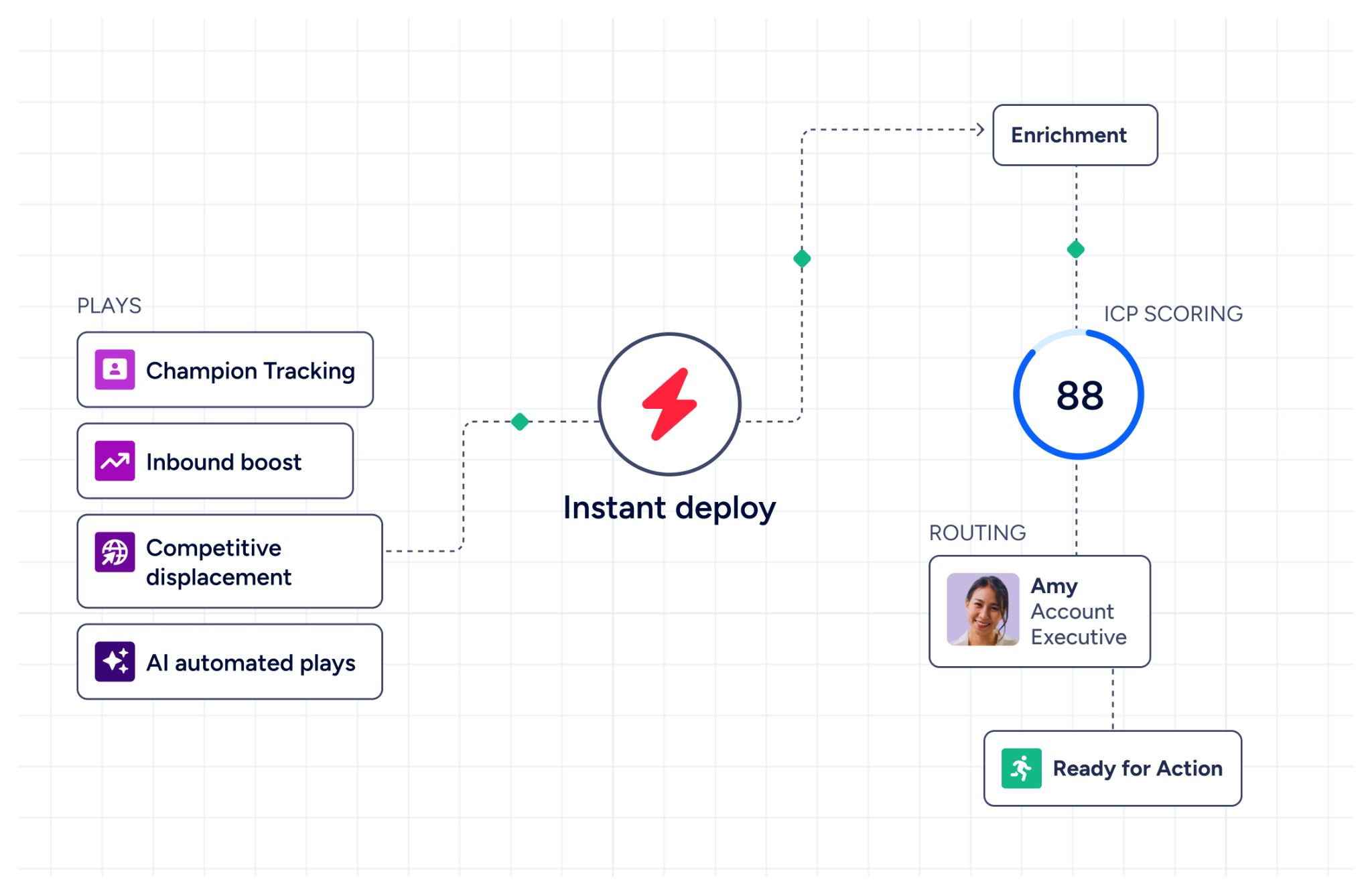
ZoomInfo takes a different approach with GTM Studio, which lets marketers and RevOps teams describe audiences in natural language and launch multi-channel plays without engineering tickets. The difference: GTM Studio audiences draw from ZoomInfo's own B2B dataset and the GTM Context Graph, not just what's in your warehouse. Expansion plays that used to take 3 weeks now launch in 30 minutes, without technical support.
"ZoomInfo has literally changed the way we go to market." (Jeremy Melius, Sr. Director of Marketing Operations, Impartner)
Data quality starts before activation
Both Hightouch and RudderStack include data governance tools, but they approach the problem from opposite directions.
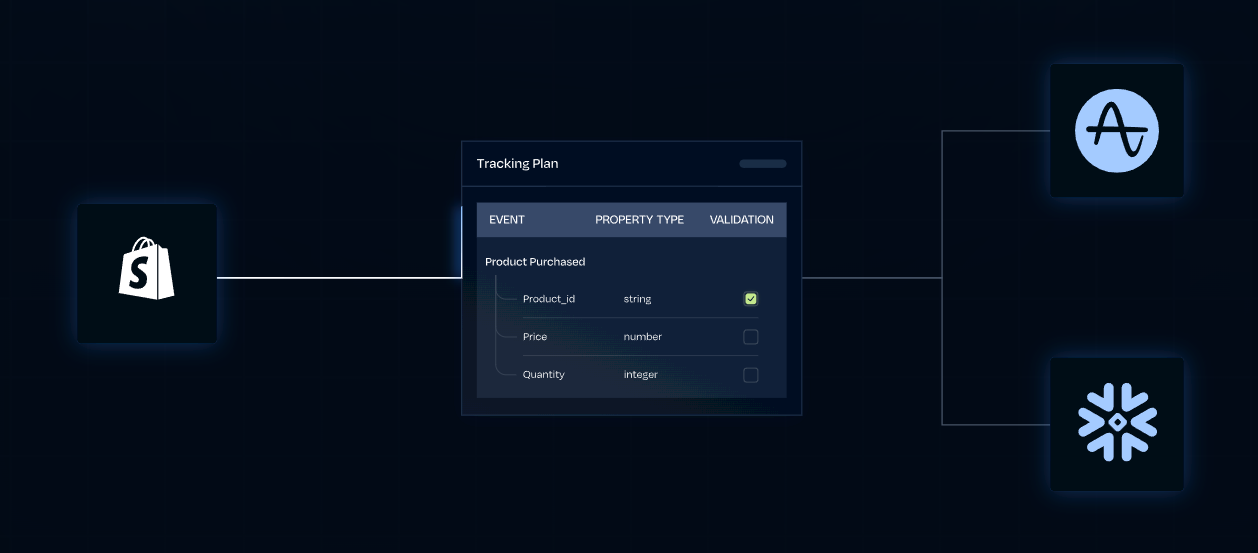
RudderStack enforces quality at the point of collection. Its Data Quality Toolkit includes a centralized Data Catalog for shared event definitions, Tracking Plans that validate event payloads against schema rules in real time, and Transformations that clean and reshape data in-flight before it reaches any destination. Magic Eden saves 72 hours per month previously spent on data cleaning. The Data Compliance Toolkit adds consent management and PII controls in the pipeline.
Source: RudderStack
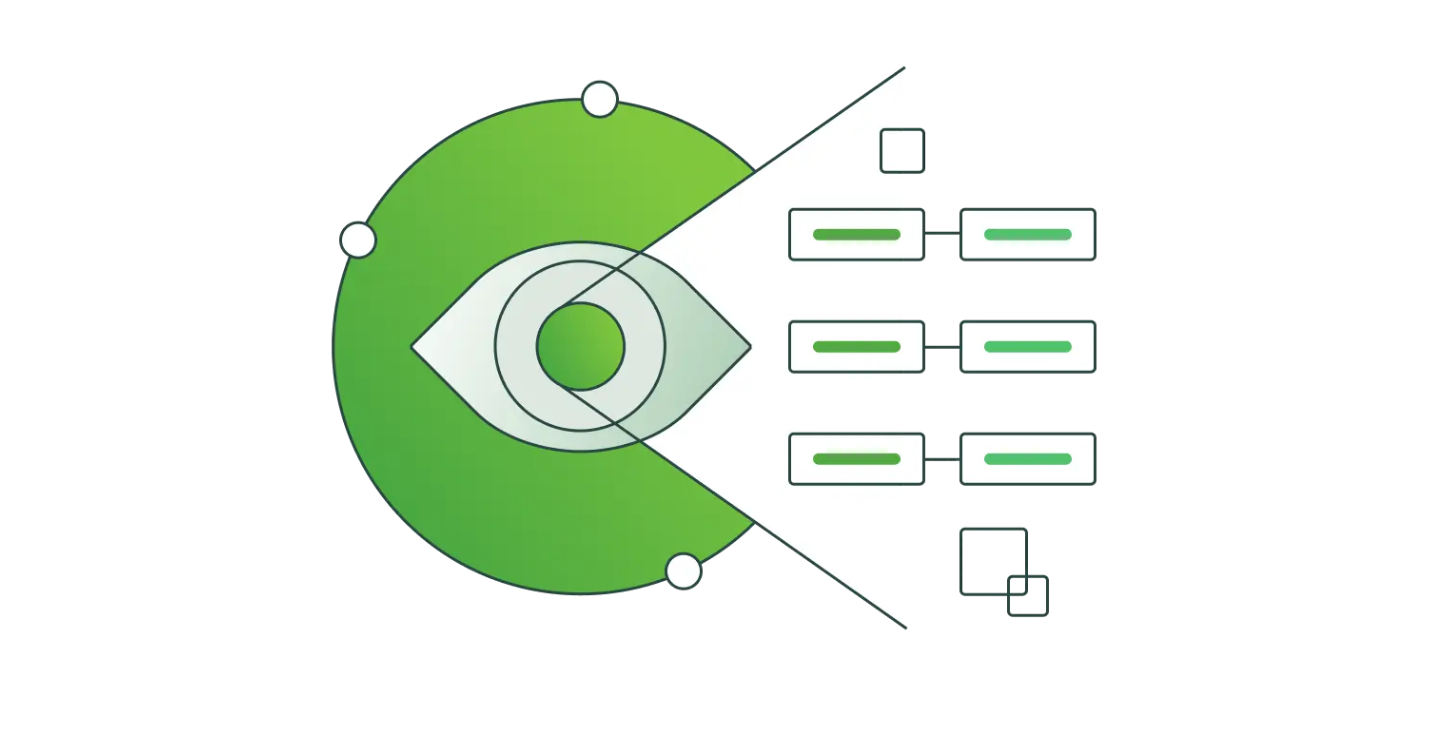
Hightouch governs data at the activation layer. Its observability features include a row-level live debugger, configurable alerting via Slack, email, or PagerDuty, and sync logs written back to the warehouse. Data contracts validate event payloads before they reach the warehouse when using Hightouch Events. But since Hightouch reads from an existing warehouse, data quality depends on whatever upstream tools loaded it there.
Source: Hightouch
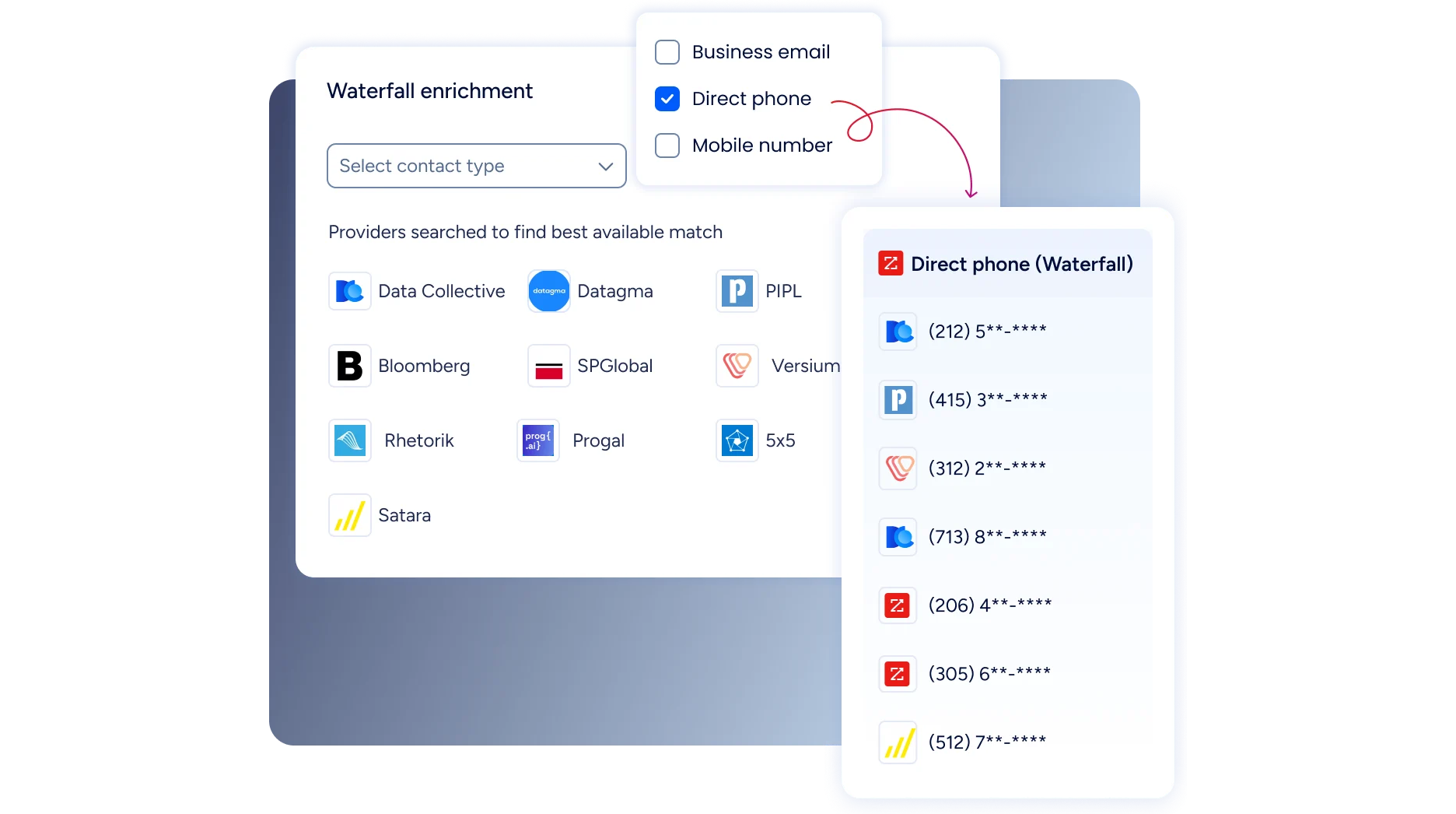
Neither platform solves a problem that plagues B2B operations: incomplete data. Your warehouse may have clean schemas and validated events, but if 40% of your contact records are missing direct dials, or your company data lacks org charts and technographics, activation quality suffers regardless of pipeline integrity.
ZoomInfo addresses this directly. The platform's multi-source verification pipeline, backed by 300+ human researchers, delivers up to 95% accuracy on first-party data. ZoomInfo's Operations product adds automated deduplication, multi-vendor enrichment from approximately 60 vendors, and perimeter protection that blocks bad data at CRM entry. For B2B companies, ZoomInfo data flowing into the warehouse before Hightouch or RudderStack activates it is often the difference between campaigns that reach decision-makers and campaigns that bounce.
"ZoomInfo gives us the information we need to execute. We don't have to go through and spend our time digging. It's already there, so we can be three steps ahead." (William Kenimer, VP of Revenue Operations, Vensure)
AI capabilities take three different forms
AI is central to all three platforms' roadmaps, but each implementation solves a different problem.
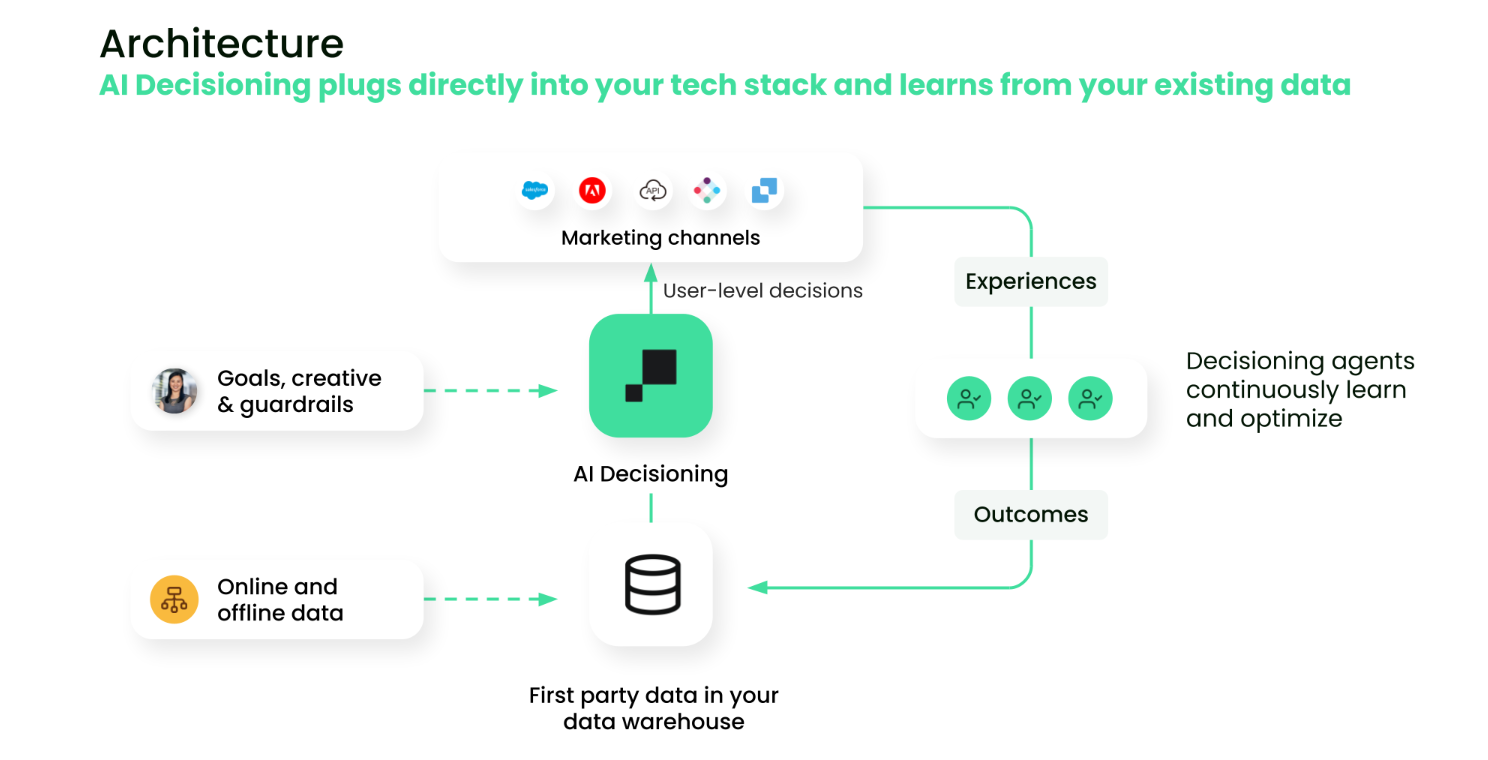
Hightouch's AI Decisioning uses reinforcement learning with contextual multi-armed bandits to optimize individual marketing decisions. For each customer, the system determines the best message content, channel, send time, creative variant, and frequency. Hightouch argues that reinforcement learning is better suited than LLMs for continuous optimization toward measurable marketing goals.
Source: Hightouch
The Content Assembly product adds AI content generation that works within existing brand assets, with compliance agents trained on each company's guidelines. Together, AI Decisioning and Content Assembly form Hightouch's Agentic Marketing Platform.
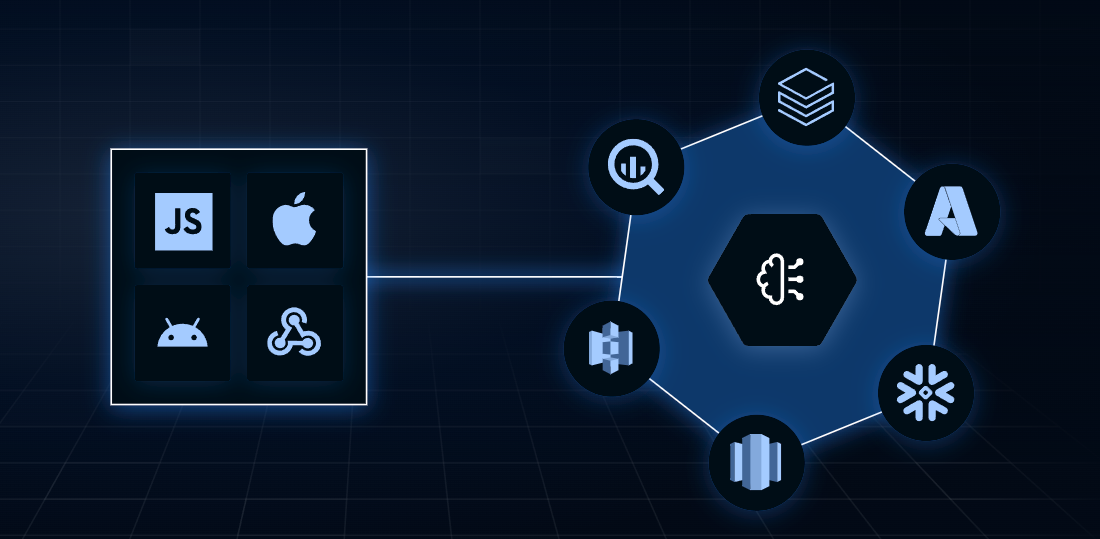
RudderStack's AI play is infrastructure-level. The company positions itself as "the customer context engine for the AI era", arguing that AI systems need continuous, governed customer data to function. Rather than building AI features marketers interact with directly, RudderStack invests in MCP (Model Context Protocol) integration to let AI agents manage data pipelines, and AI-powered data debugging and healing to fix data quality issues automatically. This reflects RudderStack's engineering-first DNA: AI serves the data pipeline, not the marketer.
Source: RudderStack
ZoomInfo's AI operates at the intelligence layer. The GTM Context Graph processes 1.5B+ data points daily, combining ZoomInfo's B2B data with CRM records, conversation intelligence, and behavioral signals. The result: AI that captures not just what happened in a deal, but why it happened. Inside GTM Workspace, AI agents handle account research, outreach drafting, CRM updates, and signal monitoring for sellers. Inside GTM Studio, AI agents handle enrichment, scoring, routing, and message creation for marketers and RevOps.
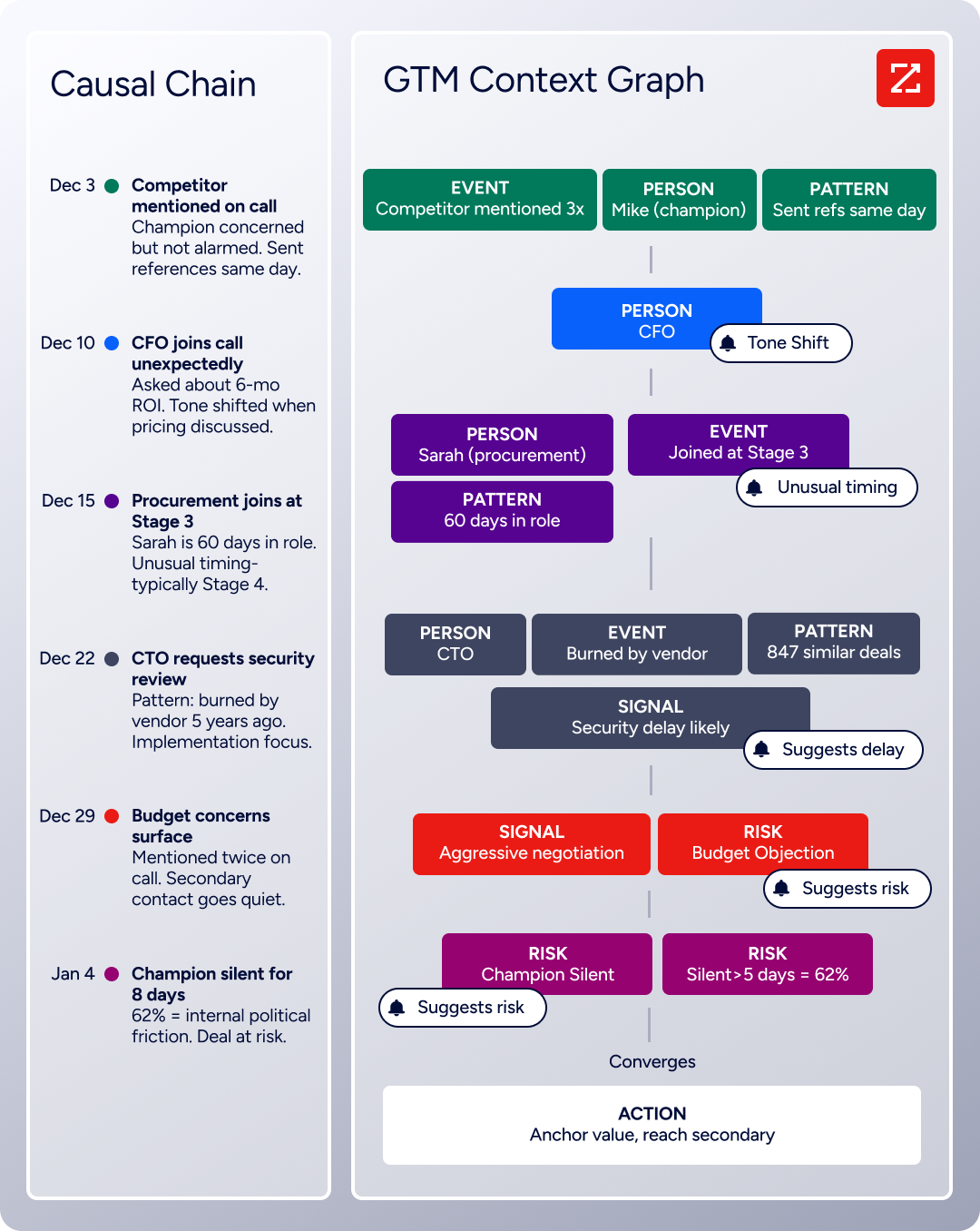
The distinction matters. Hightouch's AI optimizes which message to send and when. RudderStack's AI maintains the data pipeline. ZoomInfo's AI reasons about which accounts to target and why, then generates the actions to pursue them.
"That combination of our internal CRM data, external signals, and AI that's given all that context has helped us craft very specific account- and persona-based messages. And people have responded to them right away." (Toby Carrington, Chief Business Officer, Seismic)
Scale, reliability, and deployment
All three platforms handle enterprise workloads, but the operational models differ.
Hightouch reports 1 million+ daily sync jobs, 2 trillion+ rows synced annually, and 99.99% global uptime. PetSmart syncs over 15 million records to Salesforce Marketing Cloud daily and sends more than 4 billion personalized emails annually through the platform. Deployment is cloud-only; Hightouch never stores customer data, with syncs processed by ephemeral workers in the customer's cloud. First use cases can go live in less than one week, a real advantage over traditional CDPs that take 6 to 9 months.
RudderStack delivered 3.3 trillion events for over 4,000 organizations in 2025. RudderStack offers both cloud-managed and self-hosted deployment via Docker or Kubernetes, making it the only option among the three that lets you run the data plane on your own infrastructure. However, TrustRadius reviewers reported "occasional outages leading to event loss," a concern for event-driven architectures where delivery guarantees matter.
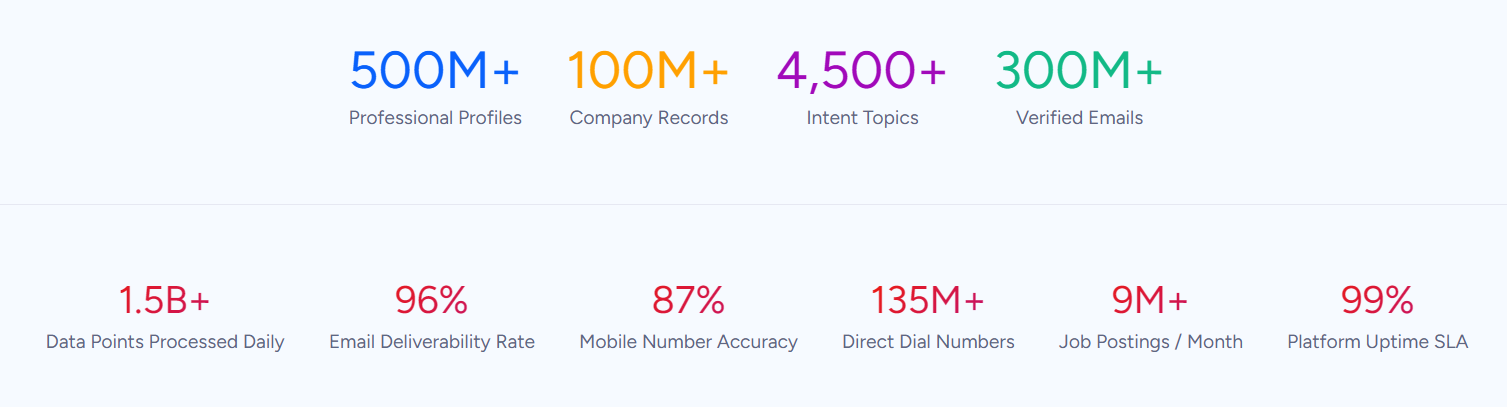
ZoomInfo operates at a different kind of scale: data scale rather than pipeline throughput. The platform covers 500M contacts and 100M companies, with automated ML scanning 28 million site domains daily and 1.5B+ data points processed daily through the GTM Context Graph. ZoomInfo is fully cloud-managed with no self-hosting option, and maintains ISO 27001, SOC 2 Type II, ISO 27701, and TRUSTe GDPR certifications.
Integration ecosystems reflect different architectures
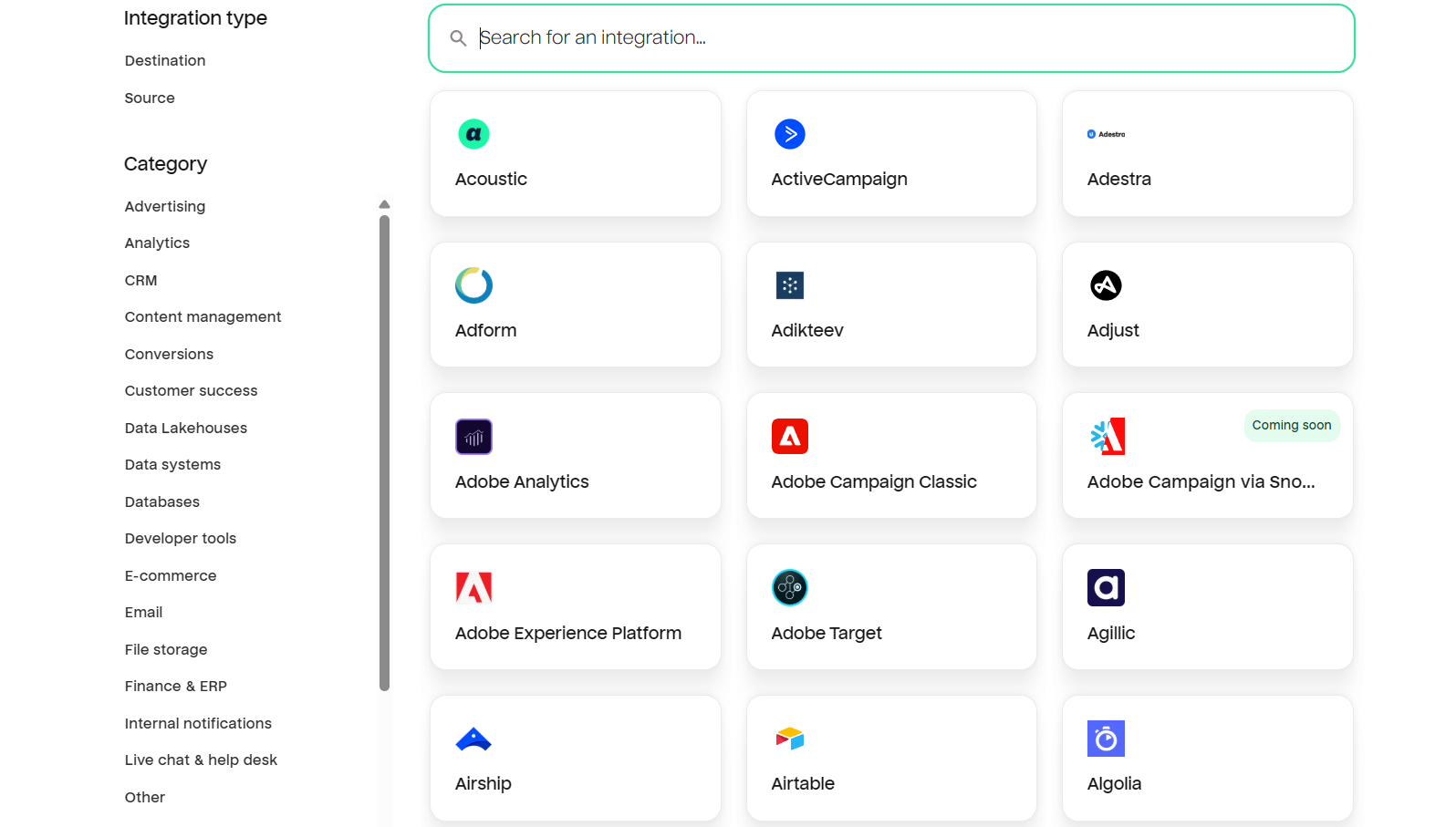
Hightouch offers 250+ managed connectors spanning advertising, marketing automation, CRMs, customer success, and data warehouses. Key sources include Snowflake, Databricks, BigQuery, Redshift, and Azure Synapse. The dbt integration runs deep: import dbt models directly, publish exposures back to dbt, and trigger syncs when dbt jobs finish. Orchestration integrations with Fivetran, Airflow, Dagster, and Prefect let Hightouch slot into existing data workflows. The Hightouch Events SDKs are backward compatible with Segment, reducing migration effort for teams switching.
Source: Hightouch
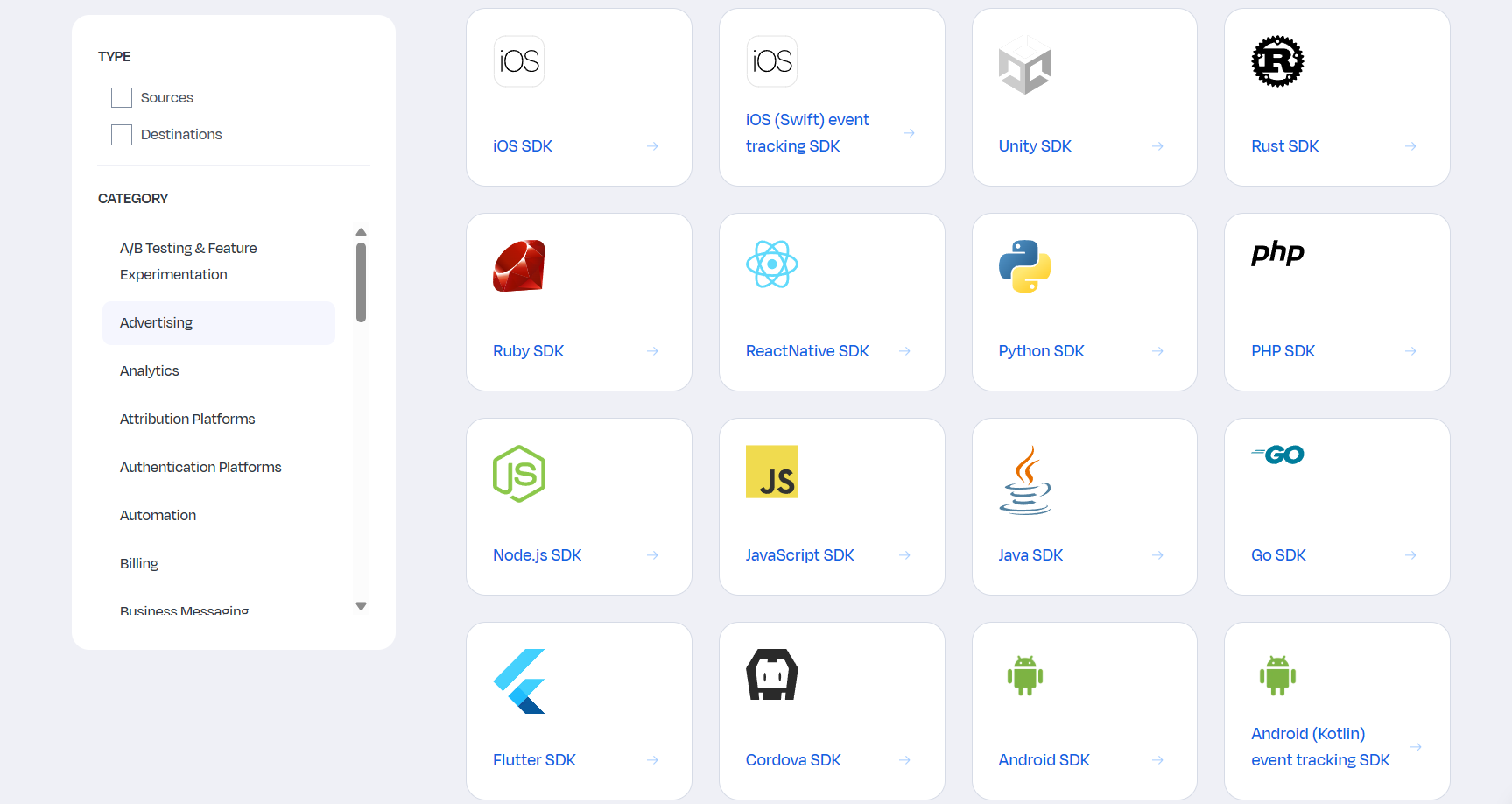
RudderStack has 200+ pre-built cloud destinations and sources. SDK coverage is broader on the collection side, with 16+ source SDKs including Rust and Unity (useful for gaming companies). Segment API compatibility means migration doesn't require re-instrumentation. However, TrustRadius reviewers noted the destination catalog "needs expansion" and documentation is lacking for less-used services. RudderStack's Transformations partially compensate: teams can build custom destination integrations through webhook destinations combined with in-pipeline code.
Source: RudderStack
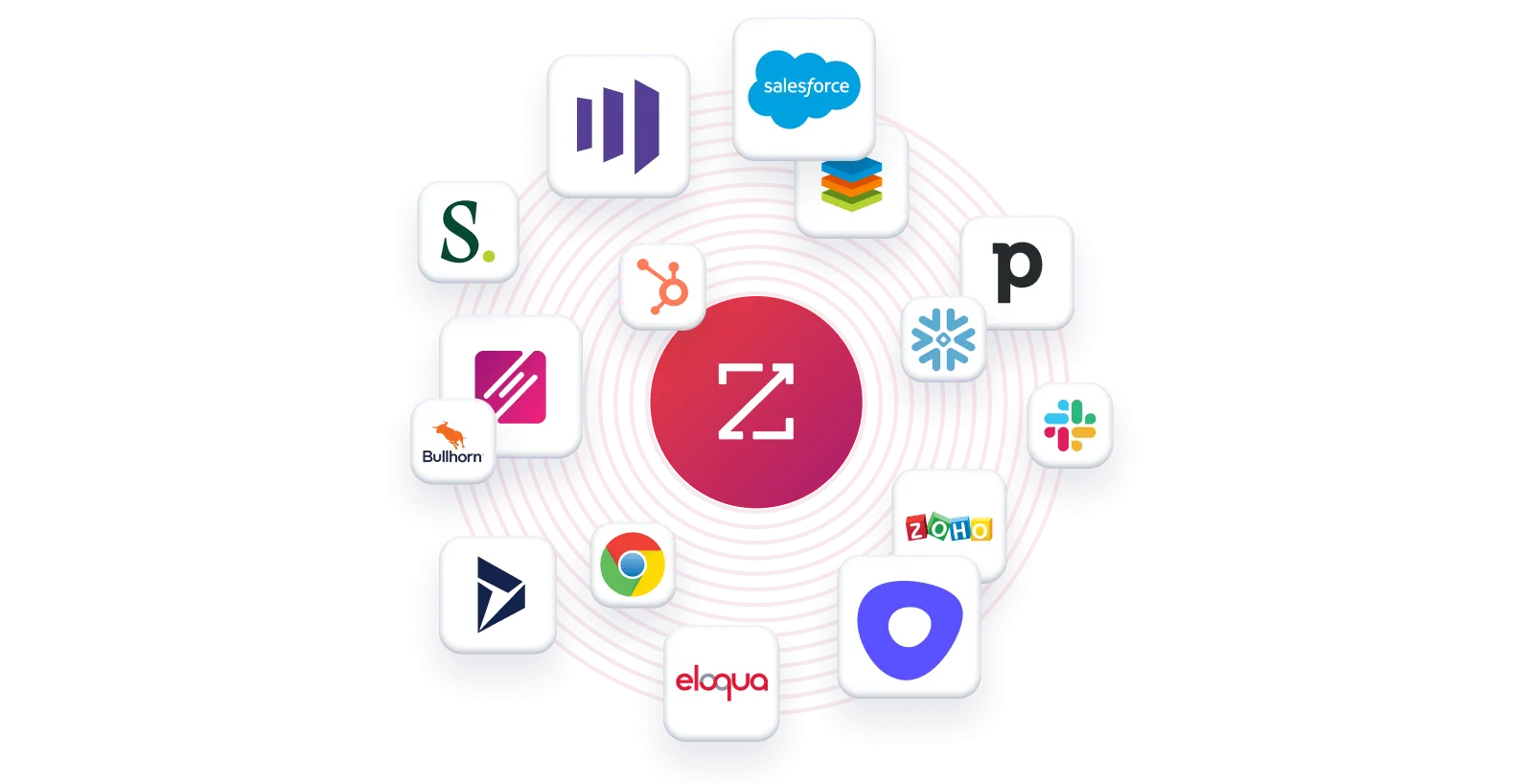
ZoomInfo takes a different approach. The App Marketplace lists 120 partner integrations, but the real integration story is the Enterprise API and MCP server. The API exposes four areas: Data (search and enrich), Copilot (AI intelligence), Marketing (audience management), and Platform (engagement data). The MCP server connects AI models to ZoomInfo data as a native tool. API access is included in all relevant plans, and the MCP server is listed in the Claude directory and supports ChatGPT, with additional MCP-compatible tools coming soon. Cloud Partners enables direct data ingestion into AWS, Google Cloud, Snowflake, and Databricks.
"The plug-and-play aspect of the API means I can integrate it very easily into any process and get information at a moment's notice." (Jerry Wilson, Senior Marketing Intelligence Analyst, BDO Canada)
Pricing: what you pay for reveals what you get
Hightouch uses a hybrid pricing model anchored to active syncs and data volume, not user seats. A permanent free tier includes 2 active syncs per month with unlimited destinations and user seats. The paid Self-Serve tier supports up to 10 active syncs, though the dollar price isn't published. The Composable CDP (Business tier) and AI Decisioning are quote-based. Enterprise plans include unlimited user seats, and there are no MTU caps in paid plans. The modular structure lets customers buy only what they need. However, G2 reviewers flag that usage-based pricing can escalate as data volume and destination count increase. Overage billing is automatic.
RudderStack prices by monthly event volume across four tiers: Free ($0; 250K events), Starter ($225/month; 1M events), Growth (custom pricing), and Enterprise (custom pricing). Key features are gated by tier: Python Transformations, Profiles, and SSO are Enterprise-only. Warehouse sync times range from 3 hours on Free to 5 minutes on Enterprise. The cost advantage over Segment is well-documented: Kajabi saved $100K+ annually migrating from Segment, and LoveHolidays reported saving $500,000 per year in SaaS costs. But watch for overage mechanics: after three event limit overages, RudderStack reserves the right to suspend services.
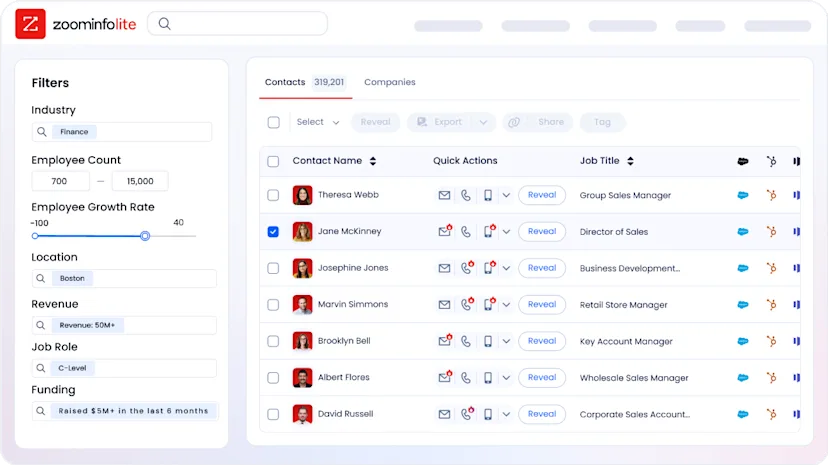
ZoomInfo uses custom-quoted, consumption-based pricing with no publicly listed prices. Costs depend on usage patterns, user count, credit volume, features, and contract length. The ZoomInfo Lite free tier provides permanent access to the B2B database with 10 monthly export credits and includes the ReachOut Chrome Extension, mobile app, and HubSpot integration. A 7-day free trial of the full platform is also available. ZoomInfo is premium-priced, but the ROI case is documented: Seismic saved 11.5 hours per week per seller, and Snowflake saw 200% higher conversion rates on top-scoring accounts.
The pricing comparison isn't apples-to-apples because the products serve different functions. Hightouch and RudderStack charge for data movement and activation. ZoomInfo charges for the data itself plus intelligence and execution tools. For B2B companies, the total cost of the GTM data stack includes both layers.
Security and compliance
All three platforms take security seriously, but architectural choices create different compliance profiles.
Hightouch and RudderStack share the zero-data-storage model. Neither stores customer data on its own infrastructure; data stays in the customer's warehouse. This design reduces compliance risk by eliminating a secondary data store to audit. Both hold SOC 2 Type 2 certifications and support HIPAA compliance with BAA capability. Hightouch adds ISO 27001. RudderStack offers dedicated VPC hosting for Enterprise customers and maintains separate US and EU data planes for data residency. RudderStack's open-source data plane gives teams the option to self-host, keeping all data processing on their own infrastructure.
ZoomInfo holds a broader certification stack including ISO 27001, ISO 27701, SOC 2 Type II, TRUSTe GDPR, and TRUSTe CCPA validations, all renewed annually. As a B2B data provider, ZoomInfo operates under a different compliance model: it is a registered data broker in California and Vermont and maintains a dedicated Trust Center. The data verification pipeline processes data through multiple compliance layers before customers can access it.
Hightouch vs. RudderStack vs. ZoomInfo: Which should you choose?
The right choice depends on which layer of your data stack needs the most help.
Choose Hightouch if:
You already have a well-modeled data warehouse and need to activate it for marketing
Your marketing team wants self-serve audience building without writing SQL for standard use cases
AI-driven campaign optimization (message, channel, timing, frequency) is a priority
You're a B2C enterprise with large-scale personalization needs
You want a Gartner-recognized CDP Leader that deploys in weeks, not months
Choose RudderStack if:
Your data engineering team wants full control over event collection, transformation, and routing
You need to replace Segment with a cost-effective, warehouse-native alternative
Code-based customization (JavaScript/Python transformations, YAML configs, CLI management) is a strength, not a limitation
Self-hosting the data plane is a requirement for compliance or data residency
You're building AI/ML models that need clean, governed, real-time customer data
Choose ZoomInfo if:
Your biggest GTM bottleneck is data completeness, not data movement
You need verified B2B contacts, company intelligence, intent signals, and buying committee insights
You want AI that reasons about which accounts to target and why deals move or stall
Your marketers and RevOps team want to build audiences and launch plays without engineering support
You need the intelligence layer accessible everywhere: inside ZoomInfo's products, in your warehouse, or through any AI agent via API/MCP
Explore ZoomInfo's B2B intelligence platform.
For many B2B organizations, the answer isn't one platform. It's a combination. ZoomInfo provides the data and intelligence. RudderStack or Hightouch activates it. The data warehouse sits at the center. The question is which layers you need to own versus outsource, and whether the data in your warehouse is good enough to activate in the first place.
If it's not, start with the data. Everything else follows from there.
Hightouch vs. RudderStack vs. ZoomInfo FAQ
What is the fundamental difference between Hightouch, RudderStack, and ZoomInfo?
Hightouch is a warehouse-native CDP that activates data already in your warehouse, with self-serve audience building and AI-driven campaign optimization for marketers. RudderStack is customer data infrastructure for engineering teams, handling event collection, real-time transformations, identity resolution, and warehouse activation in a code-first, open-source platform. ZoomInfo is a B2B data and intelligence platform that provides the actual contact, company, and intent data (500M contacts, 100M companies), plus AI-powered execution tools for sales and marketing teams.
Can I use these platforms together?
Yes, and many B2B companies do. A common stack uses ZoomInfo to enrich the data warehouse with B2B intelligence (contacts, firmographics, technographics, intent signals), RudderStack to collect and route behavioral event data into that same warehouse, and Hightouch to activate the combined dataset across marketing tools. Each platform handles a different layer: ZoomInfo provides the data, RudderStack pipes and transforms it, and Hightouch activates it.
Which platform is best for marketing teams without engineering support?
Hightouch's Customer Studio offers the most capable no-code audience builder among the three, though advanced use cases still require SQL. ZoomInfo's GTM Studio lets marketers describe audiences in natural language and launch multi-channel plays without engineering tickets. RudderStack requires engineering depth for most tasks, with JavaScript or Python transformations and CLI-based configuration.
How do the free tiers compare?
Hightouch offers a permanent free tier with 2 active syncs per month, unlimited destinations and user seats, and hourly sync frequency. RudderStack's free plan includes 250,000 monthly events with 16+ SDK sources and 200+ destinations, but limits warehouse sync time to 3 hours. ZoomInfo Lite provides permanent free access to the B2B database with 10 monthly export credits, a Chrome extension, mobile app, and HubSpot integration.
Which platform is the most cost-effective at scale?
It depends on what you're scaling. RudderStack is the most affordable for high-volume event pipelines, with customers like Kajabi saving $100K+ annually versus Segment. Hightouch's modular pricing avoids forced bundling but can escalate with data volume and destination count. ZoomInfo is premium-priced but addresses a different cost equation: the cost of incomplete B2B data, wasted outreach, and missed pipeline opportunities. For B2B companies, the total GTM data stack cost includes both the data layer and the activation layer.
Do any of these platforms provide actual B2B data, or do they only move existing data?
Only ZoomInfo provides B2B data. Both Hightouch and RudderStack are data infrastructure tools that move, transform, and activate data already in your warehouse or event streams. ZoomInfo maintains a proprietary dataset of 500M contacts, 100M companies, 135M+ verified phone numbers, and 200M+ verified business email addresses, delivered via APIs, MCP, direct warehouse feeds, or its native GTM products.
Which platform has the strongest AI capabilities?
Each platform's AI solves a different problem. Hightouch's AI Decisioning uses reinforcement learning to optimize individual marketing messages (what to send, when, to whom, through which channel). RudderStack invests in AI for data pipeline management and debugging, positioning itself as the data infrastructure layer for AI-era applications. ZoomInfo's GTM Context Graph uses AI to reason about account intelligence, deal patterns, and buying signals, then powers AI agents in GTM Workspace (sellers) and GTM Studio (marketers) that automate research, outreach, and execution.
Which platform should I evaluate first if I'm building a B2B data stack from scratch?
Start with your data foundation. If your warehouse is empty or your B2B contact and company data is incomplete, evaluate ZoomInfo first, since activation tools like Hightouch and RudderStack can only work with data that exists. If you already have comprehensive data but need to collect behavioral events and route them reliably, evaluate RudderStack. If your warehouse is rich with clean data and your marketing team needs to activate it independently, evaluate Hightouch.
More Hightouch comparisons:
