
If you're comparing HubSpot vs. IBM Marketing Cloud, start here: IBM Marketing Cloud no longer exists under that name. IBM sold its marketing platform to Centerbridge Partners in 2019. It now operates independently as Acoustic, a company focused on B2C behavioral marketing. The product lineage traces back to Silverpop, Coremetrics, and Unica, but the ownership, brand, and direction have changed entirely.
With that context, here are the real questions you should be asking:
Are you marketing to businesses or consumers? HubSpot is built for B2B. Acoustic is built for B2C.
Do you need a full CRM with marketing built in, or a standalone marketing automation platform?
How important is reaching the right accounts at the right time, versus sending high-volume consumer campaigns?
Do you want transparent, self-service pricing, or are you comfortable with sales-quoted contracts?
Does your marketing success depend on verified buyer data and account intelligence, or on behavioral signal processing and message timing?
In short, here's what we recommend:
HubSpot is the B2B CRM and marketing platform. Its Marketing Hub connects lead generation, email automation, content management, and campaign analytics to the same database used by sales and service teams. With a permanent free tier, 2,000+ app integrations, and AI tools through Breeze (which automates content creation, prospecting, and customer service across the platform), HubSpot lets marketing teams launch campaigns without developer help. The trade-off: pricing scales quickly as you add seats and hubs, mandatory onboarding fees at Professional and Enterprise tiers add friction, and the platform's depth in any single area can lag behind specialists.
Acoustic (formerly IBM Marketing Cloud) is a B2C behavioral marketing platform built around real-time intent signals. It captures first-party behavioral data (browsing patterns, product interest, cart activity) and triggers campaigns when a consumer is most likely to act, across email, SMS, WhatsApp, and mobile push. For retail, travel, media, and financial services brands sending millions of messages, Acoustic's messaging-volume pricing avoids the audience-size billing that inflates costs on other platforms. The trade-off: no public pricing, no free tier, B2C only, and a steeper learning curve inherited from its enterprise origins.
Both platforms handle marketing execution well. But for B2B companies, execution is only half the problem. The other half is knowing which companies to target, when they're ready to buy, and how to reach the decision-makers. That intelligence gap separates productive marketing from expensive guesswork.
ZoomInfo is a B2B data intelligence and GTM platform that provides the data layer neither HubSpot nor Acoustic was designed to deliver. With 500M contacts, 100M companies, 135M+ verified phone numbers, and 200M+ verified business email addresses, ZoomInfo gives marketing teams the targeting data to reach the right people. Its GTM Context Graph combines this third-party data with your CRM records, conversation transcripts, and behavioral signals to reveal not just who your buyers are, but when they're actively in-market. For marketing teams, GTM Studio provides a canvas where you build audiences in natural language, launch multi-channel plays, and measure pipeline impact without waiting on engineering. For teams already using HubSpot, ZoomInfo integrates directly to enrich CRM data and power intent-based targeting inside your existing workflow.
If verified B2B data and real-time buying signals sound like the missing piece, see ZoomInfo in action.
HubSpot vs. IBM Marketing Cloud (Acoustic) vs. ZoomInfo at a glance
HubSpot | Acoustic (IBM Marketing Cloud) | ZoomInfo | |
|---|---|---|---|
Primary focus | B2B CRM + marketing automation | B2C behavioral marketing | B2B data intelligence + GTM orchestration |
Target market | SMB to enterprise, primarily B2B | Mid-market to enterprise, B2C only | Enterprise and upper mid-market, B2B |
Marketing automation | Email workflows, content, social, ads | Email, SMS, WhatsApp, mobile push | Multi-channel GTM plays via GTM Studio |
Data source | First-party CRM data | First-party behavioral signals | 500M contacts, 100M companies + intent signals |
AI capabilities | Breeze AI (agents, content, prospecting) | Predictive timing, AI segmentation, MCP/Claude | GTM Context Graph, AI agents, account intelligence |
CRM included | Yes (Smart CRM) | No | No (integrates with major CRMs) |
Free tier | Yes (permanent) | No | Yes (ZoomInfo Lite, permanent) |
Pricing transparency | Published tiers | Quote-only | Quote-only |
Starting price | $0 (free) / $890/mo (Marketing Pro) | Not disclosed | Not disclosed |
Integration ecosystem | 2,000+ apps | Narrow but growing | 120+ native plus API and MCP access |
IBM Marketing Cloud is now Acoustic
The IBM Marketing Cloud brand covers a series of acquisitions IBM made between 2010 and 2014: Coremetrics (web analytics), Silverpop (email automation, acquired for roughly $270 million), Tealeaf (session replay), and Unica (enterprise marketing management). IBM consolidated these under IBM Watson Marketing, adding Watson AI capabilities on top.
By 2019, IBM decided marketing software wasn't core to its enterprise strategy. Centerbridge Partners acquired the portfolio, and the new company launched as Acoustic in July 2019 with roughly 1,100 employees and 3,500 clients. Francisco Partners made a growth investment in October 2022.
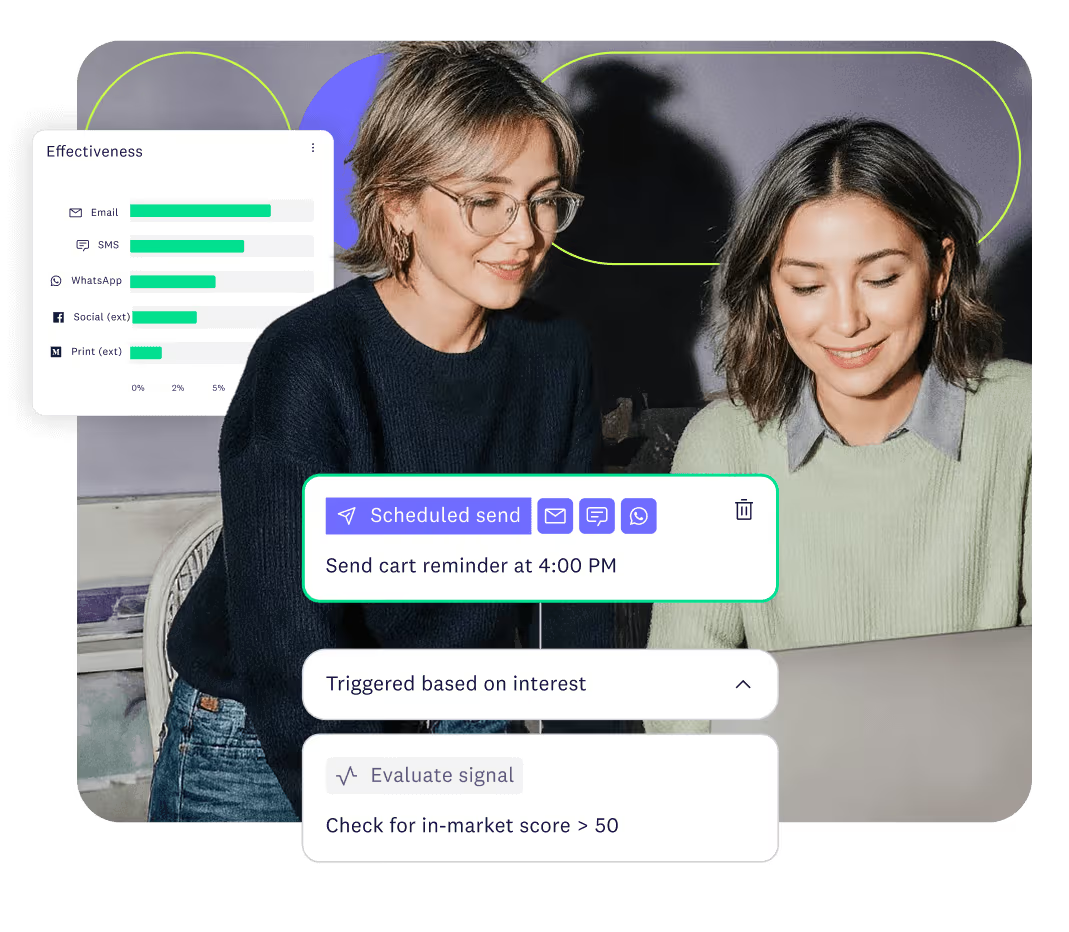
Since then, Acoustic has narrowed its focus. The broad IBM-era product portfolio has been consolidated around Acoustic Connect, a real-time B2C engagement platform built on an "Intent-Driven Model." The company now operates with 340+ employees and 1,800+ customers, smaller than its IBM days but more focused.
Source: Acoustic
If you're a former IBM Marketing Cloud user, the core product capabilities still exist. But the company is different: private, leaner, and targeting only B2C brands in retail, travel, media, and financial services.
B2B and B2C marketing need different tools
This is the most important distinction in this comparison, and the one most "HubSpot vs. IBM Marketing Cloud" articles miss.
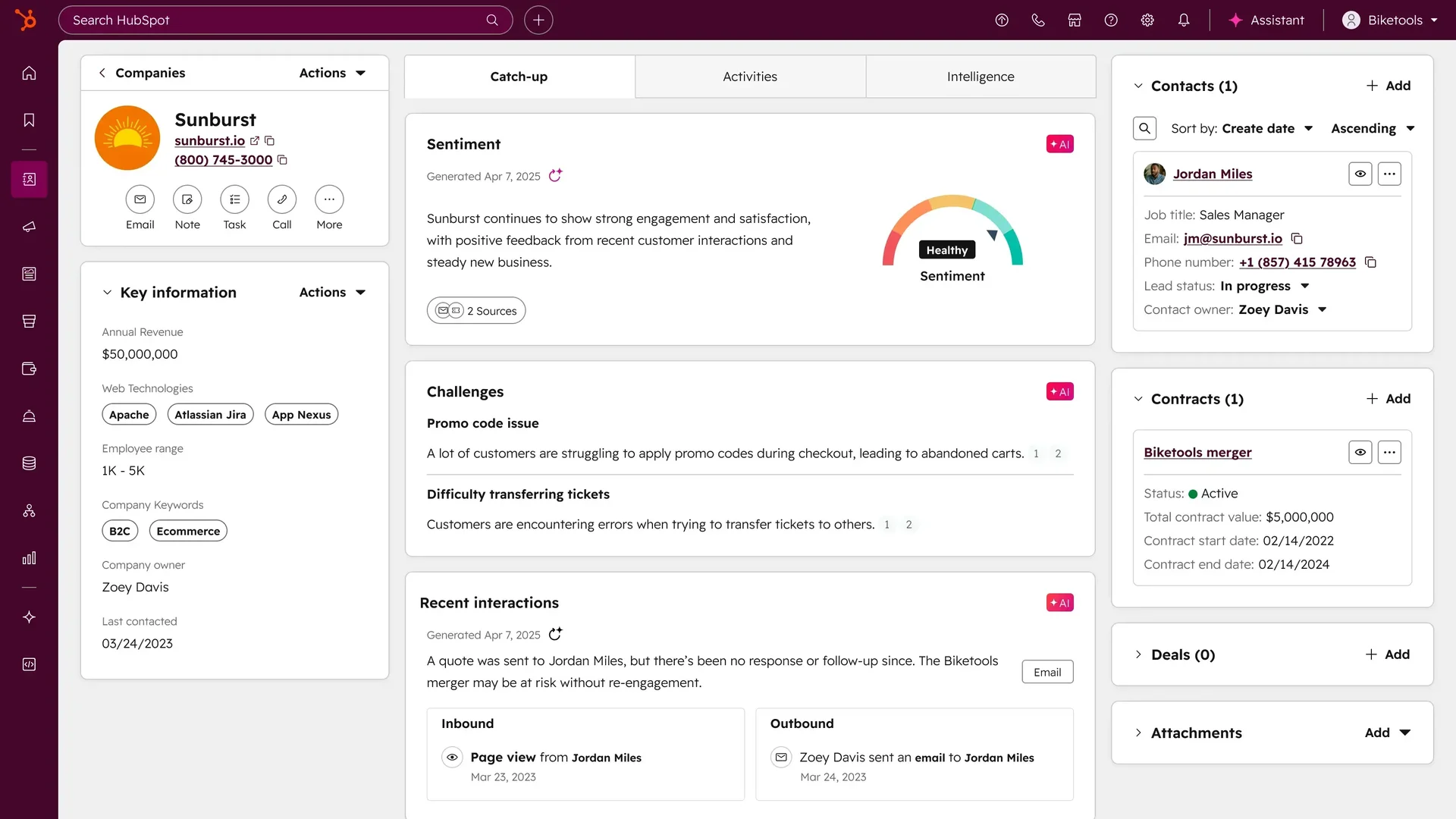
HubSpot is designed for B2B marketing. Its Smart CRM tracks contacts, companies, deals, and pipelines. Marketing Hub's workflows nurture leads through a sales funnel.
Source: HubSpot
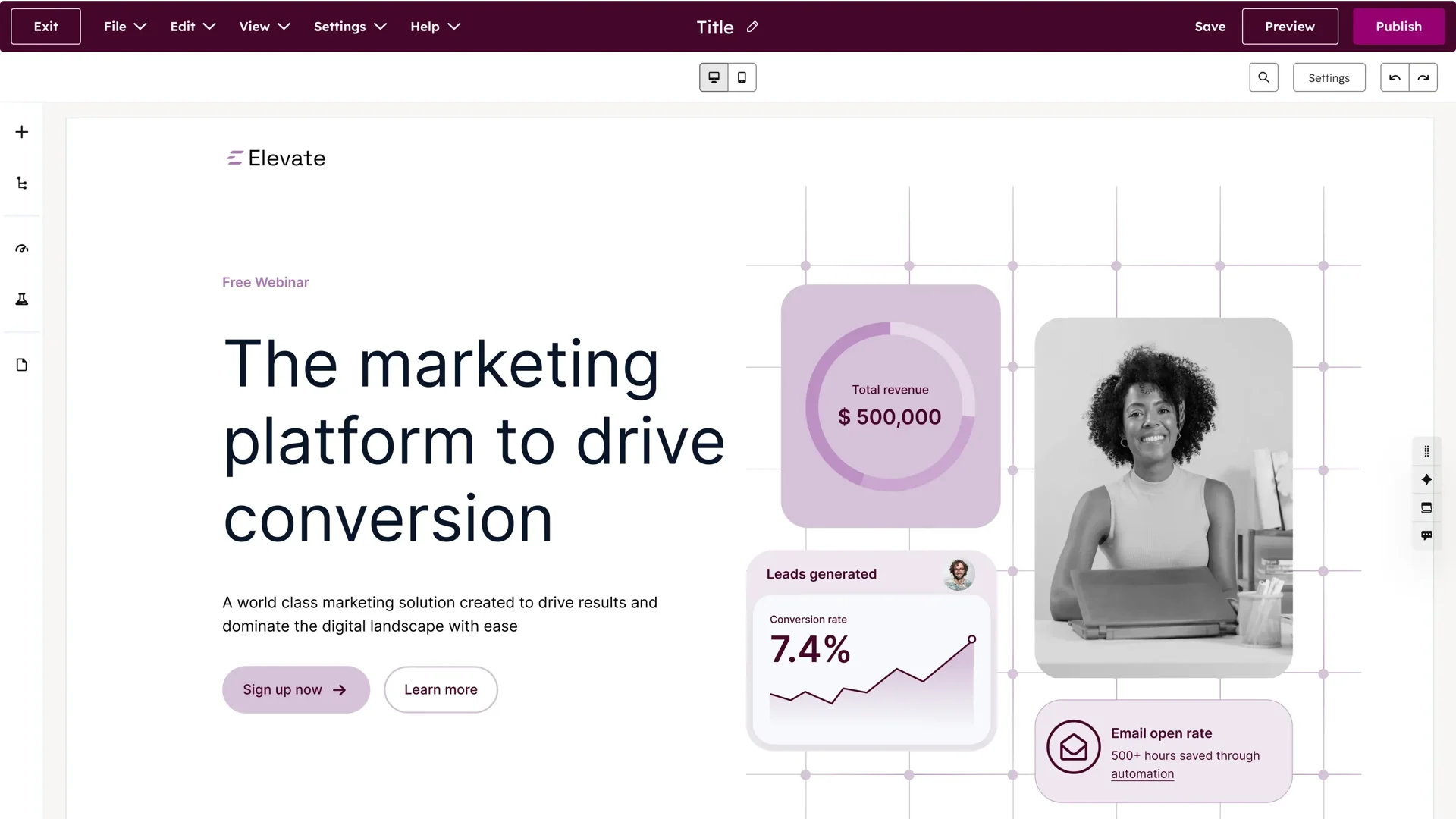
Content Hub creates blog posts and landing pages to attract inbound traffic. The platform assumes a world where a handful of decision-makers research products, enter a pipeline, and eventually close a deal.
Source: HubSpot
Acoustic is designed for B2C marketing. Its platform tracks individual consumer behavior (browsing patterns, cart additions, product interest, purchase history) across email, SMS, WhatsApp, and mobile push. It assumes a world where millions of consumers need personalized messages at the moment they're ready to act.
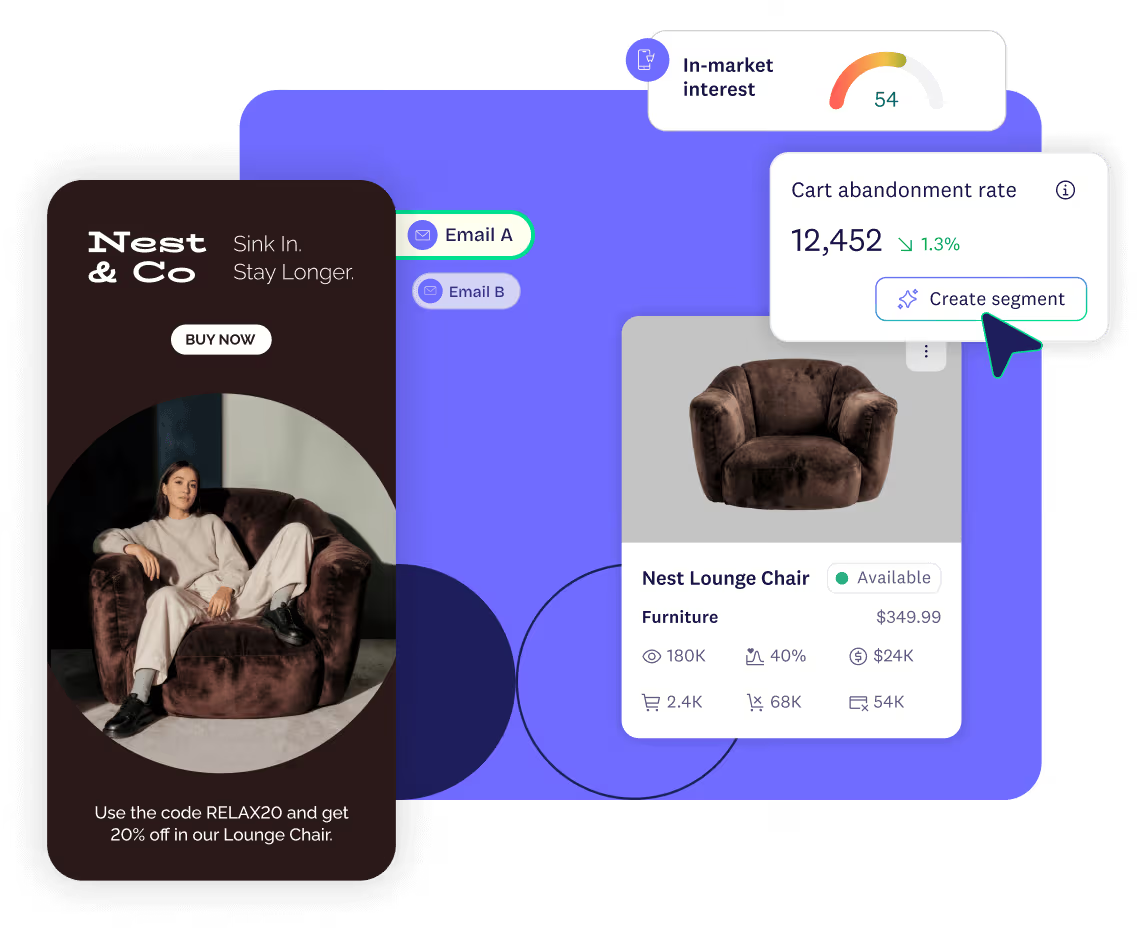
Source: Acoustic
Acoustic serves retail, travel, media, and financial services brands. It is not built for B2B companies with sales-led motions.
This isn't about one platform being better. It's about fit. A B2B SaaS company evaluating Acoustic would find no lead scoring, no deal pipeline, no sales handoff workflows, and no account-based targeting. A D2C retailer evaluating HubSpot would find no real-time behavioral triggers, no product catalog intelligence, and limited SMS/WhatsApp orchestration at scale.
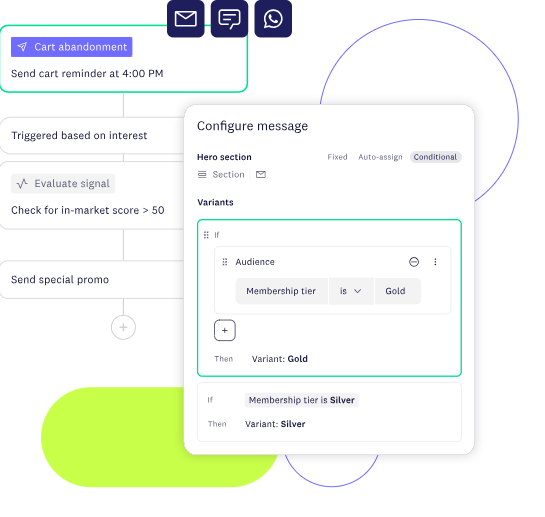
Source: Acoustic
For B2B teams, the comparison narrows here: HubSpot is the relevant marketing platform, and Acoustic is the wrong tool.
But HubSpot still has a gap. It handles marketing execution with its own first-party CRM data. What it doesn't provide is the third-party intelligence that tells you which companies outside your CRM are researching your category, who the decision-makers are, and how to reach them with verified contact information. That's the gap ZoomInfo fills.
HubSpot handles inbound. ZoomInfo handles outbound intelligence.
HubSpot was built on the premise that buyers come to you. Create content, optimize for search, capture leads through forms, and nurture them through email. This "inbound" methodology powered HubSpot's growth and still drives most of its 288,706 customers.
The limitation: inbound alone doesn't cover an entire addressable market. Only a fraction of potential buyers will find your blog, fill out your form, or engage with your ads. The rest are researching, evaluating, and buying, and you don't know about them until it's too late.
ZoomInfo provides the other half. Its data platform covers 500M contacts and 100M companies with verified direct-dial phone numbers and business email addresses, processed through a multi-source verification pipeline backed by 300+ human researchers and reaching up to 95% accuracy on first-party data.
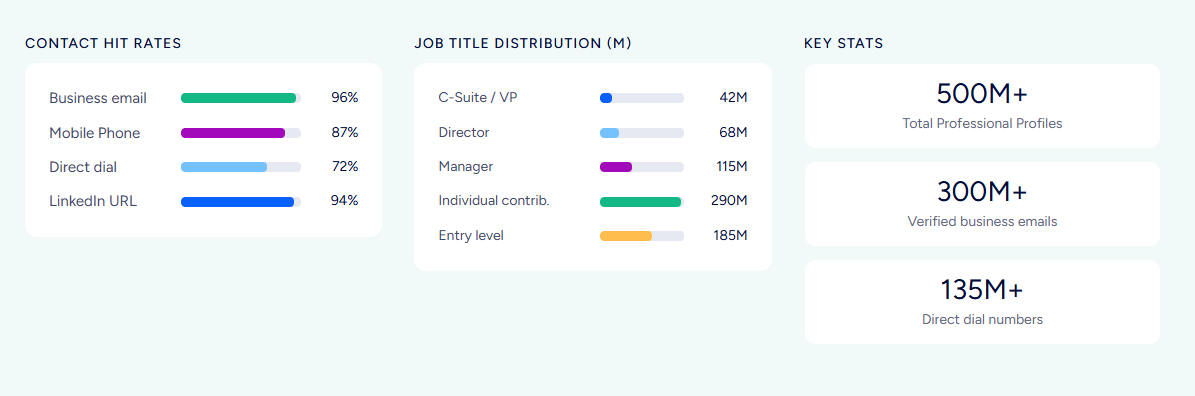
Buyer Intent data tracks signals from 210 million IP-to-Organization pairings, identifying which companies are researching topics related to your product.
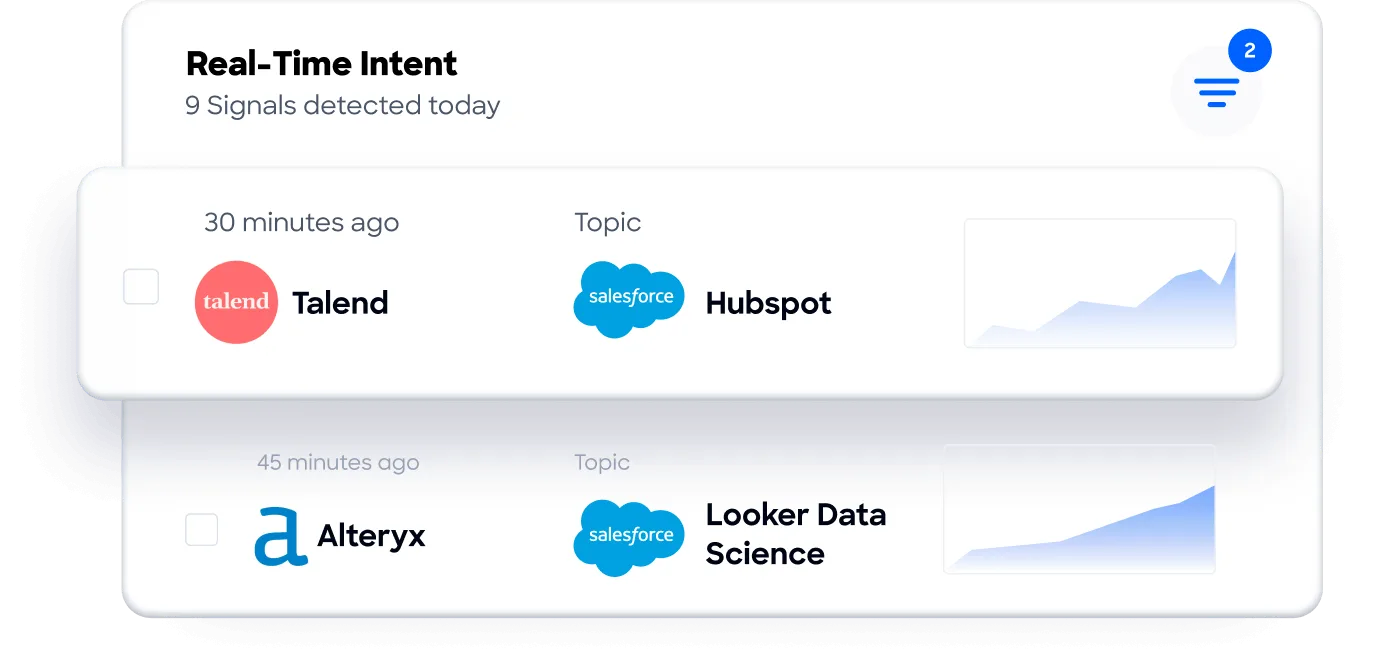
WebSights resolves anonymous website traffic to companies, turning invisible visitors into actionable accounts.
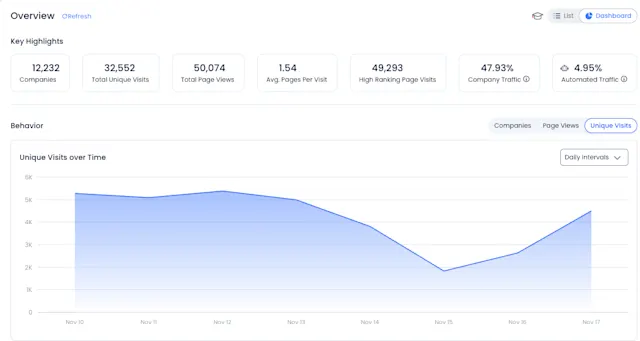
For marketing teams using HubSpot, ZoomInfo integrates directly to enrich CRM records with verified data and push intent signals into HubSpot's workflow engine. The result: your marketing automation targets accounts that are actually in-market, using contact information that works.
"It's not just the data itself. It's more about the right data at the right time to help us reach out with the right message across that full buyer journey." (Chelsea Kenyon, Senior Director of Digital Strategy, Redwood Logistics)
For a detailed side-by-side of just these two platforms, see our HubSpot vs. ZoomInfo comparison.
Marketing automation: three different approaches
Each platform automates marketing differently, reflecting its target audience.
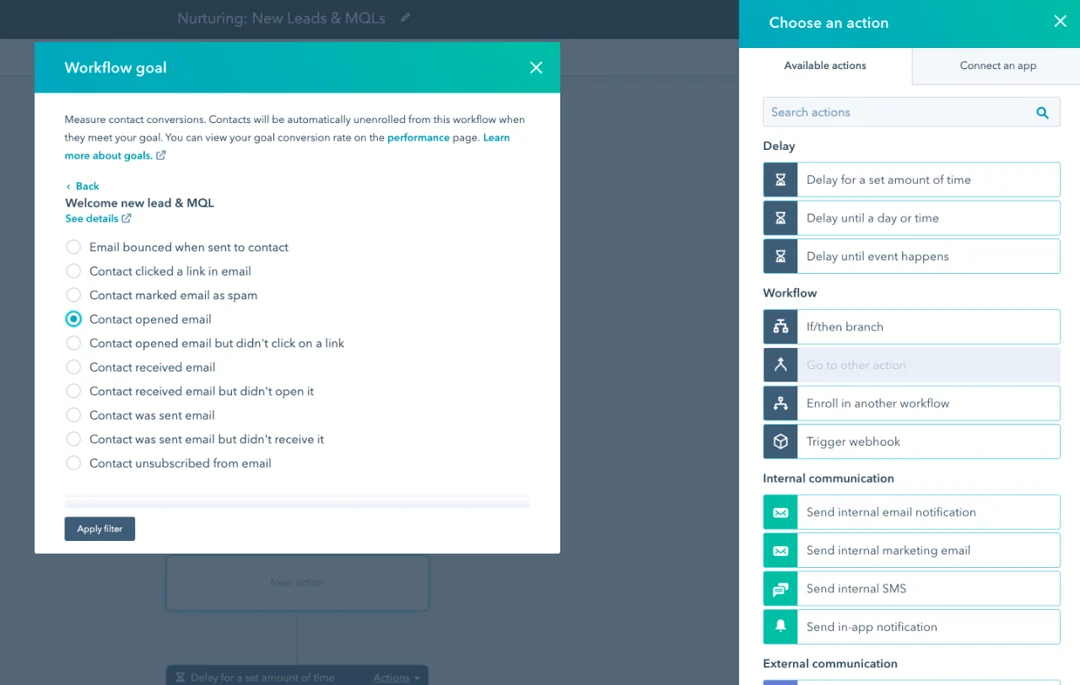
HubSpot Marketing Hub centers on workflows and content. The visual workflow builder triggers personalized email sequences based on contact behavior: form submissions, page visits, email opens, lifecycle stage changes.
Source: HubSpot
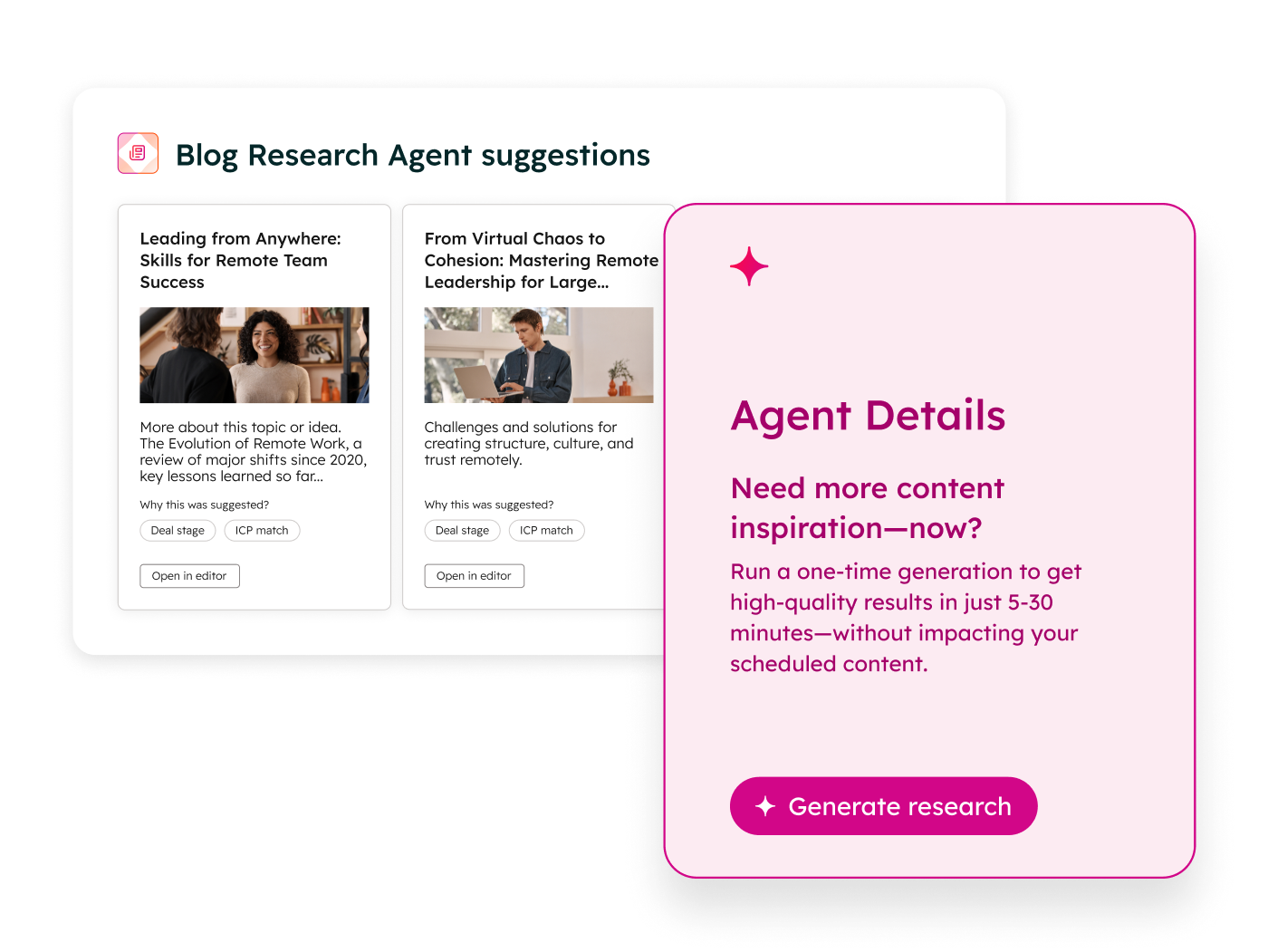
Content Hub handles blog posts, landing pages, and social publishing, with an AI Content Writer embedded across the platform. The AEO Strategy tool (in beta) helps content rank in AI-generated search answers. For B2B companies running content marketing and lead nurture campaigns, this is a mature toolkit.
Source: HubSpot
Where HubSpot's automation falls short is outbound account targeting. Its workflows can only act on contacts already in the CRM. You can't automate outreach to companies showing buying intent if those companies haven't engaged with your content yet.
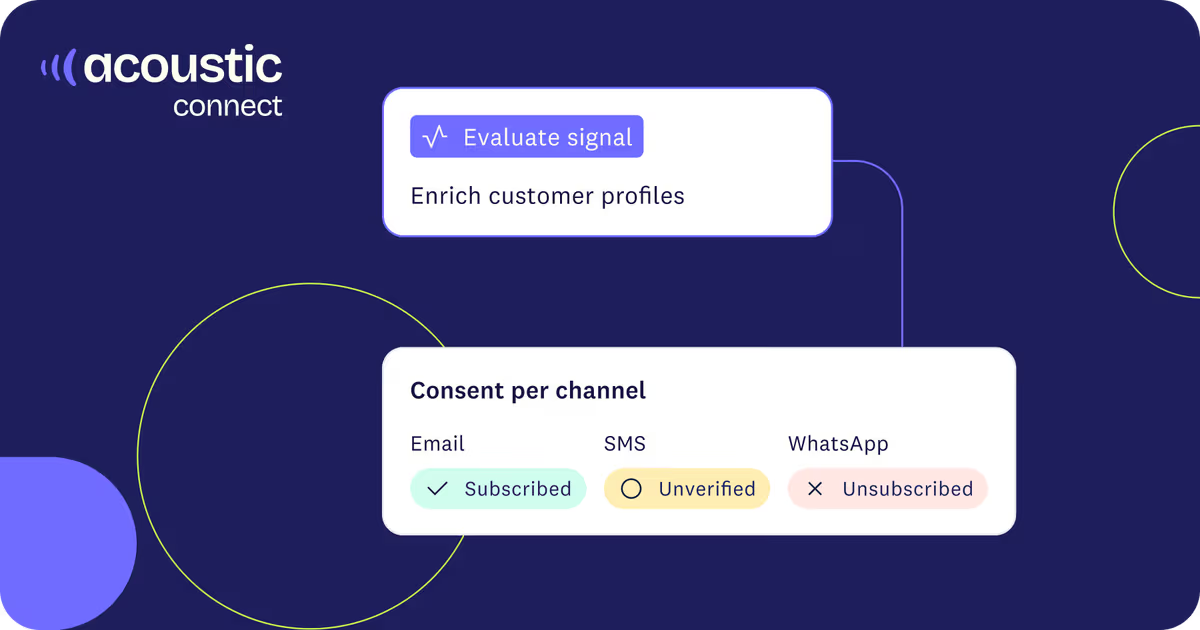
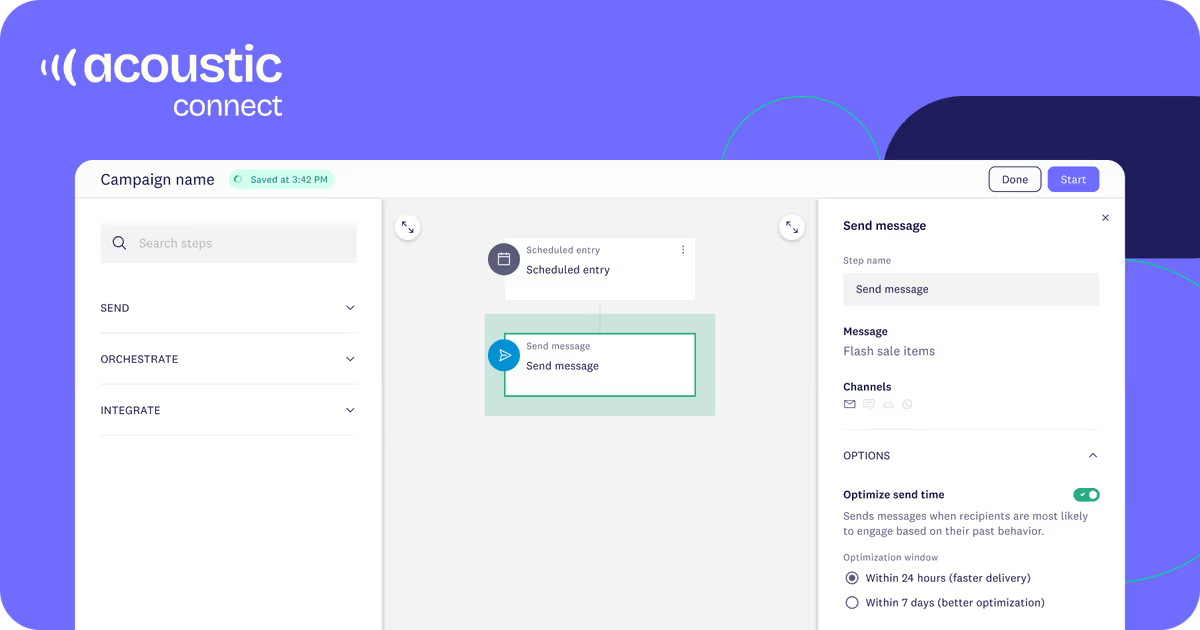
Acoustic Connect automates B2C lifecycle campaigns based on real-time behavioral signals. The platform captures browsing patterns, cart additions, and product interest via its Connect SDK, then triggers multi-channel campaigns (email, SMS, WhatsApp, mobile push) the moment a consumer is most likely to act.
Source: Acoustic
Send time optimization targets the window when a contact is actively shopping on the website or app, not just when they typically open email.
Source: Acoustic
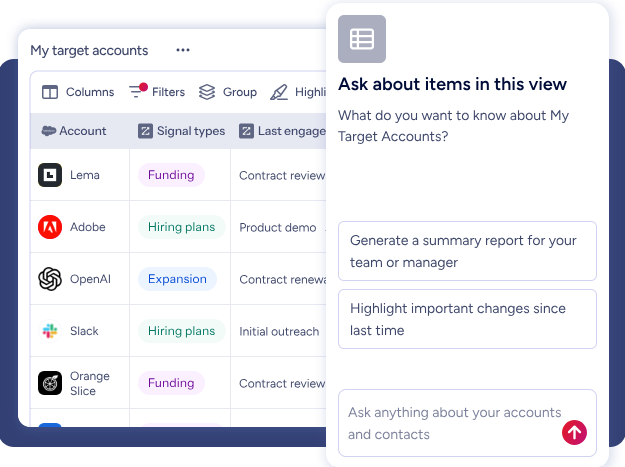
ZoomInfo GTM Studio automates B2B account-based marketing from a different starting point: intelligence. Instead of waiting for contacts to enter your CRM through inbound channels, GTM Studio lets marketers describe audiences in natural language, enrich them with first- and third-party data, define triggers based on buying signals, and launch multi-channel plays across email, ads, calls, and direct mail.
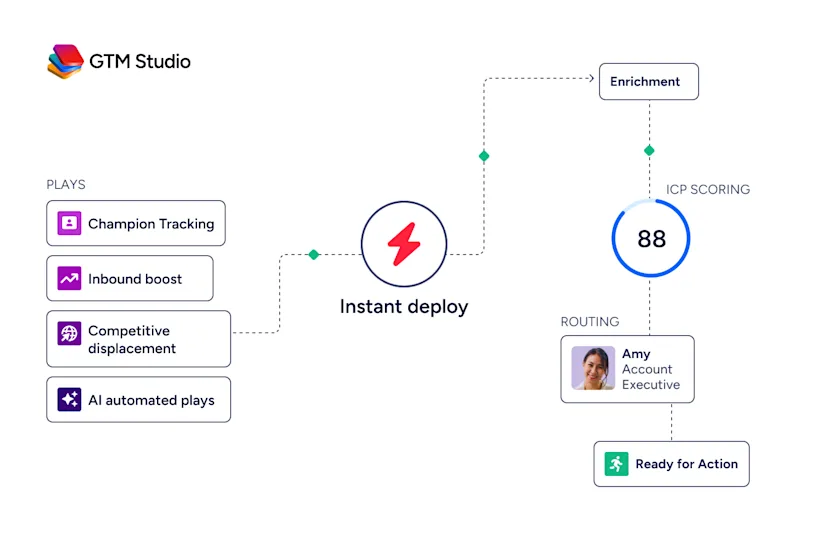
Pre-built GTM plays cover inbound acceleration, champion tracking, competitive displacement, and ICP targeting. Plays get smarter as prospects respond, and hot accounts are delivered directly into GTM Workspace for seller execution. Expansion plays that used to take three weeks now launch in 30 minutes, without technical support.
Data quality determines marketing effectiveness
A marketing platform is only as good as the data behind it.
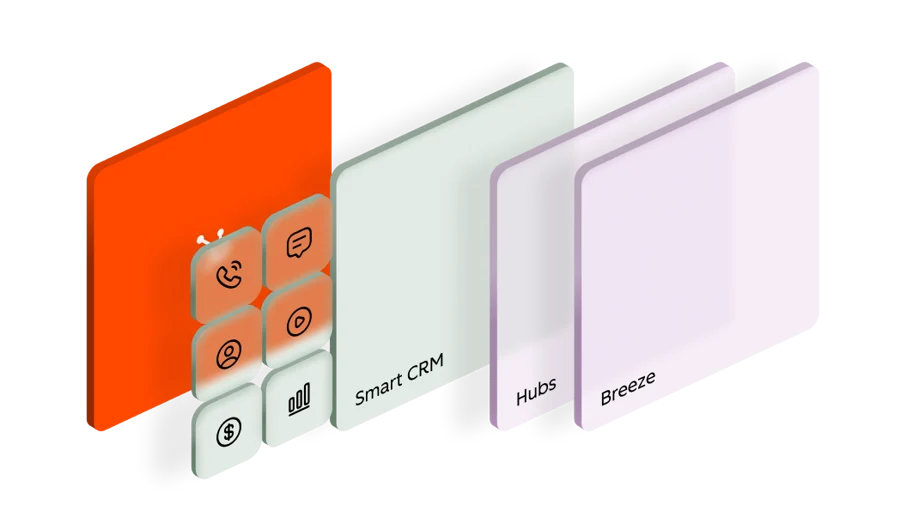
HubSpot relies on first-party data: what contacts enter through forms, what your team logs in the CRM, and what email interactions produce.
Source: HubSpot
The Smart CRM includes AI-powered data enrichment from emails, calls, and web activity. But the enrichment draws from data already in your ecosystem. Records for companies and contacts you haven't engaged with remain blank.
Acoustic captures first-party behavioral signals through its Connect SDK, recording page views, cart events, product interactions, and session behavior. The platform scores 27 behavioral attributes per contact and per product from actual session activity.
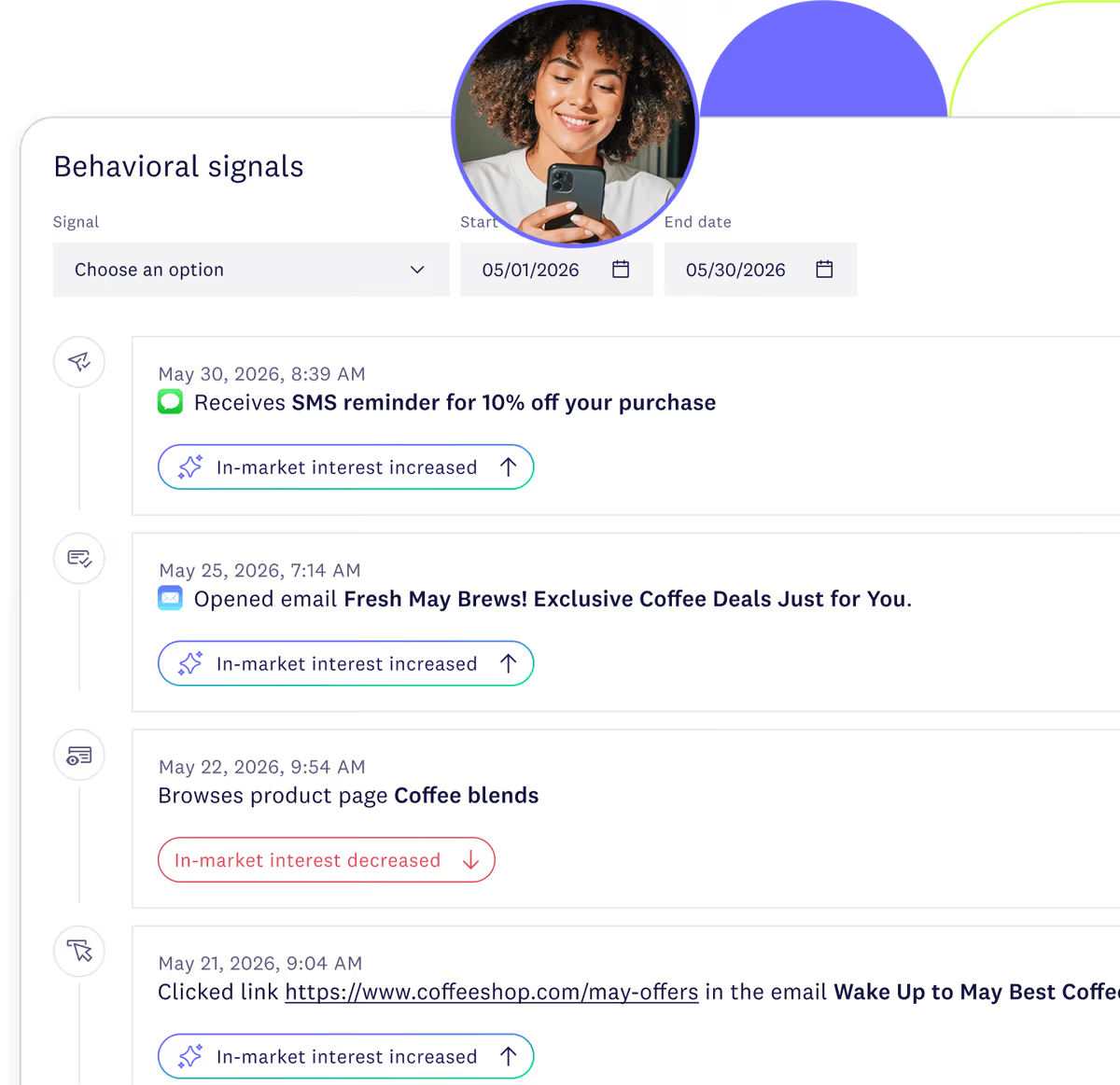
Source: Acoustic
For B2C brands with high website traffic, this creates a rich behavioral profile. But Acoustic doesn't provide third-party company or contact data; it only works with consumers who have already interacted with your brand.
ZoomInfo operates the largest B2B data platform in the industry, built and verified over nearly two decades.
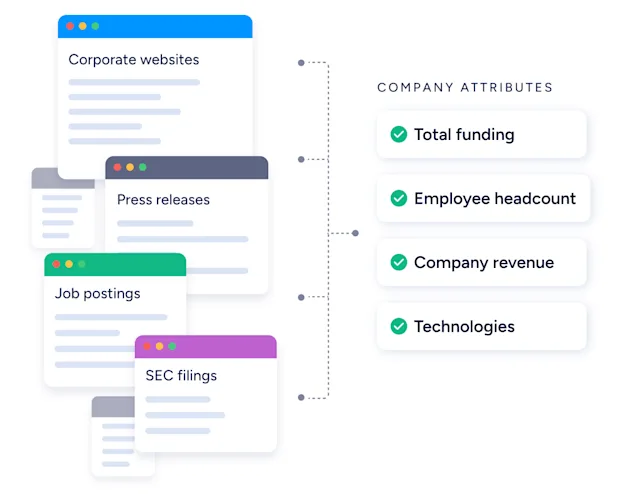
The pipeline aggregates from automated ML scanning of 28 million site domains daily, third-party partner data covering 95 million businesses, a community of 200,000+ users who share data back, and an in-house Data Training Lab of 300+ human researchers.
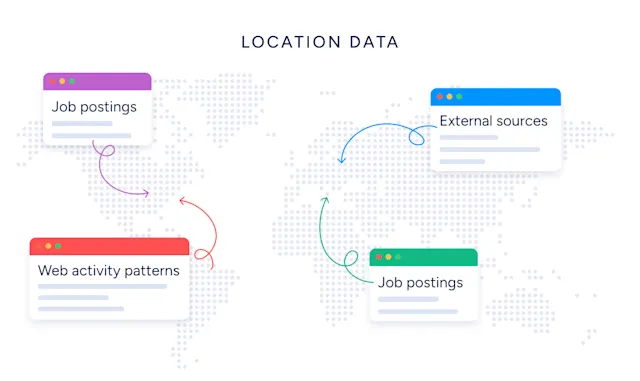
In a Fortune 500 competitive RFP analyzing 25 million contacts across vendors, the independent consultant concluded that "no other competitor came even close."
The difference shows at the point of action. A marketing email sent to a verified business address lands in the inbox. A campaign targeting accounts researching your category generates qualified pipeline. An outreach sequence built on accurate org charts reaches the real buying committee, not a generic contact list.
"ZoomInfo is our one source of truth for account data, and even more so for contact data. There's no other provider in the market that provides you with that level of detail." (Thor Sanderson, Senior Manager of Sales Technology Enablement, Smartsheet)
AI capabilities: three different problems, three different solutions
Each platform applies AI to a different challenge.
HubSpot's Breeze is an AI layer that runs across all hubs. The Customer Agent resolves support inquiries on its own.
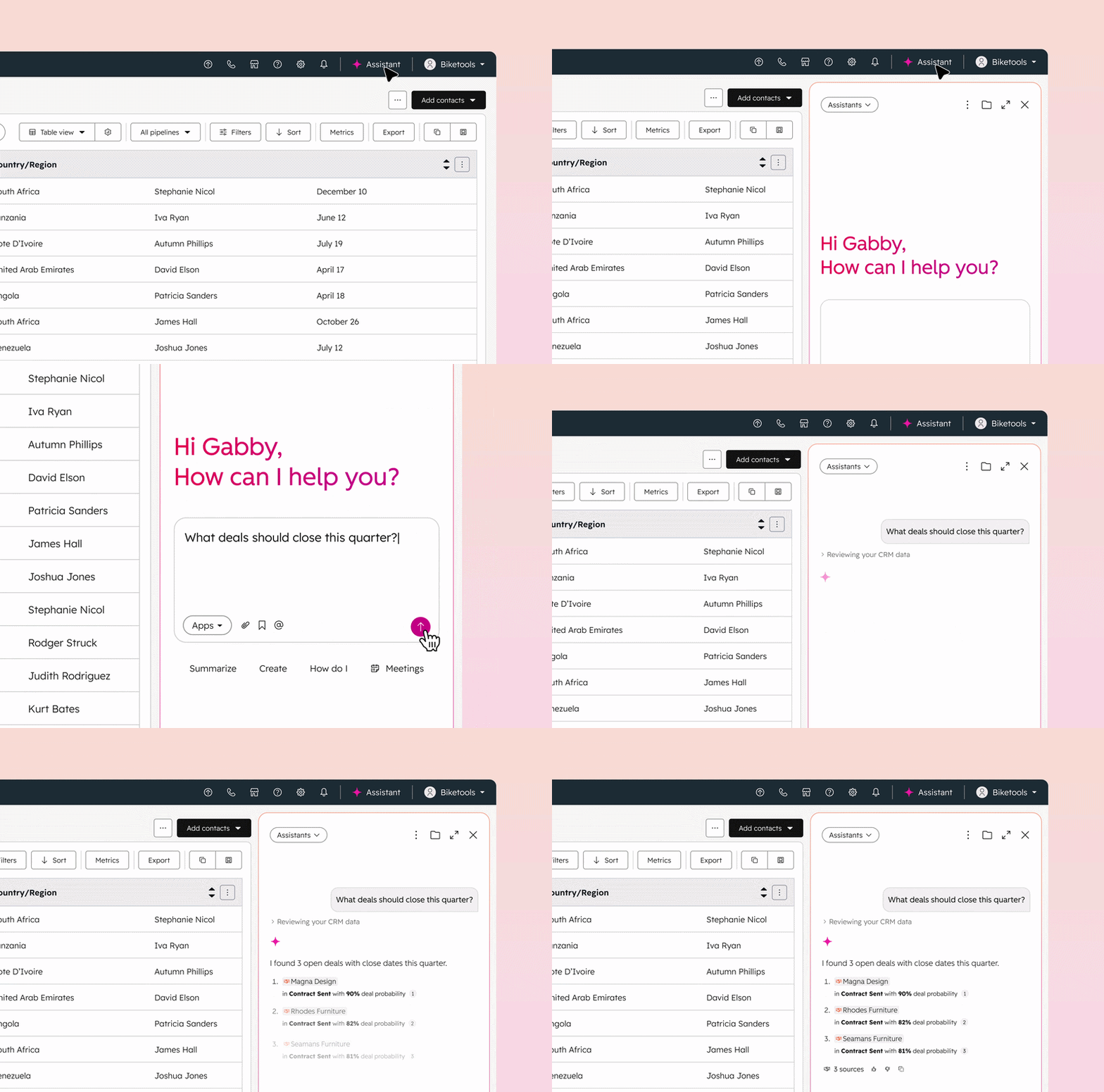
Source: HubSpot
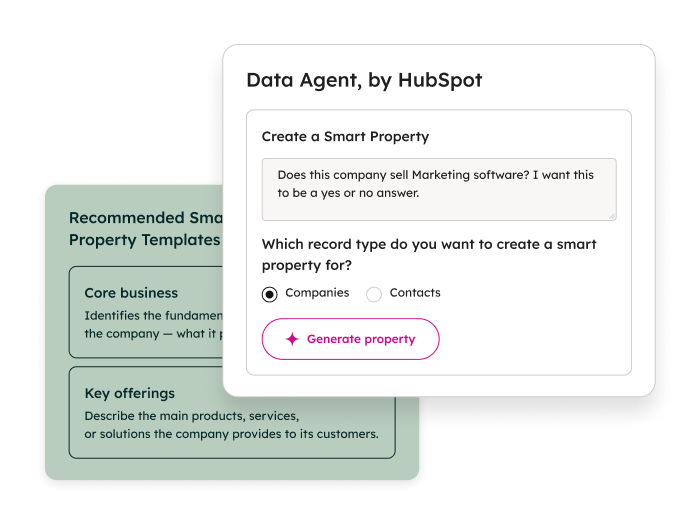
The Prospecting Agent monitors buying signals and drafts outreach using the full HubSpot customer history. The Data Agent answers natural-language questions about CRM data.
Source: HubSpot
Breeze draws on HubSpot's CRM context (deal history, support tickets, marketing engagement) to personalize outputs. Several marketing features, including AI-Powered Segmentation, Personalization, and Marketing Studio, remain in beta as of the Fall 2025 Spotlight.
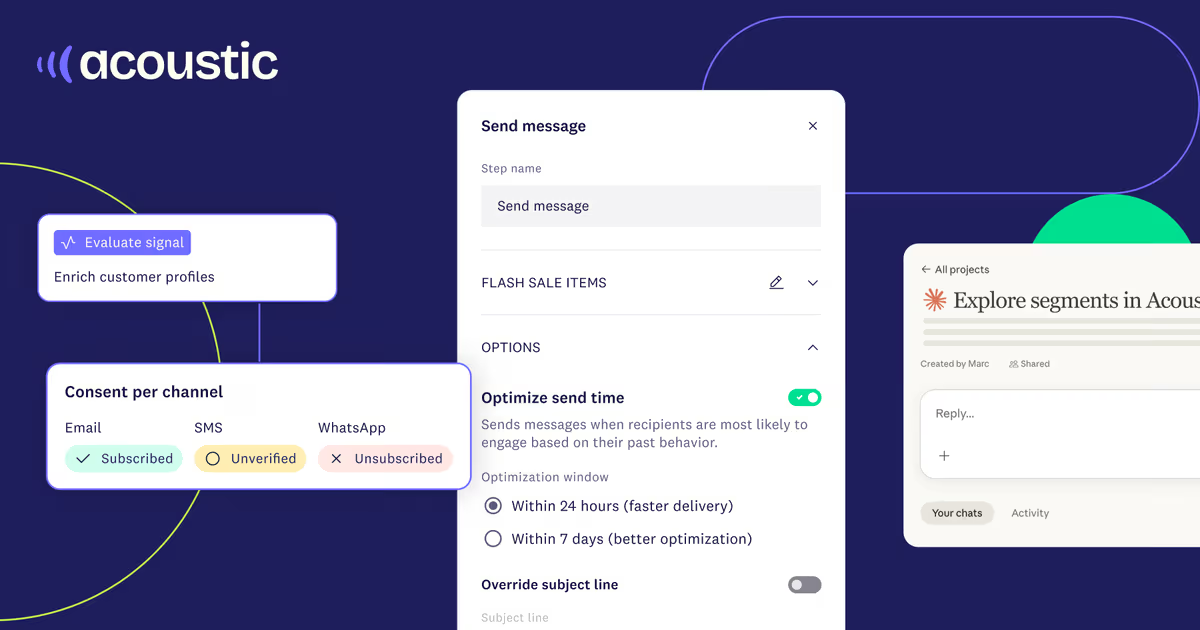
Acoustic's AI focuses on predictive timing and behavioral recommendations. Send time optimization targets the 24-hour or 7-day window when a contact is most actively shopping.
Source: Acoustic
AI-suggested segmentation surfaces audience groupings based on observed behavioral patterns like fatigue index, lifecycle stage, and churn risk.
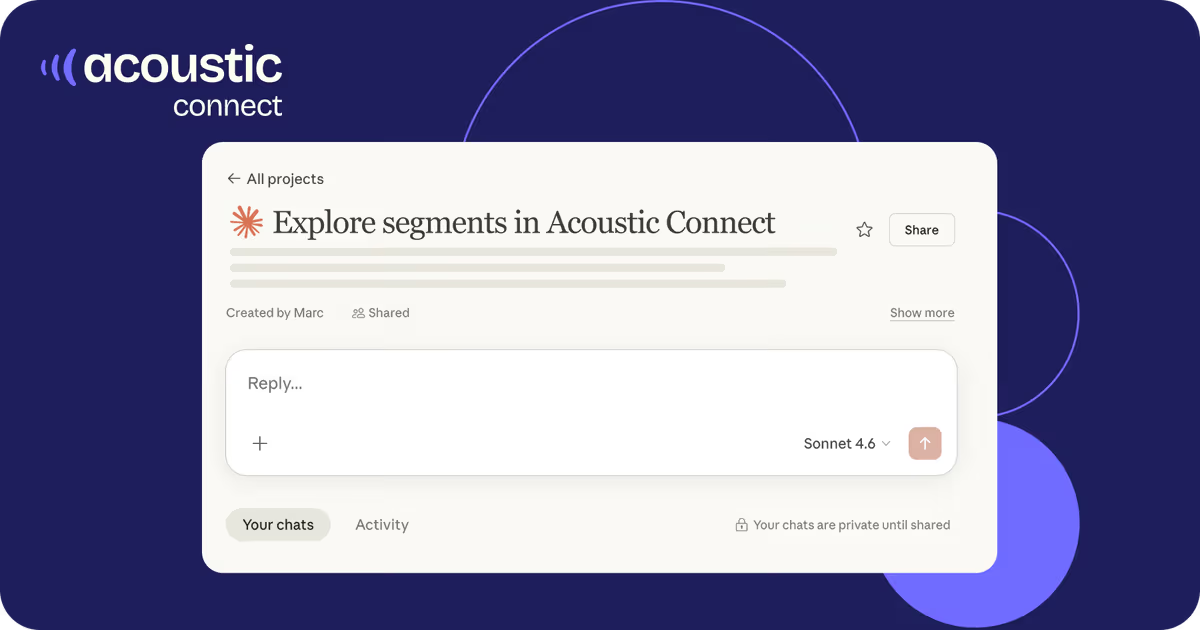
The March 2026 Acoustic MCP server + Claude integration enables natural-language queries against audience and behavioral data, making Acoustic an early mover in conversational marketing analytics.
Source: Acoustic
ZoomInfo's GTM Context Graph solves a different problem. Rather than optimizing individual marketing tasks, it processes 1.5B+ data points daily to understand the full context of a deal, combining ZoomInfo's B2B data with CRM records, conversation transcripts from Chorus, and behavioral signals.
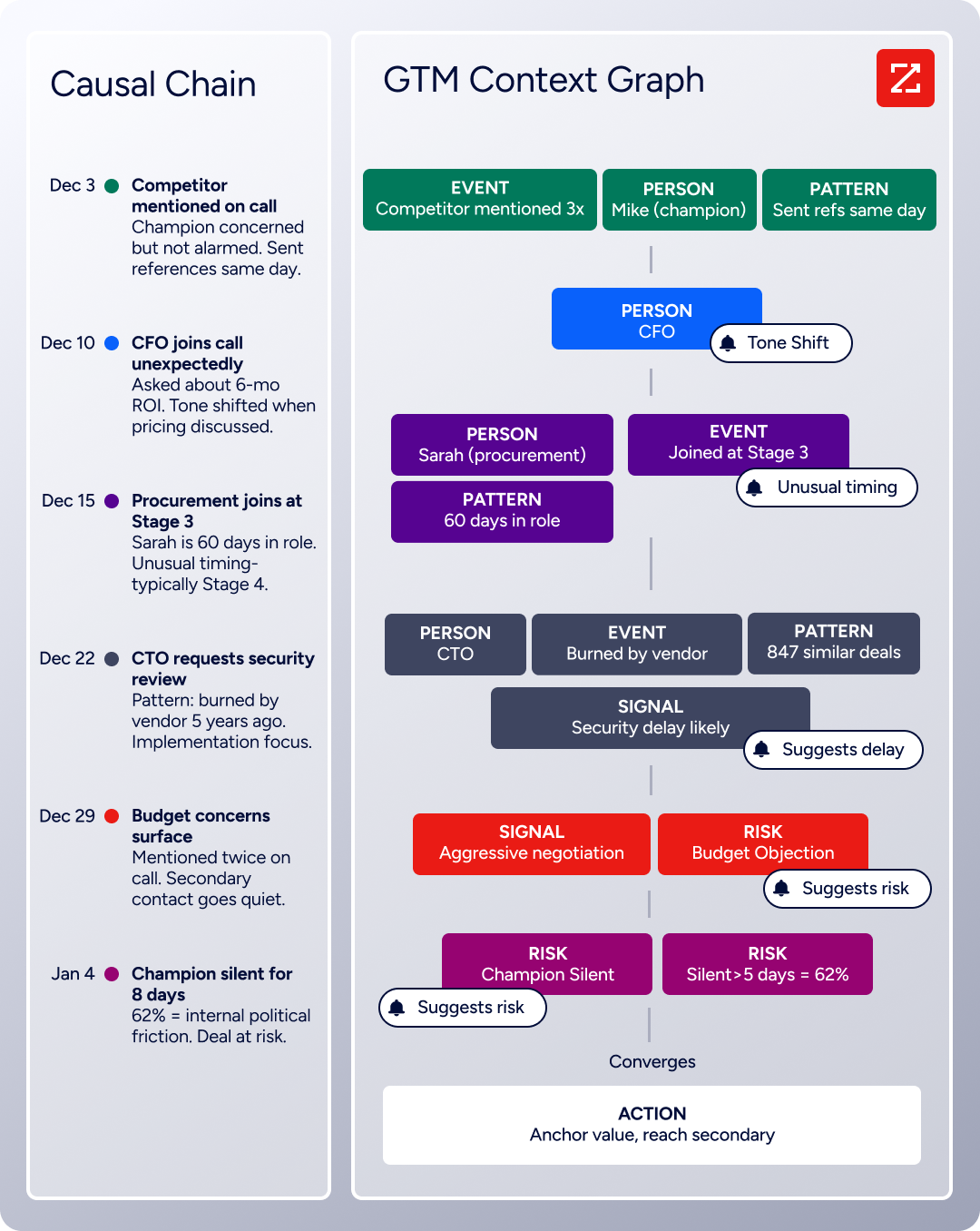
As ZoomInfo's CPO Dominik Facher explains: "The CRM recorded the state change. It has no record of why it happened." The GTM Context Graph captures whether a deal accelerated because executive sponsorship appeared, or stalled because of an internal budget battle, and applies that reasoning to every downstream action. For marketing teams, this means campaigns can target accounts that match your actual win patterns, not just company profiles.
"That combination of our internal CRM data, external signals, and AI that's given all that context has helped us craft very specific account- and persona-based messages. And people have responded to them right away." (Toby Carrington, Chief Business Officer, Seismic)
Pricing models reflect different strategies
HubSpot publishes its pricing openly. The permanent free tier includes a CRM with unlimited contacts, basic marketing tools, and 2,000 email sends per month. Marketing Hub Professional starts at $890/month (annual) with 2,000 marketing contacts and carries a $3,000 mandatory onboarding fee. Enterprise is $3,600/month with a $7,000 onboarding fee. Additional marketing contacts incur overage charges ($250 per 5,000 contacts at Professional tier).
A cost detail worth understanding: when you subscribe to multiple hubs at different tiers, HubSpot bills all Core Seats at the rate of the highest tier. A company using Marketing Hub Enterprise and Sales Hub Starter pays Enterprise seat rates for every user, not just marketing users.
Acoustic does not publish pricing. All plans require a demo and quote. The pricing model is based on messaging volume rather than audience size, an advantage for brands with large databases. Three tiers (Professional, Premium, Ultimate) are available, with all channels (email, SMS, WhatsApp, mobile push) priced separately on top of the base subscription. The General Terms include a contractual 10% annual price escalation on renewals and annual advance payment requirements.
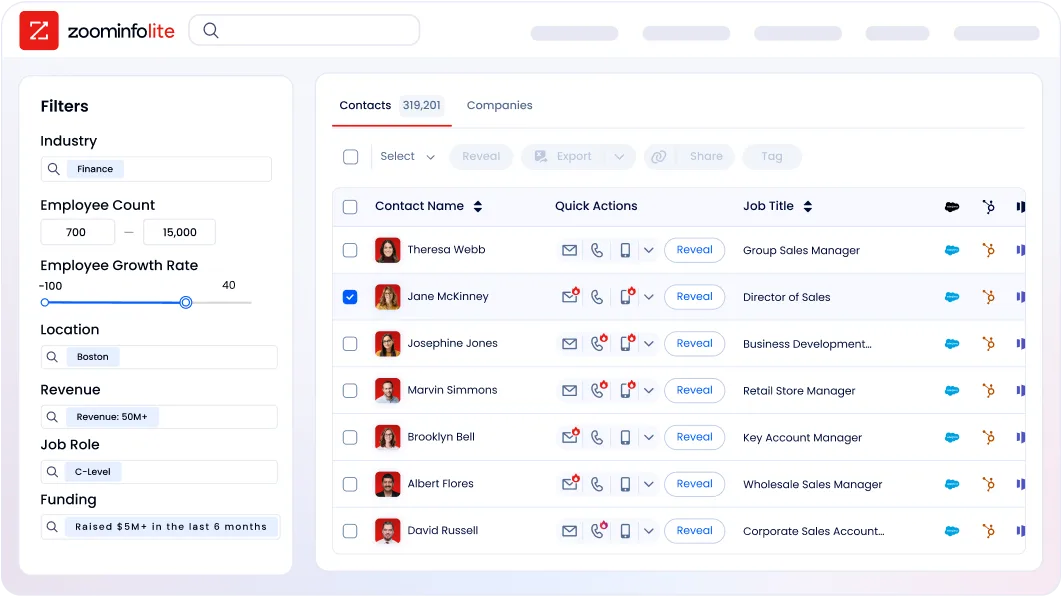
ZoomInfo also uses custom-quoted, consumption-based pricing that scales around data access, API usage, and AI activity. However, ZoomInfo offers two free entry points: ZoomInfo Lite (a permanent free tier with 10 monthly export credits and access to the B2B database) and a 7-day free trial of paid features. For teams already using HubSpot, ZoomInfo is an additional investment in the data layer, but one that directly improves the return on your existing marketing spend by ensuring campaigns reach verified, in-market accounts.
Integration ecosystems compared
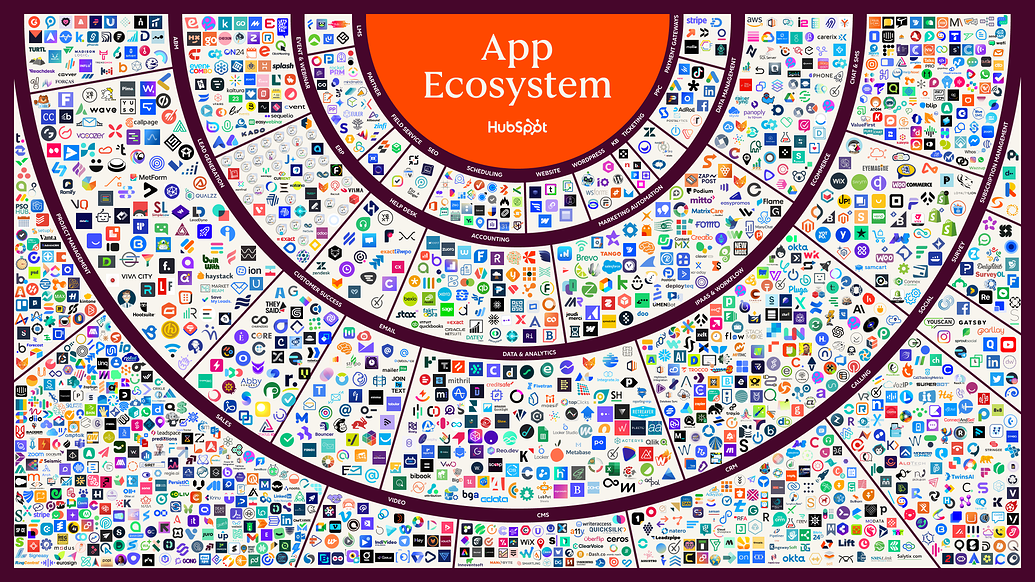
HubSpot has the broadest ecosystem of the three, with over 2,000 app integrations and 2.5 million active installs. The App Marketplace covers CRMs, payment processors, advertising platforms, project management tools, and more. A mature REST API and developer platform support custom integrations. For most B2B tech stacks, HubSpot connects without friction.
Source: HubSpot
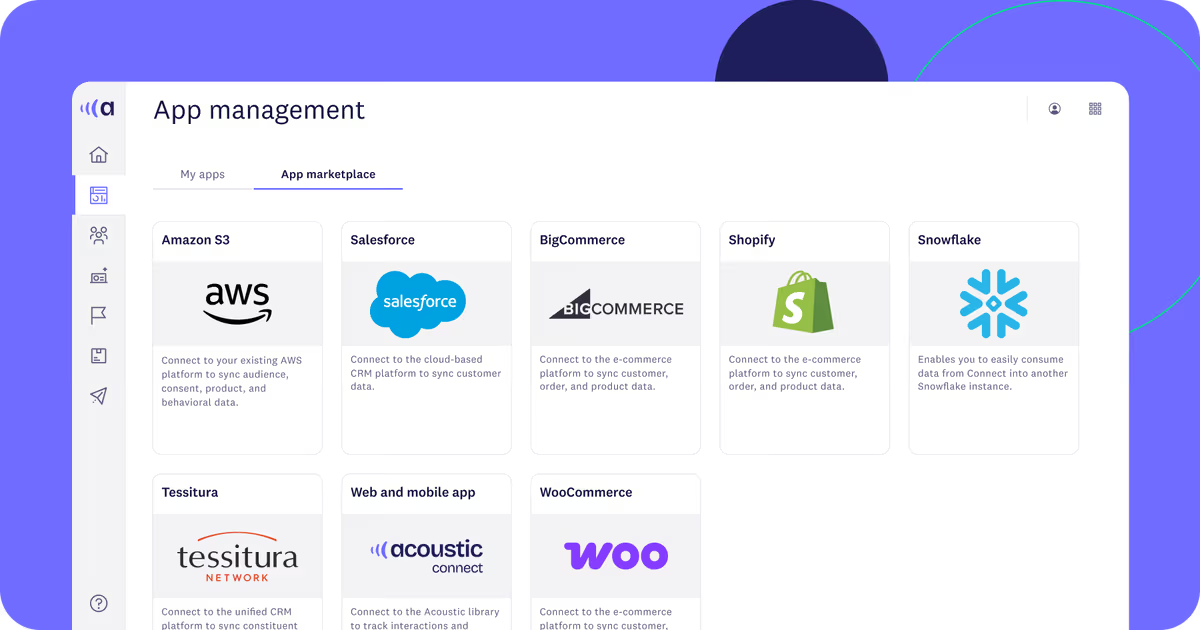
Acoustic's integration ecosystem is narrower but expanding. Native integrations with Shopify, WooCommerce, and BigCommerce launched in January 2026. Acoustic Exchange provides REST APIs for event syndication and audience sharing.
Source: Acoustic
An Amazon S3 integration enables data pipelines from CDPs and data warehouses. However, pre-built connectors for CRMs beyond Salesforce, and for CDPs like Segment or mParticle, are not prominently documented, so enterprise buyers with complex stacks may need custom API work.
ZoomInfo connects through multiple channels. The App Marketplace lists 120 partner integrations across CRM, marketing automation, sales engagement, and data warehouse categories, including Salesforce, HubSpot, Microsoft Dynamics 365, and Snowflake.
The Enterprise API provides programmatic access to ZoomInfo's data and intelligence. The ZoomInfo MCP server connects AI models directly to ZoomInfo's B2B data as a native tool, available in Claude and ChatGPT. API access is included in all relevant plans.
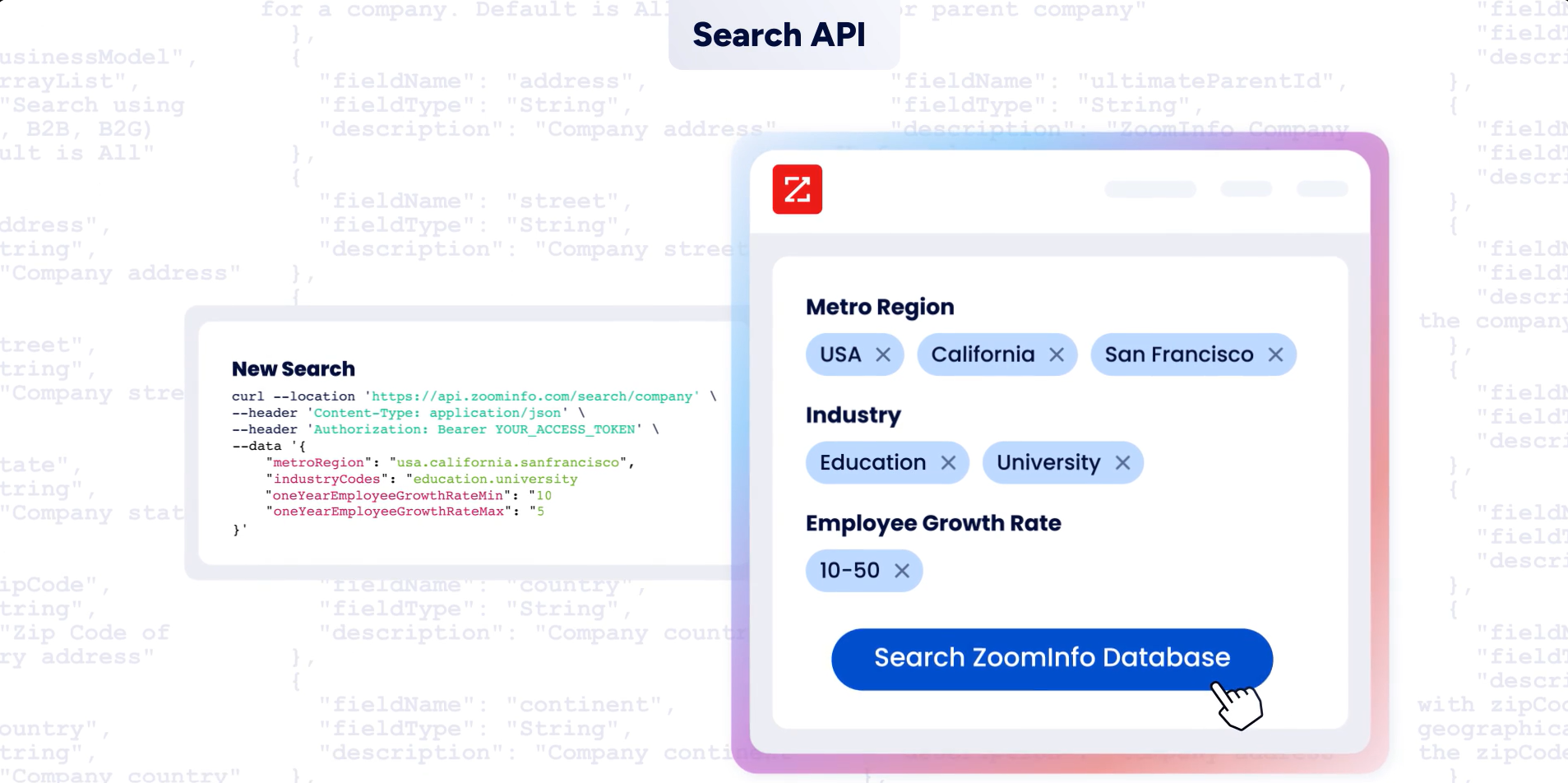
The integration story is clearest for B2B teams using HubSpot: ZoomInfo plugs into your CRM to enrich records, push intent signals, and power outbound targeting, while HubSpot handles execution. The two platforms were designed to work together.
HubSpot vs. IBM Marketing Cloud (Acoustic) vs. ZoomInfo: Which should you choose?
The decision depends on who you're marketing to and what you need most.
Choose HubSpot if:
You're a B2B company that needs CRM and marketing automation in one platform
Inbound marketing (content, SEO, lead nurture) is central to your strategy
You want transparent pricing with a free tier to start
Your team values ease of use and fast time to value
You need a wide ecosystem of app integrations
Choose Acoustic if:
You're a B2C brand in retail, travel, media, or financial services
You need omnichannel messaging (email, SMS, WhatsApp, mobile push) driven by real-time behavioral signals
Your customer database is large and audience-based pricing would be too expensive
You want dedicated customer success management and in-house migration support
You're replacing an overpriced enterprise marketing suite
Use ZoomInfo if:
You're a B2B company that needs verified data and buying signals to power your marketing
You want to target accounts researching your category, not just contacts already in your CRM
You need account-based marketing with multi-channel orchestration via GTM Studio
You're already using HubSpot and want to enrich your CRM with verified contacts, intent signals, and org charts
You want one intelligence layer that powers marketing, sales, and operations through any tool via API and MCP
Start with ZoomInfo Lite for free or request a demo to see the full platform.
The real insight for most readers: HubSpot and Acoustic serve different markets. If you're B2B, HubSpot is the marketing platform. If you're B2C, Acoustic deserves a look. And if you're a B2B team that wants marketing to reach the right accounts with verified data and real-time buying signals, ZoomInfo is the intelligence layer that makes everything else work harder.
HubSpot vs. IBM Marketing Cloud (Acoustic) vs. ZoomInfo FAQ
Is IBM Marketing Cloud the same as Acoustic?
Yes. IBM sold its marketing platform (which included Silverpop, Coremetrics, Tealeaf, and Unica) to Centerbridge Partners in 2019. The new company launched as Acoustic in July 2019. The core product capabilities trace back to the IBM portfolio, but Acoustic operates independently with different ownership, a smaller team of 340+ employees, and a focused B2C strategy.
Which platform is better for B2B marketing?
HubSpot is the stronger choice for B2B marketing automation, with CRM-native workflows, lead nurture sequences, and content marketing tools. Acoustic is B2C and lacks the CRM, deal pipeline, and account-based features B2B teams need. ZoomInfo adds the B2B data intelligence layer (verified contacts, company data, intent signals, and account-based orchestration through GTM Studio) that helps B2B marketing reach the right accounts at the right time.
Can I use ZoomInfo with HubSpot?
Yes. ZoomInfo integrates with HubSpot to enrich CRM records with verified contact and company data, push intent signals into workflows, and power targeted outreach. The integration is available through the ZoomInfo App Marketplace. API access is included in all relevant ZoomInfo plans, and the ZoomInfo MCP server enables AI-powered access to B2B data from compatible tools.
How do the pricing models compare?
HubSpot publishes its pricing with a free tier and Marketing Hub Professional starting at $890/month plus a $3,000 onboarding fee. Acoustic and ZoomInfo both require custom quotes. Acoustic charges based on messaging volume rather than audience size, with channels priced separately and a contractual 10% annual escalation on renewals. ZoomInfo uses consumption-based pricing that scales around data access, API usage, and AI activity. ZoomInfo offers a permanent free tier (ZoomInfo Lite) and a 7-day free trial; Acoustic offers neither.
Which platform has the best AI capabilities?
Each applies AI differently. HubSpot's Breeze automates content creation, prospecting, and customer service across its CRM platform. Acoustic's AI optimizes send timing based on real-time behavioral signals and recommends audience segments for B2C campaigns. ZoomInfo's GTM Context Graph processes 1.5 billion data points daily to understand why deals move or stall, powering AI-driven account prioritization, outreach generation, and signal-based targeting across the full B2B go-to-market motion.
What if I'm currently using IBM Marketing Cloud and want to switch?
If you're still on the older Acoustic Campaign codebase, Acoustic offers migration paths to Acoustic Connect, their current product. If your needs have shifted toward B2B marketing, HubSpot is a common migration target with well-documented onboarding. Adding ZoomInfo to either platform provides the B2B data and intelligence layer that powers account targeting and pipeline generation.
Which platform has the largest customer base?
HubSpot is the largest by far, with 288,706 customers across 135+ countries and $3.13 billion in annual revenue. ZoomInfo serves 35,000+ companies with $1.25 billion in annual revenue. Acoustic operates at a smaller scale with 1,800+ customers and 340+ employees.
Do any of these platforms offer a free tier?
HubSpot offers a permanent free CRM with basic marketing tools, 2,000 email sends per month, and no time limit. ZoomInfo offers ZoomInfo Lite, a permanent free tier with access to the B2B database and 10 monthly export credits. Acoustic does not offer a free tier or free trial; all plans require a demo and sales engagement.
See how HubSpot compares against other CRMs and platforms:
