
Choosing between HubSpot and Keap (formerly Infusionsoft) for your CRM and marketing automation often comes down to these five questions:
Are you a 5-person service business or a scaling company with dozens of reps across marketing, sales, and support?
Do you need everything in one flat-fee subscription, or are you willing to assemble a modular platform and pay per seat?
Is your primary challenge managing the contacts you already have, or finding the right ones in the first place?
How critical is it that your CRM connects to your broader tech stack through native integrations?
Does your go-to-market motion depend on verified B2B contact data and buying signals, or just a pipeline to track deals you already know about?
In short, here's what we recommend:
HubSpot is the unified platform for scaling B2B companies that need marketing automation, sales pipeline management, customer service, and CRM in one connected system. With 288,706 customers across 135+ countries, a free CRM tier, and over 2,000 app integrations, HubSpot excels at connecting marketing, sales, and service teams on shared data. Its AI layer, Breeze, automates content creation, prospecting outreach, and customer support across all hubs. But that breadth costs: pricing scales per seat, per hub, and per contact tier, with mandatory onboarding fees at Professional and Enterprise levels that can surprise budget-conscious buyers.
Keap (rebranded from Infusionsoft in 2019) is built for small service businesses that need CRM, email and text marketing, appointment scheduling, invoicing, and payment processing in one subscription. Its Lifecycle Automation framework gives owner-operators a structured system for lead follow-up, client onboarding, and repeat revenue. Keap has served over 200,000 small businesses since 2001 and was acquired by Thryv Holdings for $80 million in October 2024. The trade-offs: a $299/month starting price with no free tier, a learning curve inherited from its Infusionsoft roots, and a limited integration library of roughly 87 native apps.
Both platforms help you manage contacts and automate outreach. But they assume you already know who your buyers are and how to reach them. For B2B companies, that assumption leaves the hardest part of the go-to-market problem unsolved: identifying the right accounts, finding verified decision-maker contacts, and knowing when those accounts are actively in-market.
ZoomInfo is an all-in-one AI GTM platform built on the most comprehensive B2B dataset in the industry: 500M contacts, 100M companies, 135M+ verified phone numbers, and 200M+ verified business email addresses. That data fuels ZoomInfo's GTM Context Graph, an intelligence layer that fuses your CRM records, conversation transcripts, and behavioral signals with ZoomInfo's third-party data to reveal not just what happened in a deal, but why. Your team can access that intelligence through GTM Workspace for sales execution, GTM Studio for marketing and RevOps orchestration, or APIs and MCP in any front-end, including HubSpot itself.
If building your pipeline on verified B2B data and buying signals sounds like the missing layer in your go-to-market stack, see how ZoomInfo works.
HubSpot vs. Keap vs. ZoomInfo at a glance
HubSpot | Keap (Infusionsoft) | ZoomInfo | |
|---|---|---|---|
Core strength | Unified CRM + marketing + sales + service platform | All-in-one small business CRM + automation | B2B data intelligence + AI-powered GTM execution |
Ideal customer | Scaling B2B companies (20-2,000 employees) | Small service businesses (1-25 employees) | B2B sales, marketing, and RevOps teams (mid-market to enterprise) |
CRM | Smart CRM with custom objects, 15M+ contacts capacity | Tag-based CRM with lead scoring and pipeline | Integrates with HubSpot, Salesforce, Dynamics; GTM Workspace for native execution |
Marketing automation | Visual workflows, AI content, multi-channel campaigns | Email + text automation, lifecycle framework | GTM Studio for ABM, audience orchestration, multi-channel plays |
B2B contact data | CRM stores your data; no third-party B2B database | CRM stores your data; no third-party B2B database | 500M contacts, 135M+ verified phones, 200M+ verified emails |
Buying signals | Website analytics, email engagement tracking | Email open/click tracking, lead scoring | Intent data, website visitor ID, technographics, job-change alerts |
Integrations | 2,000+ apps | ~87 native apps + Zapier | 120+ native integrations + API/MCP for any tool |
Starting price | Free CRM; Starter at $15/seat/mo (annual) | $299/month (annual, 2 users) | Free Lite tier; paid plans custom-quoted |
AI capabilities | Breeze AI across all hubs (some features in beta) | AI Content Assistant, SmartSend AI | GTM Context Graph, AI agents for prospecting and orchestration |
HubSpot scales with you; Keap keeps it contained
HubSpot and Keap solve the same core problem (fragmented tools and inconsistent follow-up) but for different audiences and with different philosophies.
HubSpot's approach is modular expansion. Start with a free CRM that gives you unlimited contacts, basic email, and deal tracking. When you need marketing automation, add Marketing Hub.
Need a help desk? Add Service Hub. Sales sequences? Sales Hub. Each hub connects to the same underlying Smart CRM, so marketing knows what sales is doing and service sees the full customer history.

Source: HubSpot
The advantage is ceiling. HubSpot supports up to 15 million contacts (expandable to 50 million), custom objects, field-level permissions, and sandbox environments. eBay, DoorDash, and Reddit use it. You won't outgrow the platform.
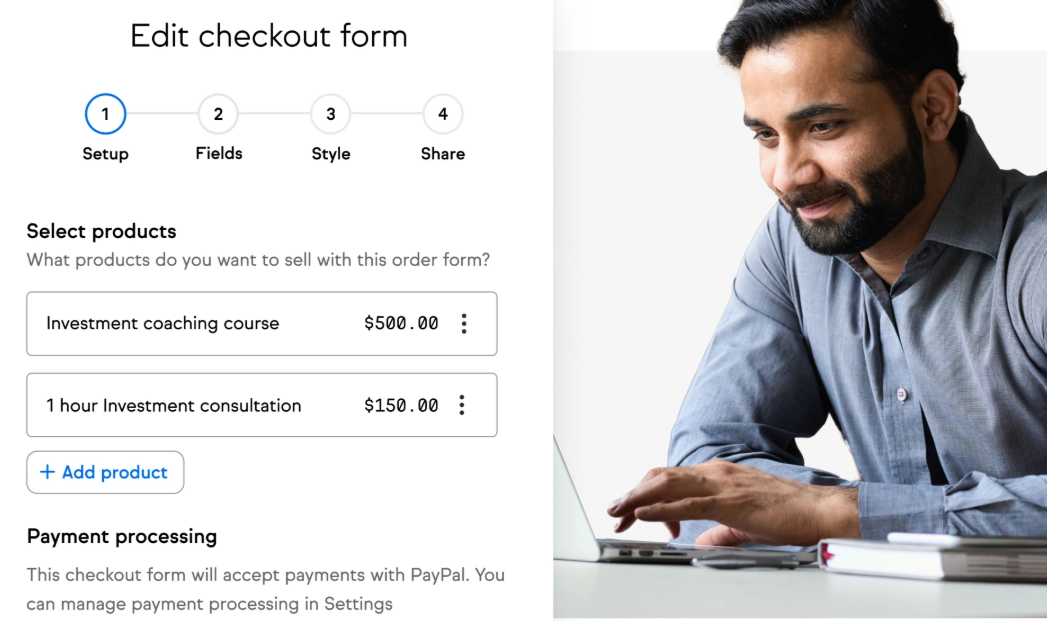
Keap's approach is containment. One subscription includes CRM, email marketing, text marketing, pipeline management, appointment scheduling, invoicing, and payment processing. No assembling modules, no choosing tiers. For a coach, consultant, or home services business running everything solo, having invoicing, payments, and appointments in the same system as the CRM eliminates the integration headaches that consume disproportionate time at small scale.
Source: Keap
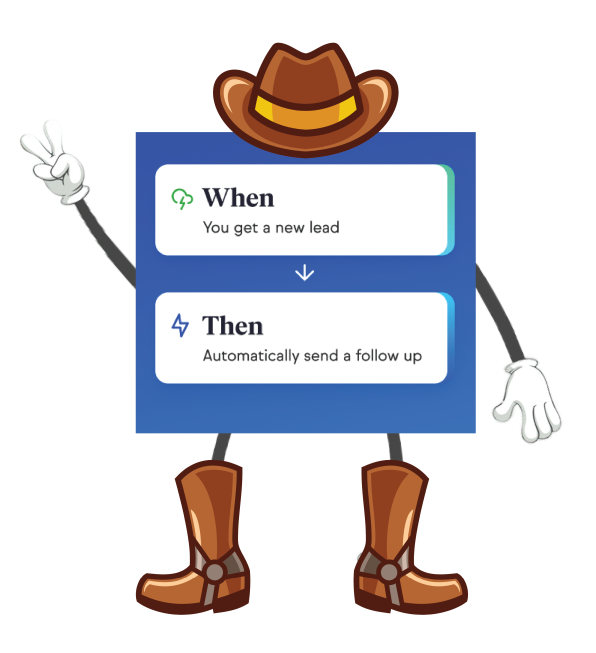
The advantage is operational simplicity. Keap's Easy Automations let users configure stage-based triggers directly inside the pipeline interface, without switching to a separate automation builder. A deal moving to "Quoted" can automatically create a follow-up task, send a confirmation email, and notify the team. For a five-person operation, that's everything in one place.
Source: Keap
Marketing automation: breadth vs. focus
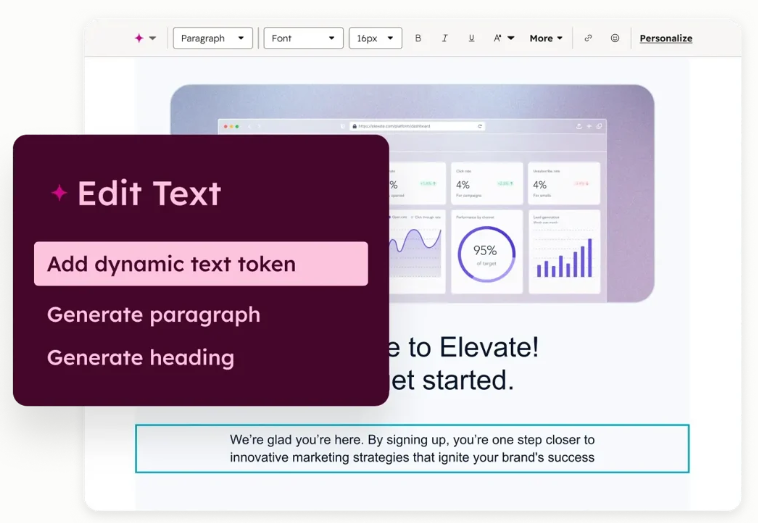
HubSpot's Marketing Hub is a full marketing automation system. Visual workflow builder with branching logic. AI-powered content creation across blog posts, social media, and email. Multi-touch revenue attribution that connects campaigns to closed revenue.
Source: HubSpot
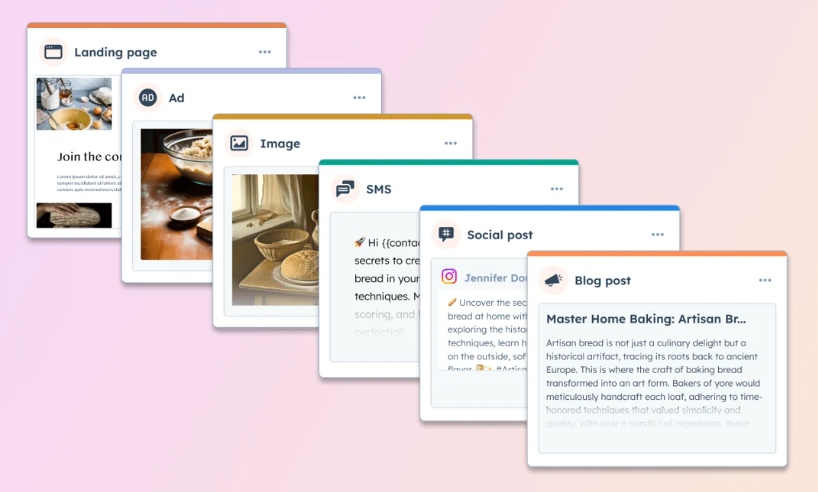
An AEO Strategy tool (beta) for optimizing content for AI-powered search engines. Landing pages, forms, chatbots, social scheduling, and ad management, all drawing from the same contact database.
The depth is real. Marketing Hub Professional ($800/month annual, 3 seats included, 2,000 marketing contacts) gives teams Salesforce bi-directional sync, advanced reporting, and the Breeze Content Agent for AI-generated content at scale. The Content Remix feature turns one blog post into social posts, email copy, and video scripts automatically.
Source: HubSpot
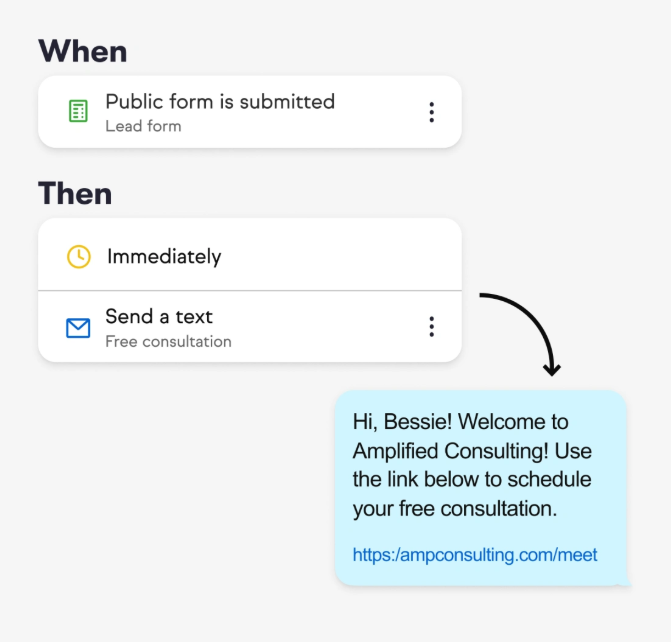
Keap's marketing automation is narrower but purpose-built for the small business follow-up problem. The platform combines email and text messaging in a single automation builder, so a welcome email can trigger, followed by a text if no response, followed by a phone task for the owner.
Source: Keap
Where Keap falls short: no multi-touch attribution, no native social media management, limited A/B testing, and reporting that reviewers describe as basic. The email template editor has a known issue where custom HTML gets "corrupted" during send, requiring workarounds for design-forward teams.
Sales prospecting reveals the data gap
Here's where the comparison exposes a structural limitation shared by both platforms.
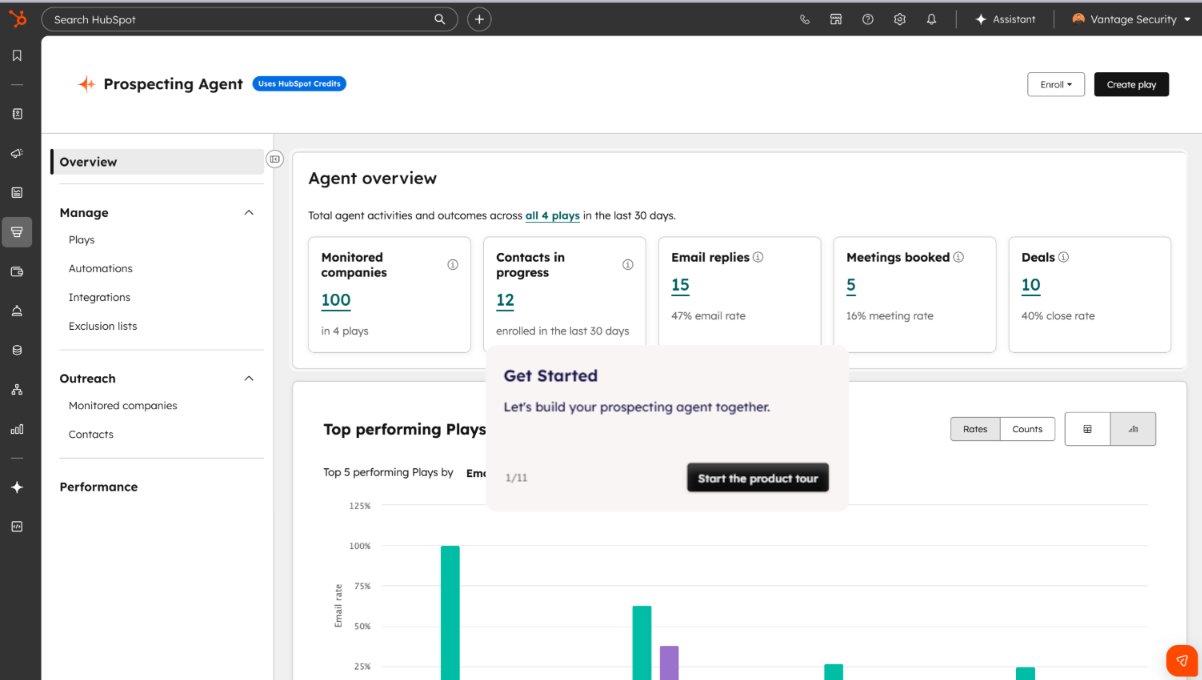
HubSpot Sales Hub includes a Breeze Prospecting Agent that monitors enrolled prospects for buying signals, drafts personalized outreach, and supports both autonomous and review-first modes. It pulls from HubSpot's CRM data to personalize, which means it's only as good as the data you've already entered. HubSpot doesn't provide a B2B contact database. If the prospect isn't in your CRM, HubSpot's AI has nothing to work with.
Source: HubSpot
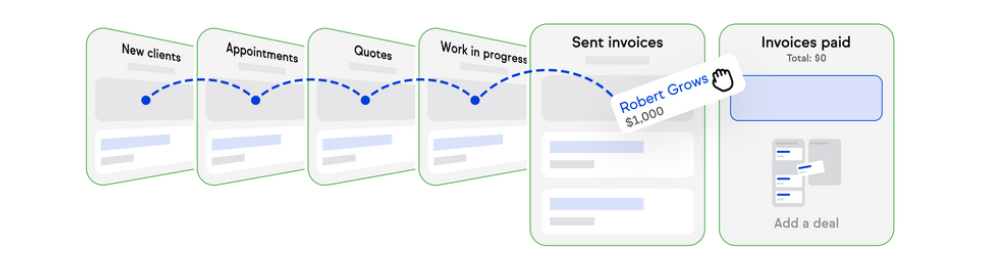
Keap's sales pipeline is a drag-and-drop kanban board with stage-based automation. Effective for tracking known deals. But Keap doesn't include prospecting data either. Lead scoring runs in the background based on email opens, link clicks, and form submissions, but only for contacts already in the system.
Source: Keap
Both platforms manage relationships with people you've already identified. Neither tells you who to target, provides verified contact information for new prospects, or surfaces which accounts are actively researching solutions like yours.
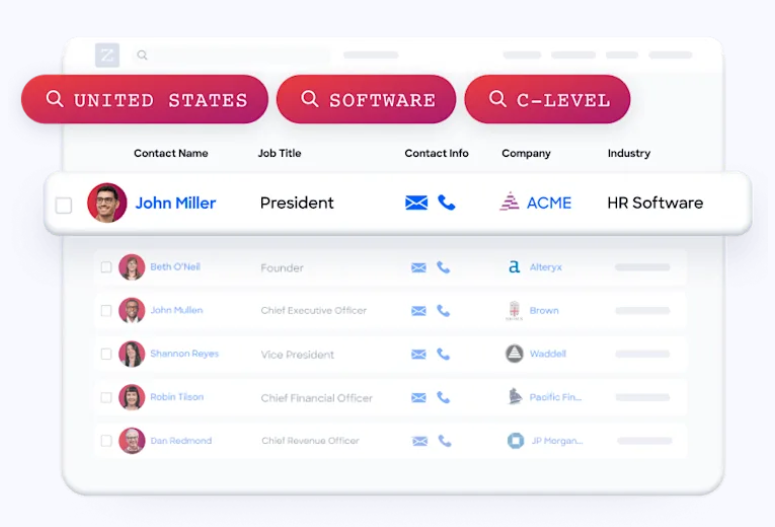
ZoomInfo starts where CRMs stop. The platform's Contact & Company Search covers 300+ company attributes for market segmentation, with 120M direct-dial phone numbers and 200M+ verified business email addresses at up to 95% accuracy.
Source: ZoomInfo
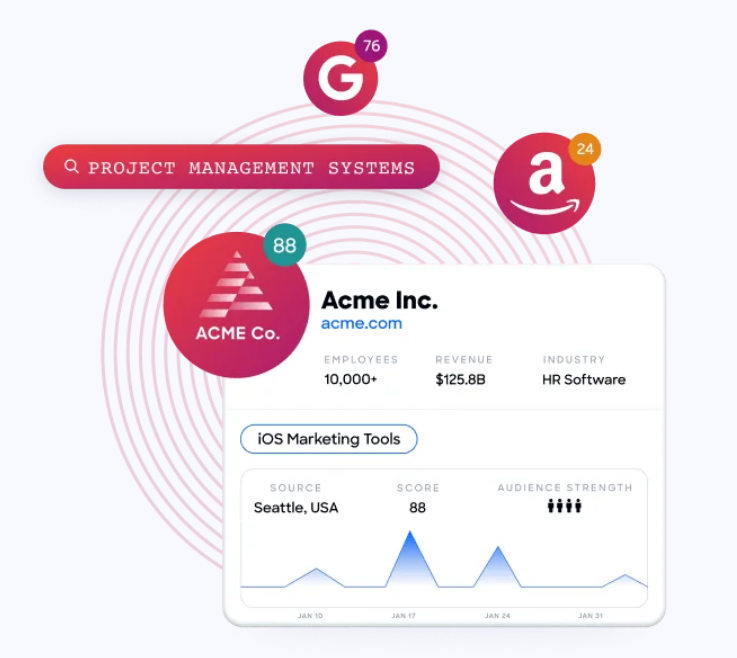
Buyer Intent tracks signals from 210 million IP-to-Organization pairings and 6 trillion+ new keyword-to-device pairings sourced monthly. WebSights resolves anonymous website visitors to companies, and Guided Intent identifies the topics historically correlated with your deal success rather than requiring manual topic selection.
Source: ZoomInfo
For B2B companies, this changes the motion entirely. Instead of waiting for prospects to find you and fill out forms, you identify accounts actively researching your category and reach verified decision-makers directly.
"ZoomInfo gives us the information we need to execute. We don't have to go through and spend our time digging. It's already there, so we can be three steps ahead." (Vensure)
For a direct head-to-head on how HubSpot and ZoomInfo compare on data, prospecting, and go-to-market execution, see our HubSpot vs. ZoomInfo comparison.
Intelligence changes what "automation" means
Automation in HubSpot means workflows triggered by CRM events: a form fill sends an email, a deal stage change creates a task, a lifecycle stage update notifies sales. The triggers are clear, the logic is visual, and for most marketing and sales workflows, it works well.
Automation in Keap means similar triggers (tag applied, form submitted, appointment booked, payment received) running through the same if/when/then builder, with email and text as dual delivery channels.
Both systems automate actions based on what your contacts do inside your platform. They don't automate actions based on what your prospects do outside it.
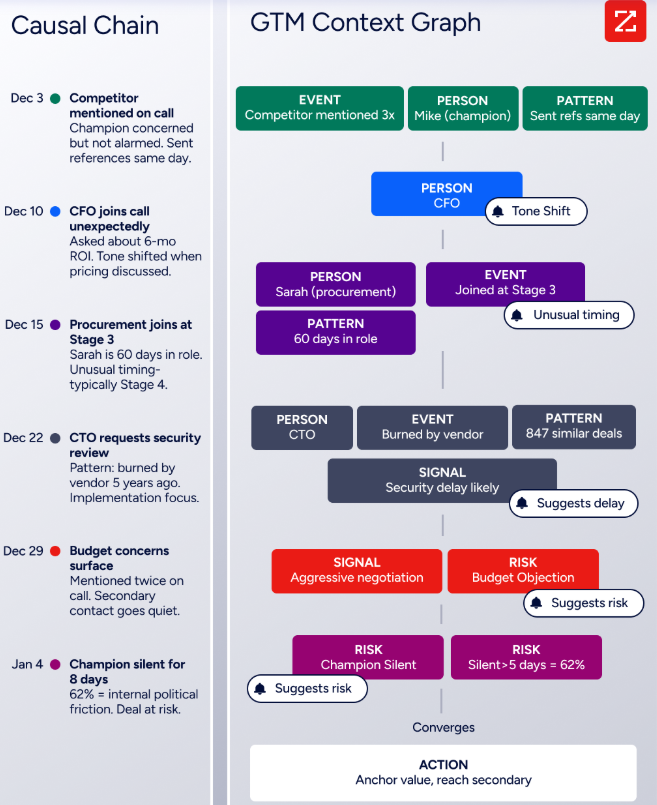
ZoomInfo's GTM Context Graph adds an intelligence layer that neither CRM provides. It processes 1.5B+ data points daily, fusing your CRM records, conversation transcripts from Chorus (ZoomInfo's conversation intelligence), and behavioral signals with ZoomInfo's third-party data. The result: AI that understands not just that a deal moved stages, but why it moved, what executive sponsorship entered the conversation, what competitive threats emerged, and what similar deals suggest happens next.
Source: ZoomInfo
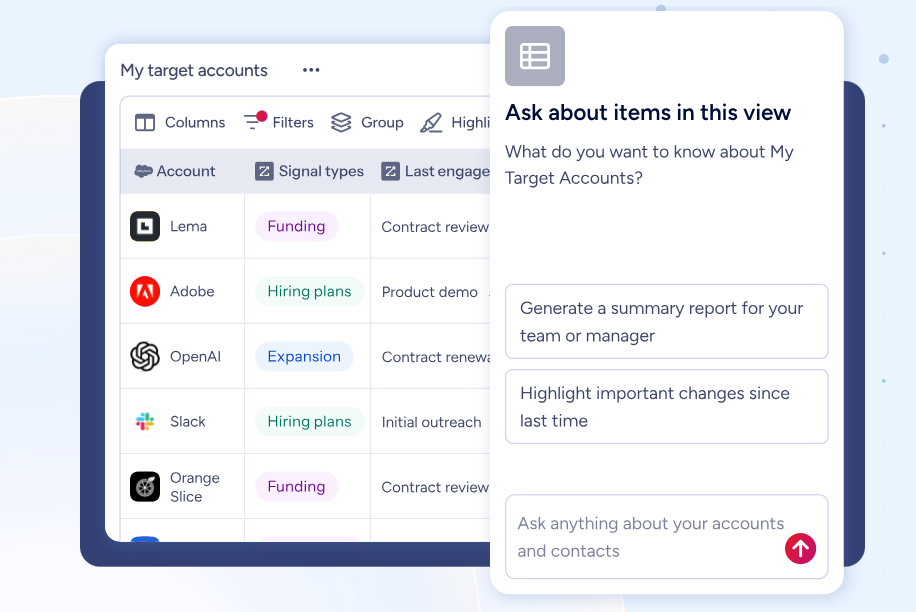
GTM Workspace puts this intelligence directly in front of sellers. An Action Feed streams in-market buyers matched to target criteria with pre-drafted actions on every signal. An AI Assistant generates one-click account briefs pulling CRM history, company news, and stakeholder context into a summary in seconds. Reps work from prioritized accounts with full buyer context, not a static pipeline they update manually.
Source: ZoomInfo
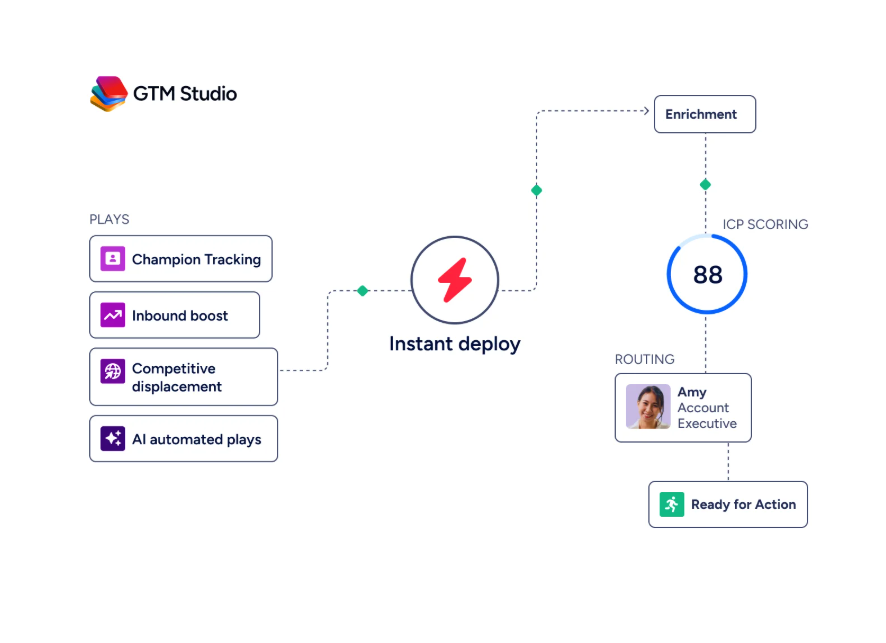
GTM Studio gives marketers and RevOps the same intelligence in an orchestration canvas. Describe an audience in plain language, launch multi-channel plays targeting accounts matching proven win patterns, and track pipeline impact in real time. Expansion plays that used to take 3 weeks launch in 30 minutes, without engineering support.
Source: ZoomInfo
"That combination of our internal CRM data, external signals, and AI that's given all that context has helped us craft very specific account- and persona-based messages. And people have responded to them right away." (Seismic)
Pricing: three different models, three different trade-offs
HubSpot uses a hybrid model that compounds quickly. Sales Hub starts at $20/seat/month (Starter) but Professional runs $100/seat/month with a $1,500 one-time onboarding fee. Marketing Hub Professional is $800/month with a $3,000 onboarding fee, including only 2,000 marketing contacts (overages at $250 per 5,000 additional contacts). Add Service Hub, Content Hub, and Data Hub, and the total climbs. A critical detail: if you subscribe to multiple Hubs at different tiers, all Core Seats are billed at the rate of the highest tier.
The free tier is genuinely useful for getting started. Unlimited contacts (up to 1M records), basic email, one deal pipeline, and a meeting scheduler. But HubSpot branding appears on all free-tier customer-facing tools, and paid subscriptions cannot be canceled mid-contract.
Keap keeps it simpler: one plan starting at $299/month, billed annually, with all features included and 2 user seats. Additional users are $39/month each. There's no free tier, just a trial limited to 25 emails. The all-inclusive approach avoids HubSpot's complexity, but the price floor is steep for a platform targeting businesses with 1-25 employees. Canceling an annual contract before the year ends carries a $299 early termination fee, and cancellation requires a phone call.
ZoomInfo uses custom-quoted, consumption-based pricing with no publicly listed prices. Costs scale around seats, credit volume, features, and contract length.
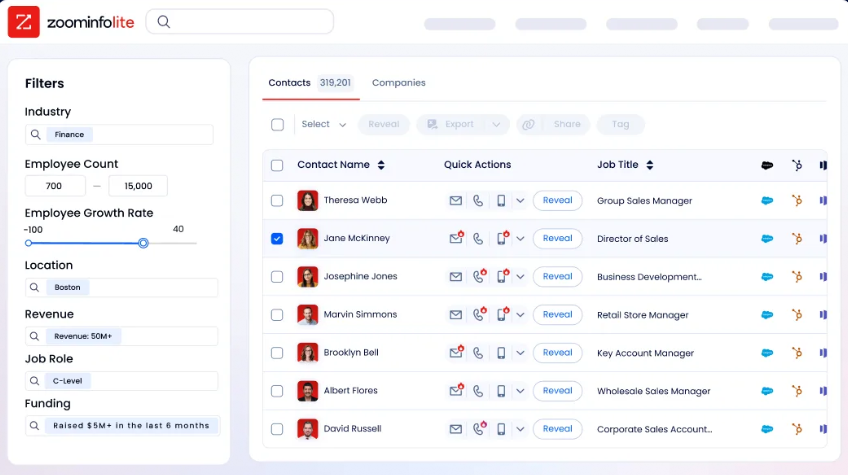
ZoomInfo Lite is a permanent free tier with access to the B2B database, 10 monthly export credits, and a HubSpot integration. Paid plans (Professional, Advanced, Enterprise) add intent signals, AI features, advanced integrations, and higher credit volumes. The lack of published pricing means you'll need to contact sales, but the free Lite tier and 7-day free trial let you evaluate the platform before committing.
Source: ZoomInfo
Integrations determine long-term flexibility
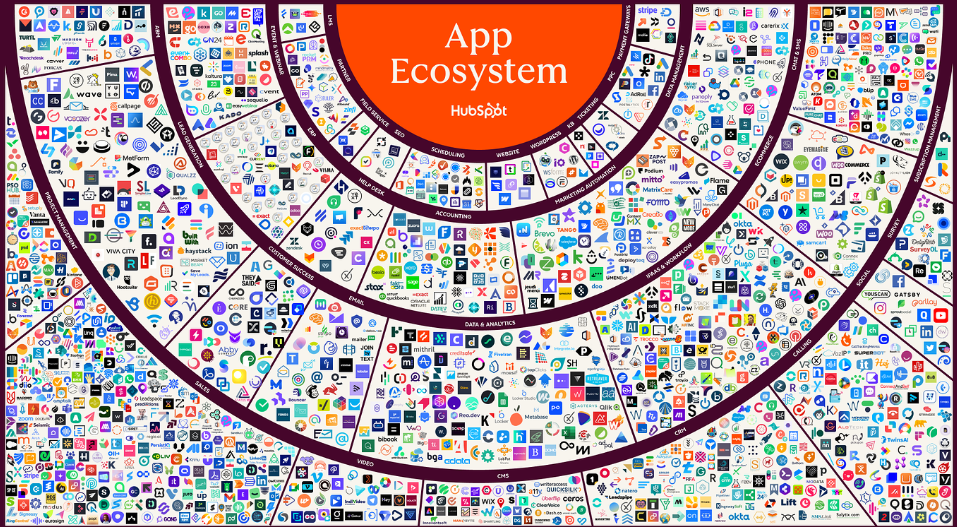
HubSpot wins on ecosystem scale. The App Marketplace has over 2,000 integrations with 2.5 million active installs. Native connections to Salesforce, Shopify, Slack, and hundreds of specialized tools mean most tech stacks connect without custom development.
Source: HubSpot
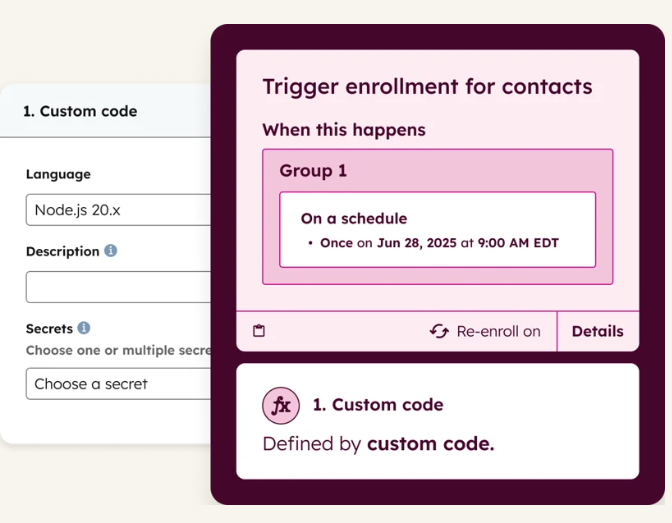
Programmable automation supports custom JavaScript and Python code natively inside workflows for edge cases.
Source: HubSpot
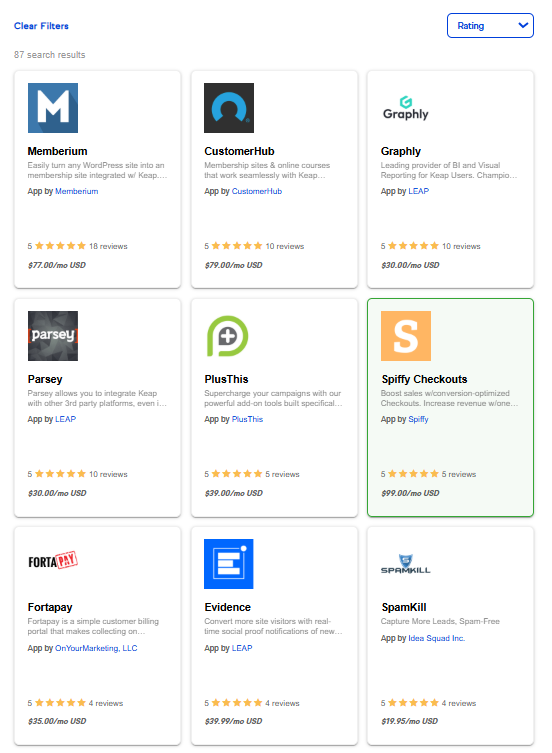
Keap's integration library is limited. With roughly 87 apps in the marketplace and Zapier bridging to 5,000+ apps, the native connection count is thin. Reviewers note that "connectivity to other programs is difficult to achieve". For small businesses using mainstream tools, Zapier covers the gap. For teams with specialized or enterprise software, it's a friction point.
Source: Keap
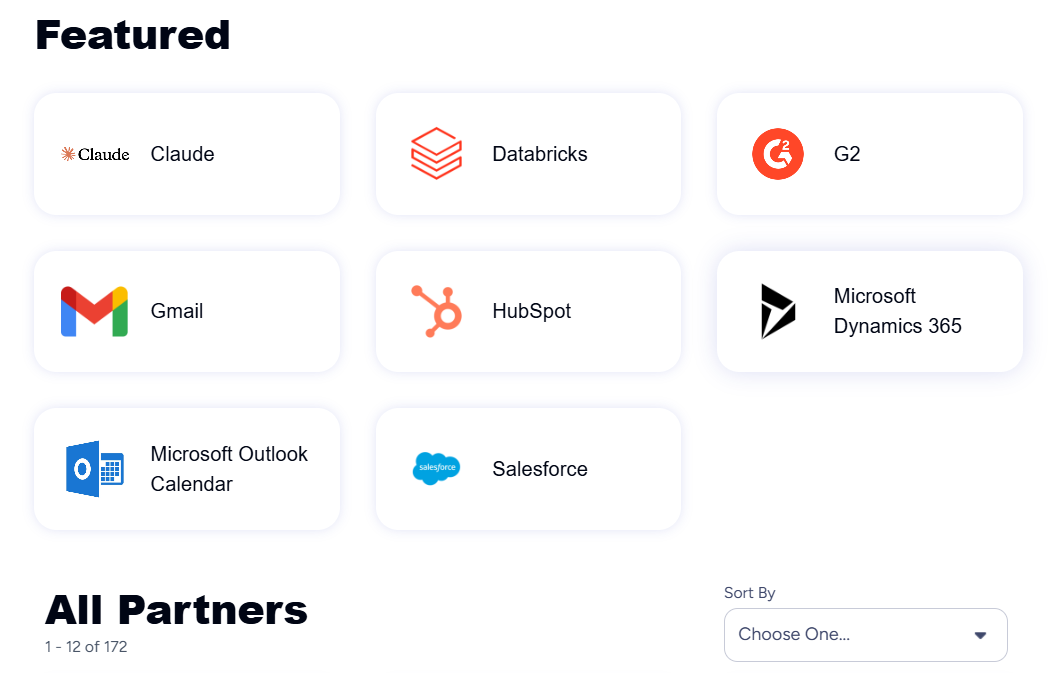
ZoomInfo takes a different approach: universal access. The same intelligence is available through 120+ partner integrations in the App Marketplace, through the Enterprise API documented at docs.zoominfo.com, and through the MCP server that connects directly to AI assistants including Claude and ChatGPT.
Source: ZoomInfo
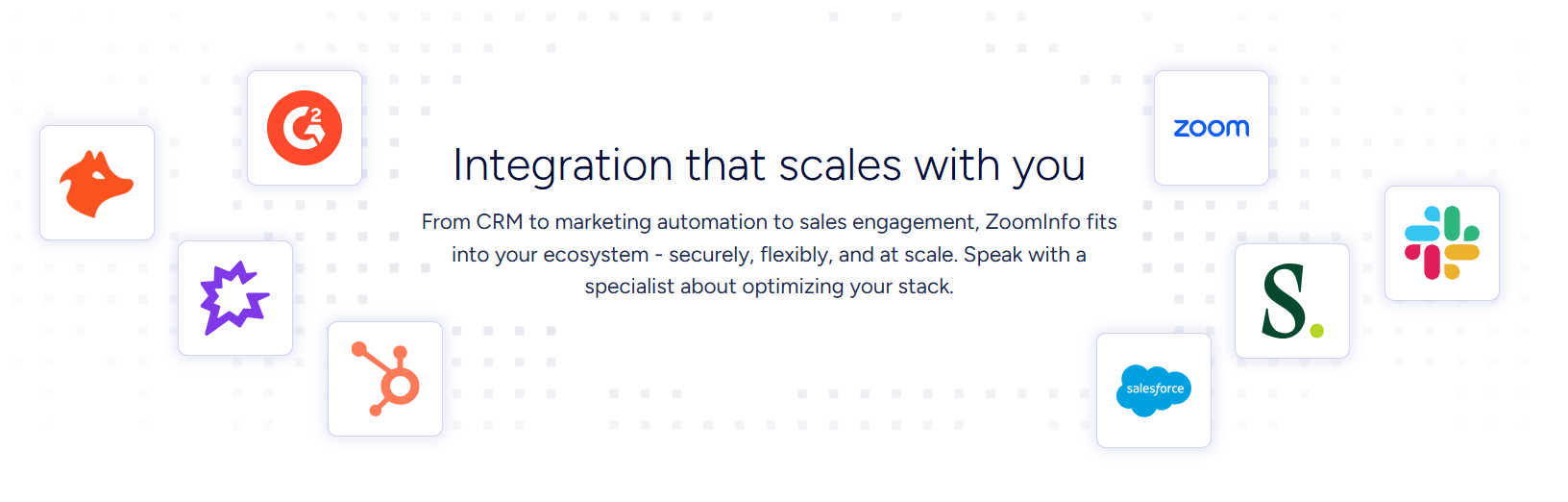
API Access is included in all relevant plans. ZoomInfo integrates natively with HubSpot, Salesforce, and Microsoft Dynamics, which means ZoomInfo's data and intelligence flow directly into whichever CRM you choose.
Source: ZoomInfo
"The plug-and-play aspect of the API means I can integrate it very easily into any process and get information at a moment's notice." (BDO Canada)
The Thryv acquisition changes Keap's trajectory
A consideration that most HubSpot vs. Infusionsoft comparisons overlook: Keap's future is now tied to Thryv Holdings. The combined entity reportedly exceeded 100,000 SaaS subscribers at close, and the strategy is to consolidate Keap's CRM and automation with Thryv's lead generation and local presence tools into a single AI-powered SMB platform.
The Thryv FAQ for Keap customers confirms existing subscriptions and pricing remain unchanged in the near term, but the help center has already moved to learn.thryv.com. For buyers evaluating Keap today, the question is whether the Thryv integration will strengthen the product through added lead generation capabilities or dilute focus as the brand is absorbed into a larger platform.
HubSpot, by contrast, is a $3.13 billion public company that just hit its first year of GAAP operating profitability with $1.8 billion in cash. ZoomInfo generated $1.25 billion in annual revenue with $455 million in free cash flow. Both have the financial stability and development resources to continue investing heavily in AI and platform capabilities.
HubSpot vs. Keap vs. ZoomInfo: Which should you choose?
The right choice depends on what your go-to-market actually needs.
Choose HubSpot if:
You're a scaling B2B company that needs marketing, sales, and service on one platform
You want a free CRM with a clear upgrade path as you grow
Connecting to 2,000+ apps and building sophisticated workflows matters to your operations
You can budget for per-seat, per-hub pricing that grows with your team
You need enterprise features like custom objects, advanced reporting, and sandbox environments
Choose Keap if:
You run a small service business with 1-25 employees
You need CRM, email, text, invoicing, payments, and scheduling in one subscription
Automated lead follow-up and appointment booking are your primary challenges
You prefer a single flat-fee plan over assembling modules
You're willing to invest in the learning curve for powerful automation
Choose ZoomInfo if:
Your growth depends on finding and reaching verified B2B decision-makers
You need buying signals and intent data to prioritize which accounts to pursue
You want AI-powered sales execution through GTM Workspace or marketing orchestration through GTM Studio
You're already using HubSpot (or another CRM) and need the data intelligence layer that makes it effective
You need your B2B data accessible in any tool via API and MCP
Explore ZoomInfo with the free Lite tier or a 7-day trial.
"ZoomInfo has literally changed the way we go to market." (Impartner)
For many B2B companies, the answer isn't choosing one platform over the others. HubSpot or Keap manages the relationship and automates the workflow. ZoomInfo provides the intelligence, the verified contacts, and the buying signals that feed those workflows with the right prospects at the right time. Together, they cover the full go-to-market motion from identifying buyers to closing revenue.
HubSpot vs. Keap vs. ZoomInfo FAQ
What is the core difference between HubSpot, Keap, and ZoomInfo?
HubSpot is a unified CRM and marketing automation platform for scaling companies, connecting marketing, sales, and service teams on shared data. Keap (formerly Infusionsoft) is an all-in-one CRM and automation tool built for small service businesses, combining contact management, email and text marketing, invoicing, and appointments in one subscription. ZoomInfo is an all-in-one AI GTM platform with 500M contacts and 200M+ verified business email addresses, providing the prospecting data and buying signals that neither CRM includes natively, plus AI-powered execution tools for sales and marketing teams.
Which platform is best for small businesses on a tight budget?
HubSpot offers the most accessible entry point with a permanently free CRM that includes unlimited contacts, basic email, and deal tracking. ZoomInfo Lite is also free and provides access to its B2B database with 10 monthly export credits and a HubSpot integration. Keap has no free plan and starts at $299/month billed annually, making it the most expensive to get started with despite targeting small businesses.
Can ZoomInfo work with HubSpot or Keap?
ZoomInfo integrates directly with HubSpot as a featured native integration. ZoomInfo data (contacts, companies, intent signals) flows into HubSpot's CRM for enrichment and prospecting without manual export. ZoomInfo also offers API and MCP access that works with any platform. Keap does not have a native ZoomInfo integration but can connect through Zapier or API-based workflows.
What happened to Infusionsoft?
Infusionsoft rebranded to Keap in January 2019, launching a simplified product alongside the legacy Infusionsoft platform (renamed "Max Classic"). In October 2024, Thryv Holdings acquired Keap for $80 million cash. The product continues under the Keap brand, but the help center has migrated to learn.thryv.com and the long-term plan is to consolidate Keap's CRM and automation into Thryv's broader SMB platform.
Which platform has the best B2B prospecting capabilities?
ZoomInfo is in a different category for B2B prospecting. Its database spans 500M contacts, 135M+ verified phone numbers, and 200M+ verified business email addresses, with buyer intent data, technographic profiles for 30M+ companies, and website visitor identification. HubSpot's Sales Hub includes a Breeze Prospecting Agent that drafts outreach for enrolled prospects, but it works only with contacts already in your CRM. Keap has no dedicated prospecting features beyond its CRM pipeline and lead scoring on existing contacts.
How does pricing compare across all three platforms?
HubSpot uses per-seat, per-hub pricing with mandatory onboarding fees at higher tiers. A mid-sized team using Marketing Hub Professional and Sales Hub Professional could spend $1,500/month or more before contact overages. Keap charges a flat $299/month for all features with 2 user seats. ZoomInfo uses custom-quoted consumption-based pricing with no published rates, but offers a permanent free Lite tier and a 7-day free trial. When subscribing to multiple HubSpot Hubs at different tiers, all Core Seats are billed at the rate of the highest tier, which can increase costs significantly.
Which platform has the strongest AI capabilities?
ZoomInfo's GTM Context Graph processes 1.5B+ data points daily, fusing CRM data, conversation intelligence, and third-party signals into an intelligence layer that powers AI agents for prospecting, account research, and GTM orchestration. HubSpot's Breeze AI includes a Customer Agent, Prospecting Agent, and Data Agent that work across its hubs, though several features (AI-Powered Segmentation, Personalization, Marketing Studio) remain in beta. Keap has shipped an AI Content Assistant for email and SMS copy generation and SmartSend AI for send-time optimization, but its AI capabilities are narrower in scope.
Is Keap's acquisition by Thryv a concern for new buyers?
The acquisition adds uncertainty about Keap's long-term direction. Thryv's stated plan is to integrate Keap's CRM and automation into a unified SMB platform. In the near term, subscriptions, pricing, and services remain unchanged. For buyers evaluating Keap today, the key risk is whether the product continues to receive focused development as a standalone platform or is gradually absorbed into Thryv's broader offering. HubSpot and ZoomInfo, as independent public companies with $1.8B and $455M in cash reserves respectively, face no comparable ownership uncertainty.
See how HubSpot compares against other CRMs and platforms:
