
Choosing between HubSpot and Keap for your CRM and marketing automation comes down to five questions:
Are you a small service business with 1-25 employees, or a scaling company with dozens of users across marketing, sales, and service?
Do you need configurable automation for a specific sales cycle, or a broad platform that covers marketing, sales, service, and content under one roof?
How important is it that your CRM data is accurate and complete before you start automating?
Are you willing to invest weeks learning a complex system, or do you need your team productive within days?
Is your growth limited by the tools you use to manage leads, or by the quality of the leads entering those tools?
In short, here's what we recommend:
HubSpot is the platform for scaling companies that want marketing, sales, service, and content tools under one CRM. Its Smart CRM connects six product hubs on a single data layer, with Breeze AI agents handling tasks from prospect research to customer support. With 288,706 customers across 135+ countries and a free tier, HubSpot covers more ground than most platforms. The tradeoff: costs climb as you add hubs and seats, mandatory onboarding fees start at $1,500, and per-seat pricing can surprise teams that need mixed-tier access across departments.
Keap is the automation-first CRM for small service businesses that need one platform to replace five or six disconnected tools. It combines contact management, email and text marketing, sales pipelines, appointment scheduling, invoicing, and payments in a single subscription, all built around its Lifecycle Automation framework. Over 200,000 small businesses have used Keap for 20+ years, and its automation depth is real. But the $299/month starting price with no free tier, a learning curve inherited from its Infusionsoft roots, and a thin integration library of roughly 87 native apps mean Keap works best for businesses willing to invest time and money into a system they'll use for years.
Both platforms give you tools to manage leads and automate follow-up. But neither solves a more basic problem: the quality of the data going into your CRM. If your contact records are incomplete, your direct dials don't connect, and you can't tell which accounts are in-market, even the best automation runs on fumes.
ZoomInfo is a B2B data intelligence and GTM platform that provides the data layer both HubSpot and Keap lack. Built on 500M contacts, 100M companies, 135M+ verified phone numbers, and 200M+ verified business email addresses, ZoomInfo gives your sales team accurate contact data, buyer intent signals, and AI-powered prospecting before a lead ever enters your CRM. Its GTM Context Graph processes 1.5B+ data points daily, fusing this data with your CRM records and conversation intelligence to reveal not just what's happening in your pipeline, but why deals move or stall. ZoomInfo integrates natively with HubSpot, works with Keap through its API, and can power any tool through MCP.
If you want to see what your prospecting looks like with verified data and intent signals behind it, start with a free ZoomInfo trial.
HubSpot vs. Keap vs. ZoomInfo at a glance
HubSpot | Keap | ZoomInfo | |
|---|---|---|---|
Primary function | All-in-one CRM and customer platform | Small business CRM and automation | B2B data intelligence and GTM execution |
Marketing automation | Visual workflows with AI and branching logic | Behavioral automation with email and text | Signal-triggered GTM plays across channels |
Sales pipeline | Full pipeline with AI-guided selling and CPQ | Kanban pipeline with stage-based automation | AI-powered prospecting and deal intelligence |
Contact database | Unlimited contacts (up to 1M free) | Contact-based pricing, scales with volume | 500M contacts, 135M+ verified phone numbers |
Integrations | 2,000+ apps in marketplace | ~87 native apps + Zapier | 172+ marketplace partners + native CRM integrations |
AI capabilities | Breeze AI agents across all hubs | AI Content Assistant, SmartSend, Automation Assistant | GTM Context Graph, AI agents, intent-driven outreach |
Learning curve | Moderate; scales with tier | Steep; legacy of Infusionsoft complexity | Moderate; 90-day structured onboarding |
Starting price | Free (limited); Starter at $15/seat/mo | $299/month (no free plan) | Free (ZoomInfo Lite); paid plans custom-quoted |
Free plan | Yes, permanent | No (free trial only) | Yes (ZoomInfo Lite, permanent) |
Best for | Scaling companies (20-2,000 employees) | Small service businesses (1-25 employees) | B2B sales and marketing teams needing accurate prospect data |
The CRM question vs. the data question
HubSpot and Keap both start from the same assumption: you already have leads, and you need a system to manage and nurture them. That assumption holds for businesses with established inbound funnels or referral networks.
But for B2B companies that need to find new prospects, the CRM is only as good as the data inside it. HubSpot's free CRM can hold a million contacts, but if half those contacts have outdated email addresses and missing phone numbers, your sales sequences bounce and your sender reputation suffers. Keap's automation can trigger timed follow-ups, but if the original lead data is incomplete, those follow-ups reach the wrong person or nobody at all.
This is the gap ZoomInfo fills.
Before a contact ever enters HubSpot or Keap, ZoomInfo provides verified business emails, direct-dial phone numbers, company attributes, org charts, and technographics.
Its buyer intent data tracks signals from 210 million IP-to-Organization pairings, identifying which companies are researching solutions like yours. The data is maintained at scale: a multi-source pipeline backed by 300+ human researchers delivers up to 95% accuracy on first-party data.
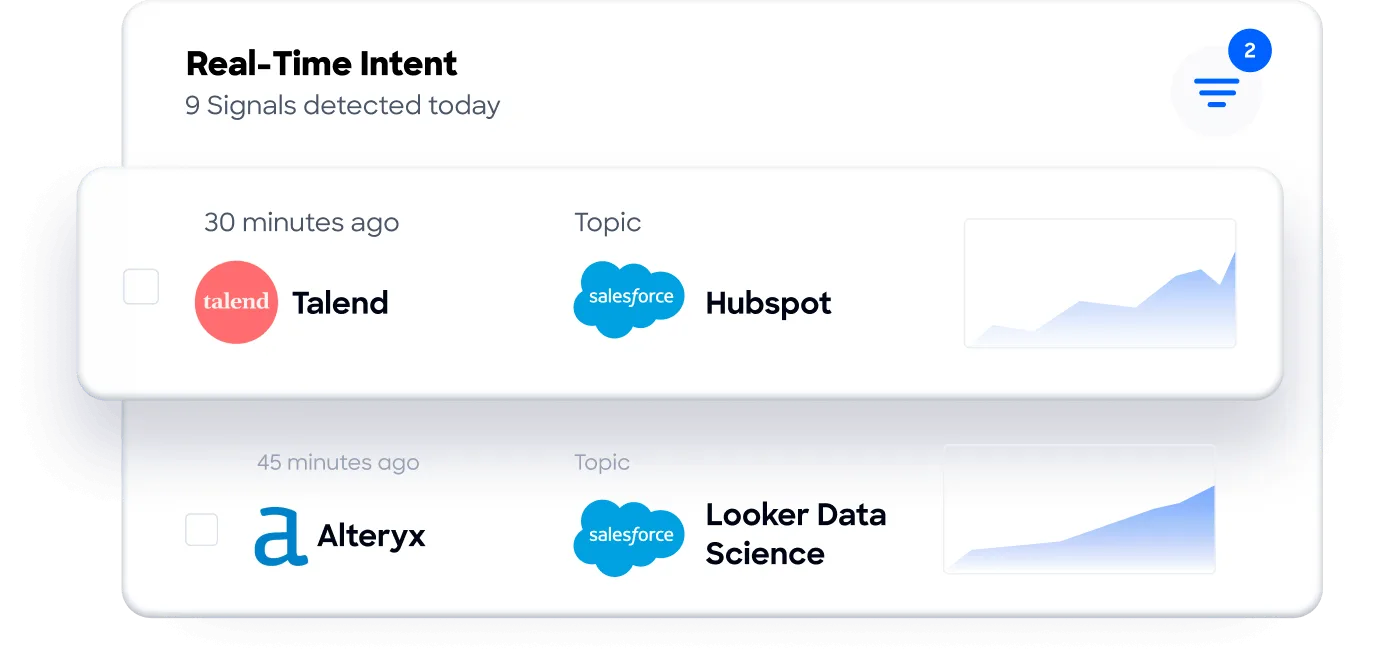
The difference shows at the point of action. A direct dial that connects. An email that lands. A list of accounts that are in-market now, not six months ago.
"ZoomInfo gives us the information we need to execute. We don't have to go through and spend our time digging. It's already there, so we can be three steps ahead." (Vensure)
For a deeper look at how HubSpot and ZoomInfo compare on data, prospecting, and GTM capabilities, see our HubSpot vs. ZoomInfo comparison.
HubSpot gives you breadth, Keap gives you depth
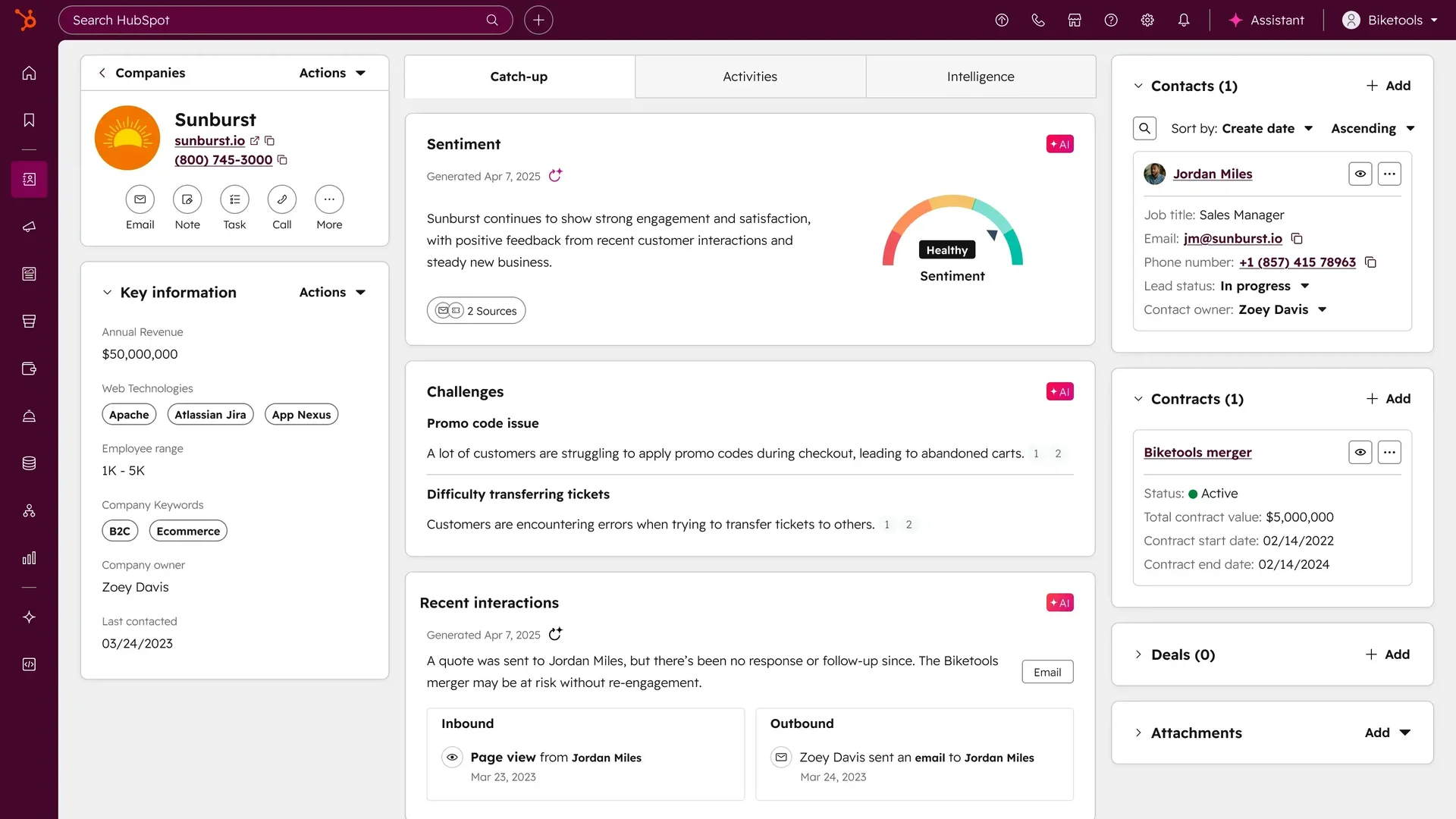
HubSpot's strength is coverage. A single platform handles marketing automation, sales pipeline management, customer service ticketing, content publishing, data operations, and commerce (quoting, invoicing, payments).
Everything connects through the Smart CRM, so a lead captured by a marketing form is immediately visible to sales, and a closed deal can trigger an onboarding sequence in service.
Source: HubSpot
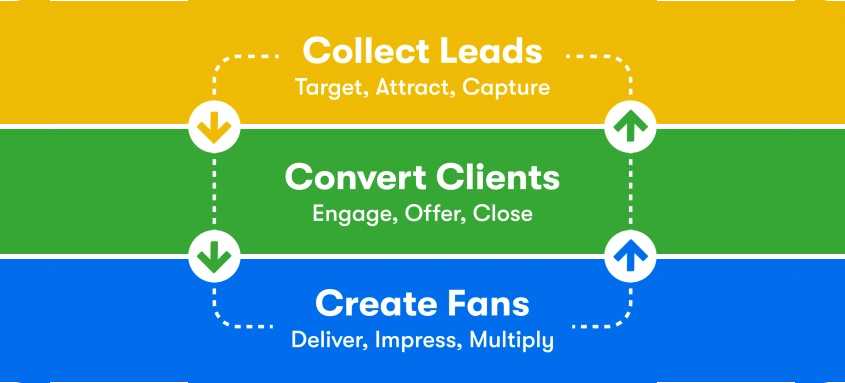
Keap takes the opposite approach. Instead of covering every department, it covers every step of the small business sales cycle.
Its Lifecycle Automation framework maps the full customer journey from lead capture through repeat purchase, with "Easy Automations" for simple trigger-action rules and "Advanced Automations" for complex branching sequences.
Source: Keap
The tagging system stands out: G2 reviewers highlight it as a key differentiator, enabling precise segmentation that triggers different automation paths for different buyer personas.
Where HubSpot requires you to subscribe to multiple hubs for full coverage, Keap bundles CRM, email, text, pipeline, appointments, invoicing, and payments into a single subscription. For a solo consultant or a five-person coaching business, that simplicity matters more than having separate marketing, sales, and service departments.
Automation capabilities serve different audiences
HubSpot's Marketing Automation Workflows use a visual builder for multi-step, branching nurture sequences triggered by contact behavior, lifecycle stage, and form fills.
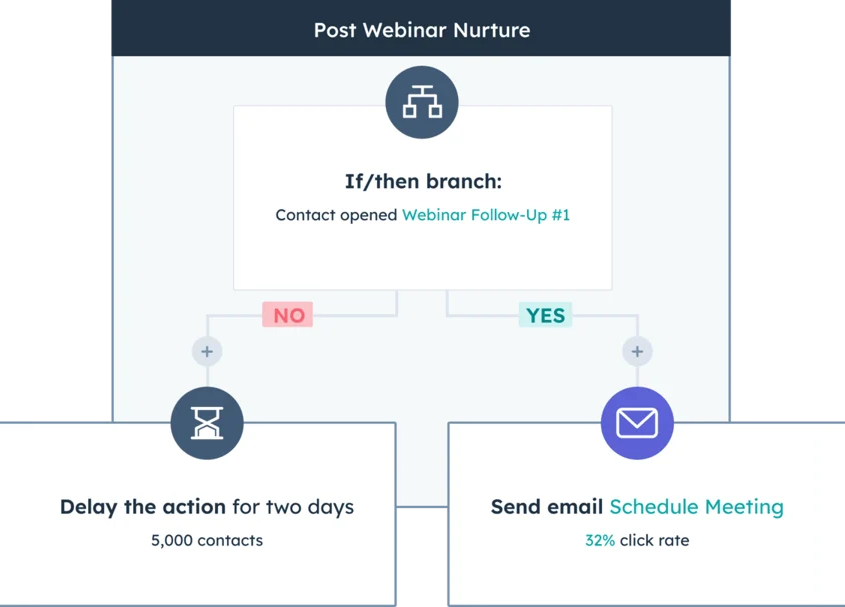
Source: HubSpot
The system is flexible, but its full potential requires the Professional tier ($890/month for Marketing Hub) or higher. On the AI side, Breeze agents automate prospect research, customer support, content creation, and data analysis across all hubs.
The Breeze Customer Agent resolves over 50% of customer conversations on its own, and the Prospecting Agent drafts personalized outreach using HubSpot's customer history.
Keap's automation predates HubSpot's by years, and it shows in the depth of behavioral triggers available.
Automations can fire on form submissions, email clicks, webpage visits, deal stage changes, tag applications, or external app events via Zapier. The "when, then, stop" logic is intuitive once learned: define a trigger, define the response, define when the automation should stop (so invoice reminders don't fire after payment).
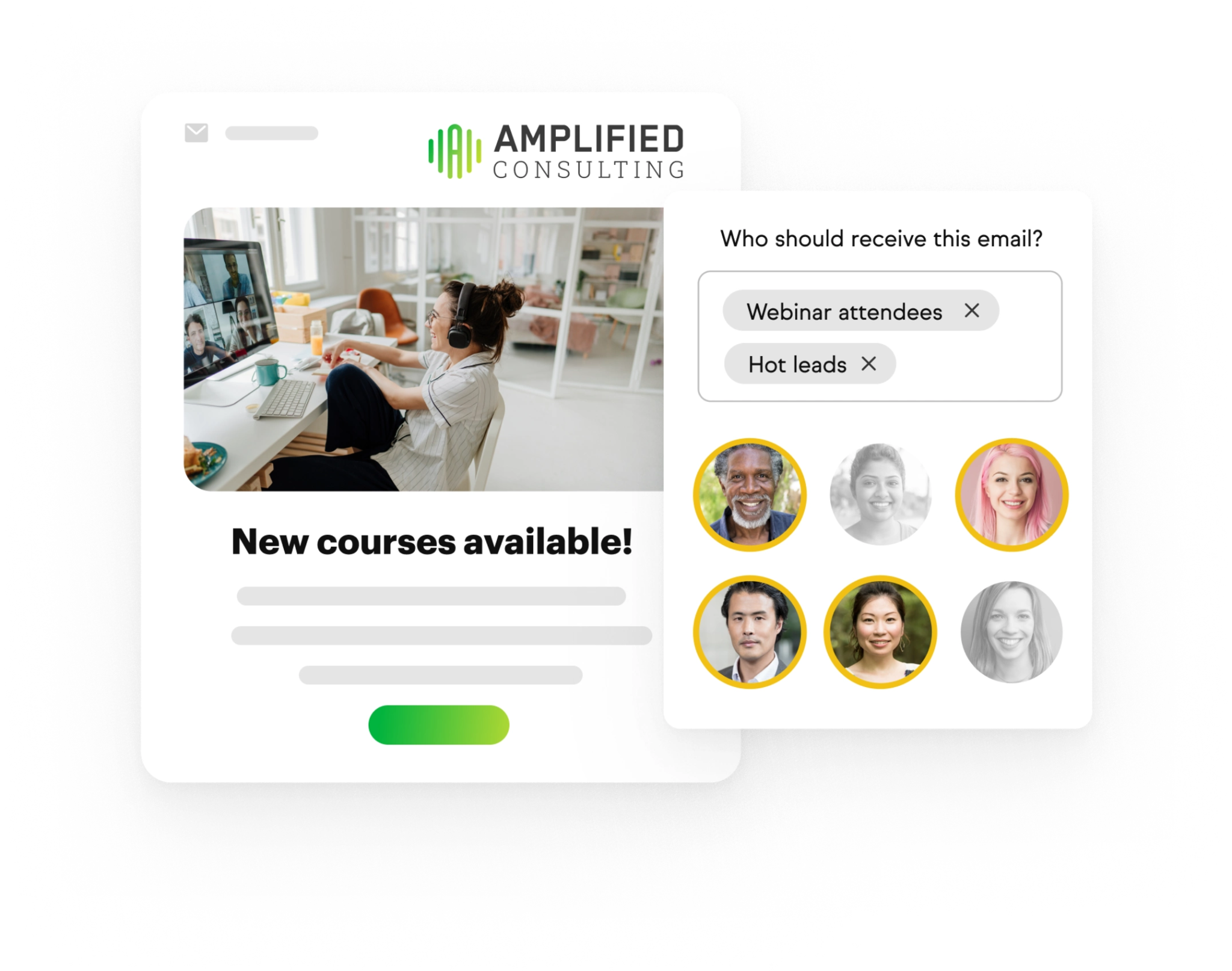
Source: Keap
Where both platforms fall short is upstream: they automate what happens after a lead enters the system, but they don't help you find the right leads in the first place.
ZoomInfo approaches automation from the opposite direction.
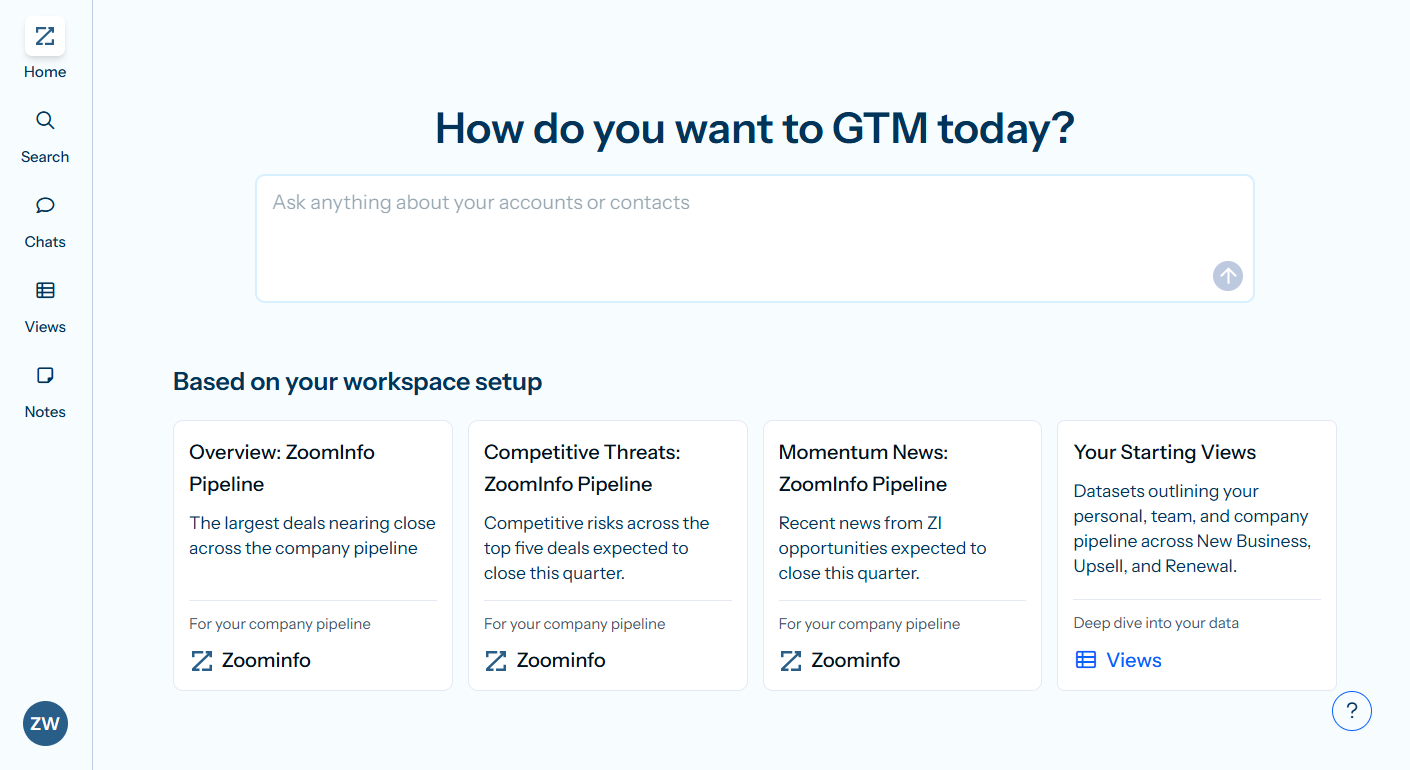
Its GTM Workspace gives sellers a workspace where prioritized accounts, AI-drafted outreach, and deal execution converge.
GTM Studio lets marketers and RevOps teams describe audiences in natural language, launch multi-channel plays, and watch pipeline impact in real time.
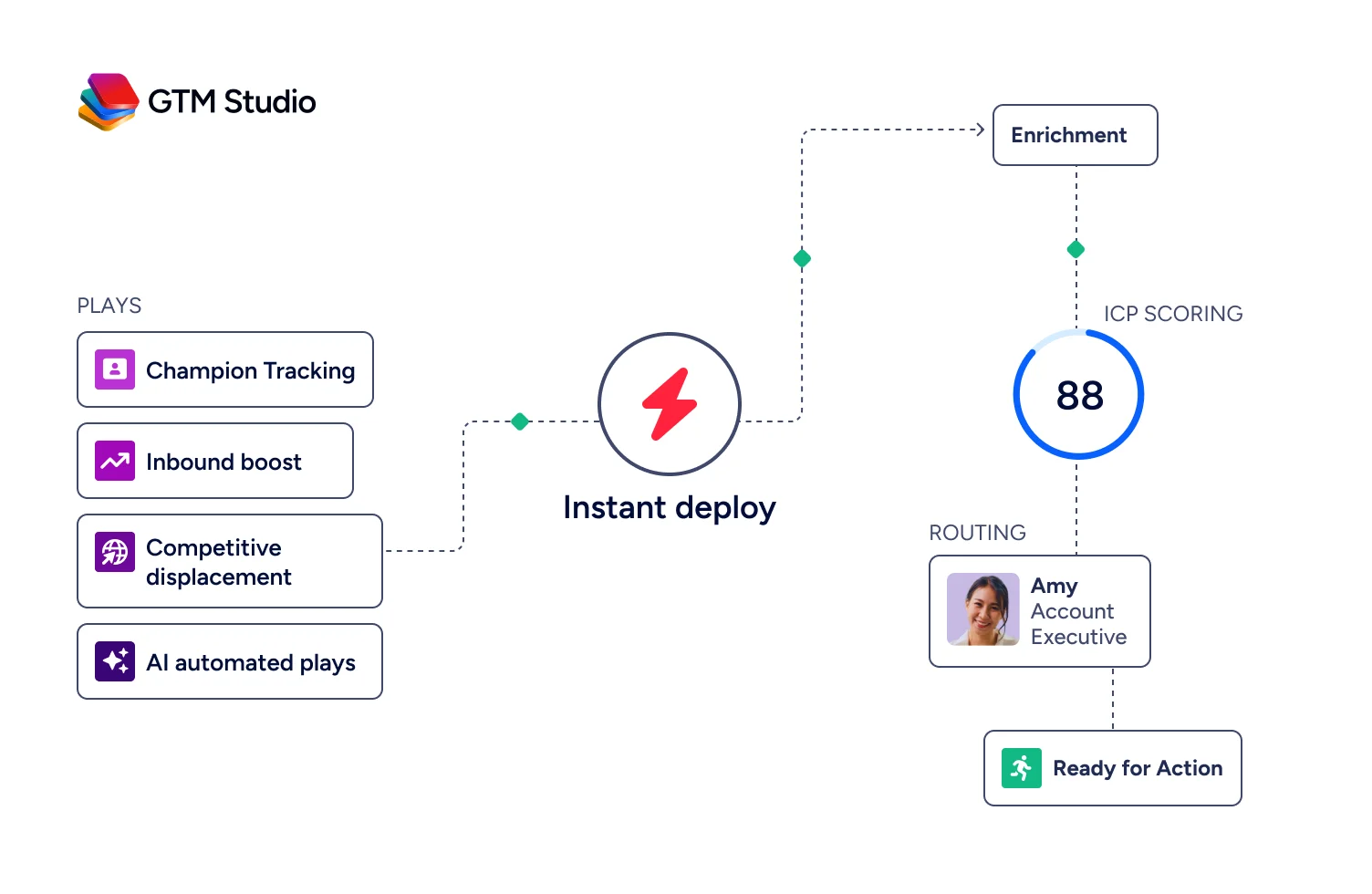
The automation is signal-driven: when a target account starts researching your category, shows a leadership change, or receives new funding, the system triggers the right play automatically.
"That combination of our internal CRM data, external signals, and AI that's given all that context has helped us craft very specific account- and persona-based messages. And people have responded to them right away." (Seismic)
Pricing models reflect different markets
HubSpot's pricing is generous at the bottom and complex at the top. The free CRM is useful: unlimited contacts (up to 1M records), basic email tracking, a deal pipeline, meeting scheduling, and live chat. Starter plans begin at $10/seat/month. But Professional and Enterprise tiers escalate quickly. Marketing Hub Professional costs $800/month with a mandatory $3,000 onboarding fee. Sales Hub Professional runs $100/seat/month with a $1,500 onboarding fee. A hidden cost worth noting: when you subscribe to multiple Hubs at different tiers, all Core Seats bill at the highest tier's rate. A company mixing Marketing Hub Professional with Sales Hub Enterprise pays Enterprise seat rates everywhere.
Keap simplifies pricing with a single plan. Every customer gets the full platform starting at $299/month billed monthly, with pricing scaling by contact volume. Two user seats are included; additional users cost $39/month each. There's no free tier, just a trial with a 25-email send limit. Cancellation must be done by phone with a Keap representative (email requests aren't accepted), and cancelling an annual contract early incurs a $299 early termination fee. Text messaging is included at 500 SMS/month, with overages at $0.015 per message.
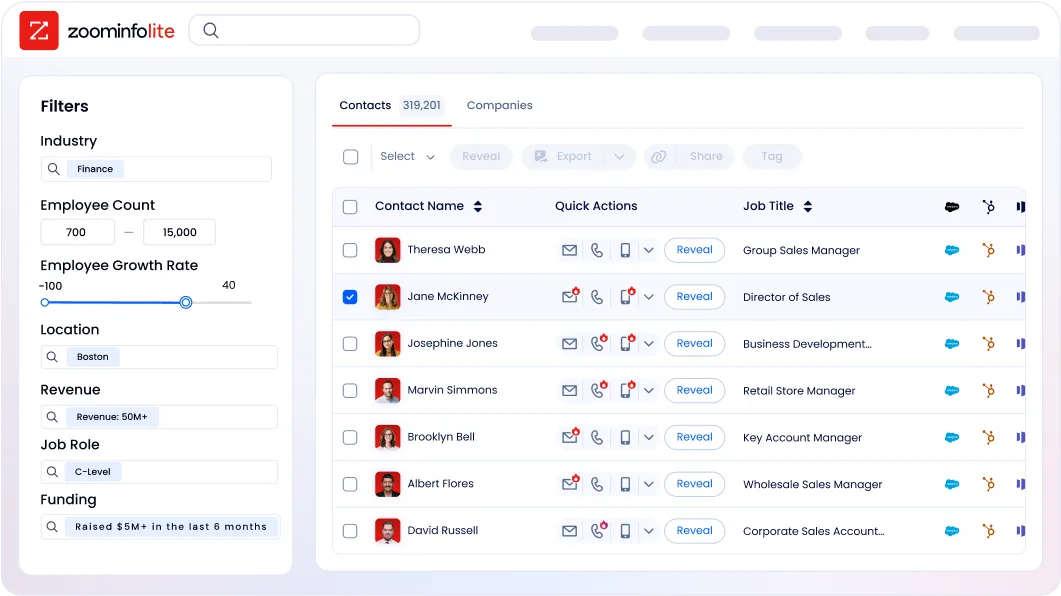
ZoomInfo uses consumption-based pricing with no publicly listed prices. Costs scale with seats, credit volume, and feature access. ZoomInfo offers two free entry points: ZoomInfo Lite, a permanent free tier with 10 monthly export credits and access to the B2B database, and a 7-day free trial with broader feature access. For teams testing whether data quality is their bottleneck, these free options let you try before committing.
Integration ecosystems reveal platform maturity
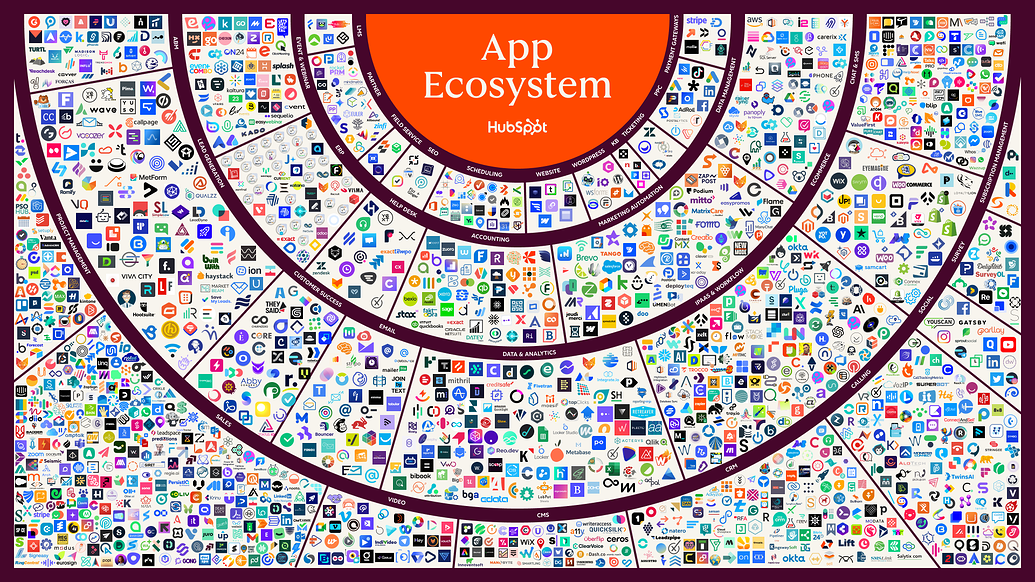
HubSpot's App Marketplace offers more than 2,000 integrations with 2.5 million active installs. The ecosystem covers virtually every business tool category: Salesforce, Slack, Zoom, Gmail, Outlook, Jira, LinkedIn, Google Ads, WordPress, and hundreds more.
Source: HubSpot
The REST API is mature, with official SDKs in six languages (PHP, Java, Ruby, Go, TypeScript, Python) and a developer community with over 200,000 certified professionals through HubSpot Academy. For technical teams, the date-based API versioning system offers an 18-month support window per version.
Keap's integration library is much smaller. The marketplace lists roughly 87 apps, with the rest requiring Zapier (which connects to 5,000+ apps) or custom API work.
The REST API v2 supports OAuth 2.0 and Personal Access Tokens, with SDKs for six languages generated from the OpenAPI spec. But Capterra reviewers note that "connectivity to other programs is difficult to achieve," and the developer portal still spans both the legacy infusionsoft.com and newer keap.com domains, creating navigation confusion.
ZoomInfo's Marketplace lists 172+ integration partners spanning CRM, marketing automation, sales engagement, data warehouses, and AI platforms.
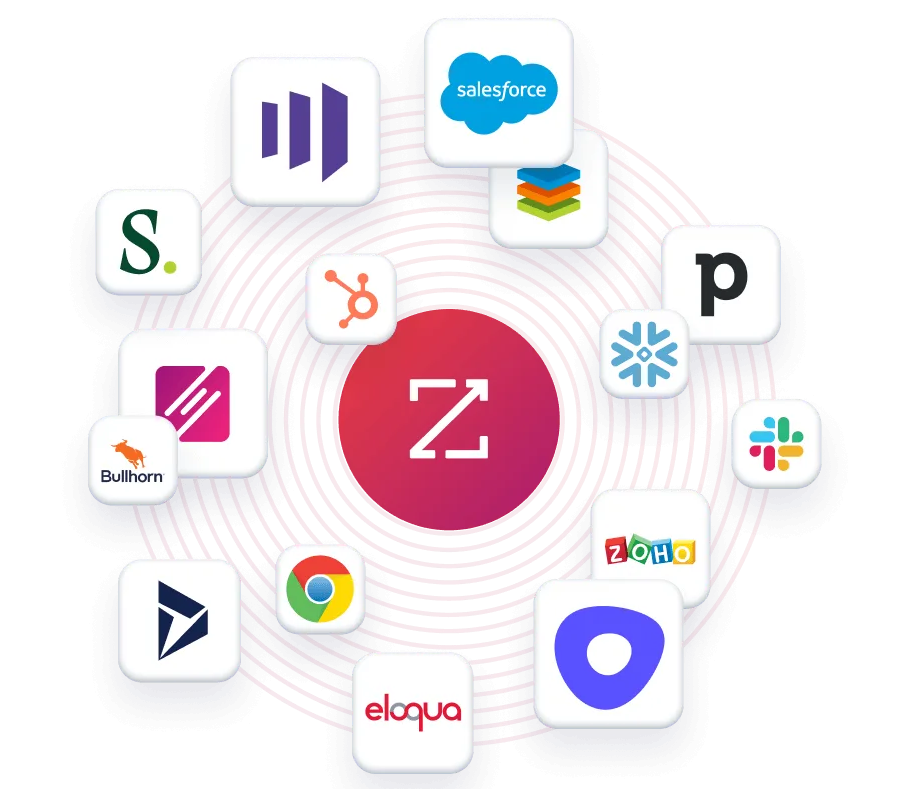
The native HubSpot integration enables CRM enrichment and lead routing directly.
For broader access, ZoomInfo's Enterprise API and MCP server allow any tool or AI agent to consume ZoomInfo's data, including Claude and ChatGPT. The Cloud Partners program delivers data directly into AWS, Google Cloud, Snowflake, and Databricks.
AI capabilities take different approaches
HubSpot's Breeze AI is embedded throughout the platform.
The Customer Agent handles support across chat, email, WhatsApp, and Facebook Messenger. The Prospecting Agent monitors buying signals and drafts personalized outreach.
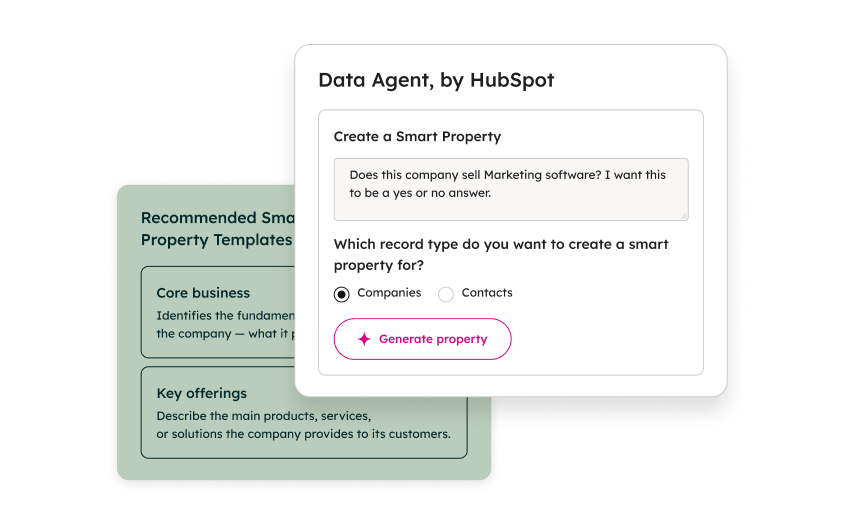
The Data Agent answers natural-language questions about CRM records. The Content Agent generates blog posts, social posts, and email copy.
Source: HubSpot
Breeze runs on HubSpot Credits, a consumption-based system where Professional plans include 3,000 credits/month and Enterprise includes 5,000. The AI draws on HubSpot's CRM data for context, but it's limited to the data inside HubSpot.
Keap's AI is newer and more focused.
An AI Content Assistant generates email and SMS copy from prompts. SmartSend AI optimizes send times per contact based on engagement history.

Source: Keap
An Automation Assistant speeds up campaign setup. Smart Lead Scoring and Contact Engagement Insights are planned but not yet shipped.
These AI additions improve existing workflows, but they're incremental rather than a new operational layer.
ZoomInfo's AI operates on a different data set.
The GTM Context Graph processes 1.5B+ data points daily, fusing ZoomInfo's third-party B2B intelligence with a customer's CRM records, conversation transcripts, and behavioral signals.
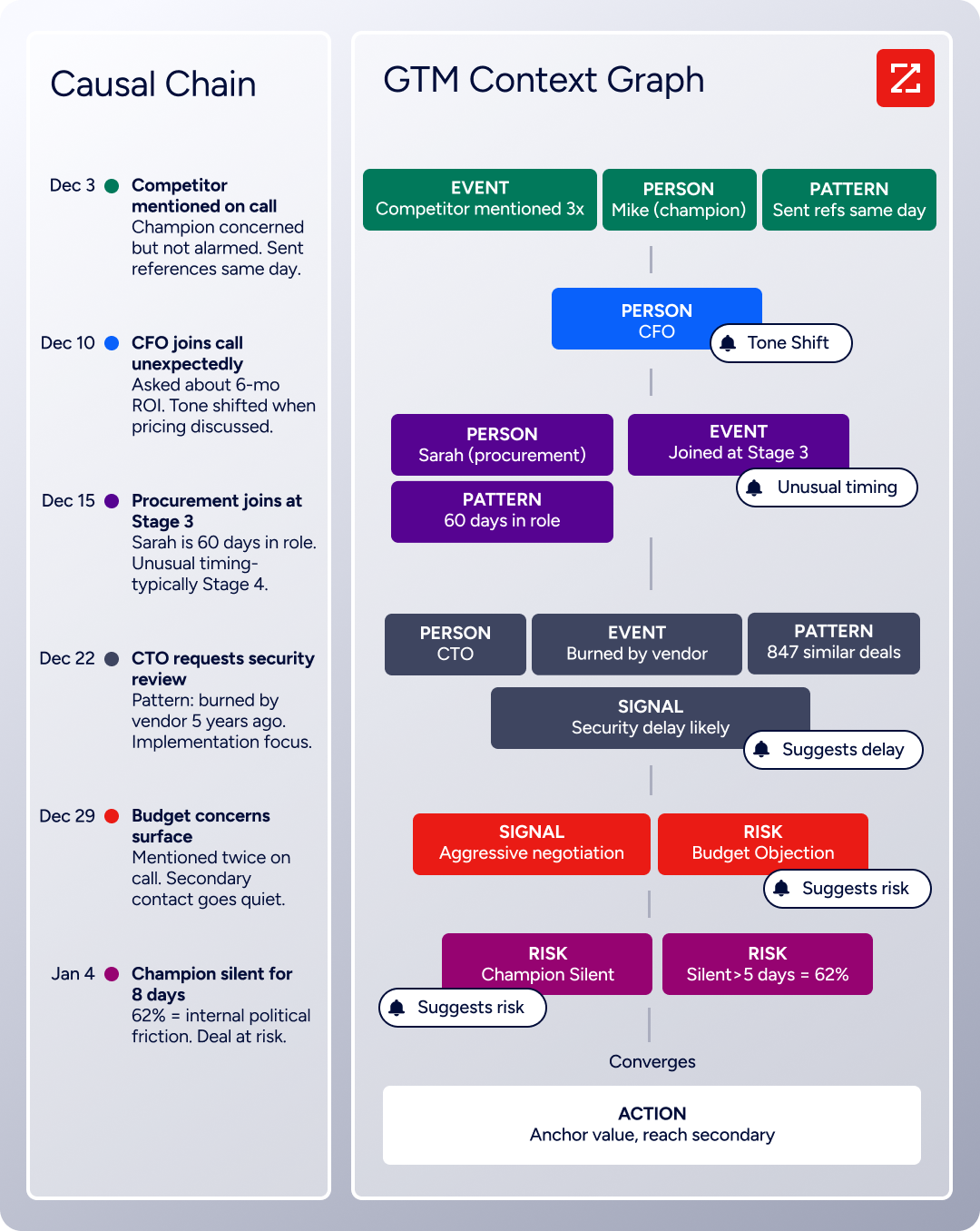
The distinction matters: a CRM records that a deal moved from stage 3 to stage 4, but it doesn't capture why. The GTM Context Graph connects conversation intelligence, intent signals, and CRM data to identify that executive sponsorship entered at this stage, combined with ROI-focused questions, which matches the pattern behind closed-won deals in the customer's segment. That intelligence drives GTM Workspace AI agents that research accounts, generate follow-ups, and surface next best actions.
"It's not just the data itself. It's more about the right data at the right time to help us reach out with the right message across that full buyer journey." (Redwood Logistics)
Support and onboarding shape the experience
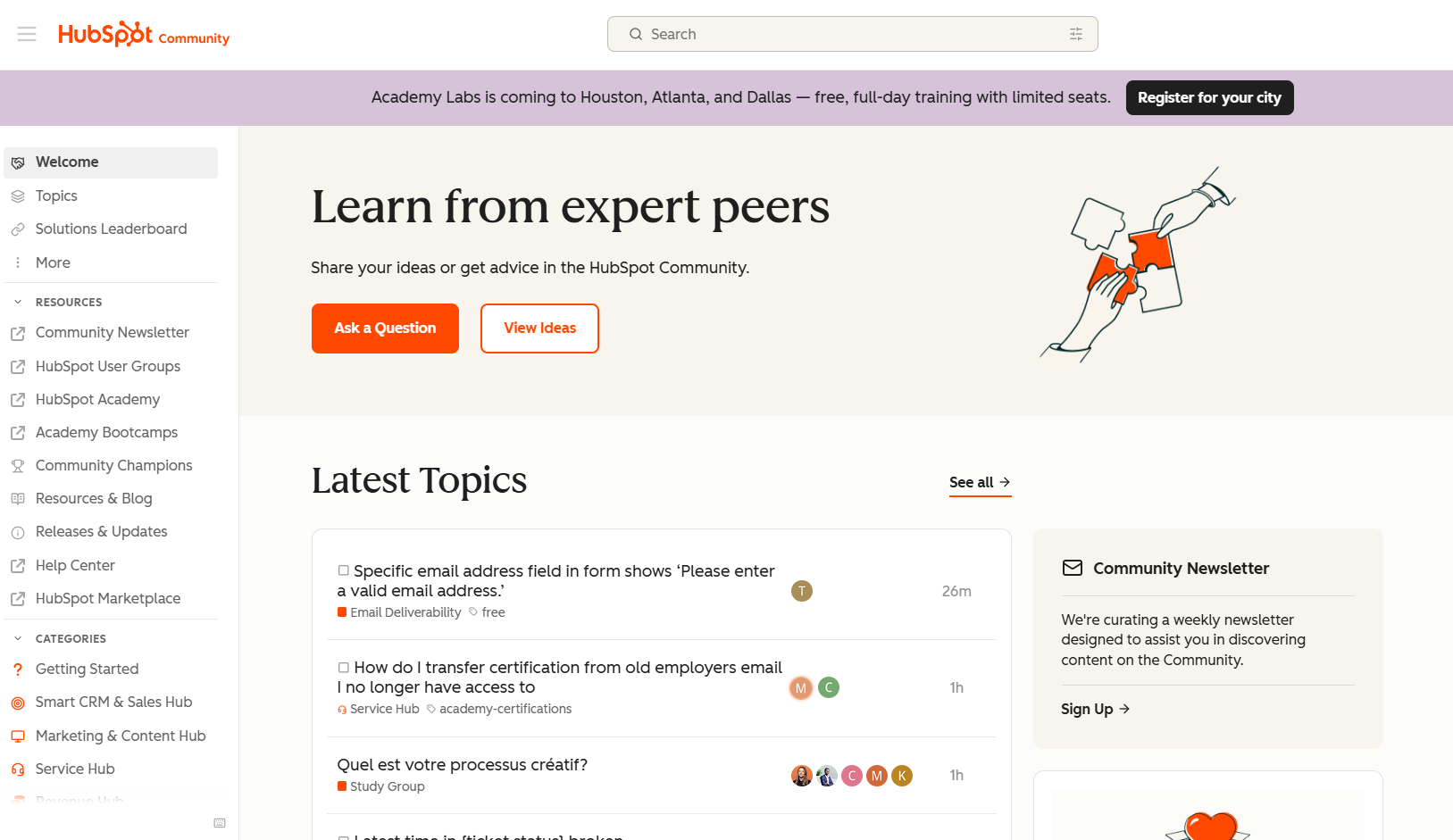
HubSpot's support is tiered by subscription.
Free users get the HubSpot Community only. Starter adds email and chat support. Professional and Enterprise add phone support.
Source: HubSpot
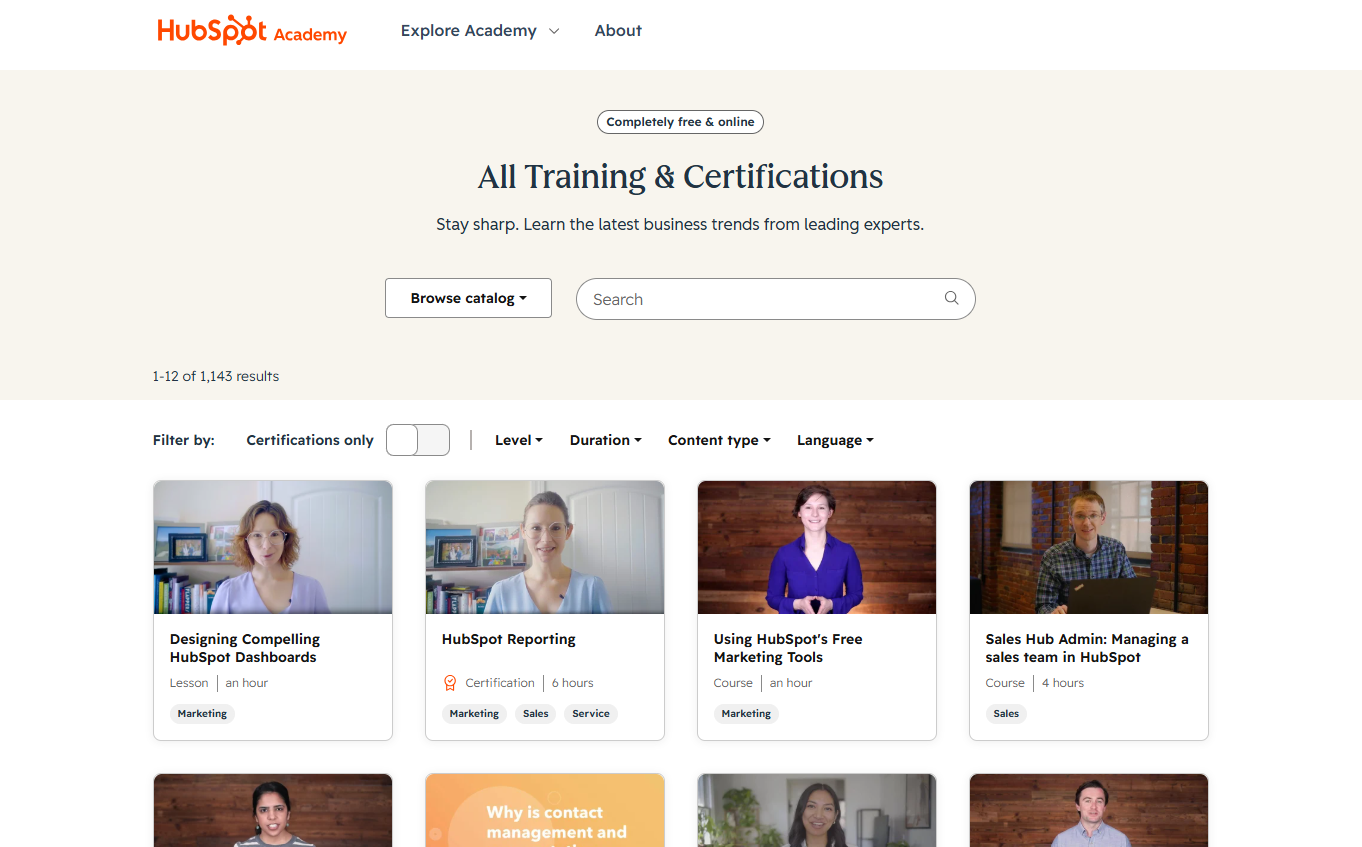
The self-service resources are broad: the Knowledge Base is available in 17+ languages, and HubSpot Academy offers free certifications across marketing, sales, content, and development.
Source: HubSpot
For complex implementations, a Solutions Partner network handles the work, since HubSpot's own professional services revenue represents only about 2% of total revenue.
Keap offers chat and phone support, with premium tiers available through Pro Services: Silver ($99/month) for quarterly strategy calls, Gold ($499/month) for monthly sessions and unlimited automation requests, and Platinum (starting $1,997/month) for weekly strategy calls and dedicated management.
Keap Academy provides video training, and a Your First 90 Days program structures early adoption. New customers also receive up to 15 hours of migration services for email templates, landing pages, and automations.
ZoomInfo redesigned its onboarding from 30 to 90 days, structured across planning, technical implementation, education, and adoption phases. The redesign produced a 25% improvement in customer satisfaction scores and won Rocketlane's Golden Comet award for Best Customer Onboarding Team of 2024.
ZoomInfo University provides role-specific learning paths, and professional services are available through ZoomInfo Labs.

Security and compliance matter at different scales
HubSpot holds SOC 2 Type II certification, supports HIPAA with an independent attestation, and is GDPR and CCPA compliant. Data is encrypted with AES-256 at rest and TLS 1.2/1.3 in transit. An EU Data Center is available for data residency requirements. AI model cards detail how each AI system interacts with customer data.
Keap offers a Business Associate Agreement (BAA) for healthcare-adjacent customers and maintains CCPA compliance through Thryv's privacy framework. PGP key encryption is used for data migration. However, Keap does not publicly list SOC 2 Type II, ISO 27001, or specific encryption standards on any accessible page. Businesses in regulated industries should request documentation directly.
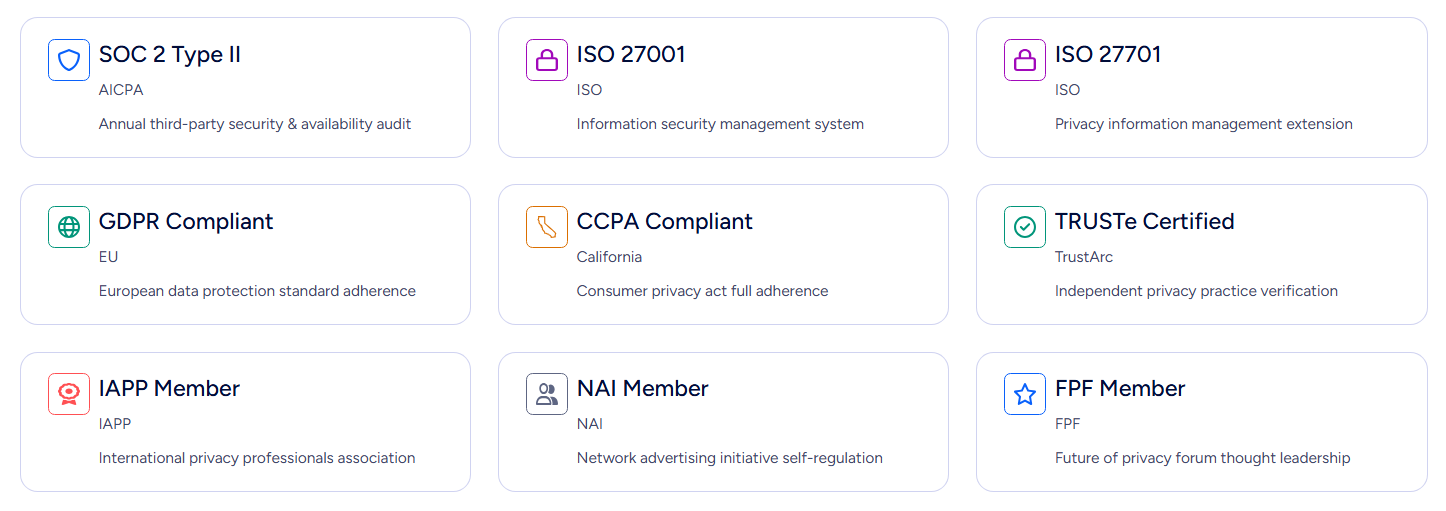
ZoomInfo holds the broadest certification stack of the three: ISO 27001, ISO 27701, SOC 2 Type II, TRUSTe GDPR, and TRUSTe CCPA, all renewed annually. The company is a registered data broker in California and Vermont, with a dedicated Trust Center for transparency. For enterprise buyers in regulated industries, this compliance depth is often a gating requirement.
HubSpot vs. Keap vs. ZoomInfo: Which should you choose?
These three platforms solve different problems, and the right answer depends on where your bottleneck sits.
Choose HubSpot if:
You're a scaling company that needs marketing, sales, service, and content on one platform
Your team spans multiple departments and you need a shared CRM data layer
You want a free tier to get started and upgrade as you grow
AI-powered agents across the customer lifecycle fit your workflow
You have the budget for Professional or Enterprise tiers as your needs expand
Choose Keap if:
You're a small service business with 1-25 employees running a defined sales cycle
You want CRM, email, text, pipeline, appointments, invoicing, and payments in one subscription
Behavioral automation for lead follow-up is your primary need
You're willing to invest in learning a complex system and potentially hiring a certified partner
Your contact list and integration needs fit within Keap's ecosystem
Use ZoomInfo alongside either platform if:
Your sales team spends too much time researching prospects and not enough time selling
You need verified B2B contact data, direct dials, and business emails at scale
You want to know which accounts are in-market before you reach out
Your CRM data has gaps that undermine your automation and reporting
You're ready to move from reactive lead management to signal-driven prospecting
Start with ZoomInfo Lite for free, or request a demo of the full platform.
The CRM you choose manages your customer relationships. But the quality of those relationships starts with the quality of your data. HubSpot or Keap handles the nurture, the automation, and the pipeline. ZoomInfo ensures the right contacts, with the right context, enter that pipeline in the first place.
HubSpot vs. Keap vs. ZoomInfo FAQ
What is the fundamental difference between HubSpot, Keap, and ZoomInfo?
HubSpot is an all-in-one customer platform with six product hubs (Marketing, Sales, Service, Content, Data, Commerce) connected through a Smart CRM, built for scaling companies with multiple departments. Keap is a CRM and marketing automation platform built for small service businesses, combining contact management, email/text marketing, sales pipelines, appointments, and payments in a single subscription. ZoomInfo is a B2B data intelligence and GTM execution platform that provides verified contact data, buyer intent signals, and AI-powered prospecting. It complements either CRM rather than replacing it.
Which platform is cheapest to get started with?
HubSpot and ZoomInfo both offer permanent free tiers. HubSpot's free CRM includes unlimited contacts (up to 1M records), basic email tracking, and a deal pipeline. ZoomInfo Lite provides access to its B2B database with 10 monthly export credits at no cost. Keap has no free plan, starting at $299/month billed annually, though it offers a free trial with a 25-email send limit.
Can ZoomInfo replace HubSpot or Keap?
No. ZoomInfo is not a CRM or marketing automation platform. It does not manage ongoing customer relationships, automate email nurture sequences, handle customer support tickets, or process invoicing and payments. ZoomInfo provides the upstream intelligence layer that feeds accurate, enriched prospect data into your CRM. It integrates natively with HubSpot and connects to Keap through its API and Zapier.
Which platform has the best marketing automation?
HubSpot offers the broadest marketing automation, with visual workflows, AI-powered email, social media management, content publishing, and multi-touch attribution reporting. Keap offers deeper behavioral automation for small businesses, with both Easy Automations and Advanced Automations supporting email and text triggers from a single builder. ZoomInfo offers signal-triggered GTM plays through GTM Studio, where marketers build audiences in natural language and launch multi-channel campaigns without engineering support. Each platform automates a different stage of the customer lifecycle.
How does data quality compare between HubSpot, Keap, and ZoomInfo?
HubSpot and Keap store and manage the data you put into them. HubSpot's Smart CRM includes AI-powered data enrichment and duplicate detection, but it depends on HubSpot's own dataset. Keap provides DKIM email authentication and basic deliverability tools. ZoomInfo operates the largest dedicated B2B data verification infrastructure, with 500M contacts verified through a multi-source pipeline backed by 300+ human researchers, achieving up to 95% accuracy on first-party data. In a Fortune 500 competitive RFP analyzing 25 million contacts, the independent consultant concluded that no other competitor came close to ZoomInfo's data quality.
Which platform is best for small businesses versus enterprises?
Keap is built for small businesses with 1-25 employees, particularly service-based businesses like coaches, consultants, and agencies. HubSpot serves the widest range, from solopreneurs on the free tier through enterprises with thousands of employees, though it delivers the most value at the 20-2,000 employee range. ZoomInfo targets enterprise and upper mid-market B2B companies, with 1,921 customers spending $100K+ annually and named customers including Adobe, Snowflake, and Thomson Reuters.
Do I need ZoomInfo if I already use HubSpot or Keap?
If your business relies on outbound prospecting, account-based selling, or B2B lead generation, ZoomInfo fills a gap that neither CRM addresses. HubSpot and Keap manage leads after they enter your system. ZoomInfo helps you find the right leads, verify their contact information, identify when they're in-market, and understand the buying committee before your first outreach. Teams using ZoomInfo alongside their CRM report measurable improvements: Seismic attributed 39% of active pipeline to ZoomInfo-influenced opportunities and saw 54% productivity gains across their sales team.
What happens to Keap now that Thryv acquired it?
Thryv Holdings acquired Keap for $80 million in October 2024. In the near term, existing Keap subscriptions, pricing, and services remain unchanged. The long-term plan is to integrate Keap's CRM and automation capabilities with Thryv's lead generation and local presence tools into a unified SMB platform. The help center has already moved to learn.thryv.com, while login still routes through accounts.infusionsoft.com, indicating the integration is still in progress.
See how HubSpot compares against other CRMs and platforms:
