
Choosing between HubSpot and Ortto for marketing and customer engagement often comes down to five questions:
Do you need a full CRM with sales, service, and marketing in one place, or a focused marketing automation platform with a built-in CDP?
Is your team large enough to justify per-seat pricing, or do you need unlimited seats with contact-based billing?
Are you comparing platforms for the first time, or consolidating a scattered collection of point tools?
How important is native sales pipeline management versus relying on a third-party CRM integration?
Does your go-to-market strategy depend on accurate, enriched B2B data flowing into whichever platform you choose?
In short, here's what we recommend:
HubSpot is the customer platform for companies that want marketing, sales, service, content, and commerce connected through a single CRM. With 288,706 customers across 135+ countries and eight integrated products, HubSpot gives growing teams a shared data layer so every department works from the same customer record.
Its Breeze AI automates prospecting, content creation, and customer support across the platform. The trade-off: pricing scales quickly with per-seat charges, mandatory onboarding fees at higher tiers, and a mixed-tier billing rule that catches buyers off-guard.
Ortto is a marketing automation platform with a built-in customer data platform, designed for marketers who want CDP-level segmentation without a separate tool. Serving 11,000+ customers in 190 countries, Ortto combines journey automation, analytics, and customer support (Talk) in one system with unlimited seats on every plan.
Its event-driven architecture lets marketing teams trigger campaigns from real-time product behavior without engineering help. The limitation: Ortto has no native CRM, so sales teams still need a separate pipeline tool.
Both platforms handle engagement well. But engagement only works when it's aimed at the right people at the right time. If the contact data in your CRM is incomplete, the intent signals are missing, and you're guessing at which accounts are in-market, even the best automation fires blind.
ZoomInfo is a B2B data and GTM platform that solves the data problem upstream. Built on a large B2B dataset (500M contacts, 100M companies, 135M+ verified phone numbers, and 200M+ verified business email addresses), ZoomInfo feeds accurate, enriched data and real-time buying signals into whichever marketing platform you choose.
Its GTM Context Graph processes 1.5B + data points daily, fusing your CRM records, conversation transcripts, and behavioral signals with ZoomInfo's third-party intelligence so your team knows not just who to target but why they're ready to buy. ZoomInfo integrates directly with HubSpot and connects to other platforms through APIs and MCP.
If better data and buyer intelligence would sharpen your marketing and sales results, see how ZoomInfo works with your stack.
HubSpot vs. Ortto vs. ZoomInfo at a glance
HubSpot | Ortto | ZoomInfo | |
|---|---|---|---|
Core function | CRM + marketing + sales + service platform | Marketing automation + CDP + analytics + support | B2B data intelligence + GTM execution platform |
Target buyer | SMB to enterprise teams wanting one platform for everything | Marketers wanting CDP + automation without engineering | B2B sales, marketing, and RevOps teams needing accurate buyer data and signals |
CRM included | Yes (Smart CRM, native) | No (integrates with Salesforce, HubSpot, Pipedrive) | No (integrates with Salesforce, HubSpot, Dynamics) |
Marketing automation | Yes (Marketing Hub) | Yes (Journey Builder) | Signal-triggered workflows through GTM Studio |
CDP / data layer | Smart CRM with enrichment | Built-in CDP with event-based profiles | GTM Context Graph (1.5B+ data points daily) |
AI capabilities | Breeze AI across all hubs | AI filters, decision shapes, subject line scoring | AI agents for prospecting, account research, outreach |
Pricing model | Per-seat + per-hub + contact tiers | Per-contact, unlimited seats | Custom-quoted, consumption-based |
Free plan | Yes (permanent, limited features) | 14-day trial only | ZoomInfo Lite (permanent, 10 credits/month) |
Integrations | 2,000+ app marketplace | Native integrations + Zapier (4,000+ apps) | 120+ native + API/MCP access for any tool |
Best for | Teams consolidating marketing, sales, and service into one platform | Marketing teams wanting automation + CDP without CRM overhead | Teams needing accurate B2B data, intent signals, and buyer intelligence |
HubSpot is a full platform; Ortto is a focused one
HubSpot and Ortto solve overlapping problems from different starting points.
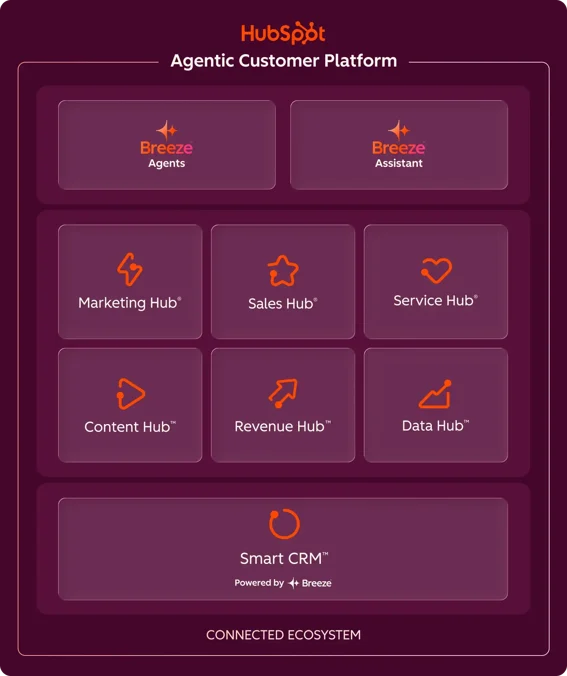
HubSpot started as a marketing automation tool and expanded into a complete customer platform. Today it includes Marketing Hub, Sales Hub, Service Hub, Content Hub, Data Hub, Commerce Hub, Smart CRM, and Breeze AI. Every product shares a single database. A marketing lead becomes a sales opportunity becomes a support ticket, all in one system, with no data syncing required.
Source: HubSpot
Ortto started as a journey automation tool (under the name Autopilot) and expanded into a marketing platform by adding a built-in CDP, analytics, and customer support. The founders rebuilt the entire platform from the ground up between 2018 and 2021, integrating customer data with automation at the architecture level rather than bolting on a CDP later.
The structural difference matters. HubSpot gives you everything: CRM, pipeline management, ticketing, content management, payments, and marketing automation. If your team wants one login for every customer-facing function, HubSpot delivers that. But you pay for that breadth, in both cost and complexity that smaller marketing teams may not need.
Ortto gives you fewer things, done with focus. Marketing automation, customer data, analytics, and support live in one system. But when a deal closes, you update Salesforce or HubSpot CRM separately. Ortto integrates with these CRMs, but the handoff is never as tight as a native connection.
Marketing automation: different strengths at different depths
Both platforms offer visual journey builders. The difference is in what data powers them and how far the automation extends.
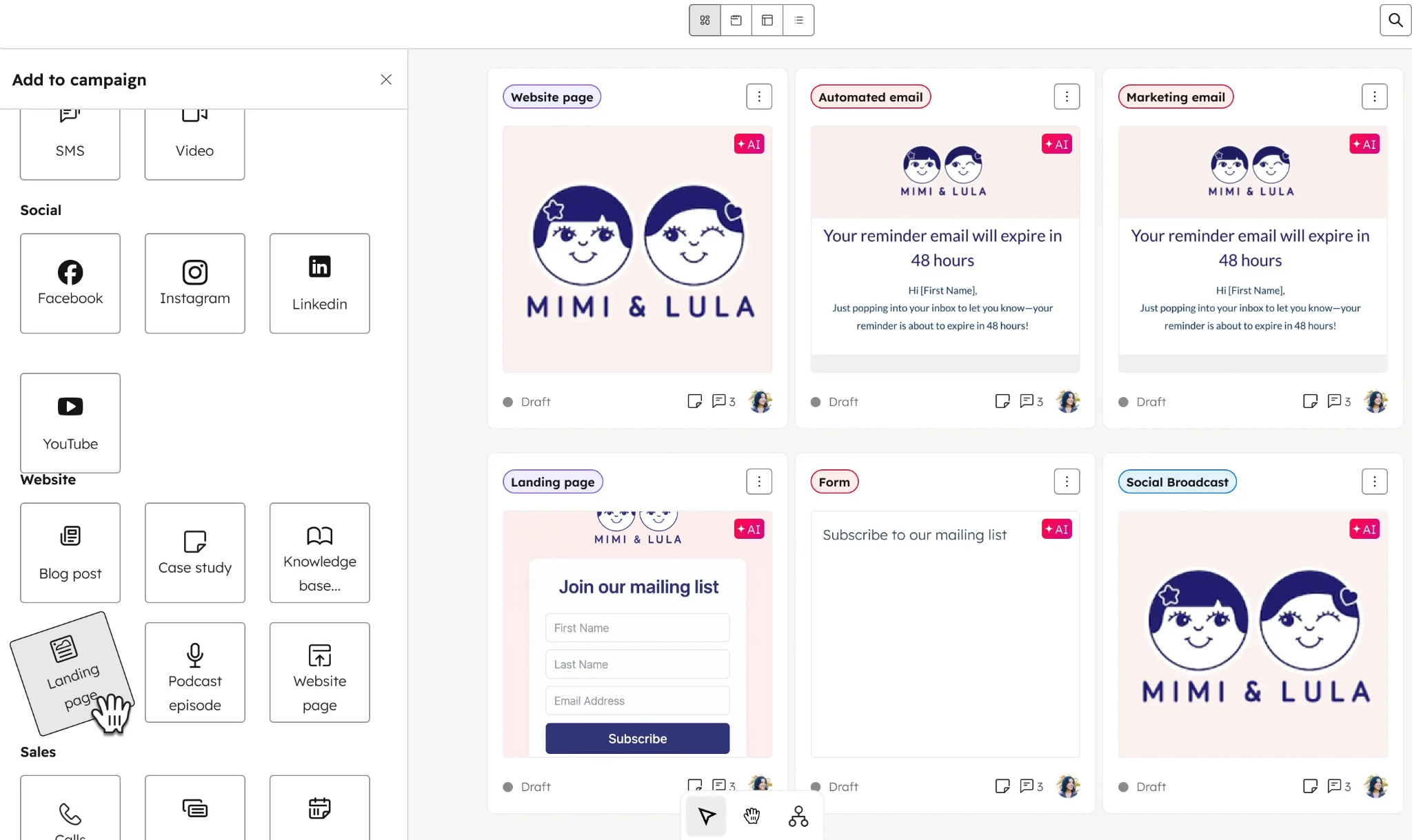
HubSpot's Marketing Hub handles email, social media, landing pages, forms, ads, and SEO from one interface. Its Workflows tool builds multi-step automations triggered by contact behavior, lifecycle stage, form submissions, or deal changes.
Source: HubSpot
Because Workflows draw on the Smart CRM, automations can reference sales pipeline data, support ticket status, or Commerce Hub transactions.
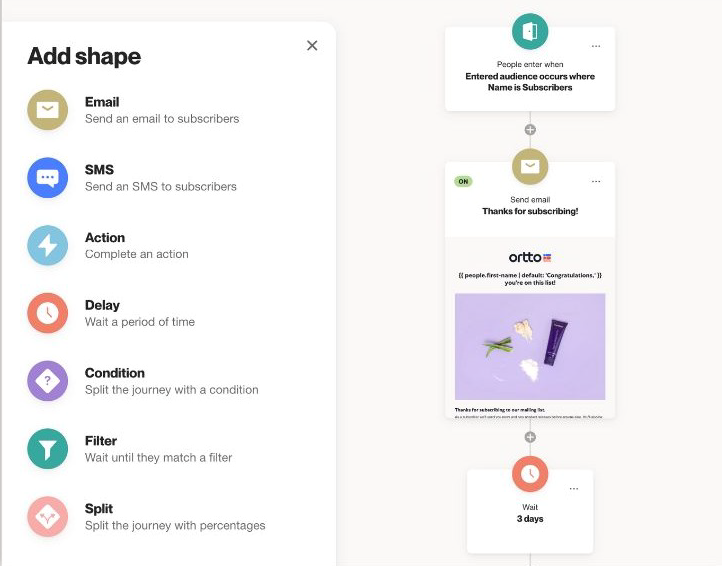
Ortto's Journey Builder is where the platform stands out. The drag-and-drop canvas supports email, SMS, web and mobile push notifications, and in-app messages in a single journey.
Source: Ortto
Ortto's event-driven CDP feeds every journey step with real-time behavioral data: product events from Stripe or Chargebee, CRM pipeline changes from Salesforce, and in-app actions tracked via Checkmate Tracking.
The practical difference: HubSpot's automation runs wider, spanning marketing, sales, and service workflows. Ortto's automation runs deeper on the marketing side, with more granular behavioral triggers, AI decision shapes inside journeys, and native SMS/push in the same canvas.
Ortto also includes AI decision shapes that classify contacts mid-journey using AI rather than hard-coded rules, and AI filters that let marketers describe audiences in plain language. HubSpot's Breeze AI covers more ground (content generation, prospecting, customer service) but its marketing-specific AI features like AI-Powered Segmentation and Personalization are still in Beta.
Customer data: CRM vs. CDP
How each platform handles customer data shapes everything downstream.
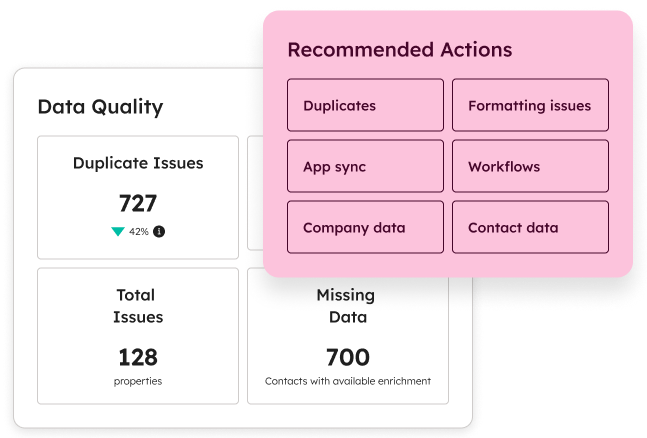
HubSpot's Smart CRM is a traditional CRM extended with AI enrichment. It stores contacts, companies, deals, tickets, and custom objects in one database. AI auto-enriches records from emails, calls, and web activity.
Source: HubSpot
The CRM supports up to 15 million contacts, expandable to 50 million, with field-level permissions and sandbox environments at Enterprise.
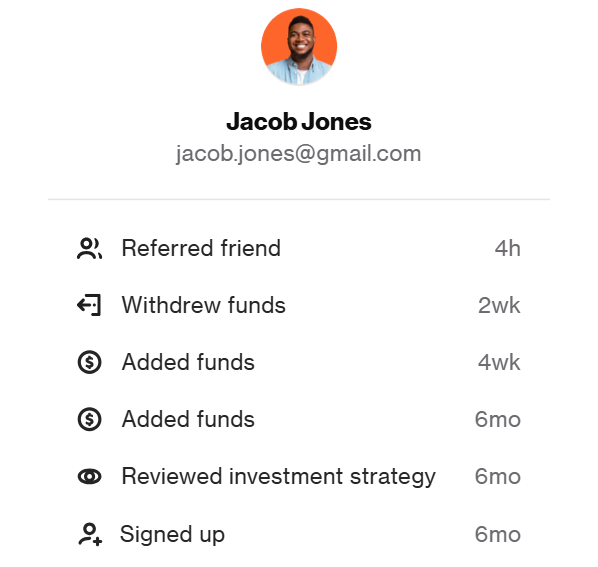
Ortto's CDP works differently. Instead of organizing data around deals and pipelines, it organizes around individual contact profiles with full activity timelines.
Source: Ortto
Every event (signed up, started trial, made purchase, visited pricing page) is stored as a time-stamped activity, enabling segmentation based on when and how often something happened, not just whether it happened. Ortto's CDP supports up to 12 million contacts out of the box, with custom configurations scaling to 100 million.
For B2B sales teams, HubSpot's CRM is the stronger foundation because it natively tracks deals, pipelines, and revenue. For marketing teams running product-led growth, Ortto's event-driven CDP provides more granular behavioral segmentation without needing engineering support.
But both platforms share a limitation: they can only work with the data they have. If your contact records are incomplete, your company data is stale, or you have no visibility into which accounts are researching solutions, neither platform's automation or segmentation will reach its potential.
The data layer underneath determines what's possible
This is where ZoomInfo enters the picture, not as an alternative to HubSpot or Ortto, but as the intelligence foundation that makes either platform more effective.
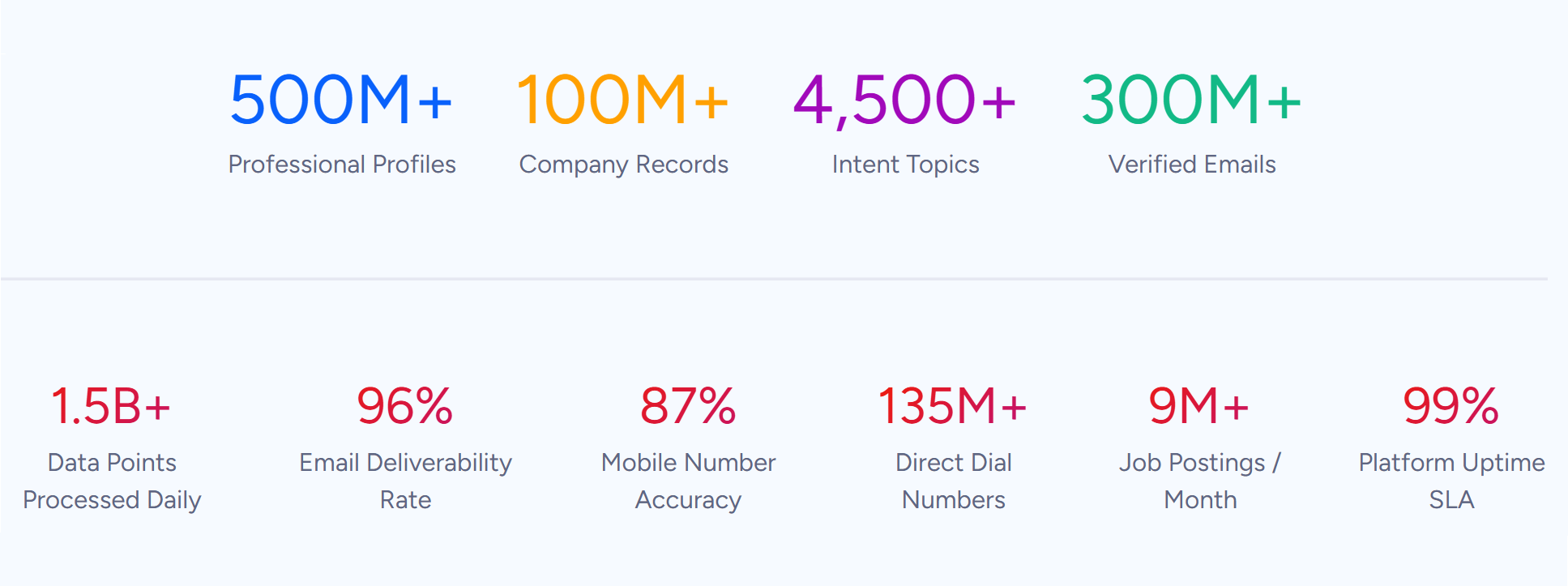
ZoomInfo operates a large B2B data platform. The numbers: 500M contacts, 100M companies, 135M+ verified phone numbers, 120M direct-dial phone numbers, and 200M+ verified business email addresses.
Source: ZoomInfo
That data is maintained through a multi-source pipeline: automated ML scanning of 28 million site domains daily, third-party partner data covering 95 million businesses, a community of 200,000+ ZoomInfo Lite users who share data back, and an in-house Data Training Lab of 300+ human researchers. First-party data reaches up to 95% accuracy.
For HubSpot users, ZoomInfo's native integration enriches CRM records with verified contact data, company attributes, technographics, and org charts.
Forms that would normally require six fields can be reduced to one using FormComplete, which auto-appends the remaining data from ZoomInfo's database. Smartsheet reported a 40%+ increase in form fills and 84% increase in MQLs after implementing FormComplete. For a closer look at how HubSpot and ZoomInfo stack up as platforms, see our HubSpot vs. ZoomInfo comparison.

Source: ZoomInfo
For Ortto users, ZoomInfo data can flow into Ortto's CDP through integrations, enriching contact profiles with verified business information and behavioral signals that Ortto's journey builder then uses for segmentation and automation.
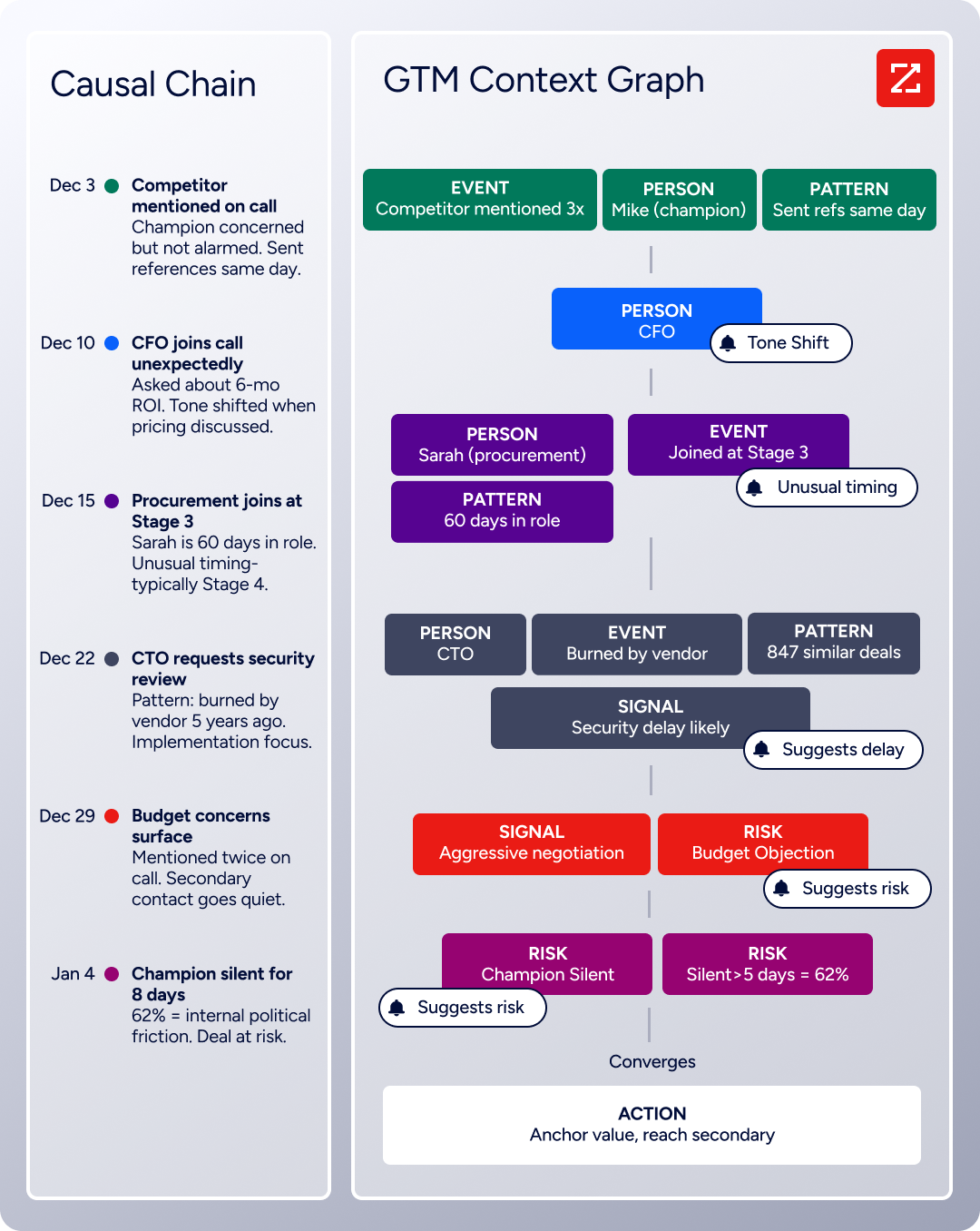
The deeper advantage is ZoomInfo's GTM Context Graph, which processes 1.5B + data points daily. It fuses ZoomInfo's third-party data with your CRM records, conversation transcripts, and behavioral signals to capture not just what happened in a deal, but why it happened.
Source: ZoomInfo
Your CRM records that a deal moved to stage 3. ZoomInfo's Context Graph understands that executive sponsorship entering at this stage, combined with ROI-focused questions, matches the pattern behind closed-won deals in your segment.
Seismic's sales team attributed 39% of active pipeline to opportunities identified or influenced by ZoomInfo signals, reported 54% productivity gains, and saved 11.5 hours per week per seller. (Seismic case study)
Pricing: three models for three different approaches
The pricing structures reflect each platform's philosophy about who pays, and for what.
HubSpot uses a hybrid model combining per-seat pricing, per-hub subscriptions, and marketing contact tiers. The Starter Customer Platform bundles all hubs at $15/seat/month (annual). But costs climb at Professional and Enterprise.
Marketing Hub Professional is $800/month (annual) with a $3,000 mandatory onboarding fee. Sales Hub Professional runs $90/seat/month (annual) with a $1,500 onboarding fee. Enterprise tiers cost more: Marketing Hub Enterprise is $3,600/month with a $7,000 onboarding fee.
A critical detail: when subscribing to multiple Hubs at different tiers, all Core Seats are billed at the highest tier's rate. A company using Marketing Hub Enterprise and Sales Hub Professional pays Enterprise seat rates across both.
Ortto does not publish its pricing. The platform uses a contact-based pricing model with unlimited seats, and pricing is provided through custom quotes. Every plan includes unlimited users, which removes the seat-math problem that comes with HubSpot's model.
But costs scale with your contact list. Email overages are $1 per 1,000 additional emails. SMS is a separate add-on with per-message pricing that varies by country.
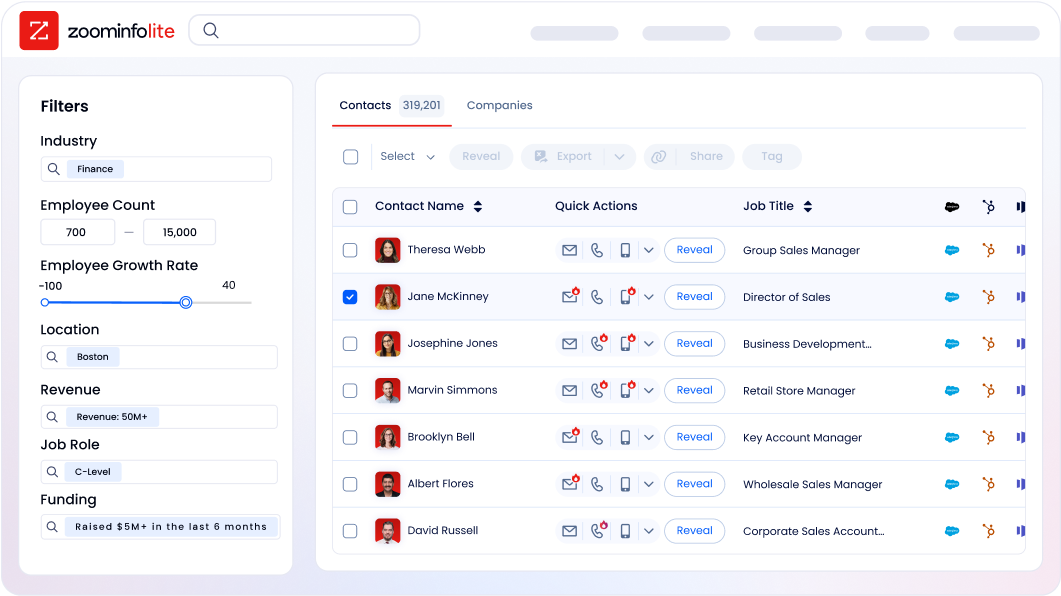
ZoomInfo uses custom-quoted, consumption-based pricing. There are no published prices for paid tiers. Pricing scales around seats, monthly credit volume, features, and contract length. ZoomInfo Lite offers a permanent free tier with 10 monthly export credits, access to the B2B database, and basic search tools. A 7-day free trial provides broader access to paid features.
Source: ZoomInfo
The key comparison: HubSpot combines CRM, sales, service, and marketing in one platform, while Ortto focuses on marketing automation and a built-in CDP with unlimited seats. ZoomInfo is a separate investment in data quality and buyer intelligence that complements either platform.
AI capabilities: breadth vs. focus vs. intelligence
All three platforms have invested in AI, but each applies it differently.
HubSpot's Breeze runs across the entire platform. The Breeze Customer Agent resolves customer inquiries across chat, email, WhatsApp, and voice.
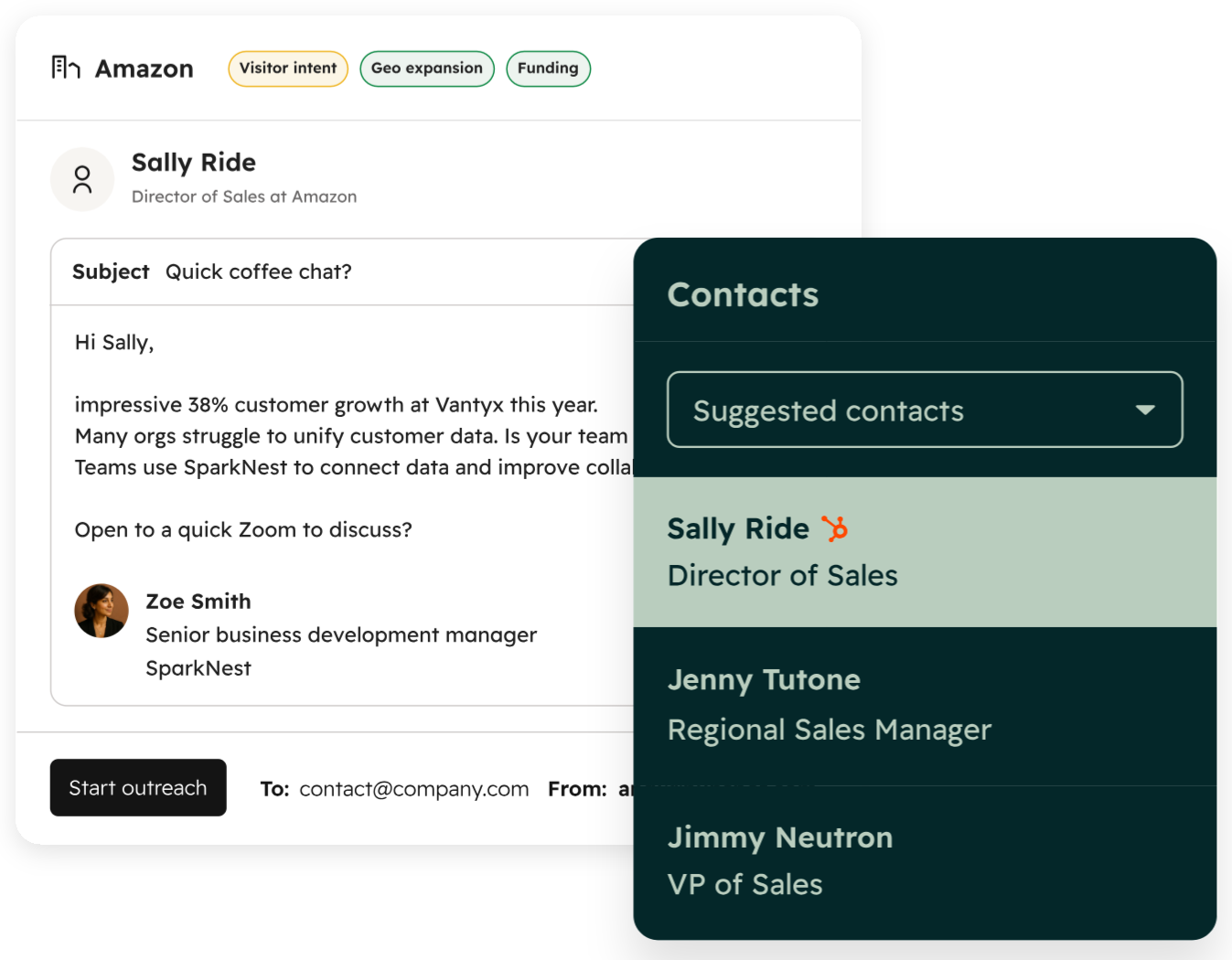
The Breeze Prospecting Agent monitors buying signals, drafts personalized outreach, and can run autonomously. The Data Agent answers natural-language questions about your CRM data. Breeze's strength is breadth: AI touches marketing, sales, service, and operations from one platform.
Source: HubSpot
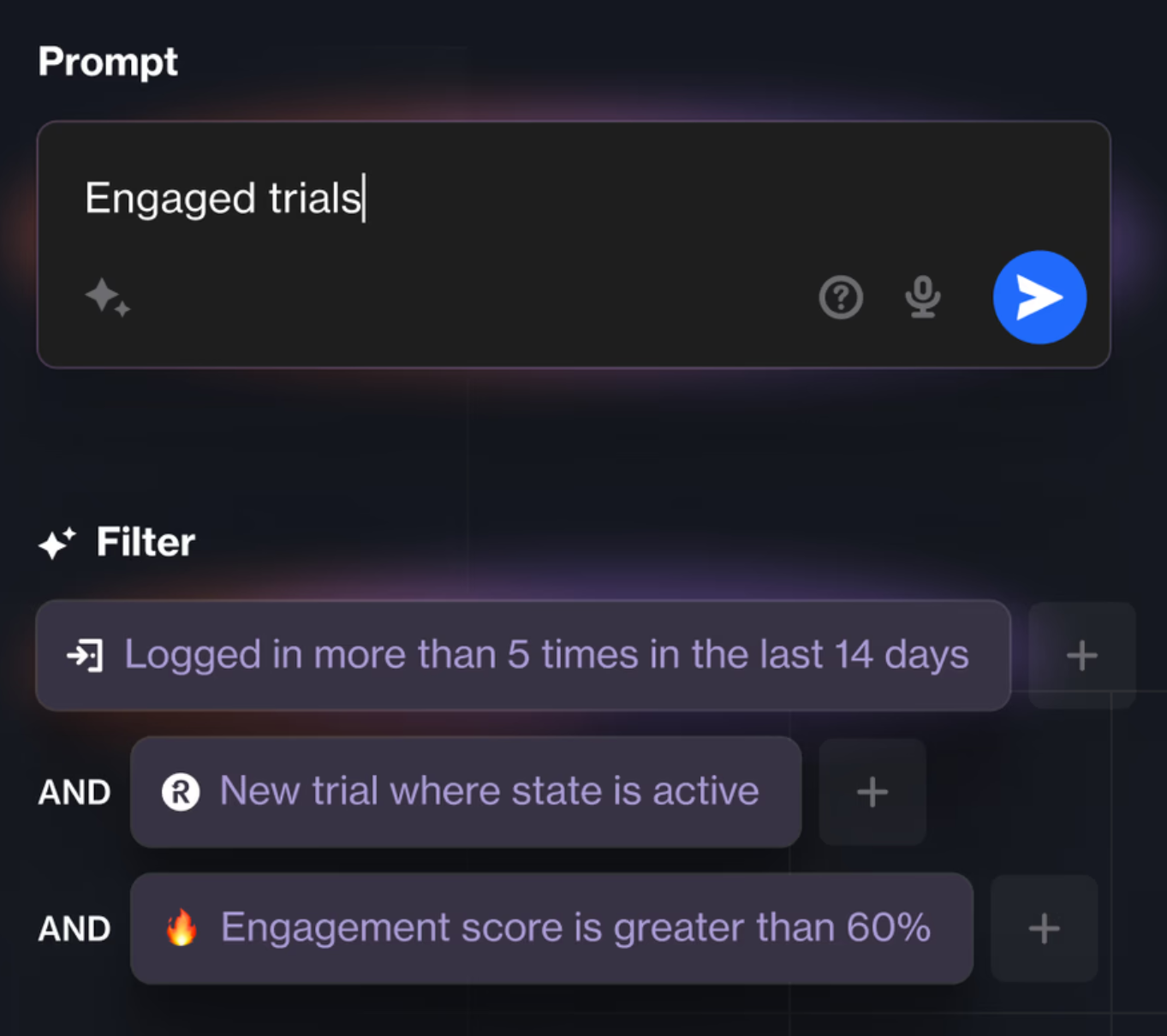
Ortto's AI is embedded in the marketing workflow. AI decision shapes inside journeys classify contacts mid-flow using AI rather than static rules. AI filters let marketers describe audiences in plain language. The subject line tester is trained on millions of emails sent through Ortto and predicts open rates before you send.
Source: Ortto
For support, Ortto trains a custom AI model on each account's website, help docs, and past tickets to suggest replies to agents. Ortto's AI strength is marketing precision: it's integrated into segmentation and journey execution.
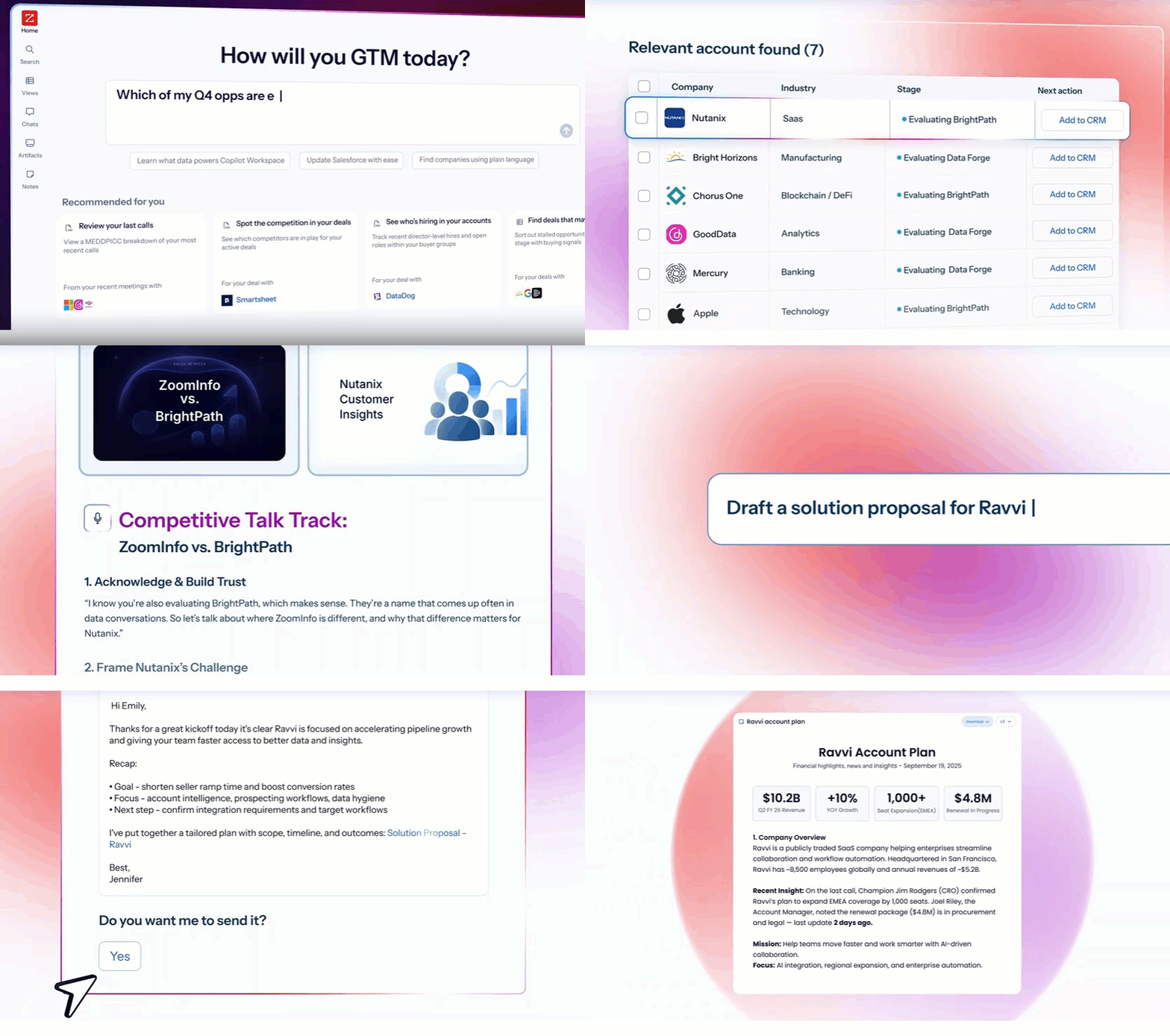
ZoomInfo's AI focuses on buyer intelligence and GTM execution. GTM Workspace deploys AI agents that research accounts, draft outreach, monitor signals, and update CRM fields. The GTM Context Graph powers this AI with context beyond CRM fields, reasoning across thousands of deal patterns to surface why opportunities move or stall.
Source: ZoomInfo
ZoomInfo's AI strength is intelligence depth: it tells your team who to contact, when to engage, and what to say based on verified data and real buying signals.
Redwood Logistics saw a 99% reduction in cost-per-click and a 310% increase in clickthrough rate using ZoomInfo's data-driven targeting. "It's not just the data itself. It's more about the right data at the right time to help us reach out with the right message across that full buyer journey." (Redwood Logistics case study)
Integration ecosystems compared
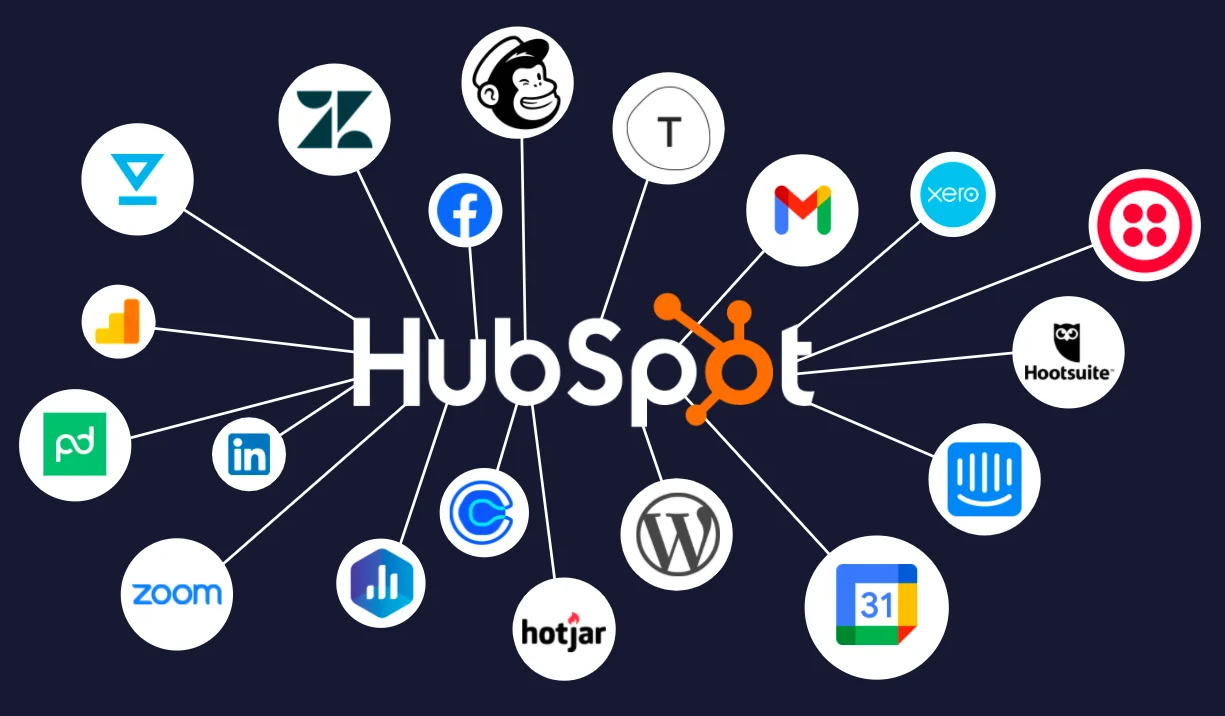
HubSpot has the largest ecosystem of the three, with over 2,000 app integrations and 2.5 million active installs. The integrations span CRM, e-commerce, accounting, social, advertising, and developer tools. The advantage: nearly any SaaS tool your team uses already has a HubSpot connector. The disadvantage: managing dozens of integrations introduces its own complexity.
Source: Hubspot
Ortto has a focused set of native integrations across CRM (Salesforce, HubSpot, Pipedrive), e-commerce (Shopify, WooCommerce, BigCommerce), billing (Stripe, Chargebee, Recurly), and support (Zendesk, Help Scout, Gorgias).
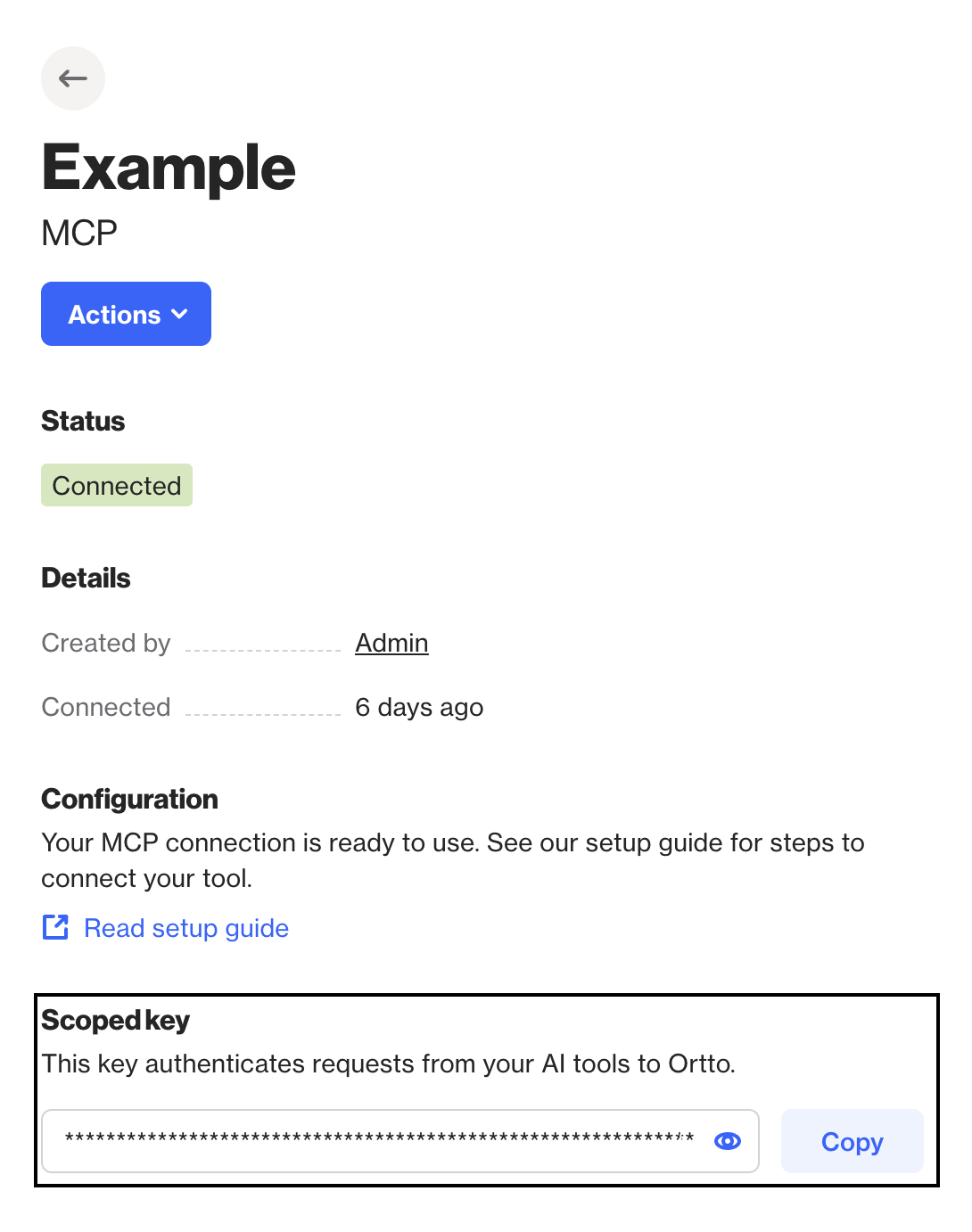
Where gaps exist, Zapier connects Ortto to 4,000+ apps. Ortto also launched an MCP Server in December 2025 that connects its CDP to external AI assistants like Claude and ChatGPT, with region-specific endpoints for US, EU, and AU data hosting.
Source: Ortto
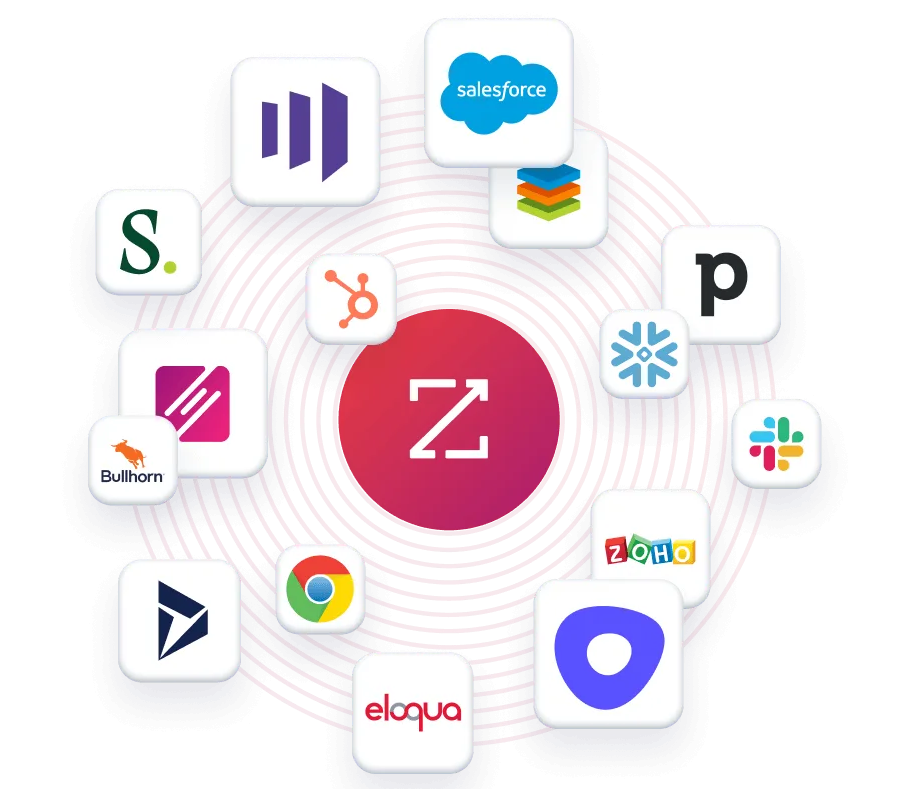
ZoomInfo takes a different approach: rather than connecting to your tools for workflow execution, it connects to feed them intelligence. The ZoomInfo App Marketplace lists 120+ partner integrations.
Source: ZoomInfo
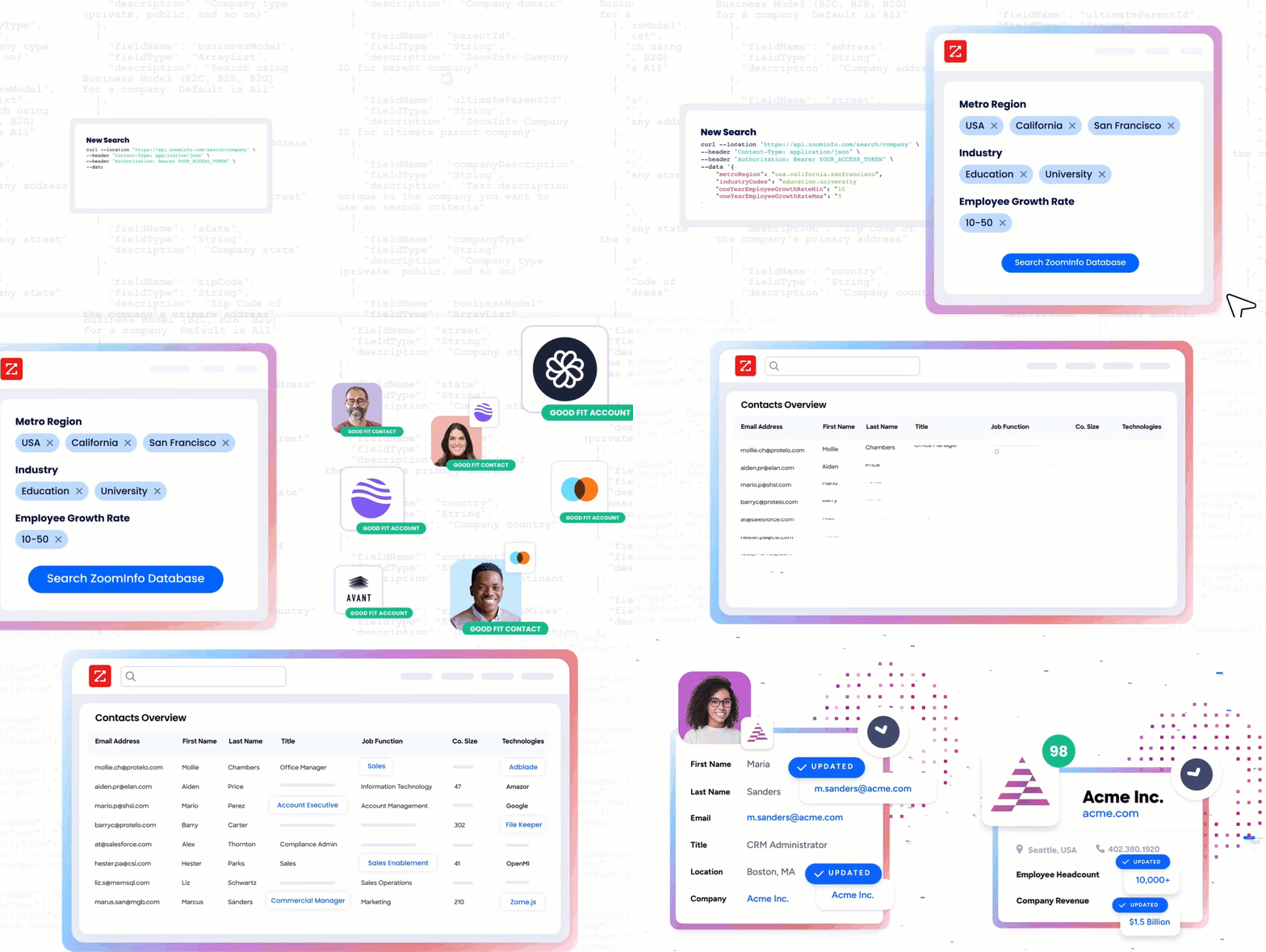
The Enterprise API provides programmatic access to ZoomInfo's data through four API surfaces (Data, Copilot, Marketing, and Platform). The ZoomInfo MCP server lets AI assistants query ZoomInfo's B2B data through natural language. API access is included in all relevant plans.
Source: ZoomInfo
The takeaway: HubSpot and Ortto integrate to execute your workflows. ZoomInfo integrates to enrich the data those workflows run on.
Support and onboarding experiences
HubSpot tiers its support by plan. Free users get community forums only. Starter adds email and chat. Professional and Enterprise add phone support. HubSpot Academy offers free courses and certifications (over 200,000 professionals certified), and a guided onboarding path is available for self-paced learning.
Source: Hubspot
A large Solutions Partner ecosystem handles complex implementations, which matters because HubSpot's professional services revenue is only ~2% of total revenue.
Ortto provides 24/6 live chat and email support on Starter and Professional plans. Enterprise adds a dedicated success manager, professional onboarding, an email deliverability consultant, and quarterly business reviews. Ortto's support quality comes up often in reviews, with the support team reporting a 4.88 CSAT score.
ZoomInfo redesigned its onboarding from 30 to 90 days, structured across planning, implementation, education, and adoption phases. The redesign produced a 25% improvement in CSAT. ZoomInfo University provides role-specific learning paths and certifications. Professional services are available through ZoomInfo Labs.

Source: ZoomInfo
Security and compliance comparison
All three platforms maintain strong security postures, with different certification coverage.
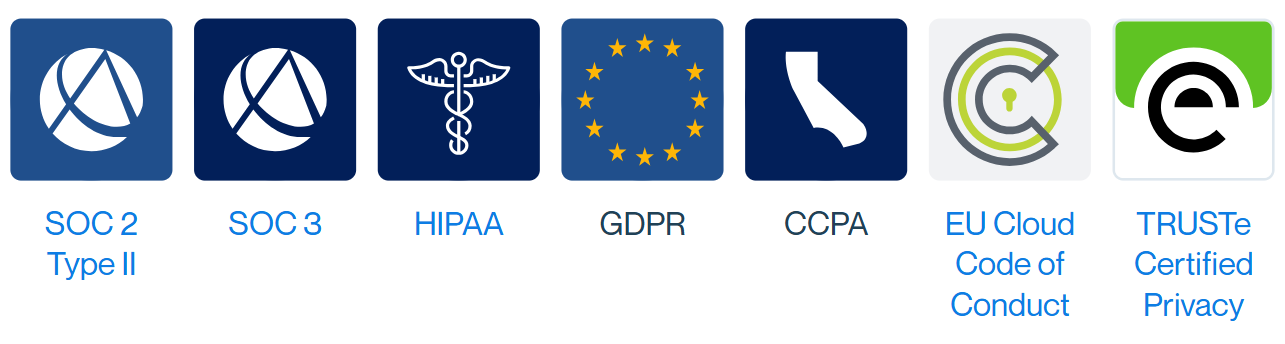
HubSpot: SOC 2 Type II, HIPAA attestation, GDPR and CCPA compliance, EU Cloud Code of Conduct Level 2, TRUSTe certified. Data encrypted with AES-256 at rest and TLS 1.2/1.3 in transit. EU data center available. Bug bounty program on Bugcrowd.
Source: HubSpot
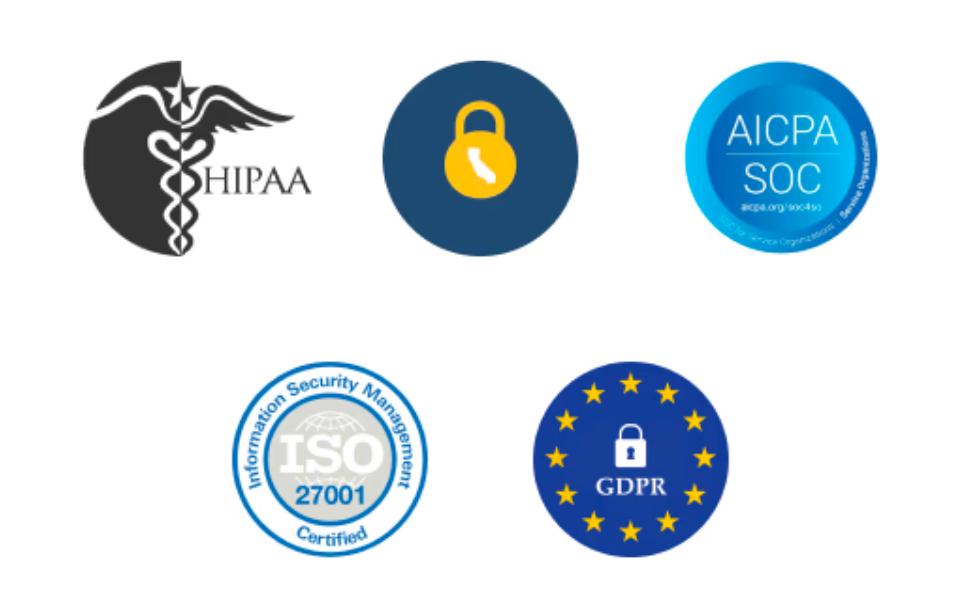
Ortto: GDPR, ISO 27001, ISO 27701, HIPAA, SOC 2, APRA, and EU-US Privacy Shield. Multi-region data hosting across EU, USA, and Australia. Penetration testing every 6 months. Published AI Ethics Policy committing that customer data is not used to train third-party AI models without consent.
Source: Ortto
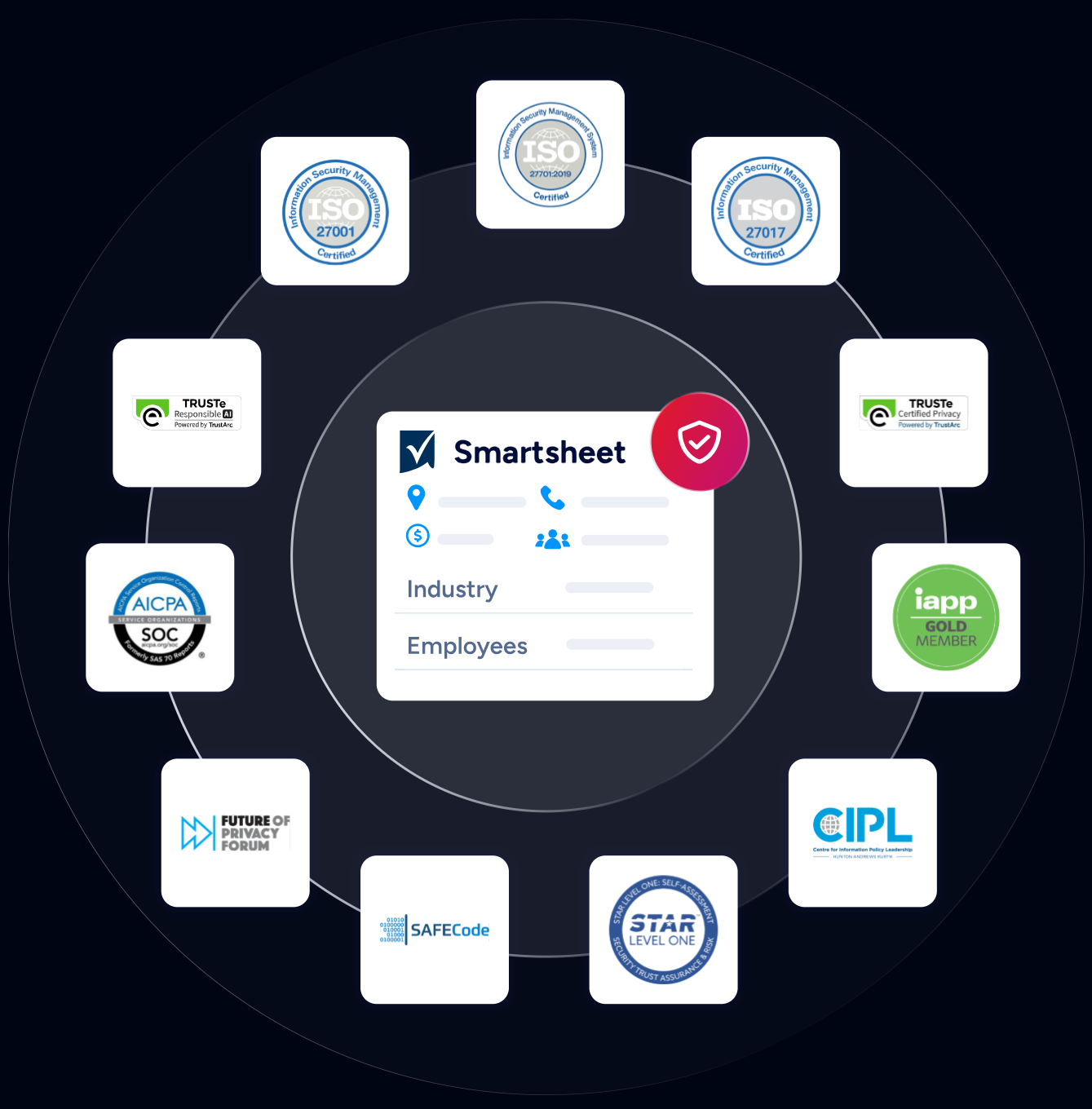
ZoomInfo: ISO 27001, ISO 27701, SOC 2 Type II, TRUSTe GDPR and CCPA certifications, all renewed annually. Registered data broker in California and Vermont. Dedicated Trust Center.
Source: ZoomInfo
For regulated industries (healthcare, financial services), all three platforms have credible compliance foundations. Ortto's ISO 27701 privacy certification and multi-region hosting give it an edge for organizations with strict data residency requirements. ZoomInfo's registered data broker status reflects the additional compliance burden of operating a B2B data platform.
HubSpot vs. Ortto vs. ZoomInfo: Which should you choose?
The right combination depends on what your team needs most.
Choose HubSpot if:
You want marketing, sales, service, and CRM in one platform
Your team has the budget for per-seat pricing across multiple hubs
You value a large integration ecosystem and established partner network
You're moving upmarket and need enterprise features like custom objects, SSO, and sandbox environments
You prefer a permanent free tier to test before committing
Choose Ortto if:
You're a marketing team that wants CDP-level data access without engineering dependency
Unlimited seats matter more than a built-in CRM
You run product-led growth and need event-driven behavioral automation
You operate in healthcare or financial services and need HIPAA/ISO 27001 compliance
You already have a CRM (Salesforce, HubSpot, or Pipedrive) and need a focused marketing platform
Use ZoomInfo alongside either platform if:
Your B2B contact data is incomplete, outdated, or unverified
You need buyer intent signals to know which accounts are researching solutions
Your sales team spends too much time on manual prospecting instead of selling
You want account intelligence that explains why deals move, not just that they moved
You need enriched data flowing into your CRM and marketing platform automatically
See how ZoomInfo's data and intelligence layer works with your existing stack.
HubSpot and Ortto both excel at what happens after you know who to target: engaging, nurturing, and converting. ZoomInfo excels at what happens before: identifying the right accounts, verifying the data, and surfacing the buying signals that make your engagement effective. The strongest go-to-market teams don't choose between engagement platforms and data intelligence. They use both.
Snowflake uses ZoomInfo data for at least one-third of the most critical features in their Account Propensity Scoring model, feeding over 70 company and technographic data fields. Accounts monitored using ZoomInfo-powered scores showed 90% higher opportunity open rates and 2x higher customer conversion rates. (Snowflake case study)
HubSpot vs. Ortto vs. ZoomInfo FAQ
What is the core difference between HubSpot, Ortto, and ZoomInfo?
HubSpot is a customer platform combining CRM, marketing automation, sales pipeline management, customer service, and content tools in a single system. Ortto is a marketing automation platform with a built-in customer data platform, analytics, and support tools, but no native CRM.
ZoomInfo is a B2B data intelligence platform that provides verified contact data, company information, and buyer intent signals to power the tools your team already uses.
Which platform is cheapest for a small marketing team?
HubSpot's Starter bundle is $15/seat/month, but costs escalate at Professional and Enterprise tiers with mandatory onboarding fees ranging from $1,500 to $7,000.
ZoomInfo Lite is free permanently with 10 monthly export credits, making it the lowest-cost way to start enriching your data.
Can I use ZoomInfo with HubSpot or Ortto?
Yes. ZoomInfo has a native HubSpot integration available through its App Marketplace, enabling direct CRM enrichment, lead routing, and data sync. For Ortto, ZoomInfo data can flow through integrations and APIs. ZoomInfo also offers API access on all relevant plans and an MCP server for connecting to any AI-compatible tool.
Does Ortto replace the need for a CRM?
No. Ortto does not include native pipeline management, deal tracking, or sales forecasting. It integrates with Salesforce, HubSpot, Pipedrive, and Microsoft Dynamics 365 as external CRMs. If your team needs both marketing automation and sales pipeline management in one system, HubSpot is the more complete option.
How do the AI capabilities compare across the three platforms?
HubSpot's Breeze AI spans the entire platform, with agents for customer support, sales prospecting, content creation, and data analysis. Ortto's AI focuses on marketing, with AI-powered journey decision shapes, natural language audience filtering, and predictive subject line scoring.
ZoomInfo's AI focuses on buyer intelligence, using the GTM Context Graph to reason about deal patterns, surface in-market accounts, and generate context-aware outreach.
Which platform has better data quality for B2B contacts?
ZoomInfo is designed for B2B data quality, with 500M contacts verified through a multi-source pipeline that includes 300+ human researchers and up to 95% accuracy on first-party data.
HubSpot's Smart CRM enriches records from emails, calls, and web activity, but relies on the data already in your system. Ortto's CDP collects behavioral data from integrated sources but does not independently verify or enrich contact information from external databases.
What are the contract and cancellation terms for each platform?
HubSpot subscriptions can only be canceled at the end of the commitment term, with no mid-contract cancellations or refunds. Ortto subscriptions can be canceled at any time, effective at the next renewal date, with fees being non-refundable. ZoomInfo uses annual contracts as standard, with multi-year commitments offering pricing advantages.
Which platform is best for account-based marketing?
ZoomInfo is the strongest ABM foundation, recognized as a Leader in the Gartner Magic Quadrant for ABM Platforms in both 2024 and 2025. Its buyer intent data tracks signals from 210 million IP-to-Organization pairings, and its native DSP delivers display ads based on 300+ company attributes.
HubSpot offers ABM features through Marketing Hub and Sales Hub working together. Ortto launched an ABM suite in December 2025 with account-based journeys, activities, and reporting, but its ABM capabilities are newer and less tested at scale.
See how HubSpot stacks up against other tools:
