
If you're comparing HubSpot and Thryv, the real question isn't which platform is better. It's what kind of business you're running.
HubSpot is a CRM for B2B companies with sales teams, marketing departments, and service operations. Thryv is a management platform for local service businesses that need to get found online, book appointments, and collect payments. The comparison matters because many growing businesses aren't sure which category they fall into. Here's what you should be asking:
Are you selling to other businesses, or directly to local consumers?
Do you need marketing automation and deal pipeline management, or online listings and reputation management?
Is your growth limited by finding new prospects, or by managing the customers already walking through your door?
Do you have dedicated marketing and sales staff, or is the owner handling everything?
How important is data intelligence about your buyers versus operational simplicity?
Here's what we recommend:
HubSpot is the CRM platform for B2B companies that need marketing, sales, and service working from shared data. Its six connected Hubs (Marketing, Sales, Service, Content, Data, and Commerce) share a single Smart CRM, so a lead captured by marketing flows to sales without manual handoff. Breeze AI automates prospecting, customer support, and content creation across the platform.
With 288,706 customers and over 2,000 app integrations, HubSpot offers real depth for companies ready to use it. But that depth comes with pricing complexity: per-seat, per-hub billing with mandatory onboarding fees at higher tiers means costs escalate as teams grow.
Thryv is the platform for local service businesses that need to be found online and manage daily operations without hiring a marketing coordinator. Its Marketing Center syncs business information across 60+ listing directories, manages reviews with AI-generated responses, and handles social media scheduling.
Its Business Center covers appointment booking, invoicing, payment collection, and a self-service client portal. Every paid account gets 24/7 support and a dedicated representative. The tradeoff: bundles start at $646/month with a six-month minimum commitment, which creates sticker shock for the smallest businesses.
Both platforms are execution engines. They help you manage and act on what you already know about your customers. But for B2B companies, the bigger challenge is often upstream: identifying the right prospects, knowing when they're researching solutions, and understanding which accounts deserve your team's attention right now. These are intelligence questions that CRMs weren't designed to answer.
ZoomInfo is an AI GTM platform that provides the B2B intelligence layer neither HubSpot nor Thryv offers natively.
Built on a large B2B dataset (500M contacts, 100M companies, 135M+ verified phone numbers, and 200M+ verified business emails), ZoomInfo's GTM Context Graph combines this data with your CRM records, conversation transcripts, and behavioral signals to reveal not just what's happening in your pipeline, but why deals move or stall.
ZoomInfo integrates directly with HubSpot, enriching contact records and surfacing buying signals inside the CRM your team already uses. Sellers work from GTM Workspace, where AI agents draft outreach based on full account context. Marketers and RevOps build targeted plays in GTM Studio. Developers can pipe the same intelligence into any tool through APIs and MCP.
If your growth depends on reaching the right B2B buyers before your competitors do, see how ZoomInfo's intelligence layer works with your CRM.
HubSpot vs. Thryv vs. ZoomInfo at a glance
HubSpot | Thryv | ZoomInfo | |
|---|---|---|---|
Built for | B2B scaling companies | Local service businesses | B2B go-to-market teams |
Core function | CRM + marketing/sales/service automation | Online presence + business operations | B2B data intelligence + GTM execution |
CRM depth | Enterprise-grade with custom objects | Basic client management | 500M+ contact/company intelligence layer |
Marketing approach | Inbound automation and content | Local listings, reputation, social media | Account-based marketing and buyer intent |
AI capabilities | Breeze agents across all Hubs | Lead scoring, review response, content | GTM Context Graph with AI-powered execution |
Integrations | 2,000+ app marketplace | Zapier + select native integrations | 120+ native + API/MCP for any tool |
Free tier | Free CRM (unlimited contacts) | 30-day trial (Marketing Center) | ZoomInfo Lite (permanent, 10 exports/month) |
Starting price | $20/seat/month (Starter) | $244/month (standalone product) | Custom-quoted |
Support model | Tiered by plan | 24/7 with dedicated rep on all paid plans | Tiered + dedicated CSM at Enterprise |
Best for | B2B companies scaling marketing and sales | Owner-operated local service businesses | B2B teams that need buyer intelligence |
Built for different businesses
The HubSpot vs. Thryv comparison reveals a basic divide in business software: platforms for companies that sell to other companies, and platforms for businesses that serve local consumers.
HubSpot targets what it calls "scaling companies": businesses with 20 to 2,000 employees that have outgrown spreadsheets and disconnected tools.
Its architecture assumes you have separate marketing, sales, and service teams (or at least distinct functions) that need to share customer data.
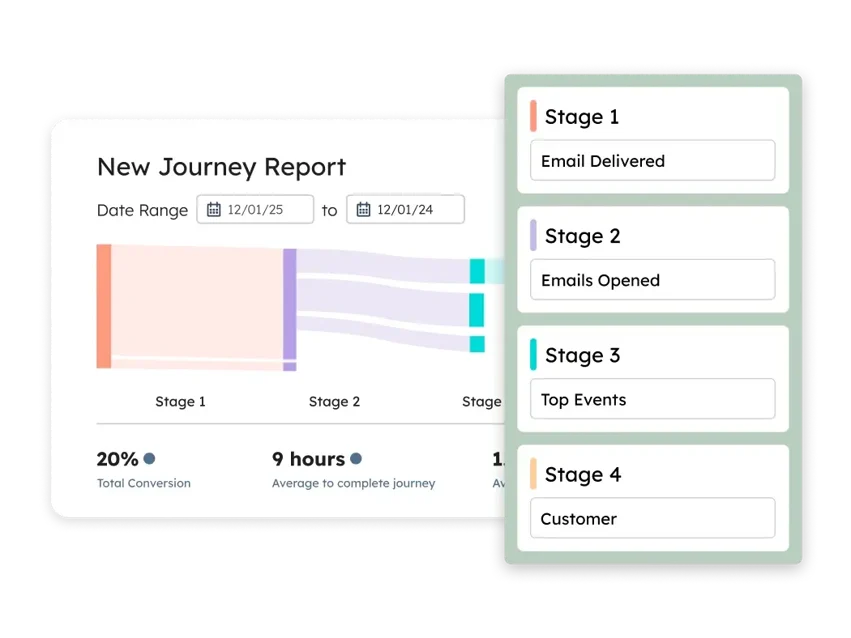
The Starter Customer Platform bundles entry-level versions of every Hub for small teams, while Enterprise tiers support custom objects, field-level permissions, and up to 15 million contacts (expandable to 50 million).
Source: HubSpot
Thryv targets owner-operated small businesses in local service trades.
The platform names over 50 industries it serves, with the strongest presence in home services, beauty and wellness, healthcare, legal, pet services, and auto services. Thryv's design assumes you don't have a marketing team. Instead of workflow automation and deal pipelines, you get online booking, invoice templates, and review request automation.
ZoomInfo occupies a different space entirely.
It's not a CRM or a business management platform. It's the intelligence layer that feeds accurate, verified B2B data into whatever CRM or workflow your company uses.
ZoomInfo's ideal customer is an enterprise or upper mid-market B2B company that needs to identify decision-makers, track buying signals, and execute targeted outreach at scale. Customers include Adobe, Microsoft, Snowflake, PayPal, and Databricks.
This means the choice isn't always one-or-the-other. A B2B company might use HubSpot for execution and ZoomInfo for intelligence. A local plumber needs Thryv. A SaaS company selling to enterprises needs both a CRM and the data to power it.
CRM and customer management
HubSpot and Thryv both call themselves CRMs, but they solve different problems at different scales.
HubSpot's Smart CRM is a full-featured B2B database.
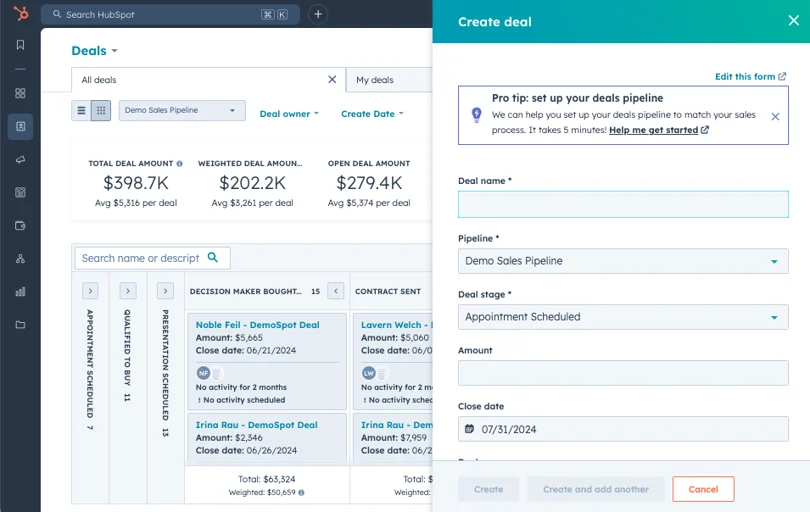
Every contact, company, deal, and ticket lives in a shared data layer that all six Hubs access. You get custom objects for modeling any business data structure, deal pipelines with customizable stages and scoring, and field-level permissions so different teams see different data.
Source: HubSpot
The CRM auto-enriches records from emails, calls, and web activity, and the Data Agent lets you ask natural-language questions about your customer data.
Thryv's Business Center takes a simpler approach.
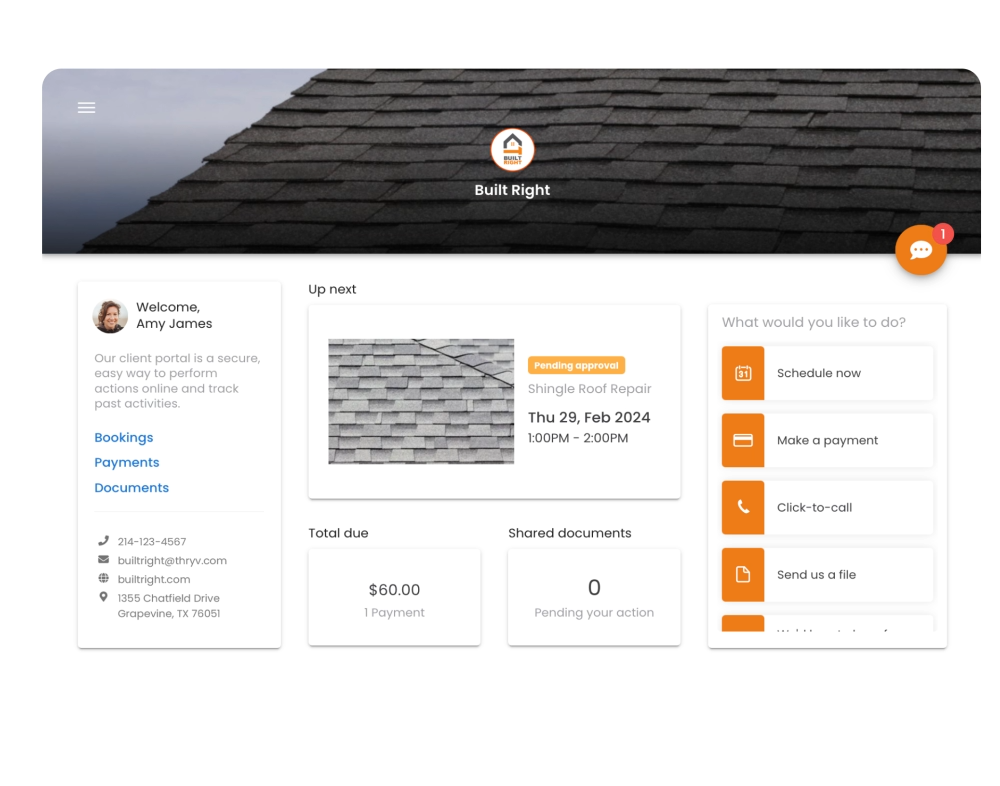
Every customer gets a Client Card that stores contact information, conversation history, quotes, appointments, and payments. When a customer books through the Client Portal, their card is created automatically.
Source: Thryv
It handles what a local service business needs: who the customer is, when their next appointment is, and whether they've paid. But it lacks the pipeline depth, custom objects, and segmentation that B2B sales teams require. Some reviewers note the CRM is less capable than dedicated competitors for businesses with complex sales processes.
ZoomInfo complements CRM platforms rather than replacing them.
Its database of 500M contacts and 100M companies provides the intelligence that CRMs lack natively: verified direct-dial phone numbers, business email addresses, company attributes, org charts, and technographics.
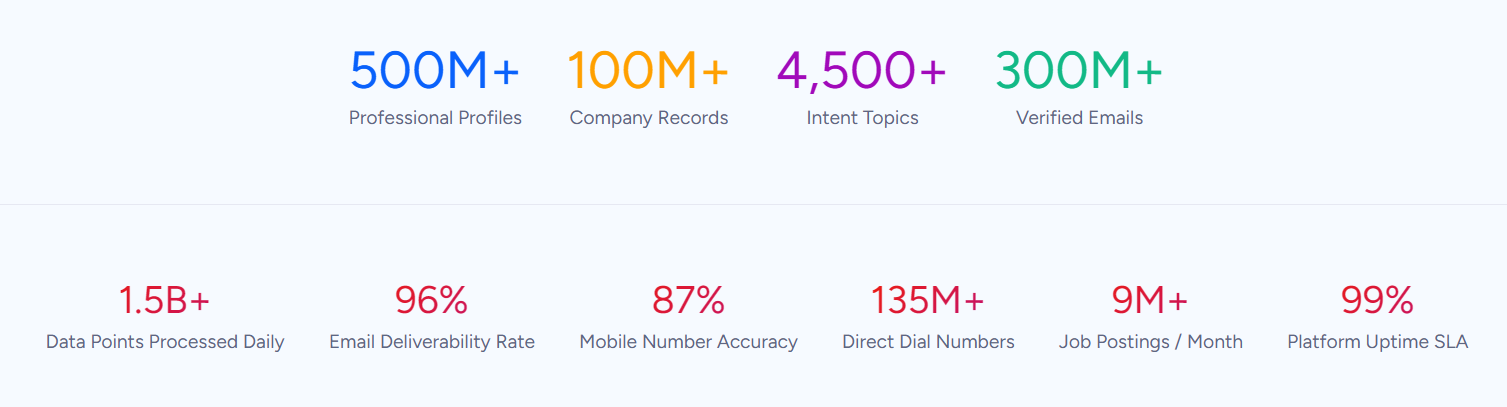
Through its native HubSpot integration, ZoomInfo enriches CRM records automatically, so your sales team works from complete, current data instead of whatever a prospect entered on a web form.
Vensure scaled prospecting with ZoomInfo's B2B data. VP of Revenue Operations William Kenimer said: "ZoomInfo gives us the information we need to execute. We don't have to go through and spend our time digging. It's already there, so we can be three steps ahead." (Vensure)
Marketing: inbound vs. local visibility vs. buyer intelligence
Each platform approaches customer acquisition from a different direction.
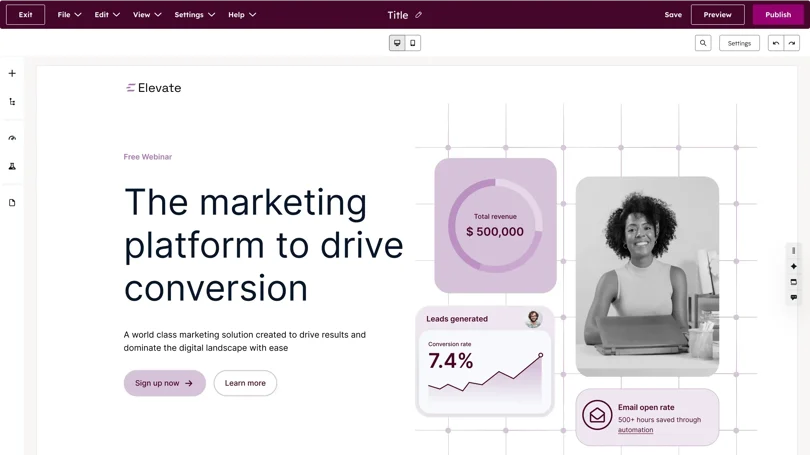
HubSpot Marketing Hub runs on the inbound methodology HubSpot invented.
The core workflow: create content that attracts visitors, capture leads with forms and landing pages, nurture them through automated email workflows, and hand qualified leads to sales.
Source: HubSpot
The platform includes social media management, ad tracking, multi-touch attribution reporting, and a focus on Answer Engine Optimization (AEO) to help content appear in AI-generated search results.
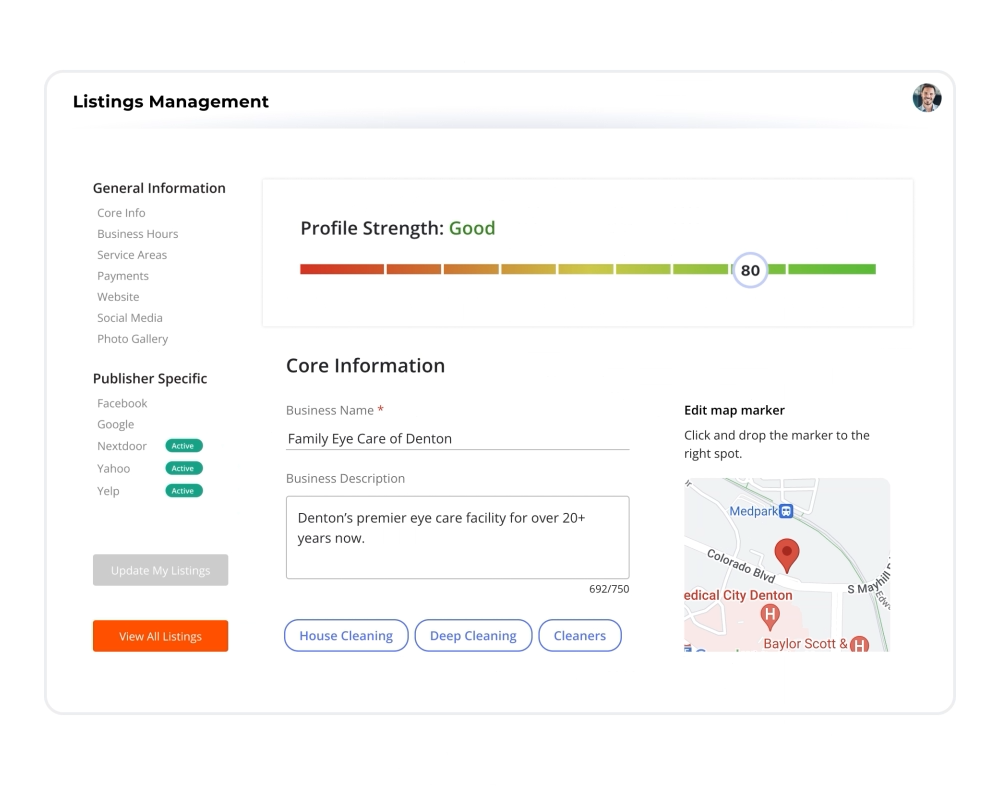
Thryv Marketing Center starts with a more basic need: being visible online at all.
For a plumber or salon owner, the marketing challenge isn't building nurture sequences. It's making sure their business appears when someone searches "plumber near me." Marketing Center updates business information across 30+ listing directories simultaneously, manages reviews with AI-generated response options, and schedules social posts across Facebook, Instagram, LinkedIn, TikTok, and other channels.
Source: Thryv
The platform also includes managed SEO services where Thryv's team handles keyword strategy and content creation, a full-service approach HubSpot doesn't offer.
ZoomInfo Marketing takes an account-based approach.
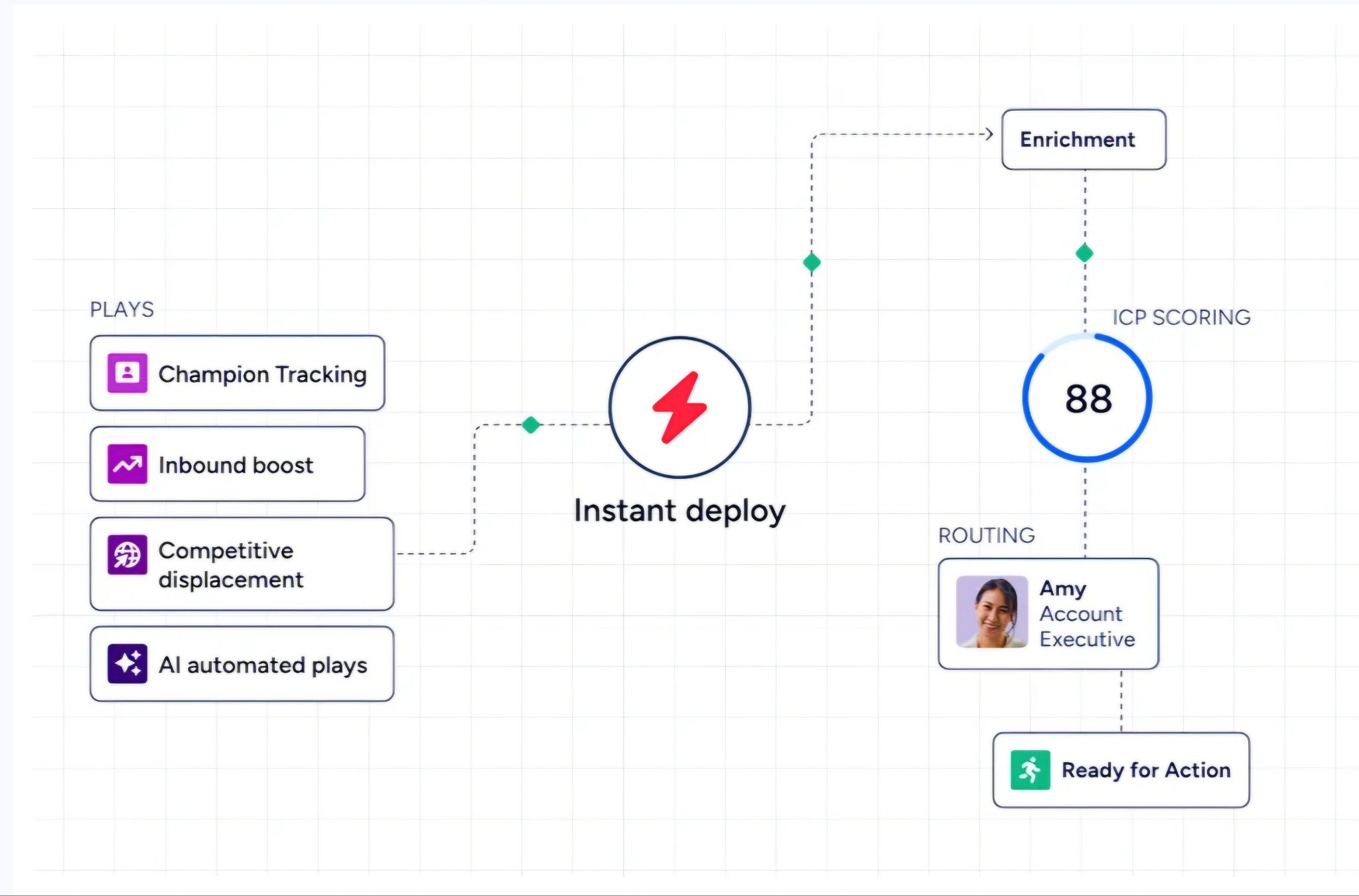
Instead of waiting for inbound leads or relying on local visibility, ZoomInfo identifies companies researching relevant topics through its buyer intent data, then enables precise targeting across display ads, email, and social channels.
GTM Studio lets marketers describe audiences in natural language and launch multi-channel plays in minutes instead of weeks. The platform also identifies anonymous website visitors at the contact level, not just the company level, and its FormComplete tool reduces web forms to a single field while auto-appending the rest from ZoomInfo's database.
Source: ZoomInfo
Seismic attributed 39% of active pipeline to opportunities identified or influenced by ZoomInfo signals. Chief Business Officer Toby Carrington said: "It's bringing data together faster than anyone could. It's both a time saving and a quality improvement." (Seismic)
AI capabilities comparison
All three platforms have invested in AI, but their implementations reflect their different audiences.
HubSpot's Breeze is an AI layer running across all six Hubs.
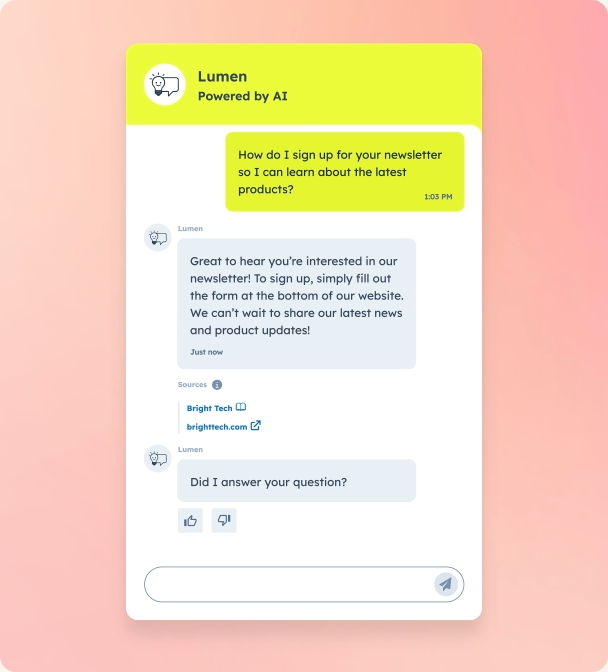
The Customer Agent handles support conversations across chat, email, and WhatsApp, resolving over 50% of inquiries without human involvement. The Prospecting Agent monitors buying signals and drafts personalized outreach using the complete HubSpot customer history. The Data Agent answers natural-language questions about CRM data.
Source: HubSpot
These agents come with Professional and Enterprise subscriptions and run on HubSpot Credits, a consumption-based currency. Several Breeze features, including AI-Powered Segmentation and Marketing Studio, remain in beta.
Thryv's AI suite is built for non-technical owners who need practical help now.
AI Lead Insights scores every incoming lead and recommends next steps. AI Review Response generates three draft replies for each incoming review across 20+ platforms. CaptionAI and ImageAI create social media posts and visuals from prompts, formatted for each network.

Source: Thryv
An AI-Powered Website Builder can create a business website with optimized content in minutes. These features work because they're embedded in Thryv's execution workflows: the AI creates the content and the platform publishes it in one step.
ZoomInfo's AI operates at a different level.
The GTM Context Graph doesn't score leads or draft social posts. It processes 1.5B+ data points daily to understand why deals move or stall, which signal combinations predict closed-won outcomes, and which accounts match your actual win patterns.
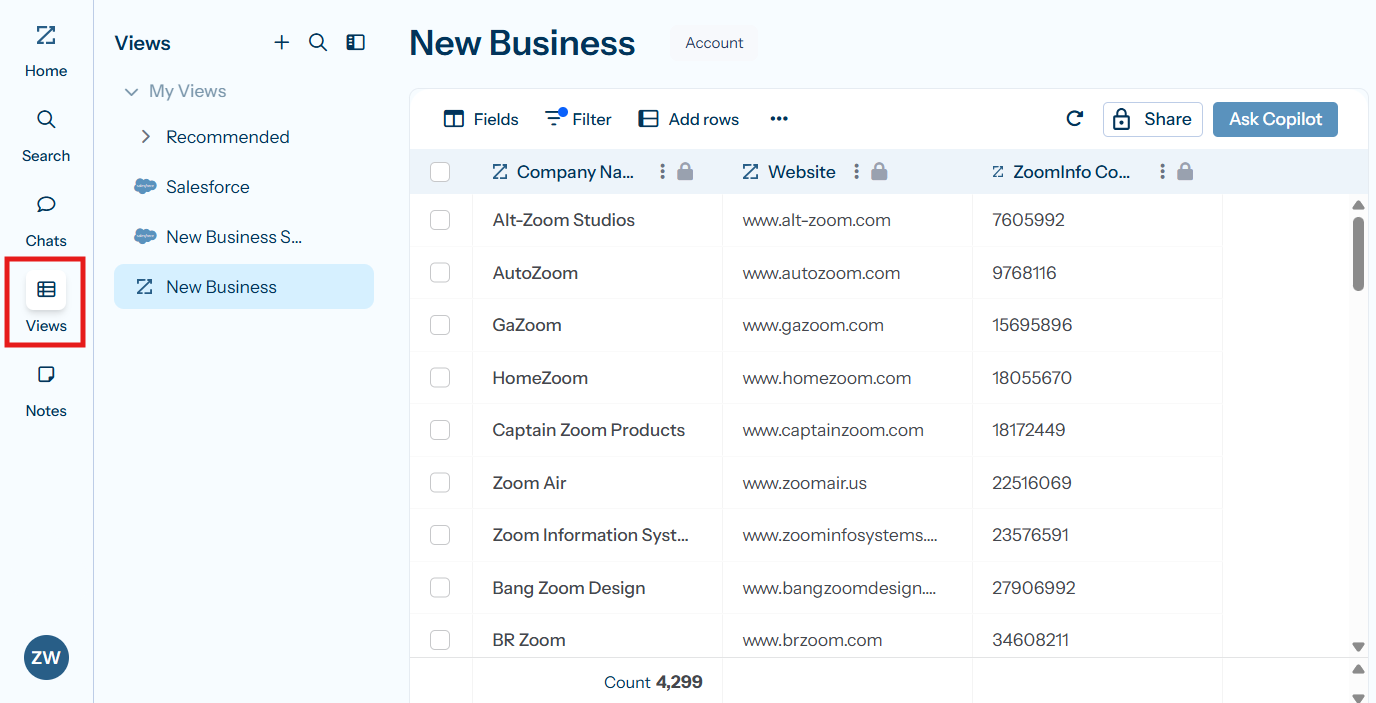
In GTM Workspace, AI agents handle account research, generate follow-ups based on full deal context, monitor buying signals, and update CRM fields without rep intervention.
Source: ZoomInfo
The difference is the data foundation: HubSpot's AI knows what's in your CRM. ZoomInfo's AI combines your CRM data with a broad B2B dataset, so it reasons across both internal history and external market signals at the same time.
The intelligence gap CRMs don't fill
This is where the comparison shifts from choosing between platforms to understanding what's missing from either one.
HubSpot is a strong CRM. Thryv is a strong local business platform.
But both share a basic limitation: they only know what you put into them. HubSpot's Smart CRM enriches records from emails and calls, but it can't tell you about the 10,000 companies in your target market that have never visited your website. Thryv's Client Cards track your existing customers, but they can't identify which businesses are looking for the services you provide.
For B2B companies, this gap is where revenue hides. Your CRM records that a deal moved to Stage 3. But as ZoomInfo's Chief Product Officer Dominik Facher writes: "The CRM recorded the state change." "It has no record of why it happened."
Maybe the CFO joined the last call and asked about ROI. Maybe a competitor got shortlisted. Maybe the company just raised a funding round and expanded its buying committee. The CRM doesn't capture these signals because it wasn't built to.
ZoomInfo's GTM Context Graph was built for this.
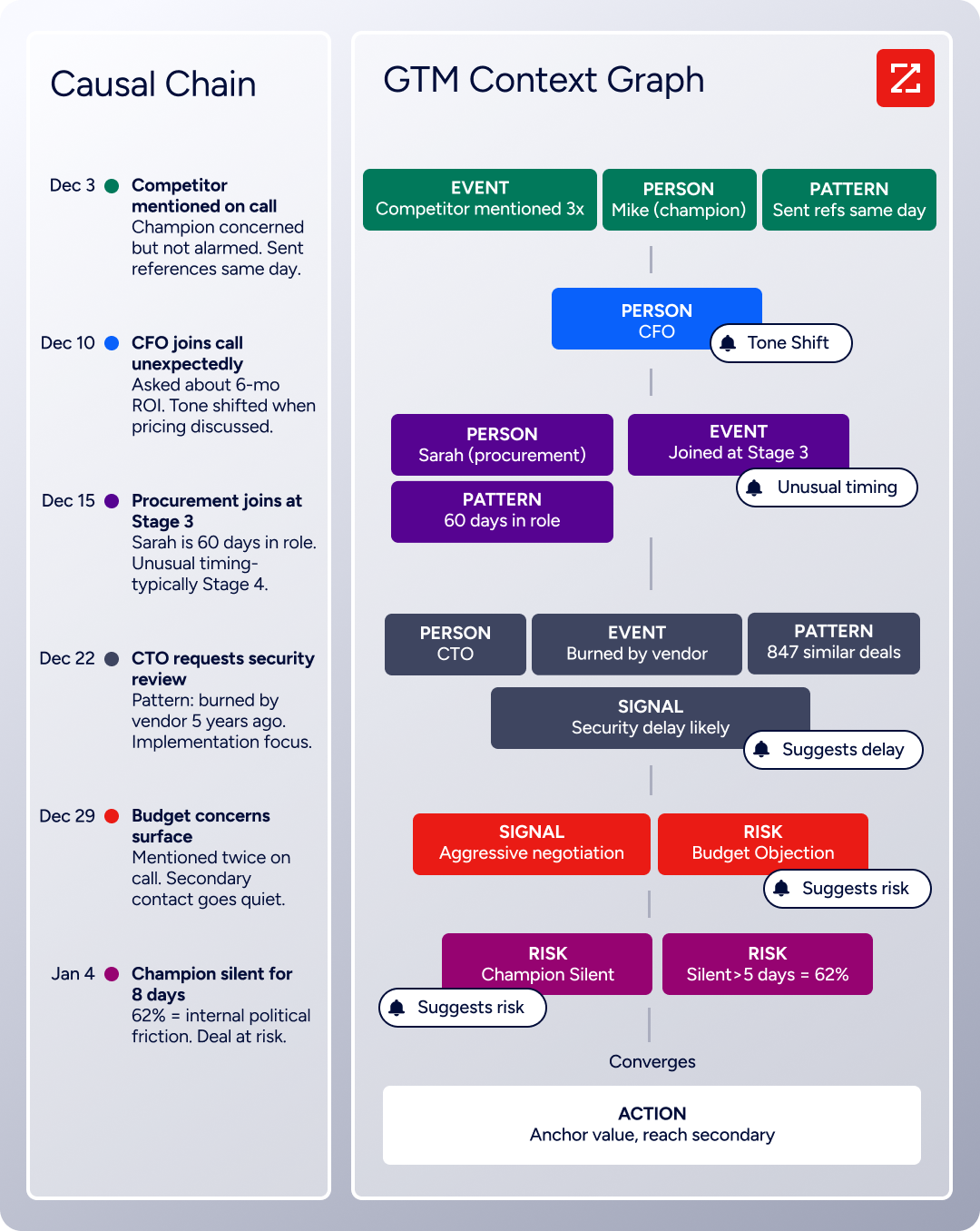
It unifies ZoomInfo's third-party data (who the buyers are, what technologies they use, what topics they're researching) with your first-party data (CRM records, call transcripts, email threads, engagement history) into a single intelligence layer.
The result is AI that doesn't just know the CFO joined the call. It recognizes that executive sponsorship entering at this deal stage, combined with ROI-focused questions and third-party signals showing the company is hiring for related roles, matches the pattern behind your closed-won deals.
That intelligence reaches teams through three channels. GTM Workspace gives sellers a prioritized account feed with AI-drafted outreach that addresses specific prospect concerns. GTM Studio gives marketers a canvas for building targeted plays that launch in minutes rather than weeks. And APIs and MCP expose the same intelligence to any custom application or AI agent.
For B2B companies evaluating HubSpot, ZoomInfo isn't a replacement. It's the intelligence layer that makes HubSpot more effective. The native integration enriches every record, surfaces intent signals, and gives your sales team the context to have better conversations with the right people at the right time.
BDO Canada activated ZoomInfo's data within internal systems to scale account identification. Senior Marketing Intelligence Analyst Jerry Wilson reported: "The plug-and-play aspect of the API means I can integrate it very easily into any process and get information at a moment's notice," achieving an 87% reduction in time spent on data dashboard updates. (BDO Canada)
For a detailed side-by-side look at how HubSpot and ZoomInfo compare on data, integrations, and go-to-market capabilities, see our HubSpot vs. ZoomInfo comparison.
Pricing reflects different audiences
The three platforms price according to who they serve and how they deliver value.
HubSpot uses a hybrid model combining seat-based pricing, contact-based tiers, and flat-rate hub subscriptions.
The free CRM includes unlimited contacts and never expires, but is capped at two users with HubSpot branding on customer-facing tools. Starter plans run $20/seat/month (monthly) or as low as $9/seat/month (annual) for Sales and Service Hubs.
Marketing Hub Professional starts at $800/month with a $3,000 mandatory onboarding fee. Marketing Hub Enterprise runs $3,600/month with a $7,000 onboarding fee. A hidden cost worth noting: when mixing hub tiers across departments, all Core Seats are billed at the rate of the highest tier.
Thryv uses flat monthly rates per product or bundle.
Marketing Center starts at $244/month (annual billing). Business Center also starts at $244/month. Bundles offer savings: Kickstart at $646/month (Marketing Center Pro plus managed ads), Ignite at $881/month (adds Business Center or Keap CRM), and Accelerate at $1,475/month (adds SEO services).
All bundles carry a $250 onboarding fee, with an additional $500 implementation fee if Keap is selected. The initial contract runs six months, then converts to month-to-month. ThryvPay processing fees (2.6-2.9% + $0.30 per transaction) are separate.
ZoomInfo uses custom-quoted, consumption-based pricing with no publicly listed prices.
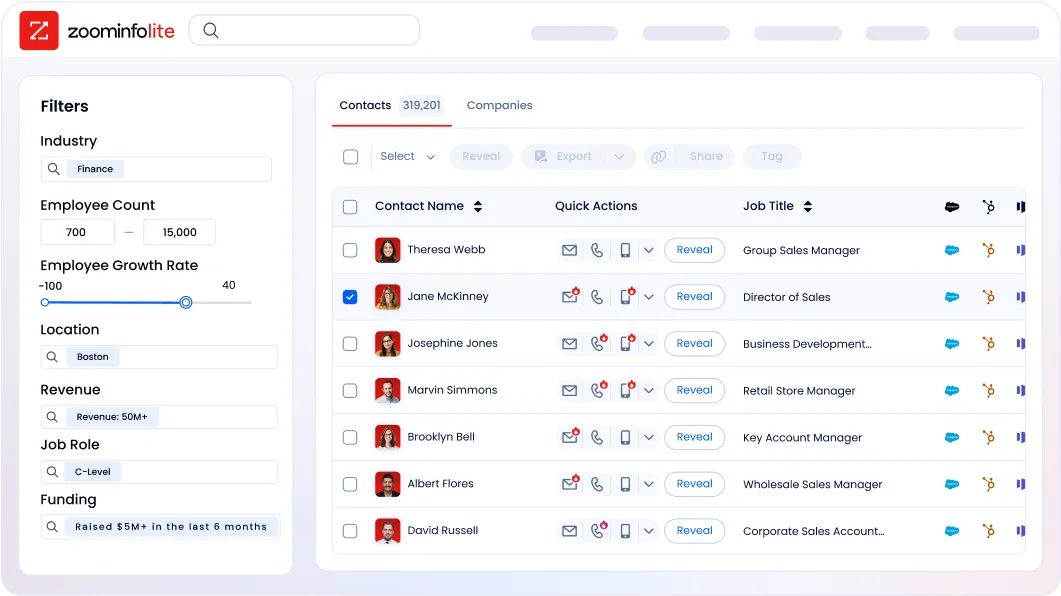
Costs scale around seats, credit volume (1 credit = 1 data export), and features accessed. ZoomInfo Lite is a permanent free tier with 10 monthly exports and access to the core database, while a 7-day free trial opens up additional features. The lack of published pricing makes direct comparison difficult, but ZoomInfo's pricing reflects the depth of its data and the enterprise audience it serves.
The cost math depends on your situation. A five-person local plumbing company comparing Thryv ($646/month for the Kickstart bundle) to HubSpot would find HubSpot Starter cheaper on the surface ($20/seat/month), but the moment they need marketing automation at the Professional tier, HubSpot's costs jump well above Thryv's bundled price.
For B2B companies, adding ZoomInfo to a HubSpot stack is an additional investment, but customers report measurable returns: Snowflake achieved 200% higher conversion rates on top-scoring accounts powered by ZoomInfo data.
Support and learning curve
HubSpot tiers its support by plan.
Free users get community forums only. Starter adds email and chat. Professional and Enterprise add phone support. HubSpot Academy offers free courses and certifications, with over 200,000 certified professionals to date. The platform is widely considered easier to learn than enterprise competitors, with HubSpot claiming customers achieve meaningful value within 90 days.
Thryv differentiates on support.
Every paid account gets 24/7 unlimited support, unlimited onboarding sessions, and a dedicated representative regardless of plan level. Onboarding is structured around guided sessions rather than self-serve setup: a Client Success Manager walks the owner through configuration across multiple calls, aiming for daily active use within 30 days. Over 50 in-app tutorials are available.
G2 reviewers cite support quality as the primary reason customers stay. Those same reviewers, however, note a learning curve for infrequently-used features.
ZoomInfo provides support through a Help Center with knowledge base articles, ZoomInfo University with role-specific learning paths and certifications, release notes, and a community forum.

Direct support is available via phone and form. Enterprise accounts get a dedicated customer success manager. ZoomInfo's onboarding program (restructured from 30 to 90 days across planning, implementation, education, and adoption phases) produced a 25% satisfaction improvement and won Rocketlane's Golden Comet award for Best Customer Onboarding Team of 2024.
HubSpot vs. Thryv vs. ZoomInfo: Which should you choose?
The right choice depends on your business type, your growth model, and where your bottleneck sits.
Choose HubSpot if:
You're a B2B company that needs marketing automation, sales pipeline management, and customer service in one platform
You have or plan to build dedicated marketing and sales teams
You want a CRM that connects every customer touchpoint
You value a large integration ecosystem with 2,000+ apps
You can invest in Professional or Enterprise tiers to unlock the platform's full depth
Choose Thryv if:
You run a local service business in home services, beauty, healthcare, legal, auto, or a similar trade
Getting found online, managing reviews, and booking appointments are your core challenges
You want one platform for scheduling, invoicing, payments, and marketing without managing integrations
You prefer hands-on onboarding with a dedicated representative over self-serve setup
You value 24/7 live support regardless of plan level
Choose ZoomInfo if:
You're a B2B company that needs to identify and reach the right buyers before competitors do
Accurate contact data, buyer intent signals, and account intelligence are critical to your sales process
You want AI that reasons about why deals move, not just what happened in the CRM
You need data that works inside your existing CRM (HubSpot, Salesforce, or Dynamics) or through APIs in any tool
You're building an intelligence-driven go-to-market operation, not just a contact database
See how ZoomInfo works with a free ZoomInfo Lite account or a 7-day trial.
The pattern is clear. Local service businesses need Thryv's combination of online visibility, operational tools, and dedicated support. B2B companies need HubSpot's CRM depth and marketing automation. And B2B companies that want their CRM to drive revenue (not just track it) need the intelligence layer that ZoomInfo provides on top.
The most effective B2B go-to-market stacks pair a CRM with an intelligence platform. HubSpot handles execution. ZoomInfo provides the data, signals, and context that make every execution step smarter. For local businesses, Thryv handles both sides in one package.
HubSpot vs. Thryv vs. ZoomInfo FAQ
What is the fundamental difference between HubSpot, Thryv, and ZoomInfo?
HubSpot is a CRM and marketing automation platform for B2B companies that need to unify marketing, sales, and service teams on shared data.
Thryv is a business management platform for local service businesses, covering online listings, reputation management, scheduling, invoicing, and payments.
ZoomInfo is a B2B data intelligence platform providing verified contact data, buyer intent signals, and AI-powered account intelligence that integrates with CRMs like HubSpot to make go-to-market teams more effective.
Which platform is cheapest to get started with?
HubSpot's free CRM is the lowest-cost entry point, with no time limit and support for unlimited contacts (capped at two users). ZoomInfo Lite is also permanently free with 10 monthly data exports and access to the core database. Thryv offers a 30-day free trial of Marketing Center but does not maintain a permanent free plan.
For paid plans, HubSpot Starter begins at $9-20 per seat per month. Thryv standalone products start at $244 per month. ZoomInfo uses custom-quoted pricing with no published rates.
Can ZoomInfo and HubSpot be used together?
Yes. ZoomInfo integrates with HubSpot through a native marketplace integration. ZoomInfo enriches HubSpot CRM records with verified contact data, company attributes, and buying signals. B2B companies often use both: HubSpot as the CRM execution platform and ZoomInfo as the intelligence layer that tells sales and marketing teams who to target and when to engage.
Which platform is best for a local service business?
Thryv is built for local service businesses. Its Marketing Center manages listings across 60+ directories, handles review responses with AI, and schedules social media posts. Its Business Center covers appointment booking, invoicing, payment collection, and a client portal.
HubSpot and ZoomInfo are designed for B2B companies and lack Thryv's local visibility, scheduling, and reputation management features.
How do the AI capabilities compare?
HubSpot's Breeze includes AI agents for customer service, sales prospecting, data analysis, and content creation, all drawing on CRM data.
Thryv's AI suite helps local businesses with lead scoring, review responses, social media content, and website creation.
ZoomInfo's GTM Context Graph processes 1.5 billion data points daily, combining CRM data with a broad B2B dataset to reason about why deals move or stall and which accounts to prioritize based on actual win patterns.
Which platform has the best support model?
Thryv provides the most accessible support, with 24/7 availability, unlimited onboarding, and a dedicated representative on every paid account regardless of tier. HubSpot tiers its support: community-only for free users, email and chat for Starter, and phone support for Professional and Enterprise. ZoomInfo provides tiered support with a dedicated customer success manager at the Enterprise level and a 90-day structured onboarding program.
What kind of data does ZoomInfo provide that HubSpot and Thryv don't?
ZoomInfo maintains a database of 500 million contacts and 100 million companies, including 135 million verified phone numbers, 120 million direct dials, and 200 million verified business email addresses.
It also provides buyer intent data tracking which companies are researching specific topics, technographic profiles of what software companies use, and org charts revealing decision-maker hierarchies. Neither HubSpot nor Thryv generates this level of third-party B2B intelligence natively.
Do I need all three platforms?
No. A local service business typically needs only Thryv. A B2B company needs a CRM (HubSpot is a strong choice) and may benefit from adding ZoomInfo's intelligence layer, especially if outbound prospecting, account-based marketing, or enterprise sales are central to the business model.
The combination of HubSpot for execution and ZoomInfo for intelligence is common among B2B companies that want to increase pipeline generation and deal velocity.
See how HubSpot measures up against other platforms:
