

If you're comparing IFS CRM and Salesforce, you're facing a decision that goes deeper than picking a CRM. These two platforms solve different problems for different organizations.
IFS embeds customer management inside an industrial operations platform. Salesforce is the world's largest standalone CRM, built to manage every customer-facing interaction across sales, service, marketing, and commerce. Comparing them is like comparing a truck with a built-in crane to a fleet of specialized vehicles: the right choice depends on what you're hauling.
The real questions you should be asking are:
Is your business centered on physical assets, field service, and industrial operations, or on high-velocity sales pipelines and marketing funnels?
Do you need CRM tightly integrated with ERP, asset management, and field service, or do you need CRM as the centerpiece of your tech stack?
How important is it that your sales team can see real-time order status, asset histories, and service records alongside deal data?
Does your go-to-market motion depend more on operational execution or on pipeline intelligence and outreach automation?
Are you willing to invest in a platform that requires significant implementation, or do you need faster time to value?
Here's what we recommend:
IFS is the right choice for asset-heavy, service-centric industrial enterprises where CRM needs to live inside the same system as ERP, field service management, and enterprise asset management.
IFS Cloud's embedded CRM shares a single data model with finance, supply chain, and manufacturing, so a salesperson can see open orders, service history, warranty status, and installed assets without switching applications.
For manufacturers, defense contractors, energy companies, and organizations dispatching field technicians at scale, this integration eliminates the data silos that standalone CRMs create. However, IFS's CRM capabilities are acknowledged as weaker than dedicated CRM platforms, and the platform carries a high total cost of ownership with complex implementations.
Salesforce is the standard for organizations where customer relationships are the operational core. With 19 consecutive years as a Gartner MQ Leader for SFA, Salesforce offers depth in pipeline management, marketing automation, AI-powered agents, and a partner ecosystem of 9,000+ apps.
Its Agentforce platform now handles autonomous case resolution at 85% on its own support site. But that depth comes with complexity: pricing layers compound quickly, meaningful configuration requires trained administrators, and the platform serves front-office workflows rather than back-office operations like manufacturing or asset maintenance.
Both platforms are strong in their domains. But neither solves a problem that sits upstream of CRM itself: knowing which accounts to pursue, when they're ready to buy, and what to say when you reach them. That's where ZoomInfo comes in.
ZoomInfo is an AI-powered go-to-market platform built on one of the largest B2B data foundations available: 500M contacts, 100M companies, 135M+ verified phone numbers, and 200M+ verified business emails.
Its GTM Context Graph processes 1.5B+ data points daily, combining this data with your CRM records, conversation transcripts, and behavioral signals to show the full context behind your accounts.
That intelligence reveals not just what happened in a deal, but why it happened and which actions will build on the momentum. Your team can run sales motions from GTM Workspace, launch plays from GTM Studio, or feed their own tools through the API and MCP.
If your CRM feels like a record-keeper rather than a revenue engine, see how ZoomInfo changes what's possible.
IFS CRM vs. Salesforce vs. ZoomInfo at a glance
IFS (Embedded CRM) | Salesforce | ZoomInfo | |
|---|---|---|---|
Core identity | Industrial operations platform with embedded CRM | Standalone CRM and AI platform | AI-powered go-to-market platform |
CRM depth | Adequate for industrial sales cycles | Best-in-class across sales, service, marketing, commerce | Not a CRM; powers any CRM with data and intelligence |
AI capabilities | IFS.ai for field service, asset, and operations intelligence | Agentforce agents for sales, service, marketing | GTM Context Graph with AI-powered account intelligence |
Field service | Industry-leading, Gartner Customers' Choice | Capable (Field Service add-on from $175/user/mo) | N/A |
Data enrichment | None (relies on manual entry or third-party sources) | Data Cloud ($500/100K credits) for unification | 500M contacts, 100M companies, intent signals, verified phones and emails |
Integrations | REST APIs (OData), Boomi connectors, SAP connector | 9,000+ AppExchange apps, MuleSoft, 200+ Data Cloud connectors | 120+ integrations, API, MCP for any AI agent or tool |
Pricing model | Asset-based subscription (custom quoted) | Per-user tiers from $0 to $550/user/mo | Consumption-based (custom quoted) |
Implementation | 6–14 months typical | Weeks (simple) to 12 months (multi-cloud enterprise) | Deploys in weeks |
Best for | Manufacturers, defense, energy, field service orgs | Sales-driven orgs of any size or industry | Any B2B team that needs to find, reach, and understand buyers |
These platforms serve different operational realities
IFS and Salesforce are not competing for the same buyer. Understanding why clarifies which one belongs in your stack.
IFS was built for what the company calls "hardcore businesses": organizations that manufacture goods, maintain assets, and manage service-focused operations.
The CRM module exists because salespeople in these industries need the full operational picture (what assets the customer owns, which service contracts are active, what work orders are pending) alongside their deal data. Separating CRM from ERP in these environments creates the data silos that slow down complex, long-cycle sales.
Reference customers include Air France-KLM, Rolls-Royce, TotalEnergies, and Electrolux. These are organizations where a "sale" often involves configuration, project scoping, contract negotiation, and asset commissioning, all coordinated across teams working in the same system.
Salesforce was built for the opposite starting point: organizations where the customer relationship is the operation.
A SaaS company managing thousands of deals, a retail brand running campaigns across channels, a financial services firm tracking client portfolios. These are environments where CRM is the center of gravity, not a supporting module.
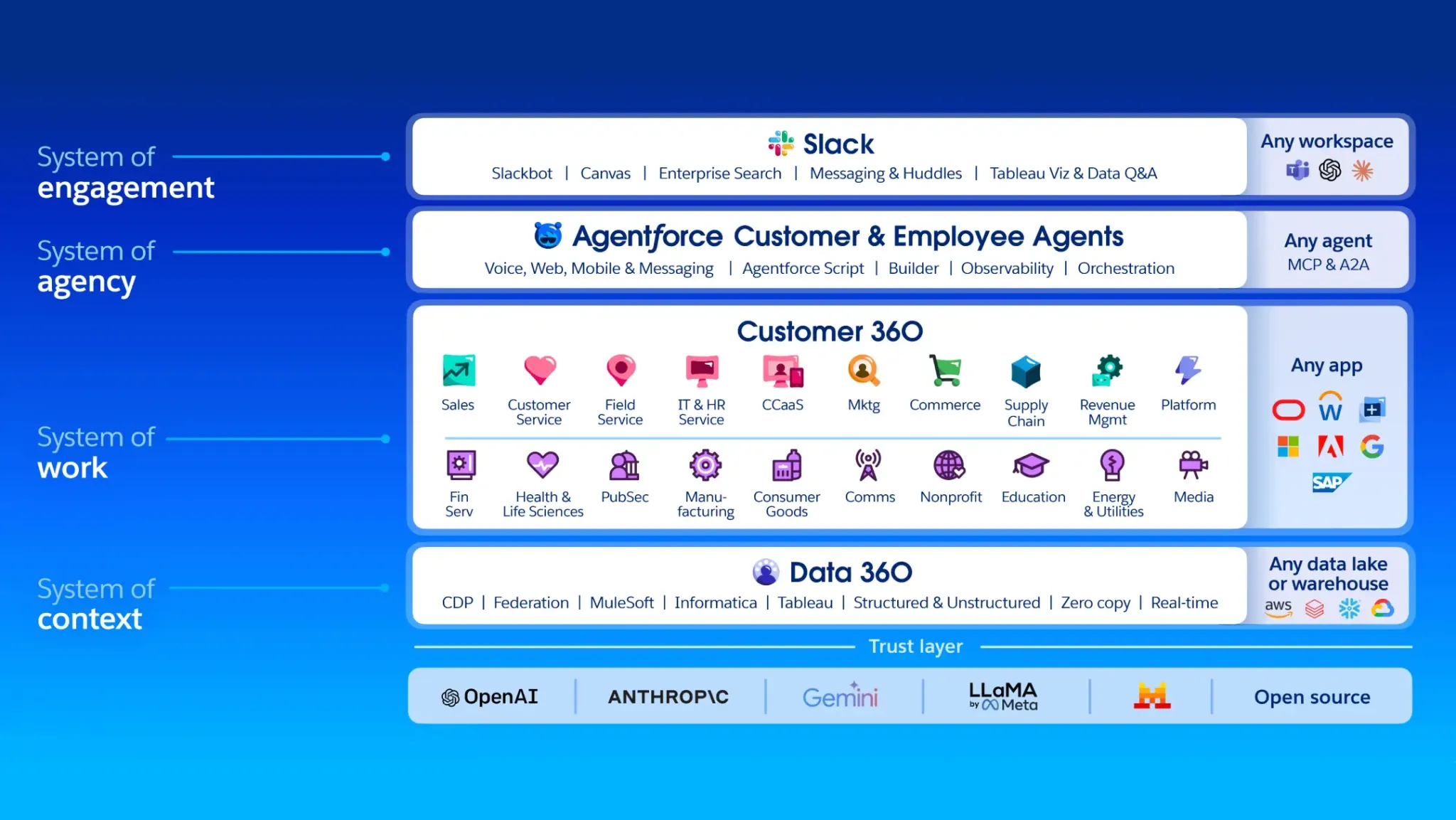
With $41.5 billion in FY26 revenue and 150,000+ customers, Salesforce has spent over two decades building the broadest CRM feature set on the market. Sales Cloud, Service Cloud, Marketing Cloud, Commerce Cloud, Data Cloud, and Agentforce all share unified customer data.
Source: Salesforce
ZoomInfo operates before either platform enters the picture.
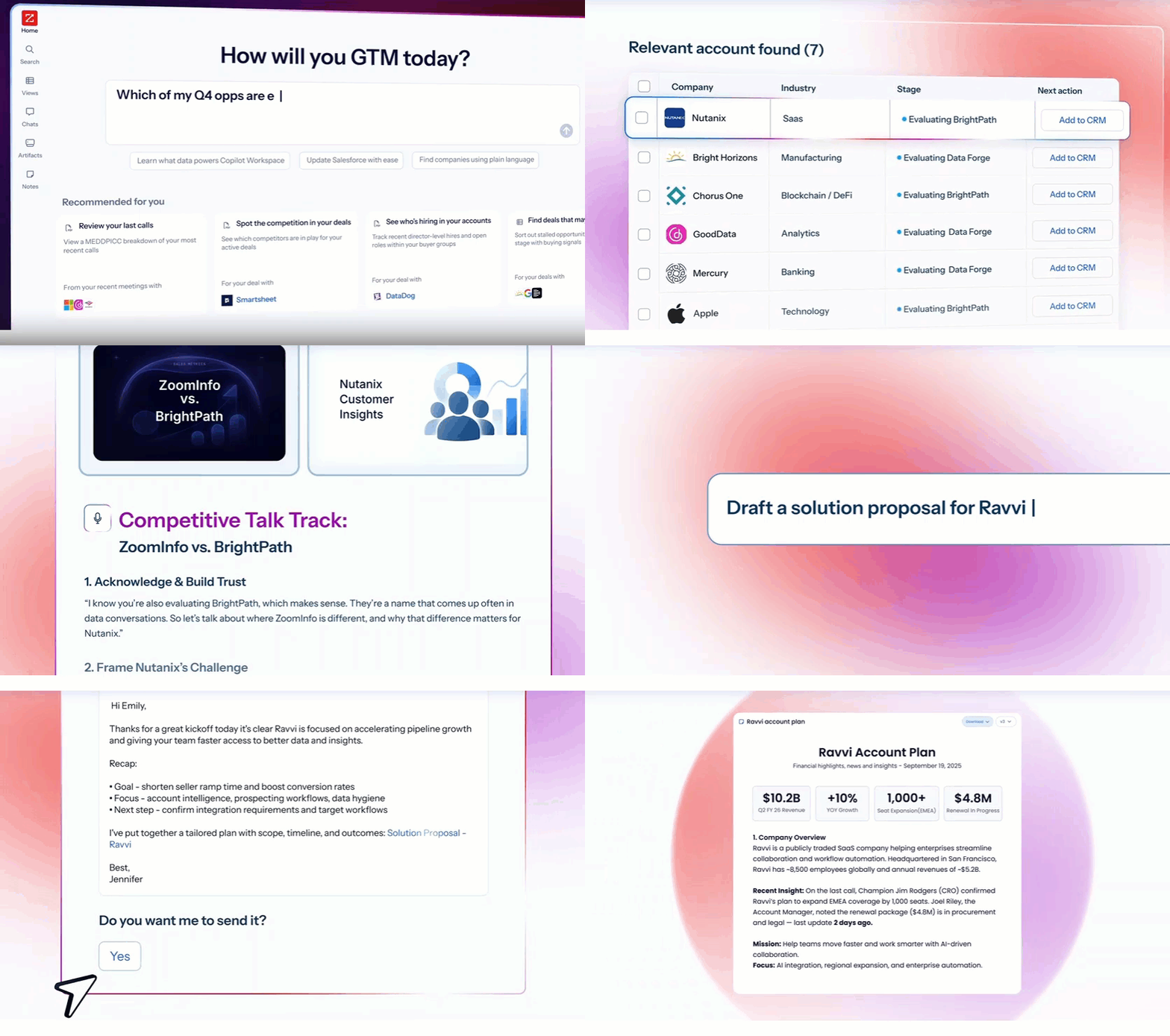
It doesn't manage your pipeline or track your service tickets. It identifies which accounts are worth pursuing, who the decision-makers are, when they're in-market, and what messaging will resonate. Whether you run IFS or Salesforce as your system of record, ZoomInfo's data and intelligence make both more effective.
Seismic's sales team attributed 39% of active pipeline to opportunities identified or influenced by ZoomInfo signals, while saving 11.5 hours per week per seller. (Seismic case study)
CRM capabilities: embedded module vs. purpose-built platform
IFS Cloud's CRM manages the full customer interaction chain from lead capture through sales quotation, order conversion, invoicing, and post-sale service.
Sales teams work within IFS Lobbies (role-specific dashboards), and opportunity management provides configurable sales processes that enforce what information gets captured at each stage.
The 26R1 release added CRM embedded in Microsoft Teams with AI summaries and IFS CPQ (Configure, Price, Quote) for guided selling. IFS.ai automates lead capture, scoring, and workflows including opportunity follow-ups.
These are useful capabilities for industrial sales teams. But they are a fraction of what Salesforce offers. IFS's CRM is designed for long, complex sales cycles in product-centric enterprises. It is not built for high-velocity sales, multi-channel marketing campaigns, or large-scale self-service portals.
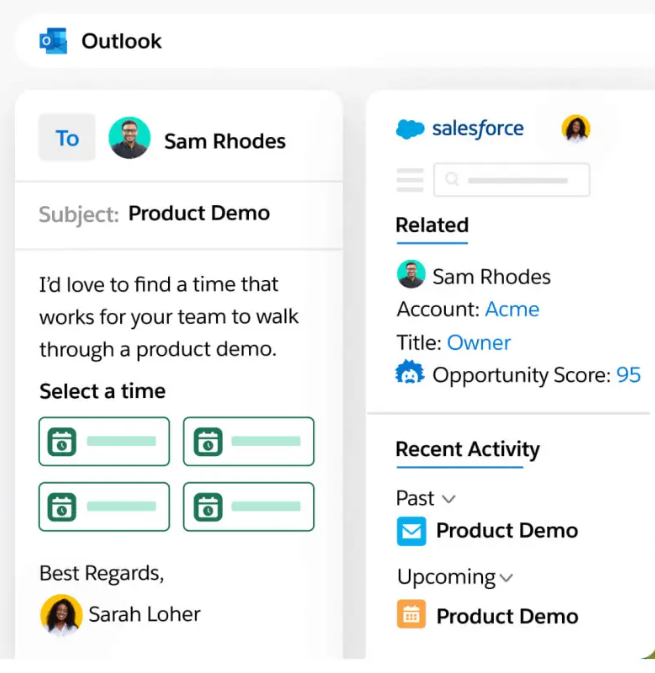
Salesforce Sales Cloud provides lead scoring, AI-generated account plans with SWOT analysis, pipeline health signals, conversation intelligence, revenue lifecycle management, and autonomous sales agents.
Source: Salesforce
Beyond sales, Salesforce adds Service Cloud (autonomous case resolution), Marketing Cloud (journey orchestration, CDP, personalization), Commerce Cloud (B2C and B2B storefronts), and Data Cloud (112 trillion records ingested in FY26). IFS has no comparable marketing automation, no native e-commerce, and limited standalone reporting.
The gap is real but not surprising. IFS doesn't try to compete with Salesforce on CRM breadth. Its value is that CRM embedded within ERP, FSM, and EAM eliminates the integration overhead and data fragmentation that standalone CRMs create in industrial environments.
Where IFS has no equal: field service and asset management
IFS's competitive strength lies far from traditional CRM territory.
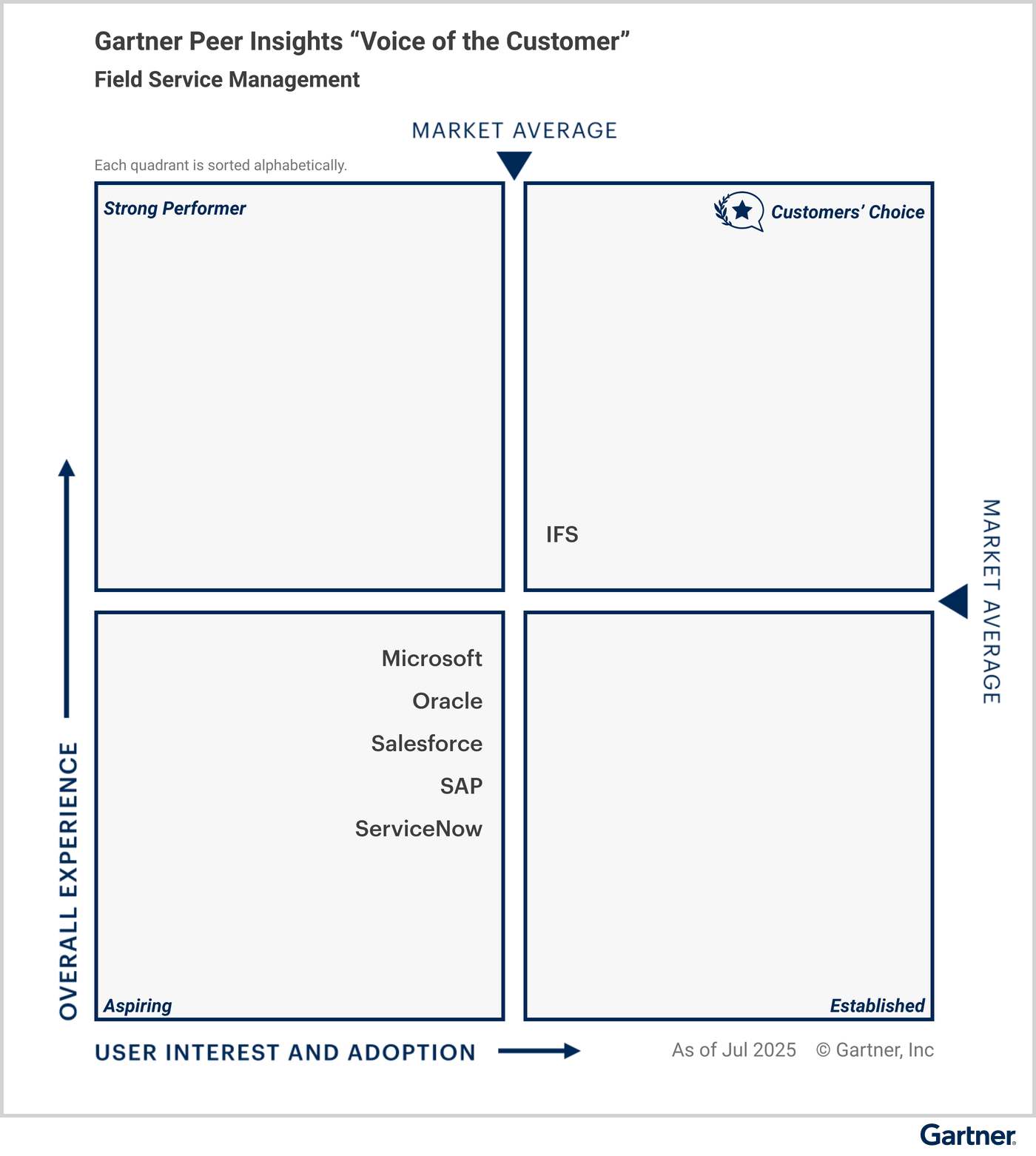
Field Service Management. IFS is the only Gartner Customers' Choice for FSM in 2025. The scheduling engine (PSO) evaluates technician skills, location, certifications, parts availability, and SLA priority at once, then re-optimizes in real time.
Source: IFS
Enterprise Asset Management. IFS holds 19.4% global EAM market share ($550M in EAM revenues), ranking #1 globally for four consecutive years. IFS Cloud EAM covers the full asset lifecycle from design through decommissioning, with predictive maintenance, AI-assisted FMECA, and integrated 3D visualization.
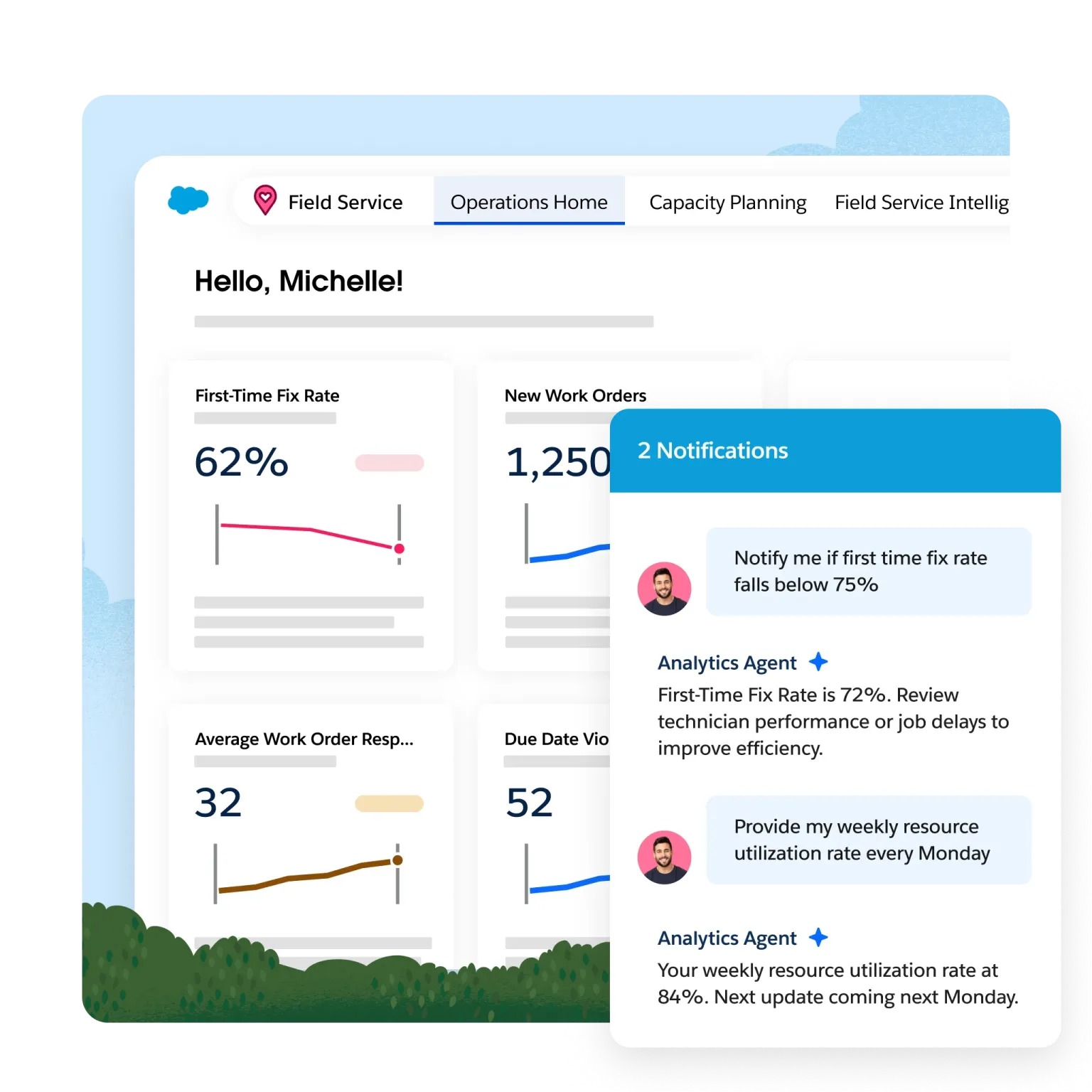
Salesforce offers Field Service as a $175/user/month add-on with scheduling, dispatch, and mobile work orders.
However, Salesforce Field Service is a support module, not the core platform. It lacks IFS's depth in contractor management, depot repair, service parts logistics, and the unified scheduling of employees and contractors as a single pool.
Source: Salesforce
For organizations where field service and asset management are the business, IFS occupies territory Salesforce cannot match. For organizations where field service is a support function attached to a sales-driven operation, Salesforce's add-on is sufficient.
AI strategies reflect different priorities
Both platforms have invested heavily in AI, but their applications diverge.
IFS.ai is built for industrial operations.
Its embedded capabilities include content generation (automated work orders), optimization (production scheduling), anomaly detection (asset health monitoring), and forecasting (demand prediction).
IFS Loops deploys Digital Workers that autonomously handle repetitive tasks like order processing and inventory management.
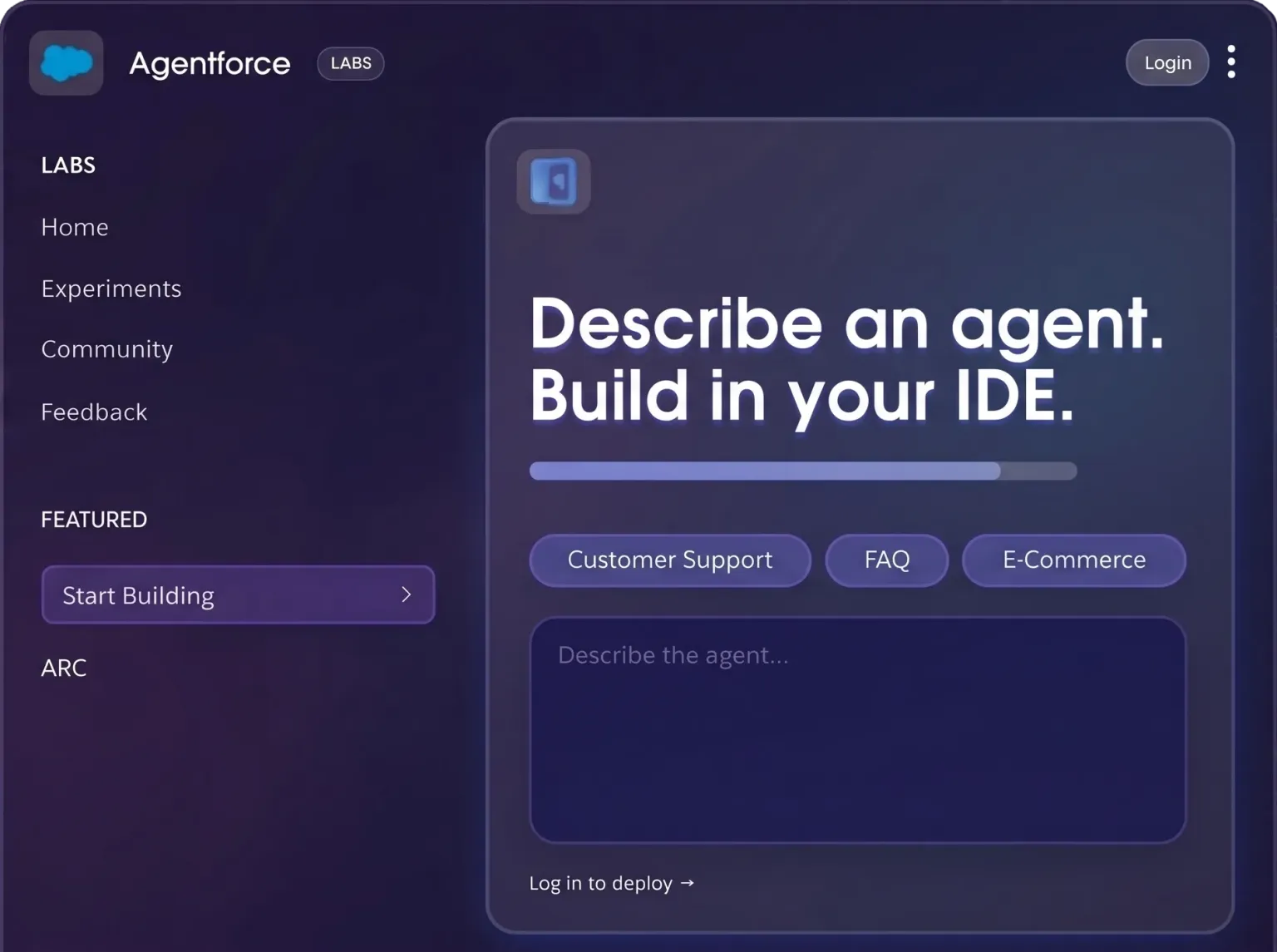
Salesforce Agentforce targets the customer-facing front office. Agents handle autonomous case resolution, lead engagement, sales coaching, and campaign creation.
Source: Salesforce
Both AI strategies produce results, but neither addresses the question that precedes CRM activity: identifying which accounts to target in the first place.
ZoomInfo's GTM Context Graph processes 1.5B+ data points daily, combining ZoomInfo's B2B data with CRM records, conversation intelligence, and behavioral signals to surface the connections between signals and outcomes.
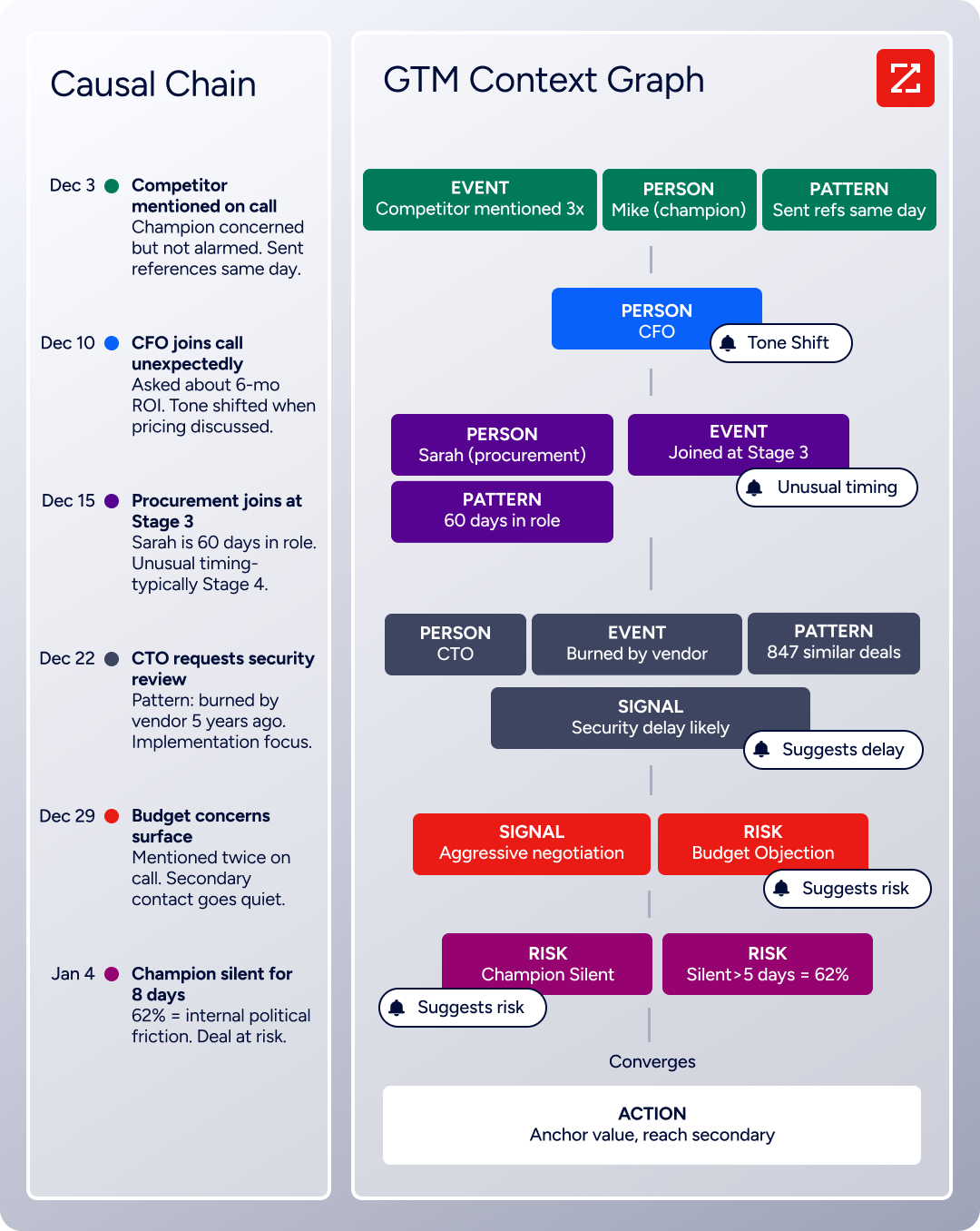
IFS.ai optimizes how you serve existing customers. Agentforce automates how you interact with them. ZoomInfo identifies which customers deserve that attention and what will move them forward.
"ZoomInfo's not just a contact data company anymore. They've built a full system of execution. GTM Intelligence actually works the list, writes the outreach, triggers the play, and helps drive predictable growth." - Ian Brodie, CEO & Co-Founder (Levanta case study)
Integration and ecosystem comparison
IFS exposes REST APIs following the OData standard and offers integration accelerators through Boomi connectors plus a dedicated SAP connector.
IFS Cloud can be purchased through the Azure Marketplace. The ecosystem works but is limited compared to tier-1 platforms. Capterra reviewers cite a "shortage of knowledgeable consultants", and partner density is thinner outside Europe.
Salesforce has the largest enterprise app ecosystem in the world: 9,000+ partner apps, 14+ million installs, and 91% of customers using AppExchange.
MuleSoft provides hundreds of pre-built connectors for complex integrations. Data Cloud connects to Snowflake, Databricks, BigQuery, and AWS with zero-copy architecture. The breadth is unmatched, though managing multiple clouds, connectors, and credit pools requires dedicated administration.

Source: Salesforce
ZoomInfo integrates with 120+ partners across CRM, marketing automation, and sales engagement platforms, including native integrations with Salesforce, HubSpot, and Dynamics 365.
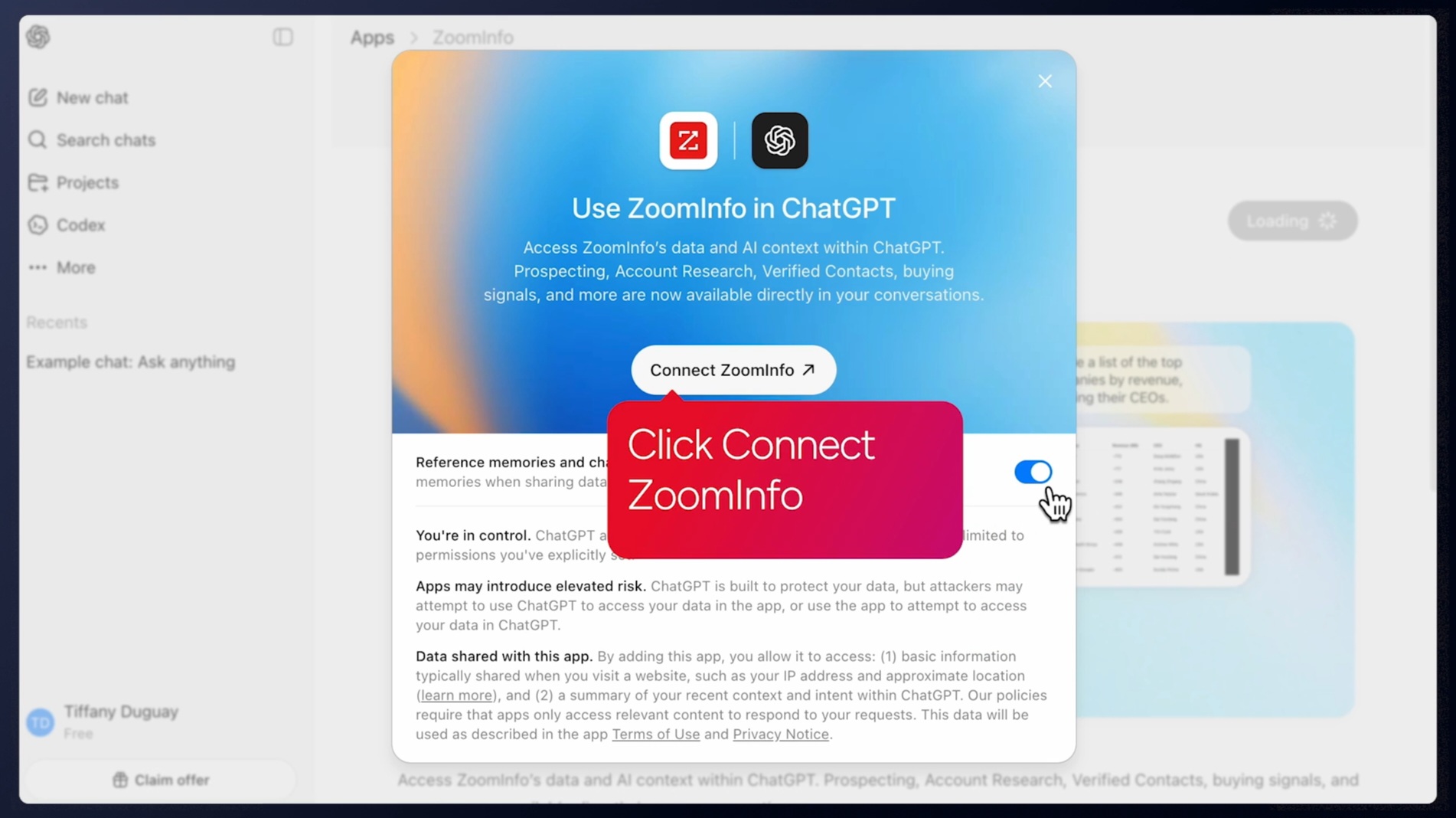
The Enterprise API and MCP server let any AI agent or custom tool access ZoomInfo's data and GTM Context Graph without custom development. API access is included in all relevant plans, so ZoomInfo's intelligence works inside IFS, inside Salesforce, or inside any other system a team uses.
Source: ZoomInfo
BDO Canada's Senior Marketing Intelligence Analyst reported an 87% reduction in time spent on internal data dashboard updates using ZoomInfo's API: "The plug-and-play aspect of the API means I can integrate it very easily into any process and get information at a moment's notice." (BDO Canada case study)
Pricing structures reflect different markets
IFS does not publish pricing. All commercial terms are negotiated directly.
In April 2026, IFS shifted to an asset-based model: customers pay based on the operational assets they manage rather than user counts. CEO Mark Moffat framed it: "We're not pricing the workers. We're pricing the work."
Total project costs (software plus implementation) run from an estimated $200K–$1M+ for mid-market and $500K–$3M+ for enterprise. Capterra reviewers describe IFS as "significantly more expensive" than other SaaS products.
Salesforce publishes tiered per-user pricing.
Sales Cloud and Service Cloud run from $0 (Free Suite, 2 users) through $25 (Starter), $100 (Pro), $175 (Enterprise), $350 (Unlimited), to $550/user/month (Agentforce 1). But the sticker price is rarely the full cost.
Agentforce consumption ($500/100K Flex Credits), Data Cloud credits ($500/100K credits), Premier Success (30% of net license fees), Marketing Cloud ($1,500–$30,000/org/month), and partner-led implementation all add layers. A June 2025 restructuring raised list prices by 6%.
ZoomInfo uses consumption-based pricing with all terms custom quoted.
A permanent free tier, ZoomInfo Lite, and a 7-day free trial let prospects evaluate before committing. Paid tiers scale by seats, credits, and feature access across Sales, Marketing, and API packages.
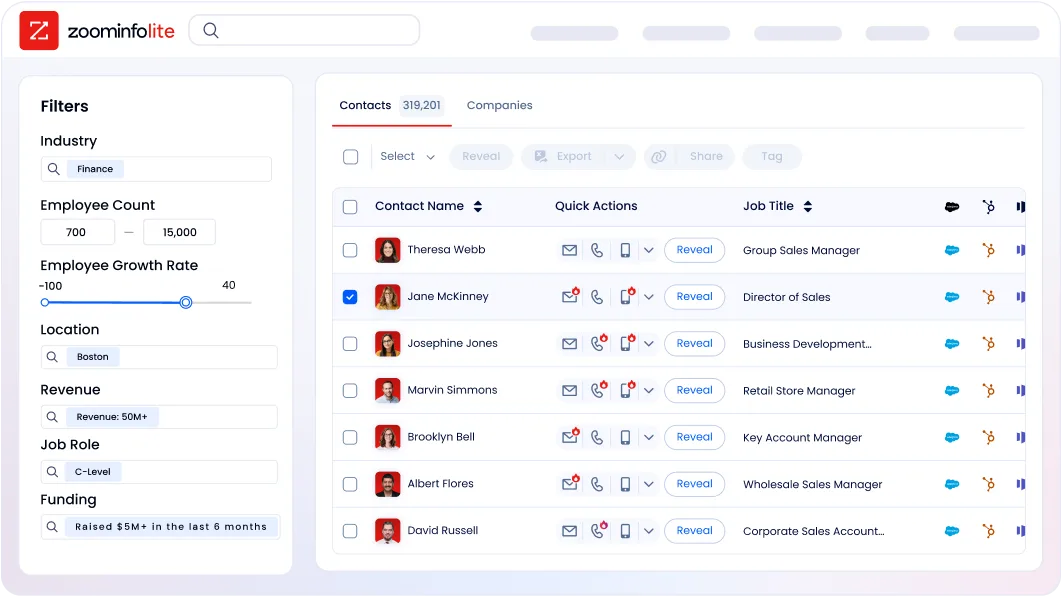
The key pricing distinction: IFS and Salesforce are systems of record whose costs scale with organizational complexity. ZoomInfo is an intelligence layer whose costs scale with data consumption. For many teams, ZoomInfo pays for itself by preventing wasted effort on the wrong accounts.
The upstream intelligence gap both platforms share
IFS Cloud's CRM records what happens with existing customers.
Salesforce records what happens across the full customer lifecycle. Neither tells you what's happening before a prospect enters your system.
Which accounts in your addressable market are actively researching solutions? Who are the decision-makers, and how do you reach them directly? What buying signals suggest this quarter versus next? What patterns from your closed-won deals predict which new accounts will convert?
These questions precede any CRM. And they're what ZoomInfo answers.
ZoomInfo's data layer provides the foundation: 500M contacts with up to 95% accuracy on first-party data, verified by 300+ human researchers and validated in a Fortune 500 competitive RFP where an independent consultant concluded "no other competitor came close".
The GTM Context Graph turns that data into actionable intelligence. It captures the connections between signals and outcomes across your CRM, conversations, and third-party data. Your CRM records that a deal moved to Stage 4.
The GTM Context Graph knows that executive sponsorship entering at that stage, combined with ROI-focused questions, matches the pattern behind closed-won deals in your segment, and connects it to hiring signals showing the company is expanding.
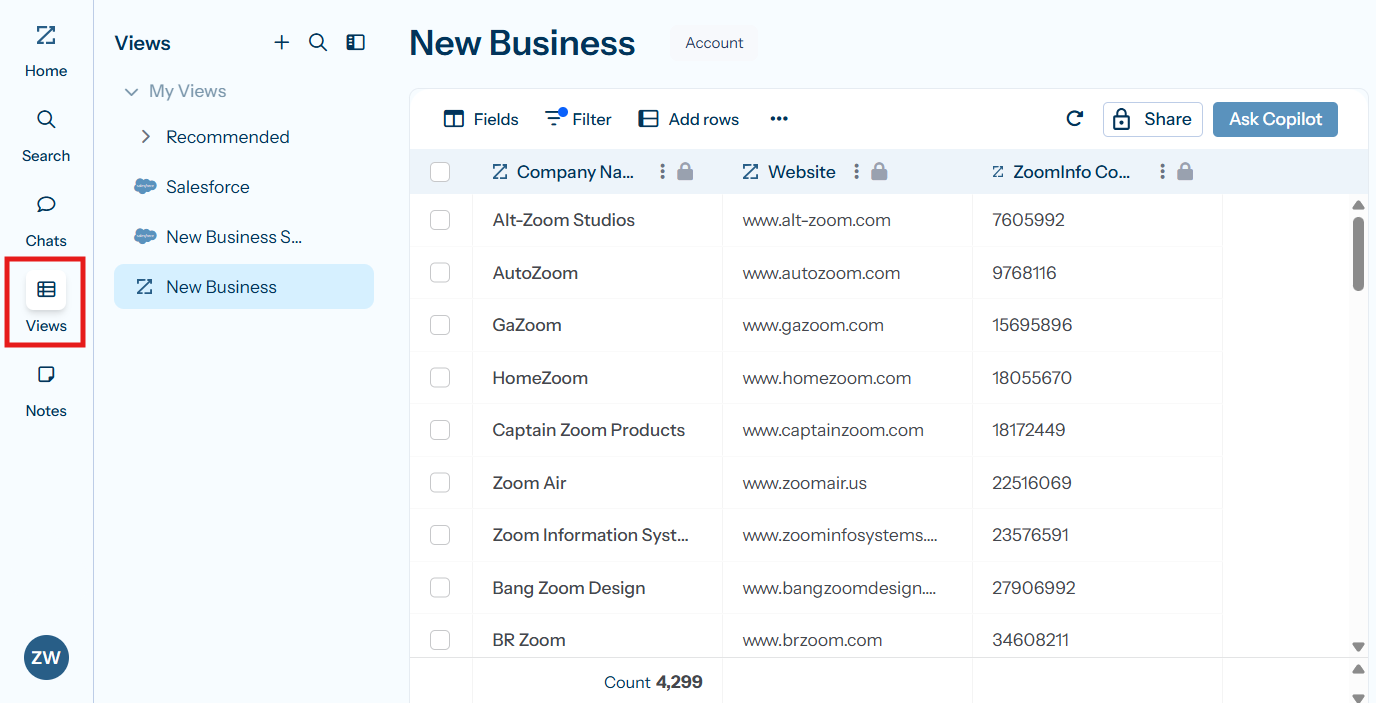
That intelligence flows into three channels. GTM Workspace gives sellers AI-drafted outreach grounded in account context. GTM Studio lets marketers and RevOps teams build and launch plays in natural language. APIs and MCP deliver the same intelligence into any tool, including IFS or Salesforce.
Source: ZoomInfo
Snowflake uses ZoomInfo for at least one-third of the most critical data features in their Account Propensity Scoring model. Accounts monitored using ZoomInfo-powered scores showed 90% higher opportunity open rates and 2x higher customer conversion rates. (Snowflake case study)
For a detailed look at how Salesforce and ZoomInfo compare as platforms, see our Salesforce vs. ZoomInfo comparison.
IFS CRM vs. Salesforce vs. ZoomInfo: Which should you choose?
These three platforms address different layers of the go-to-market stack. The right combination depends on your operational reality.
Choose IFS if:
Your business manufactures goods, maintains complex assets, or manages large field service operations
You need CRM integrated with ERP, asset management, and supply chain in a single data model
Your sales cycles involve configuration, project scoping, and service contract negotiation
Operational visibility (order status, asset history, warranty, installed base) matters more to your sales team than pipeline automation
You operate in aerospace, defense, energy, manufacturing, or telecommunications
Choose Salesforce if:
Customer relationships are the center of your business operations
You need sales automation, marketing orchestration, and commerce capabilities
Your organization can invest in administration, implementation partners, and ongoing configuration
You want the largest partner ecosystem and app marketplace in enterprise software
AI-powered agents for sales, service, and marketing align with your automation goals
Add ZoomInfo if:
You need to know which accounts to target before they enter your CRM
Your sales team spends too much time researching prospects instead of selling
You want intent signals, verified contact data, and AI-powered account intelligence feeding your pipeline
Your outreach relies on direct dials and verified emails that reach decision-makers
You need intelligence that works inside your existing tools, whether that's IFS, Salesforce, or any other platform
See how ZoomInfo's GTM Context Graph powers smarter go-to-market execution.
IFS and Salesforce both serve different operational realities well. IFS gives industrial enterprises a unified operations-and-customer platform that standalone CRMs cannot replicate. Salesforce gives sales-driven organizations the deepest CRM feature set on the market. ZoomInfo gives both types of organizations the intelligence to find, reach, and understand the buyers who matter most, wherever they choose to work.
IFS CRM vs. Salesforce vs. ZoomInfo FAQ
What is the core difference between IFS CRM and Salesforce?
IFS embeds CRM within an industrial operations platform spanning ERP, field service management, and enterprise asset management. It is designed for manufacturers, defense contractors, and asset-heavy businesses where salespeople need to see order status, service history, and installed base data alongside deal information.
Salesforce is a standalone CRM platform with dedicated clouds for sales, service, marketing, and commerce, built for organizations where customer relationships are the primary operational focus.
Is IFS CRM a standalone product?
No. IFS does not sell CRM as a separate product. Customer management capabilities are embedded within IFS Cloud ERP, sharing a single data model and user interface with finance, supply chain, manufacturing, and asset management.
This eliminates integration overhead between CRM and back-office systems but means the CRM module is less feature-rich than dedicated platforms like Salesforce.
How does Salesforce pricing compare to IFS pricing?
Salesforce publishes per-user pricing from $0 (Free Suite) to $550/user/month (Agentforce 1), though actual costs increase with add-ons for Agentforce consumption, Data Cloud, Marketing Cloud, and Premier Support.
IFS does not publish pricing; all terms are custom quoted. IFS recently shifted to an asset-based model where customers pay based on operational assets managed rather than user counts. Total project costs for IFS typically range from $200K to $3M+ including implementation.
Which platform is better for field service management?
IFS is the clear leader. It holds the sole Gartner Peer Insights Customers' Choice designation for field service management in 2025 and has maintained the #1 global EAM market share for four consecutive years. Its scheduling engine handles both employees and contractors in a single pool with real-time optimization.
Salesforce offers Field Service as an add-on starting at $175/user/month with scheduling, dispatch, and mobile work orders, which is sufficient for organizations where field service is a secondary function.
Can ZoomInfo work with both IFS and Salesforce?
Yes. ZoomInfo integrates natively with Salesforce and Microsoft Dynamics 365, and its Enterprise API and MCP server can connect to any system, including IFS Cloud via its REST APIs. ZoomInfo's role is not to replace a CRM but to power it with verified B2B contact data, buyer intent signals, and AI-driven account intelligence.
The same data and GTM Context Graph intelligence are accessible through ZoomInfo's own GTM Workspace and GTM Studio or through any third-party tool.
Which platform has stronger AI capabilities?
Each platform applies AI to different problems. IFS.ai focuses on industrial operations: predictive maintenance, scheduling optimization, demand forecasting, and autonomous Digital Workers for repetitive tasks.
Salesforce Agentforce targets customer-facing functions: autonomous case resolution, sales coaching, lead engagement, and campaign creation.
ZoomInfo's GTM Context Graph applies AI to go-to-market intelligence, capturing the connections between signals and outcomes and identifying which accounts match proven win patterns. The three are complementary rather than competitive on AI.
Who should consider IFS over Salesforce?
Organizations in aerospace, defense, energy, manufacturing, telecommunications, and construction where the sales process is intertwined with project delivery, asset management, and service contracts.
If your sales team needs to see real-time production status, warranty terms, and service histories alongside opportunities, and you want to avoid maintaining separate CRM and ERP integrations, IFS Cloud is the stronger fit.
What does ZoomInfo provide that neither IFS nor Salesforce offers?
ZoomInfo provides the upstream intelligence that CRMs do not generate on their own: 500M B2B contacts with verified phone numbers and emails, buyer intent signals, company attributes and technographic data, and a GTM Context Graph that connects signals to outcomes across thousands of deals.
Neither IFS nor Salesforce includes a comparable proprietary B2B data layer for prospecting, market sizing, or account prioritization.
See how Salesforce compares against other CRMs and platforms:
