
Choosing between Keap and Marketo for your marketing automation often comes down to five questions:
Are you a small business owner who needs one platform for everything, or an enterprise marketing team running multi-touch campaigns?
Do you need CRM, email, invoicing, and scheduling in a single tool, or do you need lead scoring, ABM, and revenue attribution across a complex sales cycle?
Is your buying process a few touchpoints over days, or dozens of touchpoints across months with multiple stakeholders?
Are you willing to pay $299/month for simplicity, or negotiate a custom enterprise contract for power?
Do you have a dedicated marketing operations person, or are you the owner doing everything yourself?
In short, here's what we recommend:
Keap is built for small business owners who want CRM, email marketing, text messaging, appointments, invoicing, and automation in one place. Its Lifecycle Automation framework maps the full customer journey from lead capture to repeat revenue, and over 200,000 small businesses have trusted the platform for 20+ years. For a coach, consultant, or service provider drowning in disconnected tools, Keap replaces the patchwork. The trade-off: a $299/month starting price, a real learning curve despite the simplification efforts, and reporting that experienced users call basic.
Adobe Marketo Engage is the enterprise standard for B2B marketing automation. It handles complex, multi-touch campaigns across email, web, mobile, ads, webinars, and chat, with lead scoring, native CRM sync (Salesforce and Microsoft Dynamics), and multi-touch revenue attribution through Marketo Measure. The trade-off: steep learning curve, effectively requires a dedicated Marketo administrator, custom-quoted pricing with no published rates, and an interface that multiple reviewers call dated.
Both platforms solve marketing automation, but at different scales and for different buyers. What neither addresses is the question that comes before automation: who should you be targeting in the first place, and which of those accounts are ready to buy right now?
ZoomInfo is an AI-powered go-to-market platform that answers those questions with 500M contacts, 100M companies, 135M+ verified phone numbers, and 200M+ verified business email addresses. Its GTM Context Graph combines this data with your CRM records, conversation transcripts, and behavioral signals to reveal not just what happened in a deal, but why it happened and what to do next. Whether your team works through GTM Workspace for sellers, GTM Studio for marketers and RevOps, or APIs and MCP in any other tool, ZoomInfo gives your marketing and sales teams the intelligence that makes every automation, campaign, and outreach more effective.
If building campaigns on verified, real-time buyer intelligence sounds like the missing piece in your go-to-market strategy, see how ZoomInfo works.
Keap vs. Marketo vs. ZoomInfo at a glance
Keap | Marketo Engage | ZoomInfo | |
|---|---|---|---|
Built for | Small business owners (1-25 employees) | Enterprise B2B marketing teams | B2B sales, marketing, and RevOps teams |
Primary strength | All-in-one CRM + automation for SMBs | Campaign orchestration and lead scoring at scale | B2B buyer intelligence and GTM execution |
CRM included | Yes (native) | No (syncs with Salesforce/Dynamics) | GTM Workspace + CRM integrations |
Email marketing | Built-in with automation | Enterprise-grade with AI content generation | Multi-channel outreach via GTM Studio |
Lead scoring | Basic (flame indicators) | Multi-dimensional with decay logic | Account prioritization + intent signals |
ABM capabilities | None | Native with Predictive Engagement Score | Full ABM with buyer intent data |
Reporting | Basic dashboards | Advanced (supplemented by Marketo Measure) | Analytics across GTM plays |
Learning curve | Moderate | Steep (months to proficiency) | Moderate (90-day onboarding) |
Pricing | Starts at $299/month | Custom-quoted (no published prices) | Custom-quoted with free Lite tier |
Free trial/plan | Free trial (25 email limit) | No free trial or plan | ZoomInfo Lite (permanent free) + 7-day trial |
Best for | Service businesses wanting one platform | Enterprise B2B demand generation | Teams that need intelligence before automation |
They solve different problems at different scales
The comparison between Keap and Marketo is less about feature checklists and more about organizational reality.
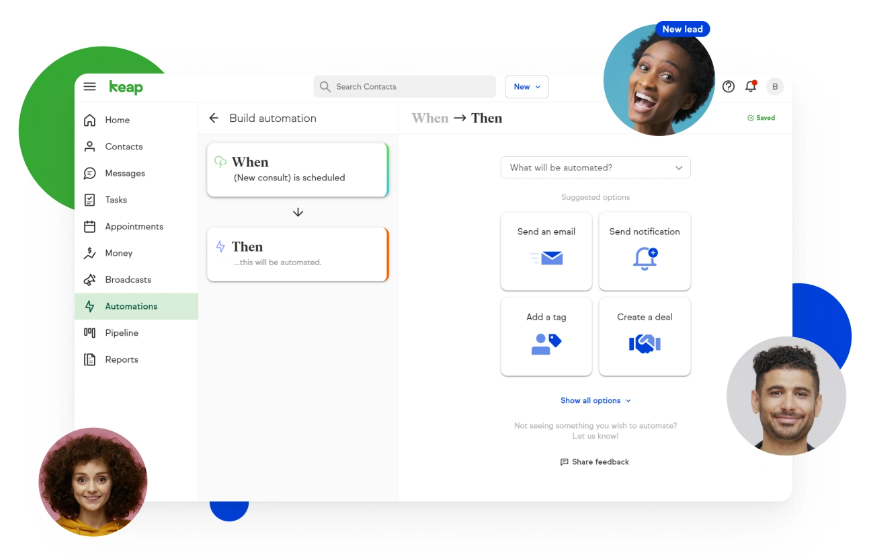
Keap was founded in 2001 as Infusionsoft by three co-founders who mortgaged their houses to build it. That origin story matters because it shaped everything the product became: a tool designed by people who understood the pressure of running a small business with limited resources. The platform consolidates CRM, email, text messaging, sales pipeline, appointment scheduling, invoicing, and payment processing into one subscription. For a fitness studio owner or a business coach managing 500 contacts, that consolidation eliminates the need to juggle five or six separate tools.
Source: Keap
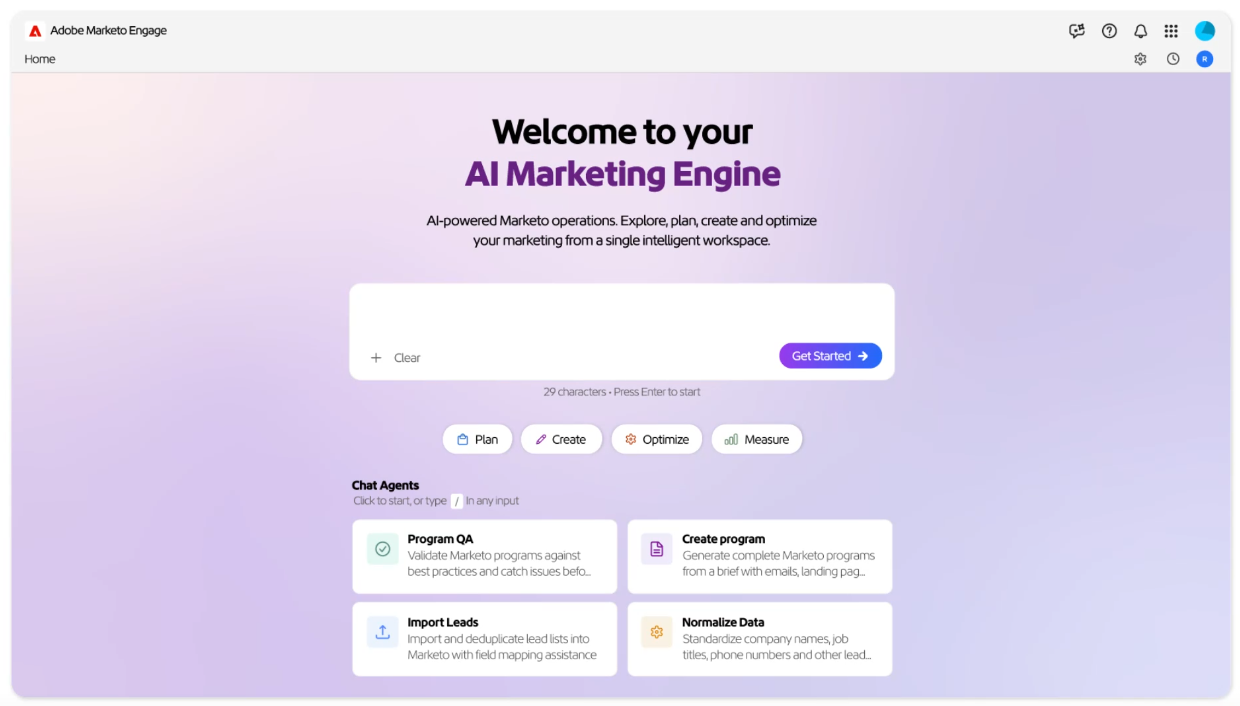
Marketo was founded in 2006 by former enterprise CRM executives who saw a gap in marketing automation. It went public in 2013, Vista Equity Partners acquired it for $1.79 billion, and Adobe bought it for $4.75 billion in 2018. That trajectory tells you where it lives: enterprise B2B organizations running multi-touch campaigns across months-long sales cycles with multiple stakeholders. Marketo's campaign engine handles nested programs, engagement streams with content exhaustion logic, and unlimited scoring models with complex decay rules.
Source: Adobe Marketo Engage
The gap between these two platforms is wide, and it's not just about features. It's about the teams using them, the sales cycles they support, and the operational infrastructure required. Keap assumes the user is the business owner. Marketo assumes the user has a dedicated marketing operations team.
ZoomInfo operates at a different layer entirely. Instead of asking how to automate your outreach, it answers who you should be reaching and when. The GTM Context Graph processes 1.5B+ data points daily, combining ZoomInfo's verified B2B data with your CRM records, conversation intelligence, and behavioral signals. The result: your automation platform (whether Keap or Marketo) works on accurate, current, prioritized data rather than stale lists.
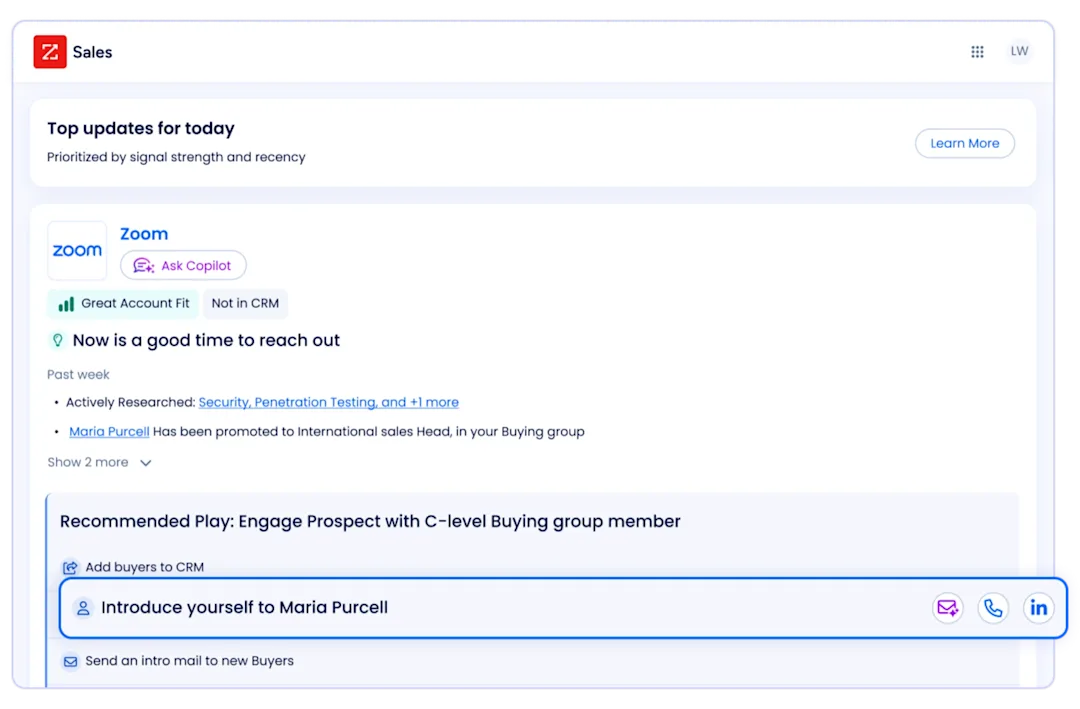
Seismic's sales team attributed 39% of active pipeline to opportunities identified or influenced by ZoomInfo signals and boosted productivity by 54%. (Seismic)
Keap wins on all-in-one simplicity for small businesses
Keap's value proposition is consolidation. A single $299/month subscription covers:
CRM with contact management, tagging, and lead scoring (over 200,000 small businesses served)
Email marketing with broadcasts, automated sequences, and A/B testing
Text marketing with automated SMS triggered by contact actions and a dedicated Keap Business Line
Sales pipeline with drag-and-drop kanban boards and stage-based automation
Appointment scheduling with Google Calendar and Outlook sync, plus Zoom integration
Invoicing and payments through Keap Pay, Stripe, PayPal, or eWay
Landing pages and forms for lead capture
For a consultant running their business solo, this means one login, one bill, and one place to manage the entire client lifecycle. A lead fills out a form, gets tagged automatically, enters a nurture sequence, books an appointment through a shared link, receives a confirmation text, and gets invoiced after the meeting. No Zapier glue, no webhook configuration, no middleware.
The Lifecycle Automation framework provides a structured model (Collect Leads, Convert Clients, Create Fans) that gives small business owners a strategic template rather than a blank canvas.
Source: Keap
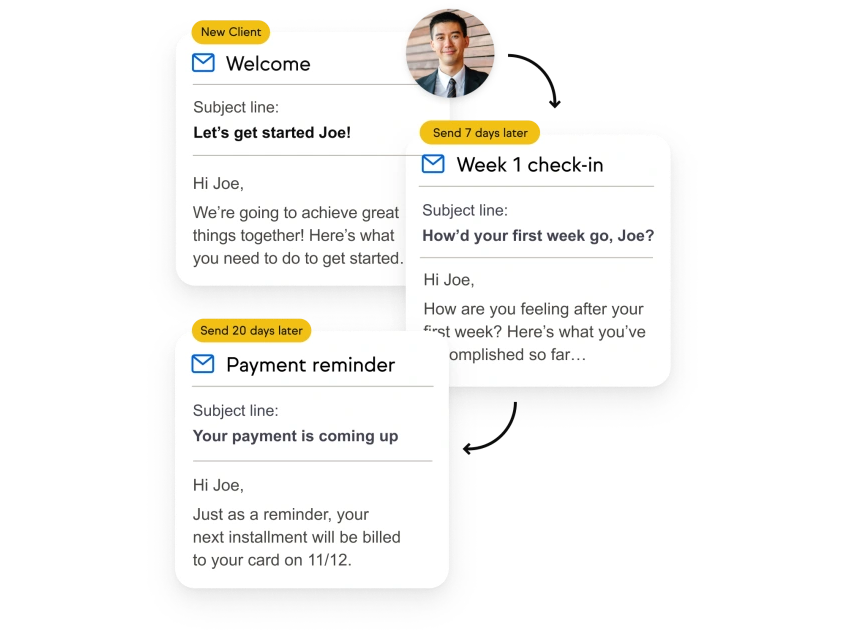
Keap's automation works on a straightforward when/then/stop logic. A prospect fills out a web form (when), they receive a personalized welcome email (then), and the automation stops when they book an appointment (stop). Easy Automations provide preset, one-click workflows for common scenarios, while Advanced Automations handle complex branching sequences.
But Keap's simplicity comes with real constraints. Capterra reviewers describe the interface as "a bit outdated" and report automation bugs where triggers "don't fire when they are supposed to for no apparent reason." The native integration library is limited to roughly 87 marketplace apps, with the rest requiring Zapier. Reporting lacks depth, with no advanced A/B testing analytics or flexible dashboards. And the mobile app only covers contacts and tasks, so you can't manage campaigns on the go.
Marketo wins on enterprise campaign sophistication
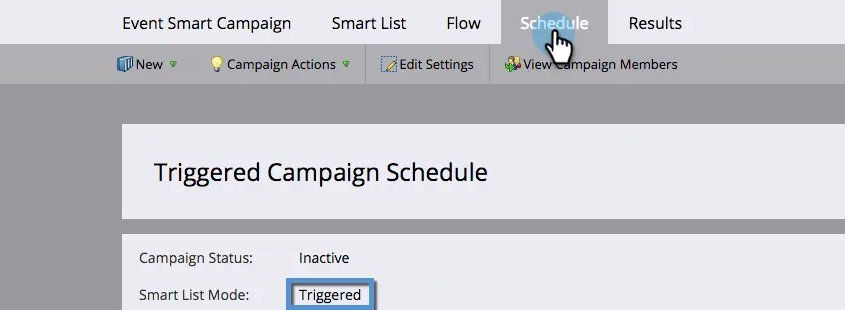
Marketo Engage operates in a different category entirely. Its Smart Campaign engine is the core building block, combining Smart Lists (who), Flow steps (what happens), and Schedules (when). Smart Campaigns run in two modes: trigger-based (real-time, firing instantly when a prospect acts) and batch (running against a qualified audience on a schedule).
Source: Adobe Marketo Engage
The depth shows up in specifics that matter to enterprise marketing operations teams:
Engagement Programs with multi-stream nurture, configurable cadences, and content exhaustion detection that flags when a lead has consumed all available content in a stream
Multi-dimensional lead scoring where behavioral and demographic scores are tracked separately, with decay logic that reflects current engagement rather than all-time activity
Native bidirectional CRM sync with Salesforce and Microsoft Dynamics, running continuously with a 5-minute pause between sync cycles
Account-based marketing with lead-to-account mapping using eight matching methods and a Predictive Engagement Score for account-level tracking
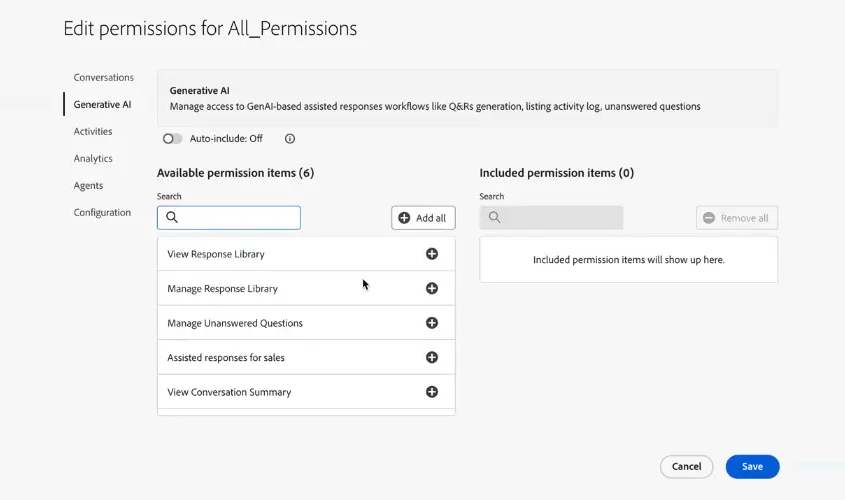
Dynamic Chat with generative AI responses drawn from a pre-approved Response Library, live chat escalation, and meeting booking
Interactive Webinars built on Adobe Connect, eliminating third-party webinar tools for event-driven campaigns
Multi-touch revenue attribution through Marketo Measure (Ultimate tier), with six attribution models running simultaneously
Source: Adobe Marketo Engage
The trade-off is complexity. Capterra and TrustRadius reviewers report that mastering advanced features can take months. The platform's proprietary concepts (Smart Lists, Tokens, Engagement Streams, Workspaces, Partitions) require dedicated study. Adobe provides Experience League documentation and a Marketo Engage Glossary, but the onboarding investment is significant. Most mid-market and enterprise deployments require a full-time Marketo administrator.
For a thorough assessment of Marketo's capabilities, strengths, and limitations before you commit to an implementation, see our Marketo review.
ZoomInfo adds the intelligence layer both platforms lack
Keap and Marketo are execution platforms. They automate what you tell them to do. But the quality of that execution depends on the data feeding it. Send a nurture sequence to contacts whose emails bounce at 30%, and your sender reputation tanks. Run an ABM play against accounts that aren't in-market, and your team wastes cycles on cold prospects.
ZoomInfo solves this at the data layer. Its B2B database covers 500M contacts and 100M companies, verified through a multi-source pipeline backed by 300+ human researchers with up to 95% accuracy on first-party data. In a Fortune 500 competitive RFP analyzing 25 million contacts across vendors, the independent consultant concluded that "no other competitor came even close."
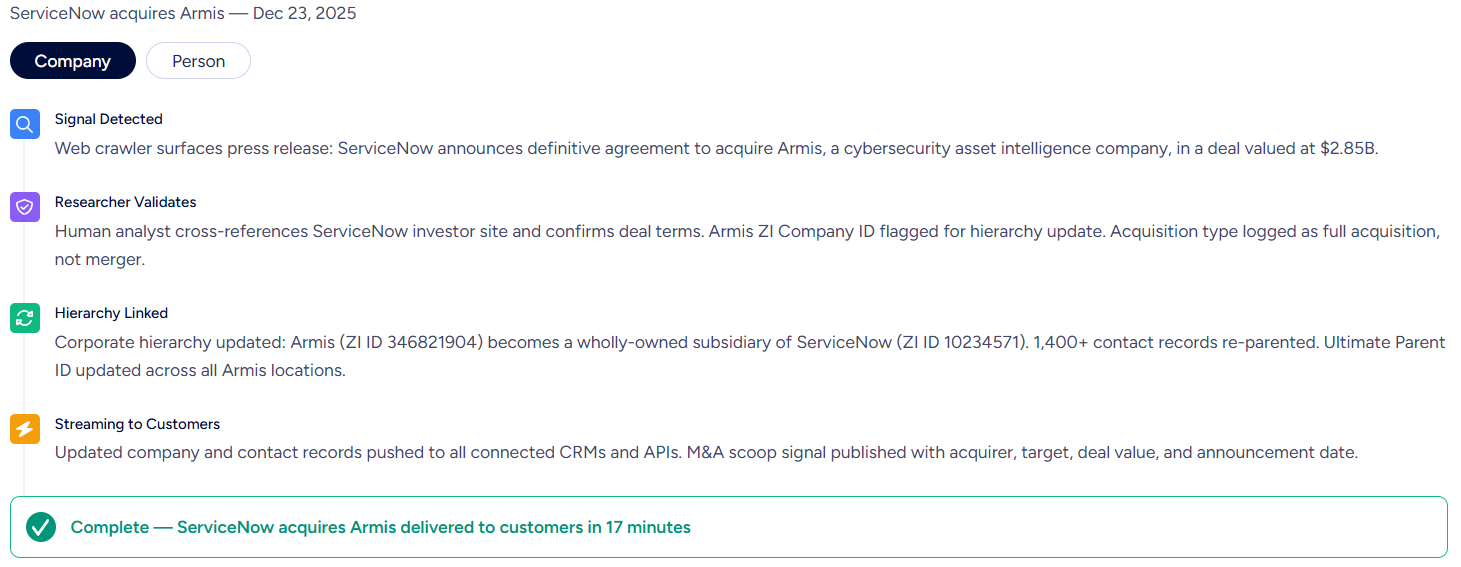
But the data is only the foundation. The GTM Context Graph combines it with your CRM records, conversation transcripts, email interactions, and behavioral signals into one intelligence layer. A CRM records that a deal moved from Stage 3 to Stage 4. The GTM Context Graph captures why it moved: the CFO joined the last call and asked about six-month ROI. That reasoning powers every downstream action, from the follow-up email to the forecast.
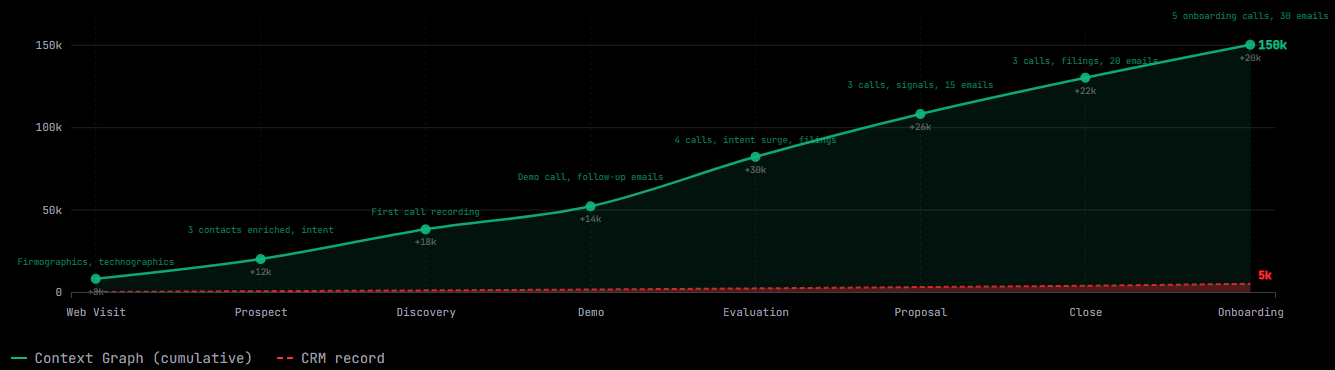
For marketing teams specifically, ZoomInfo provides:
Buyer Intent Data tracking signals from 210 million IP-to-Organization pairings and 6 trillion+ new keyword-to-device pairings monthly, with Guided Intent that identifies topics historically correlated with deal success
Website visitor identification resolving anonymous traffic to companies and contacts, including buying team identification
FormComplete reducing forms to a single field and auto-appending the rest (Smartsheet reported a 40%+ increase in form fills and 84% increase in MQLs)
Cross-channel advertising through a native demand-side platform deploying display ads based on 300+ company attributes
GTM Studio where marketers describe audiences in natural language, launch multi-channel plays, and watch pipeline impact in real time (expansion plays that used to take 3 weeks now launch in 30 minutes)
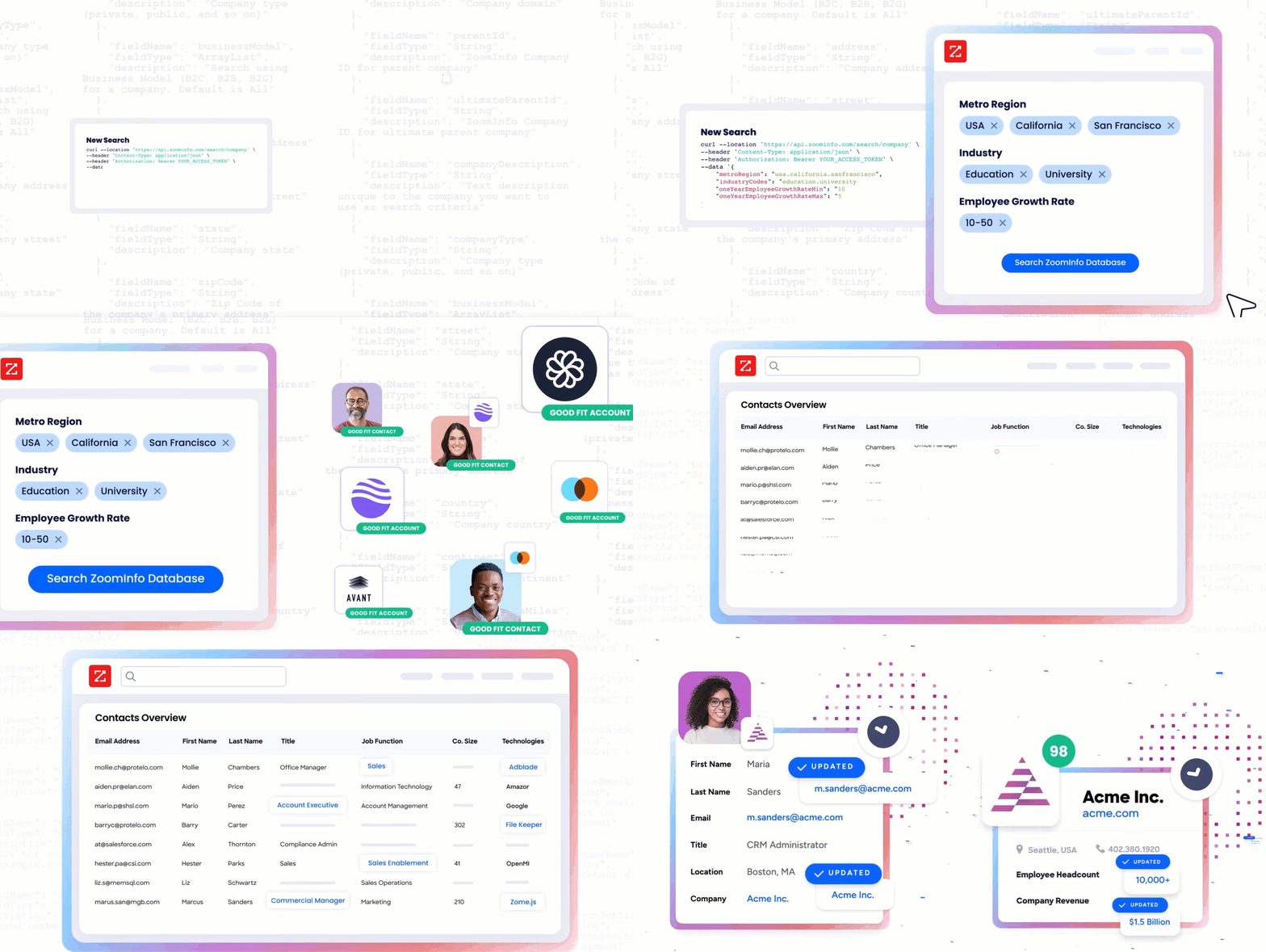
Source: ZoomInfo
Redwood Logistics achieved a 99% reduction in cost-per-click and a 310% increase in click-through rate using ZoomInfo's audience data. "It's not just the data itself. It's more about the right data at the right time to help us reach out with the right message across that full buyer journey." (Redwood Logistics)
Lead scoring and qualification tell different stories
How each platform identifies and prioritizes leads reveals its design philosophy.
Keap uses a visual flame indicator system (up to 5 flames) based on tags applied, web forms submitted, links clicked, and emails opened. Points can expire over a configurable period. It works for a small business tracking a few hundred leads, but there's no multi-dimensional scoring (separating behavioral engagement from demographic fit), no predictive modeling, and no account-level scoring.
Keap positions its lead scoring as better than Ontraport, ActiveCampaign, and Kartra because it bundles scoring alongside appointment scheduling, a dedicated business line, and payments. For the small business context, that bundling matters more than scoring sophistication.
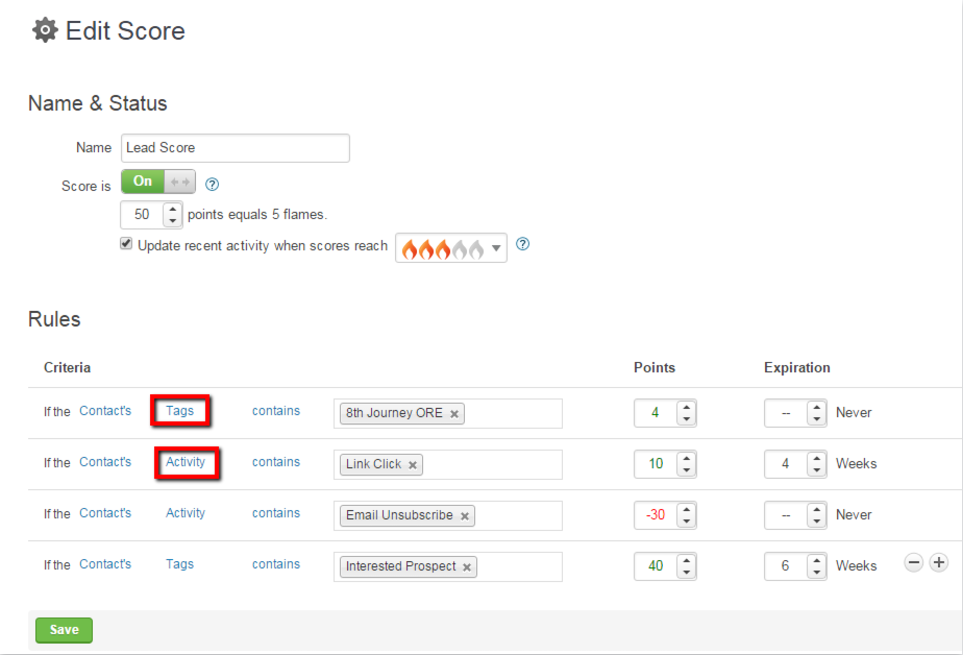
Source: Keap
Marketo operates at the opposite end. Its lead scoring supports unlimited models with separate behavioral and demographic dimensions, complex decay logic, and automated MQL/SQL handoff triggers. Sales Insight surfaces a ranked "Best Bets" list inside Salesforce, showing sales reps the hottest leads by urgency and relative score. For enterprise B2B organizations managing thousands of leads across 6-18 month sales cycles, this depth is necessary. For anyone else, it's overwhelming.
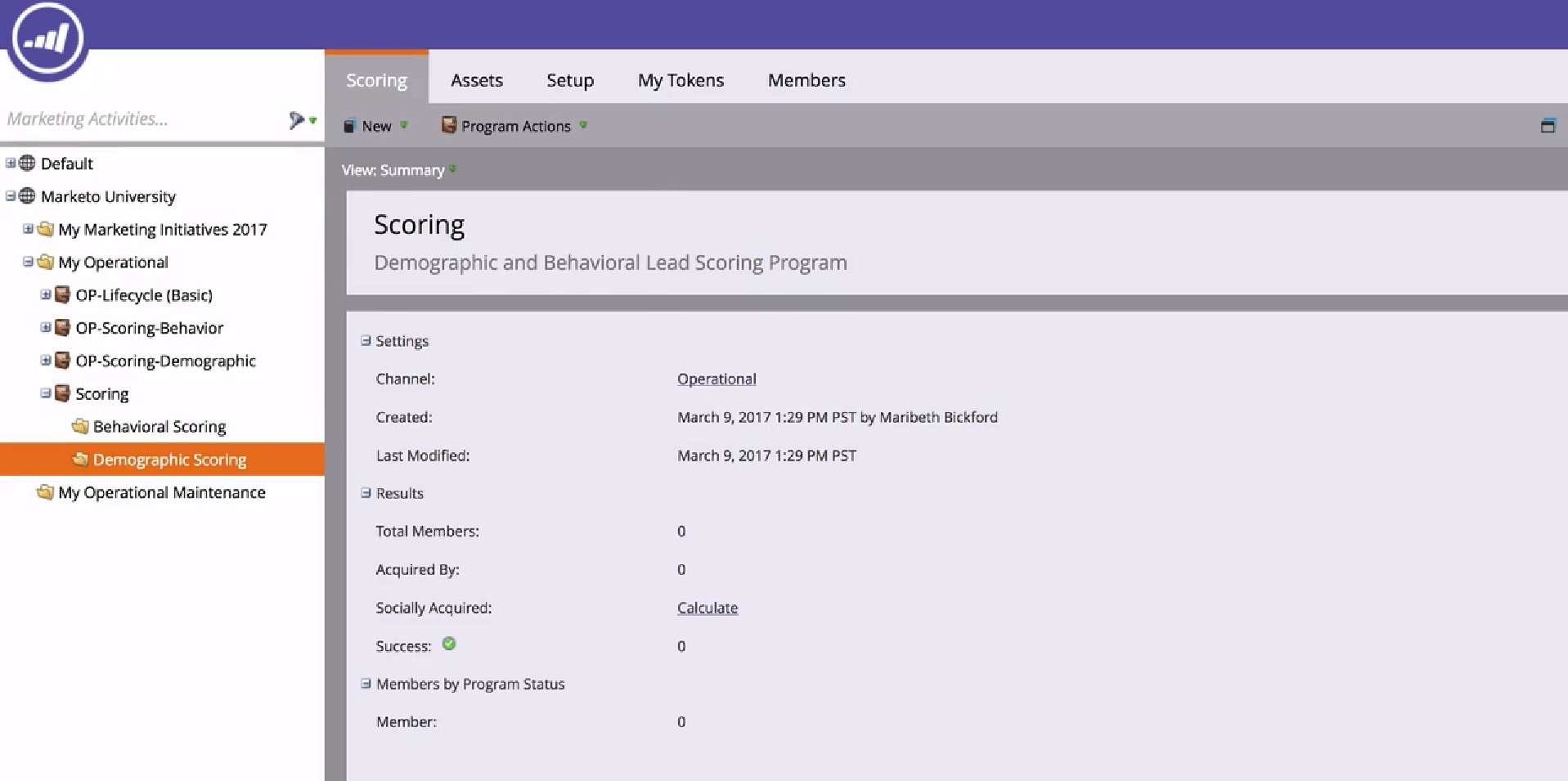
Source: Adobe Marketo Engage
ZoomInfo takes a different approach. Rather than scoring leads after they enter your system, ZoomInfo identifies which accounts are actively in-market before you engage them. Buyer Intent Data tracks research activity across the web, while Guided Intent (exclusive to ZoomInfo) identifies topics historically correlated with your specific deal success rather than requiring manual topic selection. The Account Fit Score uses predictive AI to score accounts 0-100 based on company attribute patterns that predict conversion.
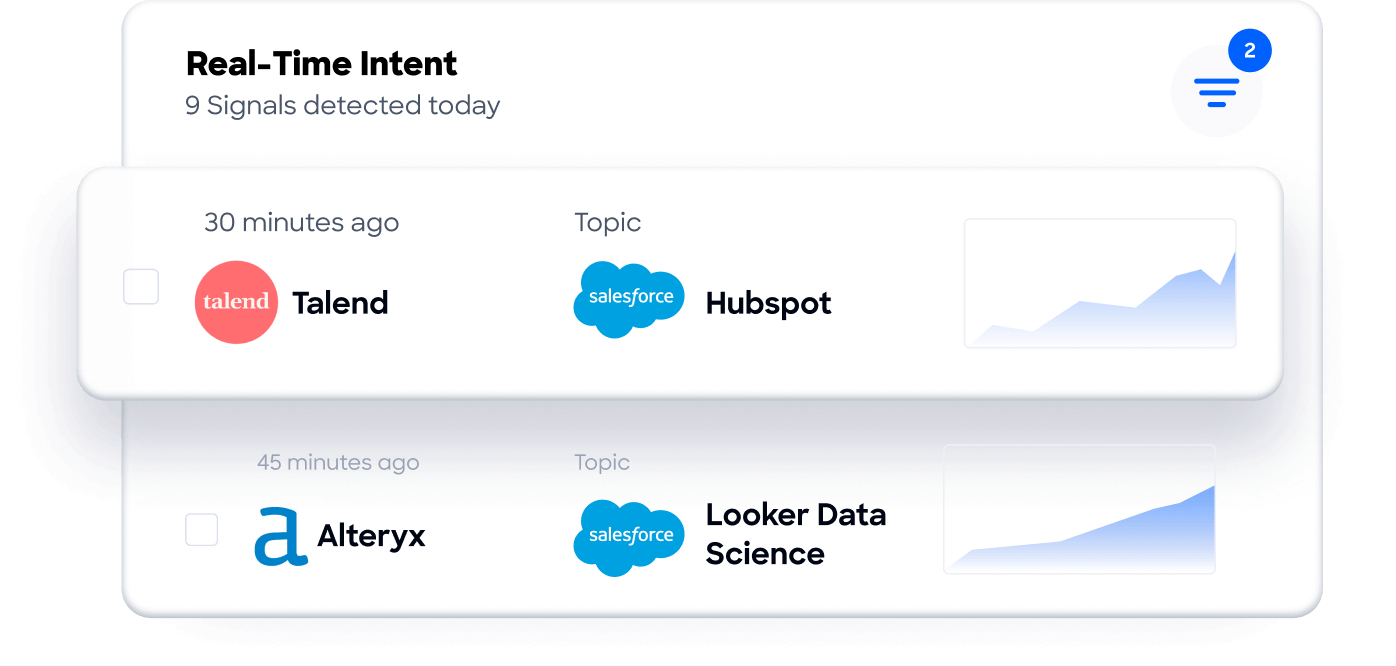
This is the critical distinction. Keap and Marketo score leads who have already found you. ZoomInfo identifies buyers who are ready to be found.
"We needed a solution that would let us streamline our processes and make sure we were reaching the right people. It was about making our efforts more focused." (Jeremy Melius, Sr. Director of Marketing Operations, Impartner)
Pricing structures reflect different markets
Keap charges a flat $299/month (billed annually) for a single plan that includes the full platform. Two user seats are included; additional users cost $39/month each. The price scales with contact volume via a slider on the pricing page, though specific bracket prices aren't published as a static table. SMS is included at 500 messages/month plus 100 voice minutes, with tiered add-ons from $24 to $279/month for higher volumes. An optional $500 implementation package covers business mapping, two done-for-you automations, data import, and up to 15 hours of support.
The biggest pricing concern from users: long-term escalation. Capterra reviewers flag "ever increasing price for a product that is not keeping up feature wise." Cancellation requires a verbal request with a Keap representative (email cancellation is not accepted), and early termination of an annual contract incurs a $299 fee.
Marketo uses custom-quoted, contact-volume-based pricing across four tiers: Grow, Select, Prime, and Ultimate. No dollar amounts are published. Key tier-gating: sandbox environments require Prime or higher (or a paid add-on), Workspaces and Partitions are Prime/Ultimate only, and Marketo Measure attribution is Ultimate only. The default entitlement is 25 marketing users and 50,000 API calls per day. Dynamic Chat's full GenAI features require a separate Prime add-on. The practical reality: Marketo's total cost of ownership includes not just the license but a dedicated administrator (often $80K-120K/year) and implementation consulting.
For a detailed breakdown of what Marketo's tiers actually cost and what's included at each level, see our Marketo pricing guide.
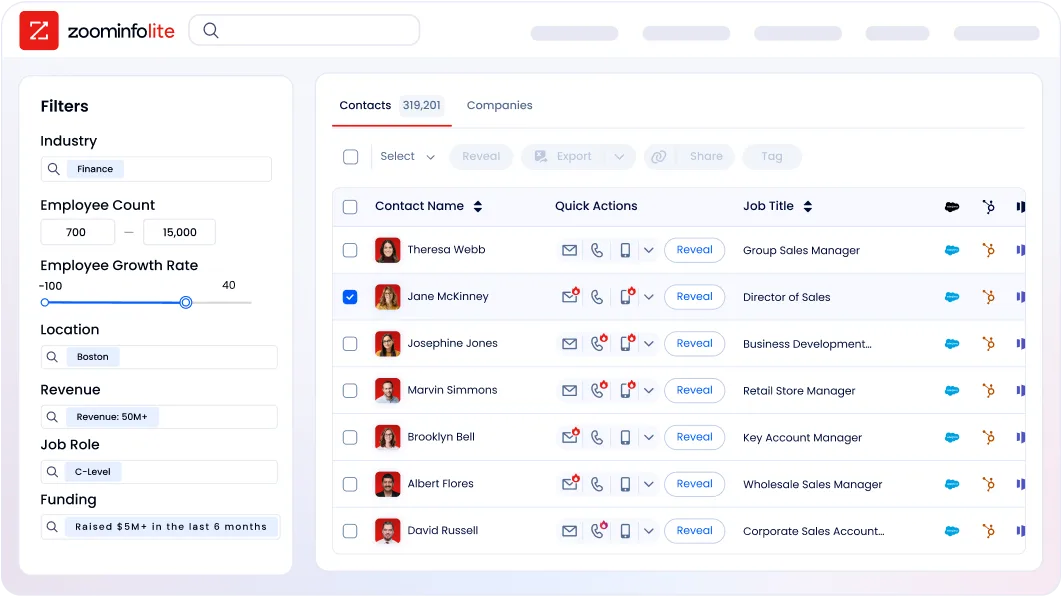
ZoomInfo uses custom-quoted, consumption-based pricing with no published prices. But it stands apart with two free entry points: ZoomInfo Lite, a permanent free tier with access to the B2B database, 10 monthly export credits, and basic search (no credit card, no time limits), and a separate 7-day free trial with broader access. Sales plans run across Professional, Advanced, and Enterprise tiers. Marketing plans span Marketing Demand, ABM Lite, and ABM Enterprise.
Integration ecosystems shape what's possible
Keap connects to roughly 87 marketplace apps and extends reach through Zapier for 5,000+ apps. The REST API (now on v2) uses OAuth 2.0 with rate limits of 1,500 requests per minute for OAuth tokens. Notable marketplace integrations include Memberium for membership sites, Graphly for enhanced reporting, and PlusThis for campaign add-ons. For a small business connecting Keap to WordPress and a payment processor, it's sufficient. For anything beyond that, you're building custom or relying on Zapier workflows.
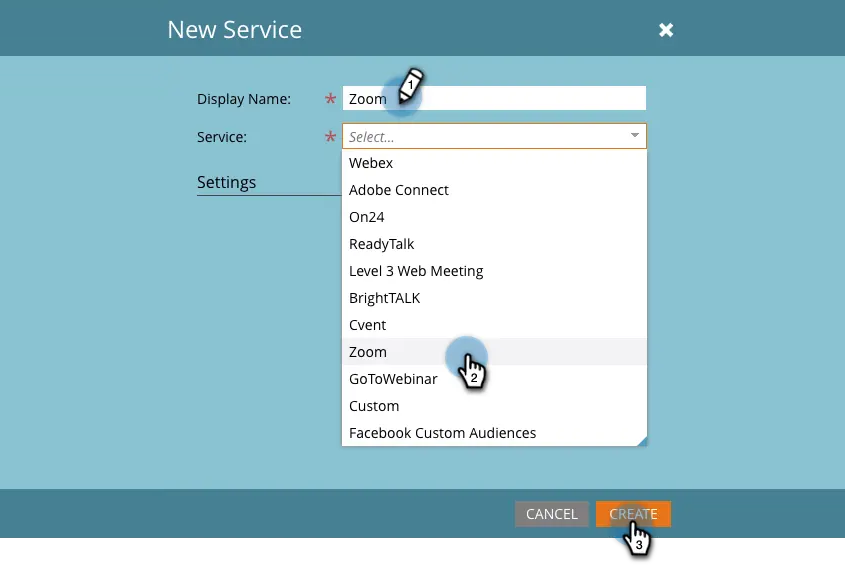
Marketo has a deeper integration story, anchored by native bidirectional CRM sync with Salesforce (up to 200,000 records/hour) and Microsoft Dynamics. LaunchPoint, its integration marketplace, provides pre-built connectors for webinar platforms (Zoom, ON24), ad platforms (Google, LinkedIn, Meta), data enrichment tools, and SMS providers. As part of Adobe Experience Cloud, Marketo connects natively to Adobe Real-Time CDP, Adobe Journey Optimizer B2B Edition, and Adobe Workfront.
The REST API supports 50,000 calls/day on standard tiers, with webhooks for outbound event-driven integrations. A recently launched MCP Server lets AI tools interact directly with Marketo data.
Source: Adobe Marketo Engage
ZoomInfo operates a Marketplace with 172+ integration partners spanning CRM, marketing automation, sales engagement, revenue intelligence, data warehouses, and AI/LLM platforms. Featured integrations include Salesforce, HubSpot, Microsoft Dynamics 365, and cloud data platforms (AWS, Snowflake, Google Cloud, Databricks).
The Enterprise API provides programmatic access with rate limits up to 35 requests/second on Scaling tier packages, and API access is included in all relevant plans. The ZoomInfo MCP server connects AI models directly to ZoomInfo's B2B data as a native tool, currently supporting Claude and ChatGPT.
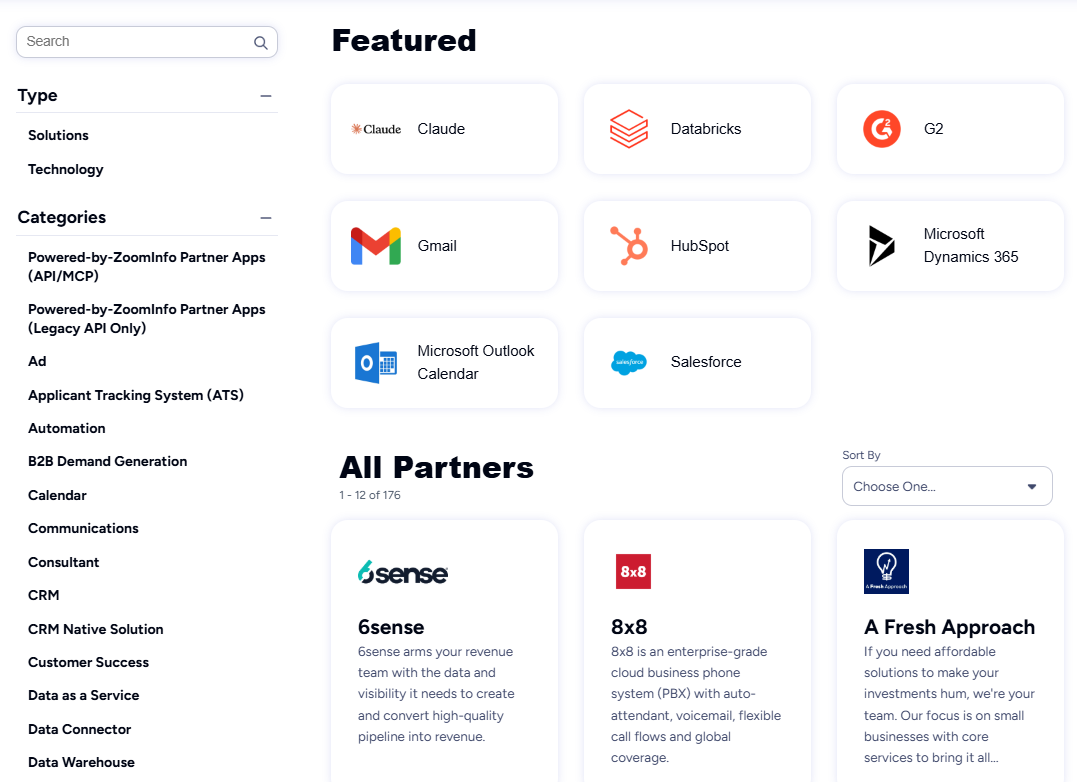
The integration story matters because ZoomInfo connects to both Keap and Marketo. Whichever automation platform you choose, ZoomInfo's data and intelligence can feed it.
Email marketing and outreach reflect each platform's audience
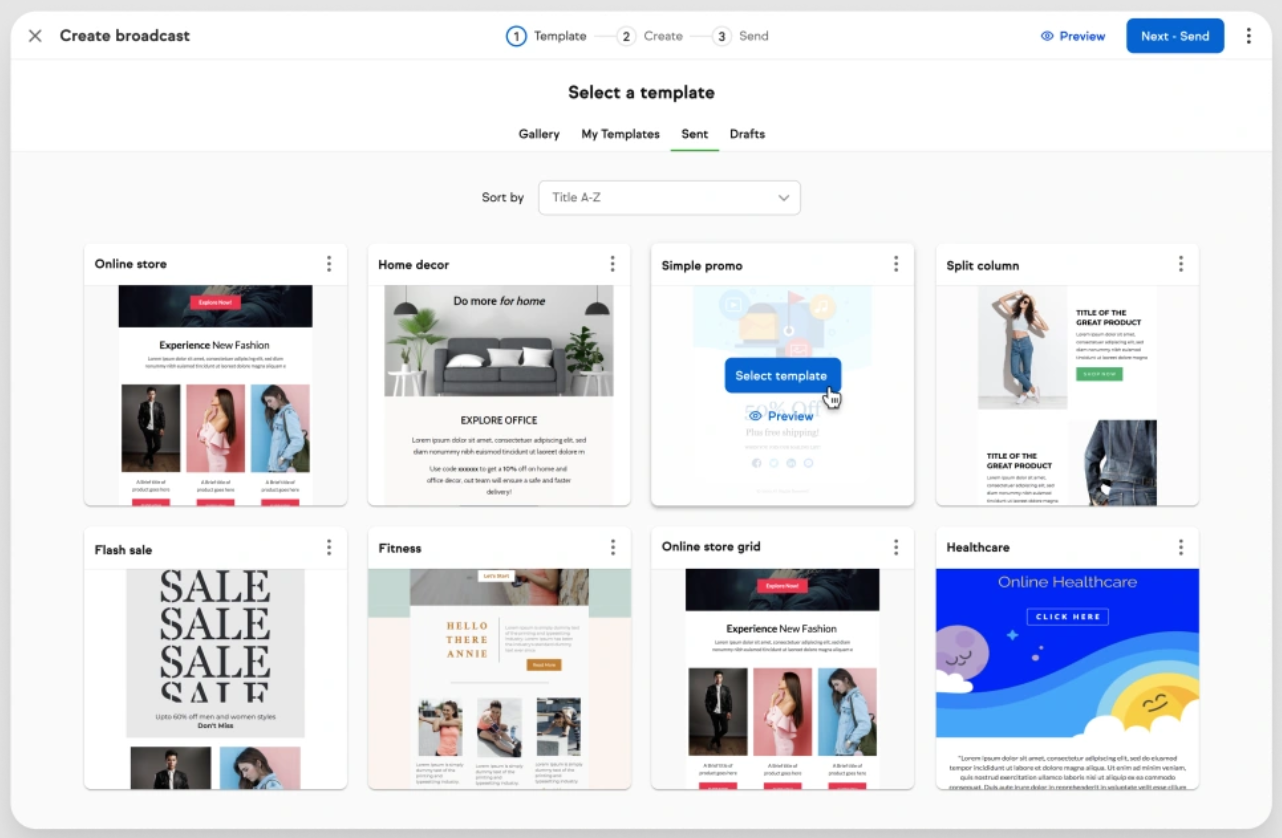
Keap combines email and text marketing in one system, which is its real advantage. A single automation can send an email, wait for a response, and follow up by text if no action is taken. Keap reports its users average a 20% email open rate vs. the industry average of 17.9%, and a 13% click rate vs. the industry average of 2.7%. The email editor includes curated templates and DKIM authentication, though HTML emails reportedly get "corrupted" when sent, requiring workarounds for design-focused teams.
Source: Keap
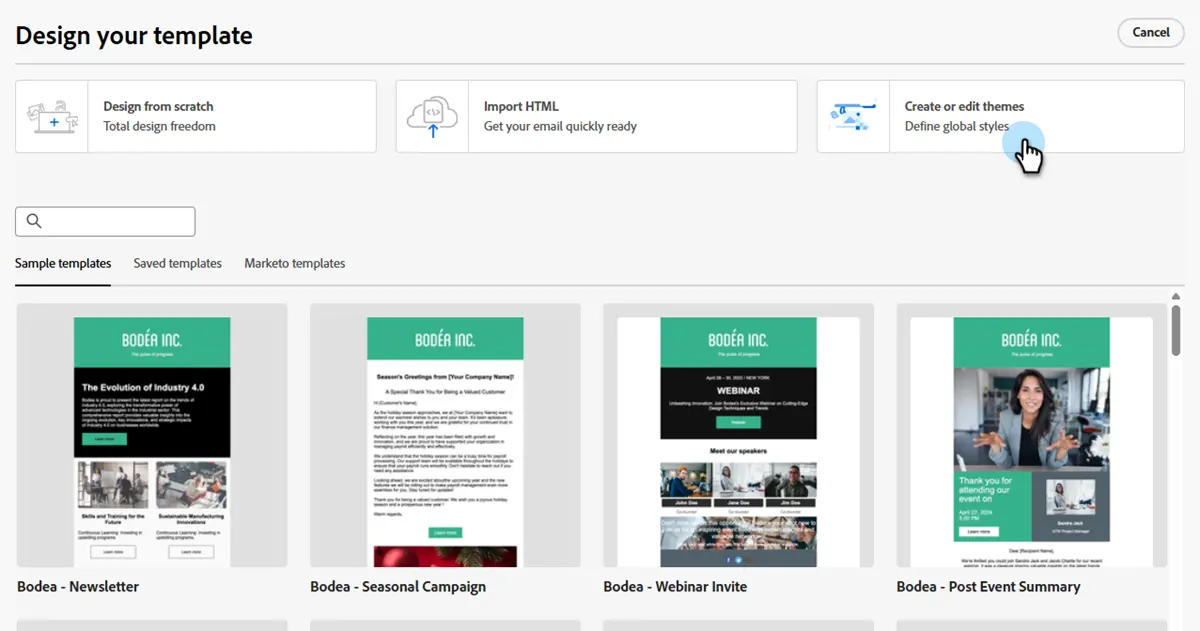
Marketo handles email at enterprise scale. The new Email Designer (launched January 2025) provides drag-and-drop creation with conditional content that serves different variants to different segments within a single email, reusable fragments for headers and footers that update globally, and brand themes with content locking to enforce design standards.
An AI Assistant generates subject lines, preheaders, and section copy using inputs like buying group role, journey stage, and communication strategy. Champion/challenger testing automatically deploys the winning variant in trigger campaigns without manual intervention.
Source: Adobe Marketo Engage
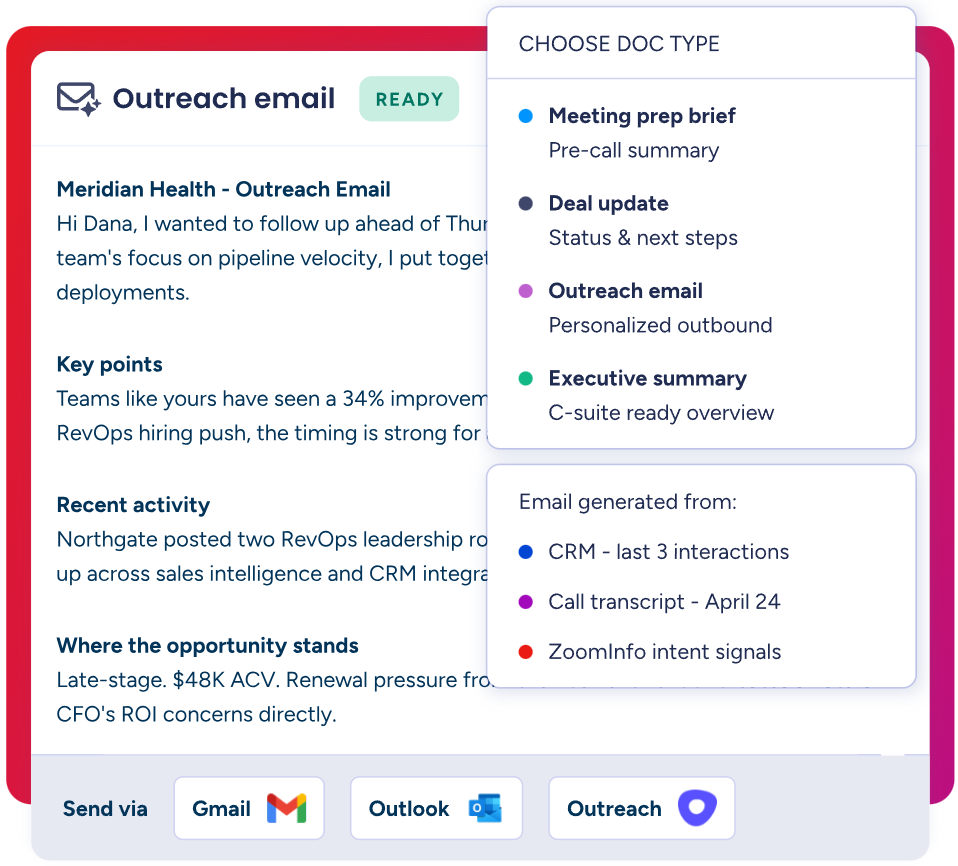
ZoomInfo approaches outreach differently. Rather than competing as an email editor, GTM Studio orchestrates multi-channel plays (email, calls, ads, direct mail) triggered by buyer behavior, and GTM Workspace generates AI-drafted outreach using full account context from the GTM Context Graph. Every message draws on who the buyer is, what they've been researching, and what's happening inside their organization, not just where they sit in your CRM.
Reporting and analytics reflect maturity gaps
This is where the platforms diverge most sharply.
Keap's reporting is consistently cited by reviewers as a weakness. Pipeline analytics track deal conversion by stage and revenue forecasting, and email reporting covers open and click rates. But Capterra reviewers say it lacks depth, with no advanced A/B testing analytics and insufficient insight for data-driven teams. Third-party tools like Graphly exist specifically to fill this gap.
Marketo provides enterprise-grade analytics through multiple layers. The campaign engine tracks Engagement Scores (0-100) on individual content pieces within nurture streams. Marketo Measure (included in the Ultimate tier) runs six attribution models simultaneously (First Touch, Lead Creation, U-Shaped, W-Shaped, Full Path, and Custom), with an AI Attribution option that uses pattern recognition instead of rules. That said, multiple review sources note that many teams still rely on third-party BI tools for analysis beyond what Marketo natively provides.

Source: Adobe Marketo Engage
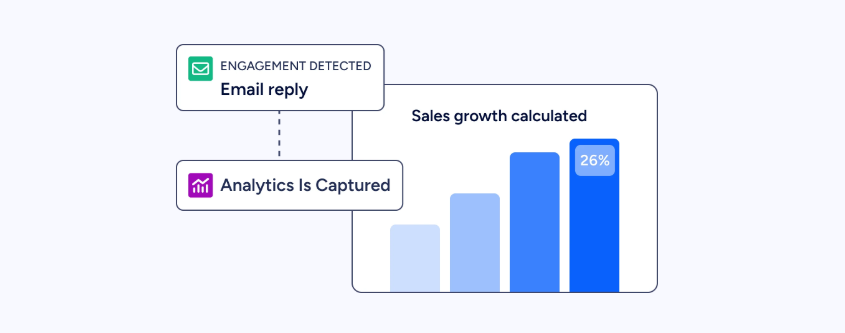
ZoomInfo tracks the metrics that matter before the funnel: which accounts are in-market, which signals correlate with closed-won deals, and which plays generate pipeline. GTM Studio's analytics dashboards track engagement, funnel progression, and top-performing segments. The platform's analytics connect signals to pipeline rather than tracking email opens in isolation.
Security and compliance for regulated industries
Keap offers a Business Associate Agreement (BAA) for healthcare-adjacent customers, PGP encryption for data migration, and CCPA compliance through Thryv's privacy framework. It does not publicly advertise SOC 2 Type II, ISO 27001, or specific encryption standards, which may concern buyers in regulated industries.
Marketo carries SOC 2 Type II certification, ISO 27001:2022, GDPR readiness, and CCPA compliance through Adobe's enterprise compliance infrastructure. Data in transit is protected by HTTPS with TLS v1.2. Enterprise SSO via SAML v2.0 is supported. The full compliance stack is maintained at the Adobe Trust Center.
ZoomInfo maintains a certification stack renewed annually: ISO 27001, ISO 27701, SOC 2 Type II, TRUSTe GDPR Practices Validation, and TRUSTe CCPA Practices Validation. ZoomInfo is a registered data broker in California and Vermont and maintains a dedicated Trust Center at trust.zoominfo.com.
Keap vs. Marketo vs. ZoomInfo: Which should you choose?
The right choice depends on your organization's size, sales cycle, and the gap you're trying to close.
Choose Keap if:
You're a small business owner or team of 1-25 managing everything yourself
You need CRM, email, text, scheduling, and invoicing in one tool
Your sales cycle is short (days to weeks) with a single decision-maker
You want automation without hiring a marketing operations specialist
You're currently juggling five or more disconnected tools
Choose Marketo if:
You're an enterprise B2B organization with a dedicated marketing ops team
Your sales cycles run 6-18 months with multiple stakeholders per deal
You need multi-touch attribution, ABM, and revenue cycle modeling
You're already invested in Salesforce or the Adobe ecosystem
You have the budget and team for a complex implementation
Use ZoomInfo with either if:
You need verified buyer data and intent signals to power your campaigns
You want to target accounts that are actively in-market, not just in your database
Your outreach falls flat because contact data is stale or incomplete
You need one intelligence layer that connects sales, marketing, and RevOps
You want AI-powered GTM execution through native products or any tool via API/MCP
Try ZoomInfo free with Lite or request a demo to see how intelligence transforms your pipeline.
Keap and Marketo answer different versions of the same question: how do I automate my marketing? ZoomInfo answers the question that comes before it: who should I be marketing to, and why now? The most effective go-to-market teams don't choose between automation and intelligence. They use ZoomInfo's data and GTM Context Graph to inform whichever execution platform fits their scale, then watch both work better because the foundation is accurate, current, and prioritized.
"ZoomInfo's not just a contact data company anymore. They've built a full system of execution. GTM Intelligence works the list, writes the outreach, triggers the play, and helps drive predictable growth." (Ian Brodie, CEO & Co-Founder, Levanta, Levanta)
Keap vs. Marketo vs. ZoomInfo FAQ
What is the fundamental difference between Keap, Marketo, and ZoomInfo?
Keap is an all-in-one CRM and marketing automation platform designed for small businesses with 1-25 employees, combining CRM, email, text, appointments, invoicing, and payments in one subscription starting at $299/month. Marketo Engage is an enterprise B2B marketing automation platform for complex, multi-touch campaigns with lead scoring, ABM, and revenue attribution, requiring dedicated marketing operations staff. ZoomInfo is a B2B intelligence platform providing verified contact and company data, buyer intent signals, and a GTM Context Graph that feeds accurate, real-time data into whichever automation platform you use.
Which platform is easiest to learn and use?
Keap has a moderate learning curve, with most users productive within weeks using the Easy Automations and Lifecycle Automation framework, though the platform's depth takes longer to master. Marketo has the steepest learning curve of the three, with months of dedicated training required and most deployments needing a full-time administrator. ZoomInfo offers a structured 90-day onboarding program and role-specific learning paths through ZoomInfo University.
Can I use ZoomInfo together with Keap or Marketo?
Yes. ZoomInfo integrates with both platforms. Its Marketplace includes connectors for major CRM and marketing automation tools, and the Enterprise API enables custom data flows. The practical benefit: ZoomInfo's verified contact data, intent signals, and account intelligence feed into your automation platform, so your campaigns reach the right people with accurate information rather than working from stale or incomplete records.
Which platform is best for account-based marketing?
Marketo has native ABM with lead-to-account mapping, a Predictive Engagement Score, and CRM-embedded account intelligence. Keap has no ABM capabilities. ZoomInfo provides the data foundation for ABM, including buyer intent tracking from 210 million IP-to-Organization pairings, Guided Intent that identifies topics correlated with deal success, and an Account Fit Score that predicts conversion. ZoomInfo earned a Leader position in the Gartner Magic Quadrant for ABM Platforms in both 2024 and 2025.
How does pricing compare across the three platforms?
Keap starts at $299/month billed annually, with a single plan that includes all features and scales by contact count. Marketo uses custom-quoted pricing with no published rates, across four tiers (Grow, Select, Prime, Ultimate), typically running significantly higher than Keap when you factor in licensing, implementation, and a dedicated administrator. ZoomInfo uses custom-quoted, consumption-based pricing with no published prices, but offers a permanent free ZoomInfo Lite tier and a separate 7-day free trial.
Which platform provides the best lead scoring?
Keap uses a simple flame indicator system (1-5 flames) based on tags, form fills, link clicks, and email opens, with configurable point decay. Marketo supports multi-dimensional scoring with unlimited models, separate behavioral and demographic dimensions, complex decay logic, and automated handoff triggers. ZoomInfo approaches prioritization differently, using buyer intent signals and predictive AI scoring to identify which accounts are actively in-market before they enter your CRM, rather than scoring leads after they arrive.
Does Marketo include CRM functionality?
No. Marketo is a marketing automation platform that syncs bidirectionally with Salesforce and Microsoft Dynamics CRM. You need a separate CRM subscription. Keap includes CRM natively, which is part of its all-in-one value for small businesses. ZoomInfo provides GTM Workspace as a seller-facing execution environment and integrates with all major CRMs.
Which platform is best for a company moving from small business to mid-market?
This is where the choice gets interesting. A growing company may start on Keap for its all-in-one simplicity, then outgrow it as the sales cycle lengthens and the team specializes. Marketo serves the mid-market and enterprise but requires significant operational investment. ZoomInfo works across stages because it operates at the intelligence layer rather than the execution layer. As your team grows, ZoomInfo's data, intent signals, and GTM Context Graph continue to compound in value regardless of which automation platform you use.
Comparing Keap and Marketo? These related breakdowns go deeper:
