
Lessonly, now operating as Seismic Learning after its 2021 acquisition by Seismic, started as a team training tool built in Indianapolis. It has since become the learning and coaching module inside the Seismic Enablement Cloud, a platform that combines content management, training, coaching, and analytics for revenue teams.
To write this Lessonly review, we analyzed the platform extensively. We believe it's the right choice if:
You need to onboard and ramp sales reps faster with structured, role-specific training
You want AI coaching and role-play that scales without pulling managers away from deals
You have a dedicated sales enablement team that can build and manage training programs
You need training integrated with sales content, playbooks, and CRM data
You're a mid-market to large enterprise with complex onboarding requirements
Seismic Learning excels at building rep skills and knowledge. But training alone doesn't tell reps which accounts to prioritize, when a buyer is in-market, or what intelligence should shape the next conversation.
That's where ZoomInfo fits alongside Seismic Learning in the revenue tech stack.
ZoomInfo is a B2B data and GTM platform built on a large data foundation: 500M contacts, 100M companies, 135M+ verified phone numbers, and 200M+ verified business emails. Its GTM Context Graph, an intelligence layer processing 1.5B+ data points daily, combines this data with your CRM records, conversation transcripts, and behavioral signals to reveal not just what happened, but why.
We've included a look at ZoomInfo later in this review as a complement to any sales training investment. If you're ready to explore it, start with a free trial.
What is Lessonly (Seismic Learning)?
Lessonly was founded in July 2012 in Indianapolis by Max Yoder, Kristian Andersen, Mike Fitzgerald, and Eric Tobias. The idea was straightforward: give customer-facing teams a simple way to build training content and practice real behaviors, without the complexity of traditional learning management systems.
The approach worked. By 2021, Lessonly had grown to roughly 230 employees serving over 1,200 companies. That August, Seismic acquired Lessonly as part of a $170M Series G funding round that valued Seismic at $3 billion. The goal was to combine Lessonly's training and coaching with Seismic's content management and sales enablement platform. Lessonly's Indianapolis office was retained as Seismic's 13th global office.
Today, the product operates as Seismic Learning within the Seismic Enablement Cloud. It sits alongside four other capabilities: Content Management & Library, Program Strategy & Execution, Meeting Intelligence, and Digital Sales Rooms. Seismic markets it as AI-powered sales training for enablement leaders who want training, coaching, and content in one system.
Seismic now serves more than 2,000 organizations worldwide with over 1 million users across 100+ countries. The company reported its first profitable fiscal year in FY2025, with 85 customers at $1M+ ARR and a 90% gross retention rate.
Lessonly Pros & Cons
Pros | Cons |
|---|---|
- No-code lesson builder accessible to non-technical enablement leads | - Implementation overhead too heavy for small teams |
- AI role-play and coaching that scales without manager time | - No published pricing; enterprise custom quotes only |
- Tight integration with Seismic's content management and sales playbooks | - Shifted from Lessonly's original simplicity to a broader, more complex platform |
- Skills App with multi-source assessments (manager review, observation, self-reflection, KPIs) | - Content authoring lags dedicated e-learning tools like Articulate or Adobe Captivate |
- Content Freshness scoring surfaces stale training before it hurts performance | - Not designed for general employee L&D outside revenue teams |
- Strong analyst recognition (Forrester Leader, Gartner Leader, IDC Leader) | - Annual contracts with non-cancellable commitments and no refund policy |
- Documented customer outcomes (34% ramp reduction, 58% faster first sale) | - Pending Highspot merger creates roadmap uncertainty |
Lessonly Review: How it Works & Key Features
Lesson Builder & Content Creation: A no-code authoring environment built for sales content velocity.
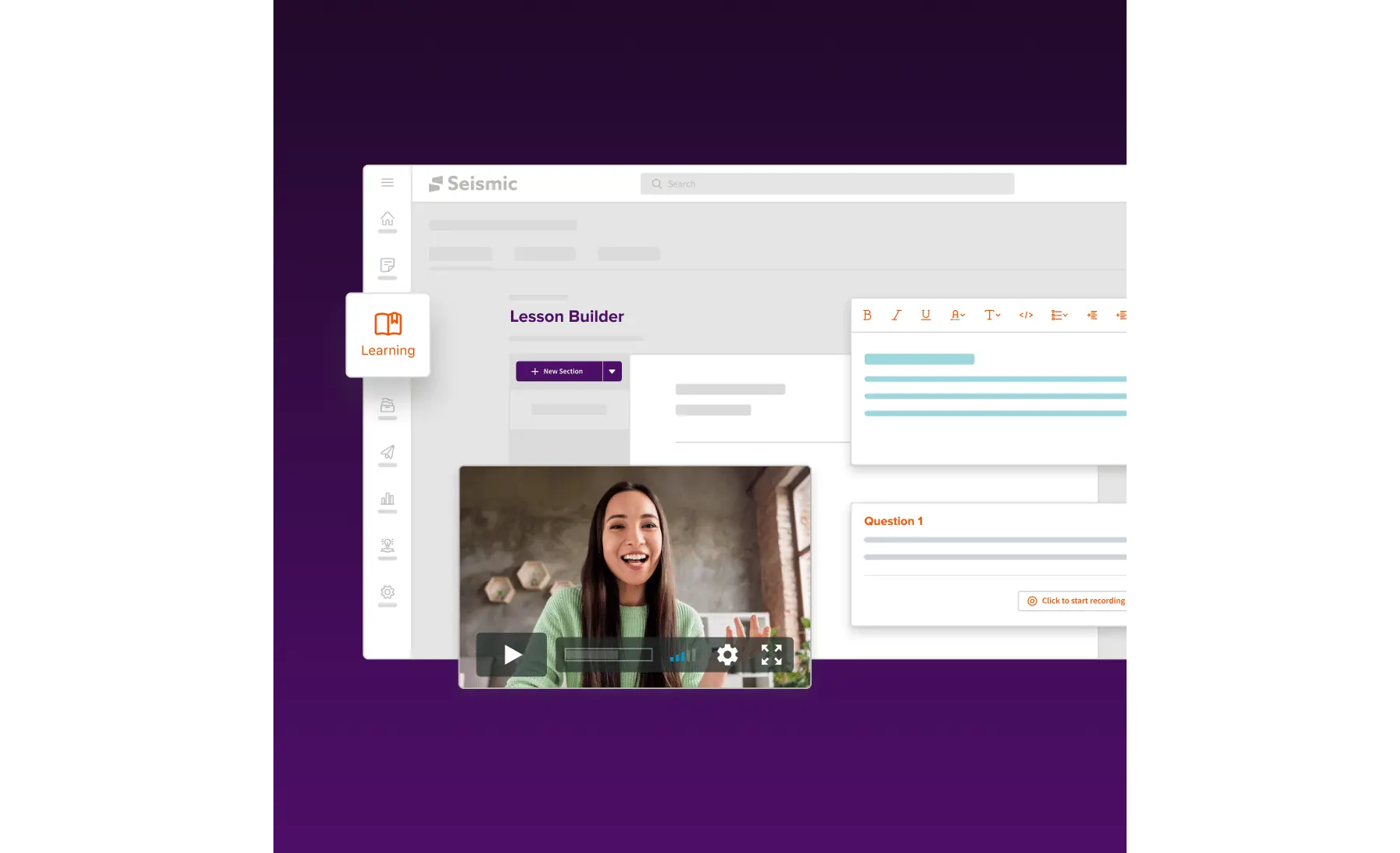
The Lesson Builder is where enablement teams create training content. Unlike traditional e-learning tools that require instructional designers, the builder puts content creation in the hands of the people who own the knowledge: managers, product marketers, and enablement leads.
Content creators choose from five types: Lessons for discrete concepts, Paths for full curricula, Certification Paths that award completion certificates, SCORM lessons for importing content from external authoring tools, and Practice Scenarios for on-demand simulations. Each lesson is assembled from modular elements: text blocks, images (with a built-in Image Library), audio, video, PDFs, flipcards, and reveal cards.
Source: Seismic
Knowledge checks come in three formats: multiple-choice, matching, and sorting. Creators can also insert structured role-play activities directly into lessons, complete with scenario descriptions, partner role instructions, and gated feedback requirements.
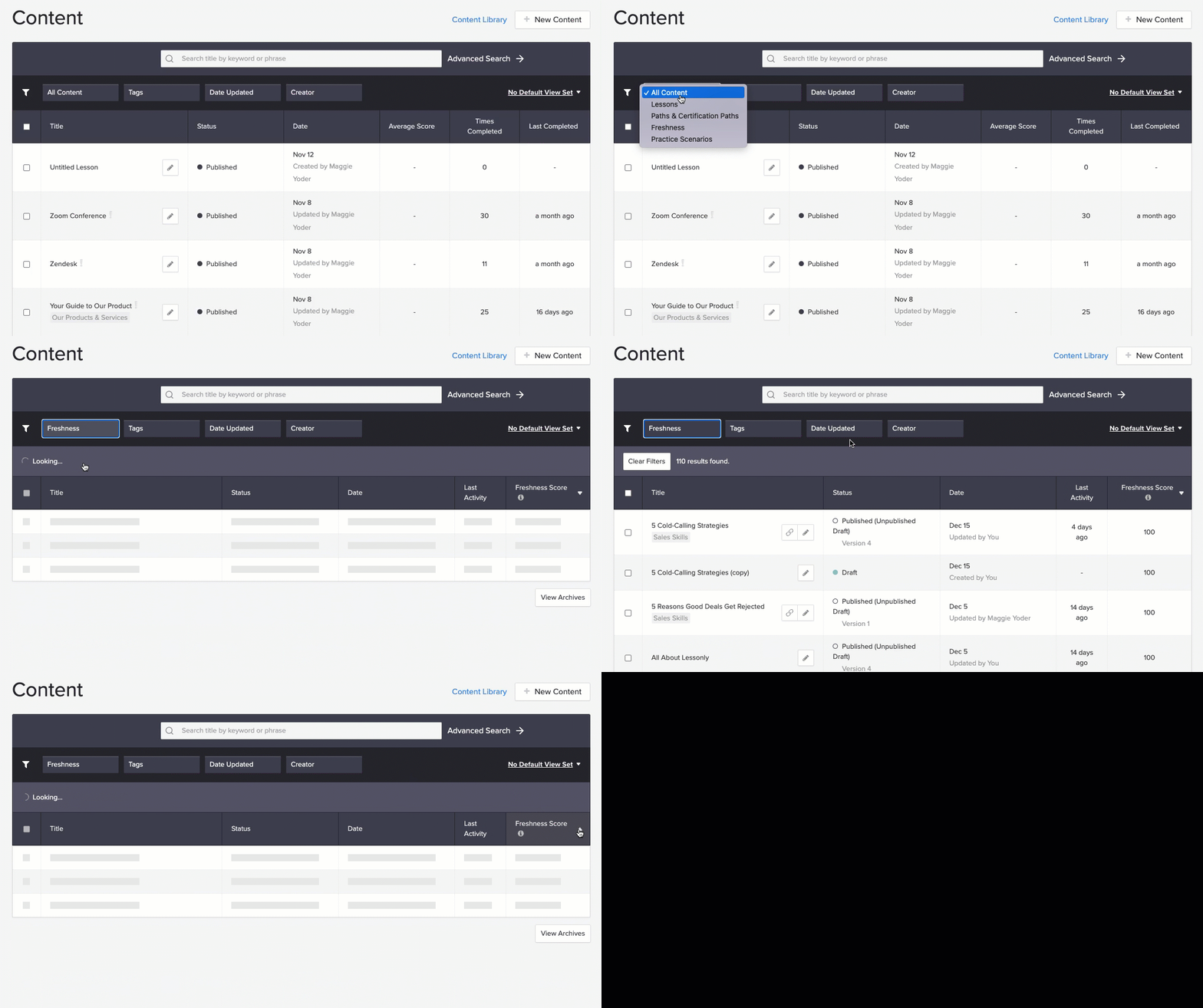
Two features stand out for teams managing large content libraries. Content Freshness scoring assigns each lesson a 0–100 score based on recency of edits and learner engagement. Scores degrade after 60 days and hit zero at 180, giving content owners a clear signal to audit and update before stale training reaches reps. And because Seismic Learning sits inside the Enablement Cloud, creators can embed Seismic content directly into lessons. When the underlying sales collateral is updated, the training reflects it automatically.
Source: Intercom
Lesson Collaboration supports multiple owners working simultaneously, with inline comments and @-mention notifications for asynchronous review. An Element Template Library lets teams save frequently used content blocks for reuse across lessons, enforcing visual consistency.
AI Coaching & Role-Play: Reps practice real conversations on demand, with instant AI feedback.
The biggest bottleneck in sales coaching is manager availability. Reps can't practice buyer conversations without pulling someone away from their own work, and feedback after live calls arrives too late to change behavior before the next interaction.
The Aura Role-Play Agent, launched in Spring 2025, addresses this directly. The agent uses generative AI to simulate customer conversations drawn from the content within Seismic. The AI buyer persona uses the organization's approved messaging, product content, and buyer personas to create scenario-specific dialogue. Reps engage in a live conversation, then receive feedback with post-practice insights, scoring, and recommendations.
Source: Seismic
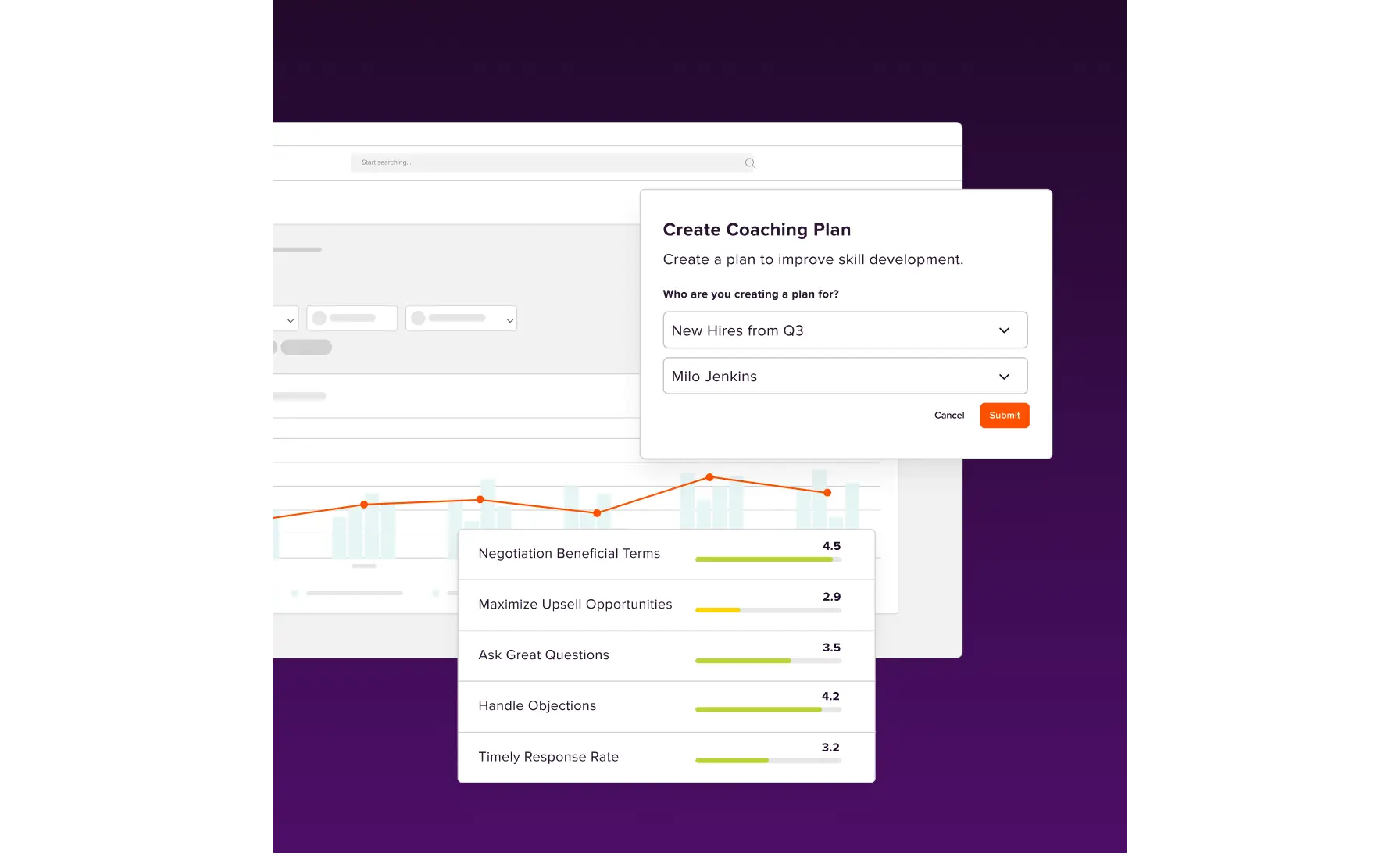
What makes this more than a chatbot exercise is the two-way coaching loop. Reps get individualized feedback on pacing, keyword usage, filler words, and confidence. At the same time, enablement and sales leadership teams receive aggregated scoring and gap analysis that surface patterns across the team. A manager reviewing ten role-play scores can spot that the entire team struggles with pricing objections, then target coaching accordingly.
The platform also supports video recordings for asynchronous review and delivers coaching plans that highlight knowledge gaps. Managers can assign follow-up learning tied to specific skill deficiencies the AI identified.
Source: Seismic
Through Aura AI's broader integration, coaching prompts and onboarding paths appear within Microsoft Teams, Slack, and Salesforce, meeting reps where they already work. Multimodal learning options include podcast-style audio content with in-context Q&A. All Aura AI features carry ISO 42001 certification for AI management, a credential that matters in regulated industries like financial services and healthcare.
The key differentiator: the Role-Play Agent is grounded in the organization's own Seismic content, not a generic sales training script. Practice scenarios draw on approved messaging and product knowledge, making them relevant to real deals.
Skills App: A structured system for defining, measuring, and developing sales competencies.
Most training platforms track completion. A rep finishes a course, gets a checkmark, and everyone moves on. But completion doesn't equal competence, and managers often lack visibility into which reps actually possess which skills.
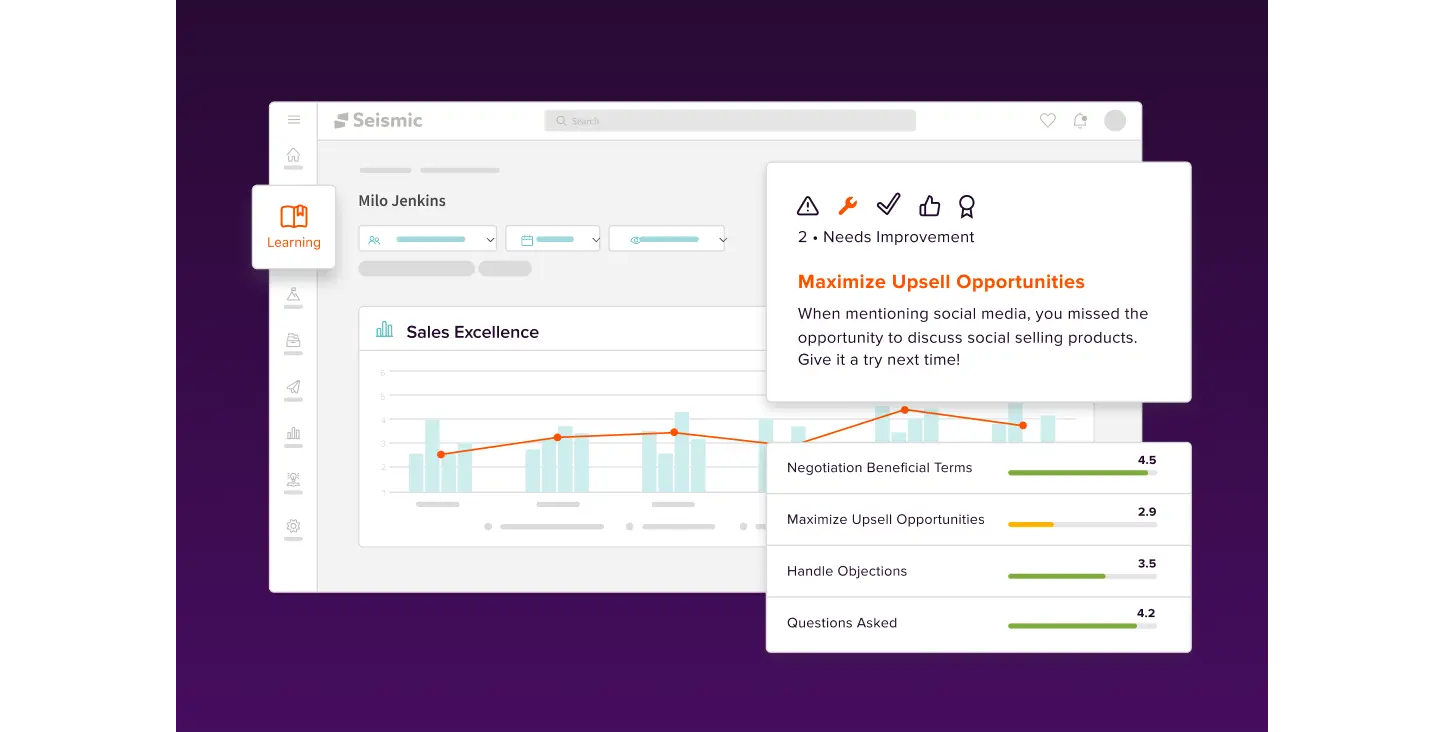
The Skills App takes a different approach. Administrators define role-based skill groups, build a skills library organized by category, and assign specific skillsets to teams. Each skill links to Seismic Learning content (lessons, paths, certifications) so that when a gap appears, recommended remediation content surfaces automatically.
Source: Seismic
What makes the Skills App distinctive is its multi-source assessment model. Instead of relying on a single signal, it combines four assessment types:
Skill Set Review: Manager-led evaluation of a rep's proficiency across a defined skillset
Skill Observation: Live or recorded observation of the rep performing in a real or simulated scenario
Performance Metrics: Hard KPI data (quota attainment, call scores, pipeline metrics) mapped to a skill
Skill Set Self-Reflection: Reps assess their own proficiency, surfacing gaps between self-perception and manager evaluation
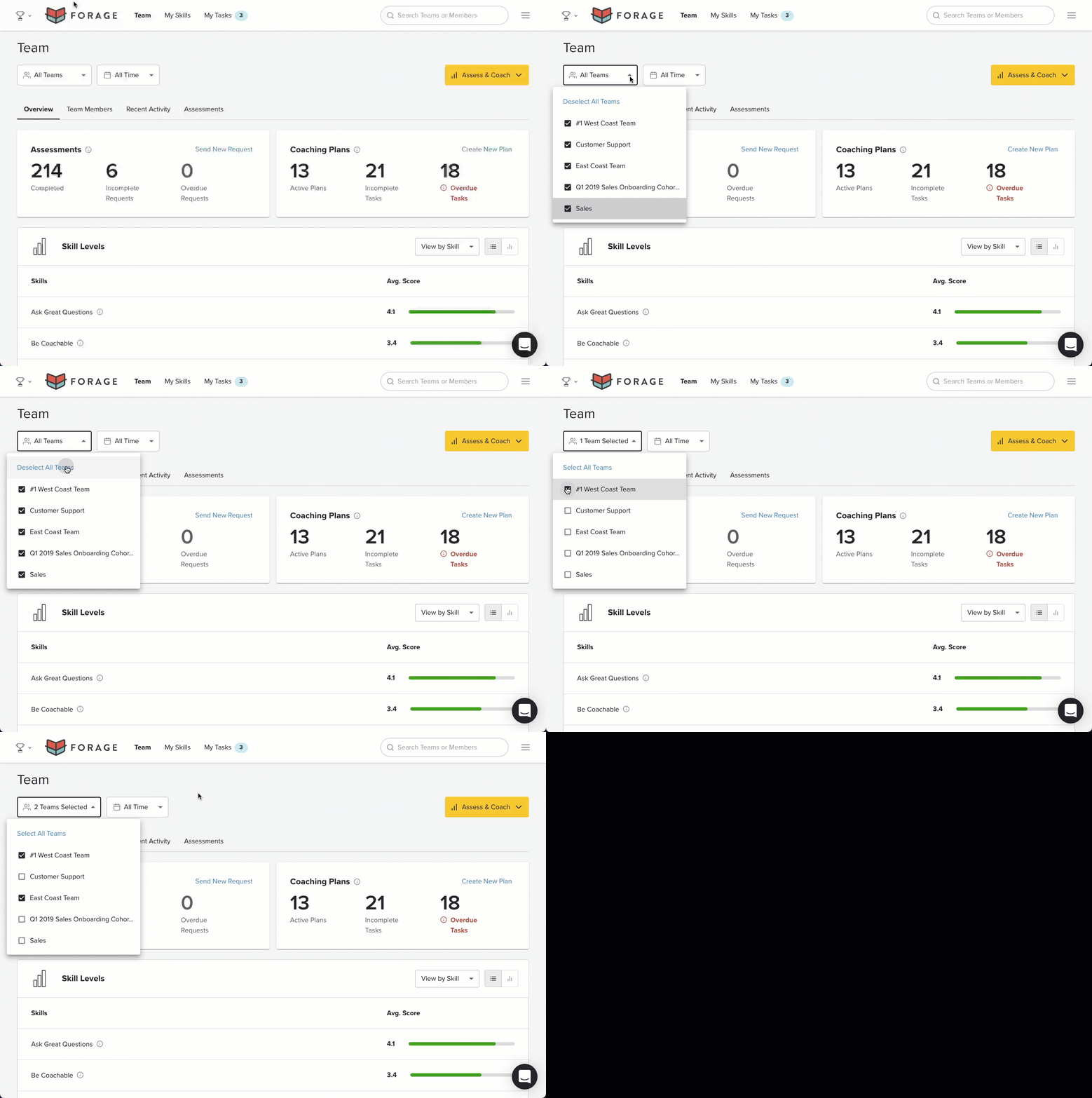
These scores combine through a documented weighted averaging formula that produces a single skill level score per rep and a team-level aggregate. The Team Overview page gives leaders aggregate skill scores across the organization, letting them prioritize coaching by team, role, or skill category.
Source: Intercom
When gaps appear, managers create coaching plans with assigned content, external links, or custom tasks tied to the specific skill being developed. Additional evaluators (QA staff, team leads, cross-functional peers) can be added to observation assessments for multi-rater feedback beyond the direct manager.
Insights & Reports: Analytics that connect training activity to learner progress.
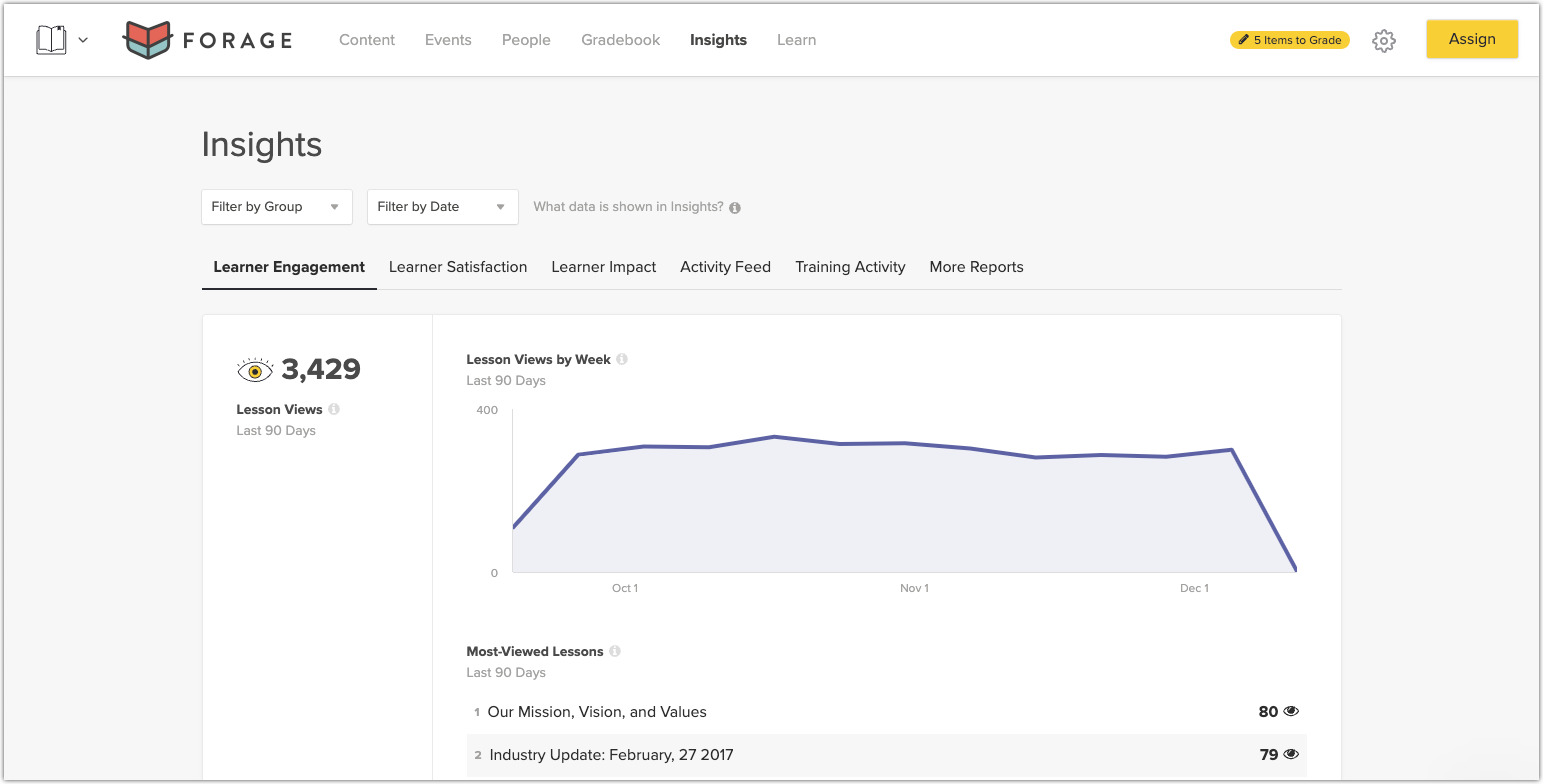
The Insights & Reports module provides dashboards and exportable reports covering lesson completion rates, learner progress through Paths and Certification Paths, assignment status, and knowledge check scores. Administrators can filter by user, group, content type, and time period.
Source: Intercom
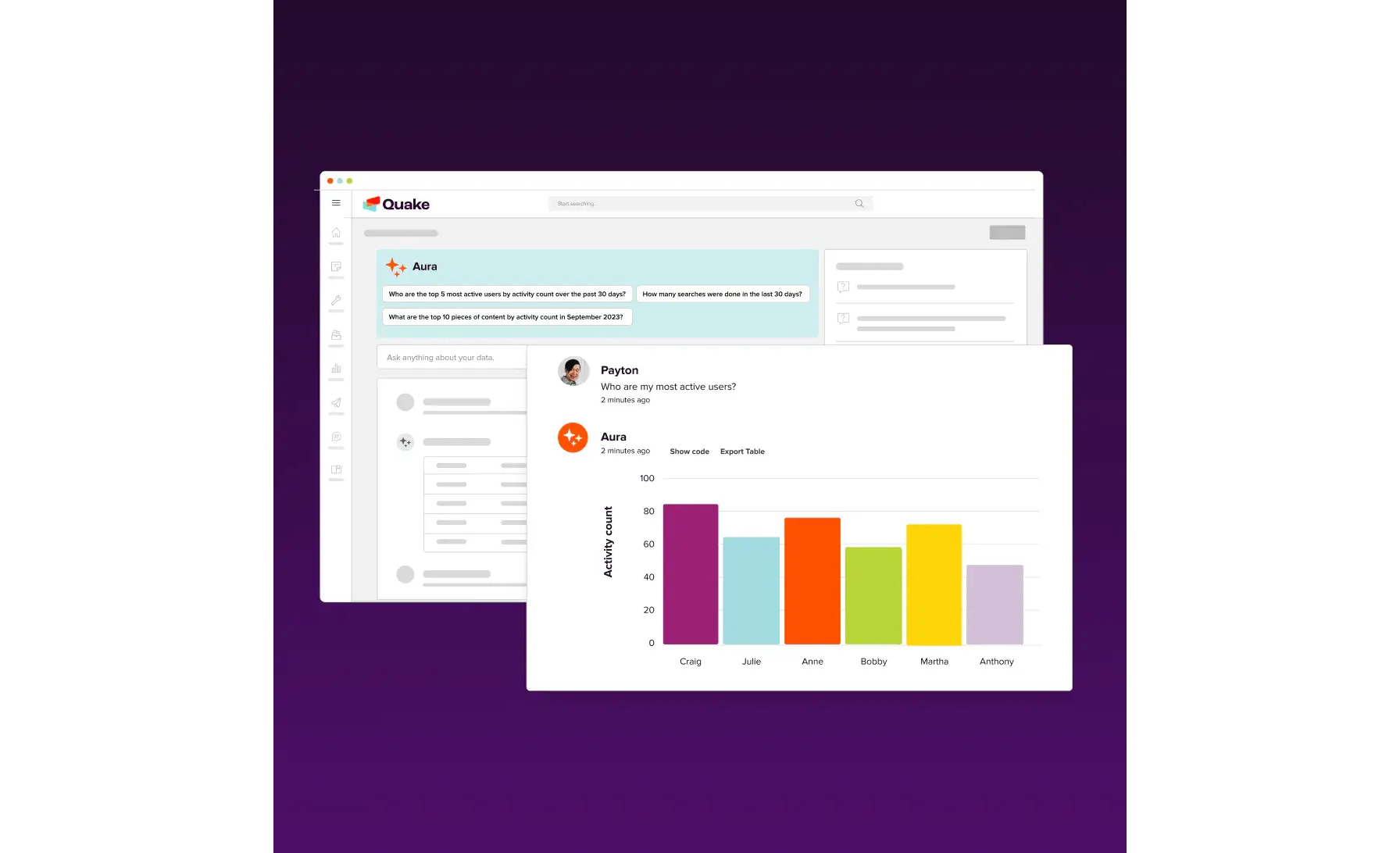
A reporting webhook pushes completion data to third-party systems in real time via HTTP POST, and xAPI / Tin Can support enables integration with external Learning Record Stores. For broader analytics, the Seismic platform's self-service analytics agent (Spring 2025) lets users query enablement data in plain language rather than relying on pre-built dashboards.
Because Seismic Learning sits inside the Enablement Cloud, training analytics can connect to content usage, program execution, and deal performance data in one system. This lets enablement leaders explore correlations between training completion and pipeline outcomes rather than viewing learning data in isolation.
That said, organizations with extensive L&D reporting requirements (knowledge retention trends over time, spaced repetition effectiveness, engagement analytics) may find that dedicated LMS platforms offer more granular learning science reporting. Seismic Learning's analytics lean toward content usage and sales impact.
Where Seismic Learning Falls Short
Seismic Learning has genuine strengths for enterprise sales training. But several limitations surface depending on your organization's size, budget, and needs.
Complexity That Outpaces Smaller Teams. The Forrester Wave notes Seismic is "a good fit for midsized to large enterprises," which signals it isn't built for small businesses. The Enablement Cloud's breadth creates significant configuration and administration overhead. Teams without dedicated enablement managers often struggle to use the platform fully. Seismic's own Professional Services offering and multi-month deployment timelines underscore this.
No Transparent Pricing. Seismic does not publish any pricing. The pricing page returns a 404 error. All CTAs direct to demo requests or sales contact forms. From the Main Services Agreement, the product is sold through negotiated Order Forms with annual invoicing, non-cancellable commitments, and no mid-term seat reductions. For organizations evaluating training tools, this opacity makes budget planning difficult and comparison shopping almost impossible.
The Lessonly-to-Seismic Identity Shift. Customers who chose Lessonly for its simplicity now find themselves inside a much larger platform. The positioning has moved from "simple training software" to an enterprise "Enablement Cloud." This doesn't serve teams that wanted a lightweight, standalone learning tool and don't need content management, digital sales rooms, or meeting intelligence bundled into their training subscription.
Content Authoring Limits for Deep E-Learning. The Lesson Builder is designed for fast sales training content, not rich multimedia courseware. Teams that need complex branching scenarios, interactivity, or compliance training will find the native authoring more limited than dedicated tools like Articulate 360 or Adobe Captivate. The platform supports SCORM imports to compensate, but this adds integration complexity.
Merger Uncertainty. In February 2026, Seismic announced its intent to merge with Highspot, its primary competitor in revenue enablement. This creates uncertainty about which capabilities will be retained, deprecated, or consolidated. Buyers evaluating today face a period where the long-term product roadmap is unclear.
These limitations are the natural consequences of evolving from a focused training tool into an enterprise platform. They don't diminish Seismic Learning's value for organizations with the resources and enablement maturity to use it fully. But they leave a clear gap for smaller teams, budget-conscious buyers, and anyone who valued the original Lessonly simplicity.
The Natural Complement to Seismic Learning: ZoomInfo
Seismic Learning gives reps the skills and confidence to have effective buyer conversations. What it doesn't provide is the data layer: which accounts are worth their time, who the decision-makers are, and when a prospect is actively researching solutions.
That's the gap ZoomInfo fills. As a B2B data and GTM platform, it provides the data foundation and contextual intelligence that make training investments productive.
Comprehensive B2B Data: Verified contacts and company intelligence to reach the right buyers.
ZoomInfo's B2B data platform spans 500M contacts, 100M companies, 135M+ verified phone numbers, 120M direct-dial numbers, and 200M+ verified business emails. Data flows through a multi-source verification pipeline backed by 300+ human researchers, achieving up to 95% accuracy on first-party data.
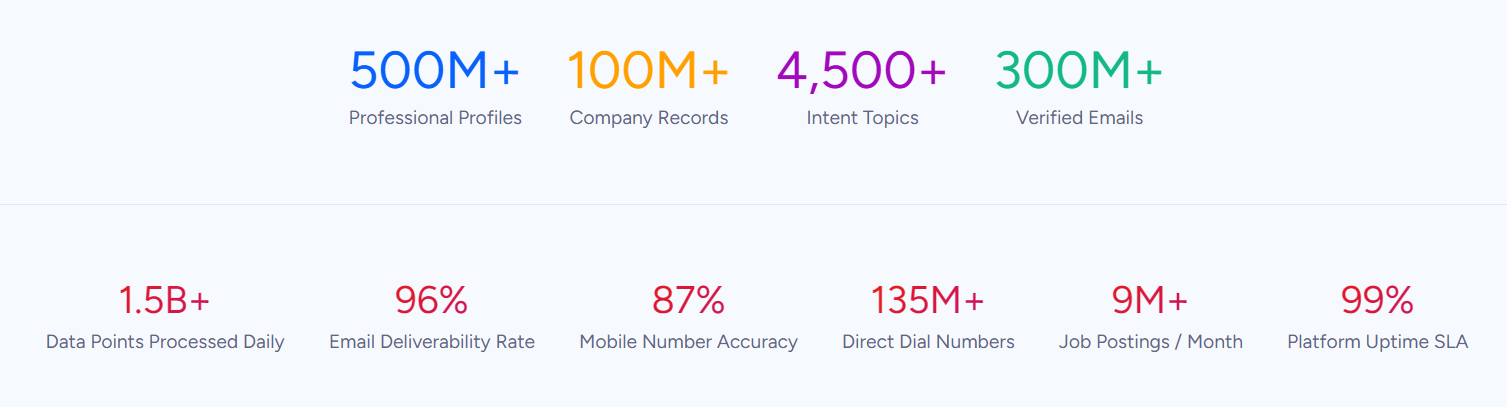
For sales teams investing in training, this data determines whether that investment pays off. Reps who have mastered objection handling still need to reach the right person at the right company. Reps certified on new product messaging still need accurate direct dials and verified emails to deliver that message.
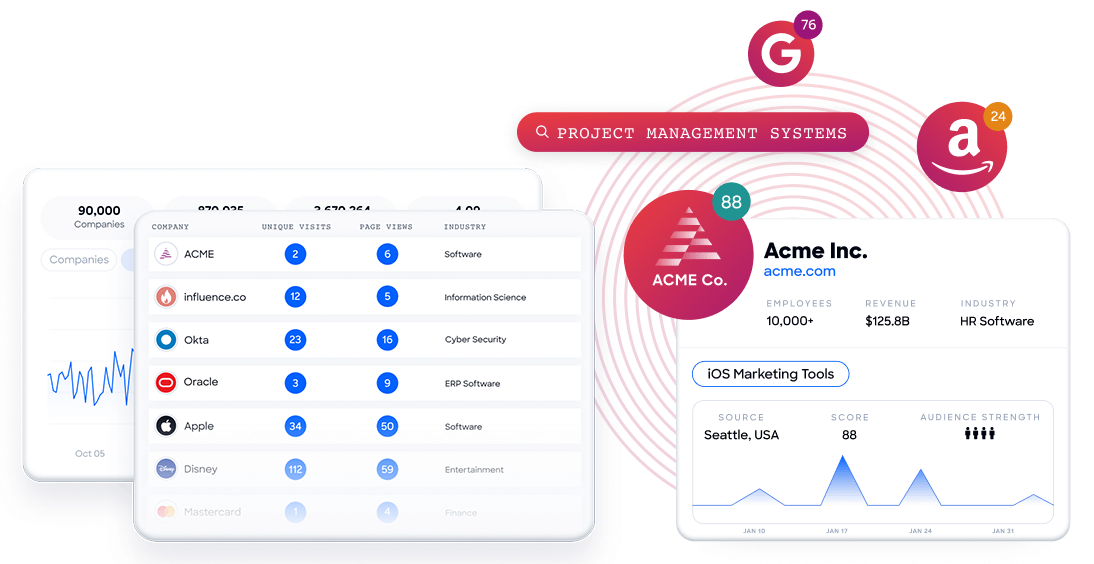
Beyond contact data, ZoomInfo provides Buyer Intent signals from 210 million IP-to-Organization pairings, technographic profiles covering 30+ million companies, and website visitor identification that resolves anonymous traffic to companies. The data quality is externally validated: in a Fortune 500 competitive RFP analyzing 25 million contacts across vendors, the independent consultant concluded that "no other competitor came even close."
GTM Context Graph: Intelligence that captures why deals move, not just that they moved.
ZoomInfo's GTM Context Graph processes 1.5B+ data points daily, combining ZoomInfo's B2B data with a customer's CRM records, conversation transcripts, email interactions, and behavioral signals. The result is an intelligence layer that captures the context behind deal progression.
A CRM records that a deal moved from Stage 3 to Stage 4. But it doesn't capture why the deal accelerated (the CFO joined the call and asked about six-month ROI) or why it nearly stalled (the VP went quiet during an internal budget battle). The GTM Context Graph makes this context machine-readable, connecting people, actions, patterns, and outcomes across thousands of deals.
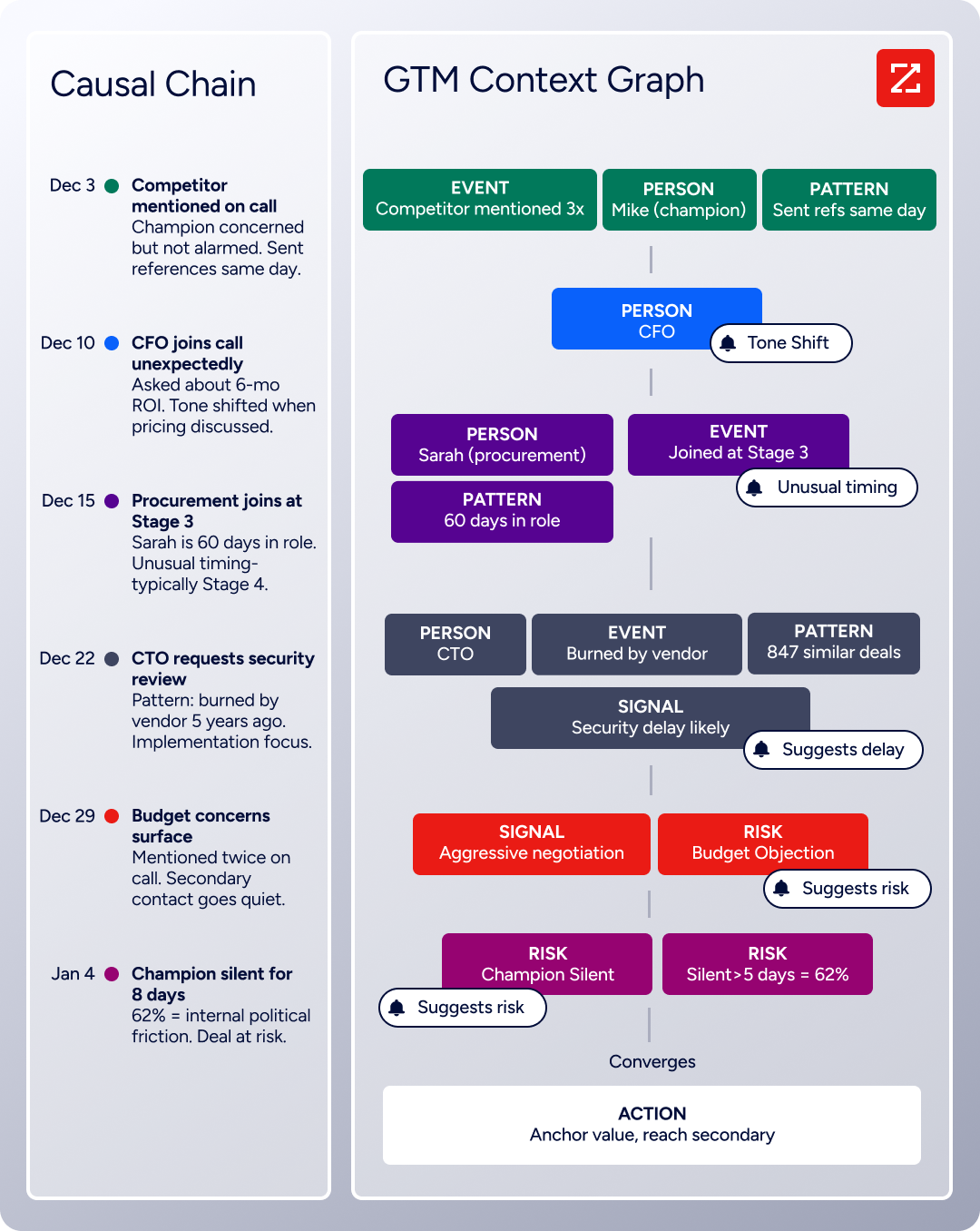
This means walking into every conversation with context that would be impossible to gather manually: who influences the deal, what actions have worked in similar situations, and which signals predict what happens next.
Seismic attributed 39% of active pipeline to ZoomInfo signals and saw 54% productivity gains. (Seismic)
Universal Access: ZoomInfo's intelligence works in any tool your team already uses.
ZoomInfo delivers its intelligence through three channels. GTM Workspace gives sellers a single interface where prioritized accounts, AI-drafted outreach, and deal execution converge. GTM Studio gives marketers, RevOps, and GTM engineers a workspace for building and launching GTM plays in natural language. And APIs and MCP expose the same intelligence to any custom agent, internal tool, or partner platform.
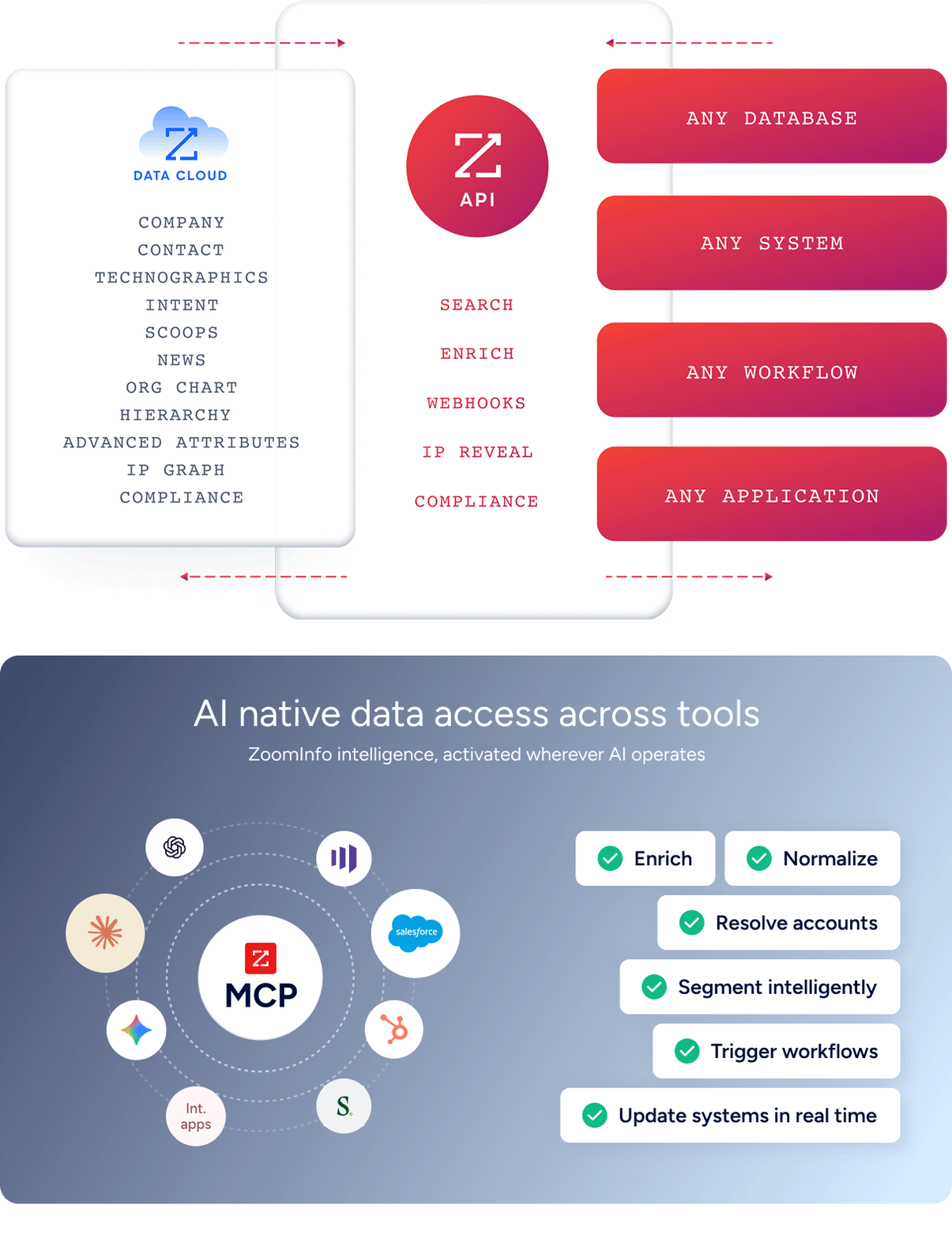
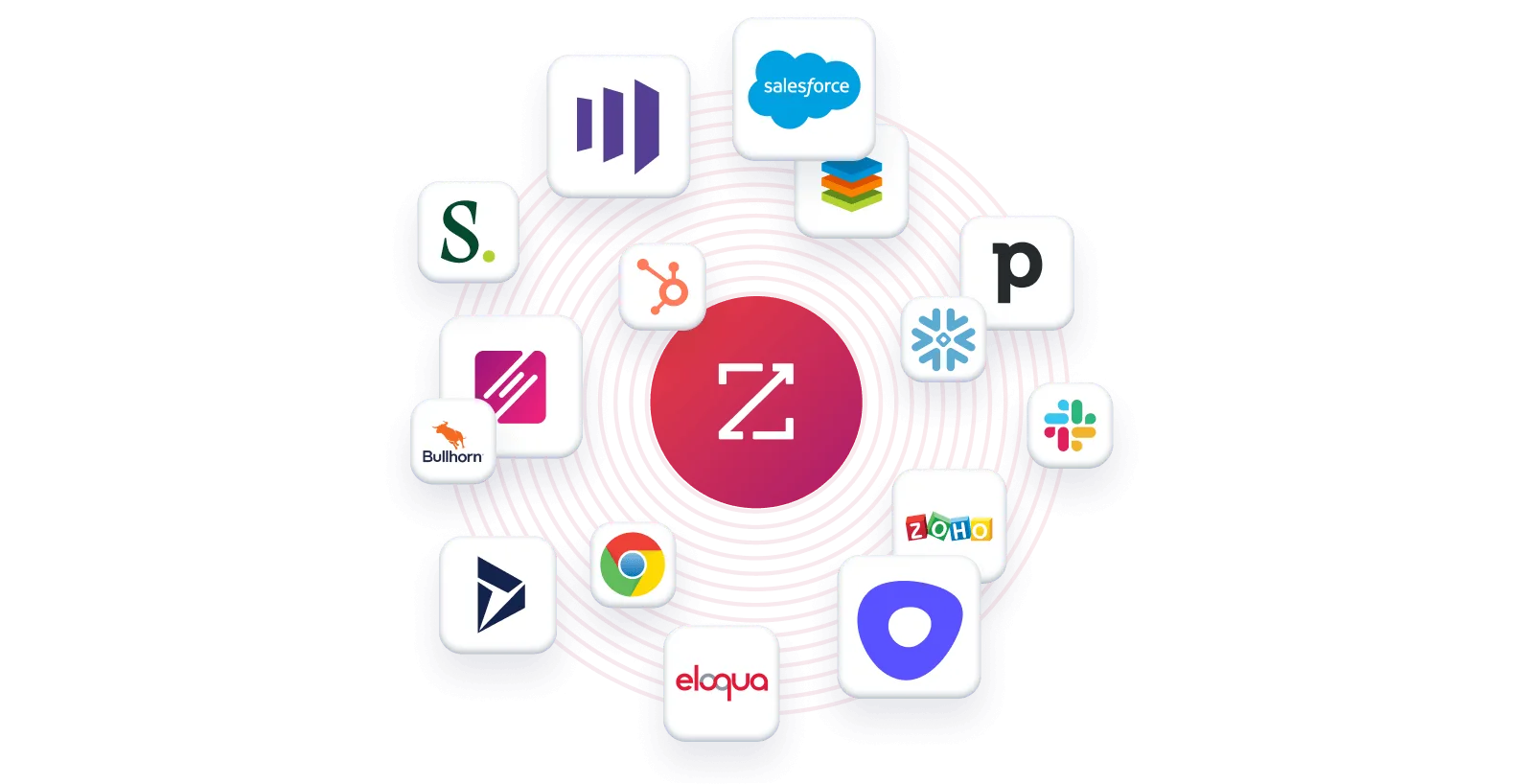
All three channels draw from the same GTM Context Graph. A signal one team detects is immediately actionable by every other team. ZoomInfo integrates with major CRMs (Salesforce, HubSpot, and Microsoft Dynamics), the same platforms Seismic Learning connects to, creating a shared data layer where training and intelligence coexist.
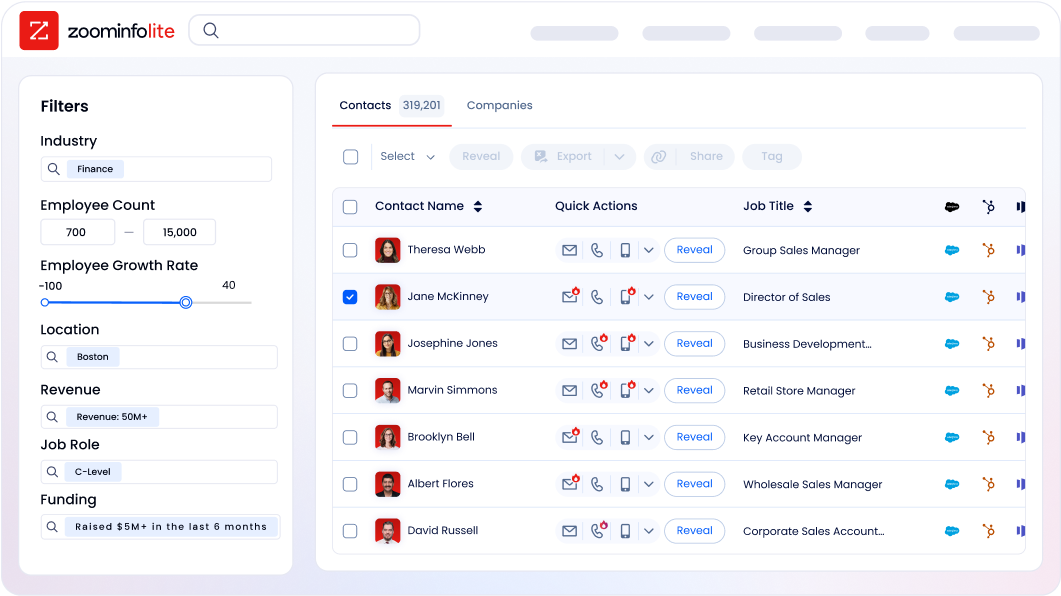
ZoomInfo also offers accessible entry points. ZoomInfo Lite is a permanent free tier with access to the B2B database, 10 monthly export credits, contact and company searches, and a Chrome extension. A separate 7-day free trial provides access to core platform features with no credit card required.
Seismic Learning and ZoomInfo: Complementary Summary
Aspect | Seismic Learning | ZoomInfo |
|---|---|---|
Primary Purpose | Sales training, coaching, and skill development | B2B data, intelligence, and GTM execution |
Core Problem Solved | Reps lack skills and knowledge to sell effectively | Reps lack data and context to target the right buyers |
Target Users | Sales enablement leads, L&D managers, revenue leaders | Sales, marketing, RevOps, and GTM engineers |
AI Capabilities | Role-play simulations, coaching plans, skill assessments | Account intelligence, outreach generation, signal detection |
CRM Integration | Salesforce, HubSpot | Salesforce, HubSpot, Microsoft Dynamics |
Analyst Recognition | Forrester Leader, Gartner Leader, IDC Leader | Forrester Leader (Intent Data), Gartner Leader (ABM), G2 No. 1 (133 categories) |
Pricing Model | Custom enterprise quotes, annual contracts | Consumption-based pricing, custom quotes; permanent free Lite tier |
Free Access | No free plan; demo request only | ZoomInfo Lite (permanent) and 7-day free trial |
Best For | Building rep competency and coaching at scale | Identifying, prioritizing, and engaging the right accounts |
Combined Value | Training investment pays off when reps apply skills to the right opportunities with the right intelligence |
Final Verdict
Seismic Learning and ZoomInfo solve different problems for the same teams. Choosing between them isn't the right framing. The question is whether your organization needs one, the other, or both.
Choose Seismic Learning if your sales team's primary gap is skills and knowledge. If new reps take too long to ramp, if coaching is inconsistent because managers don't have time, if product launches stall because reps can't articulate the value, Seismic Learning provides the training infrastructure to fix those problems at scale. Customer results support this: OneSource Virtual achieved 47% faster time to a rep's first new opportunity, and Scorpion saw a 58% decrease in time to first sale. The platform works best for mid-market to large enterprises with dedicated enablement teams and the budget for enterprise tooling.
Add ZoomInfo if you want verified data and real-time intelligence rather than gut instinct and stale spreadsheets. ZoomInfo's data foundation and the GTM Context Graph ensure reps spend their time on the accounts most likely to buy, with the context needed to move deals forward. Seismic's own sales team demonstrated this: 54% productivity gains and 39% of pipeline attributable to ZoomInfo signals.
Get started with ZoomInfo here.
Training makes reps capable. Intelligence makes them effective. The strongest sales organizations invest in both.
Lessonly FAQ
What happened to Lessonly?
Lessonly was acquired by Seismic in August 2021 as part of Seismic's $170M Series G funding round, which valued the company at $3 billion. The product now operates as Seismic Learning within the Seismic Enablement Cloud. The original Lessonly domain redirects to Seismic's Learning & Coaching product page. Lessonly's Indianapolis office was retained as one of Seismic's global offices, and the roughly 230-person team was absorbed into the larger organization.
How much does Seismic Learning cost?
Seismic does not publish pricing for any of its products. All pricing is negotiated through custom enterprise quotes, with annual invoicing and non-cancellable contract commitments. There is no self-serve pricing page, no published per-seat cost, and no monthly billing option. Professional services for implementation are scoped and priced separately through a Statement of Work.
Does Seismic Learning offer a free trial or free plan?
There is no publicly accessible free trial or free plan. The try-Seismic-Learning page offers a guided product tour and a demo request form, but self-serve trial access is not available. Any trial would be provisioned at Seismic's discretion through the sales process. By contrast, ZoomInfo offers both a permanent free Lite tier and a 7-day free trial with no credit card required.
What types of training can you create in Seismic Learning?
The platform supports five content types: Lessons for individual concepts, Paths for multi-lesson curricula, Certification Paths that award completion certificates, SCORM lessons for imported e-learning content, and Practice Scenarios for on-demand simulations. Within lessons, creators can add text, images, video, audio, PDFs, flipcards, knowledge checks (multiple-choice, matching, sorting), and structured role-play activities with partner feedback requirements.
Is Seismic Learning suitable for small teams?
Seismic Learning is built for mid-market to large enterprises with dedicated sales enablement functions. Forrester explicitly positions it for midsized to large enterprises. Small teams without enablement managers may find the platform's breadth creates more configuration and administration work than the training benefits justify. The absence of transparent pricing, combined with the enterprise sales process and non-cancellable annual contracts, adds friction for smaller organizations.
What AI features does Seismic Learning include?
The Aura Role-Play Agent simulates customer conversations using the organization's own content and personas, providing scoring and feedback on pacing, keyword usage, and confidence. AI coaching plans surface individual knowledge gaps and recommend targeted training. The Aura Analytics Agent allows plain-language reporting queries across enablement data. Multimodal learning includes podcast-style audio content with in-context Q&A. All AI features carry ISO 42001 certification for AI management.
How does Seismic Learning integrate with other tools?
Seismic Learning integrates natively with Salesforce, BambooHR, Namely, Rippling, Okta (SSO and SCIM provisioning), Gong, Chorus, Slack, Degreed, Zapier, Zendesk, and Snowflake. The broader Seismic platform adds Microsoft Dynamics 365, Google Slides, Zoom, Microsoft Teams, HubSpot, and others. An open REST API and reporting webhooks support custom integrations, and xAPI/Tin Can enables connection to external Learning Record Stores.
What is the Seismic and Highspot merger?
In February 2026, Seismic announced its intent to merge with Highspot, its primary competitor in revenue enablement. The merged entity will operate under the Seismic name. While the companies frame this as creating the largest dedicated revenue enablement platform, customers and prospects should know that product capabilities may be retained, deprecated, or consolidated as the integration progresses. Buyers evaluating today face a period of roadmap uncertainty.
See how Lessonly compares to other platforms:
