

Choosing between Microsoft Dynamics CRM vs. Zoho CRM for your sales team often comes down to these five questions:
Are you already running Microsoft 365, Teams, and Outlook across the organization, or does your team operate on a mixed or independent tech stack?
Do you need CRM only, or a combined CRM and ERP platform under one vendor?
Is your budget measured in tens of thousands or hundreds of thousands per year?
How much internal admin capacity do you have for configuration, customization, and ongoing maintenance?
Is the quality of your contact and account data a bottleneck for your sales team's performance?
In short, here's what we recommend:
Microsoft Dynamics 365 is the CRM for organizations that already live inside the Microsoft ecosystem. It gives sales teams native access to CRM data inside Outlook, Teams, and Excel without switching applications. Beyond CRM, it extends into ERP territory with Finance, Supply Chain Management, and Human Resources modules, all sharing a single data layer called Dataverse. For companies that need both front-office and back-office functionality under one roof, Dynamics 365 delivers breadth that few competitors match.
The tradeoff: implementations routinely cost $250,000 to $2 million, licensing is difficult to navigate, and the platform demands dedicated admin resources to get full value.
Zoho CRM is the budget-friendly choice for small and mid-market sales teams that need a customizable CRM without enterprise costs. Its Canvas Design Studio lets admins reshape the entire CRM interface without writing code, Blueprint enforces step-by-step sales processes so reps can't skip stages, and Zia's AI covers everything from lead scoring to call transcription. With a permanent free plan for up to 3 users and paid plans starting at $14/user/month, Zoho makes professional CRM accessible to teams that would be priced out of Dynamics 365 or Salesforce.
The tradeoff: advanced configuration gets complex quickly, support quality varies, and integrating with non-Zoho systems can require custom API work.
Both platforms organize deals and manage pipelines well. But a CRM is only as good as the data inside it. If your sales reps work from incomplete contact records, outdated org charts, and stale account information, no amount of automation or AI will fix the underlying problem. That's where ZoomInfo changes the equation.
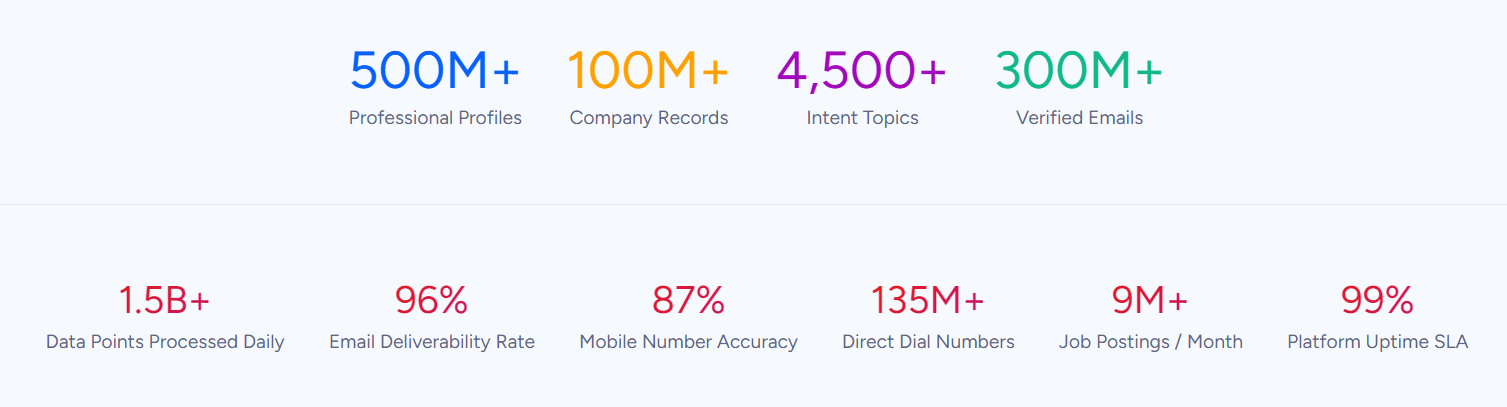
ZoomInfo is an AI-powered go-to-market platform built on B2B data at scale: 500M contacts, 100M companies, 135M+ verified phone numbers, and 200M+ verified business email addresses. ZoomInfo isn't a CRM. It's the intelligence layer that makes your CRM useful. Its GTM Context Graph processes 1.5B+ data points daily, fusing this data with your CRM records, conversation transcripts, and behavioral signals to show not just what happened in a deal, but why it happened and what to do next.
Sales teams use GTM Workspace for daily execution, marketers and RevOps build plays in GTM Studio, and developers pipe the same data into any tool through APIs and MCP. ZoomInfo integrates with both Microsoft Dynamics 365 and Zoho CRM, so you can layer its intelligence on top of either.
If verified B2B data is the missing piece in your go-to-market strategy, see how ZoomInfo works.
Microsoft Dynamics CRM vs. Zoho CRM vs. ZoomInfo at a glance
Microsoft Dynamics 365 | Zoho CRM | ZoomInfo | |
|---|---|---|---|
Primary function | CRM + ERP suite | CRM + business app ecosystem | B2B data and go-to-market intelligence platform |
Best for | Microsoft-stack enterprises needing CRM + ERP | Value-conscious SMBs and mid-market teams | B2B sales and marketing teams that need accurate data, signals, and AI execution |
Starting price | $65/user/month (Sales Professional) | Free for 3 users; paid from $14/user/month | Free tier (ZoomInfo Lite); paid plans custom-quoted |
AI capabilities | Copilot + autonomous agents (Sales Qualification, Sales Close) | Zia AI with 7 pre-built agents, predictive scoring, generative AI | GTM Context Graph, AI-drafted outreach, intent signals, conversation intelligence |
Ecosystem depth | Native Microsoft 365, Teams, Outlook, Power Platform, Azure | 60+ Zoho apps, 1,100+ marketplace integrations | 120+ integrations, native CRM connectors, API & MCP access |
Implementation complexity | High (typically 4-6+ months, often $250K-$2M) | Low to moderate (days to weeks) | Deploys in weeks |
Free trial | 30-day free trial | 15-day trial + permanent free plan | 7-day trial + permanent Lite tier |
Contract flexibility | Annual commitment, 7-day cancellation window | Month-to-month available, 45-day refund on annual | Annual contracts standard |
The ecosystem question decides more than features
Before comparing feature checklists, the most important question is: what's already running across your organization?
Microsoft Dynamics 365 extends the Microsoft stack.
If your company already runs Microsoft 365, Teams, and Outlook, Dynamics 365 fits in with little friction. Sales reps can surface CRM data inside Teams calls and Outlook without switching applications. Reports flow into Power BI. Custom apps get built in Power Apps. Data lives in Dataverse, immediately accessible to Excel, Power Automate, and every other Microsoft tool. No competing CRM matches this level of Microsoft-to-Microsoft connection.
But that tight integration cuts both ways. Organizations running Google Workspace, AWS, or a mixed tech stack lose most of the advantages that justify Dynamics 365's premium pricing. And connecting Dynamics 365 to non-Microsoft systems often requires middleware or custom development.
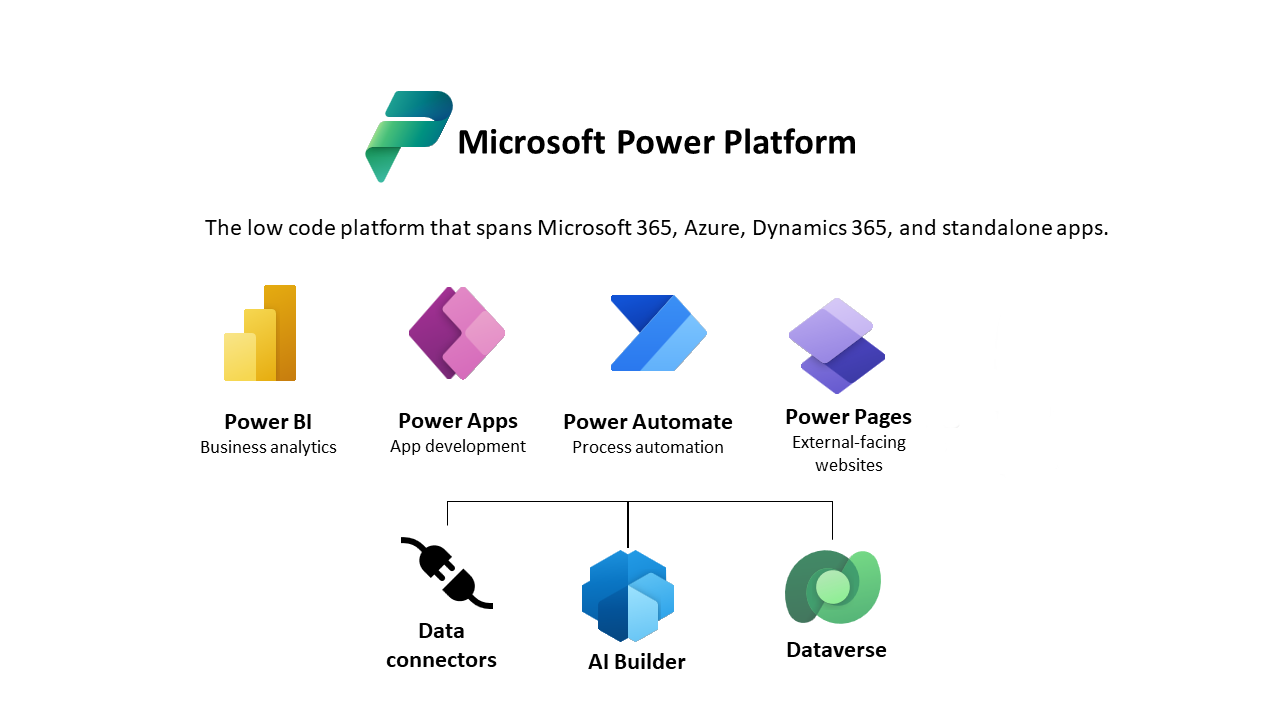
Source: Microsoft
Zoho CRM takes a different approach: build its own ecosystem.
With more than 60 integrated Zoho applications covering everything from accounting (Zoho Books) to helpdesk (Zoho Desk) to analytics (Zoho Analytics), organizations can run their entire operation on Zoho products that work together natively. For teams not committed to Microsoft or Google, this self-contained ecosystem offers integration without lock-in.
Zoho also provides 1,100+ third-party integrations through its marketplace, though G2 reviewers note that connecting to non-Zoho enterprise tools sometimes requires custom API work.
ZoomInfo sidesteps the ecosystem question entirely.
It integrates with both Dynamics 365 and Zoho CRM, plus Salesforce, HubSpot, and dozens of other platforms. With API access included in all relevant plans and MCP support for AI agents, ZoomInfo's intelligence flows into whatever tools your team already uses. Choose your CRM based on workflow fit, then layer ZoomInfo's data on top regardless of which one you picked.
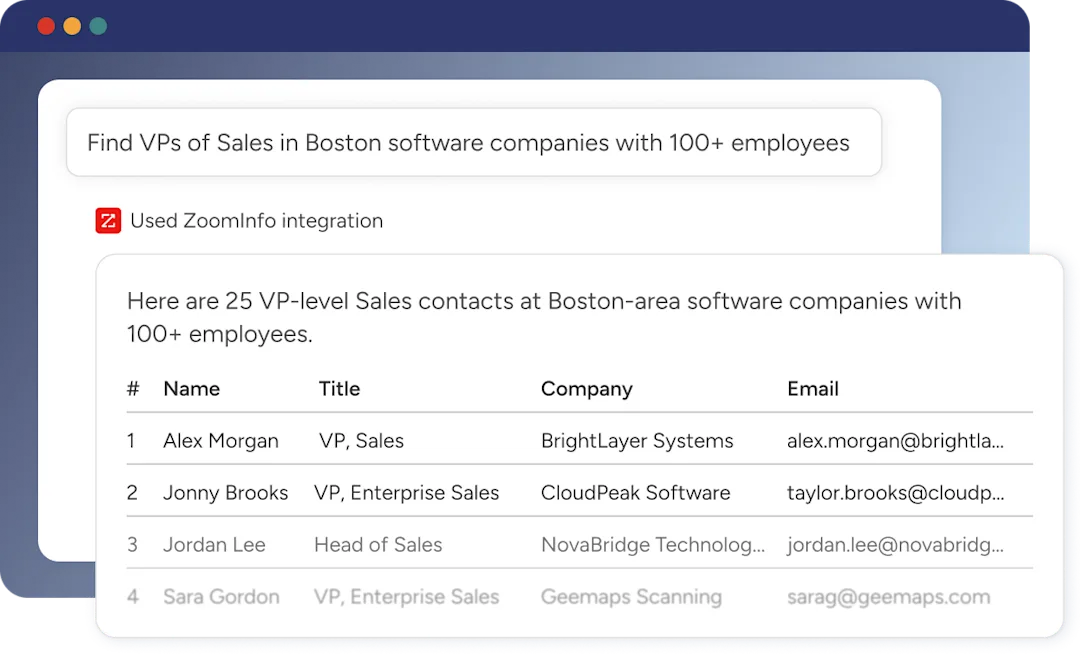
Source: ZoomInfo
CRM features go head to head
Both Dynamics 365 and Zoho CRM cover the fundamentals: lead management, deal pipelines, contact records, and sales forecasting. The differences show up in depth, design philosophy, and how much you get before hitting a paywall.
Pipeline management.
Dynamics 365 organizes sales around a configurable lead-to-cash workflow with customizable stages, business process flows, and opportunity tracking. It works well for organizations with complex, multi-stage sales processes. Zoho CRM supports multiple distinct pipelines mapped to different products, services, or geographies, each with its own stage definitions. For companies selling multiple product lines, this native multi-pipeline architecture avoids the workarounds other CRMs require.
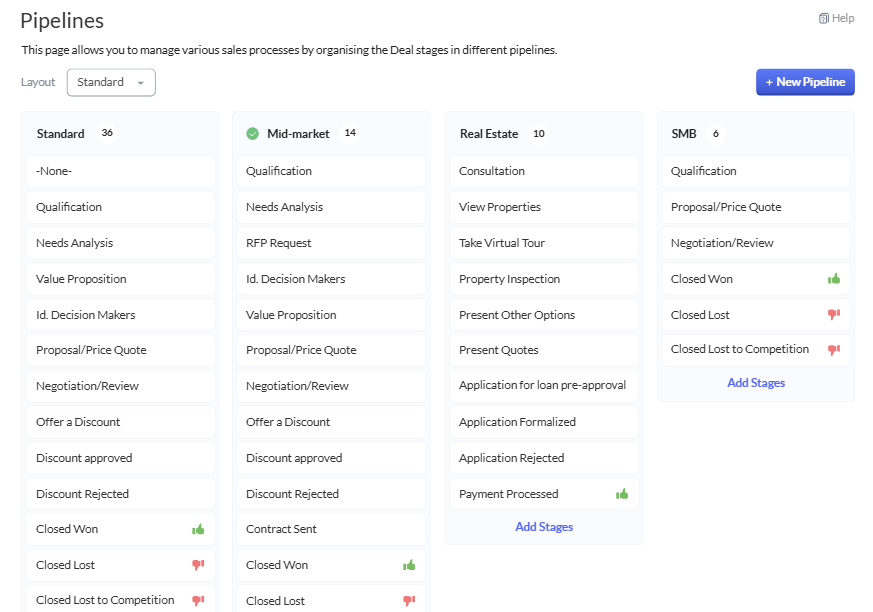
Source: Zoho CRM
Process enforcement.
Zoho's Blueprint stands out. It maps each stage of a sales process as a visual flowchart and prevents reps from advancing deals until they complete required steps: fields filled, tasks marked done, approvals obtained. Dynamics 365 achieves similar enforcement through business process flows, but the configuration requires more admin expertise.
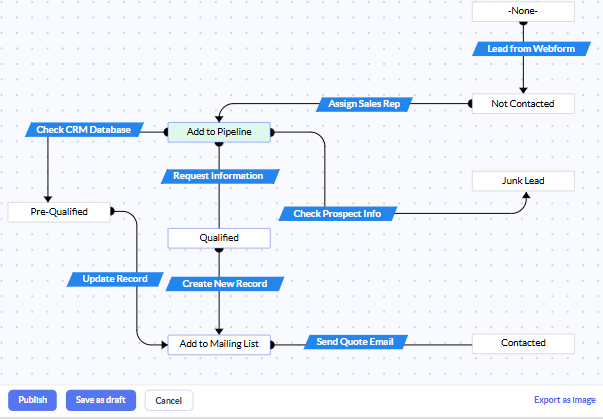
Source: Zoho
Forecasting.
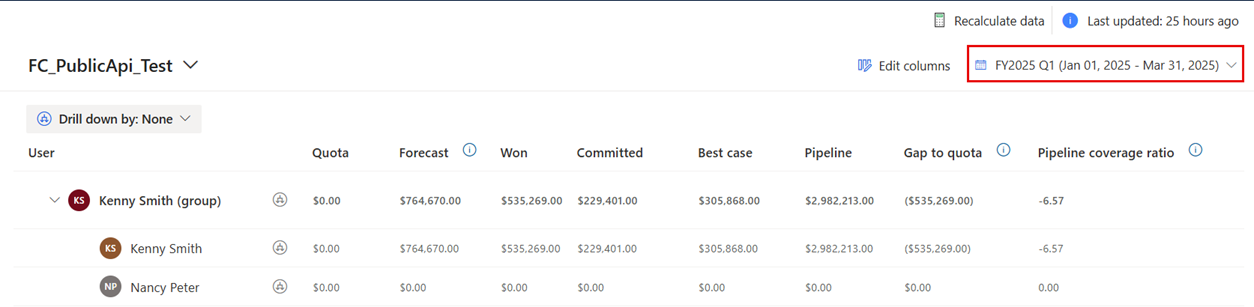
Dynamics 365 offers revenue prediction and quota tracking with adjustable forecast hierarchies, enhanced by AI-based predictive scoring. Zoho CRM provides forecasting with top-down and bottom-up views simultaneously, splitting deals into Committed, Best Case, and Open Deals categories. Both are capable, but Dynamics 365's native Power BI integration makes enterprise-scale reporting more flexible.
Source: Microsoft
Customization.
Zoho CRM offers more customization than most CRMs at this price. Canvas Design Studio provides pixel-level control over CRM layouts, and up to 500 custom modules are available on the Ultimate plan. Dynamics 365 offers deep customization through model-driven Power Apps, but the learning curve is steeper and often requires dedicated admin or developer resources.
AI capabilities are evolving fast on both sides
Both platforms are investing in AI, but the approaches differ.
Microsoft Dynamics 365 is betting on autonomous agents.
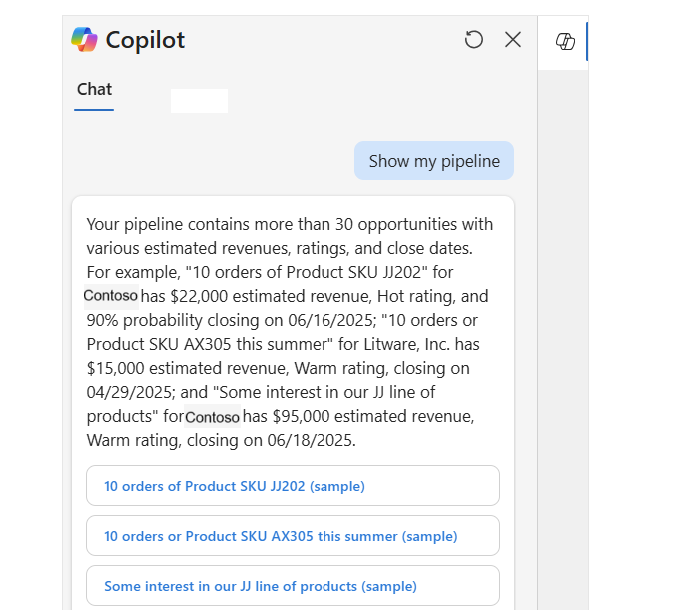
The Sales Qualification Agent can research leads on its own, generate outreach emails, follow up on responses, and hand off only high-potential leads to sellers. The Sales Close Agent monitors every opportunity to surface deal risks. Copilot handles natural-language chat for record summarization, meeting prep, email drafts, and call summaries.
Because Microsoft owns Azure OpenAI Service, it has a first-party AI infrastructure advantage that competitors can't replicate. The limitation: Copilot and agent features require Copilot Credits, which add cost and require an Azure subscription.
Source: Microsoft
Zoho CRM takes a broader but less autonomous approach.
Zia spans predictive lead scoring, churn prediction, best time to contact, email sentiment analysis, anomaly detection, and deal win probability. The Zia Agents Store offers seven pre-built agents (SDR, sales coach, deal analyzer, quote generator, follow-up scheduler, revenue growth specialist, and deal closure reminder).
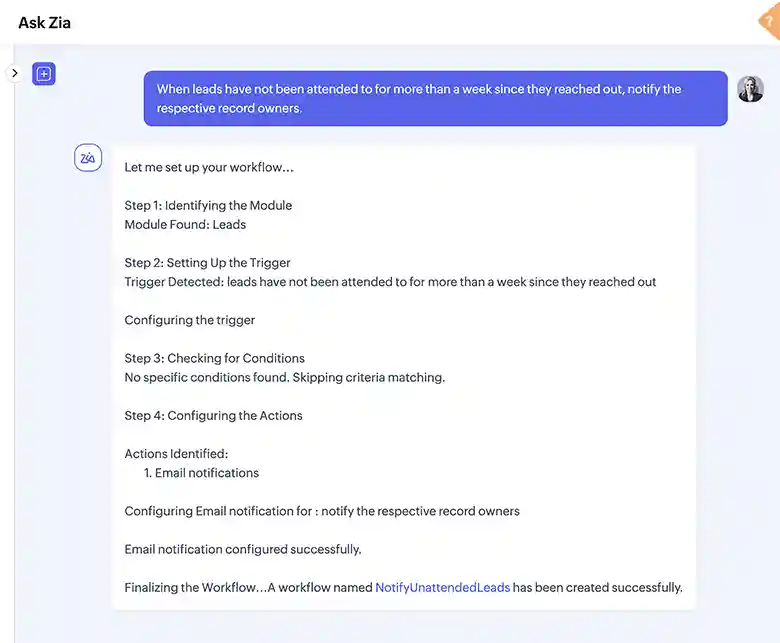
Zia can also create entire CRM modules from natural language descriptions and build workflow rules from plain-language instructions, reducing the admin burden for CRM configuration. Zoho also launched its own proprietary LLM in 2025, letting it process data without exporting to third-party AI infrastructure, which matters to privacy-conscious buyers.
Source: Zoho CRM
ZoomInfo applies AI differently.
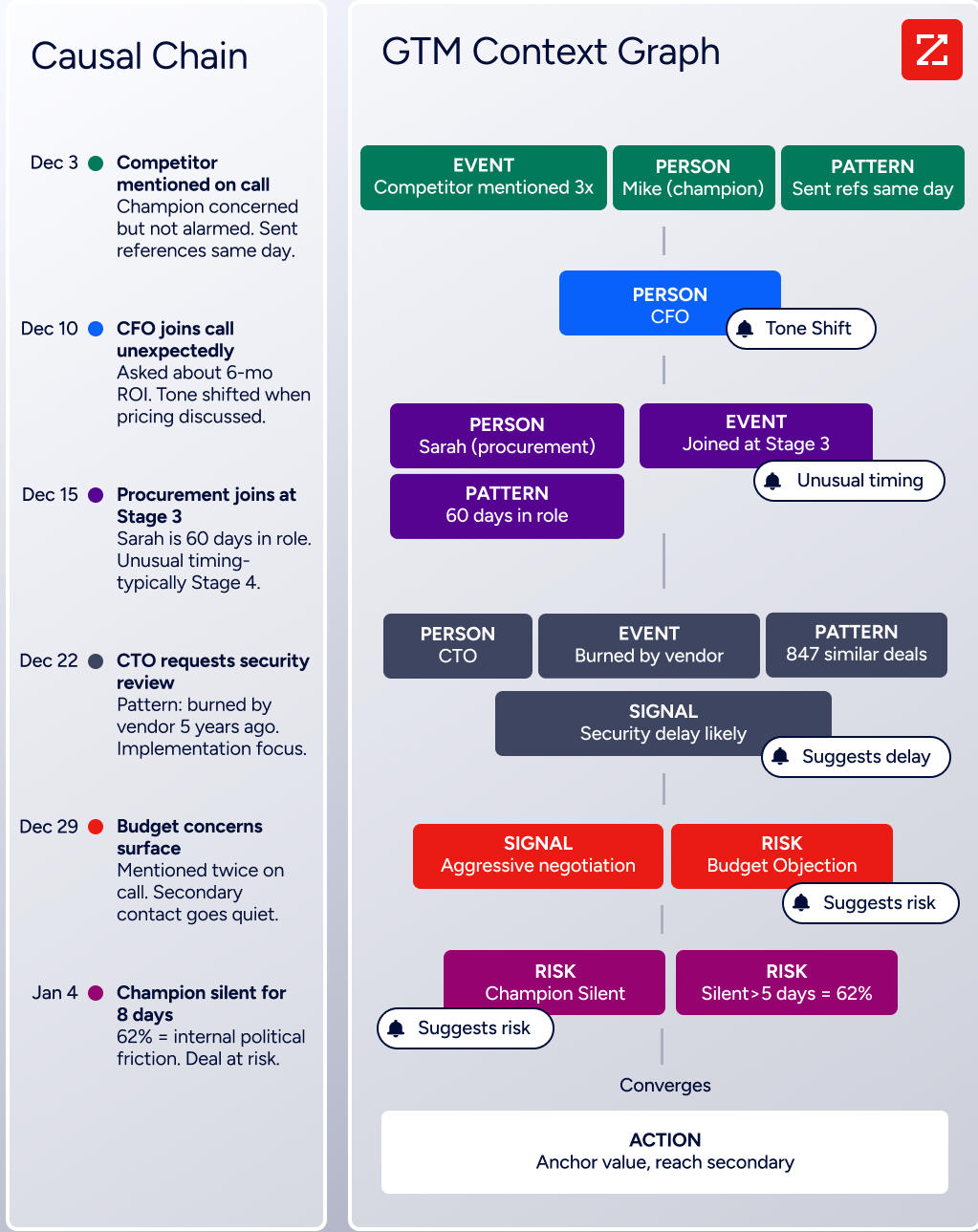
Instead of automating CRM tasks, it provides the intelligence that makes CRM automation effective. The GTM Context Graph processes 1.5B+ data points daily, fusing B2B data with CRM records, conversation transcripts, and behavioral signals to reveal why deals move or stall, not just that they did.
GTM Workspace uses specialized AI agents that research accounts, draft personalized outreach, monitor buying signals, and surface next best actions, all built on Anthropic's Claude. The practical difference: Dynamics 365 and Zoho automate what happens inside the CRM; ZoomInfo feeds the CRM with the intelligence it needs to be worth automating.
Source: ZoomInfo
Seismic's sales team attributed 39% of active pipeline to opportunities identified or influenced by ZoomInfo signals, while saving 11.5 hours per week per seller. (Seismic Case Study)
Data quality determines CRM effectiveness
The best CRM is useless if sales reps don't trust the data inside it. And CRM data quality is a persistent problem.
Both Dynamics 365 and Zoho CRM rely on manual data entry, imports, and third-party enrichment to populate contact and account records. Dynamics 365 improves on this somewhat through its Microsoft ecosystem, pulling in email interactions and Teams data automatically. Zoho offers web-to-lead forms, business card scanning, and social media capture.
But neither platform generates the B2B data that sales teams need: verified direct-dial phone numbers, current email addresses, org chart relationships, technographic profiles, and intent signals.
This is the gap ZoomInfo fills.
With 500M contacts, 135M+ verified phone numbers, and 200M+ verified business email addresses, verified through a pipeline backed by 300+ human researchers and achieving up to 95% accuracy on first-party data, ZoomInfo provides the contact and company data that CRMs were never designed to generate on their own.
In a Fortune 500 competitive RFP analyzing 25 million contacts across vendors, the independent consultant concluded that "no other competitor came even close."
Source: ZoomInfo
The impact compounds.
Accurate contact data means emails land and phone numbers connect. Complete org charts mean reps can multi-thread into buying committees rather than relying on a single champion. Intent signals mean outreach happens when accounts are actively researching, not on an arbitrary cadence.
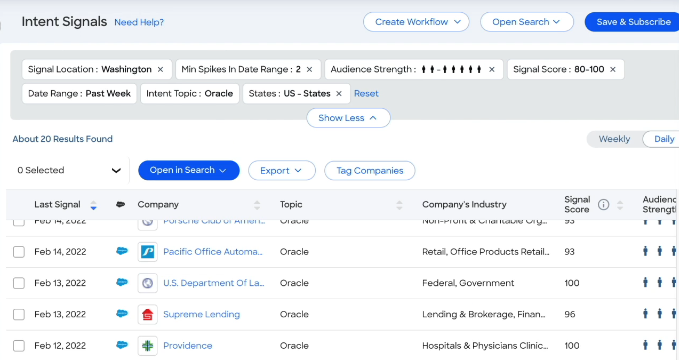
ZoomInfo's Buyer Intent data tracks signals from 210 million IP-to-Organization pairings, and Guided Intent (exclusive to ZoomInfo) identifies topics historically correlated with deal success rather than requiring manual topic selection.
Source: ZoomInfo
Snowflake uses ZoomInfo for at least one-third of the most critical data features in their Account Propensity Scoring model. Accounts monitored using ZoomInfo-powered scores showed 90% higher opportunity open rates and 2x higher customer conversion rates. (Snowflake Case Study)
Omnichannel engagement takes different forms
Zoho CRM offers broad channel coverage within the CRM itself.
Reps can manage email, phone, Facebook, X (Twitter), WhatsApp Business, LINE for Business, SMS, and online meetings from a single omnichannel interface. Every interaction logs against the relevant record. SalesSignals provides real-time notifications when prospects open emails, click links, or interact on social media.
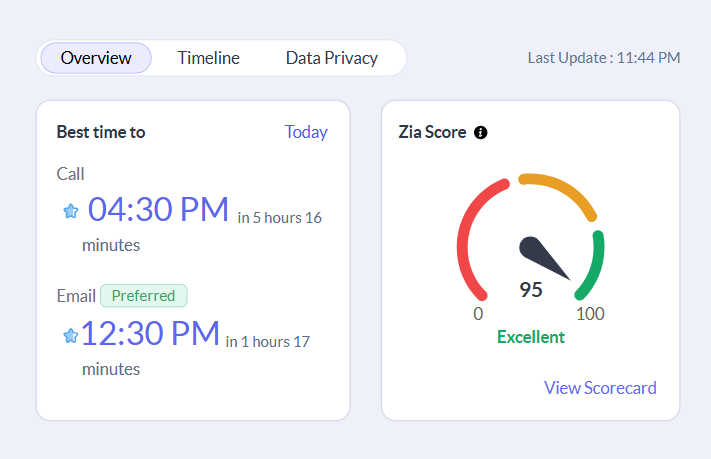
Zia even recommends the best channel and time to contact each prospect based on engagement history (available on Enterprise and Ultimate plans).
Source: Zoho CRM
Microsoft Dynamics 365 spreads engagement across multiple modules.
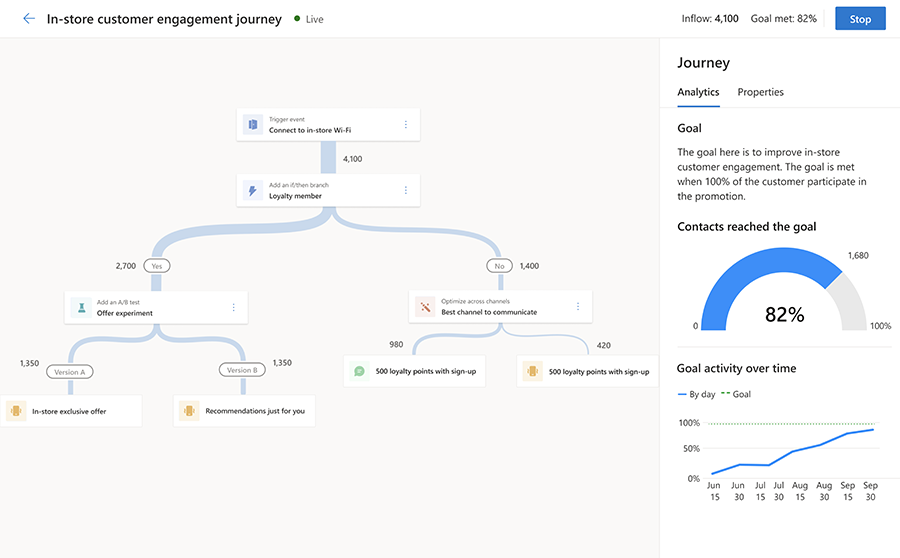
Sales handles email and phone through Outlook and Teams integration. Customer Insights - Journeys handles marketing automation with real-time trigger-based campaigns across email, SMS, and push notifications. Contact Center covers voice, SMS, web, mobile, email, and social channels for customer service. Each module goes deep, but they're separate products with separate licensing.
Source: Microsoft
ZoomInfo approaches engagement from the intelligence side.
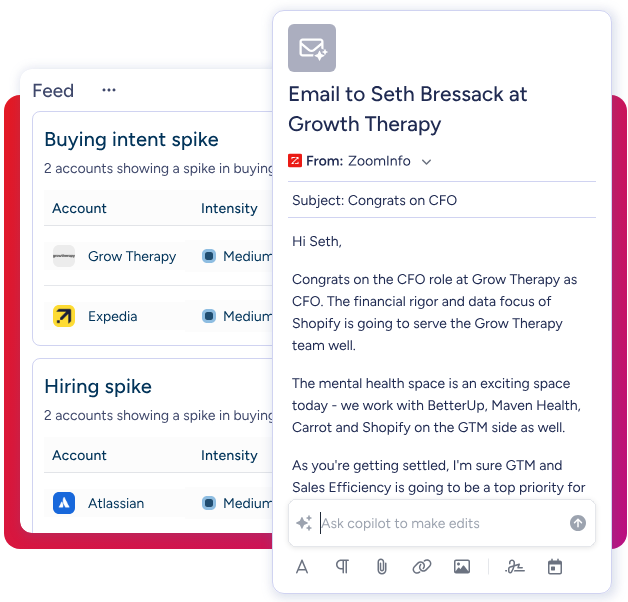
GTM Workspace provides an action feed of in-market buyers with pre-drafted outreach for every signal: G2 comparisons, funding events, executive hires. GTM Studio enables multi-channel orchestration (email, calls, ads, and direct mail) triggered by buyer behavior. Chorus captures and analyzes calls, meetings, and emails to feed the GTM Context Graph. Rather than replacing your CRM's engagement tools, ZoomInfo tells them who to target and when.
Source: ZoomInfo
Reporting and analytics reflect different philosophies
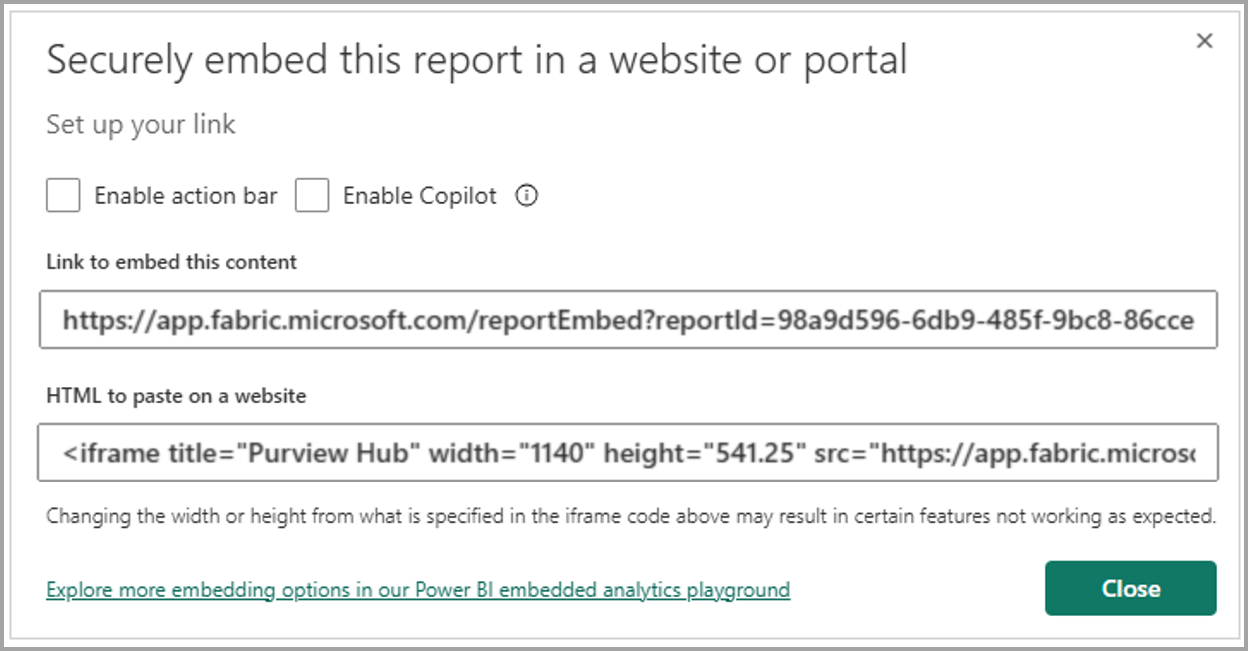
Microsoft Dynamics 365 leads in enterprise analytics through its native Power BI integration.
Sales data flows directly into Power BI dashboards without third-party connectors, and the shared Dataverse layer means CRM data can be combined with finance, supply chain, and HR data in a single reporting environment. For organizations that need cross-functional business intelligence, this matters.
Source: Microsoft
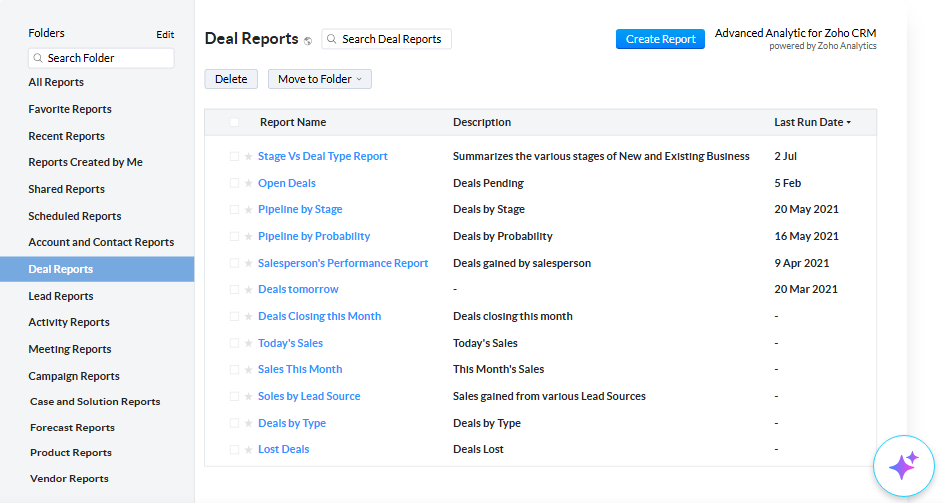
Zoho CRM compensates with depth of native analytics.
The platform includes Cohort Analysis, Quadrant Analysis, Waterfall charts, and over 40 standard reports directly inside the CRM. Zia adds anomaly detection with corrective action prescriptions, and Zoho Analytics (a standalone BI product) provides cross-functional BI when needed. For most mid-market teams, Zoho's native analytics are more than sufficient.
Source: Zoho CRM
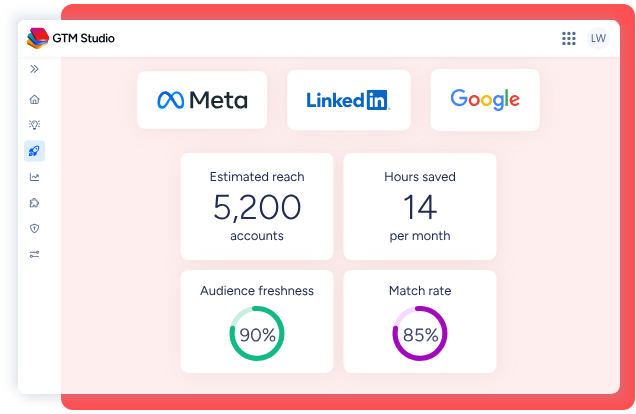
ZoomInfo adds a dimension neither CRM provides: external market intelligence.
Account Fit Scores, intent signal trends, competitive displacement tracking, and buying group analysis provide context that internal CRM data alone can't generate. GTM Studio's analytics dashboards track engagement, funnel progression, and top-performing segments across plays. This external data complements whatever CRM reporting you run internally.
Source: ZoomInfo
The scope question: CRM-only vs. CRM + ERP
This is where the comparison between Dynamics 365 and Zoho CRM diverges.
Microsoft Dynamics 365 is not just a CRM. It spans eleven applications across CRM, ERP, and service domains: Sales, Customer Service, Field Service, Finance, Supply Chain Management, Commerce, Human Resources, Project Operations, Business Central, Customer Insights, and Contact Center. All share a single Dataverse data layer.
For a mid-market manufacturer that needs to manage customers, inventory, supply chains, and financials in one system, this breadth is hard to match.
Zoho CRM serves a narrower purpose (sales and marketing automation) but compensates through its ecosystem of 60+ integrated applications.
Zoho Books handles accounting, Zoho Desk covers support, Zoho Projects manages project work, and Zoho One bundles 40+ apps under a single subscription. It's not ERP in the traditional sense, but for many SMBs and mid-market companies, it covers enough operational ground to avoid needing a separate ERP system.
ZoomInfo doesn't compete in the ERP space. Its role is upstream of both: providing the B2B intelligence, signals, and data that power sales and marketing execution regardless of what operational system sits behind it.
The pricing gap is enormous
These platforms serve different budget brackets, and the sticker price understates the real difference.
Microsoft Dynamics 365 Sales starts at $65/user/month for Sales Professional and scales to $105/user/month for Enterprise and $150/user/month for Premium.
But licensing is just 15-20% of the real cost. Organizations commonly spend $250,000 to $2 million on implementation, and 60% of implementations exceed initial budgets by 20-40%. Consulting, customization, data migration, and training drive the rest. Add Copilot Credits for AI agent usage (which require an Azure subscription) and the total cost of ownership climbs further.
For organizations that need both CRM and ERP at enterprise scale, this investment makes sense. For a team that just needs sales pipeline management, it's often overkill.
Zoho CRM operates at a fraction of the cost.
The permanent free plan covers up to 3 users with core lead, contact, and deal management. Paid plans scale from Standard ($14/user/month billed annually) through Professional, Enterprise, and Ultimate. Even at the Enterprise tier ($40/user/month billed annually), Zoho costs a fraction of what Dynamics 365 charges before implementation fees enter the picture.
Zoho also offers month-to-month contracts, with no multi-year lock-in required.
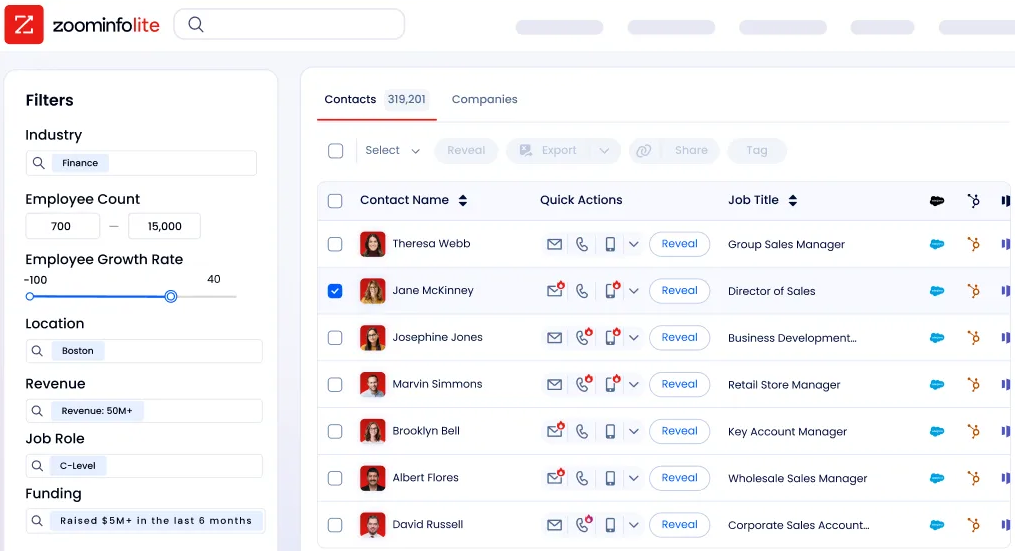
ZoomInfo uses custom-quoted, consumption-based pricing tied to seats, credits, and feature tiers. No prices are publicly listed, so direct comparison requires a conversation with their sales team.
ZoomInfo Lite provides a permanent free tier with access to the B2B database and 10 monthly export credits. For teams evaluating whether ZoomInfo's data quality justifies the investment, the ROI math is clear: Seismic attributed 39% of active pipeline to ZoomInfo signals and Snowflake saw 200% higher conversion rates on accounts scored using ZoomInfo data.
Source: ZoomInfo
Support and implementation differ significantly
Microsoft Dynamics 365 includes standard support at no additional cost (community forums, web and phone incident submission, 24/7 for production-down cases with under one-hour response). Professional Direct support runs $9/user/month with priority routing and advisory services.
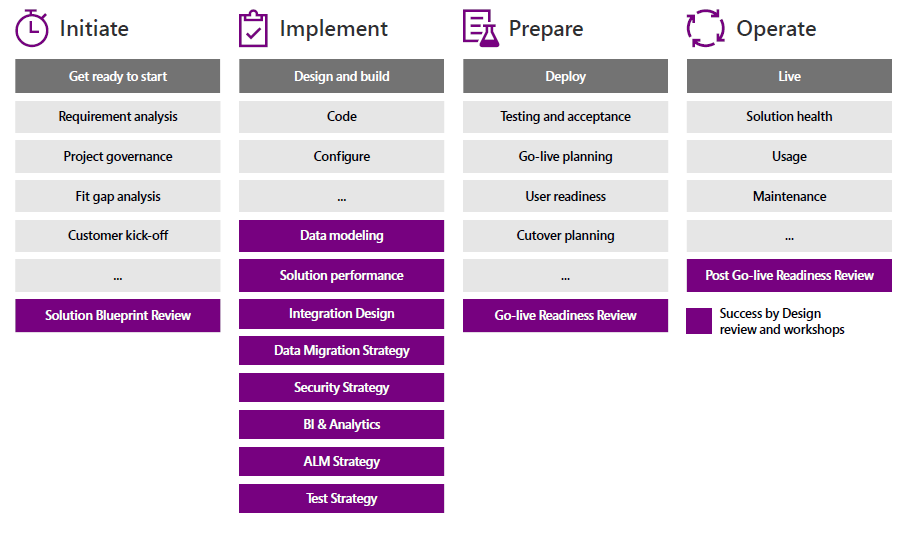
The bigger concern is implementation: most enterprise deployments require a Microsoft implementation partner, and the Success by Design framework structures implementations across multiple months.
Source: Microsoft
Zoho CRM includes Classic support (8x5 email) in all paid plans. Premium support adds 24/5 live chat and phone, and Enterprise support provides 24/7 access but requires a minimum of 50 user licenses. Both G2 and Capterra reviewers flag inconsistent support quality as a recurring concern, with slow response times on complex issues.
The advantage: implementation is simpler.
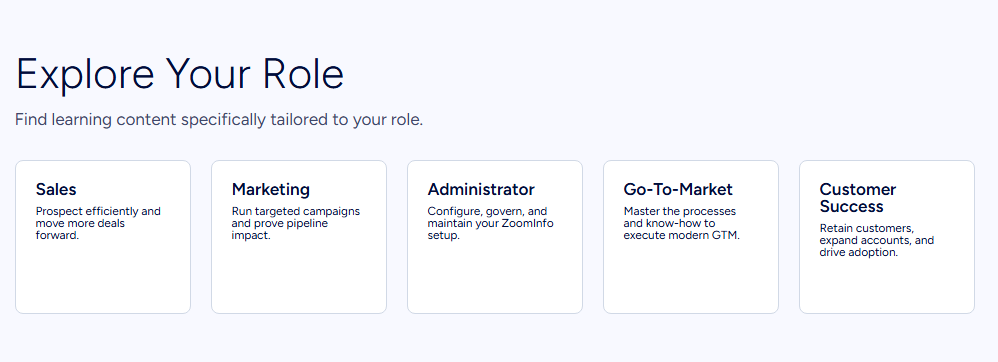
ZoomInfo structures onboarding around a redesigned 90-day program covering planning, technical implementation, education, and adoption, which produced a 25% improvement in customer satisfaction scores. ZoomInfo University provides role-specific learning paths and certifications. CEO Henry Schuck has noted that GTM Workspace "deploys in weeks, not months".
Source: ZoomInfo
Security and compliance for regulated industries
All three platforms maintain strong security certifications.
Microsoft Dynamics 365 benefits from Microsoft's compliance portfolio: ISO 27001, SOC 1/2/3, HIPAA, FedRAMP, PCI-DSS, GDPR, and more than 90 compliance offerings.
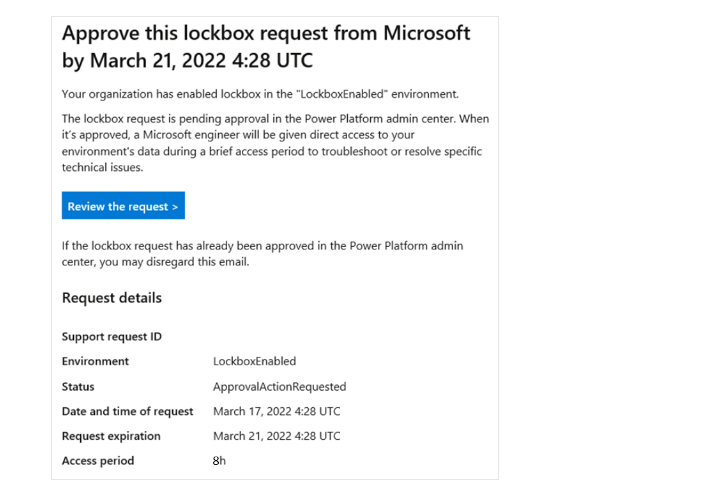
Customer Lockbox requires explicit customer approval before Microsoft engineers access customer data. Customer-managed encryption keys let organizations control encryption with their own Azure Key Vault. For regulated industries (financial services, healthcare, government), this depth is hard to match.
Source: Microsoft
Zoho CRM holds ISO 27001, ISO 27701, ISO 27017, ISO 27018, SOC 1 and SOC 2 Type 2, and SOC 2 + HIPAA Type 2 certifications.
Data centers operate in the US, EU, India, Japan, China, Australia, Canada, Saudi Arabia, and South Africa. Zoho runs its own data centers instead of relying on public cloud infrastructure and does not sell user data to advertisers. That privacy stance carries weight with privacy-conscious buyers.
ZoomInfo maintains ISO 27001, ISO 27701, SOC 2 Type II, TRUSTe GDPR, and TRUSTe CCPA certifications, all renewed annually. It operates as a registered data broker in California and Vermont, with a dedicated Trust Center.
Microsoft Dynamics CRM vs. Zoho CRM vs. ZoomInfo: Which should you choose?
The right choice depends on your organization's size, tech stack, and what's actually limiting your sales team's performance.
Choose Microsoft Dynamics 365 if:
Your organization already runs Microsoft 365, Teams, and Outlook
You need both CRM and ERP under a single vendor
You have budget for enterprise implementation and dedicated admin resources
You want native Power BI reporting and Azure integration
Regulatory compliance requirements demand Microsoft's depth of certifications
Choose Zoho CRM if:
You need a capable CRM at a fraction of enterprise pricing
Customization depth matters but you want to do it without code
Month-to-month contracts and transparent pricing are important
Your team is small to mid-sized (10-1,000 employees)
You value process enforcement through Blueprint and visual automation
Add ZoomInfo to either if:
Your sales team is working from incomplete or outdated contact data
You need verified direct dials and business emails that actually connect
Intent signals and buying group intelligence would improve your targeting
You want AI-driven outreach and deal execution built on B2B data
You need your CRM data to reflect what's actually happening in your accounts
See ZoomInfo in action with a free trial here.
The choice between Dynamics 365 and Zoho CRM is a question of scale, budget, and ecosystem. Dynamics 365 delivers the most value for Microsoft-committed enterprises that need CRM and ERP together. Zoho CRM delivers more capability per dollar for teams that prioritize value and flexibility.
But regardless of which CRM you run, the quality of your B2B data determines whether that CRM drives revenue or just organizes records. ZoomInfo provides the data, intelligence, and execution tools to turn either platform into a revenue engine.
Microsoft Dynamics CRM vs. Zoho CRM vs. ZoomInfo FAQ
What is the core difference between Microsoft Dynamics 365 and Zoho CRM?
Microsoft Dynamics 365 is a combined CRM and ERP suite built for the Microsoft ecosystem, with eleven applications spanning sales, service, finance, supply chain, and HR under a shared data layer.
Zoho CRM is a standalone CRM platform focused on sales and marketing automation, backed by an ecosystem of 60+ integrated Zoho business applications.
Dynamics 365 targets mid-market to enterprise organizations already invested in Microsoft; Zoho targets value-conscious SMBs and mid-market teams.
How does ZoomInfo fit into this comparison if it's not a CRM?
ZoomInfo is a complementary tool, not a CRM replacement.
It provides the B2B data (500M contacts, 135M+ verified phone numbers, 200M+ verified business email addresses) and intelligence that CRMs need to function effectively. ZoomInfo integrates with both Microsoft Dynamics 365 and Zoho CRM, enriching contact records, surfacing intent signals, and powering AI-driven outreach through its GTM Workspace and GTM Studio products.
Which platform is most affordable for a small sales team?
Zoho CRM offers the lowest entry point with a permanent free plan for up to 3 users and paid plans starting around $14/user/month. ZoomInfo Lite provides a permanent free tier with 10 monthly export credits. Microsoft Dynamics 365 Sales starts at $65/user/month before implementation costs, which routinely run $250,000 to $2 million for enterprise deployments.
Which CRM has better AI features?
Microsoft Dynamics 365 leads in autonomous AI agents, with the Sales Qualification Agent capable of independently researching leads, sending outreach emails, and qualifying prospects without seller intervention. Zoho CRM provides broader AI coverage per dollar, with Zia spanning predictive scoring, email sentiment analysis, call transcription, and seven pre-built sales agents.
ZoomInfo adds an external intelligence dimension that neither CRM has: intent signals, buying group identification, and AI-drafted outreach built on 500M contacts and the GTM Context Graph.
Can I use ZoomInfo with either Dynamics 365 or Zoho CRM?
Yes. ZoomInfo integrates with Microsoft Dynamics 365 through a pre-built connector and supports Zoho CRM through its marketplace and API integrations. API access is included in all relevant ZoomInfo plans, and the MCP server enables any AI agent to access ZoomInfo data programmatically.
Which platform is better for a company already using Microsoft 365?
Microsoft Dynamics 365 is the natural choice for organizations already on the Microsoft stack. Native integration with Teams, Outlook, Excel, Power BI, and Azure means CRM data flows through the tools your team already uses daily. Zoho CRM can integrate with Microsoft tools but cannot match the depth of native connection that Dynamics 365 provides.
How do the platforms handle data security and compliance?
Microsoft Dynamics 365 has the broadest compliance portfolio with more than 90 certifications, including FedRAMP, HIPAA, and GDPR, plus Customer Lockbox and customer-managed encryption keys. Zoho CRM holds ISO 27001, SOC 2, and HIPAA certifications and runs its own data centers across nine global regions. ZoomInfo maintains ISO 27001, ISO 27701, SOC 2 Type II, and TRUSTe GDPR/CCPA certifications, renewed annually.
What does ZoomInfo's GTM Context Graph actually do?
The GTM Context Graph fuses ZoomInfo's B2B data with a customer's CRM records, conversation transcripts, email interactions, and behavioral signals into a single intelligence layer.
It captures not just what happened in a deal (a stage changed, a close date moved) but why it happened (executive sponsorship entered, a budget concern emerged). This intelligence powers AI-driven account research, outreach drafting, deal risk identification, and play targeting across GTM Workspace, GTM Studio, and any tool connected via API or MCP.
More Zoho CRM comparisons:
