

mParticle is a hybrid customer data platform for enterprise brands that need to unify behavioral data across customer touchpoints and activate it in real time. Instead of forcing a choice between real-time streaming and warehouse-native activation, it offers both in one governed system, with identity resolution, AI predictions, and 300+ integrations underneath.
To create this mParticle review, we analyzed the platform in detail. We believe it's the right choice if:
You need to unify first-party customer data across mobile, web, OTT, and server-side channels in real time
Identity resolution across devices and touchpoints is a core requirement
You want AI-powered predictive audiences without building an internal data science team
Data governance, schema enforcement, and privacy compliance (GDPR, CCPA) are essential
You need hybrid architecture that combines real-time streaming with warehouse-native activation on Snowflake, BigQuery, or Databricks
mParticle excels at unifying and activating first-party behavioral data, but it only works with data your customers have already generated. For B2B companies, that's half the picture. You also need to know who your next customers are, when they're in-market, and how to reach them.
ZoomInfo fills that gap. ZoomInfo is an AI-powered go-to-market platform with a verified B2B dataset of 500M contacts, 100M companies, 135M+ verified phone numbers, and 200M+ verified business emails, providing the third-party intelligence and prospecting layer that a CDP doesn't cover.
We've included a look at ZoomInfo later in this review as a complement for B2B teams that need to pair first-party data activation with third-party buyer intelligence. If you're ready to explore that layer, start with ZoomInfo's free trial.
What is mParticle?
mParticle is a cloud-based customer data platform founded in 2013 in New York City by Michael Katz, Andrew Katz, Jason Lynn, and Dave Myers. The founding team came from interclick, a digital advertising technology company that Michael Katz co-founded and grew to $140 million in revenue before selling to Yahoo for roughly $270-300 million in 2011.
Their insight: mobile apps were generating volumes of behavioral data that companies had no efficient way to route to their analytics and marketing tools at the same time.
Today, mParticle calls itself a "hybrid CDP" that combines real-time responsiveness with warehouse-native scale. The platform ingests data from native SDKs (iOS, Android, web, Roku, Fire TV) and a server-side Events API, resolves identities, enriches profiles, and routes data to over 300 integrations simultaneously.
Its AI engine, Cortex (acquired through Vidora in 2022), adds predictive audiences, next-best-action recommendations, and lookalike modeling without requiring a separate ML platform.
The company raised $150 million in a Series E round in October 2021 at a reported valuation of roughly $800 million. In early 2025, mParticle merged with Rokt in a $300 million transaction. It now operates as "mParticle by Rokt" with its own product roadmap and co-founding executive team intact.
The target buyer is the multi-channel enterprise brand in data-heavy verticals: media and entertainment, QSR, retail, travel and hospitality, and financial services. Customers include HBO Max, New York Post, Klarna, Marks & Spencer, Tatcha, and RBI (Burger King/Tim Hortons/Popeyes).
mParticle Pros & Cons
Pros | Cons |
|---|---|
- Hybrid architecture: real-time streaming and warehouse-native activation in one platform | - Opaque, consumption-based pricing with no published rates |
- Configurable identity resolution (IDSync) with five named strategies | - Steep implementation complexity; requires dedicated engineering resources |
- 300+ server-side integrations (no client-side performance impact) | - No native campaign execution; requires separate tools like Braze or Airship |
- Cortex AI engine for predictive audiences without internal data science | - Data model built around users and events; limited B2B account hierarchy support |
- Data Plans enforce schema quality at the point of collection | - Cloud-only; no on-premise or private cloud deployment option |
- Strong customer support (G2 Best Support recognition) | - Some users report real-time targeting latency issues |
- Zero-copy warehouse activation preserves existing data investments | - Documentation gaps for less common integration configurations |
mParticle Review: How it Works & Key Features
Hybrid CDP & Real-Time Data Architecture: mParticle combines real-time event streaming with warehouse-native activation in a single governed platform.
mParticle's central feature is its hybrid architecture, which runs two parallel data pipelines sharing one identity layer, governance framework, and integration network.
The Real-Time Architecture serves as the event-streaming backbone. Data flows in from client-side SDKs or the server-side Events API, gets validated against Data Plans (schema definitions that enforce expected event structure), passes through IDSync for identity resolution, and fans out to 300+ destinations.
The platform processes billions of events per month with sub-second latency, making it suited for time-sensitive verticals like streaming media and fintech.
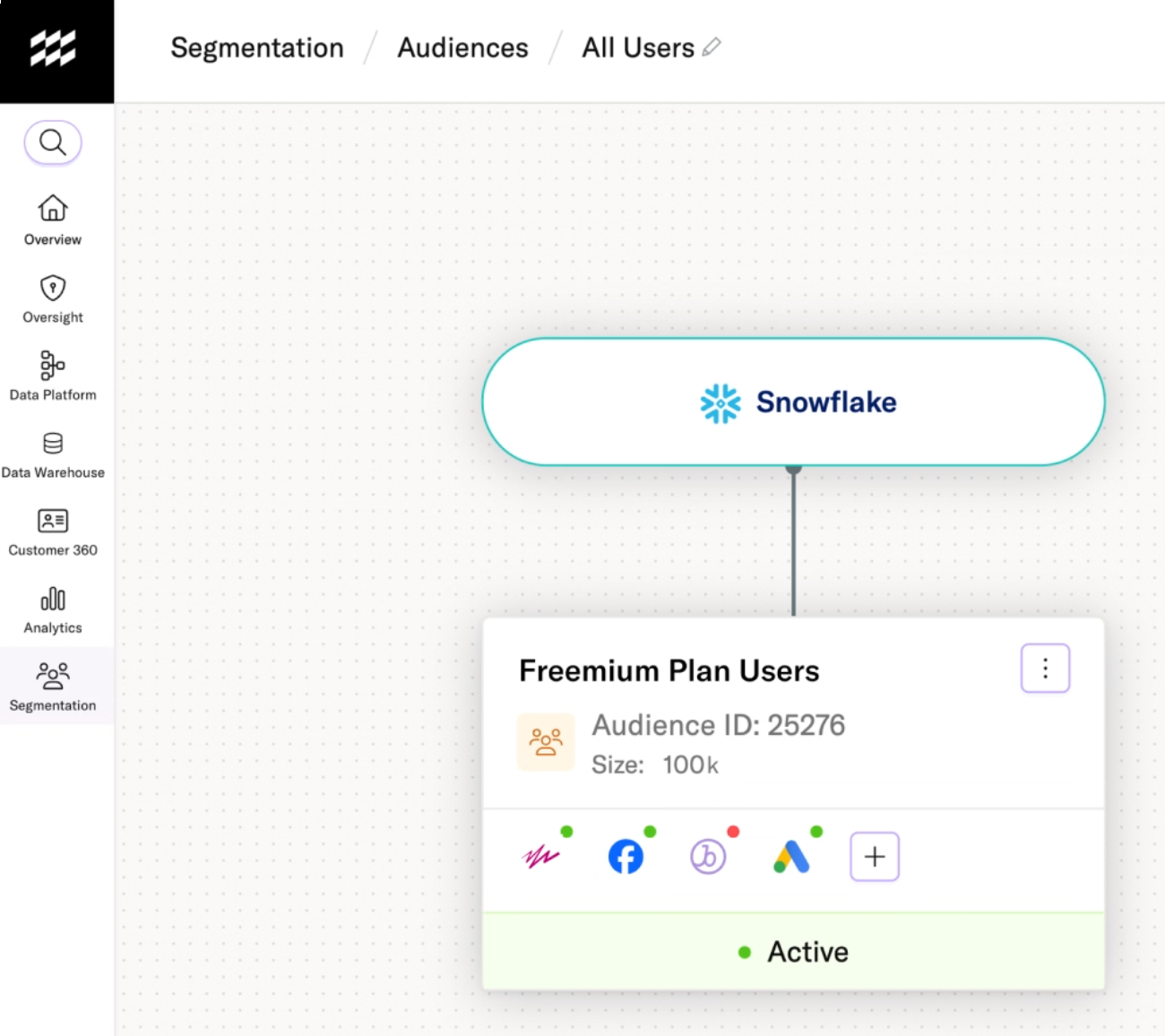
The Composable Architecture sits on top of a customer's existing cloud data warehouse. Using a zero-copy approach, mParticle reads from governed tables in Snowflake, BigQuery, Databricks, or Amazon Redshift without duplicating the data. Marketers use a no-code interface to define audiences against warehouse data models, with refreshes as frequent as hourly.
Source: mParticle
In October 2025, mParticle launched its Hybrid CDP natively on Snowflake AI Data Cloud, the first major product of Rokt's $300 million investment. Both pipelines share the same identity resolution, governance controls, and integration catalog, so a single audience can draw on real-time behavioral signals and historical warehouse data at once. mParticle calls these Hybrid Audiences.
A tiered event system (Connect, Preserve, and Personalize) lets customers match compute costs to the value of each data type. Live Stream monitoring gives real-time visibility into data flows without backend access.
Identity Resolution (IDSync): mParticle provides configurable, deterministic identity resolution with five named strategies.
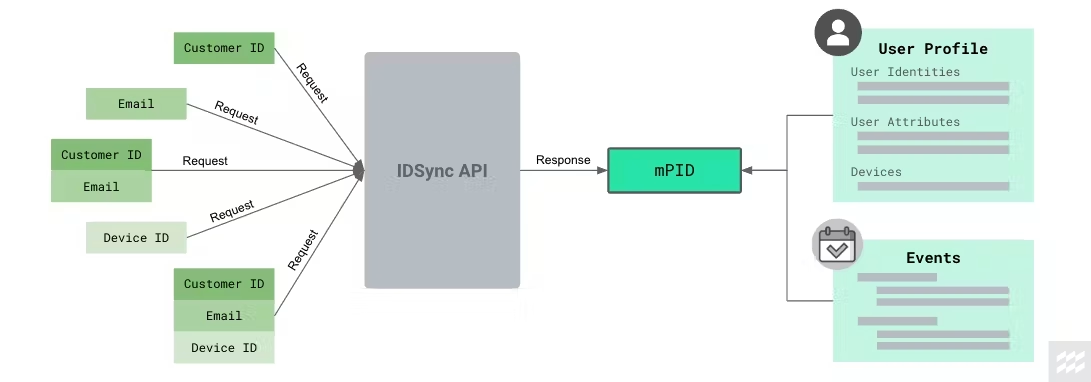
IDSync is mParticle's identity framework. It resolves every customer interaction into a unified profile anchored by a stable internal identifier (the MPID) that persists across identity transitions.
Source: mParticle
The system operates through an Identity API embedded in all native SDKs, processing identity through four endpoints: /identify (session start), /login (authentication), /logout (sign-out), and /search (profile lookup without creation). Each request supplies known identifiers, and the customer's chosen identity strategy and priority determine the outcome.
What sets IDSync apart is that customers choose their own resolution behavior.
Rather than imposing one model, mParticle offers five identity strategies: Profile Conversion (preserves the full pre-login journey), Default (simplified conversion), Profile Link (optimized for registration events), Profile Isolation (strict separation of anonymous and known data for privacy compliance), and Best Match (for environments where most users never authenticate).
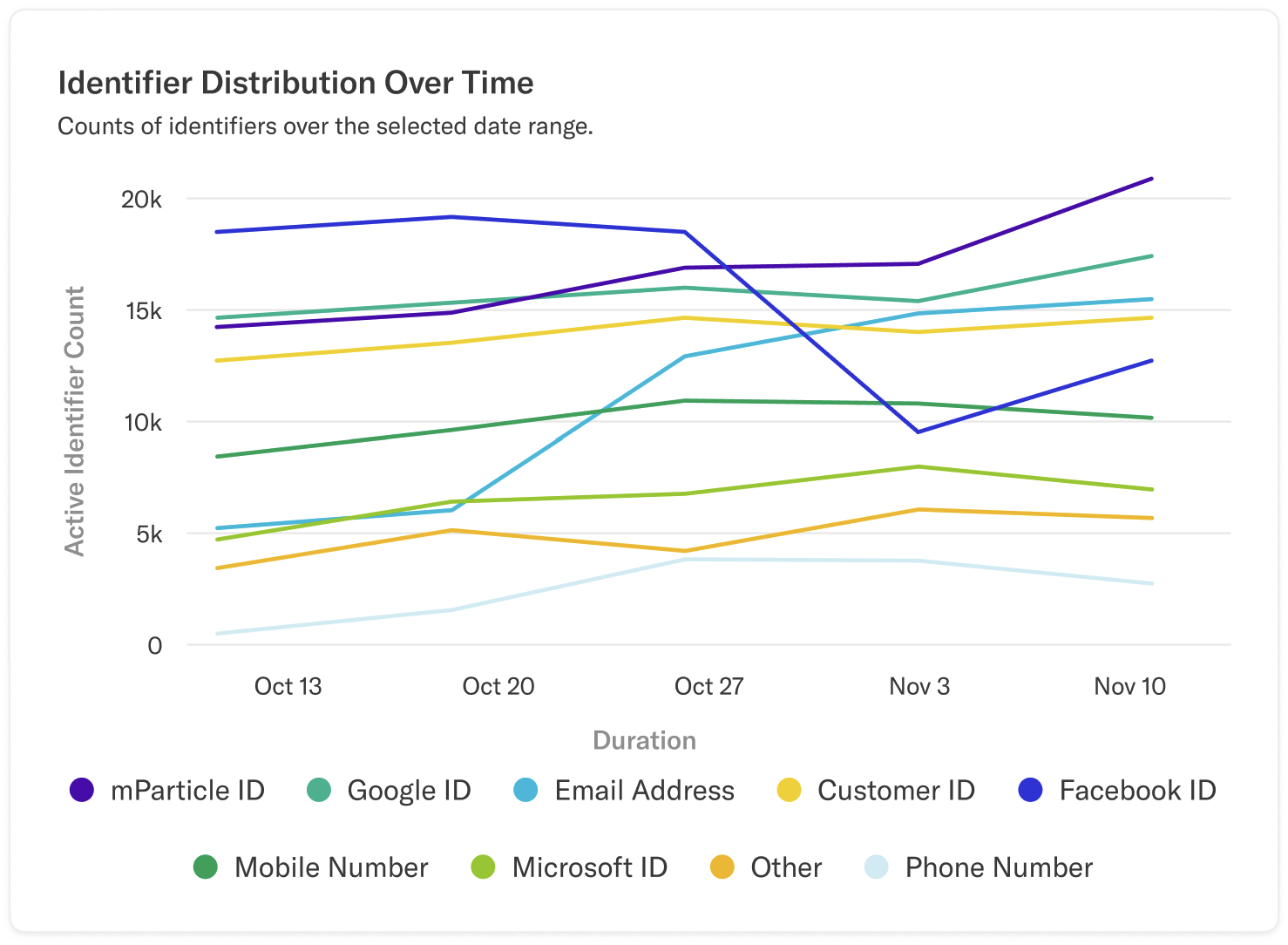
The platform includes built-in observability tools. The Identity Dashboard shows identifier coverage at a glance, and Identity Logs provide per-call diagnostics for every resolution request. Match Boost uses these insights to improve match rates on paid media platforms like Meta and Google Ads.
Source: mParticle
One limitation: mParticle currently supports only deterministic identity matching. Probabilistic matching is on the roadmap but hasn't shipped, which limits cross-device resolution for anonymous users at high traffic volumes.
Segmentation & AI-Powered Audiences: mParticle offers unlimited audiences with predictive targeting powered by its Cortex AI engine.
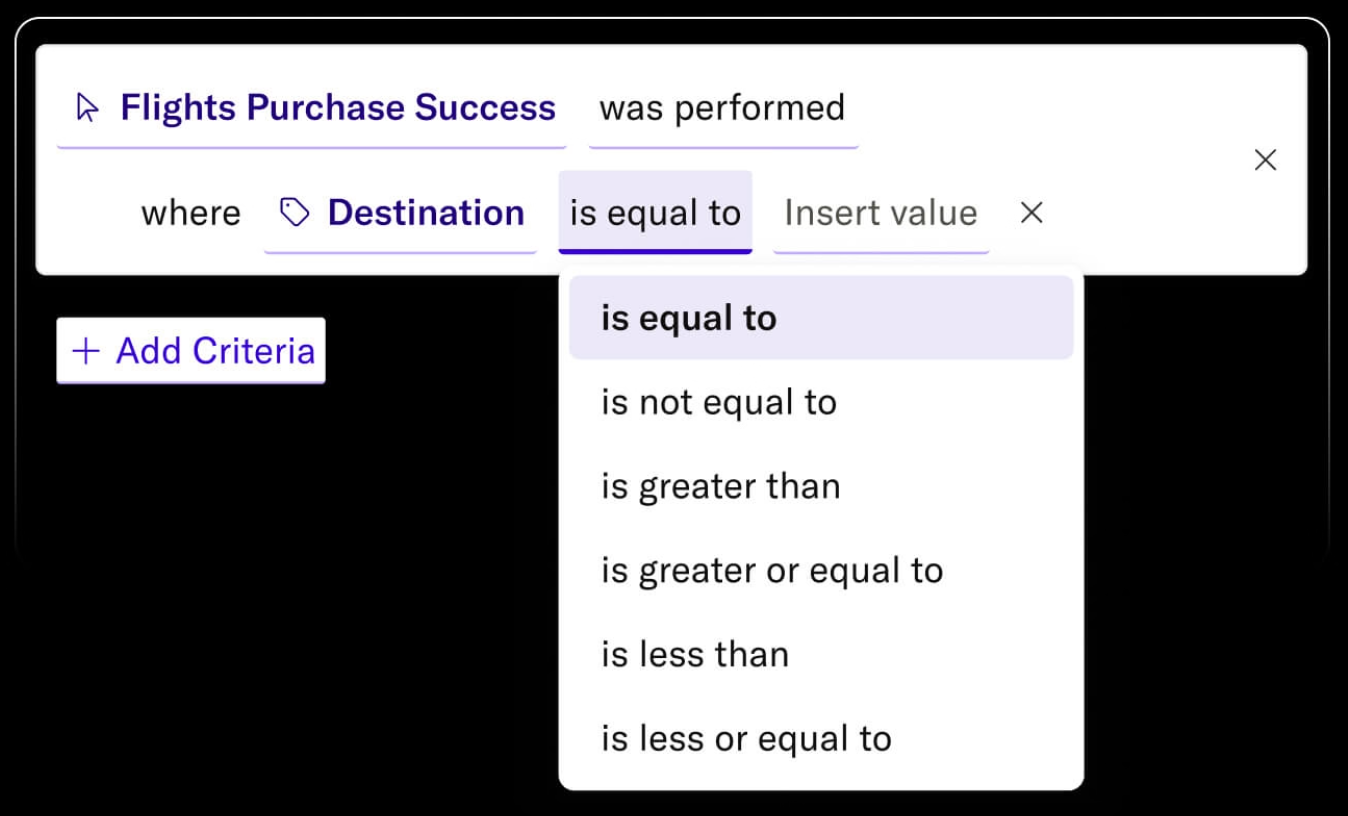
mParticle's Segmentation module supports four audience types, usable independently or together.
Source: mParticle
Real-Time Audiences evaluate users continuously as events arrive, syncing membership changes to 80+ marketing and advertising partners. Suppression lists update instantly, so recent converters drop out of acquisition campaigns without delay.
Composable Audiences use zero-copy architecture to build segments directly on warehouse data, refreshing as often as hourly. Hybrid Audiences combine both modes.
Predictive Audiences run on Cortex, mParticle's AI engine. Marketers define a prediction goal through a no-code UI, and Cortex builds and retrains the model automatically.
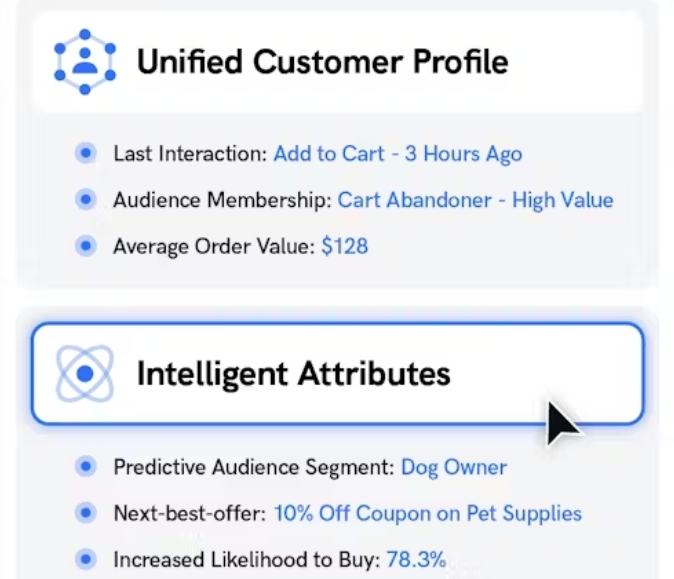
Source: mParticle
The platform also includes Calculated Attributes (continuously recomputed user-level metrics like "average order value" or "days since last app open"), Audience Splits for multivariate testing, Cross-Account Audience Sharing for multi-brand setups, and Lookalike Audiences (currently in Early Access).
mParticle places no limits on audience count, a differentiator against CDPs that cap audiences by tier.
Data Governance & Privacy: mParticle enforces data quality and consent compliance at the point of collection, not after the fact.
mParticle's Governance module works through four mechanisms: Authorize, Validate, Monitor, and Control.
Validate stands out. Data Plans are schema definitions that teams create in the UI or via the Data Planning API. When incoming data doesn't match the plan, the platform flags a violation and can block unplanned data before it reaches profile storage or downstream outputs.
This prevents errors from propagating rather than just reporting them. The Data Catalog provides a full registry of all data points across the organization.
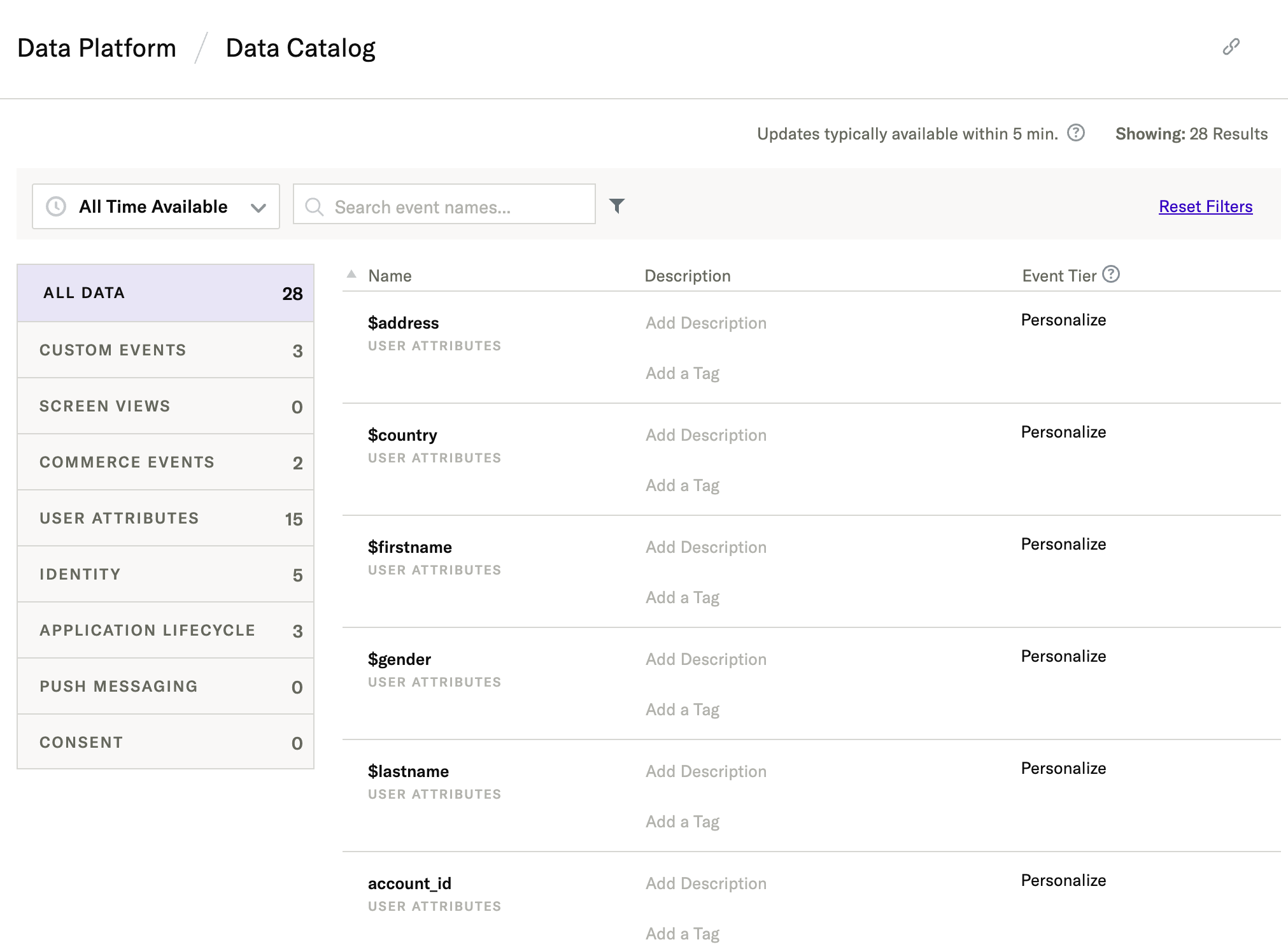
Source: mParticle
Privacy controls manage consent for GDPR (opt-in) and CCPA (opt-out). A built-in data_sale_opt_out purpose blocks opted-out users' data from designated integrations automatically.
The DSR forwarding system sends erasure requests to all configured downstream integrations (Amplitude, Mixpanel, Braze, and others) automatically, so engineering teams don't need to orchestrate cross-tool deletion by hand.
Monitoring includes real-time alerts, Platform Trends dashboards, and end-to-end span-level tracing. Access governance provides workspace-level RBAC with custom roles, SSO via SAML, and MFA.
The platform holds SOC 2 Type II and ISO 27001 certifications and uses 256-bit AES encryption at rest with TLS in transit.

Source: mParticle
Where mParticle Falls Short
mParticle handles first-party data unification and activation well, but several limitations appear depending on your needs and resources. These reflect architectural choices, not oversights.
Enterprise-Only Pricing with No Transparency: mParticle uses a universal credits model with contact-sales pricing only. No published rates, no self-serve signup, and no free plan for the core CDP (only a 30-day free trial of the Analytics module for existing customers).

Source: mParticle
The upfront credit commitment creates friction in early evaluations. Enterprise buyers consistently call the platform expensive compared to alternatives focused on composable or streaming alone.
Steep Implementation Complexity: Setup requires real technical expertise. G2 users note inconsistent procedures across integrations and a data model that makes initial implementation slow. Teams with dedicated data engineers deploy it most successfully. If your organization lacks that capacity, simpler alternatives will deliver faster results.
No Native Campaign Execution: mParticle activates audiences to downstream tools but doesn't send messages or manage campaigns itself. You need a separate engagement platform (Braze, Airship, Iterable) to reach your customers. That means another vendor, another contract, and another integration.
User-Centric Data Model: mParticle's data model is built around users and events. Enterprises that need to model B2B account hierarchies, product catalog relationships, or entity types beyond individual users will find this a poor fit.
Cloud-Only Deployment: There is no on-premise or private cloud option. For regulated enterprises in financial services, healthcare, or government that require on-premise data processing, this disqualifies the platform.
Reported Latency Concerns: Some users note latency issues with real-time targeting and data sync between mParticle and downstream analytics platforms. This conflicts with the platform's real-time positioning, though the issues appear to be configuration- or destination-specific.
These limitations follow from building a platform for enterprise-scale first-party data orchestration. But they set clear boundaries, especially for B2B companies that need third-party intelligence, prospecting, and go-to-market execution on top of their data infrastructure.
The Perfect Complement for B2B Teams: ZoomInfo
mParticle tells you what your existing customers do. B2B companies also need to know who their next customers are, when those prospects are researching solutions, and how to reach the right people. That's a different data problem, and ZoomInfo was built to solve it.
Where mParticle unifies first-party behavioral data from your own touchpoints, ZoomInfo provides the third-party B2B intelligence layer: verified contact data, company profiles, intent signals, and conversation intelligence that identify and engage buyers before they visit your website or trigger an event in your CDP.
B2B Data: ZoomInfo maintains a large, verified B2B dataset.
ZoomInfo's data covers three dimensions: identity data (500M contacts, 135M+ verified phone numbers, 120M direct dials, and 200M+ verified business emails), company context (100M companies with industry, revenue, org charts, and technographics tracking 30,000+ technologies across 200+ categories), and signals that reveal when accounts are actively in-market.
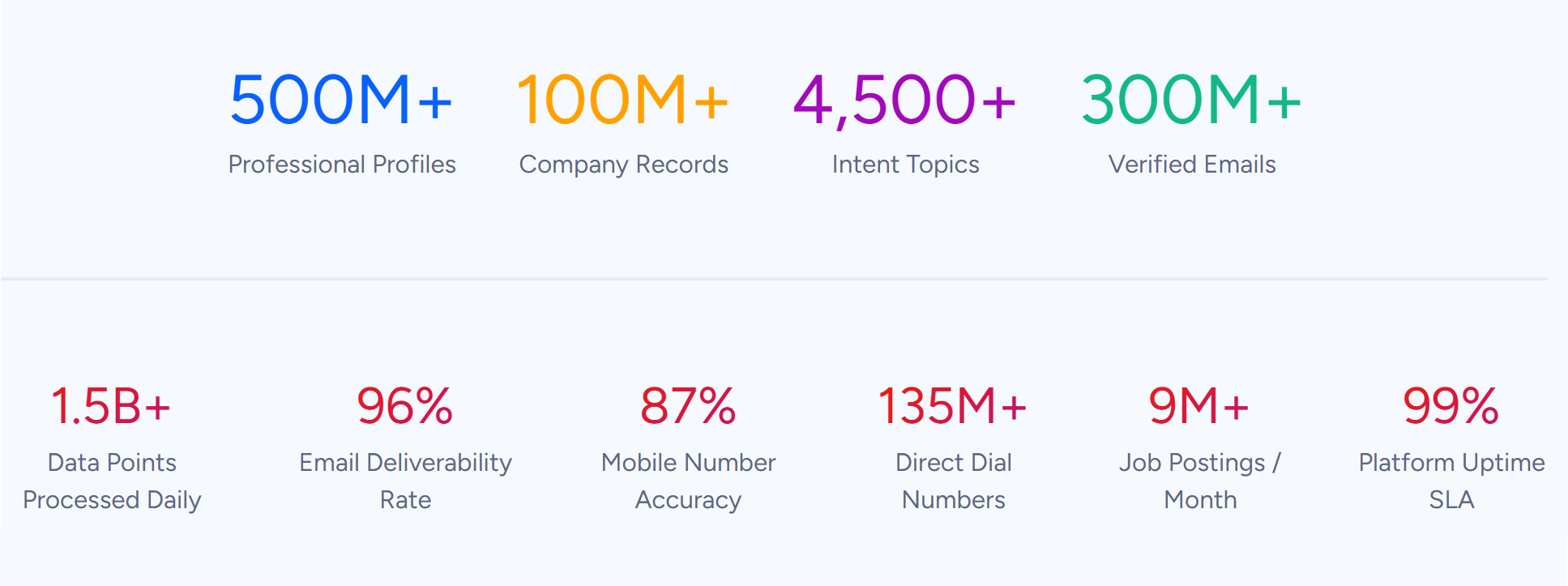
Source: ZoomInfo
These aren't self-reported numbers. In a Fortune 500 competitive RFP analyzing 25 million contacts across vendors, the independent consultant concluded that "no other competitor came even close." The data comes from a multi-source pipeline backed by 300+ human researchers and reaches up to 95% accuracy on first-party data.
For B2B companies already using mParticle, ZoomInfo fills the gap CDPs don't address: finding and reaching prospects who haven't engaged with you yet.
"ZoomInfo gives us the information we need to execute. We don't have to spend our time digging. It's already there, so we can be three steps ahead." (William Kenimer, Vice President of Revenue Operations, Vensure)
GTM Context Graph: ZoomInfo's intelligence layer captures not just what happened, but why.
The GTM Context Graph processes 1.5B + data points daily, combining ZoomInfo's B2B data with a customer's CRM records, conversation transcripts, email interactions, and behavioral signals into one intelligence layer.
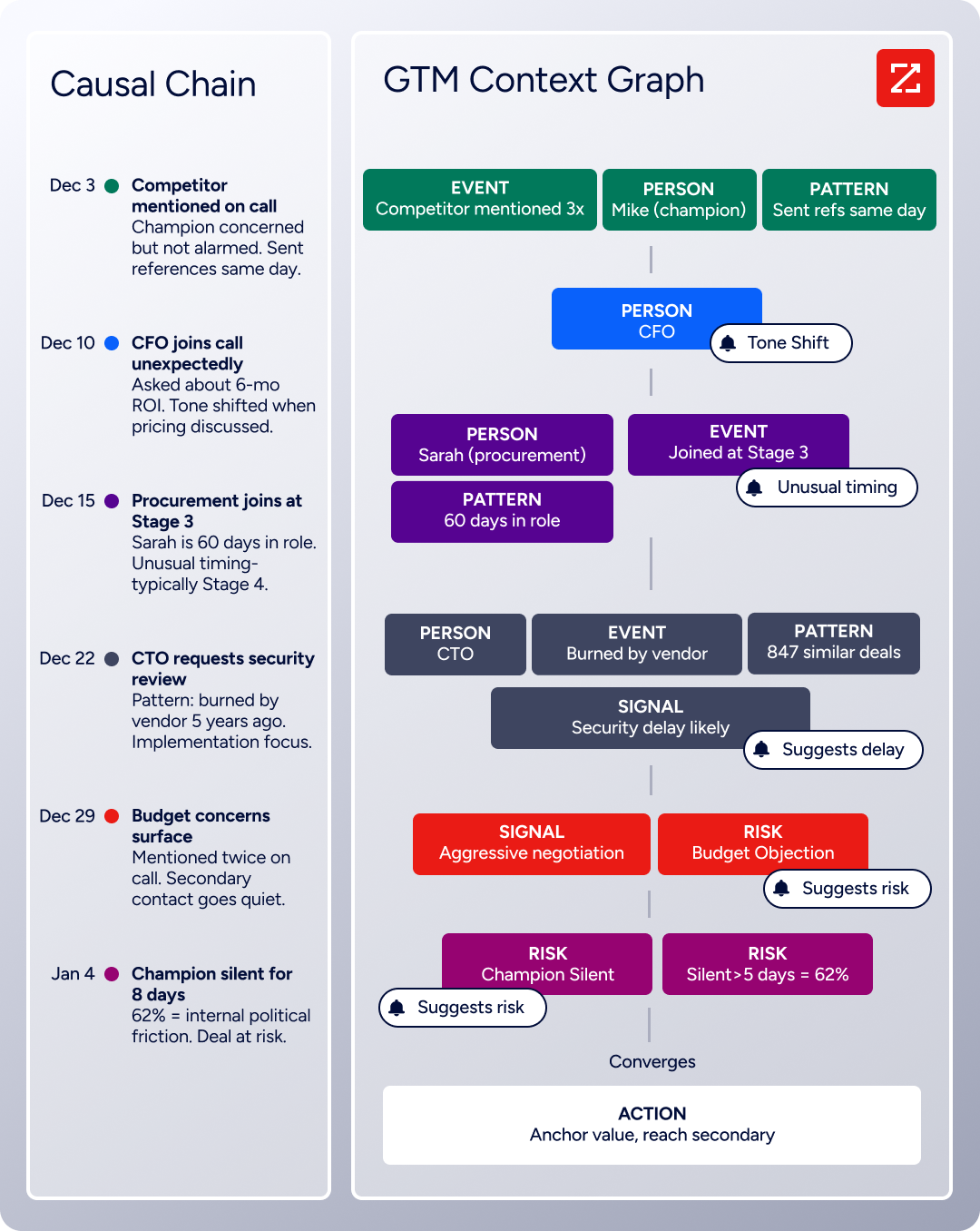
Source: ZoomInfo
A CRM records that a deal moved stages. Conversation intelligence captures what was said on the call. Intent data logs research activity. The Context Graph connects all three to surface why a deal moved and what should happen next.
Where mParticle's Cortex AI predicts individual user behavior from first-party events, ZoomInfo's intelligence layer operates at the account and deal level, identifying buying committee dynamics, competitive mentions, and signal patterns that predict deal outcomes.
Buyer Intent data tracks signals from 210 million IP-to-Organization pairings and 6 trillion+ new keyword-to-device pairings sourced monthly. Guided Intent, exclusive to ZoomInfo, identifies topics historically correlated with deal success rather than requiring manual topic selection.

Source: ZoomInfo
"It's bringing data together faster than anyone could. It's both a time saving and a quality improvement," said Toby Carrington, Chief Business Officer. Seismic attributed 39% of active pipeline to opportunities identified or influenced by ZoomInfo signals. (Seismic)
Access: ZoomInfo delivers intelligence through native products and open APIs, so it works in any tool.
ZoomInfo offers three ways in. GTM Workspace gives sellers a single screen where prioritized accounts, AI-drafted outreach, and deal execution come together.
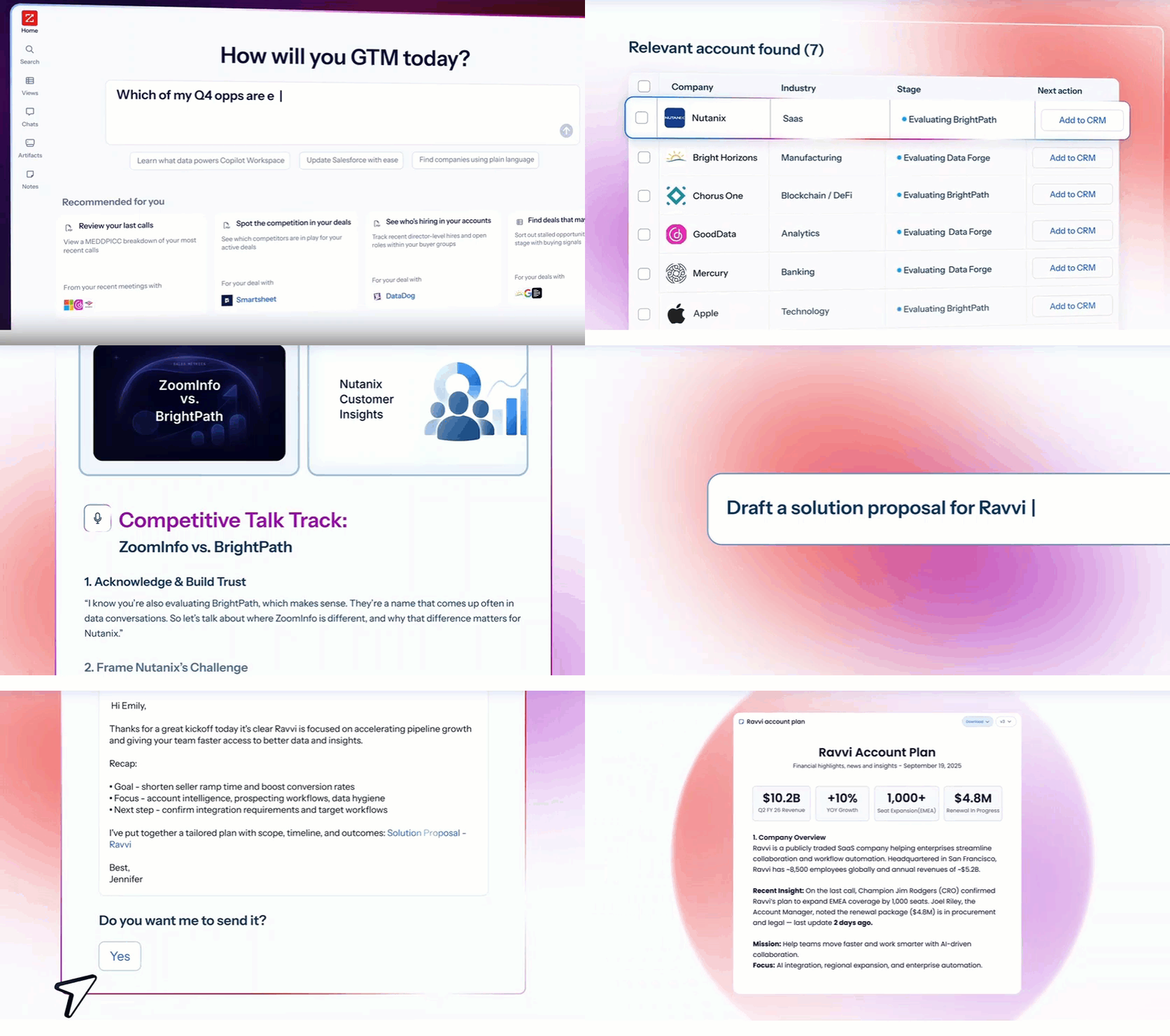
Source: ZoomInfo
GTM Studio gives marketers and RevOps a builder where they define audiences, orchestrate campaigns, and measure pipeline in natural language.
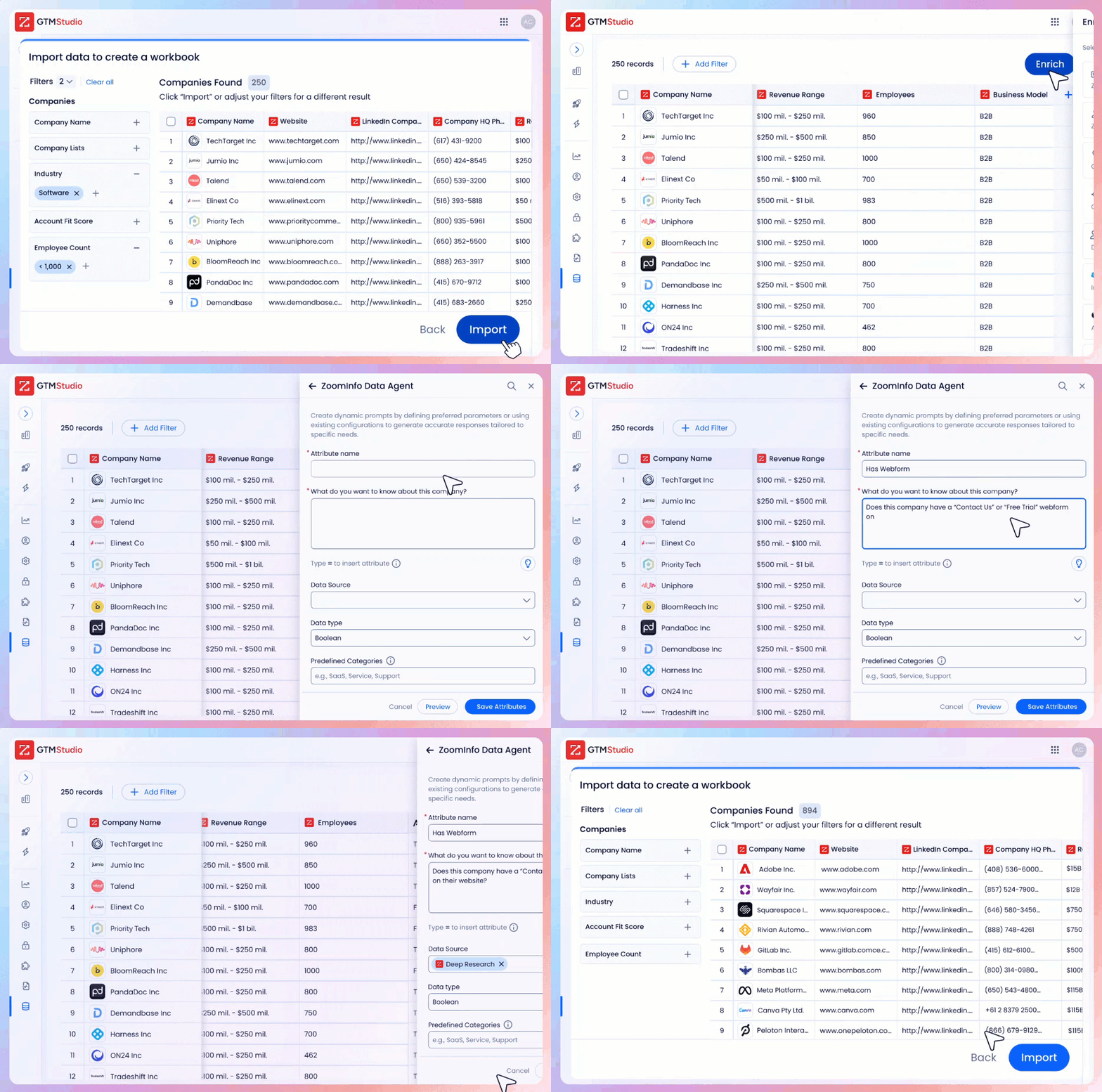
Source: ZoomInfo
For teams building beyond ZoomInfo's products, APIs and MCP expose the same intelligence to any custom agent, internal tool, or partner platform.
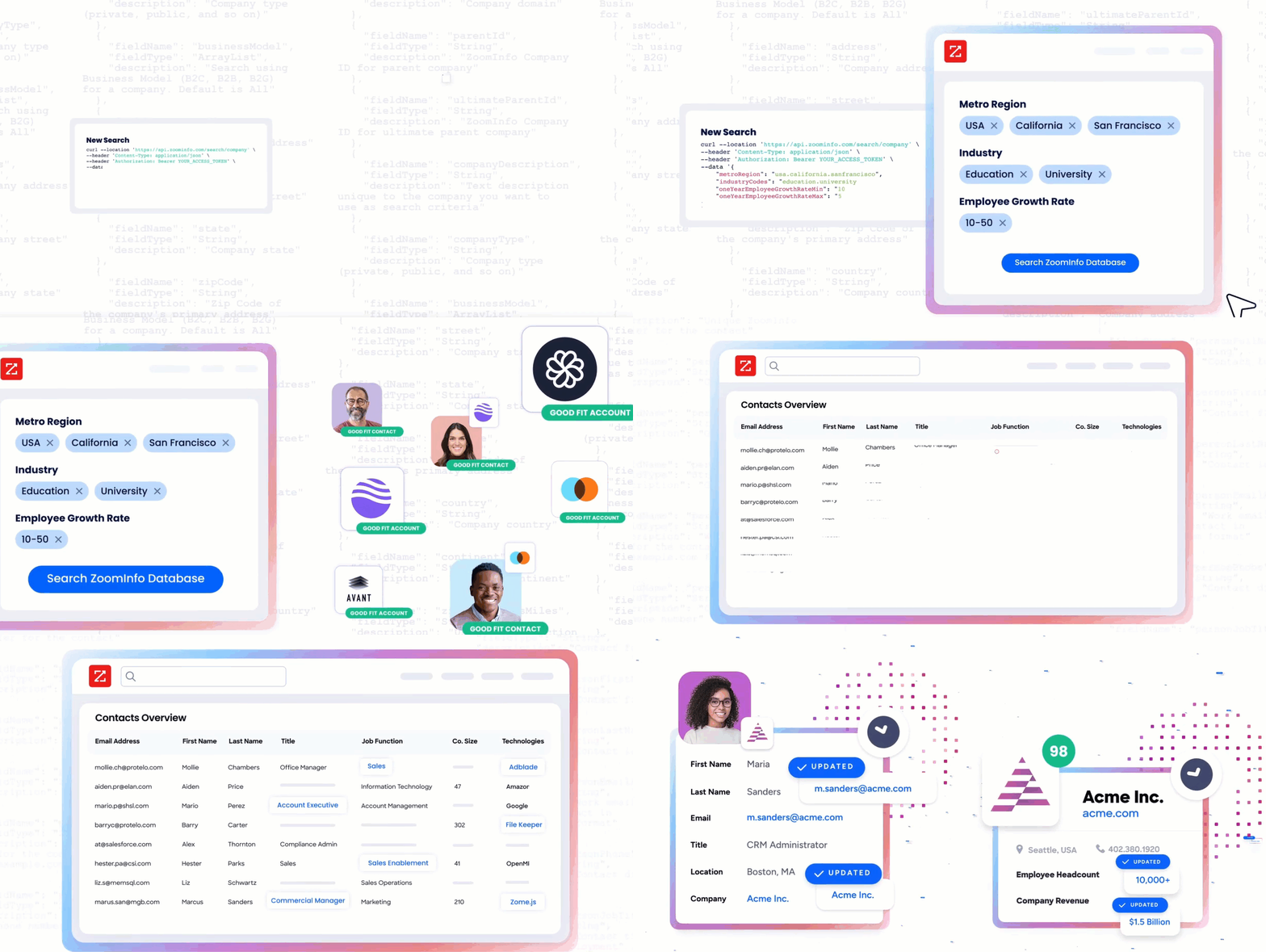
Source: ZoomInfo
For companies running mParticle as their CDP, ZoomInfo's data feeds into the same downstream tools (Salesforce, Braze, and others) through its own native integrations. API access is included in all relevant plans, and the MCP server is listed in the Claude directory for AI agent integration. A free permanent tier (ZoomInfo Lite) provides access to the B2B database with 10 monthly export credits and no time limit.
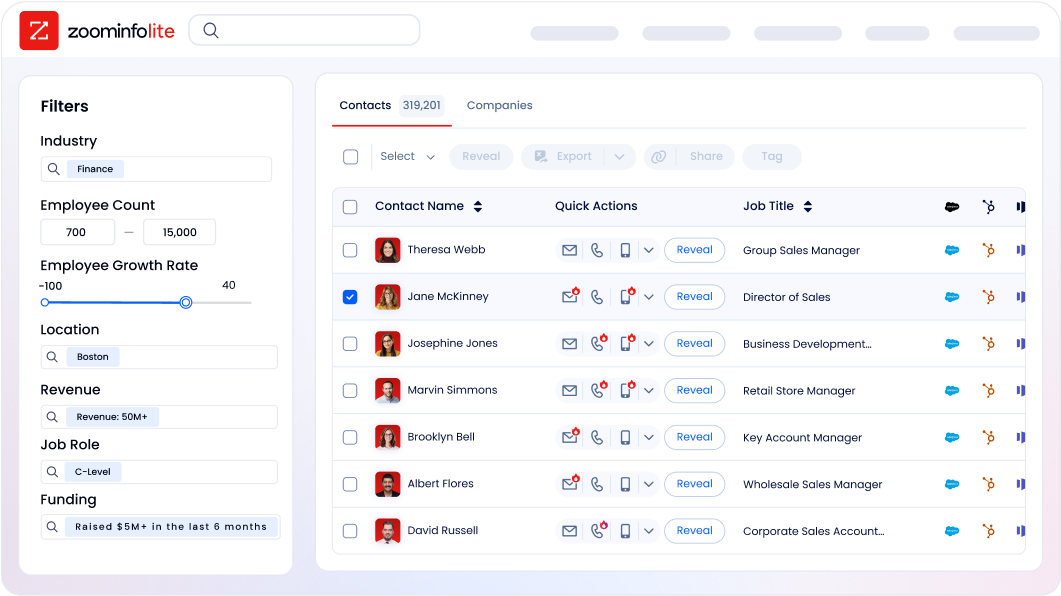
Source: ZoomInfo
"The plug-and-play aspect of the API means I can integrate it into any process and get information at a moment's notice," said Jerry Wilson, Senior Marketing Intelligence Analyst at BDO Canada, which cut time spent on internal data dashboard updates by 87%. (BDO Canada)
mParticle and ZoomInfo: How They Work Together
Aspect | mParticle | ZoomInfo |
|---|---|---|
Primary purpose | First-party customer data unification and activation | Third-party B2B intelligence and go-to-market execution |
Data source | Your own customer touchpoints (app, web, server, POS) | ZoomInfo's verified B2B database + your CRM + conversation intelligence |
Core strength | Real-time behavioral data streaming and identity resolution | Contact discovery, buyer intent signals, and account intelligence |
AI capabilities | Predictive audiences, next best action, lookalike modeling on first-party data | GTM Context Graph, AI-drafted outreach, account research, predictive scoring |
Identity focus | Cross-device customer identity for known and anonymous users | B2B contact and company identity with verified direct dials and emails |
Audience activation | 300+ integrations for downstream marketing and advertising | Native GTM products + 120+ integrations + API/MCP for any tool |
Pricing model | Consumption-based credits, enterprise contracts only | Consumption-based pricing, custom-quoted, with a permanent free tier (Lite) |
Workflow position | Activating data from customers you already have | Finding and engaging customers you don't have yet |
Best for | Enterprise B2C brands with high-volume digital touchpoints | B2B sales, marketing, and RevOps teams |
Final Verdict
mParticle and ZoomInfo solve different problems in the go-to-market stack, which is why they complement each other.
mParticle is the right investment when your main challenge is unifying fragmented first-party customer data into one usable view. If you're an enterprise B2C brand (or a B2B company with significant digital consumer touchpoints) that needs real-time audience activation, configurable identity resolution, and enforced data quality across a complex martech stack, mParticle delivers a hybrid CDP architecture that few competitors match.
The platform works best for teams with the engineering resources to implement it and the data volume to justify the cost.
ZoomInfo is the right investment when you need to identify, understand, and engage B2B buyers before they interact with your brand. Built on a large verified B2B dataset and an intelligence layer that captures why deals move or stall, ZoomInfo gives sales, marketing, and RevOps teams the third-party intelligence, prospecting infrastructure, and AI-powered execution that CDPs don't provide.
For B2B companies already running mParticle, ZoomInfo fills the gap between knowing what your customers do and knowing who your next customers are.
Get started with ZoomInfo here.
For B2B enterprises with significant digital customer touchpoints, the fullest picture comes from both: mParticle managing the first-party behavioral data layer, ZoomInfo providing the third-party intelligence and go-to-market execution layer, and shared downstream tools (CRM, engagement platforms, advertising) acting on signals from each.
mParticle FAQ
What is mParticle used for?
mParticle is a customer data platform that collects behavioral data from mobile apps, websites, servers, and other customer touchpoints, resolves those interactions into unified customer profiles, and activates audiences across marketing, advertising, and analytics tools in real time.
Enterprise B2C brands in media, retail, QSR, fintech, and travel use it primarily to personalize customer experiences, build predictive audiences, and enforce data governance.
How much does mParticle cost?
mParticle uses a consumption-based universal credits model with no published pricing. All rates require a custom quote. The platform demands an upfront credit commitment, and costs scale with event volume, storage, real-time products used, AI features, and API access. There is no free plan for the core CDP.
ZoomInfo, by contrast, offers consumption-based pricing with a permanent free tier (ZoomInfo Lite) that includes access to its B2B database and a 7-day free trial with no credit card required.
Does mParticle require technical resources to implement?
Yes. Teams with dedicated data engineers deploy mParticle most successfully. The platform supports over a dozen client-side and server-side SDKs, requires deliberate configuration of identity resolution strategies, and involves setting up Data Plans for schema enforcement. Enterprise professional services can help with onboarding, but this is not a self-serve tool for small teams or non-technical users.
What integrations does mParticle support?
mParticle supports over 300 native integrations across advertising, analytics, data warehousing, CRM, customer engagement, personalization, privacy, and security. Key integrations include Salesforce, Snowflake, Braze, Airship, The Trade Desk, Google Marketing Platform, Meta, LiveRamp, and major cloud data warehouses. All integrations run server-side rather than tag-based, avoiding client-side performance impact.
Can mParticle send marketing messages directly?
No. mParticle is a data infrastructure layer, not a campaign execution tool. It builds and activates audiences to downstream engagement platforms (Braze, Airship, Iterable, Salesforce Marketing Cloud) but does not send emails, push notifications, or SMS messages. You need a separate engagement platform to execute campaigns.
Is mParticle suitable for B2B companies?
mParticle's data model is built around individual users and events, which suits B2C use cases well. B2B companies with account-centric data models or complex account hierarchies may find it a poor fit, since the platform has no native support for B2B-specific data objects or account structures.
B2B companies evaluating mParticle should also consider pairing it with a B2B intelligence platform like ZoomInfo, which provides the contact data, company profiles, intent signals, and prospecting capabilities that a CDP doesn't cover.
What happened with the mParticle and Rokt merger?
In January 2025, mParticle merged with Rokt, a global ecommerce platform, in a transaction that included $300 million committed to accelerating the CDP's product roadmap. mParticle now operates as "mParticle by Rokt" with its co-founders in their original leadership roles. The first major product following the merger was the Hybrid CDP launch on Snowflake AI Data Cloud in October 2025.
How does mParticle's identity resolution compare to other CDPs?
mParticle's IDSync framework is configurable rather than fixed, offering five identity strategies that let enterprises choose resolution behavior matching their business model and regulatory needs. This differentiates it from CDPs that impose a single resolution mode.
However, mParticle currently supports only deterministic identity matching. Probabilistic matching, which would improve cross-device resolution for anonymous users, is on the roadmap but hasn't shipped.
Researching mParticle? These comparisons and alternatives help you decide:
