
Choosing between mParticle vs. Tealium for your customer data platform often comes down to these questions:
Do you need built-in predictive AI that scores and segments customers automatically, or do you prefer feeding your own models with clean, governed data?
Is your priority real-time activation within active user sessions, or data orchestration across every channel and system?
Does your industry require HIPAA compliance for customer data processing?
Do you need a tag management layer alongside your CDP, or is your data collection handled separately?
How important is having 1,300+ pre-built integrations versus 300+ server-side connections?
Does your B2B go-to-market team also need account intelligence and buyer intent alongside behavioral data?
In short, here's what we recommend:
mParticle is the hybrid CDP for engineering-led B2C brands that need both real-time streaming and warehouse-native activation in one platform. Its Cortex AI engine delivers predictive audiences and next-best-action recommendations without a data science team, while IDSync offers configurable identity resolution with five distinct strategies. Following its merger with Rokt and $300 million in committed investment, mParticle is expanding its hybrid architecture. The tradeoff: steep implementation complexity, enterprise-only pricing with no public rates, and a data model built around users and events that struggles with B2B account hierarchies.
Tealium is the customer data orchestration platform for enterprises in regulated industries who need the broadest integration ecosystem and strongest compliance posture in the CDP category. With 1,300+ pre-built connectors, HIPAA BAA and ISO 27701 certifications, and back-to-back Gartner Magic Quadrant Leader recognition, Tealium covers more ground than competing CDPs. Its tag management heritage gives it a data collection layer that mParticle lacks. The tradeoff: a steep learning curve, no staging environment for testing changes, and AI capabilities that emphasize infrastructure over ready-made predictions.
Both platforms unify behavioral customer data and activate it across marketing channels. But for B2B companies, behavioral data tells only half the story. Knowing that someone visited your pricing page matters less if you don't know which company they represent, who the decision-makers are, or whether that account is researching your category.
ZoomInfo is a GTM platform that provides the B2B intelligence layer neither CDP offers. With 500M contacts, 100M companies, 135M+ verified phone numbers, and 200M+ verified business email addresses, ZoomInfo identifies who your buyers are and how to reach them. Its GTM Context Graph processes 1.5B+ data points daily, combining this third-party data with your CRM records, conversation transcripts, and engagement history into a single intelligence layer that reveals not just what happened in a deal, but why. For B2B teams already running a CDP, ZoomInfo fills the account intelligence gap, delivering buyer intent, company data, and verified contact data through GTM Workspace for sellers, GTM Studio for marketers and RevOps, or APIs and MCP that connect to your existing data stack.
If adding B2B intelligence to your customer data platform sounds like the missing piece, see how ZoomInfo's data powers go-to-market teams.
mParticle vs. Tealium at a glance
mParticle | Tealium | ZoomInfo | |
|---|---|---|---|
Core approach | Hybrid CDP (real-time + warehouse-native) | Customer Data Orchestration Platform | B2B intelligence and GTM platform |
Founded | 2013 | 2008 | 2007 |
Tag management | No | Yes (iQ TMS) | N/A |
Integrations | 300+ server-side | 1,300+ (client + server) | 120+ GTM integrations + API/MCP |
Identity resolution | IDSync: 5 configurable strategies | Visitor stitching: first-party identifiers | B2B identity: 500M contacts, 100M companies |
Built-in AI predictions | Yes (Cortex: predictive audiences, NBA) | Infrastructure-focused (IYOM, Behavioral Insight Agent) | Yes (GTM Context Graph, intent signals) |
Warehouse activation | Snowflake, BigQuery, Databricks, Redshift | Snowflake, BigQuery, Databricks, Redshift | Snowflake, Databricks, AWS, Google Cloud |
Compliance | SOC 2, ISO 27001, GDPR, CCPA | SOC 2, ISO 27001, ISO 27701, HIPAA BAA | SOC 2, ISO 27001, ISO 27701, GDPR, CCPA |
Gartner CDP MQ | Niche Player (2024) | Leader (2024, 2025) | Leader in ABM Platforms (2024, 2025) |
Public pricing | No | No | No (free tier available) |
Best for | B2C brands needing real-time streaming + AI | Regulated enterprises needing orchestration + compliance | B2B teams needing account intelligence + intent |
Two CDPs built on different foundations
mParticle and Tealium both call themselves CDPs, but they arrived at the category from opposite directions.
mParticle started as mobile data infrastructure in 2013, solving a specific engineering problem: routing event data from mobile apps to analytics and marketing tools without implementing multiple vendor SDKs. That plumbing-first DNA persists.
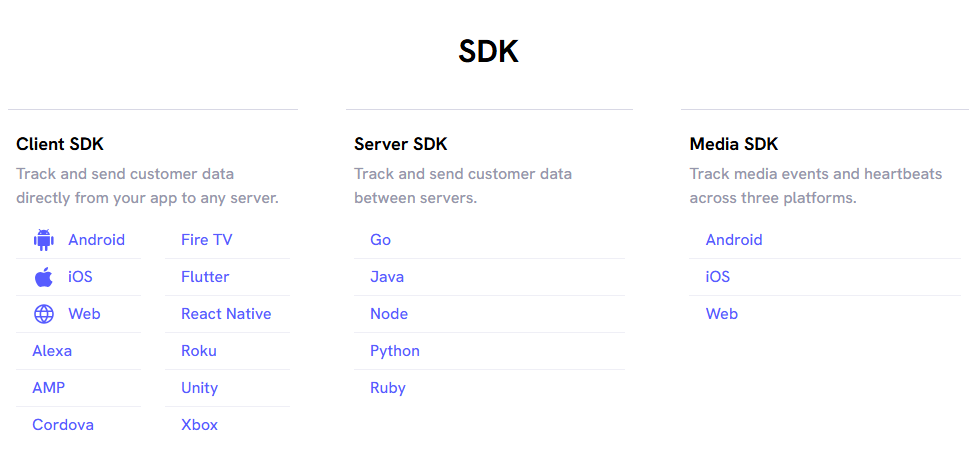
The platform's real-time architecture processes billions of events per month through native SDKs for iOS, Android, web, Roku, and Fire TV, validating each event against Data Plans, resolving identity, and forwarding to 300+ downstream destinations at once. In October 2025, the Hybrid CDP on Snowflake added warehouse-native activation to this streaming core, letting marketers build audiences from Snowflake, BigQuery, Databricks, or Redshift without copying data.
Source: mParticle
Tealium started five years earlier with tag management.
Founded in 2008 by Mike Anderson and Ali Behnam, the company spent its first four years building iQ Tag Management, replacing hardcoded vendor scripts on enterprise websites with a single container tag. That data collection layer became the entry point for everything that followed.
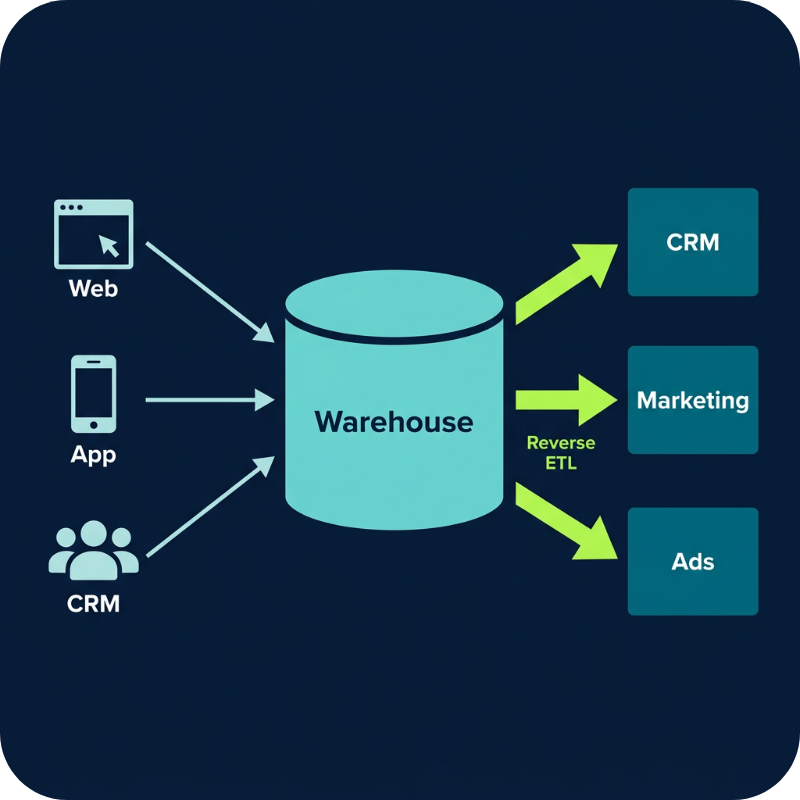
When Tealium launched AudienceStream in 2013 (which it claims was the first-ever CDP), the CDP sat on top of an already-established collection and governance framework. Today the platform spans five modules: data collection, CDP, enrichment and orchestration, data cloud activation, and Tealium for AI.
Source: Tealium
The practical difference: mParticle assumes your data collection is handled and focuses on what happens after events arrive. Tealium starts at the collection layer itself and orchestrates from there.
Companies with complex tag governance needs (dozens of vendor pixels across global properties) will find Tealium's iQ layer valuable from day one. Companies with mature data collection who need real-time processing and built-in predictions will find mParticle's streaming engine more useful.
Identity resolution takes different paths
Both platforms resolve anonymous interactions into unified customer profiles, but their methods reflect different priorities.
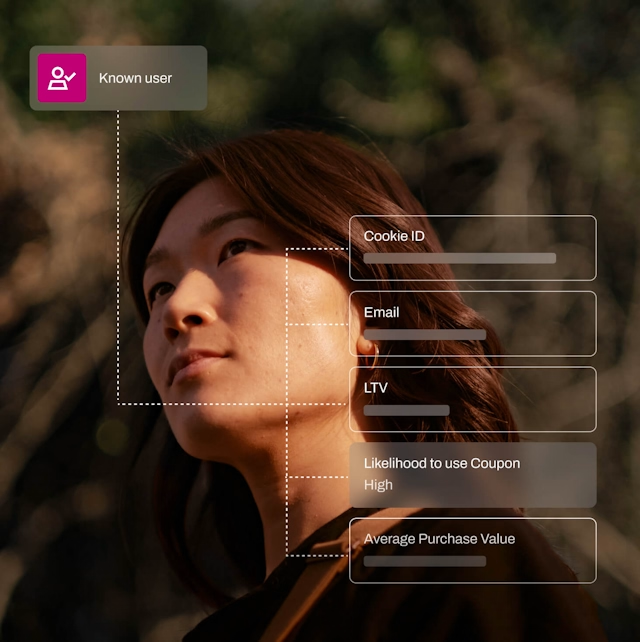
mParticle's IDSync gives enterprises five identity strategies: Profile Conversion (preserves the full anonymous journey), Profile Isolation (quarantines anonymous data from known users), Profile Link, Best Match, and Default. Each strategy defines different behavior at login, logout, and identification events.
Source: mParticle
Teams configure an identity priority, an ordered list of identifier types that controls how profiles match and merge. This flexibility matters for multi-brand enterprises. RBI uses IDSync to create unified customer views across its restaurant brands. The Identity Dashboard and Identity Logs give teams visibility into resolution outcomes at both aggregate and individual call levels.
Currently, mParticle supports only deterministic identity matching. Probabilistic matching is on the roadmap but has not shipped, which limits cross-device resolution for anonymous users in high-traffic environments.
Tealium's visitor stitching takes a simpler approach.
Every session receives an anonymous identifier (TAPID). When a visitor provides a known identifier (email, login ID), the system merges the anonymous profile with any existing known profile by replaying historical event data chronologically. Once merged, profiles cannot be separated. This deterministic, first-party-only model is reliable and privacy-compliant, but offers less configurability than mParticle's five-strategy framework.
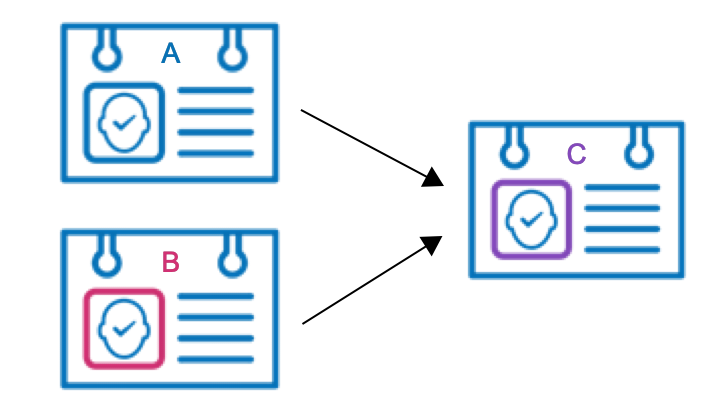
Source: Tealium
For companies with straightforward identity needs, Tealium's visitor stitching works and is easier to implement. For enterprises managing complex multi-brand, multi-region identity strategies where different business units need different resolution rules, mParticle's IDSync provides control that Tealium does not.
Integration breadth creates a real gap
Tealium's 1,300+ integrations form the broadest connector ecosystem in the CDP market.
This count includes client-side tag templates (via iQ Tag Management), server-side connectors (via AudienceStream), incoming webhooks from platforms like Braze, HubSpot, and Mailchimp, cloud data source connectors, and Conversion API integrations for Google, Meta, TikTok, and The Trade Desk.
IBM used Tealium's Hosted Data Layer to standardize collection across 24 million pages and 143 off-site domains. For enterprises replacing fragmented tag implementations or connecting legacy systems alongside modern marketing tools, this breadth reduces custom development.
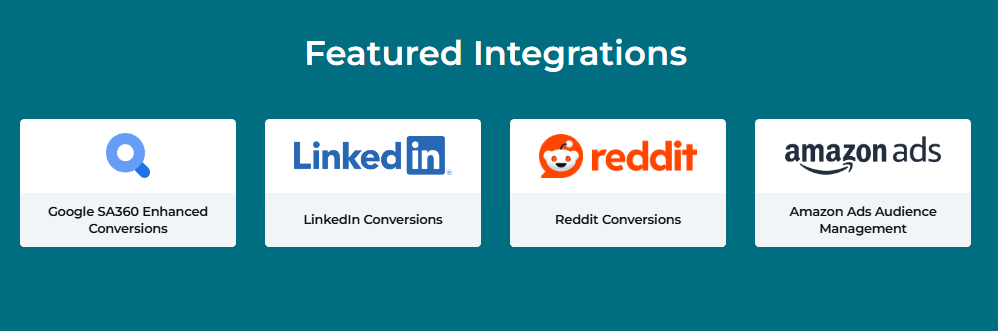
Source: Tealium
mParticle's 300+ integrations are fewer but deliberately different in architecture.
All integrations are server-side, not tag-based. Data is collected and activated without client-side performance impact. Named connections include Braze, Salesforce, Snowflake, LiveRamp, The Trade Desk, Google Marketing Platform, and Meta. The platform also supports bidirectional Feed integrations to close the attribution loop between campaign activation and behavioral outcomes.
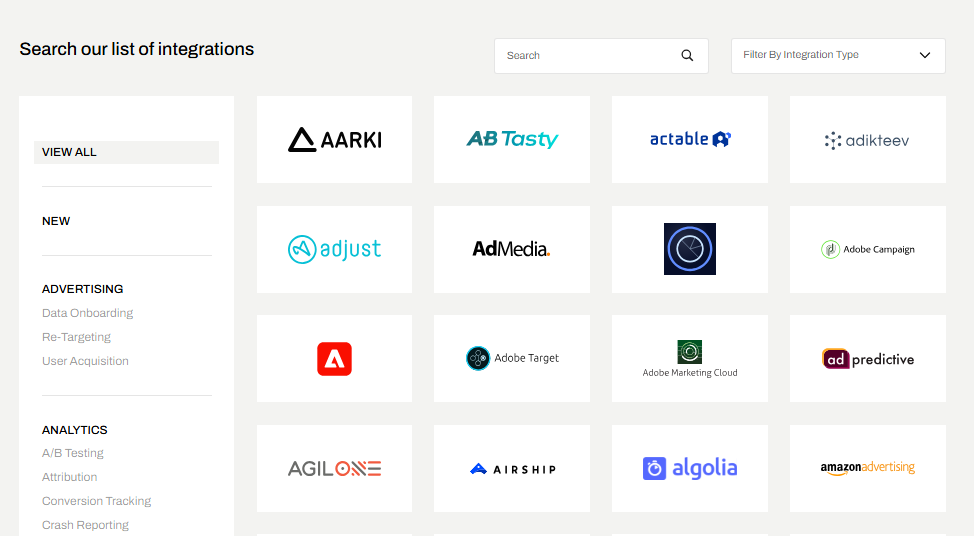
Source: mParticle
The distinction matters.
Tealium's tag management heritage means it handles the full lifecycle: collecting data via client-side tags, processing it server-side, and routing it to destinations. mParticle's server-side-only model means you need another solution (or engineering work) for client-side tag governance. Tealium's integration catalog also includes native CMP integrations for OneTrust, Didomi, and Usercentrics, enforcing consent at the tag level.
Both platforms connect to the major cloud data warehouses (Snowflake, BigQuery, Databricks, Redshift) for composable activation. Neither has a significant advantage in warehouse connectivity.
AI capabilities serve different philosophies
This is where the two platforms diverge most sharply.
mParticle's Cortex AI engine is a built-in machine learning suite that automates the pipeline from model training to scoring to activation, with no data science team required. Marketers specify a target outcome (likelihood to purchase, churn risk, upgrade probability), and Cortex builds and continuously retrains the model.
Cortex also supports real-time decisioning via its JavaScript Decision SDK, scoring anonymous visitors based on in-session signals within a single page visit.
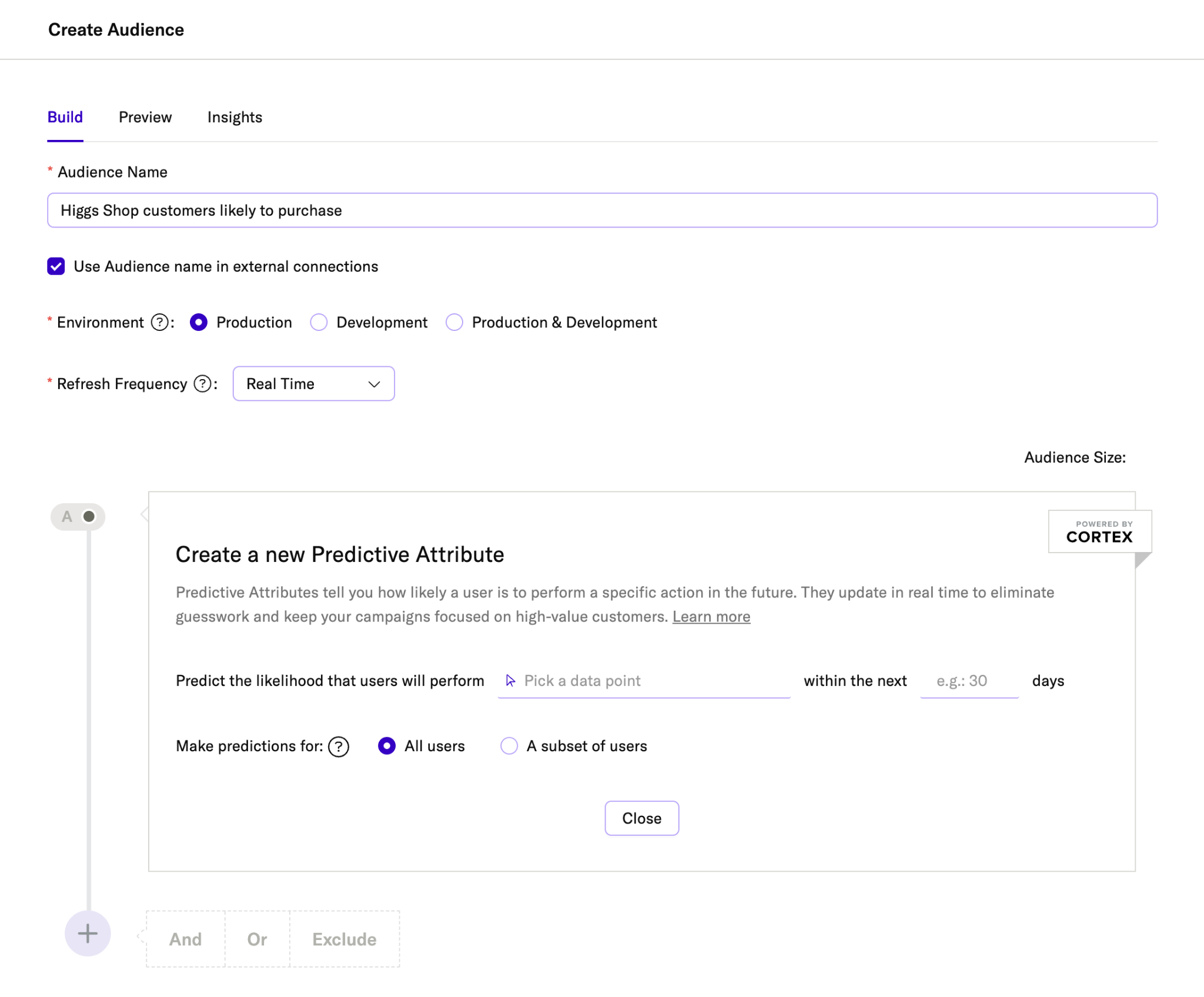
Source: mParticle
Tealium takes a different stance.
Rather than providing pre-built prediction models, Tealium positions itself as the governed data layer for external AI systems. Its Invoke Your Own Model (IYOM) capability lets organizations run their own models in their own data cloud and activate outputs through Tealium's connectors without handing model ownership to a vendor.
Bidirectional connectors to AWS Bedrock, Vertex AI, OpenAI, and SageMaker route live data to foundation models and return intelligence back into profiles in real time. The Behavioral Insight Agent classifies intent and sentiment in the event stream, and a managed MCP server lets external AI agents query unified profiles through the Model Context Protocol.
The tradeoff is clear. If your team lacks data science resources and wants predictive audiences that work out of the box, mParticle's Cortex delivers. If your team already has models or wants to connect to external AI services while keeping full control of the ML stack, Tealium's infrastructure approach gives you more flexibility.
Governance and compliance create a hard divider
For companies in healthcare, financial services, or other regulated industries, the compliance question may end the comparison before it begins.
Tealium holds HIPAA BAA, SOC 2, ISO 27001, ISO 27701, ISO 27018, and TISAX certifications.
The HIPAA Business Associate Agreement is rare among CDPs and required for any organization processing protected health information. Tealium also offers a multi-tenant or private cloud HIPAA solution with regional data residency options, including a recently launched AWS Singapore Region for APAC compliance. Consent is enforced structurally: consent state travels with every event, and tags that require consent are blocked from loading if consent is absent.
Privacy teams can change consent settings without touching audience definitions or connector configurations.
mParticle holds SOC 2 Type II, ISO 27001, GDPR, CCPA, and LGPD certifications.
Its governance suite includes Data Plans for schema enforcement, a Data Catalog, consent management with per-regulation support (GDPR opt-in, CCPA opt-out), and role-based access controls. The DSR forwarding capability propagates erasure requests to configured downstream integrations automatically, simplifying multi-vendor GDPR and CCPA compliance.
However, mParticle is cloud-only with no on-premise or private cloud option.
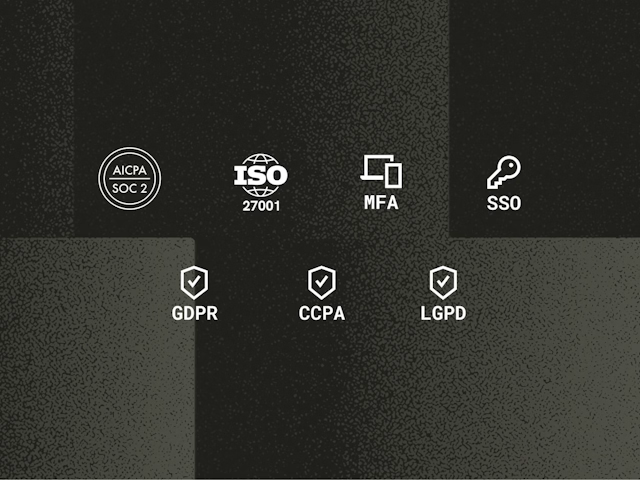
Source: mParticle
Both platforms take data governance seriously, but Tealium's HIPAA certification and private cloud deployment option give it a clear edge for healthcare, pharma, and regulated financial services. mParticle's Data Plans (schema enforcement at the point of collection that can block malformed data before it reaches downstream systems) offer a data quality advantage that Tealium does not match at the same architectural level.
The B2B intelligence gap neither CDP fills
Both mParticle and Tealium are built for a specific job: unifying behavioral customer data across digital touchpoints and activating it through marketing channels. They do this well. But for B2B companies, behavioral data answers only part of the question.
A CDP can tell you that a visitor browsed your pricing page, downloaded a whitepaper, and returned three times this week. It cannot tell you which company that visitor works for, who else at that company is involved in the buying decision, whether the company just raised funding, or whether they are researching your competitors.
mParticle's data model is built around users and events, with limited native support for B2B account hierarchies. Tealium centers on individual visitor profiles for consumer engagement.
That account intelligence layer is what ZoomInfo provides.
With 500M contacts, 100M companies, 135M+ verified phone numbers, and 200M+ verified business email addresses, ZoomInfo's B2B data covers three dimensions: identity data (who buyers are and how to reach them), company context (firmographics, org charts, technographics across 30,000+ technologies), and dynamic signals (buyer intent tracked from 210 million IP-to-Organization pairings) that reveal when accounts are in-market.
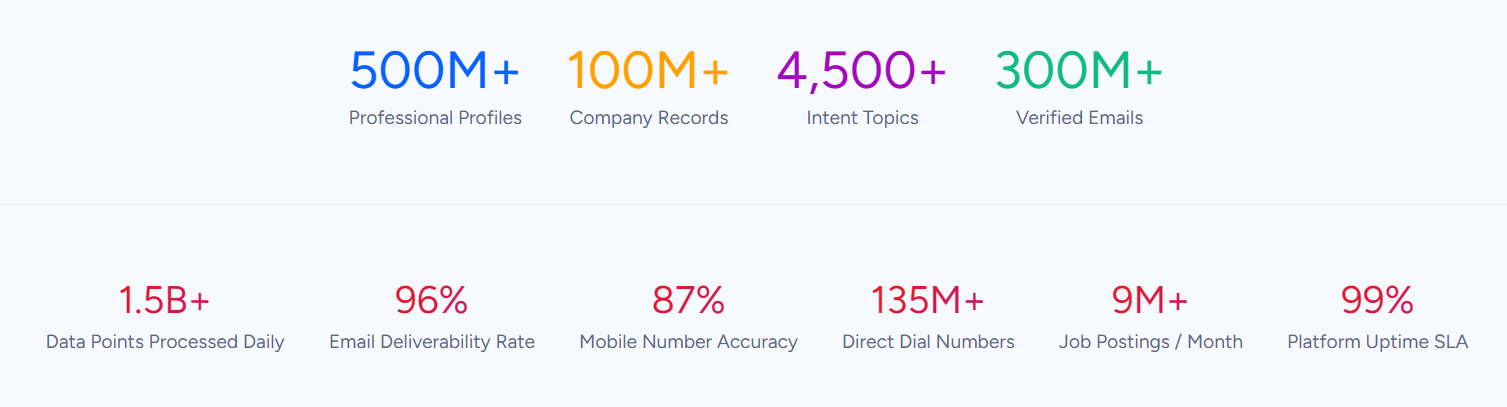
Source: ZoomInfo
The GTM Context Graph combines this third-party intelligence with a customer's CRM records, conversation transcripts, and engagement history into a single layer that captures not just what happened in a deal, but why.
That intelligence flows into every downstream action: outreach addresses the specific concern a prospect raised, plays target accounts whose signal combinations match your actual win patterns, and forecasts weight deals by buying evidence rather than stage labels.
For B2B companies running a CDP, ZoomInfo fills the space between behavioral signals and sales intelligence.
The CDP handles data unification and audience activation. ZoomInfo tells your team which accounts matter, who the decision-makers are, and when they are ready to buy. Both platforms feed into the same cloud data warehouses (Snowflake, Databricks), so the intelligence can be combined: behavioral engagement data from your CDP enriched with company and intent data from ZoomInfo, available to every team through GTM Workspace, GTM Studio, APIs, and MCP.
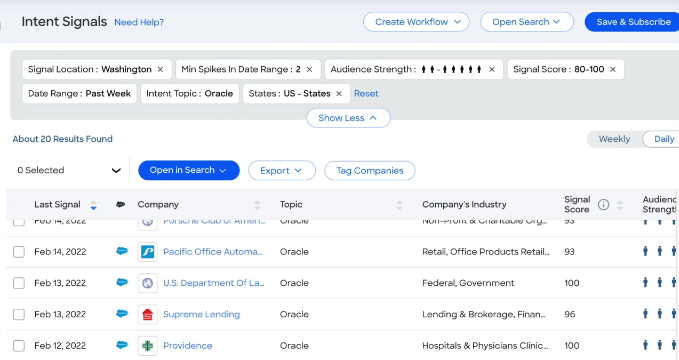
Source: ZoomInfo
Snowflake uses ZoomInfo for at least one-third of the most critical data features in their Account Propensity Scoring model, feeding over 70 firmographic and technographic data fields. Accounts monitored using ZoomInfo-powered scores showed 90% higher opportunity open rates and 2x higher customer conversion rates. (Snowflake Case Study)
Pricing and implementation demand patience
Neither mParticle nor Tealium publishes pricing. Both require contacting sales for custom quotes.
mParticle operates on a usage-based pricing model using universal credits (mPCs) consumed against actual usage. Customers make upfront contractual credit commitments, with higher commitments unlocking lower per-unit rates.
All features are accessible with any credit purchase, so there is no feature gating by tier. Billable items include events ingested (across three tiers: Connect, Preserve, and Personalize), additional data retention, AI/ML features, Profile API usage, and data replays. A 30-day analytics trial is available for existing customers, but there is no free trial for the core platform.
Tealium also operates through negotiated enterprise contracts with no publicly listed prices.
The platform is modular, and module access depends on contract scope. Support adds cost across three tiers: Basic (included, no response SLAs), Enhanced (2-hour critical response), and Premium (1-hour critical response with a dedicated Technical Account Manager). No free trial or free plan is publicly documented.
Implementation takes time for both.
mParticle requires dedicated data engineering resources and offers enterprise professional services to bridge the onboarding gap. G2 reviewers report that Tealium enterprise deployments with custom integrations can take one to four months. Both platforms are designed for organizations with 500+ employees and dedicated data or marketing engineering teams. Neither is self-serve for small or mid-market companies.
ZoomInfo, by contrast, offers ZoomInfo Lite as a permanent free tier with access to its B2B database, 10 monthly export credits, and a 7-day free trial of the full platform, giving teams a way to evaluate the data before committing.
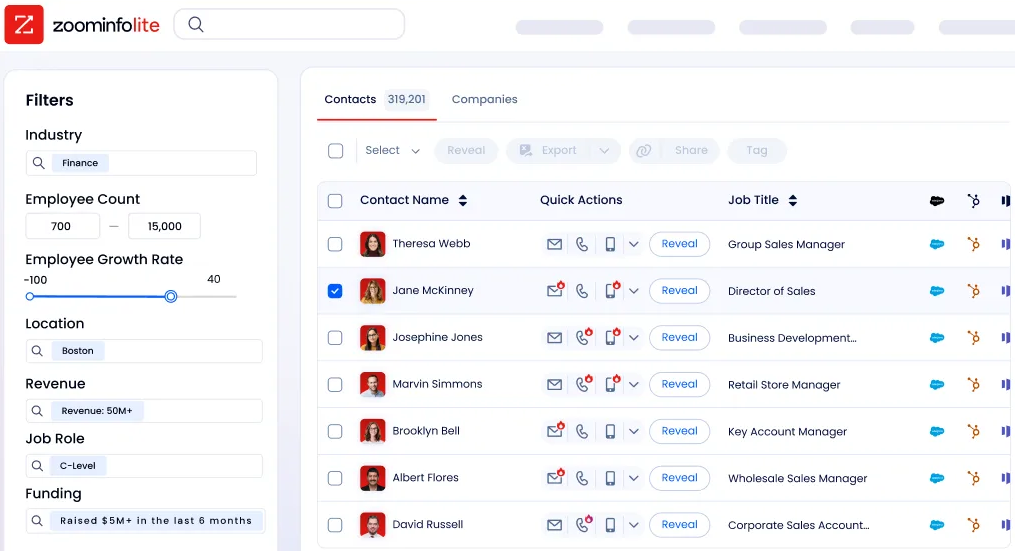
Source: ZoomInfo
mParticle vs. Tealium vs. ZoomInfo: Which should you choose?
The right platform depends on what problem you are solving and where your team's capabilities lie.
Choose mParticle if:
You are a B2C enterprise brand in media, retail, QSR, or fintech
Real-time event streaming with sub-second audience updates is critical
You want built-in predictive AI without building ML infrastructure
Your data collection is handled and you need a processing and activation layer
Configurable identity resolution across brands or regions matters
Your data engineering team can handle a complex implementation
Choose Tealium if:
You operate in healthcare, financial services, insurance, or another regulated industry
HIPAA compliance or private cloud deployment is a requirement
You need tag management alongside your CDP
The broadest integration catalog (1,300+) reduces your engineering burden
You want to feed your own AI models with governed, real-time customer data
Gartner Magic Quadrant Leader status matters in your procurement process
Add ZoomInfo to either stack if:
Your company sells to other businesses and needs account-level intelligence
You want to know which companies visit your site, who the buyers are, and when they are in-market
Your sales team needs verified contact data, intent signals, and org charts alongside behavioral data
You want one intelligence layer accessible through GTM Workspace, GTM Studio, APIs, or MCP
See how ZoomInfo's B2B intelligence completes your data stack.
Seismic's sales team attributed 39% of active pipeline to opportunities identified or influenced by ZoomInfo signals, reported 54% productivity gains, and saved 11.5 hours per week per seller. (Seismic Case Study)
The customer data platform market has split into two camps: real-time CDPs optimized for streaming activation and orchestration platforms optimized for data management. mParticle and Tealium represent the strongest options in each.
For B2B companies, the choice between them is only half the decision. The other half is whether your data stack includes the account intelligence that turns behavioral signals into qualified pipeline.
mParticle vs. Tealium vs. ZoomInfo FAQ
What is the fundamental difference between mParticle and Tealium?
mParticle is a hybrid CDP that combines real-time event streaming with warehouse-native activation, offering built-in predictive AI through its Cortex engine.
Tealium is a customer data orchestration platform that includes tag management, a CDP, enrichment and orchestration, cloud activation, and AI infrastructure for external models. mParticle focuses on processing and activating data after collection. Tealium starts at the data collection layer itself and orchestrates from there.
Which platform has better AI capabilities?
It depends on what you need.
mParticle's Cortex provides predictive audiences, next-best-action recommendations, and look-alike modeling without requiring a data science team. Tatcha saw 8.5x higher revenue performance from Cortex-targeted emails versus their best manually defined segment. Tealium positions itself as AI infrastructure, letting you invoke your own models or connect to external services like AWS Bedrock, OpenAI, and Vertex AI.
Companies without internal data science resources benefit more from mParticle. Companies with existing ML investments benefit more from Tealium.
Which platform is better for regulated industries?
Tealium has the stronger compliance posture, holding HIPAA BAA, SOC 2, ISO 27001, ISO 27701, and ISO 27018 certifications. It also offers private cloud deployment and regional data residency options, including a dedicated AWS Singapore Region for APAC.
mParticle holds SOC 2, ISO 27001, GDPR, CCPA, and LGPD certifications but is cloud-only with no on-premise or private cloud option. For healthcare and pharma, Tealium's HIPAA certification is often a procurement requirement.
How does ZoomInfo fit alongside mParticle or Tealium?
ZoomInfo is not a CDP competitor. It provides B2B intelligence (500M contacts, 100M companies, intent signals, technographics) that complements either platform.
A B2B company might use mParticle or Tealium to unify behavioral customer data, while using ZoomInfo to identify which accounts are in-market, who the decision-makers are, and how to reach them. Both ZoomInfo and the CDPs connect to the same cloud data warehouses, so behavioral engagement data can be combined with company and intent data from ZoomInfo.
Which platform has more integrations?
Tealium leads with 1,300+ integrations covering client-side tags, server-side connectors, webhooks, cloud data sources, and Conversion APIs. mParticle offers 300+ integrations, all server-side.
The architectural difference matters: Tealium handles data collection through client-side tags and routes from there. mParticle processes data already collected via its own SDKs or server-side APIs. For companies managing many vendor pixels across global properties, Tealium's tag management layer handles that work natively.
Do mParticle or Tealium offer free plans or trials?
Neither offers a free plan or a standard free trial for the full platform. mParticle provides a 30-day trial of its Analytics module for existing customers only. Tealium directs prospective customers to request a demo. Both operate through negotiated enterprise contracts with no self-serve pricing.
ZoomInfo, by contrast, offers ZoomInfo Lite as a permanent free tier with access to its B2B database and 10 monthly export credits, plus a 7-day free trial of the full platform.
How long does implementation take for each platform?
Both platforms require significant implementation time and dedicated technical resources.
G2 reviewers report Tealium enterprise deployments taking one to four months depending on custom integration complexity. mParticle implementations similarly require data engineering resources and professional services, with complexity driven by the number of data sources, identity resolution configuration, and downstream integrations.
Neither platform is self-serve for organizations without dedicated data or marketing engineering teams.
Can mParticle or Tealium handle B2B account-based use cases?
Both platforms are designed for B2C consumer data. mParticle's data model is built around users and events, with limited native support for B2B account hierarchies or custom entity types beyond users. Tealium's visitor profiles center on individual consumer interactions.
B2B companies can use either platform for behavioral data, but account intelligence, buying committee mapping, company data enrichment, and buyer intent tracking require a dedicated B2B platform like ZoomInfo alongside the CDP.
Comparing mParticle and Tealium? These related breakdowns go deeper:
