

You already know OptinMonster captures leads through popups, floating bars, and on-site campaigns. What you need now is a clear accounting of what each feature does, how the targeting and testing mechanics work, and which of the four pricing tiers unlocks what.
OptinMonster is a conversion optimization platform built around campaign types (lightbox popups, fullscreen welcome gates, slide-in scroll boxes, coupon wheels, and more), each powered by behavioral targeting rules including its trademarked Exit-Intent® technology.
It runs on over 1 million websites and serves everyone from solo bloggers to enterprise brands like McAfee, American Express, and Patreon. This breakdown covers every feature, how it works, who it serves, and which plan unlocks it.
OptinMonster's feature set has you covered if:
You want to convert abandoning website visitors into email subscribers or customers using exit-intent popups
You run an ecommerce store on Shopify, WooCommerce, or Magento and need to reduce cart abandonment with targeted offers
You need behavioral targeting (geo-location, page-level rules, referrer source, device type, scroll depth) without writing code
You manage campaigns across multiple websites or client sites from a single account
You want A/B testing and revenue attribution built into the same tool that displays your campaigns
You need to connect captured leads directly to your email service provider or CRM through native integrations
You'll reach the edges of its capabilities if:
You need to know which companies visit your site and who their decision-makers are before those visitors fill out a form
You want buyer intent data showing which companies are researching your product category across the web
You need a B2B contact database with verified emails and direct-dial phone numbers for outbound prospecting
You want to run multi-channel campaigns (display ads, email sequences, direct mail) from the same platform that captures your leads
You need conversation intelligence that records, transcribes, and coaches from sales calls
For those needs, the reference point is ZoomInfo: a GTM platform built on 500M contacts, 100M companies, 135M+ verified phone numbers, and 200M+ verified business email addresses.
Its GTM Context Graph processes 1.5B+ data points daily, combining B2B data with CRM records, conversation intelligence, and behavioral signals. Teams access it through APIs, MCP, GTM Workspace, and GTM Studio. Where OptinMonster captures leads on your site, ZoomInfo identifies, enriches, and activates the B2B intelligence around those leads and the companies behind them.
After the feature breakdown, this article covers where OptinMonster stops and how ZoomInfo fills those gaps.
OptinMonster Platform Overview
OptinMonster is part of the Awesome Motive portfolio, a privately held, bootstrapped family of products (including WPBeginner, MonsterInsights, and All in One SEO) with 330+ employees across 50 countries.
Source: Awesome Motive
Co-founded by Thomas Griffin and Syed Balkhi in 2013, OptinMonster launched as a WordPress plugin before pivoting to a platform-agnostic SaaS in 2015. It now runs on WordPress, Shopify, WooCommerce, Magento, Squarespace, Wix, and any HTML website via a JavaScript embed.
The target buyer spans ecommerce stores, digital publishers, membership sites, agencies, enterprises, online course creators, and non-profits.
The platform organizes around four functional areas:
Capability Area | What It Covers | Plan Availability |
|---|---|---|
7+ campaign formats, 700+ templates, drag-and-drop builder, Canvas mode | All plans (Basic and above) | |
Exit-Intent®, OnSite Retargeting®, geo-location, page-level, device, referrer, cookie/JS targeting | Tiered: basic triggers on Basic; Exit-Intent® on Pro; geo-location and OnSite Retargeting® on Growth | |
Conversion tracking, split testing, ecommerce revenue tracking | Basic analytics on Basic; A/B testing on Plus; Revenue Attribution on Pro | |
50+ ESP/CRM integrations, Zapier, webhooks, JavaScript Events API | Basic integrations on Basic; Zapier/webhooks on Pro; ecommerce integrations on Growth |
Pricing is impression-based, not traffic-based: campaigns are metered by how many times a visitor sees a campaign, not by total site pageviews.
Plans range from $7/month (Basic, 2,500 impressions) to $49/month (Growth, 100,000 impressions) on introductory annual billing, with custom enterprise plans for higher volumes. All plans include unlimited subscribers and unlimited campaigns. With that structure in place, here is the full tour.
OptinMonster Campaign Types and Design Builder
The campaign builder is what most users encounter first. It determines how a lead-capture offer appears on the page, and OptinMonster provides more campaign formats than most tools at its price point.
Lightbox Popups are the core format: overlay modals that dim the background and focus the visitor on a single offer. They support every trigger type in the platform (Exit-Intent, time delay, scroll depth, click), making them the default for email collection, discount offers, and content upgrades.
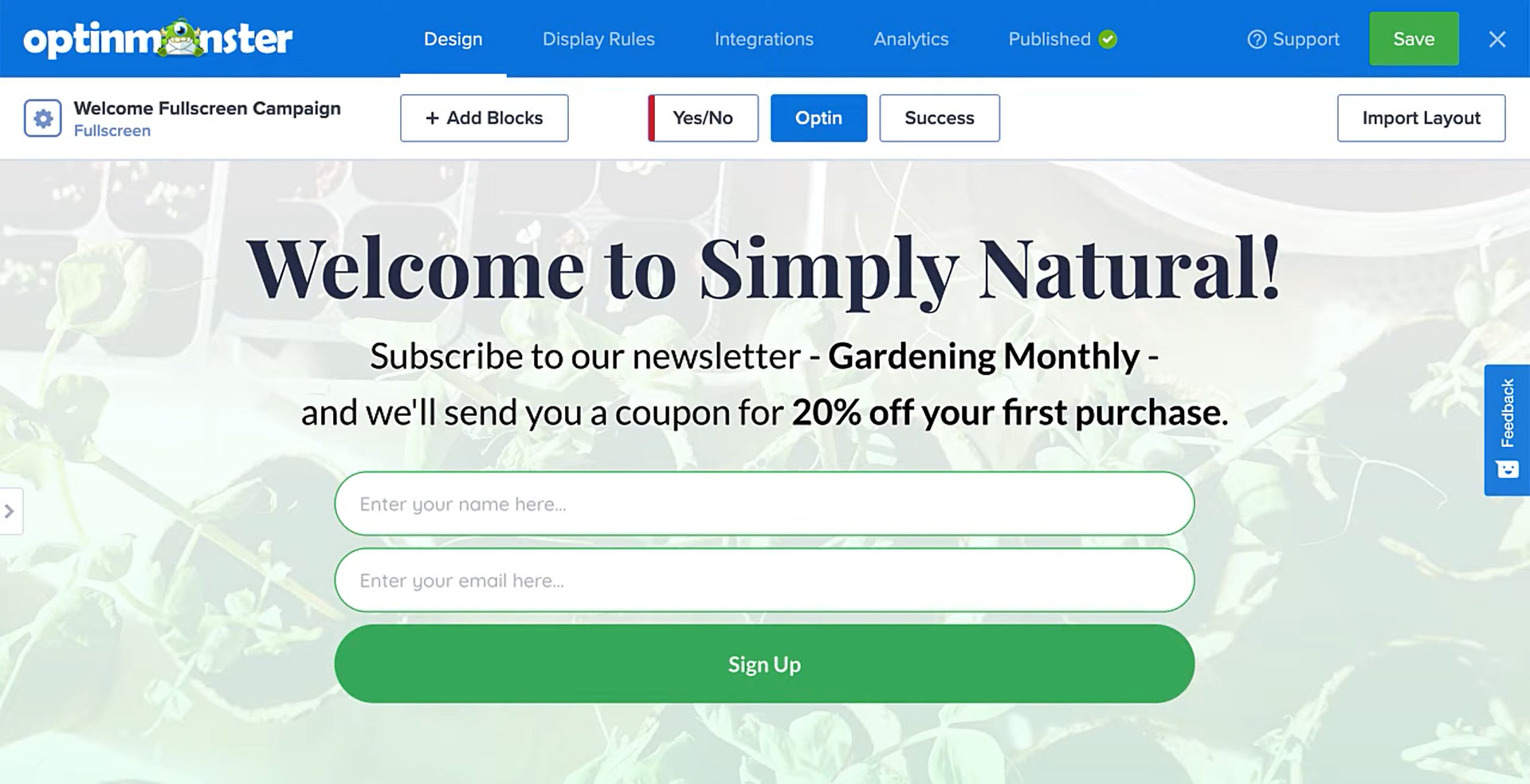
Fullscreen Welcome Gates go further, filling the entire viewport with a single CTA for high-stakes offers or announcements.
Source: OptinMaster
Floating Bars pin a persistent banner to the top or bottom of the screen, scrolling with the visitor. They work well for sitewide promotions, shipping thresholds, or countdown-driven urgency without interrupting browsing.
Slide-In Scroll Boxes take a subtler approach, entering from a corner of the screen when the visitor reaches a set scroll depth. They are less intrusive than lightbox popups and suit content-heavy sites where a hard interrupt would feel out of place.
Inline and Sidebar Forms embed directly within page content or sidebars, turning any page into a lead-capture surface without a popup trigger. They behave like native page elements, which makes them useful for blog posts, resource pages, or landing pages where the offer is part of the content flow.
Two formats add interactivity beyond static forms.
Coupon Wheel Optins present a gamified spin-to-win experience where visitors enter their email to spin a branded wheel with customizable prize sections and win probabilities.
OptinMonster reports these increase conversions by 40-50% over static discount offers, and they integrate with Exit-Intent® to intercept abandoning visitors with an interactive experience rather than a flat coupon code. Coupon Wheels are available on the Growth plan.
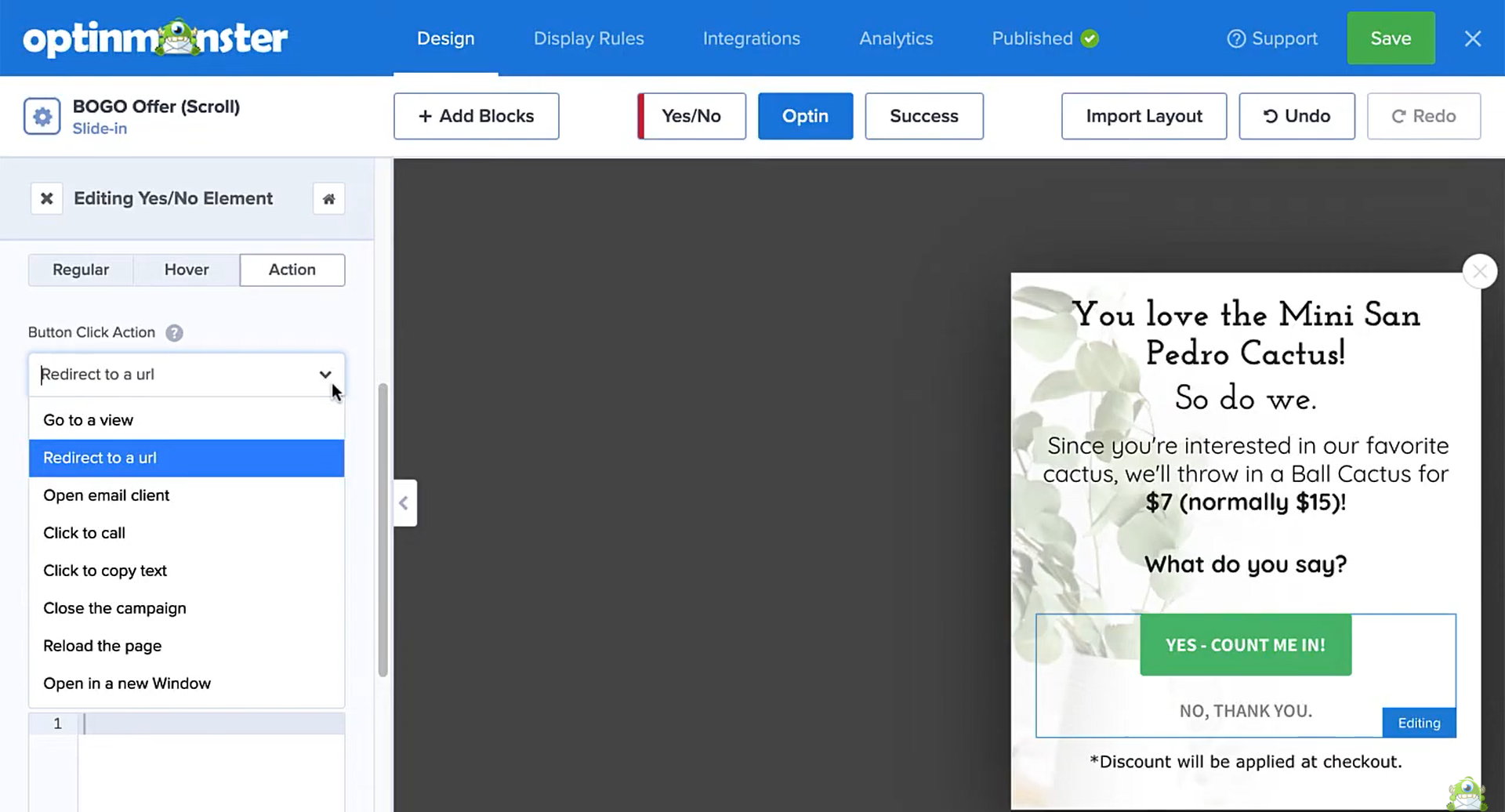
Yes/No Forms present a binary question before the full opt-in, leveraging the Zeigarnik Effect (the psychological tendency to complete a started action). Yes/No Forms also enable real-time segmentation: visitors route to different forms or email sequences based on which button they click. Available on Plus and above.
Source: OptinMonster
All campaign types are built in the Drag & Drop Builder, a WYSIWYG canvas with live preview. Users add, remove, or reorder elements (images, text, buttons, videos, countdown timers) without code. The 700+ template library provides starting points categorized by goal (email collection, sales, promotions) and device type, including mobile-specific variants.
For teams with strict brand requirements, the Canvas option starts from a blank slate while keeping the no-code experience.
Several design-layer features add polish without requiring CSS. MonsterEffects adds entrance animations (bounce, slide-in, fade) and optional sound effects. MonsterLinks converts any existing link or image on a page into a two-step opt-in trigger, so clicking a "Download the Guide" button opens a campaign rather than navigating away.
Smart Tags insert dynamic variables (visitor name, location, referring page) into campaign copy, and custom success messages or redirect URLs control what happens after conversion.
OptinMonster Targeting and Behavioral Triggers
The campaign formats define how an offer looks. The targeting engine defines when, where, and to whom it appears.
This is where OptinMonster's feature depth shows: the platform offers more display-rule combinations than most tools at its price point.
Exit-Intent® Technology is the flagship trigger. On desktop, OptinMonster's script monitors mouse movement and cursor velocity; when it detects the cursor moving toward the top of the browser (about to close the tab or navigate away), it fires the campaign at that decision point.
On mobile, where there is no cursor to track, the InactivitySensor fills the gap: it fires campaigns after a configurable period of inactivity or when a mobile user scrolls back toward the top of the page. This matters because several competing tools leave mobile exit-intent unaddressed. Exit-Intent® is available on the Pro plan and above.
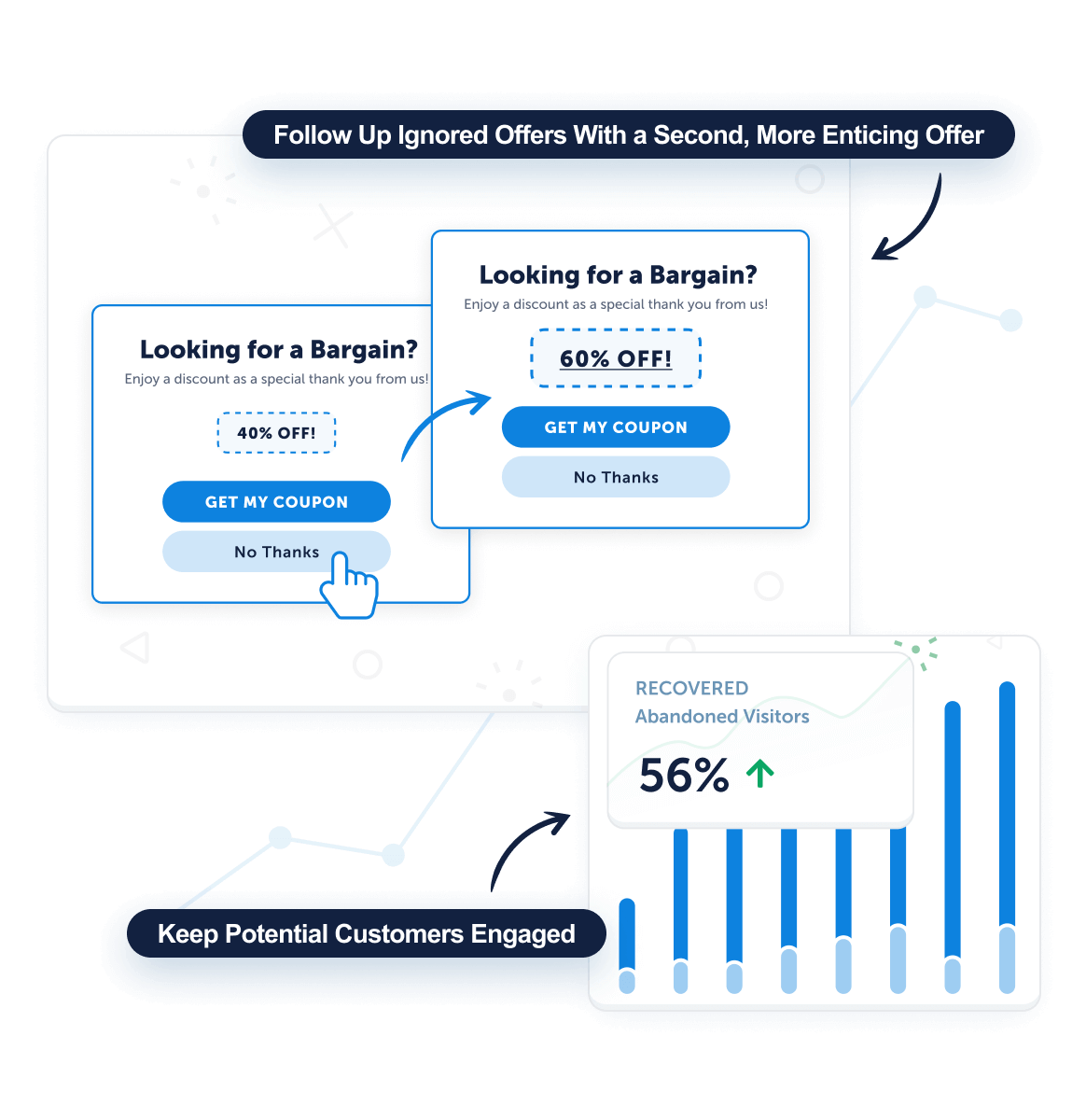
OnSite Retargeting® tracks which campaigns a visitor has already seen and interacted with, then adjusts what they see next. Display rules can suppress already-seen campaigns, advance the visitor to a next-step offer (an upsell after a signup, for example), or show re-engagement messages to visitors who declined a prior offer.
OnSite Follow Up Campaigns® extends this into chained sequences: the outcome of one campaign (converted, dismissed, or ignored) triggers a different campaign automatically. Together, these features turn disconnected popups into coordinated visitor journeys. Both are available on the Growth plan.
Source: OptinMonster
The underlying layer is what OptinMonster calls Real-Time Behavior Automation: a no-code IF/THEN rule builder that combines Exit-Intent®, page-level targeting, scroll triggers, OnSite Retargeting®, and Follow Up Campaigns into multi-step sequences.
Conditions use AND/OR logic, so a single campaign can fire only when a visitor is on a specific page AND has been inactive for 30 seconds AND has not seen a prior campaign.
Beyond behavioral triggers, the targeting library covers:
Page-Level Targeting: match campaigns to specific URLs, URL patterns with wildcards, or content categories. Includes new vs. returning visitor segmentation.
Geo-Location Targeting: show campaigns based on the visitor's country, region, or city, configurable in two clicks within campaign settings. OptinMonster documents up to 200% conversion increases from geo-targeted campaigns. Available on the Growth plan.
Referrer Detection and UTM Targeting: condition campaigns on the visitor's source domain, UTM source, campaign, or medium. A campaign can fire only for visitors arriving from a specific Google Ads campaign or social media post.
Cookie, JavaScript Variable, and Query-String Targeting: integration with CRMs, membership systems, and ad platforms. A logged-in member can see a different campaign than an anonymous visitor, or a visitor tagged by a specific ad pixel can receive a tailored offer.
Device Targeting: restrict campaigns to desktop, tablet, or mobile.
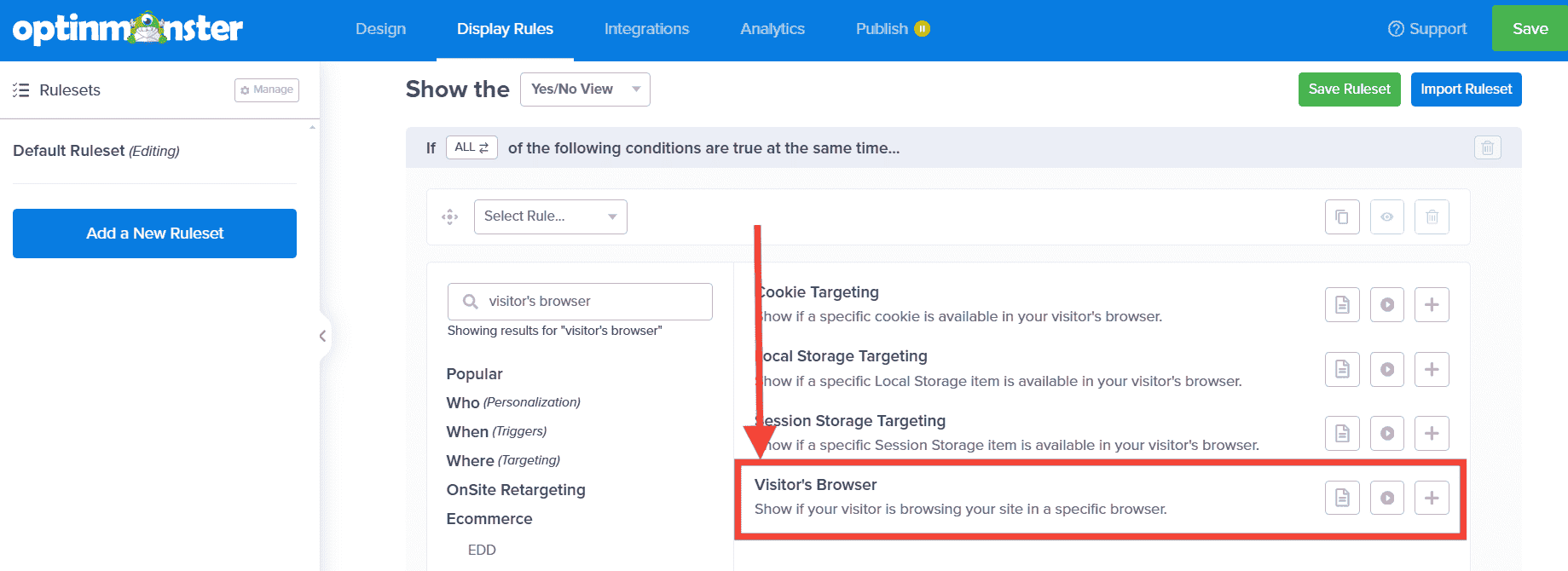
Browser Targeting: added in January 2025, this extends segmentation to browser type.
Campaign Scheduling: date-range and time-window restrictions for flash sales, seasonal promotions, or event-based campaigns.
Source: OptinMonster
Scroll Trigger and Time-on-Page Trigger: fire campaigns after engagement indicators rather than immediately on page load.
Adblock Detection: identifies visitors using ad blockers and shows alternative campaigns (Growth plan).
Subscriber Recognition: identifies existing subscribers and suppresses acquisition campaigns, so returning subscribers don't see signup popups.
These rules, all configurable in a visual builder without code, deliver targeting depth usually found in enterprise marketing automation platforms, at a $7-$49/month price point.
OptinMonster Analytics, A/B Testing, and Revenue Attribution
OptinMonster's measurement stack works in three layers, each answering a harder question: how are campaigns performing, which variant works better, and how much revenue did this campaign drive?
Conversion Analytics tracks impressions, conversions, and conversion rates for every active campaign inside the OptinMonster dashboard. It identifies which referral pages drive the most leads, records user-agent data to show how device types affect conversion rates, and monitors goal completion and abandonment trends.
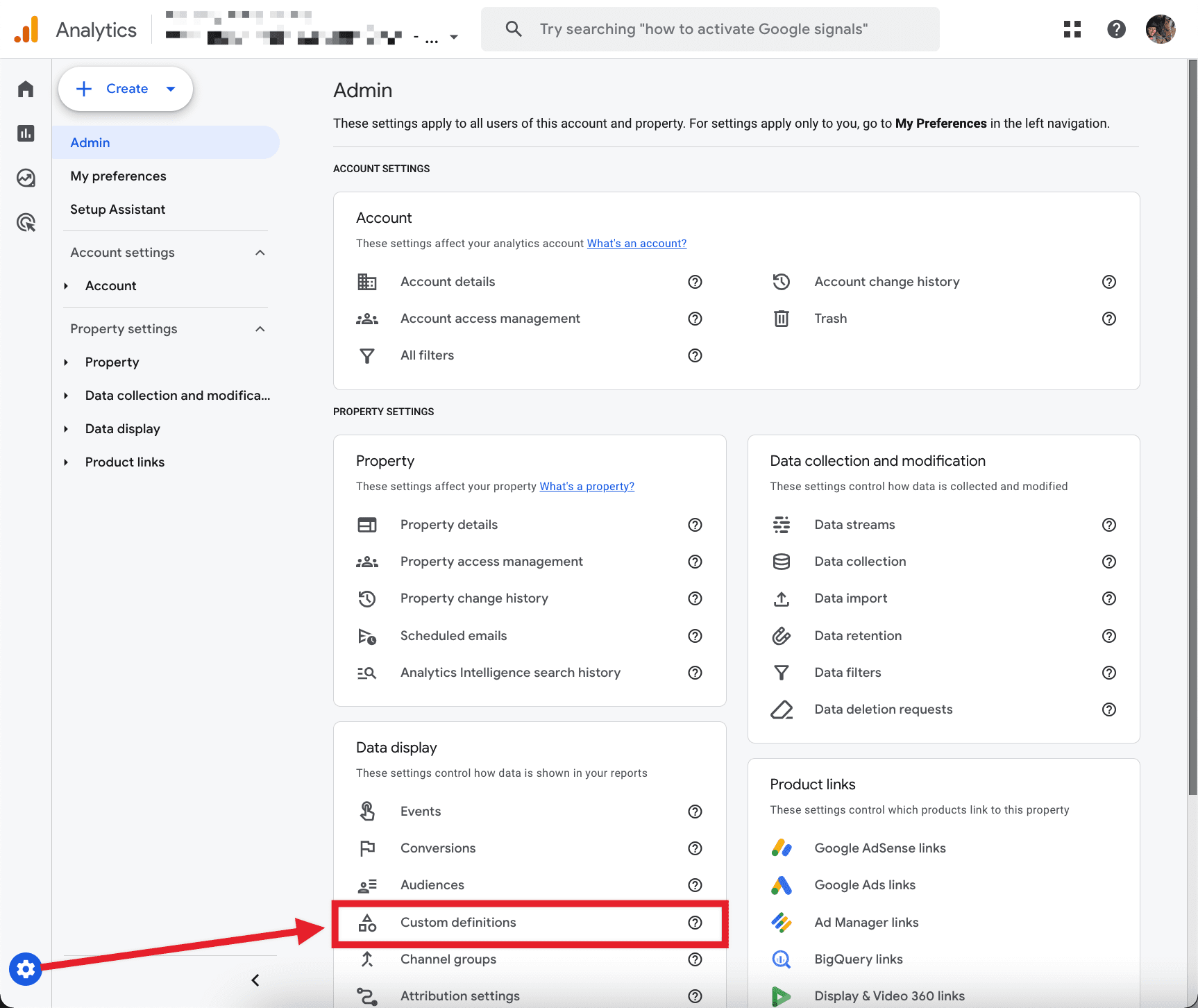
Google Analytics integration (Pro and above) pushes conversion events into GA for custom reporting. Basic analytics are available on all plans; full reporting unlocks on Plus and above.
Source: OptinMonster
A/B Split Testing duplicates an existing campaign and lets you modify one or more elements in the variant: headlines, images, layouts, CTAs, button text, lead magnets, or offers.
OptinMonster serves both variants and tracks per-variant impressions and conversions in real time. The marketer pauses the losing variant when enough data accumulates. Testing works across all campaign types and all supported platforms, and desktop and mobile variants can run simultaneously. Available on Plus, Pro, and Growth plans.
Revenue Attribution connects campaign interaction to actual purchase. It hooks into a store's order-confirmation events and passes the sale value back to OptinMonster, linking the transaction to the specific campaign the buyer interacted with.
The feature tracks both click-through conversions (visitor clicked the campaign before buying) and view-through conversions (visitor saw the campaign and later bought without clicking), a distinction more common in paid advertising platforms than in on-site conversion tools.
Integration is automatic for WooCommerce and Easy Digital Downloads via the WordPress plugin; Shopify requires a guided setup; custom or headless stacks use JavaScript or cURL. Revenue data flows into the same dashboard as A/B test results, so marketers can judge split-test winners by revenue generated rather than conversion count alone. Revenue Attribution is available on Pro and Growth plans.
One scope note: A/B testing operates at the individual campaign level. It does not support multivariate testing across visitor journeys or landing page sequences. Marketers needing funnel-level experimentation will need an external tool.
OptinMonster Integrations, Platform Support, and Developer Tools
OptinMonster offers 50+ integrations with email marketing platforms and CRMs, and its integration documentation contains 66 articles covering each connection.
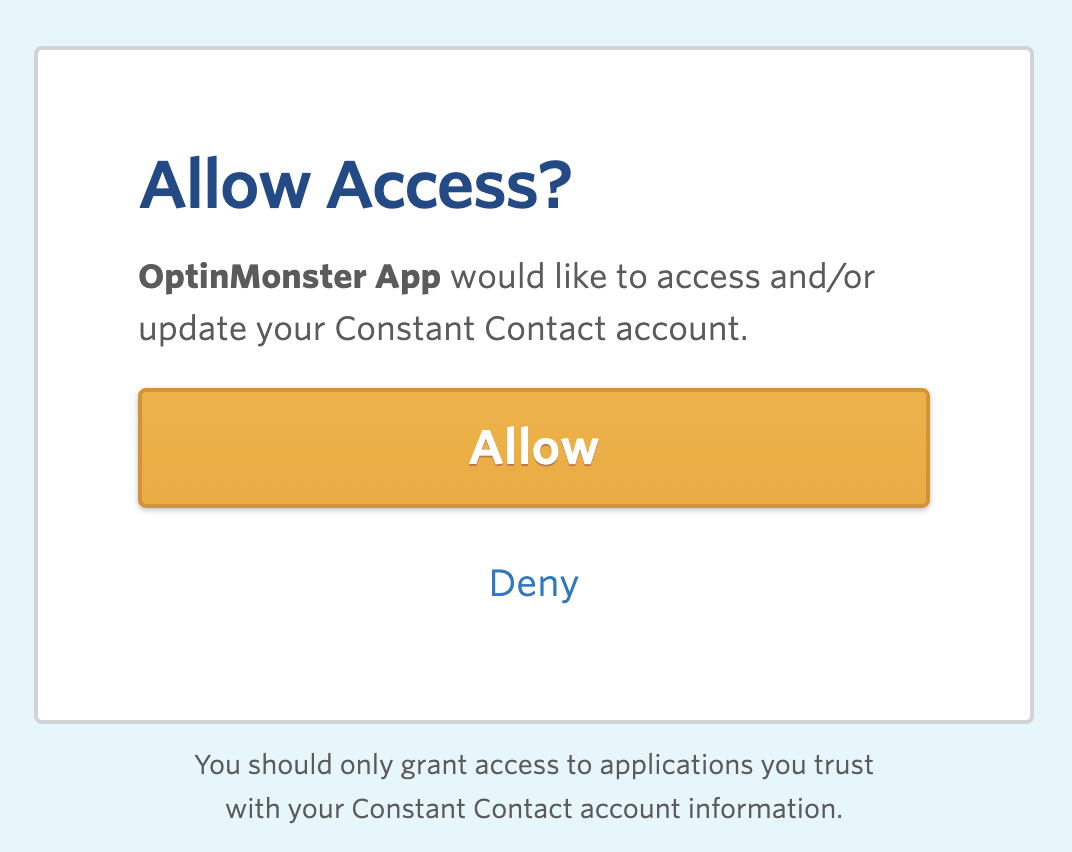
The email service provider list is extensive: Mailchimp, Constant Contact, ActiveCampaign, Klaviyo, Kit (formerly ConvertKit), Drip, AWeber, GetResponse, MailerLite, Omnisend, Brevo, Beehiiv, and others.
Source: OptinMonster
CRM and marketing automation connectors include HubSpot, Salesforce Marketing Cloud Account Engagement (formerly Pardot), Marketo, Eloqua, Keap, and GoHighLevel. A basic set of ESP integrations is available on Basic; advanced integrations (AWeber, ConvertKit, Drip, GetResponse, Klaviyo) unlock on Plus; HubSpot, Google Analytics, Zapier, and webhooks unlock on Pro.
Platform deployment covers WordPress (dedicated plugin), Shopify (app), WooCommerce, Magento, Squarespace, Wix, and any HTML website. The only requirement is the ability to add a JavaScript snippet to the page body. The embed code loads asynchronously and does not block page rendering.
For workflow automation, Zapier and Webhooks (both Pro and above) connect OptinMonster to tools outside the native integration list.
The webhook payload includes lead data (email, name, phone, IP address, referrer, privacy consent), campaign metadata (ID, title), smart tag values (day, month, URL, referrer, pages visited, time on site), and for Coupon Wheel campaigns, the coupon code and label. Uncanny Automator provides WordPress-native automation connecting OptinMonster triggers to broader site workflows.
On the developer side, the JavaScript Events API exposes campaign lifecycle hooks (initialization, show, close, view change, optin submission, analytics tracking) that developers use for custom validation, conditional redirects, GA4/GTM integration, and third-party tracking.
The API works within single-page applications via a documented .reset() method with code examples for React Router, Vue Router, Next.js, Angular, and Ember. Success Tracking and Retargeting Scripts fire pixel or conversion tags on opt-in events for ad platform integration.
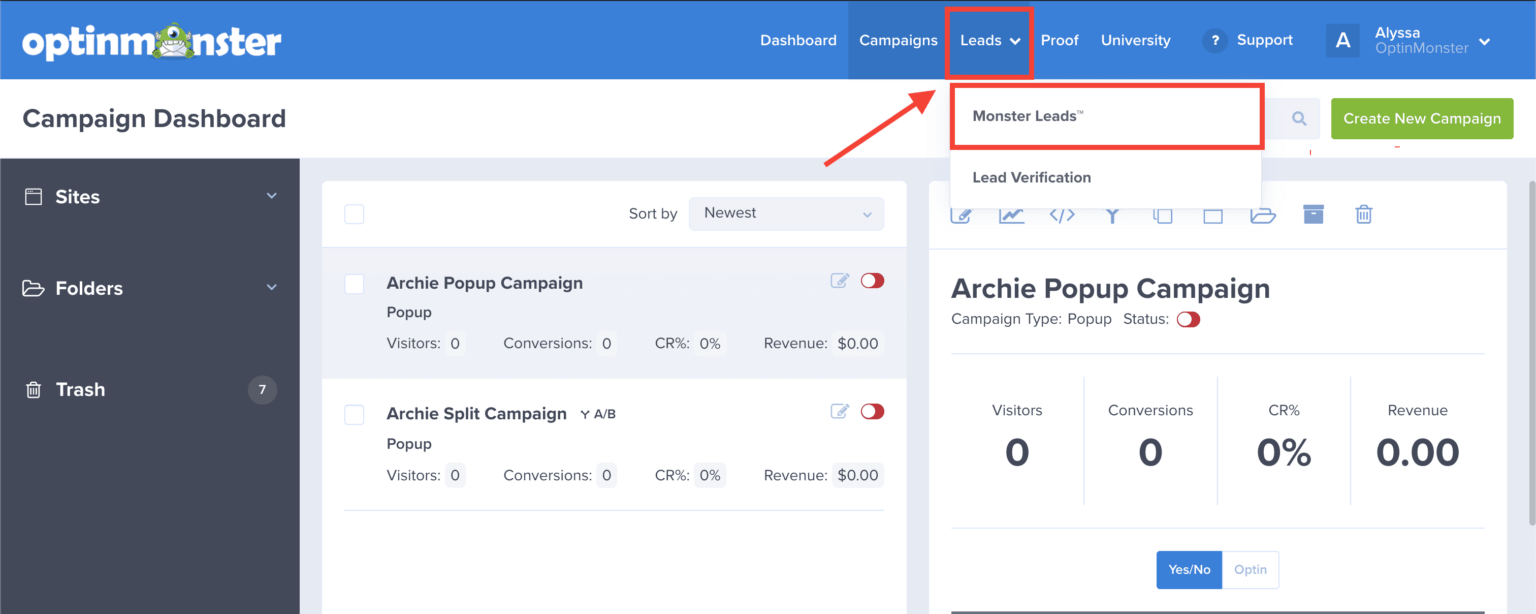
Two features round out the integration layer. Monster Leads is OptinMonster's internal lead storage, available on all plans as a fallback before an ESP is connected. TruLead verifies leads at the point of capture, filtering invalid, disposable, or role-based email addresses before they reach your ESP.
Source: OptinMonster
OptinMonster does not have a server-side REST API for programmatic campaign management (creating, editing, or deleting campaigns via HTTP requests). There are no official SDKs or published NPM packages. The developer model is entirely client-side through the browser embed script.
OptinMonster AI and Recent Additions
OptinMonster added several capabilities in 2024 and 2025 that extend the platform beyond its original popup-builder identity.
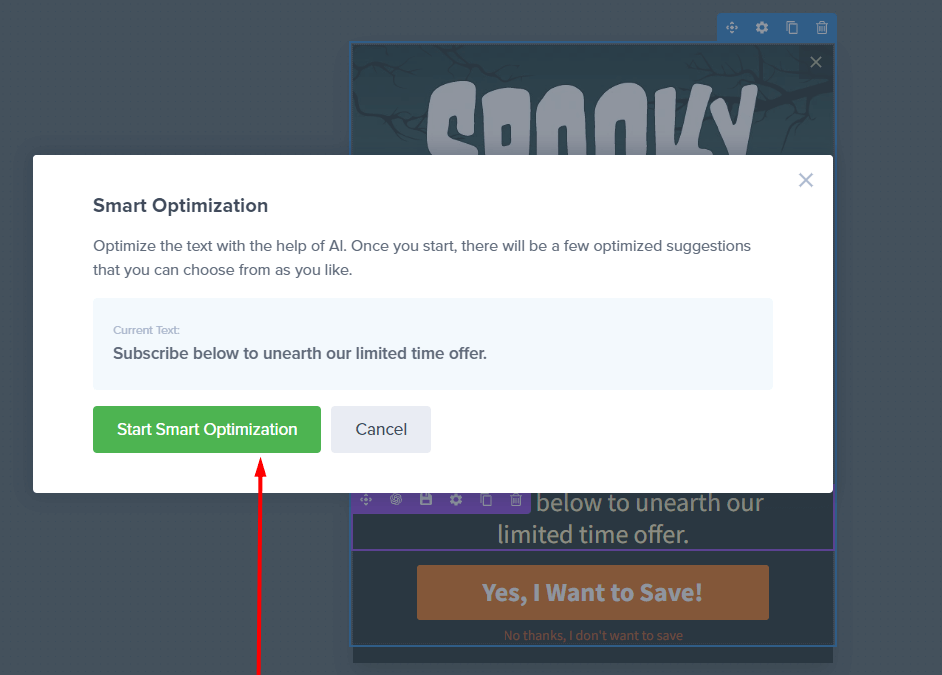
AI Popups, launched in January 2024, add AI-assisted copy optimization to the campaign builder. Two clicks rewrite and improve campaign copy, aimed at small business owners who lack dedicated copywriting resources. The feature generates variant copy inside the builder rather than requiring an external AI tool.
Source: OptinMonster
Multiple Event Tracking, added in January 2025, lets a single campaign track multiple conversion events. Before this, each campaign tracked one event. Now a single popup can separately track email signups, button clicks, and coupon redemptions, giving marketers a more detailed picture of how visitors interact with a campaign beyond converted or not.
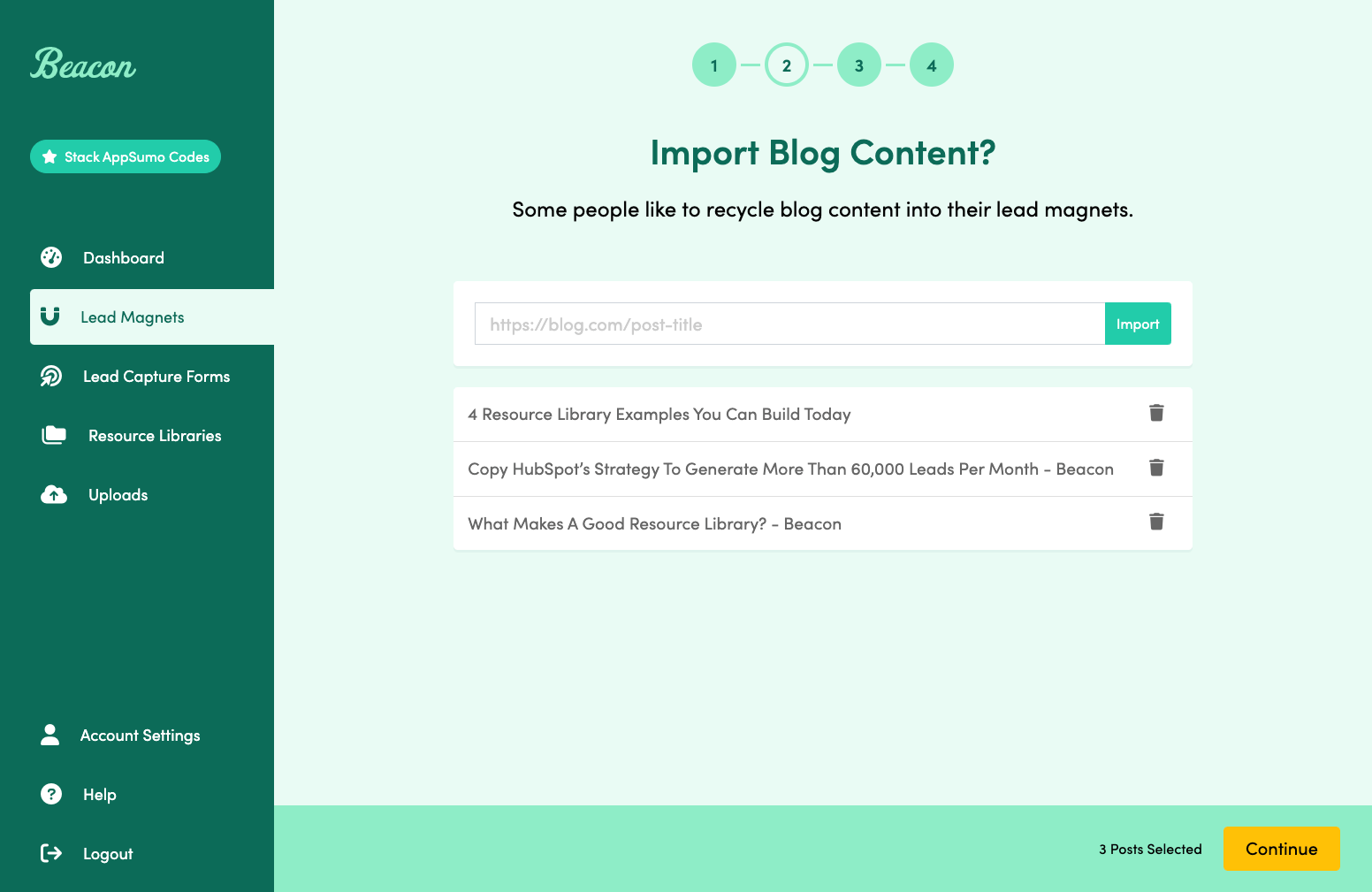
Beacon Lead Magnet Creator, acquired in February 2024, moves OptinMonster toward a capture-and-deliver workflow by adding downloadable lead magnet creation (ebooks, checklists, resource guides) to the ecosystem. Beacon currently operates as a separate product; full in-platform integration has not been announced.
Source: OptinMonster
Playbooks provide pre-configured campaign strategies (template, trigger rules, and targeting settings bundled together) to speed up setup for common goals like list building, cart recovery, or content upgrades.
The Help Center contains over 300 articles across nine categories, and an AI support assistant named Archie handles common questions 24/7. Human support is available by email and chat, Monday through Friday, 24 hours a day. OptinMonster University (included with every paid plan) provides structured courses, guides, and video training.
Where OptinMonster Stops: The Gaps
OptinMonster centers on the moment a visitor is on your website: capturing their attention, presenting the right offer, and funneling the lead into an ESP or CRM.
That focus shapes its strengths, but the platform hands off at the boundaries of on-site conversion.
No visibility into who visits before they convert. OptinMonster captures leads who fill out a form. It does not identify anonymous visitors, meaning the 95%+ of B2B website traffic that never converts leaves no actionable trace. Marketers know someone visited the pricing page, but not which company they represent or who the individual is.
No B2B contact or company database. OptinMonster is a lead capture tool, not a data provider. It has no database of contacts, companies, verified emails, or direct-dial phone numbers. Teams that need to fuel outbound prospecting, enrich captured leads with company attributes, or build targeted lists need a separate platform.
No buyer intent signals. OptinMonster tracks on-site behavior (which campaign a visitor saw, whether they converted), but it does not track off-site intent: which companies are researching specific topics across the web before they visit your site. The platform reacts to visitors who have arrived; it does not surface accounts that are in-market but have not yet found you.
No native CRM, pipeline management, or lead nurturing. Every captured lead must flow to an external tool. OptinMonster has no lead nurturing sequences, contact database, or pipeline management. Solo operators often maintain an underused ESP purely to receive OptinMonster leads, and B2B teams need a separate system to manage the pipeline those leads enter.
No multi-channel campaign orchestration. OptinMonster operates on your website. It does not include display advertising, audience management, account-based marketing, email sequence automation, or cross-channel orchestration. Marketing teams running demand generation alongside on-site conversion need a separate platform for those channels.
No conversation intelligence. Once a lead enters the pipeline and reaches a sales call, OptinMonster has no role. There is no call recording, transcription, coaching, or deal intelligence. The platform's scope ends at lead capture.
How ZoomInfo Covers the Gaps
The gaps above share a thread: OptinMonster captures demand that has already arrived at your website, but it cannot identify, enrich, or act on the B2B intelligence around that demand.
ZoomInfo is a GTM platform that provides the intelligence layer before, during, and after on-site lead capture.
ZoomInfo WebSights and Contact-Level Visitor Identification: Seeing who visits before they fill out a form
OptinMonster captures the visitors who convert. WebSights captures the ones who do not. WebSights resolves anonymous website traffic to companies, including Automatic Traffic Filtering that separates real visitors from bots.
ZoomInfo Marketing extends this to contact-level site visitor identification, identifying the specific person who visited (not just the company) and triggering personalized outreach.
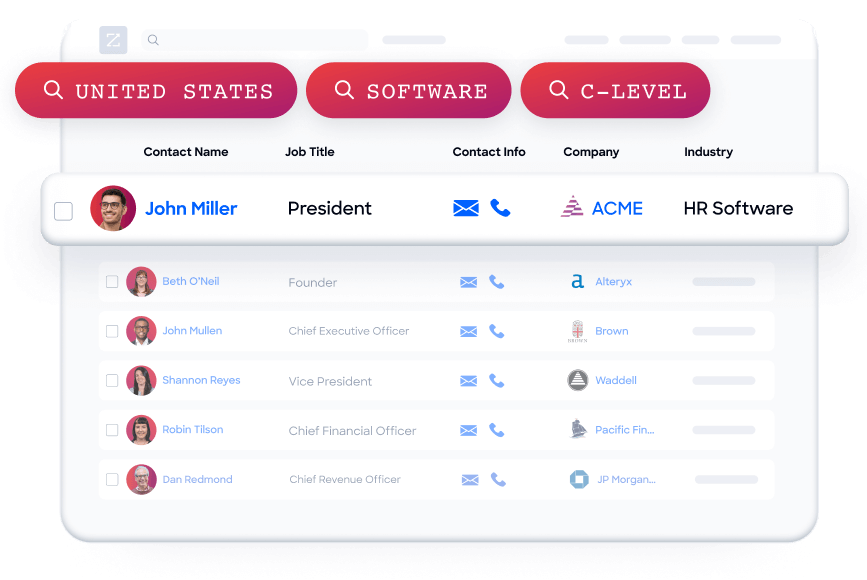
For teams using OptinMonster on a B2B site, this fills a blind spot. A visitor who browses three product pages, reads a case study, and leaves without converting is invisible to OptinMonster. With WebSights, that visit becomes a signal: the company is identified, the visit is logged, and the data feeds into ZoomInfo's intelligence layer for follow-up.
ZoomInfo's B2B Data Platform: The contact and company intelligence OptinMonster does not provide
OptinMonster captures an email address and whatever fields the visitor fills in.
ZoomInfo supplies the context around that lead. The platform's B2B data includes 500M contacts, 100M companies, 135M+ verified phone numbers, 120M direct-dial phone numbers, and 200M+ verified business email addresses.
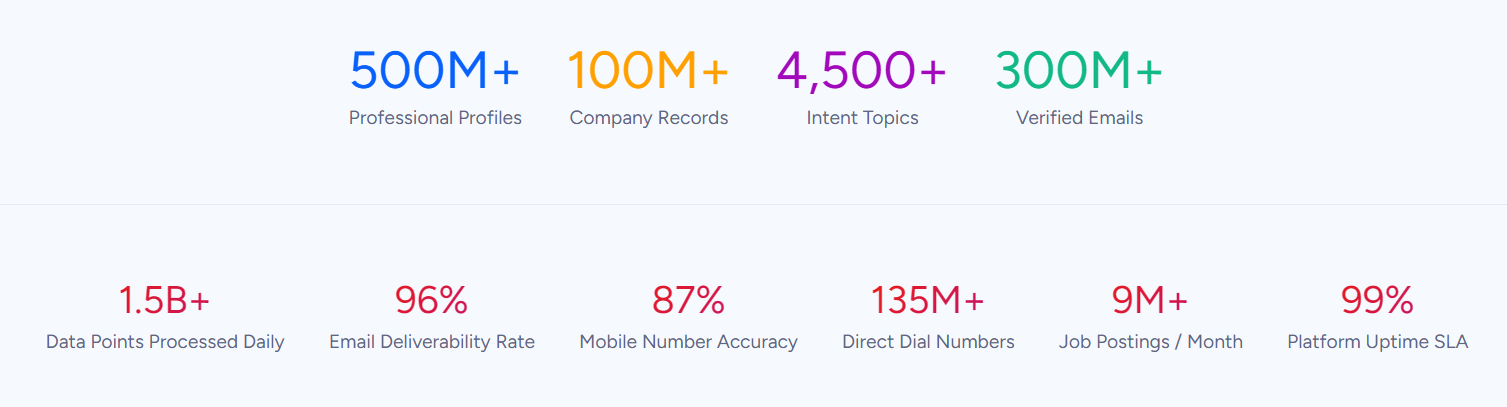
Data flows through a verification pipeline backed by 300+ human researchers and automated ML scanning of 28 million site domains daily, reaching up to 95% accuracy on first-party data.
For B2B teams, this means every lead OptinMonster captures can be enriched with 300+ company attributes, department org charts, decision-maker direct dials, technographic profiles covering 30,000+ technologies across 200+ categories, and contact tracking with job-change alerts.
In a Fortune 500 competitive RFP analyzing 25 million contacts across vendors, an independent consultant concluded that "no other competitor came even close."
ZoomInfo Intent Data: Identifying in-market buyers before they reach your site
OptinMonster's targeting is reactive: it responds to visitors who have already arrived.
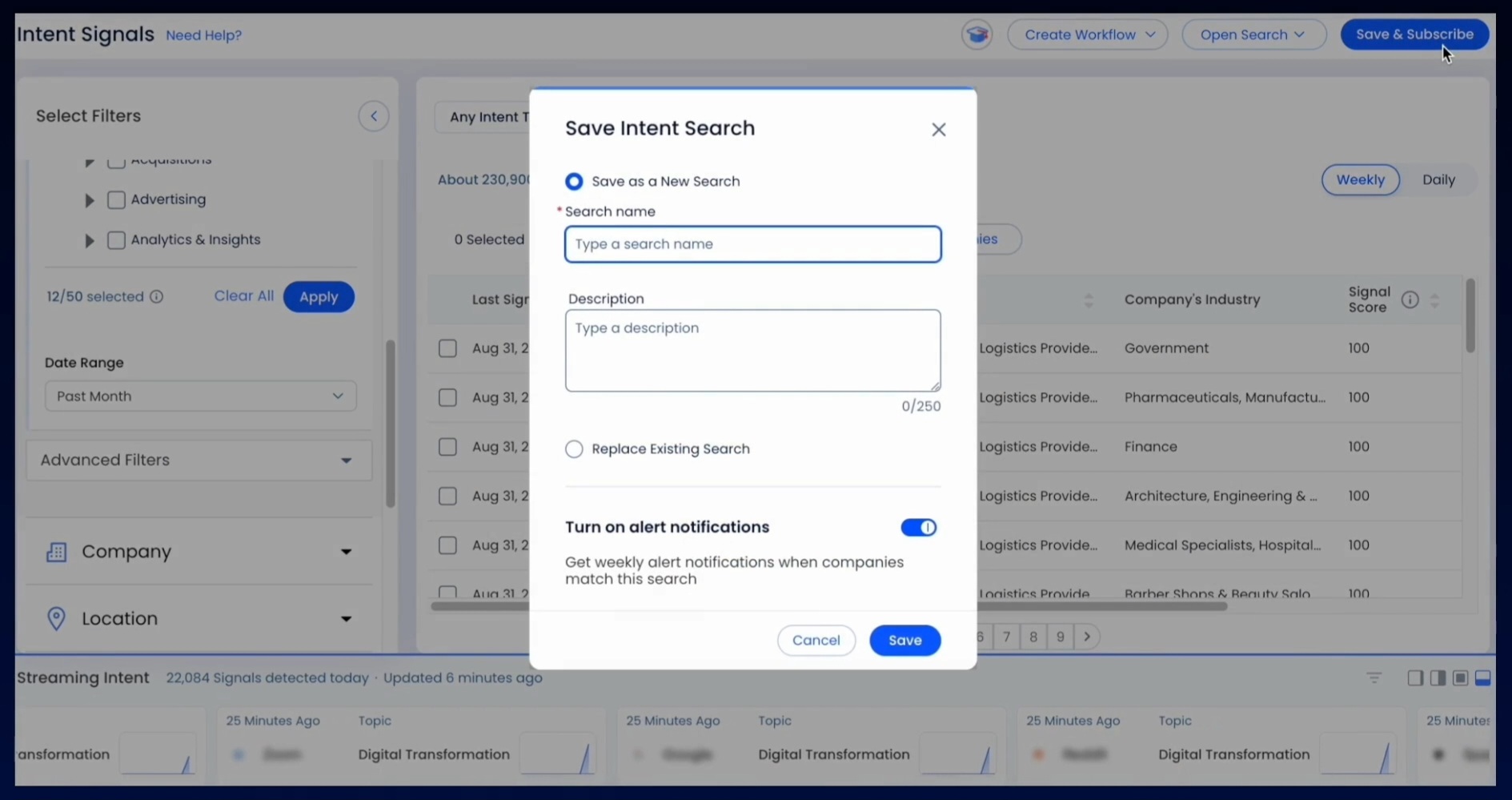
ZoomInfo Intent surfaces companies researching your category before they visit. It tracks signals from 210 million IP-to-Organization pairings and 6 trillion+ new keyword-to-device pairings sourced monthly. Guided Intent, exclusive to ZoomInfo, identifies the topics historically correlated with deal success rather than requiring manual topic selection.
Source: ZoomInfo
Where OptinMonster's Exit-Intent® catches a visitor about to leave one page, ZoomInfo Intent catches a buyer about to enter the market.
The two operate at different points in the funnel, and the combination means a team can identify who is researching their category across the web (ZoomInfo) and convert those visitors when they arrive on-site (OptinMonster).
ZoomInfo GTM Studio: Multi-channel orchestration beyond the website
OptinMonster operates on one surface: your website.
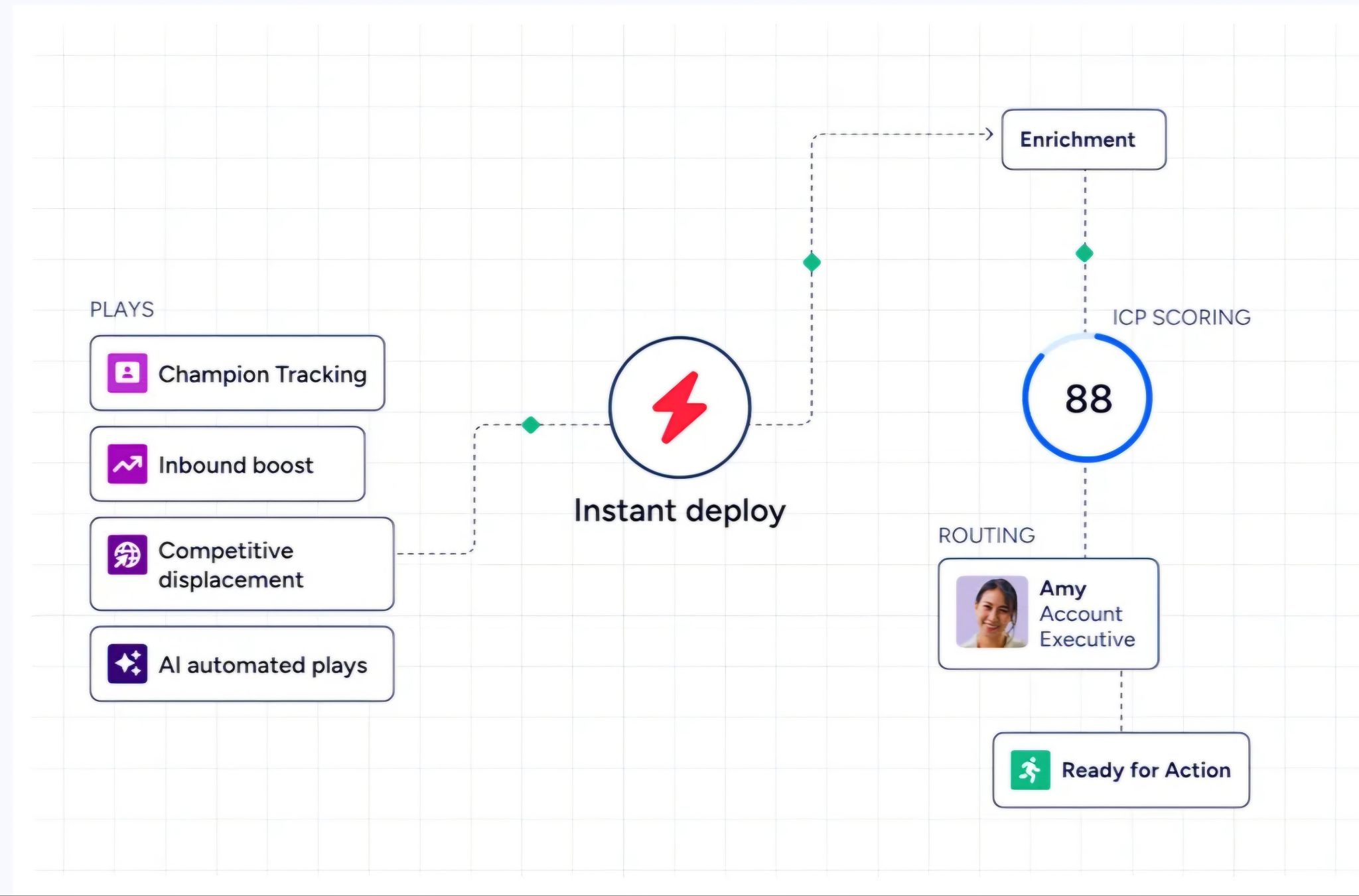
ZoomInfo’s GTM Studio operates across every channel. Marketers, RevOps teams, and GTM engineers can build audiences using natural language, enrich with first- and third-party data, define triggers, and activate plays across channels (email, calls, display ads, direct mail, LinkedIn, Meta, Connected TV) without engineering support.
Source: ZoomInfo
Pre-built GTM plays cover inbound acceleration, champion tracking, competitive displacement, and ICP targeting. Expansion plays that once took 3 weeks now launch in 30 minutes.
ZoomInfo Marketing includes a native Demand-Side Platform that deploys display ads based on 300+ company attributes, FormComplete (reducing forms to a single field while auto-appending data), and Account Fit Scoring (predictive AI scoring 0-100 based on company attribute patterns).
Smartsheet reported a 40%+ increase in form fills, 84% increase in MQLs, 26% increase in opportunity rate, and 59% increase in win rate using these capabilities.
ZoomInfo's GTM Context Graph and Chorus: Intelligence from calls and deals, not just form fills
OptinMonster captures the lead.
ZoomInfo's GTM Context Graph captures why deals move or stall, processing 1.5B+ data points daily by combining B2B data with CRM records, conversation intelligence from Chorus, email interactions, and behavioral signals into a single intelligence layer.
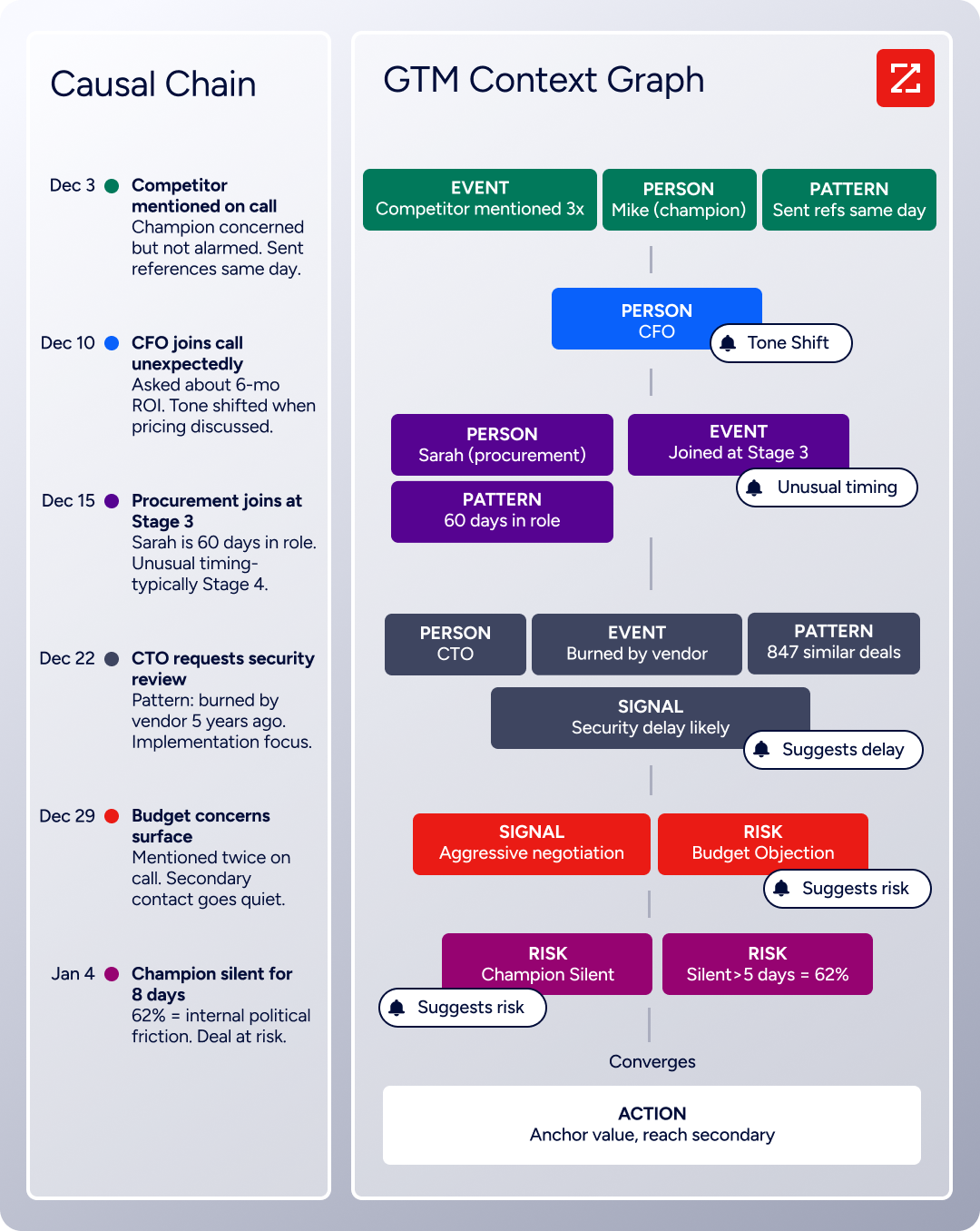
Chorus, backed by 14 technology patents, records and transcribes sales calls, surfaces AI-generated insights (talk ratios, sentiment, objection detection), auto-syncs deal intelligence to the CRM, and provides coaching scorecards and clip sharing.
For sellers working leads that originated from an OptinMonster campaign, Chorus captures the conversation context that on-site analytics miss: what objections came up, which competitive mentions predict deal risk, and which call patterns match closed-won outcomes.
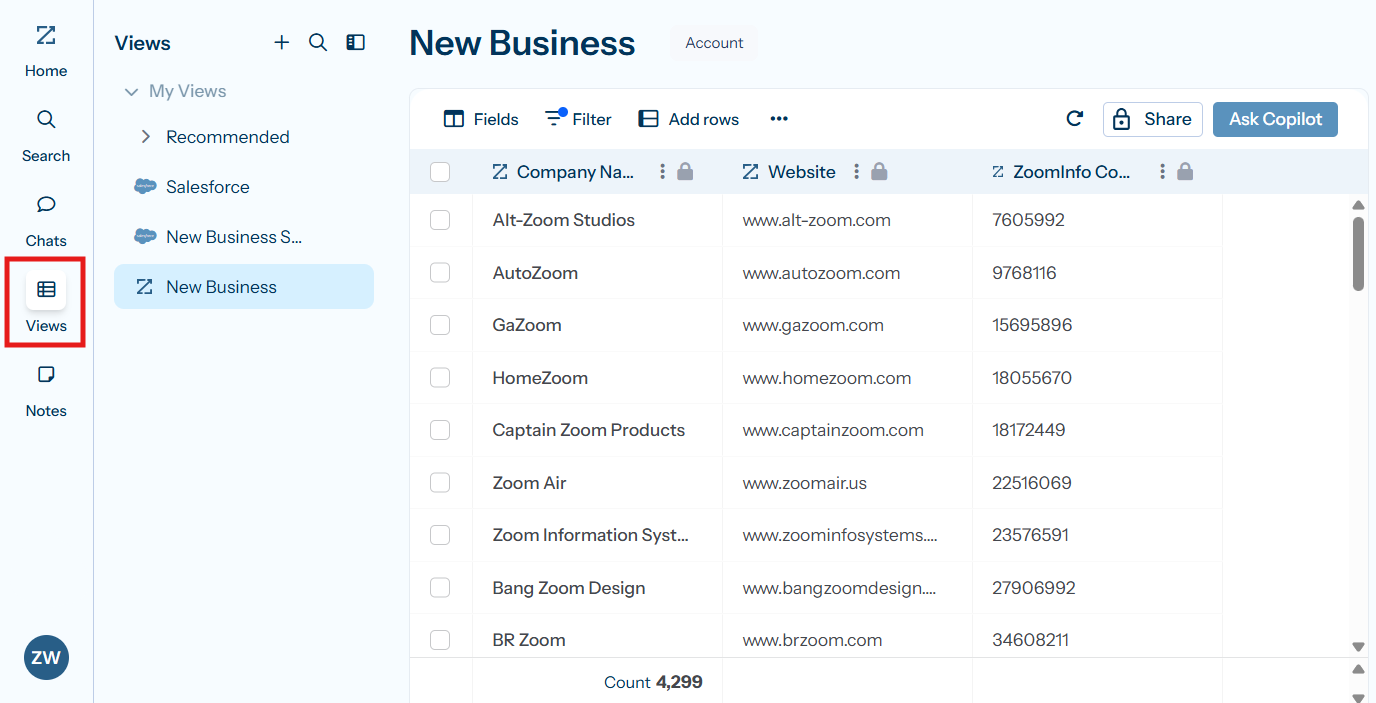
That intelligence flows into GTM Workspace, where sellers see a consolidated view across CRM, ZoomInfo data, conversation history, and market intelligence, with AI agents automating account research, outreach, CRM updates, and signal monitoring.
Source: ZoomInfo
Seismic's sales team attributed 39% of active pipeline to opportunities identified or influenced by ZoomInfo signals, boosted productivity by 54%, and saved 11.5 hours per week per seller. (Seismic Case Study)
Final Summary
OptinMonster is a thorough toolkit for on-site lead capture and conversion optimization: seven campaign formats in a single builder, Exit-Intent® technology that turns abandoning visitors into leads, behavioral targeting rules granular enough to replace custom development, A/B testing across all campaign types, and revenue attribution that ties campaign performance to ecommerce dollars.
It fits marketers, ecommerce operators, publishers, and agencies who need more conversions from their existing traffic without writing code.
It stops short on what happens around the lead capture: no anonymous visitor identification, no B2B contact or company database, no buyer intent signals, no multi-channel orchestration, and no conversation intelligence or deal management.
If your demand generation extends beyond the website (knowing which companies are in-market before they visit, enriching captured leads with verified B2B intelligence, orchestrating multi-channel campaigns, and understanding why deals move after the first conversation), that is where ZoomInfo operates.
Its 500M-contact, 100M-company database provides verified emails and direct dials for outbound prospecting. ZoomInfo Intent surfaces accounts researching your category from 6 trillion+ keyword-to-device pairings monthly. WebSights identifies the visitors OptinMonster cannot see.
GTM Studio gives marketing teams multi-channel orchestration and ABM capabilities that on-site conversion tools do not include. And the GTM Context Graph combines it all into a single intelligence layer that captures why deals move, not just that a lead converted.
See what that intelligence layer adds to your lead generation: start with ZoomInfo Lite for free, or request a demo to watch intent signals and verified contacts flow into your pipeline.
FAQ
Does OptinMonster work on Shopify and WooCommerce?
Yes. OptinMonster has dedicated integrations for both Shopify and WooCommerce, including cart and form abandonment detection and ecommerce-specific targeting rules.
The ecommerce integrations (Shopify, WooCommerce, BigCommerce, Magento, Easy Digital Downloads) require the Growth plan at $49/month billed annually. Revenue Attribution, which tracks per-campaign ecommerce revenue, requires at least the Pro plan.
Which OptinMonster plan includes Exit-Intent® technology?
Exit-Intent® is available on the Pro plan ($29/month annual introductory rate) and above. The Basic plan includes time and scroll triggers, and the Plus plan adds the InactivitySensor for mobile, but desktop exit-intent detection requires Pro. The Growth plan adds geo-location targeting, OnSite Retargeting®, OnSite Follow Up Campaigns®, and Coupon Wheel campaigns on top of Exit-Intent.
Can OptinMonster A/B test different campaign types against each other?
A/B testing works within a single campaign: you duplicate the campaign and modify elements (headline, image, CTA, layout) in the variant. OptinMonster does not support testing one campaign type against another (a lightbox popup vs. a slide-in scroll box, for example) within a single split test. To compare campaign types, run them separately and compare conversion analytics.
How does OptinMonster's impression-based pricing work?
An impression counts each time a visitor sees an OptinMonster campaign, not when they load a page. A visitor who loads a page but never triggers a popup uses zero impressions.
OptinMonster recommends choosing a plan with 20-30% more impressions than total website pageviews. Campaigns are never turned off for exceeding limits; OptinMonster automatically upgrades accounts to the next tier when available. All plans include unlimited campaigns and unlimited subscribers.
Does OptinMonster identify anonymous website visitors?
No. OptinMonster captures leads who fill out a campaign form. It does not identify anonymous visitors by company or individual, and it does not provide company-level data beyond what visitors submit.
ZoomInfo's WebSights resolves anonymous website traffic to companies, and ZoomInfo Marketing extends this to contact-level identification, revealing who visited and enabling targeted follow-up.
Can OptinMonster connect to a CRM like Salesforce or HubSpot?
HubSpot is a native integration available on the Pro plan and above. Salesforce Marketing Cloud Account Engagement (formerly Pardot) is also natively supported. For other CRMs, OptinMonster connects via Zapier or webhooks (both Pro and above). There is no direct native Salesforce CRM integration outside of the Pardot connector.
ZoomInfo maintains native bidirectional sync with Salesforce, HubSpot, and Microsoft Dynamics 365.
Does OptinMonster offer a free plan or free trial?
OptinMonster does not offer a free plan or a conventional free trial. It provides a 14-day money-back guarantee on initial paid purchases: full refund within 14 days if you do not see positive ROI. Subscription renewals are not eligible for refunds.
ZoomInfo offers ZoomInfo Lite (a free tier with 10 monthly export credits, searches, a Chrome extension, and WebSights Lite) and a separate 7-day free trial with no credit card required.
Does OptinMonster include buyer intent data or lead enrichment?
No. OptinMonster is a lead capture tool, not a data or intelligence platform. It captures the information visitors enter into its forms and passes it to your ESP or CRM. It does not enrich leads with company data, technographics, or org-chart information, and it does not track which companies are researching specific topics across the web.
ZoomInfo Intent tracks signals from 210 million IP-to-Organization pairings and 6 trillion+ keyword-to-device pairings monthly, and its data platform enriches every contact with 300+ company attributes, department org charts, and verified direct dials.
Other tools worth evaluating side by side:
