
Choosing between Pendo and Whatfix for software adoption comes down to five questions:
Are you trying to understand how customers use a product you built, or train employees on software you bought?
Do you need product analytics first and guidance second, or guidance first and analytics second?
Is your primary environment web and mobile apps, or do you also need coverage for desktop, VDI, and legacy systems?
Do you want to connect product usage data to feedback and roadmap decisions, or focus on reducing support tickets and training costs?
Can your team handle a platform spanning analytics, guides, feedback, and orchestration, or do you need a focused digital adoption tool with simulation training?
In short, here's what we recommend:
Pendo serves SaaS product teams that need to understand user behavior before they can improve it. Its no-code analytics capture data retroactively from the day of installation, so you never lose early user behavior. From there, product managers deploy in-app guides, collect feedback, validate feature ideas, and build data-backed roadmaps without engineering involvement. The trade-offs: pricing hides behind sales calls, analytics data arrives with roughly an hour's delay, and mobile capabilities lag behind web.
Whatfix serves enterprise IT and L&D teams managing software change at scale. It overlays guidance on top of any application your organization uses, covering web, desktop, mobile, and VDI/Citrix environments that web-only platforms cannot reach. Its Mirror product creates application replicas for hands-on training, and the ScreenSense AI engine adapts guidance when application UIs change. The trade-offs: pricing is also opaque, initial setup is complex, and Product Analytics is a separate paid add-on.
Both platforms understand and guide users inside software. But for SaaS companies running product-led growth, there's a blind spot: neither tells you what's happening outside your product. Which accounts are researching competitors? Who are the decision-makers at your most engaged accounts? When is the right moment to reach out for expansion? That external intelligence is where deals are won or lost.
ZoomInfo is a B2B intelligence and GTM platform that provides the buyer intelligence Pendo and Whatfix cannot. Built on 500M contacts, 100M companies, 135M+ verified phone numbers, and 200M+ verified business email addresses, ZoomInfo's GTM Context Graph combines this data with your CRM records, conversation transcripts, and behavioral signals to reveal not just what happened in a deal, but why. Pendo can tell you Account X stopped using a feature. ZoomInfo can tell you Account X is researching your competitors, three new VPs just joined their team, and here's the direct dial for the person who can save the deal. That intelligence reaches your team through GTM Workspace for sellers, GTM Studio for marketers and RevOps, or APIs and MCP inside any tool you already use.
If connecting product adoption data to buyer intelligence sounds like the missing piece of your revenue strategy, see how ZoomInfo works.
Pendo vs. Whatfix vs. ZoomInfo at a glance
Pendo | Whatfix | ZoomInfo | |
|---|---|---|---|
Primary focus | Product analytics + in-app guidance for SaaS | Enterprise digital adoption + training | B2B buyer intelligence + GTM execution |
Environment coverage | Web + mobile | Web + desktop + mobile + VDI | N/A (intelligence layer, not an overlay) |
Analytics approach | Retroactive, no-code behavioral analytics | AutoCapture + funnel/journey analysis | Intent signals, buyer behavior, account intelligence |
In-app guidance | Tooltips, walkthroughs, banners, resource center | Flows, smart tips, beacons, self-help widget | N/A |
AI capabilities | Leo (conversational), Predict (churn), Agent Analytics | ScreenSense (context engine), 3 AI Agents | GTM Context Graph, AI-powered outreach and scoring |
Feedback/ roadmap | Full loop: Listen + Validate + Roadmaps | In-app surveys (NPS, CSAT) | N/A |
Training/ simulation | None | Mirror (application sandbox + AI roleplay) | N/A |
Free tier | Yes (500 MAUs) | Free trial only | ZoomInfo Lite (permanent, free) |
Pricing model | MAU-based, custom-quoted | Flat fee + per-user license, custom-quoted | Consumption-based, custom-quoted |
Best for | Product teams at SaaS companies | IT/L&D teams at large enterprises | Sales, marketing, and RevOps teams |
Different problems, different platforms
Pendo and Whatfix both carry the "digital adoption platform" label, but they solve different problems for different buyers.
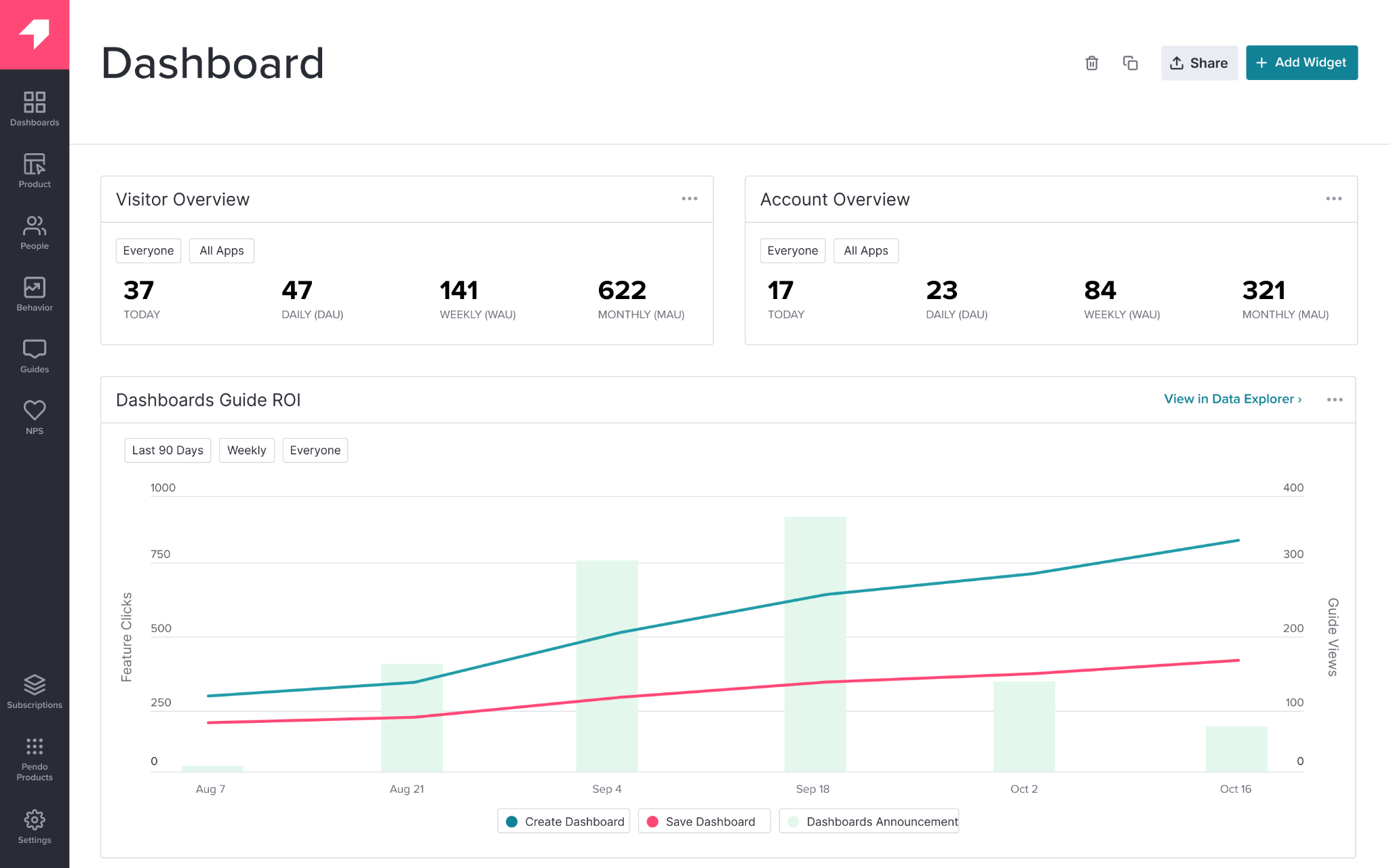
Pendo was built for SaaS product managers. Its core question: how are customers using the software we built? Product teams install a JavaScript snippet, tag features through a visual designer, and immediately access behavioral data going back to the installation date. That data feeds everything downstream: in-app guides that target users based on actual behavior, NPS surveys enriched with usage context, and a feedback-to-roadmap pipeline that connects feature requests to revenue impact.
Source: G2
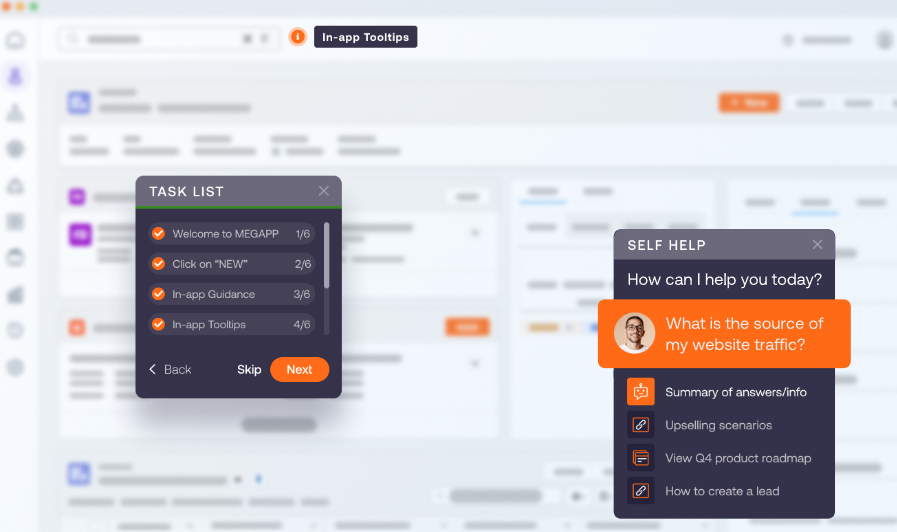
Whatfix was built for enterprise IT and L&D teams. Its core question: how do we get employees to actually use the software we bought? When a company rolls out Salesforce, SAP, or Workday to thousands of employees, Whatfix overlays guided walkthroughs, smart tips, and self-help widgets on top of the application.
Source: Whatfix
The distinction shapes everything: how each platform handles analytics, what "guidance" means in practice, and which team owns the implementation.
Pendo's analytics go deeper, Whatfix's coverage goes wider
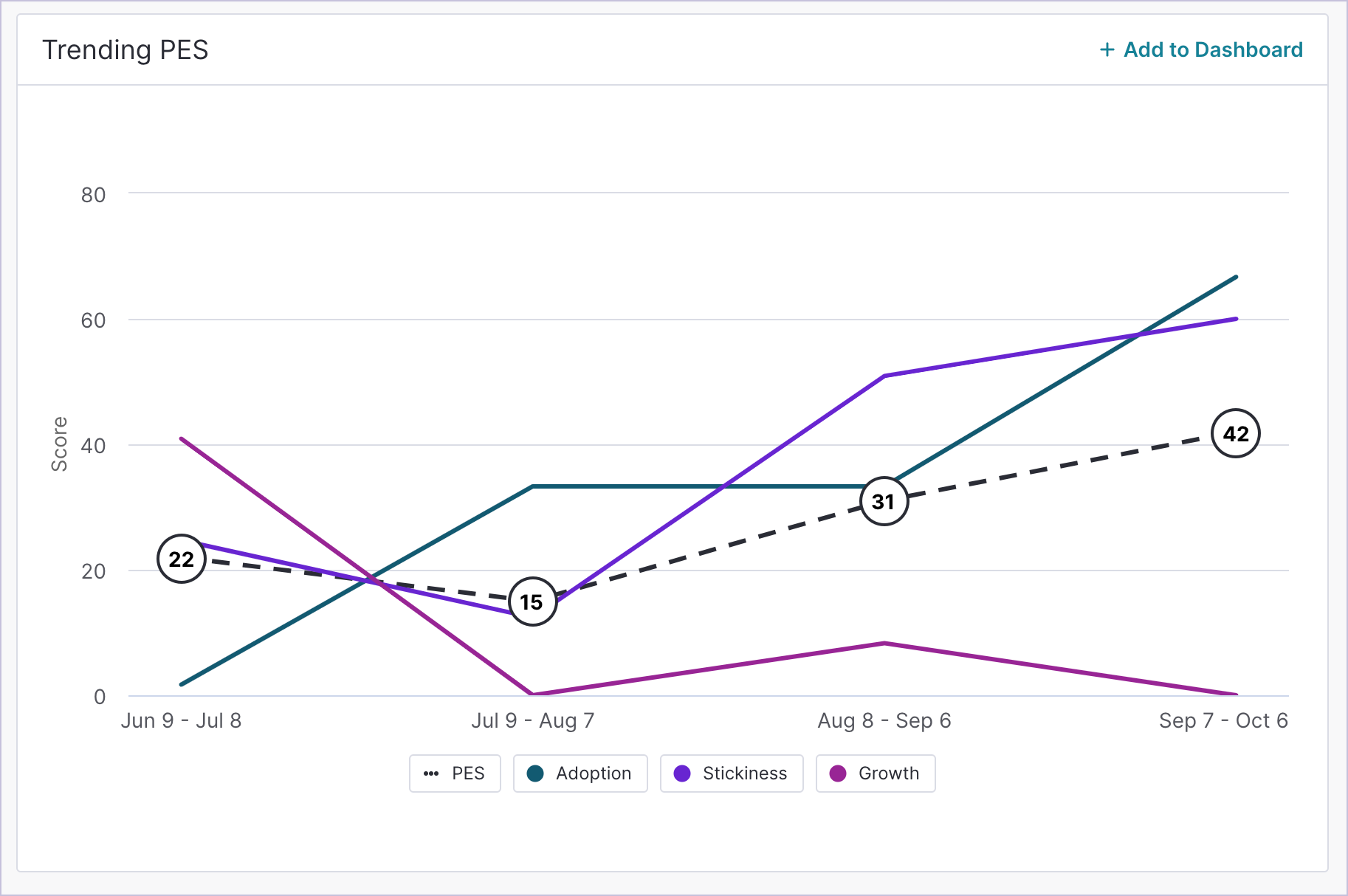
Pendo's analytics are its foundation. The platform captures behavioral data retroactively from installation, so you can tag a feature today and see how users interacted with it last month. Paths, funnels, retention cohorts, and a proprietary Product Engagement Score (combining Adoption, Stickiness, and Growth into one metric) give product teams a clear picture of user health. The Product Benchmarks tool compares your metrics against 6,800+ applications across 2,500 customers, a dataset no competitor matches.
Source: Pendo
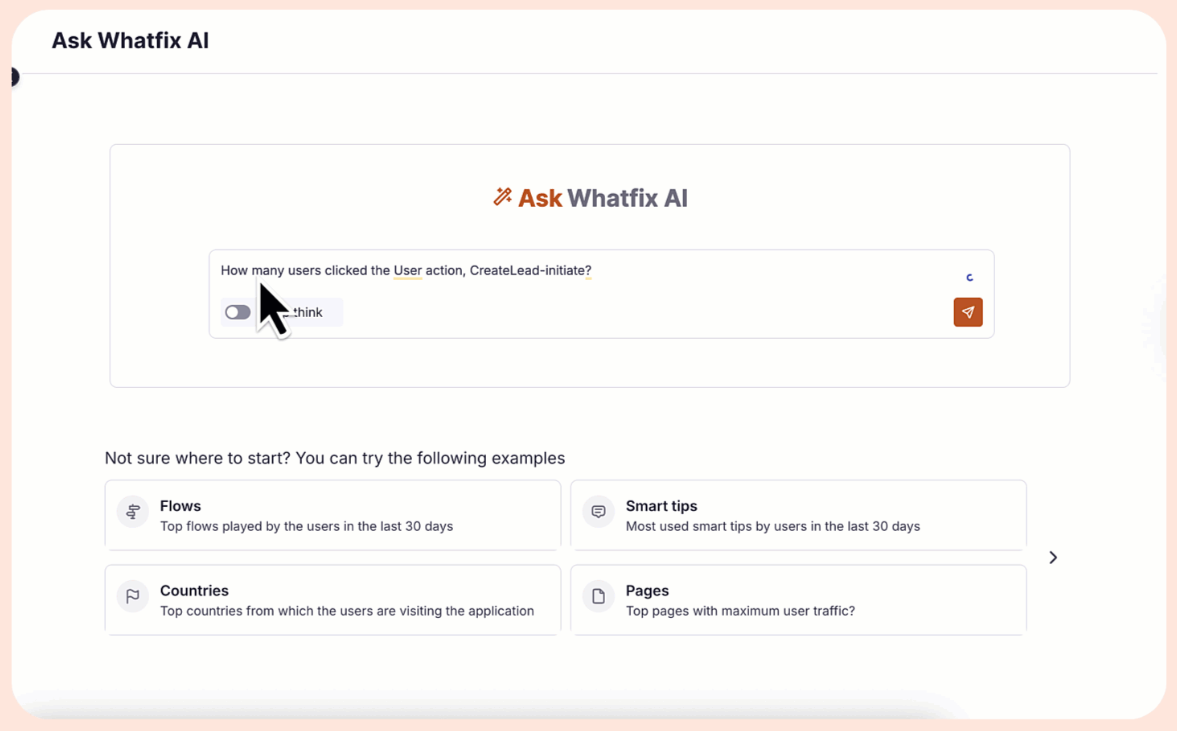
Whatfix's Product Analytics takes a different approach. Its AutoCapture logs every user interaction without engineering instrumentation, feeding into funnels, user journey maps, cohorts, and session replays. The AI Insights Agent surfaces friction points conversationally. But Product Analytics is a separate paid add-on, not included in the core DAP subscription. Teams expecting analytics at the depth of a dedicated product analytics tool may find Whatfix's module limited.
Source: Whatfix
Where Whatfix pulls ahead is environmental coverage. Pendo works on web and mobile applications. Whatfix works on web, desktop (Windows/Mac), mobile, and VDI/Citrix environments. For enterprises running a mix of cloud SaaS and legacy desktop software, that breadth is often the deciding factor.
In-app guidance: analytics-driven vs. context-driven
Both platforms let non-technical teams create in-app guidance without engineering involvement. They differ in what triggers the guidance and how it adapts.
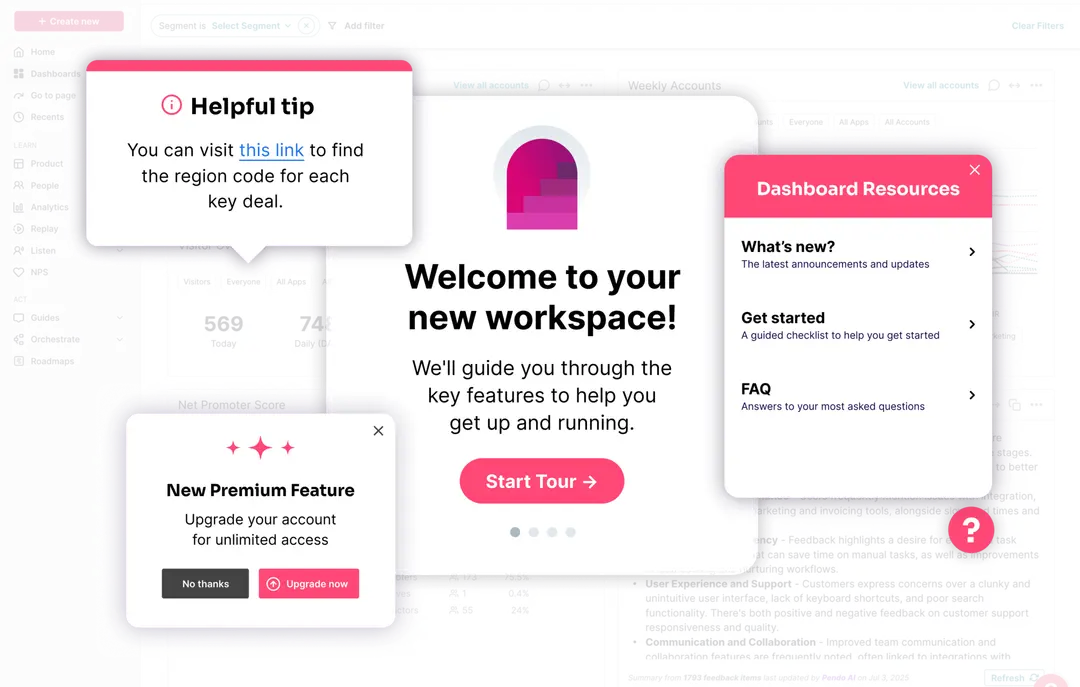
Pendo's guides run on its analytics engine. Because Pendo already knows which features each user has adopted, how often they log in, and what segment they belong to, guides can target with behavioral precision: "Show this tooltip to users who have not used Feature X in 14 days." The Visual Design Studio supports lightboxes, banners, tooltips, and embedded guides.
Orchestrate extends this into cross-channel journeys, combining in-app guides with email sequences triggered by product behavior.
Source: Pendo
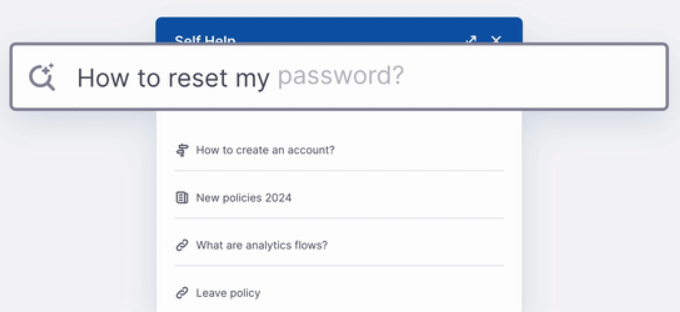
Whatfix's guidance runs on ScreenSense, a context engine that identifies which screen a user is on, reads whether they're stuck or exploring, and triggers the right help. This approach differs at its root: rather than relying on behavioral history, ScreenSense reads the current state of the application UI. The Authoring Agent generates guidance content from natural-language prompts, and the Guidance Agent delivers contextual answers without pulling users out of their workflow.
Source: Whatfix
The practical difference: Pendo's guides are better at behavioral targeting across your own product ("users who completed onboarding but haven't activated Feature Y"). Whatfix's guides are better at contextual support inside third-party applications ("users on the invoice creation screen in SAP who haven't clicked Submit").
Pendo owns the feedback-to-roadmap loop
This is where Pendo has no real competitor, Whatfix included.
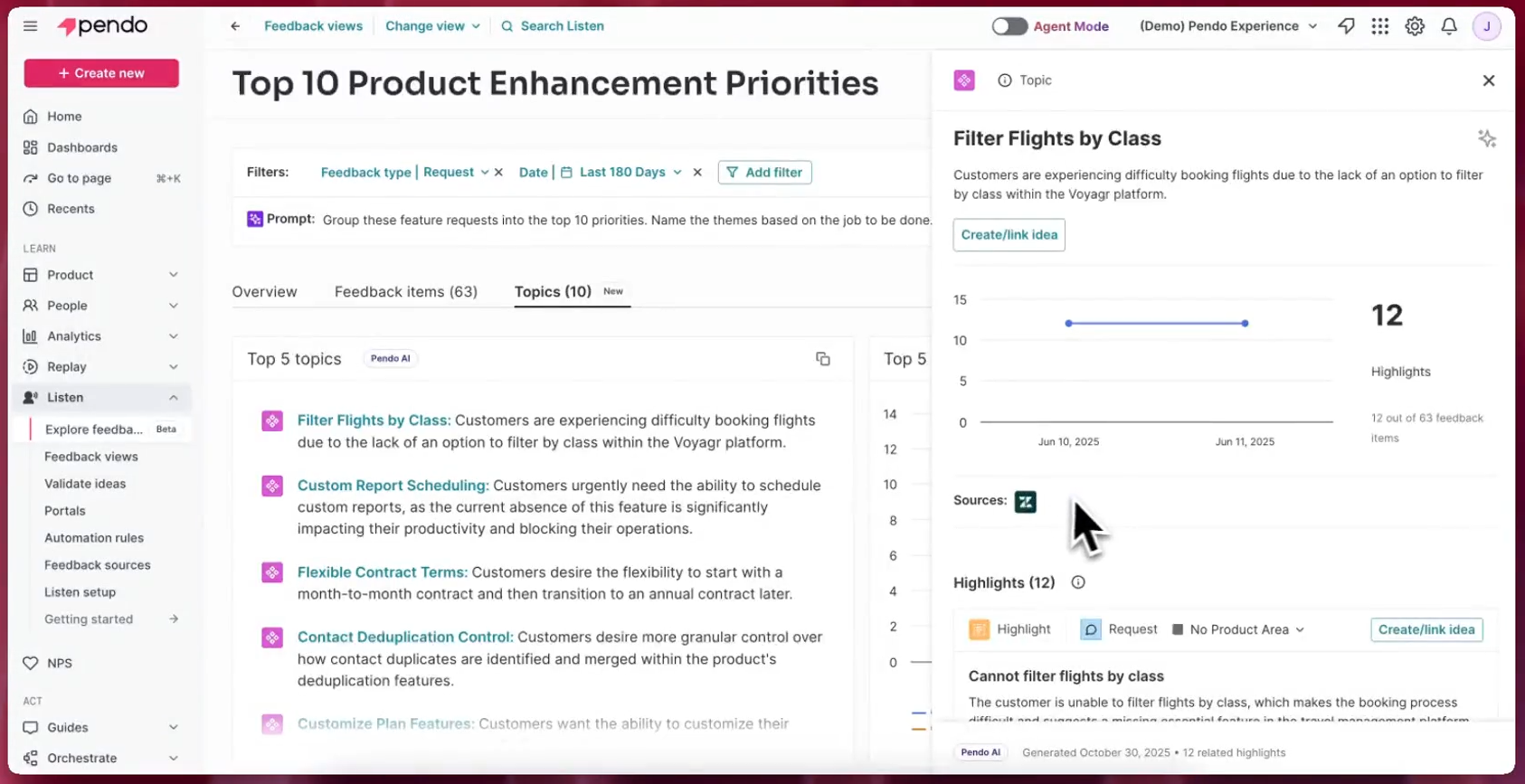
Pendo Listen consolidates feedback from in-app surveys, Gong call transcripts, Zendesk tickets, and Salesforce records into a single AI-analyzed feed. The Feedback Agent answers natural-language questions about the feedback corpus, backed by real customer quotes. Each feedback item carries account ARR, churn risk, and actual product usage data, so teams can prioritize by revenue impact rather than volume.
Source: Pendo
From there, Validate lets product managers test ideas directly with customers inside the product, analyzing results by votes, accounts, and ARR represented. Winning ideas flow into Roadmaps, where every item links back to the customer evidence that justified it. When an engineering team ships a feature, users who requested it receive in-app notifications automatically.
Whatfix offers in-app surveys (NPS, CSAT, and custom surveys on Premium plans), but lacks comparable feedback management, idea validation, or roadmapping. If closing the loop between user feedback and product decisions matters, Pendo is the only choice between these two.
For a complete look at Pendo's capabilities across analytics, guidance, and feedback, see our Pendo review.
Whatfix wins on enterprise change management
Whatfix was built for a problem Pendo does not address: managing large-scale software change across thousands of employees.
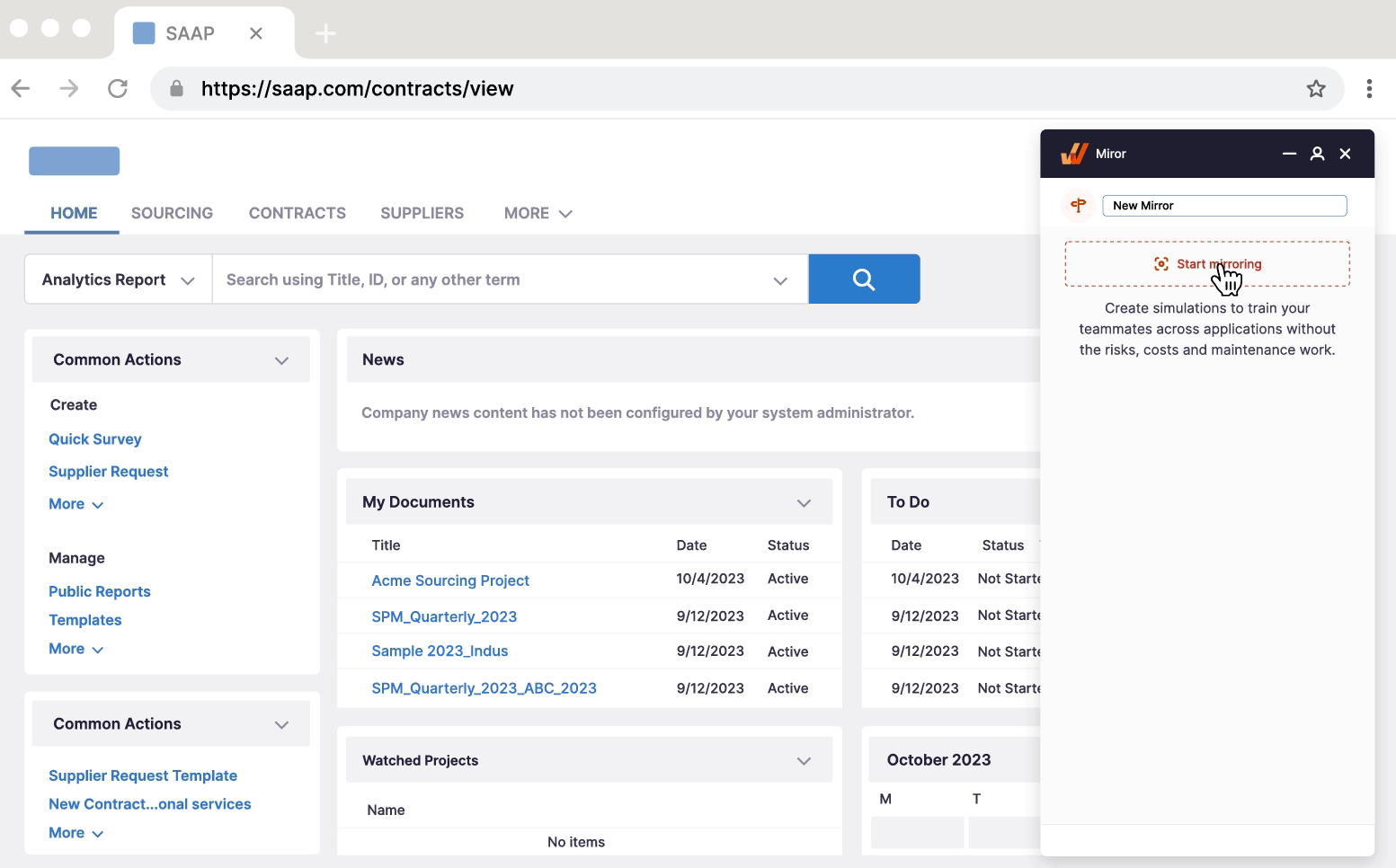
When an enterprise migrates from one ERP to another, or rolls out a major CRM update, the challenge isn't the software. It's getting employees to change their daily workflows. Whatfix's Mirror product creates interactive application replicas where employees practice new workflows before go-live without risk. AI-powered roleplay scenarios simulate conversations and decision-making inside the sandbox. Assessments track accuracy and completion time to measure actual proficiency, not just quiz scores.
Source: Whatfix
The enterprise content lifecycle tools reflect this focus: multi-level approval workflows, staging environments, automated UI-change testing, and one-click rollback.
Pendo's guides can onboard users effectively. But Pendo doesn't offer simulation training, approval workflows for content governance, or the desktop and VDI coverage that large enterprise rollouts require.
The intelligence gap between adoption and revenue
Both Pendo and Whatfix answer an important question: what are users doing inside software? But for SaaS companies trying to grow revenue, an equally important question goes unanswered: what are buyers doing outside your software?
Pendo can show you that Account X's usage dropped 30% last month. It cannot tell you that Account X is researching your competitors, that the VP who championed your product just left, or that three new decision-makers joined the team. Whatfix can show you that employees completed the Salesforce training flow. It cannot tell you which prospects those employees should call first, or which accounts show intent signals right now.
ZoomInfo fills this gap. Its GTM Context Graph, processing 1.5B+ data points daily, unifies your CRM records, conversation transcripts, and product usage data with ZoomInfo's third-party intelligence. It captures not just what happened in a deal, but why. A CRM records that a deal moved to Stage 3. Conversation intelligence captures that the CFO asked about six-month ROI on the last call. Intent data shows the company is hiring three new VPs and researching a competitor. The Context Graph connects all three to surface the next best action.
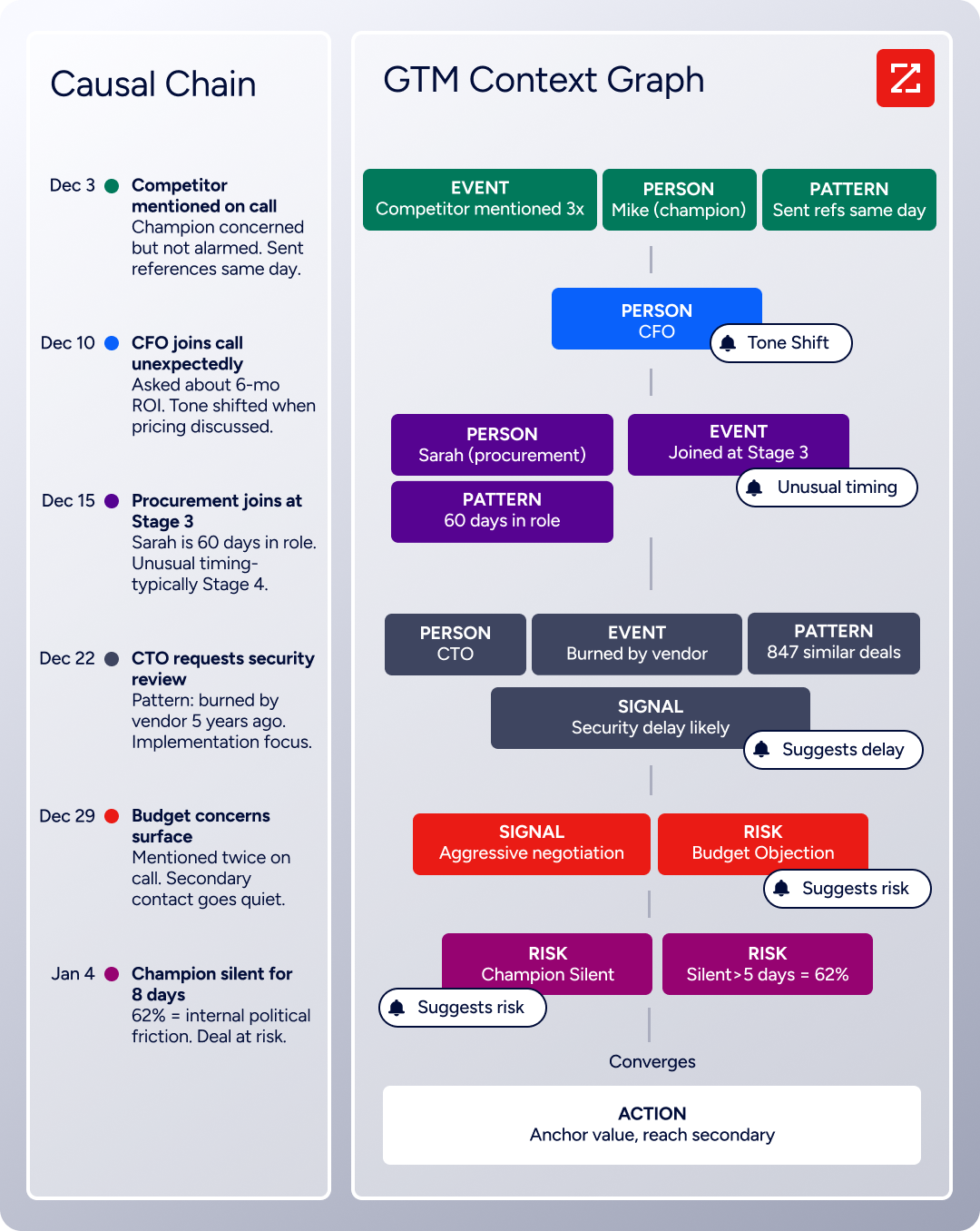
For SaaS companies using Pendo, this creates a closed loop: Pendo identifies engagement patterns and churn risk inside the application, while ZoomInfo provides the contacts, intent data, and buyer context to act on those signals. A product-qualified lead becomes actionable because you know who to call, when to call them, and what to say.
"That combination of our internal CRM data, external signals, and AI that's given all that context has helped us craft very specific account- and persona-based messages. And people have responded to them right away." (Toby Carrington, Chief Business Officer, Seismic)
AI strategies diverge across all three platforms
All three platforms invest heavily in AI, but each applies it to a different problem.
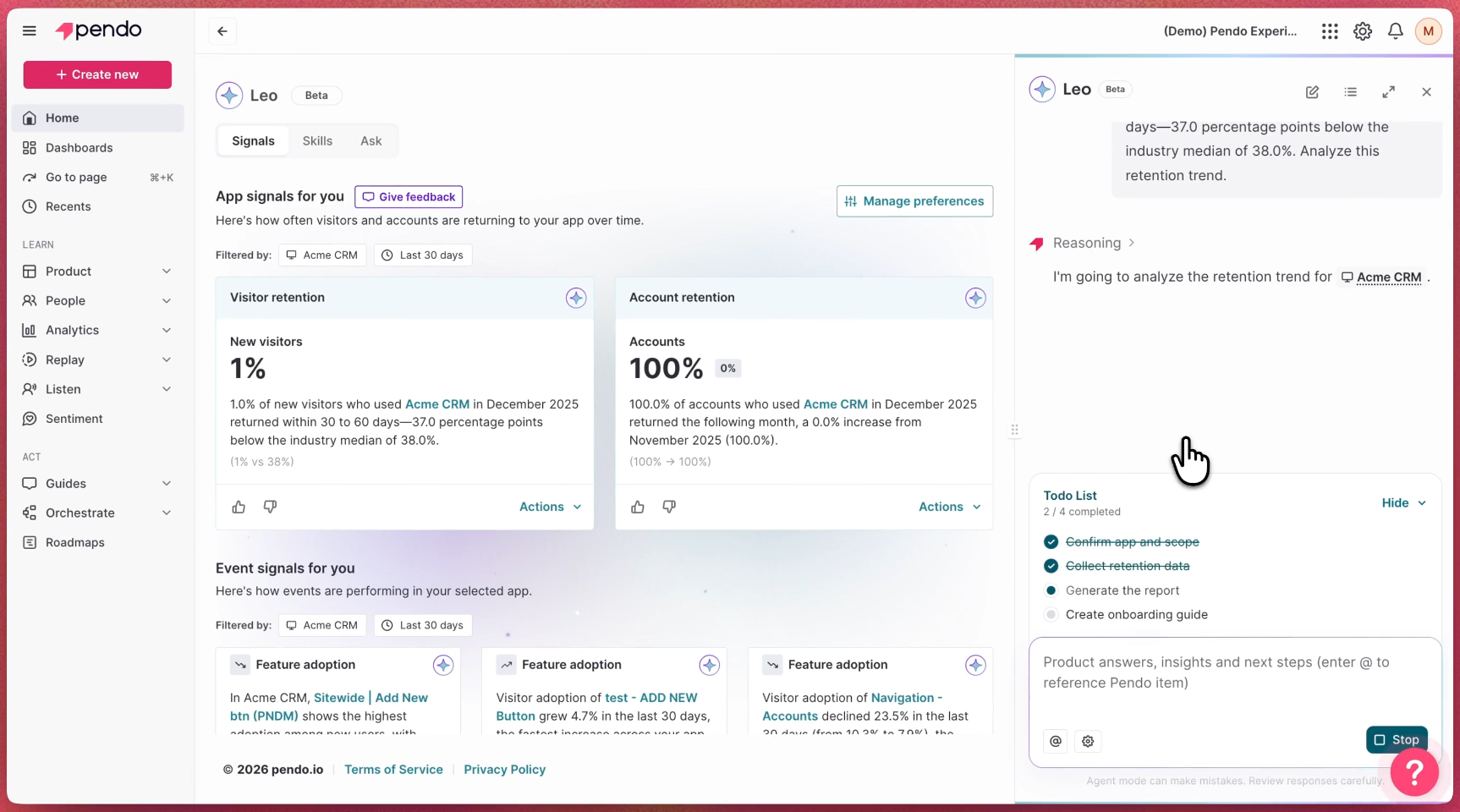
Pendo's AI focuses on product intelligence. Leo lets teams query analytics in plain language and generates in-app guides conversationally. Predict builds churn prediction models from behavioral and CRM data, delivering scored predictions with explanations into Salesforce and Slack. Agent Analytics tracks how users interact with AI agents, measuring whether agentic workflows improve outcomes. This capability earned Pendo a Fast Company 2026 placement on the Most Innovative Companies list.
Source: Pendo
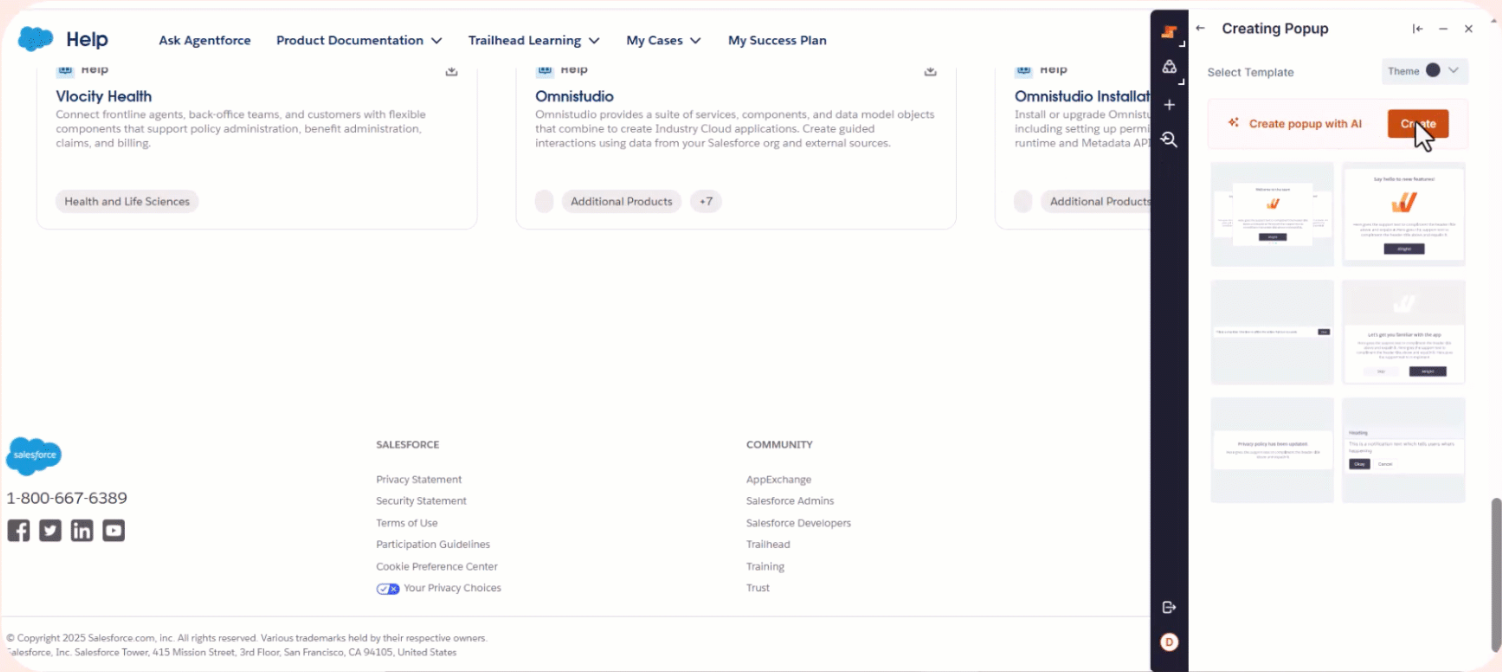
Whatfix's AI focuses on adoption automation. ScreenSense detects application context and user intent from GUI interactions, triggering guidance at the right moment. The Authoring Agent generates in-app content from natural-language prompts and adapts existing flows when UIs change. The Insights Agent translates behavioral data into visual charts and recommendations conversationally. In October 2025, Whatfix demonstrated agentic task automation where AI completed Salesforce tasks autonomously, marking a shift from guidance toward action.
Source: Whatfix
ZoomInfo's AI focuses on go-to-market execution. The GTM Context Graph connects buyer signals, conversation history, and CRM data to identify why deals move or stall. Inside GTM Workspace, AI agents handle account research, outreach drafting, CRM updates, and signal monitoring. GTM Studio lets marketers describe audiences in natural language and launch multi-channel plays that improve as prospects respond.
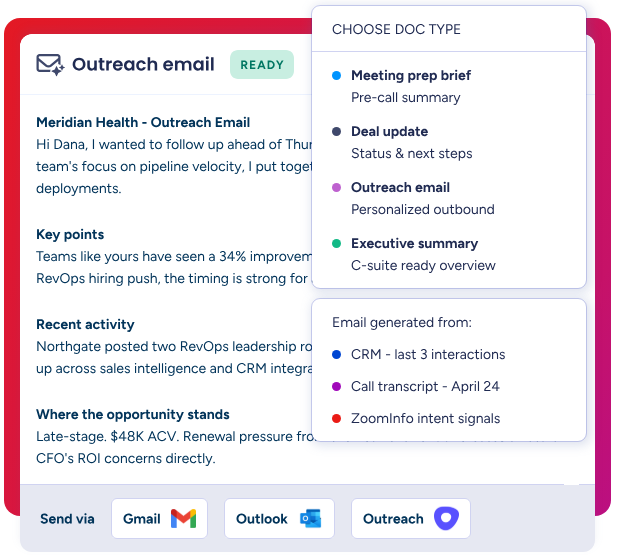
The three AI approaches complement each other. Pendo's AI understands product behavior. Whatfix's AI understands application context. ZoomInfo's AI understands buyer intent and deal dynamics.
Pricing: none of them make it easy
All three platforms gate pricing behind sales conversations. This is the norm for enterprise software, but it creates friction for teams trying to compare costs.
Pendo charges based on MAU volume (Monthly Active Users) tracked through the snippet. The free tier covers up to 500 MAUs with Product Analytics, In-app Guides, and Pendo-branded NPS. Paid plans (Base, Core, Ultimate) unlock Session Replay, full Sentiment surveys, Orchestrate, Listen, and Data Sync. AI add-ons like Predict and Agent Analytics cost extra. G2 reviewers consistently flag pricing inflexibility, and fast-growing companies face unpredictable cost increases as MAU counts rise.
For a full breakdown of Pendo's plans, tiers, and what's included at each level, see our Pendo pricing guide.
Whatfix uses a hybrid flat-fee plus per-user license model. Employee-facing deployments price by headcount; customer-facing deployments price by MAU. The three products (DAP, Product Analytics, Mirror) each have their own tier structure (Standard, Premium, Enterprise). The Standard plan limits integrations to two and content aggregation to 2,000 articles, pushing growing teams toward upgrades. Product Analytics Standard ships free with any DAP plan, but Premium and Enterprise analytics cost extra.
ZoomInfo uses consumption-based pricing scaled around data access, API usage, and AI activity. Sales plans span Professional, Advanced, and Enterprise tiers, with each tier unlocking more capabilities (intent signals, AI features, advanced workflows). ZoomInfo Lite provides permanent free access to the B2B database with 10 monthly export credits.
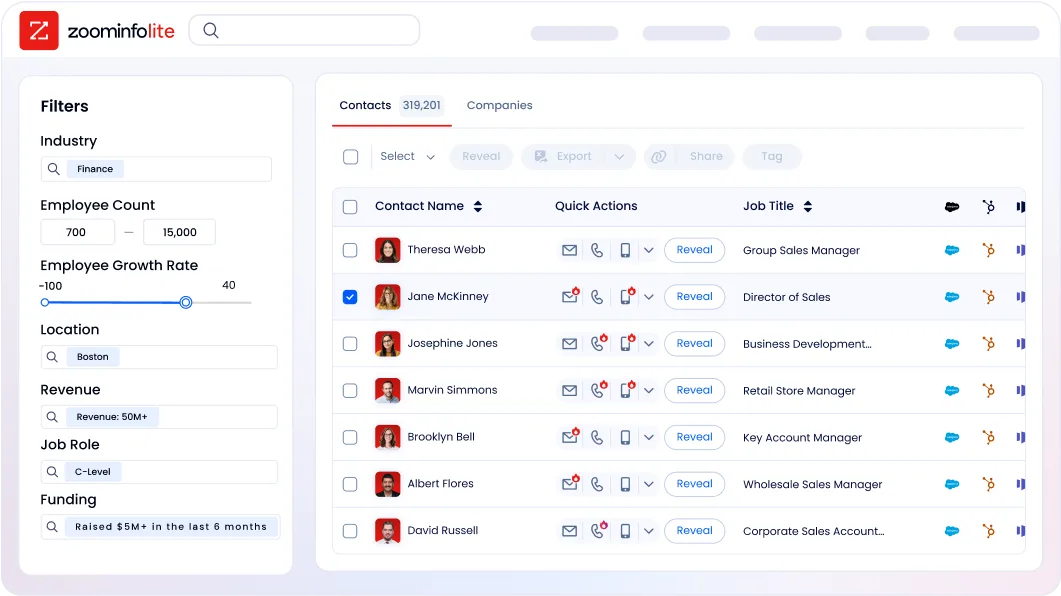
Since all three require custom quotes, model your usage carefully before entering negotiations. For Pendo, project your MAU growth over the contract term. For Whatfix, count the applications and user populations you need to cover. For ZoomInfo, estimate your credit consumption based on prospecting volume.
Pendo vs. Whatfix vs. ZoomInfo: Which should you choose?
The right choice depends on which problem you're solving and who owns the budget.
Choose Pendo if:
You're a SaaS product team trying to understand how customers use your software
You need retroactive analytics that don't require engineering to instrument
Closing the feedback-to-roadmap loop with real usage data matters to your planning process
You want to measure AI agent adoption and performance alongside traditional product analytics
Your application is primarily web-based, with mobile as a secondary channel
Choose Whatfix if:
You're an IT or L&D team managing enterprise software adoption across thousands of employees
You need coverage for desktop, VDI, and legacy applications alongside web and mobile
Change management for ERP, CRM, or HCM rollouts is your primary challenge
Simulation training and hands-on practice environments would reduce your go-live risk
You need multi-language support and enterprise content governance workflows
Choose ZoomInfo if:
You need to connect product adoption signals to buyer intelligence for revenue action
Your sales team needs verified contact data, intent signals, and AI-drafted outreach in one workspace
You want to identify which accounts are in-market, researching competitors, or ready for expansion
You need an intelligence layer that works inside your existing tools via API and MCP
Your go-to-market motion depends on understanding not just what users do, but who they are and what they need
Explore ZoomInfo Lite for free, or see how the GTM Context Graph connects to your stack.
"ZoomInfo is our one source of truth for account data, and even more so for contact data. There's no other provider in the market that provides you with that level of detail." (Thor Sanderson, Senior Manager of Sales Technology Enablement, Smartsheet)
Pendo and Whatfix both excel at their core missions. Pendo helps SaaS product teams build better products by understanding user behavior. Whatfix helps enterprises extract more value from the software they've already bought. But for organizations where product adoption drives revenue, combining either platform's internal intelligence with ZoomInfo's external buyer intelligence creates a picture neither can provide alone.
Understanding what users do inside your product is half the equation. Understanding who they are, what they're researching, and when they're ready to act is the other half.
Pendo vs. Whatfix vs. ZoomInfo FAQ
What is the core difference between Pendo and Whatfix?
Pendo is built for SaaS product teams that need to understand how customers use the software they build. It combines product analytics, in-app guides, feedback management, and roadmapping in one platform. Whatfix is built for enterprise IT and L&D teams that need to help employees adopt the software the organization buys. It overlays guidance on any web, desktop, mobile, or VDI application and includes simulation training via its Mirror product.
Which platform has better analytics capabilities?
Pendo has deeper product analytics, including retroactive data capture, a proprietary Product Engagement Score, and benchmarking across 6,800+ applications. Whatfix's Product Analytics module offers AutoCapture, funnels, user journeys, and session replay, but it is a separate paid add-on optimized for enterprise adoption measurement rather than product-growth analytics.
Can Pendo and Whatfix work on the same types of applications?
Pendo works on web and mobile applications. Whatfix covers web, desktop (Windows and Mac), mobile, and VDI/Citrix environments. If you need to guide users through legacy desktop applications or virtual desktop environments, Whatfix is the only option between the two. For SaaS products delivered through web browsers, both platforms work.
How does ZoomInfo complement Pendo or Whatfix?
ZoomInfo provides external buyer intelligence that neither Pendo nor Whatfix captures. Pendo and Whatfix tell you what users do inside software. ZoomInfo tells you what buyers do outside: which accounts are researching competitors, who the decision-makers are, and when accounts show intent signals. For SaaS companies, combining Pendo's product usage data with ZoomInfo's contact data and intent signals creates a complete view from user behavior to revenue action.
Which platform is best for onboarding new users?
Pendo excels at onboarding customers to SaaS products, with in-app walkthroughs targeted by behavioral data and an Orchestrate module that combines in-app guides with email sequences. Whatfix excels at onboarding employees to enterprise software, with interactive Flows, simulation training via Mirror, and the ability to overlay guidance on any application without modifying its source code.
Do any of these platforms offer transparent pricing?
None of the three publish specific pricing. Pendo offers a permanent free tier for up to 500 MAUs. Whatfix offers a sales-assisted free trial. ZoomInfo offers a permanent free tier called ZoomInfo Lite with 10 monthly export credits. All paid plans across all three platforms require contacting sales for a custom quote.
Which platform has the strongest AI capabilities?
Each platform applies AI to a different domain. Pendo's AI focuses on product intelligence: conversational analytics queries, churn prediction, and AI agent performance measurement. Whatfix's AI focuses on adoption automation: a context-aware engine that triggers guidance based on screen state and user intent, plus agents that generate and maintain content. ZoomInfo's AI focuses on go-to-market execution: connecting buyer signals and deal context to prioritize accounts, draft outreach, and surface next best actions.
Which platform is best for a SaaS company running product-led growth?
Pendo is the strongest fit for product-led growth, with product analytics, in-app upgrade prompts, behavioral segmentation, and a feedback-to-roadmap pipeline designed for SaaS product teams. Adding ZoomInfo extends the PLG motion by connecting product-qualified signals to verified buyer contacts and intent data, letting sales teams act on product engagement at the right moment.
More Whatfix comparisons and alternatives:
