
If you're comparing Pulse CRM vs. Salesforce, you're weighing two platforms built for different stages of business growth. The comparison makes more sense than it first appears, because both promise to organize your sales process and help you close deals. But the gap between them is wide, and the right choice depends on honest answers to a few questions:
Are you a small team that needs a working CRM this week, or an organization building infrastructure for the next five years?
Do you need every feature included at one flat price, or can you invest in a modular platform you'll grow into?
Is your team technical enough to configure and maintain a complex system, or do you need guided setup?
How important is it that your sales team finds the right prospects, not just manages the ones already in the pipeline?
Do you have the budget for enterprise software, or is cost the primary constraint?
Here's what we recommend:
Pulse CRM is built for small businesses and franchise systems that want an all-in-one CRM without the complexity. Starting at $49/month with every feature included, Pulse handles contact management, email marketing, text messaging, sales pipelines, quoting, project boards, and automation in a single subscription. Its done-for-you setup means your team can be productive within days, not months.
Where Pulse falls short is scale: it has no AI capabilities, limited integrations beyond Zapier, and a contact ceiling of 10,000 on its highest plan.
Salesforce is the world's #1 CRM, serving over 150,000 companies across every industry and size. With Sales Cloud, Service Cloud, Marketing Cloud, Commerce Cloud, and the Agentforce AI platform, Salesforce can handle virtually any business process at any scale.
The tradeoff is complexity and cost: configuration requires trained administrators, implementation stretches from weeks to months, and pricing layers (per-user fees, add-ons, success plans) can quickly exceed what small teams expect to spend.
Both platforms organize your sales process. But a CRM only manages the relationships you already have. The harder problem (the one that determines whether your pipeline grows or stalls) is identifying the right buyers with accurate data in the first place. Neither Pulse nor Salesforce solves that on its own.
ZoomInfo is an AI-powered go-to-market platform that gives your sales team the intelligence CRMs were never designed to provide: who to pursue, when to engage, and why deals move or stall.
That depth comes from the GTM Context Graph, built on the largest B2B dataset in the industry (500M contacts, 100M companies, 135M+ verified phone numbers, and 200M+ verified business emails), unified with your CRM records, conversation transcripts, and behavioral signals.
Your team accesses this intelligence through GTM Workspace for sellers, GTM Studio for marketers and RevOps, or the API and MCP in any front-end. ZoomInfo integrates natively with Salesforce and connects to other CRMs through Zapier or API, serving as the data and intelligence layer underneath whichever CRM you choose.
If finding and engaging the right buyers is the bottleneck your CRM can't solve, try ZoomInfo free.
Pulse CRM vs. Salesforce vs. ZoomInfo at a glance
Pulse CRM | Salesforce | ZoomInfo | |
|---|---|---|---|
Core function | All-in-one CRM & marketing automation | Enterprise CRM & AI platform | B2B data intelligence & GTM execution |
Best for | Small businesses, franchises | Mid-market to enterprise | B2B sales & marketing teams of any size |
Starting price | Free (Lite), custom pricing for paid plans | ||
Contact database | 500–10,000 (your contacts) | Unlimited (your contacts) | 500M+ B2B contacts searchable |
AI capabilities | None | Agentforce (autonomous agents) | GTM Context Graph & AI agents |
Implementation time | Minutes to days | Weeks to months | |
Integrations | 120+ native integrations, API, MCP | ||
Contracts | Annual required (most tiers) | Annual (standard) | |
Intent data | None | Via add-ons or Data Cloud | Native buyer intent from 210M+ IP pairings |
The scale gap is the starting point
Pulse CRM and Salesforce aren't competitors. They serve different stages of business growth with different philosophies.
Pulse Technology was founded in 2019 and operates with 2–10 employees. Its founder, Jason Case, built the platform from over 15 years of CRM consulting, where he saw the same problem repeatedly: CRM systems handed to small businesses that never get properly configured or used.
Pulse's answer is a done-for-you approach where implementation comes with the subscription, not as a professional services add-on. The homepage puts it plainly: "Most CRMs give you tools. Pulse builds the system for you."
Salesforce, by contrast, is a $41.5 billion public company with over 76,000 employees across 110 offices in 93 cities. It has held the #1 CRM market share position by IDC revenue data for over a decade and holds Gartner Magic Quadrant Leader positions across six product categories.
Salesforce is not just a CRM; it is an enterprise operating system spanning sales, service, marketing, commerce, analytics (Tableau), collaboration (Slack), integration (MuleSoft), and AI (Agentforce).
For a five-person service business that needs to track leads and send follow-up emails, Pulse delivers real value at $49/month with no learning curve. For a 500-person company with dedicated sales, marketing, and service teams needing complex workflows and compliance controls, Salesforce is the standard for a reason.
The question is what happens in between, and what happens after either platform is running.
A CRM manages relationships but doesn't find them
This is the gap both platforms share, regardless of size.
Pulse CRM stores the contacts your team adds manually or captures through built-in forms. It can parse inbound email notifications from third-party lead sources and create CRM records automatically. These are useful capabilities for a small team.
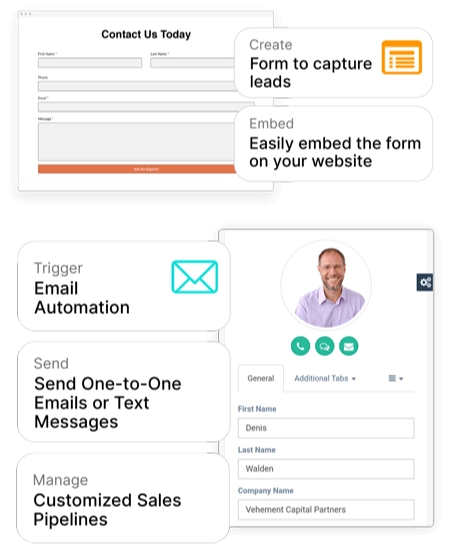
Source: Pulse CRM
But beyond what comes in through your forms and email, your team is on its own to find the right people to contact. There is no external data enrichment, no intent signals, and no way to know which companies are researching your product category.
Salesforce has more options. Einstein Lead Scoring prioritizes existing leads. Data Cloud can ingest and unify data from external sources, with 200+ pre-built connectors and zero-copy architecture that connects to Snowflake, Databricks, and BigQuery. But the core limitation remains: Salesforce manages and activates data your organization has already collected or purchased elsewhere.
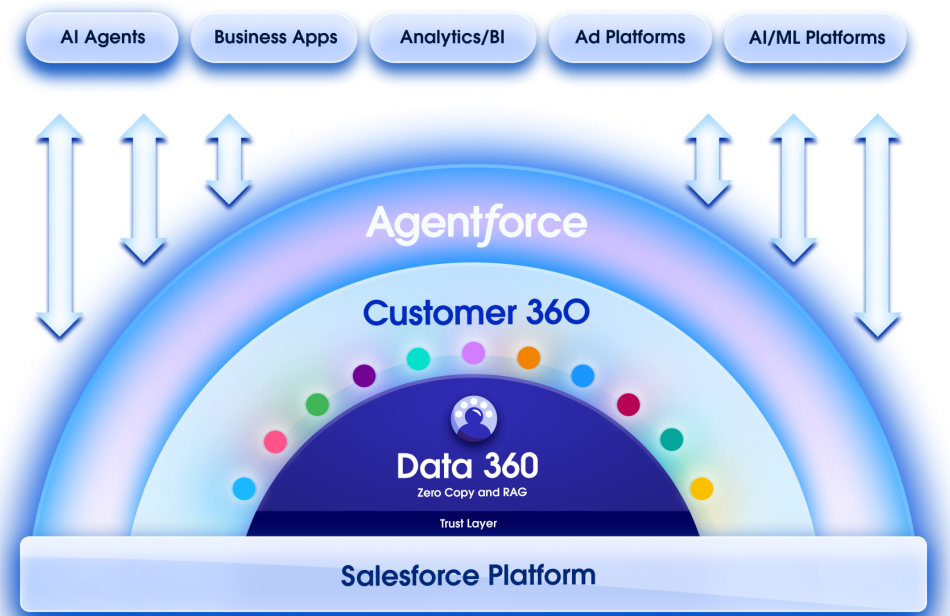
Source: Salesforce
ZoomInfo solves the problem upstream. Its database spans 500M contacts and 100M companies, verified through automated ML scanning of 28 million site domains daily, third-party partner data covering 95 million businesses, and an in-house Data Training Lab of 300+ human researchers.
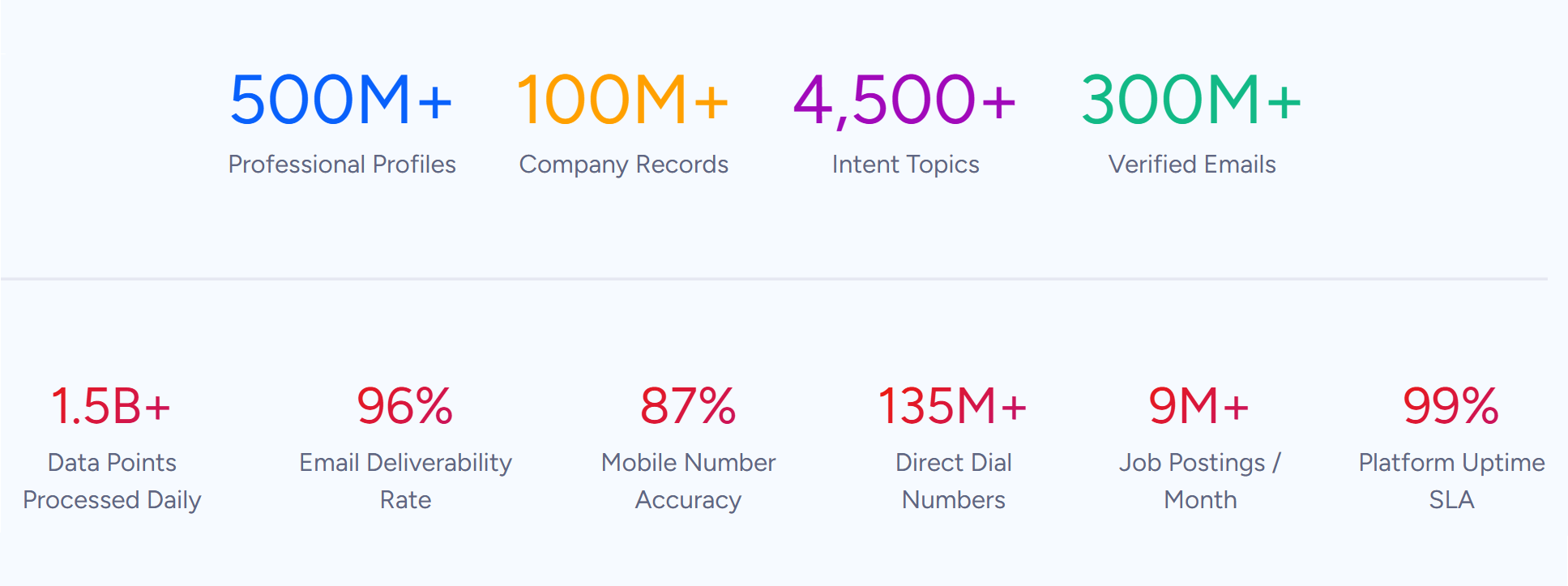
Source: ZoomInfo
First-party data reaches up to 95% accuracy. In a Fortune 500 competitive RFP analyzing 25 million contacts across vendors, the independent consultant concluded that "no other competitor came even close."
ZoomInfo also provides Buyer Intent data that tracks signals from 210 million IP-to-Organization pairings and 6 trillion+ new keyword-to-device pairings sourced monthly. Guided Intent, exclusive to ZoomInfo, identifies topics historically correlated with deal success rather than requiring manual topic selection.

Source: ZoomInfo
Your team can see which companies are researching topics related to your product before those companies ever fill out a form.
For Salesforce users, ZoomInfo's native integration pushes enriched contacts, intent signals, and account intelligence directly into Salesforce records. For Pulse users, the connection runs through Zapier or API. Either way, ZoomInfo fills the data gap that CRMs leave open.
Vensure scaled prospecting with ZoomInfo's data. "It brings time back to our day, something we're all begging for. And it helps us reach the company's goals and get more clients faster," said William Kenimer, Vice President of Revenue Operations. (Vensure Case Study)
Automation serves different layers of the sales process
All three platforms automate parts of selling, but at different layers.
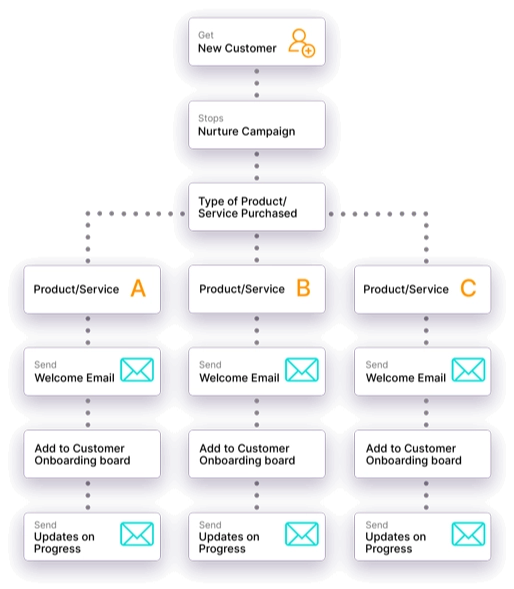
Pulse automates the operational work inside the CRM. When a pipeline stage changes, a quote gets approved, or a customer completes an action, Pulse triggers workflows: sending emails, updating records, enrolling contacts in nurture campaigns, or creating tasks on project boards. The customer onboarding automation is a clear example.
Source: Pulse CRM
Once a prospect becomes a customer, Pulse sends welcome emails, creates a project board entry, and triggers milestone-based updates as work progresses. All of this works without technical configuration because automation is included at every plan tier.
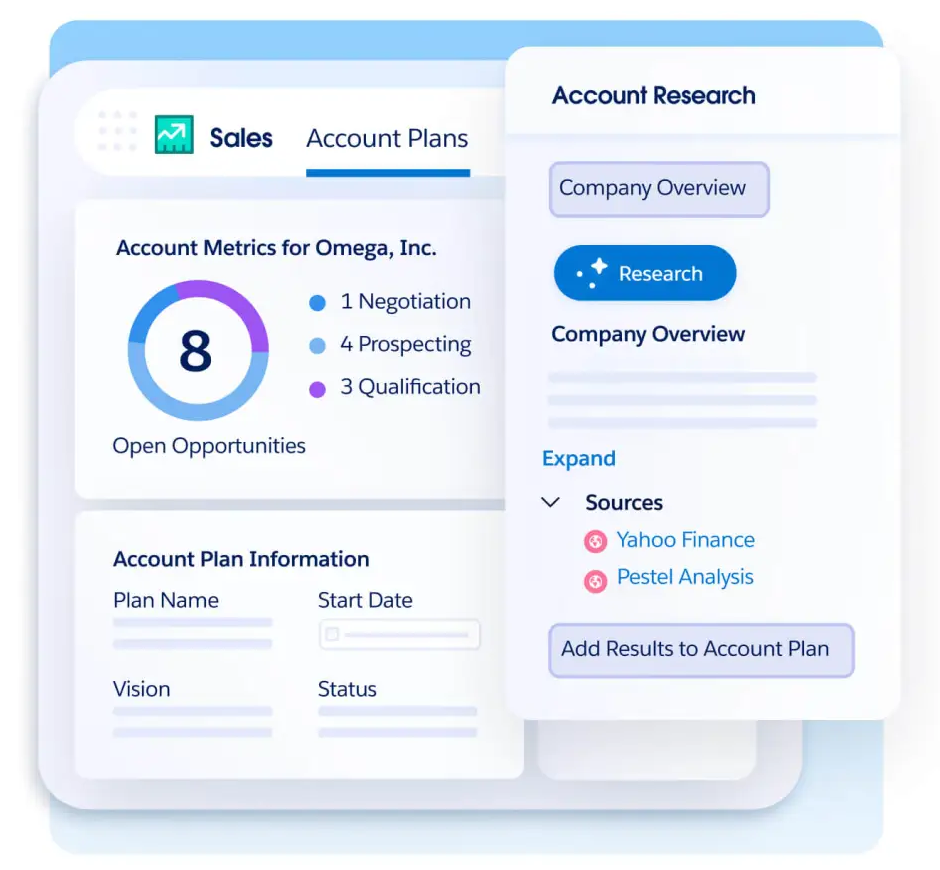
Salesforce automates at enterprise scale. Flow handles everything from simple field updates to complex multi-step business processes. Agentforce goes further with autonomous AI agents that can research accounts, draft emails, coach sellers, and resolve customer service cases without human intervention.
Source: Salesforce
Salesforce reports that Agentforce resolves 85% of support requests without human escalation and generates quotes 75% faster. The capability is broad, but the setup requires trained administrators and, in most cases, implementation partners.
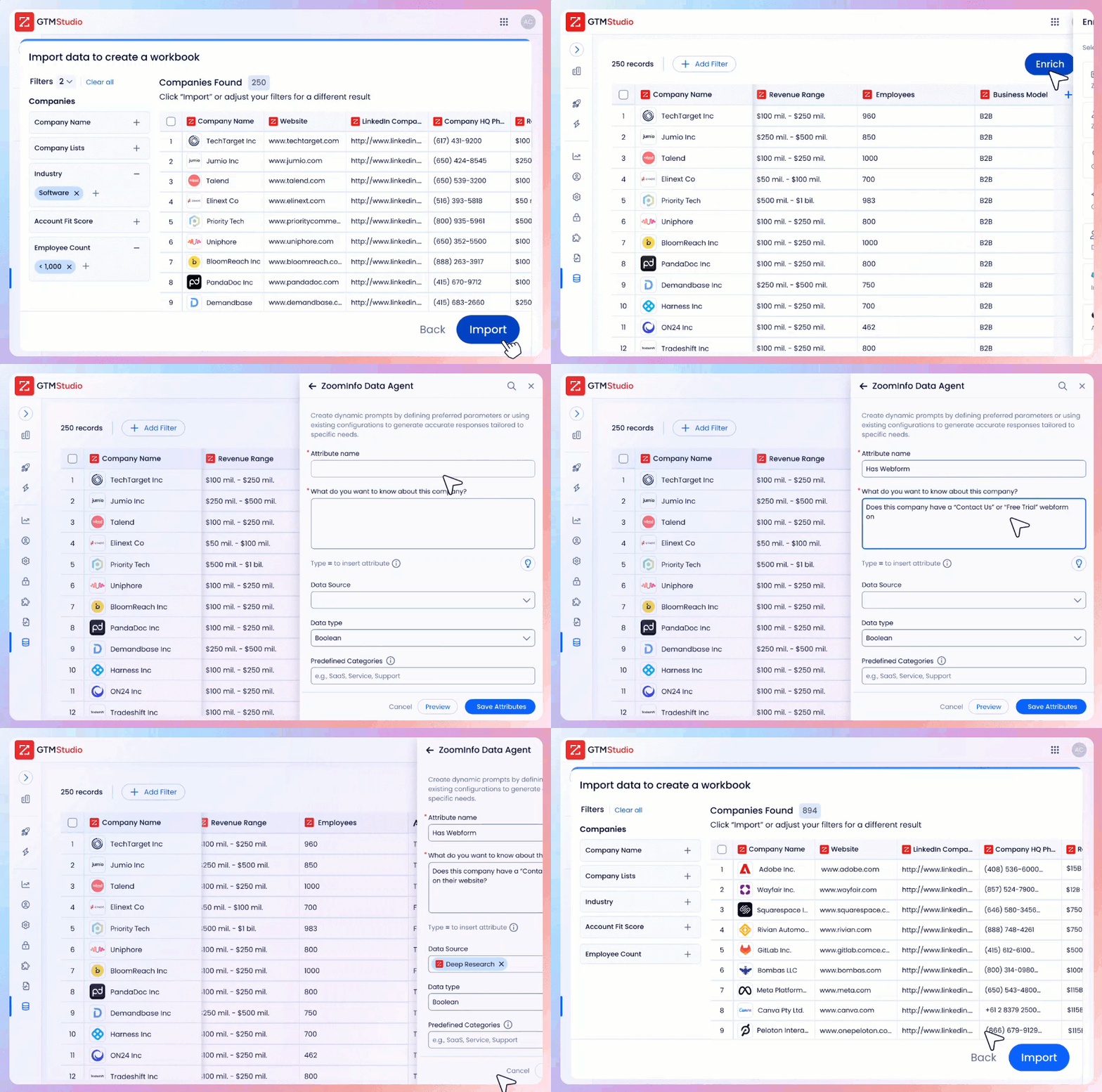
ZoomInfo automates the intelligence layer. Rather than automating what happens inside your CRM, ZoomInfo automates how your team identifies and engages the right accounts. GTM Studio lets marketers and RevOps teams describe audiences in natural language, launch multi-channel plays, and activate campaigns without engineering support. Expansion plays that used to take three weeks now launch in 30 minutes.
Source: ZoomInfo
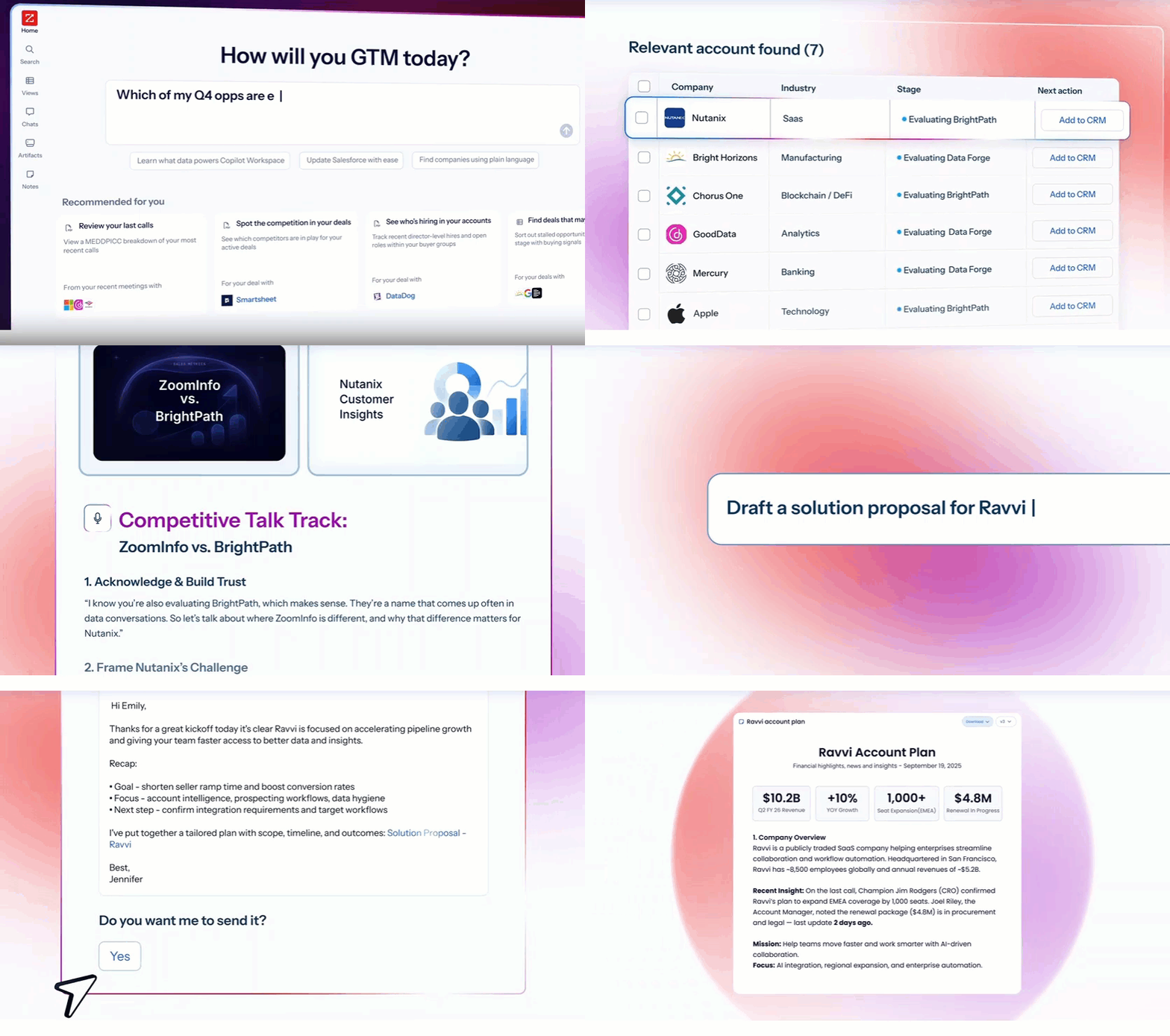
GTM Workspace gives sellers an AI-powered action feed where buying signals trigger pre-drafted outreach in real time. The outputs (accounts showing intent, signals, recommended next steps) flow into whatever CRM your team uses.
Source: ZoomInfo
These automation layers are additive. Pulse or Salesforce manages what happens after a lead enters the system. ZoomInfo automates the process of deciding which leads should enter the system in the first place.
Seismic attributed 39% of active pipeline to opportunities identified or influenced by ZoomInfo signals, with the sales team boosting productivity by 54% and saving 11.5 hours per week. (Seismic Case Study)
AI capabilities sit at three different levels
The three platforms represent three distinct stages of AI maturity in sales technology.
Pulse CRM has no AI features. No predictive lead scoring, no AI-generated content, no automated insights. The platform relies on human-configured rules and workflows. For a small team that values simplicity, this is not necessarily a weakness.
But as competitors move toward AI-assisted selling, the gap will widen. Pulse's brand is built around automation without complexity, so AI-generated email sequences and smart follow-up suggestions would be natural extensions. None exist today.
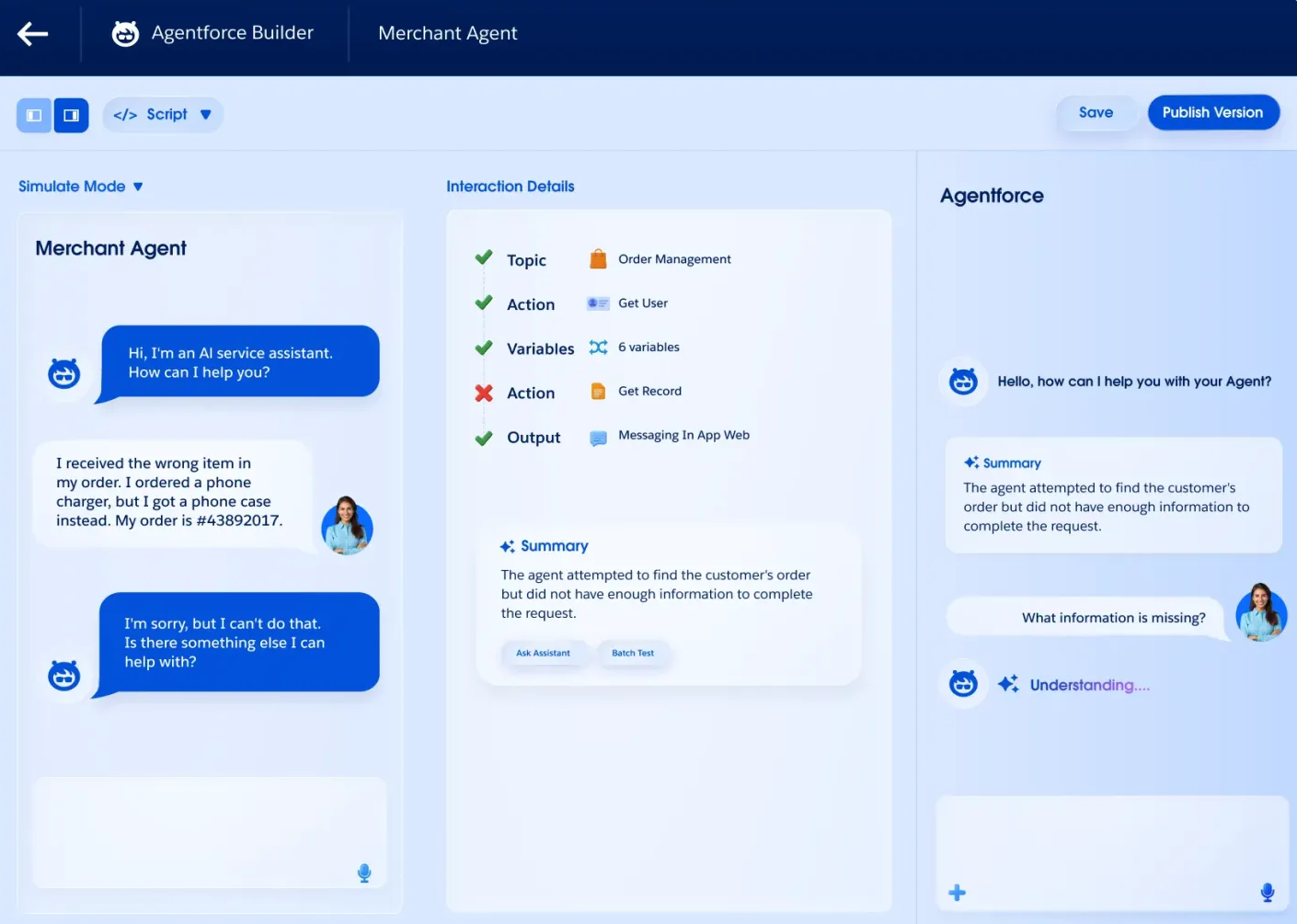
Salesforce has the most advanced AI in CRM. Agentforce runs on the Atlas Reasoning Engine, which uses a Reasoning and Acting loop to perceive, plan, and execute tasks autonomously. Pre-built agents cover sales, service, marketing, commerce, and IT, with custom agents buildable through the low-code Agentforce Builder.
Source: Salesforce
The Einstein Trust Layer adds zero data retention with LLM partners, PII masking, and toxicity detection.
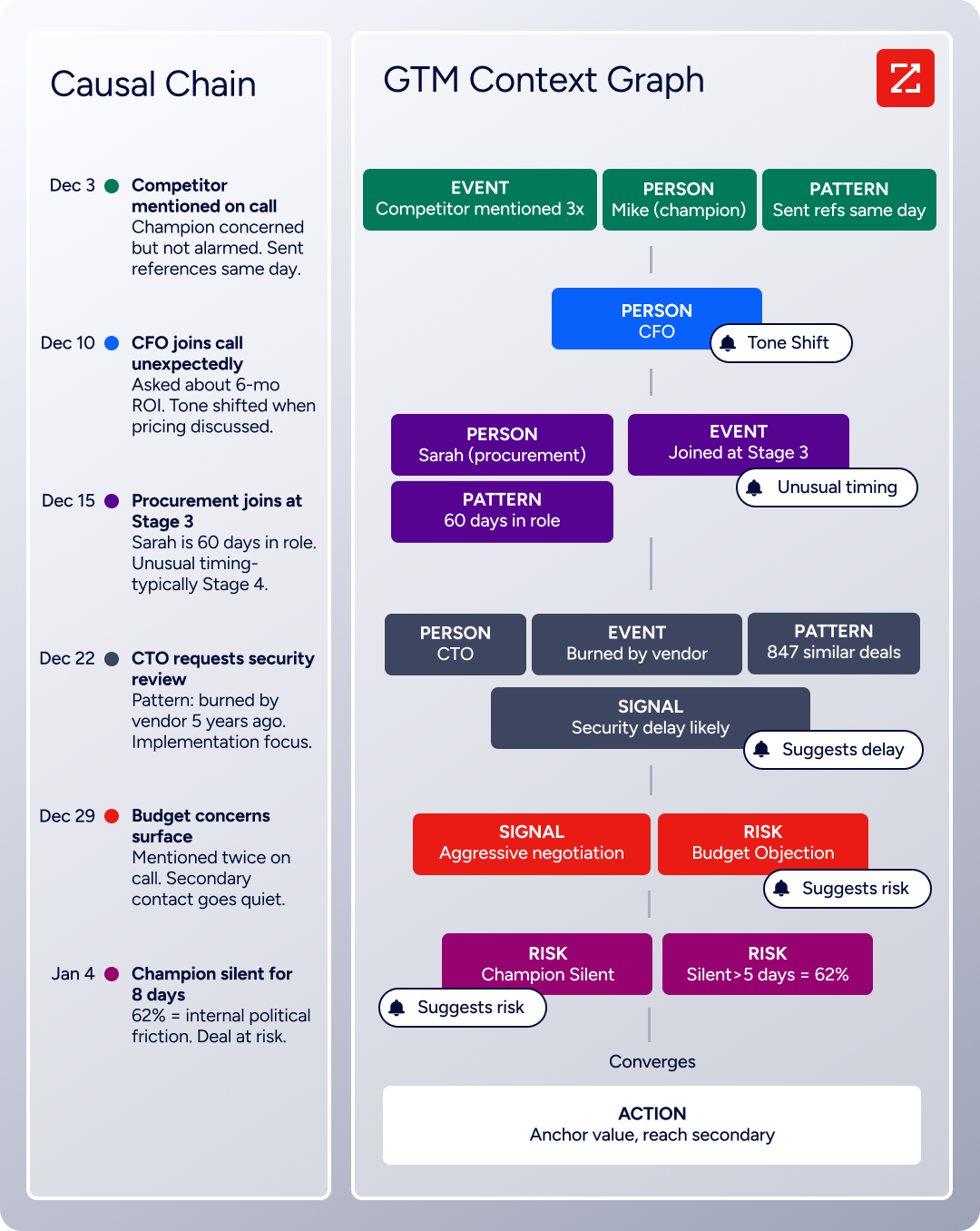
ZoomInfo's AI operates on a different problem. While Salesforce's AI agents handle CRM operations (case routing, email drafting, forecasting), ZoomInfo's GTM Context Graph processes 1.5B + data points daily to understand why deals move or stall. As ZoomInfo's Chief Product Officer Dominik Facher writes: "The CRM recorded the state change. It has no record of why it happened."
Source: ZoomInfo
The GTM Context Graph captures the context behind deal movements (executive sponsorship entering a call, a champion going quiet, a competitor being mentioned) and uses that context to predict what happens next and recommend what to do about it. The AI agents in GTM Workspace, built on Anthropic's Claude, handle account research, outreach drafting, signal monitoring, and CRM updates.
For Salesforce users, these AI layers are complementary, not redundant. Salesforce's Agentforce handles CRM workflow automation. ZoomInfo's intelligence layer handles account targeting and deal context. Each strengthens the other. For a detailed look at how the two platforms stack up, see our Salesforce vs. ZoomInfo comparison.
Pricing reflects three different markets
Pulse CRM's pricing is the simplest of the three. Three tiers, all with identical features, differentiated only by user count and contact limits:
Plan | Price | Users | Contacts |
|---|---|---|---|
$49/month | 1 | 500 | |
$119/month | 3 | 1,000 | |
$199/month | 5 | 10,000 |
Annual billing saves 25%. No contracts. Every feature is included at every tier: CRM, email marketing (unlimited sends), text marketing, sales pipelines, automation, quoting, project boards, and reporting. Additional users cost $15/month each. Additional contacts cost $50/month per 5,000. Franchise pricing requires contacting sales.
Salesforce's pricing is layered. Sales Cloud runs from $0 (Free Suite, max 2 users) to $550/user/month (Agentforce 1). Most teams need at least the $100/user/month Pro Suite for customization and quoting, or the $175/user/month Enterprise edition for AI and workflow automation. Annual contracts are required for all paid tiers above Starter.
Add-ons multiply cost quickly: Digital Engagement at $75/user/month, Agentforce at $125/user/month, and Premier Success Plans at 30% of net license fees. Implementation typically requires partners, adding further cost. Salesforce itself acknowledged its pricing "needed to be easier to understand, more predictable, and more flexible" in a September 2025 pricing update.
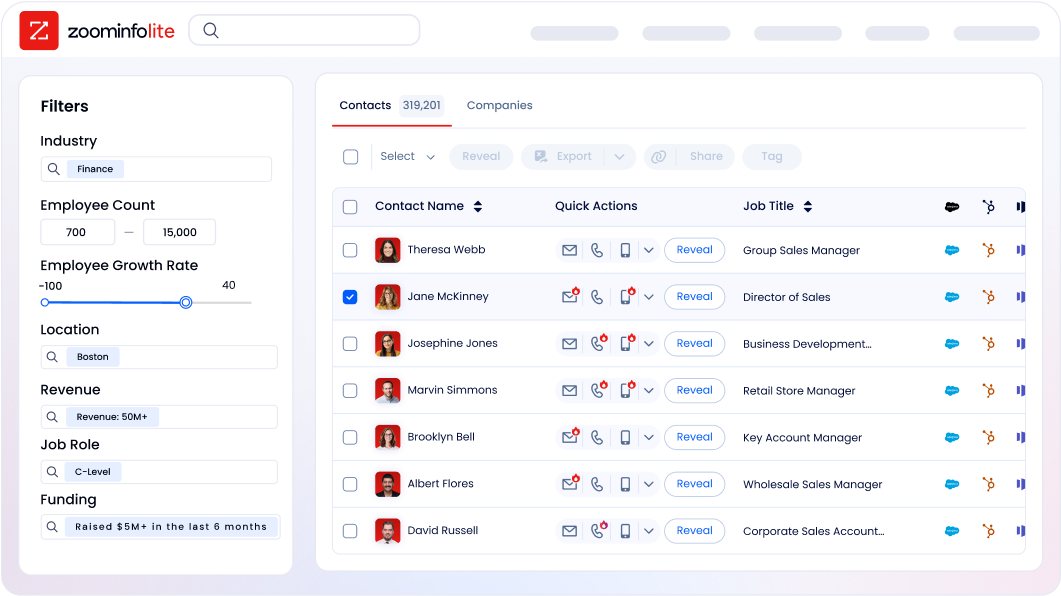
ZoomInfo uses consumption-based pricing with no publicly listed prices. The free ZoomInfo Lite tier provides permanent access to the B2B database with 10 monthly export credits, individual and company searches, the ReachOut Chrome Extension, and WebSights Lite (up to 10 website visitor reveals per day).
Source: ZoomInfo
No credit card, no time limit. Paid plans scale based on seats, credit volume, features, and company size. A 7-day free trial with full feature access (no credit card required) is also available.
The pricing comparison that matters is not ZoomInfo vs. Pulse or Salesforce. It is the cost of not having accurate data in your CRM. A sales team spending hours researching prospects manually, emailing outdated addresses, or calling disconnected numbers pays for that gap in lost productivity, whether it shows up on an invoice or not.
Integration ecosystems reflect platform maturity
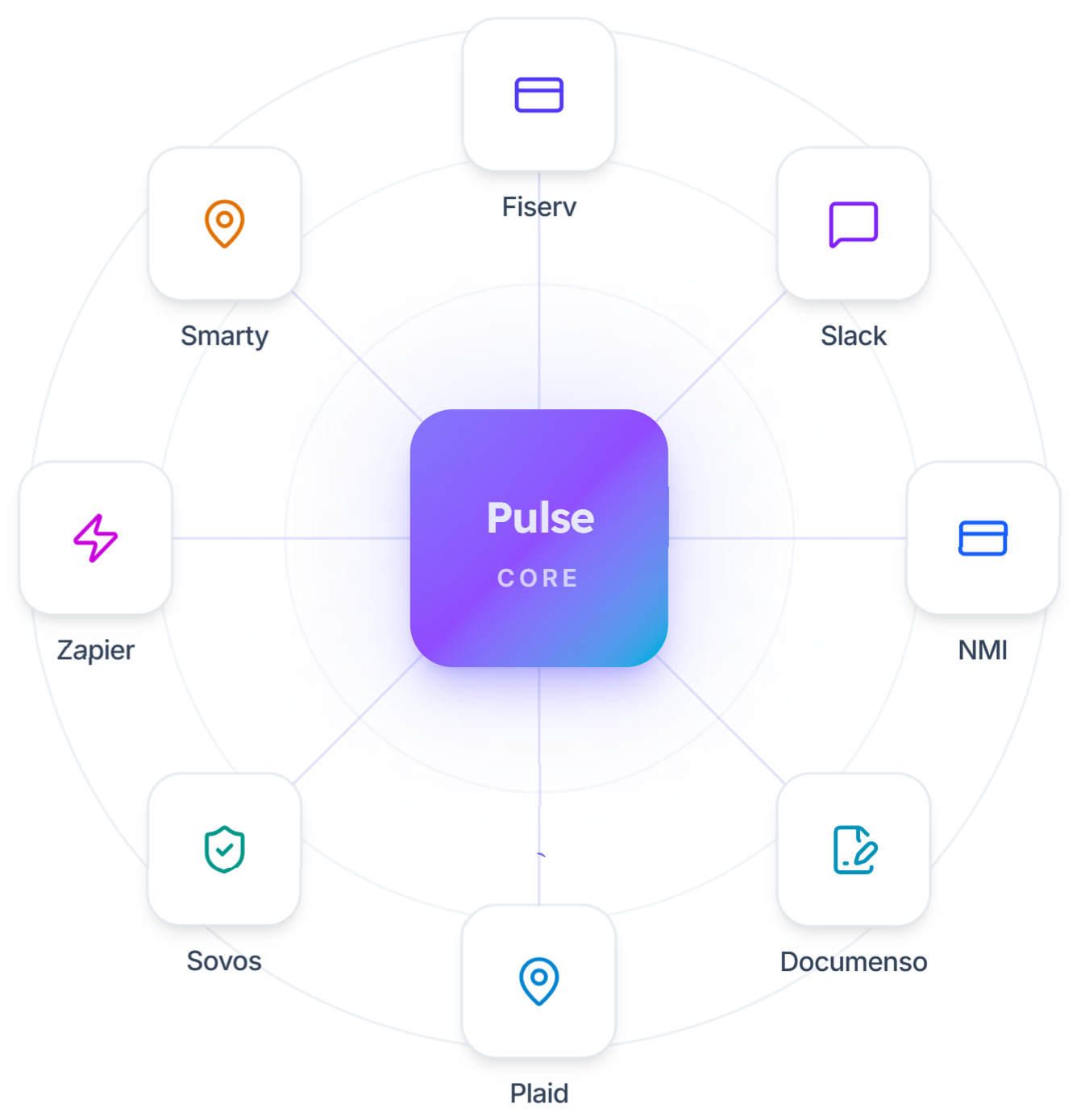
Pulse CRM connects to the outside world through Zapier, Make, and its own API, all included at every plan tier. This covers the basics: you can push data between Pulse and most popular tools through Zapier's library of thousands of app connections.
Source: Pulse CRM
But native integrations with major platforms are limited. Pulse positions itself as a replacement for tools like Mailchimp and Constant Contact rather than a hub that connects to them.
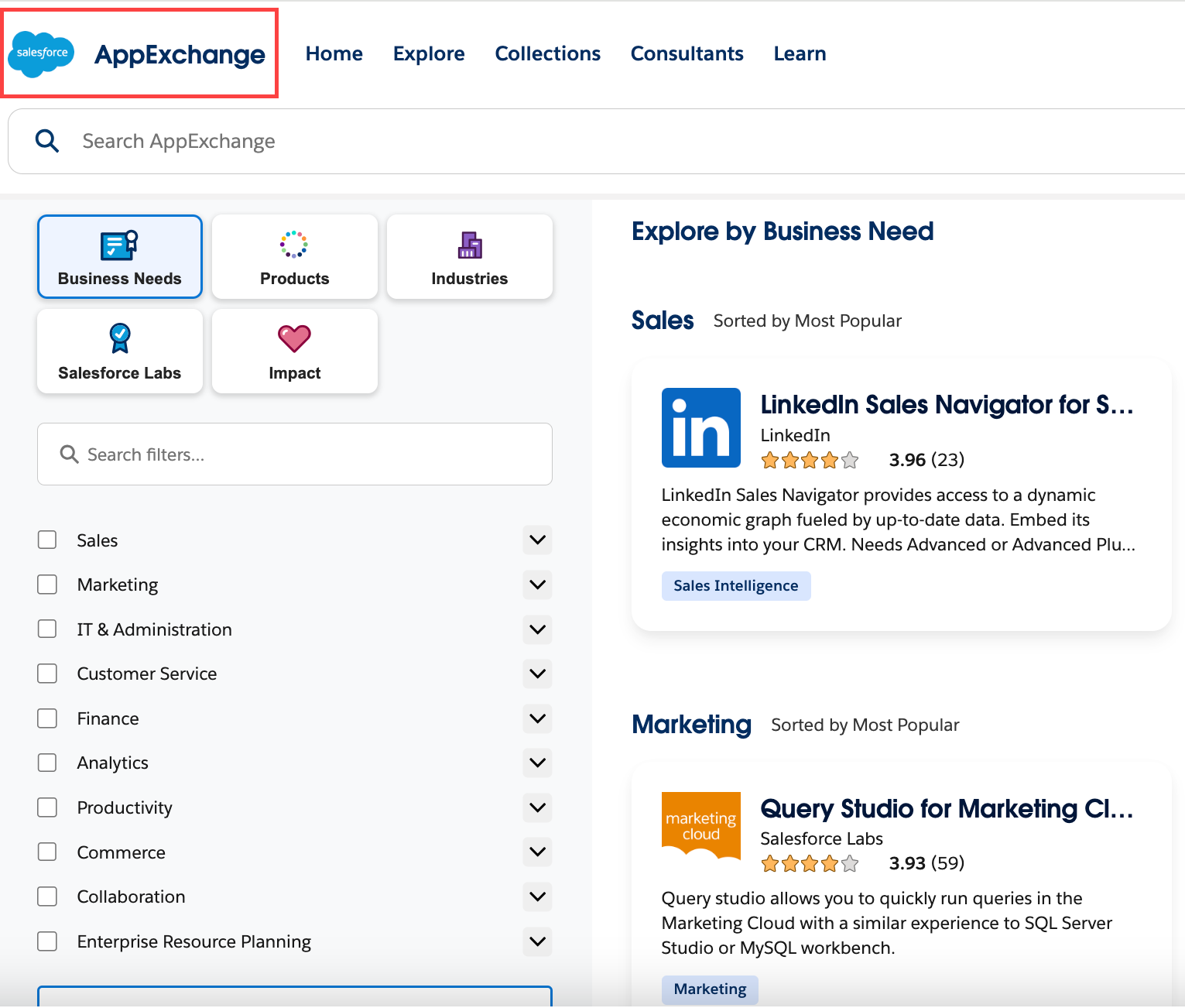
Salesforce operates the world's largest enterprise app marketplace. AppExchange offers 9,000+ partner apps with 14+ million installs, and 91% of Salesforce customers use at least one AppExchange app. MuleSoft handles complex enterprise integrations with hundreds of pre-built connectors.
Source: Salesforce
Slack provides the collaboration layer. The ecosystem runs so deep that Salesforce estimates its partner economy is five times larger than Salesforce itself.
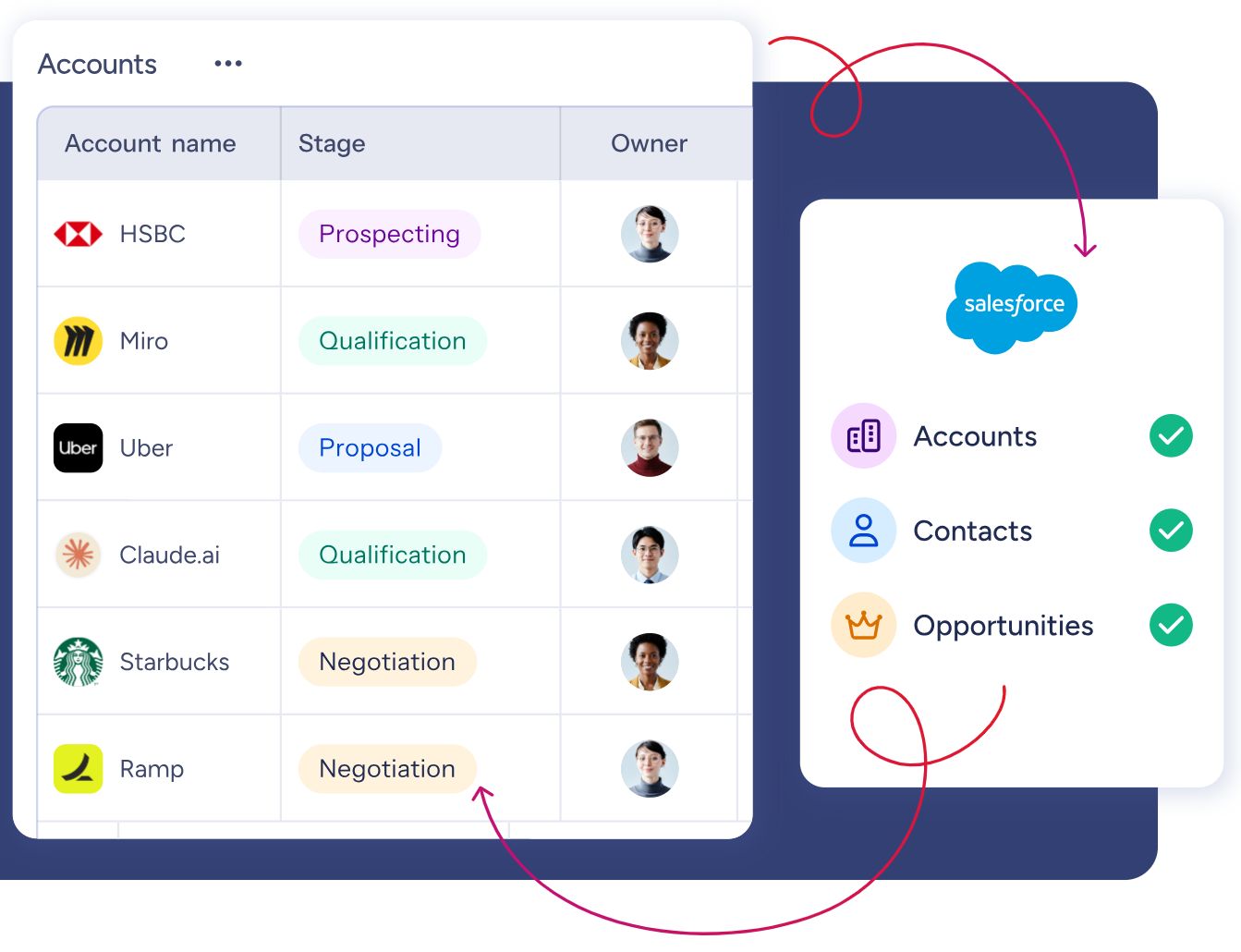
ZoomInfo's App Marketplace lists over 120 partner integrations spanning CRM, marketing automation, sales engagement, data warehouses, and more. Key integrations are native: Salesforce, HubSpot, Microsoft Dynamics 365, Snowflake, and Salesloft.
Source: ZoomInfo
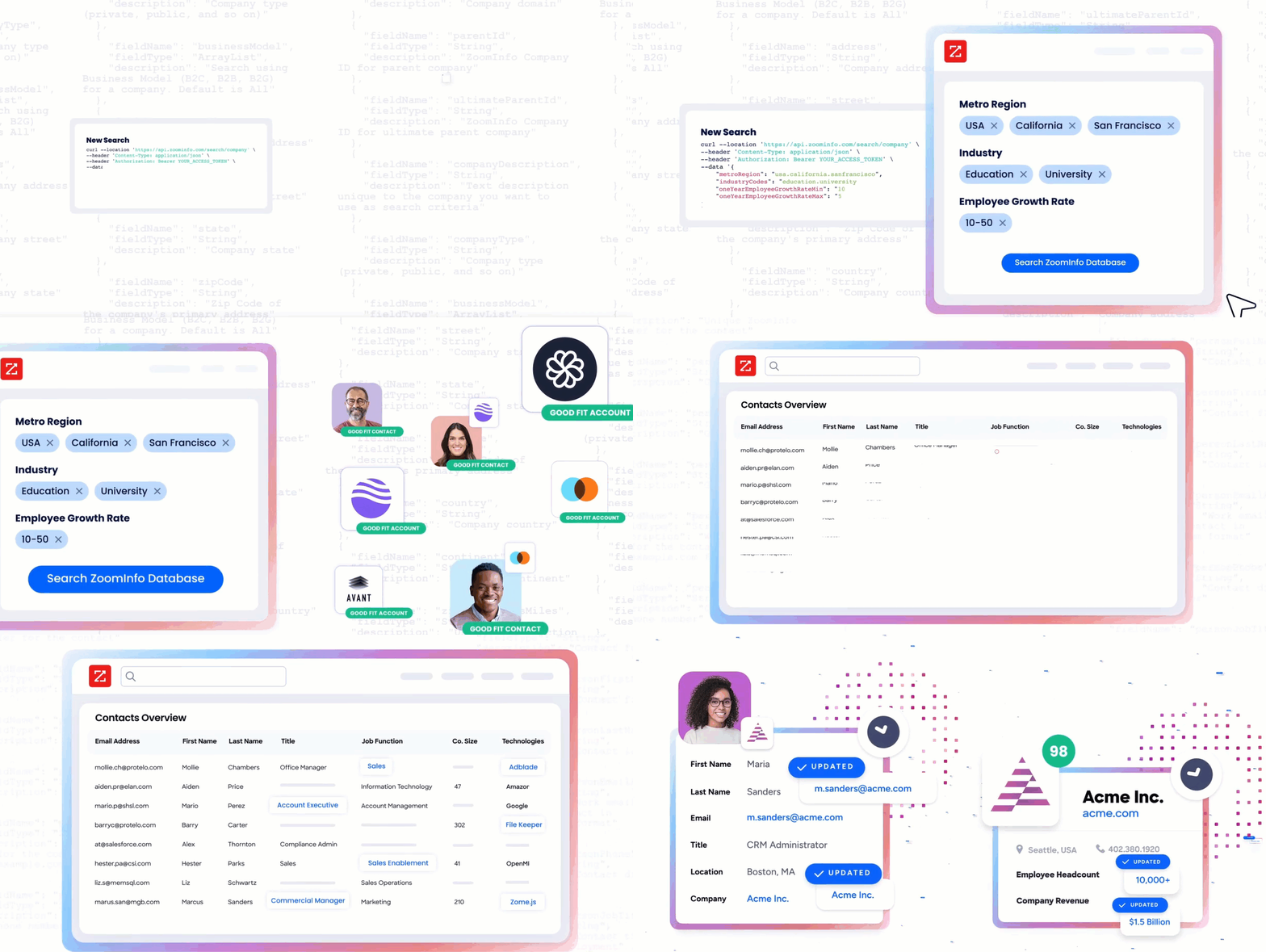
The Enterprise API provides programmatic access to search, enrich, and intelligence endpoints. The MCP server connects AI models directly to ZoomInfo's B2B data, with support for Claude and ChatGPT. API access is included in all relevant plans.
Source: ZoomInfo
For teams running Salesforce, adding ZoomInfo is straightforward: the native integration pushes enriched data and signals directly into Salesforce records. For teams running Pulse, ZoomInfo connects through Zapier or API, though the integration won't be as thorough as the native Salesforce connection.
Support and learning curve
Pulse CRM gets you productive fast. The platform requires no technical experience, with a promise to be up and running within minutes. Phone support is available at (800) 719-4281 during US business hours (9AM–5PM ET, Monday–Friday). A free learning platform provides courses, and downloadable resources cover CRM optimization.
Source: Pulse CRM
The tradeoff: during high-demand periods, response times can slow, a natural consequence of a small team serving a growing customer base.
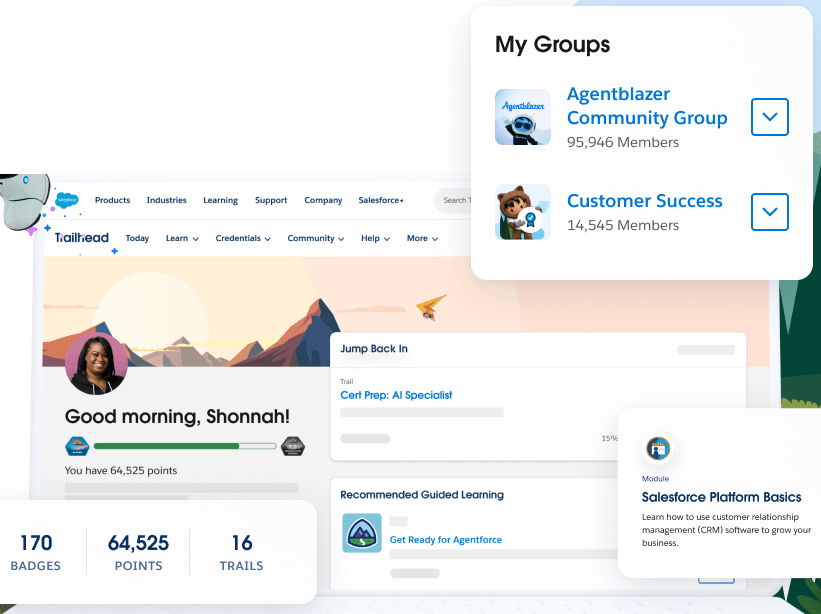
Salesforce requires significant learning investment. Trailhead, the free learning platform, offers 1,500+ badges and has 6+ million learners. The Trailblazer Community spans 20 million members with 1,300+ local groups in 90 countries.
Source: Salesforce
Support runs across three tiers: Standard (free, self-service), Premier (30% of net license fees, 1-hour response time for business-impacting issues), and Signature (custom pricing, dedicated CSM, 15-minute critical response). The resources are extensive. But the investment to become proficient is real. Most organizations need a dedicated Salesforce administrator, and over 70% of implementations are partner-led.
ZoomInfo sits between the two. The platform's breadth means a real onboarding investment, which is why ZoomInfo redesigned its onboarding program to span 90 days, producing a 25% improvement in customer satisfaction scores and winning Rocketlane's Golden Comet award for Best Customer Onboarding Team of 2024. ZoomInfo University provides role-specific learning paths and certifications.

Source: ZoomInfo
Support is available through the Help Center, phone at +1 866-904-9666, and professional services through ZoomInfo Labs. Enterprise plans include a dedicated customer service manager.
Security and compliance
This is where the three platforms diverge sharply, and it matters if your business operates in a regulated industry.
Pulse CRM maintains a standard Privacy Policy and Terms & Conditions. The platform uses "commercially acceptable means" to protect personal data, per its privacy policy. It includes admin-level permission controls for restricting access to sensitive information and tailoring permissions for templates and pipelines.
However, no formal compliance certifications (SOC 2, ISO 27001, HIPAA, or GDPR certifications) appear on public pages. For most small businesses and franchise systems, this is sufficient. For organizations with strict compliance requirements, it is a gap worth noting.
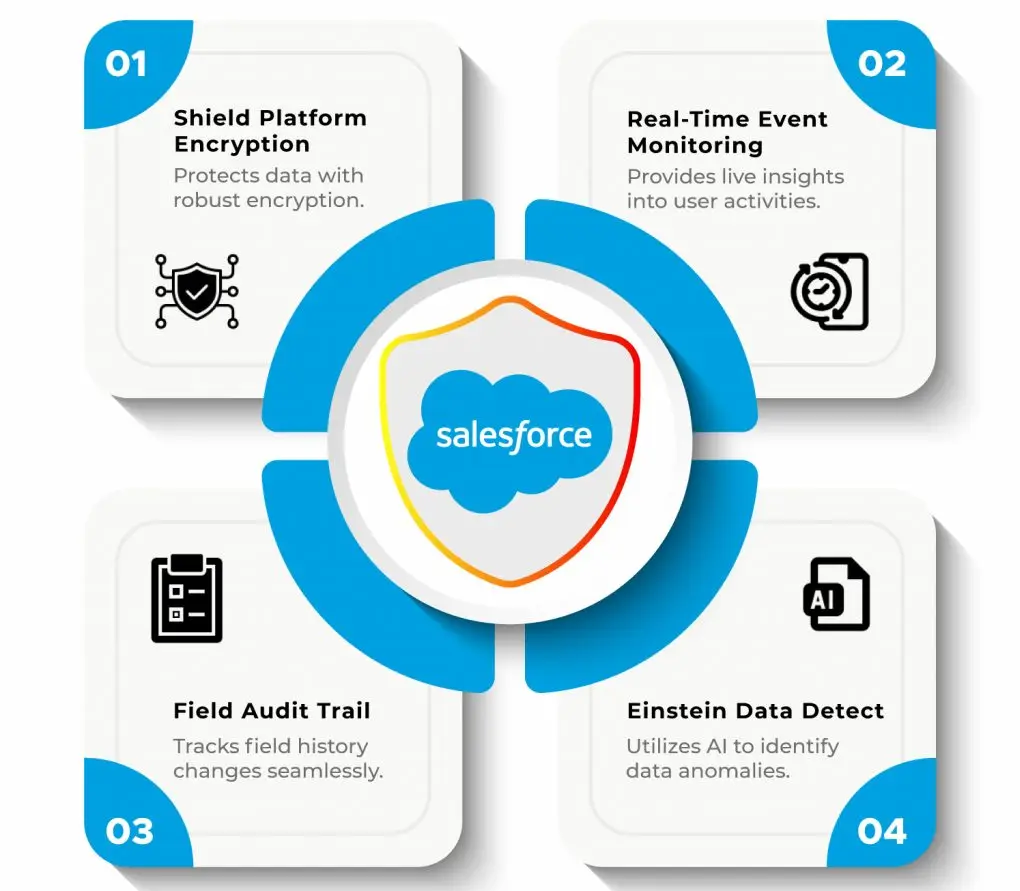
Salesforce provides enterprise-grade security. Certifications include ISO 27001/27017/27018, SOC 1/2/3, FedRAMP (Government Cloud), and HITRUST. Salesforce Shield (premium add-on) adds event monitoring, platform encryption with bring-your-own-key, and field audit trail.
Source: Salesforce
Hyperforce enables deployment on public cloud infrastructure with regional data residency. trust.salesforce.com provides real-time system status and compliance documentation.
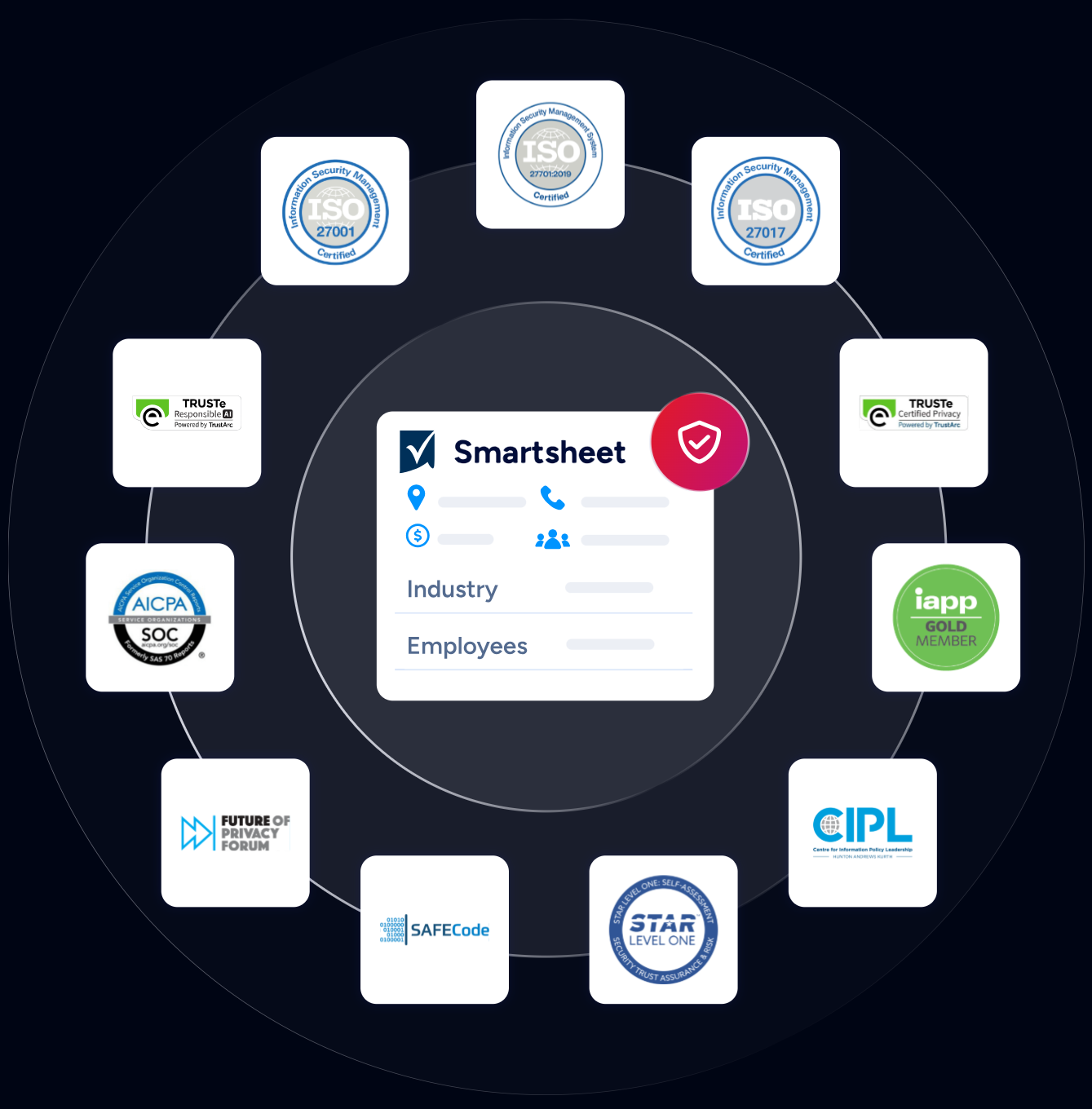
ZoomInfo holds a thorough certification stack, all renewed annually: ISO 27001, ISO 27701, SOC 2 Type II, TRUSTe GDPR Practices Validation, and TRUSTe CCPA Practices Validation. ZoomInfo is a registered data broker in California and Vermont and maintains a dedicated Trust Center at trust.zoominfo.com.
Source: ZoomInfo
For enterprise buyers who need assurance that the data they're using was collected and processed compliantly, this matters.
Pulse CRM vs. Salesforce vs. ZoomInfo: Which should you choose?
The three platforms serve different needs, and for many B2B teams, the answer involves more than one.
Choose Pulse CRM if:
You run a small business with fewer than 10 people on the sales team
You need a working CRM this week, not this quarter
Flat, predictable pricing matters more than unlimited scale
Done-for-you setup is worth more to you than customization flexibility
You manage a franchise system or agency with multiple accounts
You want email marketing, quoting, and project management in the same subscription
Choose Salesforce if:
Your organization has dedicated sales, marketing, and service teams
You need AI-powered automation that scales across departments
Industry-specific compliance and workflows matter to your business
You have (or plan to hire) a Salesforce administrator
Integration with a large ecosystem of enterprise tools is a requirement
You want a platform that can grow from 10 users to 10,000
Add ZoomInfo to either CRM if:
Your sales team spends more time searching for prospects than selling to them
You need verified direct-dial phone numbers and business emails for your target buyers
You want to know which companies are researching your product category right now
CRM data quality (outdated contacts, missing fields, stale records) is slowing your pipeline
You want AI that reveals why deals move, not just manages the CRM fields around them
Your go-to-market strategy depends on reaching the right buyers at the right time with the right message
Try ZoomInfo free and see how better data changes your pipeline.
A CRM organizes your sales process. But the process is only as strong as the data feeding it. Pulse CRM gives small businesses a clean, affordable system to manage relationships. Salesforce gives enterprises the infrastructure to operate at scale.
ZoomInfo gives both the intelligence to fill their pipelines with the right accounts, not just more accounts. The strongest sales teams don't choose between managing relationships and finding them. They build a stack that does both.
"It's not just the data itself. It's more about the right data at the right time to help us reach out with the right message across that full buyer journey," said Chelsea Kenyon, Senior Director of Digital Strategy at Redwood Logistics. (Redwood Logistics Case Study)
Pulse CRM vs. Salesforce vs. ZoomInfo FAQ
What is the fundamental difference between Pulse CRM, Salesforce, and ZoomInfo?
Pulse CRM is an all-in-one CRM and marketing automation platform built for small businesses and franchise systems, with every feature included at every price tier starting at $49/month. Salesforce is an enterprise CRM platform serving over 150,000 companies with functionality across sales, service, marketing, commerce, and AI.
ZoomInfo is a B2B data intelligence and go-to-market platform with 500M contacts and 100M companies in its database, designed to help sales and marketing teams identify and engage the right buyers. ZoomInfo is not a CRM replacement; it is an intelligence layer that works alongside either platform.
Which platform is cheapest for a small sales team?
Pulse CRM is the most affordable option, starting at $49/month for one user with every feature included and no annual contract required. Salesforce offers a free tier for up to 2 users and a Starter Suite at $25/user/month, but features like customization and automation require the $100/user/month Pro Suite or higher, with annual contracts.
ZoomInfo offers a permanent free Lite tier with 10 monthly export credits, and paid plans are custom-quoted based on usage.
Does ZoomInfo replace a CRM?
No. ZoomInfo provides the data and intelligence layer that CRMs need but do not generate on their own. It tells your team who to pursue, when to engage, and what to say. ZoomInfo integrates natively with Salesforce and connects to other CRMs through Zapier, API, or MCP. Most teams use ZoomInfo alongside their CRM, not instead of it.
Which platform has the strongest AI capabilities?
Salesforce has the most advanced CRM AI through Agentforce, which deploys autonomous agents for sales, service, and marketing tasks using the Atlas Reasoning Engine. Pulse CRM currently has no AI features.
ZoomInfo's AI focuses on a different problem: its GTM Context Graph processes over 1.5 billion data points daily to understand deal dynamics, buyer behavior, and account context. Salesforce and ZoomInfo AI capabilities are complementary rather than overlapping.
Can Pulse CRM scale to a mid-sized business?
Pulse CRM's highest plan supports 5 users and 10,000 contacts for $199/month, with additional users at $15/month and contacts at $50 per 5,000. For teams under 20 people with moderate contact volumes, this can work.
However, Pulse lacks AI features, has limited native integrations, and does not publish formal compliance certifications. Organizations with complex workflows, large teams, or regulatory requirements will likely outgrow it.
How does ZoomInfo's data compare to what a CRM already stores?
CRMs store the contacts and companies your team has already collected. ZoomInfo maintains a database of 500M contacts and 100M companies, verified through automated scanning, third-party data partnerships, and 300+ human researchers, with accuracy up to 95% on first-party data.
ZoomInfo also provides buyer intent signals, technographics covering 30,000+ technologies across 30 million companies, org charts, and company hierarchies that CRMs do not generate on their own. The data flows into your CRM through native integrations or API, enriching existing records and surfacing new prospects.
Which platform is best for franchise businesses?
Pulse CRM has dedicated franchise management features including corporate-level lead distribution by geography (zip codes, census tracts), pre-built automation templates that franchisors can push to franchisees, and consolidated cross-location reporting. Franchise pricing is custom and requires contacting Pulse directly.
Salesforce can handle franchise operations through its platform customization and industry clouds, but requires significant configuration. ZoomInfo's data can support franchise territory planning and local market analysis, but franchise-specific CRM workflow management is not its focus.
Do any of these platforms offer a genuinely free option?
All three offer free entry points. Pulse CRM has a free trial (credit card required, auto-charges at the end of the trial period). Salesforce offers a permanent Free Suite for up to 2 users with no contract. ZoomInfo offers both a permanent free Lite tier (10 monthly export credits, no credit card, no time limit) and a separate 7-day free trial with full feature access and no credit card required.
More Pulse CRM and Salesforce comparisons:
