
Choosing between Pulse CRM and Zoho CRM comes down to five questions:
Are you a small business wanting done-for-you simplicity, or a growing company that needs customization?
Do you want every feature at a flat monthly price, or are you willing to pay per user for more capabilities at each tier?
Is your team managing existing leads, or do you also need help finding the right buyers?
How much setup complexity can your team absorb before adoption stalls?
Are you running B2B outbound sales where contact data quality determines your pipeline?
Here's what we recommend:
Pulse CRM is built for small business owners who want a CRM without the setup headaches. Its done-for-you implementation philosophy, flat pricing with every feature included from the $49/month Starter plan, and specialized franchise management suite make it a good fit for owner-operators who need CRM, email marketing, sales pipelines, quoting, and project boards in one subscription.
The tradeoff is ceiling: Pulse is a small company (2–10 employees) serving a narrow market. You won't find AI features, customization options, or the integration ecosystem that growing B2B teams eventually require.
Zoho CRM is the customizable platform for small-to-mid-market companies that need a CRM to grow with them. With a permanent free plan for up to 3 users, AI capabilities through Zia (predictive scoring, agentic AI, generative configuration), Blueprint process enforcement, and native access to 40+ integrated Zoho business applications, Zoho delivers enterprise features at a fraction of enterprise pricing.
The tradeoff is complexity: advanced setup demands time, support quality can be inconsistent, and the interface can feel overwhelming to new users.
Both platforms manage your sales process well once leads are in the system. But for B2B teams, the harder problem is often upstream: finding the right buyers, knowing when they're in-market, and reaching them with verified contact information. Neither Pulse nor Zoho provides that layer. That's where ZoomInfo changes the equation.
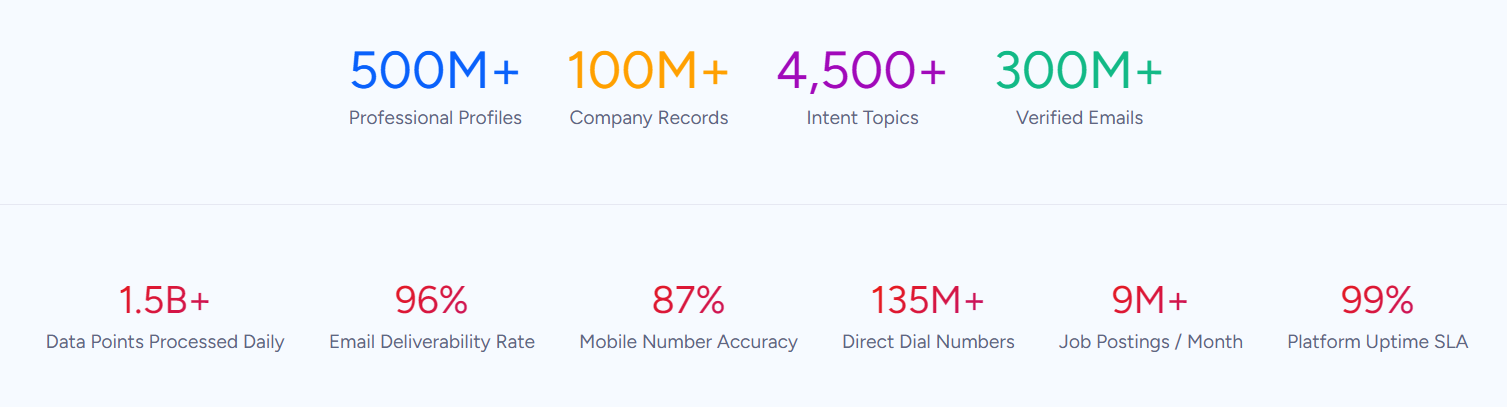
ZoomInfo is an AI-powered GTM platform built on a large B2B data foundation: 500M contacts, 100M companies, 135M+ verified phone numbers, and 200M+ verified business email addresses.
Its GTM Context Graph processes 1.5B+ data points daily, unifying this data with your CRM records, conversation transcripts, and behavioral signals to show the full context of your accounts (not just what's happening in your pipeline, but why deals move or stall). Your team can act on that intelligence through GTM Workspace for sellers, GTM Studio for marketers and RevOps, or the Enterprise API and MCP in any other front-end.
If finding B2B buyers is the real bottleneck in your sales process, see how ZoomInfo works.
Pulse CRM vs. Zoho CRM vs. ZoomInfo at a glance
Pulse CRM | Zoho CRM | ZoomInfo | |
|---|---|---|---|
Core focus | All-in-one SMB CRM | Customizable CRM platform | AI-powered GTM platform |
Best for | Small businesses, franchises, agencies | SMBs to mid-market across industries | B2B sales, marketing, and RevOps teams |
Starting price | $49/month (all features included) | Free (3 users); paid from $14/user/month | Custom-quoted; permanent free Lite tier |
B2B contact database | None | None | 500M contacts, 200M+ verified emails |
AI capabilities | None | Zia: scoring, agents, generative AI | GTM Context Graph, AI agents, intent data |
Automation | Trigger-based workflows | Blueprint, Cadences, Journey Orchestration | Signal-triggered plays, AI-powered outreach |
Buyer intent data | None | None | 210M IP-to-Org pairings |
Integrations | Zapier, Make, API | 1,100+ marketplace apps | 120+ integrations, API, MCP |
Compliance | Basic privacy policy | ISO 27001, SOC 2, HIPAA, GDPR | ISO 27001, SOC 2, GDPR, CCPA |
Free trial | Yes (credit card required) | 15 days, no credit card | 7-day trial + permanent Lite tier |
Pulse wins on simplicity, Zoho wins on depth
Pulse CRM and Zoho CRM approach the same problem from opposite directions.
Pulse bets on removing friction. The homepage promise is direct: "Most CRMs give you tools. Pulse builds the system for you."
For a business owner who's been burned by a CRM that sat unused after purchase, that pitch lands. Reviewers on G2 describe the platform as "cleverly designed to create complex automations with simple tools anyone can understand."
The simplicity has limits. Pulse offers CRM, email marketing, text message marketing, sales pipelines, quoting, project boards, and reporting. That's enough for a small service business with a straightforward sales process.
Source: Pulse CRM
But the contact record structure lacks dedicated areas for detailed personal information per client, the mobile apps differ between iOS and Android, and integrations rely on Zapier, Make, and API access rather than native connections.
Zoho CRM operates at a different scale.
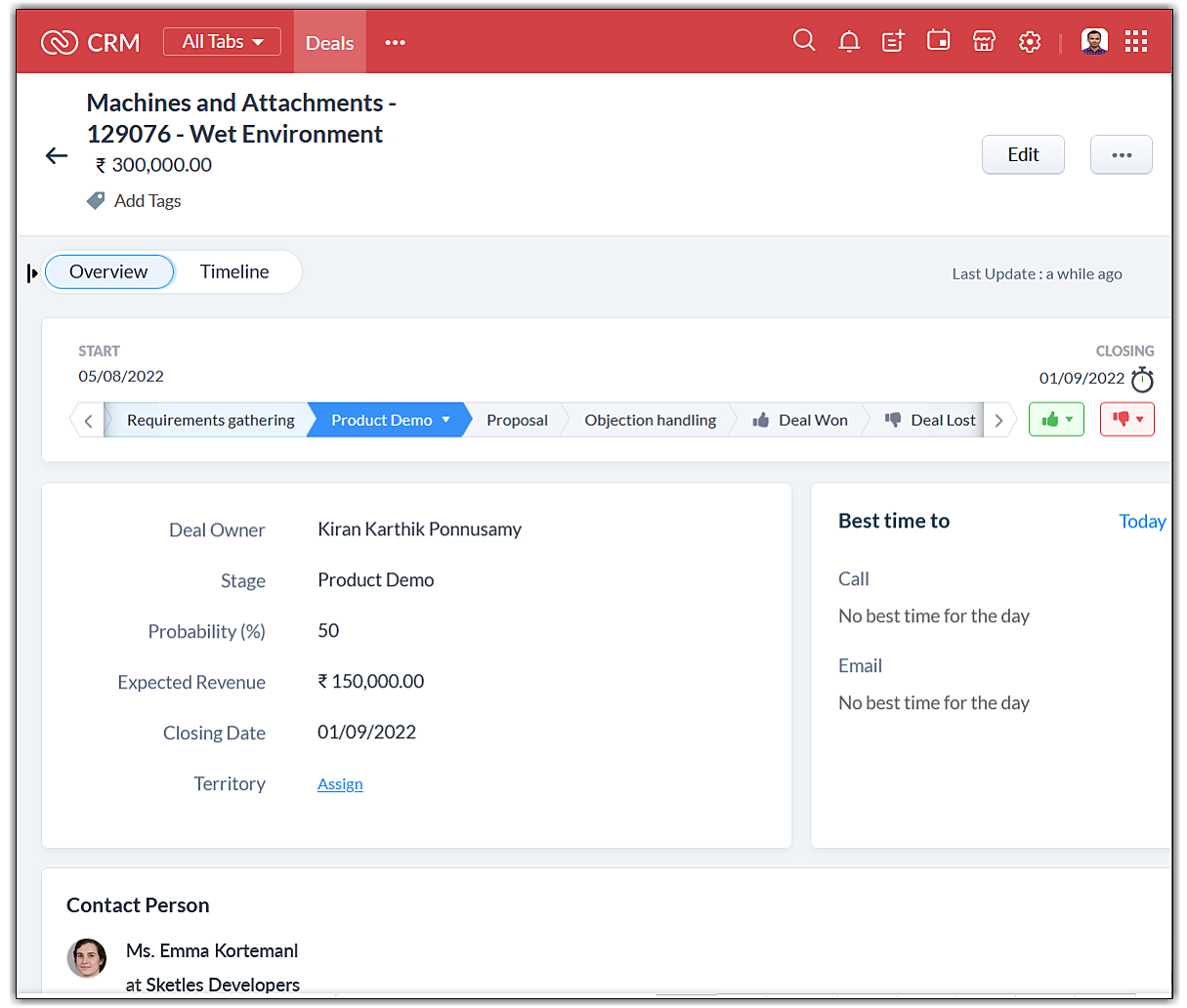
The platform includes sales force automation, omnichannel engagement across email, phone, WhatsApp, Facebook, X, LINE for Business, and SMS, Canvas Design Studio for no-code UI customization, CPQ for quoting, Blueprint process enforcement, Journey Orchestration, and up to 500 custom modules on the Ultimate plan.
Source: Zoho CRM
Organizations can reshape nearly every layer of the system to match their sales process.
That depth comes with a cost. G2 reviewers note that while basic use is accessible, full configuration is complex, particularly for businesses with intricate workflows. Capterra reviewers confirm that customization demands significant time. Configuring Blueprints, Cadences, custom modules, and Canvas views requires admin bandwidth that many small teams don't have.
The choice depends on your team's capacity for configuration. Pulse gives you a working system on day one. Zoho gives you a system that can become exactly what you need, if you invest the time to build it.
The data gap neither CRM closes
This is the distinction most CRM comparisons miss.
Both Pulse CRM and Zoho CRM manage customer data. Pulse centralizes customer data and enables targeted marketing. Zoho provides a single record of truth for leads, contacts, accounts, and deals. Both assume you already have leads to manage.
For businesses with steady inbound traffic or referral networks, that assumption holds. But for B2B sales teams that depend on outbound prospecting, the CRM is only as good as the data inside it. Neither Pulse nor Zoho provides a B2B contact database, buyer intent signals, or company intelligence. You bring your own data, or you connect third-party tools to fill the gap.
ZoomInfo exists to close that gap.
The platform delivers 500M contacts, 100M companies, 135M+ verified phone numbers, and 200M+ verified business email addresses, backed by a multi-source verification pipeline with 300+ human researchers and up to 95% accuracy on first-party data.
In a Fortune 500 competitive RFP analyzing 25 million contacts across vendors, the independent consultant concluded that "no other competitor came even close."
Beyond contact records, ZoomInfo adds buyer intent data tracking signals from 210 million IP-to-Organization pairings and 6 trillion+ new keyword-to-device pairings monthly, website visitor identification that resolves anonymous traffic to specific companies, and technographics covering 30,000+ technologies across 30+ million companies.
This data powers the GTM Context Graph, which processes 1.5B+ data points daily and fuses ZoomInfo's third-party intelligence with your CRM records, conversation transcripts, and behavioral signals. Your team sees not just which accounts are in your pipeline, but which accounts should be, and why.
Vensure's revenue operations team eliminated weeks of manual research by using ZoomInfo's B2B data, reaching target companies faster and accelerating pipeline generation. (Vensure)
For B2B organizations, investing in a CRM without investing in the data that fills it is solving the wrong problem first.
Automation depth ranges from basic to enterprise-grade
Automation is where the three platforms diverge most.
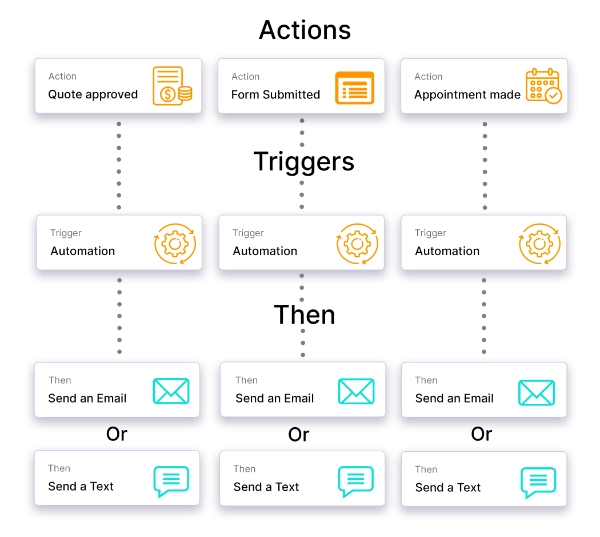
Pulse CRM offers trigger-based workflow automation that fires on pipeline status changes, quote approvals, or customer actions.
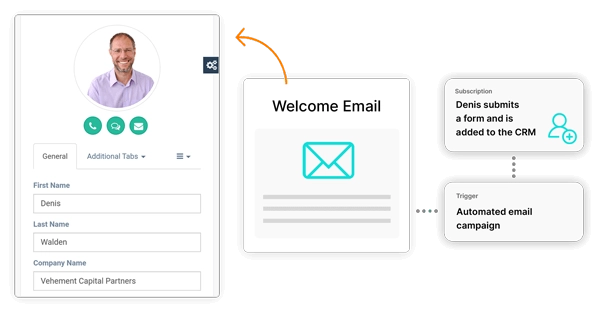
When a lead submits a form, the system creates a CRM record and enrolls them in a nurture campaign. When a customer onboards, workflows trigger welcome emails, create project board tasks, and send milestone-based updates. This works for small businesses with linear sales processes, but there's no conditional branching based on buyer behavior, no process enforcement, and no journey orchestration.
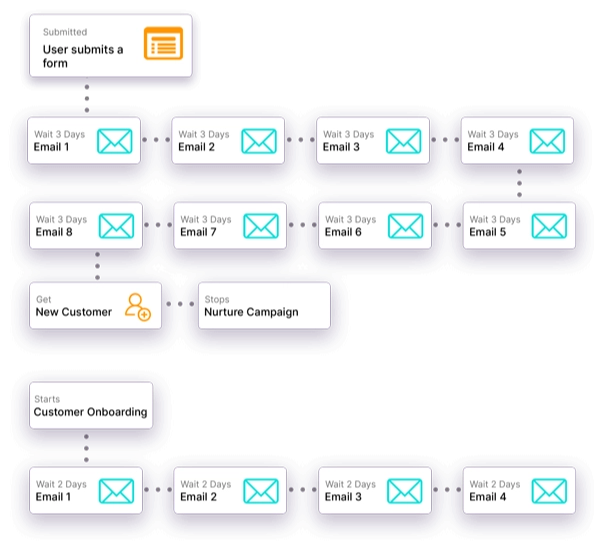
Source: Pulse CRM
Zoho CRM provides a layered automation stack that addresses different levels of process complexity:
Workflow Rules handle routine trigger-action automation, supporting up to 2,500 rules per organization
Blueprint maps each stage of a sales process as a visual flowchart and prevents reps from moving deals forward without completing required steps, with stagnation alerts and bottleneck reports built in
Cadences coordinate multi-channel follow-up sequences across email, call, task, and WhatsApp, branching based on customer behavior
Journey Orchestration (CommandCenter) uses PathFinder to discover actual customer paths across channels before designing journeys, then coordinates cross-functional teams at each stage
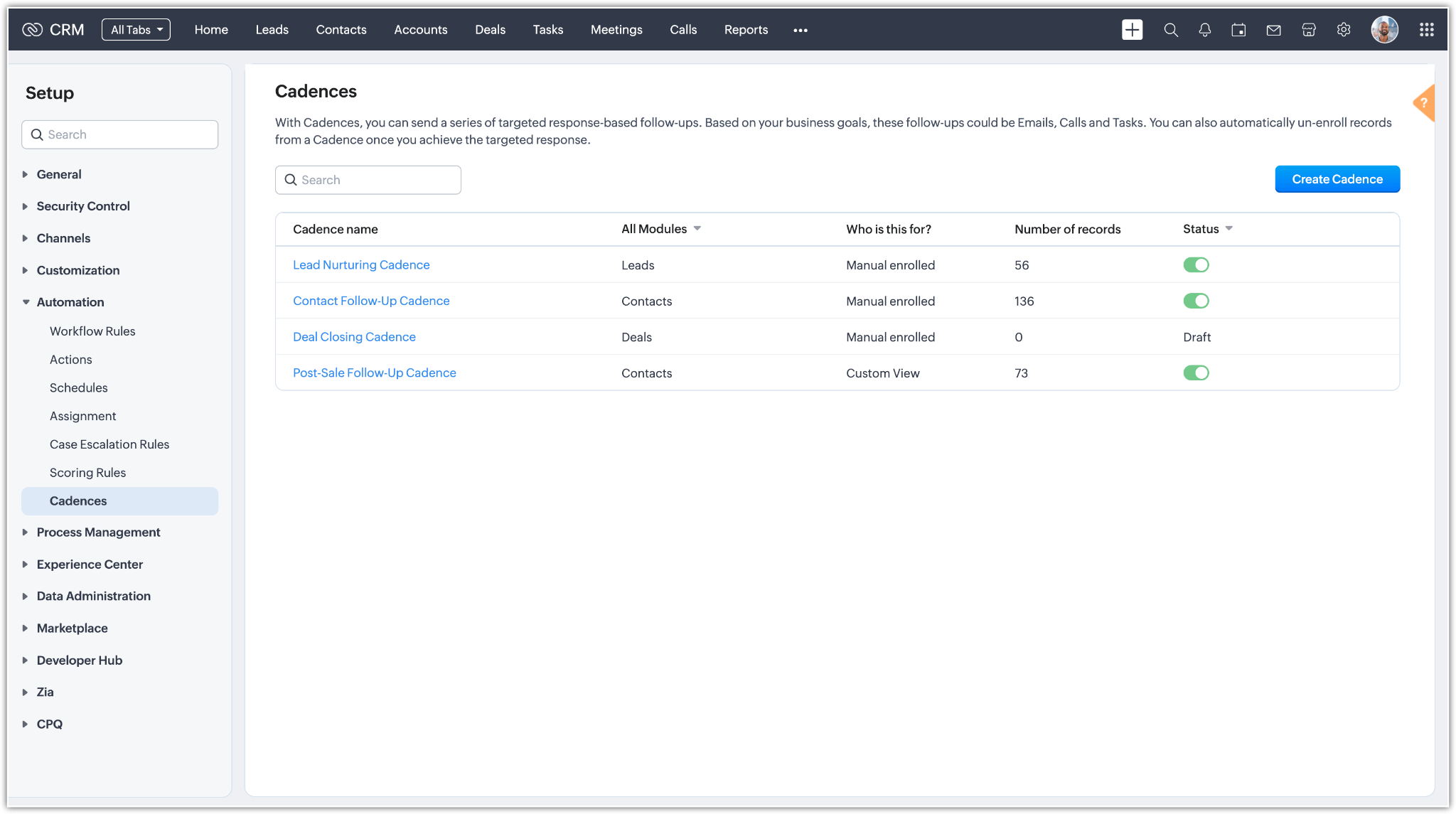
Source: Zoho CRM
G2 users praise Blueprint for ensuring reps follow defined processes and reducing human error. This is process governance, not just automation.
ZoomInfo approaches automation from the data layer rather than the CRM layer.
Instead of automating internal deal management, ZoomInfo automates the upstream GTM motion: finding buyers, detecting intent, and triggering outreach.
GTM Studio lets marketers and RevOps teams describe audiences in natural language and launch multi-channel plays across email, calls, ads, and direct mail, all triggered by buyer behavior signals rather than manual list building. Expansion plays that used to take 3 weeks now launch in 30 minutes.
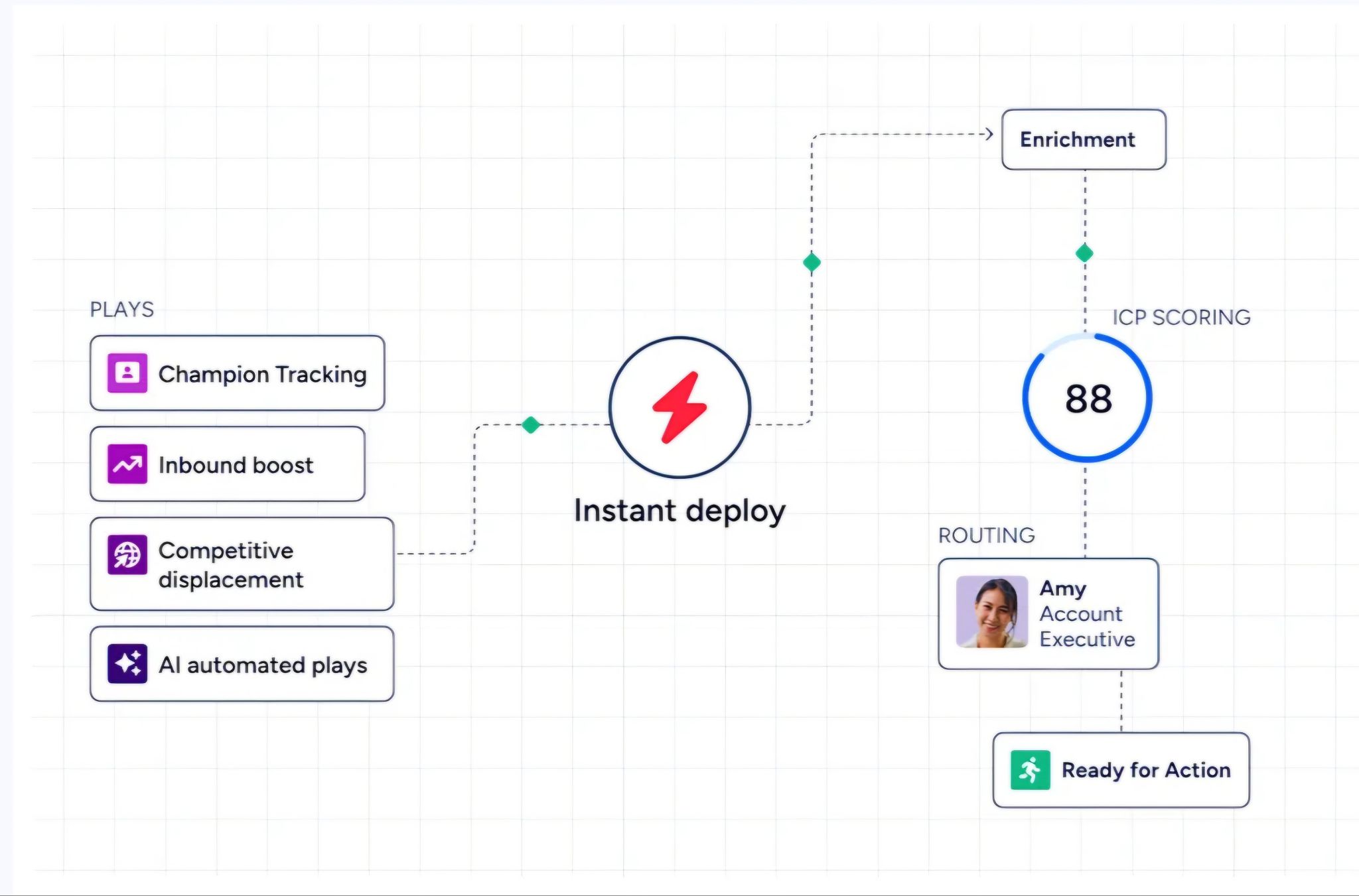
Source: ZoomInfo
GTM Workspace gives sellers an Action Feed of in-market buyers matched to target criteria, with AI-drafted actions attached to every signal.
The difference matters for B2B teams. Pulse and Zoho automate what happens after a lead enters your system. ZoomInfo automates the process of finding and engaging those leads in the first place.
AI capabilities range from absent to foundational
The AI gap across these three platforms is wide.
Pulse CRM has no AI features. No predictive lead scoring, no AI-generated content, no automated insights.
The platform relies on manual workflows and human decisions. For small businesses with straightforward sales processes, this isn't a limitation today. But it means Pulse can't grow into AI-assisted selling as the market moves that direction.
Zoho CRM offers Zia, an AI layer spanning predictive analytics, generative AI, and agentic execution.
Zia provides lead scoring by conversion probability, churn prediction that identifies at-risk customers, best time and channel recommendations per prospect, email sentiment analysis, and call transcription with emotion detection.
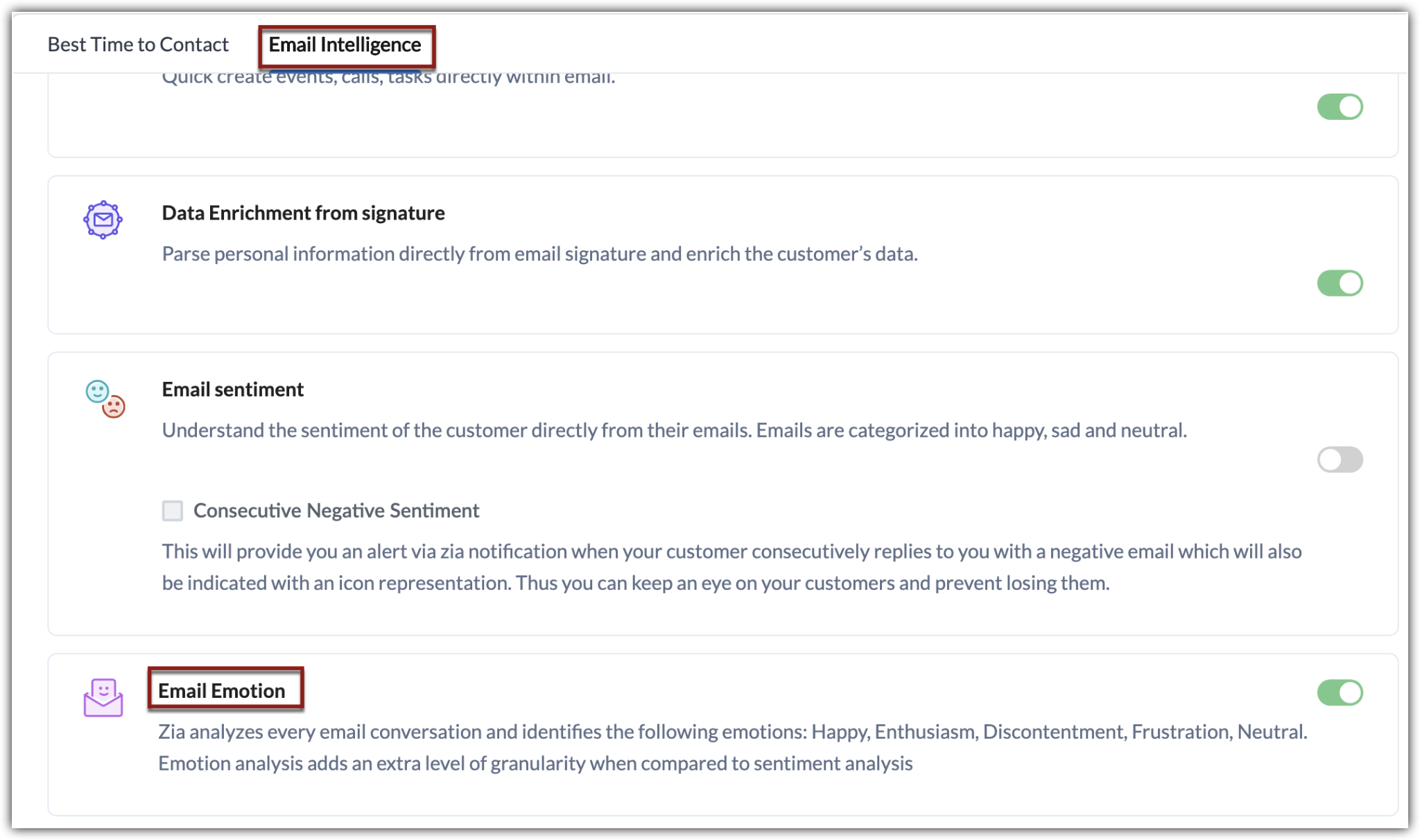
Source: Zoho CRM
The Zia Agents Store offers seven pre-built agents (SDR, sales coach, deal analyzer, quote generator, follow-up scheduler, revenue growth specialist, deal closure reminder) that operate as digital employees with their own CRM identities. Agent Studio allows no-code agent creation from natural language descriptions.
Zoho also launched its own proprietary LLM, replacing reliance on third-party AI and letting regulated industries use generative AI without exporting data.
Zoho's AI is strong for its price tier. But it works within the boundaries of your CRM data. Zia can predict which leads are most likely to convert, but only from the leads you already have.
ZoomInfo takes a different approach.
The GTM Context Graph unifies ZoomInfo's third-party B2B intelligence with your CRM records, conversation transcripts, and behavioral signals. Where Zoho's Zia analyzes your internal data, ZoomInfo connects internal patterns with external signals to capture why deals move or stall.
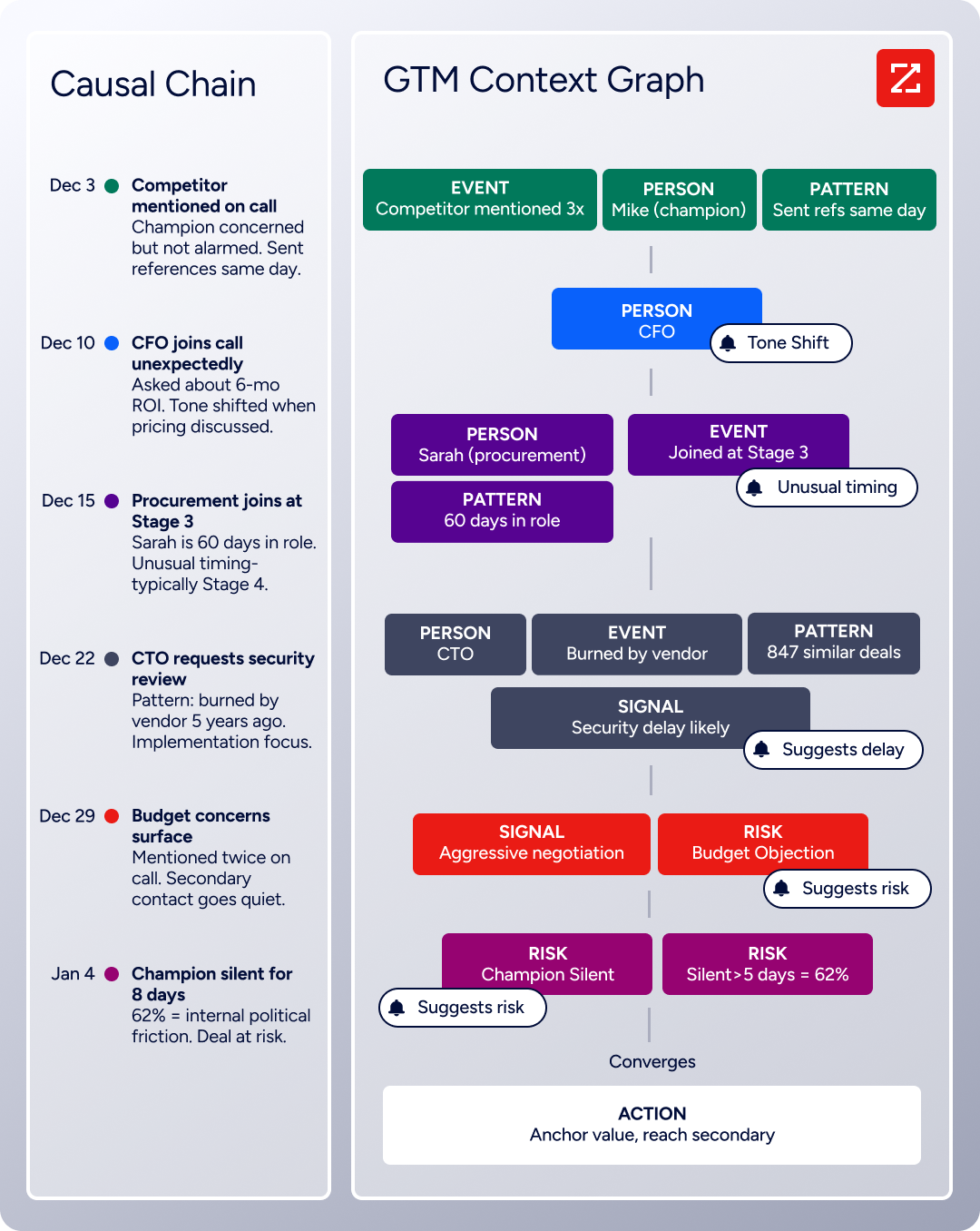
As ZoomInfo CPO Dominik Facher writes: "The CRM recorded the state change." It has no record of why it happened. The GTM Context Graph captures the decision context: who's championing a deal, who's blocking it, what competitive signals suggest, and what patterns from thousands of similar deals predict will happen next.
In GTM Workspace, AI agents built on Anthropic's Claude handle account research, generate personalized outreach, monitor buying signals, and surface next best actions. The AI Assistant produces one-click account briefs pulling CRM history, company news, ZoomInfo signals, and stakeholder context into a 10-second summary.
In GTM Studio, marketers define audiences in natural language and launch plays that run 24/7 and sharpen targeting from every click, open, and reply.
Seismic attributed 39% of active pipeline to opportunities identified or influenced by ZoomInfo signals, while their sales team boosted productivity by 54% and saved 11.5 hours per week. (Seismic)
Integrations and ecosystem breadth
How each platform connects to your existing tech stack reflects its market position.
Pulse CRM keeps its integration layer thin.
The platform relies on Zapier, Make, and API access across all plans, connecting to over 5,000 third-party applications through those middleware tools. No native integrations with accounting software, e-commerce platforms, or scheduling tools appear on the official site.
Source: Pulse CRM
Pulse positions itself as a replacement for tools like Mailchimp, Constant Contact, and SendGrid (per the free trial page), not as a platform that connects to them.
For small businesses consolidating their stack, this works. For teams with established tools they need to keep, the reliance on middleware adds complexity and cost.
Zoho CRM benefits from the Zoho ecosystem.
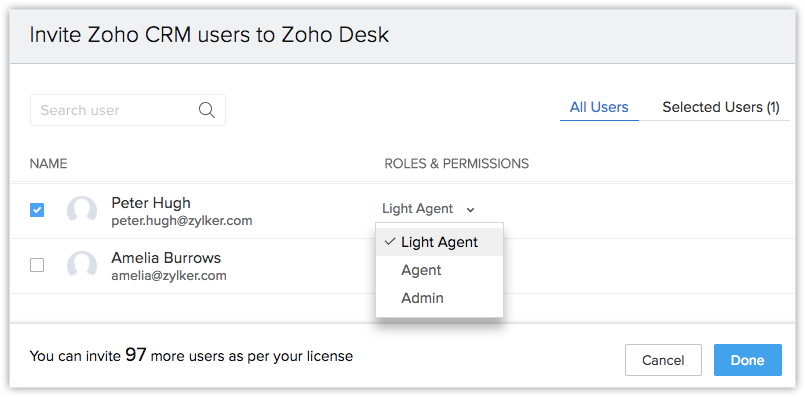
Signing up gives access to more than 40 integrated Zoho business applications including Zoho Books, Zoho Campaigns, Zoho Analytics, Zoho Desk, and Zoho Projects. The Marketplace offers 1,100+ pre-built integrations with third-party tools. Native connections include Microsoft Teams Phone and Online Meeting, Google Workspace, and Google Ads.
Source: Zoho CRM
For teams already using Zoho products, integration is strong. For teams outside the Zoho ecosystem, friction increases, particularly in enterprise environments that may require custom API work.
ZoomInfo treats integration as infrastructure.
The ZoomInfo App Marketplace lists 120 partner integrations spanning CRM, marketing automation, sales engagement, data warehouses, and communications, including native connections to Salesforce, HubSpot, Microsoft Dynamics 365, and Snowflake.
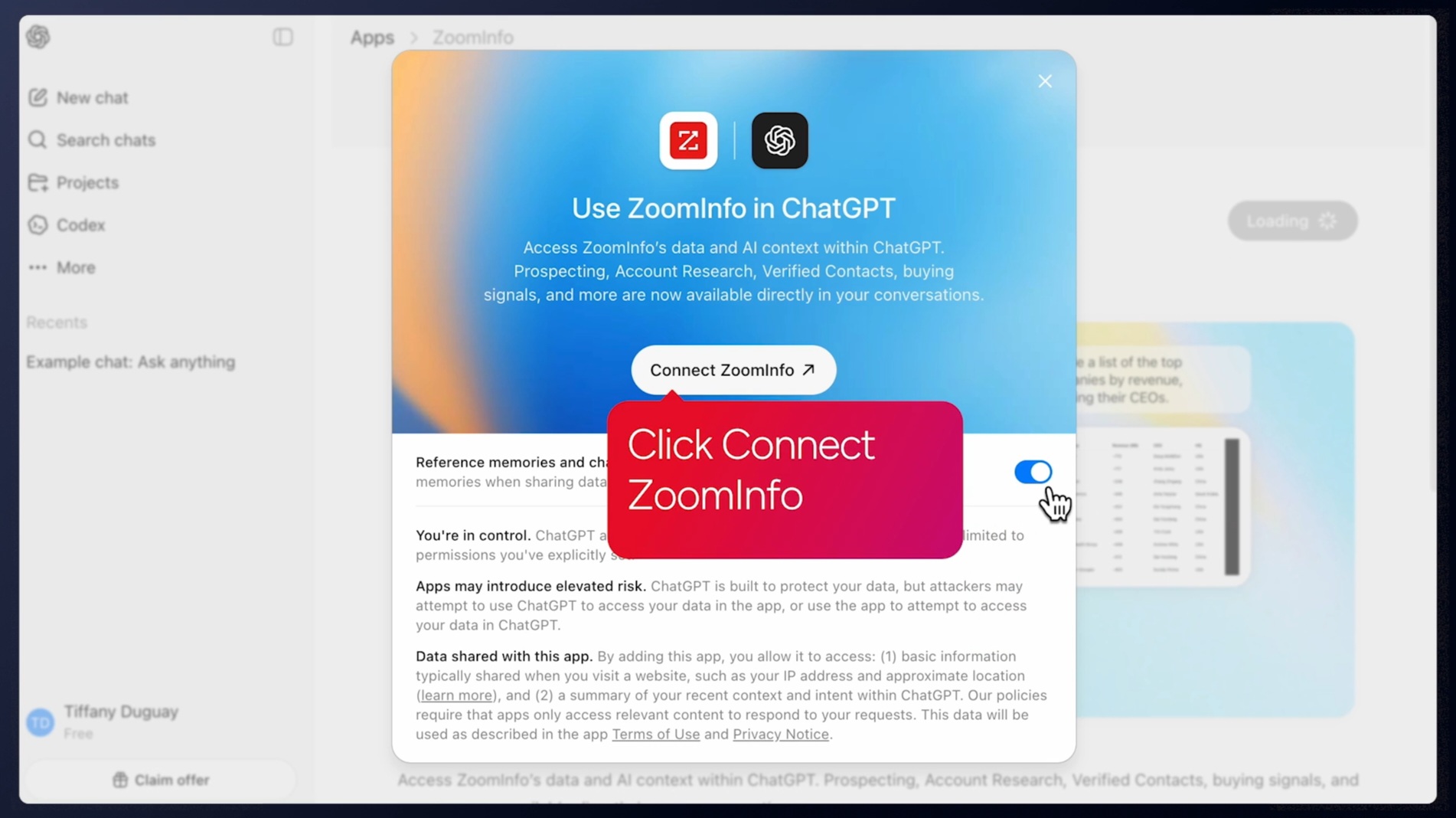
The Enterprise API and MCP server extend ZoomInfo's data and intelligence into any custom application or AI agent. API access is included in all relevant plans, and MCP is available through Claude and ChatGPT.
Source: ZoomInfo
This means ZoomInfo's intelligence can power a team's existing CRM (including Zoho) rather than requiring a rip-and-replace. The same data and GTM Context Graph that drives ZoomInfo's own products is available in any tool where your team works.
BDO Canada achieved an 87% reduction in time spent updating internal data dashboards by integrating ZoomInfo's API into their existing processes. (BDO Canada)
Pricing structures reveal different markets
Each platform's pricing tells you who it was designed for.
Pulse CRM uses all-inclusive flat pricing: every plan includes every feature, with tiers differentiated only by user count, contact limits, and Scarcity Timer view allotments.
Plan | Price | Users | Contacts |
|---|---|---|---|
Starter | 1 | 500 | |
Growth | 3 | 1,000 | |
Pro | 5 | 10,000 |
Annual billing saves 25%. No contracts, cancel anytime. Additional contacts cost $50/month per 5,000, and additional users run $15/month each. Franchise pricing requires contacting sales.
The all-inclusive model means a solo operator on the Starter plan gets the same features as a five-person team on Pro. You never hit a feature wall that forces an upgrade. For small businesses, that predictability matters.
Zoho CRM uses per-user, per-month pricing with features gated across five tiers. Annual billing saves up to 34%.
Plan | Annual Price | Key Feature Gates |
|---|---|---|
Free | No custom reports, no AI, 5,000 record cap | |
Standard | Workflows, Cadences, basic AI agents, 10 custom modules | |
Professional | Blueprint, CPQ, email intelligence, inventory management | |
Enterprise | Zia AI assistant, territory management, journey orchestration | |
Ultimate | 500 custom modules, QuickML, data preparation, consulting |
The free plan is an entry point for small teams, though it excludes custom reports, AI, and most automation. Blueprint, Zia's predictive AI, and territory management only appear at Professional and Enterprise tiers. Zoho also charges separately for Premium support (24/5) and Enterprise support (24/7), which requires a minimum of 50 users.
Zoho positions itself as a month-to-month alternative to multi-year contract platforms, letting teams scale without lock-in.
ZoomInfo uses consumption-based pricing with no published price list.
Costs depend on seats, monthly credit volume, features, and contract length. Sales plans span Professional, Advanced, and Enterprise tiers, each adding capabilities from basic contact search through AI-generated account summaries, real-time intent signals, and advanced workflows.
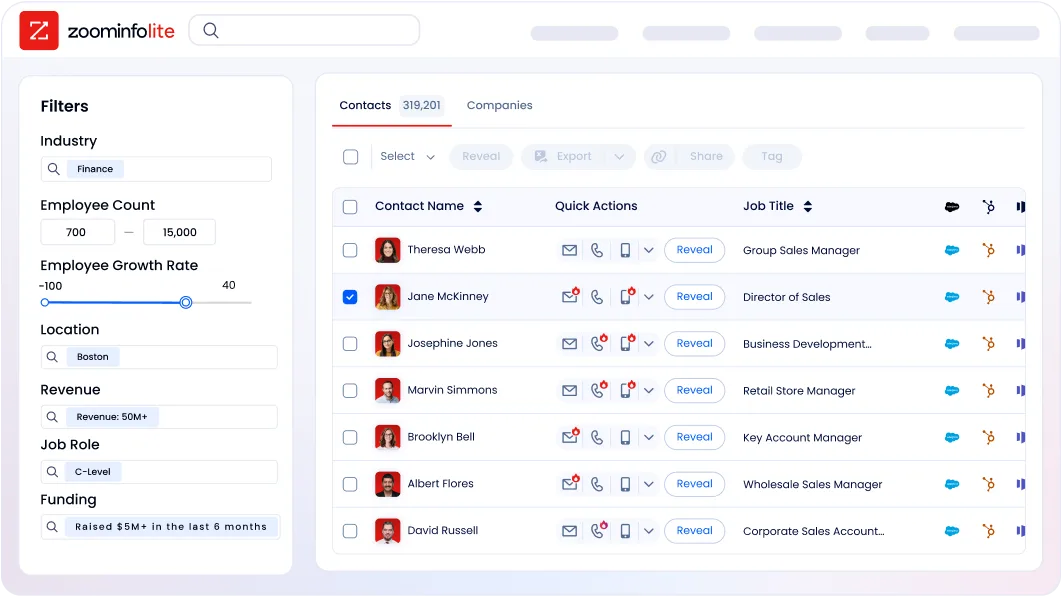
ZoomInfo also offers ZoomInfo Lite, a permanent free tier with access to 100M+ verified profiles, 10 monthly export credits, the ReachOut Chrome Extension, and WebSights Lite for up to 10 website visitor reveals per day. A separate 7-day free trial of the full platform is also available.
The pricing comparison makes the market segmentation clear. Pulse targets owner-operators who want predictable costs. Zoho targets teams that want to start free and add capability as they grow. ZoomInfo targets B2B organizations where better data and intelligence justify the investment.
Pulse CRM vs. Zoho CRM vs. ZoomInfo: Which should you choose?
The right choice depends on the problem you're solving.
Choose Pulse CRM if:
You're a small business owner or franchise operator who needs an all-in-one system today
Done-for-you implementation matters more than customization
Your sales process is straightforward and your team is non-technical
Flat pricing with no per-module charges fits your budget
You need CRM, email marketing, quoting, and project boards in one subscription without stitching together multiple tools
Choose Zoho CRM if:
You need a CRM that can grow from 3 free users to a 500-custom-module enterprise deployment
Process enforcement through Blueprint and multichannel automation through Cadences match how your team sells
You want AI capabilities (Zia scoring, agents, generative AI) at an accessible price point
Your team has the admin capacity to configure and maintain a feature-dense platform
You're already using other Zoho products or value the 40+ integrated Zoho apps
Choose ZoomInfo if:
Your B2B sales team's bottleneck is finding and reaching the right buyers, not managing existing contacts
You need verified B2B data (500M contacts, 135M+ phone numbers, 200M+ emails) to power prospecting
Buyer intent signals and account intelligence would change how your team prioritizes outreach
You want AI that understands why deals move, not just what's in your CRM fields
You need intelligence that works across your existing tools via API and MCP, or through ZoomInfo's own GTM Workspace and GTM Studio
See how ZoomInfo works with a free trial, or explore ZoomInfo Lite at no cost.
The comparison between Pulse CRM and Zoho CRM is about how much CRM you need. Pulse covers the basics for small teams. Zoho covers nearly everything for teams willing to invest in building what they need.
But for B2B organizations, the CRM is only one piece. The quality of data feeding your pipeline, the signals telling you which accounts are in-market, and the intelligence connecting your outreach to actual buyer behavior determine whether your CRM becomes a revenue driver or an expensive address book. That's the layer ZoomInfo provides, and it works alongside whichever CRM you choose.
Smartsheet relies on ZoomInfo as its single source of truth for account and contact data, calling it essential to understanding their market and making meaningful connections. (Smartsheet)
Pulse CRM vs. Zoho CRM vs. ZoomInfo FAQ
What is the main difference between Pulse CRM, Zoho CRM, and ZoomInfo?
Pulse CRM is a small-business CRM with done-for-you implementation, designed for owner-operators and franchise systems who need CRM, email marketing, pipelines, quoting, and project boards in one flat-priced subscription.
Zoho CRM is a customizable CRM platform with AI (Zia), automation (Blueprint, Cadences, Journey Orchestration), and access to 40+ integrated Zoho apps, serving small to mid-market companies.
ZoomInfo is an AI-powered GTM platform built on 500M contacts and 100M companies, providing B2B data, buyer intent signals, conversation intelligence, and AI-driven outreach. It operates as a different layer in the sales stack rather than a traditional CRM.
Which platform is cheapest to get started with?
Zoho CRM has the lowest barrier to entry with a permanent free plan for up to 3 users, no credit card required.
Pulse CRM starts at $49/month for one user with all features included, though a free trial requires a credit card on file.
ZoomInfo offers a permanent free Lite tier with 10 monthly export credits and limited data access, plus a 7-day trial of the full platform with no credit card needed. For small teams on a tight budget, Zoho's free plan offers the most functionality at zero cost.
Can ZoomInfo replace a CRM?
ZoomInfo is not a traditional CRM, but its GTM Workspace provides sellers with account management, AI-generated outreach, deal tracking, and CRM synchronization. For teams focused on B2B prospecting and pipeline generation, GTM Workspace can serve as the primary daily workspace while syncing data back to an existing CRM.
Most ZoomInfo customers use it alongside a CRM like Salesforce, HubSpot, or Zoho rather than as a standalone replacement.
Which platform has the strongest AI capabilities?
ZoomInfo has the most advanced AI, with a GTM Context Graph processing 1.5B+ data points daily and AI agents built on Anthropic's Claude that handle account research, outreach generation, and buying signal monitoring.
Zoho CRM's Zia is strong within CRM data, offering predictive lead scoring, churn prediction, seven pre-built agentic AI agents, and generative AI for module and workflow creation.
Pulse CRM has no AI capabilities.
Which platform is best for franchise operations?
Pulse CRM has the most franchise-specific features, including corporate-to-franchisee lead distribution by geography (census tracts and zip codes), pre-built automation templates pushed from a single admin account, and consolidated cross-location reporting.
Zoho CRM can handle multi-location operations through territory management on Enterprise plans and custom configurations, but lacks franchise-specific tools.
ZoomInfo does not target franchise operations.
How do integrations compare across all three?
Zoho CRM has the broadest ecosystem with 1,100+ marketplace integrations and 40+ native Zoho applications.
ZoomInfo offers 120+ partner integrations plus Enterprise API and MCP access, letting its data and intelligence flow into any CRM, marketing tool, or custom AI agent.
Pulse CRM connects to third-party tools through Zapier, Make, and its own API, with no documented native integrations to external platforms.
Which platform is right for B2B outbound sales teams?
ZoomInfo is built for B2B outbound sales. It provides the verified contact database, buyer intent signals, and AI-powered outreach that outbound teams depend on.
Zoho CRM can manage outbound workflows through Cadences and omnichannel engagement but lacks a B2B contact database or intent data.
Pulse CRM focuses on managing existing relationships rather than prospecting for new ones.
Do any of these platforms offer a permanent free plan?
Both Zoho CRM and ZoomInfo offer permanent free tiers. Zoho CRM's free plan supports up to 3 users with core lead, contact, and deal management.
ZoomInfo Lite provides access to 100M+ verified profiles with 10 monthly export credits, the ReachOut Chrome extension, and basic website visitor identification.
Pulse CRM does not have a permanent free plan, offering only a free trial that requires a credit card.
More Pulse CRM and Zoho CRM comparisons:
