

If you're comparing Remedyforce vs. Salesforce, you might not realize you're comparing a product with its own platform. BMC Helix Remedyforce is built on Salesforce App Cloud. It doesn't compete with Salesforce. It's a tenant.
That relationship changes every question you should ask:
Are you currently using Remedyforce and facing its September 2026 end of life?
Do you need IT service management, customer relationship management, or both?
Is your organization already invested in the Salesforce ecosystem?
Should your IT service desk share a platform with your CRM?
How do your revenue teams find and engage buyers once you've settled on a service platform?
Here's what we recommend:
Remedyforce was the standard IT service desk for mid-market Salesforce shops. It delivered ITIL-compliant incident, change, and asset management inside the Salesforce environment teams already knew, with a self-service portal that reduced help desk volume for organizations processing thousands of tickets monthly. But Remedyforce is no longer available for new deployments. BMC stopped selling it on February 1, 2022, and all updates, patches, and technical support end on September 30, 2026. Current customers need a migration plan, not a buying decision.
Salesforce is the world's #1 CRM, serving over 150,000 companies across sales, service, marketing, and commerce. For organizations evaluating service management, Salesforce now offers its own ITSM capabilities through Agentforce IT Service, positioning it as a direct replacement for tools like Remedyforce and a challenge to ServiceNow. With AI agents that can resolve 85% of requests without human escalation, Salesforce is betting that service management belongs inside the CRM, not alongside it.
Both platforms address how your organization manages internal services. But neither answers a different question: how do your revenue teams find, engage, and win the right customers? That takes a different kind of platform.
ZoomInfo is a B2B go-to-market platform built on 500M contacts, 100M companies, 135M+ verified phone numbers, and 200M+ verified business emails. Its GTM Context Graph processes 1.5B+ data points daily, connecting this data with your CRM records, conversation transcripts, and behavioral signals to show the full context of your accounts, not just what happened, but why, and what to do next. For organizations already on Salesforce, ZoomInfo integrates directly, enriching CRM records and surfacing buyer intent through GTM Workspace for sellers, GTM Studio for marketers and RevOps, or the API and MCP in any other front-end.
If you're investing in Salesforce for service management, see how ZoomInfo makes that CRM investment work for revenue with a free trial.
Remedyforce vs. Salesforce vs. ZoomInfo at a glance
Remedyforce | Salesforce | ZoomInfo | |
|---|---|---|---|
Primary function | IT service management (ITSM) | CRM + enterprise platform | B2B data + GTM intelligence |
Target buyer | Mid-market IT teams on Salesforce | Organizations of all sizes | Revenue teams (sales, marketing, RevOps) |
Platform | Salesforce App Cloud (native) | Salesforce's own cloud infrastructure | Standalone, integrates with Salesforce |
Product status | End of life (support ends Sep 2026) | Active, expanding | Active, expanding |
AI capabilities | None (no new development) | Agentforce AI agents across all clouds | GTM Context Graph + AI-powered outreach |
Pricing | Quote-based, per-user | $0 free CRM to $550/user/month | Consumption-based, custom-quoted |
Free option | 30-day trial (evaluation only) | Free CRM for up to 2 users | ZoomInfo Lite (permanent, free) |
Best for | Existing customers planning migration | CRM + service management on one platform | Powering go-to-market with verified B2B data |
Remedyforce is Salesforce (and that's the problem)
The first thing to understand about this comparison: Remedyforce doesn't compete with Salesforce. It lives inside it.
When BMC launched Remedyforce in 2010, the partnership made sense. Mid-market IT teams needed ITIL-compliant service management without enterprise complexity. Building on Salesforce App Cloud meant Remedyforce inherited Salesforce's security model, mobile capabilities, and AppExchange ecosystem. For organizations already using Salesforce CRM, adding Remedyforce was simple: same login, same admin tools, same data layer.
Source: Salesforce
That architectural decision was also the product's ceiling. Remedyforce could never evolve beyond what the Salesforce platform allowed. As BMC invested in BMC Helix ITSM (with agentic AI capabilities, multi-cloud visibility, and AIOps), Remedyforce stayed frozen. The product that once offered a fast path to service management became a legacy system whose UI reviewers describe as dated, whose reporting is considered limited, and whose mobile app falls short of desktop.
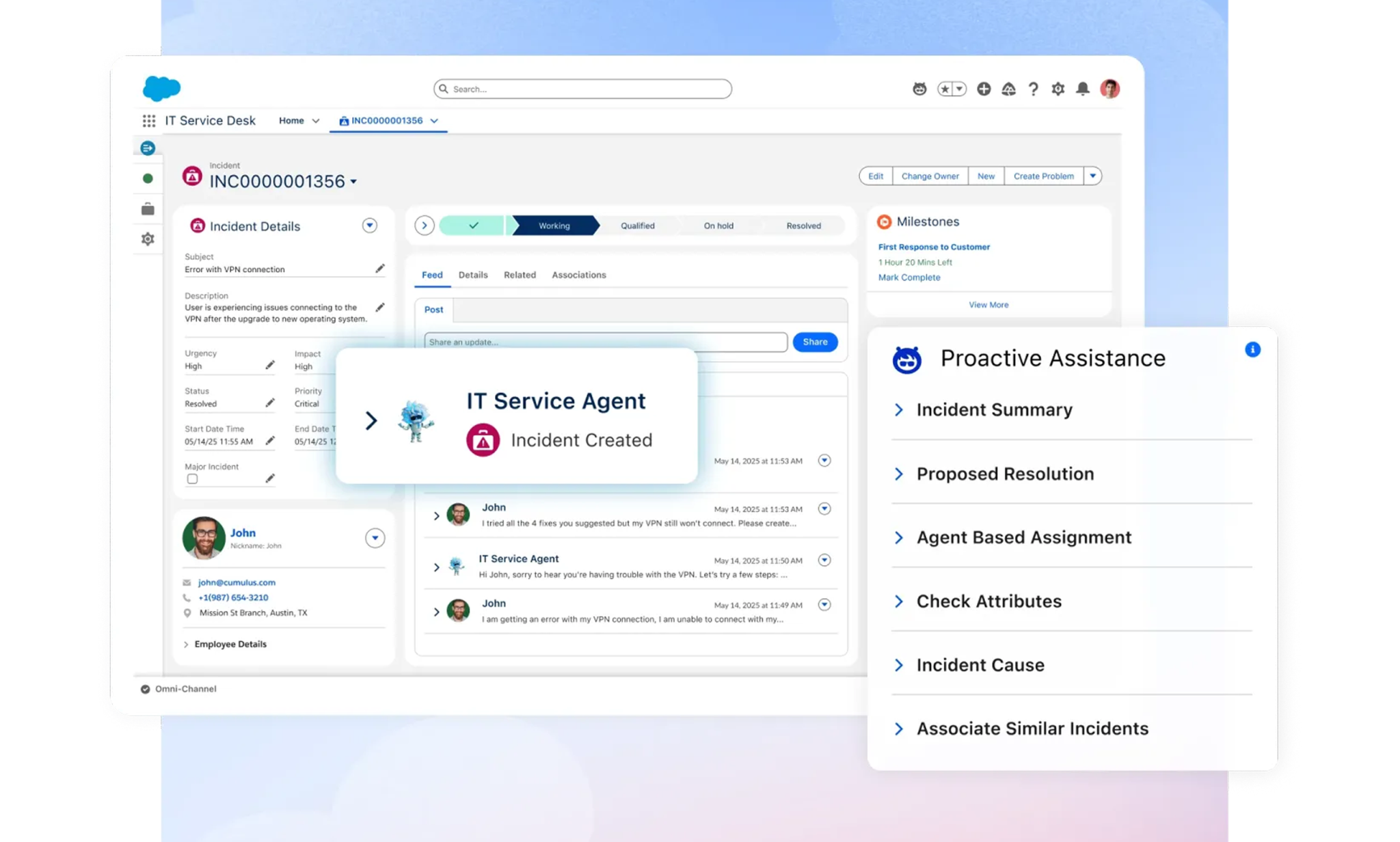
Meanwhile, Salesforce kept growing. Service Cloud matured into a full customer service platform. In February 2026, Salesforce launched Agentforce IT Service, a direct entry into the ITSM market that 180 organizations selected in its first months. The platform Remedyforce was built on is now building its own replacement.
Source: Salesforce
The September 2026 deadline changes everything
Remedyforce's end of life isn't a gradual sunset. It's a hard stop.
BMC stopped selling new subscriptions on February 1, 2022. After September 30, 2026, BMC will provide no further updates, patches, or technical support. Gartner has already recategorized the product under its Legacy designation, a signal that the analyst community considers it a historical product, not an active competitor.
For current Remedyforce customers, three migration paths exist:
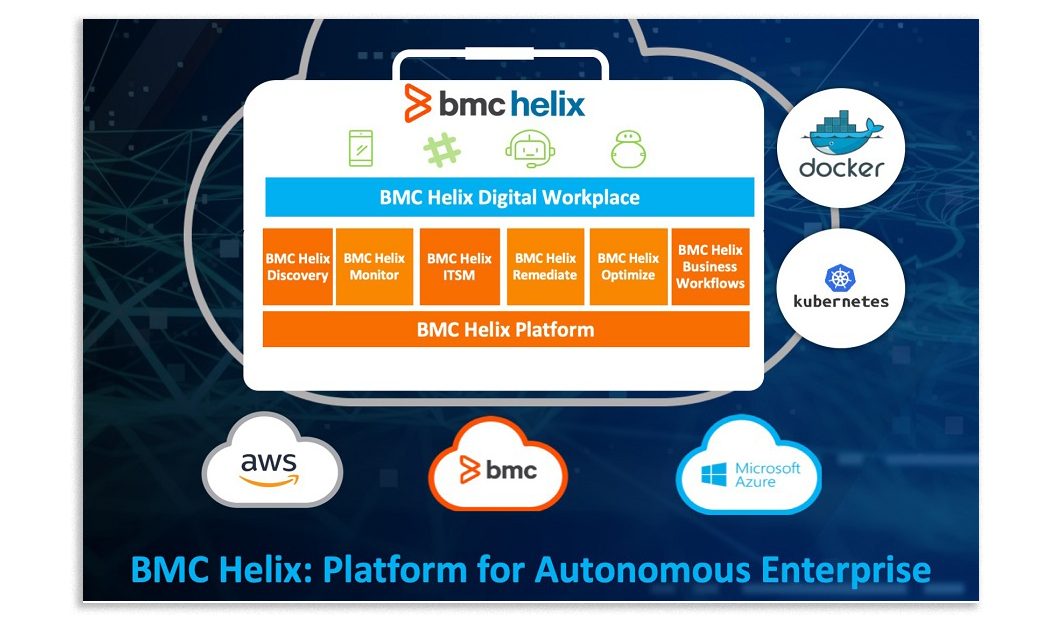
1. Move to BMC Helix ITSM. BMC's preferred path. BMC is using AI to accelerate migration by identifying and preserving existing customizations and business logic. This keeps you in the BMC ecosystem but moves you off the Salesforce platform.
Source: BMC
2. Move to Salesforce's own service management. If your team already knows Salesforce, staying on the platform and adopting Service Cloud or Agentforce IT Service avoids retraining. Your existing Salesforce data, security model, and admin skills carry over.
3. Move to an alternative ITSM platform. Partner firms are publishing migration guides from Remedyforce to Jira Service Management, Freshservice, ServiceNow, and others. This is the path for organizations that want to decouple ITSM from Salesforce entirely.
Organizations that do nothing face an unsupported platform with growing security exposure and no vendor patches. The clock is running.
Salesforce's service management is expanding fast
Salesforce spent two decades building the world's dominant CRM. Now it's using that foundation to push into IT service management.
Service Cloud already handles customer service at scale: case management, knowledge management, omnichannel engagement, and self-service portals.
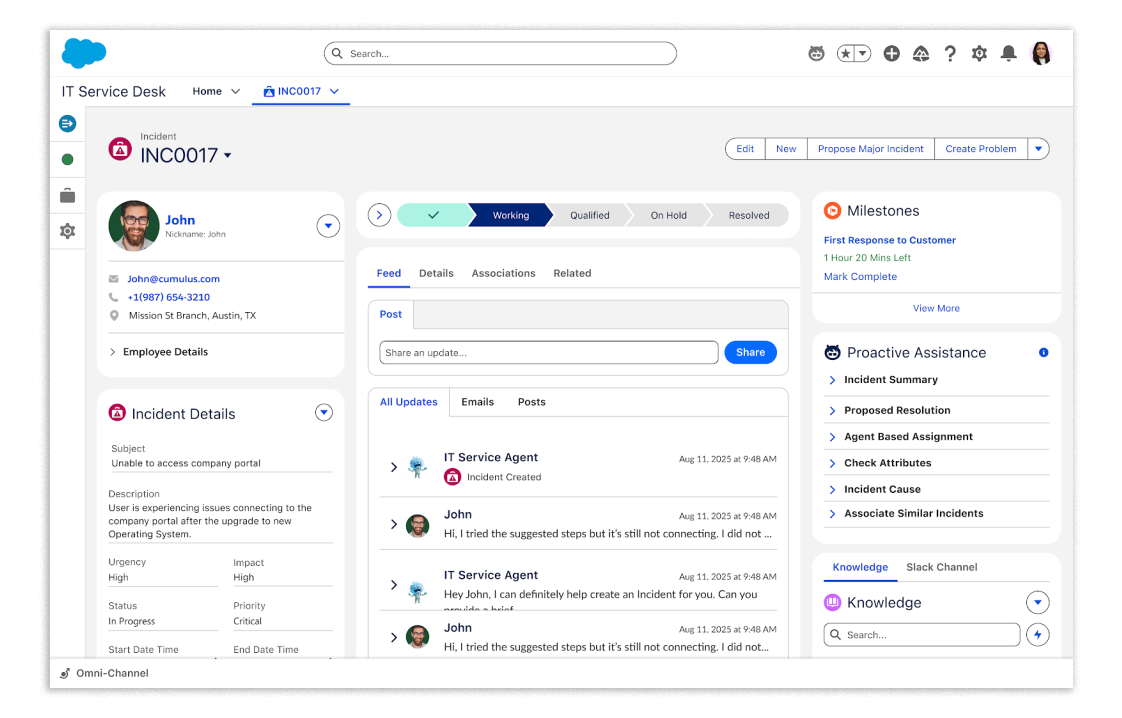
The ITSM move came with Agentforce IT Service, which brings AI agents to IT support. These aren't simple chatbots. Salesforce reports that Agentforce resolves 85% of requests without human escalation, using the Atlas Reasoning Engine to reason through problems rather than match keywords. For IT teams, this means common requests (password resets, access provisioning, software installations) can run autonomously around the clock.
Source: Salesforce
The structural advantage over standalone ITSM tools: Service Cloud sits on the same data platform as Sales Cloud, Marketing Cloud, and Commerce Cloud. When a high-value customer reports a service issue, the agent sees the full relationship (deal history, renewal date, account health) without switching tools. That combined view is impossible when ITSM and CRM live in separate systems.
The drawback is cost and complexity. Salesforce Enterprise edition starts at $175/user/month, and full AI capabilities require the Unlimited tier at $350/user/month or higher. Add Agentforce consumption ($2 per conversation or $500 per 100,000 Flex Credits), and costs climb fast. Over 70% of implementations are led by partners, adding to the bill. For mid-market teams that valued Remedyforce's simpler deployment model, this is a real tradeoff.
What Remedyforce still does well
Despite its impending end of life, Remedyforce earned its place in the ITSM market for real reasons worth understanding, especially for organizations evaluating what they need in a replacement.
Salesforce-native architecture. Because Remedyforce runs inside the Salesforce data model, IT teams and their CRM-using colleagues share a single security model, admin toolset, and reporting engine. Capterra reviewers note that Salesforce admins can support both CRM and ITSM without learning a separate skill set. No middleware, no separate credentials, no data synchronization headaches.
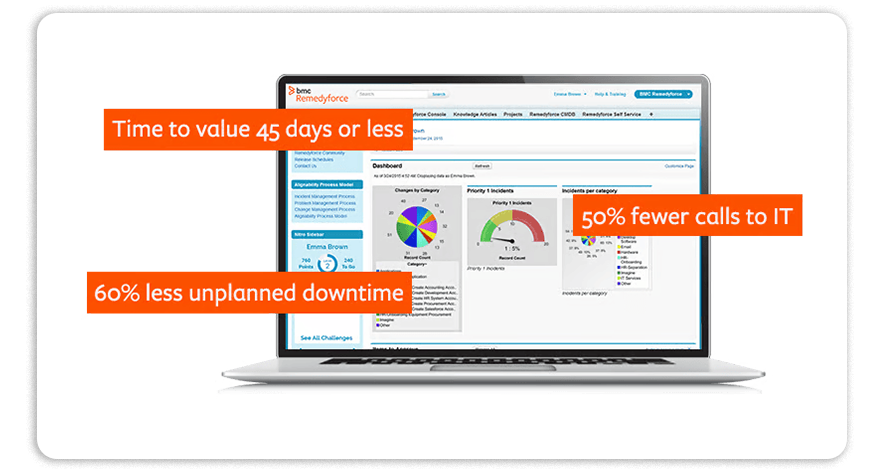
Complete ITIL coverage out of the box. Incident management, service request management, change management, problem management, a CMDB, knowledge management, and SLA tracking all ship in a single instance. G2 reviewers consistently highlight this breadth. For mid-market teams that needed structured ITIL processes without a year-long implementation, Remedyforce delivered.
Source: G2
Self-service knowledge management. The platform's self-service portal cut help desk load by letting end users resolve common issues on their own. For IT teams drowning in password reset tickets, this was a concrete cost reduction.
Change management with email-based approvals. Remedyforce routes change requests through Salesforce's approval engine, and approvers can approve or reject by replying with APPROVE or REJECT from email. No login required. For CAB members and business approvers who rarely open the ITSM console, this removed real friction.
But these strengths come with an expiration date. No new features have shipped since 2019. The interface hasn't been updated. There is no AI-assisted categorization, no virtual agent, no predictive routing. What was competitive a decade ago is now a legacy system counting down to unsupported status.
ZoomInfo powers the revenue side of your platform investment
Whether you're migrating from Remedyforce, expanding Salesforce, or evaluating your entire technology stack, there's a question that ITSM and CRM tools aren't designed to answer: where are the buyers, and how do you reach them?
ZoomInfo is a B2B go-to-market platform built on the largest verified dataset in the industry. Its GTM Context Graph processes 1.5B+ data points daily, connecting ZoomInfo's verified database with your CRM records, conversation transcripts, and behavioral signals to capture not just what happened in a deal, but why.
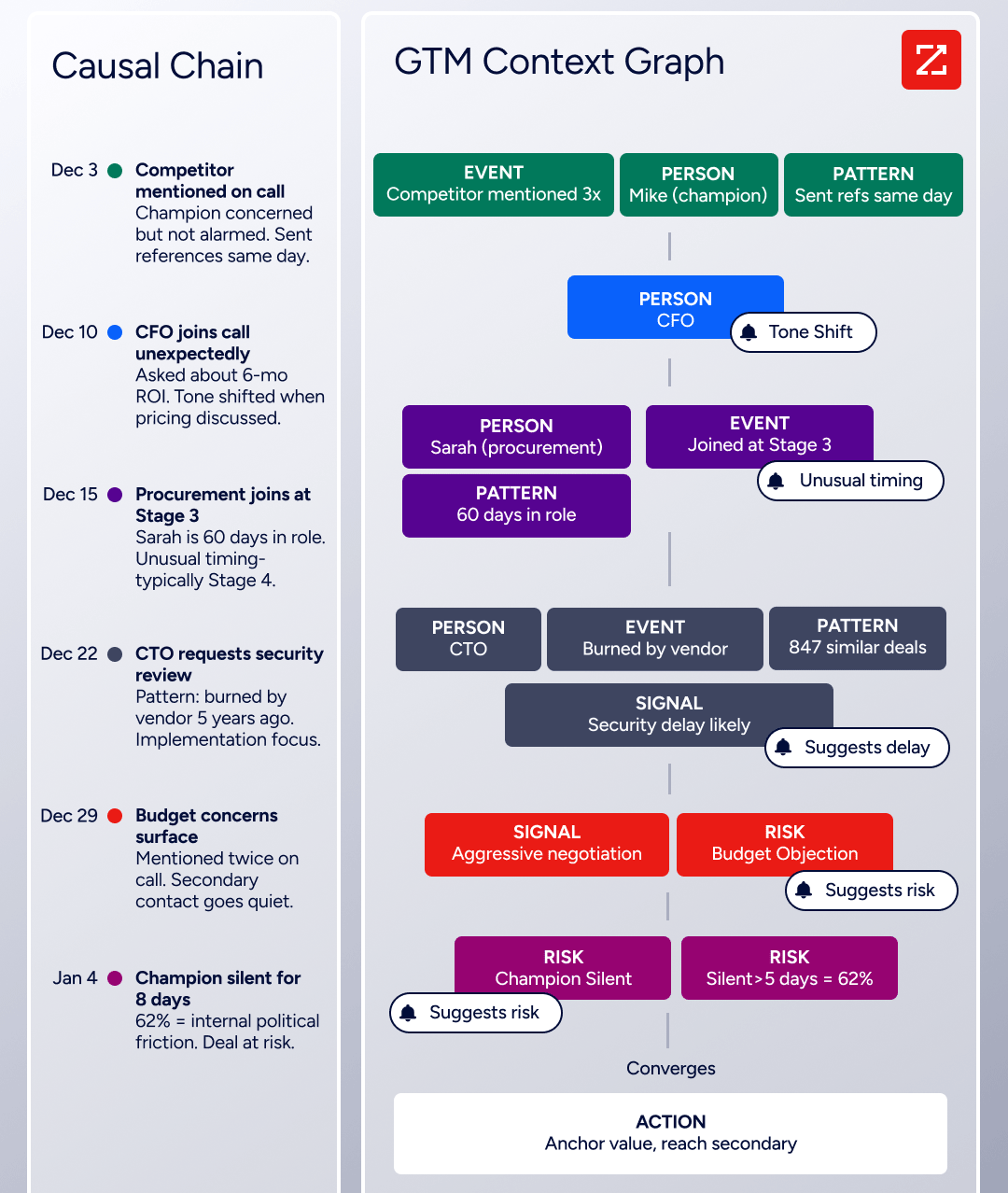
For Salesforce customers, the integration is direct. ZoomInfo enriches Salesforce records with verified contact and company data, technographic profiles, and buyer intent signals tracked from 210 million IP-to-Organization pairings. Sales reps open their CRM and see not just account records but buying committee intelligence, competitive signals, and AI-drafted outreach based on the full context of the relationship.
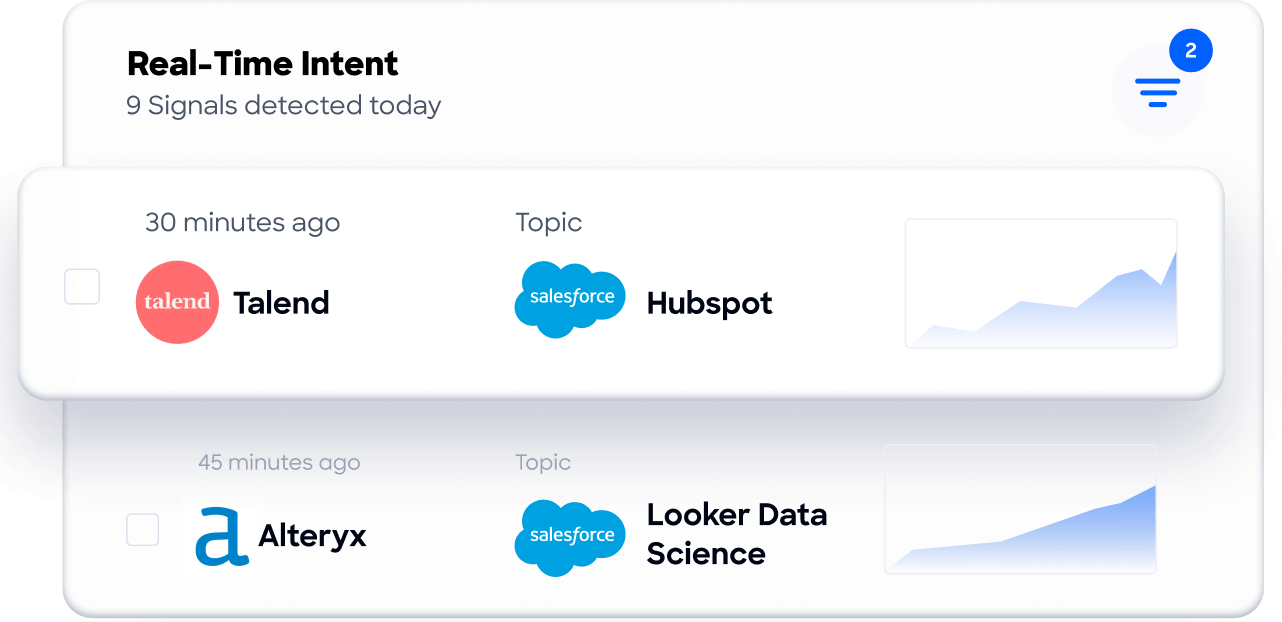
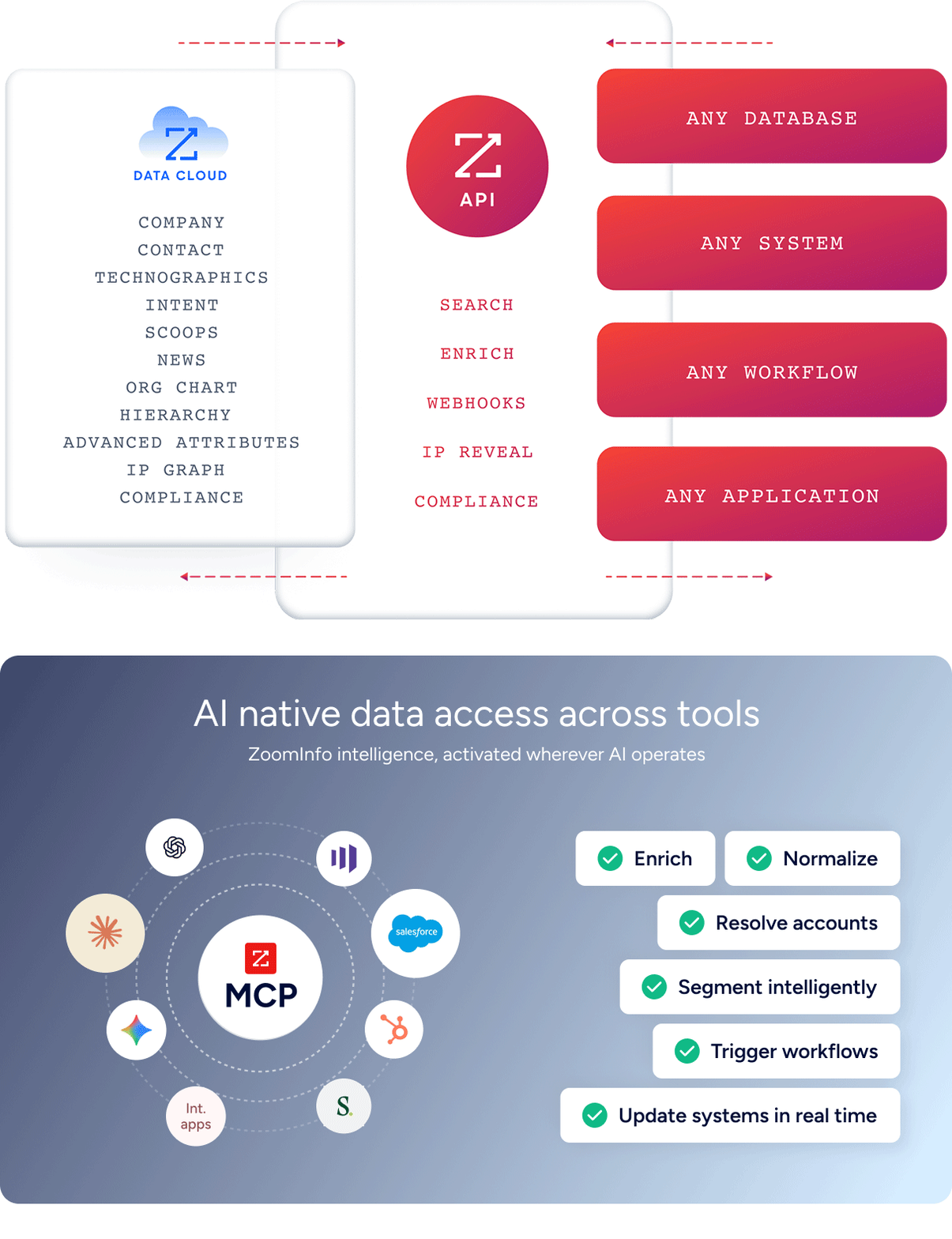
GTM Workspace gives sellers a single place where prioritized accounts, AI-drafted outreach, and deal execution converge without toggling between tools. GTM Studio gives marketers and RevOps teams a builder where audience definition, campaign orchestration, and pipeline measurement happen in natural language. For teams building custom applications, APIs and MCP expose the same intelligence to any AI agent or third-party tool.
The point isn't that ZoomInfo replaces ITSM or CRM. It's that organizations investing in Salesforce for service management and customer relationships often overlook the intelligence layer that makes the revenue side of that investment pay off. A CRM without enriched data is a filing cabinet. ZoomInfo turns it into a revenue engine.
For a closer look at how Salesforce and ZoomInfo compare on the revenue side, see our Salesforce vs. ZoomInfo comparison.
Seismic's sales team attributed 39% of active pipeline to opportunities identified or influenced by ZoomInfo signals, boosted productivity by 54%, and saved 11.5 hours per week per seller. (Seismic case study)
Pricing reveals different worlds
The pricing structures tell you where each platform sees its value.
Remedyforce uses a quote-based, per-user subscription model. No prices are published; the pricing page is a contact form. Important detail: Remedyforce requires existing Salesforce licenses, a separate cost outside the Remedyforce subscription. Capterra reviewers note the platform "can be expensive for a small to medium-size business and the capabilities are not as robust as they could be for the price." Given the September 2026 end of life, any remaining Remedyforce spend is a bridge investment, not a long-term commitment.
Salesforce runs a multi-tier model scaling from free to enterprise. The free CRM supports up to 2 users. Starter Suite begins at $25/user/month. But real service management capabilities start at the Enterprise tier ($175/user/month), and the full AI suite requires Unlimited at $350/user/month or higher. Add Agentforce consumption ($2 per conversation or $500 per 100,000 Flex Credits), and the total climbs fast. Salesforce itself acknowledged its pricing "needed to be easier to understand" in a September 2025 update. The Premier Success Plan adds 30% of net license fees for dedicated support.
ZoomInfo uses consumption-based pricing with no publicly listed prices. Plans are organized into Sales, Marketing, and ABM tiers at Professional, Advanced, and Enterprise levels, each with different data access, intent signal capabilities, and AI features. ZoomInfo Lite provides a permanent free tier with access to the B2B database, 10 monthly export credits, and basic search. A 7-day free trial of the full platform is also available.
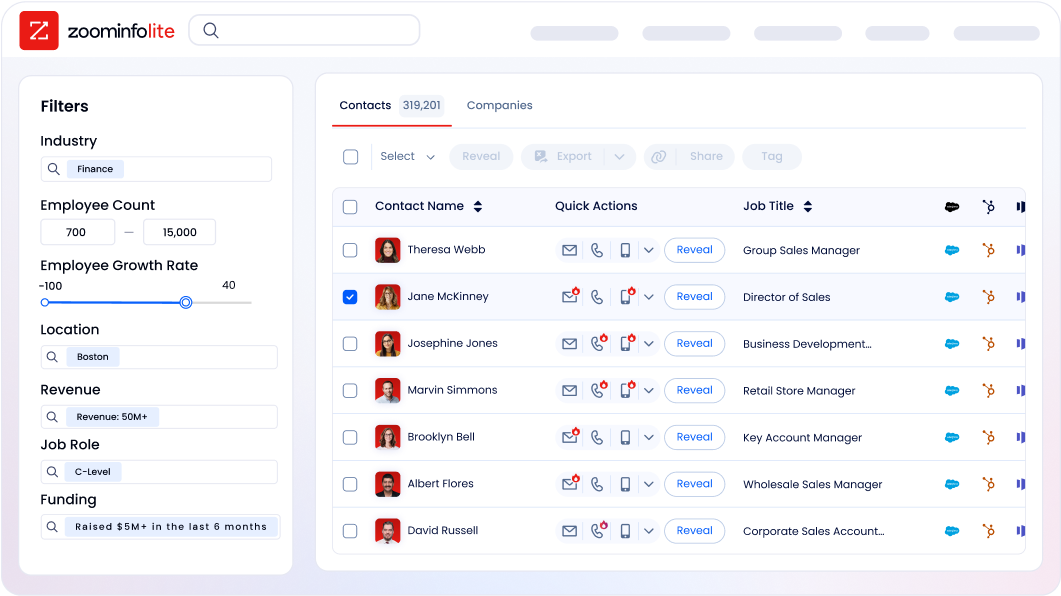
The comparison isn't apples to apples because these platforms serve different functions. But the budget conversation is related: organizations migrating off Remedyforce are reallocating spend, and understanding how Salesforce and ZoomInfo pricing work together helps make that reallocation strategic rather than reactive.
Data and integration ecosystems diverge sharply
Remedyforce's integration story begins and ends with Salesforce. Because it's a Salesforce managed package, it has native access to the AppExchange ecosystem and shares Salesforce's data model. Connecting to systems outside Salesforce requires extra work. Its REST API covers service requests, incidents, knowledge articles, and approvals, but for anything beyond those, developers fall back to the Salesforce platform REST API. No webhooks, no SDKs, no OpenAPI spec.
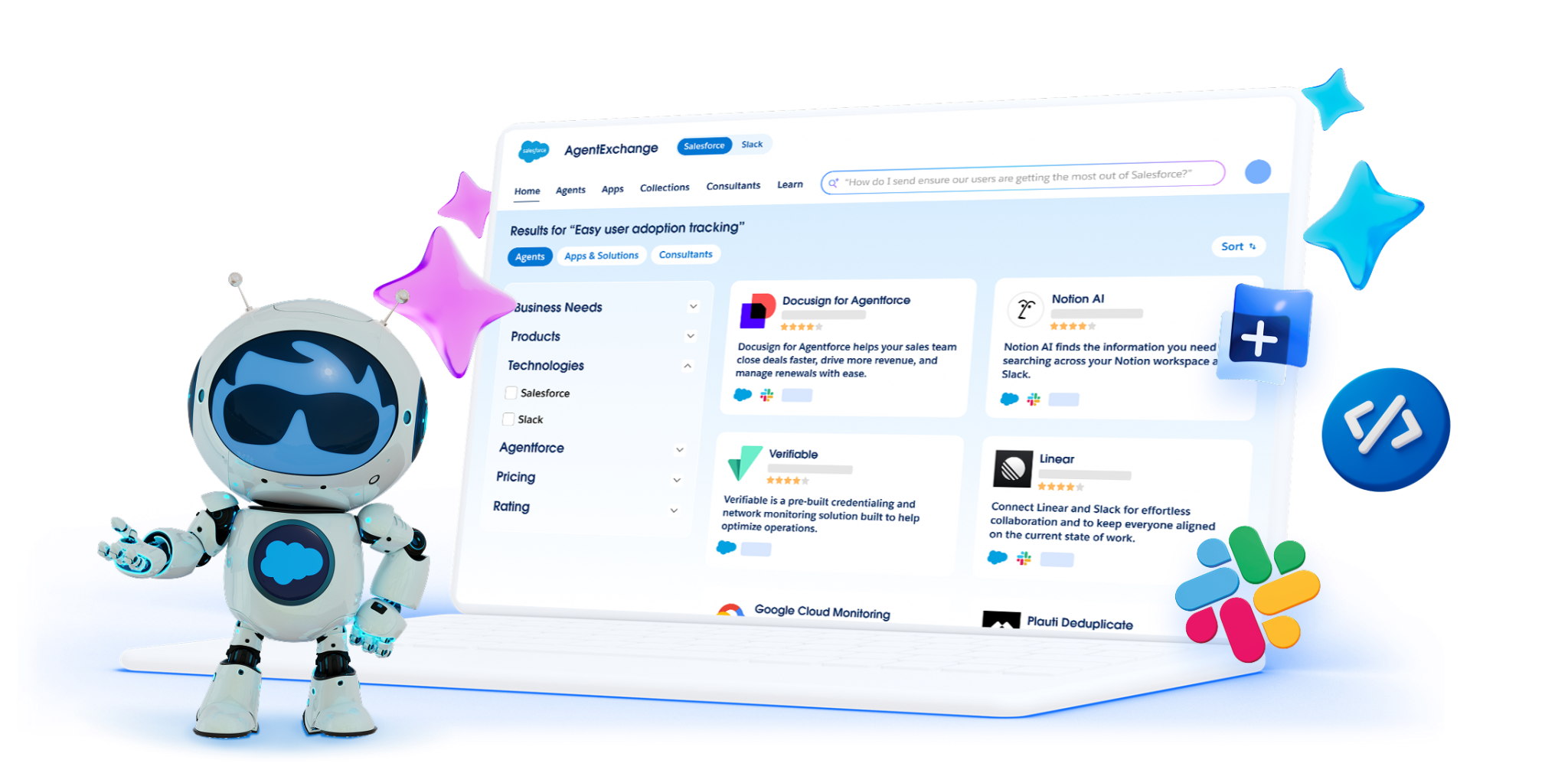
Salesforce's integration ecosystem is the largest in enterprise software. 9,000+ partner apps on AppExchange, 14+ million installs, and MuleSoft as the native iPaaS platform with hundreds of pre-built connectors. The API surface spans more than 30 APIs across REST, SOAP, GraphQL, and gRPC. Event-driven architecture via Platform Events and Change Data Capture provides real-time data streaming. For enterprise buyers evaluating long-term platform investments, this breadth is hard to match.
Source: Salesforce
ZoomInfo's integration approach is built for the go-to-market stack. The ZoomInfo Marketplace lists 172+ integration partners across CRM, marketing automation, sales engagement, and data warehouse categories. Salesforce, HubSpot, and Microsoft Dynamics 365 are featured native integrations. The Enterprise API provides structured access to search, enrich, and intelligence endpoints. The MCP server connects ZoomInfo data to any MCP-compatible AI agent, including Claude and ChatGPT. Cloud Data Cubes deliver ZoomInfo data directly into AWS, Google Cloud, Snowflake, and Databricks.
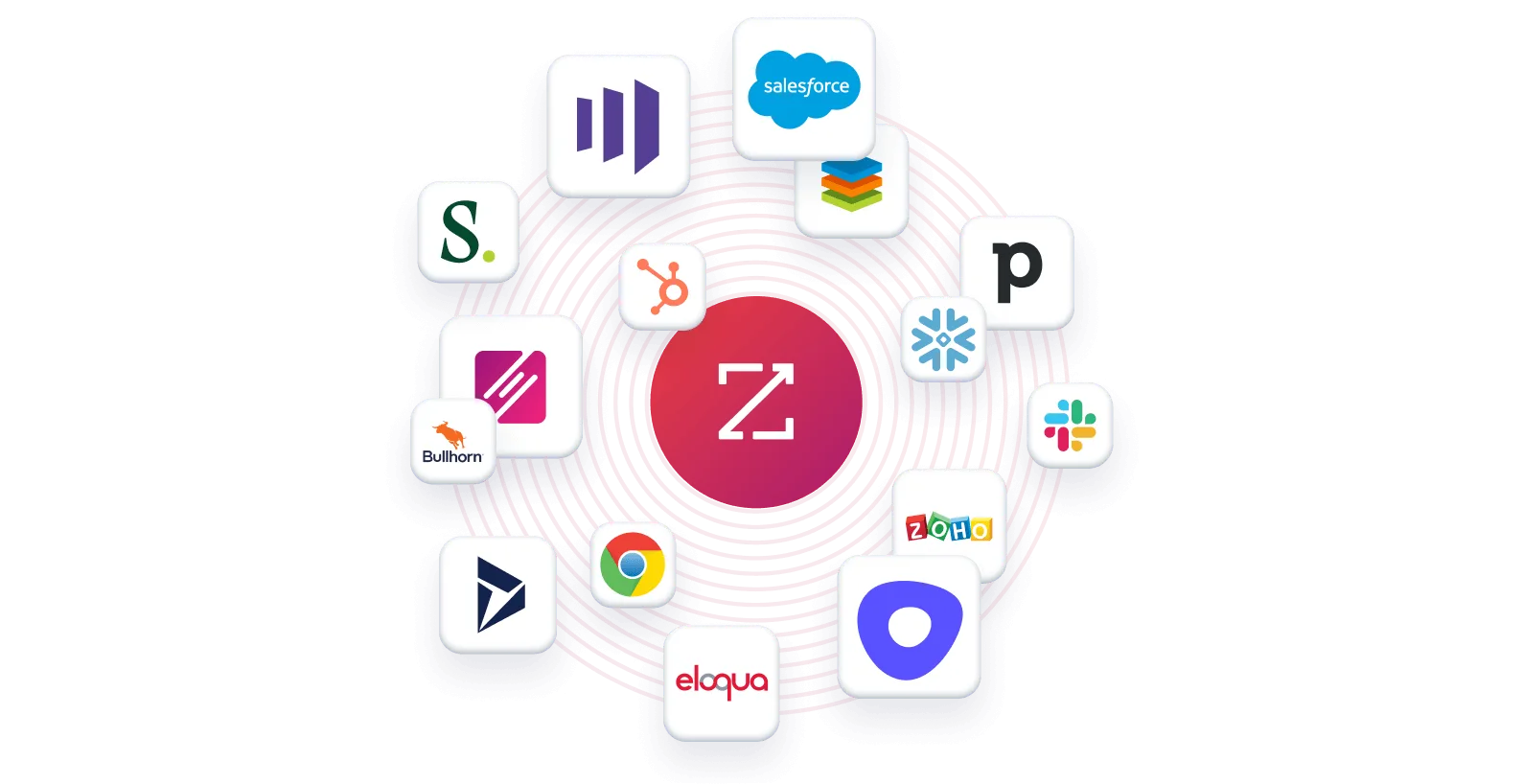
BDO Canada cut 87% of the time spent on internal data dashboard updates by integrating ZoomInfo's API directly into their processes. (BDO Canada case study)
Security and compliance are table stakes, with differences in depth
All three platforms take security seriously, but the scope differs.
Remedyforce inherits two security layers: BMC's SaaS security program and Salesforce's underlying platform security. BMC Helix holds certifications including ISO 27001, FedRAMP Moderate, HIPAA, SOC 1/2/3, and GDPR compliance through Binding Corporate Rules. The security framework follows NIST 800-53 and NIST 800-171 controls. However, some certifications (like DoD IL4) were announced for BMC Helix ITSM specifically, not Remedyforce.
Salesforce provides enterprise security with ISO 27001/27017/27018, SOC 1/2/3, FedRAMP (Government Cloud), and HITRUST certifications. Salesforce Shield adds event monitoring, platform encryption with BYOK, and field audit trail as premium capabilities. The Einstein Trust Layer enforces zero data retention with LLM partners, PII masking, and toxicity detection for AI interactions. trust.salesforce.com provides real-time system status and compliance documentation.
ZoomInfo maintains ISO 27001, ISO 27701, SOC 2 Type II, TRUSTe GDPR, and TRUSTe CCPA certifications, all renewed annually. The company is a registered data broker in California and Vermont. For enterprise buyers in regulated industries, ZoomInfo's privacy compliance is built into the data layer itself, addressing the specific sensitivities around B2B contact data.
Remedyforce vs. Salesforce vs. ZoomInfo: Which should you choose?
These aren't competing products. They serve different functions, and the right answer depends on where you are and what you need.
If you're a current Remedyforce customer:
Your first priority is migration planning before September 2026. Evaluate whether BMC Helix ITSM, Salesforce Service Cloud, or an alternative ITSM platform best fits your team's needs, budget, and existing skills. Don't wait. Organizations that delay face an unsupported platform with no security patches.
Choose Salesforce if:
You need one platform for CRM and service management
Your organization is ready to invest in enterprise infrastructure
AI-powered service agents are part of your roadmap
You want the largest integration ecosystem in enterprise software
You can absorb the implementation cost and admin complexity
Add ZoomInfo if:
Your revenue teams need verified B2B data to find and engage buyers
You want buyer intent signals that reveal which accounts are actively in-market
You're investing in Salesforce and want to make that CRM investment work for go-to-market
You need AI-powered account intelligence and outreach, not just a contact database
You want the same intelligence accessible in your CRM, your sellers' workspace, your marketers' tools, and any AI agent you build
See how ZoomInfo works with your Salesforce investment. Start a free trial.
The relationship between these platforms isn't competitive. Remedyforce managed your IT service desk. Salesforce manages your customer relationships and is expanding into service management. ZoomInfo provides the intelligence that makes your go-to-market teams effective. For organizations navigating the Remedyforce end of life, the real question isn't which one to choose. It's how to rebuild your platform stack so that service management, customer relationships, and revenue intelligence each have the right tool behind them.
"ZoomInfo is our one source of truth for account data, and even more so for contact data. There's no other provider in the market that provides you with that level of detail." — Thor Sanderson, Senior Manager of Sales Technology Enablement, Smartsheet (Smartsheet case study)
Remedyforce vs. Salesforce vs. ZoomInfo FAQ
What is the actual relationship between Remedyforce and Salesforce?
Remedyforce is built natively on Salesforce App Cloud (Force.com). It runs inside the Salesforce platform, sharing the same security model, user authentication, data layer, and admin tools. They are not competitors. Remedyforce is an IT service management application that uses Salesforce as its foundation, while Salesforce is the underlying CRM and enterprise platform.
Is Remedyforce still available for new customers?
No. BMC stopped selling new Remedyforce subscriptions on February 1, 2022. All updates, patches, and technical support end on September 30, 2026. Gartner has recategorized the product under its Legacy designation. Current customers need to migrate before support ends.
What are the main migration options for Remedyforce customers?
Three paths exist. BMC Helix ITSM is BMC's preferred upgrade, with AI-assisted migration tooling that preserves existing customizations. Salesforce Service Cloud or Agentforce IT Service keeps you on the Salesforce platform with your existing skills and data. Third-party ITSM platforms like Jira Service Management, Freshservice, or ServiceNow let organizations decouple ITSM from Salesforce entirely.
Does Salesforce offer its own IT service management capabilities?
Yes. Salesforce launched Agentforce IT Service as a direct entry into the ITSM market, with 180 organizations selecting it in its first months. Service Cloud also handles case management, knowledge management, incident management, and self-service portals. Salesforce's ITSM approach is AI-first, with autonomous agents handling routine requests.
How does ZoomInfo relate to Remedyforce and Salesforce?
ZoomInfo is not an ITSM or CRM tool. It is a B2B data and go-to-market intelligence platform that integrates directly with Salesforce CRM. ZoomInfo enriches Salesforce records with verified contact data, company intelligence, buyer intent signals, and AI-powered account insights. It serves revenue teams (sales, marketing, RevOps) rather than IT service teams.
What does ZoomInfo's Salesforce integration actually do?
ZoomInfo's native Salesforce integration enriches CRM records with verified B2B data from 500M contacts and 100M companies. It appends direct-dial phone numbers, verified business emails, company and technographic data, and buyer intent signals directly to Salesforce account and contact records. Sales reps see buyer intelligence without leaving Salesforce.
Which platform is cheapest to get started with?
Salesforce offers a free CRM for up to 2 users and a Starter Suite at $25/user/month. ZoomInfo offers ZoomInfo Lite, a permanent free tier with access to the B2B database and 10 monthly export credits. Remedyforce offered a 30-day evaluation trial but is no longer available for new purchases. Enterprise capabilities on all platforms require custom-quoted pricing.
Can ZoomInfo work with ITSM tools other than Salesforce?
ZoomInfo's primary value is for go-to-market teams, not IT service management. However, ZoomInfo integrates with 172+ tools across CRM, marketing automation, sales engagement, and data warehouse categories. Its APIs and MCP server make ZoomInfo data accessible in any application or AI agent, regardless of which ITSM platform an organization uses.
Other Salesforce matchups worth a look:
