
Choosing between Aurea and Salesforce for your enterprise CRM often comes down to five questions:
Do you need one product that does its job well, or access to dozens of products under a single subscription?
Is your organization ready to invest in a platform that requires dedicated administrators and months of implementation, or do you need something that works with your existing contract and budget?
How important is it that your CRM vendor ships new AI capabilities every quarter?
Do you need on-premise deployment for regulatory or data sovereignty reasons, or is cloud-only acceptable?
Are you evaluating these platforms for their features, or because you need the underlying data that makes any CRM useful?
In short, here's what we recommend:
Aurea is the choice for enterprises already paying for one or more Aurea products who want to expand without new procurement cycles.
Its Unlimited subscription model gives customers access to 40+ enterprise products (CRM, collaboration, marketing, IT infrastructure) for one fee, where existing spend becomes credit toward any other product in the library. For organizations that value breadth over depth and want stable, mature software without rapid change, Aurea delivers a proposition no competitor can match commercially.
However, its individual products lag behind category leaders in features and innovation, the 25-person global team raises questions about support capacity, and there is no self-serve trial or public pricing.
Salesforce is the dominant CRM, ranked #1 by IDC market share and a Magic Quadrant Leader for 19 consecutive years in sales force automation. With $41.5 billion in FY26 revenue, 150,000+ customers, and aggressive AI investment through Agentforce, Salesforce offers depth across sales, service, marketing, and commerce that no competitor matches.
The tradeoff: complex pricing that can spiral quickly, steep learning curves, and implementations that typically require partner involvement at significant cost.
Both platforms give you a place to store customer data, manage pipelines, and run campaigns. But neither manufactures the B2B intelligence that determines whether your sales team calls the right person, at the right time, with the right message. That intelligence layer is what separates CRM activity from revenue.
ZoomInfo is an AI-powered GTM platform built on the industry's largest data foundation: 500M contacts, 100M companies, 135M+ verified phone numbers, and 200M+ verified business emails. Its GTM Context Graph processes 1.5B+ data points daily, unifying this data with your CRM records, conversation transcripts, and behavioral signals to reveal the full context of your accounts.
That context gives AI the fuel to show not just what happened, but why it happened, and which actions will capitalize on that momentum. Your team can run sales motions from the GTM Workspace, launch GTM plays from GTM Studio, or power their own tools through the API and MCP in any front-end, including Salesforce.
If powering your CRM with verified B2B data sounds like the missing piece, see ZoomInfo in action.
Aurea vs. Salesforce vs. ZoomInfo at a glance
Aurea | Salesforce | ZoomInfo | |
|---|---|---|---|
Primary function | Enterprise software library (CRM, collaboration, IT) | CRM platform with AI agents across sales, service, marketing, commerce | B2B data intelligence and GTM execution platform |
CRM approach | Mature acquired products (Aurea CRM, Pivotal CRM) | Continuously updated Sales Cloud built from scratch | Enriches and activates CRM data with verified B2B intelligence |
AI capabilities | Announced but limited shipped features visible | Agentforce with autonomous AI agents across the platform | GTM Context Graph with AI-powered prospecting, outreach, and deal intelligence |
Ecosystem | 40+ products in the Aurea library | 9,000+ AppExchange apps, 14M+ installs | 120+ integrations, native Salesforce/HubSpot connectors, API and MCP access |
On-premise option | Yes (Pivotal CRM and other products) | No (cloud only, with Hyperforce regional data residency) | Cloud-based with Data-as-a-Service delivery options |
Analyst recognition | No Gartner or Forrester placements | Gartner MQ Leader across 6+ categories | Gartner MQ Leader for ABM; Forrester Wave Leader for Intent Data |
Pricing model | Unlimited subscription (existing spend = credit for any product) | Per-user tiered licensing ($25–$550/user/month for Sales Cloud) | Custom-quoted, consumption-based |
Free entry point | No free trial or self-serve path | Free CRM (2 users), Starter Suite at $25/user/month | ZoomInfo Lite (free forever), 7-day full trial |
Best for | Existing Aurea customers expanding their software footprint | Enterprises wanting depth, ecosystem, and AI innovation | Teams that need accurate B2B data and intelligence to power their CRM |
Two philosophies of building a CRM: acquire vs. innovate
Aurea and Salesforce represent opposite approaches to enterprise software.
Aurea is a portfolio company.
Founded in 2012 as part of ESW Capital Group, it grew through 17 acquisitions, buying mature products and bundling them under one subscription. The largest was Jive Software, acquired for $462 million in 2017. The CRM offerings (Aurea CRM and Pivotal CRM) came through similar acquisitions, each carrying its own interface, documentation, and support portal.
Salesforce built its platform from scratch, starting in a one-bedroom San Francisco apartment in 1999 with the then-radical idea of delivering CRM through the cloud.
Salesforce has also made large acquisitions (MuleSoft for $6.5B, Tableau for $15.7B, Slack for $27.7B), but it integrates them into a single platform with a unified codebase. The difference shows: Salesforce customers move between Sales Cloud, Service Cloud, and Marketing Cloud within one interface. Aurea customers access different products through different logins with different UI conventions.
This matters because CRM is not a set-and-forget purchase. The platform you choose determines how quickly you adopt new capabilities, how easily your teams learn the tools, and how well your data flows between departments.
CRM and sales features: depth vs. breadth
Salesforce Sales Cloud is the most feature-rich CRM available.
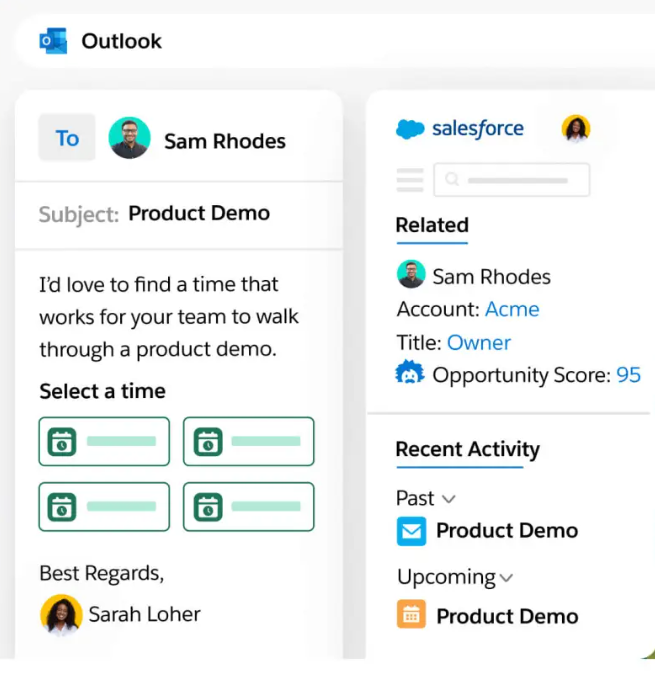
Einstein Lead Scoring prioritizes your pipeline automatically. Revenue Lifecycle Management handles CPQ, contracts, and billing. Agentforce Sales Agents prospect, engage inbound leads, draft outreach, and update CRM fields on their own.
Source: Salesforce
Aurea's CRM products solve the same core problem (managing customer relationships and pipeline) but with less depth.
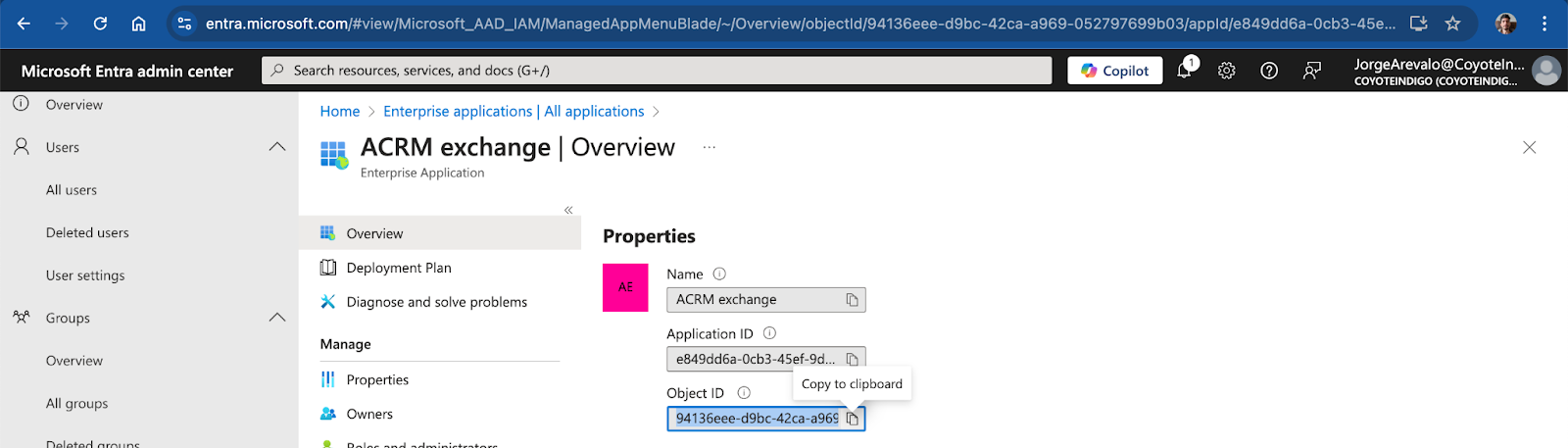
Aurea CRM provides a 360-degree customer view with AI/ML-powered deal identification and an Amazon Lex voice interface. Pivotal CRM adds full on-premise deployment with industry-specific editions for financial services, insurance, and manufacturing.
Source: Aurea
Both are functional, and Pivotal's on-premise option is valuable for regulated industries that need complete control over customer data. But neither matches Salesforce's pace of innovation or ecosystem depth.
Where Aurea offers a commercial advantage is breadth.
Its Unlimited model means a customer paying $100,000 for Aurea CRM can also access InsideSales (AI-guided outreach trained on 27 billion revenue interactions), FirstRain (competitive intelligence), Infer (predictive lead scoring), and Kayako (customer service) at no additional cost. Replicating that stack in Salesforce requires separate purchases and integrations.
But neither platform solves the fundamental problem: where does the accurate, verified contact data come from? CRM features only matter if you have the right people in your pipeline.
The data problem neither CRM solves on its own
A CRM records what happened. It logs that a deal moved stages, that an email was sent, that a meeting occurred. It does not tell you who to call next, whether the phone number will ring, or which accounts are researching solutions like yours right now.
This is the gap ZoomInfo fills.
With 500M contacts and 200M+ verified business email addresses maintained by 300+ human researchers and verified to up to 95% accuracy, ZoomInfo provides the B2B intelligence that makes CRM data actionable.
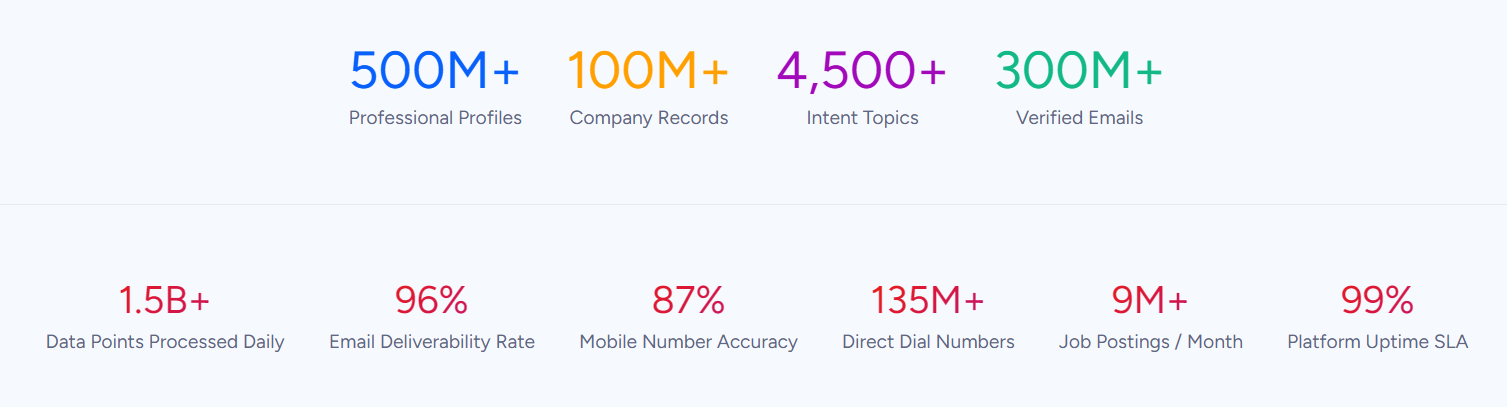
The platform covers three data dimensions: identity data (who buyers are and how to reach them), company context (100M companies with org charts and technographics), and dynamic signals like buyer intent that reveal when accounts are actively in-market.
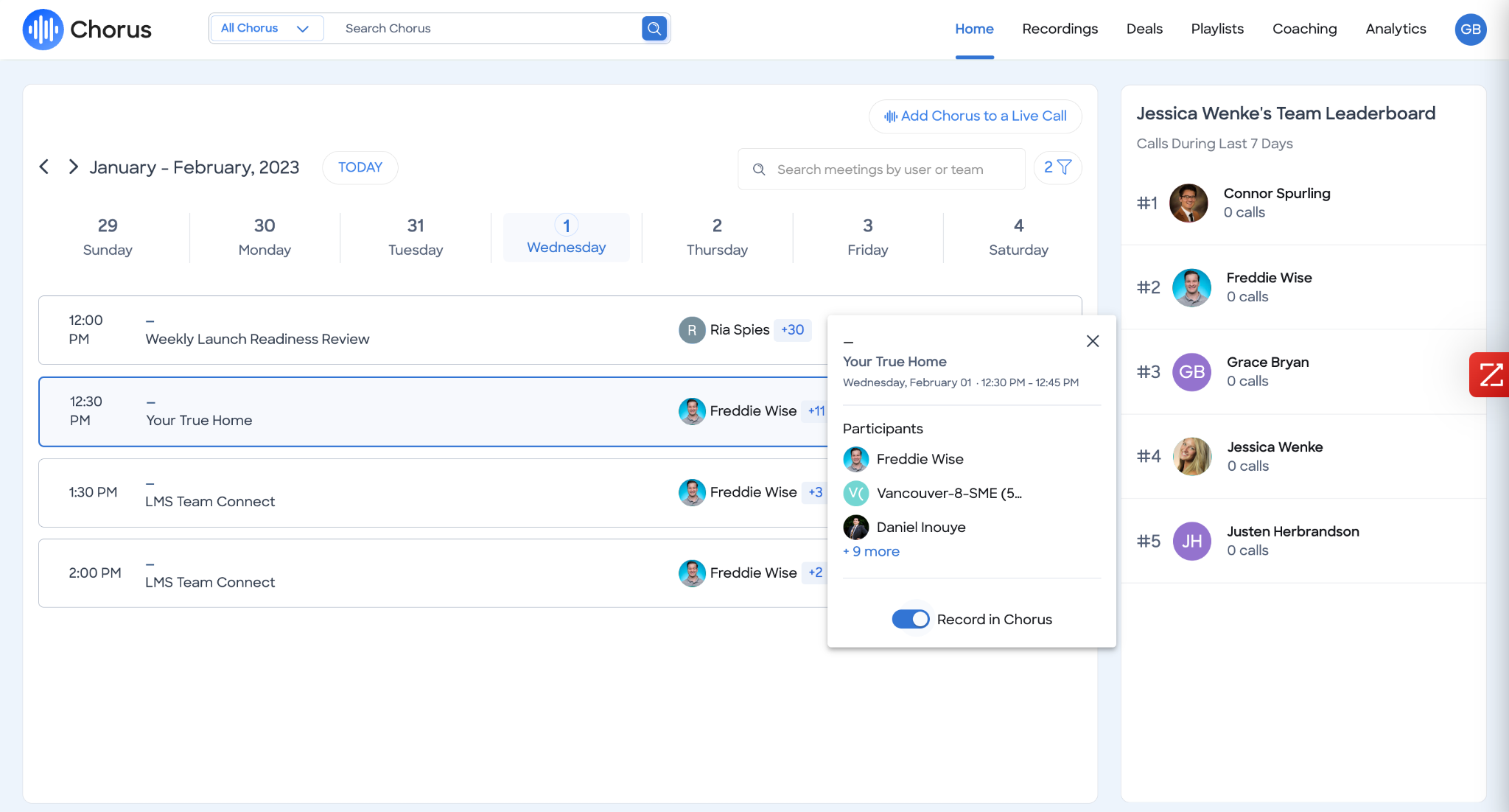
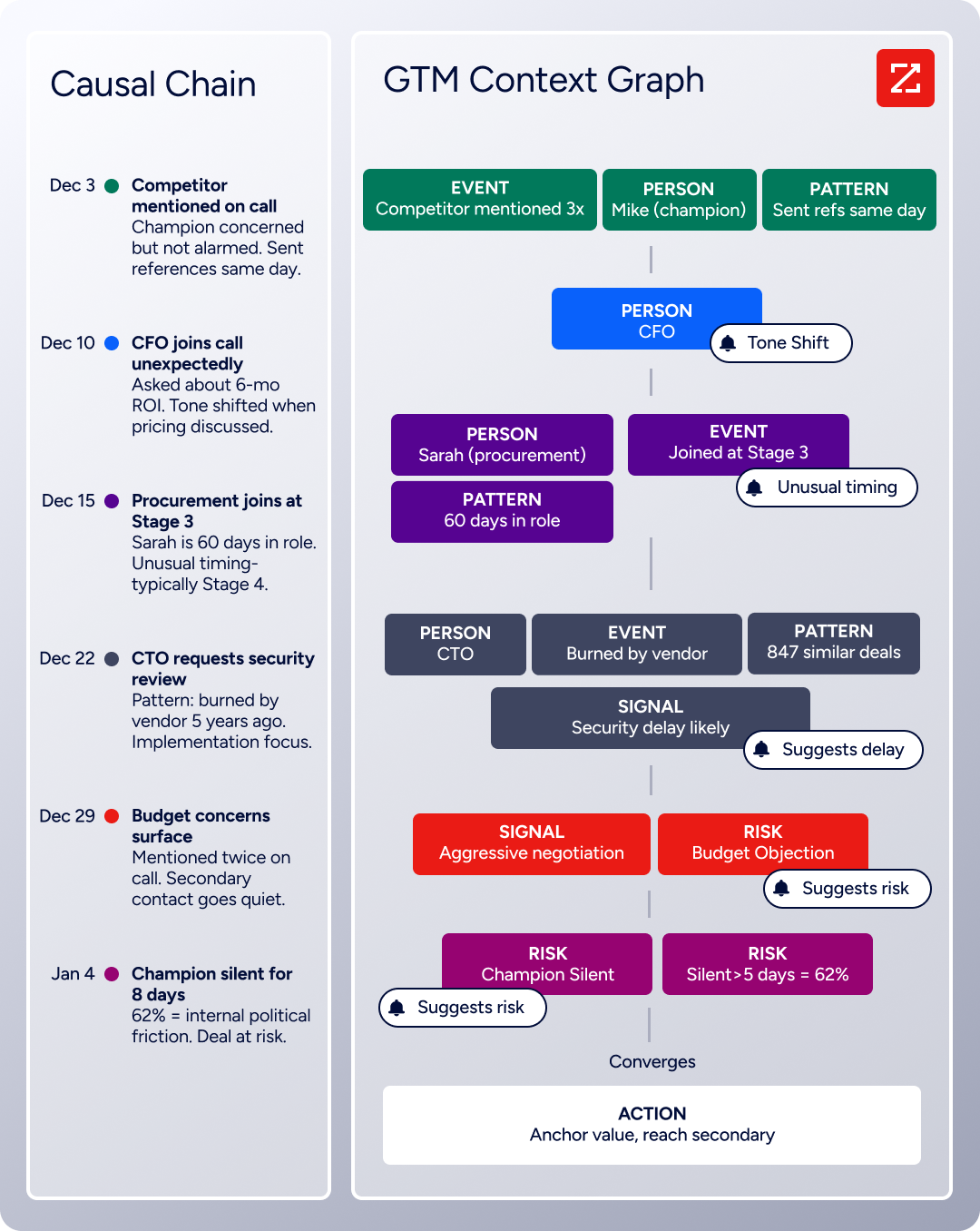
The GTM Context Graph goes further. It fuses ZoomInfo's third-party data with your CRM records, conversation transcripts from Chorus, and behavioral signals into a single intelligence layer. A CRM records that a deal's close date was pushed.
Source: ZoomInfo
The GTM Context Graph captures that the CFO joined the last call and asked about six-month ROI, that a competitor was mentioned in a specific context, and that similar signal patterns in your historical deals predict a 70% close rate. That contextual reasoning is what separates data entry from deal intelligence.
For sales reps, this means the direct dial rings and the email lands. For RevOps, enrichment workflows don't require stitching together multiple vendors to get a complete account picture. For marketers, TAM modeling becomes a verified census updated continuously, rather than a theoretical exercise built on stale snapshots.
Seismic's sales team boosted productivity by 54% and attributed 39% of active pipeline to opportunities identified or influenced by ZoomInfo signals. (Seismic)
AI capabilities are not created equal
AI is the headline feature for both Aurea and Salesforce in 2025, but the substance behind the claims differs.
Salesforce has shipped.
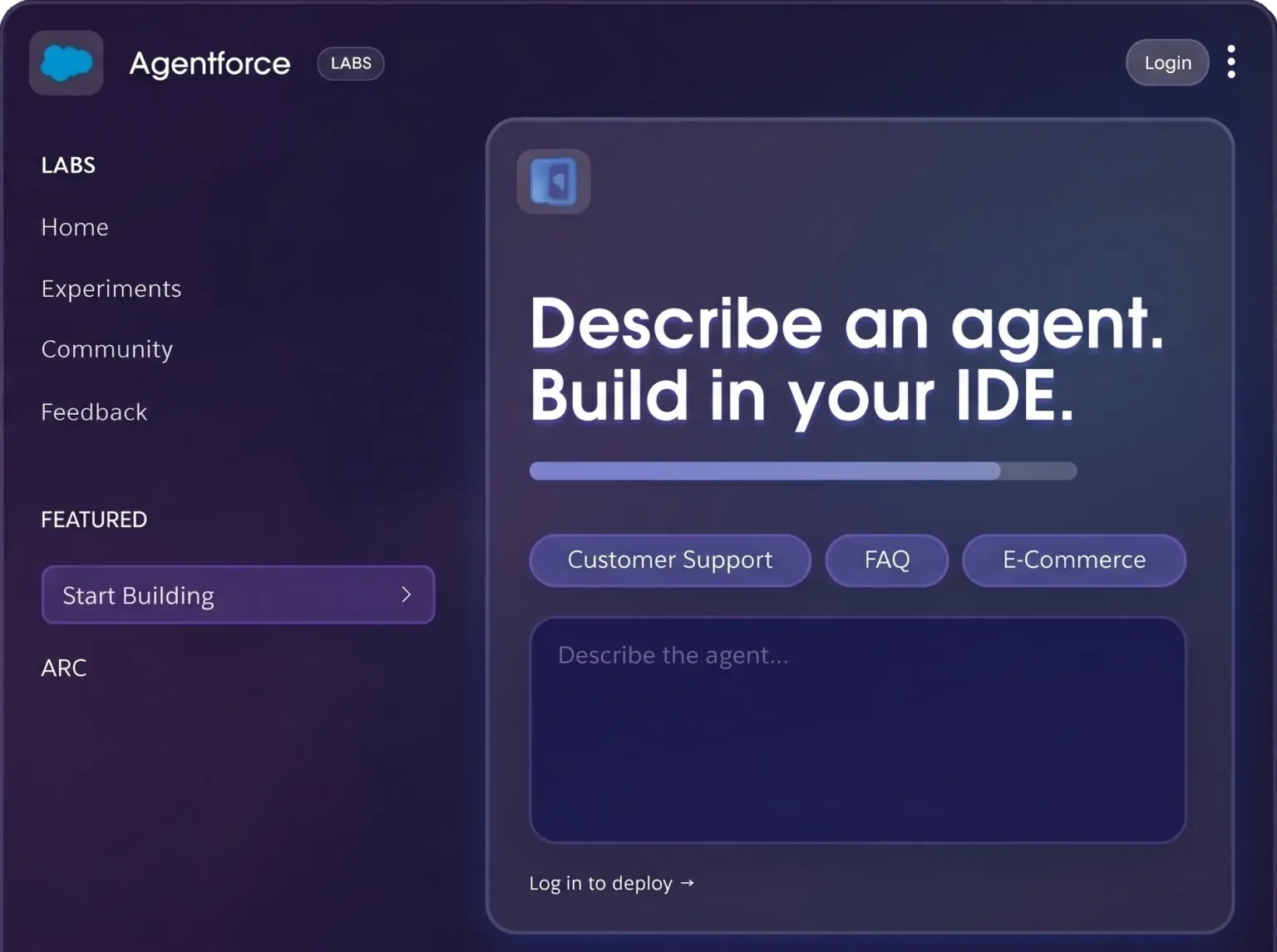
Agentforce with Atlas Reasoning Engine powers agents that perceive, plan, and execute across sales, service, marketing, and commerce. The Einstein Trust Layer adds zero data retention with LLM partners and PII masking for regulated industries.
Source: Salesforce
Aurea has announced.
CEO Kathy Slowinski has framed the company's direction around AI, stating the company is "investing in generative and predictive AI." But as of mid-2026, there is limited public evidence of shipped AI features across the portfolio.
The blog has not published since November 2021, and no specific AI product launches are documented on the website. InsideSales Playbooks (trained on 27 billion revenue interactions) and Infer (predictive lead scoring) include machine learning, but these capabilities predate Aurea's recent AI positioning.
ZoomInfo's AI operates at the data layer, where it has the most impact.
The GTM Context Graph processes 1.5B+ data points daily to connect signals across your pipeline: identifying why deals move, which accounts match your win patterns, and what outreach will resonate.
GTM Workspace AI agents (built on Anthropic's Claude) handle account research, outreach drafting, CRM updates, and signal monitoring. GTM Studio lets marketers describe audiences in natural language and launch multi-channel plays without engineering support.
The practical difference: Salesforce's AI works within its own ecosystem. ZoomInfo's AI works across any ecosystem, because it operates on the data layer that feeds every tool. An AI agent is only as good as the data grounding it, and no CRM contains the B2B intelligence that ZoomInfo provides.
For a full side-by-side breakdown of how these two platforms compare, see our Salesforce vs. ZoomInfo comparison.
Redwood Logistics saw a 99% reduction in CPC and 310% increase in CTR using ZoomInfo's intelligence-driven audience insights. (Redwood Logistics)
Pricing: one subscription vs. tiered complexity vs. consumption-based
The three platforms take different approaches to pricing.
Aurea does not publish prices.
All purchasing routes through sales, and there is no self-serve trial. The commercial model centers on the Unlimited subscription: whatever you currently spend with Aurea becomes your credit toward every other product. A $100,000 Aurea CRM contract gives you $100,000 worth of Jive, AlertFind, CloudFix, and everything else in the catalog.
Basic onboarding is included at no extra cost, though integration products (Process, Monitor, Messenger) require separate paid scoping. For organizations already invested in Aurea products, the marginal cost of adopting additional tools is zero, something no per-product competitor can match.
Salesforce publishes list prices, but the total cost requires careful calculation.
Sales Cloud ranges from free (2 users) to $550/user/month (Agentforce 1 with unmetered AI). Most teams need Enterprise ($175/user/month) or higher.
Then add: Agentforce consumption ($2 per conversation or $500 per 100K Flex Credits), Data Cloud credits ($500 per 100K credits), Premier Support (30% of net license fees), and partner implementation costs (70%+ of deployments are partner-led). A mid-sized deployment with multiple clouds can reach six figures annually.
Source: Salesforce
ZoomInfo uses consumption-based pricing with no publicly listed prices, though it provides accessible entry points that neither Aurea nor Salesforce matches.
ZoomInfo Lite is a permanent free tier (not a trial) with access to the B2B database, 10 monthly export credits, the Chrome extension, and website visitor identification. A 7-day full trial is also available with no credit card required. Paid plans scale around seats, credits, and features, with API access included in all relevant plans.
Integration and ecosystem matter more than features
A CRM that doesn't connect to your other tools is a data silo. This is where the three platforms diverge most.
Salesforce has the largest enterprise app ecosystem.
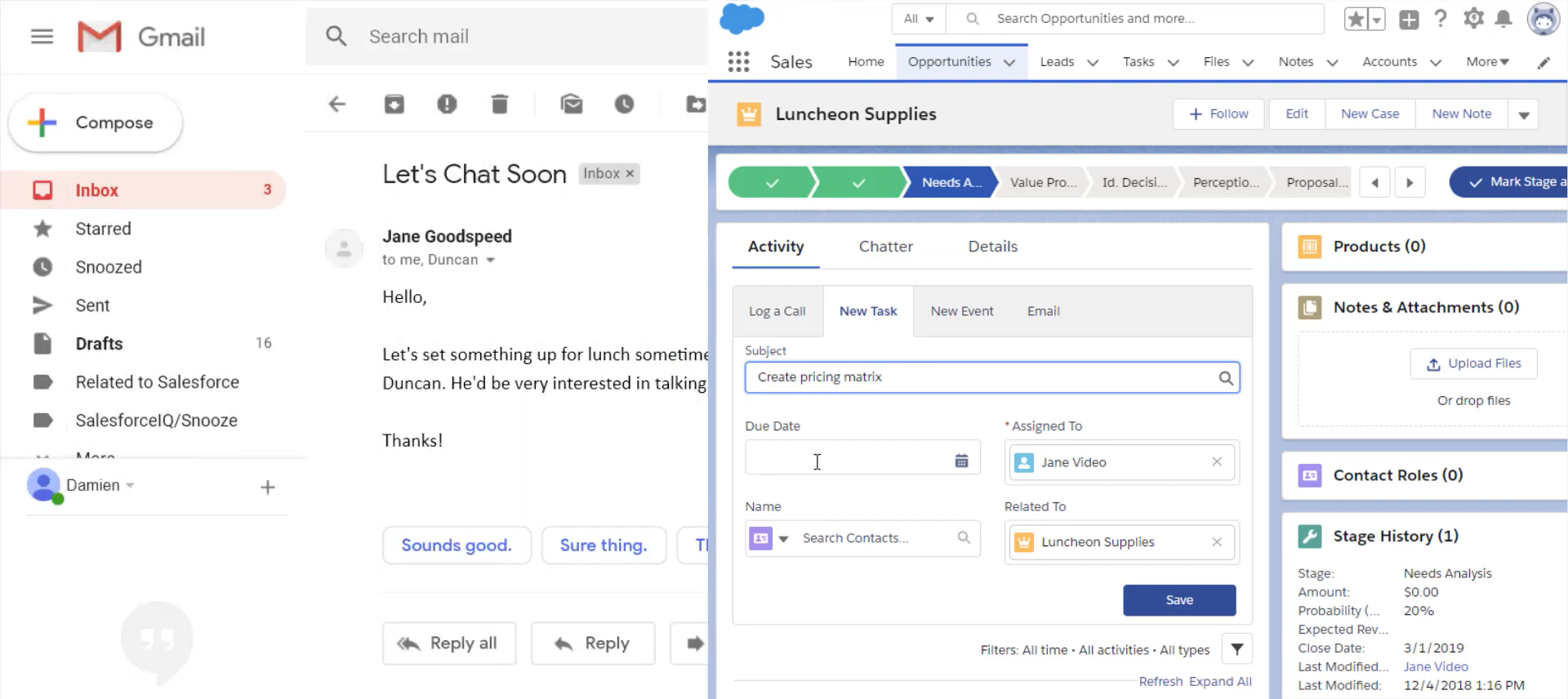
AppExchange lists 9,000+ partner apps with 14+ million installs, and 91% of customers use at least one AppExchange app. MuleSoft provides enterprise integration with hundreds of pre-built connectors. Native integrations cover Google Workspace, Microsoft Outlook and Teams, and Slack. For developers, APIs (REST, SOAP, Bulk, Metadata) and Flow automation allow deep customization.
Source: Salesforce
Aurea has a more fragmented integration story, reflecting its acquisition-led structure.
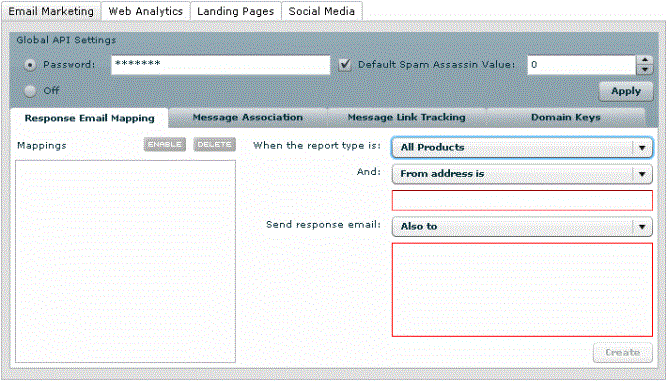
Each product has its own API conventions. AlertFind uses SOAP/XML. Campaign Manager uses REST with token authentication. Aurea markets an iPaaS offering for connecting applications, but specific connector counts and supported platforms are not publicly documented.
Source: Aurea
For organizations already in the Aurea ecosystem, the Unlimited model reduces the need for external integrations. For those connecting Aurea to outside tools, the path is less clear.
ZoomInfo takes an open-platform approach.
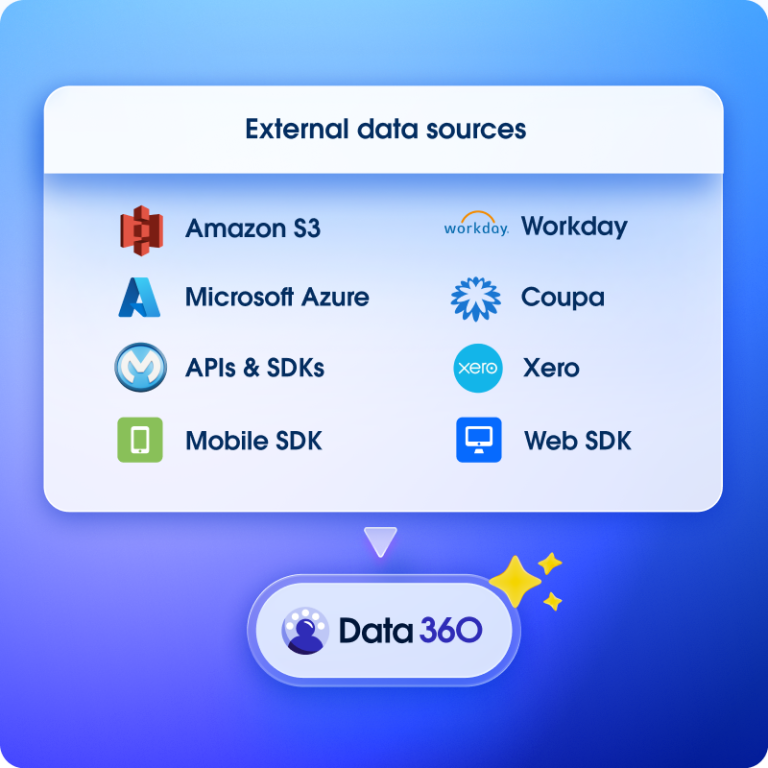
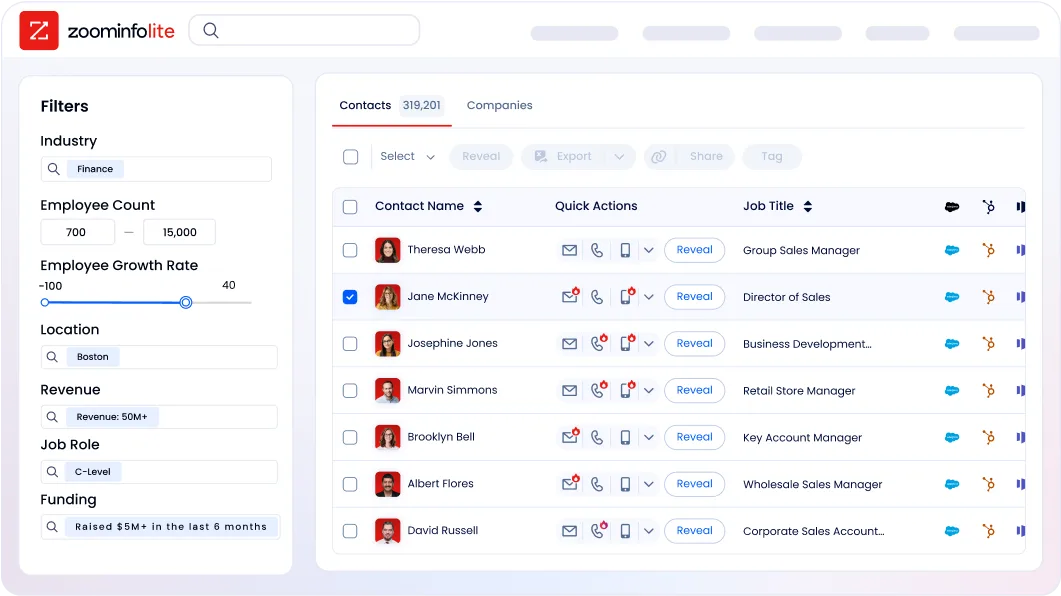
The App Marketplace lists 120+ integrations across CRM, marketing automation, sales engagement, and data warehouse categories. Native integrations with Salesforce, HubSpot, and Microsoft Dynamics 365 push enriched data directly into your CRM.
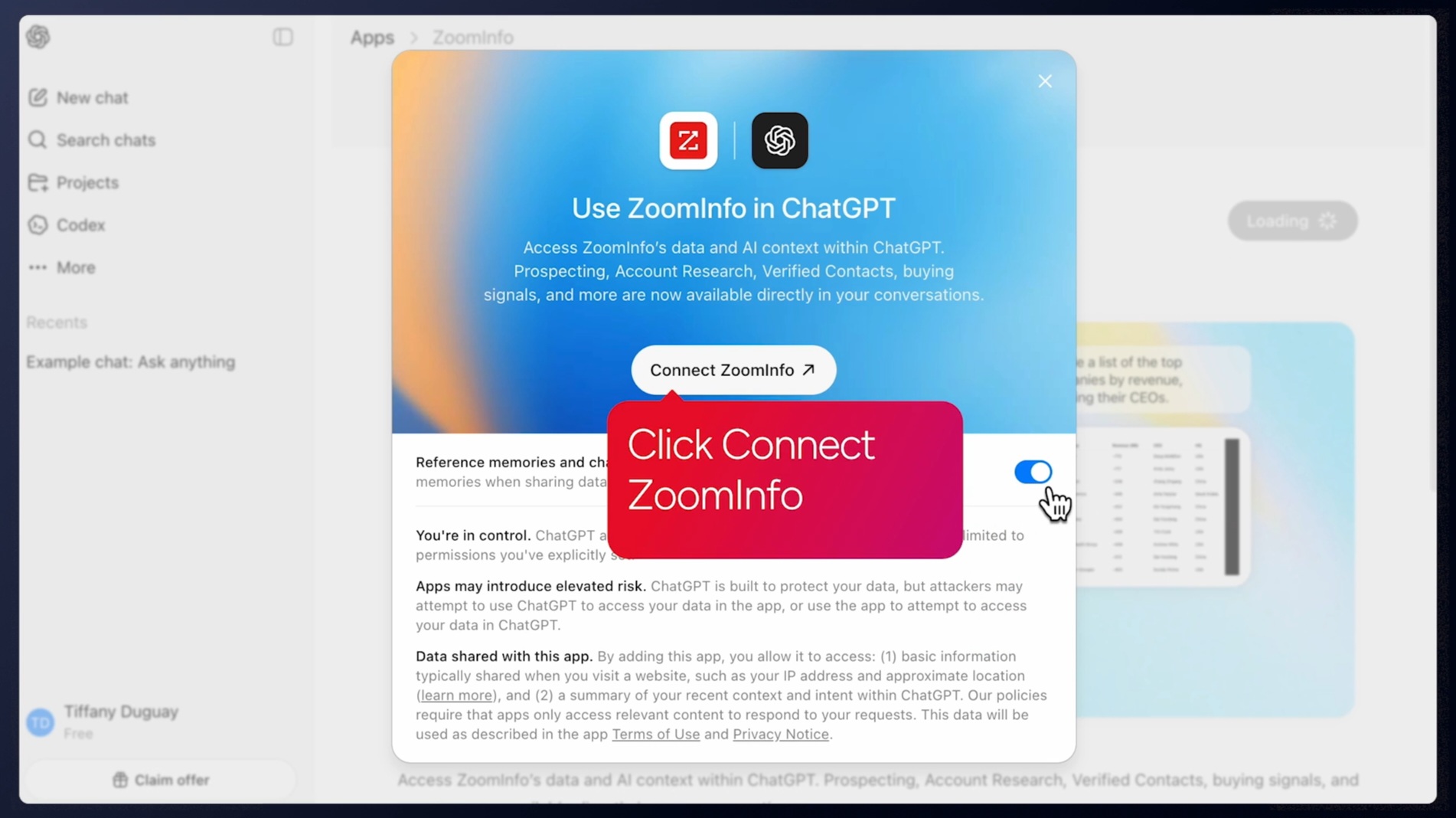
Cloud Partners enable direct data ingestion into AWS, Google Cloud, Snowflake, and Databricks. And ZoomInfo MCP connects AI models directly to ZoomInfo's B2B data, currently supporting Claude and ChatGPT with no custom coding required.
Source: ZoomInfo
The integration story matters most for ZoomInfo and Salesforce together. ZoomInfo's native Salesforce integration enriches contact and account records automatically, feeds intent signals into pipeline views, and syncs buyer intelligence into the workflows reps already use. Many of ZoomInfo's largest customers, including Palo Alto Networks and Smartsheet, run ZoomInfo and Salesforce as a combined stack.
"ZoomInfo is our one source of truth for account data, and even more so for contact data. There's no other provider in the market that provides you with that level of detail." (Smartsheet)
Support and implementation set expectations
Salesforce offers three Success Plan tiers: Standard (free, self-service), Premier (30% of net license fees, with 1-hour response for business-impacting issues and structured onboarding), and Signature (custom pricing, with a dedicated Customer Success Manager and 15-minute response for critical issues).
The Trailblazer Community spans 20 million members, and Trailhead provides 1,500+ learning badges. Implementation timelines range from weeks (simple Sales Cloud) to 3–12 months (enterprise multi-cloud).
Aurea operates a distributed support model where each product has its own support portal, adding complexity for multi-product customers.
The Worx community consolidates product documentation and forums into one hub but requires authenticated access. Standard support is included; Platinum support (24x7x365, one-hour SLA for critical issues) is available at additional cost. With 25 global staff supporting roughly 4,000 customers, the support-to-customer ratio is something to evaluate carefully for mission-critical deployments.
ZoomInfo offers support through five channels via the Help Center, plus phone support and professional services through ZoomInfo Labs.
ZoomInfo University provides role-specific learning paths and certifications. The company redesigned its onboarding from 30 to 90 days, producing a 25% improvement in customer satisfaction and winning Rocketlane's Golden Comet award for Best Customer Onboarding Team of 2024. GTM Workspace "deploys in weeks, not months".

Security and compliance for regulated industries
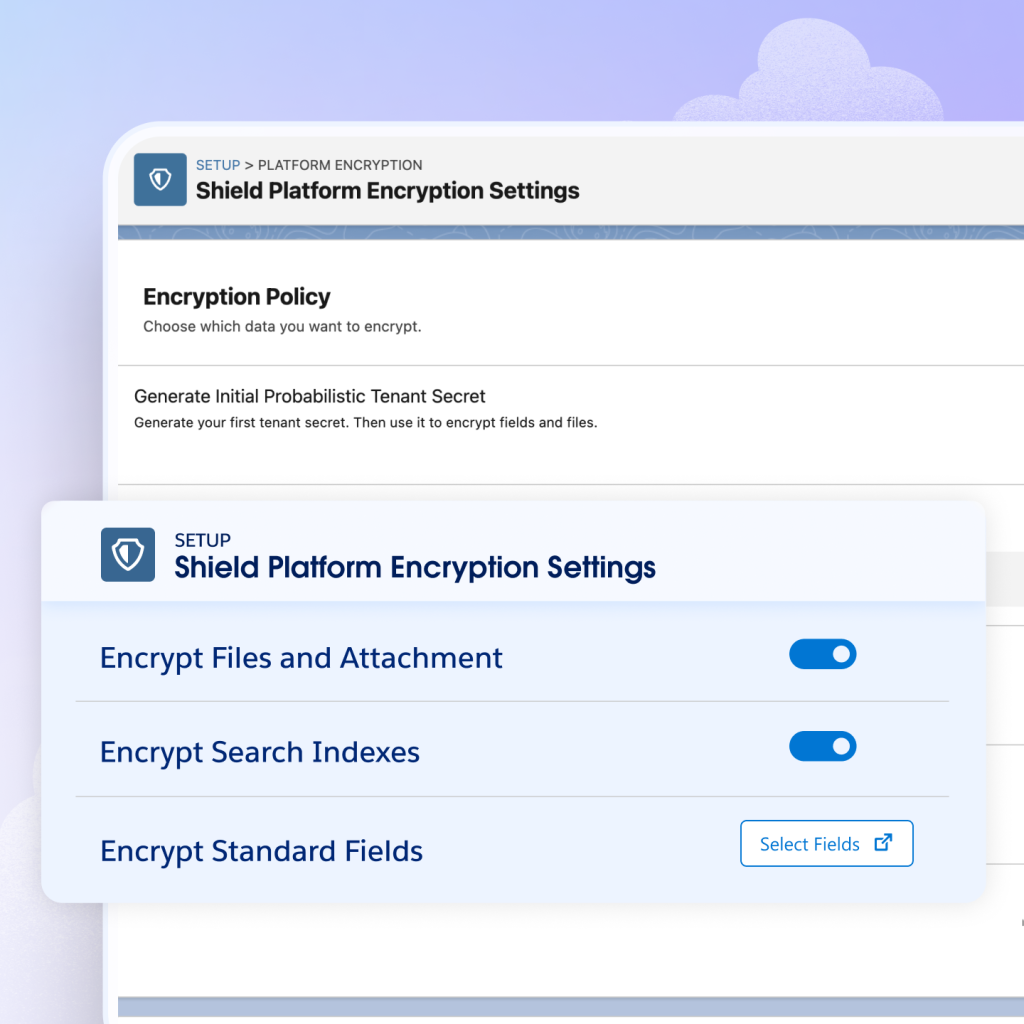
Salesforce holds the broadest set of certifications: ISO 27001/27017/27018, SOC 1/2/3, FedRAMP (Government Cloud), and HITRUST.
Salesforce Shield (premium add-on) adds event monitoring, platform encryption with BYOK, and field audit trail. Hyperforce enables regional data residency across the US, UK, Germany, India, Japan, and more. For regulated industries, Salesforce's compliance stack is the most comprehensive of the three.
Source: Salesforce
Aurea does not publish a centralized trust center or security certifications page at the platform level.
Individual products carry their own certifications: CloudFix is SOC 2 certified and an AWS Advanced Technology Partner; Kayako holds SOC 2 Type II and GDPR compliance. Aurea's Privacy Policy covers GDPR with explicit legal bases for EEA/UK/Switzerland data subjects.
However, Pivotal CRM's full on-premise deployment is a real differentiator for organizations that require complete control over where customer data resides, something Salesforce's cloud-only architecture cannot provide.
ZoomInfo maintains ISO 27001, ISO 27701, SOC 2 Type II, TRUSTe GDPR, and TRUSTe CCPA certifications, all renewed annually.

Source: ZoomInfo
The company is a registered data broker in California and Vermont, with a dedicated Trust Center. Privacy compliance is built into the data layer itself, which matters when you're enriching CRM records with third-party B2B intelligence at scale.
Aurea vs. Salesforce vs. ZoomInfo: Which should you choose?
The right choice depends on where you are today and what problem you're solving.
Choose Aurea if:
You're already paying for one or more Aurea products and want to expand without new procurement
On-premise CRM deployment is a regulatory requirement (Pivotal CRM)
You need stable, mature enterprise software and don't require rapid feature innovation
Your priority is breadth across collaboration, IT, and commerce at a predictable cost
You operate in a regulated vertical (life sciences, insurance, energy) where Aurea has vertical-specific products
Choose Salesforce if:
You need the most feature-rich CRM with strong AI capabilities
Your organization can invest in dedicated admins, implementation partners, and ongoing training
Integration with a large app ecosystem is important to your stack
You want industry clouds built for specific verticals across 17 categories
You're building toward an organization where AI handles routine work autonomously
Add ZoomInfo to either platform if:
Your CRM is only as good as the data inside it, and you need verified B2B contact and company intelligence
Your sales team wastes time on wrong numbers, bounced emails, and incomplete account information
You want to identify in-market buyers before they contact you, through intent data and website visitor tracking
You need the intelligence layer that tells reps who to contact, when to engage, and what to say
You want your CRM data continuously enriched, verified, and updated without manual research
Start free with ZoomInfo Lite or request a 7-day trial to see the full platform.
"ZoomInfo's not just a contact data company anymore. They've built a full system of execution." (Levanta)
The real question is not just which CRM to buy. It's whether the data powering that CRM is accurate, complete, and actionable. Aurea gives you breadth. Salesforce gives you depth. ZoomInfo gives you the intelligence that makes either one work.
More Salesforce and ZoomInfo comparisons:
Aurea vs. Salesforce vs. ZoomInfo FAQ
What is the core difference between Aurea, Salesforce, and ZoomInfo?
Aurea is a portfolio of 40+ acquired enterprise software products sold under a single Unlimited subscription. Salesforce is the leading CRM platform with AI-powered capabilities across sales, service, marketing, and commerce. ZoomInfo is a B2B data intelligence platform that provides verified contact data, company insights, and buyer intent signals to power go-to-market execution in any CRM.
Is Aurea a direct competitor to Salesforce?
Aurea's CRM products (Aurea CRM, Pivotal CRM) compete in the same category as Salesforce Sales Cloud, but at a different scale. Salesforce has $41.5 billion in annual revenue, 150,000+ customers, and Gartner Magic Quadrant Leader status across 6+ categories. Aurea's CRM products are mature but do not match Salesforce's depth, ecosystem, or pace of innovation. Aurea's competitive advantage is its Unlimited subscription model, which lets existing customers adopt additional products at no marginal cost.
Does ZoomInfo replace a CRM?
No. ZoomInfo complements a CRM; it does not replace one. It provides the verified B2B data and intelligence that makes CRM effective. ZoomInfo integrates natively with Salesforce, HubSpot, and Microsoft Dynamics 365, enriching contact and account records automatically. GTM Workspace provides an AI-powered execution layer for sellers, while GTM Studio enables marketers and RevOps to orchestrate plays, all feeding data back into your CRM.
Which platform offers the best value for existing Aurea customers?
Aurea's Unlimited subscription model is valuable for current customers. Whatever you already spend becomes credit toward any other product in the 40+ library. A $100,000 CRM contract lets you access collaboration tools (Jive), emergency notification (AlertFind), cloud cost optimization (CloudFix), and sales intelligence (FirstRain, Infer) at zero additional cost. No other vendor offers this structure.
Which platform has the strongest AI capabilities?
Salesforce leads in shipped AI features through Agentforce, with $800M ARR, 29,000 deals closed, and documented results like 85% autonomous case resolution on its own support site. ZoomInfo's AI operates at the data layer through its GTM Context Graph, processing 1.5B+ data points daily to provide contextual deal intelligence and automated outreach. Aurea has announced AI investment but has limited publicly documented shipped features as of mid-2026.
Can ZoomInfo work with both Aurea and Salesforce?
ZoomInfo has a native integration with Salesforce and is widely used alongside it by enterprise customers including Palo Alto Networks, Snowflake, and Smartsheet. ZoomInfo's Enterprise API and MCP access also allow integration with any system, including Aurea products, though the integration with Salesforce is deeper and more established. API access is included in all relevant ZoomInfo plans.
Which platform is best for regulated industries that need on-premise deployment?
Aurea's Pivotal CRM is the only option among these three that offers full on-premise deployment as a first-class feature, with industry-specific editions for financial services, insurance, and manufacturing. Salesforce is cloud-only (with Hyperforce for regional data residency). ZoomInfo is cloud-based but offers Data-as-a-Service delivery options for organizations that need B2B data inside their own infrastructure.
How do the platforms compare on pricing transparency?
Salesforce publishes list prices for most products, ranging from free to $550/user/month for Sales Cloud, with additional costs for AI consumption, data credits, premium support, and implementation. Aurea does not publish any prices and requires contacting sales for all products. ZoomInfo does not publish paid tier prices but offers two free entry points: ZoomInfo Lite (permanent free tier) and a 7-day full trial, both requiring no credit card.
See how Salesforce stacks up against other tools:
