
Teams that run RingCentral for communications and Salesforce as their CRM discover the same friction within a quarter:
call activity stays trapped in RingCentral while deal records live in Salesforce, so reps toggle between platforms to log interactions,
customer context from CRM records is invisible during live calls, leaving reps uninformed when it matters most,
and reporting on sales call activity requires manual data stitching because neither system has the full picture on its own.
However the two platforms ended up coexisting (a sales team standardizing on RingCentral for telephony while the org runs on Salesforce, a contact center rollout alongside an established CRM, or a company-wide communications upgrade), the longer they operate without a connection, the more call data goes untracked and the harder it becomes to tie communication activity to pipeline outcomes.
Connecting RingCentral and Salesforce closes that gap.
Calls made and received in RingCentral log automatically in Salesforce, so reps never manually enter call notes or outcomes.
Salesforce records surface inside RingCentral, so reps see deal context, account history, and contact details before they pick up the phone. SMS messages, voicemails, and faxes flow into Salesforce activity timelines, giving managers a complete view of every customer touchpoint without chasing down separate reports.
RingCentral offers a native Salesforce integration available on the Salesforce AppExchange. For teams that need more flexibility, third-party automation tools like Zapier and custom API development offer alternative paths with different trade-offs in setup complexity, data coverage, and cost.
One problem no connection method solves: the integration moves communication data between systems, but it does not improve the contact records those communications are built on.
That is where ZoomInfo comes in. ZoomInfo integrates natively with both Salesforce and RingCentral, and offers API and MCP access that can feed verified, enriched contact data into any CRM or communications workflow, so the records behind every call are accurate before the conversation starts.
This article covers the full landscape of the RingCentral-Salesforce integration: which methods are available, what data each one handles, how to set them up, the use cases that justify connecting both platforms, and the limitations to plan for. It also covers how ZoomInfo fits in as a data enrichment layer that strengthens the records flowing between RingCentral and Salesforce.
Integration Overview
Source: RingCentral
Does a native integration exist?
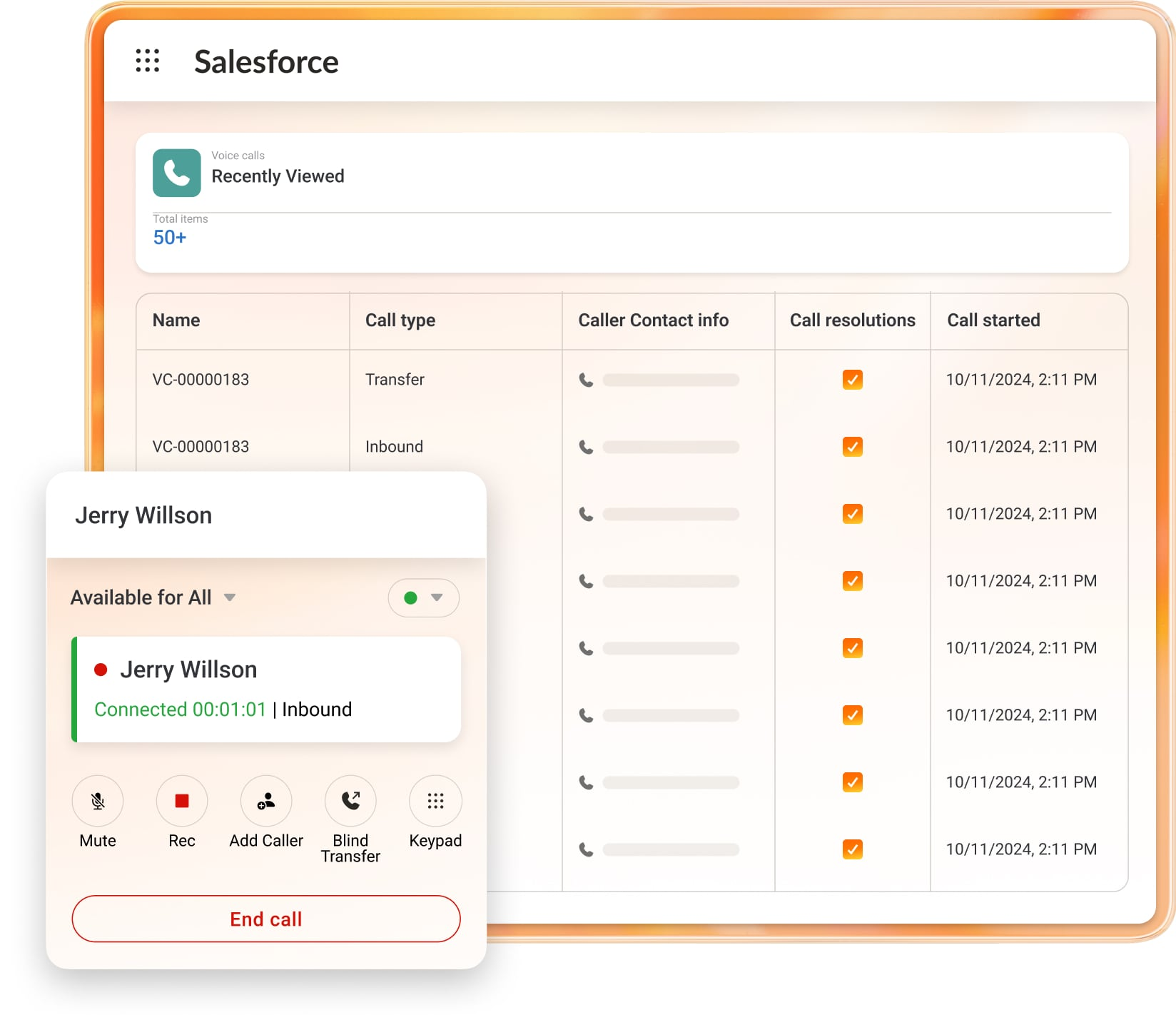
Yes. RingCentral offers a native Salesforce integration available through the Salesforce AppExchange and the RingCentral App Gallery. The app embeds RingCentral calling, SMS, voicemail, fax, and video meeting scheduling inside the Salesforce interface, with automated call logging and performance reporting.
What data can sync?
Call logs (inbound and outbound), call recordings, SMS messages, voicemails, faxes, call dispositions, and call notes. Salesforce contact and lead records surface inside RingCentral for screen pops and caller identification. Video meeting scheduling can be initiated from Salesforce records.
Is the sync bidirectional?
Partially. Communication activity flows from RingCentral into Salesforce (call logs, recordings, SMS, voicemail). Salesforce contact and account data surfaces inside RingCentral for caller identification and screen pops. However, changes to CRM records in Salesforce do not push back into RingCentral's contact management. Salesforce remains the system of record for customer data.
Is it real-time or batch?
The native integration operates in real-time. Calls log to Salesforce as they happen, screen pops display CRM data during incoming calls, and click-to-dial initiates calls instantly from Salesforce records. Third-party tools like Zapier trigger within 1 to 15 minutes depending on plan tier.
What are the available methods?
Native RingCentral for Salesforce app, third-party automation (Zapier, Workato), and custom API development using both platforms' REST APIs.
Method | Setup Difficulty | Data Flow | Real-time? | Cost |
|---|---|---|---|---|
Native (RingCentral for Salesforce) | Low | Bidirectional (calls to SF, contacts to RC) | Yes | Included with RingCentral plans |
Zapier | Medium | One-way per Zap | Near real-time (1-15 min) | From $19.99/mo |
Workato | Medium | Configurable per recipe | Near real-time or scheduled | Custom pricing |
Custom API | High | Fully customizable | Real-time via webhooks | Developer time + hosting |
One distinction worth settling upfront: the native integration handles ongoing, real-time sync of communication activity as part of daily sales workflows. Zapier and Workato handle event-triggered flows with narrower data coverage and more customizable logic. Custom API development offers the most control but requires dedicated engineering resources to build and maintain.
Integration Methods
Native RingCentral for Salesforce App
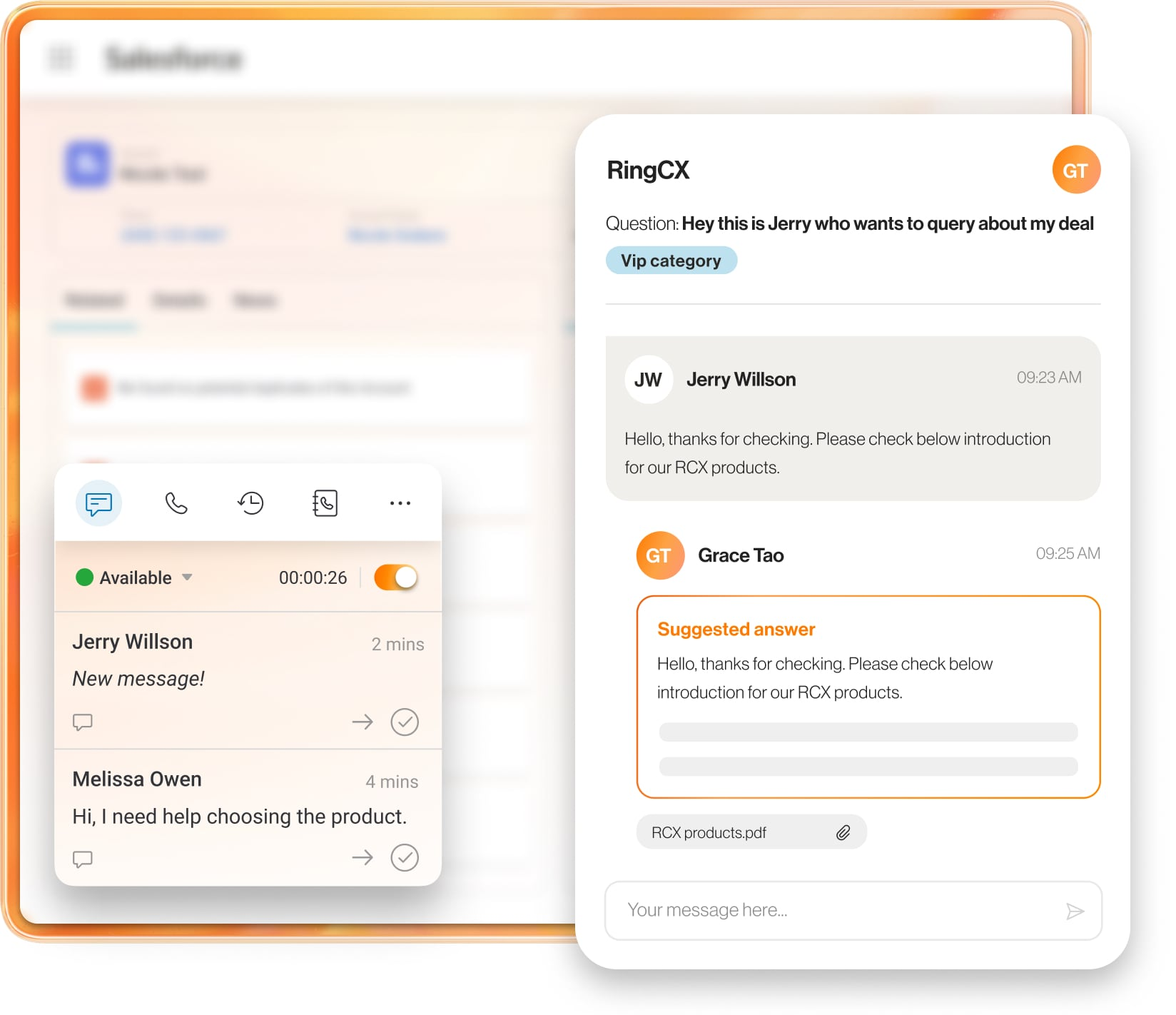
How it works: The RingCentral for Salesforce app embeds RingCentral's communication tools inside the Salesforce interface. Reps can make and receive calls, send SMS messages, access voicemail, send faxes, and schedule video meetings without leaving Salesforce.
Source: RingCentral
Every interaction logs automatically as a Salesforce activity, attaching to the relevant Lead, Contact, Account, or Opportunity record. Incoming calls trigger screen pops that display the caller's CRM record so reps have context before they answer.
What it syncs: Inbound and outbound call logs (duration, timestamp, direction, outcome), call recordings, SMS messages, voicemails, fax activity, call dispositions, and call notes. Salesforce contact, lead, and account data surfaces inside the RingCentral widget for caller identification and click-to-dial. Video meeting scheduling ties invitations to Salesforce records.
Fits: ongoing real-time sync of all communication activity into Salesforce; not a migration tool.
Setup process:
Install the RingCentral for Salesforce app from the Salesforce AppExchange. Salesforce System Administrator access is required.
In Salesforce Setup, assign the RingCentral permission set to users who need access. Configure which Salesforce profiles can use the embedded dialer.
Log into the RingCentral widget inside Salesforce using your RingCentral credentials. This authenticates the connection via OAuth.
Configure call logging preferences: automatic vs. manual logging, which activity fields to populate, default call dispositions, and whether to log SMS and voicemail activity.
Set up screen pop behavior for incoming calls: choose whether to display the matching Contact, Lead, or Account record, and configure the fallback when no match is found.
Test by making an outbound call from a Salesforce Contact record using click-to-dial, then verify the call log appears as an activity on that record.
Strengths: First-party integration maintained by RingCentral and distributed through the Salesforce AppExchange. No third-party tool to configure or pay for separately. Real-time call logging eliminates manual data entry.
Screen pops give reps CRM context during live calls. Click-to-dial and click-to-SMS remove the need to copy phone numbers between systems. Performance reporting tracks call metrics alongside pipeline data.
Limitations: Requires active RingCentral and Salesforce subscriptions. Configuration options for call logging and field mapping may vary by RingCentral plan tier (Core, Advanced, Ultra). Custom object logging and advanced field mapping may require additional Salesforce configuration.
The integration is communication-centric; it does not sync CRM data like deals, pipeline stages, or custom objects back into RingCentral.
Best for: Sales teams that use RingCentral as their primary phone system and Salesforce as their CRM, and want every call, SMS, and voicemail logged automatically without leaving the CRM interface.
Zapier
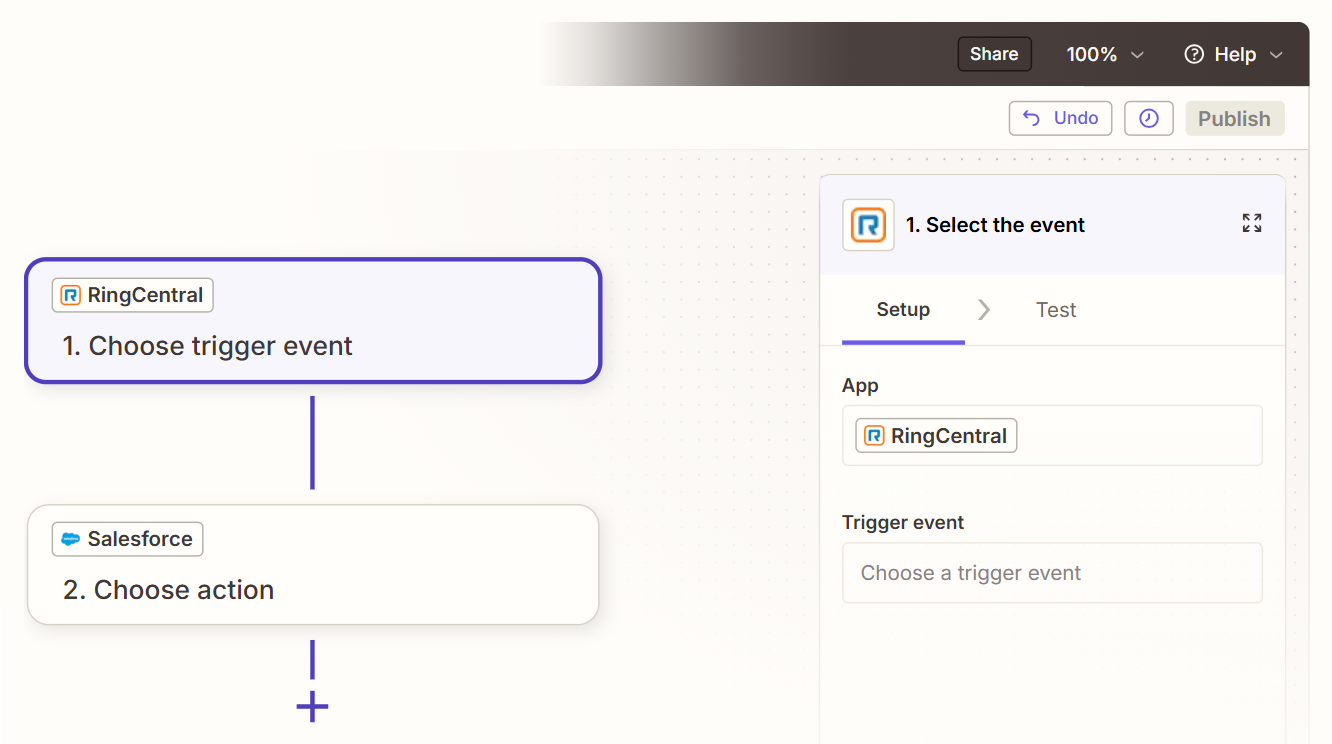
How it works: Zapier connects RingCentral and Salesforce through event-driven automations called Zaps. Each Zap pairs a trigger (an event in one app) with one or more actions (what happens in the other).
Source: Zapier
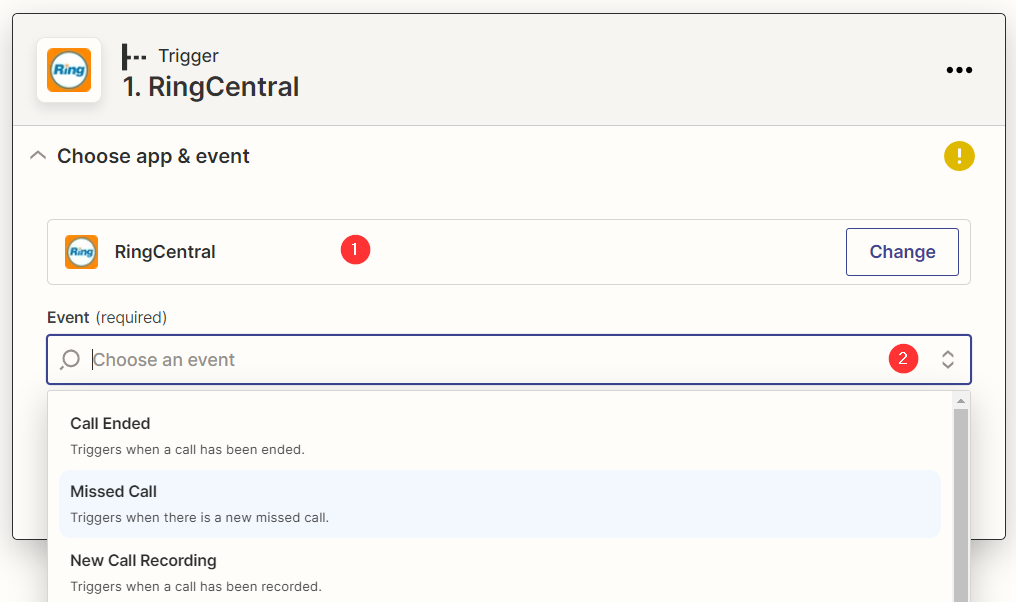
RingCentral's official Zapier integration offers triggers for missed calls, new SMS messages, and completed call recordings, with actions including sending SMS messages and creating records in connected apps.
What it syncs: Depending on available triggers, Zapier can capture missed call events, inbound SMS messages, and call recording completions from RingCentral and push them into Salesforce as Tasks, notes, or custom object records.
On the reverse side, Salesforce events (new Lead, updated Opportunity) can trigger RingCentral actions like sending an SMS notification. Field mapping is manual and configurable in the Zap setup flow.
Fits: ongoing event-triggered sync for specific communication events; not a replacement for the native integration's embedded dialer and real-time call logging.
Setup process:
Create a Zapier account and connect both your RingCentral and Salesforce accounts using OAuth.
Choose RingCentral as the trigger app and select the trigger event (e.g., "New Recording" or "New SMS Received").
Choose Salesforce as the action app and select the action (e.g., "Create Task" or "Create Record").
Map the available fields from the RingCentral trigger (caller number, call duration, recording URL, message content) into the corresponding Salesforce fields.
Test the Zap with a sample event to verify data flows correctly into Salesforce.
Turn the Zap on. Each matching event triggers the configured action automatically.
Strengths: No engineering resources required. Quick to set up for use cases the native integration does not cover (e.g., triggering a Salesforce workflow when a specific SMS keyword arrives). Zapier's filter and formatting steps can add conditional logic. Pre-built Zap templates cover common RingCentral workflows, including archiving recordings to cloud storage and creating support tickets from inbound SMS.
Source: RingCentral
Limitations: Does not provide the embedded dialer, screen pops, or click-to-dial of the native integration. Each Zap handles one trigger-action pair, so covering multiple event types requires multiple Zaps. Near real-time (1 to 15 minute delay) rather than instant. Zapier charges by task count, and high call volumes accumulate costs quickly. Does not capture the full breadth of call metadata the native integration logs.
Best for: Teams that already use the native integration but need to automate specific secondary workflows (e.g., routing missed calls to a Slack channel, creating follow-up tasks in Salesforce when a call recording completes, or triggering SMS outreach from Salesforce deal stage changes).
Workato
How it works: Workato is an enterprise iPaaS platform that connects RingCentral with Salesforce and 1,000+ other apps via no-code "recipes." Unlike Zapier's linear Zap structure, Workato recipes support conditional logic, loops, error handling, and batch operations, handling more complex automation for high-volume or multi-step workflows.
What it syncs: Call logs, SMS messages, voicemail events, and call metadata from RingCentral, pushed into Salesforce as activities, tasks, or custom records. Workato's connectors allow mapping complex data relationships (e.g., linking a call to both a Contact and an Opportunity in a single recipe). Salesforce data can trigger outbound RingCentral actions like automated SMS sequences.
Fits: ongoing sync with conditional logic and multi-step workflows; suited for teams with automation requirements beyond what Zapier handles.
Setup process:
Create a Workato workspace and connect both RingCentral and Salesforce accounts via OAuth.
Build a new recipe. Select RingCentral as the trigger app and choose the triggering event.
Add Salesforce as the action app. Workato's recipe builder supports branching, lookups, and conditional paths.
Map fields between the two platforms. Workato provides transformation functions for formatting data (e.g., converting phone number formats, mapping call disposition codes to Salesforce picklist values).
Add error-handling steps to catch failures and route them to a notification channel or log.
Activate the recipe and monitor execution in Workato's dashboard.
Strengths: Enterprise automation with conditional logic, error handling, and batch processing. Supports multi-step workflows spanning more than two applications. Pre-built RingCentral-Salesforce recipe templates for common use cases like call logging automation and post-call customer surveys. Better suited than Zapier for high-volume environments where per-task pricing gets expensive.
Limitations: Higher learning curve than Zapier. Custom pricing (not publicly listed) positions it for mid-market and enterprise teams. Does not replace the native integration's embedded dialer, screen pops, or real-time call controls inside Salesforce.
Best for: Enterprise teams with multi-step automation requirements spanning RingCentral, Salesforce, and additional systems (e.g., logging calls to Salesforce, notifying a Slack channel, and updating a support ticket in Zendesk in a single workflow).
Custom API Integration
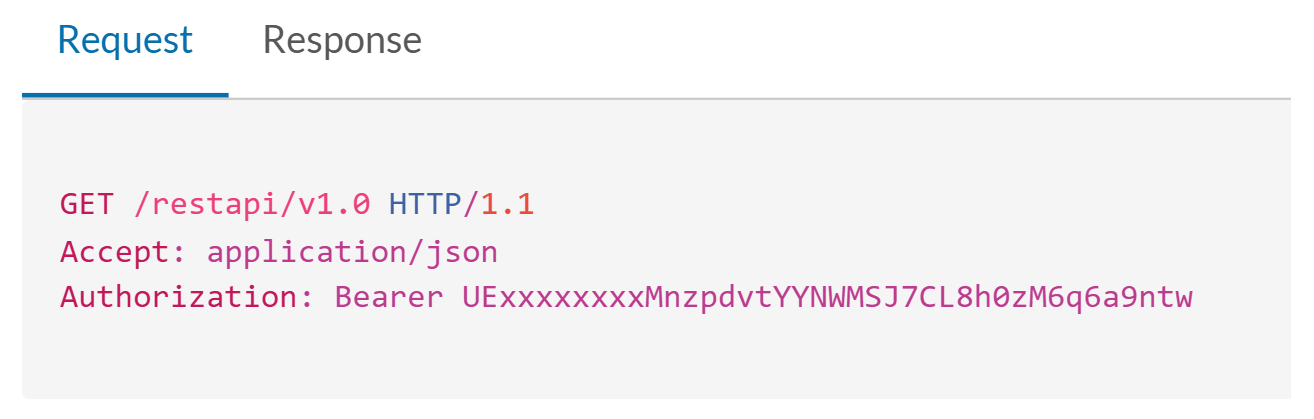
How it works: Both RingCentral and Salesforce provide REST APIs. RingCentral's API platform covers voice, SMS/MMS, team messaging, video, fax, and data management, with webhook subscriptions for real-time event notifications.
Source: RingCentral
Salesforce's REST API covers all standard and custom objects, with Platform Events and Change Data Capture for event-driven sync. A custom integration connects these APIs directly, with middleware handling authentication, data mapping, transformation, and error recovery.
What it syncs: Anything both APIs expose. RingCentral's API provides access to call logs (participants, timestamps, direction, outcome, duration, recording URLs), SMS/MMS, presence/availability, and account/extension configuration. Salesforce's API supports reading and writing any standard or custom object.
This is the only method that supports scenarios like syncing call analytics into custom Salesforce dashboards or triggering RingCentral call flows based on Salesforce workflow rules.
Fits: either specific high-complexity use cases or full-scale custom sync; the only method with no ceiling on what data moves or how it is processed.
Setup process:
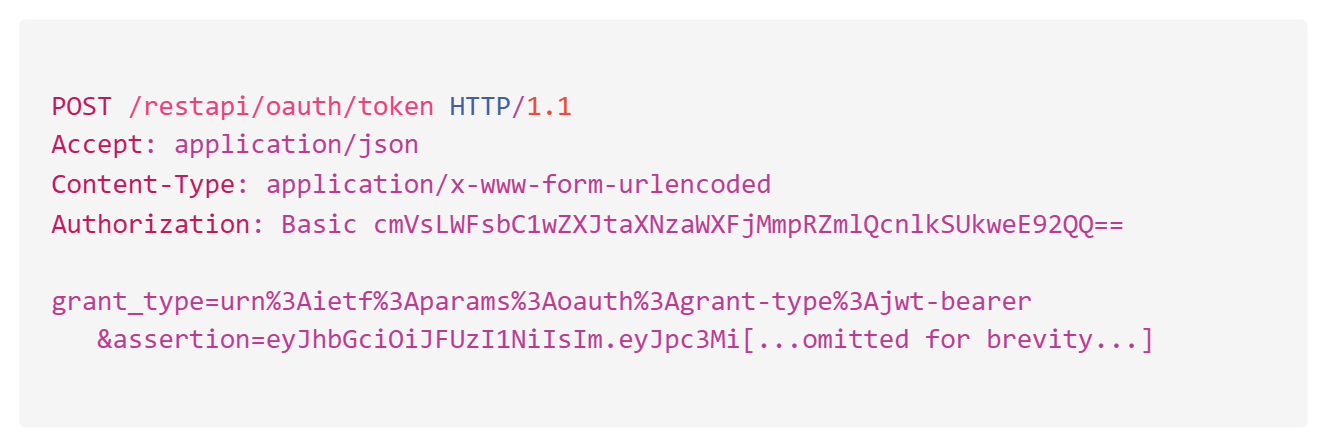
Register API credentials in both platforms. For RingCentral, create an app in the Developer Console to obtain a Client ID and Secret; choose JWT authentication for server-to-server integrations. For Salesforce, create an External Client App with OAuth 2.0 Client Credentials Flow.
Design the data model mapping between RingCentral call objects and Salesforce activity/task objects, including field-level transformations and a cross-reference approach for matching caller IDs to Salesforce records.
Build the sync service: a server-side application that subscribes to RingCentral webhooks for call events, transforms data according to the mapping, and writes activities to Salesforce via the REST API.
Implement matching logic to associate incoming call data with the correct Salesforce Lead, Contact, or Account (typically by phone number lookup using SOQL).
Add logging, error handling, and retry logic. RingCentral enforces rate limits per user per minute (50 requests/minute for Light endpoints, 10 for Heavy). Salesforce's daily API request allocation starts at 100,000 for Professional and Enterprise editions.
Deploy, monitor, and maintain the integration over time.
Source: RingCentral
Strengths: Full control over what syncs, when, and how. Real-time sync via RingCentral webhooks and Salesforce Platform Events. Can implement complex business logic (e.g., route calls to different Salesforce queues based on IVR selections, sync AI-generated call summaries from RingCentral's AI API into Salesforce fields). No per-record or per-operation fees from a third-party connector.
Limitations: Requires development resources to build and maintain. You own the infrastructure, monitoring, and error recovery. RingCentral's API changelog and Salesforce's seasonal API versioning (current: Summer '26, API version 67.0) require ongoing maintenance. The initial build takes weeks, not hours.
Best for: Organizations with sync requirements the native integration and third-party tools cannot satisfy, such as syncing call analytics into custom Salesforce objects, integrating RingCentral's AI conversation insights into Salesforce reports, or building custom call routing logic driven by Salesforce data.
Key Use Cases
1. Automated Sales Call Logging
Sales reps make dozens of outbound calls daily through RingCentral. The native Salesforce integration logs every call (duration, outcome, timestamp, notes) as a Salesforce Task on the corresponding Contact or Lead record. Managers see complete activity reports without relying on reps to remember each call, and pipeline reviews reflect actual communication volume rather than estimates.
Best integration method: Native RingCentral for Salesforce app.
2. Inbound Call Routing with CRM Context
When a customer calls, the native integration triggers a screen pop displaying the caller's Salesforce record (open opportunities, recent cases, account tier) before the rep answers. The rep enters the conversation knowing the customer's history, deal status, and pending issues. After the call, the interaction logs automatically with the relevant call notes and disposition.
Best integration method: Native RingCentral for Salesforce app.
3. SMS Follow-Up Triggered by Deal Stage Changes
When a Salesforce Opportunity moves to a specific stage (e.g., "Proposal Sent"), a Zapier Zap or Workato recipe triggers an automated SMS via RingCentral to the primary contact, confirming the proposal was sent and providing a direct line for questions. The SMS activity logs back to Salesforce for a complete communication trail.
Best integration method: Zapier or Workato (Salesforce trigger, RingCentral SMS action).
4. Call Recording Analysis for Sales Coaching
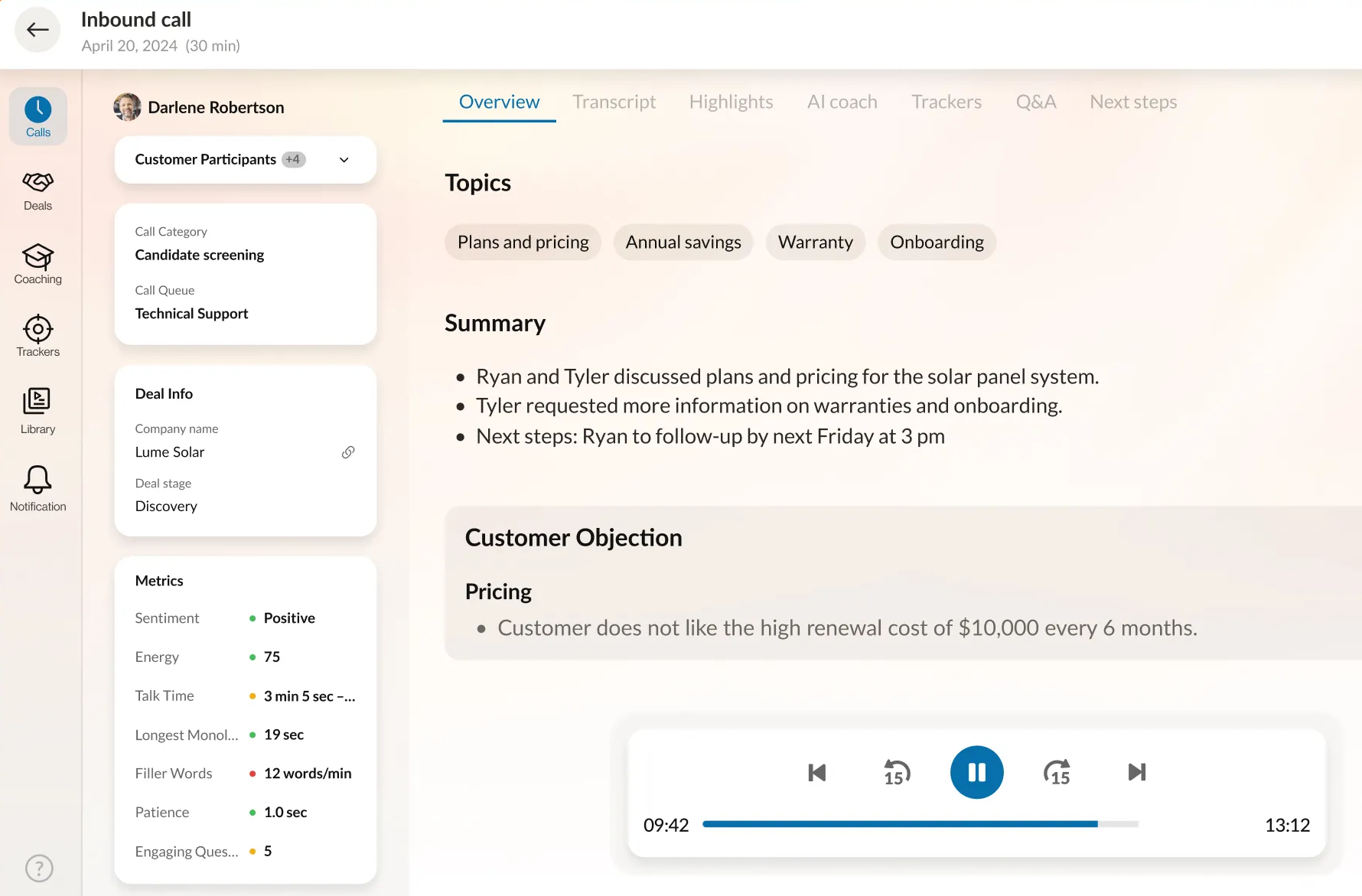
RingCentral's AI Conversation Expert (ACE) analyzes call recordings, extracting talk ratios, sentiment, objections, and key topics. A custom API integration can push these AI-generated insights into Salesforce custom fields or objects tied to the Opportunity, giving sales managers coaching data alongside deal data in one view.
Source: RingCentral
Best integration method: Custom API integration (RingCentral AI API to Salesforce custom objects).
5. Missed Call Recovery Workflow
When a call goes unanswered, a Zapier Zap creates a high-priority Salesforce Task assigned to the rep or their manager, so no inbound lead falls through the cracks. The task includes the caller's phone number and any matching Salesforce record, so the follow-up call happens with full context.
Best integration method: Zapier (RingCentral missed call trigger, Salesforce task creation action).
Limitations and Considerations
Data That Doesn't Sync Easily
The native integration focuses on communication activity: calls, SMS, voicemail, and fax. It does not sync RingCentral team messaging conversations, video meeting chat logs, or file attachments shared during video calls into Salesforce.
RingCentral's AI-generated call summaries and coaching insights from AI Conversation Expert are available within RingCentral's own interface but do not flow into Salesforce through the native connector. Accessing them requires a custom API integration or third-party middleware.
Sync Direction
The native integration is primarily communication-to-CRM: RingCentral activity data flows into Salesforce, and Salesforce contact data surfaces inside RingCentral for caller identification.
Salesforce pipeline data (deal stages, opportunity amounts, forecast categories) does not push into RingCentral. Reps working inside RingCentral's standalone app see caller context but not the full Salesforce deal picture unless they use the embedded widget inside Salesforce.
Pricing Implications
The native integration is included with RingCentral subscriptions, but integration feature depth may vary by plan tier. RingCentral offers a 14-day free trial with up to 20 phone lines, though SMS is not available during the trial.
On the Salesforce side, API access is included with Professional, Enterprise, and Unlimited editions, but API call allocations vary by edition and license count. Third-party tools carry their own costs: Zapier starts at $19.99/month, and Workato uses custom enterprise pricing.
Permissions and Access
Setting up the native integration requires admin access on both sides. In RingCentral, account admin rights authorize OAuth connections and configure integration settings. In Salesforce, System Administrator access installs the AppExchange app, assigns permission sets, and configures which profiles can use the embedded dialer.
If your Salesforce org uses field-level security or sharing rules, the integration user's profile must have write access to the activity objects and fields where call data will be stored.
Maintenance
Both platforms update independently. RingCentral maintains its API changelog with tagged breaking changes. Salesforce versions its API with each seasonal release (current: Summer '26, API version 67.0). Custom fields added to Salesforce after initial setup may require reconfiguration of the integration's call logging settings.
RingCentral periodically updates the Salesforce app through the AppExchange, and these updates may require re-authentication or configuration review.
What No Method Fixes: The Data Itself
Every method above moves communication activity between RingCentral and Salesforce. None checks whether the contact records behind those communications are accurate, current, or complete.
A rep clicks to dial a number disconnected six months ago. An inbound call logs against a contact who left the company two quarters back. The integration faithfully records the activity, but the activity is only as useful as the data it attaches to.
Where ZoomInfo Fits In
Every method in this guide moves communication data between RingCentral and Salesforce. None improves the contact records those communications are built on.
When the integration is live but outbound calls reach disconnected numbers, screen pops display contacts who left the company months ago, and SMS messages land in inboxes that no longer belong to the buyer, the bottleneck is no longer the connector.
That is the gap ZoomInfo closes.
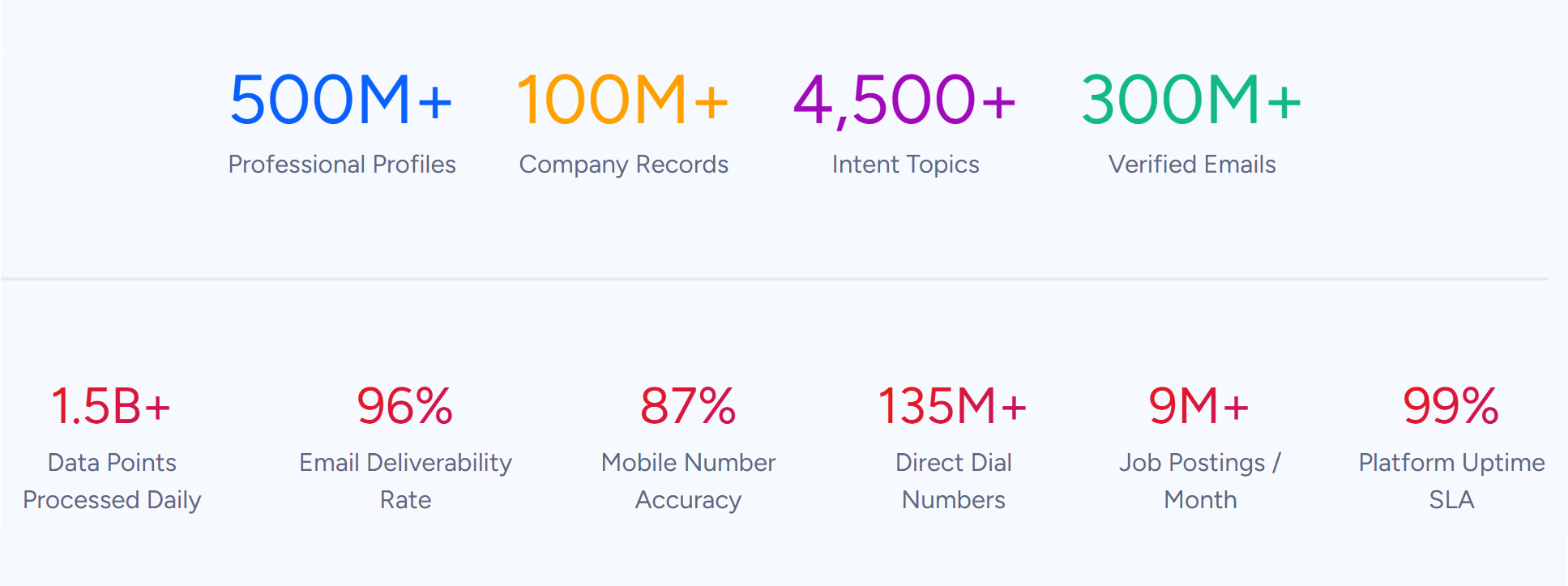
ZoomInfo is a B2B data and go-to-market platform with 500M contacts and 100M companies, 135M+ verified phone numbers, and 200M+ verified business emails.
Source: ZoomInfo
That data is verified through a multi-source pipeline backed by 300+ human researchers and reaching up to 95% accuracy on first-party data. For teams running a RingCentral-Salesforce integration, ZoomInfo addresses the data quality layer that no communication connector handles.
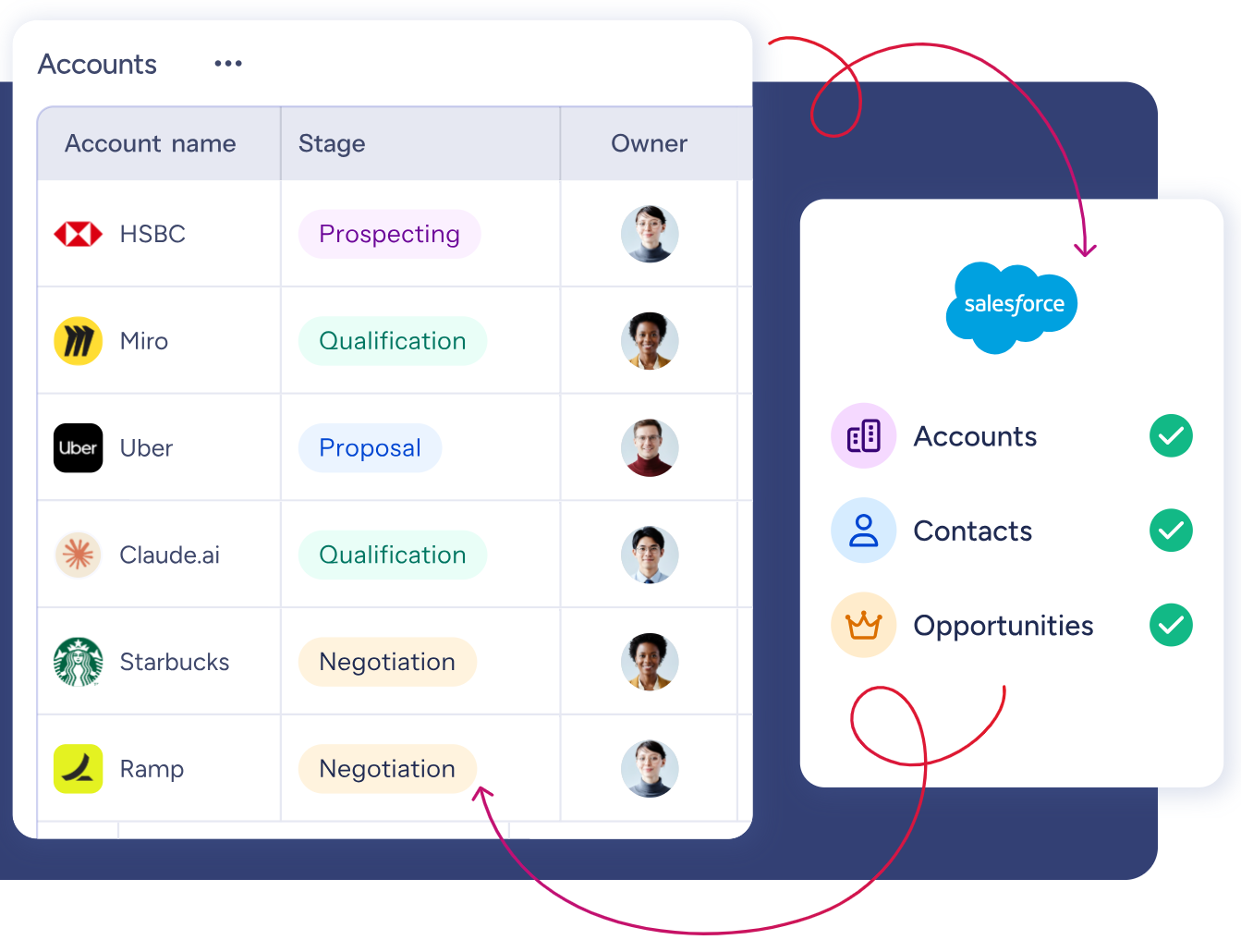
ZoomInfo integrates natively with both platforms in this article. On the Salesforce side, ZoomInfo's AppExchange integration provides CRM enrichment, lead routing, and real-time data updates inside Salesforce records.
Source: ZoomInfo
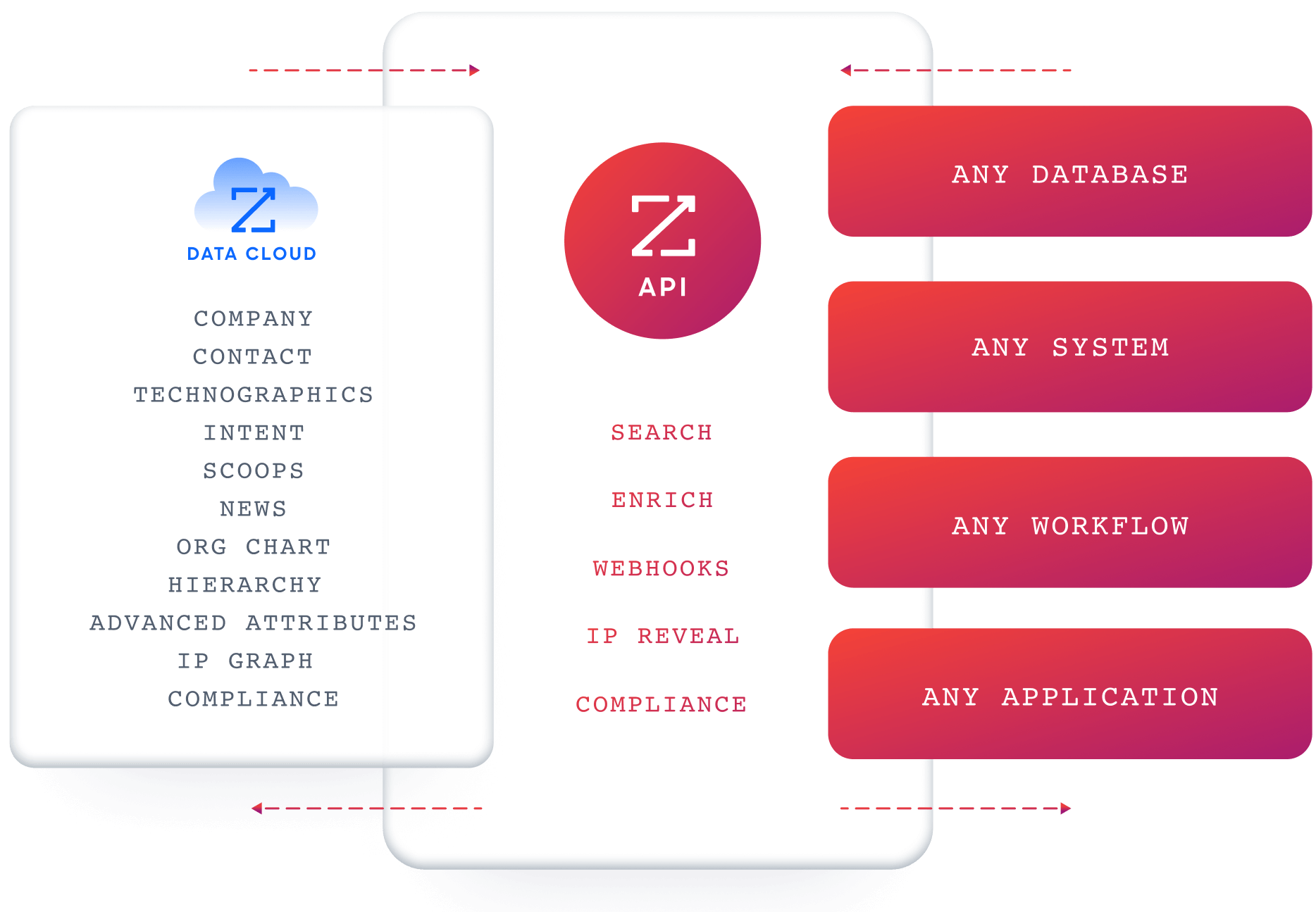
On the RingCentral side, ZoomInfo's Chorus conversation intelligence integration enables automatic call import, transcription, and analysis, connecting RingCentral call data with ZoomInfo's contact and company intelligence. For teams that build beyond these native connectors, ZoomInfo's Enterprise API and MCP server expose the same intelligence to any custom workflow or AI agent.
Source: ZoomInfo
In practice, a team running both RingCentral and Salesforce can use ZoomInfo to enrich Salesforce records with verified direct dials, business emails, job titles, company attributes, and technographics before a single call is made. When a rep clicks to dial from Salesforce through RingCentral, the number rings because ZoomInfo verified it.
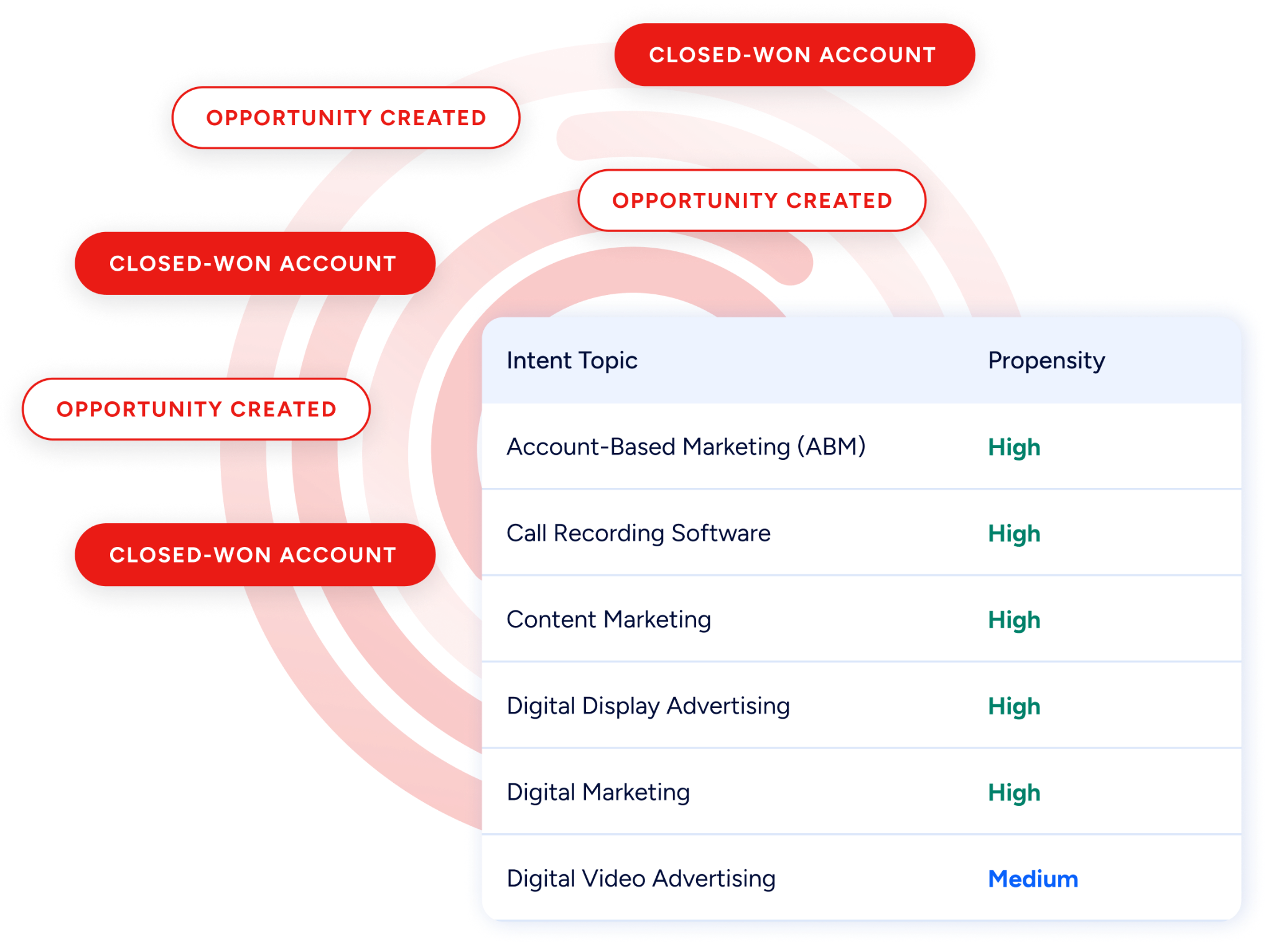
When an inbound call triggers a screen pop, the record that surfaces shows the buyer's current role, not where they worked a year ago. Buyer Intent data from ZoomInfo, tracking signals from 210 million IP-to-Organization pairings, can prioritize which accounts receive outbound calls, so reps spend phone time on prospects actively researching relevant solutions rather than working through a stale list.
Source: ZoomInfo
For a broader look at how ZoomInfo and Salesforce compare as platforms, see our Salesforce vs ZoomInfo comparison.
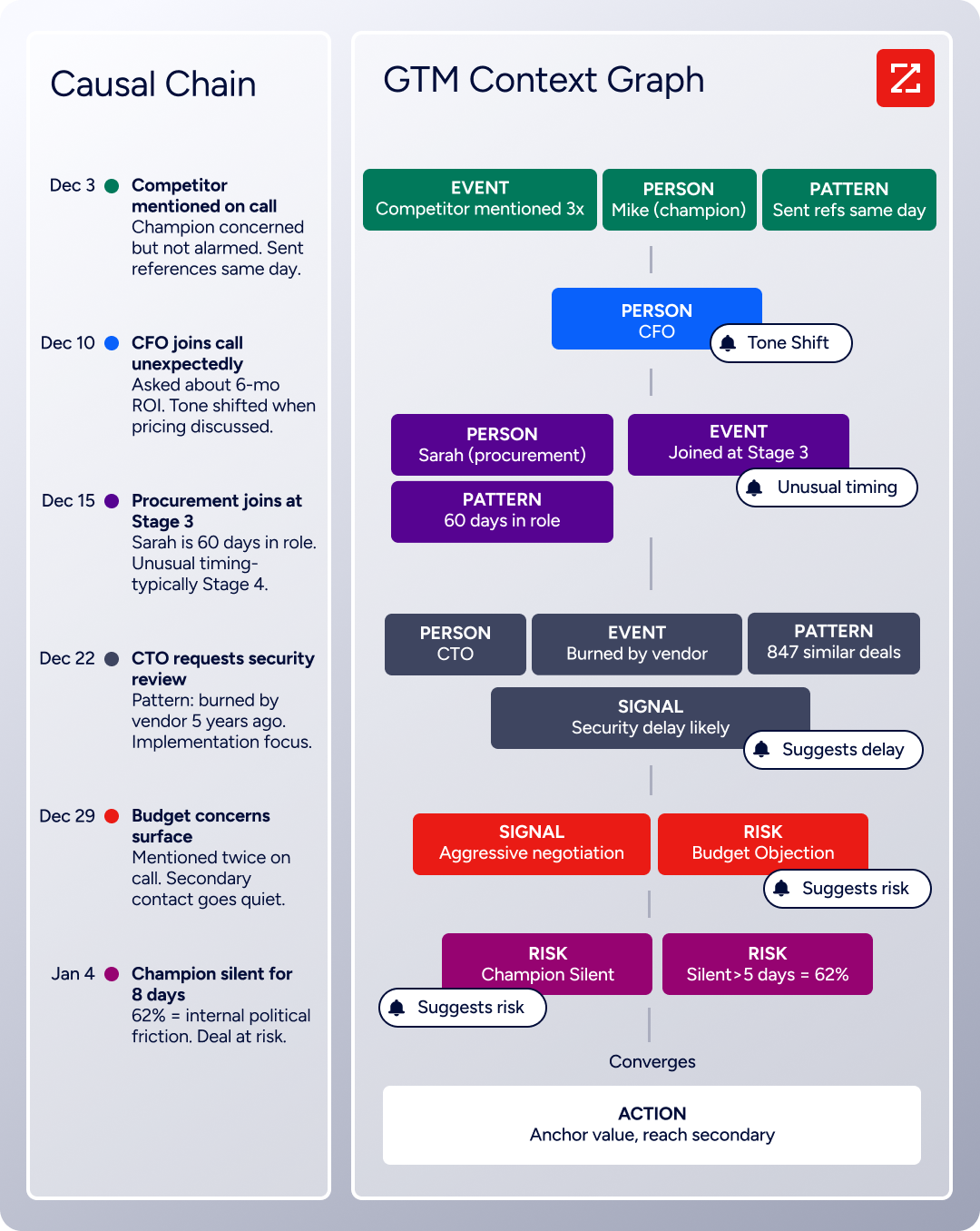
The same data feeds ZoomInfo's GTM Context Graph, which processes 1.5B + data points daily by unifying third-party intelligence with CRM records, conversation transcripts, and behavioral signals.
Source: ZoomInfo
For a team connecting RingCentral to Salesforce, this means the call data flowing into the CRM connects to records that are not just logged but understood in the context of deal movement, buying committee dynamics, and account health.
Seismic's sales team attributed 39% of active pipeline to opportunities identified or influenced by ZoomInfo signals, while boosting productivity by 54% and saving 11.5 hours per week. (Seismic)
Final Verdict
A native RingCentral-Salesforce integration exists, and it covers the core need well: embedding calling, SMS, and activity logging inside the CRM. For most teams, the right choice depends on scale and complexity.
Small to mid-size sales teams that need call logging, screen pops, and click-to-dial should start with the native RingCentral for Salesforce app. It requires no third-party tool, no engineering resources, and delivers real-time communication sync out of the box.
Teams that need event-triggered automation beyond the native integration (missed call recovery workflows, SMS sequences triggered by deal stage changes, cross-platform notifications) should add Zapier or Workato on top of the native integration.
Organizations with complex requirements (syncing AI call analytics into Salesforce custom objects, building custom routing logic, or integrating RingCentral with Salesforce alongside multiple other systems) should invest in a custom API integration or enterprise iPaaS.
Before committing to a method, clarify what you need the integration to do.
If the goal is logging calls and giving reps CRM context during conversations, the native app handles it today. If the goal is building a communication intelligence layer inside Salesforce (call analytics, AI insights, cross-channel activity tracking), the custom API path provides the depth.
Either way, the quality of the contact data in Salesforce determines whether calls reach the right people and activity logs attach to accurate records.
ZoomInfo, with native integrations for both Salesforce and RingCentral, plus API and MCP access for any workflow, is the data enrichment layer that ensures the records behind every conversation are verified, current, and complete.
FAQ
Does RingCentral integrate natively with Salesforce?
Yes. RingCentral offers a native Salesforce integration available through both the RingCentral App Gallery and the Salesforce AppExchange. The app embeds RingCentral calling, SMS, voicemail, fax, and video meeting scheduling inside the Salesforce interface.
Call logging happens automatically, and incoming calls trigger screen pops displaying the caller's CRM record. The integration is included with RingCentral subscriptions, though feature depth may vary by plan tier.
What data does the RingCentral-Salesforce integration sync?
The native integration syncs communication activity from RingCentral into Salesforce: inbound and outbound call logs (duration, timestamp, direction, outcome), call recordings, SMS messages, voicemails, fax activity, call dispositions, and call notes.
On the reverse side, Salesforce contact, lead, and account data surfaces inside the RingCentral widget for caller identification and click-to-dial. Pipeline data (opportunities, forecasts, custom objects) does not sync from Salesforce into RingCentral.
Can I use RingCentral's AI call insights inside Salesforce?
RingCentral's AI Conversation Expert (ACE) generates call summaries, talk-ratio analysis, sentiment detection, and coaching insights. These are available within RingCentral's interface but do not flow into Salesforce through the native integration.
To get AI call insights into Salesforce, teams need a custom API integration that reads from RingCentral's AI API and writes to Salesforce custom fields or objects, or a middleware solution that bridges the two.
Do I need admin access on both platforms to set up the integration?
Yes. Installing the RingCentral for Salesforce app requires Salesforce System Administrator access to install the AppExchange package, assign permission sets, and configure profile access.
On the RingCentral side, account admin rights authorize the OAuth connection and configure integration settings. If your Salesforce org uses field-level security or sharing rules, the integration user's profile must also have write access to the relevant activity objects and fields.
Is the native integration real-time?
Yes. Calls log to Salesforce as they occur, screen pops display CRM data during incoming calls, and click-to-dial initiates calls instantly from Salesforce records. There is no batch delay or scheduled sync interval. Third-party tools like Zapier process triggers within 1 to 15 minutes depending on plan tier, which introduces a short delay compared to the native integration.
What does a RingCentral-Salesforce integration cost?
The native integration is included with RingCentral subscriptions at no additional connector fee. RingCentral plan pricing varies by tier. Salesforce API access is included with Professional, Enterprise, and Unlimited editions.
Third-party tools carry separate costs: Zapier starts at $19.99/month, and Workato uses custom enterprise pricing. Custom API integrations have no platform fees but require developer time (typically several weeks for a production build) plus ongoing hosting and maintenance.
How does ZoomInfo improve a RingCentral-Salesforce integration?
ZoomInfo solves the data quality problem that no communication connector addresses. Contact records in CRMs decay as people change jobs, phone numbers go inactive, and company details shift.
ZoomInfo enriches Salesforce records with verified direct dials, business emails, job titles, company attributes, and technographics, so when a rep clicks to dial from Salesforce through RingCentral, the number actually connects.
ZoomInfo integrates natively with both Salesforce (via AppExchange) and RingCentral (via its Chorus conversation intelligence connector), and its API and MCP access can feed the same verified data into any custom workflow.
Can I connect ZoomInfo to both RingCentral and Salesforce?
Yes. ZoomInfo integrates natively with Salesforce through its AppExchange connector, providing CRM enrichment, lead routing, and real-time data updates.
It also integrates with RingCentral through the ZoomInfo App Marketplace, specifically through its Chorus conversation intelligence product for automatic call import, transcription, and analysis. ZoomInfo's Enterprise API and MCP server can also push enriched data into any system programmatically.
See what else plugs into Salesforce:
