
Choosing between RudderStack and Segment for your customer data infrastructure comes down to five questions:
Do you need full ownership of your customer data, or are you comfortable with a vendor storing it?
Is your team data engineers who want code-level control, or a mix of technical and business users who need a broader toolset?
Do you want the largest integration catalog, or a leaner platform with warehouse-native architecture?
Does your budget allow for enterprise CDP pricing, or do you need lower costs at scale?
Do you want a standalone data pipeline, or a platform that connects to communications channels like SMS and email?
In short, here's what we recommend:
RudderStack is built for data engineering teams that want full control over their customer data infrastructure. Its warehouse-native architecture means your data never sits in a vendor's storage. Instead, it flows directly into your own Snowflake, BigQuery, or Redshift instance.
With open-source roots, real-time JavaScript and Python transformations, and warehouse sync times as fast as five minutes, RudderStack lets engineering teams customize every layer of the pipeline. But unlocking its full potential requires engineering depth, and non-technical teams will struggle to self-serve.
Segment is the most established CDP in the market, now part of Twilio's Customer Engagement Platform. With 750+ integrations, identity resolution through Unify, and AI-powered audience building via Engage, Segment offers the broadest feature set in the category.
Its distinct advantage: native integration with Twilio's communications infrastructure (SMS, email, WhatsApp), which no standalone CDP can replicate. But that breadth comes at a cost. Enterprise contracts can reach six figures, G2 reviewers consistently flag pricing as a barrier, and the platform's complexity can overwhelm teams that don't need every feature.
Both platforms collect and route behavioral event data well. But here's what neither solves: the quality of the business intelligence flowing through your pipeline. Customer events tell you what people did. They don't tell you who those people are, what companies they work for, whether those companies are actively in-market, or who else on the buying committee you should reach. That's the gap where a go-to-market intelligence layer becomes essential.
ZoomInfo is a B2B intelligence and GTM platform built on 500M contacts, 100M companies, 135M+ verified phone numbers, and 200M+ verified business emails. Rather than replacing your CDP, ZoomInfo enriches the data flowing through it.
Its GTM Context Graph processes 1.5B + data points daily, combining your CRM records, conversation transcripts, and behavioral signals with ZoomInfo's third-party intelligence to reveal not just what happened in a deal, but why.
Teams access this intelligence through GTM Workspace for sellers, GTM Studio for marketers and RevOps, or APIs and MCP to feed it into RudderStack, Segment, or any other tool in your stack.
If enriching your customer data pipeline with verified B2B intelligence sounds like the missing layer, see how ZoomInfo works with your stack.
RudderStack vs. Segment vs. ZoomInfo at a glance
RudderStack | Segment | ZoomInfo | |
|---|---|---|---|
Core function | Warehouse-native customer data pipeline | Full-featured CDP with communications | B2B intelligence and GTM data enrichment |
Data storage | Your warehouse only; no vendor storage | Segment stores and processes data | Not applicable; enrichment source |
Integration catalog | 120+ integrations plus API and MCP | ||
Identity resolution | Warehouse-native Profiles (Enterprise tier) | Unify with real-time ID graph | 500M contacts with verified identity data |
AI capabilities | AI-era data infrastructure positioning | CustomerAI Predictions, Generative Audiences | GTM Context Graph with AI-powered insights |
Target user | Data engineers and data scientists | Data engineers, marketers, product teams | Sales, marketing, RevOps, GTM engineers |
Free plan | 250K events/month (permanent) | 1,000 MTUs/month (permanent) | ZoomInfo Lite (permanent) |
Paid starting price | $225/month (1M events) | $120/month (10K MTUs) | Consumption-based pricing |
Open source | Yes (AGPLv3) | No | No |
Best for | Engineering teams wanting data ownership | Teams needing broad CDP with activation | Enriching pipeline data with B2B intelligence |
Identity resolution approaches differ fundamentally
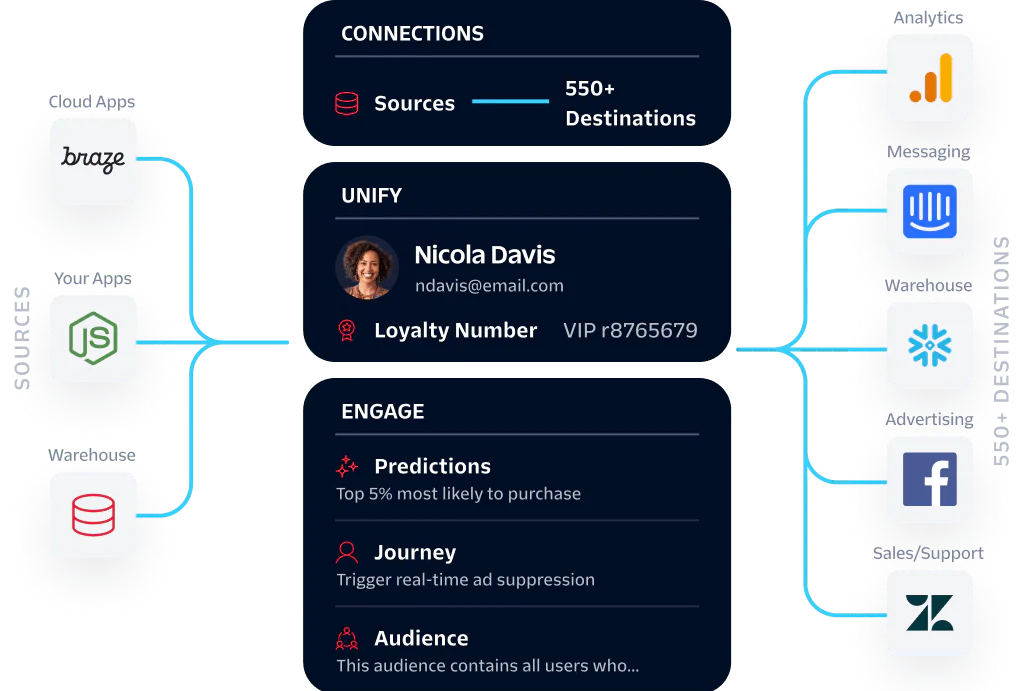
Both platforms solve the identity fragmentation problem (the same customer appearing as dozens of separate anonymous sessions and device IDs), but the mechanics differ.
Segment's Unify performs identity resolution in Segment's own infrastructure in real time. As events flow in, the identity graph merges anonymous and known profiles using cookie IDs, device IDs, emails, and custom external IDs.
Source: Segment
The result is a persistent unified profile accessible via the Profile API with sub-200ms response times. This makes Unify strong for in-session personalization, where you need to know who a visitor is before the page finishes loading.
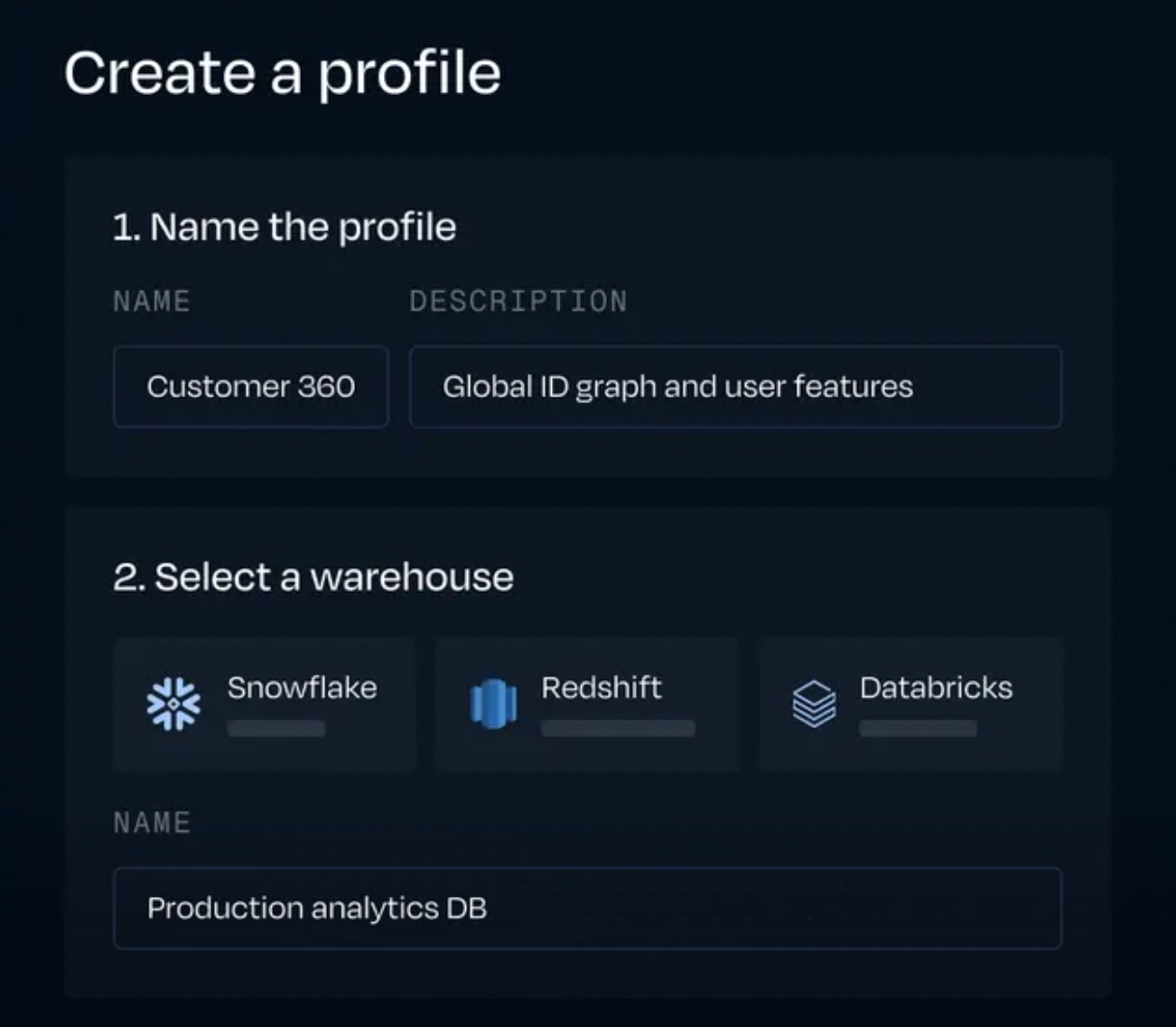
RudderStack's Profiles runs identity resolution entirely inside your warehouse. Teams define input tables and identifiers in YAML configuration files, and Profiles constructs an identity graph using standard SQL that executes in your own cloud environment.
Source: RudderStack
The output is a set of unified Customer 360 tables that any BI tool, ML pipeline, or downstream system can query directly.
The trade-off is latency versus control. Segment gives you real-time identity resolution out of the box, ready for instant personalization. RudderStack gives you full ownership and transparency of the identity graph, with auditable SQL and no data leaving your environment, but the resolution runs on warehouse compute cycles rather than in milliseconds.
Transformations show the engineering philosophy gap
How each platform handles data transformation reveals its target user.
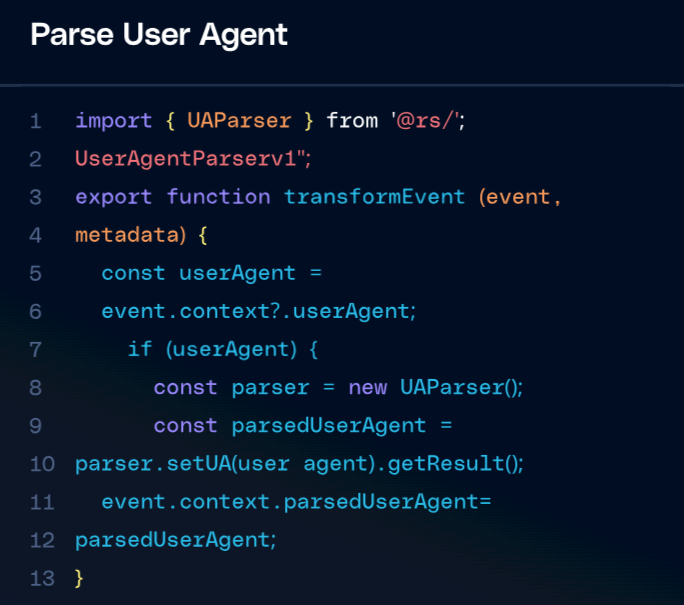
RudderStack lets engineering teams write custom JavaScript or Python functions that modify event data in real time, between collection and delivery.
Source: RudderStack
Need to mask PII before it reaches a destination? Call an external API to enrich an event? Filter bot traffic? Drop events that don't meet quality standards? Write the code, deploy it via GitHub, and it runs in the pipeline.
Segment offers Functions, also JavaScript-based custom code running on AWS Lambda. The capability is comparable, but Segment wraps it differently. The newer Destination Actions framework provides a more structured, UI-driven approach to mapping events to destination-specific actions.
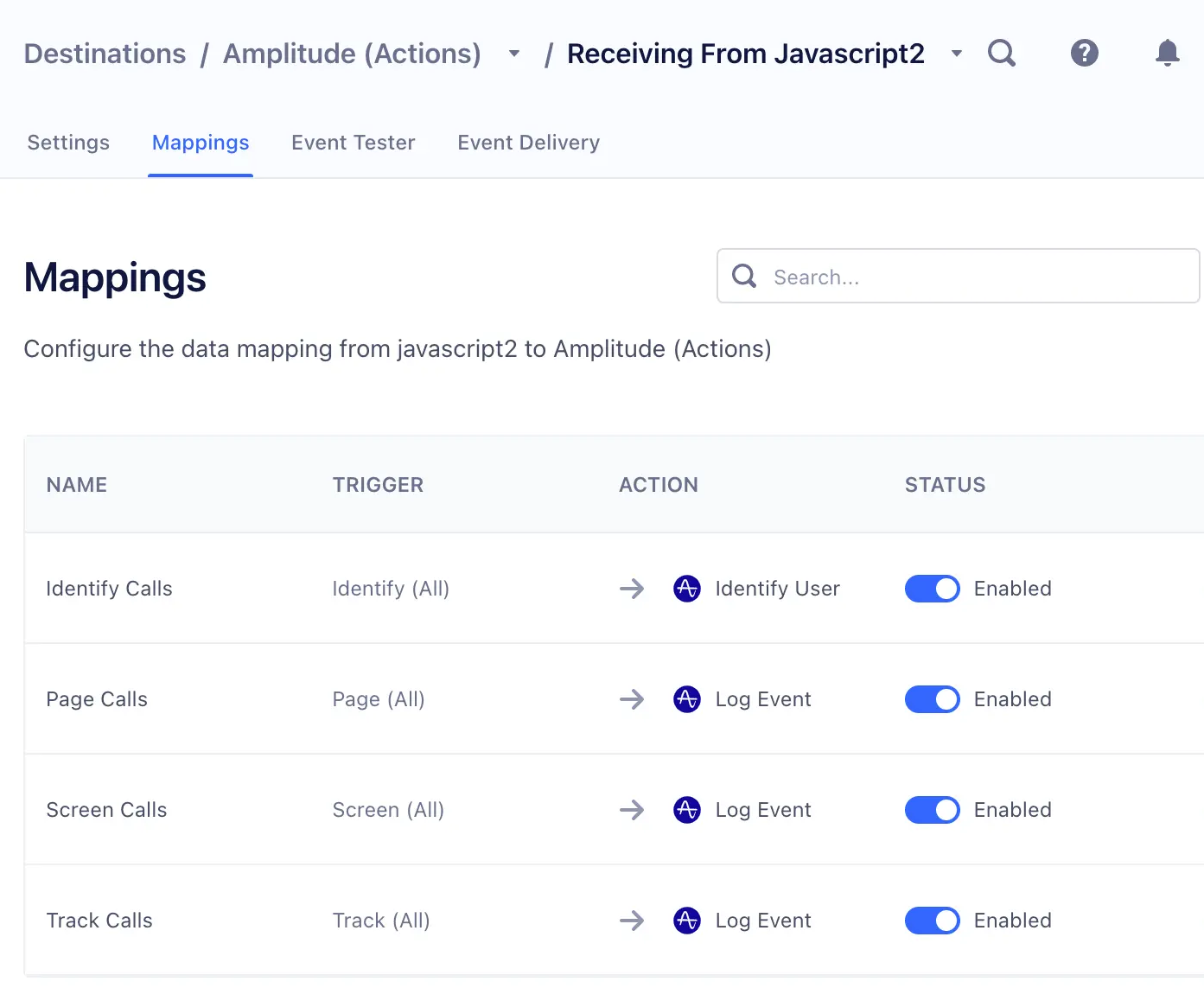
Source: Segment
For Protocols users, Transformations allow code-free event and property renaming. And Functions Copilot can generate function code using AI.
The pattern holds across the platforms. RudderStack defaults to code-first, giving engineers flexibility. Segment provides code as an escape hatch but invests more in UI-driven configuration that marketing and product teams can use without engineering tickets. Neither approach is wrong. The right choice depends on who operates the platform day-to-day.
Data governance takes two forms
Dirty data breaks everything downstream. Both platforms address this, but differently.
RudderStack's Data Quality Toolkit enforces quality at the point of collection. Teams define event schemas in a centralized Data Catalog, apply Tracking Plans that catch violations in real time, and use Transformations to fix issues in-flight before data reaches any destination.
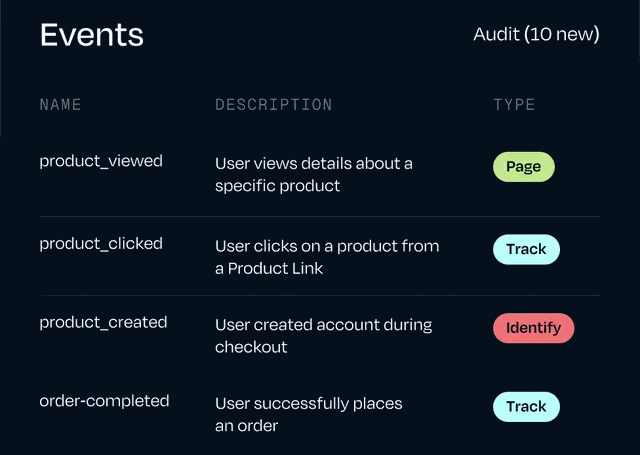
Source: RudderStack
Segment's Protocols follows a four-step approach: define a Tracking Plan, validate incoming events against it, enforce schema controls that block or quarantine non-conforming events, and fix issues with code-free Transformations.
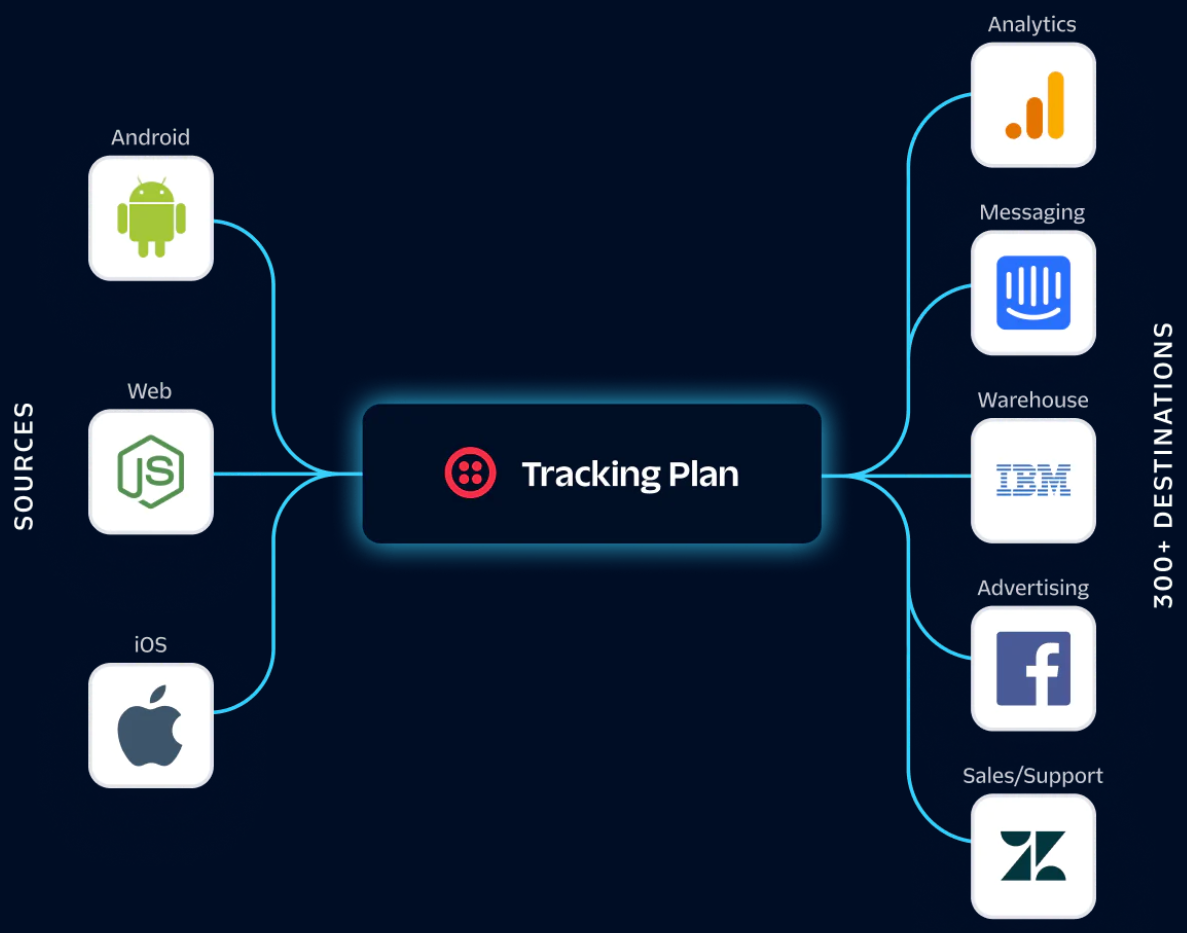
Source: Segment
The Typewriter API generates strongly-typed analytics client libraries from the Tracking Plan, catching incorrect instrumentation at compile time.
Both work. RudderStack gives data engineers more direct control. Segment layers in more structure for teams where multiple roles interact with the governance layer. Protocols is a premium add-on available only to Business Tier customers, while RudderStack includes unlimited Tracking Plans starting at the Starter tier.
Data ownership is the defining architectural difference
The most consequential difference between RudderStack and Segment isn't features or pricing. It's where your data lives.
RudderStack does not store or persist any event data. Every event collected through its SDKs routes directly to your own warehouse or data lake: your Snowflake instance, your BigQuery project, your Redshift cluster. RudderStack acts as the pipeline, not the warehouse.
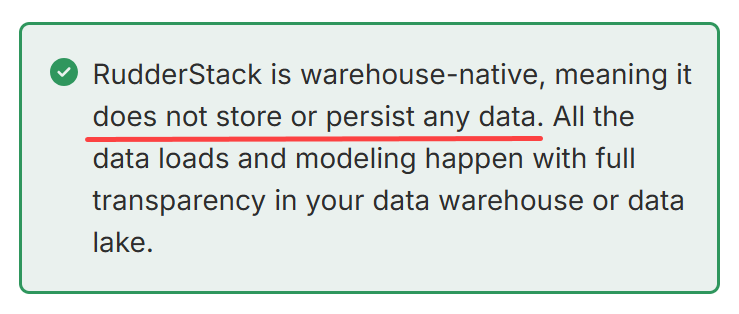
Source: RudderStack
For companies in regulated industries, or any organization that takes GDPR, CCPA, or HIPAA seriously, this eliminates an entire category of compliance risk. There's no third-party data store to audit because there is no third-party data store.
Segment takes a different approach. Events flow through Segment's infrastructure, where they're processed, resolved against the identity graph, and then forwarded to destinations and warehouses. Segment offers EU data residency and HIPAA eligibility with a signed BAA, but the data does pass through and reside in Segment's systems.

Source: Segment
For many companies, this is acceptable. For others (particularly in healthcare, financial services, and European markets with strict data sovereignty requirements) it's a dealbreaker.
This architectural choice ripples through everything else. RudderStack's warehouse-native approach means your data teams query raw events using standard SQL tools they already know. Segment's approach means richer out-of-the-box features (like real-time identity resolution and audience activation) but less direct control over the underlying data layer.
RudderStack wins on cost at scale, Segment wins on breadth
At high event volumes, the cost difference between these platforms becomes significant.
RudderStack's pricing is event-volume-based, starting at $225/month for 1 million events. Growth and Enterprise tiers are custom-quoted, but the warehouse-native model means you avoid the double billing that comes with Segment's architecture. You pay RudderStack for the pipeline and your cloud provider for the warehouse. There's no hidden storage or processing premium on top.
Segment prices on Monthly Tracked Users (MTUs), starting at $120/month for 10,000 MTUs on the Team plan. That sounds competitive until you scale. Overage charges run $10-12 per 1,000 MTUs.
The Business plan (required for identity resolution, Protocols, and HIPAA eligibility) is custom-quoted, and enterprise contracts reportedly reach $400K. Adding the full CDP (Unify + Engage) requires contacting sales, with no public pricing available.
What Segment offers for that premium is breadth. 750+ integrations compared to RudderStack's 200+. Native communications channels (SMS, email, WhatsApp) through Twilio. Built-in audience building and journey orchestration via Engage. A no-code audience builder for marketing teams.
For organizations that need all of this in one platform, the premium can be justified. For teams that primarily need a data pipeline with warehouse activation, RudderStack delivers the core value at a fraction of the cost.
Why your CDP needs a B2B intelligence layer
RudderStack and Segment both solve a critical problem: collecting, routing, and activating behavioral event data. But behavioral data tells you what happened. It doesn't tell you who did it, what company they represent, whether that company is a good fit, or whether they're actively evaluating solutions.
This is where ZoomInfo fits into the stack. Rather than competing with your CDP, ZoomInfo provides the B2B intelligence that makes your CDP data actionable for go-to-market teams.
Consider a common scenario. Your CDP captures an event: an anonymous visitor viewed your pricing page three times this week. Useful, but incomplete.
ZoomInfo's WebSights resolves that anonymous traffic to a specific company, identifies the buying committee with verified direct dials and emails, and adds intent signals showing whether that company is actively researching your category. Your CDP event becomes a qualified lead.

Source: ZoomInfo
ZoomInfo's Enterprise API and MCP server deliver this intelligence directly into your data pipeline. Whether you run RudderStack or Segment, ZoomInfo's data can flow through as an enrichment source, appending verified contact information, company attributes, and intent signals to the behavioral events your CDP already collects.
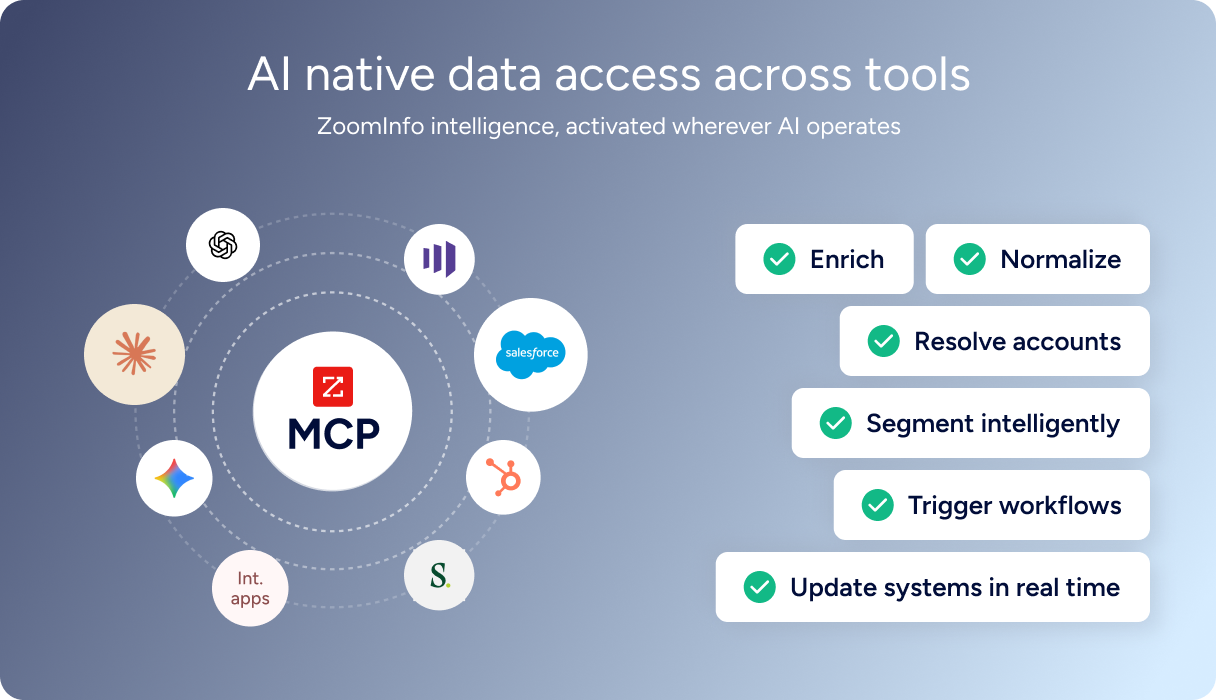
Source: ZoomInfo
The GTM Context Graph takes this further. It combines ZoomInfo's third-party intelligence with your CRM records, conversation transcripts, and behavioral signals to capture why deals move or stall. A CDP records that a user completed a product demo.
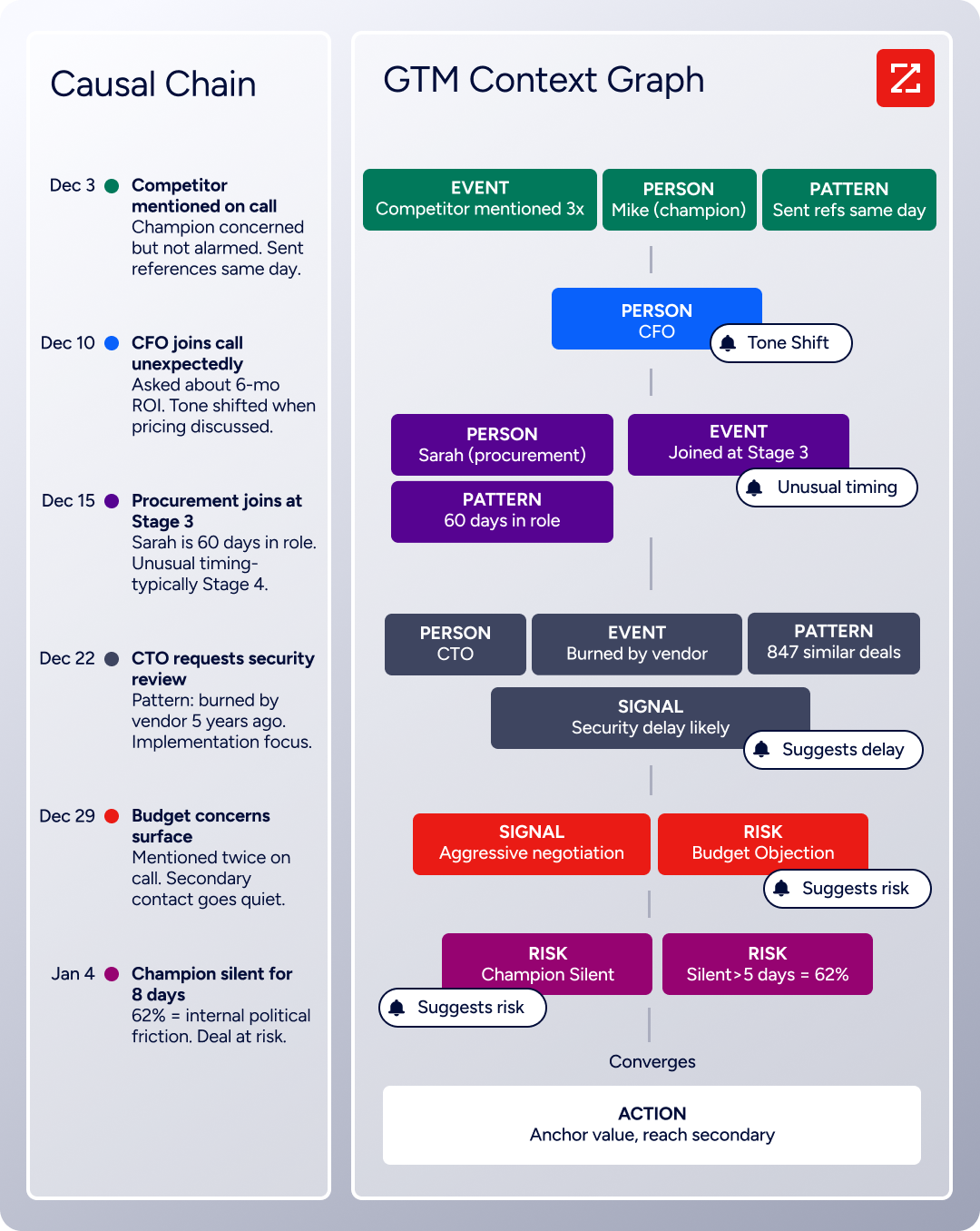
Source: ZoomInfo
The GTM Context Graph connects that action to the fact that the CFO joined the last sales call, the company just raised a Series C, and three competitors are being evaluated simultaneously. That context transforms data routing into deal intelligence.
Seismic's sales team attributed 39% of active pipeline to opportunities identified or influenced by ZoomInfo signals, boosted productivity by 54%, and saved 11.5 hours per week. (Seismic Case Study)
Warehouse activation comparison
Both CDPs offer Reverse ETL (syncing warehouse data back to operational tools), but the execution differs.
RudderStack's Reverse ETL is included on all plans, with unlimited connections starting at Growth tier. It supports eight warehouse sources (BigQuery, Databricks, MySQL, PostgreSQL, Redshift, Snowflake, Amazon S3, and Trino) and offers three sync modes: upsert, mirror (full bidirectional sync including deletions), and full sync.
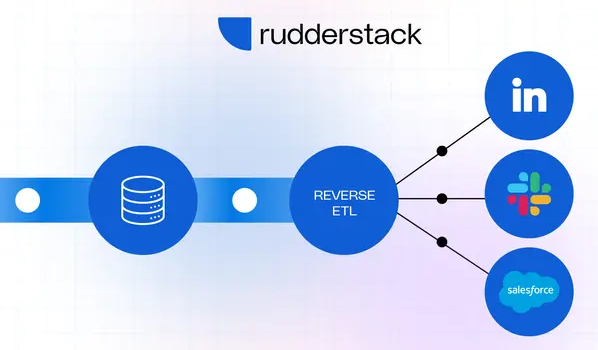
Source: RudderStack
Segment's Reverse ETL supports seven warehouse types (Azure Synapse, BigQuery, Databricks, Db2, Postgres, Redshift, Snowflake) with a minimum sync frequency of 15 minutes.
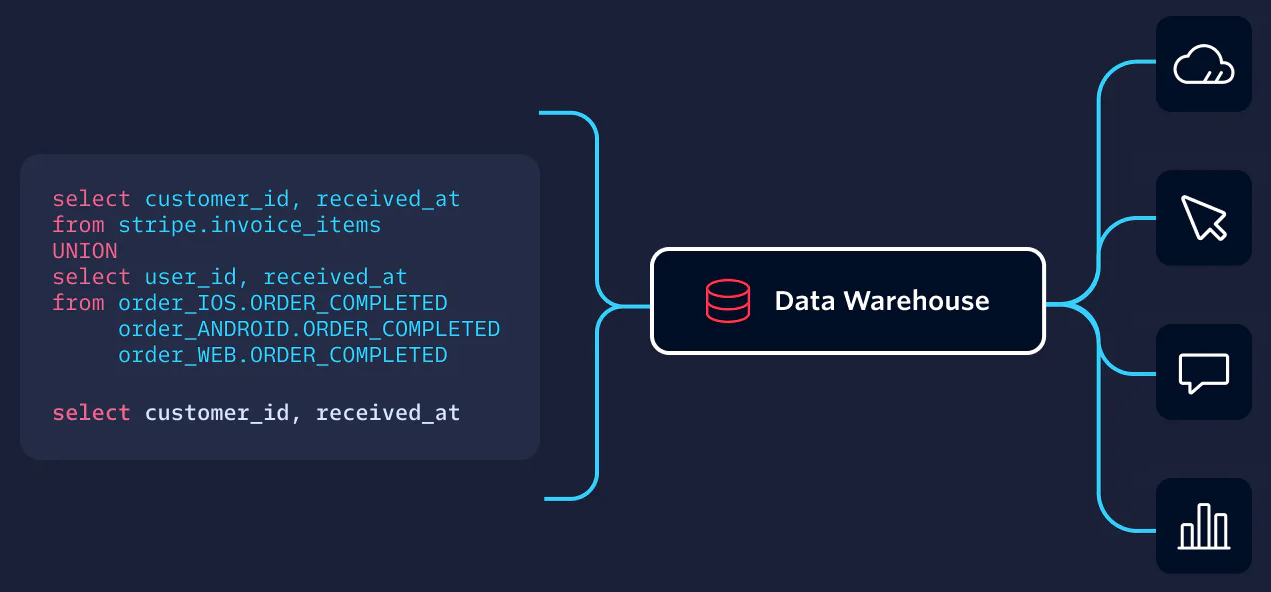
Source: Segment
It integrates with the rest of Segment's stack: warehouse data synced via Reverse ETL can feed into Unify's identity resolution, enrich unified profiles, and activate audiences in Engage. The dbt extension allows triggering syncs after dbt model runs complete.
RudderStack's advantage is the unified pipeline. The same platform handles both inbound (event collection to warehouse) and outbound (warehouse activation to tools), with Transformations available in both directions.
Segment's advantage is the downstream activation ecosystem: warehouse data flowing through Reverse ETL can immediately power audiences, journeys, and communications across Twilio's channels.
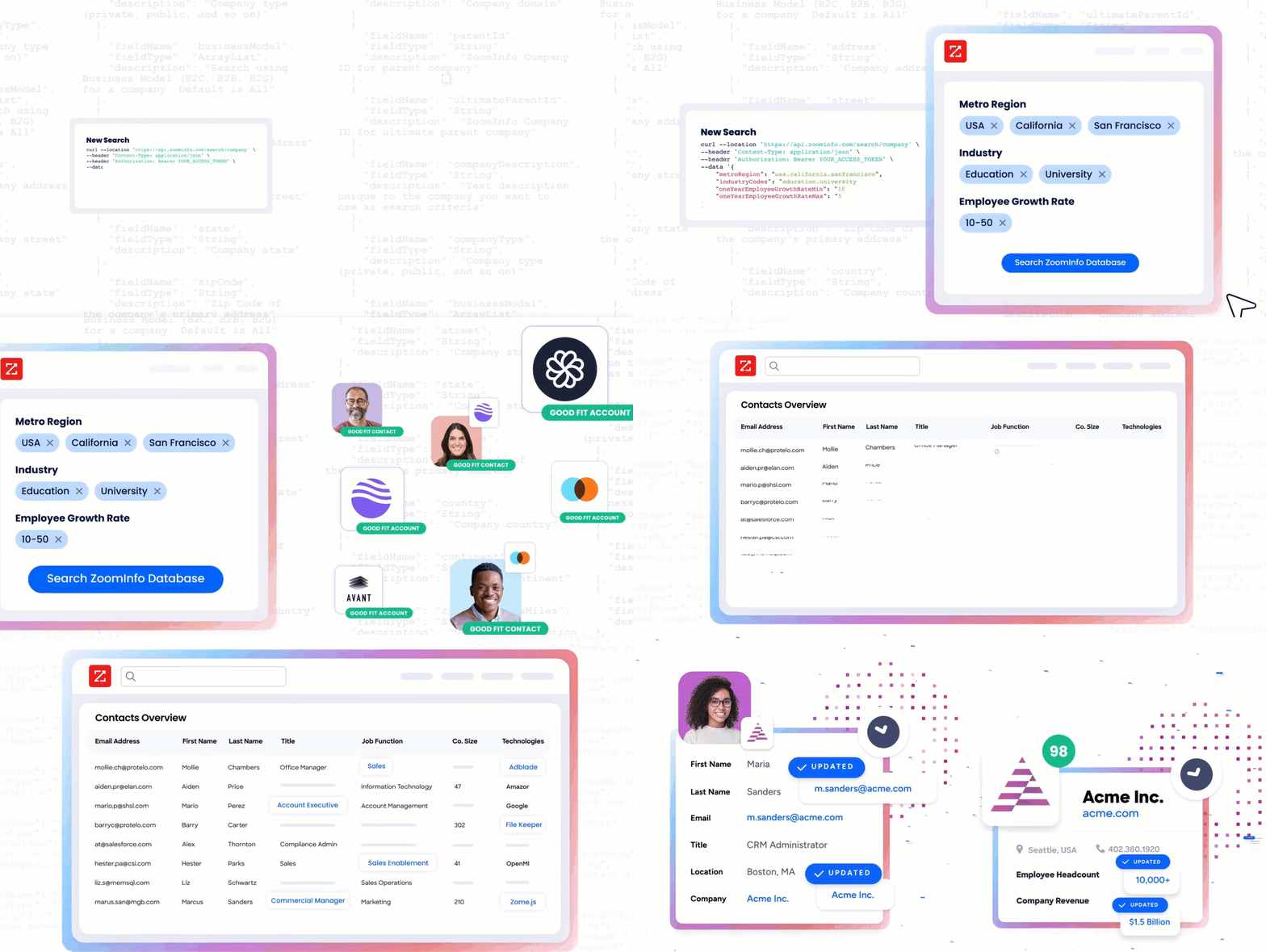
For teams using ZoomInfo alongside either CDP, the combination works well. ZoomInfo enriches warehouse records with verified B2B data via its API or Cloud Partners (direct ingestion into Snowflake, BigQuery, AWS, or Databricks).,
Source: ZoomInfo
Reverse ETL then pushes those enriched records into CRMs, marketing automation, and sales engagement tools, creating a closed loop from data collection through enrichment to activation.
Snowflake uses ZoomInfo data for at least one-third of the most critical features in their Account Propensity Scoring model, with accounts monitored using ZoomInfo-powered scores showing 90% higher opportunity open rates and 2x higher customer conversion rates. (Snowflake Case Study)
Compliance and security comparison
For regulated industries, the compliance story matters as much as the feature set.
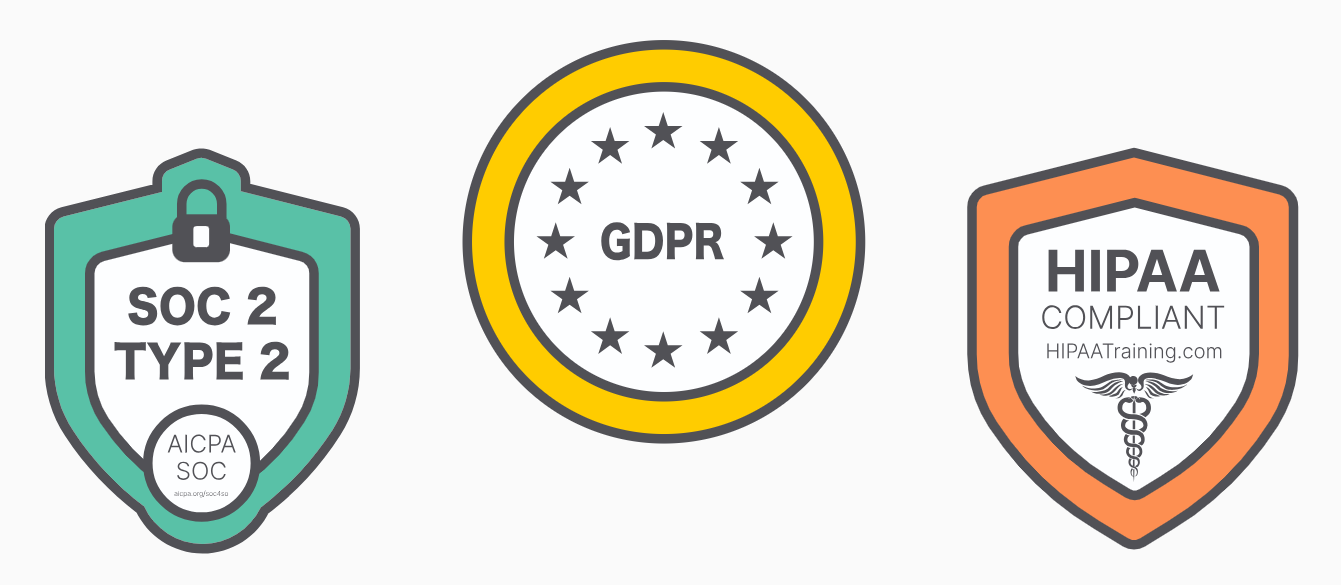
RudderStack's zero-data-storage architecture is its strongest compliance argument. Because no customer data resides in RudderStack's infrastructure, the compliance attack surface is smaller by design. The platform is SOC 2 Type 2 certified, HIPAA compliant (with BAA), and GDPR compliant.
Source: RudderStack
Enterprise customers get dedicated VPC hosting, SSO (Okta, OneLogin), SSH tunnels, permissions management, and audit logs. US and EU data planes operate independently, supporting data residency requirements.
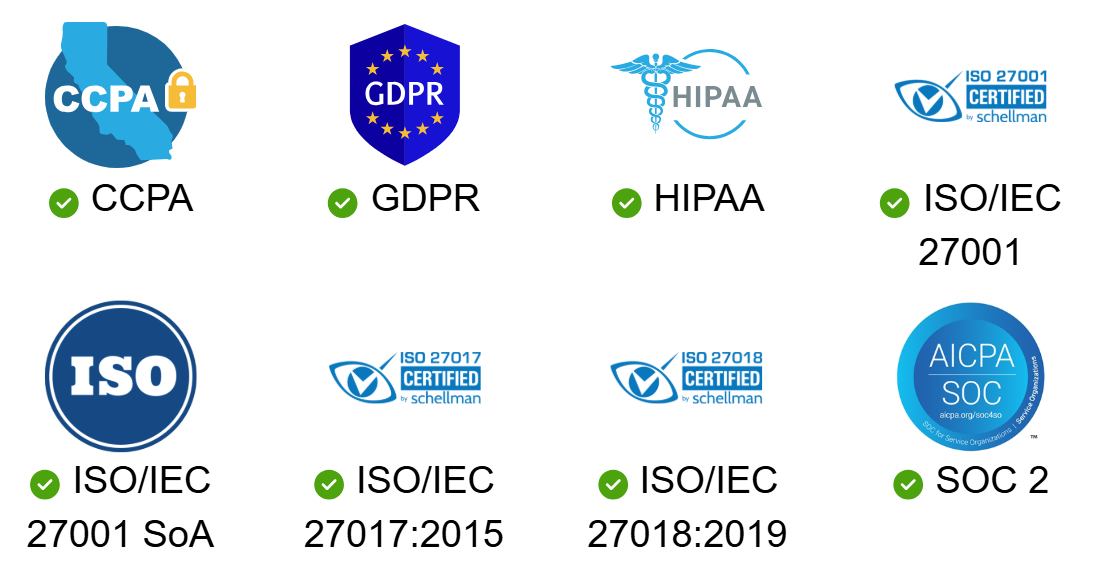
Segment offers a broader set of certifications: SOC 2 Type II, ISO 27001, ISO 27017, ISO 27018, PCI DSS Level 1 & 4, plus HIPAA eligibility and Binding Corporate Rules for cross-border data transfers. The Privacy Portal provides PII detection and classification across incoming event streams. Consent management integrates across Connections, Engage, Reverse ETL, and Unify.
Source: Segment
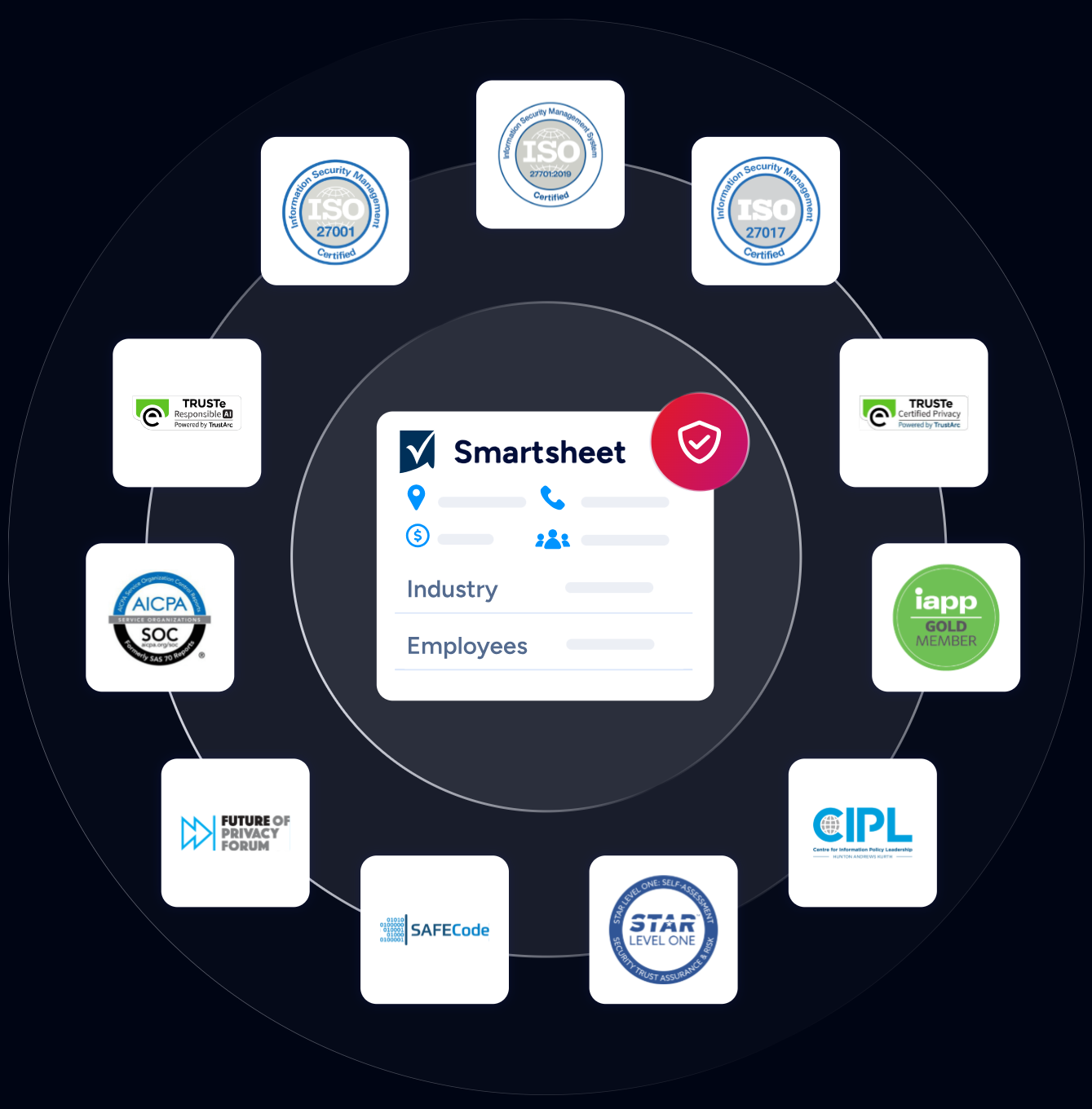
ZoomInfo maintains ISO 27001, ISO 27701, SOC 2 Type II, TRUSTe GDPR, and TRUSTe CCPA certifications, all renewed annually. As a registered data broker in California and Vermont, ZoomInfo operates under regulatory oversight that most data vendors don't submit to voluntarily.
Source: ZoomInfo
All three platforms take compliance seriously. RudderStack reduces risk by eliminating vendor-side data storage. Segment's broader certification portfolio and built-in privacy tooling suit enterprises with complex multi-regulation requirements. ZoomInfo's compliance infrastructure ensures that the enrichment data flowing into your CDP meets the same standards as the pipeline itself.
Support and learning curve
The platforms serve different technical audiences, and their support models reflect this.
RudderStack is built for engineers and data scientists. Configuration involves writing code (JavaScript/Python transformations, SQL models, YAML files), managing deployments via GitHub, and optionally self-hosting the data plane. Free users get community Slack support only.
Starter adds email support. Growth and Enterprise tiers include dedicated support, and Enterprise adds an account manager with a dedicated Slack channel. The learning curve is steep for non-technical users but familiar for data engineers already working with warehouse tooling.
Segment serves a broader audience. Developers implement tracking via SDKs and the HTTP API, while marketing and product teams interact through the Segment web app, Visual Tagger, and Auto-Instrumentation tools.
But paid support costs extra: Production support starts at $250/month or 4% of monthly spend, Business at $1,500/month or 6%. Free users get web-only support with roughly 3-business-day response times. G2 reviewers describe "poor customer support" leading to implementation issues as a recurring concern.
ZoomInfo takes a different approach. The platform includes a 90-day structured onboarding program (which won Rocketlane's Golden Comet award for best onboarding team), ZoomInfo University with role-specific learning paths, and Enterprise tiers include a dedicated customer service manager.

Source: ZoomInfo
As an enrichment layer rather than a pipeline tool, ZoomInfo's learning curve is about understanding your data strategy, not configuring infrastructure.
RudderStack vs. Segment vs. ZoomInfo: Which should you choose?
These aren't competing products. They're different layers of a modern data stack. But your choice of CDP shapes everything downstream.
Choose RudderStack if:
Your team has data engineers who want full control over the pipeline
Data ownership and warehouse-native architecture are non-negotiable
You need to reduce CDP costs at high event volumes
You're migrating from Segment and want API compatibility for a smooth transition
You value open-source transparency and the ability to self-host
Choose Segment if:
You need the broadest integration catalog in the CDP category
Your team includes marketers and product managers who need self-serve audience building
Native communications channels (SMS, email, WhatsApp) are part of your activation strategy
Real-time identity resolution with sub-200ms API access is a requirement
You want a CDP that connects data collection directly to omnichannel journey orchestration
Add ZoomInfo to either if:
You need verified B2B contact data, company attributes, and intent signals flowing through your pipeline
Your go-to-market team needs to know who's behind anonymous website traffic and behavioral events
You want AI-powered deal intelligence that connects behavioral data to buying committee context
You need enrichment data that keeps your CRM clean and your audience targeting precise
You're building AI agents or custom tools that need access to B2B data via API or MCP
See how ZoomInfo enriches your data stack with a free trial.
The strongest data stacks don't choose between behavioral data and business intelligence. They layer both. RudderStack or Segment handles event collection, routing, and activation. ZoomInfo provides the verified B2B context that turns anonymous events into qualified pipeline.
Together, they create a data foundation where every team (from data engineering to sales to marketing) works from the same source of truth.
"ZoomInfo is our one source of truth for account data, and even more so for contact data. There's no other provider in the market that provides you with that level of detail." — Thor Sanderson, Senior Manager of Sales Technology Enablement, Smartsheet (Smartsheet Case Study)
RudderStack vs. Segment vs. ZoomInfo FAQ
What is the fundamental difference between RudderStack and Segment?
RudderStack is a warehouse-native customer data pipeline that routes event data directly to your own data warehouse without storing it in vendor infrastructure. Segment is a full-featured CDP that processes and stores data in its own systems before routing it to 750+ downstream destinations.
Both collect behavioral events, but RudderStack prioritizes data ownership and engineering control, while Segment prioritizes breadth of features and integrations.
How does ZoomInfo fit with RudderStack or Segment?
ZoomInfo is not a CDP. It's a B2B intelligence platform that enriches the data flowing through your CDP with verified contact information, company attributes, and buying intent signals. ZoomInfo's API and MCP server feed enrichment data directly into either RudderStack or Segment, turning anonymous behavioral events into identified, qualified prospects.
Which platform is cheaper at scale?
RudderStack is consistently cheaper at high event volumes. Customers report 50-80% cost savings compared to Segment. Kajabi saved $100K+ annually after migrating, and Wynn spent half of what Segment's nearest competitor quoted. Segment's MTU-based pricing and premium add-ons for identity resolution, governance, and activation can push enterprise contracts well into six figures.
Can I migrate from Segment to RudderStack without re-instrumenting my tracking code?
Yes. RudderStack maintains API compatibility with Twilio Segment, including automatic migration of anonymousIDs and warehouse schema continuity. Apploi's Data Engineering Manager described the migration as "straightforward," with the team able to "mimic and replicate everything from Segment to RudderStack."
Which platform has better identity resolution?
Segment's Unify performs real-time identity resolution with sub-200ms Profile API response times, making it stronger for in-session personalization. RudderStack's Profiles runs identity resolution entirely inside your warehouse using declarative YAML configuration, giving you full ownership and transparency of the identity graph. The choice depends on whether you prioritize real-time speed or data control.
Does either CDP provide B2B contact data or intent signals?
No. Both RudderStack and Segment collect and route behavioral event data, but neither provides third-party B2B intelligence like verified contact information, org charts, technographics, or buying intent signals. ZoomInfo fills this gap with 500M contacts, 100M companies, and intent data tracking signals from 210 million IP-to-Organization pairings.
Which platform is easier for non-technical users?
Segment is more accessible to non-technical users, with a Visual Tagger, Auto-Instrumentation tools, a no-code audience builder, and Generative Audiences that accept natural language prompts. RudderStack is built for data engineers and data scientists, with most configuration requiring code, SQL, or YAML files.
ZoomInfo's GTM Workspace and GTM Studio are designed for sellers, marketers, and RevOps teams who need intelligence without engineering overhead.
What compliance certifications do these platforms hold?
RudderStack holds SOC 2 Type 2, HIPAA (with BAA), and GDPR certifications, with the added advantage of never storing customer data in its own infrastructure. Segment holds SOC 2 Type II, ISO 27001, ISO 27017, ISO 27018, PCI DSS Level 1 and 4, and offers HIPAA eligibility. ZoomInfo maintains ISO 27001, ISO 27701, SOC 2 Type II, and TRUSTe GDPR and CCPA certifications, all renewed annually.
Comparing RudderStack and Segment? These related breakdowns go deeper:
