
Choosing between Salesforce and ServiceMax for service operations comes down to five questions:
Do you need a broad CRM and sales platform that includes field service, or a specialist tool built around physical asset management?
Is your primary challenge selling to customers or keeping their equipment running?
How important is it that your service data connects to sales pipeline, marketing campaigns, and customer intelligence?
Do your field technicians work in offline environments where connectivity is unreliable?
Are you looking to manage work orders and dispatch, or do you need a go-to-market engine that feeds your service operation with qualified opportunities?
In short, here's what we recommend:
Salesforce is the platform for organizations that need CRM, sales, service, and marketing on a single data foundation. Its Field Service product handles scheduling, dispatch, and mobile work orders, while the broader Customer 360 suite connects field service data to sales pipeline, marketing journeys, and customer intelligence. Salesforce gives you the breadth to manage the full customer lifecycle, from first touch to ongoing service. But its field service capabilities are one module among many, and organizations with large installed bases of complex equipment may find it lacks the asset-centric depth that specialist tools provide.
ServiceMax is the platform for enterprises whose business depends on keeping high-value physical equipment running. Built as an asset-centric field service management platform, ServiceMax organizes everything around the equipment itself: installed base records, bill-of-materials hierarchies, entitlement engines, and maintenance plans. For medical device manufacturers, industrial equipment OEMs, and energy companies managing thousands of field-deployed assets, ServiceMax provides depth that general-purpose CRM platforms don't match. The trade-off is scope. ServiceMax handles field service, not sales prospecting, marketing automation, or go-to-market intelligence.
Both platforms solve important problems. But neither answers a question that comes before service execution: how do you find and reach the right accounts to sell to in the first place? That's where the go-to-market layer matters.
ZoomInfo is a go-to-market platform that gives sales, marketing, and RevOps teams the intelligence to identify, reach, and win accounts before service delivery begins. With 500M contacts, 100M companies, 135M+ verified phone numbers, and 200M+ verified business emails, ZoomInfo provides the data foundation that CRM and field service platforms depend on but don't generate. Its GTM Context Graph processes 1.5B+ data points daily, fusing this data with your CRM records, conversation transcripts, and behavioral signals to reveal not just which accounts exist, but which ones are in-market and why deals move or stall. Teams access this intelligence through GTM Workspace for sellers, GTM Studio for marketers and RevOps, or APIs and MCP in any tool they already use.
If finding and reaching the right buyers is as important as serving them, see how ZoomInfo powers the front end of your revenue engine.
Salesforce vs. ServiceMax vs. ZoomInfo at a glance
Salesforce | ServiceMax | ZoomInfo | |
|---|---|---|---|
Core focus | CRM, sales, service, and marketing platform | Asset-centric field service management | B2B go-to-market intelligence and execution |
Field service | Field Service module within Service Cloud | Primary product, built around asset lifecycle | Not a field service tool |
Sales & prospecting | Sales Cloud with pipeline, forecasting, AI coaching | Not a sales tool | AI-powered prospecting with 500M+ contacts |
Data foundation | Customer data you enter and maintain | Asset and service data you enter and maintain | 500M contacts, 100M companies, verified and continuously updated |
Offline mobile | Limited offline via Field Service app | Full offline with Smart Sync for extended periods | Browser and Chrome extension based |
AI capabilities | Agentforce autonomous agents across CRM | ServiceMax AI for technician support and troubleshooting | GTM Context Graph with AI-powered account insights and outreach |
Analyst recognition | Gartner MQ Leader for SFA 19 consecutive years | Gartner MQ Leader for FSM 5 consecutive years; IDC Leader for AI-Enabled FSM 2025 | Gartner MQ Leader for ABM Platforms; Forrester Wave Leader for Intent Data |
Pricing model | Per-user tiers from $25–$550/user/month | Enterprise quote-only, no published pricing | Custom-quoted, consumption-based |
Best for | Organizations needing unified CRM + service | Enterprises managing complex physical equipment | Revenue teams that need to find, reach, and win accounts |
Salesforce covers the full customer lifecycle, ServiceMax owns the asset lifecycle
The difference between Salesforce and ServiceMax is what sits at the center of each platform's data model.
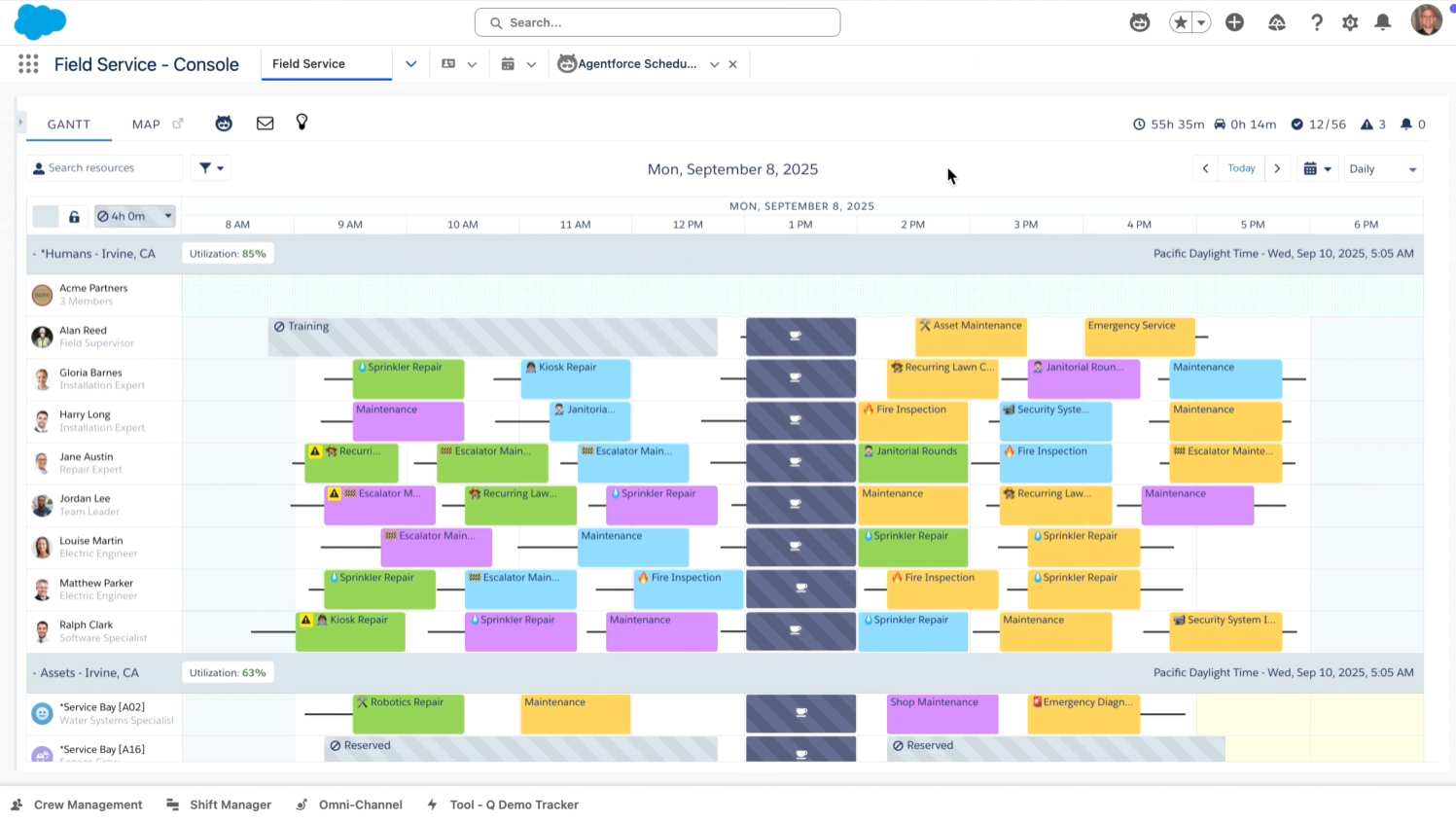
Salesforce organizes everything around the customer record. An account links to contacts, opportunities, cases, marketing engagements, and service interactions. This design makes sense when the primary goal is managing relationships across the customer journey, from lead generation through post-sale service. Salesforce's Field Service module sits within this broader structure, sharing data with Sales Cloud, Service Cloud, and Marketing Cloud so that a service interaction is visible to the account executive who sold the deal and the marketer planning the next campaign.
Source: Salesforce
ServiceMax organizes everything around the asset. A piece of equipment links to its installation record, bill-of-materials hierarchy, maintenance history, contract entitlements, and every work order ever executed against it. This design makes sense when the business depends on keeping physical equipment operational. A medical device manufacturer doesn't just need to know that a hospital is a customer. They need to know that serial number MX-4821, installed in Lab 3, had its compressor module replaced in March and is due for calibration in September, under a service contract that covers parts but not labor.
For organizations that need both perspectives, Salesforce has the advantage of being a broader platform. ServiceMax runs on the Salesforce platform, so ServiceMax Asset 360 for Salesforce is designed for companies that want Salesforce's CRM capabilities with ServiceMax's asset-centric depth layered on top. The trade-off is cost and complexity: you're paying for both Salesforce and ServiceMax licenses, and managing both platforms.
Source: PTC
Field service capabilities compared
Both platforms handle scheduling, dispatch, work orders, and mobile technician tools. The differences emerge in depth and design philosophy.
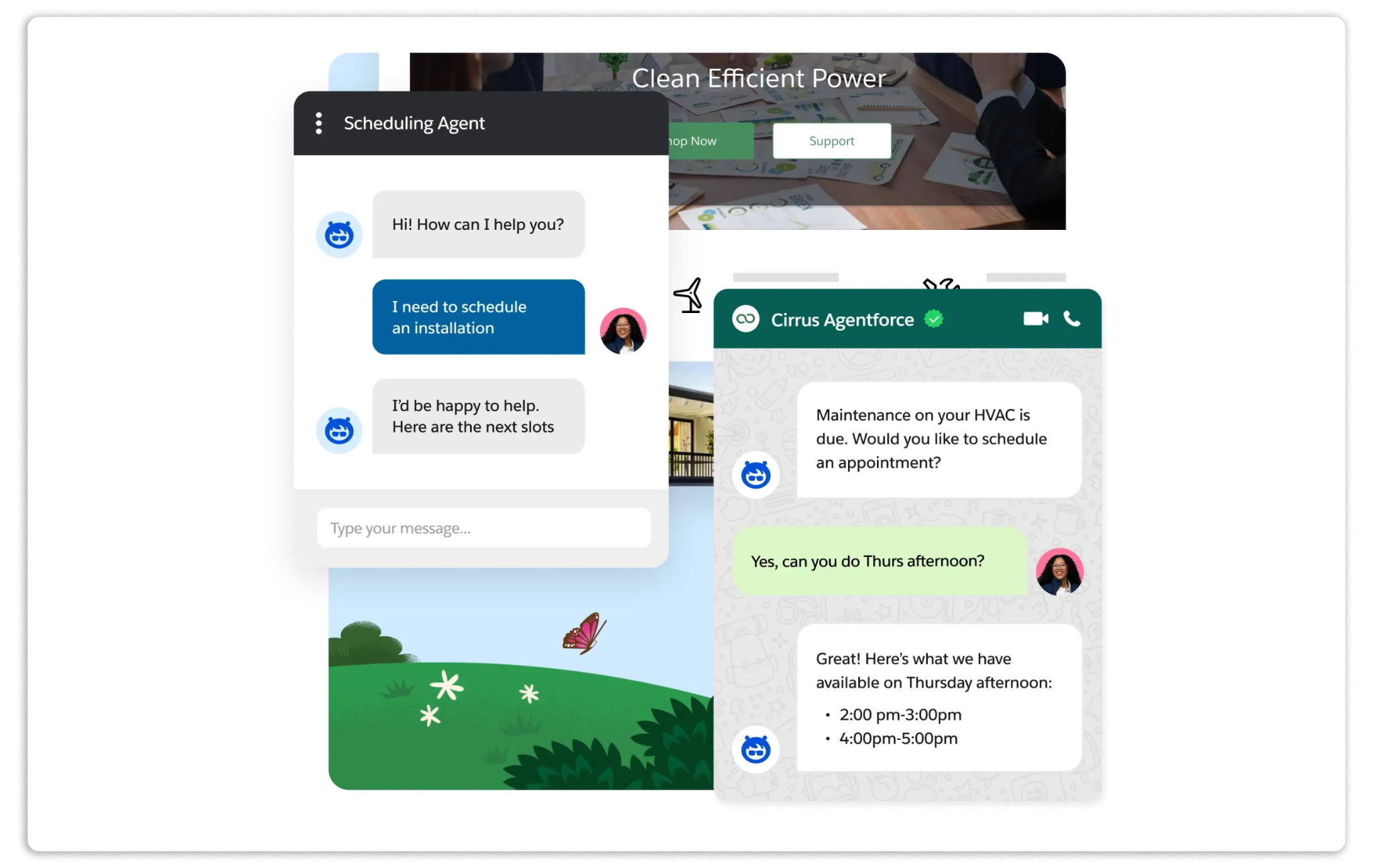
Scheduling and dispatch. Salesforce Field Service provides AI scheduling and optimization, matching technicians to work orders based on skills, location, and availability. ServiceMax's Service Board offers three dispatch modes in a single environment: manual, semi-automatic (rules-based assignment to queues), and fully automatic schedule optimization. ServiceMax also imports project files from MS Project, Smartsheet, and Primavera into its scheduling board, a feature that matters for complex installations with task interdependencies.
Source: Salesforce
Mobile tools and offline. Both offer mobile apps for field technicians. Salesforce's Field Service app provides offline access to work orders and related data. ServiceMax's ServiceMax Go goes further with its Smart Sync engine, built for technicians who may work offline for hours, days, or weeks. In oil and gas, utilities, or heavy manufacturing, where network connectivity is unreliable, this extended offline capability is often a deciding factor.
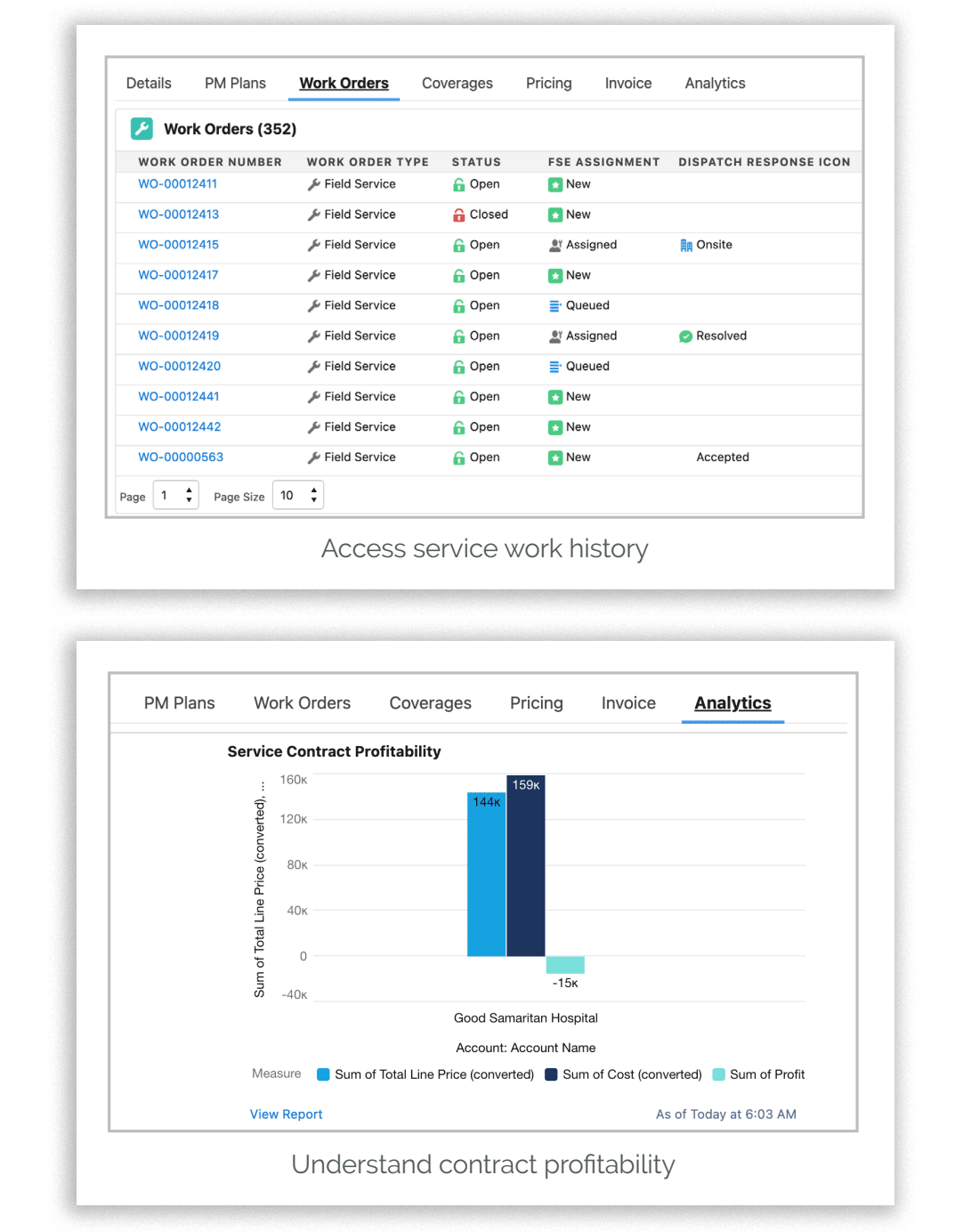
Contracts and entitlements. This is where ServiceMax's specialization shows most clearly. Its entitlements engine evaluates contracts and warranties when a work order is created, surfacing exactly what coverage applies to the specific asset being serviced. Contract Stack Ranking handles overlapping coverages by letting organizations prioritize which contract gets consumed first. Aberdeen Group research cited by ServiceMax suggests a 5% increase in contract attach rate can yield a 9% bump in service revenue. Salesforce handles service contracts and entitlements through Service Cloud, but with less asset-specific granularity.
Source: PTC
Installed base management. ServiceMax tracks the full as-maintained configuration of every asset: serial numbers, sub-component hierarchies, maintenance history, and configuration changes since installation. A technician can see not just what a piece of equipment was when it shipped, but what it has become through years of upgrades and repairs. Salesforce tracks assets, but its data model doesn't offer the same depth of hierarchical asset tracking out of the box.
Salesforce's broader platform gives it reach ServiceMax can't match
ServiceMax's specialization is its strength in the field. Salesforce's breadth is its strength across the business.
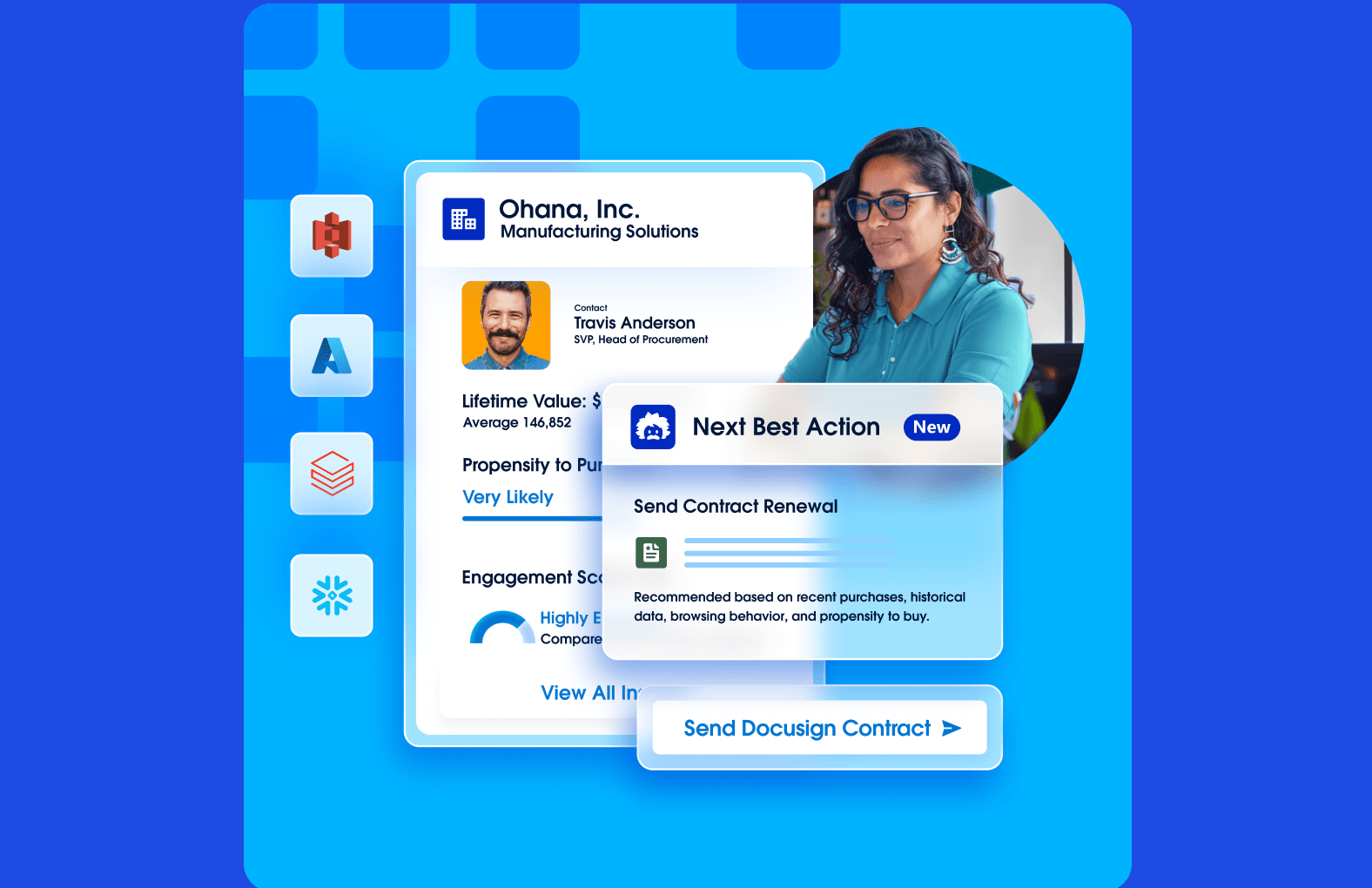
When a field technician finishes a service call and spots an upsell opportunity, that insight in Salesforce flows directly to the account executive. When a marketing team wants to target customers whose equipment is approaching end-of-warranty, they can build that campaign in Marketing Cloud using the same data. When a support case escalates from phone to field visit, the transition happens within one platform.
Salesforce Sales Cloud handles pipeline management, forecasting, quoting, and AI coaching. Service Cloud manages support across chat, email, phone, and social. Marketing Cloud runs campaigns, journeys, and personalization. Commerce Cloud runs B2C and B2B storefronts. Data Cloud unifies customer data across all these systems. All share one codebase and one customer record.
Source: Salesforce
ServiceMax is not trying to do any of this. It's a field service management platform. Once the work order is complete, ServiceMax's job is done. The sales follow-up, the marketing nurture, the customer health score: those happen elsewhere. For organizations already running Salesforce, ServiceMax Asset 360 bridges this gap by operating within the Salesforce environment. For organizations not on Salesforce, it means maintaining separate systems.
Neither platform solves the go-to-market intelligence gap
Both Salesforce and ServiceMax manage what happens after you have a customer. But how do you find the right customers in the first place?
Salesforce stores the customer data your team enters and maintains. It tracks your pipeline and your service interactions. But it doesn't tell you which of the 100 million companies in the market match your ideal customer profile, which decision-makers to reach, or which accounts are researching solutions like yours right now.
ServiceMax is even further from this question. It manages the assets you're already servicing, not the accounts you haven't won yet.
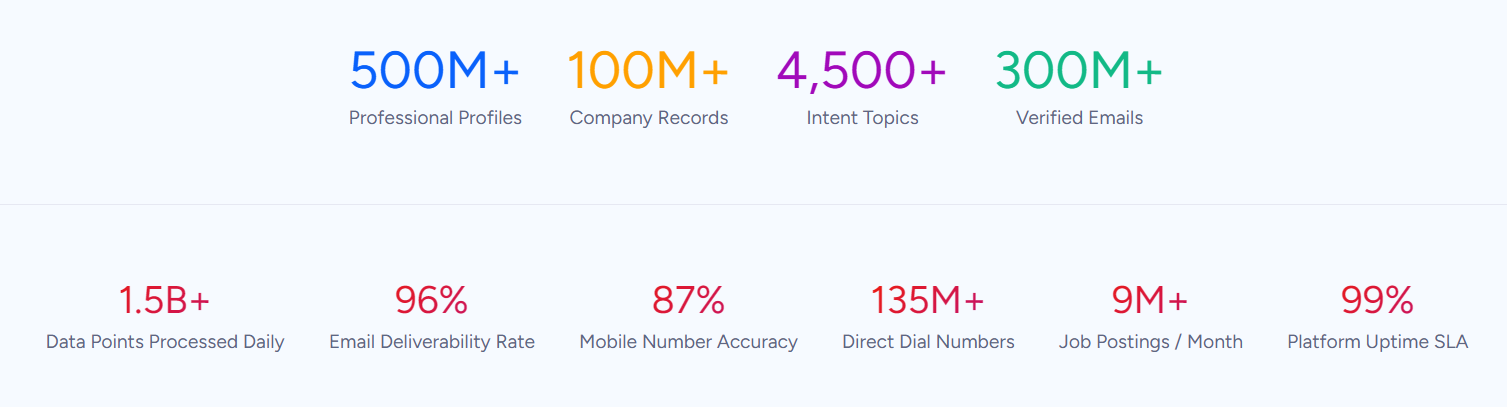
ZoomInfo fills this gap. Its data platform covers 500M contacts across 100M companies, verified through a multi-source pipeline backed by 300+ human researchers and reaching up to 95% accuracy on first-party data. In a Fortune 500 competitive RFP analyzing 25 million contacts across vendors, an independent consultant concluded that "no other competitor came even close."
The data spans three dimensions that matter for go-to-market teams. Identity data tells you who the buyers are and how to reach them, with 135M+ verified phone numbers and 200M+ verified business emails. Company context covers industry, revenue, org charts, and technographics across 30,000+ technologies at 30+ million companies. Dynamic signals reveal when accounts are in-market through buyer intent tracking across 210 million IP-to-Organization pairings.
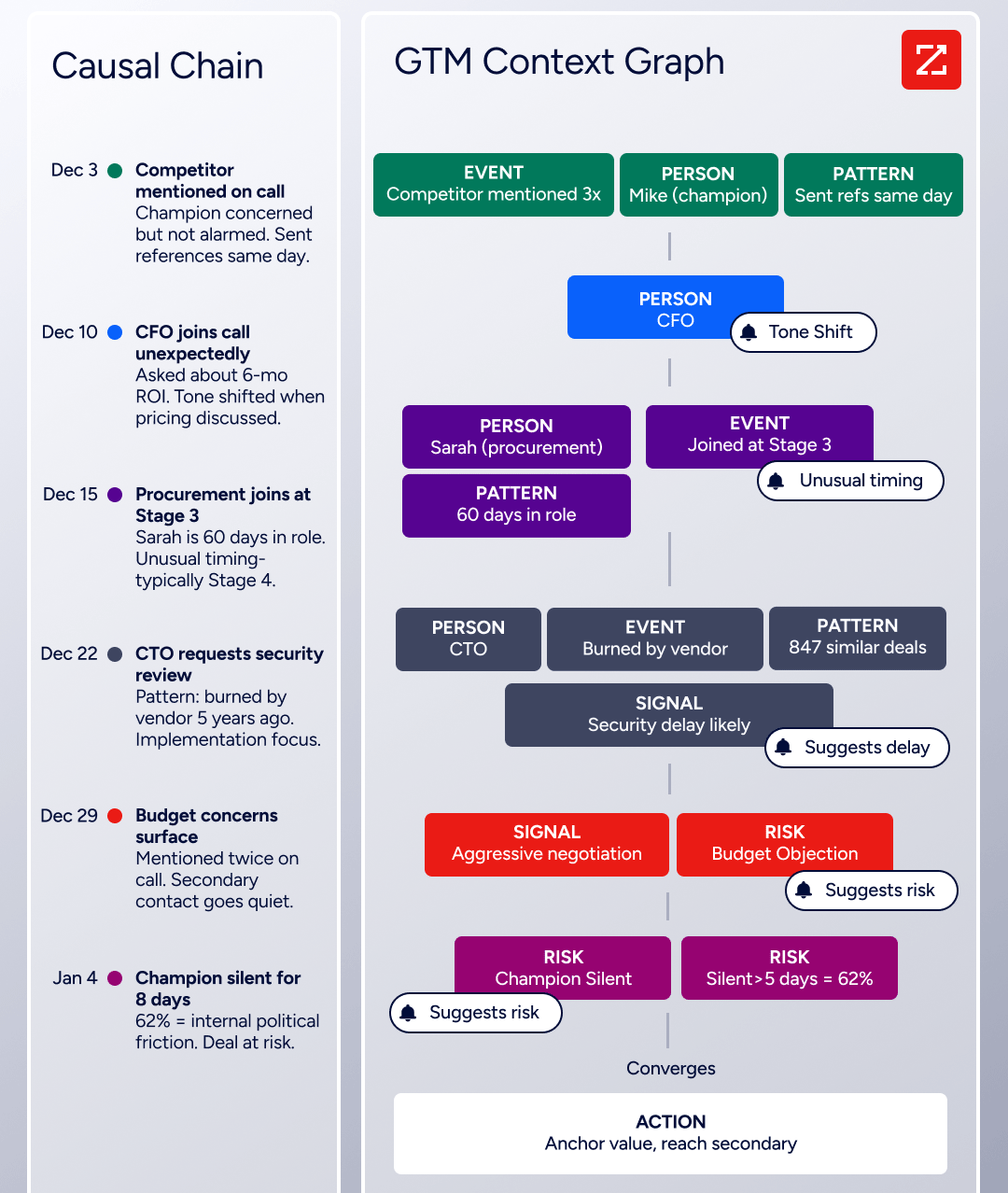
The GTM Context Graph goes further by fusing ZoomInfo's data with your CRM records, conversation transcripts, and behavioral signals. As ZoomInfo's Chief Product Officer Dominik Facher writes: "The CRM recorded the state change. It has no record of why it happened." The GTM Context Graph captures that context, revealing not just that a deal moved forward, but the executive sponsorship, competitive research, and hiring patterns that drove it.
Seismic's sales team attributed 39% of active pipeline to opportunities identified or influenced by ZoomInfo signals, boosted productivity by 54%, and saved 11.5 hours per week per seller. (Seismic case study)
For a deeper look at how Salesforce and ZoomInfo compare on data, pricing, and go-to-market capabilities, see our Salesforce vs. ZoomInfo comparison.
AI capabilities serve different purposes
All three platforms invest in AI, but each applies it to a different problem.
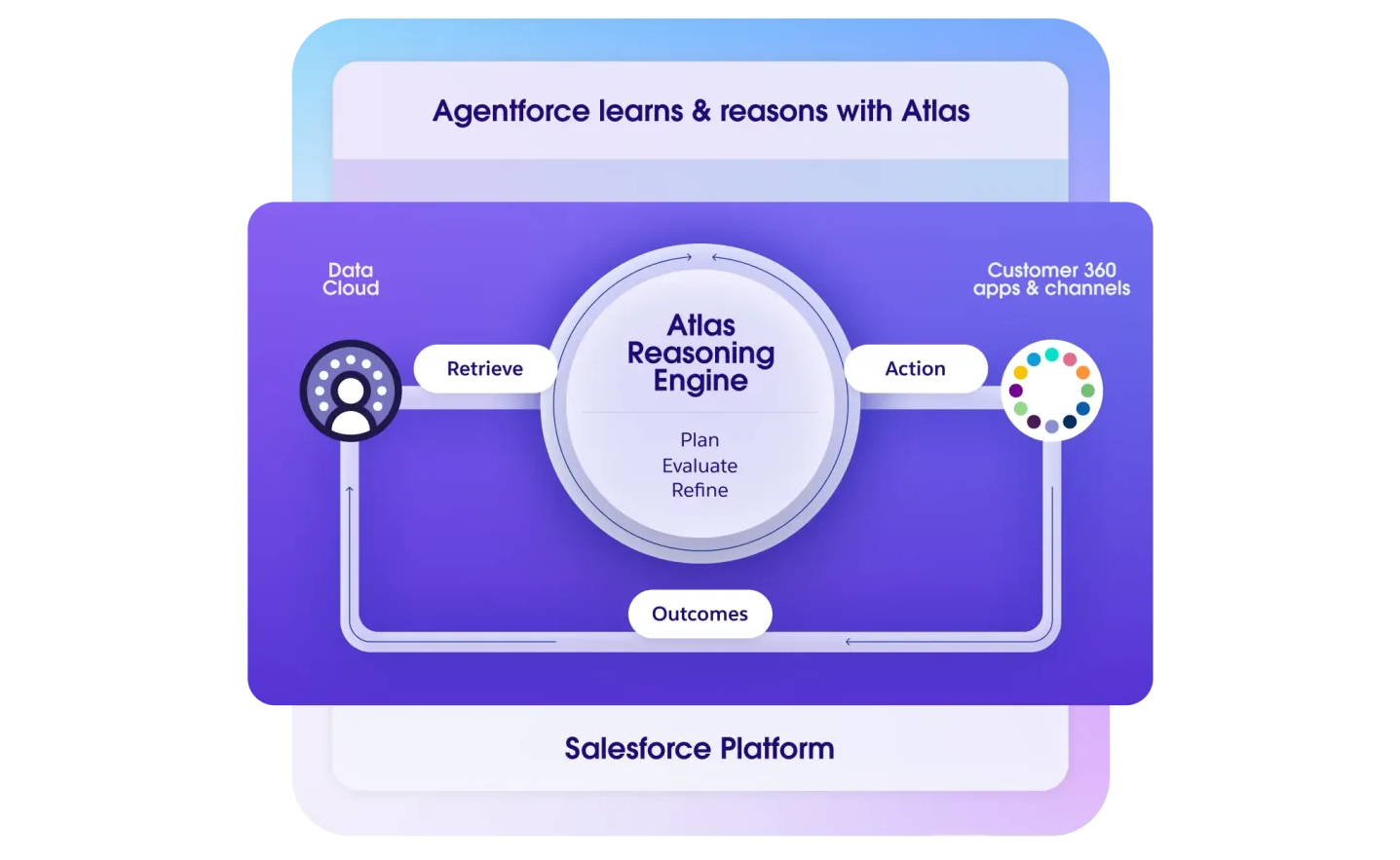
Salesforce's Agentforce deploys autonomous AI agents across CRM workflows. Sales agents prospect and draft outreach. Service agents resolve 85% of Salesforce's own support requests without human escalation. Marketing agents adjust campaigns and pause underperforming ads. The Atlas Reasoning Engine powers a reason-act-observe loop rather than fixed scripted responses. Agentforce has reached $800M ARR with 29,000 deals closed, making it the fastest-growing part of Salesforce's portfolio.
Source: Salesforce
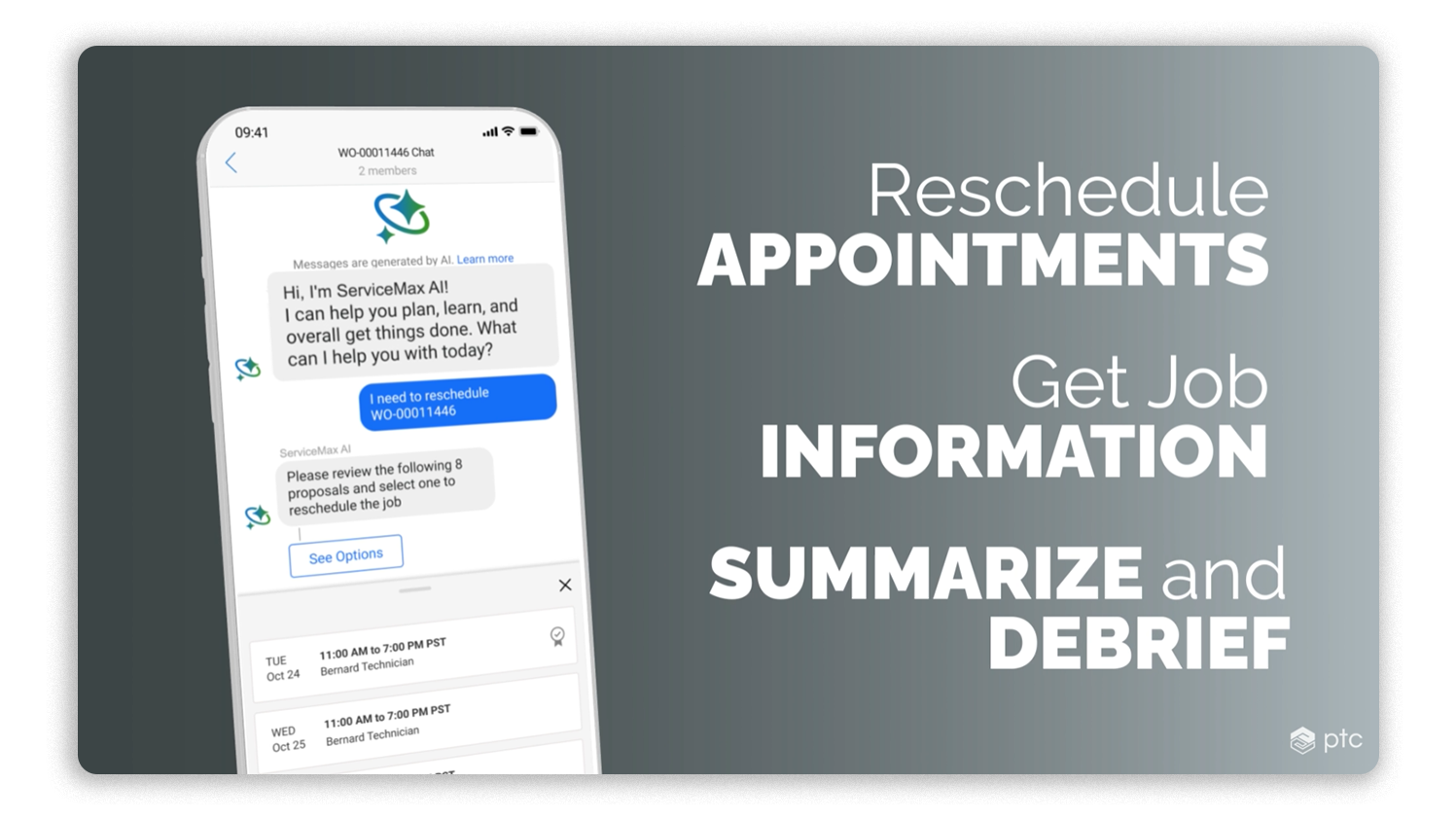
ServiceMax AI applies generative AI to field service workflows. Technicians can query asset histories in natural language, receive troubleshooting recommendations based on historical service data, and auto-generate service summaries. The AI uses multi-agent orchestration and RAG-driven retrieval grounded in decades of field service records, so a junior technician working on unfamiliar equipment can draw on the collective knowledge of thousands of prior service events. PTC was named a Leader in the IDC MarketScape for AI-Enabled FSM Applications 2025.
Source: PTC
ZoomInfo's AI is built for go-to-market execution. GTM Workspace uses AI agents (built on Anthropic's Claude) to research accounts, draft personalized outreach, monitor buying signals, and surface next best actions for every rep. GTM Studio lets marketers and RevOps describe audiences in natural language and launch multi-channel plays without engineering support. Guided Intent, exclusive to ZoomInfo, identifies the intent topics historically correlated with deal success rather than requiring manual topic selection.
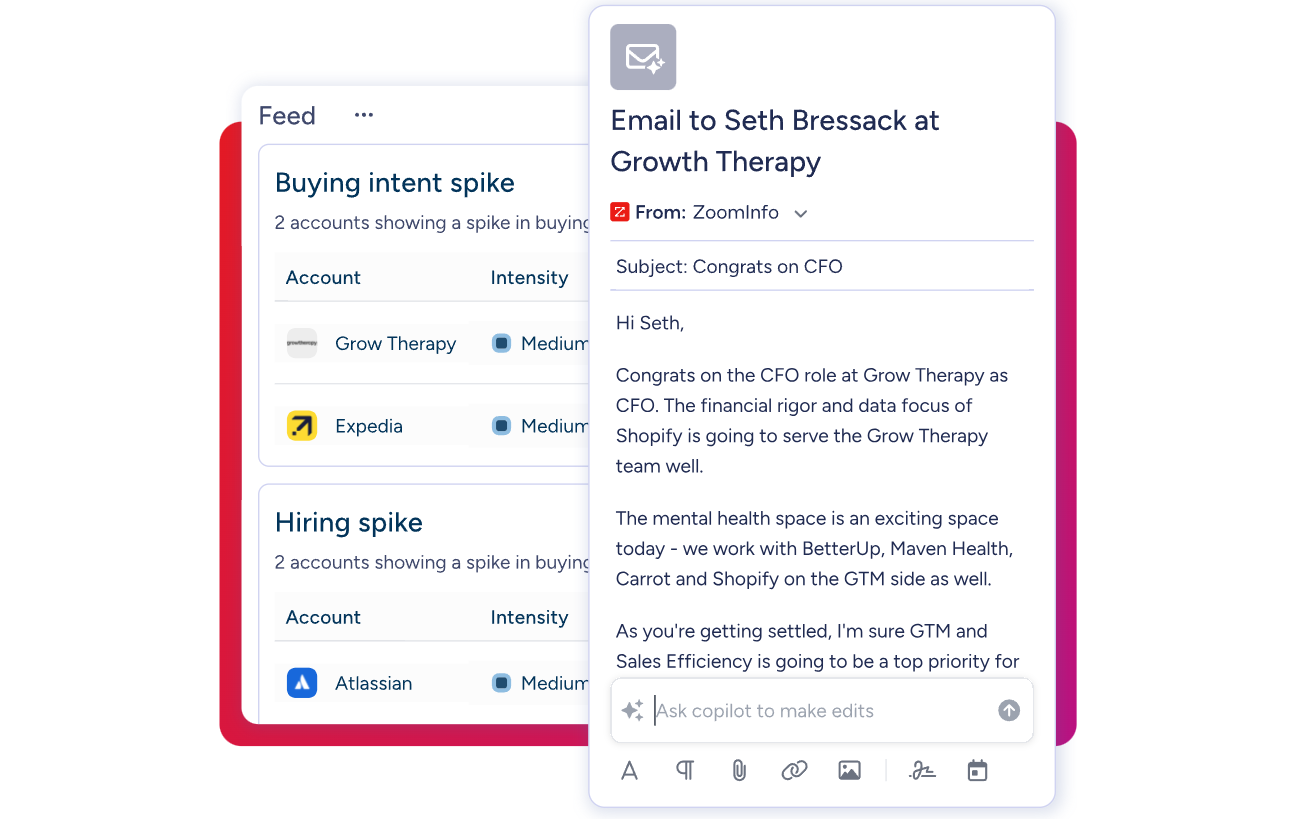
Thomson Reuters increased closed-won deals by 40% and achieved 115% average quota attainment each month using ZoomInfo's intelligence. (GTM Workspace)
Pricing and cost structures
The three platforms occupy different price points and structures, reflecting their different buyers.
Salesforce publishes per-user pricing. Sales Cloud and Service Cloud both start at $25/user/month for Starter Suite and scale to $550/user/month for Agentforce 1 (which includes unmetered Agentforce, Tableau Next, and Slack Enterprise+). Field Service is an add-on starting at $175/user/month. The total cost depends on which clouds you deploy: an organization running Sales Cloud Enterprise ($175/user/month) plus Field Service ($175/user/month) plus the Service Cloud AI add-on ($125/user/month) is looking at nearly $500/user/month before implementation. Premier Success Plans add 30% on top of net license fees. Implementation typically requires partners, with over 70% of deployments partner-led.
ServiceMax does not publish pricing. All three product lines (ServiceMax Core, FieldFX, Asset 360 for Salesforce) require direct engagement with PTC sales. For Asset 360, Salesforce platform licenses are a prerequisite and represent an additional cost layer outside ServiceMax's fees. Implementation timelines of 6–12 months are common. No free trial is available; only guided demos.
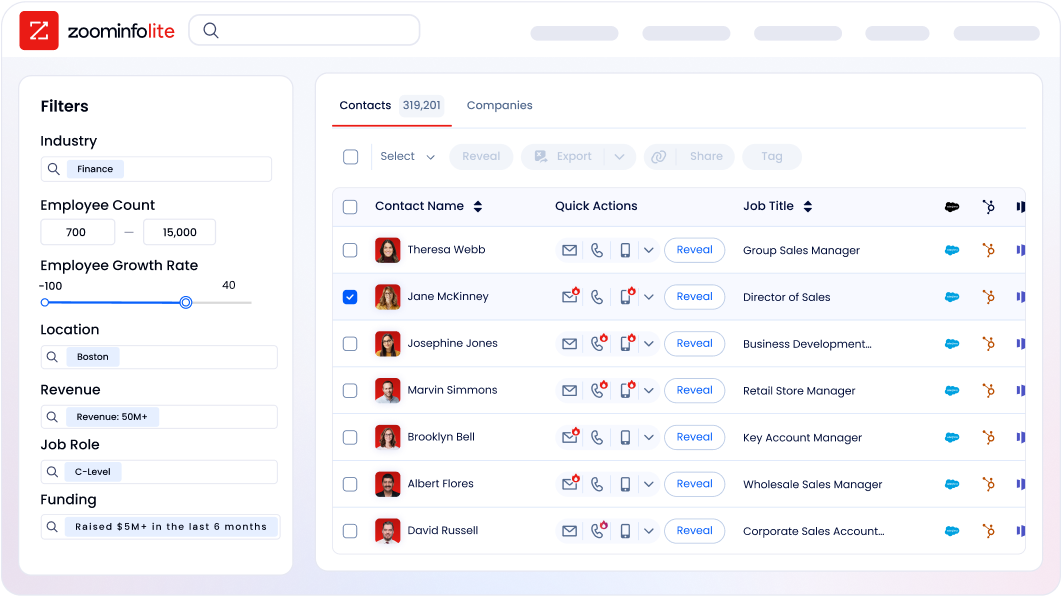
ZoomInfo uses custom-quoted, consumption-based pricing. The pricing page organizes Sales, Marketing, and ABM tiers (Professional, Advanced, Enterprise) but does not list dollar amounts. ZoomInfo Lite provides a permanent free tier with 10 monthly export credits, access to the B2B database, Chrome extension, and HubSpot integration. A 7-day free trial of paid features is also available. ZoomInfo integrates natively with Salesforce, HubSpot, and Microsoft Dynamics, so the data flows into whatever CRM you already run.
Integration and ecosystem
How each platform connects to the rest of your tech stack shapes its long-term value.
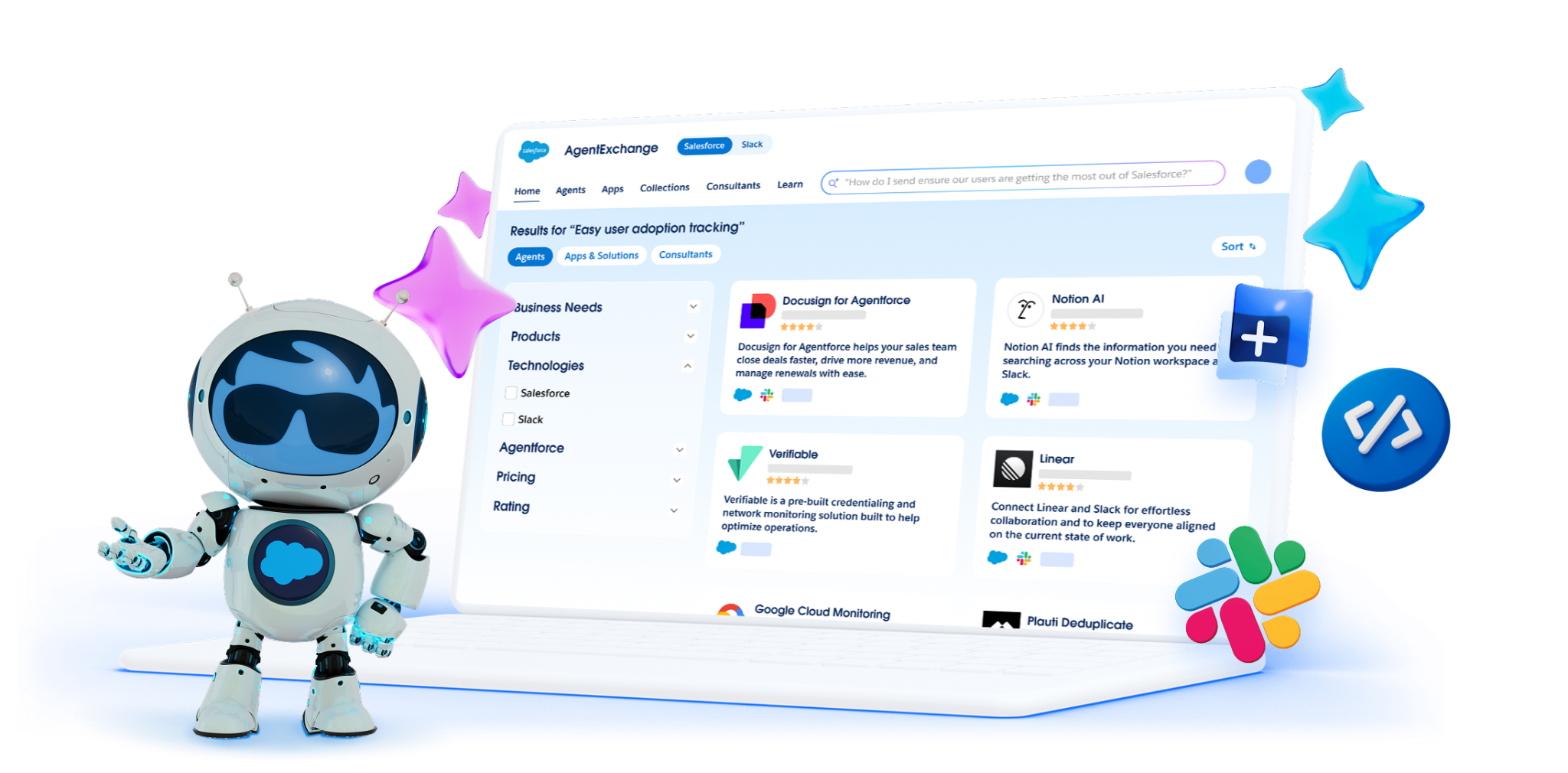
Salesforce has the largest enterprise app ecosystem in CRM: 9,000+ partner apps on AppExchange with 14+ million installs. MuleSoft handles complex enterprise integrations with hundreds of pre-built connectors. Native integrations with Google Workspace, Microsoft Outlook, and Slack cover everyday productivity. The platform exposes more than 30 APIs across REST, SOAP, GraphQL, and gRPC. For developers, Trailhead provides free learning across 1,500+ badges.
Source: Salesforce
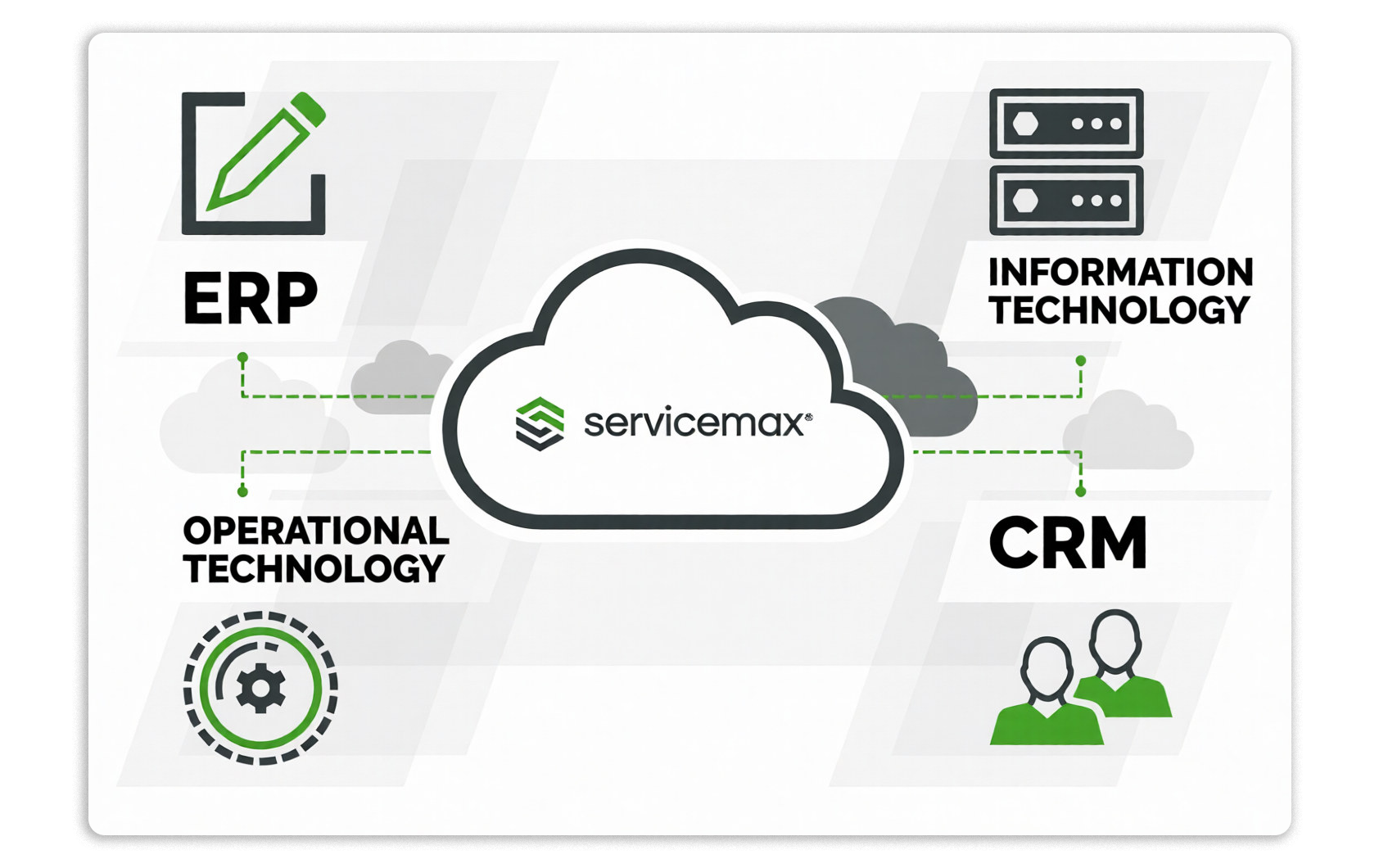
ServiceMax inherits the Salesforce API infrastructure for its Core and Asset 360 products, so integrations follow Salesforce patterns. Beyond that, it connects to PTC ThingWorx for IoT sensor data, enabling condition-based and predictive maintenance triggers. Third-party iPaaS connectors from Jitterbit and Informatica are available, but the integration ecosystem is narrower than Salesforce's standalone offering. The Zinc collaboration platform connects team messaging to work orders and asset records.
Source: PTC
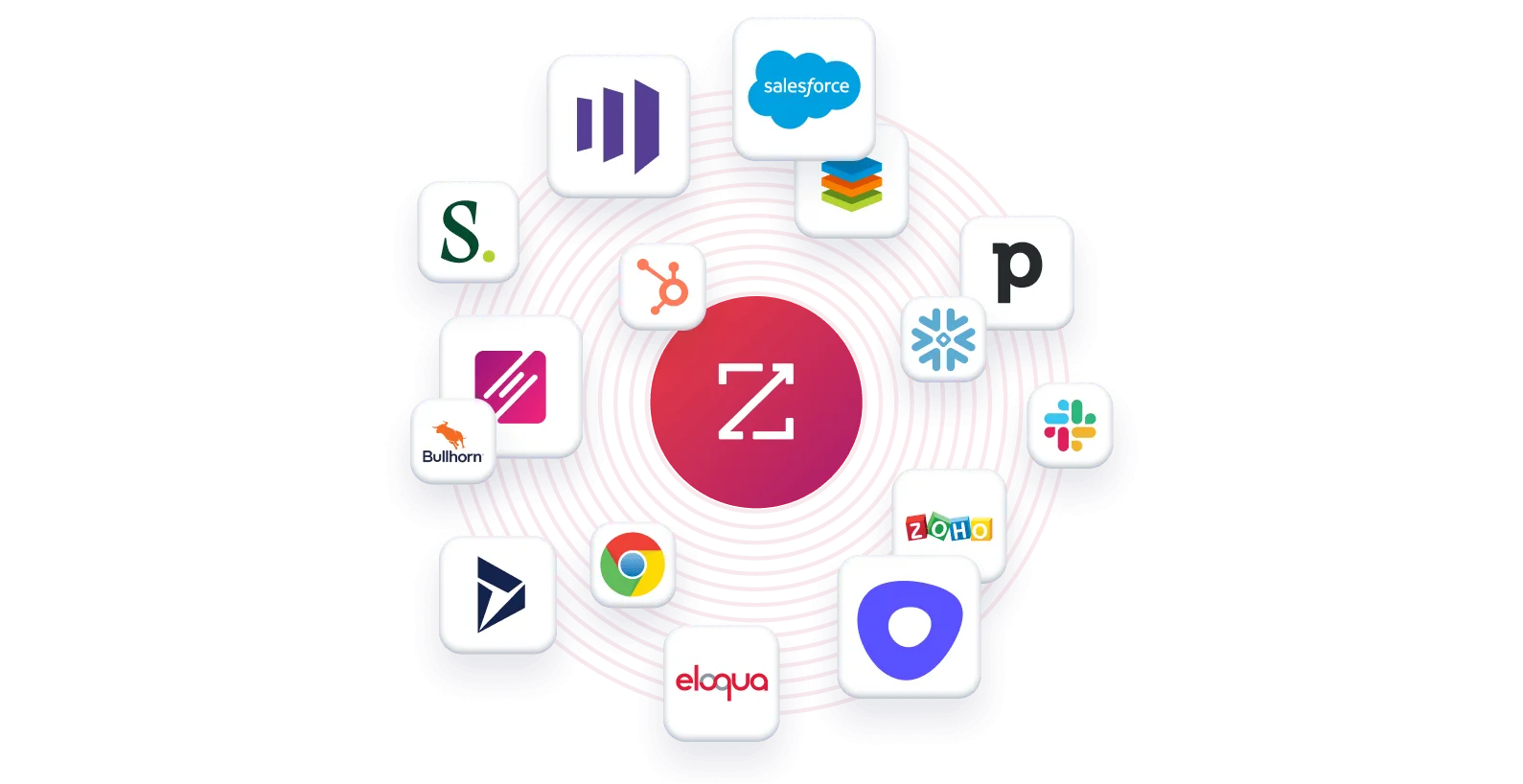
ZoomInfo maintains a Marketplace with 172+ integration partners across CRM, marketing automation, sales engagement, data warehouses, and AI platforms. The Enterprise API covers search, enrichment, intent, and AI intelligence endpoints. The MCP server connects ZoomInfo data to AI models (Claude, ChatGPT, and others) without custom coding. Cloud Partners deliver ZoomInfo data into AWS, Snowflake, Google Cloud, and Databricks. The point: ZoomInfo's intelligence is available in whatever tools a team already uses, not locked inside a single application.
BDO Canada reduced time spent on data dashboard updates by 87% using ZoomInfo's API. Jerry Wilson, Senior Marketing Intelligence Analyst: "The plug-and-play aspect of the API means I can integrate it very easily into any process and get information at a moment's notice." (BDO Canada case study)
Who each platform serves best
The three platforms target different buyers, and understanding those differences prevents choosing the wrong tool.
Salesforce serves organizations that need a unified platform across sales, service, marketing, and commerce. Its ideal customer has multiple teams sharing customer data: account executives tracking pipeline, service agents handling cases, marketers running campaigns, and field technicians completing work orders. The platform scales from small businesses (via the free CRM tier) to global enterprises, though the full value requires dedicated Salesforce administrators. Over 150,000 companies worldwide use Salesforce.
ServiceMax serves enterprises that manufacture, sell, and service complex physical equipment. Its ideal customer manages a large installed base of high-value assets, typically with 50+ field technicians, in industries where equipment uptime is a revenue and compliance imperative. Medical device manufacturers, industrial equipment OEMs, oil and gas operators, and electronics companies are the core market. ServiceMax is not for SMBs, simple scheduling operations, or companies without complex installed bases. Representative customers include Schneider Electric, 3D Systems, and MilliporeSigma.
ZoomInfo serves B2B revenue teams that need to find, reach, and win customers. Its ideal customer runs outbound sales, account-based marketing, or RevOps teams responsible for data quality and pipeline generation. The platform works across industries but is concentrated in B2B SaaS, financial services, professional services, and technology. Enterprise customers include Snowflake, Seismic, Palo Alto Networks, and Thomson Reuters. ZoomInfo is not for B2C companies or organizations without a data-driven go-to-market motion.
Salesforce vs. ServiceMax vs. ZoomInfo: Which should you choose?
The right platform depends on which problem you're solving.
Choose Salesforce if:
You need a unified platform across sales, service, marketing, and commerce
Your field service operation is one part of a broader customer relationship strategy
You want service data flowing into sales pipeline and marketing campaigns
Your team needs CRM, case management, and field service in one system
You have the budget and administrative resources for a multi-cloud Salesforce deployment
Choose ServiceMax if:
Your business depends on keeping complex, high-value physical equipment running
You manage a large installed base with detailed BOM hierarchies and maintenance histories
Entitlement accuracy and contract revenue leakage are significant financial concerns
Your technicians work in environments where extended offline capability is essential
You need an asset-centric system of record, not just a scheduling and dispatch tool
Choose ZoomInfo if:
Your primary challenge is finding and reaching the right accounts to sell to
You need verified contact data, buyer intent signals, and account intelligence at scale
Your sales, marketing, and RevOps teams need a shared intelligence layer
You want AI that tells reps who to contact, when to engage, and what to say
You need go-to-market data and signals that flow into your existing CRM and tools
Start with ZoomInfo Lite for free, or request a demo of the full platform.
These three platforms solve different parts of the revenue lifecycle. Salesforce manages the customer relationship. ServiceMax manages the equipment. ZoomInfo finds and qualifies the opportunity. For organizations that sell and service complex products, the question isn't which one to choose. It's which combination puts the right intelligence in front of every team at every stage.
Salesforce vs. ServiceMax vs. ZoomInfo FAQ
What is the core difference between Salesforce, ServiceMax, and ZoomInfo?
Salesforce is a CRM and enterprise platform covering sales, service, marketing, and commerce on a unified customer data model. ServiceMax is a field service management platform built around the physical asset, tracking installed base records, maintenance histories, and service contracts for complex equipment. ZoomInfo is a B2B go-to-market intelligence platform providing verified contact data, buyer intent signals, and AI-powered prospecting across 500M contacts and 100M companies.
Can Salesforce and ServiceMax work together?
Yes. ServiceMax Asset 360 for Salesforce runs within a Salesforce environment, combining Salesforce's CRM capabilities with ServiceMax's asset-centric field service depth. This requires licensing both platforms, and implementation is more complex than running either alone.
Which platform is best for field service management?
ServiceMax is the deeper field service platform, designed for asset lifecycle management with features like Contract Stack Ranking, extended offline mobile capability, and installed base hierarchy tracking. Salesforce Field Service is a capable module within the broader Salesforce ecosystem, and it benefits from native data sharing with Sales Cloud and Service Cloud. ServiceMax is stronger for complex, asset-intensive industries; Salesforce Field Service suits organizations that need field service as one part of a unified CRM strategy.
Does ZoomInfo compete with Salesforce or ServiceMax?
ZoomInfo serves a different function. It provides the go-to-market intelligence (verified contacts, buyer intent, company data, account insights) that feeds into CRM and sales workflows. ZoomInfo integrates natively with Salesforce, HubSpot, and Microsoft Dynamics, enriching the data inside those platforms rather than replacing them. ServiceMax and ZoomInfo have no functional overlap.
How does pricing compare across the three platforms?
Salesforce publishes per-user pricing starting at $25/user/month for basic CRM and scaling to $550/user/month for Agentforce 1 with full AI capabilities. Field Service is an add-on at $175/user/month. ServiceMax does not publish pricing and requires direct engagement with PTC sales; Asset 360 also requires separate Salesforce licenses. ZoomInfo uses custom-quoted, consumption-based pricing with a permanent free tier (ZoomInfo Lite) and a 7-day free trial of paid features.
Which platform has the best AI capabilities for field service?
ServiceMax AI provides field-service-specific intelligence: natural-language troubleshooting queries grounded in asset service history, multi-agent orchestration for workflow automation, and predictive maintenance recommendations. Salesforce Agentforce covers field service as part of its broader CRM AI suite, with autonomous agents that handle case deflection and scheduling. ZoomInfo's AI focuses on go-to-market rather than field service, providing account intelligence, intent-driven prospecting, and AI-generated outreach.
Which platform is easiest to implement?
Salesforce's implementation timeline ranges from weeks for simple Sales Cloud setups to 3–12 months for enterprise multi-cloud deployments. ServiceMax typically requires 6–12 months and deep configuration expertise, plus Salesforce administration for Asset 360. ZoomInfo deploys in weeks, not months, and its GTM Workspace and GTM Studio require no complex implementation beyond CRM integration and data configuration.
Do any of these platforms offer a free tier or trial?
Salesforce offers a free CRM for up to 2 users with basic lead, account, and opportunity management. ZoomInfo offers ZoomInfo Lite as a permanent free tier with 10 monthly export credits and access to the B2B database, plus a 7-day free trial of paid features. ServiceMax offers only a guided demo with no self-service trial or free plan.
See how Salesforce stacks up elsewhere:
