
Choosing between SalesRabbit and SPOTIO for your field sales operation comes down to five questions:
Are your reps knocking residential doors, visiting B2B accounts, or both?
Do you need a platform that works as a standalone system, or one that layers onto an existing CRM?
How large is your field team, and can you commit to a 25-license minimum?
Is prospecting intelligence (knowing who to target and why) as important to you as field execution (tracking what reps do)?
Do your reps work in areas with unreliable cellular coverage?
Here's what we recommend:
SalesRabbit is built for residential field sales teams that canvass neighborhoods door-to-door. A former D2D rep built it, and the product still reflects that origin. It bundles canvassing, territory mapping, digital contracts, gamification, and weather overlays into a single login. Its DataGrid AI assigns buyer propensity scores to individual homes using 1,700+ variables, telling reps which doors are worth knocking before they leave the truck.
The platform is designed around residential addresses, though. App stability in low-connectivity areas is a recurring user complaint, and the full feature set requires stacking multiple paid add-ons on top of the base plan.
SPOTIO is built for larger field sales organizations that need GPS-verified accountability and enterprise CRM integration. It serves both B2B and B2C teams across industries like telecom, medical devices, financial services, and roofing. SPOTIO's DASH AI co-pilot lets reps log visits by voice, prep accounts in ten seconds, and execute multi-step workflows from a single spoken command. The platform holds SOC 2 Type II certification and offers a native bidirectional Salesforce integration that most field-first platforms lack.
The tradeoff: SPOTIO requires a minimum of 25 licenses with no self-serve option, publishes no pricing, and positions itself as a CRM complement rather than a replacement, meaning most buyers need both SPOTIO and a separate CRM.
Both platforms solve the field execution problem: getting reps into the right territories, tracking what they do there, and holding them accountable. But for B2B field sales teams, there's a question neither fully answers: how do you know which accounts are worth visiting in the first place? That's where intelligence enters the picture.
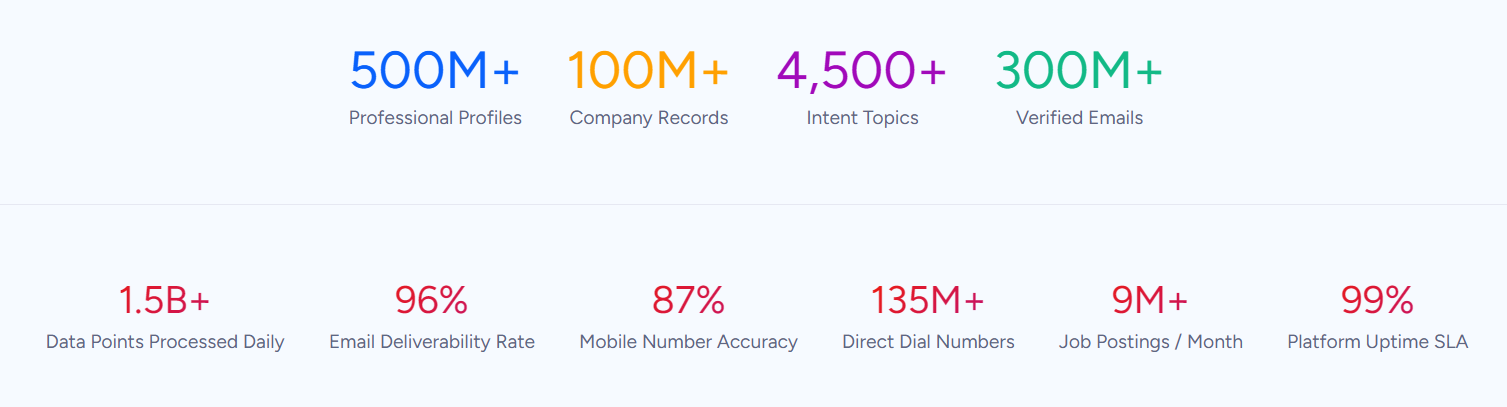
ZoomInfo is a B2B intelligence platform built on a large data foundation: 500M contacts, 100M companies, 135M+ verified phone numbers, and 200M+ verified business emails. While SalesRabbit and SPOTIO tell your reps where to go and track what they did, ZoomInfo tells them who to target, when to engage, and what to say. Its GTM Context Graph processes 1.5B+ data points daily, combining this data with your CRM records, conversation transcripts, and behavioral signals to reveal what's happening in your pipeline and why.
For B2B field sales teams selling into commercial accounts, ZoomInfo is not a replacement for your field execution tool. It's the intelligence source that informs every field visit.
If pairing B2B intelligence with your field execution sounds like the missing piece, see how ZoomInfo works.
SalesRabbit vs. SPOTIO vs. ZoomInfo at a glance
SalesRabbit | SPOTIO | ZoomInfo | |
|---|---|---|---|
Primary focus | Residential D2D canvassing | Field sales execution (B2B and B2C) | B2B sales intelligence |
Best for | Home services field teams | Mid-market to enterprise outside sales | B2B prospecting and account intelligence |
Team size | Individuals to enterprise | 25+ licenses required | Individuals to enterprise |
Prospecting data | DataGrid AI (residential buyer scores) | Lead Machine (B2C) / Google Places (B2B) | 500M contacts, 100M companies, intent signals |
Territory management | Custom area drawing with color overlays | Draw, select, ZIP, KML import | Territory management filters and account views |
AI capabilities | DataGrid buyer propensity scoring | DASH AI conversational co-pilot | GTM Context Graph + AI agents |
CRM positioning | Standalone with integrations | Complements existing CRM | Standalone platform + CRM integrations |
Gamification | Amplify (native) | SalesScreen (integration) | N/A |
Free option | SalesRabbit Lite (1 user) | No free plan or trial | ZoomInfo Lite (permanent free tier) |
Starting price | $49/user/month (annual) | Custom pricing, not published | Custom pricing, not published |
Security certifications | No public certifications | SOC 2 Type II | ISO 27001, ISO 27701, SOC 2 Type II |
SalesRabbit owns residential canvassing. SPOTIO covers wider ground.
The difference between these two platforms is who they were built for.
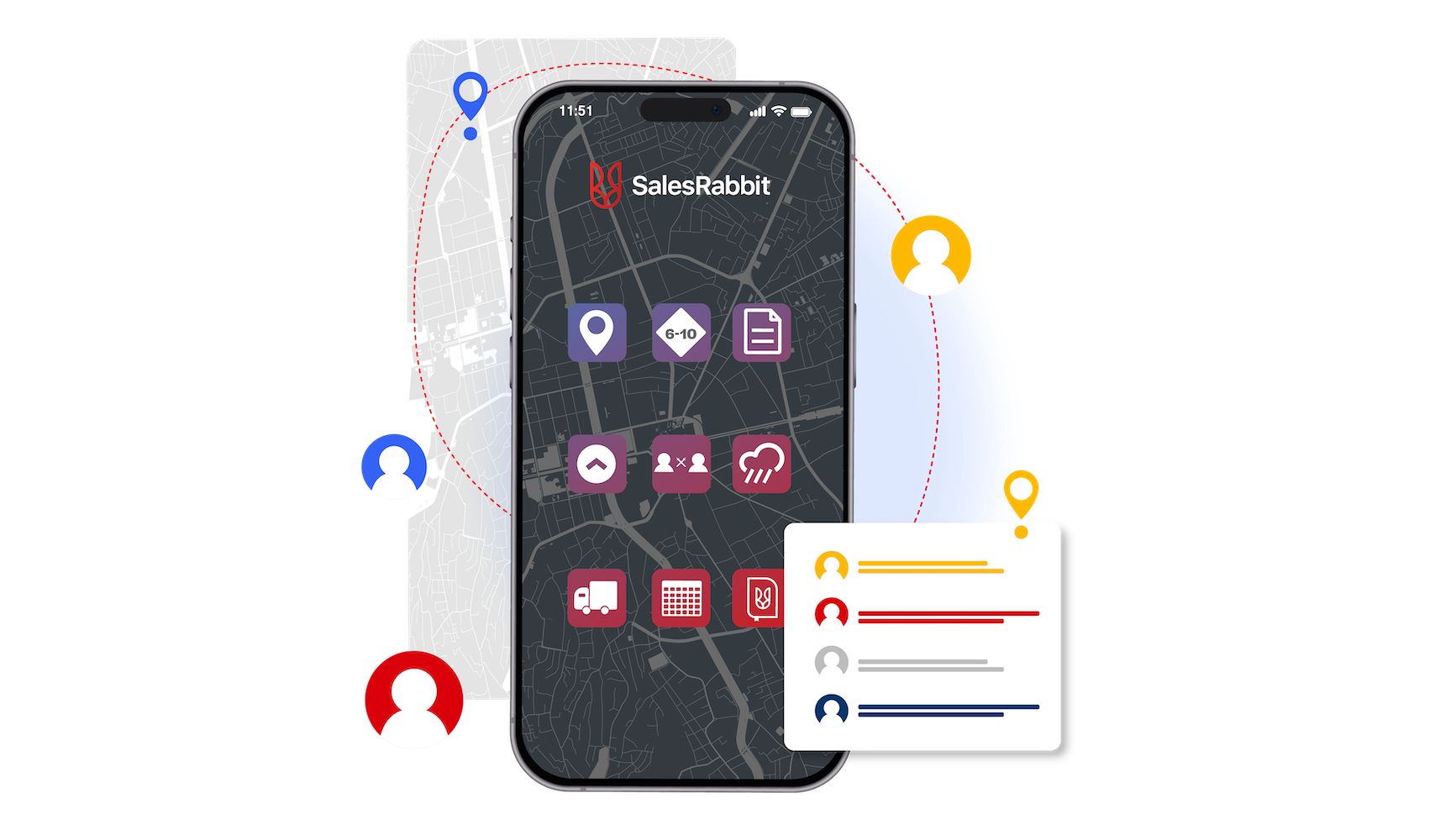
SalesRabbit started in 2013 when co-founder Brady Anderson, a door-to-door pest control rep, built the tool he wished he had. That origin still defines the product. The platform centers on residential addresses: reps drop pins on homes, assign custom lead statuses, and move through neighborhoods systematically. SalesRabbit runs deepest in roofing, solar, telecom, pest control, HVAC, and home security. The November 2024 acquisition of RoofLink and January 2026 acquisition of Roofle signal that roofing is becoming SalesRabbit's most developed vertical.
Source: SalesRabbit
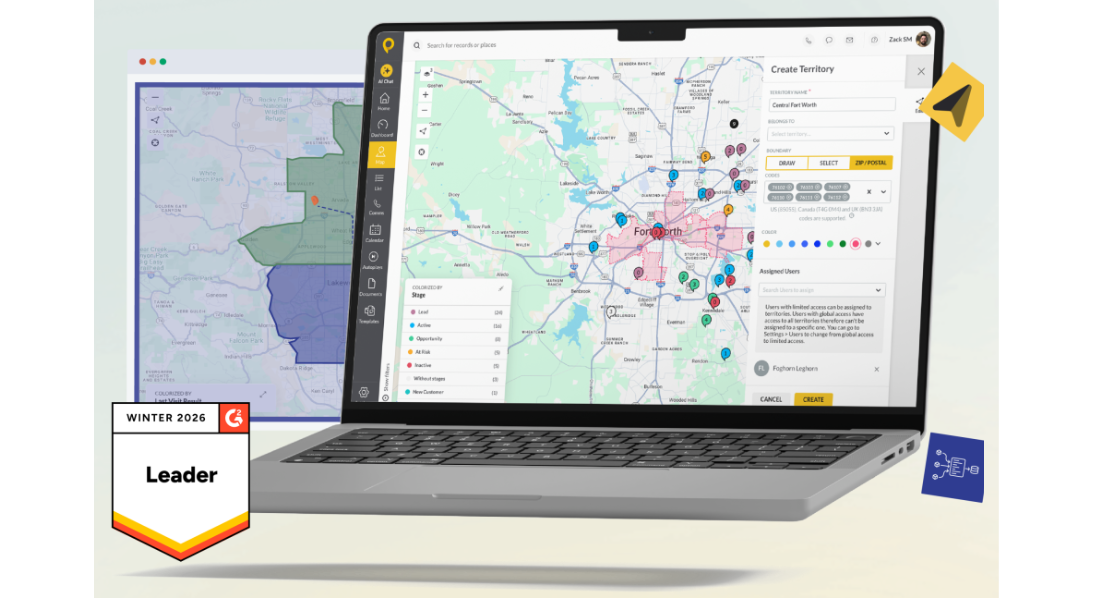
SPOTIO, founded in 2014 by Trey Gibson after managing his own field team, has evolved differently. Its homepage leads with a direct challenge: "YOUR CRM ISN'T BUILT FOR FIELD SALES." The platform targets both B2B and B2C outside sales, with named customers spanning telecom (Brightspeed, Wire3), financial services (Lobel Financial), solar (Trinity Solar), and roofing (Storm Guard). SPOTIO positions itself as the action layer on top of your existing CRM, not a replacement for it.
Source: SPOTIO
The practical consequence: SalesRabbit is the better tool for a roofing crew canvassing storm-damaged neighborhoods. SPOTIO is the better tool for a medical device rep running a route of 40 hospital visits per week. If your team knocks residential doors, SalesRabbit's workflow fits more naturally. If your team visits commercial accounts across a multi-state territory, SPOTIO's architecture fits better.
Territory management: different tools for different problems
Both platforms let managers draw territories on a map and assign them to reps. The execution differs.
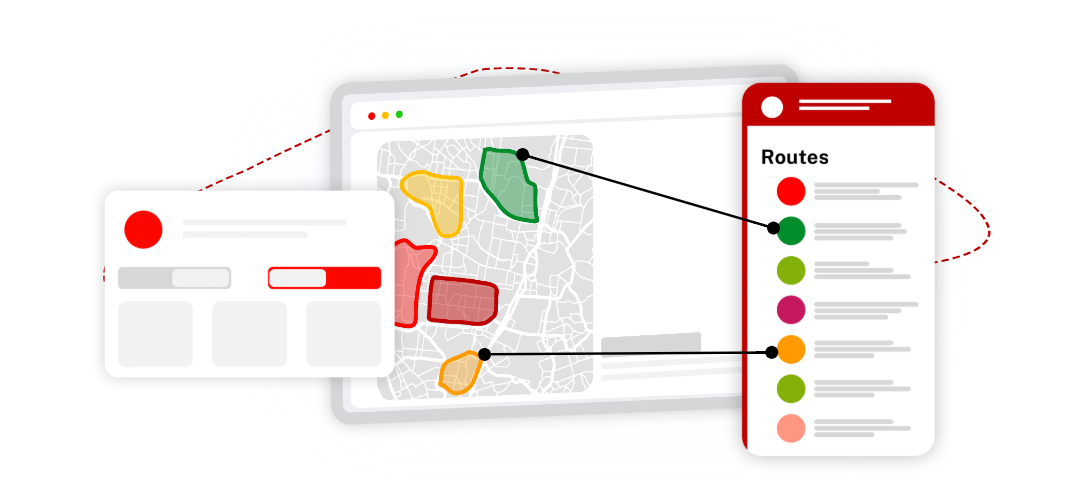
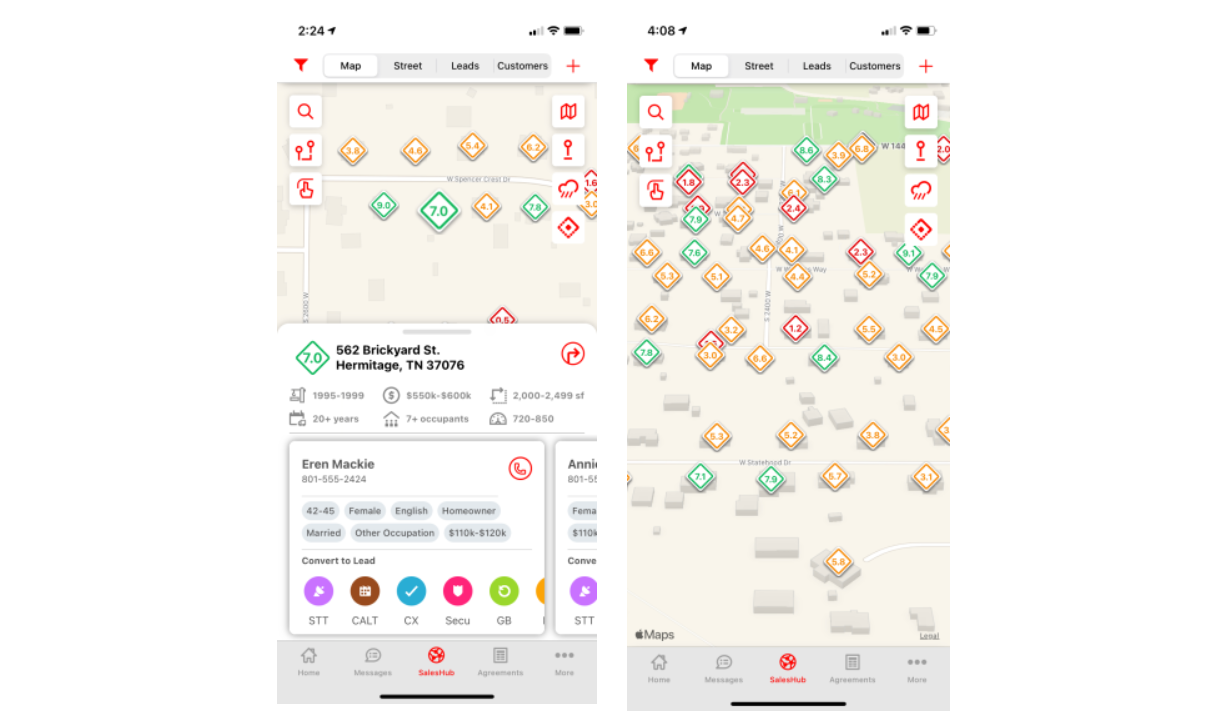
SalesRabbit handles territory creation through custom area drawing over a detailed map view. Managers draw areas of any size, rate them to signal priority, and assign them to reps. The platform keeps a full history of previous area assignments so managers can follow up on prior work. Underneath this sits DataGrid AI, which color-codes neighborhoods by buyer propensity (green for high scores, red for low), turning territory management from a geographic exercise into a targeting exercise. For residential canvassing, where reps work block by block, this visual approach works.
Source: SalesRabbit
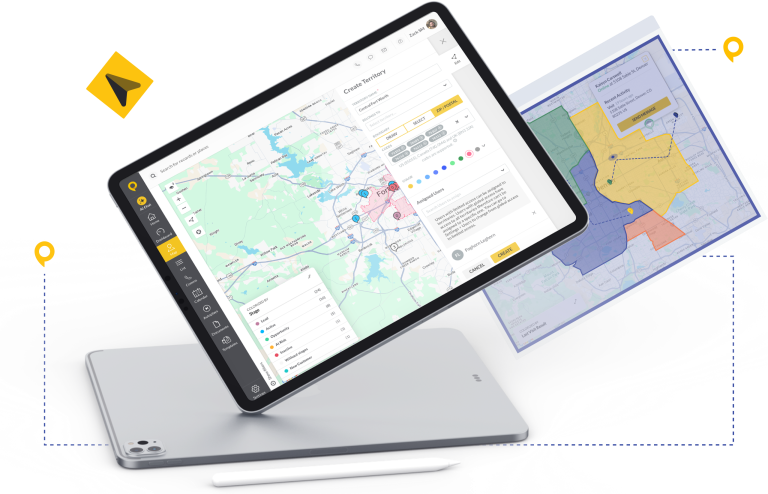
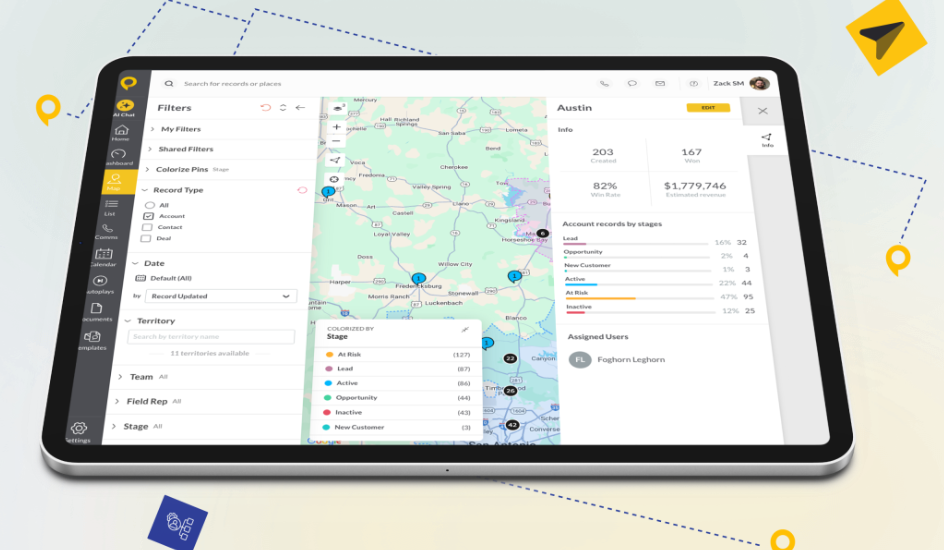
SPOTIO offers three boundary creation methods: a freehand draw tool, a select tool that auto-draws by state/ZIP/city/county, and ZIP code stacking. The platform also supports parent-child territory hierarchies for regional roll-up visibility and KML bulk import of up to 200 territories for large deployments. Territories sync bidirectionally with connected CRMs, so account ownership updates automatically when boundaries change. SPOTIO also flags territory overlap visually before reps hit the field, a feature that matters when 50+ reps cover adjacent zones.
Source: SPOTIO
The distinction tracks to team size. A 10-rep roofing crew drawing canvassing areas around storm-hit neighborhoods works well in SalesRabbit. A 200-rep telecom organization that needs hierarchical territories, bulk import, and CRM sync needs the structure SPOTIO provides.
The intelligence gap both platforms share
SalesRabbit and SPOTIO both include prospecting data, but each has clear boundaries.
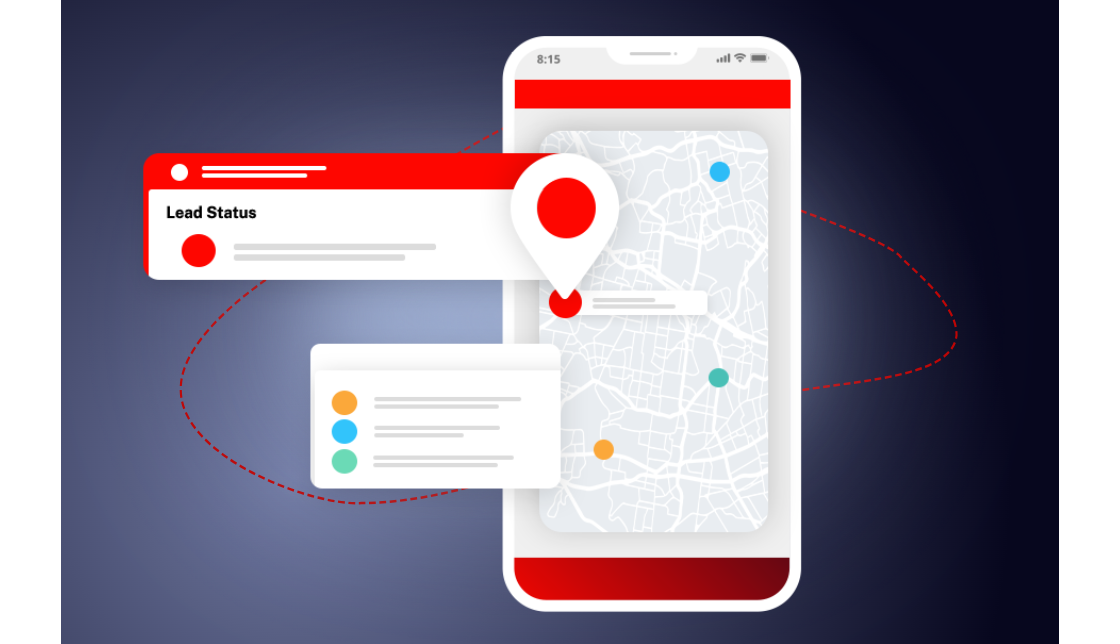
SalesRabbit's DataGrid AI analyzes 1,700+ variables per record to score residential addresses by buyer propensity. It surfaces homeowner information like income, marital status, and soft credit score and maps businesses via a Google Places directory with 150+ million listings. This works well for residential canvassing, but the data is US-centric, the B2B capability is limited to Google Places lookups, and users have no access to intent signals, org charts, or verified direct-dial phone numbers for business decision-makers.
Source: SalesRabbit
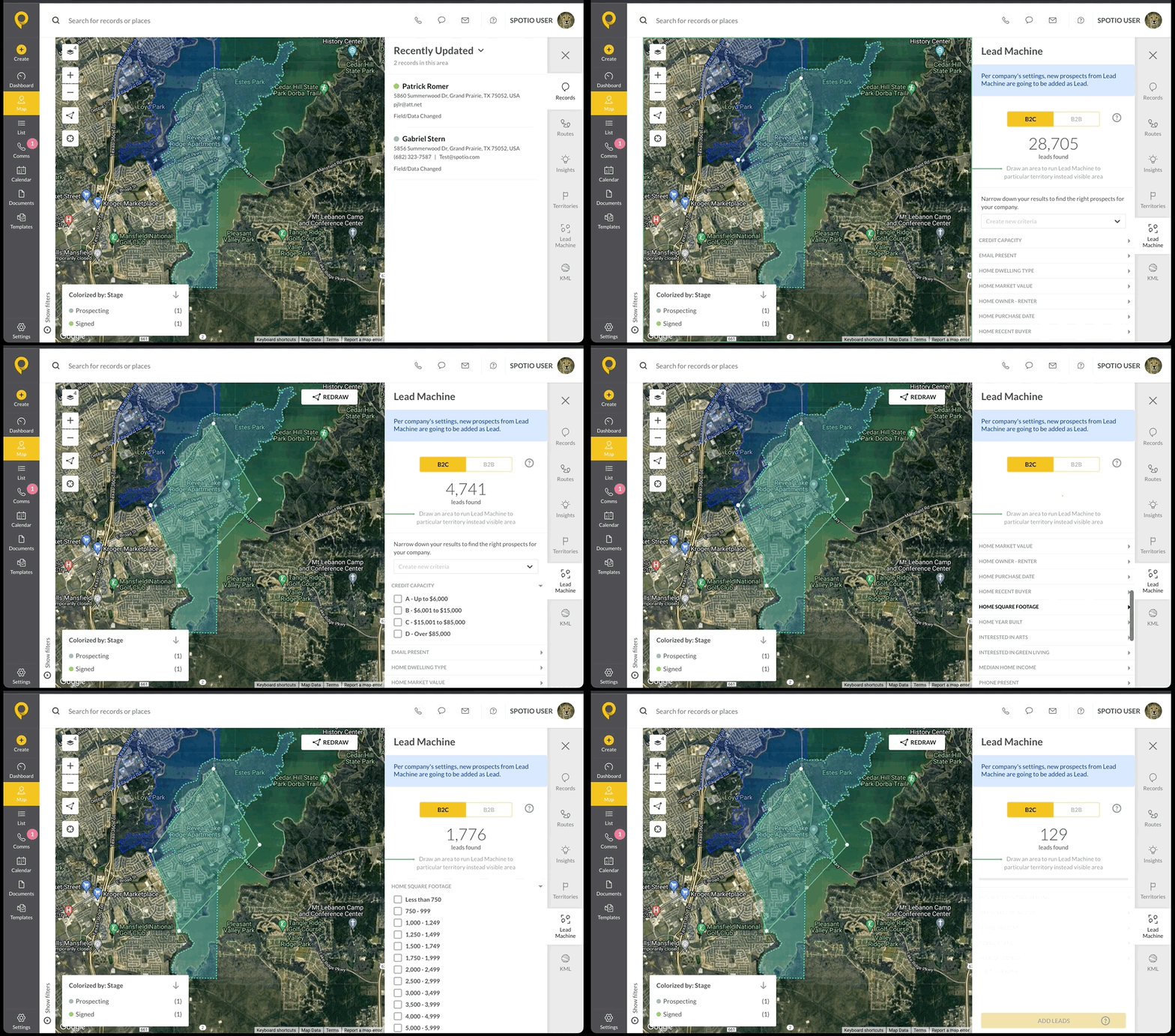
SPOTIO's Lead Machine filters homeowners by up to 15 demographic criteria for B2C teams, while Google Places integration provides business listings for B2B teams. This dual-market coverage is useful, but Google Places results are capped at 20 per search, and SPOTIO's B2B prospecting data doesn't include buyer intent, technographic profiles, or verified contact information beyond what Google publishes.
Source: SPOTIO
For B2C teams selling pest control or solar to homeowners, these prospecting tools are usually sufficient. For B2B field sales teams selling to businesses, the intelligence gap is real. Knowing that a company exists at an address is not the same as knowing who the decision-makers are, what technology they use, whether they're actively researching solutions, or when they last received funding.
ZoomInfo fills this gap at a different scale. The platform's 500M contacts and 100M companies include 120M direct-dial phone numbers, 200M+ verified business email addresses, and technographic profiles across 30,000+ technologies at 30+ million companies. Buyer Intent data tracks signals from 210 million IP-to-Organization pairings, telling you which companies are actively researching solutions before your rep walks through the door.
For a B2B field sales team, this changes the daily workflow. Instead of a rep pulling into a parking lot and checking Google Places for nearby businesses, they start the day knowing which accounts in their territory show buying signals, who the decision-makers are, what their direct phone numbers are, and what technology they currently use. The field execution tool (SalesRabbit or SPOTIO) handles where to go and what happened. ZoomInfo handles who matters and why.
"ZoomInfo gives us the information we need to execute. We don't have to go through and spend our time digging. It's already there, so we can be three steps ahead." (Vensure)
AI takes three different directions
Each platform applies AI to a different problem.
SalesRabbit's DataGrid AI is a machine learning system built to recognize patterns and forecast buyer behavior, not a conversational AI or language model. It takes a company's historical customer data and runs it against 280 million individual records with 600+ data points per person to generate buyer propensity scores at the individual home level. The model improves over time and only uses a company's data for training if explicitly permitted. For residential canvassing, this is the most useful application of AI: answering "which doors should I knock?" before the rep leaves the truck.
Source: SalesRabbit
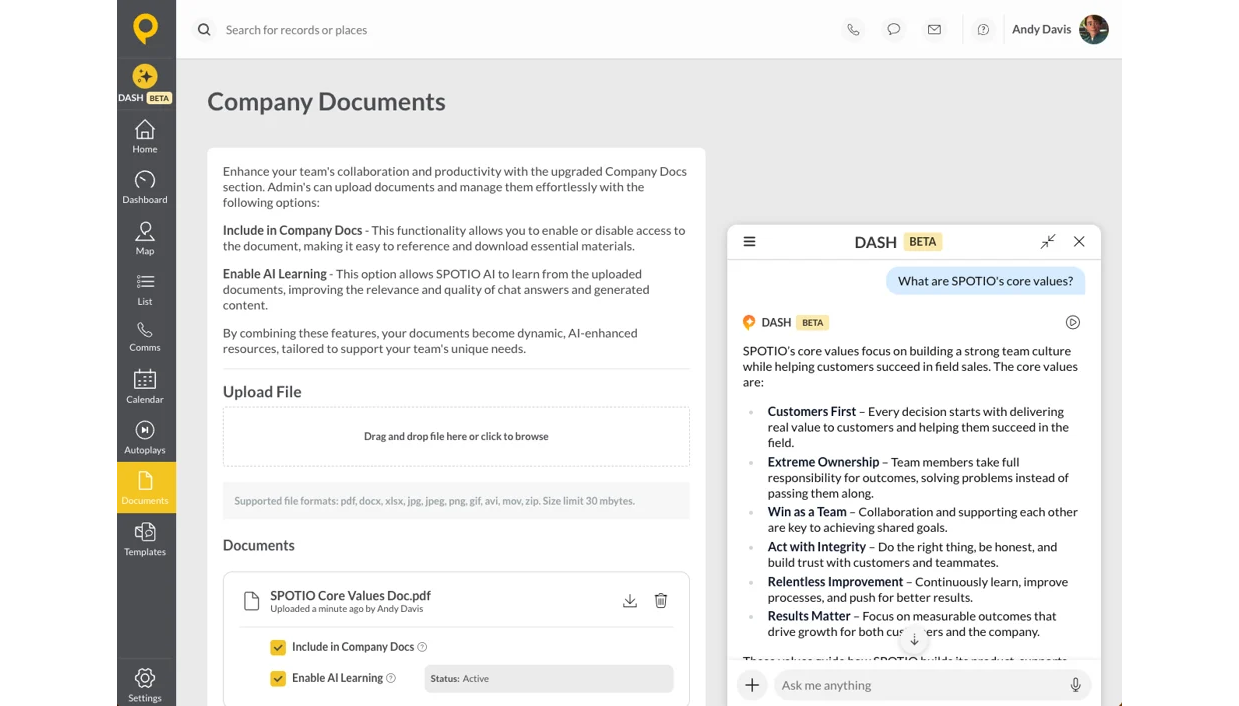
SPOTIO's DASH AI is a four-component co-pilot built for reps in the field. DASH IQ answers product questions from uploaded company documents. DASH Actions converts spoken requests into completed tasks (a rep says "log a visit with Bob Smith and schedule follow-up Tuesday" and DASH executes after confirmation). DASH Go is a voice-first mode for reps driving between stops. DASH Connect links to external LLMs like Claude and ChatGPT so managers can query SPOTIO data through their preferred AI. Every write action follows an Always Human-Approved principle: nothing saves without explicit confirmation. The limitation: DASH requires an active internet connection, so reps in low-coverage areas lose access.
Source: SPOTIO
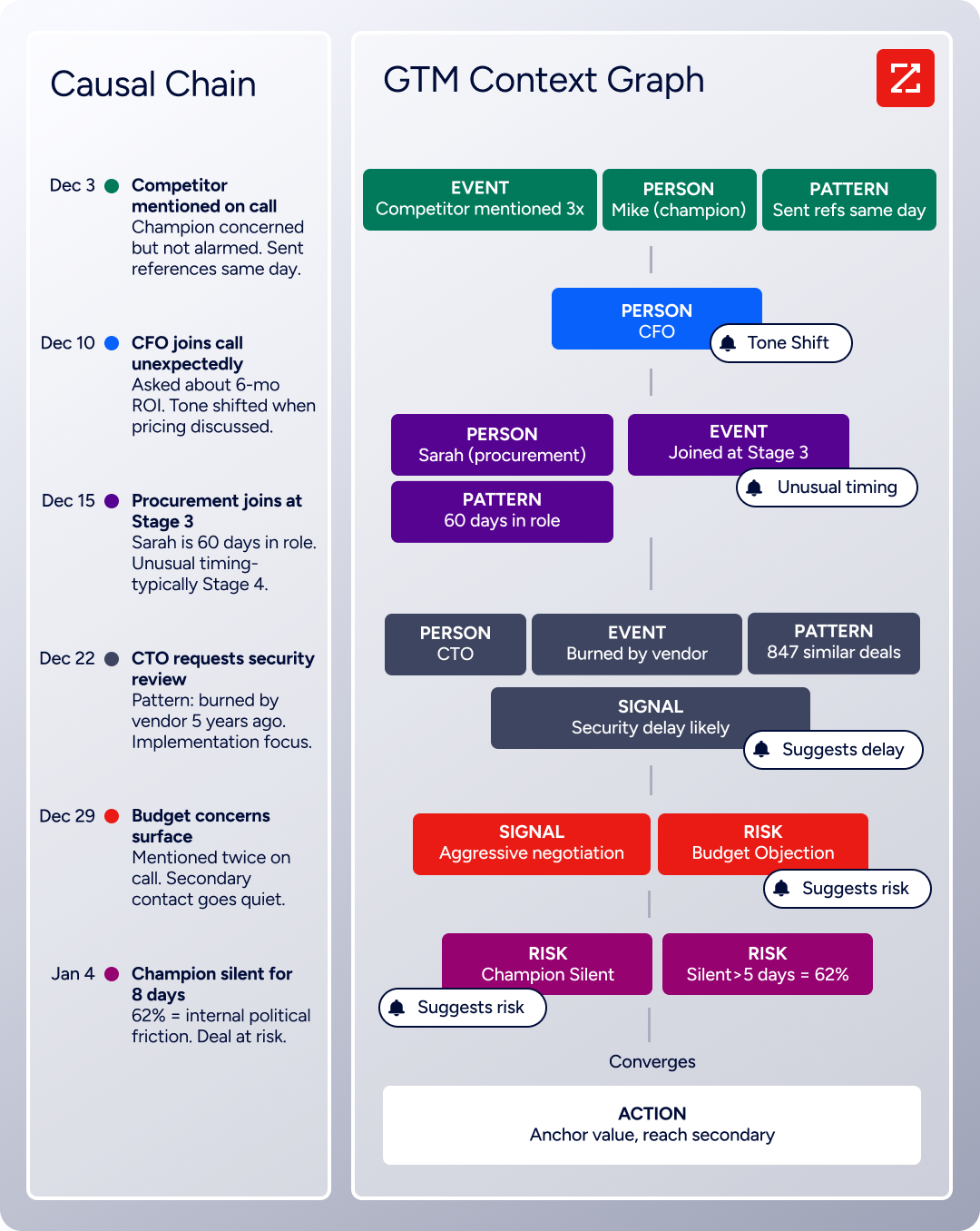
ZoomInfo's GTM Context Graph operates at a different layer. Rather than scoring homes or automating field tasks, it combines ZoomInfo's B2B data with a customer's CRM records, conversation transcripts, and behavioral signals to capture not just what happened, but why it happened. A CRM might record that a deal moved from Stage 3 to Stage 4. The GTM Context Graph surfaces that executive sponsorship entering at this stage, combined with ROI-focused questions on the last call, matches the pattern behind closed-won deals in your segment. This intelligence feeds into GTM Workspace, where AI agents draft outreach based on account context, and into GTM Studio, where marketers target accounts that match proven win patterns.
"That combination of our internal CRM data, external signals, and AI that's given all that context has helped us craft very specific account- and persona-based messages. And people have responded to them right away." (Seismic)
The three AIs answer different questions. DataGrid AI asks: "Which doors should my reps knock?" DASH AI asks: "How can my reps work faster in the field?" ZoomInfo asks: "Which accounts should my team prioritize, and what should they say when they get there?" For B2B field sales, the three work together: ZoomInfo identifies the right accounts, SPOTIO or SalesRabbit gets reps there efficiently, and the field visit converts at a higher rate because the rep walked in prepared.
Gamification and rep motivation
Field sales has a structural motivation problem. Reps work alone, far from the energy of an office floor. Both SalesRabbit and SPOTIO address this in different ways.
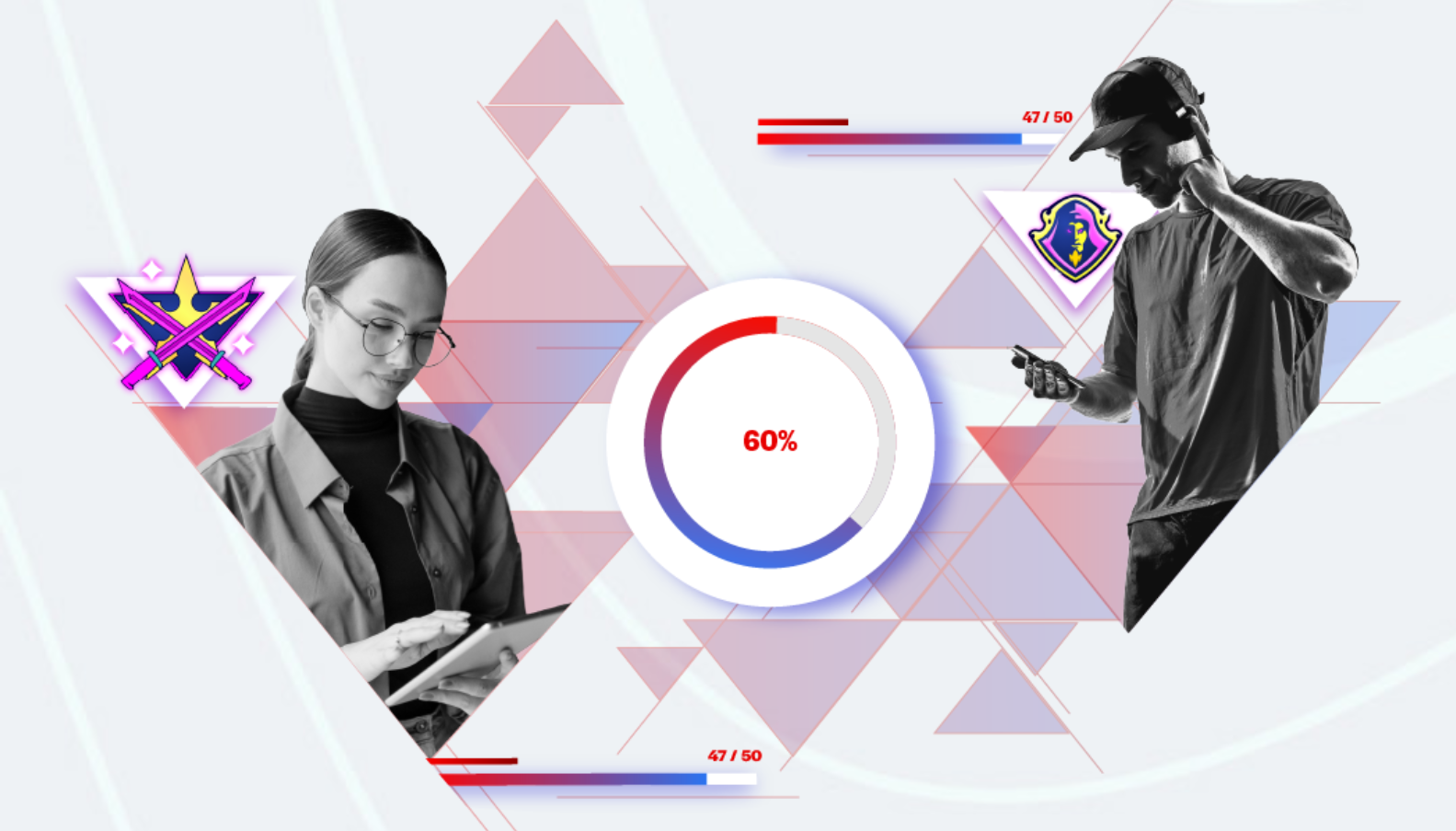
SalesRabbit's Amplify is built natively into the platform across three tiers: Analytics (dashboards, leaderboards, TV displays), Gamification (competitions, XP levels, achievements, a rewards store), and Coaching (structured one-on-one sessions, Enterprise only). The system ties XP earnings directly to KPIs managers already track (knocks, appointments, close rate), so no separate data entry is needed.
Source: SalesRabbit
Amplify includes features uncommon in field sales software: a Bartle Player-Type framework to categorize reps by motivation style, secret achievements that reps discover by hitting unannounced thresholds, and a Prestige system that lets top performers restart their rank progression (borrowed from video game design).
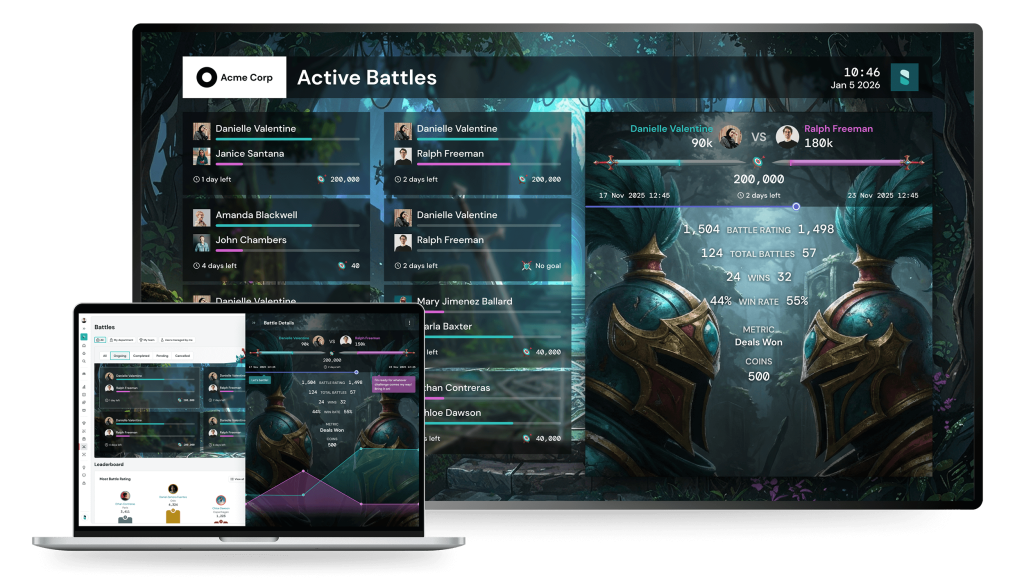
SPOTIO's gamification runs through a native integration with SalesScreen. Managers launch Competitions tied to live SPOTIO field data, reps create their own head-to-head Battles without manager involvement, and Missions break monthly targets into daily milestones. A Reward Shop lets reps redeem earned coins for gift cards and merchandise.
Source: SPOTIO
SPOTIO's Leaderboards are flexible: any custom report can be converted into a leaderboard, so teams rank on whatever KPI matters most, not just preset metrics.
Both approaches work. Amplify is more native, with player-type psychology and coaching tools built in. SPOTIO's SalesScreen integration is flexible and feeds from GPS-verified data, meaning competition scores reflect what reps actually did.
Activity tracking and rep accountability
Knowing what reps do in the field is the operational foundation of both platforms, but their methods differ.
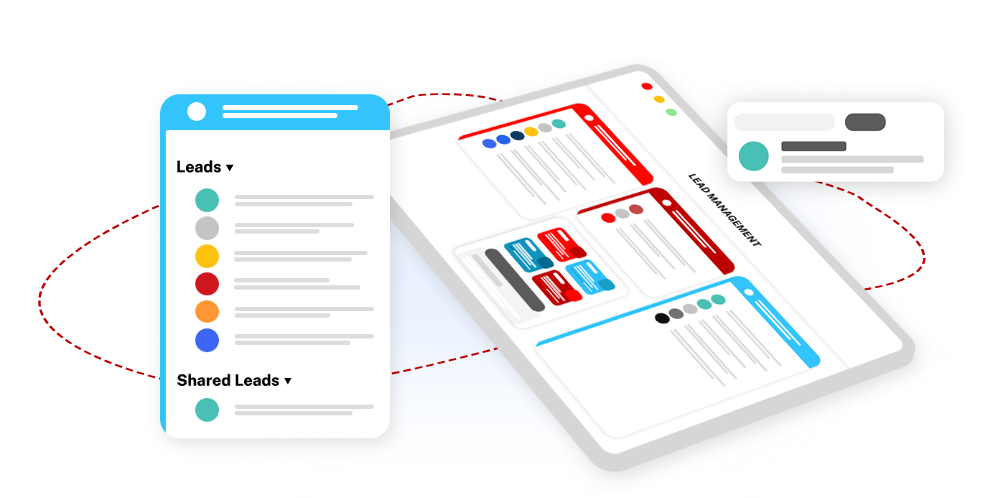
SalesRabbit tracks rep activity through pin-based lead disposition. Reps drop a pin at a prospect's residence, assign a lead status, and move to the next door. Managers can view previous canvassing results and follow up on missed leads from prior campaigns. GPS-based rep location tracking is available through Amplify Analytics, showing rep progress through territories in real time.
Source: SalesRabbit
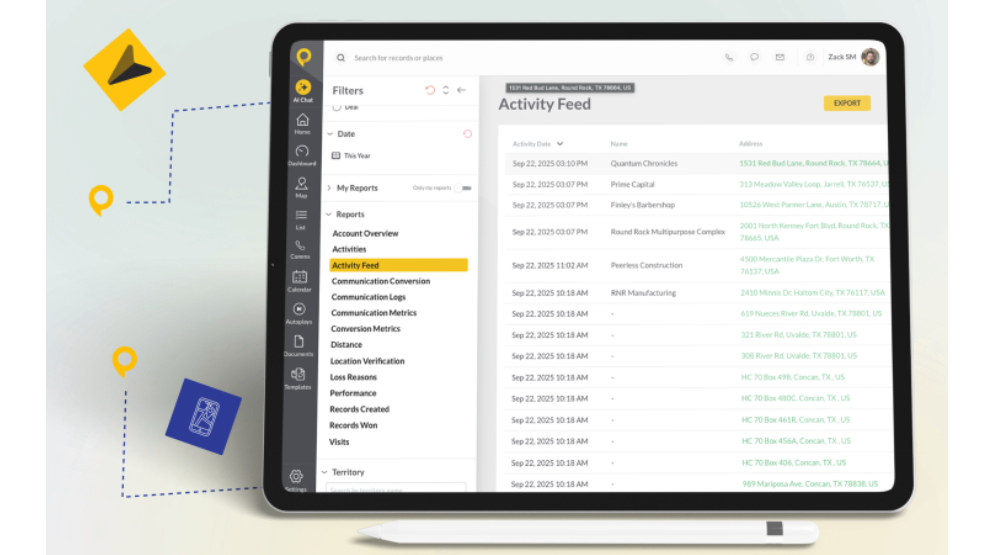
SPOTIO goes further with two capture mechanisms. Reps can log activities with one tap, but the platform also uses Autovisits, a 100-meter geo-fence that starts a visit clock when a rep enters the radius and stops it when they leave. GPS Trails ping a rep's location every 30 to 60 seconds, stitching pings into a visible route trail on the manager's map. Managers can view GPS trails for up to 10 reps simultaneously. This dual capture model (manual plus automated) means visit data gets recorded even when reps are too busy to log manually.
Source: SPOTIO
For organizations where rep accountability is the primary concern (the manager's question is "are my reps actually visiting the accounts they claim?"), SPOTIO's Autovisit and GPS Trail system is the more complete answer.
Vertical-specific features set SalesRabbit apart for roofing
SalesRabbit has invested heavily in roofing and storm restoration, creating the most complete vertical offering among field sales platforms.
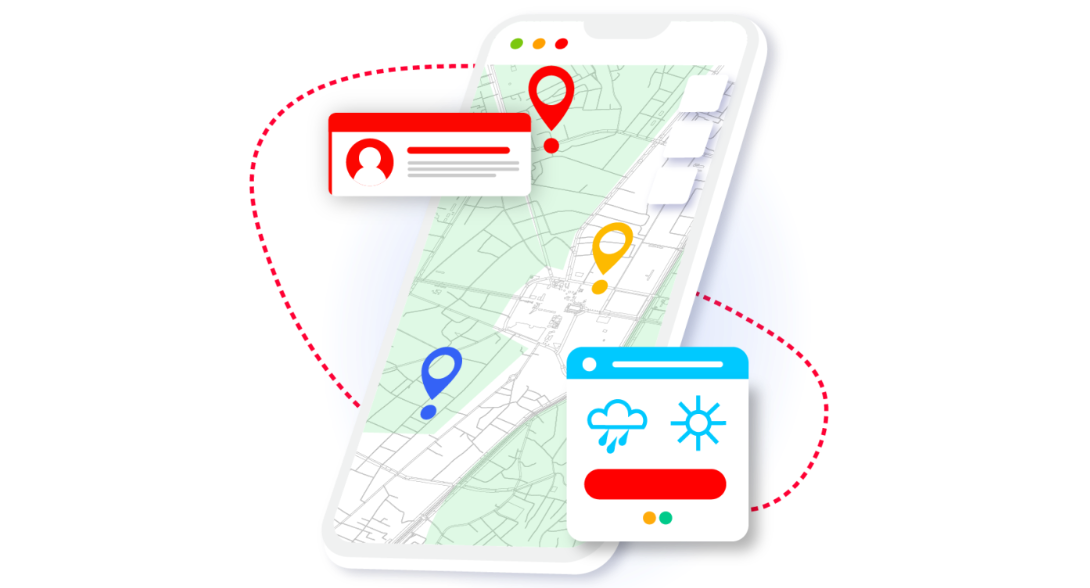
Weather overlays powered by Verisk give roofing teams access to the same data that insurance adjusters use when processing claims. Reps can view four storm map types (hail size, hail probability, hurricane, wind gusts) with two years of historical data. The Storm Finder tool lets reps specify a radius and filter by severity. Forensic weather reports powered by Verisk are returned in seconds and saved directly to the lead record as a PDF.
Source: SalesRabbit
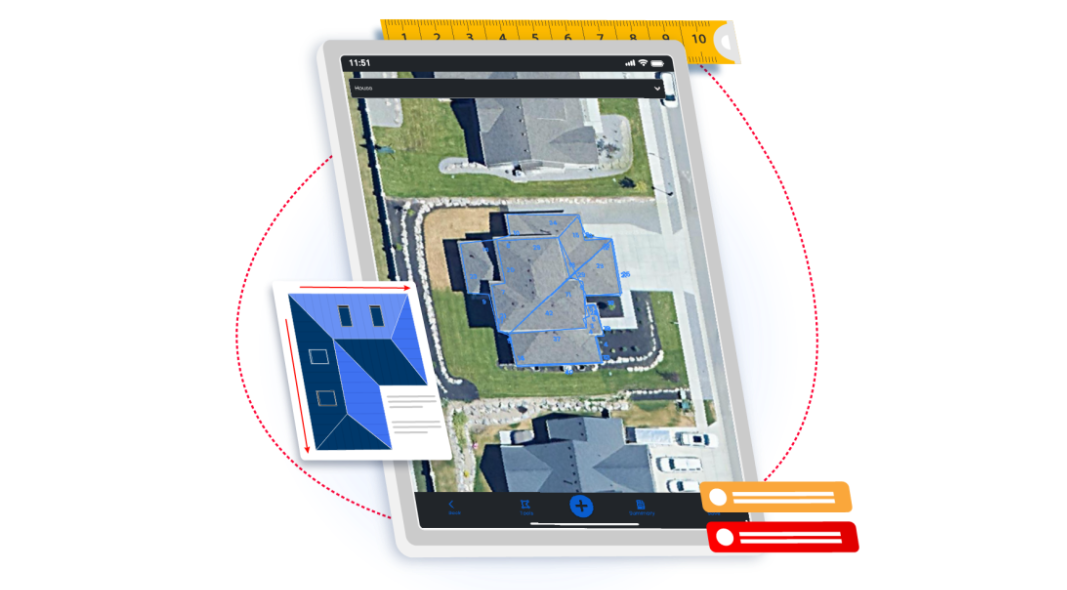
RoofLink, the dedicated roofing CRM, handles the full job lifecycle from measurement to payment. Its built-in satellite roof measuring tool is included in the subscription with no per-report fees, eliminating the $15-$30 per-report cost of third-party services like EagleView. Reps build Good-Better-Best estimates with real-time gross profit calculations and process payments via Stripe-integrated ACH and credit card processing. The SRRL bundle at $160/user/month combines RoofLink with SalesRabbit Pro, DataGrid AI, Weather, and Digital Contracts.
Source: SalesRabbit
SPOTIO serves roofing teams too, with storm damage data overlays and integrations with AccuLynx and JobNimbus. But SPOTIO doesn't offer built-in roof measurement, estimation, or payment processing. For dedicated roofing companies, SalesRabbit's vertical depth is a clear advantage. For companies that do roofing alongside other field sales activities and need a broader platform, SPOTIO's generalist approach offers more flexibility.
Source: SPOTIO
Pricing reveals who each platform is built for
The pricing structures reveal the target markets.
SalesRabbit publishes its pricing. The Pro plan (the popular tier) runs $49/user/month billed annually or $75/user/month billed monthly. The Team plan is $59/user/month (monthly billing) with fewer features. Add-ons stack on top: DataGrid AI at $19/user/month, Digital Contracts at $13/user/month, Weather at $19/user/month, and Mover Leads at $13/user/month (all annual pricing). A fully loaded Pro seat with DataGrid AI and Digital Contracts runs about $81/user/month annually. There's a free SalesRabbit Lite tier for individual users, but no free trial of paid plans. A mandatory implementation fee applies to all new accounts, though the amount varies.
SPOTIO does not publish pricing. All quotes require a demo. The minimum commitment is 25 licenses, with quarterly or annual billing. A "User Commitment" is set at contract time, meaning you pay for the committed number of licenses regardless of actual usage. Add-ons (Engagement Bundle, Lead Machine, E-Contracts, DASH AI) carry separate costs, also not published. All fees are non-refundable. There is no free trial, though SPOTIO offers pilot programs for qualified prospects.
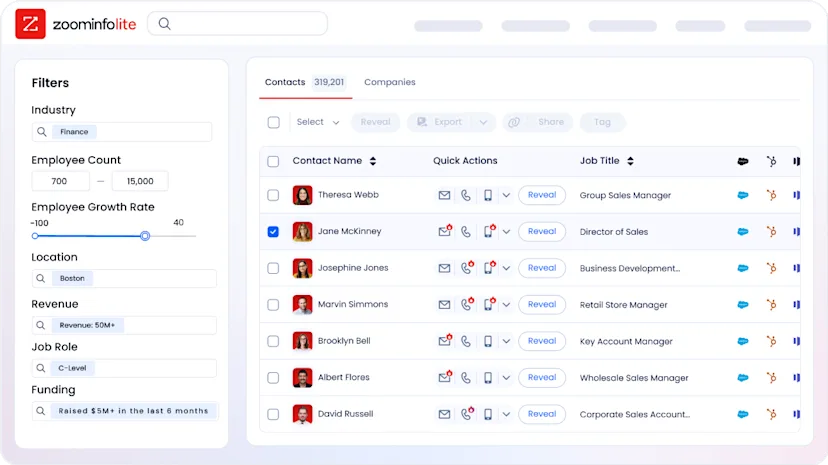
ZoomInfo uses consumption-based pricing that scales with data access, API consumption, and AI activity. Prices are not published, but ZoomInfo offers two free entry points: ZoomInfo Lite (a permanent free tier with access to the B2B database, 10 monthly export credits, and basic features) and a 7-day free trial of paid plans. API access is included in all relevant plans.
The pricing models mirror the buyer profiles. SalesRabbit's transparent, modular pricing works for a 15-person pest control team that needs to calculate cost per seat before buying. SPOTIO's enterprise sales motion fits the 100-rep telecom organization with procurement processes and negotiation capacity. ZoomInfo's consumption model scales from a solo SDR using Lite to a Fortune 500 enterprise with thousands of API calls per day.
Integration and CRM strategy
How each platform connects to the broader sales stack reflects an architectural choice.
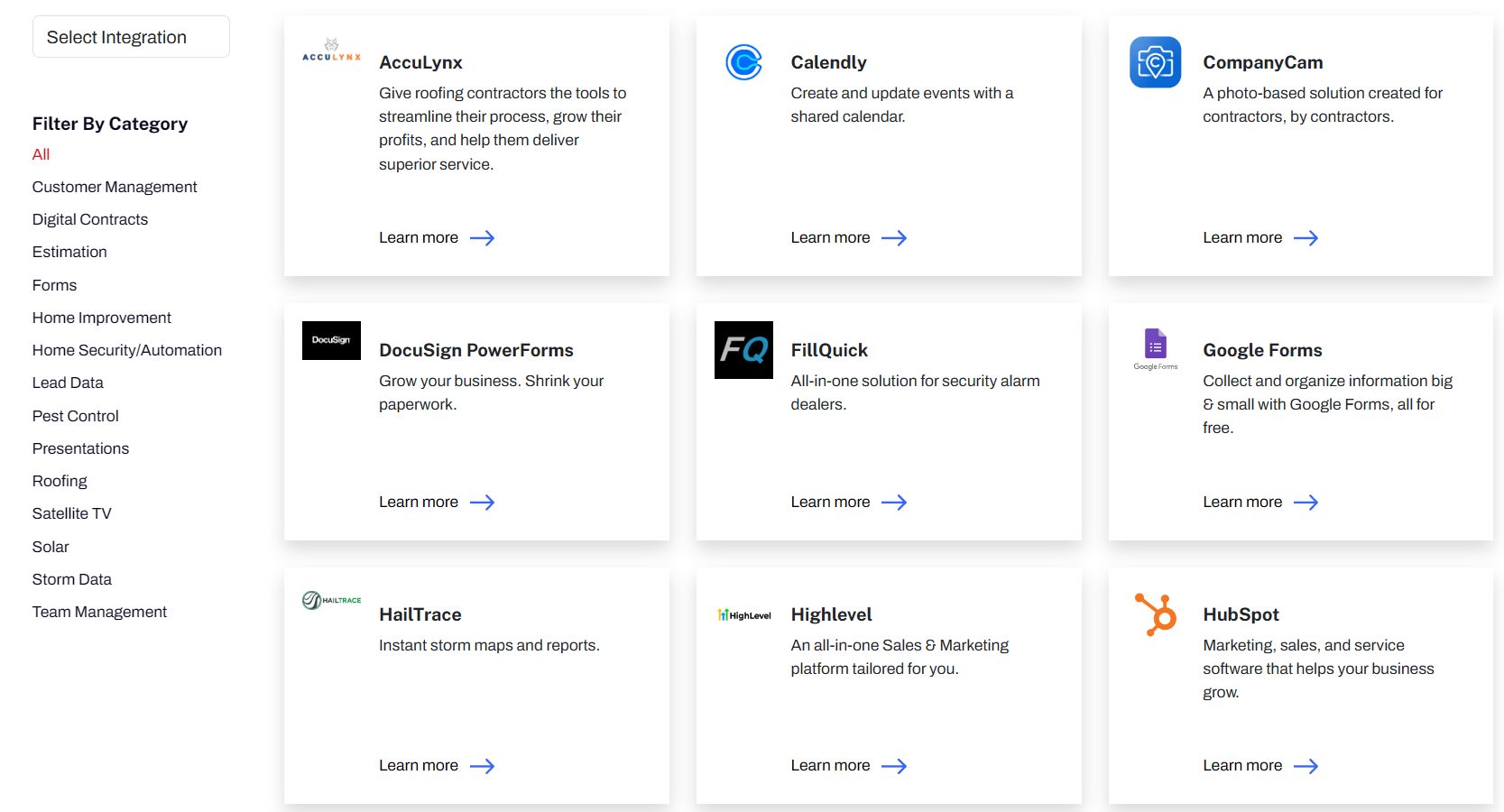
SalesRabbit is designed to be the primary system for field sales teams. It integrates with Salesforce, HubSpot, Zoho, Pipedrive, and HighLevel, plus industry-specific tools like AccuLynx, JobNimbus, PestPac, and GoodLeap. Its REST API processes more than 147 million requests per month. For many SalesRabbit customers (especially smaller residential teams), the platform is the CRM. For larger organizations, it syncs with an existing CRM but the field work lives in SalesRabbit.
Source: SalesRabbit
SPOTIO positions itself as enhancing an existing enterprise CRM rather than replacing it. The native Salesforce integration is thorough: bidirectional sync with field-level rules, user provisioning from Salesforce roles, activity sync, and sandbox testing. HubSpot, Dynamics, and Zoho connect through Zapier, which works but carries higher latency and less customization than native integration. SPOTIO also supports webhooks with HMAC-SHA256 signed requests.
Source: SPOTIO
ZoomInfo connects to the full sales and marketing stack. The App Marketplace lists 120+ partner integrations spanning CRM, marketing automation, sales engagement, and data warehouses. Featured integrations include Salesforce, HubSpot, Microsoft Dynamics 365, Snowflake, and Salesloft. For teams building custom workflows, the Enterprise API and MCP server expose ZoomInfo's data to any AI agent or third-party application. The MCP server currently supports Claude and ChatGPT, enabling natural-language queries against ZoomInfo data without logging into the platform.
"The plug-and-play aspect of the API means I can integrate it very easily into any process and get information at a moment's notice." (BDO Canada)
For B2B field sales teams, the integration picture is straightforward: ZoomInfo feeds intelligence into your CRM, your CRM syncs with your field execution tool, and reps walk into every meeting knowing who they're talking to and why.
Security and compliance
For enterprise buyers, security certifications are a procurement checkbox that can make or break a deal.
SPOTIO leads between the two field sales platforms with SOC 2 Type II certification covering all five Trust Services Criteria, GDPR compliance with EU data center options, TLS 1.2+ encryption in transit, and SSO via SAML 2.0 and SCIM 2.0 with support for Microsoft Entra ID, Okta, and others. The platform is hosted on Microsoft Azure with multi-region redundancy and a published 99.9% uptime SLA.
SalesRabbit states that all data and network communications are encrypted and that user access is limited with systems in separate network spaces. Enterprise features include IP Security, Two-Factor Authentication, and SSO supporting Active Directory, Azure AD, Google Workspace, and OpenID Connect. The privacy policy addresses GDPR and CCPA. However, SalesRabbit has not publicly disclosed SOC 2, ISO 27001, or other third-party security certifications.
ZoomInfo holds the broadest certification stack: ISO 27001, ISO 27701, SOC 2 Type II, TRUSTe GDPR, and TRUSTe CCPA certifications, all renewed annually. The company is a registered data broker in California and Vermont and maintains a dedicated Trust Center.
For regulated industries like financial services and healthcare, where B2B field sales teams often operate, SPOTIO's SOC 2 and ZoomInfo's full certification stack meet procurement requirements that SalesRabbit's current public certifications may not.
SalesRabbit vs. SPOTIO vs. ZoomInfo: Which should you choose?
The right combination depends on what your field team sells and how they sell it.
Choose SalesRabbit if:
Your reps canvass residential neighborhoods door-to-door
You sell home services (roofing, solar, pest control, HVAC, telecom)
You need vertical-specific tools like weather overlays, storm reports, or roof measurement
Your team is under 25 reps and needs transparent, modular pricing
Native gamification and rep motivation tools are a priority
Choose SPOTIO if:
Your team runs structured B2B or B2C outside sales with 25+ reps
GPS-verified activity tracking and rep accountability are primary requirements
You need Salesforce integration for your existing CRM investment
Enterprise security (SOC 2 Type II) and compliance are procurement requirements
AI-powered voice logging and in-field workflow automation matter to your reps
Add ZoomInfo if:
Your field team sells B2B and needs to know which accounts are worth visiting
You want verified contact data (direct dials, business emails) for decision-makers before the visit
Intent signals that reveal which companies are actively researching solutions would change how you prioritize your day
You need to build targeted prospect lists by company attributes, technographics, or buying signals
Your organization wants one intelligence source that works across your CRM, field sales tool, and any AI agent
Start with ZoomInfo Lite for free or request a demo of the full platform.
SalesRabbit and SPOTIO both solve the field execution problem well, from different angles. SalesRabbit goes deeper for residential D2D teams, with the richest canvassing workflow and the most complete roofing vertical. SPOTIO goes wider for structured outside sales organizations, with GPS-verified accountability, enterprise CRM integration, and AI-powered field assistance.
But for B2B field sales teams, the biggest improvement often isn't a better field execution tool. It's better intelligence about which accounts deserve a visit. ZoomInfo provides that intelligence at a scale neither field platform matches, with intent signals and AI that reveals why deals move. Pair it with whichever execution platform fits your workflow, and your reps walk into every meeting knowing who matters and why.
"It's not just the data itself. It's more about the right data at the right time to help us reach out with the right message across that full buyer journey." (Redwood Logistics)
SalesRabbit vs. SPOTIO vs. ZoomInfo FAQ
What is the core difference between SalesRabbit, SPOTIO, and ZoomInfo?
SalesRabbit is a field sales platform built for residential door-to-door canvassing, with specialized tools for roofing, solar, and home services. SPOTIO is a field sales execution platform for both B2B and B2C outside sales teams, emphasizing GPS-verified activity tracking and enterprise CRM integration. ZoomInfo is a B2B intelligence platform providing contact data, company intelligence, and buyer intent signals. SalesRabbit and SPOTIO handle field execution (where to go, what happened). ZoomInfo handles intelligence (who to target and why).
Which platform is best for a small residential door-to-door team?
SalesRabbit. It has no minimum license requirement, offers transparent pricing starting at $49/user/month (annual), and its entire workflow is built around residential canvassing. The free SalesRabbit Lite tier lets individual reps try core features before committing. SPOTIO's 25-license minimum and enterprise pricing exclude smaller teams.
Can I use ZoomInfo alongside SalesRabbit or SPOTIO?
Yes. ZoomInfo complements both field sales platforms rather than replacing them. ZoomInfo provides the B2B intelligence (verified contacts, intent signals, company data) that feeds into your CRM, while SalesRabbit or SPOTIO handles field execution (territory management, routing, activity tracking). Both SalesRabbit and SPOTIO integrate with CRMs that ZoomInfo also connects to, like Salesforce and HubSpot.
Which platform has better AI capabilities?
Each applies AI to a different problem. SalesRabbit's DataGrid AI scores residential addresses by buyer propensity using 1,700+ variables. SPOTIO's DASH AI is a conversational co-pilot that lets reps log visits by voice, prep accounts in seconds, and execute multi-step workflows from a single command. ZoomInfo's GTM Context Graph processes 1.5 billion data points daily to reveal why deals move or stall, powering AI agents that draft outreach and prioritize accounts based on actual buying patterns.
How does pricing compare across the three platforms?
SalesRabbit is the most transparent: Pro plan at $49/user/month (annual) plus add-ons. A fully loaded seat runs roughly $81/user/month. SPOTIO does not publish pricing, requires a 25-license minimum, and quotes are custom. ZoomInfo uses consumption-based pricing but offers a permanent free tier (ZoomInfo Lite) and a 7-day free trial. All three charge separately for advanced features and add-ons.
Which platform offers the best rep accountability features?
SPOTIO has the most complete accountability system. Its Autovisits feature uses a 100-meter geo-fence to capture visit duration automatically without rep input, GPS Trails stitch location pings into visible route lines, and managers can view trails for up to 10 reps simultaneously. SalesRabbit tracks rep location through Amplify Analytics and lead pin activity but relies more on manual logging than automated capture.
Which platform has better security certifications?
ZoomInfo leads with ISO 27001, ISO 27701, SOC 2 Type II, TRUSTe GDPR, and TRUSTe CCPA certifications, all renewed annually. SPOTIO holds SOC 2 Type II certification covering all five Trust Services Criteria and supports SSO via SAML 2.0 and SCIM 2.0. SalesRabbit describes encryption and access controls but has not publicly disclosed SOC 2 or ISO certifications.
Which platform is best for roofing companies specifically?
SalesRabbit offers the most complete roofing vertical. RoofLink provides built-in satellite roof measurement (no per-report fees), Good-Better-Best estimating, integrated material ordering through SRS Distribution, and in-app payment processing via Stripe. Verisk-powered weather overlays show storm damage data that insurance adjusters use. The SRRL bundle at $160/user/month combines field sales, roofing CRM, weather data, and digital contracts in one package.
Comparing SalesRabbit and SPOTIO? These related breakdowns go deeper:
