
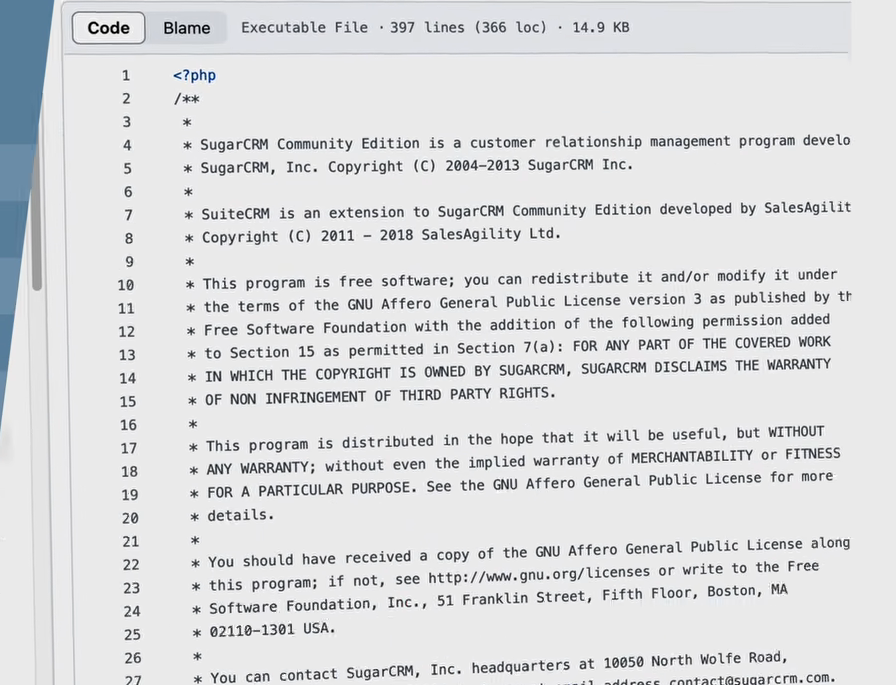
SugarCRM and SuiteCRM share a common ancestor. In 2004, SugarCRM launched as an open-source CRM. In 2013, it abandoned its open-source Community Edition to go fully commercial. SalesAgility, a Scottish software firm, forked that abandoned code and released SuiteCRM as a free, open-source continuation.
Today they've evolved into different products for different buyers. Choosing between them comes down to a few direct questions:
Do you need AI-powered sales guidance built into your CRM, or is a traditional feature set enough?
Is ERP integration a core requirement, or do you primarily need standard CRM capabilities?
Are you willing to pay $59–$135 per user per month (with a 15-user minimum), or do you need a CRM with zero license fees?
Does your team have the technical resources to manage a self-hosted deployment, or do you need a managed platform?
How important is data sovereignty and full source-code ownership to your organization?
In short, here's what we recommend:
SugarCRM (now rebranding as SugarAI) serves B2B sales teams in manufacturing, wholesale, and distribution that need their CRM connected to ERP data. Its Sugar sales-i module analyzes ERP order history to surface cross-sell opportunities, churn risks, and buying pattern shifts that manual CRM updating would never reveal. Six consecutive years as a Nucleus Research Leader and recognition as an IDC MarketScape Leader in Sales Intelligence back up the positioning. However, the 15-user minimum creates a $10,620/year floor, the interface draws frequent criticism for feeling dated, and the mobile app lags behind the desktop experience.
SuiteCRM is the leading open-source CRM, used by over 5 million users worldwide. Every feature (workflow automation, API access, reporting) ships in the free base build with no per-seat charges. Organizations can self-host, deploy to any cloud, or use SuiteCRM's managed hosting from £130/month. For organizations that need data sovereignty, complete source-code ownership, or refuse to pay Salesforce-level prices, SuiteCRM delivers comparable functionality at a fraction of the cost. The trade-off: no native AI, a dual-version lifecycle that complicates migration, and self-hosted deployments that require dedicated IT resources.
Both platforms are capable CRM systems, but they share a limitation: they manage the relationships already in your pipeline. Neither solves the upstream problem of finding the right accounts, knowing when they're in-market, or reaching verified decision-makers. That gap is where a different kind of tool enters the picture.
ZoomInfo is a B2B data and GTM platform that provides the prospecting intelligence CRMs depend on but don't generate. With 500M contacts, 100M companies, 135M+ verified phone numbers, and 200M+ verified business email addresses, ZoomInfo feeds your CRM with verified data instead of stale records and guesswork. Its GTM Context Graph combines this data with your CRM records, conversation transcripts, and behavioral signals to reveal not just what happened in a deal, but why. ZoomInfo integrates with Sugar and other major CRMs, so whichever platform you choose, ZoomInfo makes it more effective.
If building a data-driven pipeline sounds like the missing piece in your CRM strategy, see how ZoomInfo works with your existing tools.
SugarCRM vs. SuiteCRM vs. ZoomInfo at a glance
SugarCRM | SuiteCRM | ZoomInfo | |
|---|---|---|---|
Primary function | B2B sales CRM with ERP intelligence | Open-source CRM platform | B2B data intelligence and GTM platform |
Target buyer | Mid-market manufacturers, wholesalers, distributors | Cost-conscious mid-market and enterprises | B2B sales, marketing, and RevOps teams |
AI capabilities | Embedded AI for sales guidance (Advanced+ tiers) | No native AI features | GTM Context Graph, AI agents, intent signals |
ERP integration | 180+ ERP integrations with native sales-i intelligence | Via open API or third-party add-ons | N/A (integrates with CRMs that connect to ERPs) |
Deployment | Cloud (AWS) or on-premises | Self-hosted, any cloud, or managed hosting | Cloud SaaS |
Source code access | No | Full open-source (AGPL) | No |
Data sovereignty | Choose AWS region (AU, DE, UK, US) | Full control (self-hosted) | N/A |
Pricing model | $59–$135/user/month, 15-user min | Free (self-hosted) or managed hosting from £130/month | Custom-quoted, consumption-based |
Free plan | 7-day trial | Permanently free (self-hosted) | ZoomInfo Lite (permanent free tier) |
Best for | ERP-connected B2B sales teams | Organizations needing CRM without license fees | Filling CRM with verified B2B data and intelligence |
They share DNA but serve different masters
SugarCRM and SuiteCRM are related products that have diverged sharply in philosophy.
SugarCRM went commercial, attracted private equity investment from Accel-KKR, and narrowed its focus to B2B manufacturing, wholesale, and distribution.
The April 2026 rebrand to SugarAI signals where the company is heading: AI-powered sales guidance for complex, relationship-driven industries. That vertical focus shows in the product. Sugar sales-i, the ERP intelligence module, serves companies whose sales teams need to see order history, buying patterns, and reorder cycles alongside CRM data.
SuiteCRM went the opposite direction.
Born in October 2013 when SugarCRM abandoned open source, it preserved the code and kept building. The result is a broad CRM that serves multiple verticals (manufacturing, public sector, technology, finance, education, legal, energy, and retail) without specializing in any one. Its value proposition is simple: everything a proprietary CRM does, without the per-seat licensing.
This philosophical split defines every subsequent difference. SugarCRM's commercial model funds AI research, ERP partnerships, and analyst-validated capabilities. SuiteCRM's open-source model funds development through consulting and support engagements, keeping the software free but making advanced support and warranties a paid service.
SugarCRM's ERP intelligence is a genuine differentiator
If your business runs on an ERP system, SugarCRM offers something no other mid-market CRM does natively.
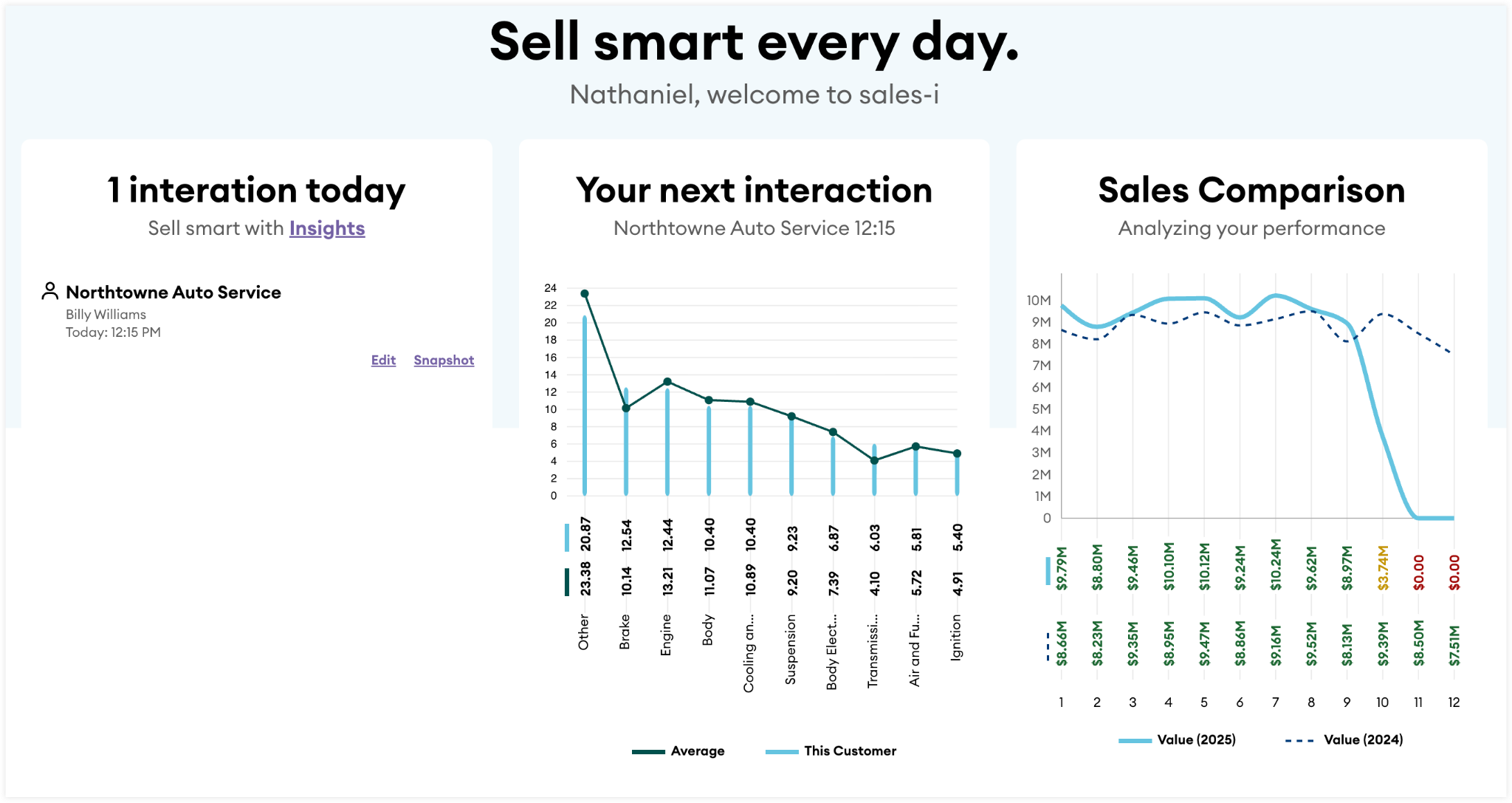
Sugar sales-i connects to your ERP (SAP, Oracle, Epicor, Syspro, Sage, and 180+ others) and pulls transactional data into the CRM. It then analyzes that data with AI to surface buying patterns, cross-sell gaps, and churn risks inside a rep's workflow.
The practical impact: Sugar reads ERP order data and turns it into action. It tells a rep that a customer who normally orders monthly hasn't placed an order in six weeks, or that an account buying Product A has never been offered the related Product B.
Source: SugarCRM
SuiteCRM can connect to ERPs via its open REST API or third-party add-ons, but there's no equivalent native layer analyzing that data. The integration exists; the insight extraction doesn't.
SuiteCRM wins on cost and control
SuiteCRM's financial case is hard to argue with. The software is free to download under an AGPL open-source license. No per-user charges. No feature tiers. No artificial limits on workflow automation, API access, or the number of custom modules.
SuiteCRM's own comparison data shows ongoing costs can typically be reduced by about 80% versus Salesforce, with migration ROI measured in 3–6 months. The same math applies versus SugarCRM. A 50-person sales team on SugarCRM's Standard tier pays $35,400/year in license fees alone. On SuiteCRM's managed hosting, the same team pays roughly £2,160/year for the Business plan with no per-seat costs.
Beyond cost, SuiteCRM offers something no commercial CRM can: complete ownership.
Every line of code is open source. Organizations can inspect, modify, and extend the platform without restriction. For regulated industries and public sector bodies (SuiteCRM is a Crown Commercial Service Supplier in the UK), this level of control isn't a preference; it's a procurement requirement.
Source: SuiteCRM
The catch is real. Self-hosted deployments require technical staff to manage updates, security patches, and infrastructure. Support is sold by the hour (starting at £1,200 for 10 hours), and the free community forum carries no SLA. Organizations without IT resources need either managed hosting or a partner to keep things running.
AI capabilities reveal the commercial vs. open-source divide
This is where the two CRMs diverge most, and where the gap will likely widen.
SugarCRM has bet its future on AI.
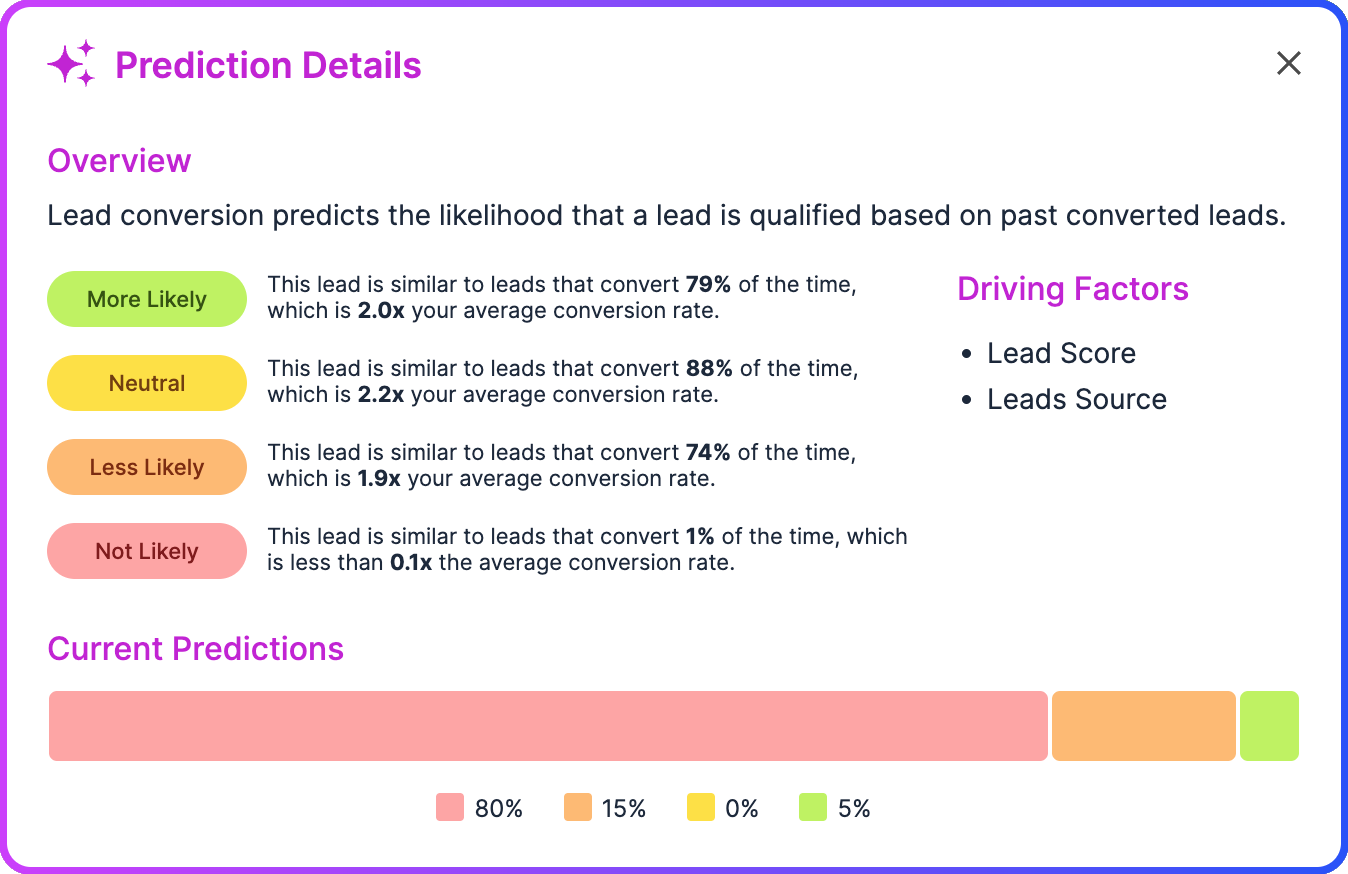
The rebrand to SugarAI isn't cosmetic; a new Chief Product Officer was hired to accelerate AI development. The product already includes lead prioritization, Revenue Intelligence, generative AI, and sentiment analysis on the Advanced and Premier tiers. AI drives Sugar Sell's core proposition: showing which accounts matter most, why, and what to do next.
Source: Sugar AI
SuiteCRM has no native AI features, and none appear on the published roadmap.
The next two releases (8.11 and 8.12) focus on email campaign builders, subscription groups, and reporting improvements. For organizations that don't need AI-driven sales guidance today, this isn't a problem. For those evaluating a CRM they'll use for the next five years, it's worth considering.
The AI gap extends beyond sales guidance. SugarCRM's SugarLive uses AI for call sentiment analysis. Sugar Market includes lead scoring with account-based intelligence. SuiteCRM's workflow engine is capable, but it executes rules you write, not patterns it discovers.
Customization and deployment flexibility
Both platforms are customizable, but through different mechanisms.
SugarCRM offers no-code configuration that lets administrators tailor modules, layouts, and workflows without developers. SugarCRM deploys on SugarCloud (AWS) or on-premises via Sugar Enterprise, with migration between the two supported.
SuiteCRM goes further.
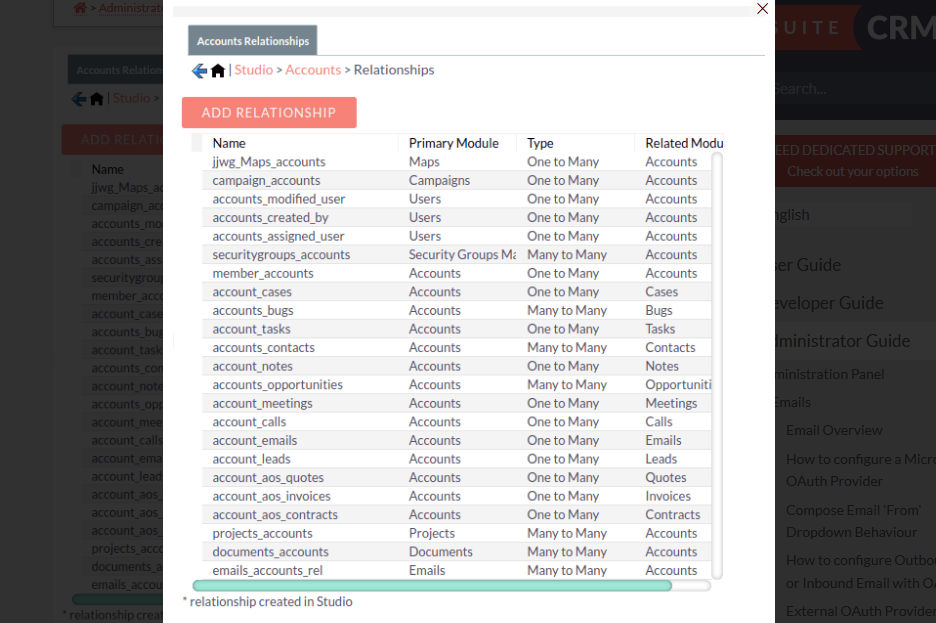
Its Configuration Studio provides drag-and-drop layout editing, custom field creation, and relationship building without code. But because the source code is open, teams can also modify the application at a level SugarCRM doesn't permit, creating new modules via Module Builder and packaging configurations as .zip files for reuse across instances. Deployment is unrestricted: any server, any cloud provider, any region.
Source: SuiteCRM
SuiteCRM also supports over 60 languages with translatable labels manageable from Studio.
For teams that need customization within guardrails, SugarCRM's no-code approach is faster. For teams that need customization without limits, SuiteCRM's open codebase is the only option.
Neither CRM solves the upstream data problem
A CRM manages relationships already in your pipeline. It tracks accounts, logs calls, monitors deal stages, and generates forecasts based on data your team puts into it.
But a CRM doesn't tell you which companies are researching your category right now. It doesn't verify whether the phone number in a contact record still reaches the right person. It doesn't surface that a target account just hired a new VP of Operations who matches your buyer persona. And it doesn't reveal that three companies fitting your ideal customer profile have been reading pricing pages for your competitor's product this week.
This is where ZoomInfo enters the picture, not as a CRM replacement, but as the intelligence layer that makes your CRM effective.
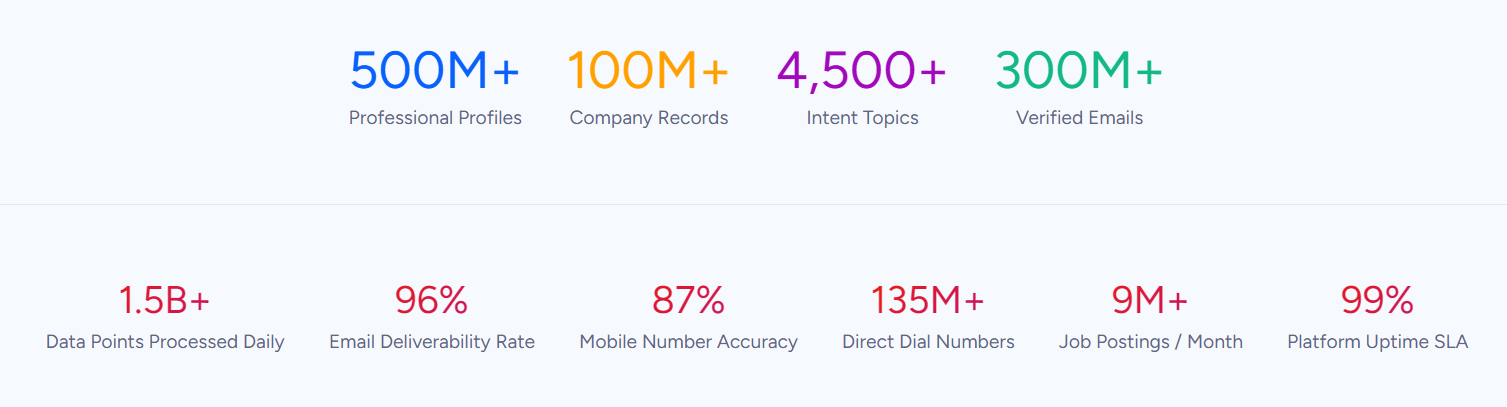
ZoomInfo's GTM Context Graph processes 1.5B+ data points daily, combining your CRM records with third-party intelligence to capture not just what happened in a deal, but why. A CRM records that a deal moved to Stage 3. The Context Graph reveals that executive sponsorship entering at this stage, combined with ROI-focused questions on the last call, matches the pattern behind closed-won deals in your segment.
Source: ZoomInfo
ZoomInfo integrates with Sugar and other major CRMs, so the data flows into whichever system you choose. Your reps search and view data within ZoomInfo, then export verified contacts into their CRM with enriched company data, direct dials, and business emails.
The data advantage holds up to outside scrutiny. In a Fortune 500 competitive RFP analyzing 25 million contacts across vendors, the independent consultant concluded that "no other competitor came even close."
Seismic's sales team attributed 39% of active pipeline to opportunities identified or influenced by ZoomInfo signals, reporting 54% productivity gains and 11.5 hours saved per week per seller. (Seismic)
Pricing models compared
The pricing structures reflect each platform's philosophy.
SugarCRM charges per user, billed annually, across three tiers:
Tier | Price | Min. Annual Cost |
|---|---|---|
Standard | $59/user/month | $10,620 (15 users) |
Advanced | $85/user/month | $15,300 (15 users) |
Premier | $135/user/month | $24,300 (15 users) |
The 15-user minimum blocks smaller teams. AI features (lead prioritization, Revenue Intelligence, generative AI) require Advanced or above, and some need Premier or a separate purchase. Sugar Market and Sugar Serve pricing is not publicly listed.
SuiteCRM separates software cost (zero) from hosting and support costs:
Self-hosted: Free forever. Your costs are infrastructure and IT staff.
Managed hosting: £130–£198/month for Starter and Business plans; Premium and Dedicated are custom-quoted.
Support: £1,200/year for 10 hours (Silver) up to £5,400/year for 50 hours (Platinum). Community forum support is free with no SLA.
SuiteASSURED: From £3,350/year for legal warranties, indemnities, and enterprise SLAs.
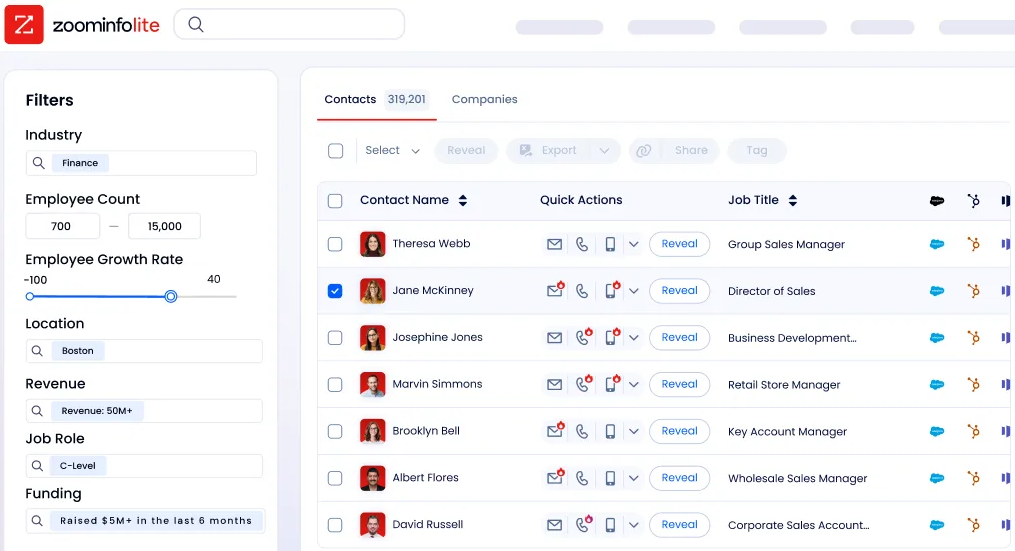
ZoomInfo uses custom-quoted, consumption-based pricing with no published figures. It offers ZoomInfo Lite as a permanent free tier (10 monthly export credits, access to the B2B database, Chrome extension, and HubSpot integration) and a 7-day free trial for full platform access.
Source: ZoomInfo
The cost comparison depends on what you're buying. SugarCRM and SuiteCRM are CRM platforms; their costs cover managing existing relationships. ZoomInfo is an intelligence platform; its cost covers finding and enriching the data that feeds those relationships. Most organizations running a B2B sales operation need both a CRM and a data intelligence layer.
"ZoomInfo gives us the information we need to execute. We don't have to spend our time digging. It's already there, so we can be three steps ahead." — William Kenimer, Vice President of Revenue Operations, Vensure (Vensure)
Support and ecosystem comparison
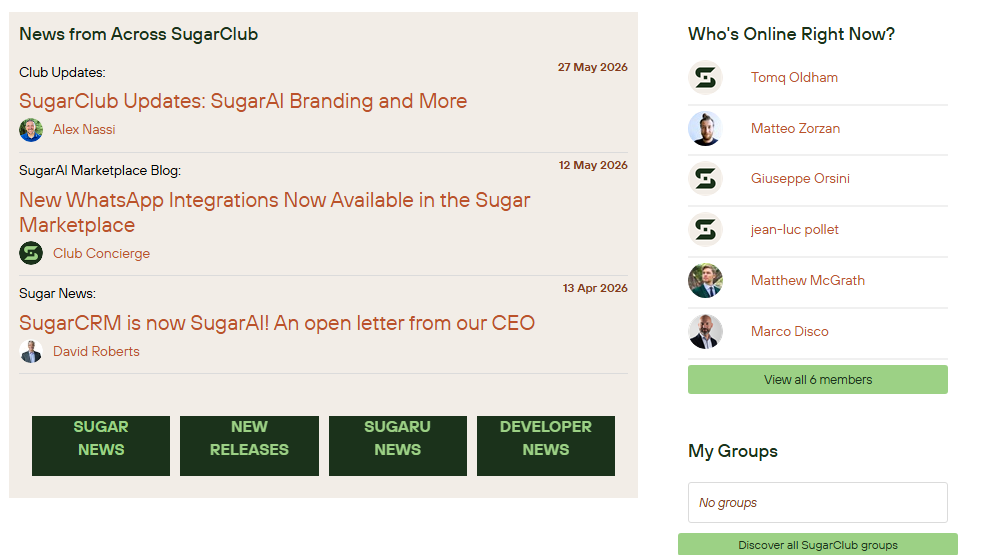
SugarCRM provides three named support tiers: Basic (Standard plan), Standard (Advanced plan), and Enhanced (Premier plan, which adds live chat and priority phone). Support operates across US, EMEA, and APAC regions. The SugarClub community provides forums, training via Sugar University, and a developer hub. The SugarAI Marketplace offers vetted add-ons with a 30-day refund policy.
Source: SugarCRM
SuiteCRM routes free support through its community forum. Paid support starts at £1,200/year for 10 hours, delivered via portal, email, phone, and video. The SuiteCRM Store provides third-party add-ons, though the ecosystem is smaller than SugarCRM's marketplace. Documentation is well-maintained across user, admin, and developer tracks.
ZoomInfo offers support through its Help Center, ZoomInfo University with role-specific learning paths, and the App Marketplace with 172+ integration partners. The company's onboarding program won Rocketlane's Golden Comet award for Best Customer Onboarding Team. Enterprise customers get dedicated service managers.
Source: ZoomInfo
Security and compliance
For regulated industries, both CRMs offer meaningful compliance credentials.
SugarCRM holds SOC 2 Type II, ISO/IEC 27001:2022, GDPR, and CCPA certifications. SugarCloud encrypts data in transit and at rest, uses role-based access control with mandatory MFA, and lets customers choose their AWS data region (Australia, Germany, UK, or US). On-premises deployment via Sugar Enterprise gives full data control for organizations with sovereignty requirements.
SuiteCRM holds ISO 9001 and ISO 27001 certifications and is a Crown Commercial Service Supplier. Self-hosted deployment gives organizations complete control over their data, with no dependency on any vendor's cloud infrastructure. The managed hosting service covers UK GDPR and EU GDPR compliance with data residency options in the UK, Europe, or US.
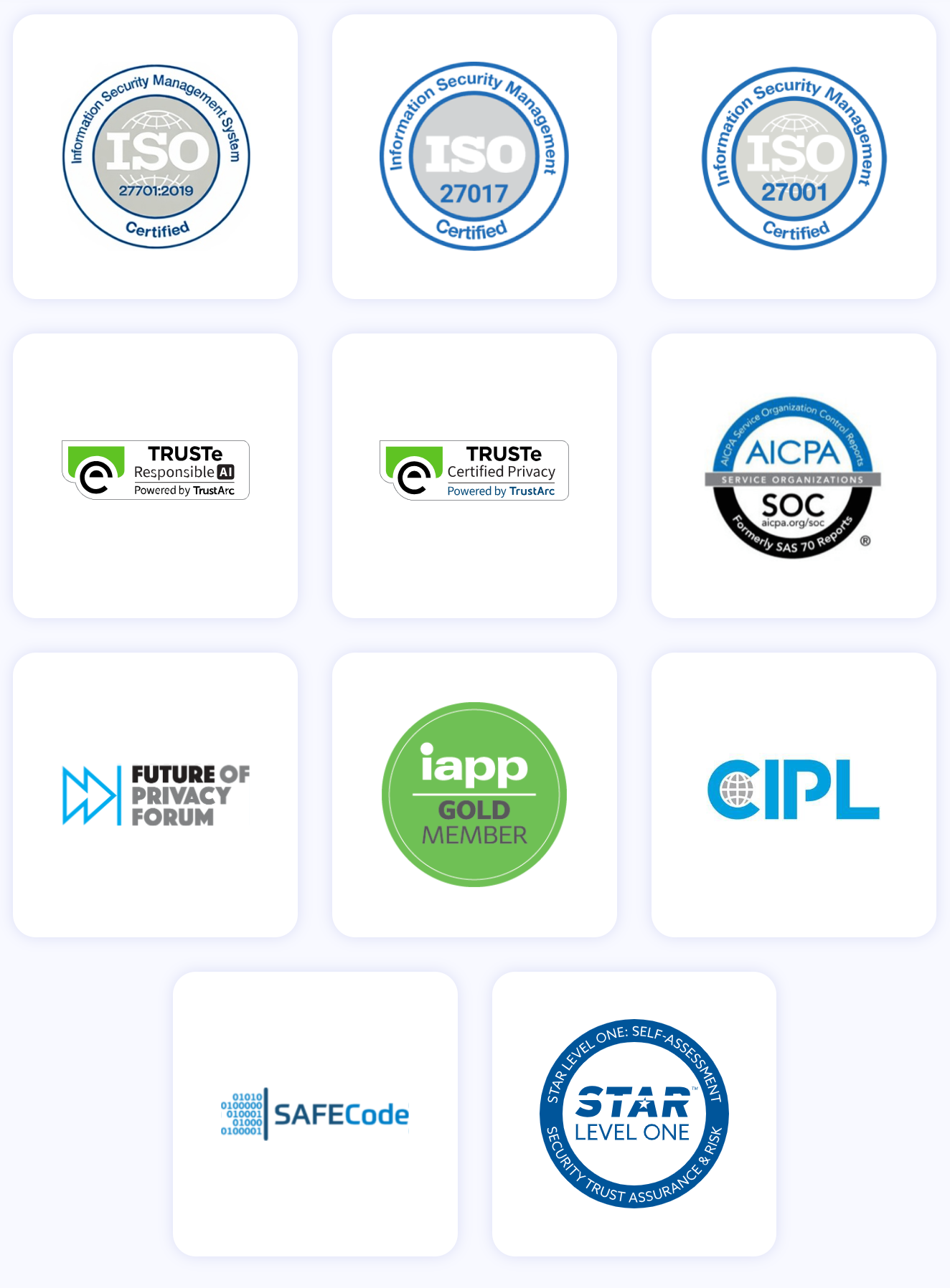
ZoomInfo maintains ISO 27001, ISO 27701, SOC 2 Type II, TRUSTe GDPR, and TRUSTe CCPA certifications, all renewed annually. A dedicated Trust Center provides transparency into data handling practices.
SugarCRM vs. SuiteCRM vs. ZoomInfo: Which should you choose?
The choice between SugarCRM and SuiteCRM is a choice between specialization and freedom. ZoomInfo addresses a different problem entirely.
Choose SugarCRM if:
You're a B2B manufacturer, wholesaler, or distributor with an ERP system
ERP-connected sales intelligence (cross-sell alerts, churn detection, buying pattern analysis) is a core requirement
You want AI-driven sales guidance built into your CRM workflow
Your team has 15+ users and can commit to $10,620+/year
You value analyst-validated capabilities and vendor-managed infrastructure
Choose SuiteCRM if:
You need a full CRM without per-seat license fees
Data sovereignty and source-code ownership are non-negotiable
Your organization has the technical resources to manage a self-hosted deployment (or is willing to pay for managed hosting)
You're migrating from Salesforce or Dynamics and want to reduce CRM costs by up to 80%
AI features are not an immediate priority
Add ZoomInfo to either CRM if:
Your pipeline depends on finding new accounts, not just managing existing ones
You need verified B2B contact data (direct dials, business emails) flowing into your CRM
Knowing when target accounts are actively in-market would change how your team prioritizes outreach
You want prospecting intelligence without replacing your CRM
Your CRM data suffers from incomplete records, outdated contacts, or limited company intelligence
See how ZoomInfo's data and intelligence layer strengthens your CRM with a free trial.
The CRM you choose determines how well you manage relationships. The intelligence feeding that CRM determines which relationships you build in the first place. SugarCRM and SuiteCRM each handle the first job well, with different trade-offs in cost, capability, and control. ZoomInfo handles the second, making sure your CRM contains the right data about the right accounts at the right time.
"ZoomInfo is our one source of truth for account data, and even more so for contact data. There's no other provider in the market that provides you with that level of detail." — Thor Sanderson, Senior Manager of Sales Technology Enablement, Smartsheet (Smartsheet)
SugarCRM vs. SuiteCRM vs. ZoomInfo FAQ
What is the key difference between SugarCRM and SuiteCRM?
SugarCRM is a commercial B2B sales CRM focused on manufacturing, wholesale, and distribution, with AI-powered sales guidance and native ERP intelligence via Sugar sales-i. SuiteCRM is a free, open-source CRM forked from SugarCRM's abandoned Community Edition in 2013, offering full CRM functionality without per-seat licensing.
SugarCRM costs $59–$135/user/month with a 15-user minimum; SuiteCRM is free to self-host or available with managed hosting from £130/month.
How does ZoomInfo relate to SugarCRM and SuiteCRM?
ZoomInfo is not a CRM. It is a B2B data intelligence and GTM platform that provides the prospecting data, verified contacts, and buying signals that feed into CRMs. ZoomInfo integrates with Sugar and other major CRMs. It solves the upstream problem neither CRM addresses alone: finding the right accounts, knowing when they're in-market, and reaching verified decision-makers.
Which platform has better AI capabilities?
SugarCRM leads between the two CRMs, with AI for lead prioritization, revenue intelligence, generative AI, and sentiment analysis on its Advanced and Premier tiers. SuiteCRM has no native AI features and none on its published roadmap.
ZoomInfo operates at a different level, with its GTM Context Graph processing 1.5B+ data points daily to power AI-driven prospecting, intent detection, and account intelligence.
Is SuiteCRM really free?
The software itself is permanently free under an AGPL open-source license with no per-seat charges.
However, self-hosted deployments require infrastructure costs and IT staff for maintenance. Managed hosting starts at £130/month. Paid support starts at £1,200/year for 10 hours. The SuiteASSURED enterprise warranty program starts at £3,350/year. The total cost depends on whether you self-host and how much support your team needs.
Which CRM is better for manufacturing and distribution companies?
SugarCRM is designed for this segment. Its Sugar sales-i module connects to 180+ ERP systems and analyzes order data to surface cross-sell opportunities, churn risks, and buying pattern changes inside the CRM.
SuiteCRM can integrate with ERPs via its open API but lacks a native intelligence layer for analyzing that data. If ERP-connected sales intelligence is a core requirement, SugarCRM is the stronger choice.
Can I migrate from SugarCRM to SuiteCRM (or vice versa)?
SuiteCRM was forked from SugarCRM's codebase, so the data models share a common heritage. Migration between the two is feasible, and SuiteCRM Ltd offers formal migration services with ROI typically measured in 3–6 months. Moving from SuiteCRM to SugarCRM would require a standard CRM migration process. In either direction, plan for data mapping, workflow reconfiguration, and user retraining.
What are the minimum costs to get started with each platform?
SugarCRM's minimum annual commitment is $10,620 (15 users at $59/user/month, billed annually). SuiteCRM is free to download and self-host; the minimum cost for managed hosting is approximately £1,560/year (Starter plan billed annually). ZoomInfo offers ZoomInfo Lite as a permanent free tier with 10 monthly export credits, plus a 7-day free trial for full platform access. Paid ZoomInfo plans are custom-quoted.
Does SuiteCRM work for organizations without technical staff?
SuiteCRM's managed hosting handles infrastructure, upgrades, and security patches, reducing the technical burden.
However, configuring the CRM for your sales process, building custom workflows, and integrating with other tools still requires intermediate technical knowledge. Organizations without any technical resource should budget for the Quick Start implementation package (from £2,520) or an implementation partner.
Keep comparing SugarCRM:
