
If you're comparing SugarCRM vs. Zendesk, you're weighing two different approaches to customer operations. SugarCRM is a sales CRM that helps B2B teams close deals, particularly in manufacturing, wholesale, and distribution. Zendesk is a customer service platform that resolves support requests across every channel. They overlap at the edges (SugarCRM has a service module; Zendesk has a sales CRM), but their purposes are different.
The real questions you should be asking are:
Is your primary challenge closing more deals, or resolving more support requests?
Do you need ERP integration to surface sales intelligence from order history?
Is AI-powered customer self-service or AI-guided selling more important to your team?
Are you looking for a platform your sales reps will live in, or one your service agents will depend on?
Does your team have the data it needs to know who to target, when to engage, and what to say, or is that the gap holding everything back?
In short, here's what we recommend:
SugarCRM is built for B2B sales teams in manufacturing, wholesale, and distribution, industries where the ERP system holds as much customer intelligence as the CRM. Its Sugar Sell platform surfaces cross-sell opportunities, flags at-risk deals, and recommends next steps by analyzing ERP order data alongside CRM activity. With 180+ ERP integrations and a product designed to surface buying patterns from transactional history (Sugar sales-i), SugarCRM addresses a problem no other major CRM solves natively. The trade-off: a 15-user minimum starting at $885/month, a learning curve that reviewers on G2 and Capterra consistently flag as steep, and a user interface that feels dated compared to modern CRM platforms.
Zendesk is the service platform you choose when customer support is a strategic function, not a cost center. Its Resolution Platform unifies ticketing, messaging, voice, and AI agents into a single workspace, trained on roughly 20 billion ticket interactions. Zendesk's AI agents can resolve issues autonomously across messaging, email, and voice, while its Copilot gives real-time guidance to human agents. Named a Leader in the 2025 Gartner Magic Quadrant for CRM Customer Engagement Center, Zendesk is the incumbent for mid-market and enterprise support operations. But pricing climbs fast: the full AI suite requires Suite Professional at $115/agent/month, and Workforce Management and Quality Assurance are add-ons at $50/agent/month each.
Both platforms solve important problems. But neither solves the one that precedes them both: knowing who your best prospects are, when they're in-market, and what will actually move the deal. That's a different kind of intelligence entirely.
ZoomInfo is a B2B data and GTM intelligence platform that operates before your CRM or service desk. With 500M contacts, 100M companies, 135M+ verified phone numbers, and 200M+ verified business emails, ZoomInfo provides the intelligence that feeds your go-to-market engine. Its GTM Context Graph combines this data with your CRM records, conversation transcripts, and behavioral signals to reveal not just what's happening in your pipeline, but why deals move or stall. Your team accesses this intelligence through GTM Workspace for sellers, GTM Studio for marketers and RevOps, or APIs and MCP in any front-end, including your existing CRM.
If you're tired of making CRM and service decisions without knowing whether your team has the data to fill the pipeline, see how ZoomInfo works.
SugarCRM vs. Zendesk vs. ZoomInfo at a glance
SugarCRM | Zendesk | ZoomInfo | |
|---|---|---|---|
Primary function | B2B sales CRM with ERP intelligence | AI-powered customer service platform | B2B data and GTM intelligence platform |
Target buyer | Mid-market manufacturers, wholesalers, distributors | Support-centric organizations, startups to enterprise | B2B sales, marketing, and RevOps teams |
AI focus | Sales guidance from ERP + CRM data | Autonomous service resolution | Prospecting intelligence and GTM context |
Starting price | $59/user/month (15-user minimum) | $19/agent/month (Support Team) | Custom-quoted, consumption-based |
Free tier | 7-day trial | 14-day trial (no credit card) | ZoomInfo Lite (permanent free tier) |
Integration depth | 180+ ERP integrations | 1,800+ marketplace apps | 172+ marketplace integrations + APIs + MCP |
Deployment | Cloud or on-premises | Cloud only | Cloud |
Analyst recognition | Nucleus Research Leader (6 consecutive years) | Gartner MQ Leader (CRM Customer Engagement Center) | Gartner MQ Leader (ABM Platforms); Forrester Wave Leader (Intent Data) |
Sales CRM and service platform solve different problems
SugarCRM and Zendesk rarely compete head-to-head because they occupy different positions in the customer operations stack.
SugarCRM starts with the sale.
The platform is built around one question: what should this rep do next to grow revenue? Sugar Sell surfaces prioritized accounts, deal risks, and cross-sell opportunities every time a rep logs in. Sugar sales-i connects to the ERP to analyze order history and buying patterns, turning transactional data into revenue intelligence. The service module (Sugar Serve) exists, but it's secondary to the product's sales focus.
Zendesk starts after the sale.
Its product architecture is built around resolving customer issues: ticketing, messaging, voice, knowledge base, workforce management, and quality assurance. Zendesk does offer a sales CRM (Zendesk Sell, acquired through the Base acquisition in 2018), but it's a lightweight tool compared to dedicated sales platforms.
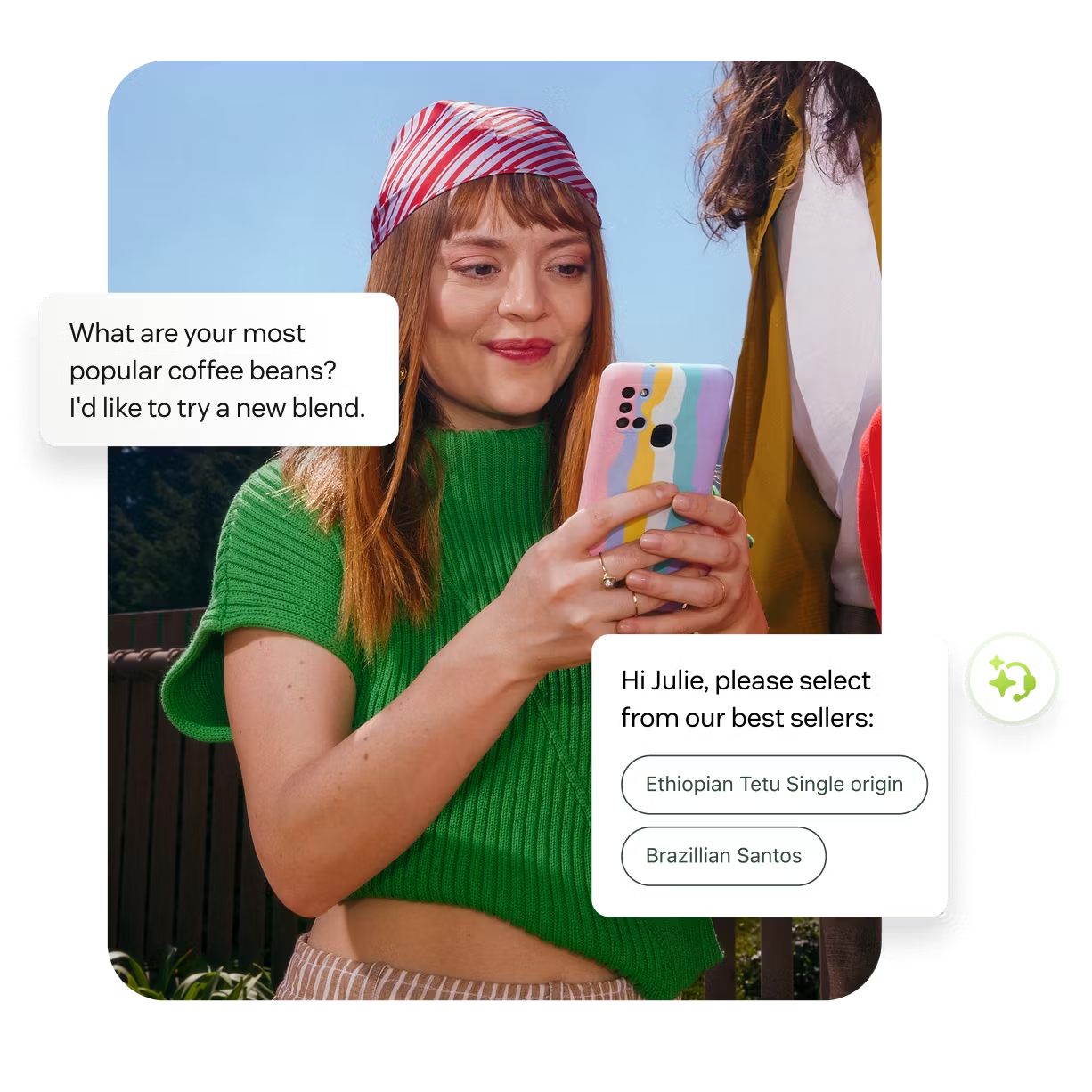
Source: Zendesk
The overlap creates a false comparison. Sugar Serve can handle customer support, but it lacks Zendesk's channel breadth, AI automation, and 18 years of service-specific iteration. Zendesk Sell can track deals, but it lacks SugarCRM's ERP integration, guided sales workflows, and manufacturing-specific intelligence. The choice depends on whether you're solving a sales problem or a service problem.
For B2B companies that need both, neither platform delivers the complete picture on its own.
The prospecting gap neither SugarCRM nor Zendesk fills
SugarCRM manages existing accounts well. Its ERP intelligence tells reps which customers haven't reordered, which products they haven't tried, and which accounts are spending less. Zendesk manages existing customers well. Its AI agents handle support requests, its knowledge base deflects routine questions, and its analytics identify service bottlenecks.
But neither platform answers a more basic question: who should you be talking to in the first place?
SugarCRM's contact database contains the accounts you already know about. Zendesk's ticket history reflects the customers you've already won. Neither gives your team the ability to identify new prospects at scale, verify their contact information, detect buying intent before prospects raise their hands, or map buying committees at target accounts.
This is the layer ZoomInfo occupies.
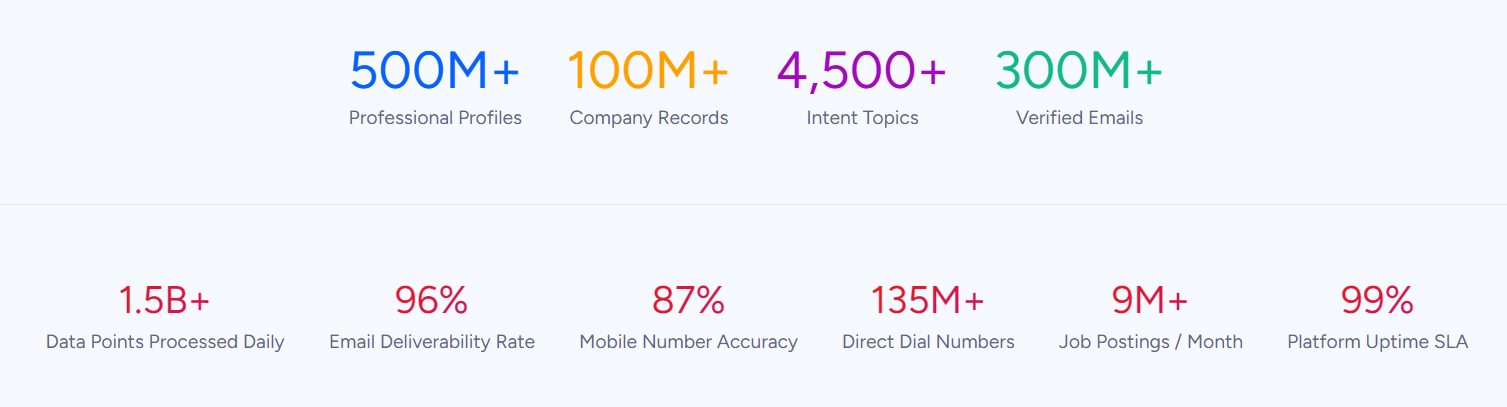
The platform provides 500M contacts and 100M companies verified through a multi-source pipeline backed by 300+ human researchers and up to 95% accuracy on first-party data. Buyer Intent data tracks signals from 210 million IP-to-Organization pairings, revealing which companies are actively researching solutions in your category. WebSights identifies the companies behind anonymous website traffic.
Source: ZoomInfo
This intelligence is externally validated.
In a Fortune 500 competitive RFP analyzing 25 million contacts across vendors, the independent consultant concluded that "no other competitor came even close." ZoomInfo was named a Leader in Forrester's Wave for Intent Data Providers (Q1 2025), receiving the highest possible scores across eight criteria, and was the only vendor positioned in the Customers' Choice quadrant in Gartner's 2025 Voice of the Customer (4.7/5.0 average rating).
Snowflake uses ZoomInfo data for at least one-third of the most critical features in their Account Propensity Scoring model, feeding over 70 firmographic and technographic data fields. Accounts monitored using ZoomInfo-powered scores showed 90% higher opportunity open rates and 2x higher customer conversion rates. (Snowflake Case Study)
The practical point: your choice of CRM or service platform matters less if your team doesn't have the data to fill the pipeline feeding those platforms. ZoomInfo integrates with Salesforce, HubSpot, and Microsoft Dynamics, and its Enterprise API and MCP server deliver the same intelligence into any system.
AI takes different forms across all three platforms
Each platform has invested in AI, but the applications differ because the problems differ.
SugarCRM's AI is sales-specific.
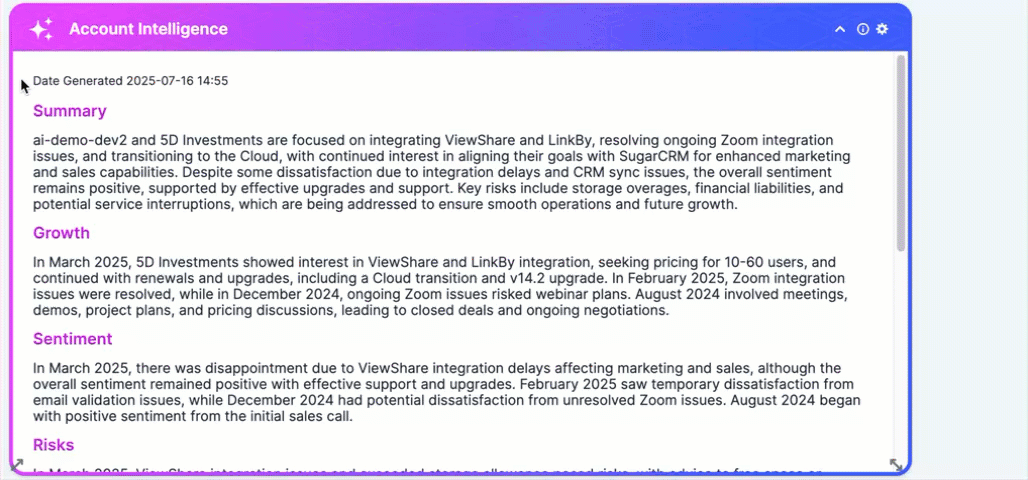
The platform uses AI to guide sellers through complex B2B deals. Sugar Sell Advanced includes lead prioritization, revenue intelligence, generative AI, and sentiment analysis. Sugar sales-i applies AI to ERP order data, surfacing buying patterns and cross-sell gaps and churn risk signals without requiring reps to run reports or query databases.
The AI answers sales questions: Which accounts are at risk? Where are the cross-sell opportunities? What should I discuss in this meeting? The company's April 2026 rebrand to SugarAI signals that AI is now its core identity, not a feature.
Source: Sugar AI
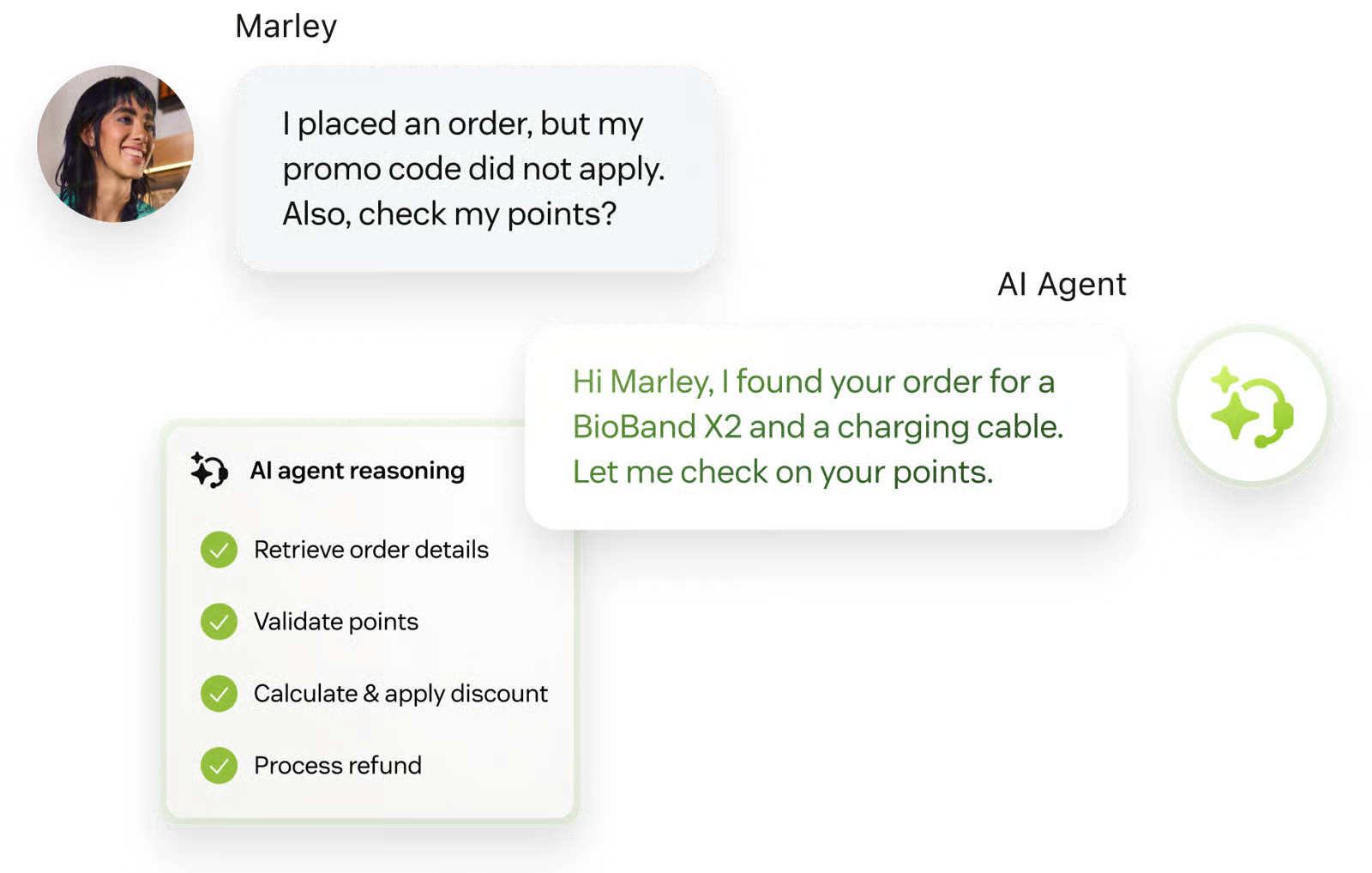
Zendesk's AI is service-specific.
The Resolution Learning Loop powers AI agents that handle customer conversations end-to-end across messaging, email, and voice. Copilot guides human agents the moment a ticket opens. Quality Assurance automatically scores 100% of interactions (both human and AI).
The AI answers service questions: What does this customer need? How should I resolve this? Which agents need coaching? Zendesk says its models are trained on roughly 20 billion ticket interactions, giving it a domain-specific training advantage that newer competitors lack.
Source: Zendesk
ZoomInfo's AI is prospecting-specific.
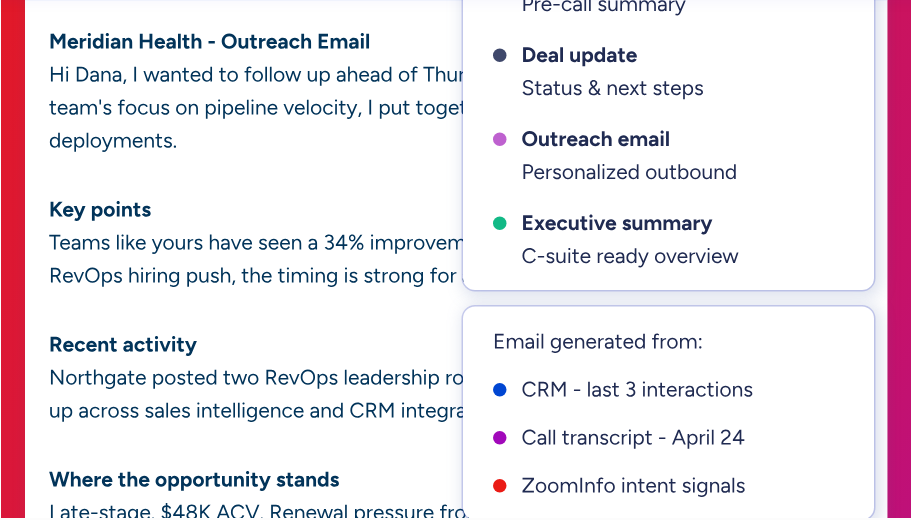
The GTM Context Graph processes 1.5B+ data points daily, combining third-party intelligence (contacts, companies, intent signals) with first-party data (CRM records, conversation transcripts, behavioral signals). The result is an intelligence layer that captures not just what happened in a deal, but why it happened.
AI agents inside GTM Workspace use this context to draft personalized outreach, surface buying committee members, and prioritize accounts showing in-market signals. The AI answers go-to-market questions: Who should I target? When are they ready to buy? What will resonate?
Source: ZoomInfo
Seismic's sales team attributed 39% of active pipeline to opportunities identified or influenced by ZoomInfo signals, boosted productivity by 54%, and saved 11.5 hours per week. (Seismic Case Study)
The distinction matters because these are three different links in the same chain. ZoomInfo identifies and qualifies the prospect. The CRM manages the relationship and closes the deal. The service platform serves the customer post-sale. No single platform covers all three.
Integration ecosystems reflect different priorities
Each platform's integrations reveal what it considers core versus peripheral.
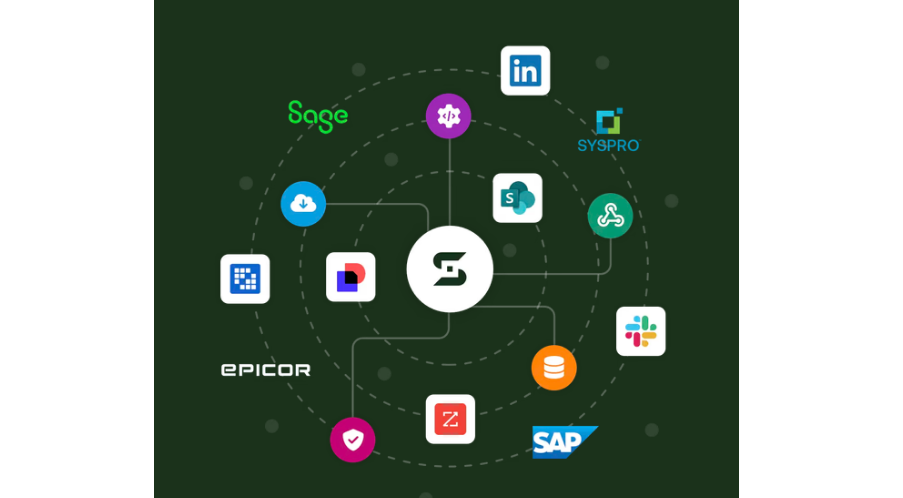
SugarCRM leads in ERP connectivity.
The platform supports 180+ ERP integrations covering major systems: SAP, Oracle, Epicor, Syspro, Sage, and NetSuite, among others. The SugarAI Marketplace extends into telephony (PhoneBurner, Microsoft Teams), marketing (SugarChimp for Mailchimp), reporting (Power BI), and sales productivity (LinkedIn Sales Navigator).
A Zendesk integration is listed in the marketplace for companies running both platforms. SugarCRM also exposes a versioned REST API with full CRUD operations and OAuth 2.0 authentication.
The ERP depth is real.
The January 2026 Sugar for Syspro partnership delivered a pre-integrated solution connecting shop floor data with the sales CRM. For manufacturers and distributors, this ERP-native approach is a structural advantage. For companies outside those verticals, the ecosystem coverage for modern SaaS tools is thinner than what HubSpot or Salesforce offer.
Source: Sugar AI
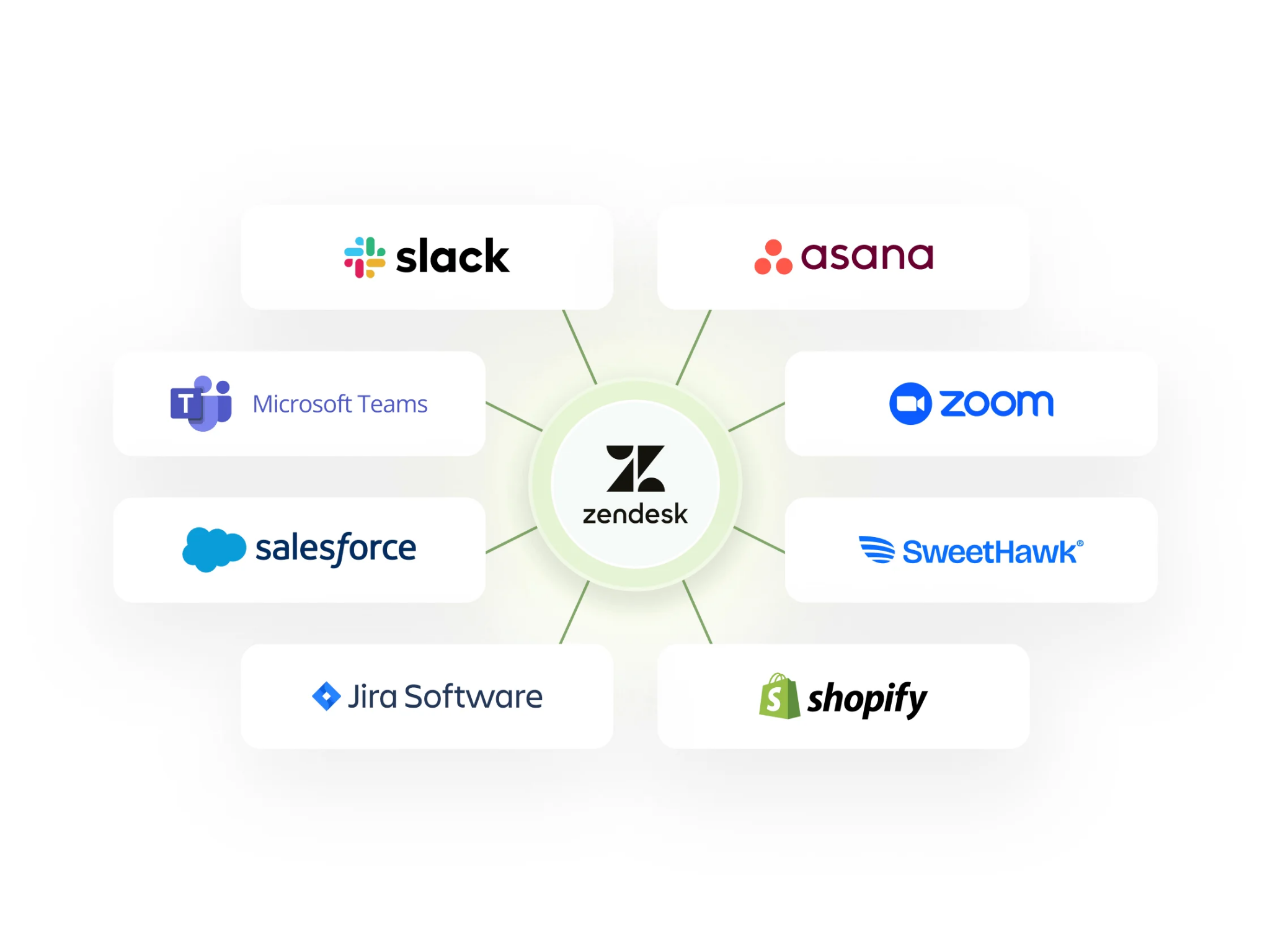
Zendesk leads in marketplace breadth.
With 1,800+ apps and integrations, Zendesk's marketplace dwarfs both SugarCRM and ZoomInfo. The breadth reflects its horizontal positioning: any company with customers can use Zendesk, so the ecosystem covers CRM, e-commerce, billing, collaboration, and more.
Beyond the marketplace, Zendesk Integration Services (ZIS) provides a hosted workflow orchestration layer, and the REST API supports cursor-based pagination, webhook subscriptions with retry logic and circuit breakers, and a Postman Public Workspace for exploration.
Source: Zendesk
ZoomInfo leads in data delivery flexibility.
The Enterprise API provides programmatic access to search, enrich, and intelligence endpoints. The MCP server connects AI models directly to ZoomInfo's B2B data with no custom coding. Cloud Partners deliver ZoomInfo data into AWS, Google Cloud, Snowflake, and Databricks. And API access is included in all relevant plans, not gated behind enterprise tiers.
The ZoomInfo Marketplace lists 172+ integrations across CRM, marketing automation, sales engagement, data warehouse, and AI categories, including native connectors for Claude and ChatGPT.
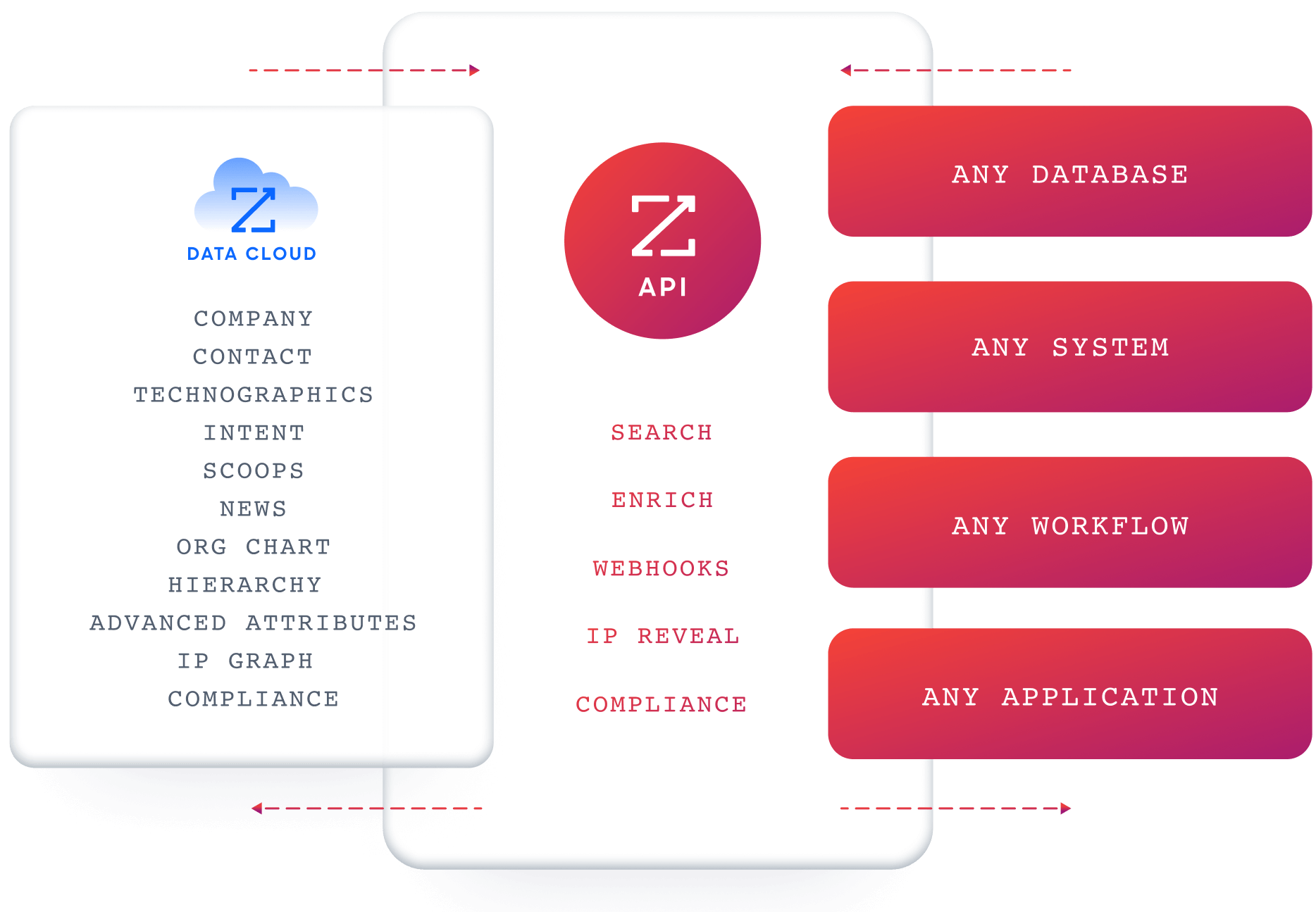
BDO Canada achieved an 87% reduction in time spent on internal data dashboard updates using ZoomInfo's API, with their Senior Marketing Intelligence Analyst noting: "The plug-and-play aspect of the API means I can integrate it very easily into any process and get information at a moment's notice." (BDO Canada Case Study)
Pricing structures signal different markets
The pricing models tell you who each platform is built for.
SugarCRM prices per user with annual billing and a minimum seat requirement. Sugar Sell comes in three tiers:
Standard: $59/user/month (15-user minimum, $10,620/year floor)
Advanced: $85/user/month (adds mail and calendar integration, case management)
Premier: $135/user/month (adds forecasting, geo mapping, LinkedIn connector, enhanced support)
The 15-user minimum is the decisive filter. Teams with fewer than 15 reps pay for seats they don't use, making SugarCRM expensive for small sales teams.
AI features like lead prioritization, revenue intelligence, and generative AI are noted as add-ons or upgrades on the Advanced tier, requiring either Premier or a separate purchase. Sugar Market and Sugar Serve pricing aren't published, requiring a sales conversation. On-premises deployment (Sugar Enterprise) starts at $85/user/month with a 10-user minimum.
The value case is clearest against Salesforce. According to Nucleus Research cited by SugarCRM, SugarAI users can lower total cost of ownership by up to 32% compared to Salesforce while using similar functionality.
Zendesk prices per agent with both monthly and annual options. The structure splits between Support-only plans and Suite plans:
Support Team: $19/agent/month (email and ticketing only)
Suite Team: $55/agent/month (messaging, voice, AI agents, omnichannel routing)
Suite Professional: $115/agent/month (AI writing tools, SLA management, custom reports)
Suite Enterprise + Copilot: custom pricing (intelligent triage, auto assist, sandbox)
The entry price is accessible, but the total cost adds up.
Workforce Management ($50/agent/month), Quality Assurance ($50/agent/month), and Contact Center ($50/agent/month) are all separate add-ons. AI agent automated resolutions come included in every Suite plan with a per-agent allowance (5 to 15 ARs/agent/month depending on tier), but overage billing applies beyond those allowances. Voice calls and texts are billed pay-as-you-go beyond included minutes.
ZoomInfo uses custom-quoted, consumption-based pricing with no publicly listed prices.
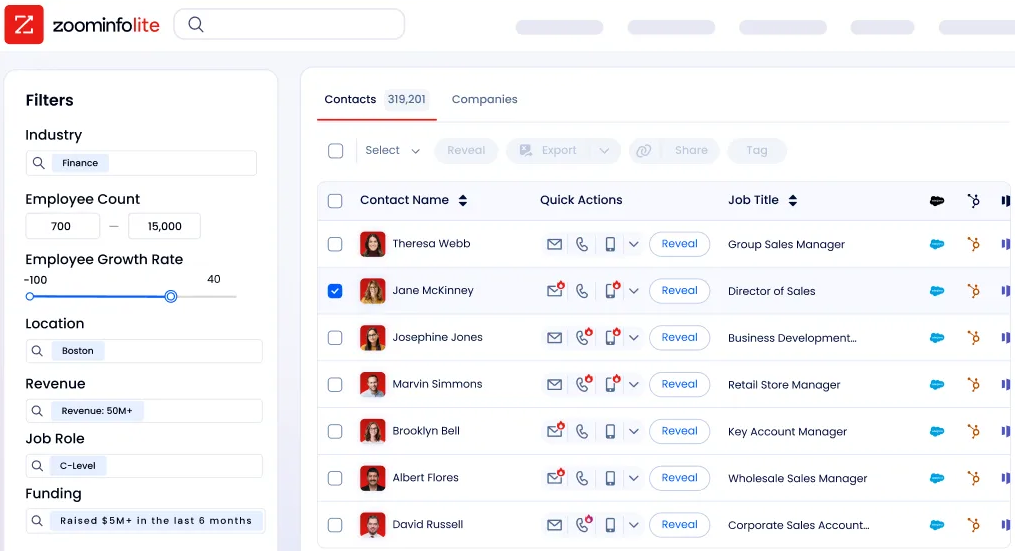
Costs scale around seats, monthly credit volume, features, and contract length. One credit equals one export of a contact or company profile; searching and viewing data within ZoomInfo does not consume credits. ZoomInfo Lite provides a permanent free tier with access to the B2B database, 10 monthly export credits, and basic prospecting tools including the ReachOut Chrome Extension and HubSpot integration. A 7-day free trial of the full platform is also available.
Source: ZoomInfo
Enterprise readiness and compliance comparison
All three platforms meet enterprise security requirements, but the specifics vary.
SugarCRM holds SOC 2 Type II, ISO 27001:2022, CSA STAR, GDPR, and CCPA certifications.
Data is encrypted in transit and at rest, with role-based access control and MFA required across all access points. Customers select their preferred AWS region at onboarding (Australia, Germany, United Kingdom, or United States). The on-premises deployment option (Sugar Enterprise) gives organizations with strict data sovereignty requirements full control over their infrastructure, a differentiator most modern CRM vendors have abandoned.
Zendesk holds SOC 2 Type II, ISO 27001:2022, ISO 27018:2019, and GDPR Binding Corporate Rules.
HIPAA compliance is available through a Business Associate Agreement. Advanced Data Privacy and Protection is available on Enterprise plans. The Regional Data Hosting Policy supports data residency pinning. Zendesk's AI governance includes a multi-LLM architecture with zero data retention endpoints for OpenAI, and models hosted on Azure, Amazon Bedrock, and GCP. FedRAMP authorization is listed as in process.
ZoomInfo holds ISO 27001, ISO 27701, SOC 2 Type II, TRUSTe GDPR, and TRUSTe CCPA certifications, all renewed annually.
The company is a registered data broker in California and Vermont. A dedicated Trust Center at trust.zoominfo.com provides transparency into security practices. ZoomInfo's ISO 27701 certification (privacy information management) is relevant for organizations concerned about data handling in prospecting workflows.
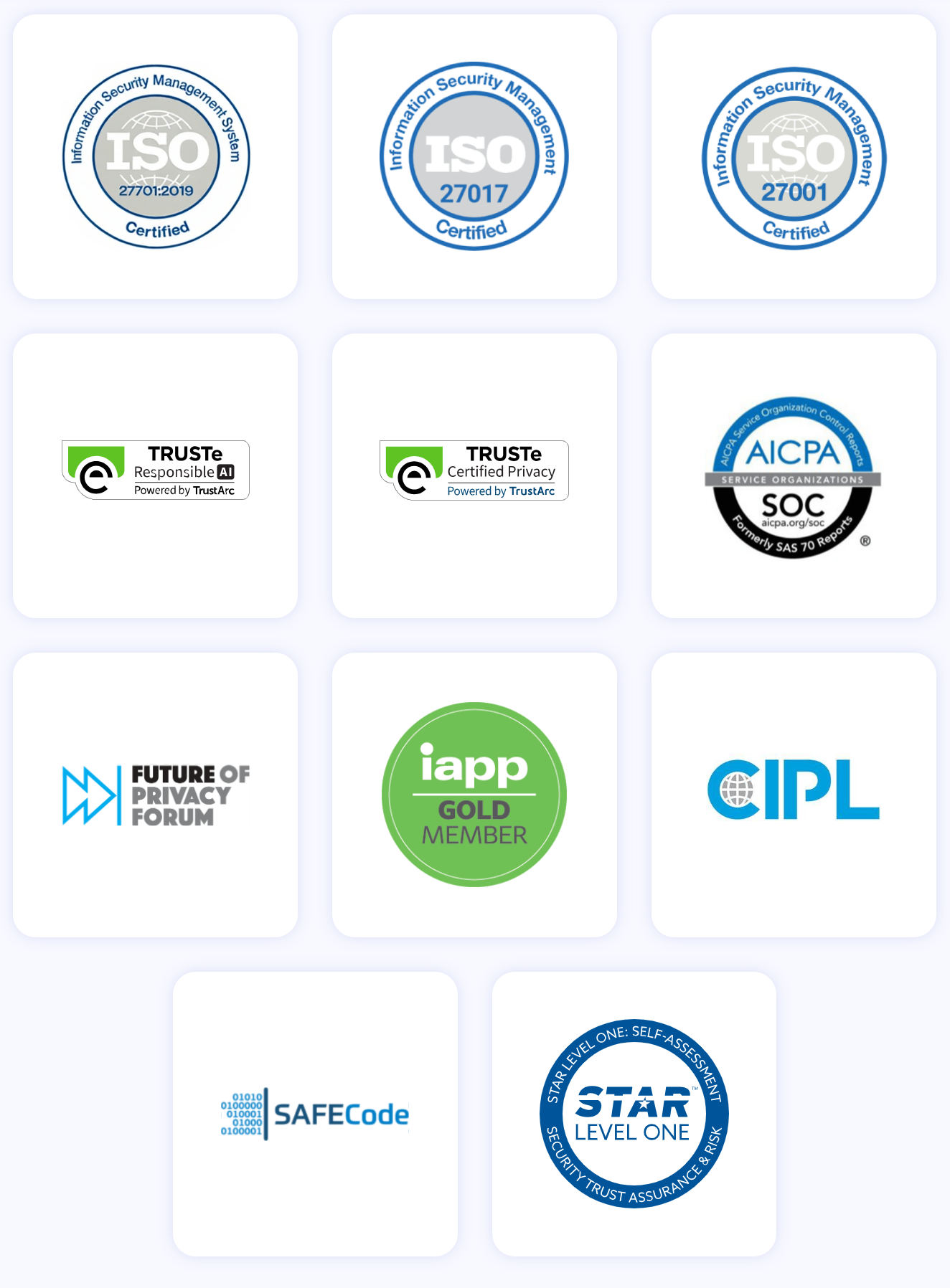
For regulated industries, SugarCRM's on-premises option and Zendesk's HIPAA support are notable differentiators in their respective domains. ZoomInfo's compliance infrastructure addresses the privacy concerns inherent in B2B prospecting data at scale.
SugarCRM vs. Zendesk vs. ZoomInfo: Which should you choose?
The choice depends on which problem is most urgent for your business.
Choose SugarCRM if:
You're a B2B manufacturer, wholesaler, or distributor
Your ERP system holds customer intelligence your sales team can't access
You need a sales CRM that guides reps toward high-value actions, not just stores data
Your team has 15+ sales reps who will use the platform daily
Deployment flexibility (cloud or on-premises) matters for compliance
Choose Zendesk if:
Customer support is a core function that directly affects retention and revenue
You need AI agents that can resolve issues autonomously across messaging, email, and voice
Your team handles high-volume, multi-channel support requests
Workforce management and quality assurance are operational priorities
You want a platform backed by a large app marketplace and a strong developer ecosystem
Choose ZoomInfo if:
Your team needs verified B2B prospecting data to fill the pipeline
You want AI that identifies who to target, when to engage, and what to say
Intent signals, buyer committee mapping, and account prioritization are priorities
You need an intelligence layer that feeds into any CRM or service platform you already use
You're building AI-powered GTM workflows and need infrastructure-grade data access
Start with ZoomInfo Lite for free, permanent access to the B2B database, or request a demo of the full platform.
Levanta's CEO and Co-Founder Ian Brodie observed: "ZoomInfo's not just a contact data company anymore. They've built a full system of execution. GTM Intelligence actually works the list, writes the outreach, triggers the play, and helps drive predictable growth." (Levanta Case Study)
These platforms are not interchangeable. They operate at different layers of the customer lifecycle. SugarCRM manages the sales relationship. Zendesk manages the service relationship. ZoomInfo provides the intelligence that makes both more effective. The strongest B2B operations stack uses the right tool at each layer rather than forcing one platform to do everything.
SugarCRM vs. Zendesk vs. ZoomInfo FAQ
What is the core difference between SugarCRM, Zendesk, and ZoomInfo?
SugarCRM is a B2B sales CRM built for manufacturing, wholesale, and distribution companies, with ERP integration that surfaces buying patterns and cross-sell opportunities from order history.
Zendesk is a customer service platform that unifies ticketing, messaging, voice, and self-service into a single agent workspace, trained on roughly 20 billion ticket interactions.
ZoomInfo is a B2B data and GTM intelligence platform that provides verified prospecting data (500M contacts, 100M companies) and an intelligence layer for identifying, qualifying, and engaging target accounts.
Which platform is cheapest to get started with?
Zendesk has the lowest entry point at $19/agent/month for its Support Team plan (email and ticketing only), though the full omnichannel Suite starts at $55/agent/month. SugarCRM starts at $59/user/month but requires a 15-user minimum, creating a floor of $10,620/year. ZoomInfo does not publish pricing for paid tiers, but its ZoomInfo Lite tier is permanently free with 10 monthly export credits and access to the B2B database.
Can SugarCRM handle customer service, or do I need Zendesk too?
SugarCRM includes Sugar Serve, a customer service module with case management, SLA tracking, omnichannel support via Amazon Connect, and a self-service portal. It handles B2B service needs competently, especially for organizations already on SugarCRM.
However, it lacks Zendesk's AI automation breadth, its 1,800+ app ecosystem, and its specialized tools like workforce management and automated quality assurance scoring across 100% of interactions.
Can Zendesk handle sales and CRM, or do I need SugarCRM too?
Zendesk Sell is a sales CRM module available within the Zendesk ecosystem. It covers basic pipeline management and deal tracking. But it is a lightweight tool compared to SugarCRM's B2B sales depth, particularly SugarCRM's ERP integration, guided sales workflows, cross-sell intelligence from order history, and manufacturing-specific capabilities. Organizations with complex B2B sales processes will likely outgrow Zendesk Sell quickly.
How does ZoomInfo work alongside SugarCRM or Zendesk?
ZoomInfo operates as an intelligence layer that feeds data into your existing tools. Its Enterprise API and MCP server deliver verified contact data, intent signals, and account intelligence into any CRM or platform.
ZoomInfo integrates natively with Salesforce, HubSpot, and Microsoft Dynamics, and its API-first architecture means it can enrich records in SugarCRM or provide customer context to Zendesk agents. The SugarCRM Marketplace also lists a Zendesk integration, so all three platforms can work together in the same stack.
Which platform has the strongest AI capabilities?
Each platform leads in its domain.
SugarCRM's AI analyzes ERP and CRM data to guide sales actions, surfacing cross-sell opportunities, flagging at-risk deals, and prioritizing accounts. Zendesk's AI resolves customer service issues autonomously and coaches human agents in real time through its Resolution Learning Loop. ZoomInfo's AI identifies prospecting opportunities, maps buying committees, and generates personalized outreach based on its GTM Context Graph, which processes 1.5B+ data points daily.
The three address different stages of the customer lifecycle rather than competing on the same use case.
Which platform is the strongest fit for B2B manufacturing companies?
SugarCRM is the strongest fit because of its 180+ ERP integrations, the Sugar sales-i module that surfaces buying patterns from order history, and its focus on manufacturing, wholesale, and distribution verticals. It was recognized as the "Most Innovative Solution" in the Manufacturing Supplier Innovation Awards in December 2025.
ZoomInfo complements SugarCRM by providing the prospecting data and intent signals that fill the top of the pipeline. Zendesk can handle customer support for manufacturing companies but lacks industry-specific sales functionality.
Do any of these platforms offer a permanent free tier?
ZoomInfo offers ZoomInfo Lite, a permanent free tier with access to its B2B database, 10 monthly export credits, basic prospecting tools, and a HubSpot integration. No credit card or annual commitment is required.
Zendesk offers a 14-day free trial of Suite Professional with no credit card required, plus a startup program providing up to 6 months free for qualifying early-stage companies. SugarCRM offers a 7-day free trial. Neither SugarCRM nor Zendesk offers a permanently free plan.
Keep comparing SugarCRM:
