
Choosing between SugarCRM and Vtiger for your CRM comes down to five questions:
Do you need a CRM built for manufacturing and distribution, or one that covers sales, marketing, and support in a single platform?
Is connecting your ERP system to your CRM a requirement, or are you looking for a broader all-in-one tool?
Are you a mid-market company with 15+ sales reps, or a smaller team that needs to start lean and scale?
How important is deployment flexibility, including on-premises hosting for compliance or data sovereignty?
Does your team have the technical expertise to configure a complex CRM, or do you need something simpler out of the box?
In short, here's what we recommend:
SugarCRM (now rebranding as SugarAI) is built for B2B companies in manufacturing, wholesale, and distribution that run their business through an ERP system. Its standout capability, Sugar sales-i, pulls order data from your ERP to surface cross-sell opportunities, churn risks, and buying pattern changes inside the CRM. With 180+ ERP integrations and both cloud and on-premises deployment, SugarCRM is the strongest choice for companies where ERP data is central to selling. But a 15-user minimum ($885/month to start), a dated interface, and a steep learning curve make it a poor fit for smaller teams or those outside its core verticals.
Vtiger is an all-in-one CRM that combines sales automation, marketing, and help desk under a single data model it calls "One View." For small and mid-sized businesses that need CRM, marketing automation, and customer support without buying three separate tools, Vtiger packs unusual feature depth at its price point: CPQ, Deal Room, Playbooks, and a built-in help desk with SLA management. A free plan and paid tiers starting at $12/user/month make it accessible. The trade-off: performance issues at scale, uneven integration depth, and a setup process that reviewers consistently call complex.
Both platforms give you a system of record for managing customer relationships. But a CRM is only as good as the data inside it. Neither SugarCRM nor Vtiger solves the harder problem of finding the right prospects, verifying their contact information, or knowing when they're in-market. That's where ZoomInfo comes in.
ZoomInfo is an AI-powered go-to-market platform that lets sales reps walk into every call knowing why the deal is moving, who's championing it, and what's likely to happen next. Marketers can describe audiences in plain language and launch plays against accounts matching proven win patterns. Leaders can see deal risk before it shows up in CRM stage fields. That depth comes from the GTM Context Graph, an intelligence layer built on the largest B2B dataset in the industry: 500M contacts, 100M companies, 135M+ verified phone numbers, and 200M+ verified business email addresses, unified with your CRM records, conversation transcripts, and behavioral signals. ZoomInfo integrates with Sugar and delivers intelligence through GTM Workspace for sellers, GTM Studio for marketers and RevOps, and APIs and MCP for custom tools or AI agents.
If feeding your CRM with verified data and real-time buying signals sounds like the missing piece, start a free trial.
SugarCRM vs. Vtiger at a glance
SugarCRM | Vtiger | ZoomInfo | |
|---|---|---|---|
Primary focus | B2B sales CRM for manufacturing and distribution | All-in-one CRM (sales + marketing + help desk) | AI-powered go-to-market platform |
AI capabilities | Embedded sales guidance, next-best-action | Calculus AI (scoring, recommendations, chatbot) | GTM Context Graph, AI-generated outreach, intent signals |
ERP integration | 180+ ERP connectors (core differentiator) | Limited ERP coverage | Not applicable (feeds data into CRMs) |
Marketing automation | Sugar Market (separate product) | Built-in email, landing pages, social, SMS | ABM, display advertising, intent-driven plays |
Help desk | Sugar Serve (separate product) | Built-in with SLA management and customer portal | Not applicable |
Deployment options | Cloud + on-premises | Cloud + open-source self-hosted | Cloud (SaaS) |
Starting price | $59/user/month (15-user minimum) | Free (One Pilot); $12/user/month (One Growth) | Free (ZoomInfo Lite); custom-quoted paid plans |
Free plan | No (7-day trial) | Yes (10 users, 3,000 records) | Yes (ZoomInfo Lite, permanent) |
Best for | Mid-market companies with ERP systems | SMBs consolidating sales, marketing, and support | Sales and marketing teams needing verified data and buying signals |
ERP specialist vs. all-in-one: Two different CRM philosophies
SugarCRM and Vtiger start from different assumptions about what a CRM should do.
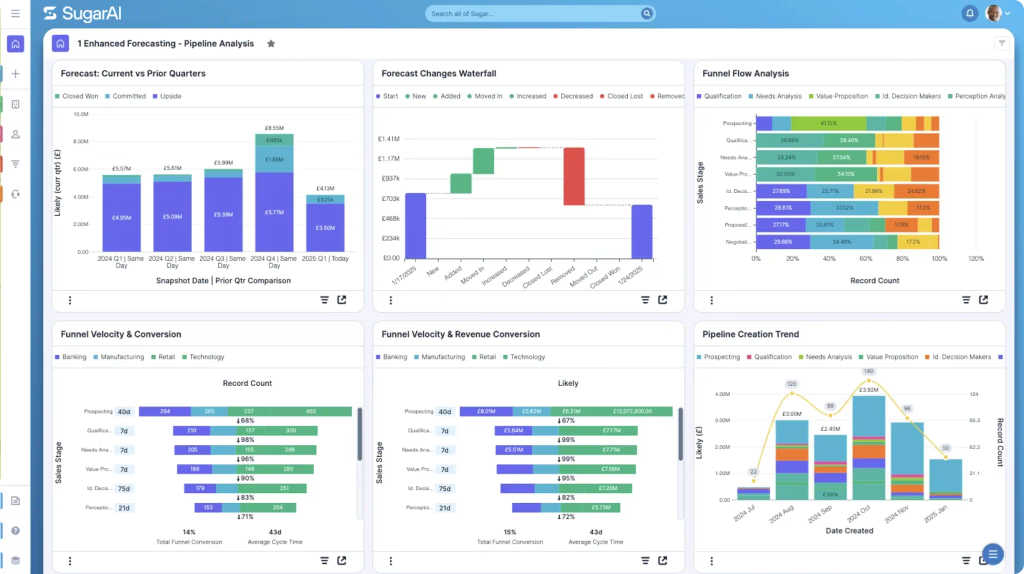
SugarCRM assumes your business already runs on an ERP system, and that ERP data holds intelligence your sales team can't reach. A distributor managing thousands of SKUs across hundreds of accounts has purchasing behavior locked inside SAP or Epicor. SugarCRM's answer is Sugar sales-i, which connects to the ERP, analyzes order history, and surfaces cross-sell gaps, reorder windows, and churn signals inside the CRM. This ERP-native intelligence is SugarCRM's primary differentiator. Nucleus Research cited it as a key reason SugarCRM earned Leader status for the sixth consecutive year.
Source: SugarAI
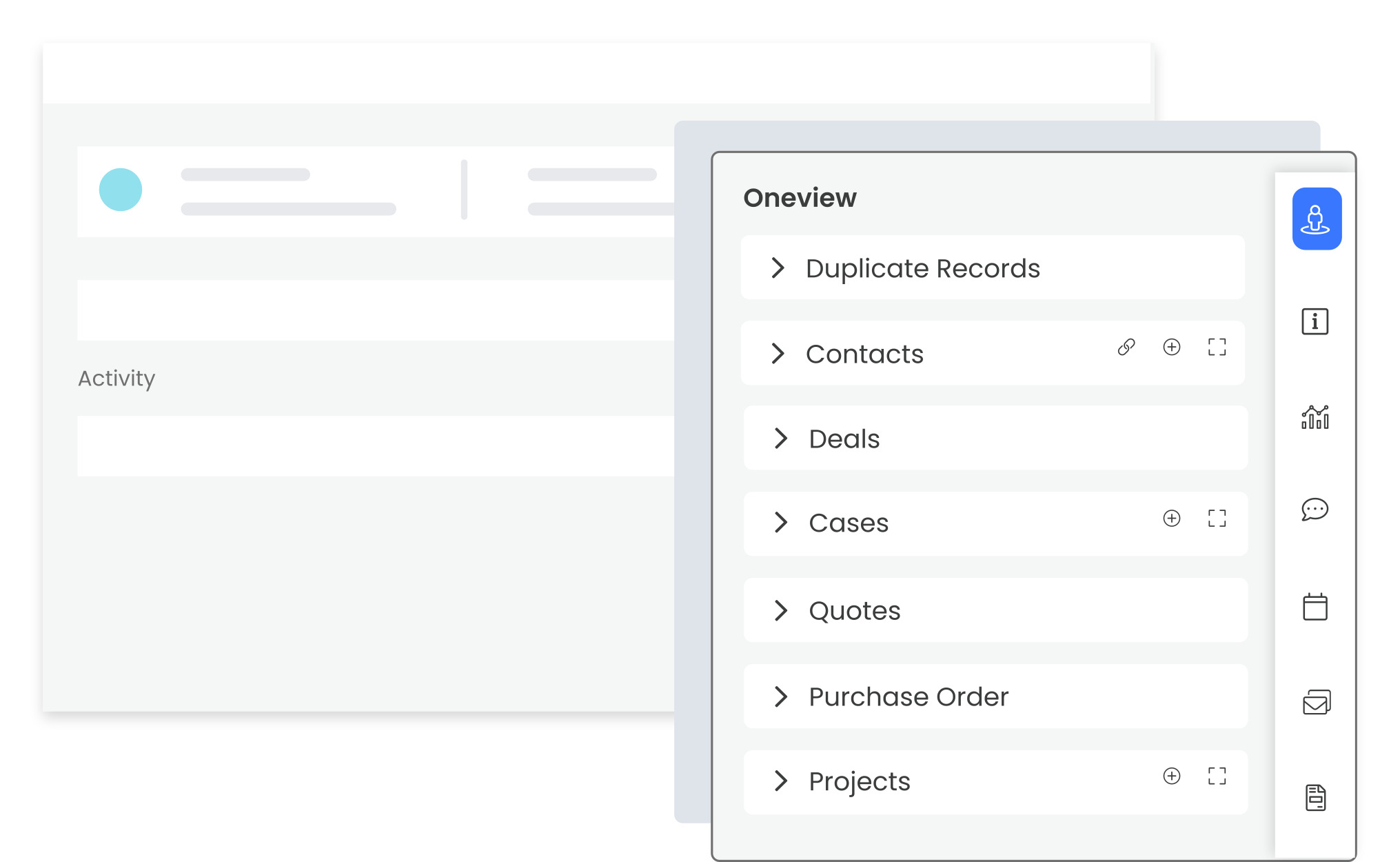
Vtiger assumes you need sales, marketing, and support in one place, and that data silos between these teams are the bigger problem. Its "One View" architecture gives every team the same customer record. A support agent sees the same contact a salesperson does, complete with deal history, marketing engagement, and past tickets. For SMBs that would otherwise buy a CRM, a help desk, and a marketing tool separately, this consolidation eliminates integration headaches and lowers total cost.
Source: Vtiger
The choice depends on where your friction lives. If your sales team is losing deals because they can't see what customers have been ordering (and what they've stopped ordering), SugarCRM's ERP connection solves that. If your teams work from disconnected tools with duplicated data and no shared context, Vtiger's unified platform solves that.
Sales automation: Depth vs. breadth
Both platforms offer solid sales automation, but they emphasize different parts of the sales process.
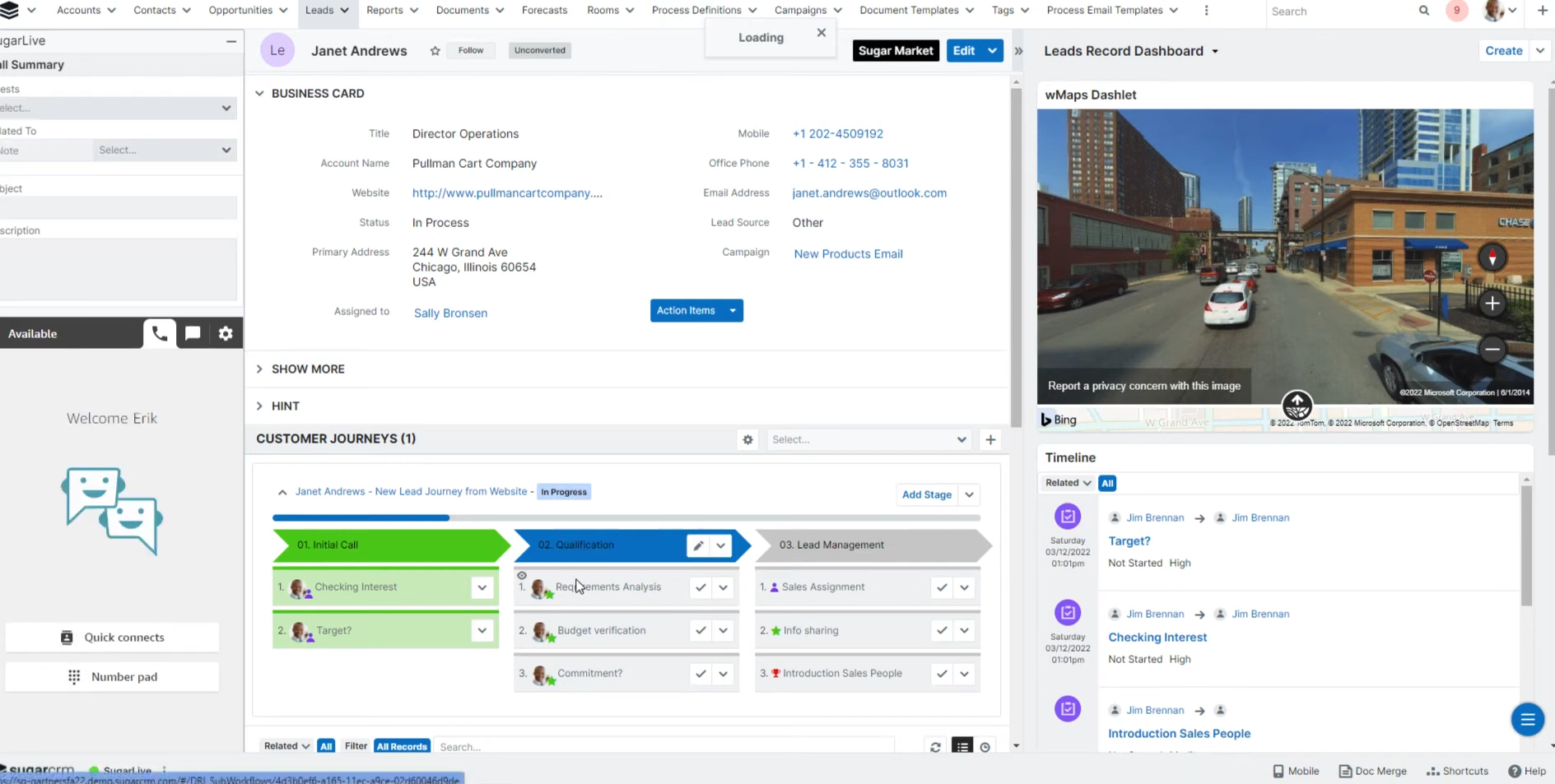
SugarCRM focuses on guiding sellers toward the highest-value actions. The platform acts more like a sales coach than a database. When a rep logs in, Sugar Sell shows which accounts and opportunities need attention now, ranked by impact. Before a meeting, it pulls together company summaries, recent news, social insights, and contact history into a single context view. Guided workflows assign tasks automatically based on deal size and timelines, so process adherence becomes measurable.
Source: SugarAI
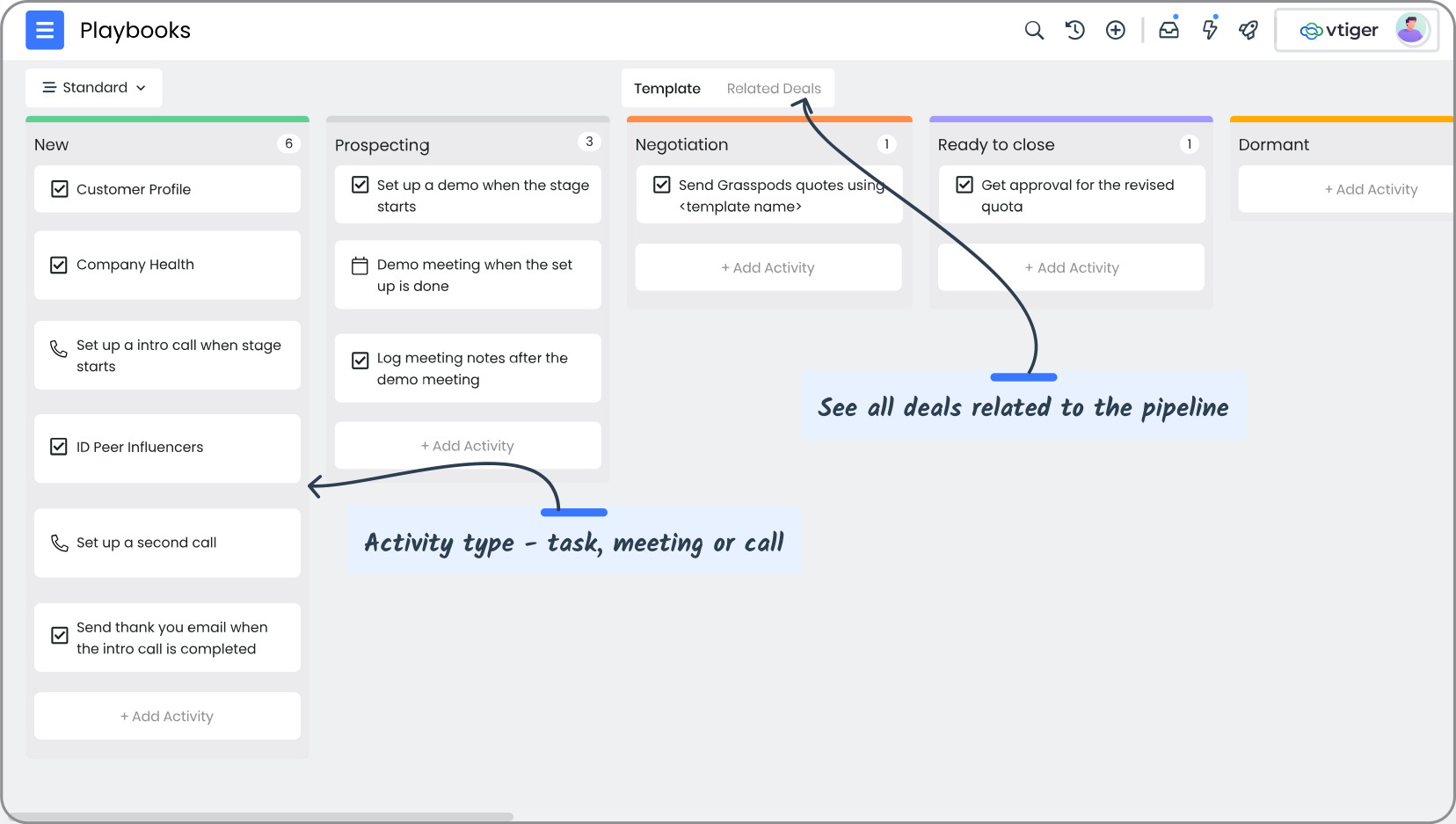
Vtiger takes a broader approach. Beyond pipeline management, it includes Playbooks that auto-create required tasks at each pipeline stage and block advancement until they're completed. It adds Deal Room, a customer-facing microsite per deal where buyers can view shared documents, ask questions, and track next steps. CPQ handles configure-price-quote with dynamic pricing and discount approval workflows. The Process Designer lets admins model cross-department handoffs visually without code. These features typically appear in platforms costing several times more.
Source: Vtiger
SugarCRM wins on depth in its target verticals. A manufacturer with 11 account managers who used to track pipeline in separate Excel files can replace that chaos with centralized, ERP-informed pipeline visibility. Vtiger wins on breadth for the price. An SMB that needs CPQ, a deal collaboration portal, and process automation alongside basic CRM gets all three without additional subscriptions.
AI capabilities compared
Both platforms are investing in AI, but from different starting points.
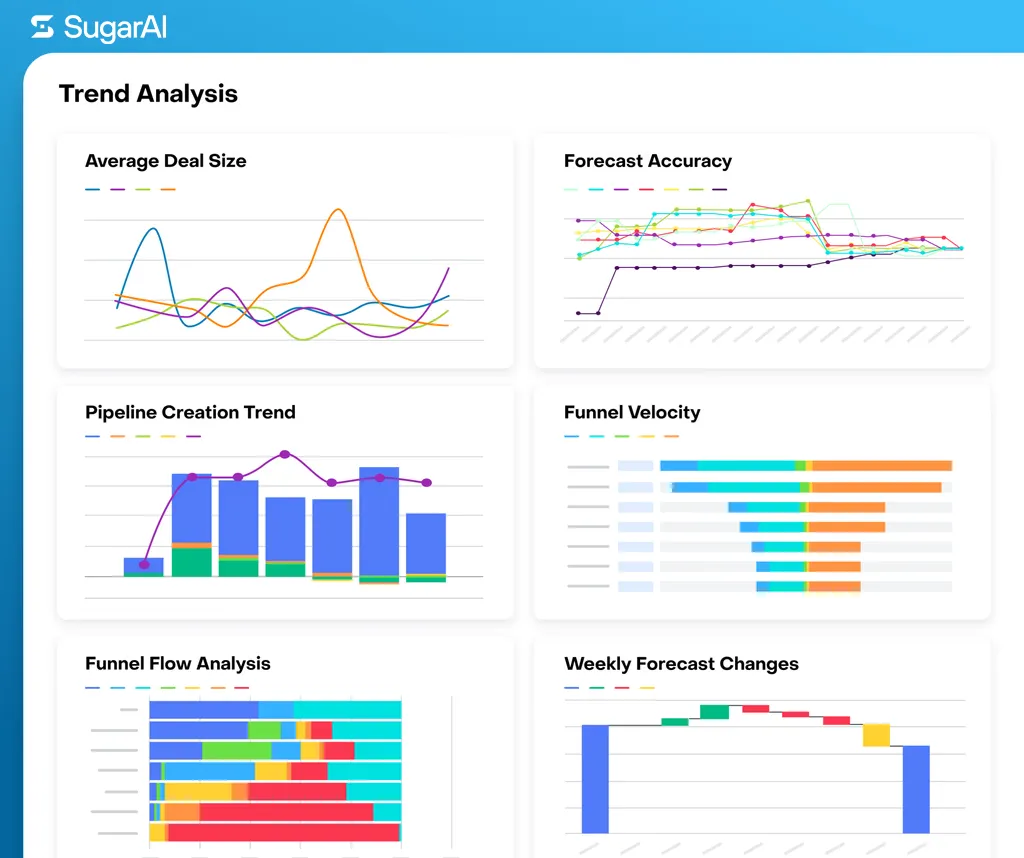
SugarCRM's AI is embedded in the seller workflow. The company's rebrand to SugarAI in April 2026 signals that AI is now the company's core identity. Sugar Sell delivers lead prioritization, revenue intelligence, generative AI, and sentiment analysis at the Advanced and Premier tiers. The AI surfaces which deals are at risk, recommends next steps, and helps reps prepare for calls with context from CRM and ERP data. These AI features are gated above the entry tier, so you need at least the Advanced plan ($85/user/month) or Premier ($135/user/month) to access them, and some require separate purchase.
Source: SugarAI
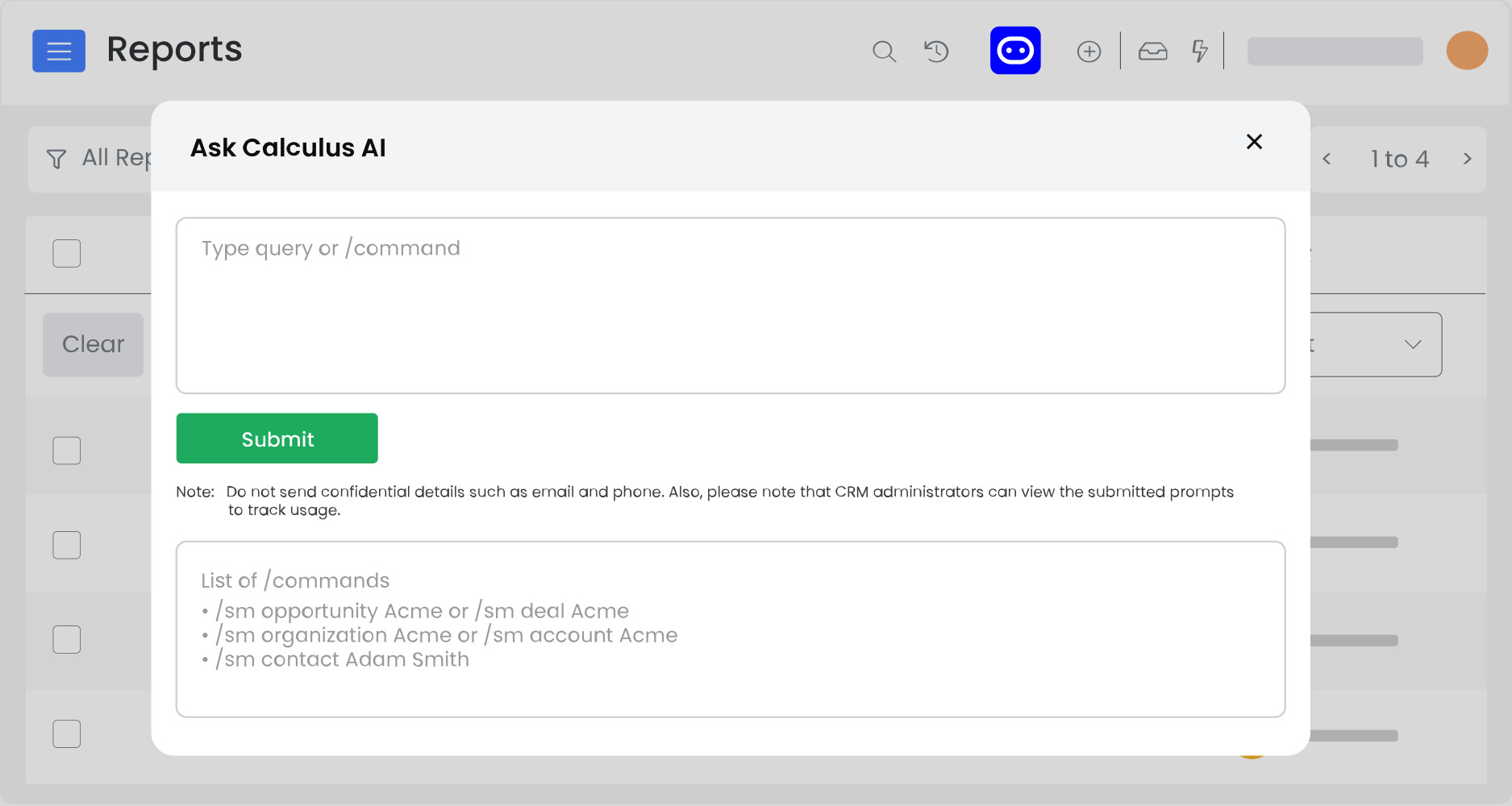
Vtiger's Calculus AI covers sales, marketing, and support. It scores deals using fit, sentiment, and engagement signals. It analyzes call quality by monitoring talk-to-listen ratio, talking speed, and negative mood. The Agent Builder lets teams create AI agents that handle follow-ups, update records, and route cases without code. The Prediction AI Designer offers a point-and-click model builder for creating predictive models from historical CRM data. Vtiger includes AI features starting from its One Growth plan at $12/user/month, making AI accessible at a lower entry point.
Source: Vtiger
Both platforms build AI on top of their own CRM data. But CRM data has a fundamental limitation: it records what happened inside your sales process, not what's happening outside it. Neither platform can tell you when a prospect starts researching your competitor, when a target account gets new funding, or when a decision-maker changes jobs.
The intelligence gap neither CRM fills
A CRM manages relationships you already have. But most sales teams spend as much time finding the right prospects as they do managing existing deals. And the quality of those prospects (whether their contact information is accurate, whether they're in-market, whether you're reaching the right person in the buying committee) determines whether your CRM is a growth engine or a filing cabinet.
ZoomInfo operates here. Rather than competing with SugarCRM or Vtiger, ZoomInfo provides the verified B2B data and contextual intelligence that makes either CRM more effective.
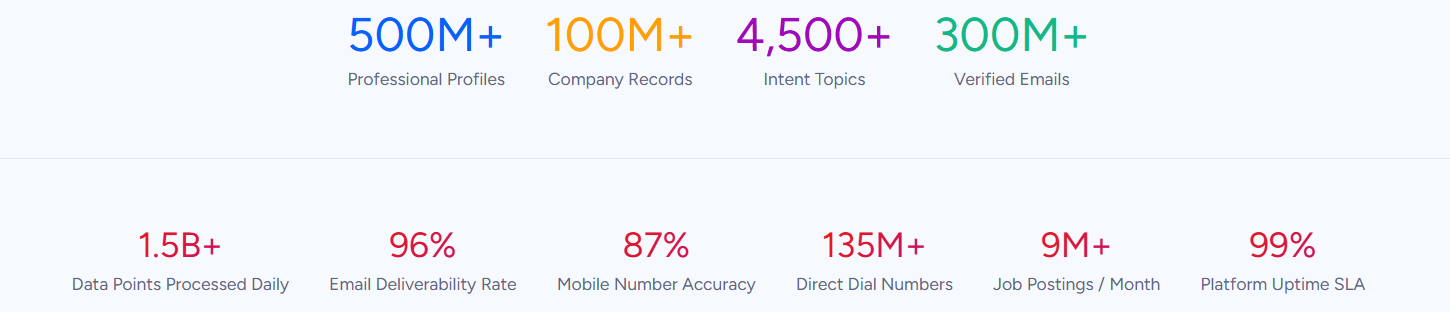
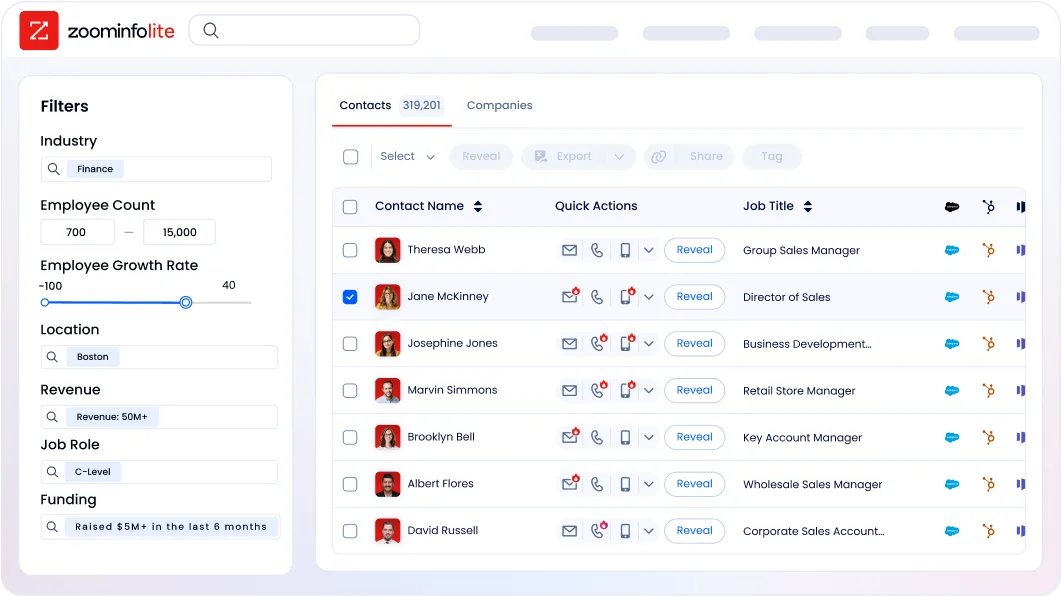
The data foundation. ZoomInfo's B2B database covers 500M contacts across 100M companies, verified through a multi-source pipeline backed by 300+ human researchers. The data reaches up to 95% accuracy on first-party data. In a Fortune 500 RFP analyzing 25 million contacts across vendors, the independent consultant concluded that "no other competitor came even close." For sales teams, this means direct dials that ring and emails that land, not a 30% bounce rate that torpedoes your sender reputation.
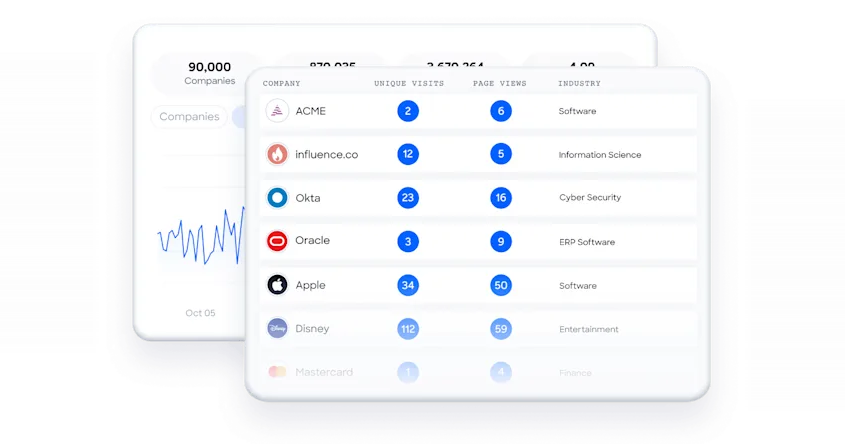
Buying signals. ZoomInfo Intent tracks signals from 210 million IP-to-Organization pairings and 6 trillion+ new keyword-to-device pairings monthly, revealing when target accounts are researching your category. WebSights identifies which companies visit your website, including buying team members and their direct contact information. These signals flow into your CRM, so reps see which accounts are in-market before picking up the phone.
The GTM Context Graph. ZoomInfo's GTM Context Graph processes 1.5B+ data points daily, fusing third-party intelligence with your CRM records, conversation transcripts, and behavioral signals. As ZoomInfo's Chief Product Officer Dominik Facher writes: "The CRM recorded the state change. It has no record of why it happened." The GTM Context Graph captures the decision context (the signals that explain why deals move or stall) and makes it machine-readable so AI can reason about it.
Seismic's sales team attributed 39% of active pipeline to opportunities identified or influenced by ZoomInfo signals and boosted productivity by 54%. As Chief Business Officer Toby Carrington put it: "That combination of our internal CRM data, external signals, and AI that's given all that context has helped us craft very specific account- and persona-based messages." (Seismic Case Study)
Pricing structures reflect different markets
The pricing models tell you who each platform is built for.
SugarCRM prices like an enterprise tool. Sugar Sell has three cloud tiers:
Tier | Price | What it adds |
|---|---|---|
Standard | $59/user/month | Core CRM, pipeline management, reporting, mobility |
Advanced | $85/user/month | Mail and calendar integration, case management |
Premier | $135/user/month | Enhanced forecasting, geo mapping, LinkedIn connector, enhanced support |
All tiers require a 15-user minimum and annual billing. That means the entry point is $10,620/year, even if you only have 10 reps. AI features like lead prioritization and revenue intelligence are asterisked on the Advanced tier, meaning they require an upgrade to Premier or separate purchase. Sugar Market and Sugar Serve pricing is not published and requires a sales conversation, so modeling total cost for the full suite takes work.
Vtiger prices like an SMB tool. Five tiers, all with monthly and annual billing:
Tier | Annual Price | What it adds |
|---|---|---|
One Pilot (Free) | $0 (10 users, 3,000 records) | Core CRM, basic workflows, 1,000 emails/month |
$12/user/month | AI features, lead auto-assignment, 5,000 email credits/month | |
$30/user/month | Telephony, unlimited users and records, 20,000 email credits/month | |
$42/user/month | IP whitelisting, advanced process designer, audit logs | |
$50/user/month | Full Calculus AI suite |
Vtiger also offers Single App Users at reduced rates ($20-$38/user/month on Professional through AI tiers) for team members who only need one module (Sales, Marketing, Help Desk, Projects, or Inventory) with read-only access to the rest. This lets companies mix full-access and limited-access seats to control costs.
The headline price comparison is stark: a 20-person sales team costs $14,160/year on SugarCRM Standard versus $2,880/year on Vtiger One Growth. But Vtiger's lower tiers have real limits. Booster packs for custom modules ($15/month each), extra workflows ($15/month per 3), and API call overages ($25/month) add up. Features like Live Chat, WhatsApp integration, and the Insights Designer are paid add-ons on every tier. And Calculus AI itself costs $12/user/month extra on Growth, Professional, and Enterprise plans if you don't buy the One AI tier.
ZoomInfo uses consumption-based pricing with no publicly listed prices. ZoomInfo Lite is a permanent free tier with access to the B2B database, 10 monthly export credits, and basic prospecting tools. Paid plans are quoted per organization based on seats, credit volume, features, and contract length. The credit system (1 credit = 1 export) means you pay for data you use, and searching within the platform is free.
Customization and deployment flexibility
Both SugarCRM and Vtiger offer extensive customization, but they approach it differently.
SugarCRM has long been known for configurability. Its no-code configuration tools let administrators tailor modules, layouts, and workflows without developer involvement. G2 reviewers consistently highlight this flexibility. But SugarCRM also supports code-level customization through its PHP backend, which gives technical teams more control but creates a dependency on specialized knowledge. Capterra reviewers note that setting up custom workflows and automations is difficult without technical expertise.
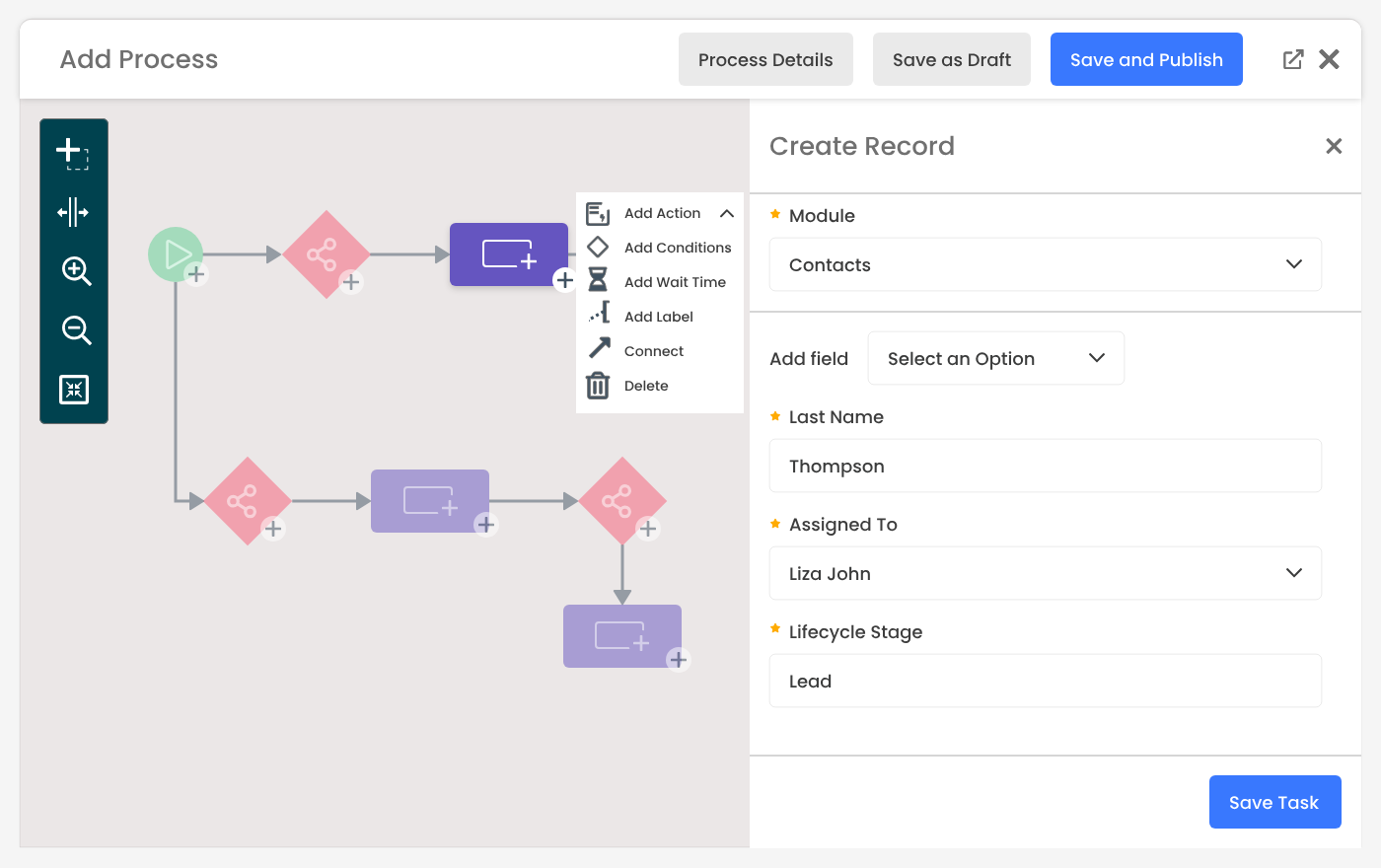
Vtiger provides Layout Designer, custom modules, workflow automation, and the Process Designer for visual process building. The newer NextGen platform extends this to a metadata-driven, low-code environment where developers can build custom applications on top of the CRM data model. G2 reviewers highlight "great modularity," though TrustRadius users note that advanced configuration "requires a dedicated person to be a Vtiger expert."
Source: Vtiger
Deployment options matter here. SugarCRM offers SugarCloud (AWS-hosted) and on-premises via Sugar Enterprise ($85/user/month, 10-user minimum). Customers choose their AWS data region (Australia, Germany, United Kingdom, or United States). For regulated industries with data sovereignty requirements, on-premises deployment is a real advantage.
Vtiger offers both cloud-hosted SaaS and a self-hosted open-source edition with over 5 million downloads. Cloud data centers span the United States, UK, EU, UAE, Australia, Singapore, Japan, and India. The open-source option gives technical teams full control over their data and infrastructure, though it requires self-managed hosting and maintenance.
Integration ecosystems take different approaches
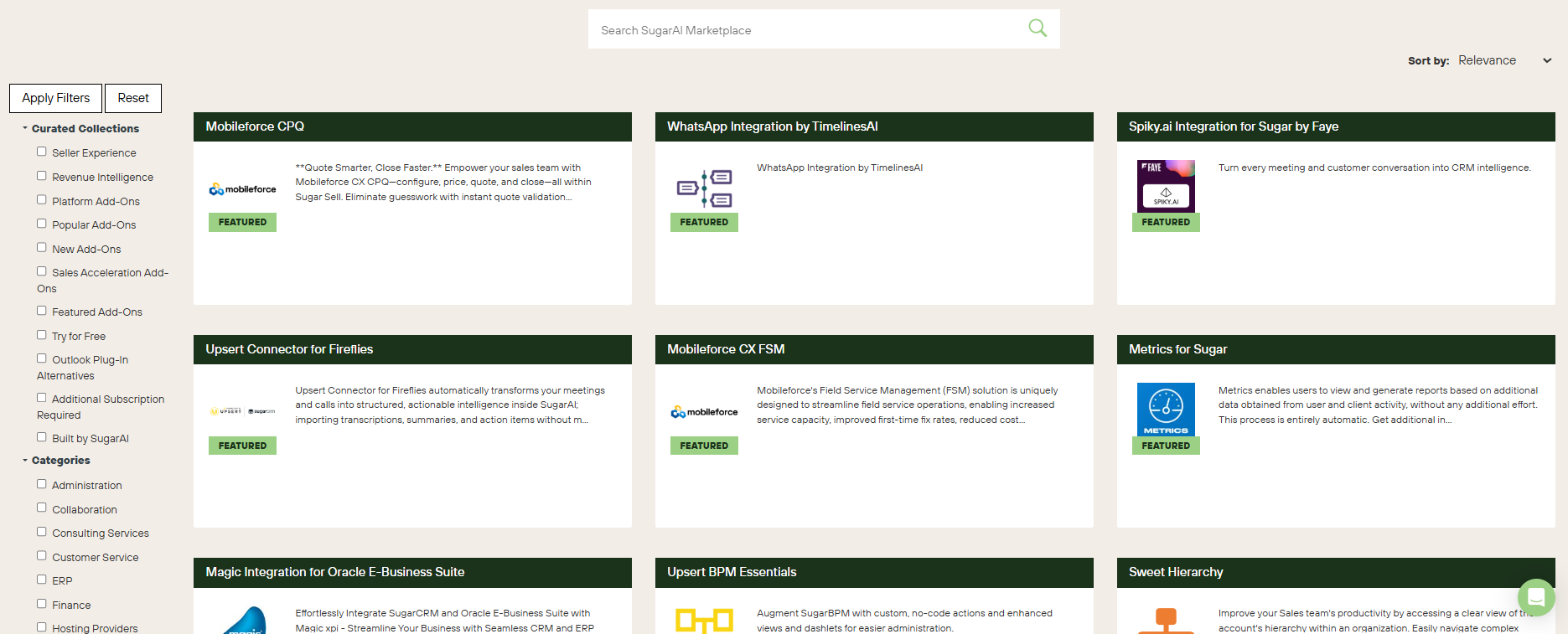
SugarCRM's integration story centers on ERP systems. The platform treats "180+ ERP integrations" as a product feature, not an afterthought. The SugarAI Marketplace lists connectors for SAP, Oracle, NetSuite, Epicor, Sage, Acumatica, and others, provided by integration specialists like Magic xpi, Commercient SYNC, and Faye. A recent Sugar for Syspro partnership delivers a pre-built ERP-CRM solution for manufacturers. Beyond ERP, the marketplace covers telephony, marketing tools, reporting, and productivity tools.
Source: SugarAI
Some Capterra reviewers note that SugarCRM doesn't integrate natively with many modern SaaS tools, and manual data transfers are sometimes required. The platform's REST API is well-documented and versioned, but the absence of official SDKs beyond PHP is a gap relative to API-first competitors.
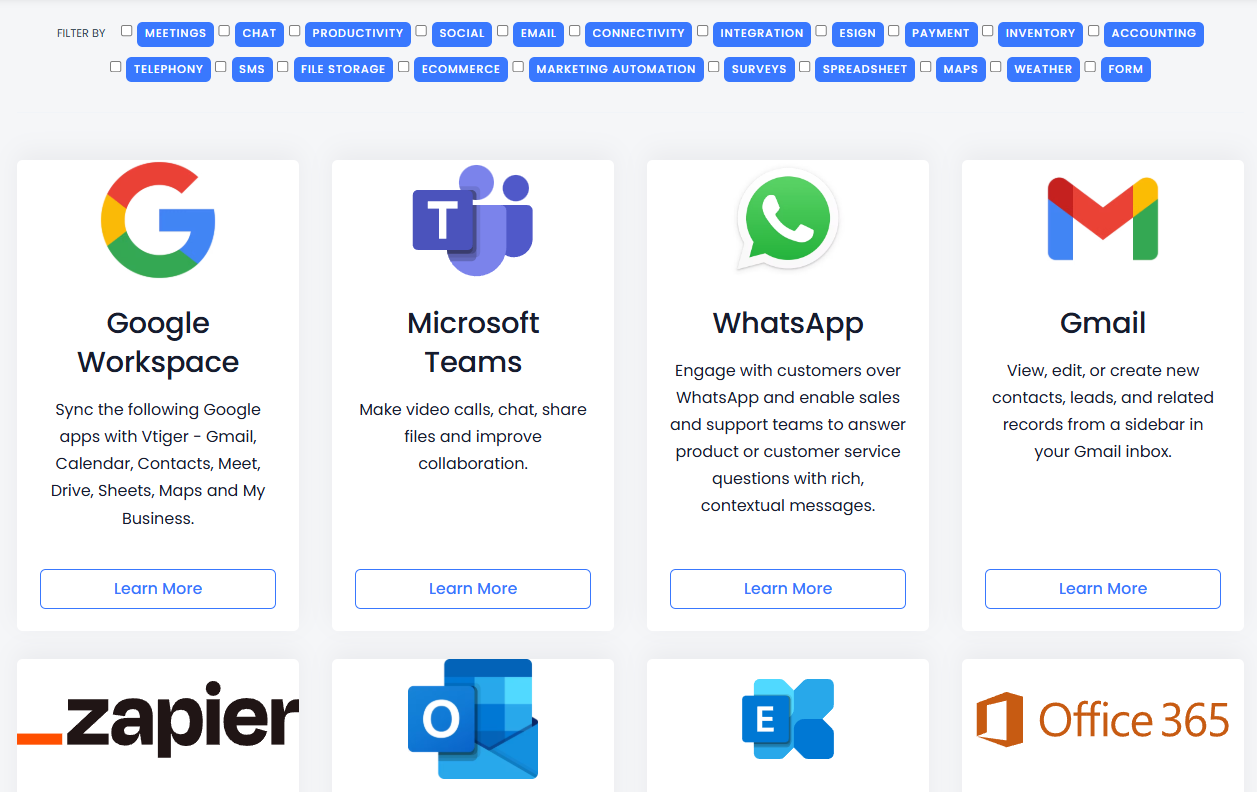
Vtiger claims 500+ integrations spanning meetings, chat, productivity, social, email, telephony, SMS, eCommerce, accounting, and file storage. Key native connectors include Google Workspace, Microsoft Teams, WhatsApp, Gmail, Outlook, Zapier, WooCommerce, QuickBooks, Xero, Stripe, and Razorpay. Integrations like Instamojo (India payment gateway) and JioMeet signal emerging-market focus.
Source: Vtiger
But G2 users note "integration limitations" and that "connecting modules together can be tricky." The number of integrations is large, but depth and bidirectional reliability vary. Vtiger's Zero Copy Integration accesses external app data in real time without copying it into Vtiger, which could address some integration depth concerns over time.
ZoomInfo integrates with both ecosystems. Its Marketplace lists 172+ integration partners, including native connectors for Salesforce, HubSpot, Microsoft Dynamics 365, and Sugar. Data can be delivered into AWS, Google Cloud, Snowflake, and Databricks as structured data sets. The Enterprise API and MCP server make ZoomInfo's intelligence accessible in any tool, including custom agents built on Claude or ChatGPT.
BDO Canada reduced time spent on data dashboard updates by 87% using ZoomInfo's API. Senior Marketing Intelligence Analyst Jerry Wilson noted: "The plug-and-play aspect of the API means I can integrate it very easily into any process and get information at a moment's notice." (BDO Canada Case Study)
Security and compliance
For regulated industries, security certifications and deployment control matter.
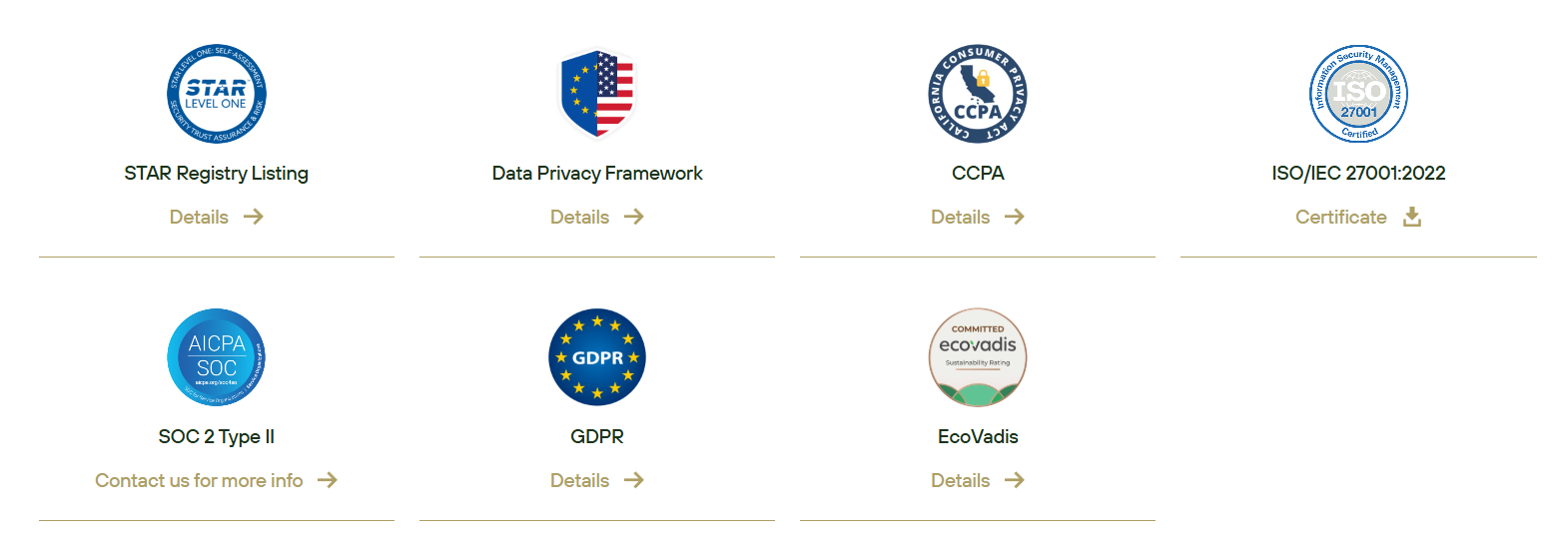
SugarCRM holds SOC 2 Type II, ISO/IEC 27001:2022, GDPR, CCPA, and CSA STAR certifications. Data is encrypted in transit and at rest, with role-based access control and mandatory multi-factor authentication. SugarCloud runs on AWS with customer-selected data regions. The on-premises option gives companies full control over their data infrastructure.
Source: SugarAI
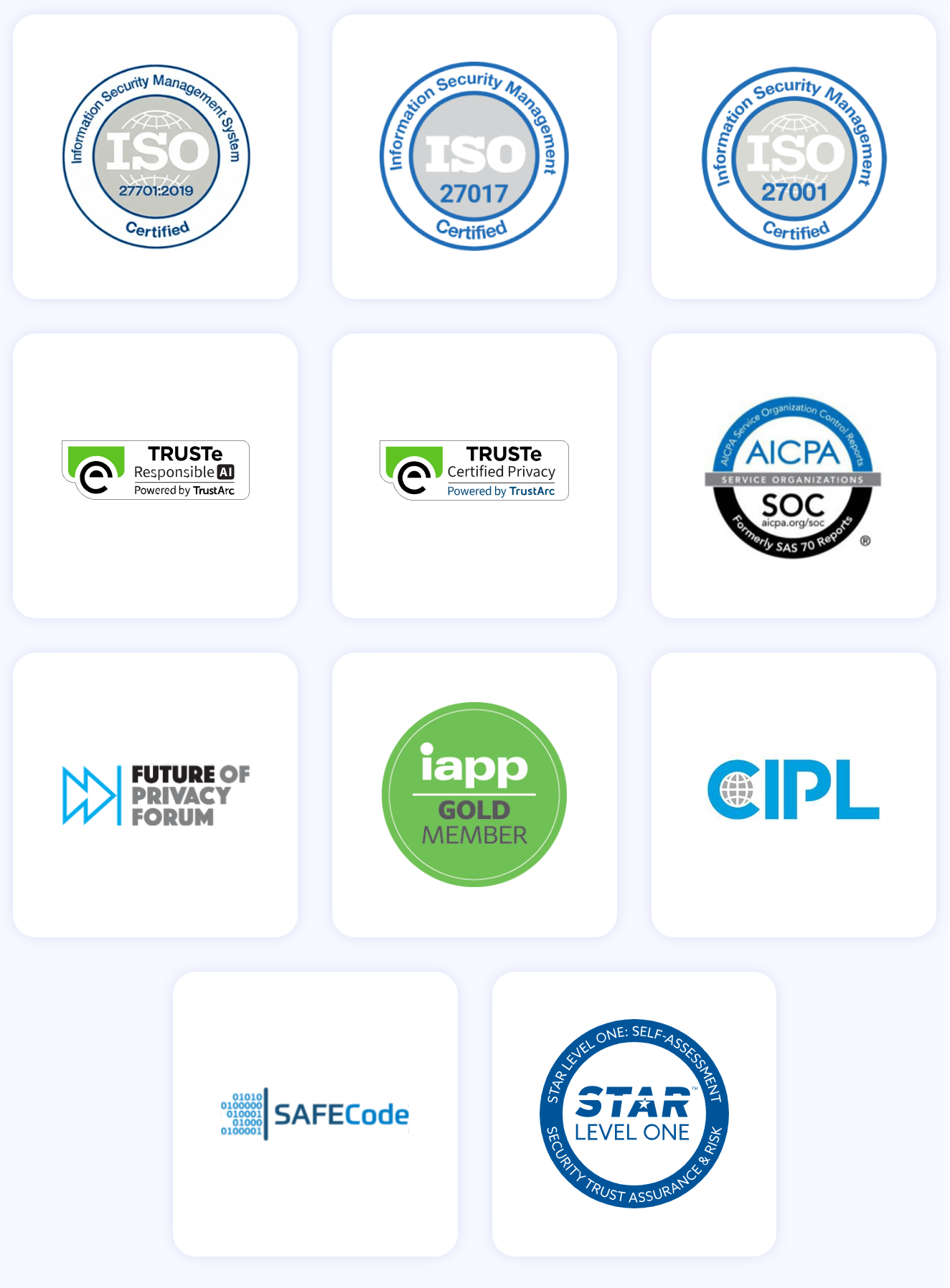
Vtiger holds ISO/IEC 27001 and ISO/IEC 27701 (the privacy extension of ISO 27001). Infrastructure runs on AWS, Oracle Cloud, and Microsoft Azure, with data centers in multiple global regions. Vtiger uses single-tenant architecture with AES-256 encryption at rest and TLS 1.2/1.3 in transit. Breach notification commits to alerting within 72 hours per GDPR requirements.
ZoomInfo maintains ISO 27001, ISO 27701, SOC 2 Type II, TRUSTe GDPR, and TRUSTe CCPA certifications, all renewed annually. It's a registered data broker in California and Vermont. A dedicated Trust Center provides transparency into data handling practices, which matters for enterprise buyers concerned about third-party data compliance.
Market recognition
Third-party analyst recognition helps calibrate where each platform stands.
SugarCRM has been named a Leader in the Nucleus Research SFA Technology Value Matrix for six consecutive years (2021-2026). It also earned Leader status in the IDC MarketScape for Worldwide Sales Intelligence 2025.
Vtiger has been named in the Gartner Magic Quadrant for Sales Force Automation for seven consecutive years (2019-2025), placed in the Niche Player quadrant. It also earned recognition from Frost & Sullivan, Info-Tech Research Group, and G2 for small-business CRM.
ZoomInfo holds Leader positions in both the Gartner Magic Quadrant for ABM Platforms (2024 and 2025) and the Forrester Wave for Intent Data Providers B2B (Q1 2025). Gartner's Voice of the Customer 2025 positioned ZoomInfo as the only vendor in the Customers' Choice quadrant with a 4.7/5.0 rating.
SugarCRM vs. Vtiger vs. ZoomInfo: Which should you choose?
The right choice depends on your business, your sales process, and where your biggest gaps are.
Choose SugarCRM if:
You're a B2B manufacturer, wholesaler, or distributor with 15+ sales reps
Your ERP system holds customer purchasing data that your sales team can't easily access
You need on-premises deployment for compliance or data sovereignty
Cross-sell and upsell intelligence from order history would change how your reps sell
You can invest in implementation and configuration for a platform that rewards depth
Choose Vtiger if:
You're an SMB that needs sales, marketing, and support in one platform
Budget matters and you want to start free or at $12/user/month
You need CPQ, deal collaboration, or help desk without buying additional tools
Your team values an open-source option or self-hosted deployment
You're willing to invest setup time for a platform with strong feature depth at its price
Add ZoomInfo to either CRM if:
You need verified contact data with direct dials and business emails that work
Knowing when target accounts are in-market would change your outreach timing
Your CRM records are incomplete or stale and you need automated enrichment
You want AI that reasons across your pipeline data and external buying signals together
You're building an outbound motion and need the intelligence layer to make it work
Smartsheet uses ZoomInfo as their "one source of truth for account data, and even more so for contact data." Senior Manager of Sales Technology Enablement Thor Sanderson said: "Without ZoomInfo, it would be extremely difficult, if not impossible, to achieve our business objectives." (Smartsheet Case Study)
See ZoomInfo in action with a free trial, or start with ZoomInfo Lite at no cost.
The CRM you choose matters. But a CRM without accurate, timely data is a process without fuel. SugarCRM excels at connecting ERP intelligence to sales workflows. Vtiger excels at unifying sales, marketing, and support for growing businesses. ZoomInfo provides the verified B2B data, buying signals, and contextual intelligence that makes either CRM deliver better results.
SugarCRM vs. Vtiger vs. ZoomInfo FAQ
What is the core difference between SugarCRM and Vtiger?
SugarCRM is a B2B sales CRM built for manufacturing, wholesale, and distribution companies that need to connect their ERP system to their sales process. Its standout feature, Sugar sales-i, analyzes ERP order data to surface cross-sell opportunities and churn risks. Vtiger is an all-in-one CRM that combines sales automation, marketing, and help desk under a single data model, targeting SMBs that want to consolidate multiple tools into one platform.
How does ZoomInfo differ from SugarCRM and Vtiger?
ZoomInfo is not a CRM. It's an AI-powered go-to-market platform that provides verified contact data, company intelligence, and buying signals. It complements CRMs by ensuring the data inside them is accurate and complete. ZoomInfo covers 500M contacts and 100M companies with up to 95% accuracy on first-party data, and its GTM Context Graph fuses that data with CRM records and conversation intelligence to reveal why deals move or stall.
Which platform is most affordable for a small sales team?
Vtiger is the most accessible, with a free plan (One Pilot) for up to 10 users and paid plans starting at $12/user/month. SugarCRM requires a 15-user minimum at $59/user/month, making the entry point $885/month even for smaller teams. ZoomInfo offers ZoomInfo Lite as a permanent free tier with 10 monthly export credits, making it a no-cost addition to either CRM for basic prospecting.
Can ZoomInfo integrate with SugarCRM or Vtiger?
ZoomInfo integrates directly with Sugar and lists it among its supported CRM and MAP integrations. For Vtiger, ZoomInfo data can be pushed via Zapier or the ZoomInfo API. ZoomInfo's MCP server also makes its intelligence accessible to any MCP-compatible tool or AI agent, and its Enterprise API supports custom integrations with any system that has an API.
Which platform is best for manufacturing and distribution companies?
SugarCRM is the strongest choice for manufacturing and distribution, with 180+ ERP integrations, ERP-native sales intelligence through Sugar sales-i, and industry-specific customer outcomes. SugarCRM was named the Most Innovative Solution in the Manufacturing Supplier Innovation Awards (2025). Vtiger also serves manufacturing customers, but without the same depth of ERP connectivity. Adding ZoomInfo to either CRM provides the verified contact data and intent signals needed for prospecting outside your existing customer base.
Do any of these platforms offer on-premises deployment?
Both SugarCRM and Vtiger offer self-hosted options. SugarCRM provides Sugar Enterprise ($85/user/month, 10-user minimum) for on-premises deployment with migration support to and from SugarCloud. Vtiger offers a free open-source edition with over 5 million downloads that can be self-hosted on any infrastructure. ZoomInfo is cloud-only.
How do the AI capabilities compare across the three platforms?
SugarCRM's AI focuses on sales guidance: next-best-action recommendations, deal risk signals, and call prep from CRM and ERP data. Vtiger's Calculus AI covers sales, marketing, and support, including deal scoring, call quality analysis, and a no-code Agent Builder for creating AI agents. ZoomInfo's GTM Context Graph processes 1.5B+ data points daily, fusing third-party B2B intelligence with CRM records, conversation transcripts, and behavioral signals. ZoomInfo's AI operates across a different data set: external market signals and verified buyer data rather than internal CRM activity alone.
Which CRM has the better mobile app?
Neither platform is praised for mobile. SugarCRM's mobile app is described by Capterra reviewers as slow and buggy, noticeably different from the desktop experience. Vtiger's mobile app includes GPS check-in, business card scanning, and voice notes, but TrustRadius reviewers note it should have more options. Both platforms need to close the gap between mobile and desktop for field sales teams.
More SugarCRM comparisons:
