
Choosing between HubSpot and SuiteCRM for your CRM comes down to five questions:
Do you want a managed cloud platform or full control over your own infrastructure and source code?
Is per-user licensing acceptable, or does your team size make per-seat pricing a dealbreaker?
How much do you value native AI features versus the freedom to build your own?
Are you willing to pay for convenience, or would you rather invest internal resources to save on software costs?
Does your CRM need to tell you who to sell to and when, or just help you track what's already happening?
In short, here's what we recommend:
HubSpot is a customer platform for growing companies that want marketing, sales, and service tools connected through a single database. Its Smart CRM unifies six product hubs, over 2,000 app integrations, and an AI layer called Breeze that automates prospecting, customer support, and content creation. HubSpot suits teams that want ready-made tools without heavy technical configuration. The tradeoff: pricing scales quickly as you add hubs, seats, and contacts, with mandatory onboarding fees at Professional and Enterprise tiers and a mixed-tier billing rule that can amplify costs.
SuiteCRM is the leading open-source CRM, offering sales, marketing, and service functionality with zero per-user license fees. Organizations can self-host on their own servers, deploy to any cloud, or use SuiteCRM's managed hosting from £130/month. For companies that need full data sovereignty or want to escape vendor lock-in, SuiteCRM provides a complete CRM toolkit without the recurring software bill. The tradeoff: self-hosted deployments demand in-house IT expertise, paid support starts at £1,200/year for just 10 hours, and there are no native AI features on the roadmap.
Both platforms manage customer relationships once you have them. But here's the gap neither fills: knowing which companies to pursue, when to reach out, and why a deal is moving. That intelligence is what separates pipeline growth from pipeline tracking.
ZoomInfo is a go-to-market intelligence platform that lets your sales reps walk into every call knowing why the deal is moving, who's championing it, and what's likely to happen next. Your marketers can describe audiences in plain language and launch plays against accounts that match your proven win patterns. No engineering ticket required. Your leaders can see deal risk before it shows up in CRM stage fields. That depth comes from the GTM Context Graph, an intelligence layer built on a B2B dataset of 500M contacts, 100M companies, 135M+ verified phone numbers, and 200M+ verified business emails, unified with your CRM records, conversation transcripts, and behavioral signals. Your team accesses it through the GTM Workspace for sellers, GTM Studio for marketers and RevOps, or APIs and MCP in any front-end, including HubSpot and SuiteCRM.
If you want to turn your CRM from a record-keeping system into an intelligence-driven revenue engine, see how ZoomInfo works.
HubSpot vs. SuiteCRM vs. ZoomInfo at a glance
HubSpot | SuiteCRM | ZoomInfo | |
|---|---|---|---|
Core function | Customer platform (CRM + marketing + sales + service) | Open-source CRM (sales + marketing + service) | Go-to-market intelligence platform |
AI capabilities | Breeze AI agents across all hubs | None (not on roadmap) | GTM Context Graph + AI agents for prospecting, research, outreach |
Deployment | Cloud only (US and EU data centers) | Self-hosted, any cloud, or managed hosting | Cloud (SaaS) |
Integrations | 2,000+ app marketplace | Open REST API + add-on store | 172+ marketplace partners + API + MCP for any AI agent |
Data sovereignty | Limited (cloud-hosted) | Full (self-hosted option) | Cloud-hosted with compliance certifications |
Pricing model | Per-seat + per-hub + contact tiers | Free software; pay for hosting, support, and implementation | Custom-quoted, consumption-based |
Starting cost | Free CRM; paid from $15/seat/mo | Free (self-hosted); managed hosting from £130/mo | Free tier (ZoomInfo Lite); paid plans custom-quoted |
Best for | Growing companies wanting unified marketing/sales/service | Cost-conscious orgs needing full control and no vendor lock-in | B2B teams that need intelligence to find, win, and grow customers |
The CRM decision is really a philosophy decision
HubSpot and SuiteCRM solve the same problem (managing customer relationships) with different philosophies about how software should be built, delivered, and paid for.
HubSpot believes the best CRM is one that's easy to adopt, continuously updated by the vendor, and connected across marketing, sales, and service. You trade control for convenience. Every feature works out of the box, updates roll out automatically, and a large ecosystem of apps and partners extends the platform in any direction.
SuiteCRM believes the best CRM is one you own. Every line of code is free to acquire. You run it on your servers, modify the source code to fit your workflows, and never worry about a vendor raising prices or changing terms. You trade convenience for control.
ZoomInfo operates on a different axis.
While both HubSpot and SuiteCRM are record-keeping systems at their core (tracking contacts, deals, and tickets), ZoomInfo is an intelligence system. It answers the questions that come before CRM: Which companies should we target? Who are the decision-makers? Are they researching solutions? What messaging will resonate?
ZoomInfo integrates with both HubSpot and SuiteCRM, feeding verified data and buying signals into whichever CRM a team uses.

HubSpot delivers breadth; SuiteCRM delivers freedom
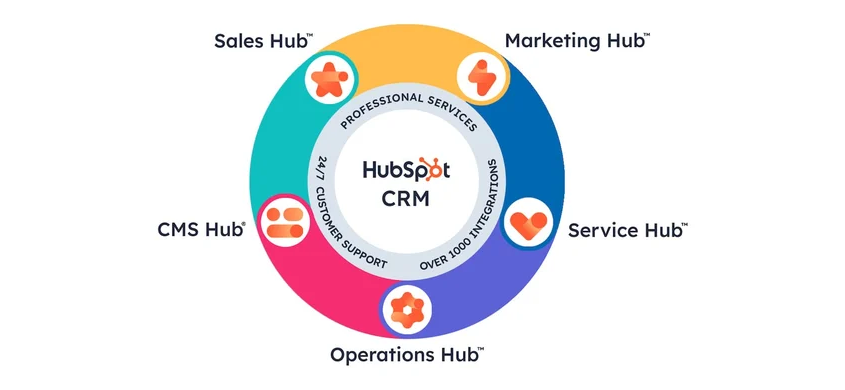
HubSpot's product suite spans six hubs: Marketing, Sales, Service, Content, Data, and Commerce, all sharing a single Smart CRM database. A marketer can see every interaction a contact has had with sales. A service rep can see every campaign a customer engaged with. This native connectivity is HubSpot's strongest argument against assembling a stack of point solutions.
The depth within each hub is real.
Marketing Hub includes email automation, landing pages, social media management, and multi-touch attribution. Sales Hub handles pipelines, sequences, CPQ, and forecasting. Service Hub offers a help desk, knowledge base, customer portal, and a Breeze Customer Agent that resolves over 50% of conversations on its own. For teams that want all of this under one roof, HubSpot is hard to match.
Source: HubSpot
SuiteCRM covers less ground but owns what it covers.
The platform includes sales pipeline management, marketing campaigns, case management, workflow automation, reporting, and a self-service customer portal as standard, with no features locked behind premium tiers. It ships with the Advanced Open Sales module for quoting, invoicing, and contracts. Its Advanced OpenWorkflow engine automates multi-step processes with round-robin assignment, scheduler-driven batch automation, and a full process audit trail.
Where SuiteCRM falls short of HubSpot's breadth (no native CMS, no built-in social media management, no commerce platform), it compensates with customization depth.
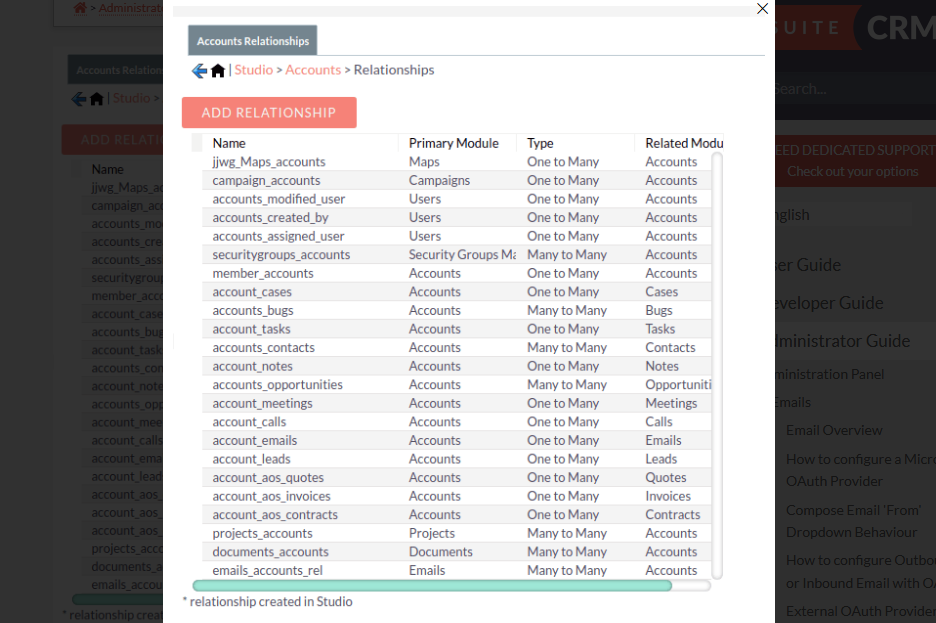
Studio's Module Builder creates new modules without writing code. The open REST API allows integrations HubSpot might restrict to higher tiers. And the add-on store offers extensions for specific needs.
Source: SuiteCRM
AI separates HubSpot from SuiteCRM, and ZoomInfo from both
This is where the three platforms diverge most sharply.
SuiteCRM has no AI capabilities, and none are on the roadmap.
The published roadmap lists email campaign builders and reporting improvements for versions 8.11 and 8.12, with no dates attached. Teams that need AI today must bring their own external tools or custom development.
HubSpot has invested heavily in AI through Breeze.
The Breeze layer runs across all hubs, offering a personal AI assistant, specialized agents (Customer Agent, Prospecting Agent, Data Agent), and embedded AI features like content generation and conversation intelligence.
Breeze is platform-native: it operates with full access to a customer's CRM data rather than working from generic training data. The Prospecting Agent drafts personalized outreach using deal history, support tickets, and marketing engagement. The Customer Agent handles support across chat, email, WhatsApp, and voice.
But HubSpot's AI works within the boundaries of what's already in your CRM. If your database is thin, your AI outputs will be thin.
Source: HubSpot
ZoomInfo's AI runs on a different data foundation.
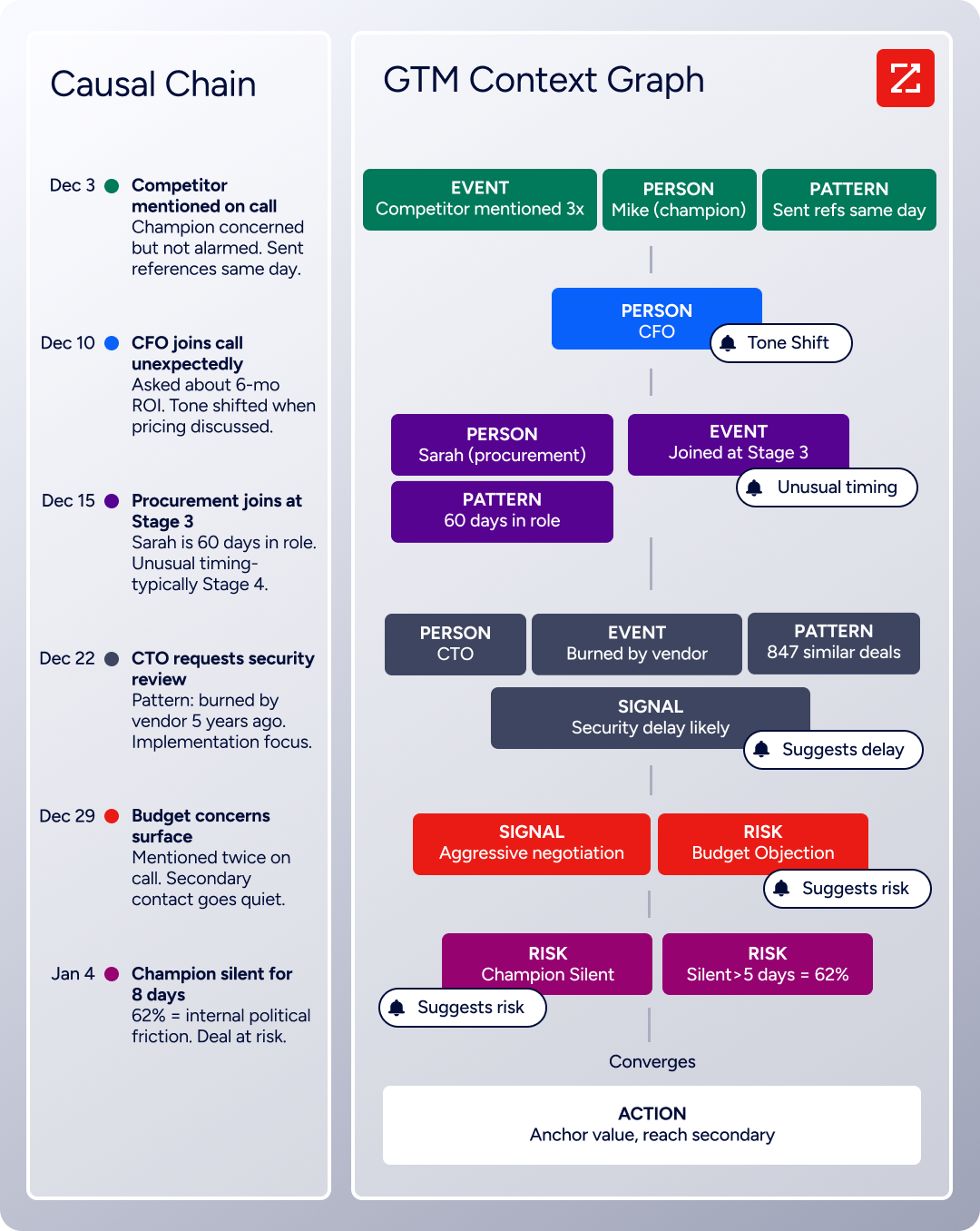
The GTM Context Graph processes 1.5B+ data points daily, combining ZoomInfo's third-party B2B intelligence with a customer's CRM records, conversation transcripts, and behavioral signals. As ZoomInfo's Chief Product Officer Dominik Facher puts it: "The CRM recorded the state change. It has no record of why it happened."
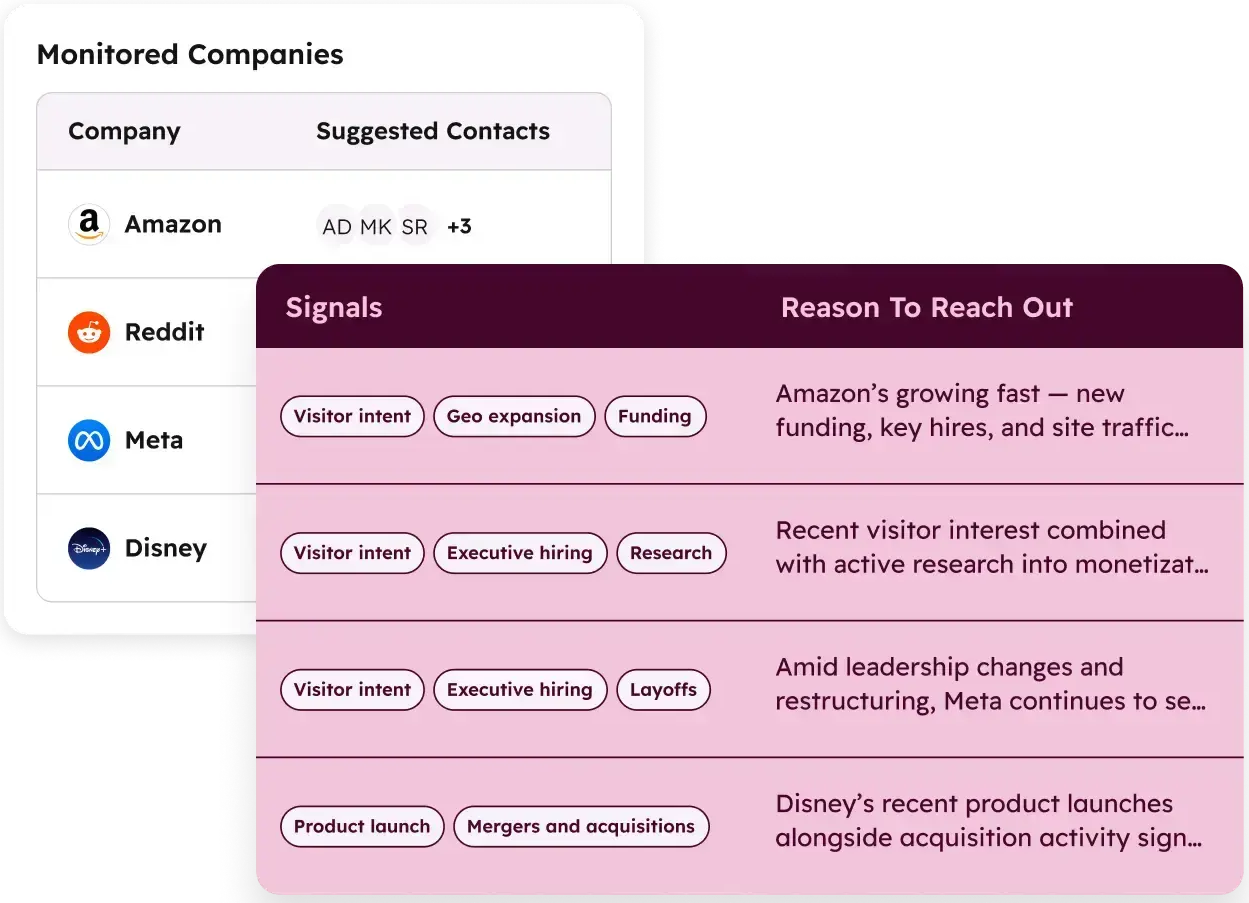
A deal moving from stage 3 to stage 4 looks the same in any CRM. The GTM Context Graph captures that the CFO joined the last call and asked about ROI, that the VP went quiet for eight days during an internal budget battle, and that the company just hired three new VPs and is researching your competitor. That context is what makes AI-drafted outreach specific rather than generic.
Source: ZoomInfo
Seismic's sales team attributed 39% of active pipeline to opportunities identified or influenced by ZoomInfo signals, while boosting productivity by 54% and saving 11.5 hours per week. (Seismic case study)
For a closer look at how HubSpot and ZoomInfo compare across AI, data, and go-to-market capabilities, see our HubSpot vs. ZoomInfo comparison.
Data quality determines everything downstream
A CRM is only as good as the data inside it. Both HubSpot and SuiteCRM depend on their users to populate and maintain contact records.
HubSpot's Smart CRM includes AI-powered data enrichment and duplicate detection, pulling information from email threads, recorded calls, and HubSpot's own dataset. SuiteCRM offers standard deduplication and import tools but relies on manual data entry or third-party enrichment services.
ZoomInfo exists to solve this problem at scale.
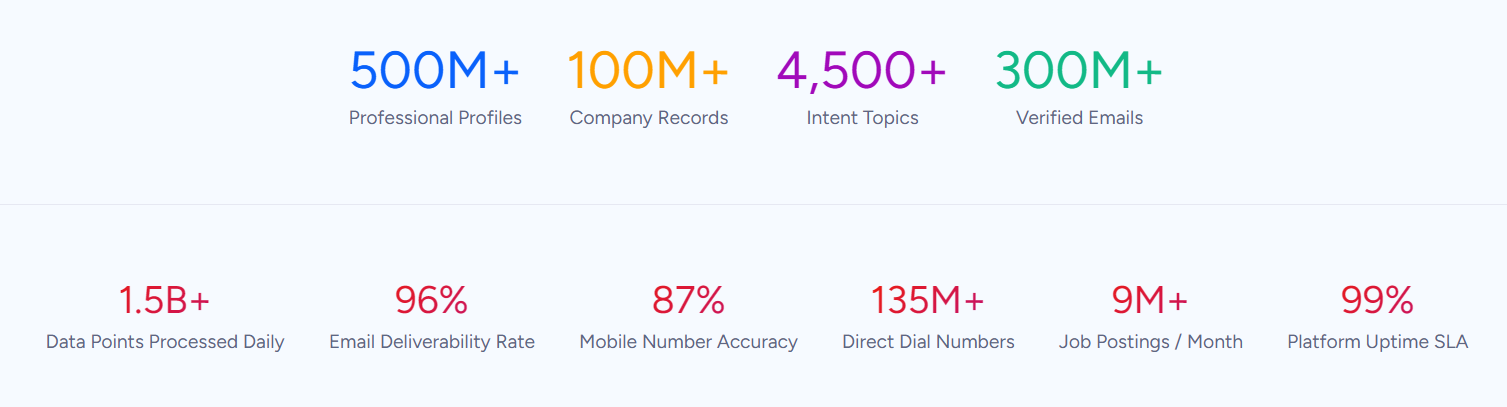
The platform maintains 500M contacts, 100M companies, 135M+ verified phone numbers, 120M direct-dial numbers, and 200M+ verified business email addresses. This data comes from multiple sources: automated ML scanning of 28 million site domains daily, third-party partner data covering 95 million businesses, a community of 200,000+ ZoomInfo Lite users who share data back, and an in-house Data Training Lab of 300+ human researchers. First-party data reaches up to 95% accuracy.
Source: ZoomInfo
The practical impact: a sales rep using HubSpot or SuiteCRM with ZoomInfo data doesn't waste time on bounced emails, disconnected phone numbers, or outdated contacts. When a Fortune 500 company ran a competitive RFP analyzing 25 million contacts across vendors, the independent consultant concluded that "no other competitor came even close" to ZoomInfo's data quality.
Vensure's Vice President of Revenue Operations, William Kenimer: "ZoomInfo gives us the information we need to execute. We don't have to go through and spend our time digging. It's already there, so we can be three steps ahead." (Vensure case study)
Integration and deployment tell you what you're committing to
HubSpot is cloud-only, hosted on AWS with US and EU data center options.
The App Marketplace offers over 2,000 integrations, including native connections to Salesforce, Google Workspace, Microsoft 365, Slack, Zoom, and dozens of category-specific tools. The platform provides a REST API, official SDKs in six languages (PHP, Java, Ruby, Go, TypeScript, Python), and a Remote MCP server for AI agent access.
For developers, the ecosystem is mature and well-documented. For organizations that require on-premise deployment, HubSpot is not an option.
SuiteCRM offers full deployment flexibility.
Organizations can self-host on their own servers, deploy to any cloud provider, or use managed hosting. On-premise is a first-class option, and Salesforce has no equivalent. The V8 REST API follows JSON:API standards.
The tradeoff: SuiteCRM's integration ecosystem is narrower. There are no official SDKs, no native Zapier connector, and the add-on store is small compared to HubSpot's marketplace. Self-hosted deployments require the organization to manage updates, security patches, and infrastructure.
ZoomInfo integrates natively with both platforms.
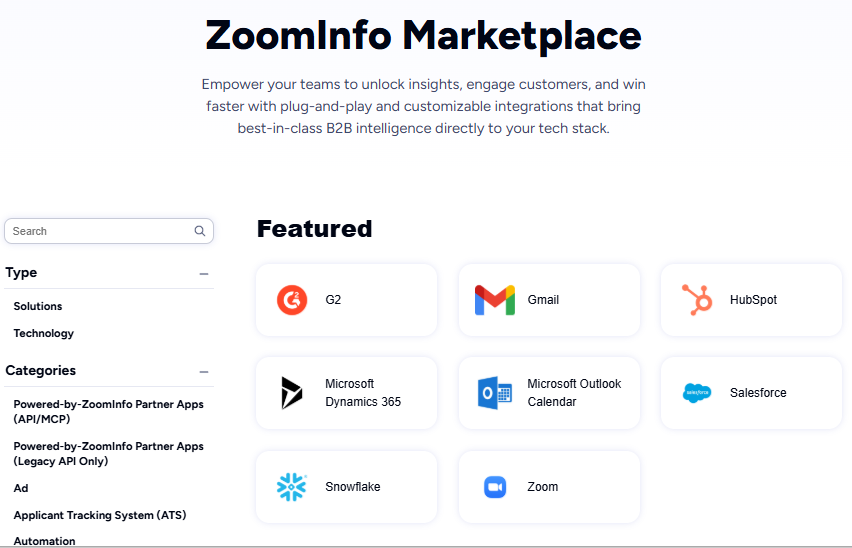
HubSpot is a featured integration in ZoomInfo's marketplace, and SuiteCRM can connect via ZoomInfo's open REST API or MCP server. ZoomInfo also connects to Salesforce, Microsoft Dynamics 365, and cloud data platforms including Snowflake, AWS, and Databricks. The ZoomInfo MCP server is listed in the Claude directory and supports Claude, ChatGPT, and other MCP-compatible AI clients, making ZoomInfo usable as infrastructure for teams building AI-powered workflows.
Source: ZoomInfo
BDO Canada's Senior Marketing Intelligence Analyst, Jerry Wilson: "The plug-and-play aspect of the API means I can integrate it very easily into any process and get information at a moment's notice." ZoomInfo's API reduced time spent on internal data dashboard updates by 87%. (BDO Canada case study)
Support and learning curve comparison
HubSpot offers the smoothest onboarding of the three.
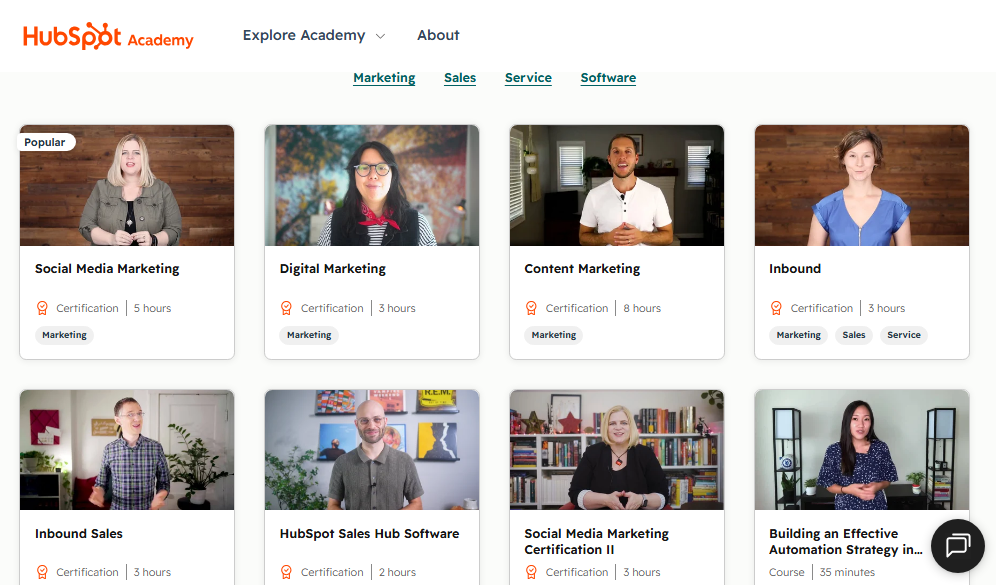
The free tier lets teams explore the platform before committing, and HubSpot Academy provides free courses and certifications with over 200,000 certified professionals to date. Support scales by tier: community-only for free users, email and chat for Starter, phone support added at Professional and Enterprise. Getting started is fast, though mastering the full suite (especially marketing automation workflows and enterprise features) takes time.
Source: HubSpot
SuiteCRM requires more upfront investment.
Self-hosted deployments need server administration knowledge for installation, upgrades, and security patching. The admin guide covers topics from Elasticsearch configuration to SSO setup, indicating intermediate-to-advanced requirements. Free support runs through community forums with no SLA.
Paid support (starting at £1,200/year for 10 hours) provides direct vendor contact through a portal, email, phone, and video calls. For teams with technical capability, the open documentation and source code access make customization possible. For those without, the managed hosting path reduces complexity.
ZoomInfo redesigned its onboarding from 30 to 90 days, structured across planning, technical implementation, education, and adoption. The redesign produced a 25% improvement in customer satisfaction scores.
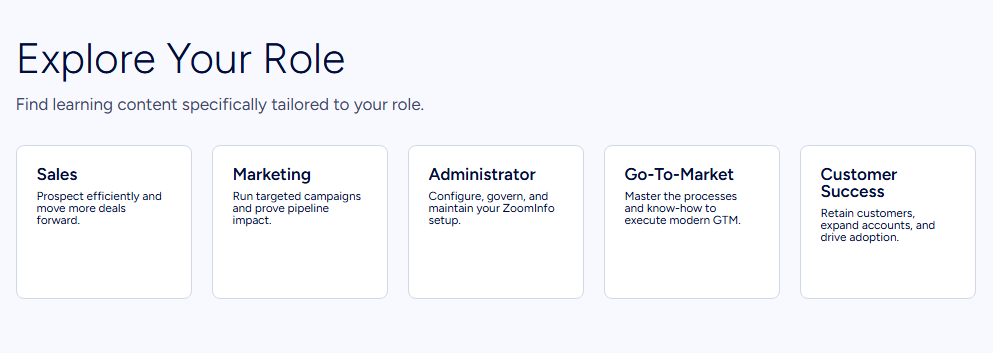
ZoomInfo University provides role-specific learning paths and certifications. Enterprise-tier customers get a dedicated customer service manager and hands-on onboarding.
Source: ZoomInfo
Security and compliance credentials
All three platforms take security seriously, but their approaches reflect their deployment models.
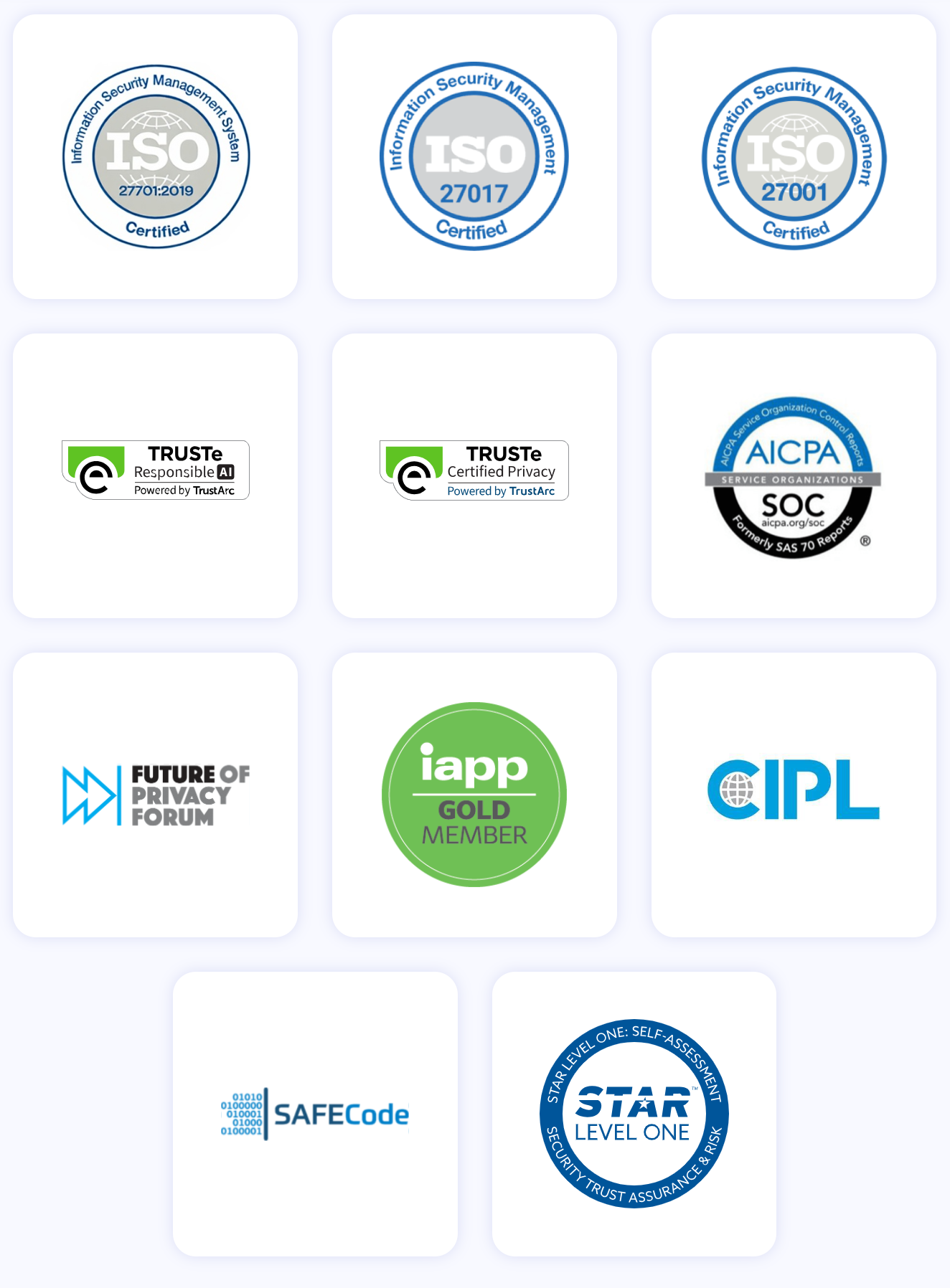
HubSpot holds SOC 2 Type II, HIPAA attestation, and compliance certifications for GDPR and CCPA. Data is encrypted at rest (AES-256) and in transit (TLS 1.2 and 1.3). The platform supports SSO, 2FA, IP allowlisting, and field-level permissions. An EU Data Center is available for data localization requirements. AI model cards detail how each AI system interacts with customer data.
SuiteCRM holds ISO 9001 and ISO 27001 certifications and is a Crown Commercial Service Supplier, qualifying for UK government procurement. The managed hosting service covers UK GDPR and EU GDPR compliance with data residency options in the UK, Europe, or US.
For organizations with the strictest data sovereignty requirements, self-hosted SuiteCRM keeps all customer data within their own infrastructure, a capability neither HubSpot nor ZoomInfo can offer.
ZoomInfo maintains ISO 27001, ISO 27701, SOC 2 Type II, and TRUSTe GDPR and CCPA certifications, all renewed annually. The company is a registered data broker in California and Vermont. A dedicated Trust Center provides certification details, subprocessor lists, and compliance documentation.
Pricing tells you who each platform is built for
Nothing reveals a platform's priorities faster than its pricing structure.
HubSpot uses a layered model combining per-seat fees, per-hub subscriptions, and contact-tier pricing.
The free CRM is genuinely useful (unlimited contacts, basic tools, two users), and the Starter bundle at $15/seat/month covers the basics affordably. But costs escalate at Professional and Enterprise tiers. Marketing Hub Professional runs $800/month (annual) with a $3,000 mandatory onboarding fee. Sales Hub Professional is $90/seat/month with a $1,500 onboarding fee.
A critical detail: if you subscribe to multiple hubs at different tiers, all Core Seats bill at the rate of the highest tier. A company mixing Marketing Hub Enterprise with Sales Hub Professional pays Enterprise seat rates across the board.
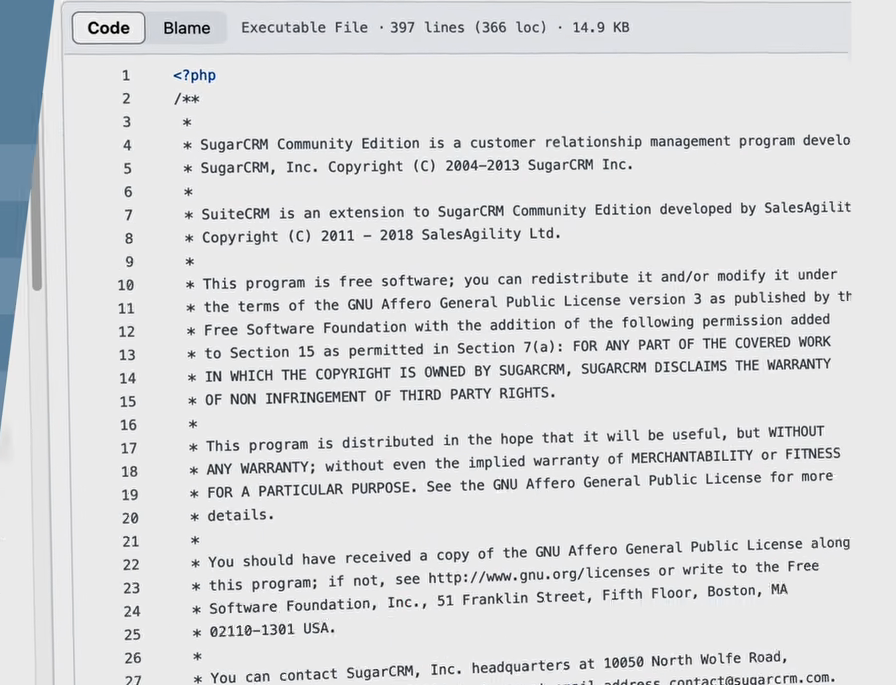
SuiteCRM inverts the model. The software is free. You pay for infrastructure and support.
Self-hosting costs only what your servers cost. Managed hosting starts at £130/month (annual) for up to 10 users and scales to dedicated infrastructure for 150+ users. Support is sold by the hour: 10 hours for £1,200/year, 30 hours for £3,240, or 50 hours for £5,400. For organizations with 50+ CRM users, SuiteCRM's cost advantage compounds quickly. Their own comparison data suggests ongoing costs roughly 80% lower than Salesforce, and the gap relative to HubSpot at scale follows a similar pattern.
Source: SuiteCRM
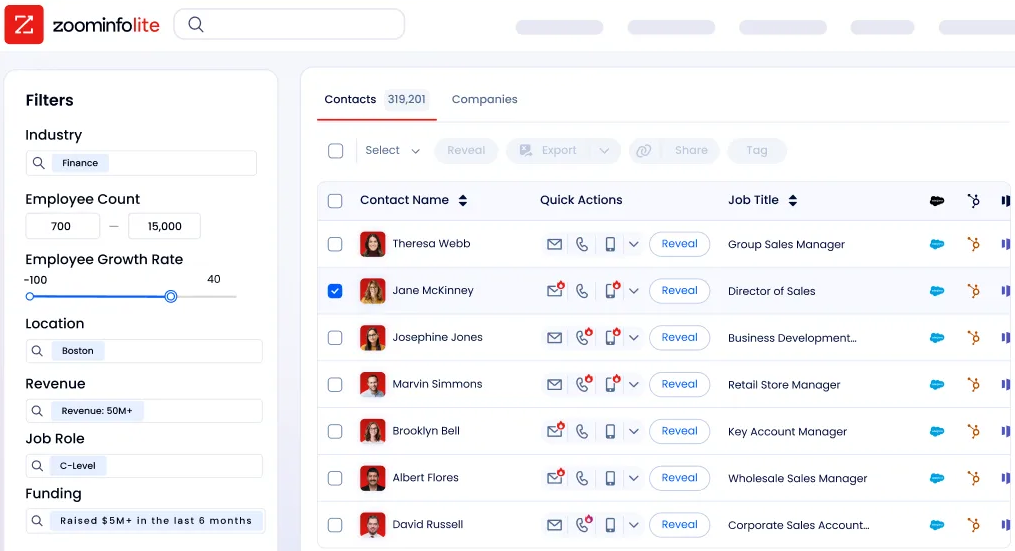
ZoomInfo uses consumption-based pricing that scales around data access, API usage, and AI activity.
No prices are published; everything is custom-quoted. A permanent free tier (ZoomInfo Lite) provides access to the B2B database with 10 monthly export credits, and a 7-day free trial opens the full platform. For teams evaluating CRM solutions, the relevant pricing question isn't "ZoomInfo or HubSpot" but "what does your CRM cost you when it lacks the intelligence to fill the pipeline?"
Source: ZoomInfo
HubSpot vs. SuiteCRM vs. ZoomInfo: Which should you choose?
The right choice depends on what problem you're trying to solve.
Choose HubSpot if:
You want marketing, sales, and service tools in one connected platform
Ease of use and fast time-to-value matter more than total cost
Your team prefers managed software over maintaining infrastructure
Native AI features (Breeze agents, content generation, conversation intelligence) are important to your workflow
You need a large integration ecosystem and mature developer tools
Choose SuiteCRM if:
Per-user licensing costs are a dealbreaker at your team size
Data sovereignty and on-premise deployment are non-negotiable
You have in-house technical resources to manage and customize a CRM
You want full source code access and no vendor lock-in
You're migrating from Salesforce or another proprietary CRM and want to reduce costs
Add ZoomInfo to either CRM if:
Your pipeline depends on finding and reaching the right buyers, not just tracking existing relationships
You need verified contact data, direct dials, and business emails at scale
Buyer intent signals and account intelligence would change how your team prioritizes outreach
You want AI that understands why deals move, not just that they moved
Your sales and marketing teams need intelligence that flows into whatever tools they already use
Start with ZoomInfo Lite for free or request a demo of the full platform.
HubSpot and SuiteCRM are both capable CRM platforms. HubSpot trades cost for convenience. SuiteCRM trades convenience for cost.
But neither was built to answer the question that matters most to revenue teams: who should we be talking to right now, and what should we say?
ZoomInfo provides that intelligence layer, feeding verified data, buying signals, and contextual AI into whichever CRM you choose. The CRM records the relationship. ZoomInfo helps you build it.
HubSpot vs. SuiteCRM vs. ZoomInfo FAQ
What is the core difference between HubSpot, SuiteCRM, and ZoomInfo?
HubSpot is a cloud customer platform combining CRM, marketing automation, sales tools, and customer service under a single database.
SuiteCRM is an open-source CRM offering similar functionality (sales, marketing, service) with zero per-user licensing fees and full deployment flexibility including on-premise hosting.
ZoomInfo is a go-to-market intelligence platform providing B2B contact and company data, buyer intent signals, and AI-powered account insights that feed into whichever CRM a team uses.
Which platform is cheapest for a growing team?
SuiteCRM has the lowest software cost since the application itself is free. For a team of 50 users, the difference is significant: HubSpot could cost thousands per month across seat fees, hub subscriptions, and mandatory onboarding, while SuiteCRM's only recurring costs are hosting (from £130/month for managed hosting) and optional support hours.
ZoomInfo operates on separate, consumption-based pricing that covers data access and AI features, complementing rather than replacing either CRM.
Can ZoomInfo work with both HubSpot and SuiteCRM?
Yes. ZoomInfo has a featured native integration with HubSpot in its marketplace and connects to SuiteCRM via its open REST API or MCP server. ZoomInfo's data and intelligence can flow into any CRM, marketing automation, or sales engagement tool through these integration paths, so the choice of CRM does not limit access to ZoomInfo's B2B data.
Which platform has the best AI capabilities?
ZoomInfo leads in go-to-market intelligence AI, with a GTM Context Graph that processes 1.5 billion data points daily and AI agents for account research, prospecting, and outreach.
HubSpot's Breeze AI layer is strong within its own platform, offering agents for customer service, prospecting, and content creation that work on CRM data. SuiteCRM has no AI features and none on its published roadmap.
Does SuiteCRM really match HubSpot in features?
SuiteCRM covers core CRM functions well: lead and opportunity management, campaigns, case management, workflow automation, reporting, quoting, and invoicing. HubSpot offers more breadth with its CMS (Content Hub), native payment processing (Commerce Hub), data orchestration (Data Hub), and built-in AI.
Where SuiteCRM compensates is in customization depth: open source code, unlimited custom modules, and no feature-tier restrictions. The gap is most noticeable in marketing automation sophistication and AI features.
Which platform is best for organizations with strict data residency requirements?
SuiteCRM is the strongest option for data sovereignty since it can be self-hosted on any infrastructure, keeping all data within the organization's control. HubSpot is cloud-only, with US and EU data center options. ZoomInfo is cloud-hosted with ISO 27001, ISO 27701, and SOC 2 Type II certifications, as well as TRUSTe-validated GDPR and CCPA compliance.
How does the integration ecosystem compare?
HubSpot has the largest ecosystem with over 2,000 apps in its marketplace, official SDKs in six programming languages, and a mature developer platform.
ZoomInfo's marketplace lists 172+ partner integrations plus native connections to cloud data platforms like Snowflake, AWS, and Databricks. SuiteCRM has a smaller add-on store, an open REST API, and no official SDKs, though its open-source nature means developers can build any integration directly against the codebase.
Is HubSpot's free CRM enough, or will I need to upgrade?
HubSpot's free CRM includes unlimited contacts, basic pipeline management, email tracking, meeting scheduling, and limited marketing tools, but is capped at two users. It serves as a genuine starting point for small teams.
You'll likely need to upgrade once you require marketing automation workflows, sales sequences, custom reporting, or more than basic tools. Professional and Enterprise tiers carry mandatory onboarding fees and per-seat costs that add up as the team grows.
Keep comparing HubSpot:
