
VanillaSoft has earned its reputation as a reliable sales engagement platform for high-velocity outbound teams. Its queue-based lead routing, built-in auto dialer, and single-screen agent workflow have helped thousands of inside sales teams, from insurance agencies to university fundraising centers, increase call volume and enforce cadence discipline across large agent pools.
But as your sales operation matures, you may find that VanillaSoft's execution-first architecture leaves gaps in areas that are becoming increasingly critical. Its queue-based model only allows agents to work one lead at a time, making it difficult to manage complex, multi-threaded B2B deals.
It is not a standalone CRM, so teams typically need a secondary system for pipeline visibility and forecasting. Its email builder has been consistently described as clunky by reviewers, and its pricing structure requires a minimum 5-seat bundle with no publicly listed prices.
That's where this guide comes in. Whether you're looking to:
Access comprehensive B2B data and buyer intent intelligence to target the right prospects before you dial
Manage complex enterprise deals with conversation intelligence, pipeline tracking, and revenue forecasting
Combine a B2B database, sales engagement, and pipeline management in one transparently priced platform
Run a full CRM alongside sales engagement without maintaining a separate system
Maximize call answer rates with premium carrier infrastructure and proactive spam protection
Scale outbound dialing affordably for small teams without seat minimums
Build AI-native outbound operations with virtual collaboration for distributed SDR teams
We'll explore dedicated alternatives that excel in these specific areas.
Some teams might use these tools alongside VanillaSoft to fill specific capability gaps, while others might choose to replace it entirely with a more modern stack. This isn't about finding a "better" platform; it's about finding the right fit for your needs as your team grows and your go-to-market strategy becomes more sophisticated.
Let's dive into the VanillaSoft alternatives that can give your sales team the specialized power it needs.
The Best VanillaSoft Alternatives | |
|---|---|
Best Alternative for AI-Powered B2B Data Intelligence and GTM Execution We chose ZoomInfo because it provides the comprehensive B2B data foundation, buyer intent signals, and AI-powered GTM execution that VanillaSoft's dialer-first architecture was never designed to deliver. It's ideal for teams that need to know who to target, when to engage, and why those accounts matter. | |
Best Alternative for Enterprise Revenue Orchestration and Deal Management We chose Salesloft because it combines multi-channel cadences, conversation intelligence, deal management, and AI-powered forecasting into a single platform designed for complex B2B sales cycles that VanillaSoft's one-lead-at-a-time queue model cannot support. | |
Best Alternative for All-in-One Prospecting With Transparent Pricing We chose Apollo.io because it bundles a 230M+ contact database, sales engagement, a parallel dialer, and pipeline management into one transparently priced platform, eliminating VanillaSoft's multi-vendor dependency and opaque 5-seat bundle model. | |
Best Alternative for Full CRM Without Implementation Overhead We chose HubSpot Sales Hub because it delivers the standalone CRM, pipeline management, and reporting flexibility that VanillaSoft explicitly does not provide, with a permanent free tier and no seat minimums. | |
Best Alternative for Maximizing Call Answer Rates and Deliverability We chose PhoneBurner because its exclusive Tier 1 carrier network, zero-delay power dialing, and ARMOR spam protection deliver structurally higher answer rates than standard VoIP-based dialers, with no seat minimums and a free trial. | |
Best Alternative for Small Teams Needing Affordable Multi-Line Dialing We chose Kixie because it offers multi-line dialing up to 10 simultaneous lines, no seat minimums, and transparent per-seat pricing, making high-velocity outbound accessible for small teams priced out of VanillaSoft's 5-seat bundles. | |
Best Alternative for AI-Native Outbound With Remote Team Collaboration We chose Nooks because its Virtual Salesfloor, AI-powered parallel dialing, and integrated coaching infrastructure are purpose-built for distributed SDR teams that need modern collaboration and AI assistance, not legacy queue-based workflows. |
What is VanillaSoft?
VanillaSoft is an all-in-one sales engagement platform designed for high-velocity inside sales and outbound-heavy teams, specifically teams where speed-to-contact is a competitive differentiator. Founded in 2005 by inside sales reps who were frustrated with existing CRM tools, VanillaSoft has served 8,500 users and facilitated 1.2 billion calls through its platform.
Its key features include:
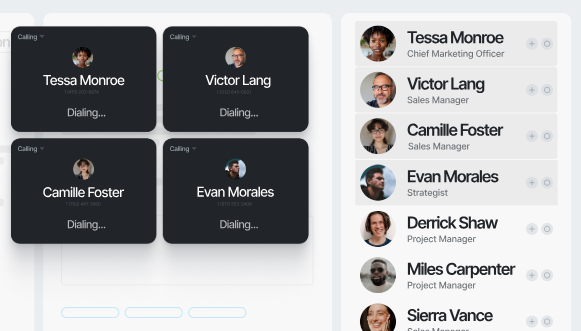
Queue-based lead management that automatically serves agents the next-best lead instead of presenting static lists
Auto dialer with progressive, preview, and parallel modes (up to 5 simultaneous lines)
Sales automation for email, SMS, voicemail drop, and appointment scheduling
Dynamic scripting with logical branching that adapts to real-time prospect responses
SmartCaller deliverability suite for spam prevention and local presence dialing
Call recording, transcription, and real-time reporting dashboards
Source: VanillaSoft
VanillaSoft's core architectural differentiator is its Intellective Routing engine, which continuously evaluates lead data and scoring rules, then serves each agent the single next-best record to work. Reps never scroll a list or cherry-pick leads.
This architecture makes VanillaSoft particularly strong for insurance agencies, outsourced sales firms, university fundraising centers, and other organizations running structured, high-volume outbound operations with large agent pools.
However, teams with more complex B2B sales cycles, or those needing comprehensive data intelligence, pipeline management, or CRM-level functionality, often find themselves needing more specialized tools for those specific capabilities.
Looking for a platform that powers smarter prospecting with comprehensive B2B data and buyer intent intelligence? Learn how ZoomInfo can help your team find the right accounts, at the right time, with the right message.
How We Curated Our List of VanillaSoft Alternatives
After testing VanillaSoft and researching the sales engagement market, we focused on finding tools that serve specific needs VanillaSoft's execution-first architecture may not fully address. While VanillaSoft excels at enforcing call discipline for high-volume outbound teams, some businesses need more powerful tools for:
Identifying the right prospects before dialing, with verified B2B data and buyer intent signals
Managing complex enterprise deals with full pipeline visibility and revenue forecasting
Combining data, engagement, and pipeline management in a single, transparently priced platform
Running a complete CRM with deal stages, reporting, and forecasting without maintaining a separate system
Maximizing call answer rates through premium carrier infrastructure and proactive deliverability management
Starting outbound operations affordably without 5-seat minimums or opaque bundle pricing
Building modern, AI-native outbound workflows with remote team collaboration
Each tool on this list is a leader in one of these areas. You might want to use them alongside VanillaSoft or switch entirely; it all depends on what your growing sales team needs most.
DISCLAIMER: We aren't covering every single tool in the market! Our focus is on highlighting the best alternatives that address some of VanillaSoft's limitations for various use cases. The goal is to provide insights into tools that cater to specific business needs. |
|---|
1. ZoomInfo — Best Alternative for AI-Powered B2B Data Intelligence and GTM Execution
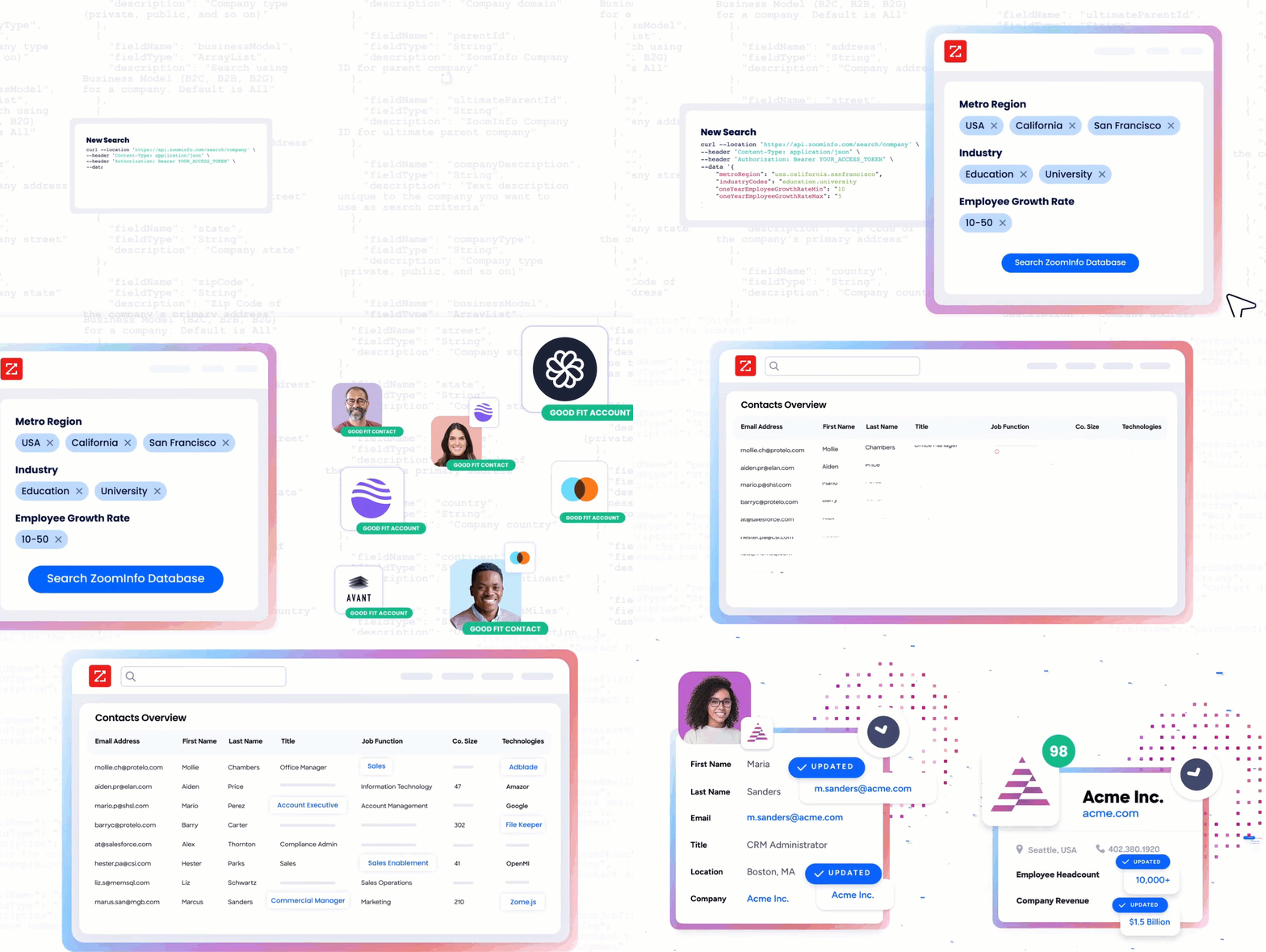
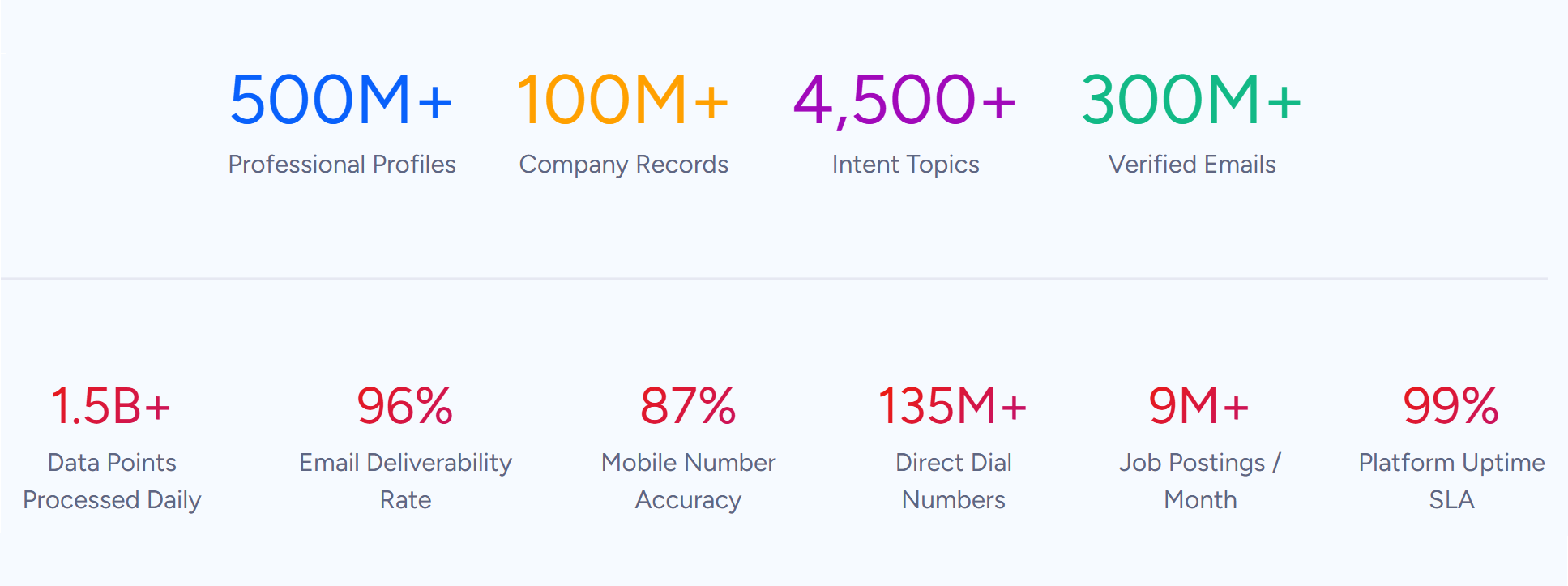
ZoomInfo is an all-in-one AI GTM platform built on the industry's strongest B2B data foundation: 500M contacts, 100M companies, 135M+ verified phone numbers, and 200M+ verified business emails.
By fusing this data with your CRM records, conversation transcripts, and behavioral signals, ZoomInfo's GTM Context Graph (which processes 1.5B + data points daily) reveals the full context behind your accounts. Its key features include:
Comprehensive B2B data: 500M contacts with 120M direct-dial phone numbers and 200M+ verified business emails, backed by 300+ human researchers and up to 95% accuracy on first-party data
Buyer intent signals: ZoomInfo Intent tracks signals from 210 million IP-to-Organization pairings and 6 trillion+ keyword-to-device pairings monthly, identifying which accounts are actively researching solutions
AI-powered sales workspace: GTM Workspace provides sellers with prioritized accounts, AI-drafted outreach, and deal execution in one surface
Conversation intelligence: Chorus captures and analyzes every sales call, meeting, and email for coaching and deal intelligence
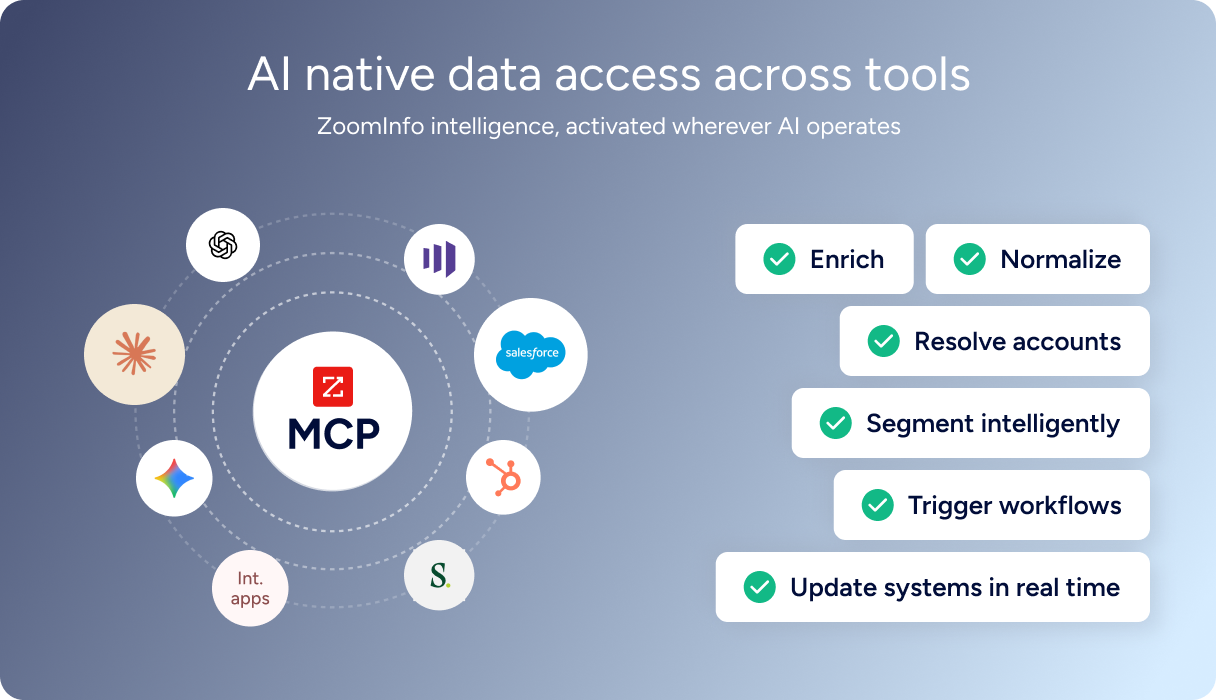
Universal access: APIs and MCP expose the same intelligence to any tool, AI agent, or third-party platform
Source: ZoomInfo
VanillaSoft excels at telling your reps how to execute calls efficiently once leads are in the system. ZoomInfo solves the challenge that comes before that: identifying who to target, when to engage, and why those accounts matter, then powering the intelligence across every surface where your team works.
Why Choose ZoomInfo Over VanillaSoft for B2B Data Intelligence and GTM Execution
While VanillaSoft routes leads through a queue for efficient call execution, ZoomInfo provides the intelligence layer that ensures your team is targeting the right accounts with the right context. Here's where ZoomInfo delivers capabilities VanillaSoft was never designed to provide.
Comprehensive B2B Data: Find the Right Prospects Before You Start Dialing
VanillaSoft does not include a proprietary contact database. Teams must import leads from external sources like web forms, third-party providers, CRMs, or CSV uploads before VanillaSoft's routing engine can work. This means organizations typically maintain separate contracts with data vendors to feed the engagement platform, creating multi-vendor dependency and compounding total cost of ownership.
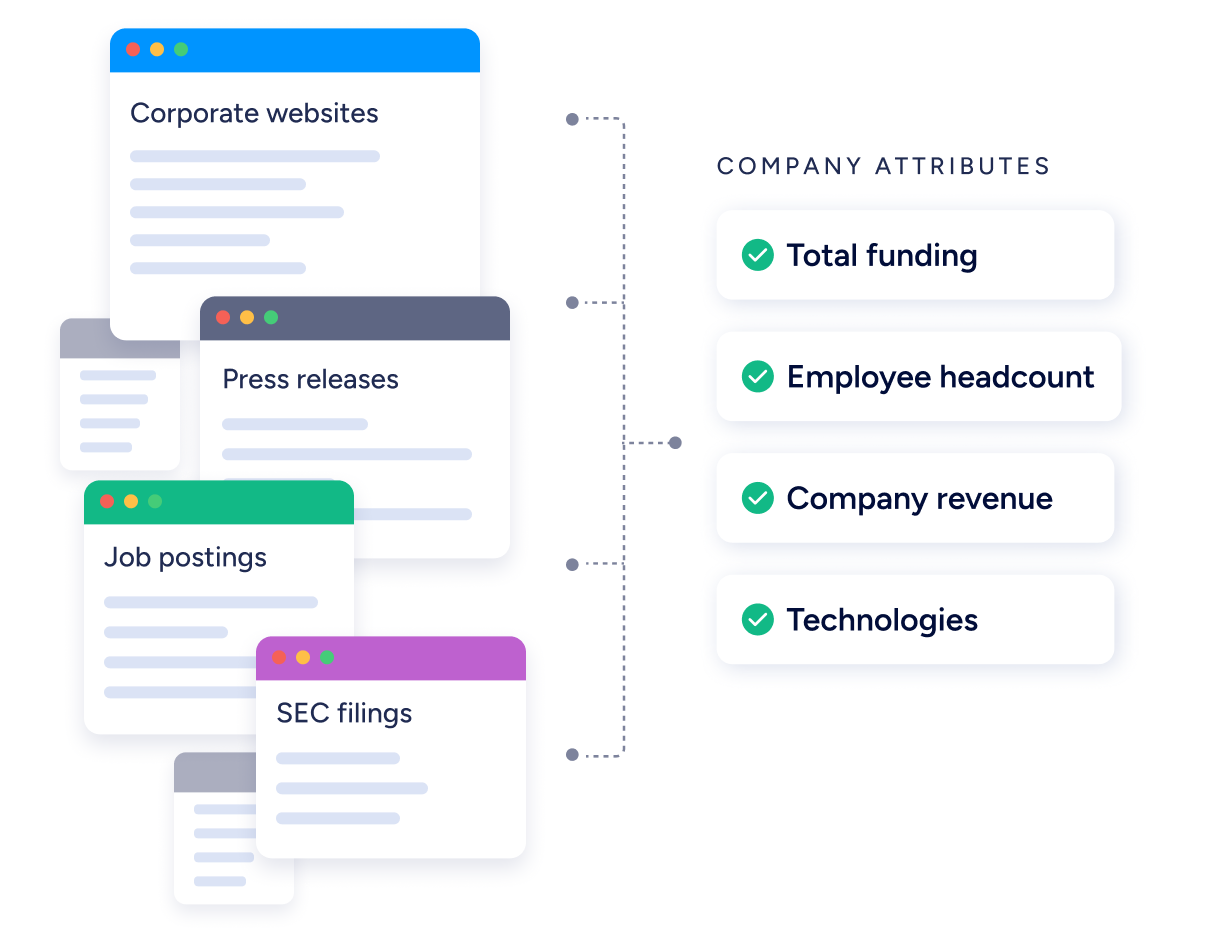
ZoomInfo eliminates this gap at its foundation. The platform provides 500M contacts across 100M companies, including 120M direct-dial phone numbers and 200M+ verified business email addresses, all searchable through 300+ company attributes.
Source: ZoomInfo
The data spans three dimensions simultaneously: identity data (who buyers are and how to reach them), company context (industry, revenue, headcount, org charts, technographics tracking 30,000+ technologies across 30M+ companies), and dynamic signals revealing when accounts are actively in-market.
This data is continuously verified through a multi-source pipeline including automated ML scanning of 28 million site domains daily and an in-house Data Training Lab of 300+ human researchers.
Source: ZoomInfo
The competitive proof is not self-reported. In a Fortune 500 competitive RFP analyzing 25 million contacts across vendors, the independent consultant concluded that "no other competitor came even close."
ZoomInfo in Action: Before your team dials a single number, ZoomInfo identifies every company in your addressable market that matches your ideal customer profile, surfaces the verified direct-dial phone numbers and business emails for each decision-maker on the buying committee, and layers on technographic data showing which tools they already use.
Instead of your reps burning through purchased lead lists of unknown quality, they're calling verified contacts at companies that actually fit your offering, with context about the org structure and technology stack before the conversation starts.
Vensure scaled their prospecting using ZoomInfo's comprehensive B2B data: "ZoomInfo gives us the information we need to execute. We don't have to go through and spend our time digging. It's already there, so we can be three steps ahead." (Vensure Case Study)
Buyer Intent and the GTM Context Graph: Know Who's Ready to Buy Right Now
VanillaSoft's Intellective Routing ranks leads based on manager-configured scoring rules (lead source, location, freshness). These rules are valuable for enforcing call discipline, but they rely on static attributes set at import rather than real-time signals of buyer activity.
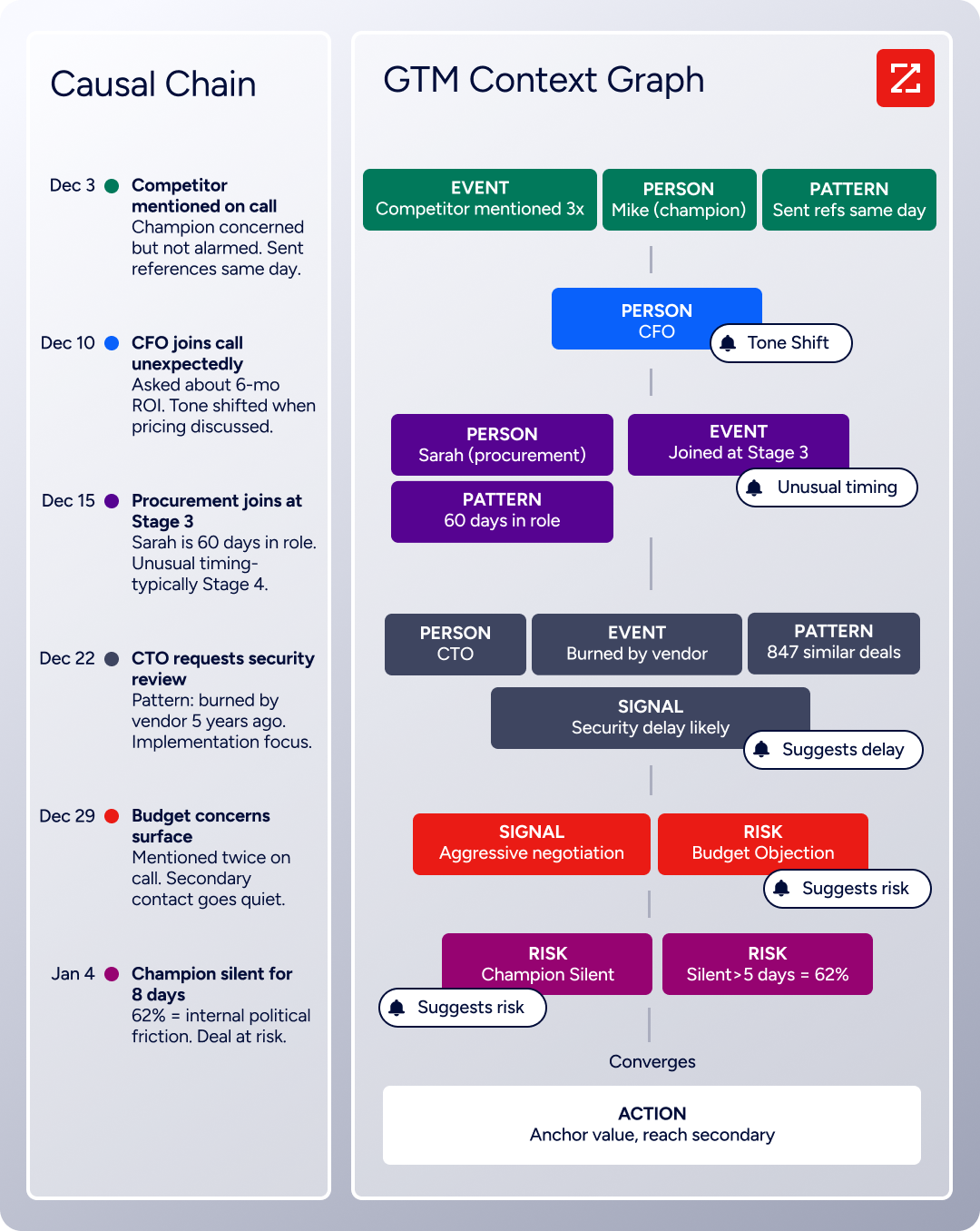
ZoomInfo's GTM Context Graph introduces a fundamentally different intelligence layer. It unifies ZoomInfo's B2B data with your CRM records, conversation intelligence from calls, email interactions, and behavioral signals into a single graph that captures not just what happened in a deal, but why it happened.
Source: ZoomInfo
Buyer Intent data tracks signals from 210 million IP-to-Organization pairings and 6 trillion+ keyword-to-device pairings monthly. Guided Intent, exclusive to ZoomInfo, identifies topics historically correlated with deal success rather than requiring manual topic selection.

Source: ZoomInfo
On top of that, WebSights resolves anonymous website traffic to companies, including buying team identification and direct contact info, with Automatic Traffic Filtering distinguishing real visitors from bots.

Source: ZoomInfo
ZoomInfo in Action: Your team opens their dashboard and sees that a mid-market SaaS company on your target list has spiked in research activity around your product category this week. Three decision-makers visited your pricing page yesterday. The CFO just joined the company two months ago (a job-change signal), and the company recently received Series B funding.
ZoomInfo surfaces all of this context automatically, so your rep doesn't just make a cold call; they reach out to the right person at the right company at the right moment, with specific context about why now is the time to engage.
Seismic attributed 39% of their active pipeline to opportunities identified or influenced by ZoomInfo signals, with 54% productivity gains and 11.5 hours saved per week per seller. (Seismic Case Study)
AI-Powered GTM Workspace: Research, Prioritize, and Engage From One Surface
VanillaSoft's single-screen agent workflow is built for one purpose: moving through a queue of leads as efficiently as possible. The platform's AI capabilities are limited to voice transcription (launched January 2025) and email nurturing with AI-powered reply sentiment analysis (launched March 2025).
These are useful features, but they represent incremental additions to a dialer-first architecture rather than a comprehensive AI execution layer.
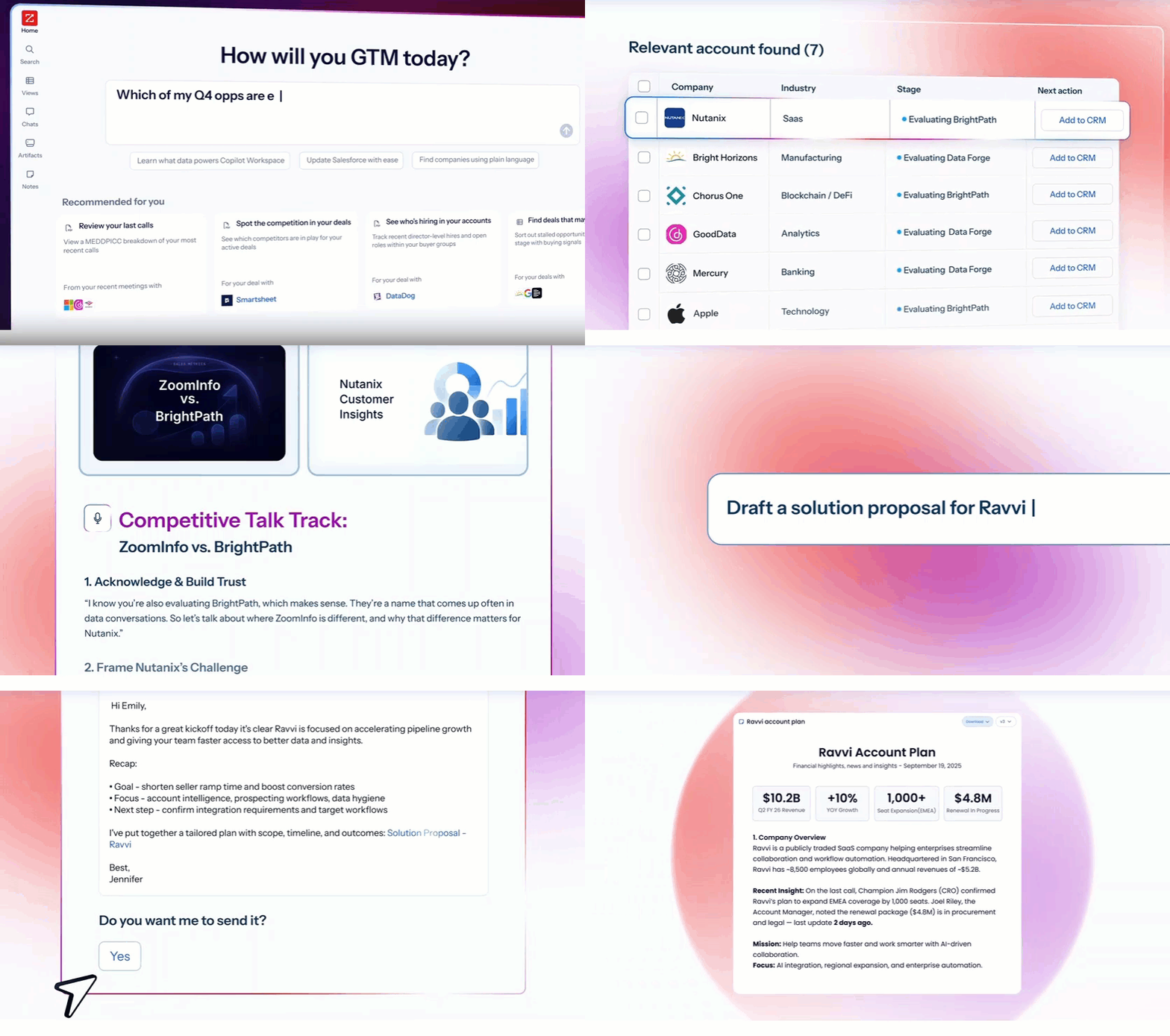
GTM Workspace, launched in October 2025, is ZoomInfo's AI-powered execution workspace for sellers. Built on Anthropic's Claude, its specialized AI agents handle researching accounts, generating follow-ups, monitoring signals, drafting outreach, updating CRM fields, and surfacing next-best actions.
Source: ZoomInfo
The Action Feed provides a live stream of in-market buyers matched to your target criteria, with pre-drafted actions on every signal (G2 comparisons, funding events, executive hires). The AI Assistant delivers one-click account briefs pulling CRM history, company news, ZoomInfo signals, and stakeholder context into a 10-second summary.
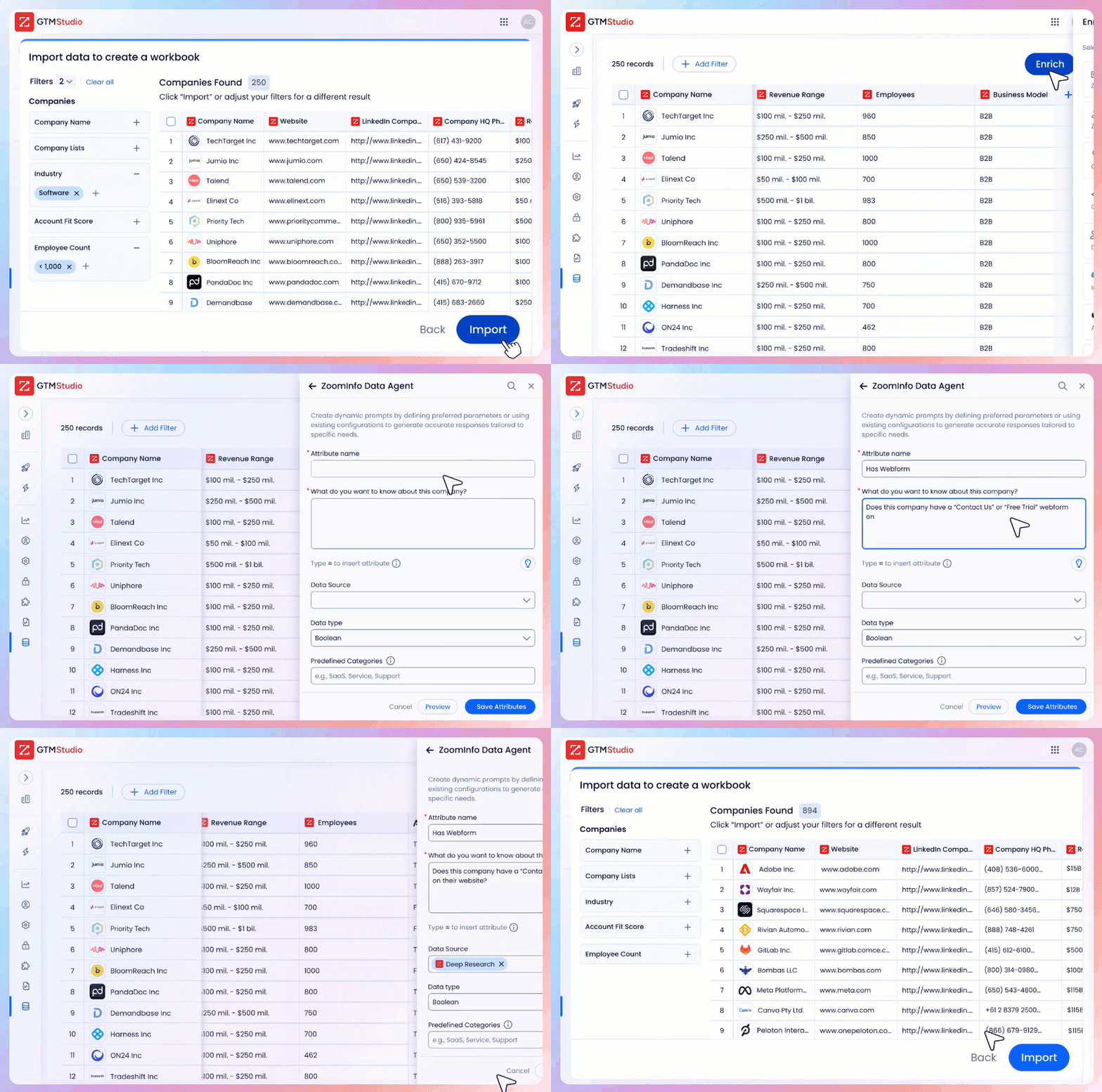
For marketers and RevOps, GTM Studio provides an AI-powered canvas where audience definition, campaign orchestration, and pipeline measurement happen in natural language rather than engineering tickets, with expansion plays that used to take 3 weeks launching in 30 minutes.
Source: ZoomInfo
And for teams that build beyond ZoomInfo's own products, APIs and MCP expose the same intelligence to any custom agent, internal tool, or partner platform.
Source: ZoomInfo
ZoomInfo in Action: A seller opens GTM Workspace and sees a prioritized account feed where an AI-drafted email already addresses a concern the prospect raised on the last call. The AI agent has researched the account overnight, identified a new VP hire in the buying committee, flagged a competitor evaluation signal, and drafted a follow-up that connects all three signals into a personalized message.
The seller reviews, adjusts, sends, and updates CRM without leaving the page. No context-switching between five different tools; one workspace powers the entire workflow.
Levanta's CEO Ian Brodie described the evolution: "ZoomInfo's not just a contact data company anymore. They've built a full system of execution. GTM Intelligence actually works the list, writes the outreach, triggers the play, and helps drive predictable growth." (Levanta Case Study)
NOTE: We also evaluated other B2B data and intelligence platforms for this category, including Cognism and Lusha, both of which offer strong contact data for specific regions. However, ZoomInfo's combination of the industry's most comprehensive verified B2B dataset, the GTM Context Graph intelligence layer, and universal access through APIs, MCP, GTM Workspace, and GTM Studio makes it the strongest alternative for teams looking to move beyond VanillaSoft's execution-only model into AI-powered go-to-market intelligence.
ZoomInfo Pricing
ZoomInfo uses a custom-quoted, consumption-based pricing model organized into Sales, Marketing, and product-specific tiers. Pricing scales around data access, API consumption, AI activity, and number of users. There are no publicly listed dollar amounts for paid plans; costs depend on usage patterns, seat count, credit volume, features selected, and contract length.
ZoomInfo's pricing page organizes plans into three product lines:
Sales plans (Professional, Advanced, Enterprise): Range from best-in-class contact and company data to AI-driven account prioritization, buyer intent signals, and advanced workflows with dedicated support
Marketing plans (Marketing Demand, ABM Lite, ABM Enterprise): Range from audience targeting and intent data to full-funnel ABM with unlimited display campaigns and AI-powered account insights
Standalone products: Chorus (conversation intelligence) and Chat (data-powered website chat) are priced separately
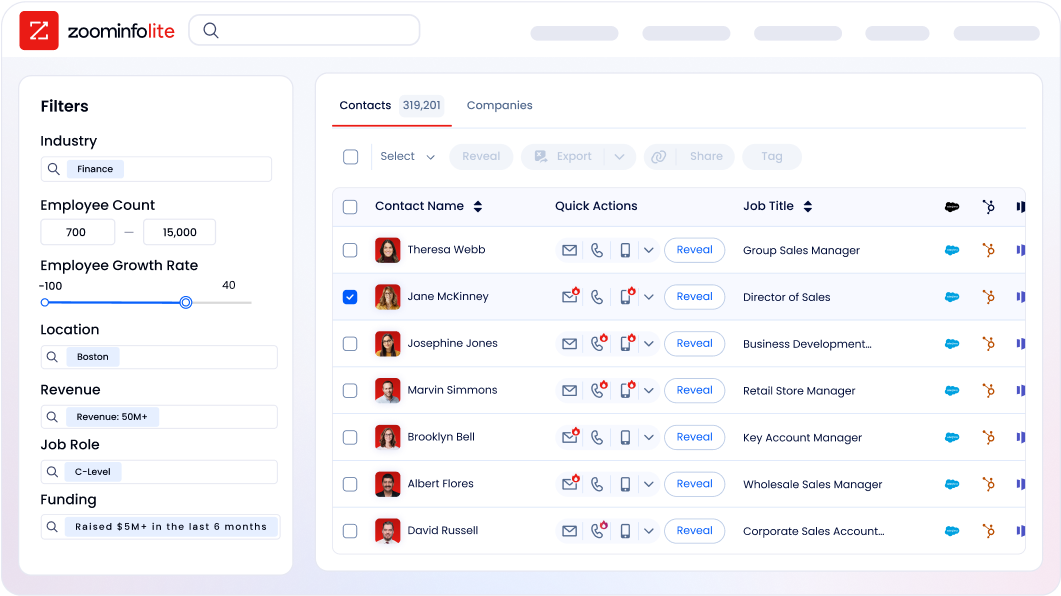
ZoomInfo Lite is a permanent free tier (no credit card, no time limit) that includes access to ZoomInfo's B2B database, 10 monthly export credits, individual and company searches, contact information, the ReachOut Chrome Extension, and HubSpot integration.
Source: ZoomInfo
A separate 7-day free trial provides access to core platform features with usage limits.
Who Should Use ZoomInfo?
Choose ZoomInfo if:
You need comprehensive, verified B2B data to fuel your outbound prospecting, rather than relying on purchased lead lists or manual research to feed your sales engagement platform.
Your go-to-market strategy requires buyer intent signals and account intelligence to prioritize outreach based on real buying behavior, not just static lead scores.
You want AI-powered sales execution that handles account research, outreach drafting, signal monitoring, and CRM updates in one workspace, rather than toggling between a dialer, a data provider, and a CRM.
Your team includes sales, marketing, and RevOps functions that all need to work from the same intelligence layer, with the flexibility to access it through native products, APIs, or AI agents.
Ready to move beyond execution-only sales tools? Start your free ZoomInfo trial and see how comprehensive B2B data and AI-powered intelligence can transform your go-to-market results.
2. Salesloft — Best Alternative for Enterprise Revenue Orchestration and Deal Management
Salesloft is an AI Revenue Orchestration Platform that addresses VanillaSoft's structural limitations for complex enterprise sales by offering full-cycle deal management, conversation intelligence, and AI-powered forecasting in a single platform. Its key capabilities include:
Multi-channel cadences with AI-assisted prioritization for email, phone, SMS, and LinkedIn outreach
Conversation intelligence that transcribes and analyzes every sales call, surfacing key moments like pricing discussions and competitor mentions
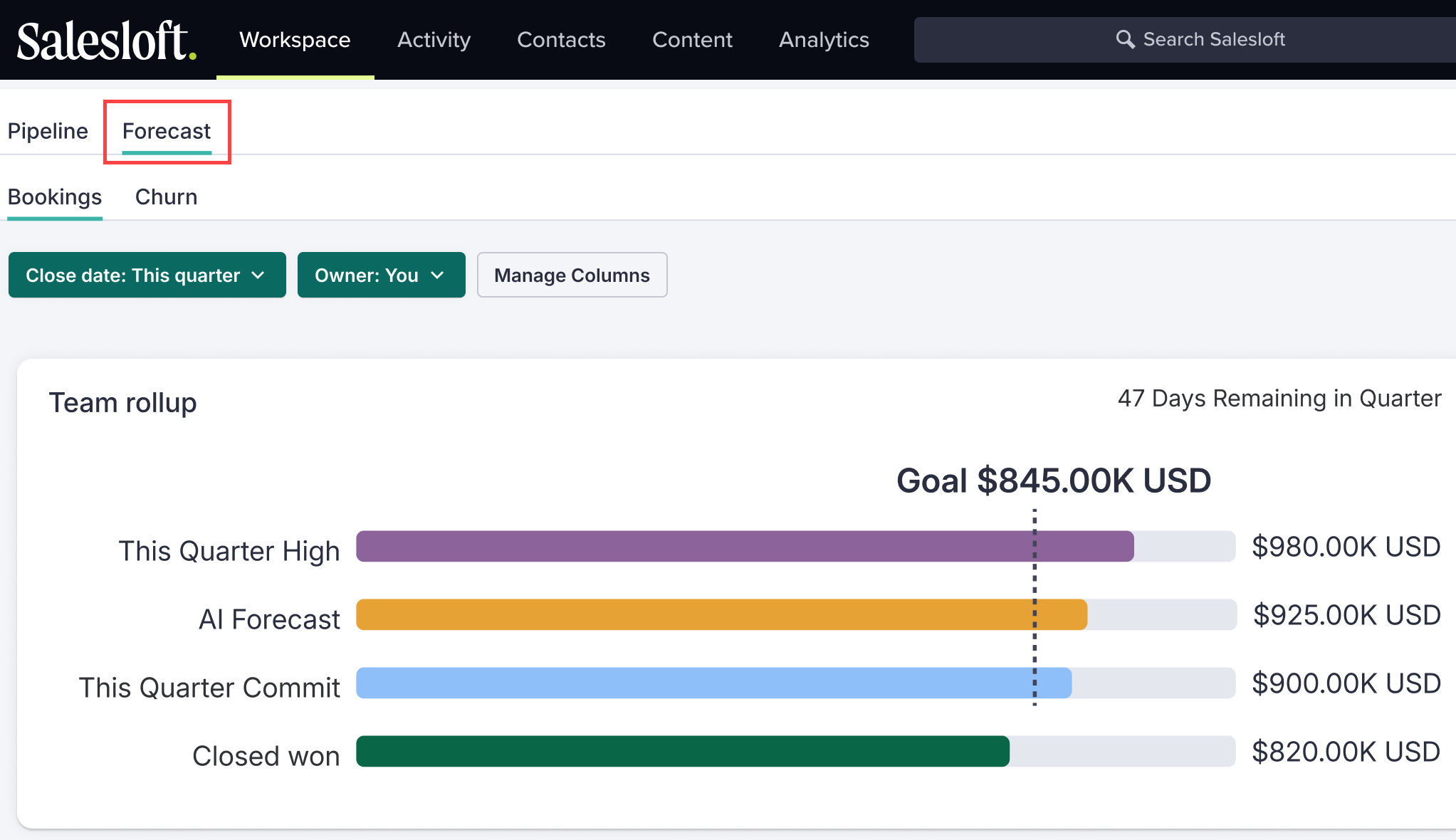
Deal management with pipeline tracking, deal health scores, and risk indicators
AI-powered forecasting combining real-time deal data with predictive models, strengthened by the December 2025 Clari merger
Source: Salesloft
For enterprise B2B teams managing multi-stakeholder buying groups and long sales cycles, Salesloft provides the deal complexity and revenue predictability that VanillaSoft's high-volume dialer architecture cannot support.
Why Choose Salesloft Over VanillaSoft for Enterprise Revenue Orchestration?
Salesloft stands out in the following areas:
Full-Cycle Deal Management and Pipeline Intelligence
VanillaSoft's queue-based, one-lead-at-a-time workflow is designed for high-velocity outbound, not for managing multi-threaded enterprise deals. G2 reviewers consistently flag that for organizations with deep CRM requirements (deal stages, opportunity management, forecasting), VanillaSoft alone is insufficient.
Salesloft's Deals module provides a customizable pipeline dashboard, AI risk detection that flags at-risk deals, and automatic buying group capture that creates CRM records for every identified participant.
Conversation Intelligence Integrated Into the Revenue Workflow
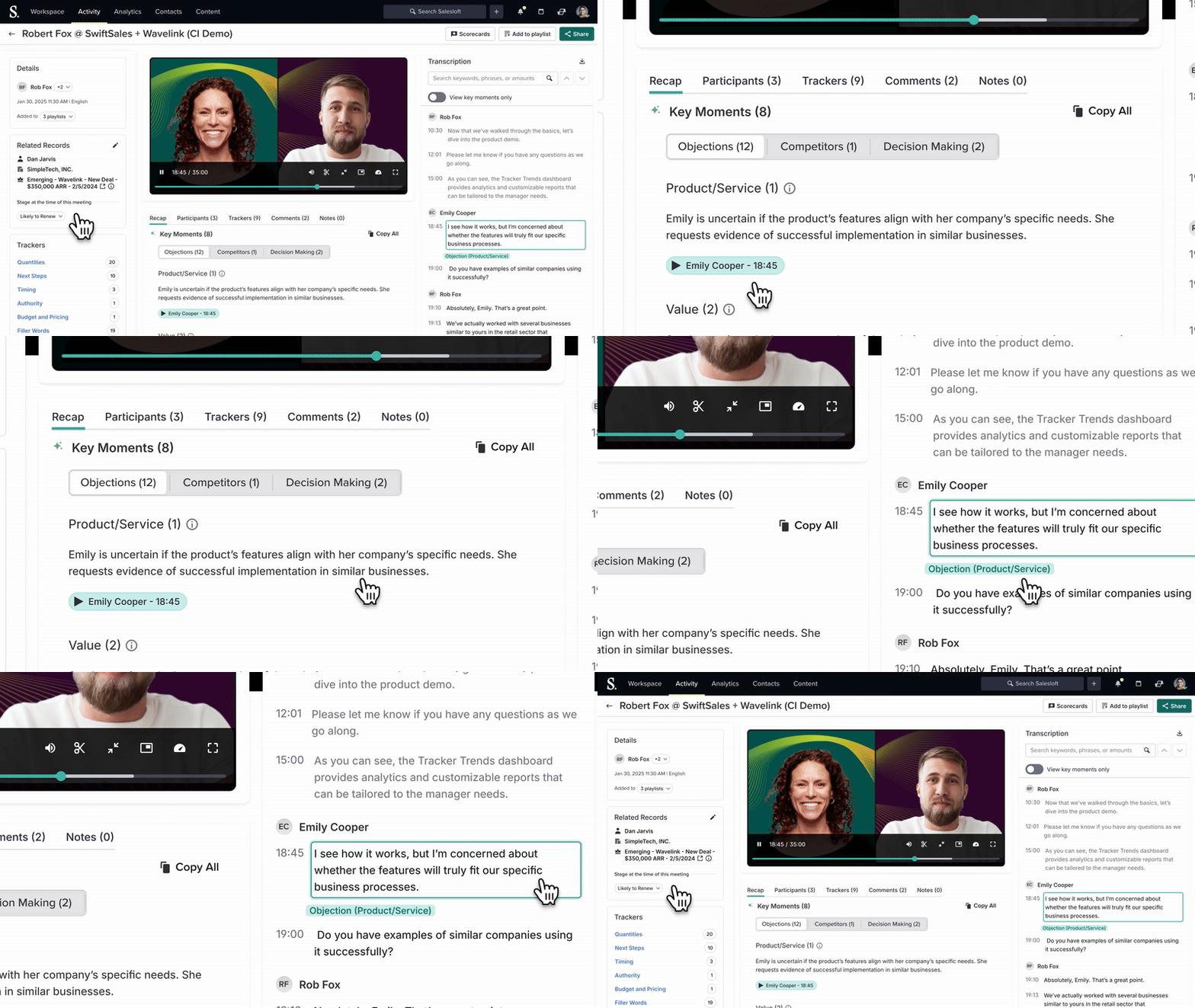
VanillaSoft launched voice transcription in January 2025 for call summaries, but it is a point feature layered onto a dialer-first architecture. Salesloft's Conversations module automates note-taking, drafts follow-up emails, surfaces objections and competitor mentions, and pre-populates AI-Assisted Scorecards for structured coaching.
Source: Salesloft
Insights flow directly into the Rhythm workflow, so coaching becomes a prioritized activity rather than a manual review process.
Enterprise Multi-Channel Orchestration With AI Email Quality
Capterra reviewers call VanillaSoft's email template builder "clunky," and G2 reviewers report subpar SMS deliverability. Salesloft's AI Email Agent drafts personalized messages using account and buyer context, with A/B testing and 4.7x engagement improvement from multi-channel cadences.
NOTE: We also evaluated Outreach and Gong as enterprise alternatives. While Outreach excels at sales engagement workflows and Gong dominates standalone conversation intelligence, Salesloft offers the most complete platform consolidation for teams needing multi-channel engagement, conversation intelligence, deal management, and forecasting under one roof, particularly following the Clari merger.
Salesloft Pricing
Salesloft uses a custom-quoted, per-seat pricing model with two plans: Advanced and Elite. Advanced includes pipeline generation, seller coaching, full customer lifecycle workflows, conversation intelligence, and opportunity management. Elite adds enterprise capabilities such as Sandbox environments, multi-team management, and no-code custom object signals. Additional AI-powered capabilities and platform extensions may be available as add-ons or custom packages.
For a detailed breakdown of Salesloft's plans and costs, see our Salesloft Pricing guide.
Who Should Use Salesloft?
Choose Salesloft if:
Your sales team manages complex B2B deals with multi-stakeholder buying groups and structured qualification frameworks like MEDDPICC or BANT.
You need conversation intelligence integrated directly into your sales execution workflow, with automated coaching scorecards and objection tracking, rather than a separate tool.
Your revenue team requires AI-powered forecasting trained on your own historical deal data for accurate pipeline predictions.
3. Apollo.io — Best Alternative for All-in-One Prospecting With Transparent Pricing
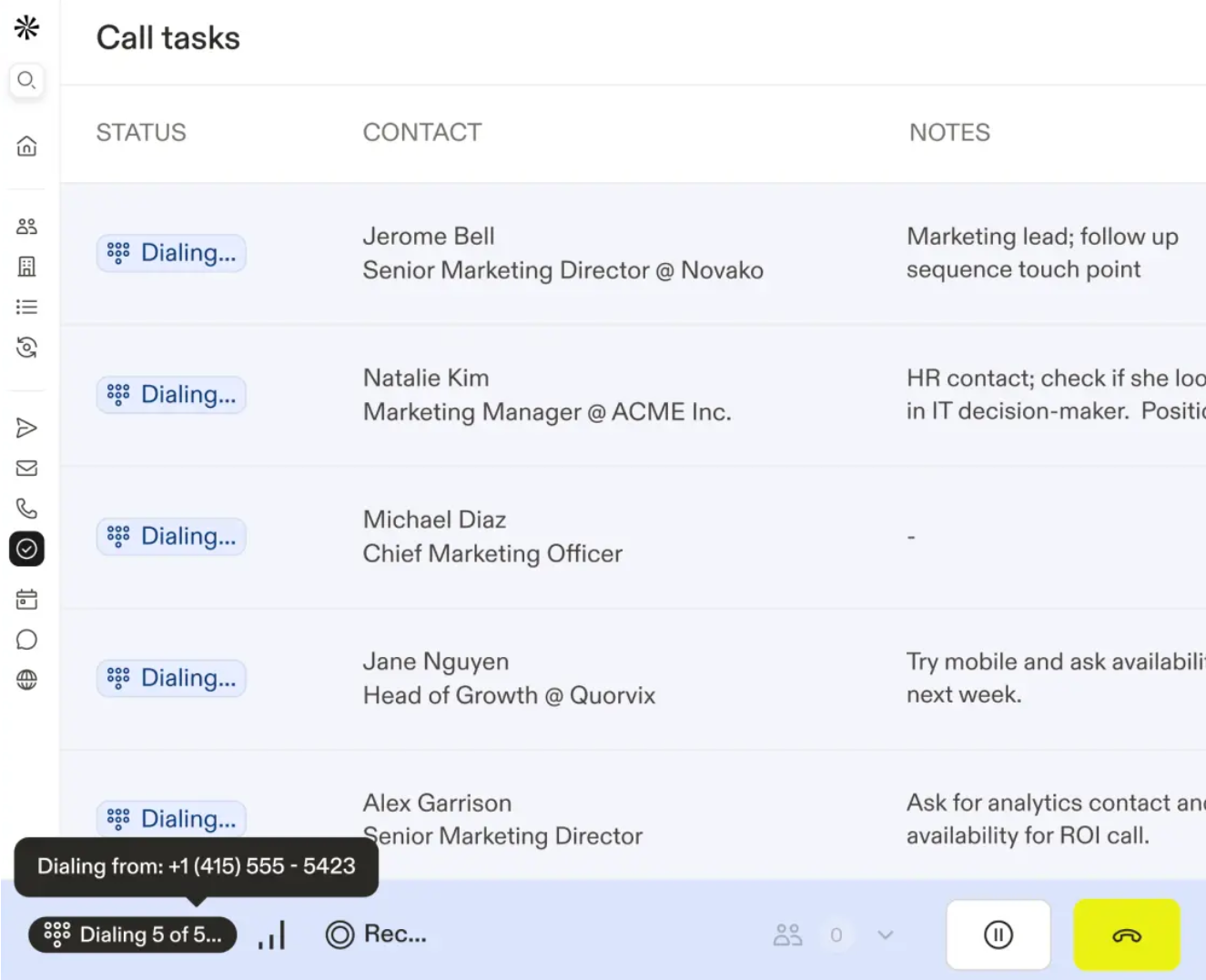
Apollo.io is a B2B AI sales platform that bundles prospecting data, sales engagement, an auto-dialer, and pipeline management into a single interface. Its defining capabilities include:
Built-in B2B database with 230M+ contacts and 30M companies accessible on all plans, including the free tier
Unlimited email, call, and LinkedIn sequences on paid plans with AI-assisted message generation
Parallel dialer on the Professional tier connecting reps with 100+ prospects per hour
Native deal management with Kanban-style deal boards and deal stall alerts
Transparent pricing starting at $0/month with a permanently free plan and no seat minimums
Source: Apollo
Apollo.io is the strongest fit for growing sales teams that need a complete prospecting-to-close workflow in a single, transparently priced platform without assembling a fragmented multi-vendor stack.
Why Choose Apollo.io Over VanillaSoft for All-in-One Prospecting?
Apollo.io stands out in the following areas:
Built-In Database Eliminates the Separate Data Vendor Contract
VanillaSoft requires teams to import leads from external sources before engagement begins, meaning most users maintain separate data provider contracts.
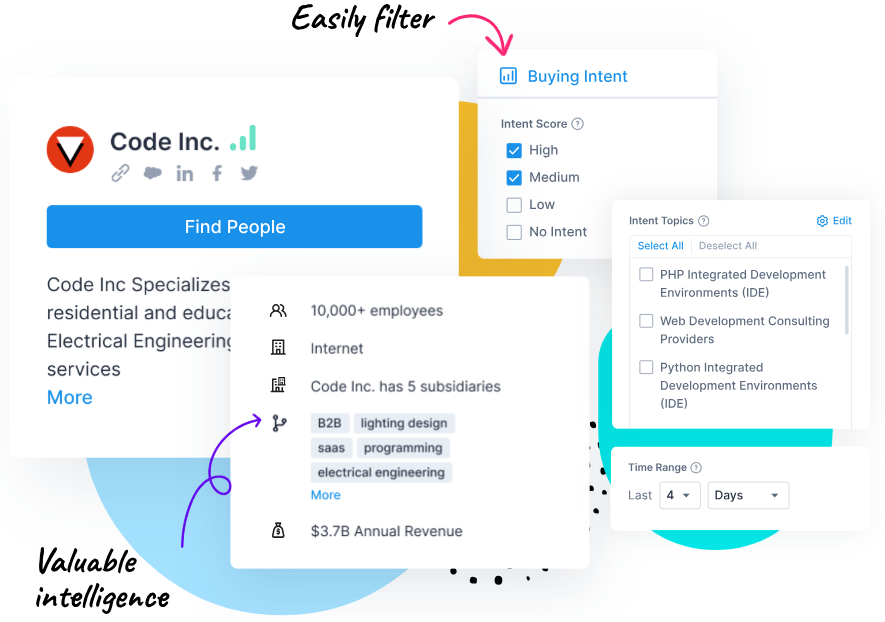
Apollo.io includes a database of 230M+ contacts with 97% email accuracy, buying intent data covering 1,600+ topics, and 65+ search filters, all accessible from the same interface where reps build sequences and track deals.
Source: Apollo
Pipeline Management Without a Secondary CRM
VanillaSoft positions itself as used "in combination with existing CRM systems", creating forced CRM cost. Apollo includes native deal management with drag-and-drop pipeline boards, deal stall alerts, and automatic activity logging. For mid-market teams, it provides sufficient pipeline visibility without a separate CRM license.
Transparent Pricing With No Seat Minimums
VanillaSoft's 5-seat bundle minimum and undisclosed pricing create high friction for small teams. Apollo.io publishes its full pricing table, starts with a permanently free plan, and allows single-seat adoption.
NOTE: We also evaluated Freshsales and Mixmax for this archetype. While Freshsales provides an affordable CRM-first platform, Apollo.io uniquely bundles a large B2B database with sales engagement and a parallel dialer at an accessible price point, making it the strongest fit for mid-market teams scaling outbound.
For a comprehensive look at Apollo.io's capabilities, see our Apollo.io Review.
Apollo.io Pricing
Apollo.io uses per-seat subscription pricing with credit consumption:
Free: $0/month, 900 credits/year, 2 active sequences
Basic: $49/user/month annual, 30,000 credits/year, multiple email providers
Professional: $79/user/month annual, 48,000 credits/year, unlimited sequences, CRM enrichment
Organization: $119/user/month annual, minimum 3 seats, 72,000 credits/year, SSO, advanced API
The Advanced Dialer (including parallel dialing) is available as an add-on at $119/month billed annually. A 14-day free trial is available for Basic and Professional plans.
Who Should Use Apollo.io?
Choose Apollo.io if:
You need a B2B database, engagement platform, dialer, and basic CRM in one unified system to reduce vendor management overhead and total software spend.
Your team is 1-50 seats and you want transparent, published per-seat pricing without forced bundle purchases.
You want to trial the platform at zero cost before committing budget, with no time limit on the free plan.
4. HubSpot Sales Hub — Best Alternative for Full CRM Without Implementation Overhead
HubSpot Sales Hub is a sales engagement platform and CRM built on the philosophy that sales tools should deliver serious automation and pipeline management without requiring a dedicated admin or multi-month deployment cycle. Its key capabilities include:
Free CRM with no time limit including contact management, deal pipeline, basic email tools, live chat, and meeting scheduler
Native pipeline and deal management with visual deal stages, customizable probabilities, and forecasting dashboards
Email sequences and templates with personalization, A/B testing, and performance analytics on Professional tier
2,000+ app integrations via HubSpot Marketplace for ecosystem flexibility
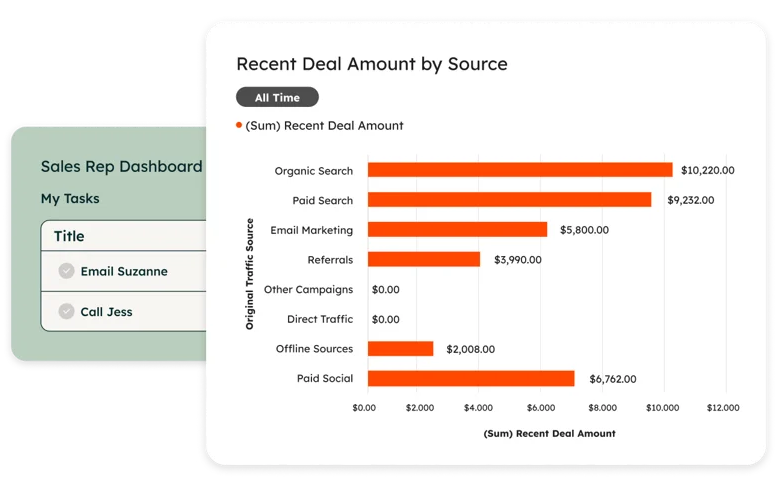
Customizable reporting and dashboards with cross-object reporting and custom report builder
Source: HubSpot
HubSpot serves 288,706 customers in 135+ countries, making it the most financially stable alternative on this list.
Why Choose HubSpot Sales Hub Over VanillaSoft for Full CRM?
HubSpot Sales Hub stands out in the following areas:
HubSpot Is a Standalone CRM; VanillaSoft Explicitly Is Not
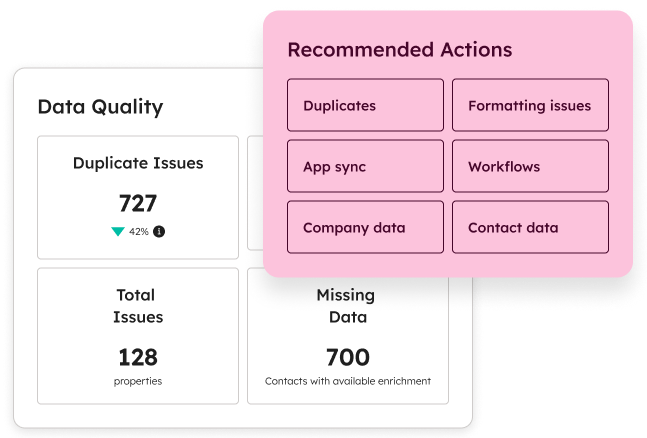
VanillaSoft positions itself as used "in combination with existing CRM systems", and G2 reviewers flag that it is insufficient for organizations needing deal stages, opportunity management, and forecasting. HubSpot Sales Hub includes a Smart CRM as its foundational layer, with multiple customizable pipelines, conditional properties, and pipeline governance rules.
Source: HubSpot
Transparent Pricing With a Genuinely Free Starting Point
VanillaSoft's 5-seat bundle minimum and opaque pricing penalize small teams. HubSpot's free tier has no seat minimum, no expiration, and no credit card requirement. A 2-person team can start using the full CRM immediately, then upgrade to Starter, Professional, or Enterprise as needs grow.
Mature Reporting and Customizable Dashboards
G2 reviewers cite VanillaSoft's reporting as lacking in flexibility. HubSpot's Sales Analytics suite includes dozens of pre-built reports, a custom report builder supporting cross-object data, and AI-generated report descriptions, running on the same unified CRM database as all activity logs.
NOTE: We also evaluated Bitrix24 and Freshsales as free-tier CRM alternatives. While Bitrix24 offers unlimited users on its free plan and Freshsales provides a free tier for up to 3 users, HubSpot Sales Hub offers the most fully featured free CRM available, with a clear upgrade path to Professional and Enterprise tiers when outgrowing the free product.
HubSpot Sales Hub Pricing
HubSpot Sales Hub uses seat-based pricing with no seat minimums:
Free: Core CRM, contacts, deals, basic tools; no cost, no time limit
Starter: Personalized outreach automation and Sales Hub Starter features (verify current pricing at hubspot.com/pricing/sales)
Professional: AI-powered forecasting, Sequences, advanced automation, conversation intelligence, Sales Analytics (mandatory onboarding fee applies)
Enterprise: AI lead scoring, custom objects, deal approvals, advanced permissions, SAML SSO
Who Should Use HubSpot Sales Hub?
Choose HubSpot Sales Hub if:
You need a full CRM with deal stages, pipeline reporting, and forecast visibility, not just a dialer, and want to avoid maintaining a separate CRM alongside your sales engagement tool.
Your team is smaller than 5 seats, or you want to start free and scale into paid tiers with transparent per-seat pricing.
Reporting flexibility is critical: you need custom dashboards, cross-object reports, and the ability to define your own metrics.
5. PhoneBurner — Best Alternative for Maximizing Call Answer Rates and Deliverability
PhoneBurner is a cloud-based power dialer and sales engagement platform built for sales teams whose primary revenue channel is the phone and who are losing ground to spam flags and declining connect rates. Its key capabilities include:
Delay-free power dialer on a Tier 1 carrier network, reaching up to 80 contacts per hour with no lag or awkward pause when prospects answer
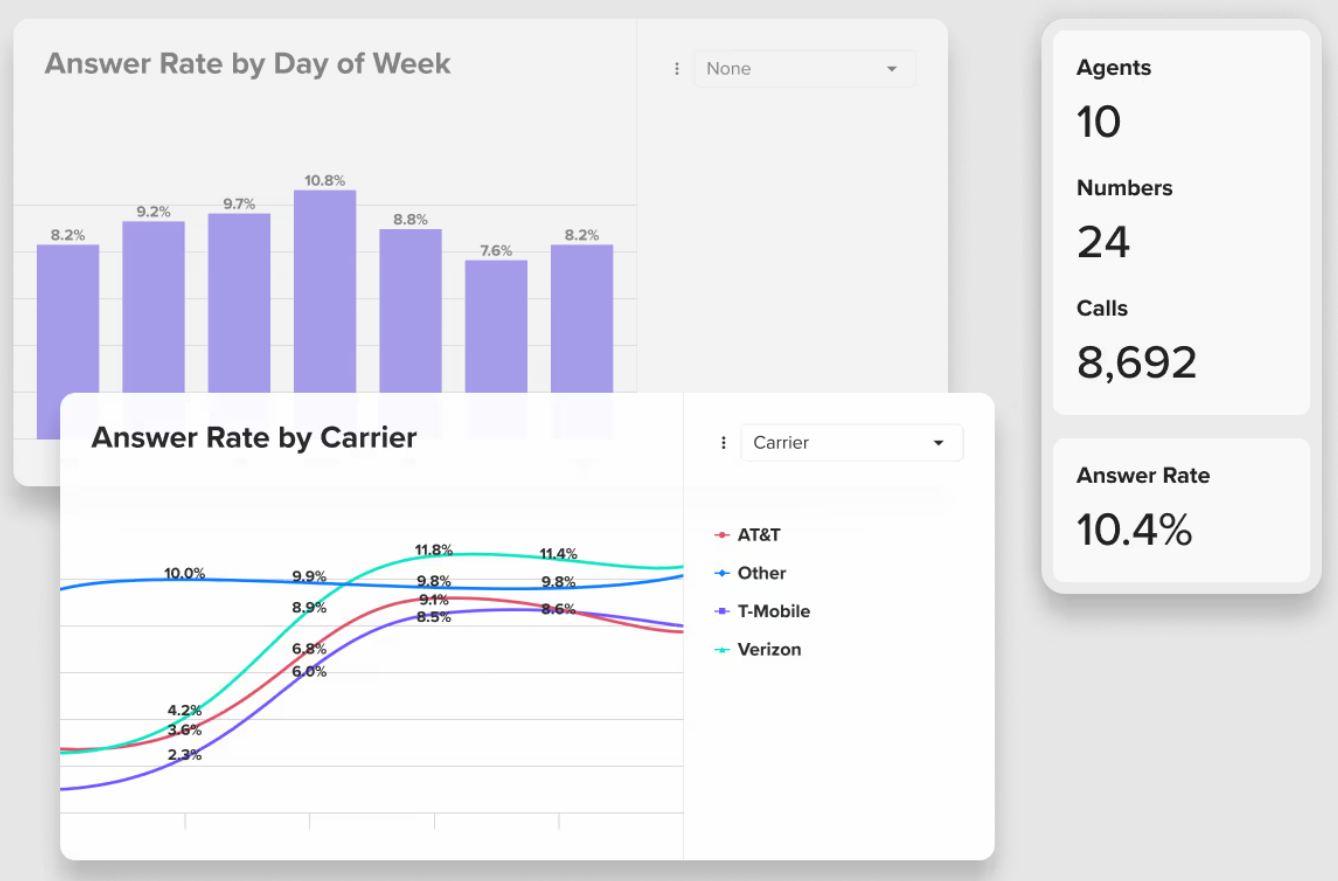
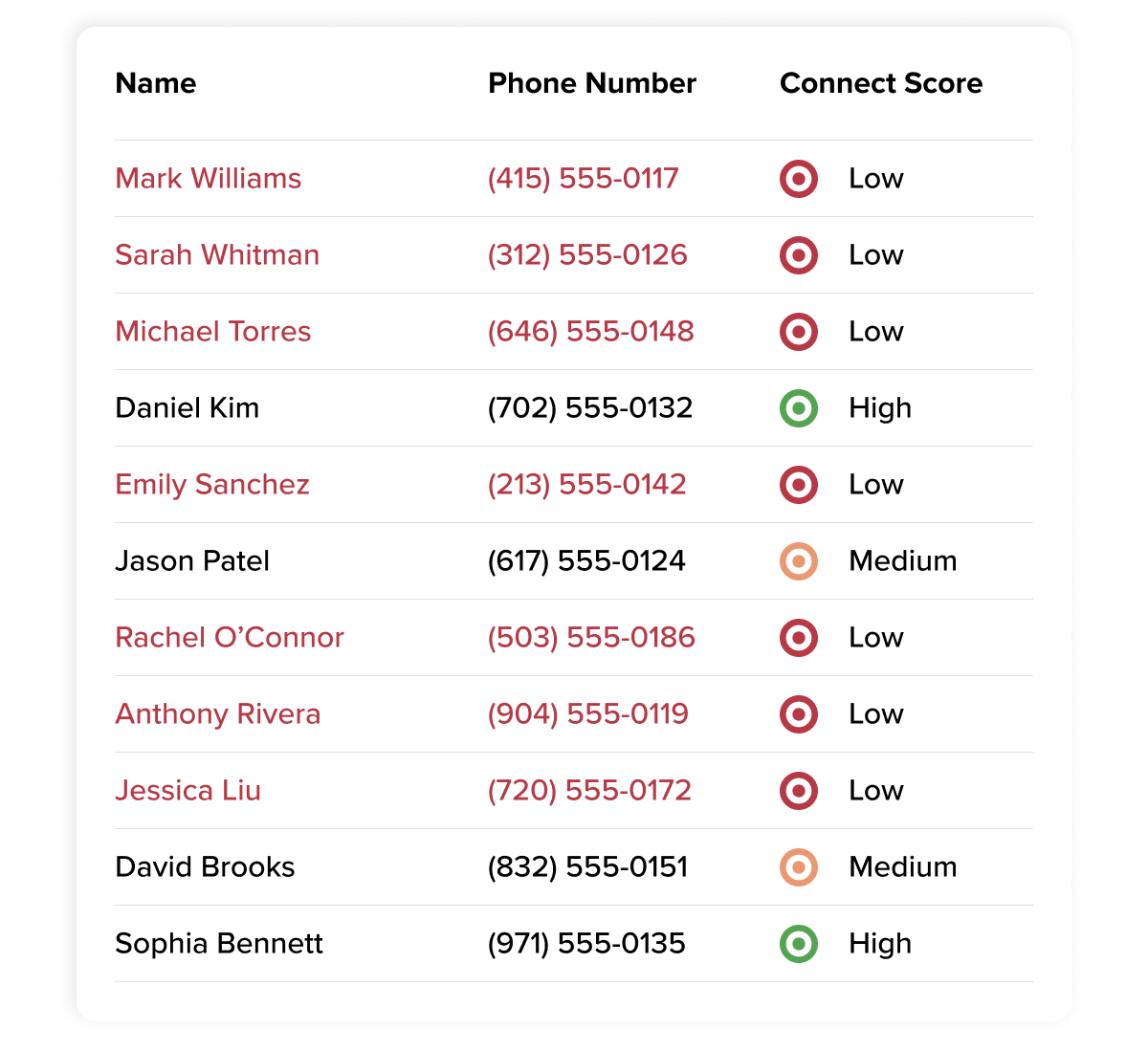
ARMOR spam protection that proactively registers numbers across carriers before calls are made, plus Connect Scores that predict pickup probability for each contact
Built-in CRM for managing contacts and deals and follow-ups without a secondary system
Post-call workflow automation with 1-click voicemail drops, templated emails, and SMS
No seat minimum with a free trial including 60 calling minutes
Source: PhoneBurner
Why Choose PhoneBurner Over VanillaSoft for Call Answer Rates?
PhoneBurner stands out in the following areas:
Tier 1 Carrier Network Eliminates Spam Flags at the Infrastructure Level
PhoneBurner is the only dialing platform built on a Tier 1 carrier network, with 99% of outbound calls delivered via Tier 1 carriers. Combined with ARMOR's proactive registration across 10+ carriers, this prevents spam labeling before it occurs. VanillaSoft's SmartCaller Trust registers numbers proactively, but calls still route through standard VoIP infrastructure.
Zero Connection Delay Preserves Call Authenticity
PhoneBurner produces no artificial pause when a contact answers, preserving natural conversation flow. While VanillaSoft's progressive and preview dialers avoid predictive dialer delays, Capterra reviewers flag slow loading and intermittent call drops during high-volume periods.
ARMOR and Connect Scores Maximize Productive Dials
ARMOR monitors numbers across 300+ million US carrier devices and proactively negotiates flag removal, while Connect Scores use carrier signals to score pickup probability before dialing. ARMOR-protected numbers average 15% higher answer rates, and one user reported 20%+ connection rates on high-score numbers versus 1% on random numbers.
Source: PhoneBurner
NOTE: We also evaluated JustCall and Orum for this archetype. While JustCall offers multichannel engagement with international calling and Orum specializes in parallel dialing for maximum throughput, PhoneBurner offers the most focused answer-rate optimization stack, combining Tier 1 infrastructure, proactive spam protection, and zero-delay call quality.
PhoneBurner Pricing
PhoneBurner uses per-seat monthly pricing with unlimited dialing on all plans:
Standard: $140/user/month annual ($165 monthly); power dialing, CRM, workflow automation, voicemail drop
Professional: $165/user/month annual ($195 monthly); adds softphone, live coaching, API access
Premium: $183/user/month annual ($215 monthly); adds dedicated number, call transcription, SMS (1,000/month included)
All plans include a free trial with no credit card required and no contract commitment.
Who Should Use PhoneBurner?
Choose PhoneBurner if:
Your team makes 80+ calls per rep per day and answer rate directly determines quota attainment.
You operate in a regulated industry (insurance, financial services, mortgage) where spam flags create legal and reputational risk.
You need a dialer with a built-in CRM sufficient for transactional sales workflows, removing the cost of maintaining a separate system.
6. Kixie — Best Alternative for Small Teams Needing Affordable Multi-Line Dialing
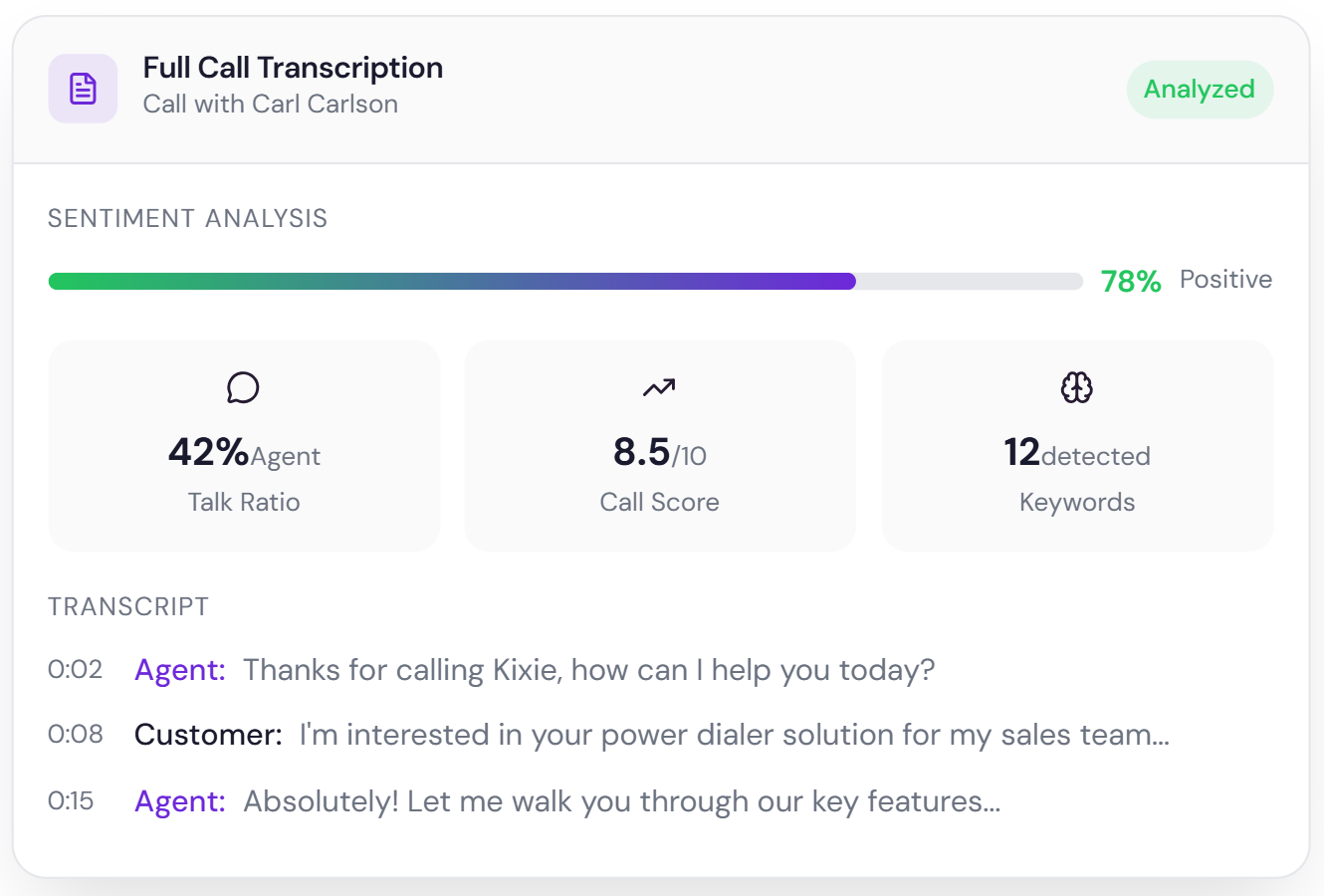
Kixie is a sales engagement platform with power dialing and business SMS that has earned G2's Best Auto Dialer for Small Business award and a 4.8-star G2 rating from 861+ verified reviews. Its key capabilities include:
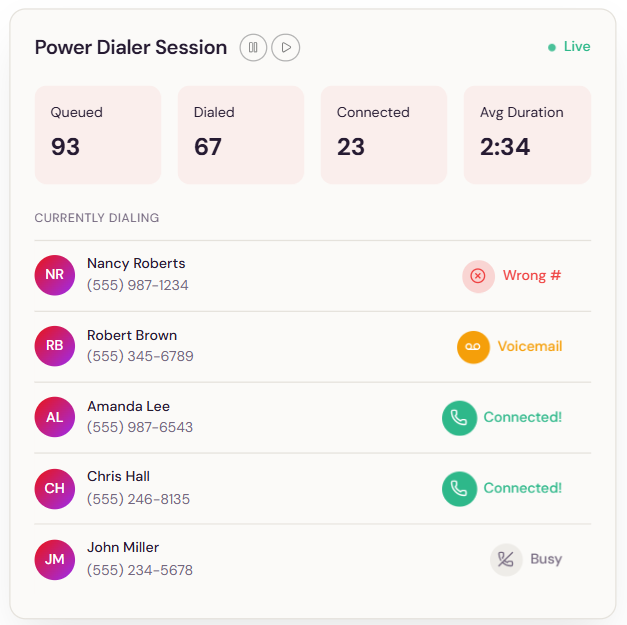
Multi-line power dialer that auto-dials up to 10 lines in parallel with AI Human Voice Detection to skip voicemails
ConnectionBoost local presence matching caller ID to the prospect's ZIP code using 50,000+ real phone numbers, claiming up to 500% improvement in connection rates
Native CRM integrations with bidirectional CRM sync for HubSpot, Salesforce, Pipedrive, Zoho, and HighLevel
Unlimited domestic calling on all plans for US and Canada
Source: Kixie
Why Choose Kixie Over VanillaSoft for Small-Team Dialing?
Kixie stands out in the following areas:
No Seat Minimums and Affordable Per-Seat Pricing
VanillaSoft's 5-seat bundle minimum forces small teams to pay for unused licenses. Kixie allows single-user adoption, scaling incrementally as hiring grows. A 7-day free trial with no credit card further reduces adoption risk.
Multi-Line Parallel Dialing Up to 10 Lines
VanillaSoft's parallel dialer caps at five simultaneous lines. Kixie's Multi-Line PowerDialer dials up to 10 numbers in parallel per agent with AI detection that connects only live answers, doubling VanillaSoft's maximum throughput per agent.
Source: Kixie
Unlimited Domestic Calling Without Reserve Charges
Kixie includes unlimited minutes for US and Canada on all plans with no reserve balance system, creating predictable monthly costs for high-volume teams.
NOTE: We also evaluated Aircall and CloudTalk for this archetype. While Aircall excels at inbound call center functionality and CloudTalk offers strong international calling, Kixie offers the best combination of low-cost entry, aggressive multi-line dialing, and deep CRM integrations for small teams needing VanillaSoft's core dialing use case at a fraction of the cost.
Kixie Pricing
Kixie uses per-user monthly pricing with three tiers and a 7-day free trial:
Professional: CRM integration, click-to-call/text, SMS templates, voicemail drop, call recording
Single-Line PowerDialer: Professional features plus sequential auto-dialing
Multi-Line PowerDialer: Parallel dialing up to 10 lines simultaneously
Optional add-ons: AI Human Detection ($30/month per user), ConnectionBoost ($50/month per user).
Who Should Use Kixie?
Choose Kixie if:
Your team has fewer than 5 active dialers and cannot justify VanillaSoft's 5-seat bundle minimum.
You need aggressive multi-line dialing capacity that exceeds VanillaSoft's 5-line parallel limit, particularly for cold prospecting or aged lead follow-up environments.
You want predictable, transparent pricing without hidden platform fees or reserve balance top-ups.
7. Nooks — Best Alternative for AI-Native Outbound With Remote Team Collaboration
Nooks is an AI-powered outbound sales platform that consolidates dialing, sequencing, coaching, and account intelligence into a workspace designed for distributed SDR teams. Founded in 2020, it holds a 4.8-star G2 rating from 1,500+ reviews and was named a G2 Leader in B2B Dialers. Its key capabilities include:
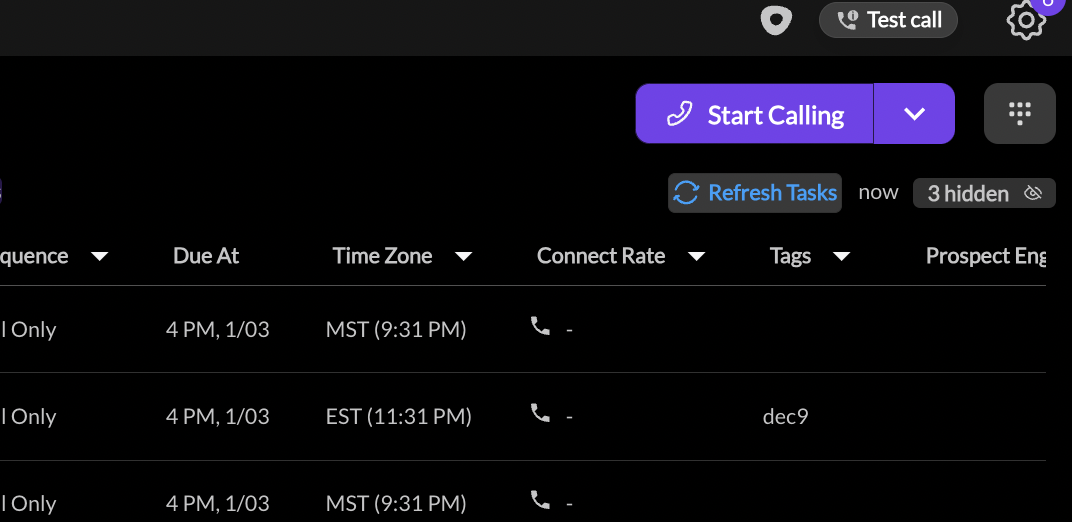
AI-powered parallel dialer that dials up to 5 lines simultaneously with AI detecting live pickups in under one second, delivering 5x more dials, 4x more conversations, and 3x more meetings
Virtual Salesfloor where distributed teams dial together, shadow live calls, and whisper-coach in real time
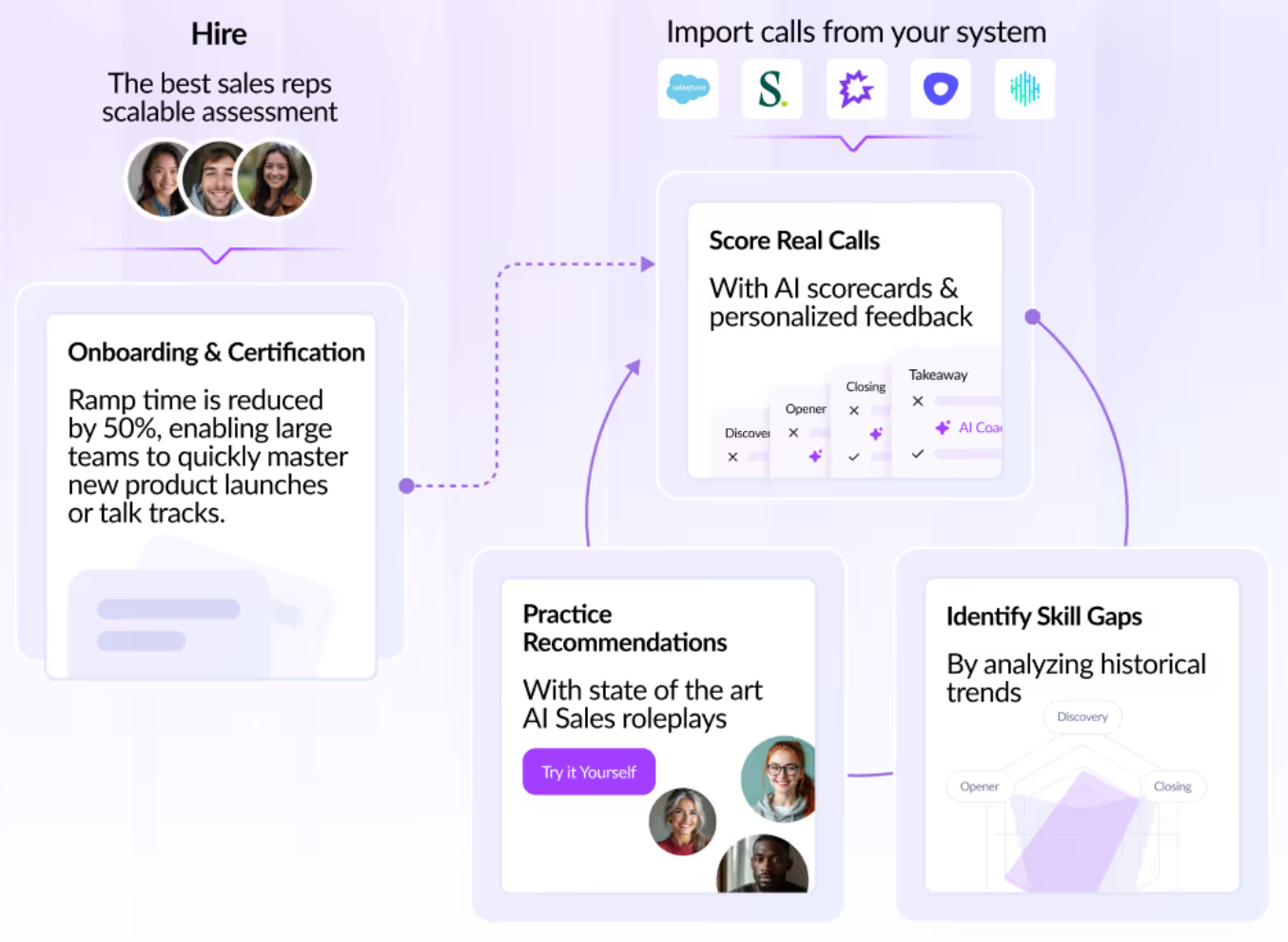
AI Coaching Assistant that auto-scores every call, surfaces skill gaps, and generates custom roleplay bots from actual call recordings
AI Sequencing (launched February 2026) with AI-generated emails grounded in call transcripts and CRM data
Source: Nooks
Why Choose Nooks Over VanillaSoft for AI-Native Outbound?
Nooks stands out in the following areas:
Virtual Salesfloor Recreates Team Energy for Distributed Teams
VanillaSoft includes live call monitoring with whisper and barge, but these are administrative features for quality assurance, not a collaborative workspace. Nooks' Virtual Salesfloor is a persistent video environment where reps dial together, shadow live calls, and celebrate wins.
AI Coaching That Scales Without Manager Bandwidth
VanillaSoft's coaching relies on managers manually reviewing recordings. Nooks' AI Coaching auto-scores every call, identifies skill gaps, generates targeted roleplay bots trained on your actual recordings, and triggers Live Battlecards mid-conversation.
Source: Nooks
AI-Native Consolidation Eliminates Multi-Tool Toggle Tax
VanillaSoft's all-in-one claim covers calling, email, SMS, and lead routing. Nooks extends this to include AI-powered account research, intent signal detection, list building, and AI-generated follow-up emails grounded in call transcripts.
NOTE: We also evaluated Orum and Trellus for this archetype. While Orum pioneered parallel dialing and Trellus offers real-time AI coaching, Nooks is the only platform combining high-velocity parallel dialing, AI coaching, and the Virtual Salesfloor collaboration layer in a single product for distributed SDR teams.
Nooks Pricing
Nooks does not publish pricing; all plans require a custom quote. Seat access tiers include: Bullpen Only (Virtual Salesfloor access for managers), Power Dialer + Bullpen, and Parallel Dialer + Bullpen. Optional per-seat add-ons include AI Coaching and Nooks Sequencing.
Who Should Use Nooks?
Choose Nooks if:
Your team is remote or hybrid, and you want to recreate in-person sales floor energy with persistent video collaboration and real-time coaching.
You're stitching together a dialer, sequencer, data provider, and coaching tool, and the context-switching overhead is hurting productivity.
Your bottleneck is live conversation volume with decision-makers, and you need AI-powered parallel dialing with automated pre-call research and post-call logging.
The Final Verdict
While VanillaSoft excels as a queue-based sales engagement platform for high-velocity outbound teams, evolving sales operations often need specialized tools that offer deeper capabilities in specific areas. Based on our research, here are the best alternatives:
ZoomInfo for comprehensive B2B data intelligence, buyer intent signals, and AI-powered GTM execution
Salesloft for enterprise revenue orchestration with conversation intelligence and deal forecasting
Apollo.io for all-in-one prospecting with a built-in database, dialer, and transparent pricing
HubSpot Sales Hub for full CRM functionality with pipeline management and reporting flexibility
PhoneBurner for maximizing call answer rates with Tier 1 carrier infrastructure and spam protection
Kixie for affordable multi-line dialing for small teams without seat minimums
Nooks for AI-native outbound with virtual team collaboration and scalable coaching
Remember, you don't have to choose between VanillaSoft and these alternatives exclusively. Many teams successfully use VanillaSoft alongside specialized tools to create their ideal sales stack. Consider your specific needs, team size, and growth trajectory when deciding which solution works best for you.
Ready to power your sales team with the most comprehensive B2B data and AI-driven intelligence in the market? Start your free ZoomInfo trial or explore ZoomInfo Lite to see how smarter data drives smarter selling.
VanillaSoft Alternatives FAQ
Why do businesses look for VanillaSoft alternatives?
VanillaSoft works well for high-velocity outbound calling teams, but businesses often outgrow its capabilities in specific areas.
Its most commonly cited limitations include the one-lead-at-a-time workflow that limits complex deal management, the inability to function as a standalone CRM (requiring a secondary system for pipeline tracking and forecasting), a clunky email template builder, limited reporting customization, and opaque pricing with a mandatory 5-seat bundle minimum.
What is the best overall VanillaSoft alternative?
There is no single best alternative because VanillaSoft covers several different functions. ZoomInfo is the top choice for teams that need comprehensive B2B data intelligence and AI-powered GTM execution. Salesloft leads for enterprise revenue orchestration and deal management. Apollo.io is the strongest option for growing teams wanting an all-in-one platform with transparent pricing.
Is there a free alternative to VanillaSoft?
Several alternatives offer free starting points. Apollo.io provides a permanently free plan with 900 annual credits and access to its 230M+ contact database. HubSpot Sales Hub offers a free CRM with unlimited contacts, deal pipeline, and basic email tools.
ZoomInfo Lite is a permanent free tier with access to ZoomInfo's B2B database and 10 monthly export credits. PhoneBurner and Kixie both offer free trials with no credit card required.
Which VanillaSoft alternative is best for small teams?
Kixie is purpose-built for small teams, with no seat minimums and multi-line dialing up to 10 simultaneous lines. Apollo.io is another strong option with its free plan and per-seat pricing starting at $49/user/month. Both eliminate the 5-seat bundle minimum that VanillaSoft requires.
Which alternative is best for complex B2B sales cycles?
Salesloft is the strongest option for complex enterprise deals, offering full pipeline management, conversation intelligence with AI-assisted coaching, buying group capture, and revenue forecasting. HubSpot Sales Hub is a strong runner-up for teams needing a full CRM with deal stages and advanced reporting at a more accessible price point.
For a direct comparison of these two platforms, see our HubSpot vs Salesloft guide.
How does VanillaSoft compare to ZoomInfo?
VanillaSoft and ZoomInfo solve different but complementary problems. VanillaSoft is a sales execution platform focused on high-volume calling with queue-based lead routing and built-in dialing. ZoomInfo is a comprehensive B2B data and intelligence platform that tells teams who to target, when to engage, and why accounts matter.
ZoomInfo's data foundation (500M contacts, 135M+ verified phone numbers), buyer intent signals, and AI-powered GTM Workspace provide the intelligence layer that VanillaSoft's dialer architecture does not include.
Which VanillaSoft alternative has the best call deliverability?
PhoneBurner offers the strongest call deliverability infrastructure, built exclusively on a Tier 1 carrier network with 99% of calls delivered via premium telecom infrastructure.
Its ARMOR spam protection proactively registers numbers and negotiates flag removal, while Connect Scores predict pickup probability per contact. VanillaSoft's SmartCaller suite is also effective but sits on standard VoIP infrastructure rather than Tier 1 carriers.
Is it difficult to migrate from VanillaSoft to one of these alternatives?
Migration complexity depends on your current setup. Replacing a single capability (like adding ZoomInfo for data intelligence while keeping VanillaSoft for dialing) is straightforward.
Replacing VanillaSoft entirely with a platform like Apollo.io or Salesloft requires migrating lead data, reconfiguring cadences, and training reps on new workflows. Many businesses start by running alternatives alongside VanillaSoft before fully transitioning.
Compare more tools in this space:
