
Comparing Zendesk vs. Zoho CRM is less about which is better and more about what you need. These platforms were built for different jobs. Zendesk manages customer service. Zoho CRM manages sales pipelines. Choosing between them means deciding which side of the customer relationship matters most to your business right now.
The real questions you should be asking are:
Is your primary challenge acquiring new customers, or supporting the ones you already have?
Do you need a sales CRM with pipeline management, or a support platform with ticketing and automation?
How important is it that your platform handles both sales and service without bolting on separate tools?
Does your team have the admin resources to configure a customizable system, or do you need something that works out of the box?
Are you confident that the contact data feeding your CRM or helpdesk is accurate and complete?
In short, here's what we recommend:
Zendesk is the right choice for teams whose primary challenge is customer support at scale. Its Resolution Platform unifies ticketing, messaging, live chat, voice, and email into a single agent workspace, with AI agents trained on roughly 20 billion interactions that can resolve issues on their own.
For companies fielding high volumes of customer inquiries across multiple channels, Zendesk is hard to beat. But Zendesk is a service platform, not a sales CRM. It won't manage your pipeline, forecast revenue, or automate prospecting.
Zoho CRM is built for sales teams that need to manage leads, deals, and revenue from first touch to close. With Blueprint process automation, Zia AI agents, and a Canvas Design Studio for custom interfaces, Zoho CRM gives growing businesses enterprise-level sales tools at a fraction of enterprise prices.
The tradeoff is complexity: unlocking the full platform takes real admin effort, and customer support features require adding Zoho Desk as a separate product.
Both platforms manage different sides of the customer relationship. But whether you're resolving tickets or closing deals, neither performs at its best if the contact and company data inside it is incomplete, outdated, or missing. That's the gap most teams don't address until it's already costing them.
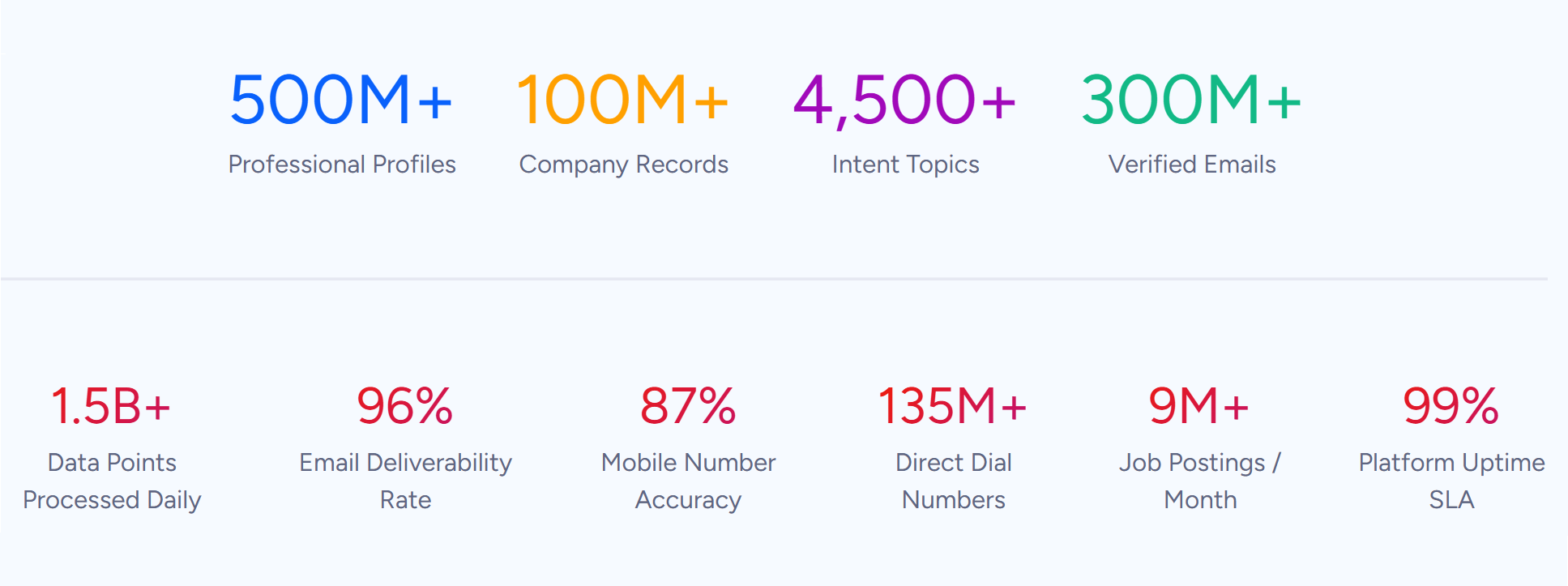
ZoomInfo is a B2B data and GTM platform built on a data foundation of 500M contacts, 100M companies, 135M+ verified phone numbers, and 200M+ verified business emails. Its GTM Context Graph processes 1.5B+ data points daily, combining this data with your CRM records, conversation transcripts, and behavioral signals to reveal the full context of your accounts.
That context fuels AI that shows not just what happened, but why, and which actions to take next. Your team can run sales motions from the GTM Workspace, build GTM plays in GTM Studio, or feed their own tools through the API and MCP.
If enriching your CRM or support platform with verified B2B intelligence sounds like the missing piece, see how ZoomInfo works with your stack.
Zendesk vs. Zoho CRM vs. ZoomInfo at a glance
Zendesk | Zoho CRM | ZoomInfo | |
|---|---|---|---|
Primary function | Customer service & support | Sales CRM & pipeline management | B2B data & GTM intelligence |
Core strength | AI-powered ticket resolution | Sales automation & customization | Verified contact data & buyer signals |
AI capabilities | AI agents resolving 80%+ of inquiries | Zia predictive scoring, 7 pre-built agents | GTM Context Graph, AI-drafted outreach |
Free plan | 14-day trial only | Free for up to 3 users (permanent) | ZoomInfo Lite (permanent, 10 credits/month) |
Starting price | $19/agent/month | ~$14/user/month | Custom (consumption-based) |
Integrations | 1,800+ marketplace apps | 1,100+ marketplace apps | 120+ marketplace integrations + API/MCP |
Learning curve | Moderate (agent workspace is intuitive) | Steep for advanced configuration | Moderate (90-day onboarding program) |
Best for | Support-first teams | Sales-first teams | Teams that need accurate B2B data everywhere |
Customer service vs. sales CRM: built for different jobs
The reason "Zendesk vs. Zoho CRM" is a tricky comparison is that these platforms sit on opposite sides of the customer lifecycle.
Zendesk starts working after someone becomes a customer. A buyer submits a support ticket, sends a message, or calls in with a problem. Zendesk routes that request, assigns it to the right agent (human or AI), and tracks it through resolution. The whole platform is built for this: reduce response times, resolve issues faster, keep customers happy.
Zoho CRM starts working before someone becomes a customer. A lead fills out a form, clicks an ad, or gets cold-called by a rep. Zoho CRM captures that lead, scores it, moves it through pipeline stages, and tracks it through close. The whole platform is built for this: find prospects, nurture them, close deals.
Asking which is "better" is like asking whether you'd rather be good at finding customers or keeping them. Most businesses need both. The question is which need is more urgent and whether you want to solve the other need within the same ecosystem or through integration.
Zendesk leads in AI-powered customer support
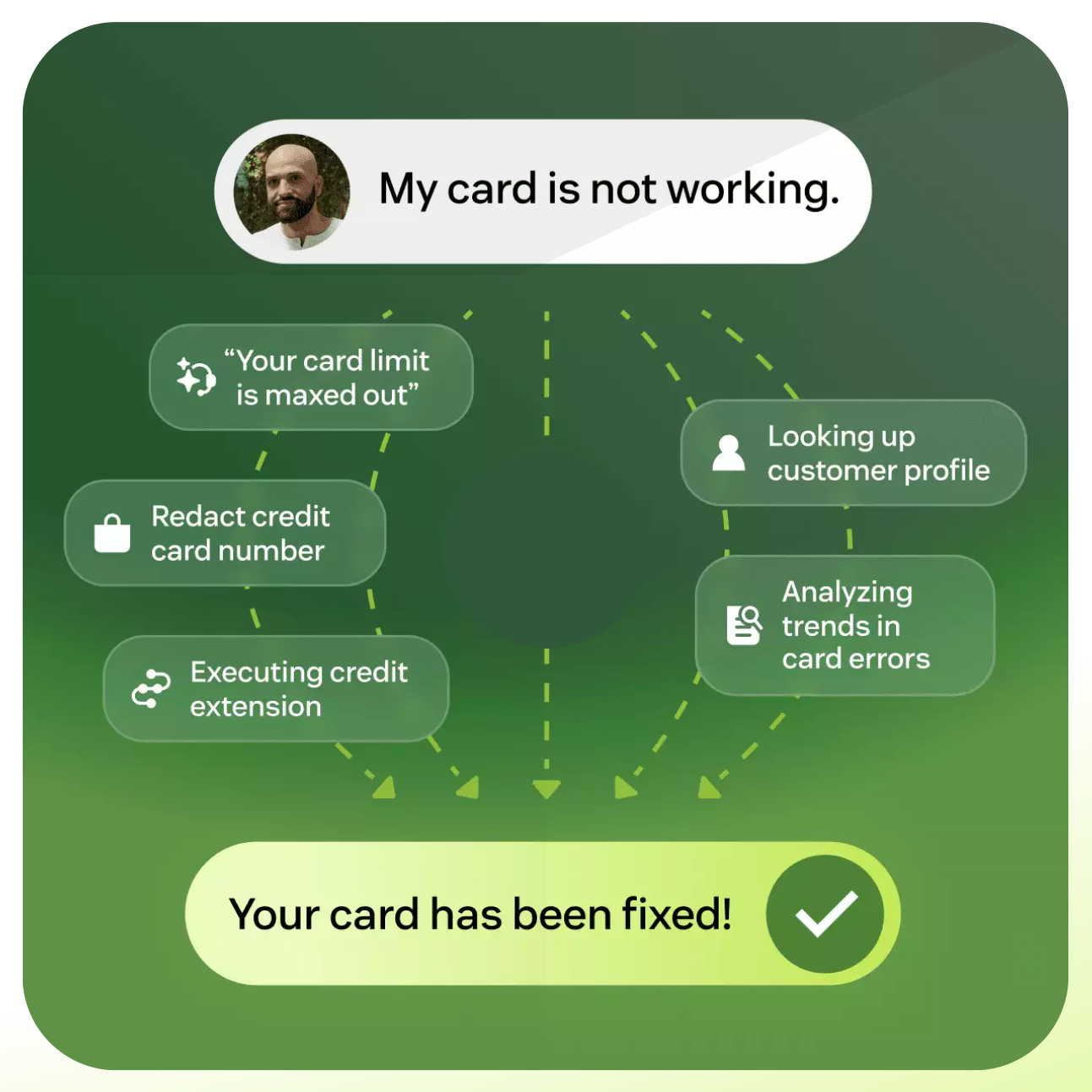
Zendesk has bet its identity on what it calls the "Resolution Revolution", a shift from chatbots that deflect customers to AI agents that actually resolve their issues. The numbers suggest the bet is paying off: AI agents reportedly resolve over 80% of interactions end-to-end across Zendesk's customer base, and AI bookings more than doubled in FY2026.
Source: Zendesk
What makes Zendesk's support capabilities hard to replicate is the training data behind them. The Resolution Learning Loop draws on roughly 20 billion ticket interactions, giving the AI a domain-specific advantage that general-purpose models can't match.
When a customer contacts support, Zendesk's AI agent can interpret the intent, reason through multi-step workflows, and execute actions across connected business systems without involving a human.
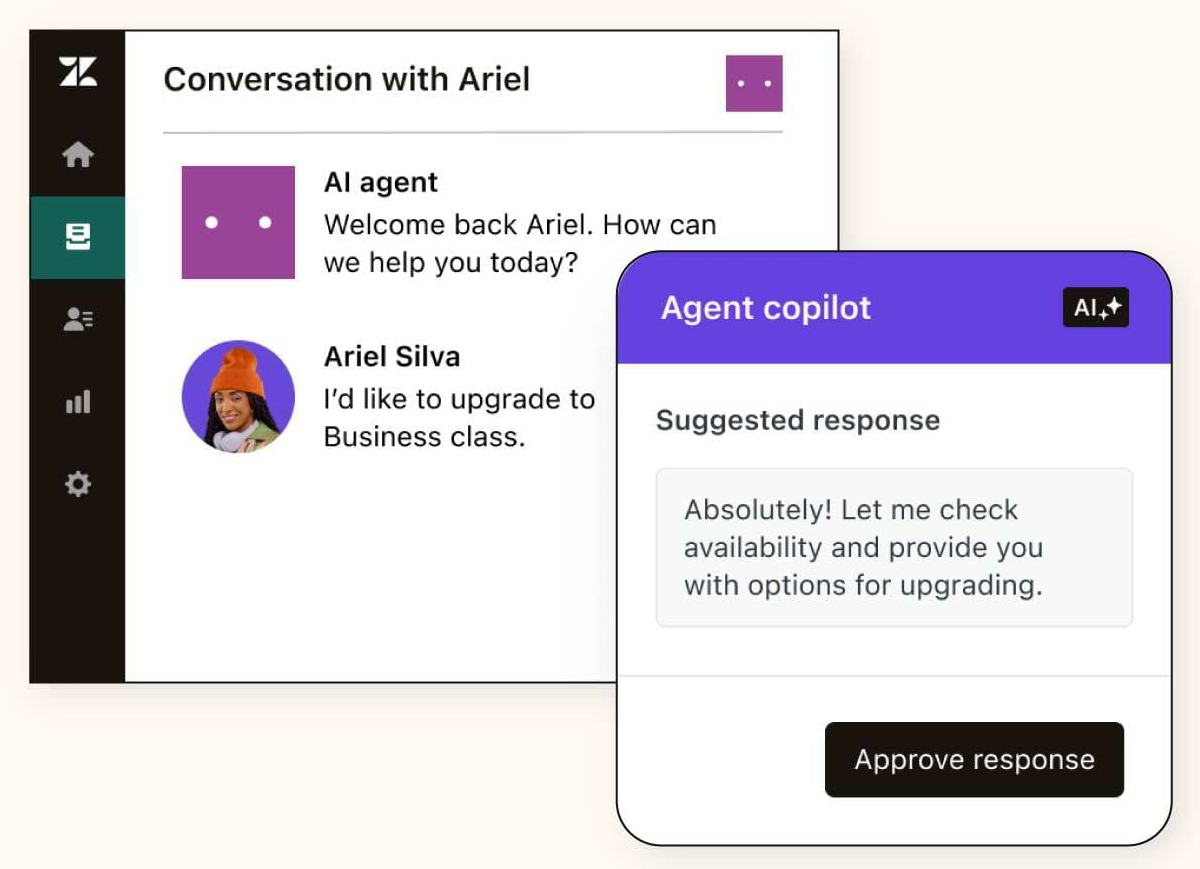
For human agents handling cases that need a personal touch, Zendesk Copilot provides real-time guidance the moment a ticket opens.
Source: Zendesk
The platform also includes workforce management (AI-powered scheduling and forecasting) and quality assurance (automatic scoring of 100% of interactions). These are native products built into the same infrastructure as ticketing and messaging, not add-on integrations.
Where Zendesk falls short is everywhere outside customer support. It has no pipeline management, no sales forecasting, and no prospecting tools. Zendesk Sell (acquired from Base in 2018) exists as a basic CRM, but it's a footnote in the product suite, not the main story.
Zoho CRM wins on sales pipeline management and value
Zoho CRM takes a different approach. Where Zendesk is a specialist, Zoho CRM is a generalist, a platform that tries to give growing businesses everything they need to manage the sales process, from lead capture through quoting and invoicing.
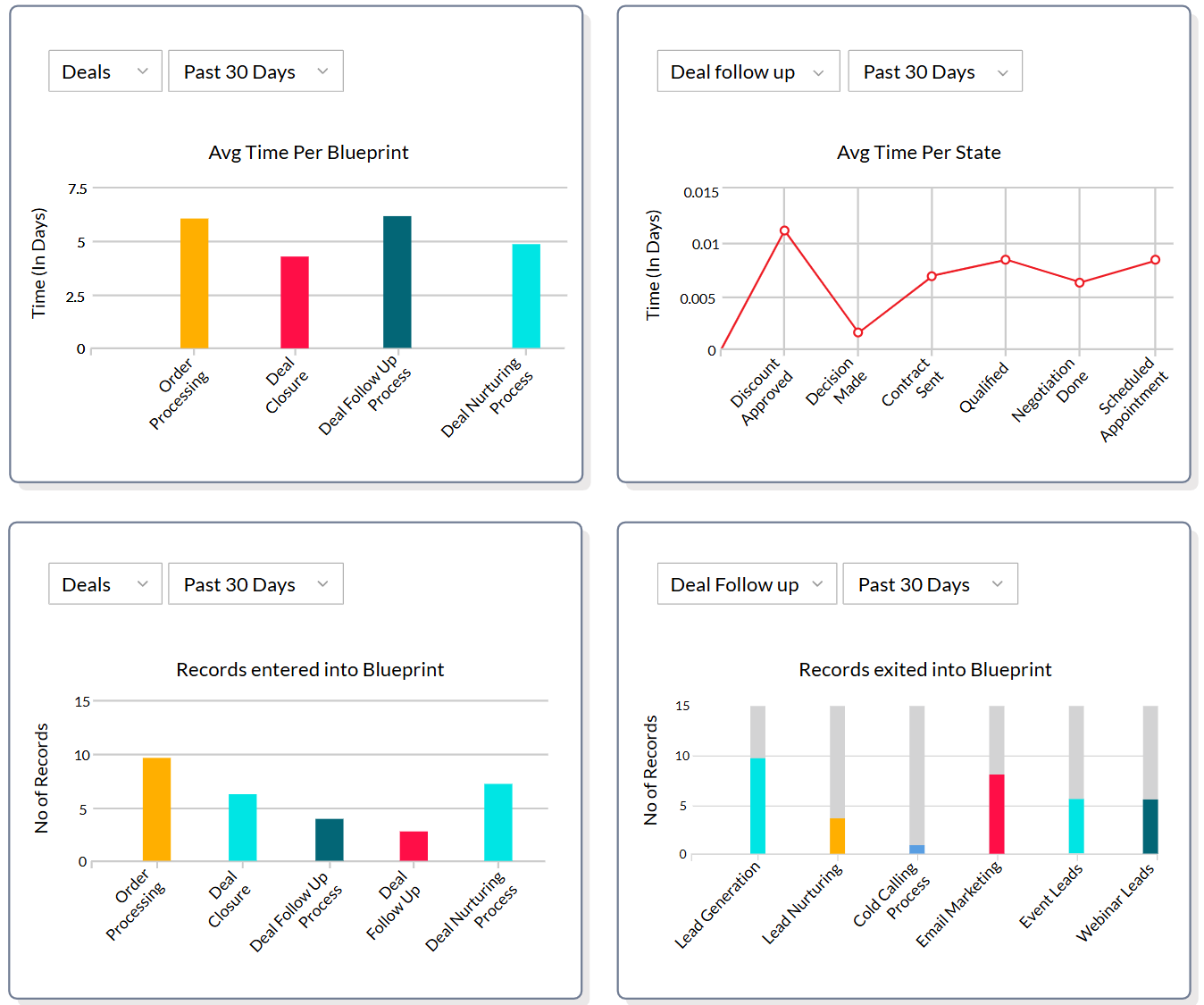
The depth is real. Blueprint lets admins define stage-by-stage sales processes that prevent reps from skipping required steps, a capability that G2 users call out as effective at reducing human error. Cadences automate multichannel follow-up sequences across email, calls, WhatsApp, and tasks. CPQ generates quotes from configured pricing rules without requiring a separate tool.
Source: Zoho CRM
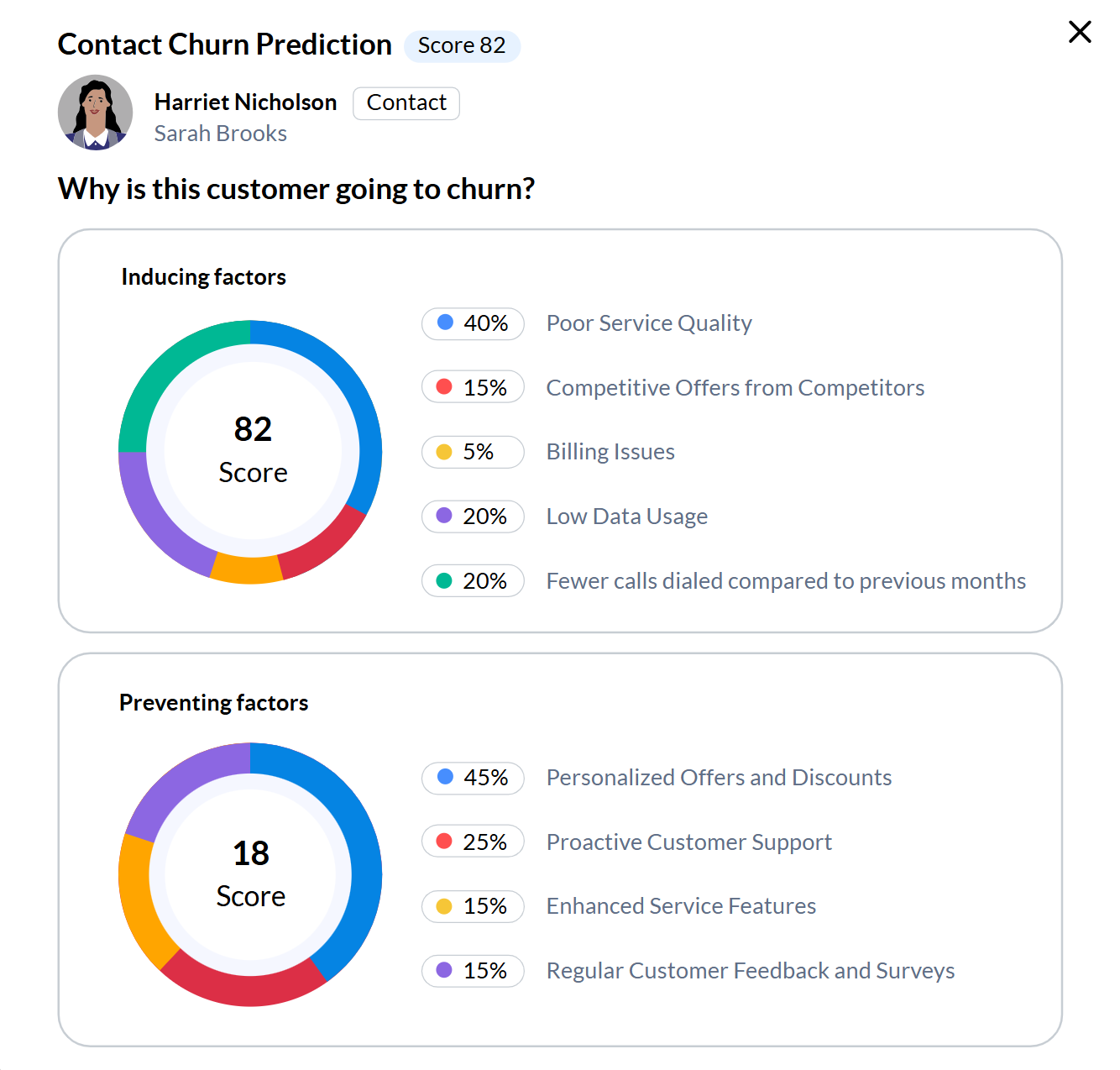
The AI layer, Zia, covers predictive lead scoring, churn prediction, best time to contact, email sentiment analysis, and anomaly detection. The Zia Agents Store offers seven pre-built AI agents, including an SDR agent that nurtures leads via targeted emails, a deal analyzer that provides win probability and next-best-action suggestions, and a follow-up scheduler that books meetings with prospects on its own.
Source: Zoho CRM
But the biggest differentiator is price. Zoho CRM's paid plans start at roughly $14/user/month, and even the Enterprise tier (which includes territory management, journey orchestration, custom functions, and full Zia AI) runs about $29/user/month.
A permanent free plan supports up to 3 users with core lead, contact, and deal management included.
Zoho also benefits from ecosystem breadth. Signing up for Zoho CRM gives access to more than 40 integrated applications, including Zoho Desk for customer support, Zoho Books for accounting, and Zoho Analytics for business intelligence, all built to work together natively.
Where Zoho CRM struggles is in the details of that breadth. G2 reviewers consistently note that while basic use is accessible, advanced configuration demands significant time. Capterra reviewers report slow support response times. And performance can lag with large data volumes. Zoho CRM gives you a lot of capability for the price, but extracting full value requires admin investment.
The data quality problem neither platform solves
Here's what both Zendesk and Zoho CRM have in common: they're only as good as the data inside them.
A support platform with incomplete customer records can't route tickets to the right agent, can't surface relevant history, and can't personalize the service experience. A sales CRM with stale contacts wastes rep time on bad phone numbers and bounced emails. In both cases, the platform does its job correctly. It just has nothing useful to work with.
This is not a hypothetical problem. Forbes estimates 91% of CRM data is incomplete. Contact records decay as people change jobs, email addresses go stale, and companies restructure. The AI features in both Zendesk and Zoho CRM can only reason about the data they have access to. Feed them incomplete data, and you get incomplete intelligence.
Neither Zendesk nor Zoho CRM was designed to solve this problem. They act on data. They don't source, verify, or maintain it. That's a different discipline.
ZoomInfo provides the intelligence layer both platforms need
ZoomInfo occupies a different layer of the stack. While Zendesk manages service interactions and Zoho CRM manages sales processes, ZoomInfo provides the verified B2B data and intelligence that both platforms depend on to work well.
The scale of the data is the starting point: 500M contacts, 100M companies, 135M+ verified phone numbers, and 200M+ verified business email addresses. This data is maintained through a multi-source verification pipeline backed by 300+ human researchers, with up to 95% accuracy on first-party data.
Source: ZoomInfo
In a Fortune 500 competitive RFP analyzing 25 million contacts across vendors, the independent consultant concluded that "no other competitor came even close."
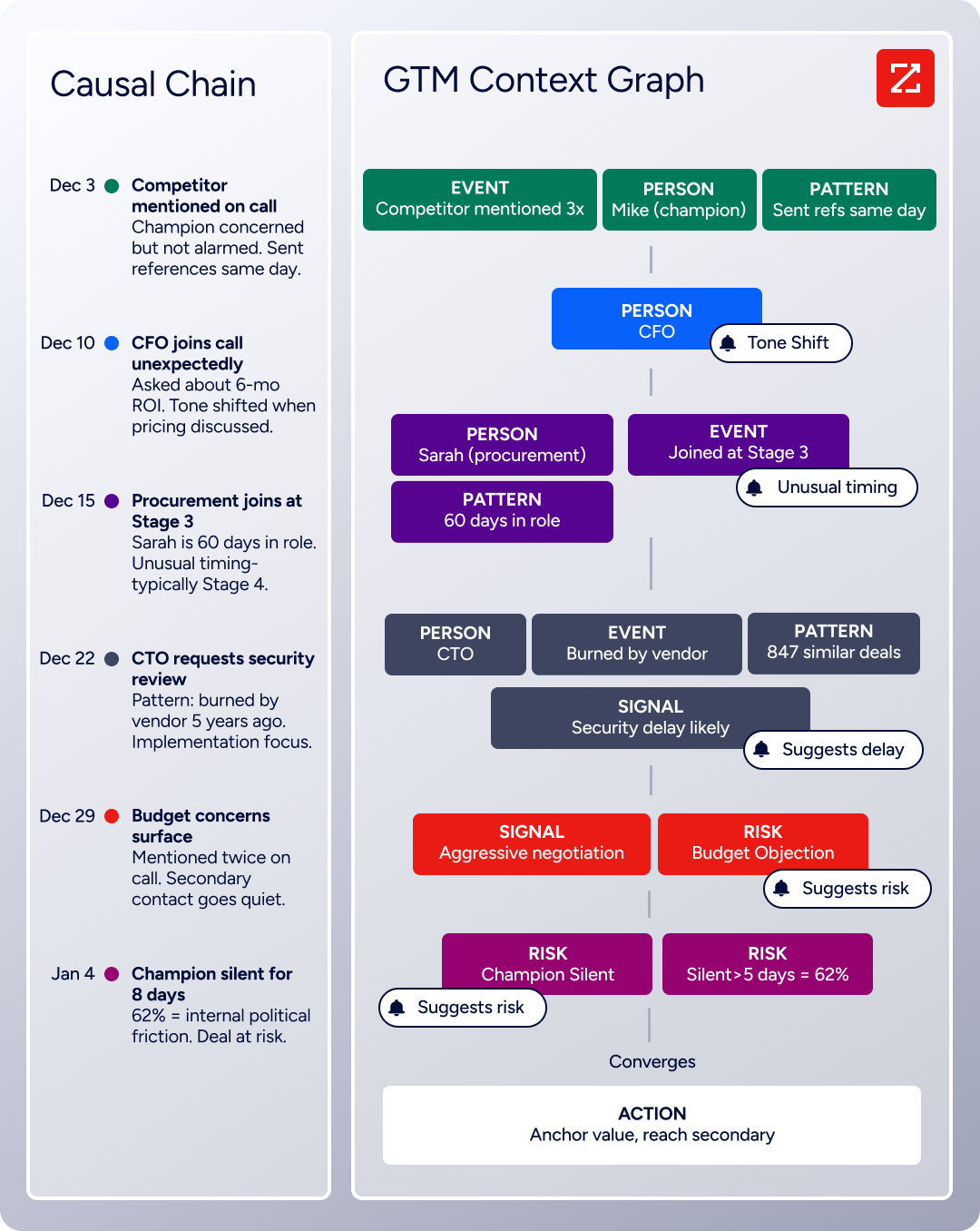
But raw data is only the foundation. The GTM Context Graph transforms that data into intelligence. Processing 1.5B + data points daily, it combines ZoomInfo's third-party data with a customer's own CRM records, conversation transcripts, and behavioral signals to capture not just what happened in an account, but why. A CRM records that a deal moved to stage four.
Source: ZoomInfo
The GTM Context Graph captures that the CFO joined the last call, asked about six-month ROI, and that executive sponsorship entering at this stage matches the pattern behind closed-won deals in your segment.
For sales teams using Zoho CRM, ZoomInfo enriches lead and account records with verified contacts, org charts, technographics, and buyer intent signals that show when companies are actively researching solutions. For service teams using Zendesk, ZoomInfo's company and contact intelligence gives agents the context to understand who they're helping and why that account matters.
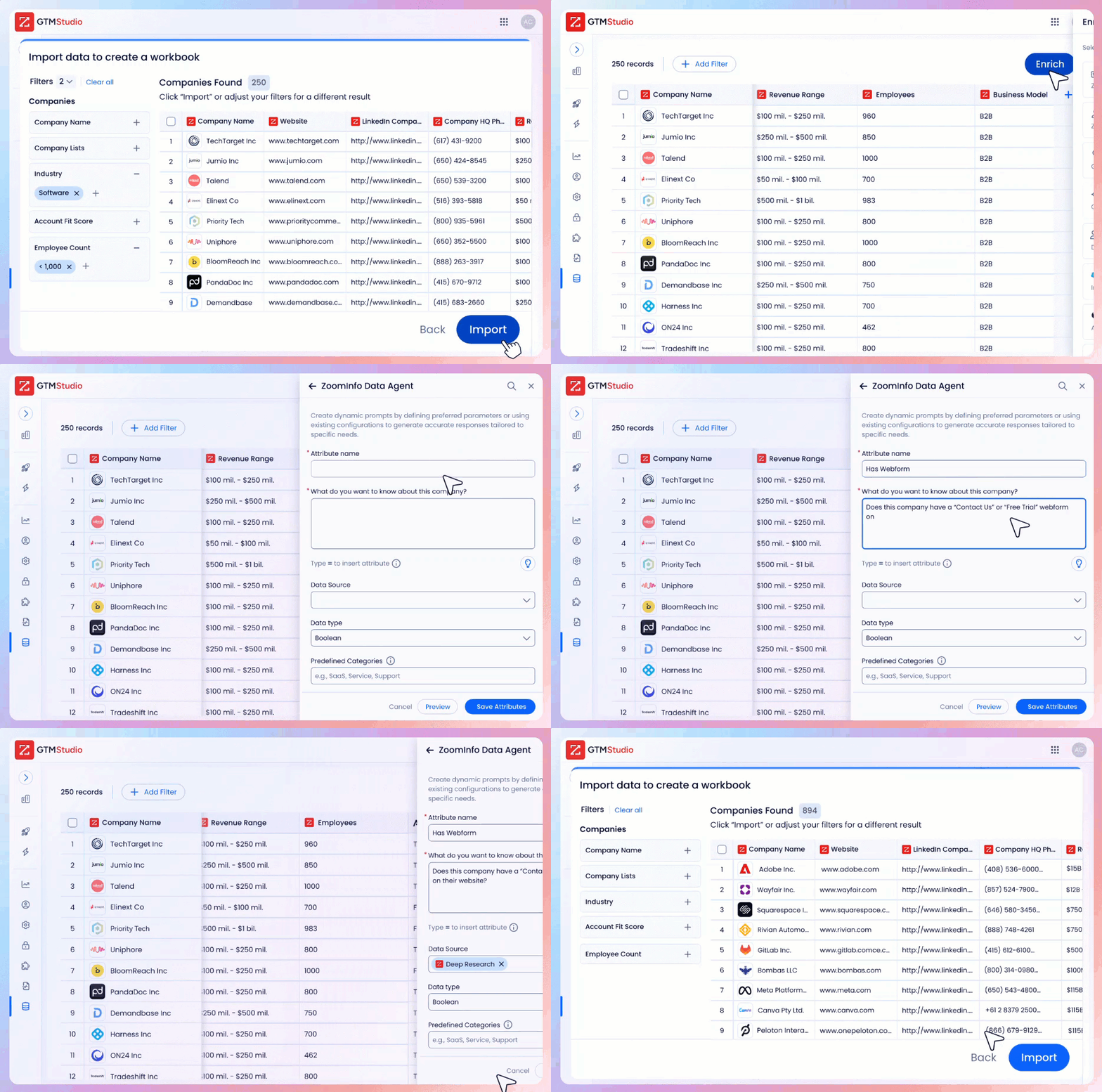
ZoomInfo delivers this intelligence through three channels: GTM Workspace for sellers who want a single AI-powered workspace, GTM Studio for marketers and RevOps building plays and audiences, and APIs and MCP for teams that want ZoomInfo's intelligence inside any third-party tool or AI agent.
Source: ZoomInfo
"That combination of our internal CRM data, external signals, and AI that's given all that context has helped us craft very specific account- and persona-based messages. And people have responded to them right away." (Seismic)
AI capabilities take very different approaches
All three platforms use AI, but for different purposes.
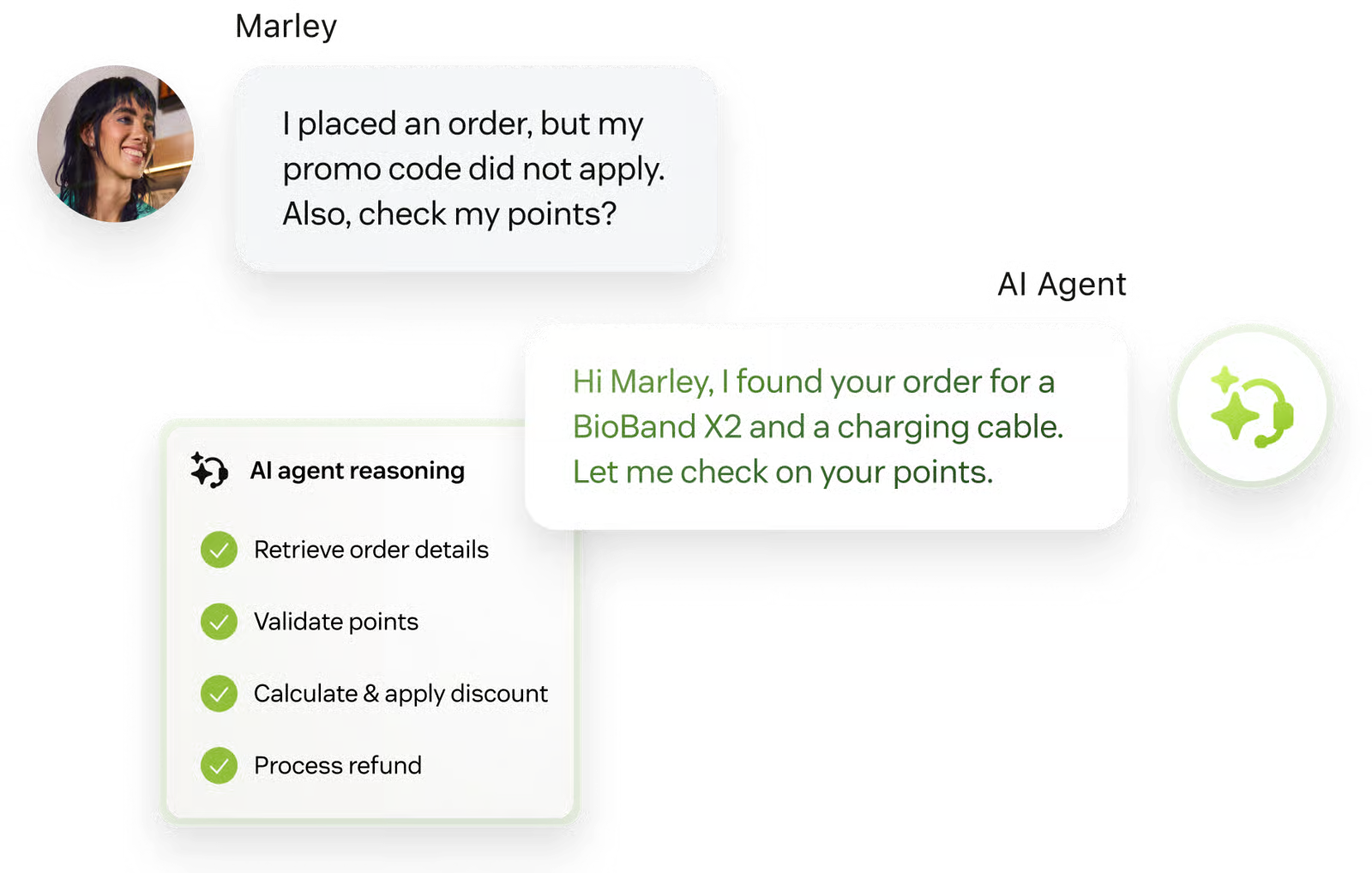
Zendesk's AI is built for customer service resolution. AI Agents handle complex, multi-step customer requests across messaging, email, and voice. They reason through workflows described in natural language, execute actions in connected systems, and improve through the Resolution Learning Loop.
Source: Zendesk
The Agent Builder lets non-technical users create custom AI agents using a no-code interface.
Zoho CRM's Zia is built for sales intelligence. Zia predicts which leads will convert, when customers might churn, and the best time and channel to contact each prospect.
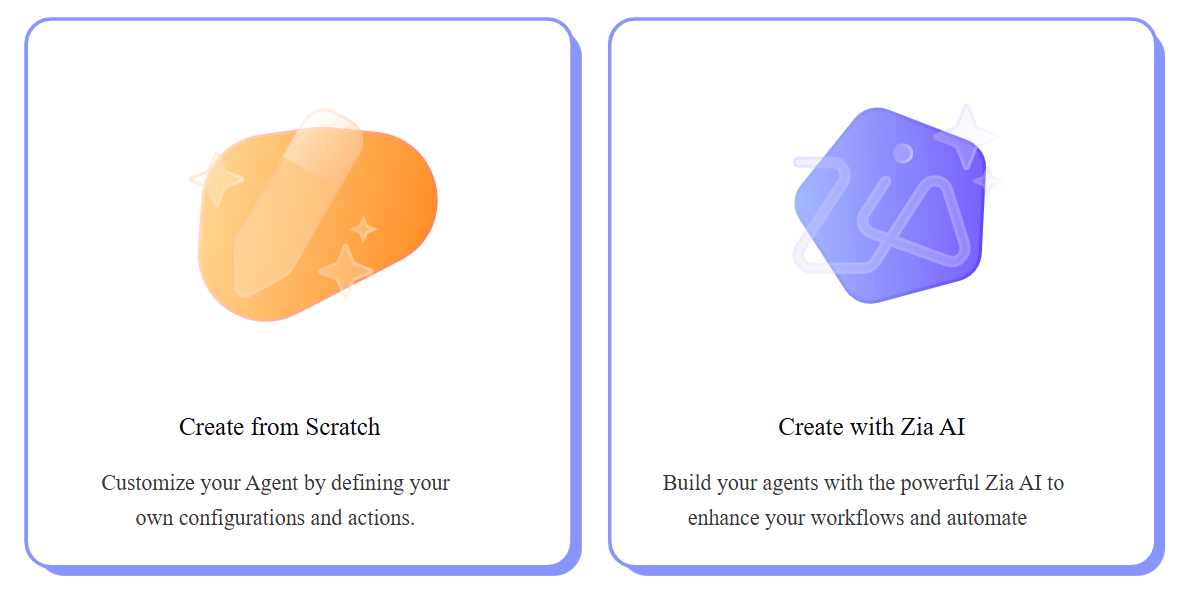
The Agent Studio lets admins build custom AI agents from natural language descriptions, and agents can be deployed as "Digital Employees" with their own CRM identities. On the generative side, Zia can create CRM modules from text descriptions and build workflow automation rules from plain language.
Source: Zoho CRM
ZoomInfo's AI is built for go-to-market intelligence. The GTM Context Graph reasons across CRM data, conversation intelligence, intent signals, and behavioral data to surface why deals move or stall. GTM Workspace's AI agents handle account research, generate personalized outreach, monitor buying signals, and update CRM fields automatically.
Guided Intent, exclusive to ZoomInfo, identifies topics historically correlated with deal success rather than requiring manual topic selection.

Source: ZoomInfo
The distinction matters because these AI systems answer different questions. Zendesk's AI asks: "How do I resolve this customer's problem?" Zoho CRM's AI asks: "Which deal should this rep focus on next?" ZoomInfo's AI asks: "What's actually happening in this account, and what should we do about it?"
"ZoomInfo gives us the information we need to execute. We don't have to go through and spend our time digging. It's already there, so we can be three steps ahead." (Vensure)
Pricing reflects each platform's market
The pricing structures reveal who each platform is built for.
Zendesk uses per-agent, per-month pricing. The entry point is $19/agent/month for Support Team (email and ticketing only). The full omnichannel suite starts at $55/agent/month (Suite Team), with most teams needing Suite Professional at $115/agent/month for features like AI writing tools, custom reports, and SLA management.
Enterprise pricing is custom. Add-ons for workforce management ($50/agent/month), quality assurance ($50/agent/month), and additional AI agent resolutions can push costs much higher. There's a 14-day free trial but no permanent free plan.
Zoho CRM uses per-user, per-month pricing at far lower rates. A permanent free plan covers 3 users. Paid plans start at $14/user/month (Standard) and top out around $52/user/month (Ultimate), which includes everything: 500 custom modules, territory management, journey orchestration, custom AI/ML model building, and dedicated consulting.
Month-to-month contracts are available with no multi-year lock-in. Annual billing saves up to 34%.
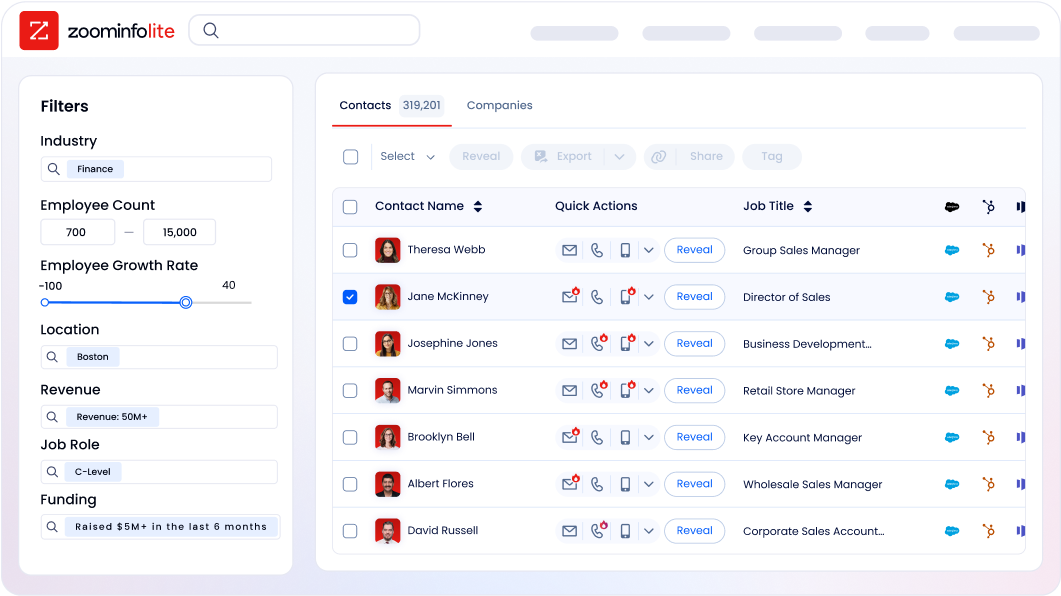
ZoomInfo uses custom, consumption-based pricing with no publicly listed prices. Costs scale around seats, data credits, API consumption, and AI activity. ZoomInfo Lite offers a permanent free tier with 10 monthly export credits, access to the B2B database, a Chrome extension, and website visitor reveals. A 7-day free trial is also available for paid features.
Source: ZoomInfo
Ecosystem and integration depth
Each platform takes a different approach to building beyond its core.
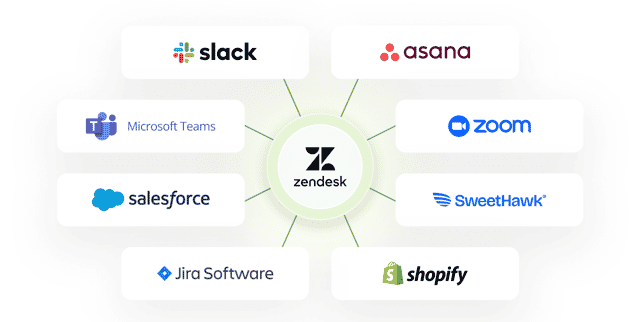
Zendesk maintains 1,800+ apps in its marketplace and a REST API. The integration ecosystem covers CRM, e-commerce, billing, and collaboration tools. For customer service workflows, the ecosystem is mature. Zendesk also launched an MCP Server that lets external AI platforms connect to Zendesk's knowledge and ticket data.
Source: Zendesk
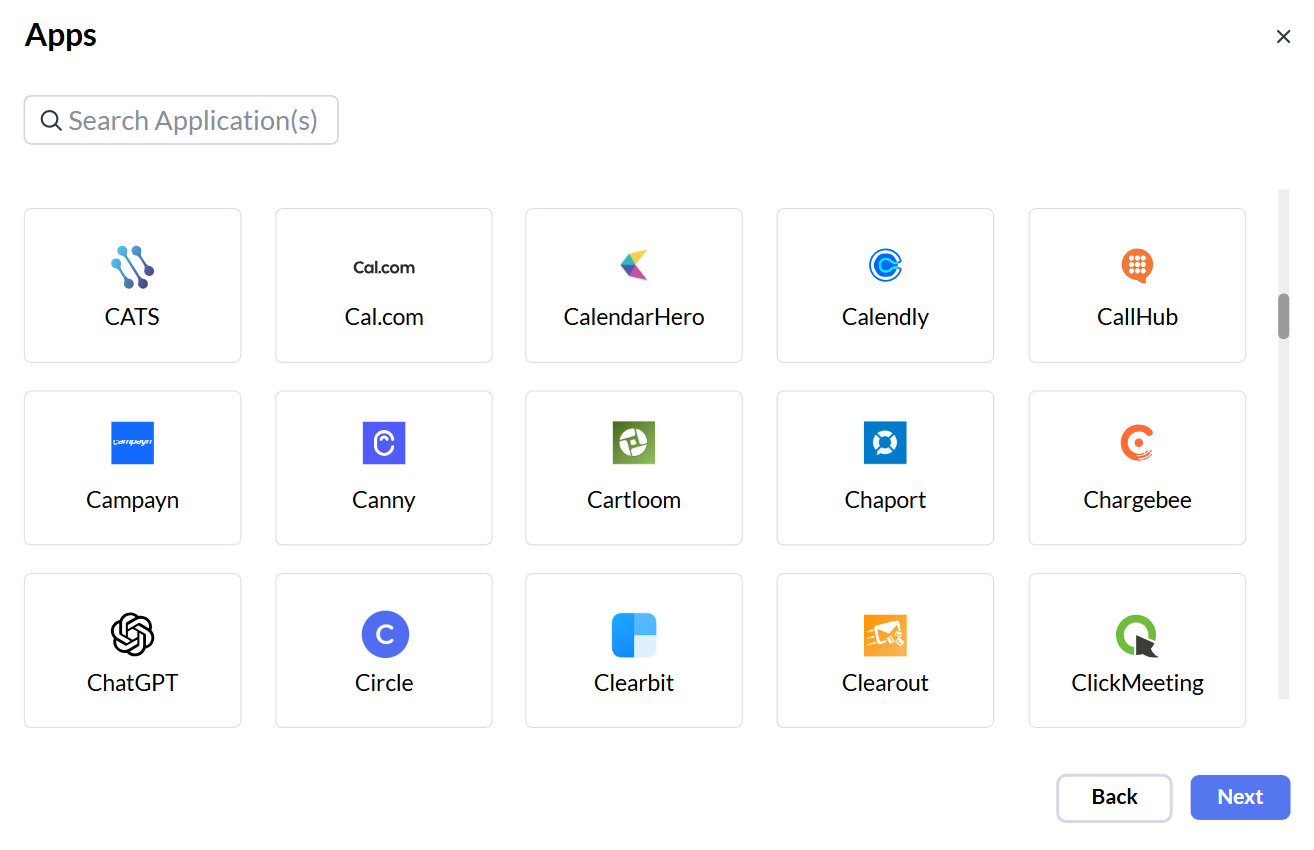
Zoho CRM lists 1,100+ integrations through its marketplace, plus native connections across the 40+ Zoho application suite. The ecosystem advantage is strongest for businesses using multiple Zoho products: Zoho Desk, Zoho Books, Zoho Analytics, and Zoho Campaigns all share data natively.
Source: Zoho CRM
Outside the Zoho ecosystem, integration friction can increase, especially in environments built around Salesforce or Microsoft toolchains.
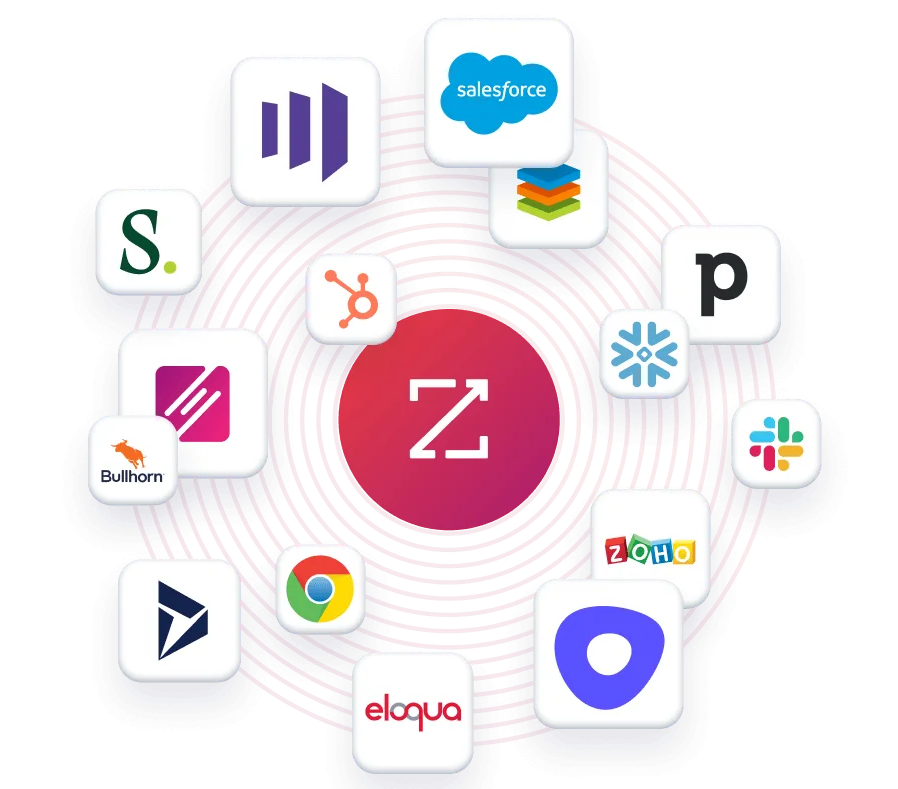
ZoomInfo integrates with 120+ tools in its marketplace and offers API access across all relevant plans. Native integrations cover Salesforce, HubSpot, Microsoft Dynamics 365, and marketing automation platforms including Marketo, Eloqua, and Zoho.
Source: ZoomInfo
The MCP server enables AI-native integration with Claude and ChatGPT. ZoomInfo's Cloud Partners program pushes data directly into AWS, Google Cloud, Snowflake, and Databricks.
"ZoomInfo is our one source of truth for account data, and even more so for contact data. There's no other provider in the market that provides you with that level of detail." (Smartsheet)
The overlap: each platform reaching into the other's territory
Neither Zendesk nor Zoho stays purely in its lane.
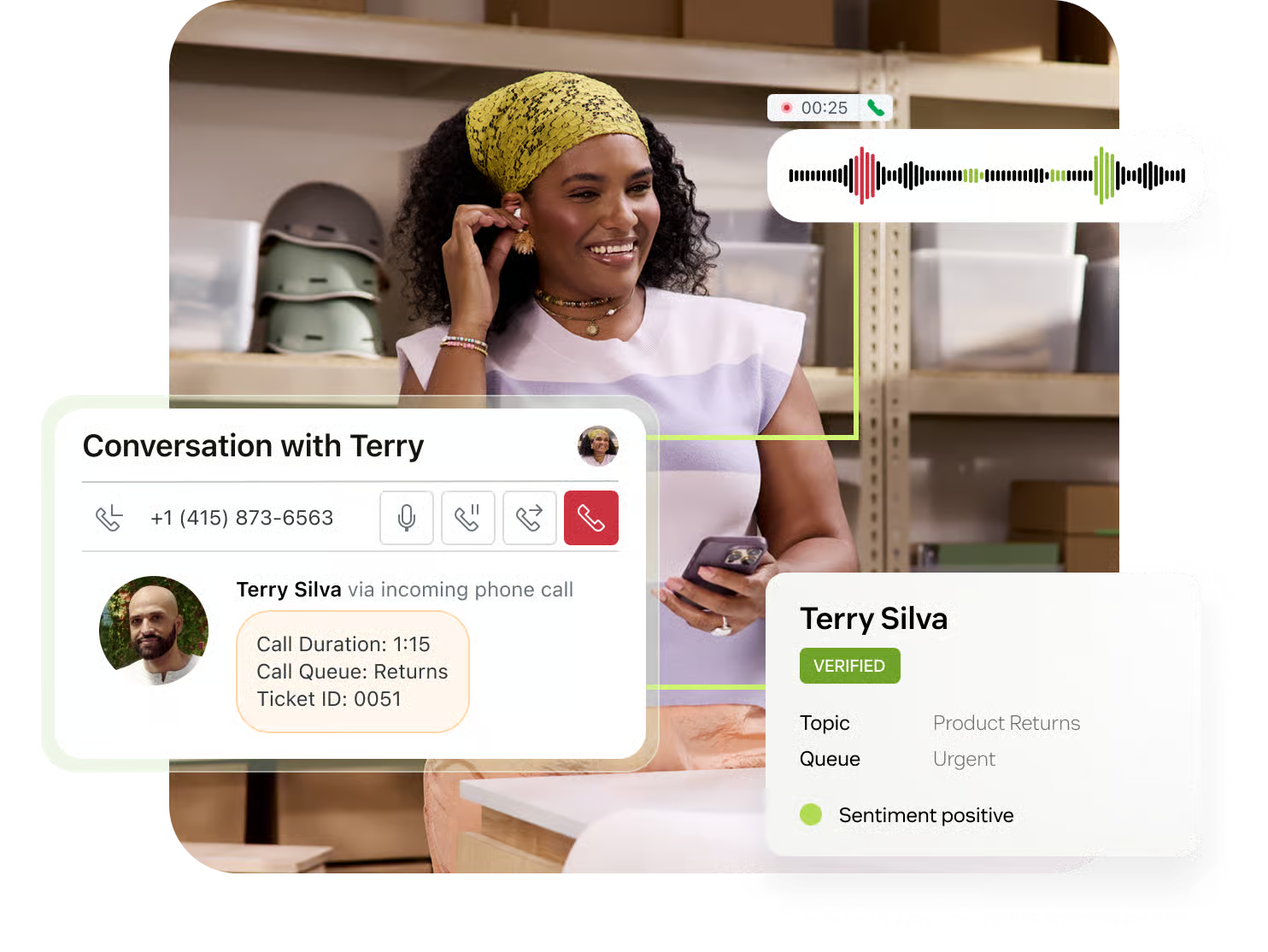
Zendesk has expanded into employee service (internal IT/HR helpdesks) and launched a contact center product built on AWS infrastructure. But it hasn't made a serious play for sales CRM. Zendesk Sell exists but receives minimal focus in the company's current positioning. The bet is on service, not sales.
Source: Zendesk
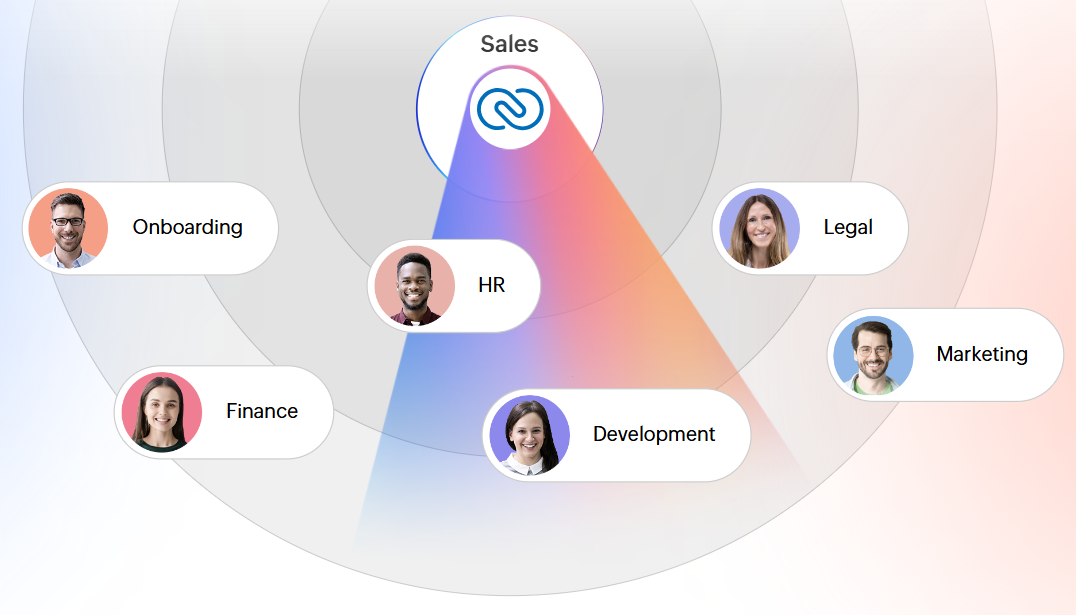
Zoho offers Zoho Desk as a separate helpdesk product within its ecosystem, giving sales-first businesses a path to add customer support without leaving the Zoho world. The CRM for Everyone initiative brings non-sales teams (legal, finance, support) into the CRM through TeamSpaces, expanding Zoho CRM's role as a coordination hub across the organization.
Source: Zoho CRM
ZoomInfo complements both approaches. For Zendesk users, ZoomInfo data enriches customer records so agents have full company context during support interactions.
For Zoho CRM users, ZoomInfo enriches lead and account records with verified contacts, org charts, and intent signals, making prospecting and pipeline management more effective. GTM Workspace users report boosting pipelines by 23% and booking nearly 60% more meetings per week..
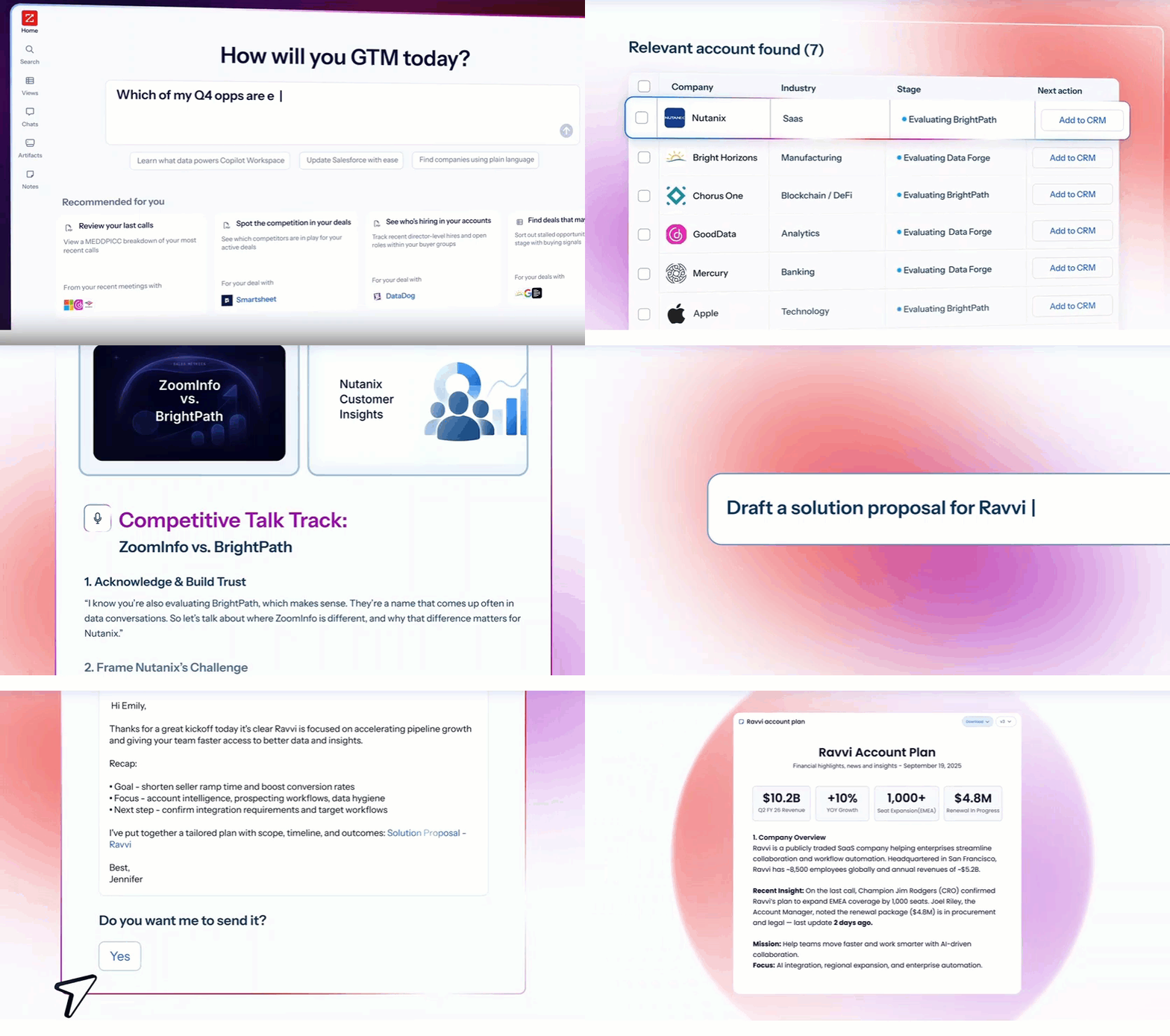
Source: ZoomInfo
"It's not just the data itself. It's more about the right data at the right time to help us reach out with the right message across that full buyer journey." (Redwood Logistics)
Zendesk vs. Zoho CRM vs. ZoomInfo: Which should you choose?
The right platform depends on which problem you're solving first.
Choose Zendesk if:
Customer support is your primary operational challenge
You need AI-powered ticket resolution across email, chat, voice, and messaging
You handle high volumes of customer inquiries and need to scale without proportional headcount growth
You want workforce management and quality assurance built into the same platform
You're willing to pay premium prices for a mature service platform built for this job
Choose Zoho CRM if:
Sales pipeline management is your primary need
Budget matters and you want enterprise-level features at SMB prices
You value customization and process enforcement through Blueprint
You want access to a broad ecosystem of integrated business apps (Zoho Desk, Books, Analytics)
You prefer month-to-month contracts with no long-term lock-in
Add ZoomInfo if:
You need accurate, verified B2B contact and company data feeding your CRM or service platform
Your team wastes time researching prospects manually or working with stale records
You want buyer intent signals that reveal which accounts are actively in-market
You need AI-powered prospecting, outreach, and account intelligence
You want one intelligence layer that works across every tool in your GTM stack
Start with ZoomInfo Lite for free, permanent access to the B2B database.
The clearest path for most B2B teams: choose the platform that solves your primary workflow (Zendesk for service, Zoho CRM for sales) and layer ZoomInfo underneath as the data foundation.
A CRM with clean, enriched data outperforms a CRM with gaps. A support platform with full customer context resolves tickets faster than one working from incomplete records. ZoomInfo is the layer that makes either choice work harder.
Zendesk vs. Zoho CRM vs. ZoomInfo FAQ
What is the fundamental difference between Zendesk, Zoho CRM, and ZoomInfo?
Zendesk is a customer service platform built for managing support tickets, messaging, live chat, and voice across channels, with AI agents that can resolve inquiries on their own. Zoho CRM is a sales CRM built for managing leads, deals, and revenue pipelines, with AI-powered sales automation and process enforcement.
ZoomInfo is a B2B data and intelligence platform that provides verified contact data, company insights, and buyer intent signals to power prospecting and enrich the data inside CRM and service platforms.
Can Zendesk replace a CRM like Zoho CRM?
Not effectively. Zendesk is built for customer service and support operations. While Zendesk Sell exists as a basic CRM product, it receives minimal focus in Zendesk's current strategy. Zendesk lacks the pipeline management, sales forecasting, Blueprint-style process automation, and CPQ capabilities that Zoho CRM provides. If sales is your primary need, Zoho CRM is the stronger choice.
Can Zoho CRM handle customer support?
Not natively. Zoho CRM is a sales platform. However, Zoho offers Zoho Desk as a separate helpdesk product within its ecosystem, and the two integrate natively. Businesses that need both sales and support within the Zoho ecosystem can combine Zoho CRM and Zoho Desk, though they are separate products with separate pricing.
How do the pricing models compare?
Zendesk is the most expensive, starting at $19/agent/month for basic ticketing and reaching $115/agent/month for the full suite. Zoho CRM is the most affordable, with a permanent free plan for 3 users and paid plans starting at $14/user/month.
ZoomInfo uses custom consumption-based pricing with no published rates, though ZoomInfo Lite provides permanent free access with 10 monthly export credits.
Does ZoomInfo integrate with Zendesk and Zoho CRM?
ZoomInfo integrates with major CRM and marketing platforms, including Zoho, through its marketplace and native connectors. API access is included in all relevant plans, and its MCP server allows AI-native connections through tools like Claude and ChatGPT. This means ZoomInfo data can enrich records in virtually any platform, including both Zendesk and Zoho CRM.
Which platform has the best AI capabilities?
Each platform's AI excels in its domain. Zendesk's AI agents, trained on 20 billion ticket interactions, reportedly resolve over 80% of customer inquiries on their own. Zoho CRM's Zia offers predictive lead scoring, churn prediction, and seven pre-built sales agents.
ZoomInfo's GTM Context Graph processes 1.5 billion data points daily to surface buyer intent, identify buying committees, and generate account intelligence. They answer different questions and are most effective when used together.
Which platform is easiest to get started with?
Zoho CRM has the lowest barrier to entry with a permanent free plan and a minimal learning curve for basic use, though advanced configuration is complex. Zendesk's agent workspace is intuitive for support teams, with one customer reporting being fully operational in hours.
ZoomInfo Lite provides immediate free access to the B2B database with no credit card required. All three platforms offer free trials or free tiers to evaluate before committing.
Do I need all three platforms?
It depends on your business. Most B2B teams benefit from a CRM or service platform plus a data intelligence layer.
If your primary need is customer support, Zendesk plus ZoomInfo gives you AI-powered service backed by enriched customer data. If your primary need is sales, Zoho CRM plus ZoomInfo gives you pipeline management backed by verified prospect data and intent signals. Few teams need all three unless they're managing both sales and service operations at scale.
See how Zoho CRM compares to other platforms:
