

What is AI data infrastructure?
AI data infrastructure is the combination of data sources, processing pipelines, and intelligence layers that power AI applications. For B2B go-to-market teams, this means the verified contact data, company signals, and reasoning systems that turn raw inputs into seller and marketer actions.
Generative AI data infrastructure is the means by which artificial intelligence creates new content from learned patterns and various data sources to automate and scale go-to-market workflows. Unlike traditional AI that classifies data or follows rules, generative AI uses large language models and neural networks to produce original outputs: emails, code, reports, images, and insights.
For B2B teams, that means turning data inputs into usable outputs at scale. Feed it account research, and it drafts personalized prospecting messages. Give it buyer signals, and it prioritizes which accounts to target next.
Here's how generative AI differs from traditional automation:
AI Type | Approach | Primary Function | Output Type |
|---|---|---|---|
Traditional AI | Rules-based | Classification | Structured outputs |
Generative AI | Pattern-learned | Content creation | Unstructured outputs |
The distinction matters because generative AI doesn't just process information. It generates new work product.
This article covers AI data infrastructure as it applies to B2B revenue teams, sales, marketing, and RevOps, not physical data center hardware or GPU clusters. If you're evaluating AI data infrastructure for GTM execution, the components and best practices here are scoped to your context.
Why AI data infrastructure determines GTM outcomes
Revenue teams operate under constant pressure to do more with less. Quotas climb. Territories expand. Buyers expect personalization.
Generative AI addresses those constraints by collapsing time-intensive work into seconds. The operational efficiency gains are measurable.
Research accounts in minutes instead of hours. Draft tailored outreach at scale without sacrificing relevance. Surface high-intent accounts before competitors do.
But the real competitive advantage comes from speed plus precision. Generative AI doesn't just work faster. It works smarter when built on quality data, connecting buyer context to seller action in real time. That's the difference between generic automation and AI that actually moves pipeline. That data layer is what the GTM Context Graph provides: a unified reasoning layer that processes 1.5B+ data points daily, fusing verified B2B data with your CRM records, conversation intelligence, and behavioral signals to capture not just what is happening in your accounts, but why, and which actions will move pipeline.
Here's where generative AI delivers GTM-specific value:
Prospecting speed: Research accounts in minutes, not hours
Personalization depth: Tailor messaging to buyer context at scale
Signal prioritization: Surface high-intent accounts faster
Workflow automation: Eliminate repetitive data tasks
Why B2B data quality determines AI success
Many business leaders understand the importance of data quality. But the problem seems too big to solve or too abstract to matter.
The data crisis is real. Consider these findings:
Companies estimate a third of their data is inaccurate on average (Experian 2021 Global Data Management Benchmark Report)
55% of corporate leaders distrust their own data assets (Experian 2021 Global Data Management Benchmark Report)
More than 6 in 10 plan to pilot or operate generative AI by 2026
Most don't yet have a consistent generative AI approach
Leaders are bullish on generative AI despite lacking the data foundation to make it work.
GenAI is only as good as the data you feed it. Accurate inputs produce relevant recommendations. Incomplete data creates targeting gaps and missed opportunities.
Stale records lead to wrong contacts, wasted outreach, and damaged reputation. Here's how data quality impacts AI outputs:
Accurate data: Relevant outputs, trustworthy recommendations
Incomplete data: Gaps in targeting, missed opportunities
Stale data: Wrong contacts, wasted outreach, damaged reputation
"What we really believe is that the data underlying customer outreach needs to be incredibly accurate, totally enriched, and really deep," ZoomInfo CEO Henry Schuck recently told LivePerson. "We are in this unique position as a company, with an offering to really fuel that."
Contact, Company, and Intent Data for AI-Powered GTM
Generative AI for revenue teams runs on three data types: contact data, company data, and intent signals. Each serves a specific purpose in powering AI-driven workflows.
Contact data includes verified emails, direct dials, and job titles. This is what makes personalized outreach and multi-threading possible. Company data covers firmographics, technographics, org structure, and headcount. It enables account prioritization and ICP matching. Intent signals capture research behavior and topic engagement, which drives timing optimization and relevance scoring.
The table below shows how each data type connects to generative AI applications:
Data Type | What It Includes | GenAI Application |
|---|---|---|
Contact Data | Verified emails, direct dials, titles | Personalized outreach, multi-threading |
Company Data | Firmographics, technographics, headcount | Account prioritization, ICP matching |
Intent Signals | Topic research, engagement behavior | Timing optimization, relevance scoring |
Without these inputs, generative AI produces generic outputs that don't convert. With them, it becomes a precision tool for GTM execution.
Core components of AI data infrastructure for GTM teams
For B2B go-to-market teams, AI data infrastructure has five interdependent components. Understanding these components of AI data infrastructure helps teams make smarter deployment decisions and avoid building on a foundation that will limit them later.
Verified B2B data layer. The raw material that prevents hallucination. This includes 500M contacts, 100M companies, and 135M+ verified phone numbers. Without a verified data layer, generative AI models have no reliable ground truth to reason from, they fill gaps with plausible-sounding fabrications.
Signal processing pipeline. The system that ingests, cleans, and enriches raw data in real time. ZoomInfo processes 1.5B+ data points daily, continuously refreshing contact records, company profiles, and behavioral signals so the data your AI acts on reflects current reality, not last quarter's snapshot.
Intelligence and reasoning layer. The GTM Context Graph, which fuses CRM data, conversation intelligence, and behavioral signals to surface not just what is happening in your accounts, but why. This is the layer that separates AI that produces generic recommendations from AI that identifies the right account, the right contact, and the right moment to engage.
Workflow activation layer.The interfaces where intelligence becomes action. GTM Workspace puts verified data and AI-surfaced signals directly into sellers' workflows. GTM Studio gives marketers and RevOps teams the environment to build audiences, launch plays, and orchestrate campaigns without engineering dependencies—and Agent Teams runs complete GTM plays end to end within GTM Studio, coordinating specialist agents that share context and act within admin-set controls.
Programmatic access lane. APIs and MCP for AI agents and custom tools. This component enables developers and AI agent builders to query verified B2B data programmatically, grounding custom tools and autonomous agents in the same verified data layer that powers the native products. For headless execution, Agent Teams also runs through GTM.AI.
These five components map to ZoomInfo's three-pillar architecture: the verified data layer and signal processing pipeline form the data foundation; the intelligence and reasoning layer is the GTM Context Graph; and the workflow activation layer plus programmatic access lane together constitute universal access, delivering the same intelligence to every tool and team that needs it.
Generative AI use cases for B2B go-to-market teams
Generative AI's value comes from applying it to specific GTM workflows, not from the technology itself. The teams seeing results are those who've identified high-volume, repetitive tasks where AI can compress time without sacrificing quality. What follows are the use cases where B2B teams are deploying generative AI today, with customer outcomes like Seismic attributing 39% of active pipeline to ZoomInfo signals.
Prospecting and account research with verified data and buying signals
Modern GTM teams get in touch with the right people, at the right time, at scale. With generative AI, they're now sending the right message at speeds never before possible. The best AI sales prospecting tools combine real-time buying signals with AI-drafted outreach, grounded in verified contact and company data, to surface and engage high-fit accounts before competitors do.
Prospecting powered by real-time buying signals and verified contact data covers three core workflows:
Account research: Synthesize company news, financials, initiatives in seconds
Contact identification: Surface decision-makers and influencers
Message drafting: Generate personalized outreach based on context
Here's a real illustration of how more contextual data leads to better emails, step by step:
With tools like ChatGPT and ZoomInfo data, adding targeted context transforms generic emails into personalized outreach. The following example shows how layering company data, intent signals, and firmographic details improves email relevance at each step.
Let's say you're a sales rep who just got a Slack alert about a new lead. We can use AI to write a follow-up prospecting email.
Starting with basic information about the company and contact:
PROMPT:
Richard Johnson, director of sales from ACME Inc., just downloaded a ZoomInfo platform datasheet.
Write a follow-up prospecting email.
ACME is a web infrastructure and security company, providing content delivery networks, DDoS mitigation, internet security, and distributed domain name server services.
ACME is a mid-market company, based in San Francisco.
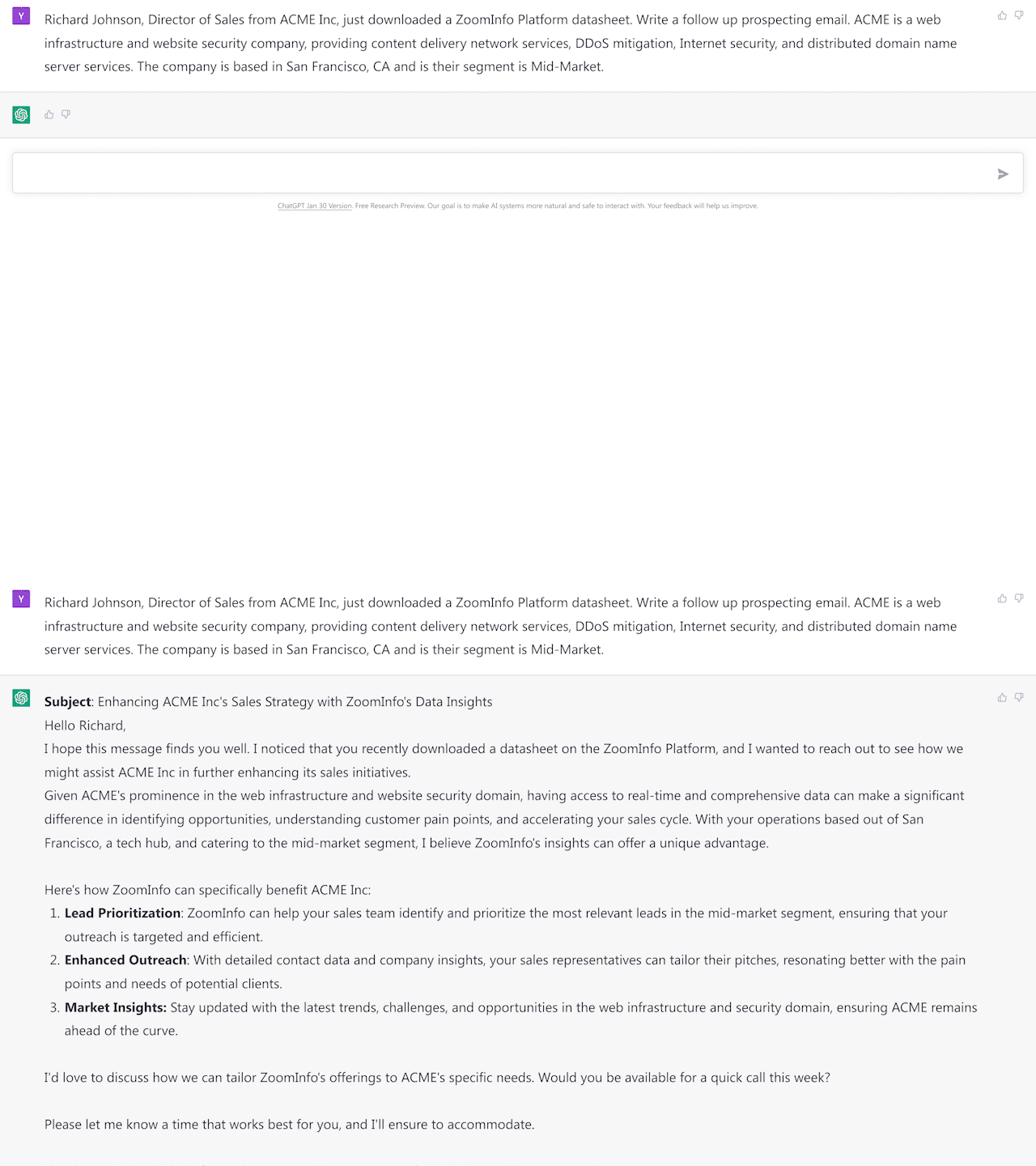
In this example, our chatbot had already been trained on our core messaging and each one of our solutions. So let's open this lead's ZoomInfo contact profile and see if we can provide more context.
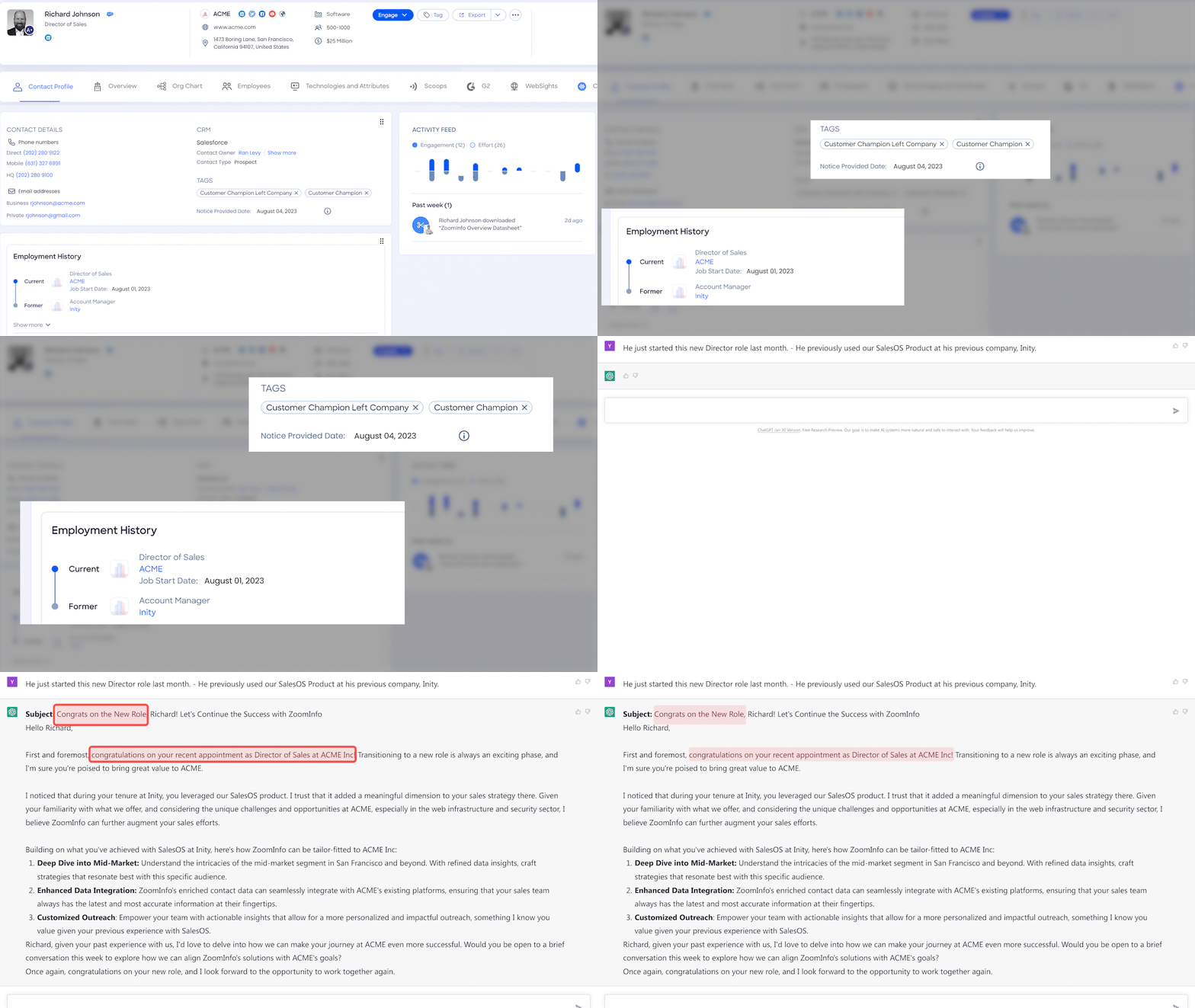
In the profile, it shows Richard just started this job. We used ZoomInfo's Tracker feature to identify him as a customer champion at a previous company. Let's add that to the prompt.
Right away we can see the email is a lot more personalized, and also speaks to his previous use.
PROMPT:
He just started this new director role last month. He used our ZoomInfo Sales product at his previous company, Inity.
Now let's look at some initiatives going on at Richard's company. We can see that they just completed an M&A deal, are hiring in sales, and want to expand overseas. We also see that ACME is facing some challenges in outbound, and is spending more on display ads.
All of this information can be sourced from ZoomInfo Scoops, our feed of news and information updates that combines broad research from across public filings and announcements with proprietary research surveys.
Let's enter a prompt with this new information:
PROMPT:
ACME just made an acquisition.
They are hiring new sales roles, and expanding into global markets like EMEA and APAC.
The company is investing in digital advertising, and faces challenges related to data quality.
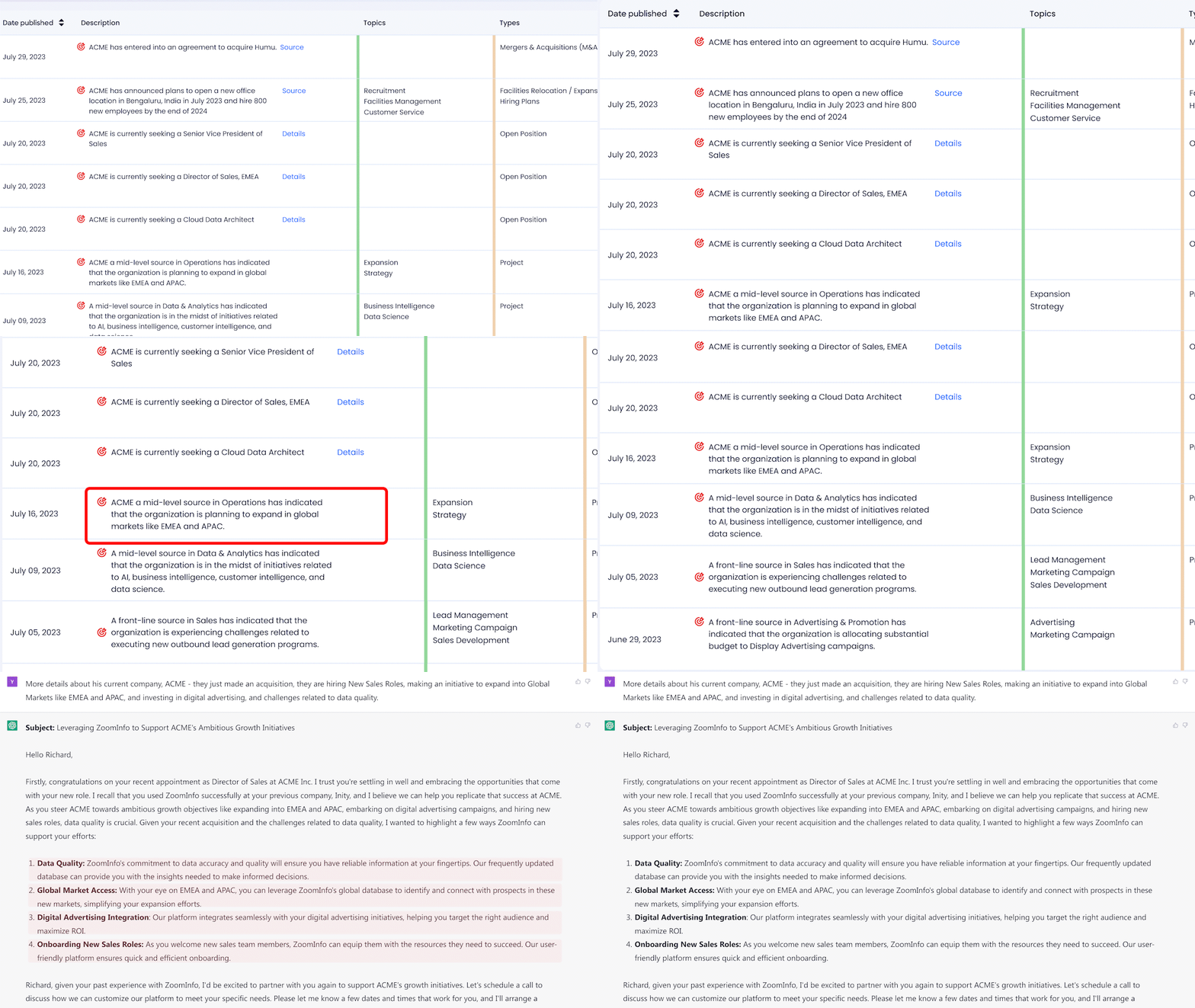
With that new data, the AI is now suggesting products that could support each of the company's key initiatives. Note there are plenty of other data types and real-time signals that we can use to further personalize and make this even more relevant, including:
Website pages visited
Technographic data
Let's take it a step further and use the information we already provided to multi-thread this account. If we grab the contact info of stakeholders, we can use generative AI tools to draft an email to them:
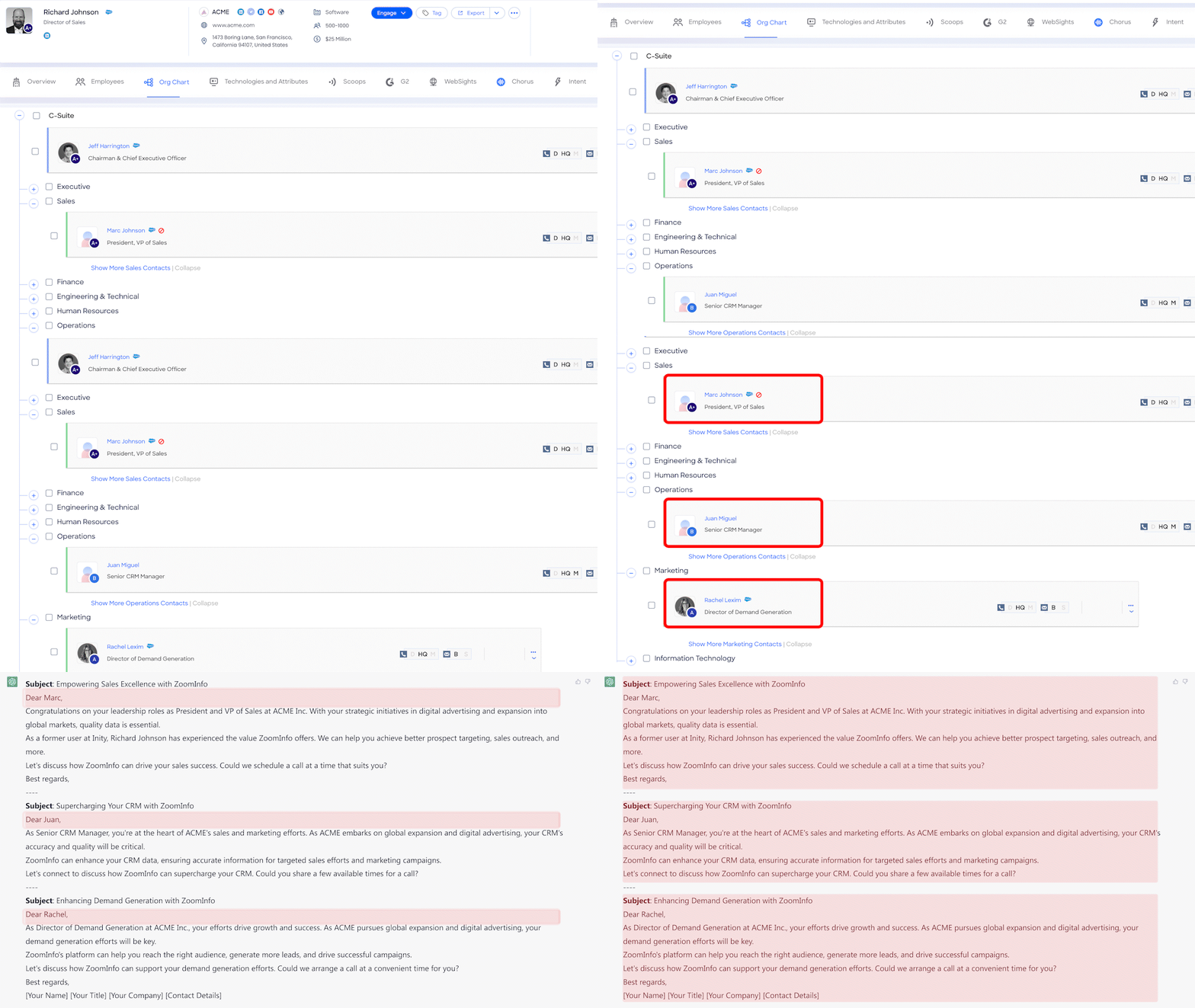
With a few pieces of relevant information, we turned a generic email into something that a good-fit prospect is likely to respond to. Then, generative AI was able to use the data we added to draft relevant personalized emails to several members of their buying committee.
Note that it helps to continuously provide feedback to generative AI chatbots to improve AI responses.
It isn't rocket science, but the underlying point is clear: the accuracy and completeness of the contextual data provided is what will have the biggest impact on your results.
Personalization at Scale for Campaigns and Outreach
Marketing teams face a similar challenge: how to deliver personalized content without manual customization for every segment. Generative AI solves this by generating audience-specific messaging, campaign copy variations, and ABM content tailored to account context.
The inputs that make this work are firmographics, technographics, and engagement history. Feed generative AI data about company size, tech stack, and past interactions, and it produces content that speaks directly to that buyer's situation.
Here's where marketing teams are applying generative AI today:
Campaign copy: Generate variations for different segments
ABM messaging: Tailor content to account-specific context
Email sequences: Draft follow-up content based on engagement signals
The result is personalization at scale without the resource drain of manual content creation.
RevOps Workflow Automation and Efficiency
Revenue operations teams spend significant time on data management: enriching records, cleaning CRM entries, routing leads, summarizing reports. Generative AI automates these workflows, freeing RevOps to focus on strategy instead of maintenance.
Data enrichment happens automatically when generative AI pulls missing account and contact fields from available sources. CRM hygiene improves when AI flags duplicates, outdated records, and incomplete entries. Process documentation gets easier when generative AI generates playbooks from existing workflows.
RevOps applications for generative AI include:
Data enrichment: Auto-complete missing account and contact fields
CRM hygiene: Flag duplicates, outdated records, incomplete entries
Process documentation: Generate playbooks from existing workflows
These aren't flashy use cases, but they're force multipliers for teams managing data and processes at scale.
How GTM Workspace puts AI data infrastructure into action
GTM Workspace demonstrates how AI built on high-quality data transforms go-to-market execution for the all-in-one AI GTM Platform. It turns go-to-market data into signals, insights, and suggested actions pushed to sellers at the right time.
GTM Workspace combines multiple data sources to deliver sophisticated insights at scale:
First-party CRM data
ZoomInfo company and contact data
Real-time buying signals
Champion moves and job changes
Partner ecosystem data
ZoomInfo customers like Seismic reported 54% productivity gains and 11.5 hours saved per week per rep, with 39% of active pipeline attributed to ZoomInfo signals.
Here's what GTM Workspace does in practice:
Signal surfacing: Identifies accounts showing buying behavior, and Agent Teams can act on those signals immediately—running the full play from signal to outreach
Action recommendations: Suggests next steps based on context
Workflow integration: Delivers insights where sellers work
This is what data-powered generative AI looks like. Not theory. Measured outcomes.
GTM Workspace is one of three ways teams access ZoomInfo's intelligence. Sellers work in Workspace, marketers and RevOps teams use GTM Studio, and developers or AI agent builders connect through APIs and MCP, all drawing from the same verified data and GTM Context Graph reasoning layer. Agent Teams coordinates specialist agents that share context across every step, working from each account's current state rather than rigid flowcharts. The data foundation, the intelligence layer that reasons across it, and the access lanes that deliver it to every tool your team uses—these three elements work together so no team is operating on a different version of the truth.
ZoomInfo is free to start with consumption credits based on usage.
How to evaluate GenAI tools for your GTM stack
Getting started with generative AI requires answering practical questions about integration, validation, and workflow fit. The goal isn't to pilot every tool. It's to identify where AI solves a real problem with measurable impact.
Start by evaluating whether a generative AI solution can connect to your existing data sources. If it can't access your CRM, company database, or intent signals, it won't produce relevant outputs. Next, define how you'll measure output quality. What does "good" look like for your use case? Who validates AI-generated content before it goes live?
Then assess workflow fit. Where does the tool plug into existing processes? Does it require sellers to leave their CRM, or does it surface insights where they already work? Finally, examine the vendor's security posture. What data handling and compliance controls exist?
Questions to ask when evaluating generative AI tools:
Data access: Can it connect to your CRM and data sources?
Output quality: How will you measure accuracy and relevance?
Workflow fit: Where does it plug into existing processes?
Security posture: What data handling and compliance controls exist?
Pricing model: Does the platform offer a free entry point so you can validate before committing? ZoomInfo is free to start with consumption credits based on usage.
Governance and risk management for enterprise GenAI
Enterprise adoption of generative AI requires addressing governance concerns upfront. Revenue leaders need confidence that AI won't create compliance problems, accuracy issues, or reputational damage. That means building guardrails before scaling deployment.
How to Choose High-Value Use Cases with Clear Outcomes
Not all generative AI use cases are created equal. Start with high-volume, repetitive tasks where errors have limited blast radius. Internal-facing applications or low-stakes workflows are ideal for early pilots.
Prioritize use cases where you can measure success clearly. If you can't define what "good" looks like, you can't validate whether AI is working. Choose applications where quality data already exists. Trying to fix data problems and deploy AI simultaneously is a recipe for failure.
Criteria for prioritizing generative AI use cases:
Volume: High-repetition tasks benefit most from automation
Measurability: Choose use cases with clear success metrics
Risk tolerance: Start where errors have limited blast radius
Data readiness: Prioritize where quality data already exists
How to Define "Good Output" and Review Processes
Output validation requires defining standards before deployment. What does "good" look like for each use case? For prospecting emails, that might mean accurate personalization, appropriate tone, and no factual errors. For account research summaries, it's completeness and relevance.
Assign review ownership. Who validates AI outputs before they go live? For customer-facing content, that's typically a seller or marketer. For internal workflows, it might be a RevOps manager. Build feedback loops to capture what works and improve future outputs.
Human-in-the-loop isn't an exception. It's standard practice for enterprise generative AI deployment.
Elements of an effective review process:
Output criteria: Define accuracy, tone, and completeness standards
Review ownership: Assign who validates AI outputs before use
Feedback loops: Capture what works to improve future outputs
For teams in regulated industries, financial services, healthcare, insurance, AI data infrastructure must also satisfy compliance requirements around data residency, access controls, and audit logging. ZoomInfo holds ISO 27001, ISO 27701, SOC 2 Type II, and TRUSTe GDPR/CCPA certifications, making it a compliant foundation for enterprise AI deployments.
Agentic AI and the next frontier of GTM data infrastructure
Agentic AI represents a meaningful shift in how AI data infrastructure gets used. Where traditional generative AI tools require a human to prompt each action, agentic AI systems act autonomously: researching accounts, drafting outreach, updating CRM records, and surfacing next-best actions without waiting for a human to initiate each step. ZoomInfo's Agent Teams exemplifies this approach—coordinated specialist agents share context, work from an account's current state, and act within the controls admins set to run complete GTM plays end to end. For GTM teams, that autonomy changes the infrastructure requirements significantly.
When an agent acts on bad data, the error doesn't stay contained. An agent that pulls a stale contact record and sends outreach to someone who left the company six months ago doesn't just waste one email, it may update the CRM, trigger a sequence, and log an activity, compounding the original error across the workflow. The data layer underneath agentic AI has to be right the first time.
Three infrastructure requirements define agentic GTM AI:
Real-time verified data access. Agents cannot hallucinate contact details or company facts and self-correct the way a human reviewer would. They need a live, continuously verified data layer to query at the moment of action, not a cached export from last week.
Persistent context and memory. Agents working across a deal cycle need to remember prior interactions, signals, and account history. An agent that treats every touchpoint as a first contact produces incoherent outreach and misses the cumulative signal picture that makes timing decisions meaningful.
Programmatic access lanes. Agents connect to data and intelligence via APIs and MCP, not manual UI workflows. Agent Teams runs headless through GTM.AI, enabling teams to execute complete plays programmatically. ZoomInfo MCP is the programmatic access layer that enables AI agents, including Claude and custom-built tools, to query verified B2B data in real time, grounding autonomous actions in the same verified data and GTM Context Graph reasoning that powers the native products.
As agentic AI matures, the quality of the data infrastructure underneath it will determine which teams scale and which stall. That's the same principle that governs generative AI today, applied at a higher velocity and with less tolerance for error.
Best practices for AI data infrastructure in B2B GTM
Getting the data foundation right before you scale generative AI isn't a nice-to-have. It's what separates teams that see compounding results from teams that spend budget on a capability that amplifies their existing data problems. These AI data infrastructure best practices apply whether you're deploying your first use case or expanding an existing generative AI data infrastructure across multiple teams.
Audit your data foundation before deploying AI. Generative AI amplifies data quality problems, it doesn't fix them. Start with a CRM hygiene assessment: what percentage of your contact records have verified emails and direct dials? What's your account coverage against your ICP? Fix the foundation before you build on it.
Define "good output" before you scale. Establish accuracy, tone, and completeness standards for each use case before you move from pilot to production. For prospecting emails, that means accurate personalization and no factual errors. For account research summaries, it means completeness and relevance. If you can't define what good looks like, you can't validate whether AI is working.
Start with high-volume, low-risk workflows. Prospecting research and email drafting are ideal first deployments because errors have limited blast radius. Internal-facing workflows are even safer. Build confidence and a feedback loop before deploying AI in customer-facing or revenue-critical contexts.
Build closed-loop measurement from day one. Connect campaign and outreach activity to pipeline outcomes in your CRM so you can prove AI's contribution to revenue. Teams that can't draw a line from AI-assisted outreach to closed-won deals will lose budget in the next planning cycle, regardless of how much time the AI saved.
Ensure your data infrastructure is compliance-ready. For regulated industries, verify that your AI data provider holds SOC 2 Type II, ISO 27001, and GDPR/CCPA certifications before deployment. Data residency requirements and audit logging aren't optional for financial services, healthcare, or insurance teams, they're table stakes.
Choose platforms with programmatic access lanes. APIs and MCP enable AI agents and custom tools to query your data infrastructure without manual exports. Agent Teams runs through GTM.AI for headless execution, letting coordinated agents run complete plays programmatically. As your AI use cases mature toward agentic execution, you'll need a data layer that agents can access programmatically. Platforms that only offer UI-based access create a ceiling on what you can automate.
Teams that get the data foundation right see compounding results. Smartsheet increased MQLs by 84% and opportunity rates by 26% after building their campaigns on ZoomInfo's verified data.
Put AI data infrastructure into action
Deploying AI at scale for B2B companies requires more than advanced tools. It demands quality data, an intelligence layer that reasons across that data, and access in every tool your team already uses.
ZoomInfo's all-in-one AI GTM Platform upholds data quality, constantly refining business data to drive your go-to-market motions. Whether your team is running ABM campaigns, scaling outbound, or deploying Agent Teams to run complete plays end to end, the data foundation underneath determines what's possible. ZoomInfo is free to start with consumption credits based on usage.
Frequently asked questions about AI data infrastructure
What does AI data infrastructure mean for B2B teams?
AI data infrastructure is the combination of data sources, processing pipelines, and intelligence layers that power AI applications. For B2B go-to-market teams specifically, it means the verified contact data, company signals, intent data, and reasoning systems, like the GTM Context Graph, that turn raw inputs into seller and marketer actions. Without a high-quality data foundation, generative AI produces generic or hallucinated outputs that waste budget and damage pipeline. The quality of the data layer is the single biggest determinant of what AI can actually do for your team.
What are examples of AI data infrastructure for go-to-market teams?
Examples of AI data infrastructure for GTM teams include: a verified B2B data layer (contact records, company firmographics, technographics); a signal processing pipeline that ingests and enriches data in real time; an intelligence layer like the GTM Context Graph that reasons across CRM, intent, and behavioral signals; workflow activation tools like GTM Workspace for sellers and GTM Studio for marketers and RevOps—where Agent Teams runs coordinated plays from signal to action; and programmatic access via APIs and MCP for AI agents and custom tools through GTM.AI. Each layer depends on the one beneath it, a sophisticated reasoning layer built on stale or incomplete data still produces unreliable outputs.
What's the ROI timeline for implementing generative AI in sales?
ROI timelines vary by use case and team readiness. The clearest signal comes from teams that have already deployed: Seismic reported 54% productivity gains and 11.5 hours saved per week per rep, with 39% of active pipeline attributed to ZoomInfo signals within a single quarter. Teams that start with high-volume plays like champion tracking or inbound activation using Agent Teams tend to see efficiency gains first, with pipeline impact following as the data foundation matures and closed-loop measurement gets established.
How does data quality affect generative AI outputs for GTM teams?
Data quality is the single biggest determinant of generative AI output quality. Accurate data produces relevant recommendations; incomplete data creates targeting gaps; stale data leads to wrong contacts, wasted outreach, and damaged sender reputation. For GTM teams, this means that generative AI tools built on unverified or outdated contact and company data will amplify errors at scale rather than solve them. The fix is a data foundation that is continuously verified, not a quarterly list pull. See the full breakdown of data quality impact on GTM performance.
What is agentic AI data infrastructure and why does it matter?
Agentic AI refers to AI systems that act autonomously, researching accounts, drafting outreach, updating CRM records, and surfacing next-best actions without human prompting at each step. Agentic AI requires a more robust data infrastructure than traditional generative AI tools because errors compound: an agent acting on a stale contact record or hallucinated company fact will take the wrong action without a human catching it. The three infrastructure requirements are real-time verified data access, persistent context and memory, and programmatic access lanes via APIs and MCP that let agents query live data without manual exports. With Agent Teams in GTM Studio—or headless through GTM.AI—coordinated specialist agents share context, work from an account's current state, and act within admin-set controls to run complete plays reliably. As agentic AI matures, the quality of the data infrastructure underneath it will determine which GTM teams can scale autonomous plays and which cannot.
Can small B2B teams benefit from generative AI data infrastructure?
Yes, small teams benefit most from generative AI because it multiplies individual productivity by automating research, personalization, and data tasks that would otherwise require dedicated headcount. A two-person demand gen team running ABM plays with Agent Teams handling champion re-engagement or closed-won lookalike activation can operate at a scale that previously required a much larger team. ZoomInfo is free to start with consumption credits based on usage, making it accessible to teams of any size.