
Choosing between ActiveCampaign and Kit (formerly ConvertKit) for your email marketing often comes down to these questions:
Are you running a B2B company with a sales team, or building a creator business around content?
Do you need automation with branching logic, or a visual workflow builder designed for simplicity?
Is a built-in CRM important, or would you rather sell digital products directly from your email platform?
How much does your success depend on knowing exactly who to target before you send a single email?
Are you nurturing leads through a sales pipeline, or growing a subscriber audience through organic content?
In short, here's what we recommend:
ActiveCampaign is the marketing automation platform for businesses that have outgrown basic email tools. Its visual automation builder supports branching workflows with behavioral triggers, and its built-in CRM connects marketing activity directly to sales deals.
With Active Intelligence (its AI layer), ActiveCampaign is moving toward a model where you describe a goal and the platform builds the campaign. For SMBs and mid-market companies that need email, SMS, WhatsApp, CRM, and automation under one roof, it delivers depth. The tradeoff: that depth comes with a steeper learning curve and pricing that climbs as your contact list grows.
Kit (formerly ConvertKit) is the email platform built for creators who earn a living from their audience. Writers, podcasters, course creators, and YouTubers choose Kit because it combines audience growth (through a Creator Network of 74,000+ creators), email automation, and direct monetization (digital product sales, paid newsletters, paid recommendations) in one place.
Kit's 99.8% delivery rate and 40% average open rate reflect a platform that serves permission-based, engaged audiences. The tradeoff: Kit's automation is simpler than ActiveCampaign's, reporting covers only a 90-day window, and the platform has no CRM or SMS capabilities.
Both platforms excel at engaging the contacts already on your list. But for B2B teams, there's a question neither platform answers: how do you identify the right people to put on that list in the first place?
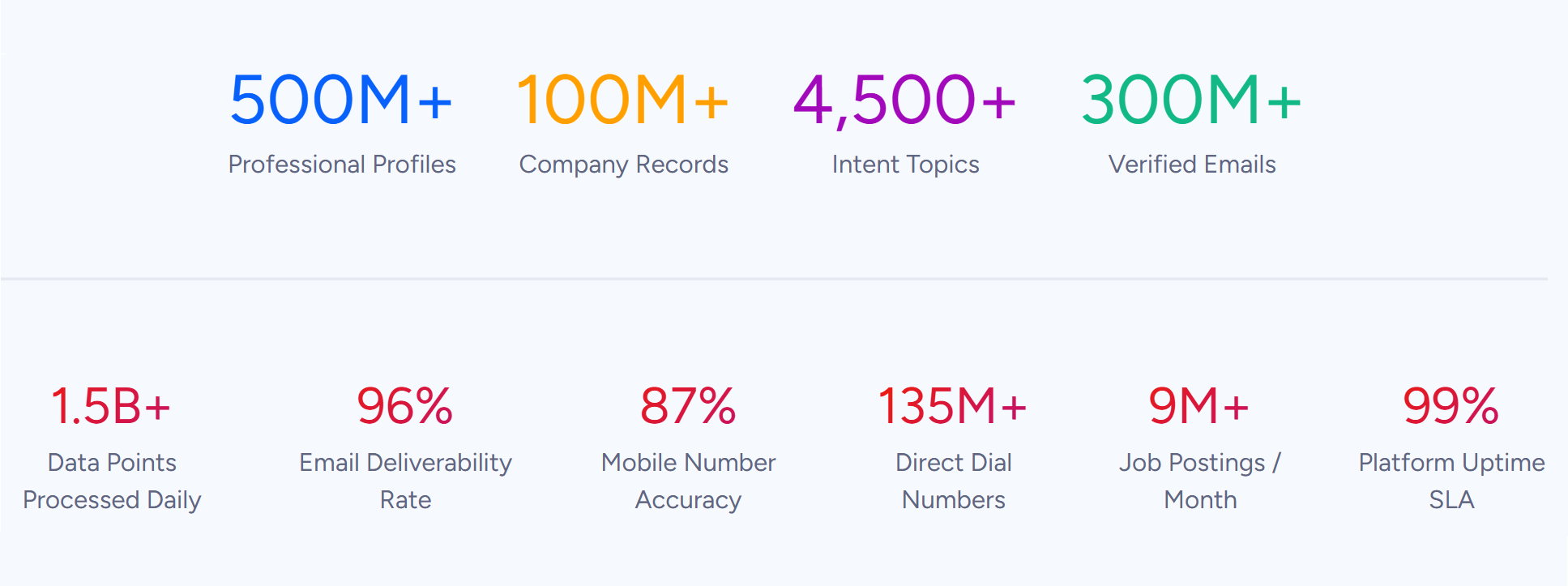
ZoomInfo is a B2B data and go-to-market platform that solves the targeting problem upstream of email marketing. Built on a B2B database (500M contacts, 100M companies, 135M+ verified phone numbers, and 200M+ verified business email addresses), ZoomInfo tells B2B teams who to target, when they're in-market, and what they care about.
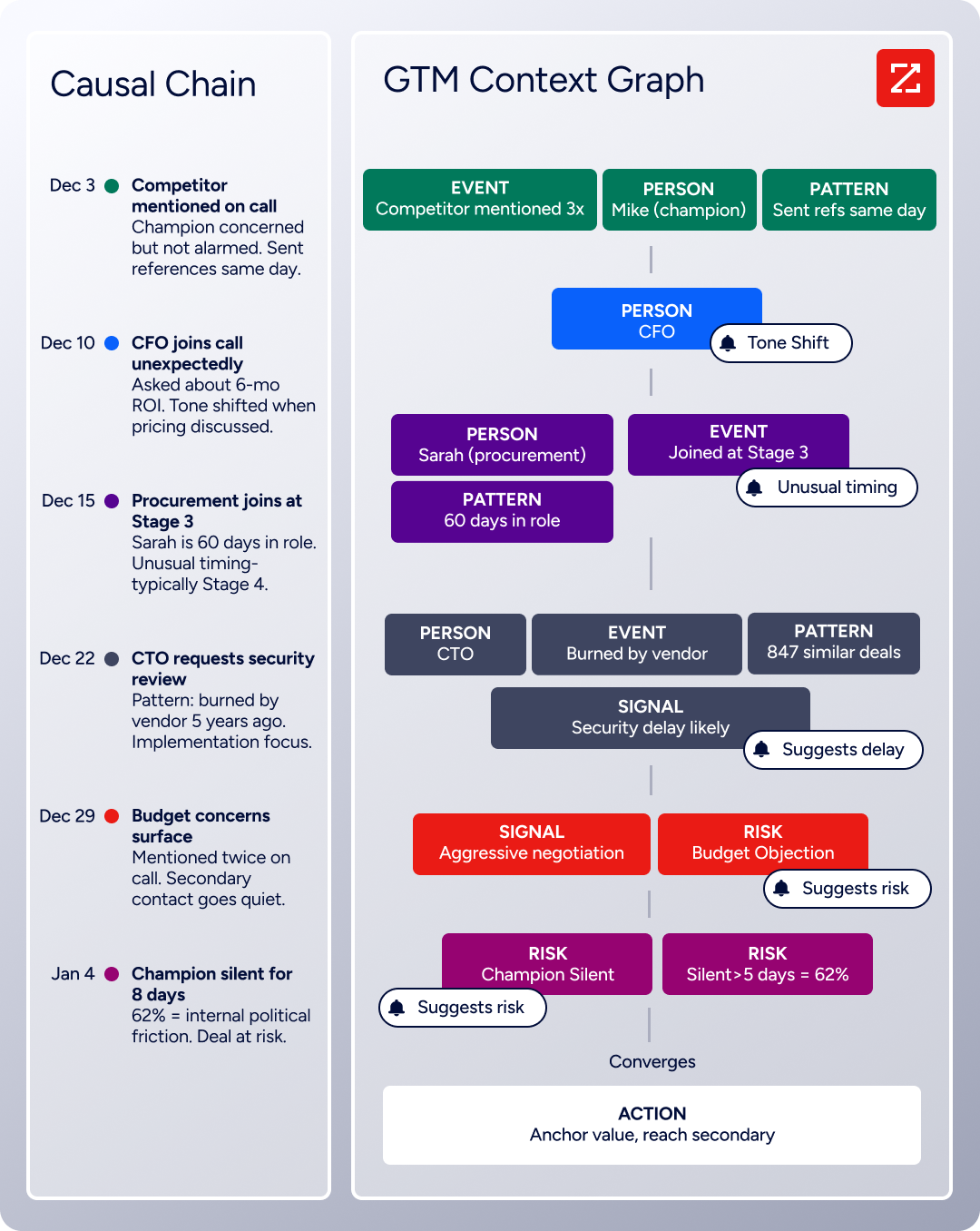
Its GTM Context Graph combines this data with your CRM records, conversation transcripts, and behavioral signals to show not just what happened, but why. Teams act on that intelligence through GTM Workspace for sales execution, GTM Studio for marketing plays, or ZoomInfo's API and MCP in any front-end.
For B2B marketers using ActiveCampaign or Kit, ZoomInfo ensures you're reaching verified contacts at companies showing buying intent.
If building campaigns on verified, intent-driven data sounds like the missing piece, see how ZoomInfo works.
ActiveCampaign vs. Kit vs. ZoomInfo at a glance
ActiveCampaign | Kit | ZoomInfo | |
|---|---|---|---|
Primary focus | Marketing automation + CRM | Creator email marketing + monetization | B2B data intelligence + GTM execution |
Automation | Branching visual workflows | Simple visual automations for creator journeys | Signal-driven GTM plays and workflows |
CRM | Built-in with deal pipelines and lead scoring | None | GTM Workspace for sellers |
Channels | Email, SMS, WhatsApp | Email only | Multi-channel orchestration (email, ads, calls, direct mail) |
Monetization | None native | Digital products, paid newsletters, paid recommendations | N/A |
AI capabilities | Active Intelligence (campaign building, predictive sending) | AI subject line generator, Kitlytics analytics app | GTM Context Graph with AI agents |
Free plan | 14-day trial only | Up to 10,000 subscribers | ZoomInfo Lite (permanent free tier) |
Starting price | $15/month (Starter, 1,000 contacts) | $33/month (Creator, 1,000 subscribers) | Custom quote |
Integrations | 1,000+ apps | Kit App Store (growing ecosystem) | 172+ partners + API + MCP for any tool |
Best for | SMBs with sales teams and complex funnels | Creators building audience-driven businesses | B2B teams needing verified contacts + buyer intent |
ActiveCampaign leads in automation sophistication
ActiveCampaign built its reputation on automation, and the gap with Kit is substantial.
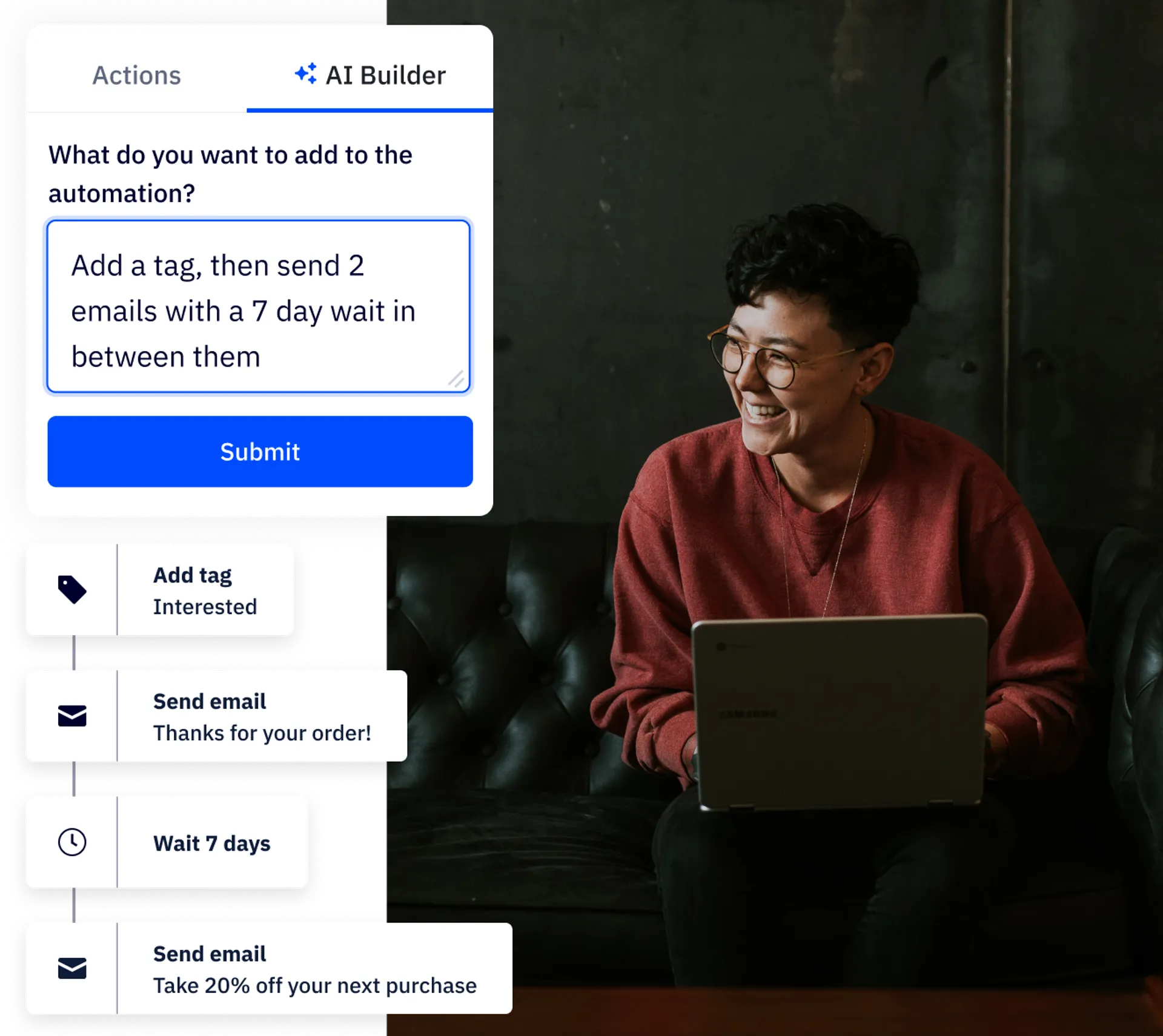
The visual automation builder supports unlimited actions per workflow (on Plus plans and above), conditional branching based on real-time behavior, and triggers that span email engagement, website visits, purchases, CRM deal changes, and custom events.
Source: ActiveCampaign
You can build a workflow where a subscriber who clicks a pricing link gets routed to a sales sequence, while someone who downloads a whitepaper enters a nurture track, and a contact whose deal stage changes gets a personalized follow-up, all in the same automation.
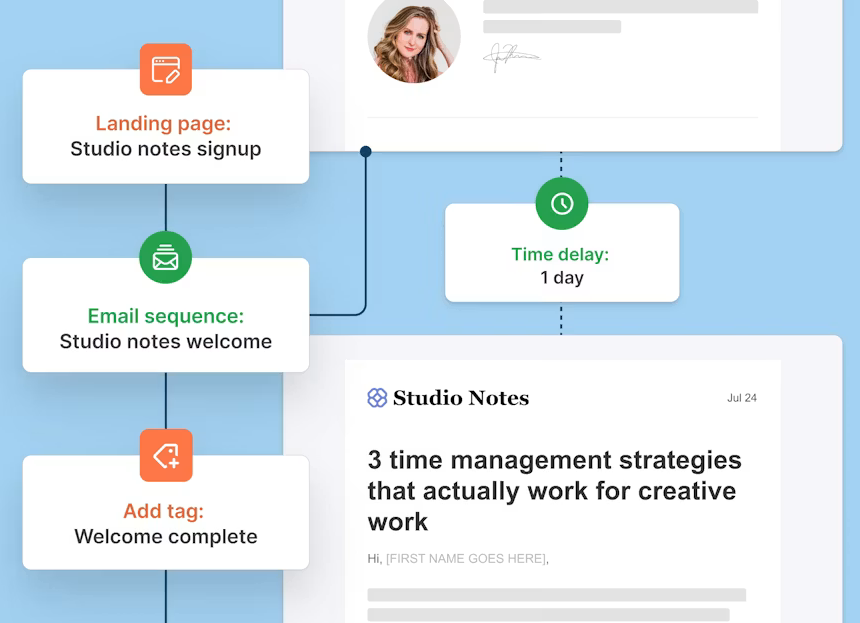
Kit's Visual Automations use a similar canvas-based approach but with fewer building blocks. You get six action types (email sequence, delay, move subscriber, add/remove tag, set custom field, send webhook) and five event types. Conditions create simple yes/no branches.
Source: Kit
For a creator running a welcome sequence that forks based on whether someone bought a course, this is plenty. For a B2B marketer running multi-stage lead nurture with scoring thresholds and CRM handoffs, it's not enough.
The difference extends to testing. ActiveCampaign supports A/B testing within automation workflows, with up to five email variants at once. Kit supports A/B testing on broadcast subject lines and email content (Creator and Pro plans only), but not inside automation branches.
ActiveCampaign also includes a built-in CRM with Kanban-style deal pipelines, dual scoring for both contacts and deals, sales routing based on round-robin, expertise, or lead score, and 1:1 tracked emails sent from deal records. Kit has no CRM at all. For businesses where marketing generates leads that sales needs to close, this distinction alone can decide the choice.
Kit wins for creators who publish and monetize
Kit doesn't try to compete on automation depth. Instead, it built the infrastructure creators need to earn a living from their audience.
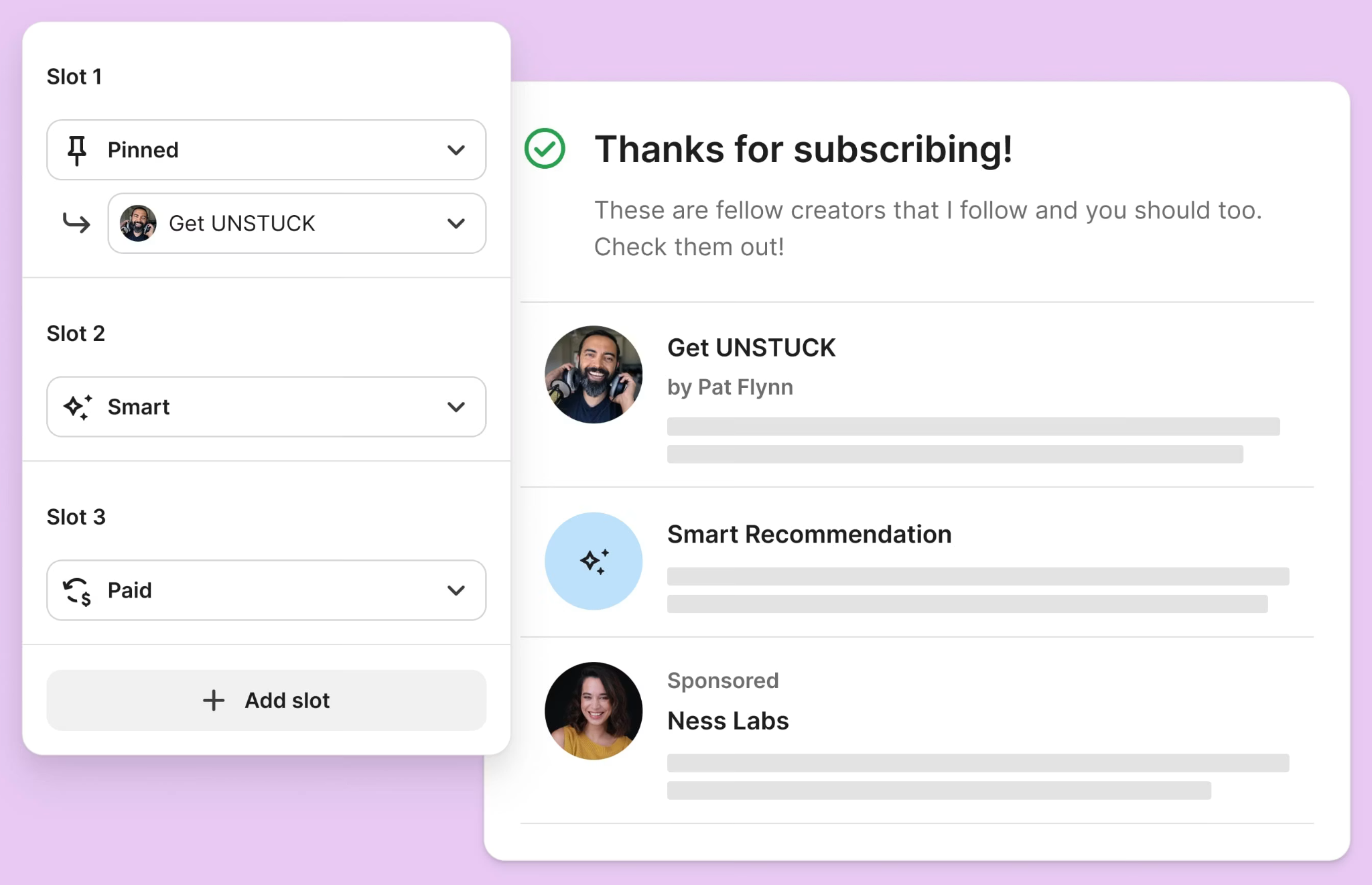
The Creator Network is Kit's biggest advantage. When someone subscribes to a creator's newsletter, they see recommendations for other Kit creators and can subscribe directly from the confirmation page. Kit reports 2x email list growth for creators who use mutual recommendations. With 74,000 professional creators in the network, this creates a growth loop that ActiveCampaign has no equivalent to.
Source: Kit
Monetization is equally distinct. Kit Commerce lets creators sell ebooks, courses, coaching sessions, and paid newsletter subscriptions at a 3.5% + $0.30 fee per transaction, available even on the free plan.
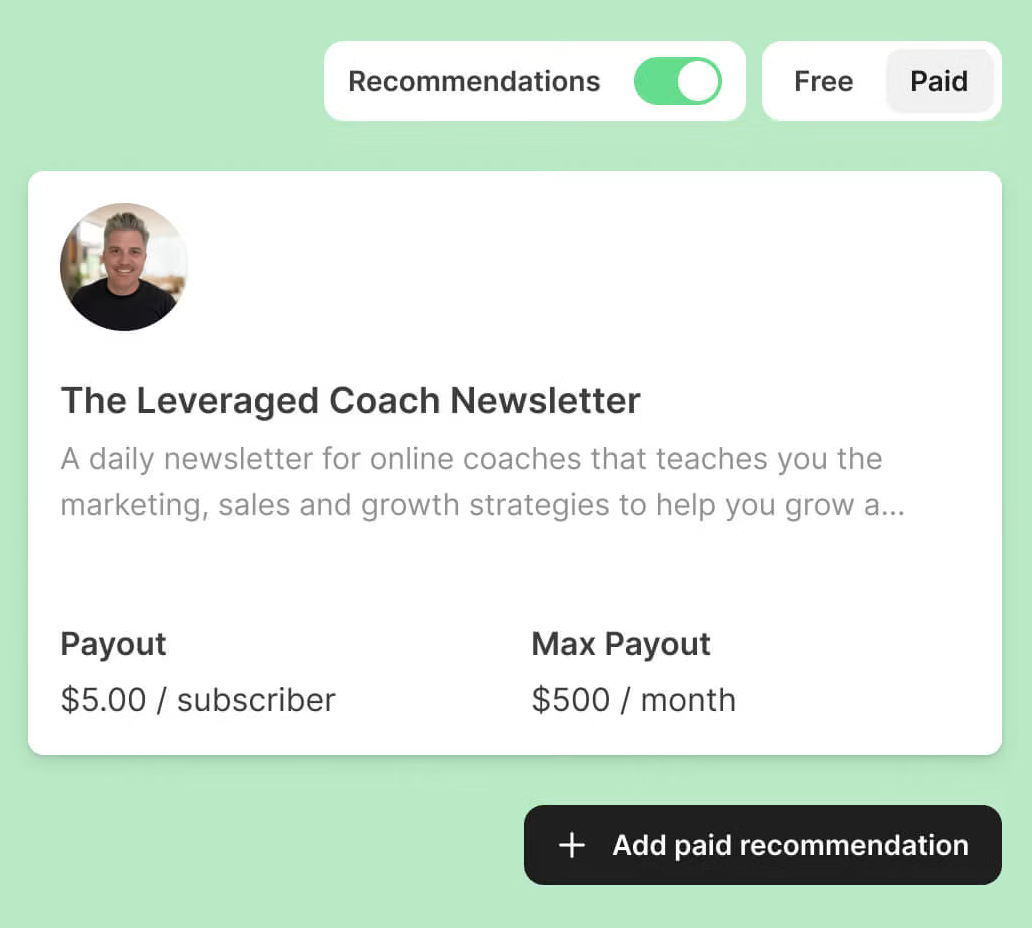
Paid Recommendations let creators earn revenue by recommending other newsletters, with over 100 newsletters actively paying for placement. ActiveCampaign has no native commerce or monetization features.
Source: Kit
Kit also treats deliverability as a competitive advantage. A 99.8% delivery rate across one billion messages per month, a 40% average open rate, a dedicated deliverability team, monthly deliverability reports, and a Deliverability Defined podcast show an unusual level of investment in inbox placement.
ActiveCampaign reports strong deliverability too (93% of surveyed customers say it beats competitors, with 99.88% deliverability reported), but Kit benefits from serving almost exclusively permission-based creator audiences, which means its shared IP pool carries healthier aggregate engagement signals.
The intelligence gap both platforms share
Here's what neither ActiveCampaign nor Kit addresses: before you can automate a nurture sequence or grow a newsletter audience, you need to know who belongs on your list and whether they're in the market for what you sell.
For creators, this problem is less acute. A YouTuber or podcaster attracts subscribers organically through content. The audience self-selects.
For B2B teams, the problem is fundamental. Your marketing automation platform is only as effective as the contacts feeding it.
Build a sophisticated ActiveCampaign workflow for enterprise prospects, and its value depends on whether those prospects are real decision-makers at companies that need your product right now. Import a list of stale contacts with bouncing emails, and the automation fires into a void while your sender reputation deteriorates.
This is the gap ZoomInfo fills. The platform provides 500M contacts and 100M companies with verified direct-dial phone numbers and business email addresses, backed by a verification pipeline that includes 300+ human researchers and achieves up to 95% accuracy on first-party data.
Source: ZoomInfo
In a Fortune 500 competitive RFP analyzing 25 million contacts across vendors, the independent consultant concluded that "no other competitor came even close."
But data alone is half the equation. ZoomInfo's GTM Context Graph processes 1.5B+ data points daily, combining its B2B intelligence with your CRM records, conversation transcripts, and behavioral signals.
Source: ZoomInfo
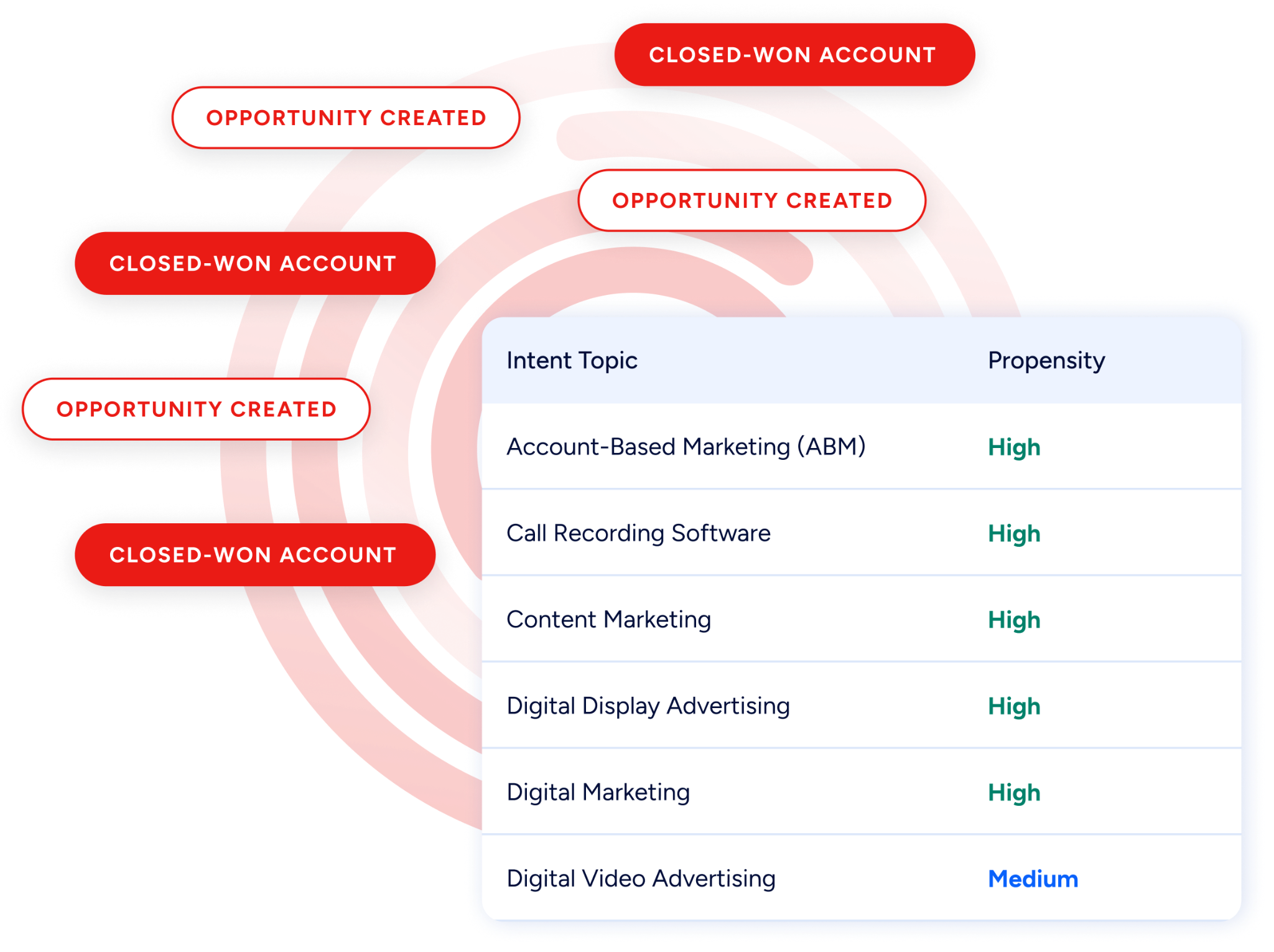
ZoomInfo's Buyer Intent data tracks signals from 210 million IP-to-Organization pairings and 6 trillion+ new keyword-to-device pairings sourced monthly, identifying which companies are researching topics related to your product before they visit your website. Guided Intent, exclusive to ZoomInfo, identifies topics historically correlated with deal success rather than requiring manual topic selection.
Source: ZoomInfo
For B2B marketers running ActiveCampaign, integrating ZoomInfo transforms the top of the funnel. Instead of importing purchased lists of unknown quality, you build audiences from verified, intent-enriched data. Instead of nurturing everyone the same way, you segment by buying stage and stakeholder role because you know those details.
"It's not just the data itself. It's more about the right data at the right time to help us reach out with the right message across that full buyer journey." (Chelsea Kenyon, Senior Director of Digital Strategy, Redwood Logistics)
Pricing reflects different markets and philosophies
ActiveCampaign uses contact-based pricing across four tiers. The Starter plan begins at $15/month, but caps automations at five actions per workflow and limits you to one user seat with a maximum of 25,000 contacts. Most businesses need at least the Plus plan for unlimited automation actions, landing pages, and multichannel capabilities.
At 10,000 contacts, the Starter plan costs $149/month. ActiveCampaign charges once per unique contact regardless of how many automations, tags, or segments that contact appears in. A 14-day free trial and 30-day money-back guarantee reduce switching risk.
Kit uses subscriber-count pricing across three tiers. The free Newsletter plan supports up to 10,000 subscribers with unlimited landing pages, forms, and broadcasts, plus digital product sales. The Creator plan starts at $33/month for 1,000 subscribers (billed annually) and unlocks unlimited automations, A/B testing, and the Kit App Store.
The Pro plan at $66/month for 1,000 subscribers adds deliverability reporting, subscriber engagement scoring, and the SparkLoop referral system (normally $99/month). Kit's free tier is an advantage for creators starting out, though the September 2025 price increase that more than doubled the Creator plan from $15 to $33/month drew criticism from early-stage creators.
ZoomInfo uses consumption-based pricing with no published prices. Costs depend on usage patterns, seat count, credit volume, and feature tier. This is a different price category, designed for B2B teams investing in revenue-generating intelligence rather than email subscriptions.
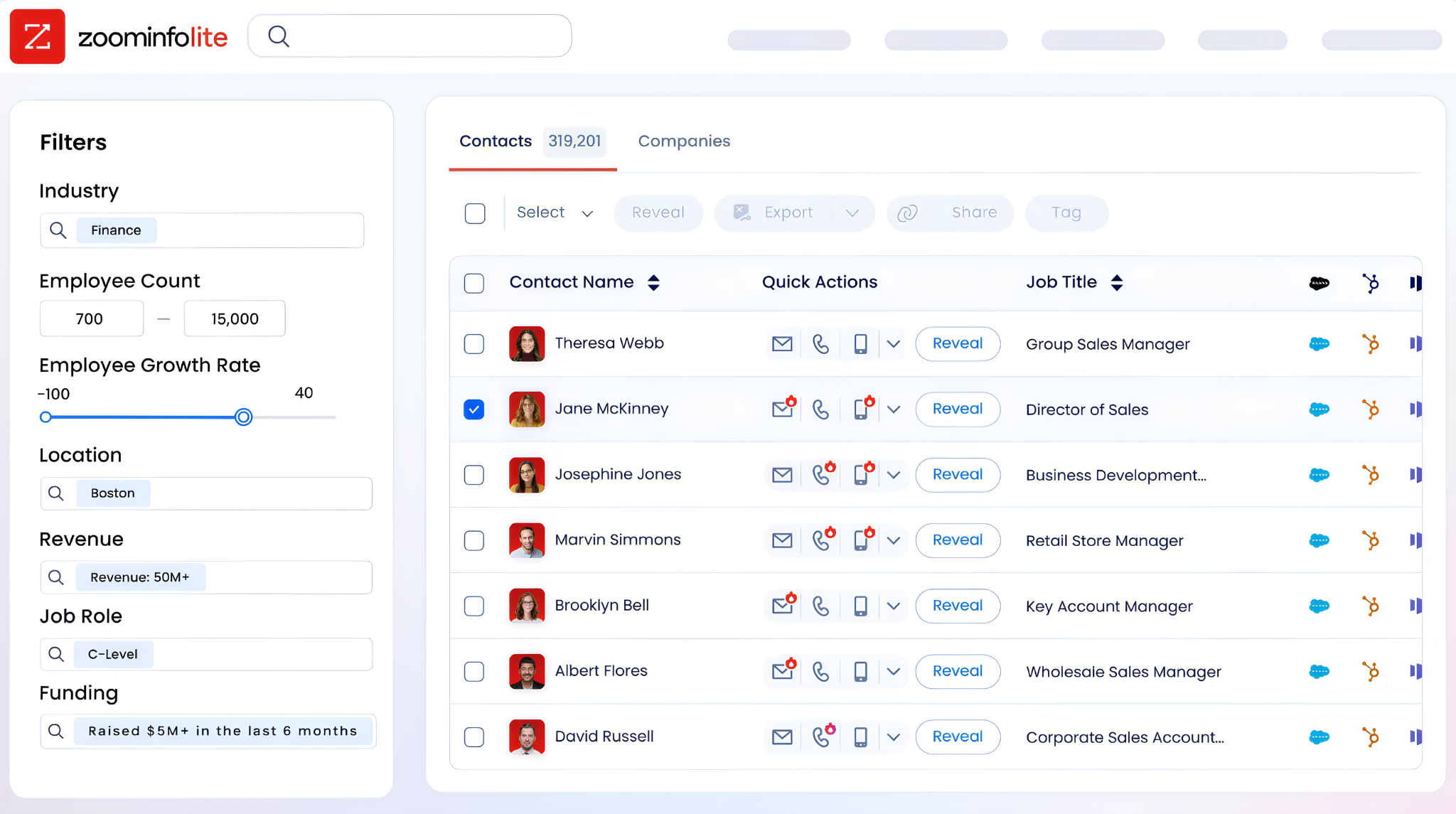
ZoomInfo Lite offers a permanent free tier with access to the B2B database, 10 monthly export credits, and basic search, giving teams a way to evaluate the data before committing.
Source: ZoomInfo
The practical comparison depends on your business model. A solo creator will never need ZoomInfo. A B2B marketing team running ActiveCampaign might spend $200/month on email automation but lose thousands in wasted effort targeting the wrong accounts because nobody verified the data feeding those automations.
AI capabilities take different shapes
All three platforms invest in AI, but for different purposes.
ActiveCampaign's Active Intelligence is the most developed AI effort among email marketing platforms. Described as the "fastest-growing feature" in ActiveCampaign's history, it includes AI agents for campaigns, automations, segments, personalization, forms, and goals.

Source: ActiveCampaign
The AI Campaign Builder generates complete email campaigns from plain-language prompts. Predictive Sending studies each subscriber's engagement history to deliver emails when that person is most likely to open them. The platform claims AI users save 13+ hours per week. Several agents remain in beta as of early 2026, so the full vision is still maturing.
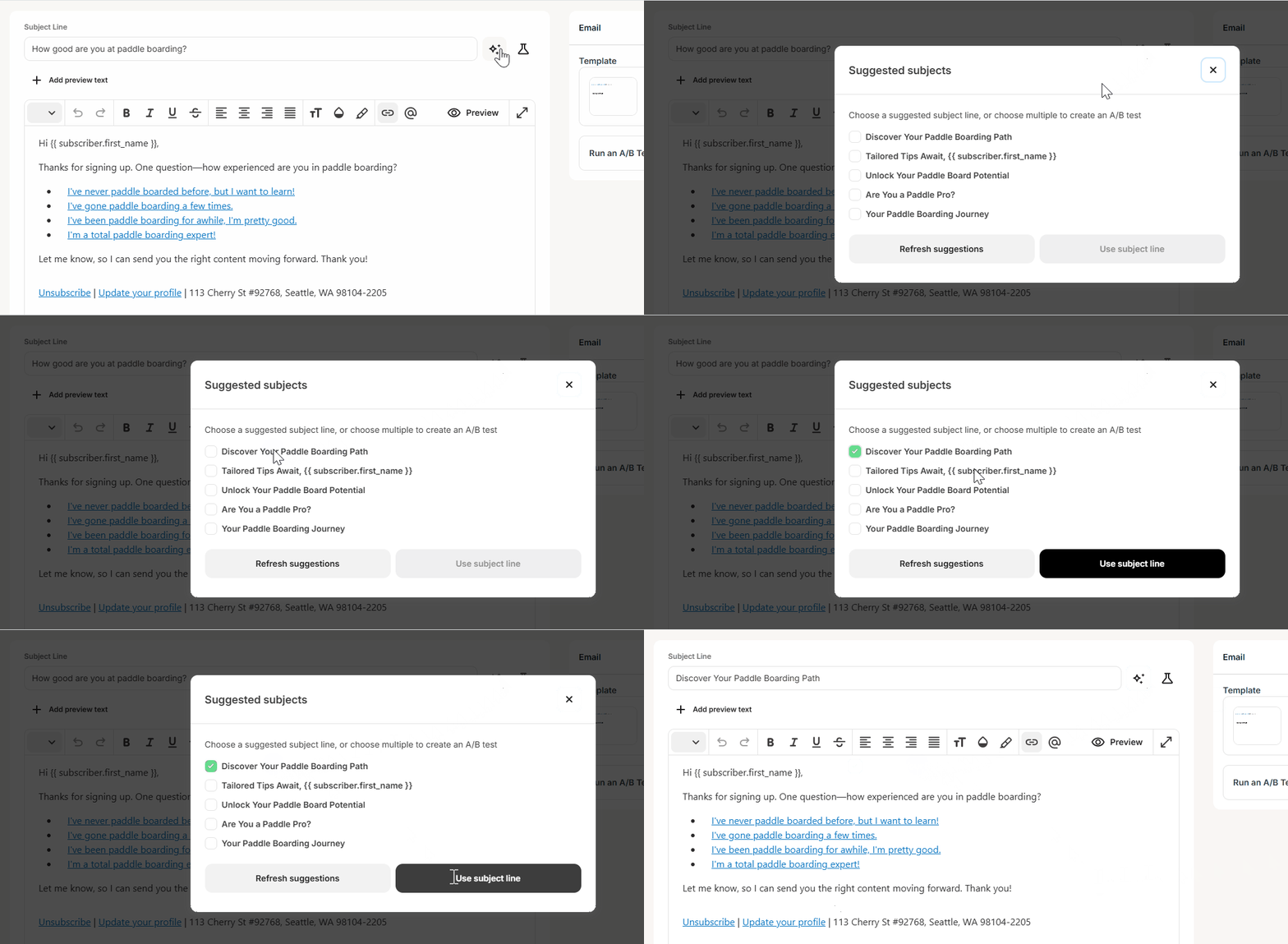
Kit's AI features are narrower. An AI subject line generator suggests options based on email content. The Kitlytics app (launched January 2026 in the Kit App Store) uses AI to analyze email performance and generate campaigns from a creator's historical data. Kit's AI investments are early-stage compared to ActiveCampaign's broader agent ecosystem.
Source: Kit
ZoomInfo's AI operates at a different level. The GTM Context Graph doesn't generate email copy or optimize send times. It reasons across your CRM data, conversation intelligence, and third-party signals to identify which accounts are most likely to buy, which stakeholders to engage, and what message will resonate (based on patterns across thousands of similar deals).
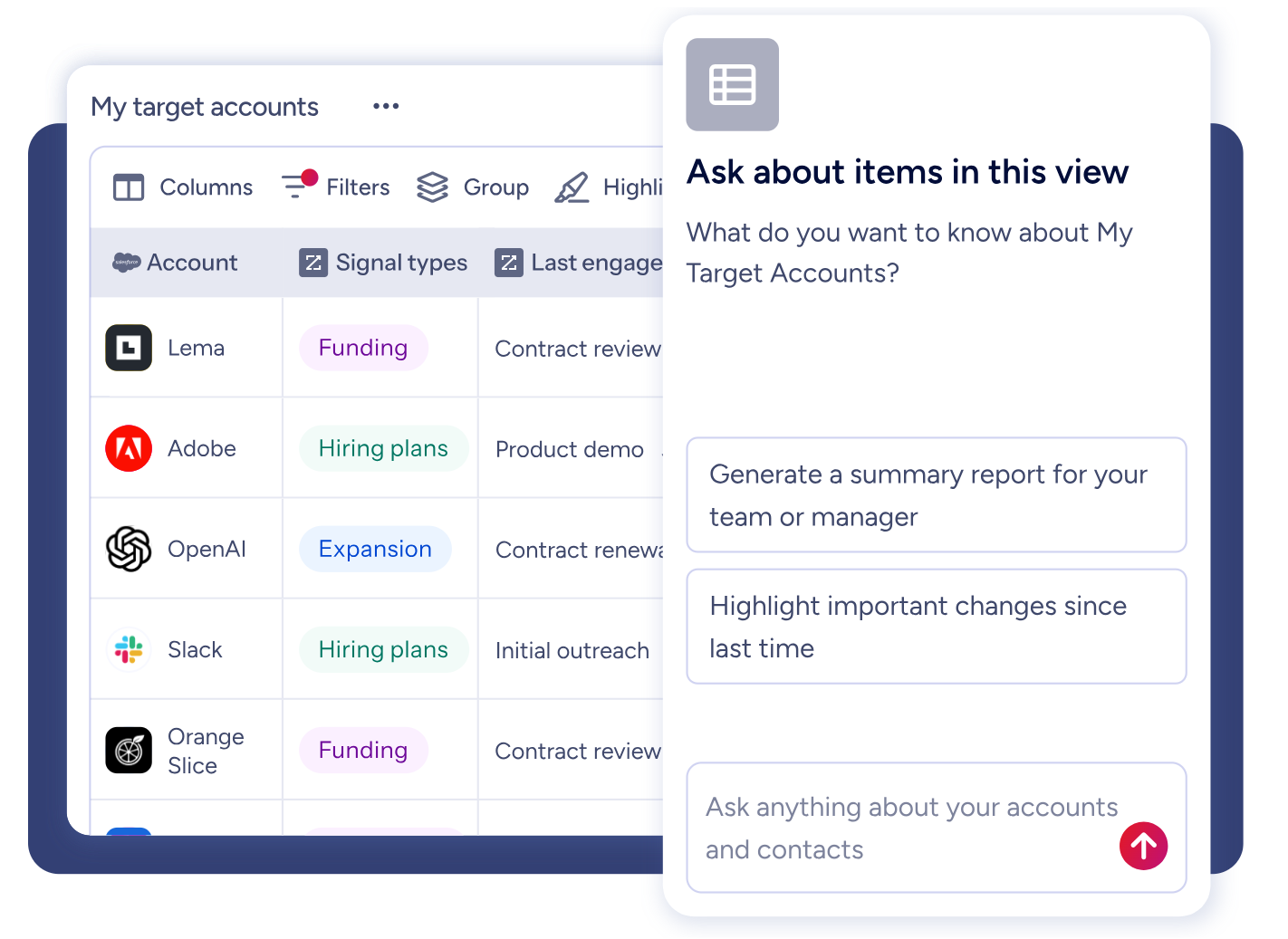
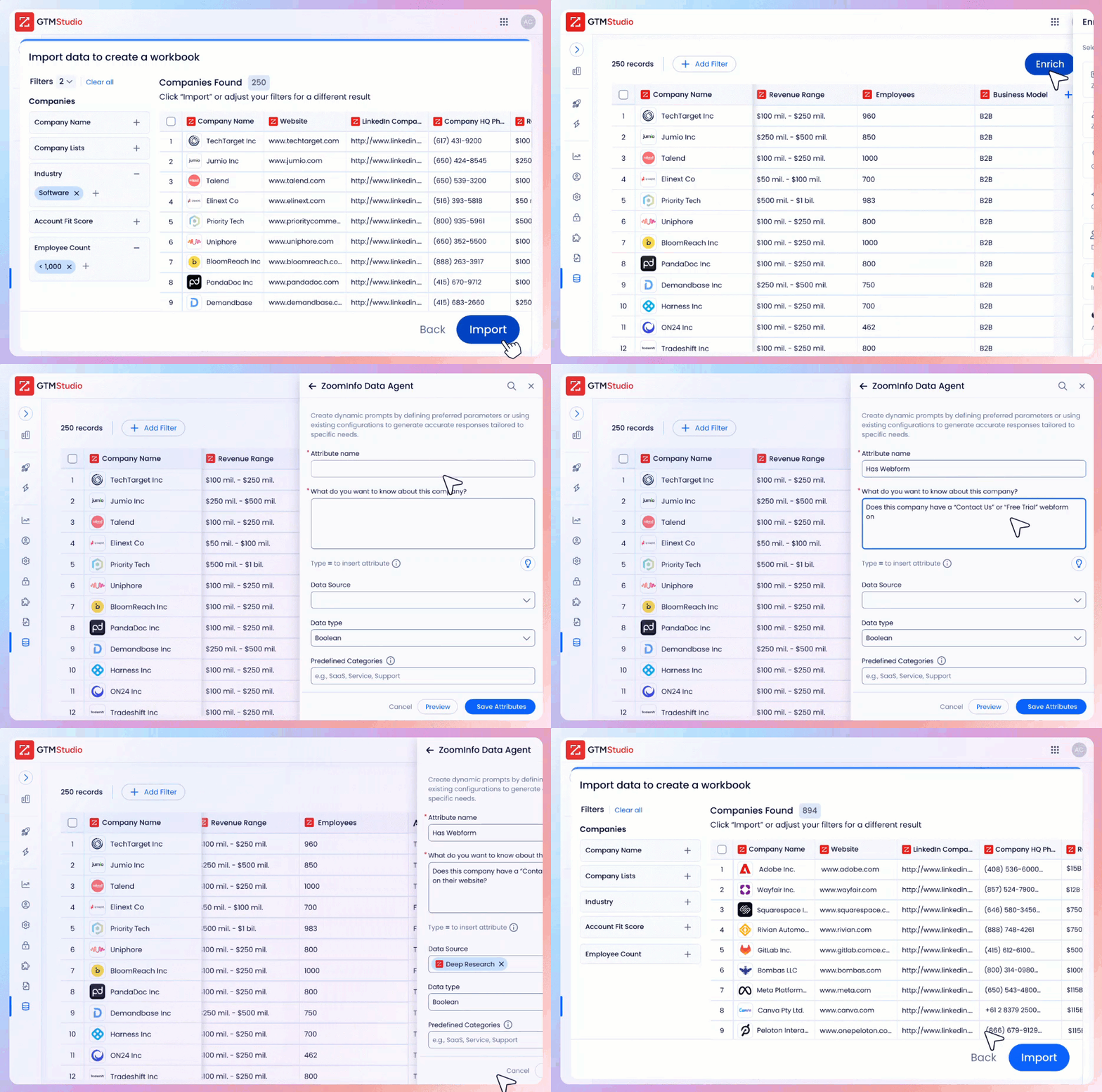
GTM Workspace's AI agents handle account research, outreach drafting, CRM updates, and signal monitoring. GTM Studio lets marketers describe audiences in natural language and launch multi-channel plays without engineering support. Expansion plays that used to take three weeks now launch in 30 minutes.
Source: ZoomInfo
"That combination of our internal CRM data, external signals, and AI that's given all that context has helped us craft very specific account- and persona-based messages. And people have responded to them right away." (Toby Carrington, Chief Business Officer, Seismic)
Cross-channel reach varies widely
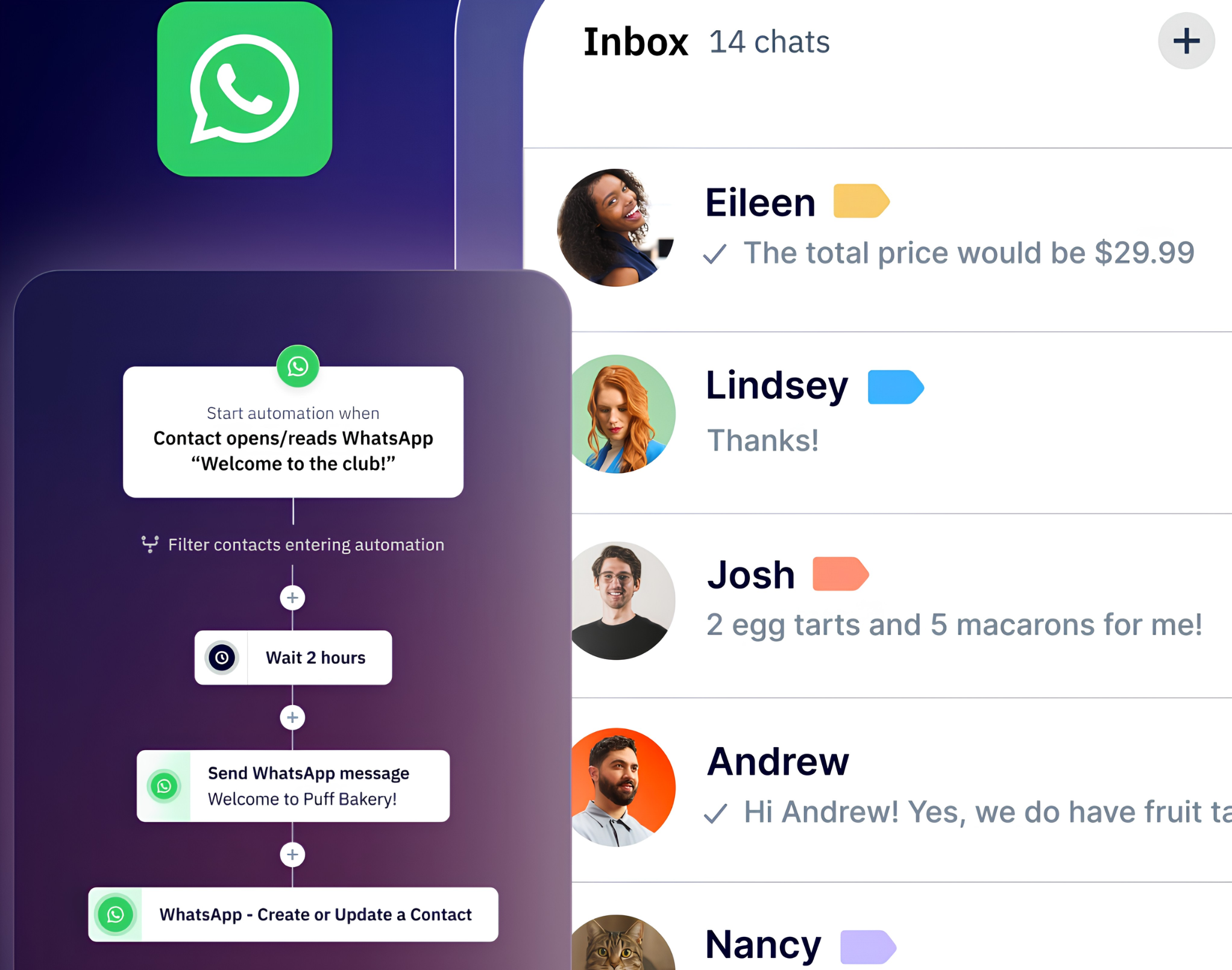
ActiveCampaign is the most versatile platform for multi-channel marketing. Native email, SMS, and WhatsApp all run from a single automation builder. The WhatsApp capability (launched July 2025 after the Hilos acquisition) includes broadcast messaging, a no-code Flows builder, and a shared multi-user inbox.
Source: ActiveCampaign
SMS marketing includes two-way messaging, AI campaign planning, and delivery to 180+ countries. Transactional email via Postmark handles password resets, order confirmations, and receipts on dedicated infrastructure that treats even a 30-second delay to a major ISP as a serious incident.
Kit is email-only. No SMS, no WhatsApp, no push notifications. Kit focuses entirely on the email channel, treating it as the backbone of a creator business. For creators whose audience engagement happens through newsletters, this focus is a strength: every product decision improves the email experience. For businesses needing multi-channel campaigns, it's a limitation that forces additional tool purchases.
ZoomInfo approaches channels differently. Rather than sending messages itself, it provides the data that powers multi-channel orchestration. GTM Studio can trigger campaigns across email, calls, ads, and direct mail based on buyer behavior.
Source: ZoomInfo
ZoomInfo's native demand-side platform deploys display ads using 300+ company attributes. Data flows into whatever sending tools a team already uses through APIs and MCP.
Integrations reflect each platform's ecosystem
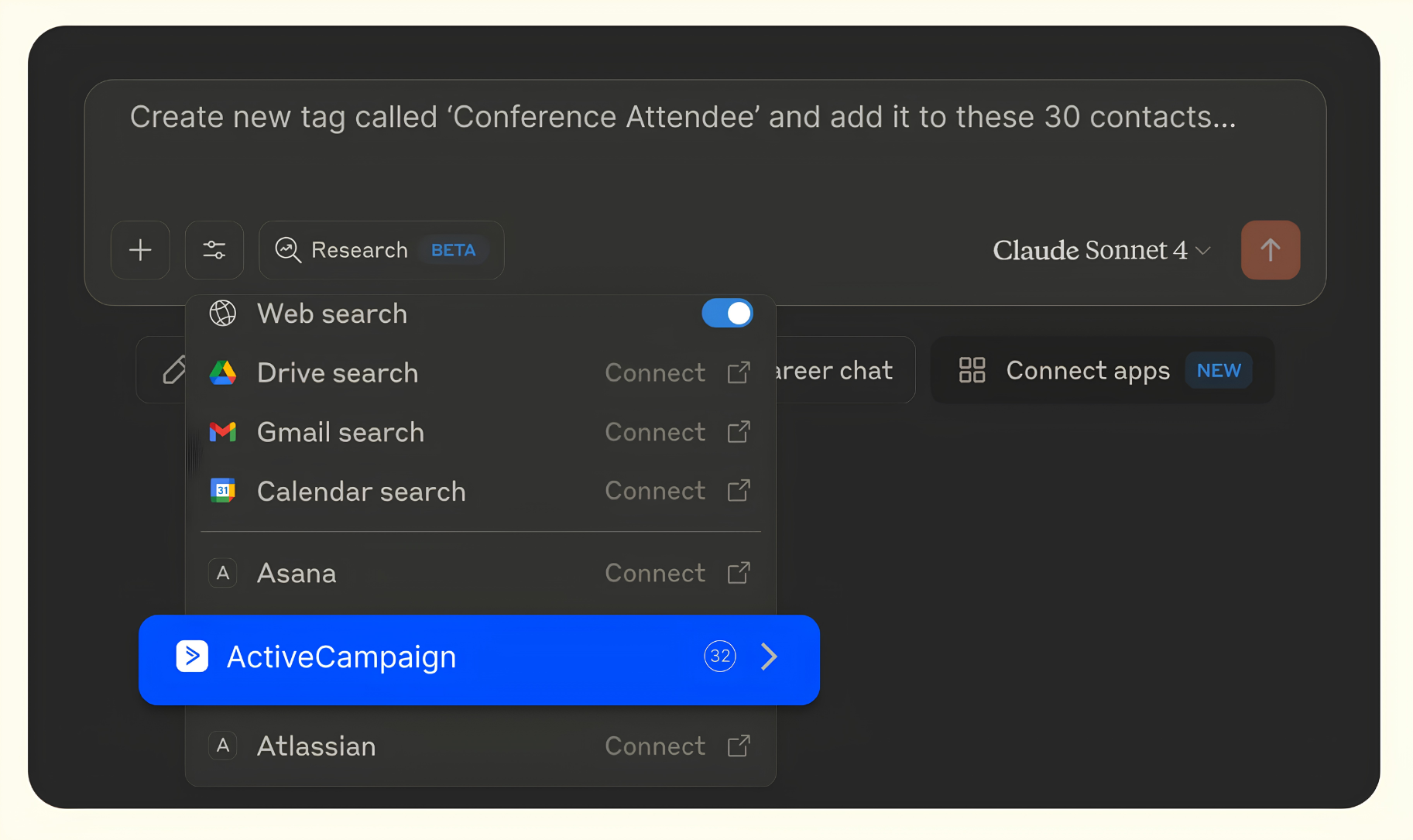
ActiveCampaign has the largest integration library among the three, with 1,000+ app integrations including Salesforce, Shopify, WooCommerce, WordPress, Google Ads, Zapier, Make, and Calendly.
The platform also offers a REST API and MCP connectors for both Claude and ChatGPT. Deep Data integrations link ecommerce platforms to surface purchase behavior for segmentation and automation. For businesses with complex tech stacks, this breadth is an advantage.
Source: ActiveCampaign
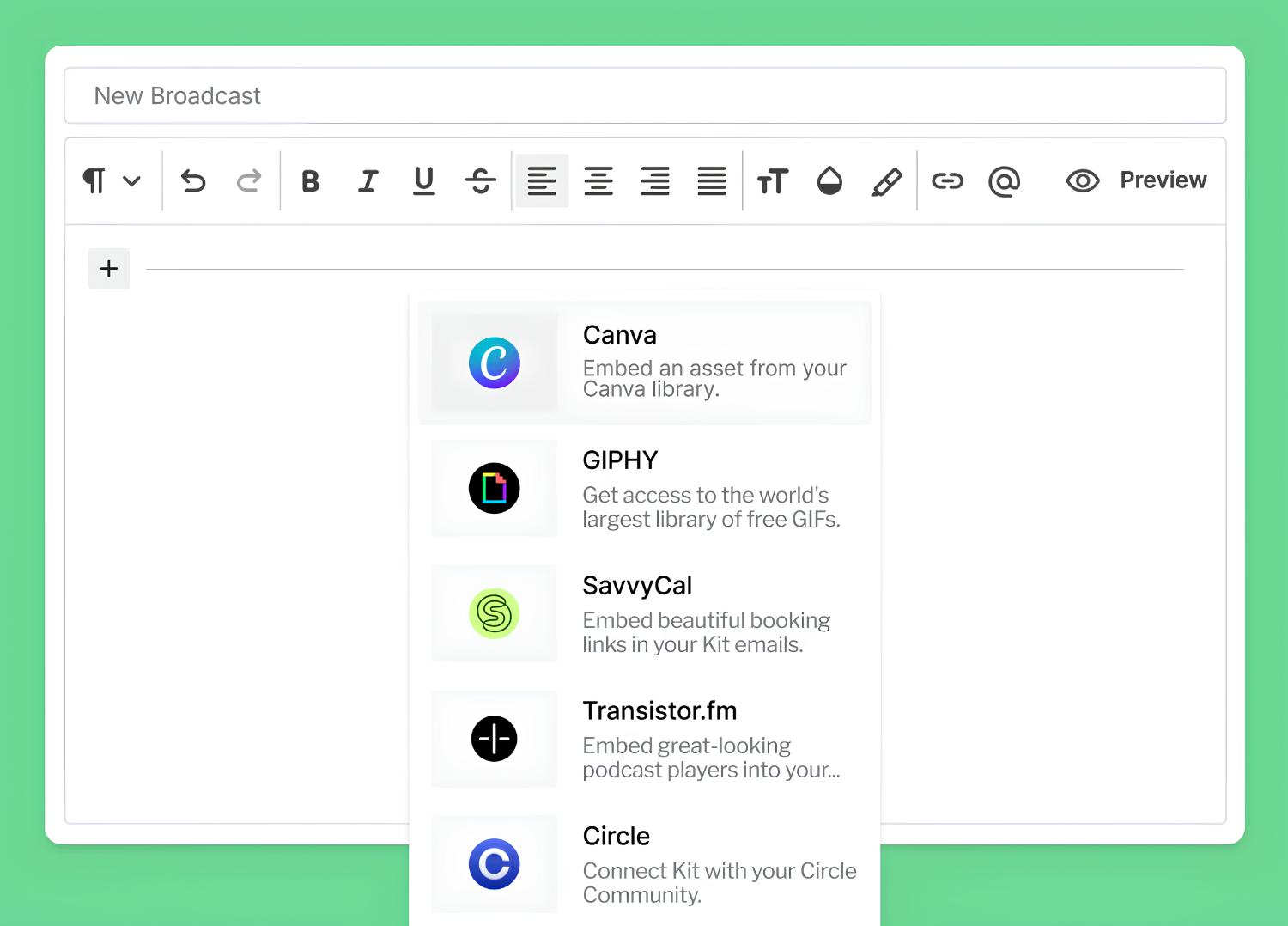
Kit runs the Kit App Store across 14 categories, with 70% of Kit's 60,000+ creators having at least one app installed. Featured integrations include Canva (embedded in the email editor), Shopify, Kajabi, Teachable, Patreon, Stripe, and WordPress.
Source: Kit
Kit's API v4 supports both OAuth 2.0 and API key authentication. The ecosystem is creator-focused, not enterprise-grade, so if you need a Salesforce or Microsoft Dynamics integration, you won't find one here.
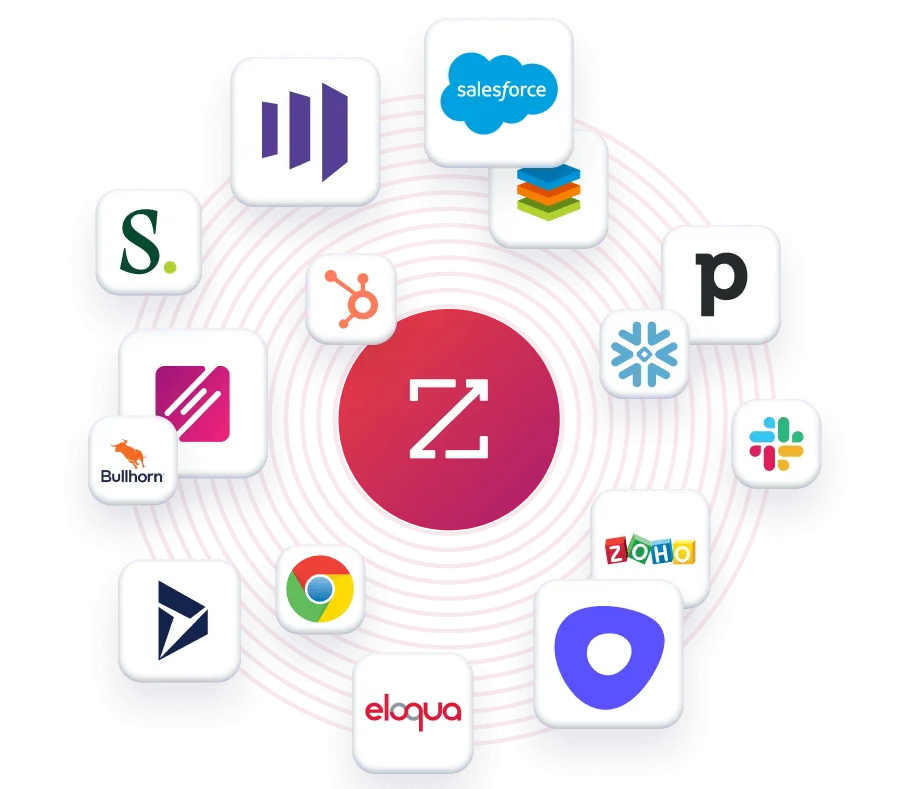
ZoomInfo offers 172+ partner integrations through its App Marketplace, plus native connections with Salesforce, HubSpot, and Microsoft Dynamics. The Enterprise API provides programmatic access to search, enrich, intent, and copilot capabilities.
Source: ZoomInfo
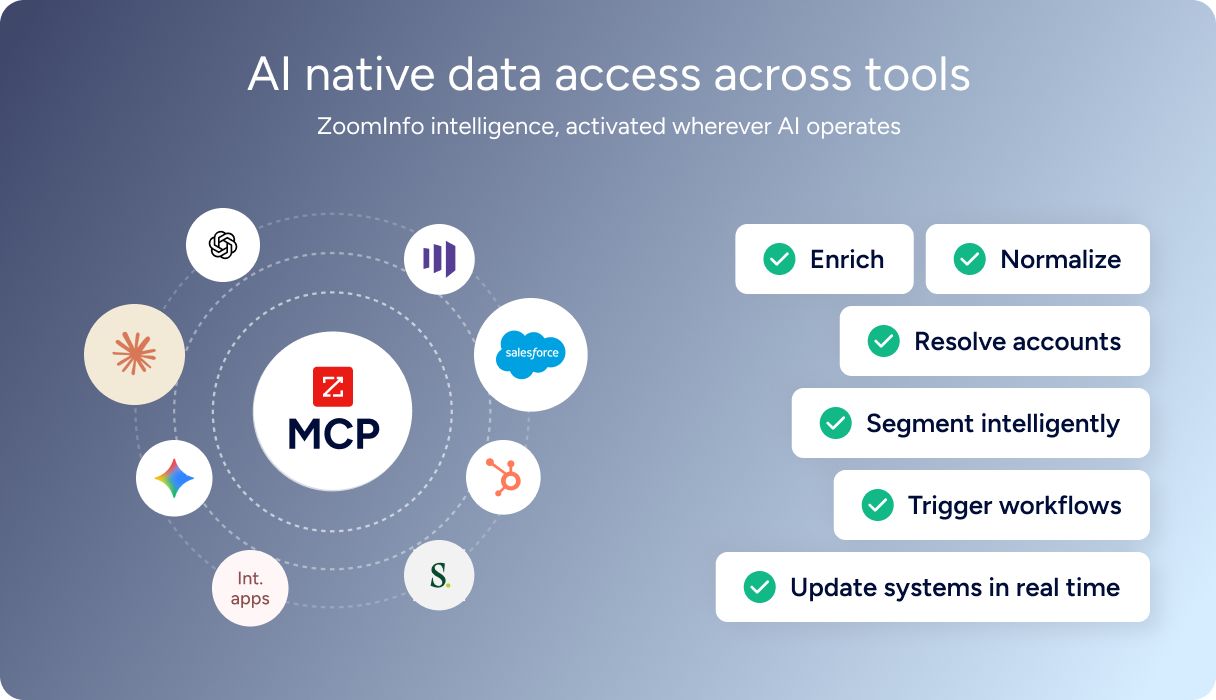
The MCP server connects AI assistants (including Claude and ChatGPT) directly to ZoomInfo's B2B data. Cloud Partners enable direct data ingestion into AWS, Google Cloud, Snowflake, and Databricks. ZoomInfo powers other tools, not just connects to them.
Source: ZoomInfo
"The plug-and-play aspect of the API means I can integrate it very easily into any process and get information at a moment's notice." (Jerry Wilson, Senior Marketing Intelligence Analyst, BDO Canada)
ActiveCampaign vs. Kit vs. ZoomInfo: Which should you choose?
The right choice depends on what your business does and what stage you're at.
Choose ActiveCampaign if:
You run a business (SaaS, ecommerce, services) that needs complex marketing automation
Your marketing feeds into a sales process and you want a built-in CRM
Multi-channel campaigns across email, SMS, and WhatsApp matter to your strategy
You have the budget and team to learn the platform
You want AI that builds and optimizes campaigns from a stated goal
Choose Kit if:
You're a creator, writer, podcaster, or course builder whose content is the business
Growing an email audience through cross-promotion and organic content is your primary strategy
You want to sell digital products, paid newsletters, or sponsorships directly from your email platform
Simplicity and deliverability matter more than automation complexity
You want to start free and scale affordably
Add ZoomInfo if:
You run a B2B company where identifying the right accounts and contacts is the bottleneck
Your ActiveCampaign campaigns would improve with verified contact data and real-time buyer intent signals
You need to target specific industries, company sizes, or technologies with precision
Your team wants AI that identifies who to contact and when, not just how to format the email
You're ready to invest in the data layer that makes every downstream tool more effective
Explore ZoomInfo Lite for free access to the B2B database, or request a demo to see the full platform.
ActiveCampaign and Kit are both strong email marketing platforms, each built for a different type of business. The choice between them is usually clear once you know whether you're running a business with a sales team or building a creator-driven audience.
But for B2B teams, the deeper question is whether your marketing stack has a data foundation at all. The most sophisticated automation cannot compensate for targeting the wrong people. ZoomInfo isn't a replacement for your email platform. It's the foundation that makes your email platform worth the investment.
"ZoomInfo gives us the information we need to execute. We don't have to go through and spend our time digging. It's already there, so we can be three steps ahead." (William Kenimer, Vice President of Revenue Operations, Vensure)
ActiveCampaign vs. Kit vs. ZoomInfo FAQ
Is Kit the same as ConvertKit?
Yes. ConvertKit rebranded to Kit on October 1, 2024, acquiring the premium domain kit.com. The product, team, and features stayed the same. The company said "ConvertKit" sounded too technical and narrow for its broader ambitions beyond email newsletters.
Which platform is cheaper for email marketing?
Kit offers the largest free tier: up to 10,000 subscribers with unlimited broadcasts, forms, and landing pages. ActiveCampaign has no permanent free plan (only a 14-day trial), with the Starter plan beginning at $15/month for 1,000 contacts. At 10,000 contacts, ActiveCampaign's Starter costs $149/month. Kit's Creator plan starts at $33/month for 1,000 subscribers billed annually.
ZoomInfo operates in a different price category as a B2B intelligence platform with custom pricing, though ZoomInfo Lite provides permanent free access with 10 monthly export credits.
Can I use ZoomInfo with ActiveCampaign or Kit?
Yes. ZoomInfo data can reach any platform through APIs, MCP, or middleware tools like Zapier. The typical workflow: use ZoomInfo to identify and verify target contacts with buyer intent signals, then import those enriched contacts into ActiveCampaign or Kit for nurturing campaigns.
ZoomInfo's 200M+ verified business email addresses help ensure the contacts entering your email platform are real and deliverable, protecting your sender reputation.
Which platform has the best automation capabilities?
ActiveCampaign has the deepest automation among the three, with unlimited workflow actions, conditional branching, behavioral triggers, up to five-variant A/B testing within automations, and a built-in CRM that connects marketing directly to sales. Kit's Visual Automations are simpler by design, with six action types and basic yes/no branching suited to creator workflows like welcome sequences and course delivery.
ZoomInfo's automation operates at the GTM strategy level through GTM Studio, orchestrating multi-channel plays based on buyer intent signals rather than email sequence logic.
Which platform is best for B2B marketing?
ActiveCampaign is the stronger email automation platform for B2B, with CRM integration, lead scoring, sales routing, and multi-channel capabilities. For B2B teams serious about targeting the right accounts, pairing ZoomInfo with ActiveCampaign creates a more complete stack.
ZoomInfo provides the data layer (verified contacts, buyer intent, company insights, org charts) while ActiveCampaign handles execution (email sequences, automation, CRM pipeline). Kit is designed for creator businesses and lacks the CRM, lead scoring, and B2B data features that B2B marketing teams need.
Does Kit or ActiveCampaign include buyer intent data?
Neither platform provides buyer intent data. Both focus on engagement signals from subscribers already on your list (opens, clicks, website visits, purchases).
ZoomInfo's intent data tracks signals from 210 million IP-to-Organization pairings and 6 trillion+ new keyword-to-device pairings sourced monthly, identifying which companies are researching topics related to your product before they visit your website or join your email list.
Which platform has the best deliverability?
Both ActiveCampaign and Kit invest heavily in deliverability. Kit reports a 99.8% delivery rate and 40% average open rate, publishes monthly deliverability reports, and hosts a dedicated deliverability podcast. ActiveCampaign reports 99.88% deliverability across its infrastructure, with 93% of surveyed customers saying it beats competitors. Both support SPF, DKIM, and DMARC authentication.
Kit's deliverability edge comes partly from serving almost exclusively permission-based creator audiences, which results in a healthier shared IP reputation. ActiveCampaign offers additional infrastructure features like private network routing, dedicated IPs for high-volume senders, and Apple Mail Privacy Protection filtering.
Do I need all three platforms?
Most businesses need one email platform and can evaluate ZoomInfo separately. Creators building audience-driven businesses need Kit and nothing more. B2B companies with sales teams benefit most from pairing ZoomInfo's data with ActiveCampaign's automation and CRM.
The decision depends on whether your growth bottleneck is execution (how you reach people) or intelligence (knowing who to reach and when).
Keep comparing ActiveCampaign:
