
Choosing between ActiveCampaign vs. Eloqua for your marketing automation often comes down to five questions:
Do you have a dedicated marketing operations team, or does a small group run your marketing while wearing other hats?
Are you managing tens of thousands of contacts or millions?
Is your buying cycle one decision-maker clicking "buy," or a six-month process involving a committee of eight?
Do you need a platform you can set up this week, or will you invest months in implementation for deeper capability?
How important is it that your marketing automation data reflects who's in-market right now, not just who filled out a form six months ago?
In short, here's what we recommend:
ActiveCampaign is the marketing automation platform built for small and mid-size businesses that need strong automation without a large team to run it. Its visual automation builder handles branching workflows triggered by real-time behavior across email, SMS, and WhatsApp, while a built-in CRM keeps sales and marketing in one system. The Active Intelligence AI layer builds campaigns from plain-language prompts and optimizes send times per subscriber. ActiveCampaign works well for marketing teams of one to five people who want depth without hiring a specialist. The trade-off: pricing climbs as contact lists grow, the learning curve steepens past basic automations, and the CRM lacks the depth that complex B2B sales cycles with multiple stakeholders require.
Oracle Eloqua is the enterprise standard for B2B marketing automation, designed for organizations running complex, multi-segment campaigns across regions, products, and business units. Backed by 13 consecutive years as a Gartner Magic Quadrant Leader and 100% uptime over 25 consecutive months, Eloqua handles orchestration demands that would buckle a mid-market tool. Its dual-canvas architecture separates campaign execution from data management, its lead scoring supports up to 30 concurrent models, and its native integration with Oracle CX Sales closes the marketing-to-sales handoff gap. The trade-off: Eloqua starts at $2,000/month for 10,000 contacts, requires implementation packages ranging from $8,870 to $78,338, offers no free trial or self-serve access, and demands dedicated marketing operations expertise.
Both platforms solve the same core problem: automating marketing campaigns so your team can engage more people with less manual work. But neither platform fixes, on its own, the quality of the data flowing into those campaigns. Your automation is only as good as the contacts it reaches, and both ActiveCampaign and Eloqua depend on you to supply accurate, timely buyer data. That's where a different kind of platform comes in.
ZoomInfo is an AI go-to-market platform built on a large B2B data foundation: 500M contacts, 100M companies, 135M+ verified phone numbers, and 200M+ verified business email addresses. Its GTM Context Graph (processing 1.5B+ data points daily) unifies this data with your CRM records, conversation transcripts, and behavioral signals to reveal which accounts are actively in-market, not just which ones sit in your database. That intelligence reaches your team through the GTM Workspace for sellers, GTM Studio for marketers and RevOps, or your own tools via the API and MCP. ZoomInfo integrates with both ActiveCampaign and Eloqua, so the data flows into whichever automation platform you choose.
If better data powering smarter campaigns sounds like the missing piece, see how ZoomInfo works with your marketing stack.
ActiveCampaign vs. Eloqua vs. ZoomInfo at a glance
ActiveCampaign | Oracle Eloqua | ZoomInfo | |
|---|---|---|---|
Primary function | Marketing automation + CRM for SMBs | Enterprise B2B campaign orchestration | AI go-to-market platform |
AI capabilities | Active Intelligence (campaign generation + optimization) | Advanced Intelligence (predictive + GenAI on OCI) | GTM Context Graph + AI agents |
Lead scoring | Contact + deal scoring (rules-based) | Up to 30 concurrent models (profile + engagement) | Intent data + predictive account scoring |
Native channels | Email, SMS, WhatsApp | Email; SMS as paid add-on | Display ads, email sequences, multi-channel plays |
CRM | Built-in CRM | Integrates with Oracle CX Sales, Salesforce, Dynamics | Integrates with Salesforce, HubSpot, Dynamics |
Integrations | 1,000+ apps | 500+ via Marketing AppCloud | 172+ marketplace partners + API/MCP |
Uptime/scale | Not publicly disclosed | 100% uptime, 25 months; 5-7B transactions/day | GTM Context Graph: 1.5B+ data points daily |
Implementation | Self-serve; hours to days | $8,870-$78,338 implementation packages | Deploys in weeks |
Starting price | ~$15/month (1,000 contacts) | $2,000/month (10,000 contacts) | Free tier available (ZoomInfo Lite) |
Free trial | 14-day, no credit card | No free trial or self-serve access | 7-day free trial + permanent free tier |
Best for | Small and mid-size marketing teams | Enterprise marketing ops teams | Any B2B team needing verified buyer data |
Two different platforms for two different worlds
ActiveCampaign and Eloqua occupy opposite ends of the B2B marketing automation spectrum. Knowing which end you belong to matters more than any feature comparison.
ActiveCampaign serves 180,000+ businesses across 170+ countries, most of them small and mid-size. The platform's stated mission is "to help small teams power big business." A three-person marketing team can sign up, import contacts, and launch an automated campaign in an afternoon. The 14-day free trial requires no credit card, and plans start at roughly $15/month for 1,000 contacts.
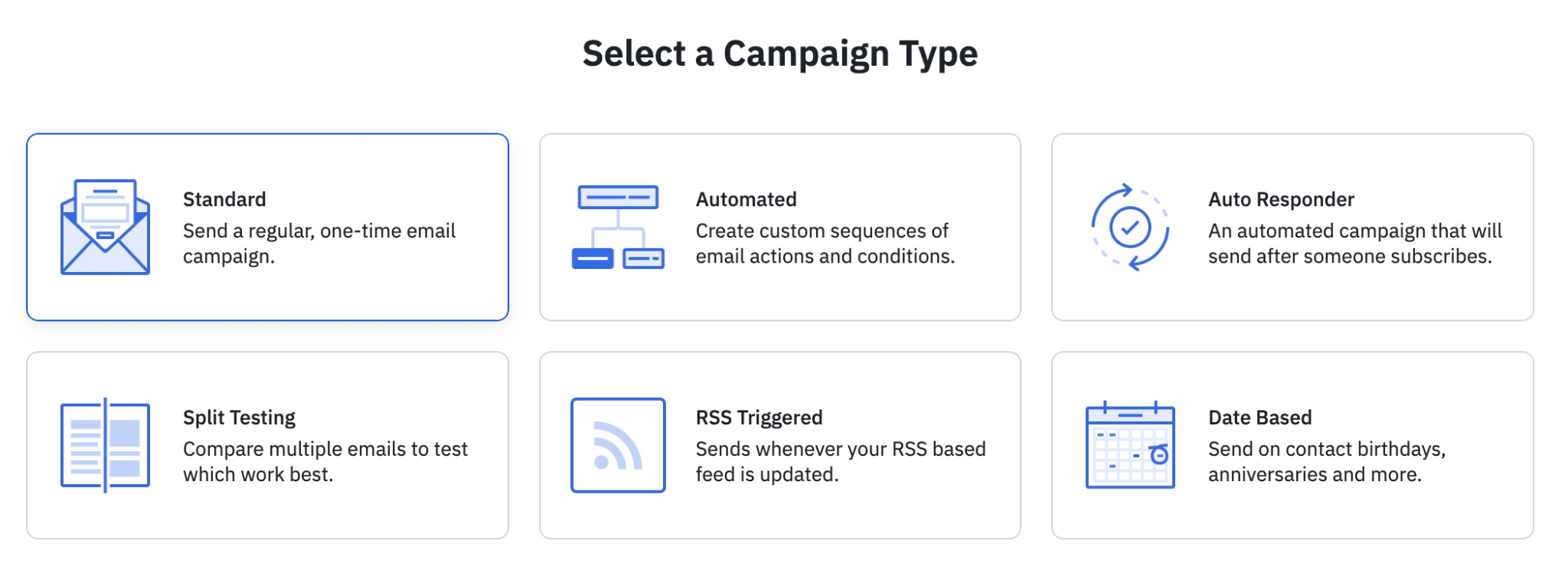
Source: ActiveCampaign
Eloqua serves a different class of buyer. Its customer base includes Aon, Visma, the Cincinnati Bengals, Frontier Airlines, and AEGEAN, and the platform ships pre-built industry solutions for nine verticals including life sciences, manufacturing, and financial services. There is no self-serve signup. The only way in is through Oracle's sales team, and the minimum contact band is 10,000. Eloqua assumes you have a dedicated marketing operations team, and the existence of Guided Campaigns as a simplified overlay confirms that the core platform requires specialist knowledge to operate.
Source: Oracle
This isn't a limitation of either platform. It's a design choice. ActiveCampaign optimized for speed-to-value across a broad market. Eloqua optimized for depth and scale in a narrow one.
Automation architecture reveals different priorities
Both platforms offer visual, drag-and-drop automation builders. But the underlying architectures reflect their target markets.
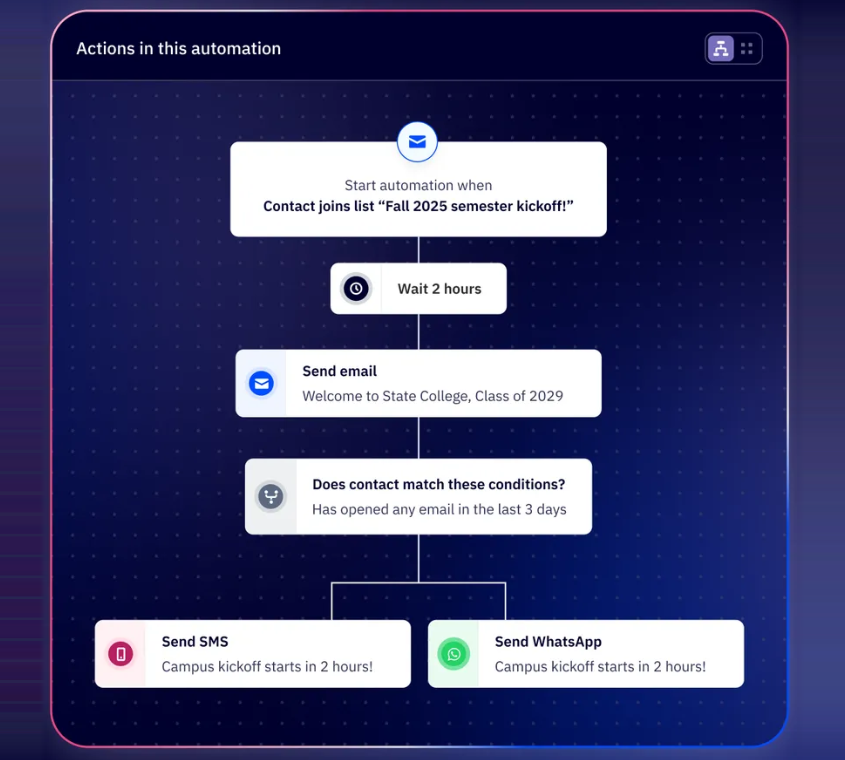
ActiveCampaign uses a single automation canvas where marketers build workflows combining triggers, conditions, and actions. A contact fills out a form, enters an automation, gets tagged based on behavior, receives a sequence of emails timed to engagement, and moves to the built-in CRM as a deal. The system supports unlimited automation actions on Plus plans and above, and its AI Campaign Builder generates a full workflow from a plain-language prompt. For a mid-size ecommerce business or SaaS company, this covers most use cases.
Source: ActiveCampaign
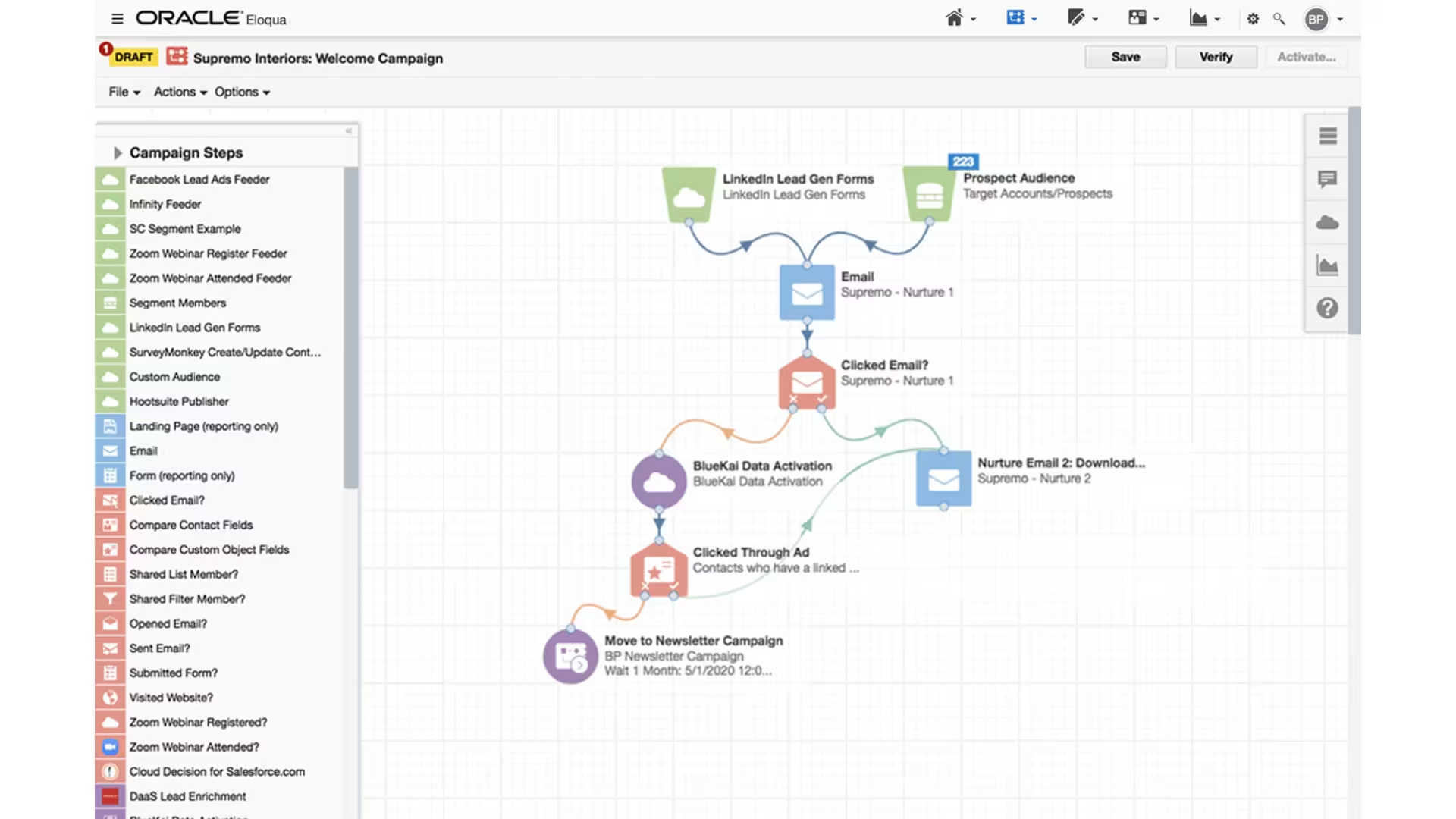
Eloqua takes a different approach with its dual-canvas architecture. The Campaign Canvas handles audience-facing campaign execution: multi-step journeys with decision branches based on email opens, link clicks, form submissions, lead scores, and segment membership. The Program Canvas handles back-end data management: CRM synchronization, data cleansing (via the Contact Washing Machine), lead routing, and deduplication. This separation exists because in large enterprises, the person designing the customer-facing campaign is rarely the same person managing CRM sync and data hygiene. Eloqua treats those as different roles with different skill sets.

Source: Oracle
For a company with 50,000 contacts and a two-person marketing team, the dual-canvas model adds complexity without clear benefit. For a company with 500,000 contacts across four regions and a dedicated marketing ops team, it's the architecture that prevents the campaign manager from accidentally breaking the CRM integration.
AI features are evolving on both sides
Both platforms have invested in AI, but they've taken different paths.
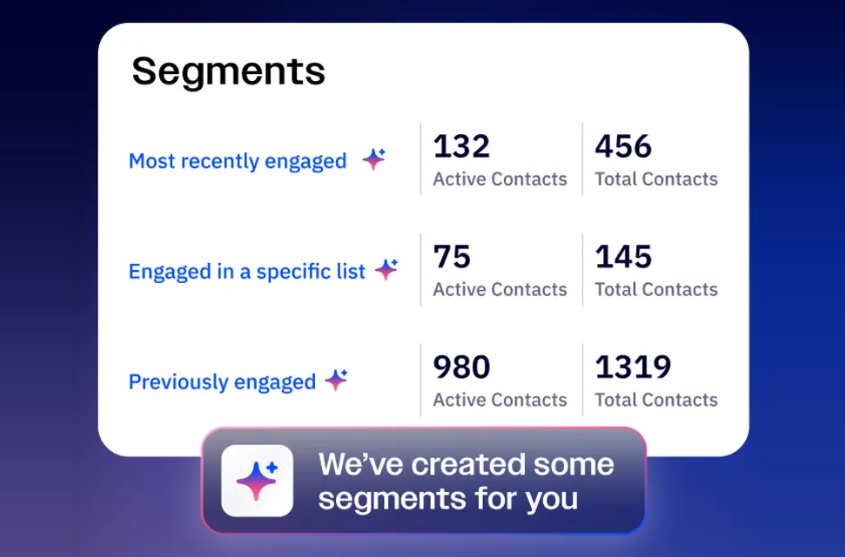
ActiveCampaign launched Active Intelligence in May 2025, calling it the fastest-growing feature in the platform's history. The system includes over a dozen AI agents covering campaign creation, automation building, segmentation, content generation, image generation, and brand kit setup. The AI Campaign Builder generates email campaigns from natural language. Predictive Sending optimizes delivery time for each subscriber. AI-Suggested Segments surface high-value audiences automatically. ActiveCampaign calls this "autonomous marketing": describe your goal, and the AI handles strategy and execution.
Source: ActiveCampaign
The accessibility is a real strength. A solo marketer can type "create a welcome sequence for new trial users" and get a deployable workflow in minutes. But several agents (Forms, Personalization, Goals, Segments, Campaigns, Automations) remain in beta as of early 2026, so reliability is still reaching general-release quality.
Eloqua's Advanced Intelligence takes a more conservative, infrastructure-first approach. AI features run on Oracle Cloud Infrastructure, with models from Cohere and Meta deployed on Oracle's servers. Customer data is never shared with third-party LLM providers. For regulated industries, this data isolation matters.
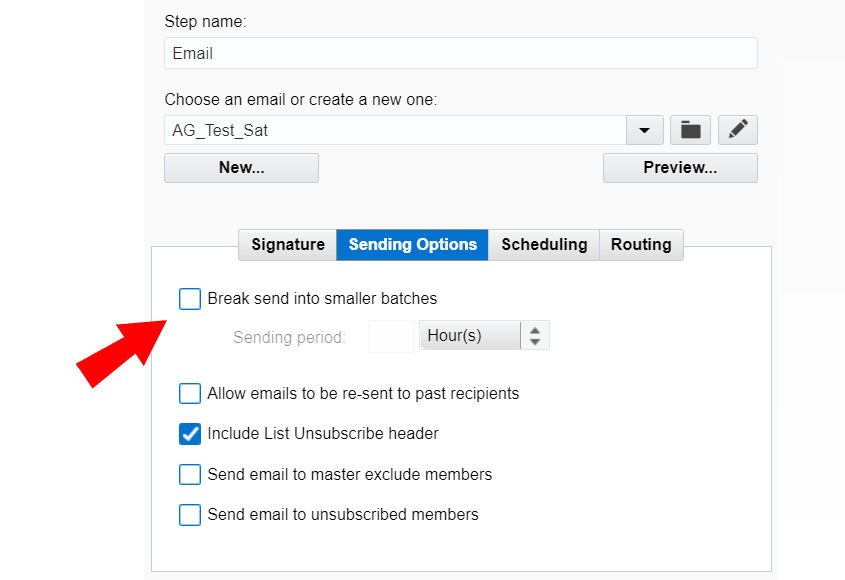
Eloqua's AI includes Send Time Optimization (per-contact delivery timing), Email Fatigue Analysis (classifying contacts into 9 fatigue levels based on 180 days of engagement data), and generative content and subject line creation in seven languages. As of June 2025, Oracle made Advanced Intelligence available to all customers at no additional cost, though activation still requires opening a Service Request with Oracle Support rather than flipping a self-serve switch.
Source: Oracle
Lead scoring depth varies by orders of magnitude
Lead scoring is where the enterprise gap between these platforms becomes most visible.
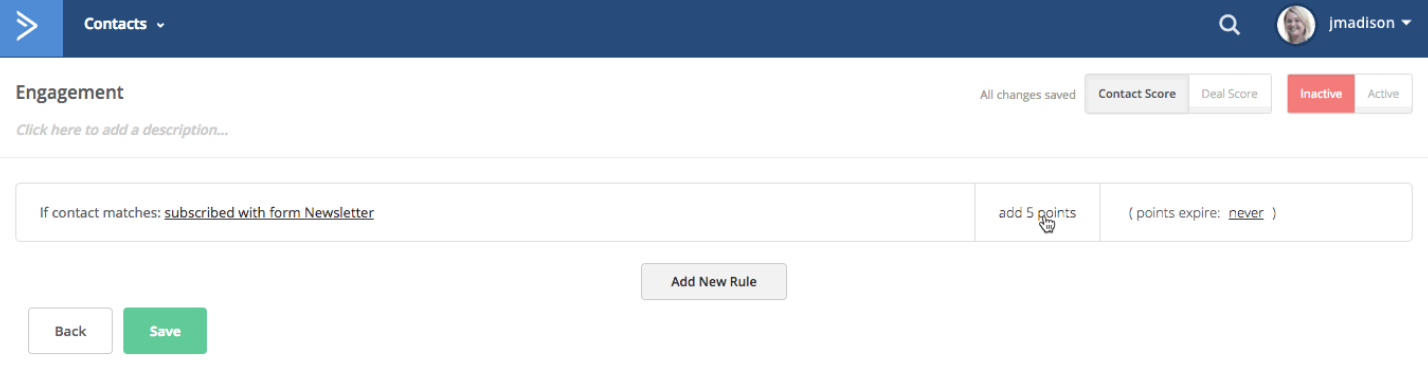
ActiveCampaign supports contact-level lead scores and deal-level scores, built through a rules engine that adjusts based on behaviors like email replies, form fills, or stage changes. It's a practical system for businesses with a single product line and a straightforward sales process. One scoring model, two tiers (contact and deal), updated in real time.
Source: ActiveCampaign
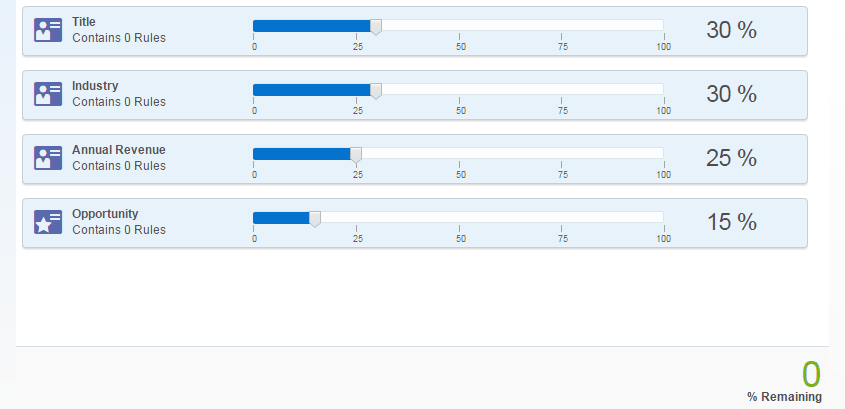
Eloqua operates at a different scale. Its lead scoring evaluates contacts on two independent axes: profile criteria (who they are, scored A through D) and engagement criteria (how they behave, scored 1 through 4). The resulting two-dimensional score (A1 = right fit and highly engaged, D4 = wrong fit and inactive) maps to prescribed follow-up actions. Enterprise customers can run up to 30 concurrent scoring models, each tuned for a different product, region, or business unit.
Source: Oracle
Eloqua's Account Engagement Score adds another dimension. It aggregates all individual contact engagement within an account into a single 0-100 metric, recalculated weekly based on 90 days of activity. This shows which accounts are heating up across the buying committee, not just which individual contacts are active.
For a SaaS company selling a $50/month product to individual buyers, ActiveCampaign's scoring is more than sufficient. For an enterprise selling six-figure deals to buying committees of ten, Eloqua's multi-model, multi-dimensional scoring matches the complexity of the sale.
The data problem neither platform solves alone
Here's what both platforms share: they automate well, but only on the data you feed them.
ActiveCampaign doesn't provide contact databases or buyer intent data. You bring your own contacts through forms, imports, or integrations. Eloqua's 500+ AppCloud integrations connect to data enrichment providers, but the platform itself doesn't supply a B2B contact database or real-time buying signals.
This creates a gap. Your marketing automation platform can build a sharp campaign targeting VP-level decision-makers at mid-market SaaS companies. But if your database contains outdated titles, bouncing email addresses, and no signal about which companies are researching solutions right now, that campaign fires into a void.
ZoomInfo fills this gap. As an AI go-to-market platform, ZoomInfo provides the data layer that marketing automation platforms need but don't include: 500M contacts, 100M companies, 135M+ verified phone numbers, and 200M+ verified business email addresses, verified through a multi-source pipeline backed by 300+ human researchers with up to 95% accuracy on first-party data.
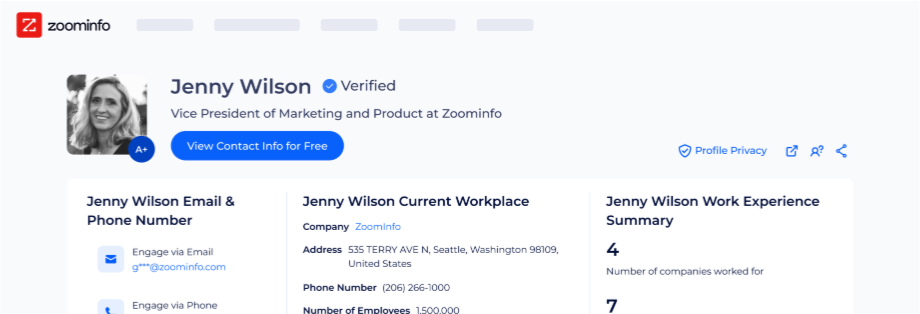
But data alone isn't the differentiator. ZoomInfo's GTM Context Graph, which processes 1.5B+ data points daily, fuses this third-party data with your CRM records, conversation transcripts, and behavioral signals. The result: you see not just who your buyers are, but which ones are in-market right now and why they're likely to buy.
For marketing teams using ActiveCampaign, ZoomInfo's data means your automation workflows reach verified contacts at companies showing buying intent, not people who downloaded a whitepaper two years ago. For Eloqua customers, ZoomInfo integrates directly as a data source, enriching your multi-model scoring with buyer intent signals tracked across 210 million IP-to-Organization pairings and 6 trillion+ keyword-to-device pairings monthly.
Redwood Logistics saw a 99% reduction in cost-per-click and a 310% increase in clickthrough rate after using ZoomInfo to power their campaigns: "It's the right data at the right time to help us reach out with the right message across that full buyer journey." (Redwood Logistics)
Multi-channel reach favors ActiveCampaign natively
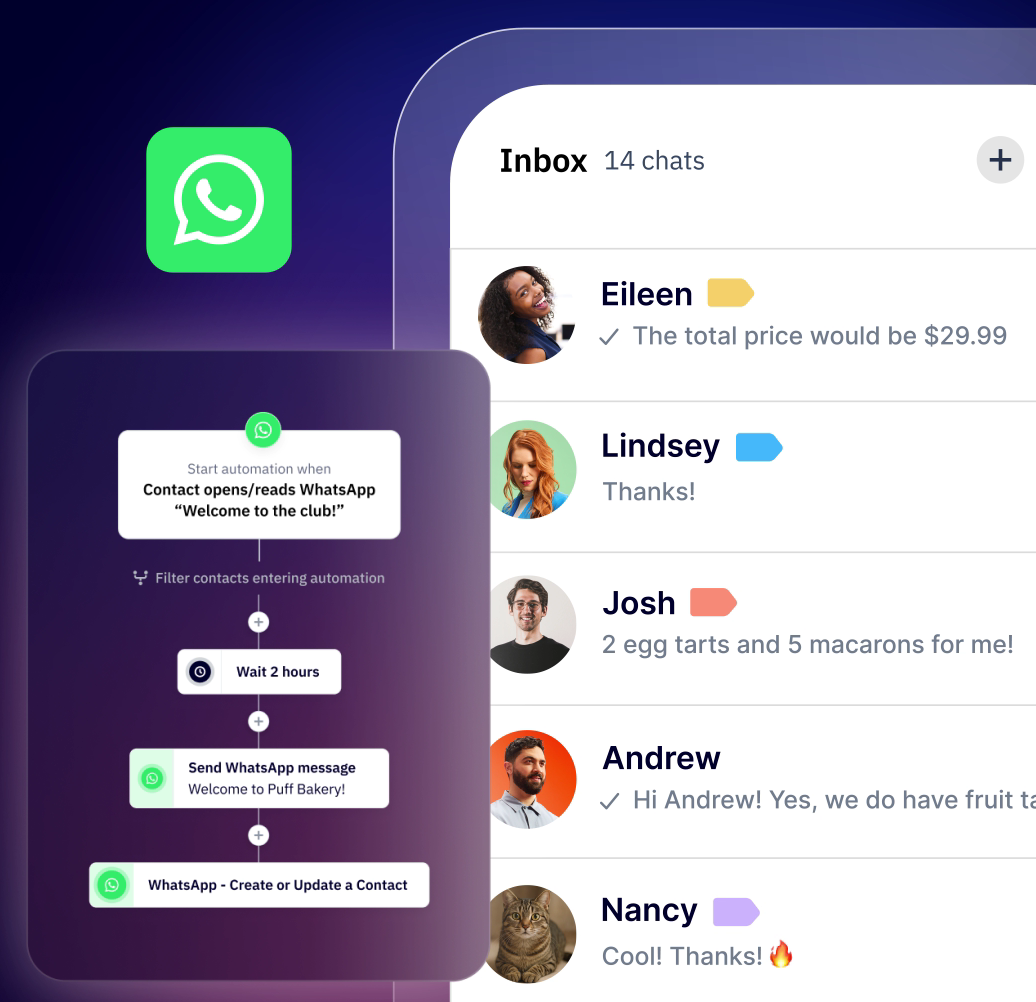
ActiveCampaign leads in native channel coverage for direct messaging. The platform supports email, SMS, and WhatsApp out of the box, all coordinated from a single automation builder using shared contact data. The Hilos acquisition in April 2025 brought native WhatsApp automation with broadcast messaging, a no-code Flows builder, and a shared multi-user inbox. ActiveCampaign claims to offer the broadest WhatsApp messaging capabilities of any marketing automation platform. For businesses in Latin America, Europe, or Southeast Asia where WhatsApp dominates, this matters.
Source: ActiveCampaign
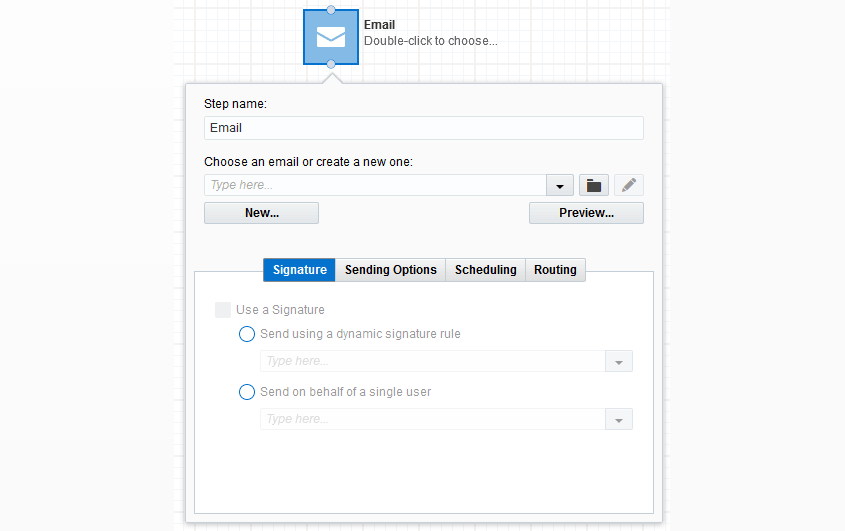
Eloqua's channel model reflects its enterprise positioning. Email, SMS, forms, and landing pages are available natively on the Campaign Canvas, though SMS is a paid add-on at $3.00 per 1,000 interactions plus $1,200 annual maintenance. Display, search, video, and social channels run through AppCloud integrations rather than native functionality. There is no native WhatsApp support.
Source: Oracle
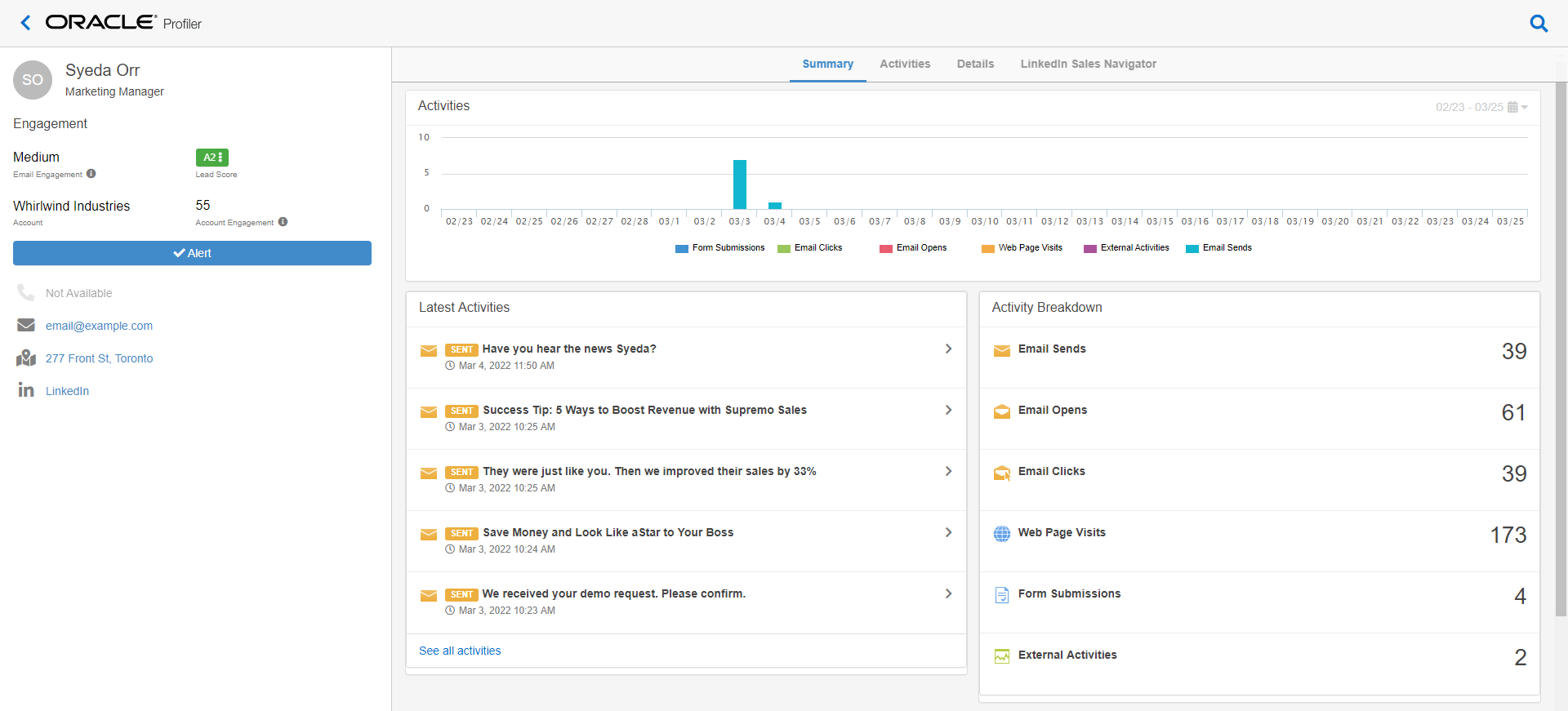
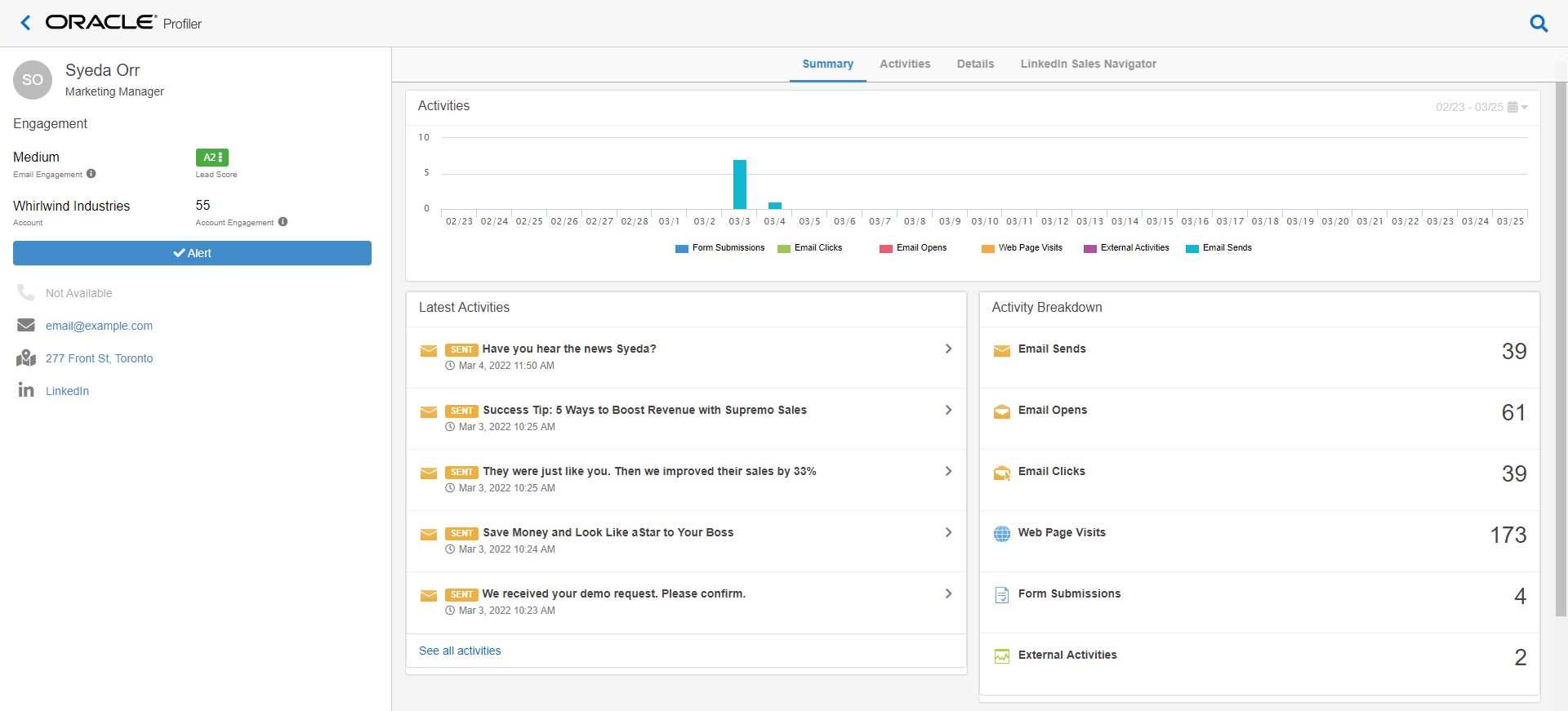
Eloqua compensates with sales alignment tools. Engage lets sales reps send brand-approved emails directly from Outlook. Profiler surfaces real-time contact activity and lead scores inside CRM. Guided Campaigns lets non-technical marketers execute campaigns step by step using brand-approved content. These tools solve a problem ActiveCampaign's CRM addresses differently: making sure the information marketing generates reaches sales in a usable form.
Source: Oracle
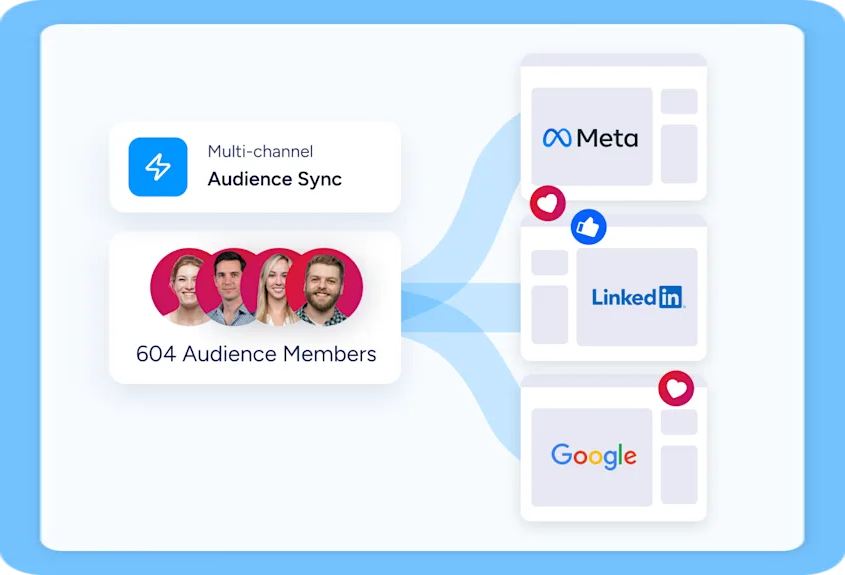
ZoomInfo adds a different kind of channel capability. Its demand-side platform deploys display ads based on 300+ company attributes across major networks, with audiences that update as intent signals change. GTM Studio orchestrates multi-channel plays (email, calls, ads, direct mail) triggered by buyer behavior. These don't replace ActiveCampaign's email automations or Eloqua's campaign orchestration. They're the signal-driven targeting layer that tells those platforms which accounts to focus on.
CRM integration: built-in vs. best-of-breed
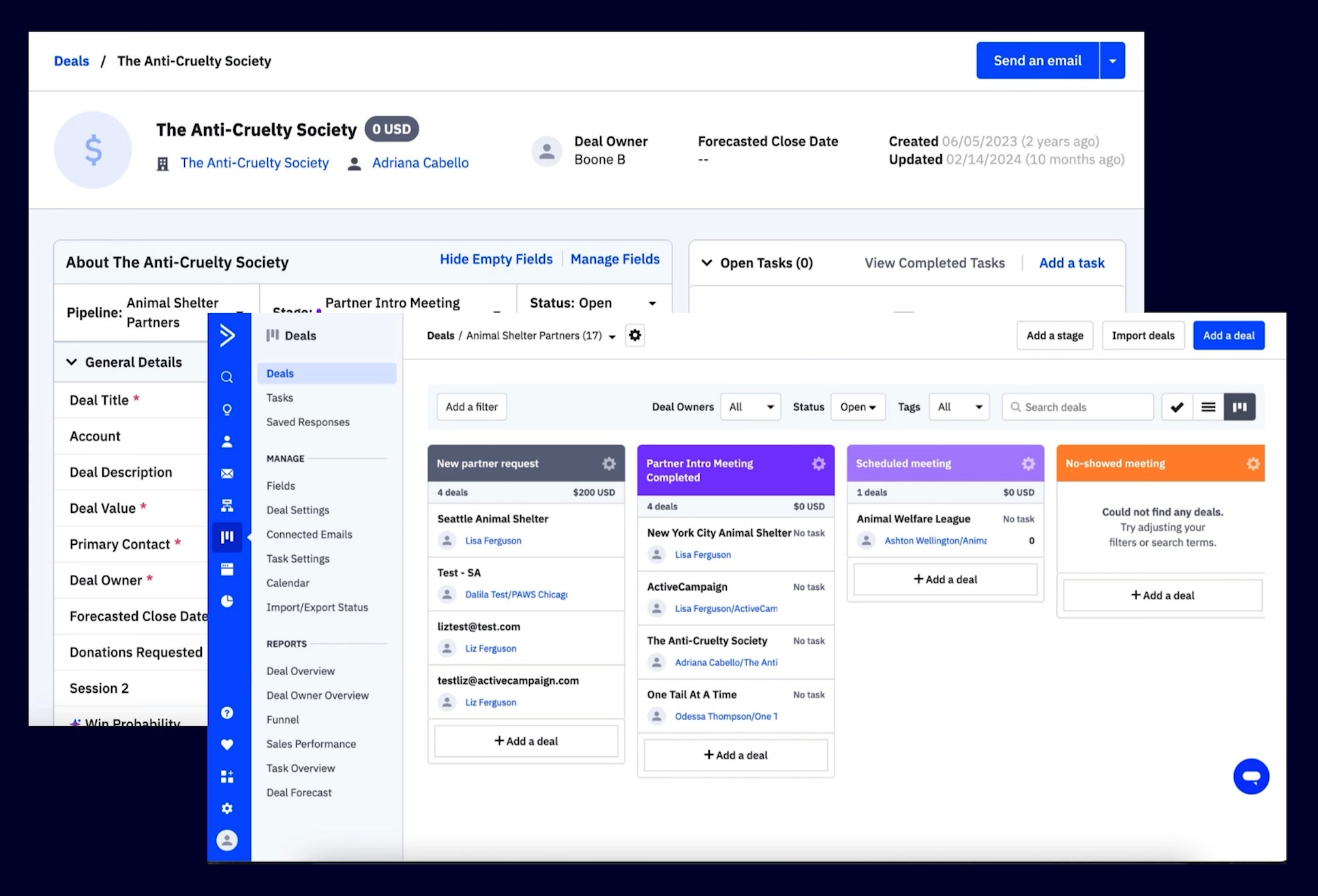
ActiveCampaign's built-in CRM gives small teams a single platform for marketing and sales. Deals live in customizable Kanban-style pipelines where reps drag opportunities between stages. Automations create deals when forms come in, trigger tasks when stages change, and send personalized emails when deals enter new stages. Sales routing assigns incoming deals by round-robin, expertise, geography, or lead score. Gmail and Outlook extensions let reps manage the pipeline from their inbox.
Source: ActiveCampaign
For a team of five selling a mid-market product, this eliminates the need for a separate CRM. But ActiveCampaign's CRM lacks pipeline forecasting, territory management, and the multi-stakeholder deal tracking that complex B2B sales require. It works as a marketing companion, not a standalone sales management system.
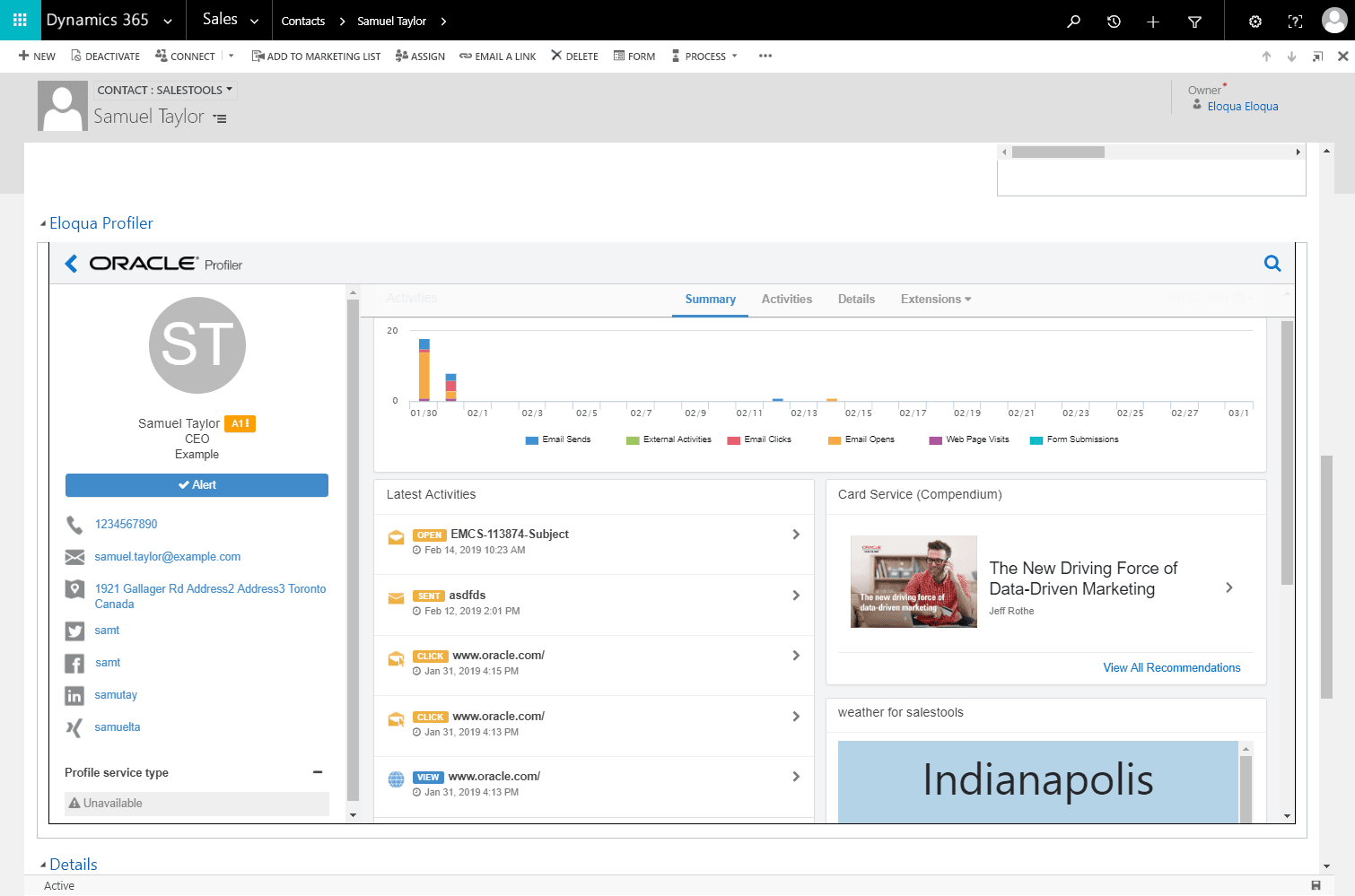
Eloqua doesn't try to be a CRM. Instead, it integrates with four CRM systems: Oracle CX Sales, Salesforce, Microsoft Dynamics, and Oracle CRM On Demand. These aren't surface-level connections. They're bidirectional synchronizations of leads, contacts, accounts, opportunities, and custom objects, with closed-loop reporting that ties specific campaigns to revenue. When Eloqua scores a lead as A1, that score flows into your CRM with full context, and the resulting opportunity data flows back to inform campaign attribution.
Source: Oracle
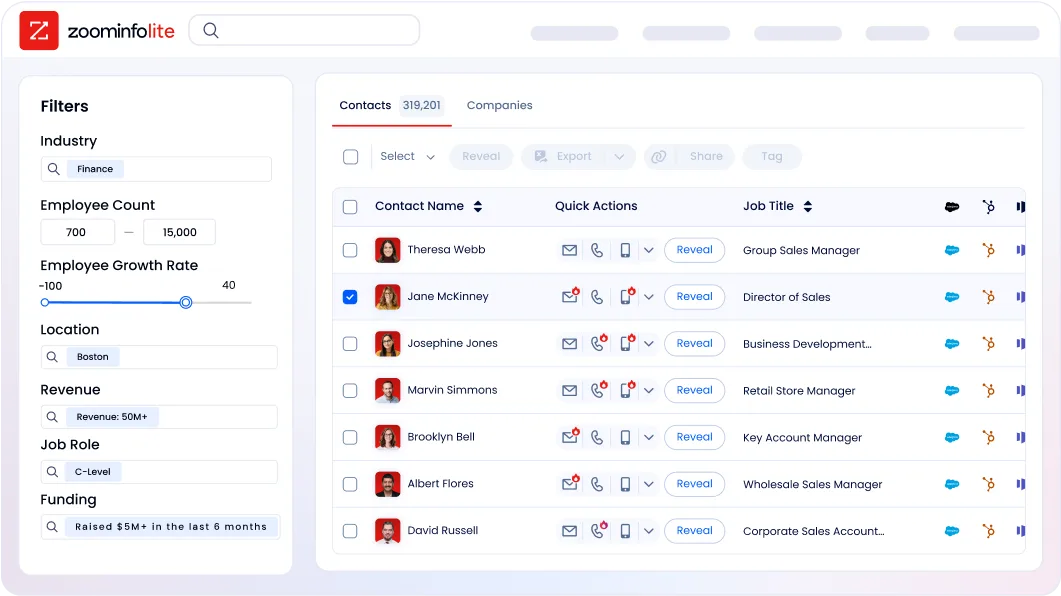
ZoomInfo integrates with Salesforce, HubSpot, and Microsoft Dynamics, enriching CRM records with verified contact data, company attributes, technographics, and intent signals. Its GTM Workspace consolidates CRM data with ZoomInfo intelligence in a single view for sellers, while GTM Studio lets RevOps teams design enrichment workflows and lead routing rules that keep CRM data fresh. The enrichment runs whether you use ActiveCampaign or Eloqua downstream, because ZoomInfo sits upstream of both.
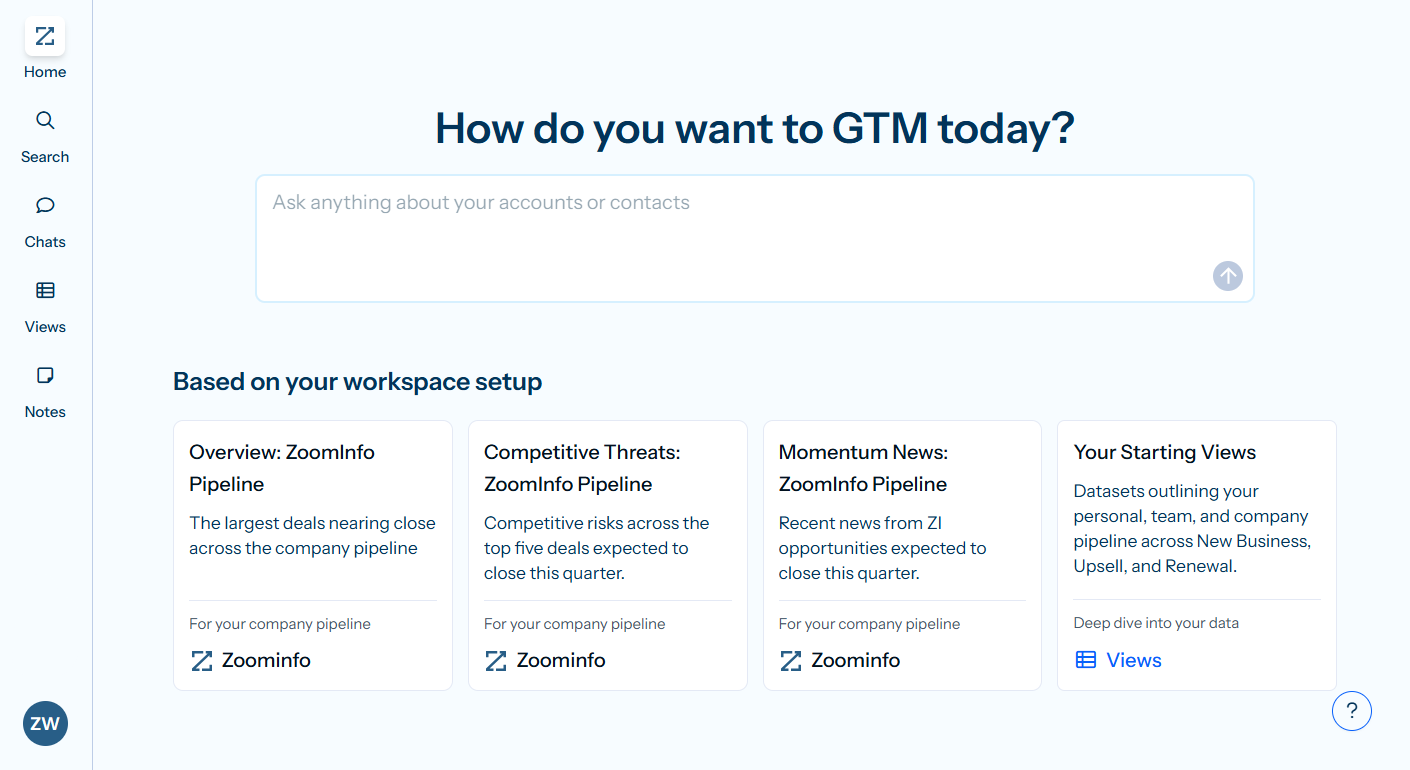
Impartner saw a 45% increase in website engagement after using ZoomInfo's data to target campaigns more effectively. As Jeremy Melius, Sr. Director of Marketing Operations, put it: "ZoomInfo has literally changed the way we go to market." (Impartner)
Pricing reflects fundamentally different markets
The pricing gap between ActiveCampaign and Eloqua isn't just large. It reflects different business models and buyer expectations.
ActiveCampaign uses contact-based pricing across four tiers. The Starter plan is limited to 1 user, 25,000 contacts, and 5 actions per automation. Starter costs $149/month for 10,000 contacts. Plus removes the automation action cap and adds landing pages, AI content generation, and multichannel automation. Professional (3 seats) adds predictive sending, conditional content, segmentation, and revenue attribution. Enterprise (5 seats) adds SSO, HIPAA support, custom reporting, premium CRM integrations (Salesforce, Dynamics), and a dedicated account team.
ActiveCampaign charges once per unique contact regardless of how many automations or segments that contact appears in. A 14-day free trial (no credit card) and a 30-day money-back guarantee reduce switching risk. No setup fees.
Oracle Eloqua uses contact-band pricing across three editions. Selected list prices from Oracle's published price list:
Contact Maximum | Basic ($/mo) | Standard ($/mo) | Enterprise ($/mo) |
|---|---|---|---|
10,000 | $2,000 | $4,000 | — |
50,000 | $3,500 | $7,000 | — |
100,000 | $4,500 | $9,000 | — |
500,000 | — | — | $29,200 |
These are list prices. Actual contracted prices are negotiated and typically lower. But the baseline reveals the market: Eloqua's cheapest option costs more per month than ActiveCampaign's annual subscription for many businesses.
Beyond the subscription, Oracle recommends Smart Start implementation packages ranging from $8,870 (Elementary, EMEA) to $78,338 (Enterprise, North America). Add-ons carry their own costs: additional marketing users at $840/year, Engage users at $200/year, Priority Support at $1,250/month plus 10% of net subscription, and Advanced Data Privacy at $60,000/year. No free trial. No money-back guarantee.
ZoomInfo uses consumption-based pricing. ZoomInfo Lite is a permanent free tier with access to 100M+ verified profiles and 10 monthly export credits. A 7-day free trial provides access to core platform features. Paid plans are custom-quoted based on usage, seats, and credit volume. The key economic point: ZoomInfo sits upstream of both platforms, improving the performance of whichever automation tool you choose. Better data means fewer wasted sends, higher engagement, and campaigns that reach the right people.
Security and compliance: enterprise requirements matter
For businesses in regulated industries, the security comparison narrows the field quickly.
Eloqua inherits Oracle's full compliance infrastructure. Oracle Cloud holds SOC 1, SOC 2, SOC 3 attestations; ISO 27001, ISO 27017, ISO 27018, ISO 27701 certifications; CSA STAR; PCI DSS compliance; and FedRAMP availability. Eloqua's AI runs on Oracle Cloud Infrastructure, so sensitive data never reaches third-party LLM providers. HIPAA support is available as an add-on. For a healthcare company, financial institution, or government contractor, this compliance stack is a baseline requirement.
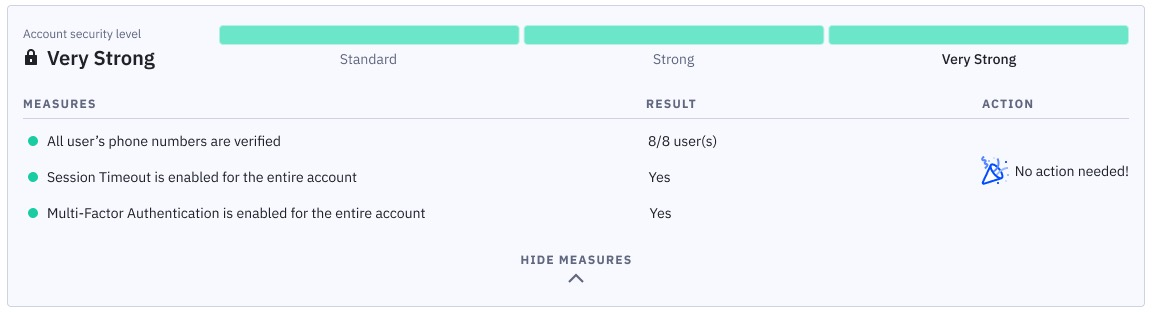
ActiveCampaign provides GDPR compliance with a Data Processing Addendum, CCPA compliance, HIPAA support on the Enterprise plan, and SSO on Enterprise. An in-product Security Checklist is available to all tiers. But public confirmation of SOC 2 certification was not found in available sources. For businesses where SOC 2 and ISO certifications are procurement requirements, this gap may need to be addressed directly with ActiveCampaign's sales team.
Source: ActiveCampaign
ZoomInfo maintains ISO 27001, ISO 27701, SOC 2 Type II, TRUSTe GDPR, and TRUSTe CCPA certifications, all renewed annually. The company is a registered data broker in California and Vermont, with a dedicated Trust Center. For enterprise buyers evaluating marketing stacks, ZoomInfo's compliance posture means the data layer meets the same standards as the automation layer.
Integration ecosystems signal different strategies
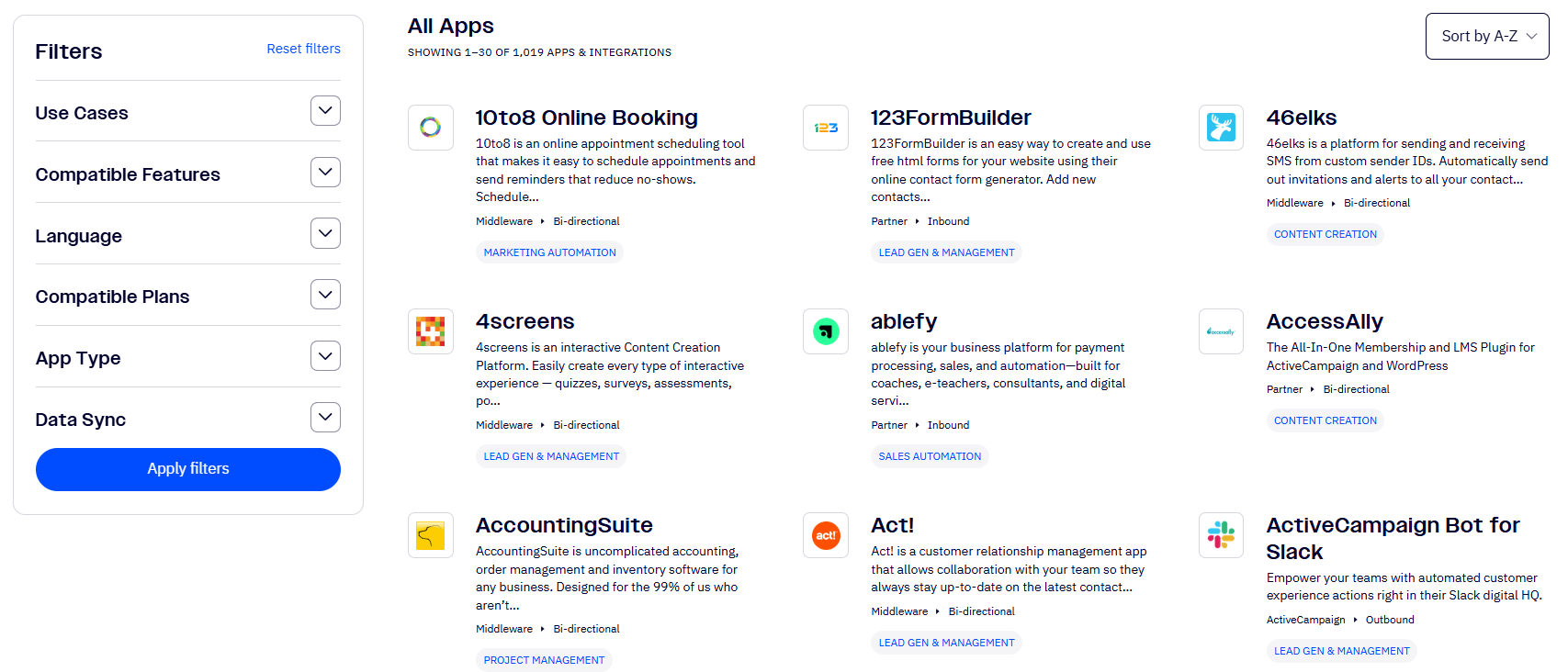
ActiveCampaign lists 1,000+ app integrations across CRM, ecommerce, forms, advertising, and developer tools. The ecosystem reflects its SMB base: Shopify, WooCommerce, WordPress, Stripe, Calendly, Typeform, and Zapier are prominent. For businesses that live in this ecosystem, everything connects with little friction. ActiveCampaign also moved early on AI interoperability, launching the first marketing automation connector for Anthropic's Claude via MCP and a ChatGPT connector in November 2025.
Source: ActiveCampaign
Eloqua's 500+ integrations via Marketing AppCloud skew enterprise. LinkedIn Campaign Manager, LinkedIn AutoFill, 6sense, GoToWebinar, Zoom, WebEx, Facebook Lead Ads, and the Oracle CX suite are the headline integrations. The AppCloud architecture supports four service types directly on the Campaign Canvas (action, decision, audience, and content services), which means integrations aren't just data pipes but active participants in campaign logic. The native Oracle Unity CDP connector provides three-directional integration (Unity segments into Eloqua, Eloqua data into Unity, and Unity profile data for Eloqua program decisions).
ZoomInfo's Marketplace lists 172+ partners, and its API and MCP server make data accessible in any tool. ZoomInfo's Marketing plans list integrations with Salesforce, HubSpot, Marketo, Eloqua, Sugar, Zoho, Dynamics, Outreach, and Salesloft. The platform also connects with cloud data platforms: AWS, Google Cloud, Snowflake, and Databricks. Whether your marketing automation tool is ActiveCampaign, Eloqua, or something else, ZoomInfo's data can flow in.
ActiveCampaign vs. Eloqua vs. ZoomInfo: Which should you choose?
The choice between ActiveCampaign and Eloqua comes down to where your business sits today and where it needs to be.
Choose ActiveCampaign if:
Your marketing team is one to five people managing campaigns directly
You have fewer than 100,000 contacts and a straightforward sales cycle
You want marketing automation and CRM in a single platform
Native SMS and WhatsApp support matters for your audience
You need to launch quickly without dedicated implementation resources
Your budget is under $500/month for marketing automation
Choose Oracle Eloqua if:
You run complex, multi-segment campaigns across multiple regions or product lines
Your buying cycle involves multiple stakeholders and buying committees
You have a dedicated marketing operations team to manage the platform
You need 15-30 concurrent lead scoring models across business units
Compliance certifications and analyst-validated maturity are procurement requirements
You're already invested in the Oracle CX ecosystem
Add ZoomInfo to either platform if:
You need verified B2B contact data to feed your campaigns
You want to target accounts showing real-time buying intent, not just static lists
You're spending too much time building prospect lists and too little on campaign strategy
Your CRM data is incomplete, stale, or full of duplicates
You want account intelligence that shows which companies to prioritize and why
Explore how ZoomInfo integrates with your marketing stack.
Marketing automation platforms are engines. ZoomInfo is the fuel. ActiveCampaign and Eloqua both execute campaigns well, but results depend on the quality and timeliness of the data flowing in. The most effective marketing teams don't choose between automation and intelligence. They combine both: a platform that executes and a data layer that ensures those executions reach the right people at the right time.
Seismic attributed 39% of active pipeline to opportunities identified or influenced by ZoomInfo signals: "That combination of our internal CRM data, external signals, and AI has helped us craft very specific account- and persona-based messages, and people have responded right away," said CBO Toby Carrington. (Seismic)
ActiveCampaign vs. Eloqua vs. ZoomInfo FAQ
What is the fundamental difference between ActiveCampaign, Eloqua, and ZoomInfo?
ActiveCampaign is a marketing automation platform built for small and mid-size businesses, combining email, SMS, WhatsApp, and CRM in one system with AI-powered campaign creation. Oracle Eloqua is an enterprise B2B marketing automation platform designed for large organizations with dedicated marketing operations teams, featuring dual-canvas architecture and up to 30 concurrent lead scoring models. ZoomInfo is an AI go-to-market platform that provides verified contact data, company intelligence, and buyer intent signals to power campaigns in either platform.
Which platform is more affordable?
ActiveCampaign costs far less, starting at roughly $15/month for 1,000 contacts with a 14-day free trial and 30-day money-back guarantee. Oracle Eloqua starts at $2,000/month for 10,000 contacts (list price) with implementation packages ranging from $8,870 to $78,338 and no free trial. ZoomInfo offers a permanent free tier (ZoomInfo Lite) with 10 monthly export credits plus a 7-day free trial, with paid plans custom-quoted.
Can I use ZoomInfo with ActiveCampaign or Eloqua?
Yes. ZoomInfo integrates with both platforms. ZoomInfo's Marketing plans list Eloqua as a direct MAP integration, and ActiveCampaign's 1,000+ integration ecosystem connects via tools like Zapier and direct API. ZoomInfo provides the upstream data layer (verified contacts, company intelligence, and intent signals) that feeds into whichever marketing automation platform you run campaigns on.
Which platform is better for account-based marketing?
Eloqua has the strongest native ABM capabilities of the two marketing automation platforms, with multi-model lead scoring (up to 30 concurrent models), Account Engagement Scoring, and integrations with ABM vendors like 6sense and LinkedIn. ZoomInfo was named a Leader in the Gartner Magic Quadrant for ABM Platforms in both 2024 and 2025, with buyer intent data, account fit scoring, and a demand-side platform for display advertising. For full ABM execution, combining Eloqua or ActiveCampaign with ZoomInfo provides both the orchestration layer and the data layer.
Which platform has better AI capabilities?
ActiveCampaign's Active Intelligence focuses on making AI accessible to small teams: generating campaigns from natural language, suggesting segments, and optimizing send times per subscriber. Several agents remain in beta. Eloqua's Advanced Intelligence focuses on enterprise-grade privacy, running on Oracle Cloud Infrastructure with no third-party data sharing, and includes email fatigue analysis, send time optimization, and generative content in seven languages. ZoomInfo's GTM Context Graph provides AI at the data layer, processing 1.5B+ data points daily to identify which accounts are in-market and why deals move or stall.
How does lead scoring compare between ActiveCampaign and Eloqua?
ActiveCampaign supports contact-level lead scoring and deal-level scoring through a rules-based engine. Eloqua uses a two-dimensional scoring system (profile score A-D combined with engagement score 1-4) and supports up to 30 concurrent scoring models on its Enterprise tier, along with Account Engagement Scores that aggregate contact-level engagement to the account level. Eloqua's scoring is designed for complex B2B sales involving multiple stakeholders across different products and regions.
Does Eloqua offer a free trial?
No. Oracle Eloqua offers no free plan, free trial, or self-serve signup. Access requires contacting Oracle's sales team. ActiveCampaign offers a 14-day free trial with no credit card required. ZoomInfo offers both a permanent free tier (ZoomInfo Lite) and a 7-day free trial.
Which platform is best for a business just starting with marketing automation?
ActiveCampaign is the clear choice for businesses getting started. It offers self-serve signup, a 14-day free trial, free migration services, and a visual automation builder that lets most teams launch their first campaigns within hours. Eloqua requires dedicated implementation resources and marketing operations expertise, making it a poor fit for teams that haven't yet established their marketing automation foundations.
See how ActiveCampaign stacks up elsewhere: