
Choosing between ActiveCampaign and Systeme.io comes down to a few questions:
Are you a B2B company running multi-channel campaigns, or a solopreneur selling courses and digital products?
Do you need marketing automation with branching logic and behavioral triggers, or an all-in-one toolkit to get your first offer live?
Is your priority building nurture sequences that adapt to individual behavior, or consolidating funnels, email, courses, and checkout under one roof?
Do you have a growing contact list that demands precise segmentation, or a small audience you can manage with tags and basic workflows?
How important is knowing exactly who to target before your first email goes out?
In short, here's what we recommend:
ActiveCampaign is the marketing automation platform built for businesses that have outgrown basic email tools. Its visual automation builder supports branching logic with behavioral triggers, and its Active Intelligence AI system can build campaigns from plain-language prompts.
With a built-in CRM, native email, SMS, and WhatsApp messaging, plus 1,000+ integrations, ActiveCampaign gives lean marketing teams enterprise-grade depth without the enterprise price.
The trade-off: a real learning curve for advanced features, pricing that climbs as your contact list grows, and limited landing page customization compared to dedicated builders.
Systeme.io is the budget all-in-one platform for creators and solopreneurs who want everything in a single account.
Sales funnels, email marketing, online courses, community building, affiliate management, a booking calendar, and evergreen webinars all live under one login, starting with a permanent free plan that includes 2,000 contacts and unlimited email sends.
For non-technical founders launching their first course or sales funnel, Systeme.io removes the friction of assembling a multi-tool stack. But that simplicity has limits: the page builder is constrained compared to dedicated tools, third-party integrations are thin, and the automation capabilities don't approach what ActiveCampaign offers.
Both platforms handle the execution side of marketing: sending emails, building pages, and running automations. But for B2B companies, a question comes before execution: who should you be targeting? That's a different problem, and it's where ZoomInfo enters the picture.
ZoomInfo is an AI-powered go-to-market platform that solves the data and intelligence problem upstream of any marketing tool. With 500M contacts, 100M companies, 135M+ verified phone numbers, and 200M+ verified business email addresses, ZoomInfo gives B2B teams the raw material their campaigns need: verified contacts, company attributes, org charts, and real-time buyer intent signals that reveal when accounts are researching solutions.
Its GTM Context Graph (an intelligence layer that processes 1.5B+ data points daily) fuses this data with your CRM records, conversation transcripts, and behavioral signals to surface not just who to contact, but why now is the right moment.
Your team can act on that intelligence through the GTM Workspace for sellers, GTM Studio for marketers, or APIs and MCP to power any tool in your stack, including ActiveCampaign.
If your marketing campaigns are only as good as the contacts in your database, see how ZoomInfo's data can power your pipeline.
ActiveCampaign vs. Systeme.io vs. ZoomInfo at a glance
ActiveCampaign | Systeme.io | ZoomInfo | |
|---|---|---|---|
Primary function | Marketing automation + CRM | All-in-one business platform (funnels, email, courses) | B2B data, intelligence, and GTM platform |
Email marketing | Advanced with AI-powered campaign builder | Unlimited sends, basic editor | Not an email sender; feeds verified contacts into your email tools |
Automation depth | Visual builder with branching logic | Basic workflows and rules | AI-powered GTM plays and signal-triggered workflows |
CRM | Built-in with deal pipelines and lead scoring | Basic Kanban-style CRM pipelines | GTM Workspace for sellers; GTM Context Graph for deal intelligence |
Course creation | Not included | Full course platform with drip content | Not applicable |
Sales funnels | Landing pages only | Complete funnel builder with upsells/downsells | Not a funnel builder; identifies which accounts to funnel |
Integrations | 1,000+ apps | Limited native integrations | 172+ marketplace partners; APIs and MCP for any tool |
AI capabilities | Active Intelligence (12+ AI agents) | Minimal | GTM Context Graph processing 1.5B+ data points daily |
Starting price | $15/month (1,000 contacts) | $0/month (free plan) | Free (ZoomInfo Lite); consumption-based paid plans |
Free plan | 14-day trial only | Permanent free plan (2,000 contacts) | ZoomInfo Lite (permanent free tier) |
Best for | Growing businesses needing advanced automation | Solopreneurs and creators launching digital products | B2B sales and marketing teams targeting the right accounts |
These platforms solve different problems
The comparison between ActiveCampaign and Systeme.io is like comparing a specialized power tool to a Swiss Army knife. One does fewer things with more precision; the other does many things adequately from a single handle.
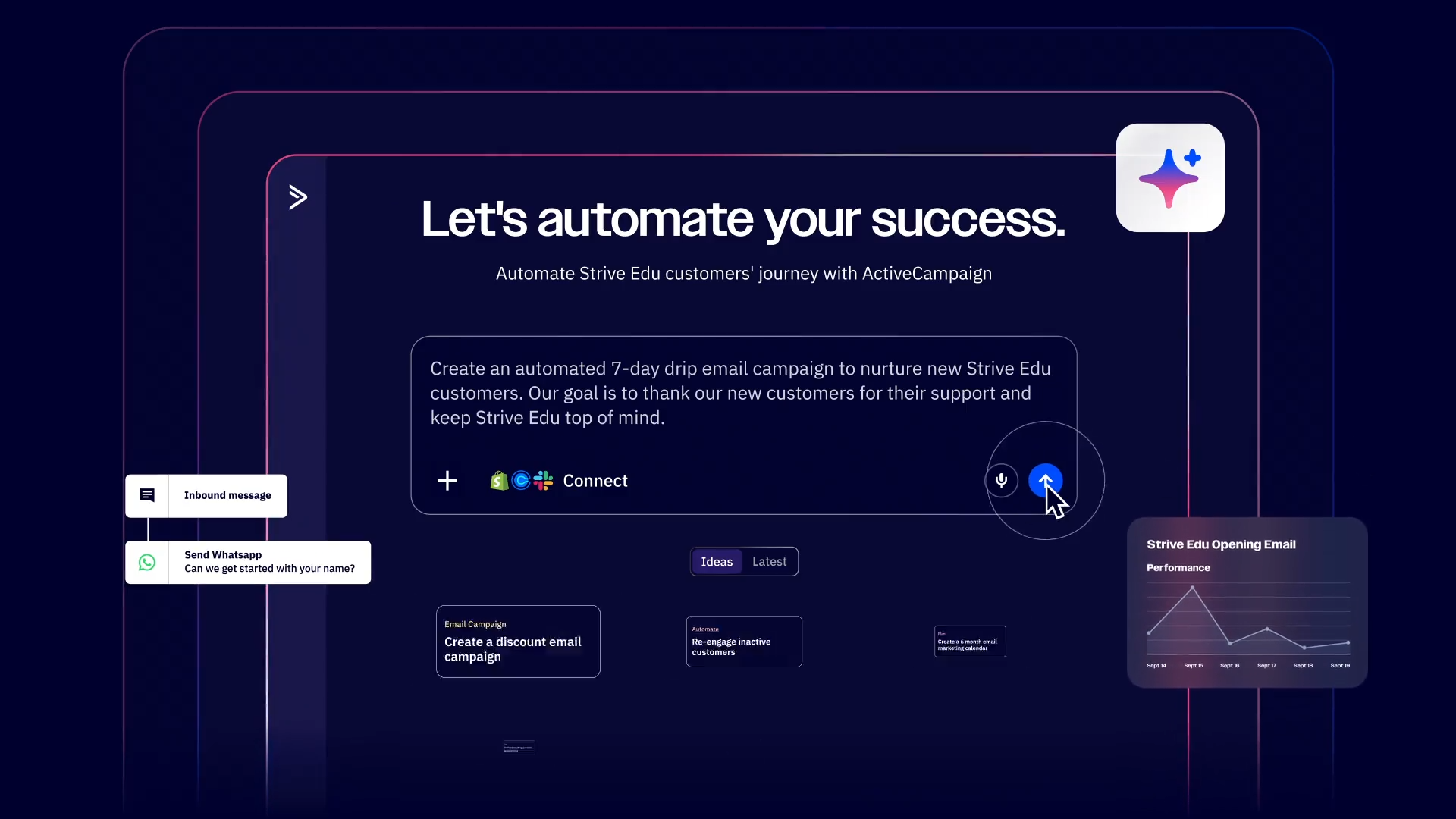
ActiveCampaign exists to make marketing automation accessible. You set up a visual workflow where a subscriber who clicks a pricing link gets tagged, enters a sales-focused email sequence, has a deal created in the CRM, and triggers an SMS follow-up if they don't open the first email within 48 hours. That depth is what 180,000+ businesses pay for.
Source: ActiveCampaign
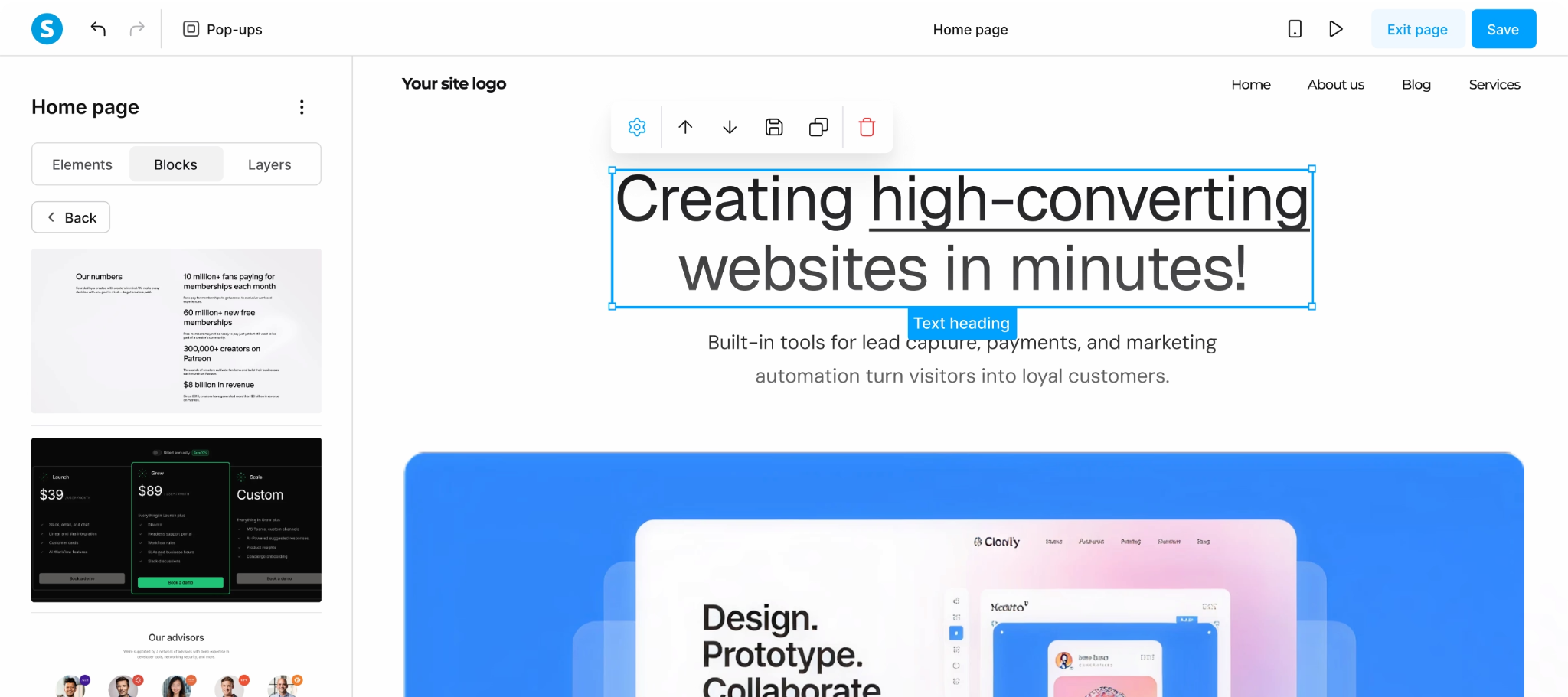
Systeme.io exists so a course creator or coach can stop paying for five separate tools. Instead of Mailchimp for email, ClickFunnels for funnels, Teachable for courses, and a standalone affiliate tracker, everything lives under one account for $0 to $97/month.
Source: Systeme.io
The automation isn't as deep, the email editor isn't as polished, and the integrations are sparse.
But for someone selling a $297 online course, having everything in one place outweighs the feature gap.
ZoomInfo doesn't compete with either platform on execution. It answers the question that comes before any campaign launches: who are the right people to reach, and when are they ready to buy?

For B2B teams, an automated email sequence sent to the wrong contacts is just expensive noise. ZoomInfo provides the verified contact data, company intelligence, and buyer intent signals that make downstream tools more effective.
ActiveCampaign dominates in automation depth
ActiveCampaign's visual automation builder is the engine that justifies its premium over simpler tools.
You can create unlimited automation actions on Plus plans and above, with conditional branching that routes contacts based on email engagement, website behavior, CRM deal stage, purchase history, or custom field values. The builder supports split actions, wait conditions, if/else logic, and goal-based exits.

Source: ActiveCampaign
On top of the manual builder sits Active Intelligence, ActiveCampaign's AI layer launched in May 2025. Instead of requiring marketers to configure every step, Active Intelligence lets you type a goal in plain language, and AI agents handle campaign strategy, content, and optimization.
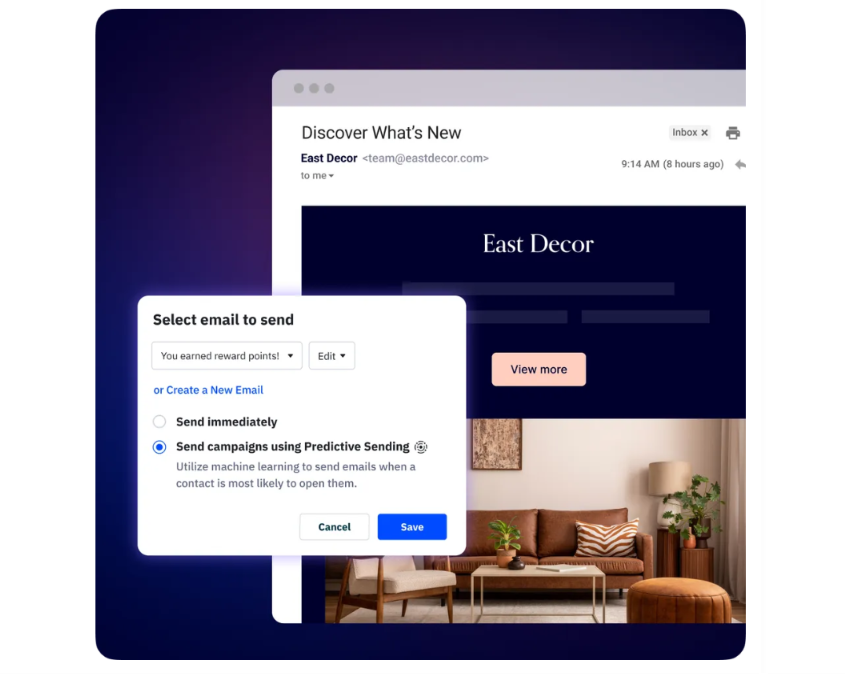
The company claims AI users save 13+ hours per week. Predictive Sending analyzes each contact's engagement history and delivers emails when that person is most likely to open, rather than batch-sending to the entire list at once.
Source: ActiveCampaign
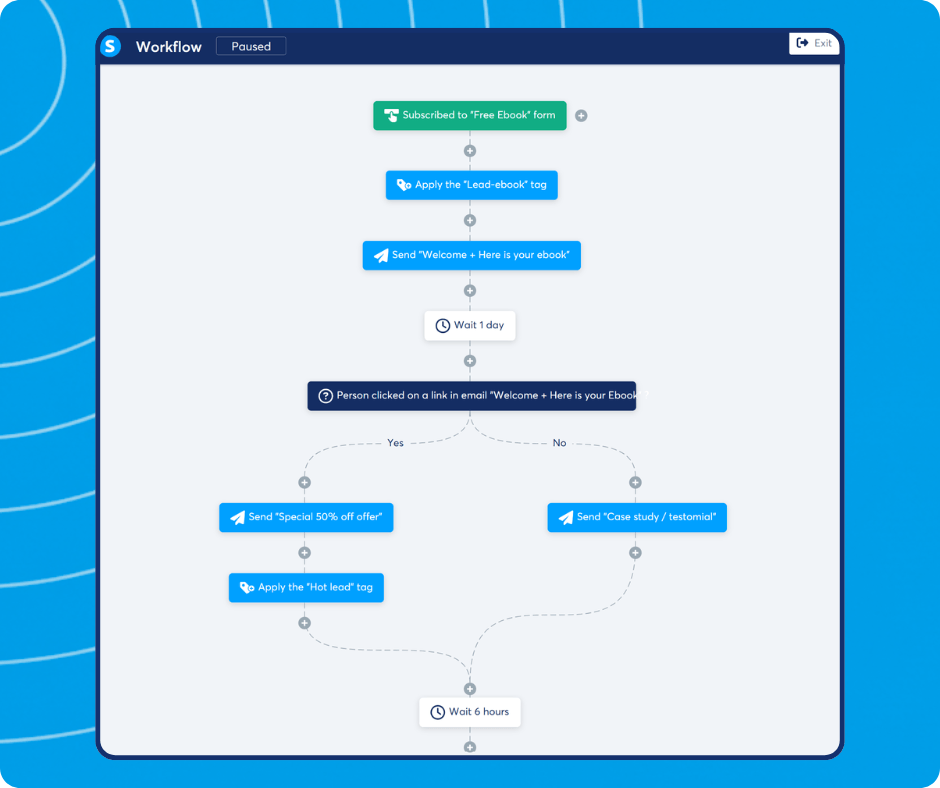
Systeme.io's automation covers the basics. You can set up automation rules (if/then pairs) and build visual workflows with triggers, actions, conditional branching, and timed delays.
Source: Systeme.io
For a creator who needs to send a welcome sequence when someone buys a course, tag contacts based on link clicks, and trigger an SMS via Twilio, Systeme.io handles that without external tools.
The gap between the two shows up when you need sophistication. ActiveCampaign's automation can score leads dynamically based on dozens of behavioral signals, route deals to the right sales rep based on geography or deal value, and run up to five A/B variants simultaneously. Systeme.io's automation can tag, email, and move pipeline stages. Both work. One works harder.
Systeme.io wins on breadth and price for creators
Where Systeme.io pulls ahead is in how much you get for the price, particularly for the digital product economy.
The free plan includes 3 sales funnels, 1 online course, unlimited email sends to 2,000 contacts, an affiliate program, a CRM pipeline, a booking calendar, and a custom domain. No credit card required. No time limit.
The $17/month Startup plan removes most caps. The $97/month Unlimited plan adds unlimited contacts, sub-accounts for agencies, and white-label capability. Every plan charges 0% transaction fees.
Building a comparable stack with standalone tools would mean ClickFunnels ($97/month), Mailchimp or ConvertKit (variable), Teachable (variable plus transaction fees on lower tiers), and a separate affiliate platform ($89+/month).
As Systeme.io points out, the combined cost runs roughly $245/month before transaction fees.
ActiveCampaign offers stronger marketing automation, but it doesn't build sales funnels, host courses, run webinars, or manage affiliate programs.
You'd need separate tools for those functions. ActiveCampaign's Starter plan begins at $15/month for 1,000 contacts with a 5-action automation cap.
Getting unlimited automations, landing pages, and AI content generation requires the Plus plan, and prices climb from there as your contact list grows. G2 reviewers note that pricing has increased in recent years.
For a solopreneur selling a digital course with a 5,000-person email list, Systeme.io is the more practical choice. For a B2B SaaS company running multi-channel nurture campaigns across a 50,000-contact database, ActiveCampaign is the necessary investment.
Email marketing reflects each platform's design philosophy
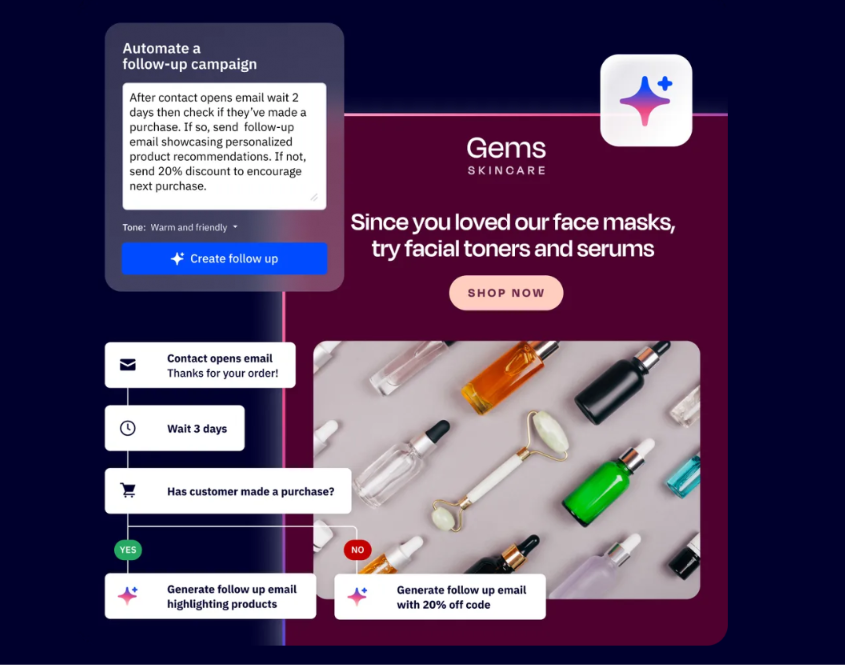
ActiveCampaign treats email as a precision instrument. The drag-and-drop Email Designer pairs with 250+ templates, an AI Campaign Builder that generates complete campaigns from prompts, conditional content blocks that change per recipient, and predictive content that uses NLP to select the best content variant for each contact.
Source: ActiveCampaign
On deliverability, ActiveCampaign reports 99.88% email deliverability, routes email through a private network rather than the public internet, and offers dedicated IP management with pre-warmed IPs.
An Apple Mail Privacy Protection filter strips inflated open metrics from reporting, something most platforms don't handle cleanly.
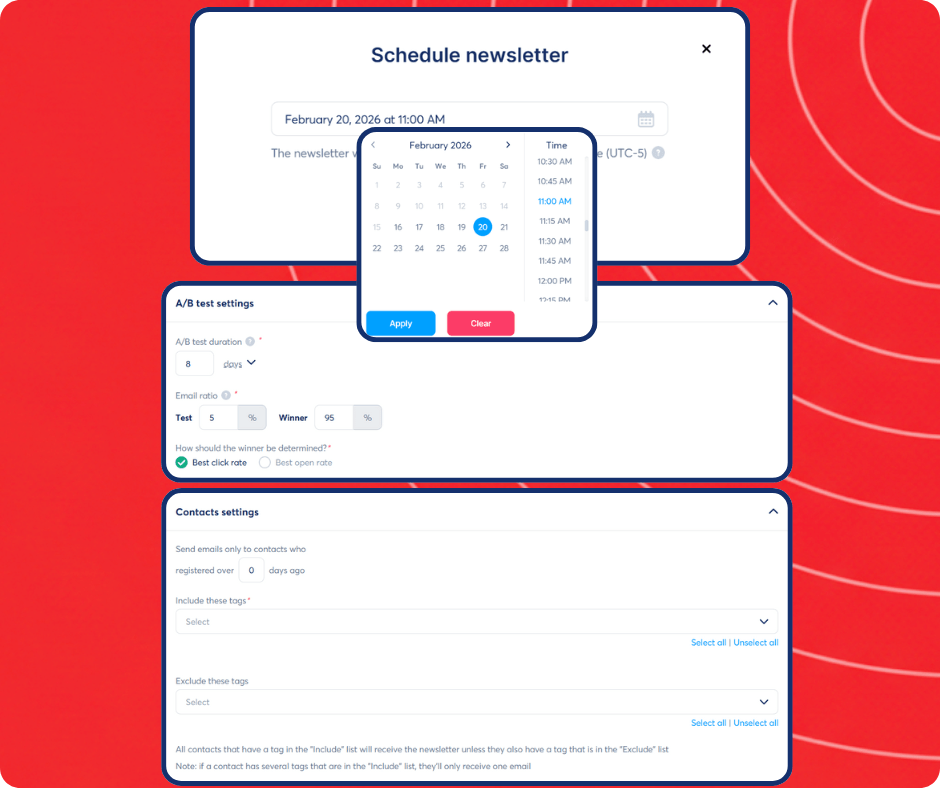
Systeme.io takes a simpler approach. The email editor supports drag-and-drop and text-only formats. A/B testing on subject lines is available for broadcasts. The key advantage is unlimited sends on every plan, including free, with no daily or monthly cap.
Source: Systeme.io
For deliverability, Systeme.io uses a managed IP pool system with five tiers that assigns senders based on engagement metrics. The platform uses its own 600,000-contact list on the same infrastructure, achieving a 38% average open rate.
Both platforms include automated list cleaning in some form. ActiveCampaign's BotSense filters bot click activity from reporting, preventing inflated engagement metrics from skewing campaign decisions.
The practical difference: ActiveCampaign gives marketers control over every aspect of email delivery and personalization. Systeme.io gives creators a functional email tool that works without configuration. If your business depends on email performance metrics and deliverability optimization, ActiveCampaign is the stronger choice. If you need to send a weekly newsletter and the occasional launch sequence, Systeme.io covers it.
The CRM gap matters for sales-driven businesses
ActiveCampaign includes a built-in CRM with visual Kanban-style pipelines, customizable deal stages, and two separate scoring systems: lead scores and deal scores. Both update dynamically based on behavioral signals, not just at the point of entry.

Source: ActiveCampaign
The CRM connects directly to the automation engine, so a deal stage change can trigger a personalized email from the assigned rep, create a task, or adjust a lead score automatically.
Sales routing assigns deals based on round-robin rotation, rep expertise, geography, or deal value. Chrome and Outlook extensions let reps manage deals from their inbox.
The CRM isn't as deep as Salesforce or HubSpot for complex B2B sales processes. Deal forecasting, territory management, and CPQ features aren't part of ActiveCampaign's scope.
But for small and mid-size teams that want marketing and sales data in one system, it eliminates the friction of syncing two platforms.
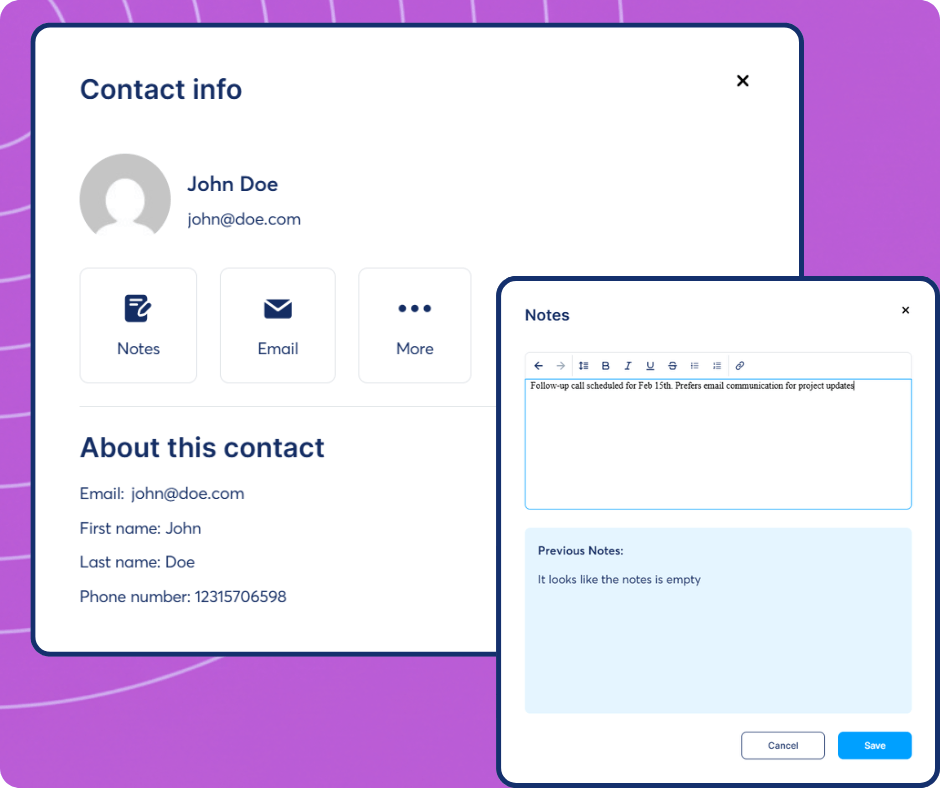
Systeme.io added CRM pipelines as a Kanban board with drag-and-drop deal management. Contacts move between custom stages manually or via automation rules triggered by form submissions or purchases. Internal notes can be added to contact profiles.
Source: Systeme.io
It handles basic deal tracking for consultants and coaches who need to see where prospects sit in their sales process.
For any business where sales involves multiple touchpoints, buying committees, or deal values above a few thousand dollars, the CRM distinction matters. ActiveCampaign's dual scoring system and automation-triggered deal management handle that complexity. Systeme.io's pipeline works for tracking a handful of coaching prospects.
Neither platform solves the data problem for B2B
Here's the gap between marketing execution and marketing effectiveness: both ActiveCampaign and Systeme.io assume you already have the right contacts in your database. They'll send emails, run automations, and nurture leads.
But neither helps you identify who those contacts should be, whether your data is accurate, or which accounts are researching solutions like yours right now.
For B2C creators and D2C businesses, this isn't a problem. Contacts come through opt-in forms, course purchases, and social media. The database builds itself.
For B2B companies, the story is different. Your addressable market is finite. The difference between a campaign that generates pipeline and one that generates noise comes down to whether you're reaching verified decision-makers at companies that match your ICP, at the moment they're evaluating solutions.
This is the problem ZoomInfo was built to solve. The platform provides three layers of intelligence that neither ActiveCampaign nor Systeme.io can replicate:
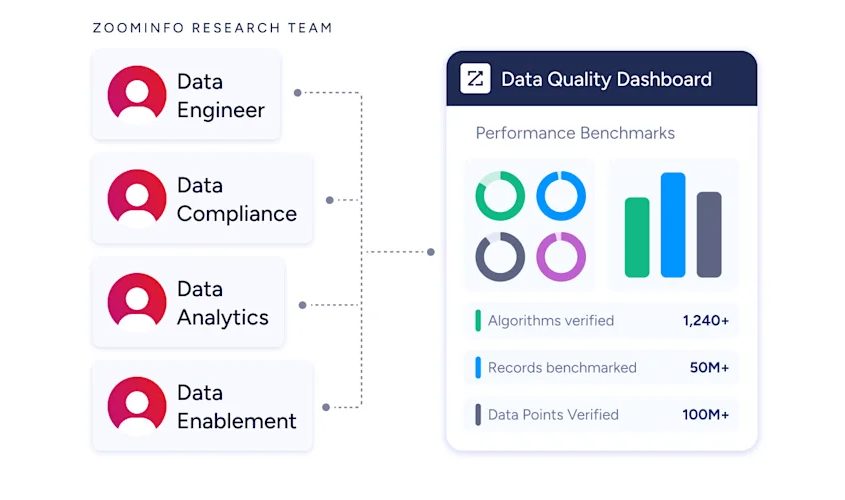
Verified contact and company data. 500M contacts with 120M direct-dial phone numbers and 200M+ verified business email addresses, backed by 300+ human researchers and a multi-source verification pipeline that achieves up to 95% accuracy on first-party data.
Source: ZoomInfo
In a Fortune 500 competitive RFP analyzing 25 million contacts across vendors, the independent consultant concluded that "no other competitor came even close."
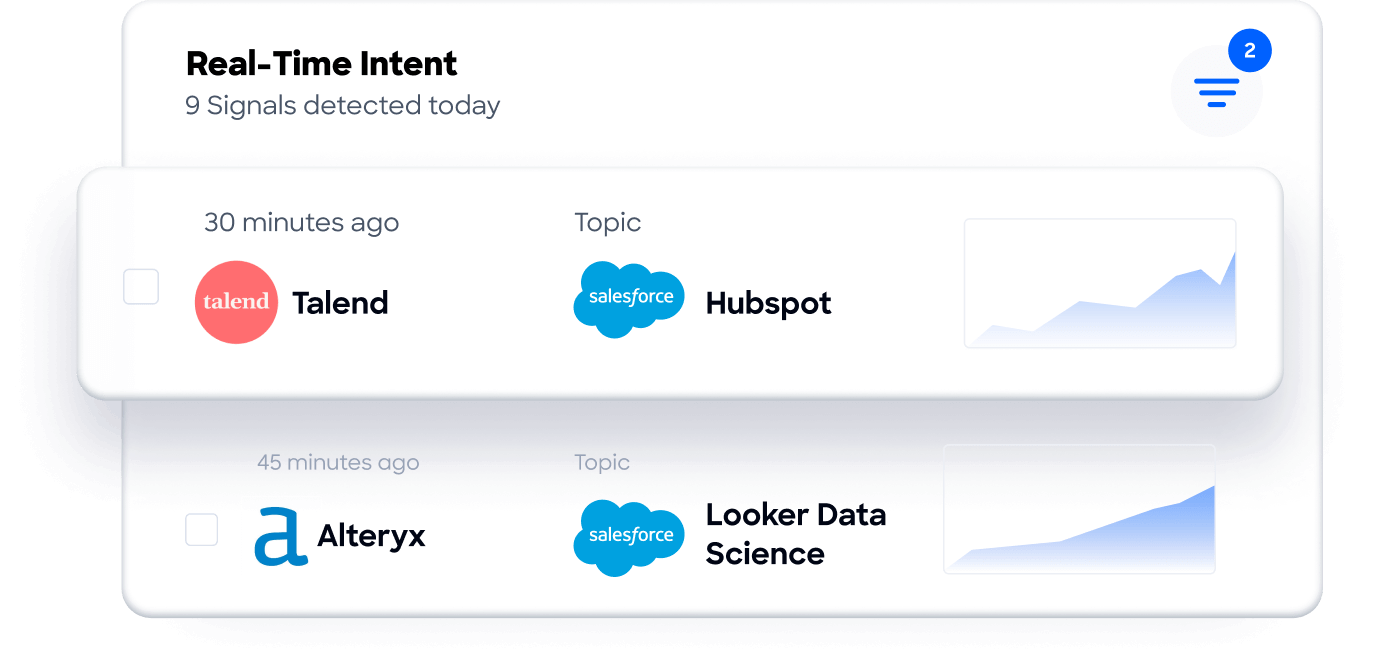
Buyer intent signals. ZoomInfo Intent tracks signals from 210 million IP-to-Organization pairings and 6 trillion+ new keyword-to-device pairings monthly.
Guided Intent identifies topics historically correlated with deal success, rather than requiring manual topic guessing.
Source: ZoomInfo
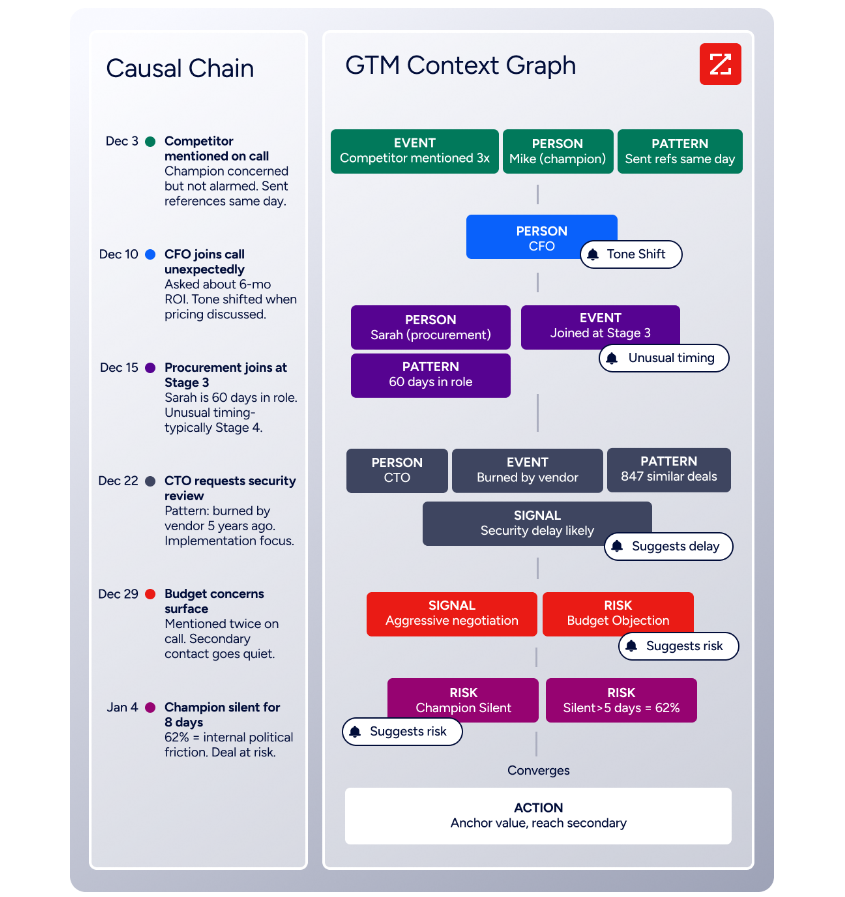
The GTM Context Graph. ZoomInfo's intelligence layer processes 1.5B+ data points daily, unifying its B2B data with your CRM records, conversation transcripts, and behavioral signals.
Source: ZoomInfo
The result: AI that understands not just what happened in a deal, but why it happened, and what patterns predict what happens next.
ZoomInfo integrates directly with ActiveCampaign through the ActiveCampaign marketplace, so verified contacts, company data, and intent signals flow into your ActiveCampaign automations. The combination turns ActiveCampaign from a campaign execution tool into a targeted pipeline generator.
Seismic's sales team attributed 39% of active pipeline to opportunities identified or influenced by ZoomInfo signals, while boosting productivity by 54%. (Seismic Case Study)
Integration ecosystems reveal different priorities
ActiveCampaign's 1,000+ integrations connect with most tools in a modern marketing stack: Shopify, Salesforce, WordPress, Calendly, Stripe, Google Ads, Zapier, Make, and Clay.
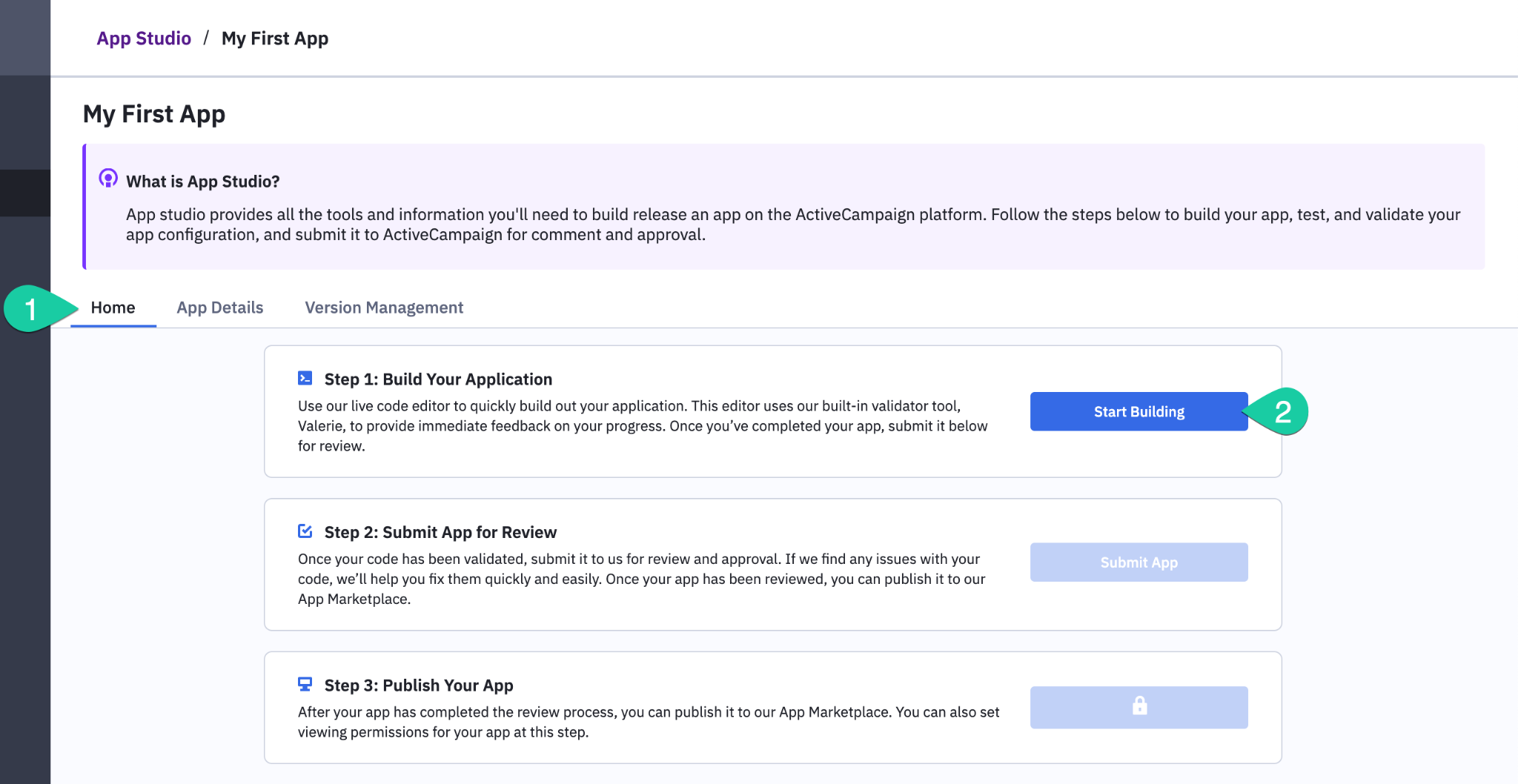
The REST API covers contacts, deals, campaigns, and automations. App Studio lets developers build custom integrations, and MCP connectors connect ActiveCampaign to AI tools like Claude and ChatGPT.
Source: ActiveCampaign
The ecosystem depth matters because as a business grows, its tool stack grows with it. A company running ActiveCampaign alongside Salesforce, Shopify, Calendly, and a data enrichment provider needs those connections to work.
Systeme.io's integration list is short by design. The pricing page lists native integrations with Google Sheets, Google Calendar, Google Meet, Zoom, SendGrid, Twilio, and ActiveCampaign itself.
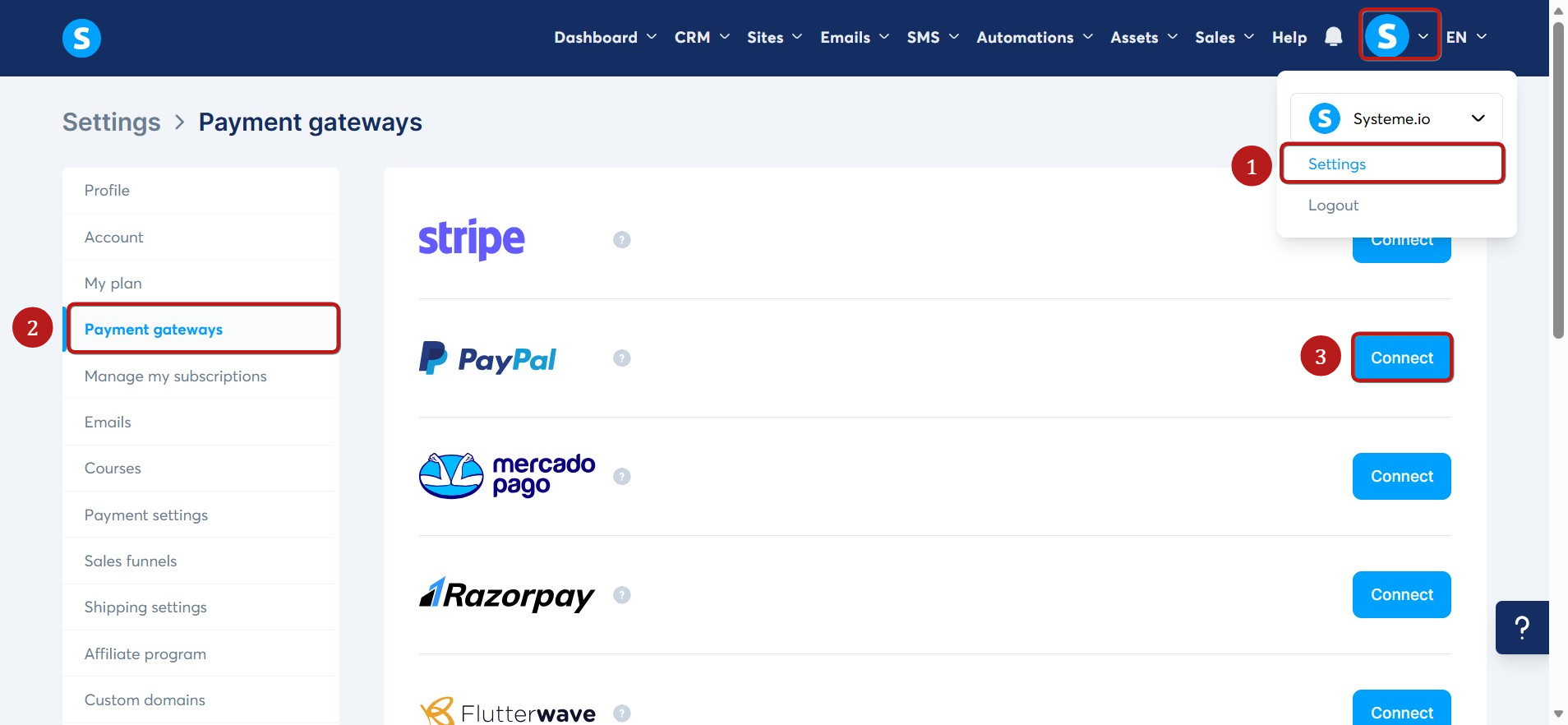
Payment processing connects to Stripe, PayPal, Razorpay, Flutterwave, Xendit, and Mercado Pago. A public REST API covers contacts, tags, newsletters, and subscriptions.
Source: Systeme.io
But there's no integration marketplace, no Zapier connector documented in official sources, and the overall third-party ecosystem is thin.
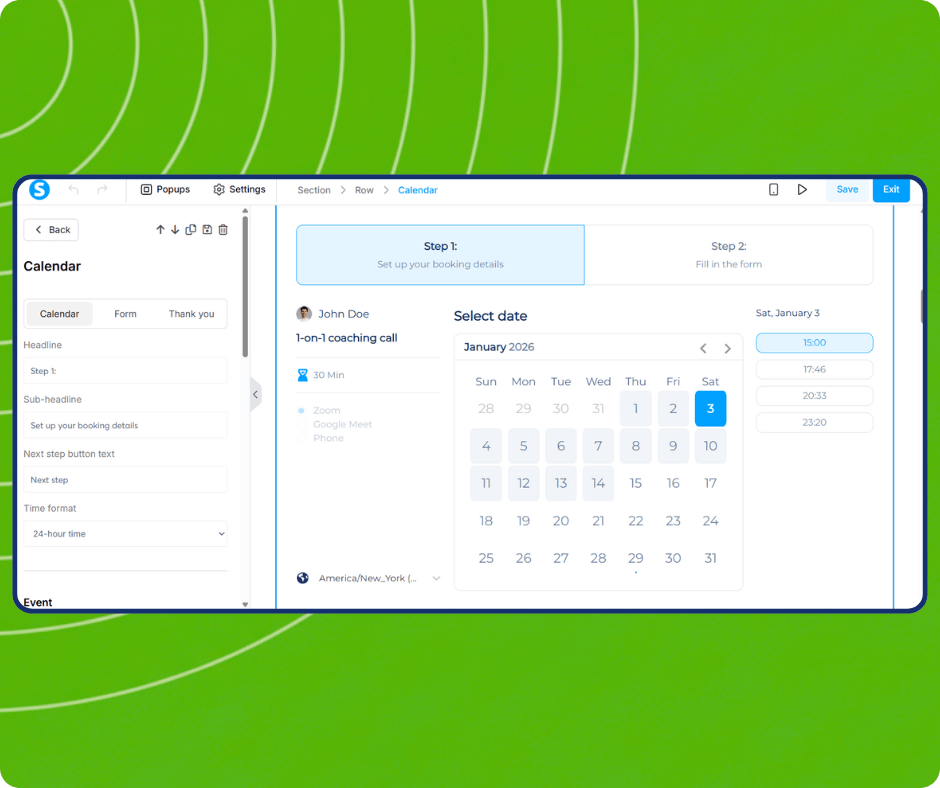
This is a deliberate trade-off. Systeme.io replaces integrations with built-in features. You don't need a Calendly integration because there's a booking calendar built in. You don't need Teachable because there's a course platform built in.
Source: Systeme.io
The strategy works until you need a tool Systeme.io doesn't replicate, and at that point, your options narrow.
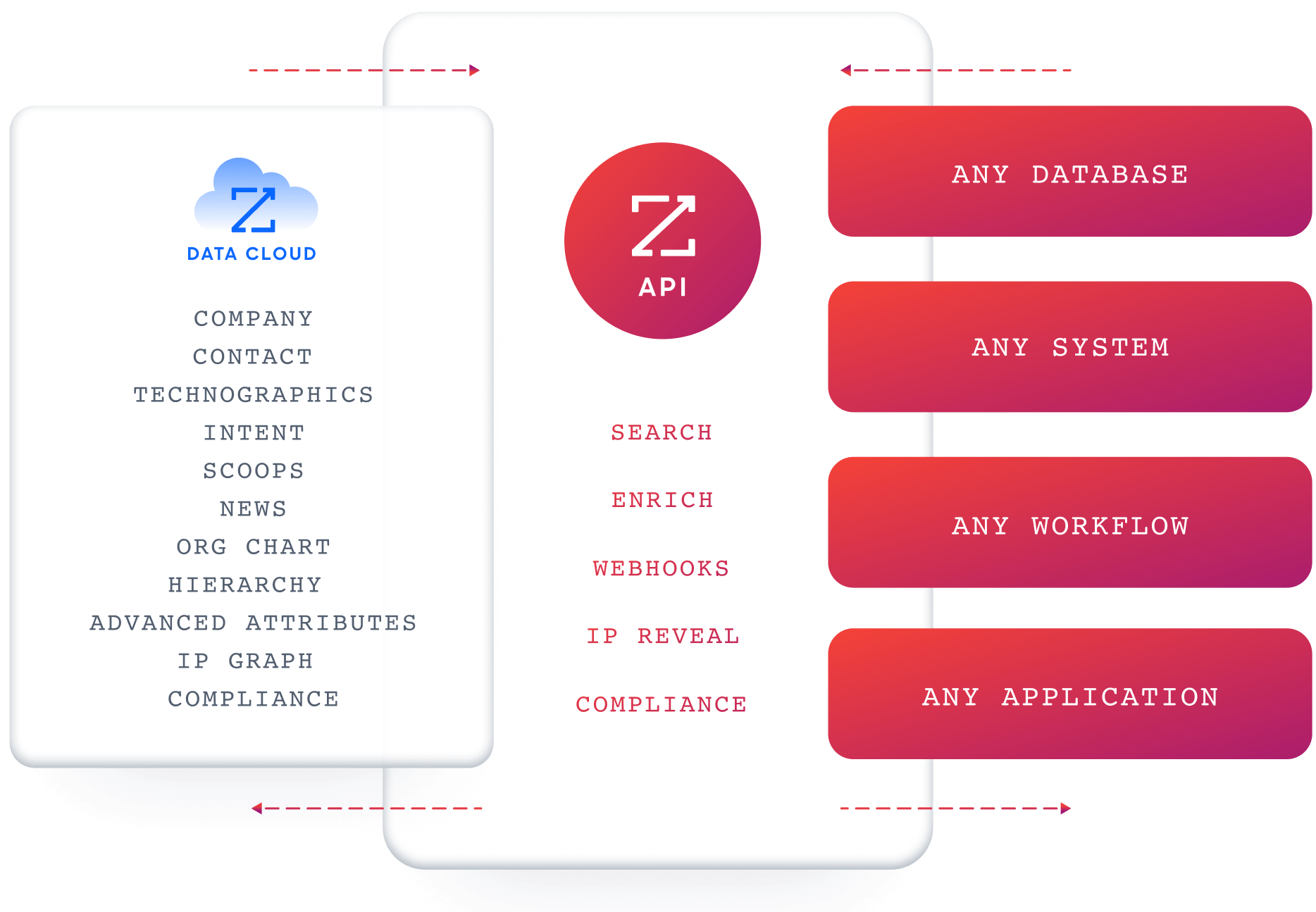
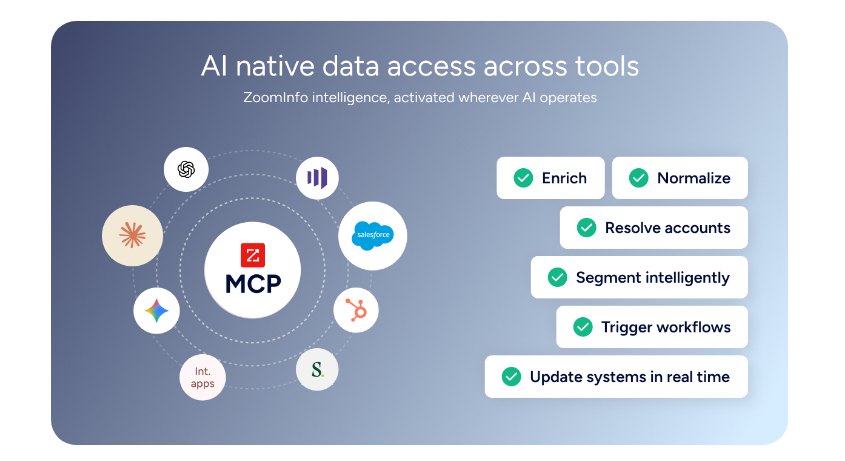
ZoomInfo takes the infrastructure approach. Its App Marketplace lists 172+ partners, the Enterprise API provides programmatic access to contact, company, and intent data, and the MCP server connects ZoomInfo data to any AI agent.
Source: ZoomInfo
The same intelligence that powers ZoomInfo's own GTM Workspace and GTM Studio is available in any third-party tool through APIs and MCP. Nothing is locked inside ZoomInfo's interface.
Source: ZoomInfo
"The plug-and-play aspect of the API means I can integrate it into any process and get information at a moment's notice." (Jerry Wilson, Senior Marketing Intelligence Analyst, BDO Canada, who achieved an 87% reduction in time spent on data dashboard updates. BDO Canada Case Study)
Pricing reflects each platform's target buyer
Systeme.io is the most accessible starting point. The permanent free plan supports a real business at no cost. The Startup plan at $17/month removes most limits. The Unlimited plan at $97/month covers unlimited contacts, funnels, courses, and sub-accounts.
Annual billing saves the equivalent of two months. Zero transaction fees on every plan, including free.
ActiveCampaign uses contact-based pricing where costs scale with list size. The Starter plan begins at $15/month for 1,000 contacts with limited automation. The Plus plan adds unlimited automation actions, landing pages, and AI content generation.
Professional includes predictive sending, conditional content, and revenue attribution. Enterprise adds SSO, HIPAA support, and a dedicated account team. At 10,000 contacts, Starter is $149/month.
No permanent free plan, but there's a 14-day free trial (no credit card required) and a 30-day money-back guarantee for first-time subscribers.
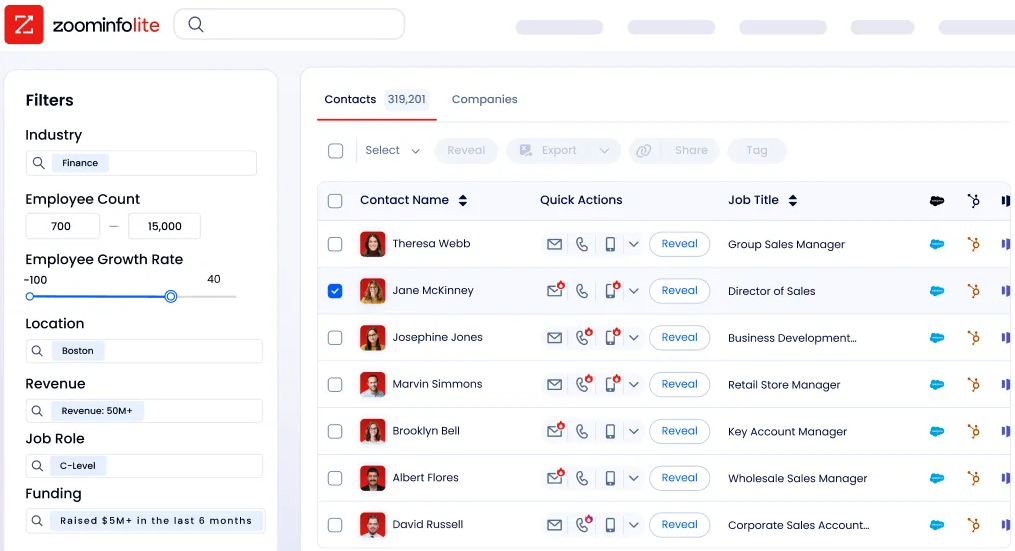
ZoomInfo uses consumption-based pricing with no publicly listed prices. ZoomInfo Lite is a permanent free tier with access to 100M+ verified profiles, 10 monthly export credits, and WebSights Lite for website visitor identification. Paid plans scale based on seats, credit volume, and feature access.
Source: ZoomInfo
A 7-day free trial is also available.
The pricing comparison only works if you compare total stack cost, not individual tool cost. A business using Systeme.io at $97/month has its entire marketing and sales infrastructure covered. A business using ActiveCampaign needs to add costs for landing page tools, course hosting, and funnel builders. A B2B business using ActiveCampaign plus ZoomInfo invests more, but gets verified data powering every campaign rather than marketing into a void.
Cross-channel capabilities show different levels of maturity
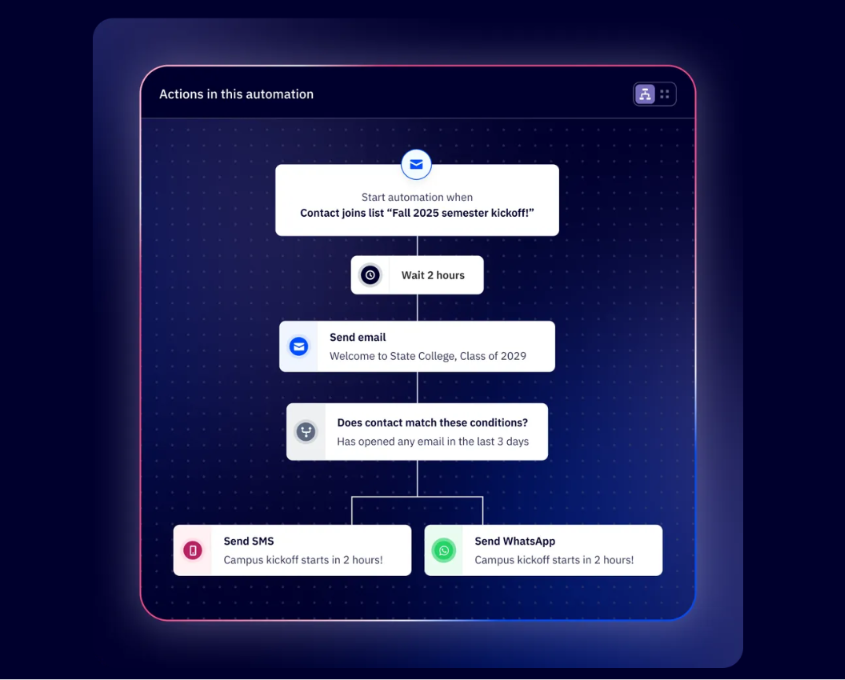
ActiveCampaign coordinates email, SMS, and WhatsApp from a single automation builder using one shared contact database.
Source: ActiveCampaign
WhatsApp messaging, added through the April 2025 Hilos acquisition, includes broadcast messaging, a no-code Flows builder, and a shared inbox for live agent responses. SMS uses dedicated 10DLC registration to protect sender reputation, with two-way messaging and AI-generated SMS content.
A single automation can trigger an email, wait for engagement, fall back to SMS if the email isn't opened, and escalate to WhatsApp for high-value contacts, all without leaving one workflow.
Transactional email via Postmark covers password resets, order confirmations, and receipts, with Message Streams keeping transactional deliverability separate from marketing volume.
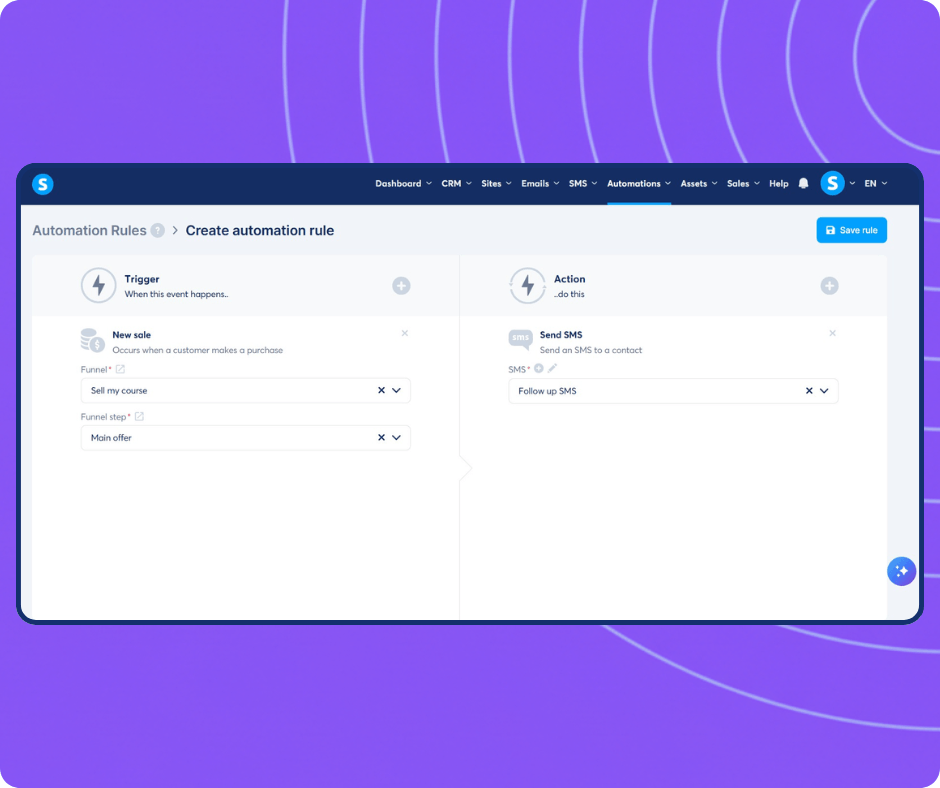
Systeme.io offers SMS marketing via Twilio integration, where users connect their Twilio account and build combined email-and-SMS workflows.
Source: Systeme.io
Systeme.io adds no fees on top of Twilio's per-message rates. Email and SMS share the same workflow builder and contact record. WhatsApp is not supported.
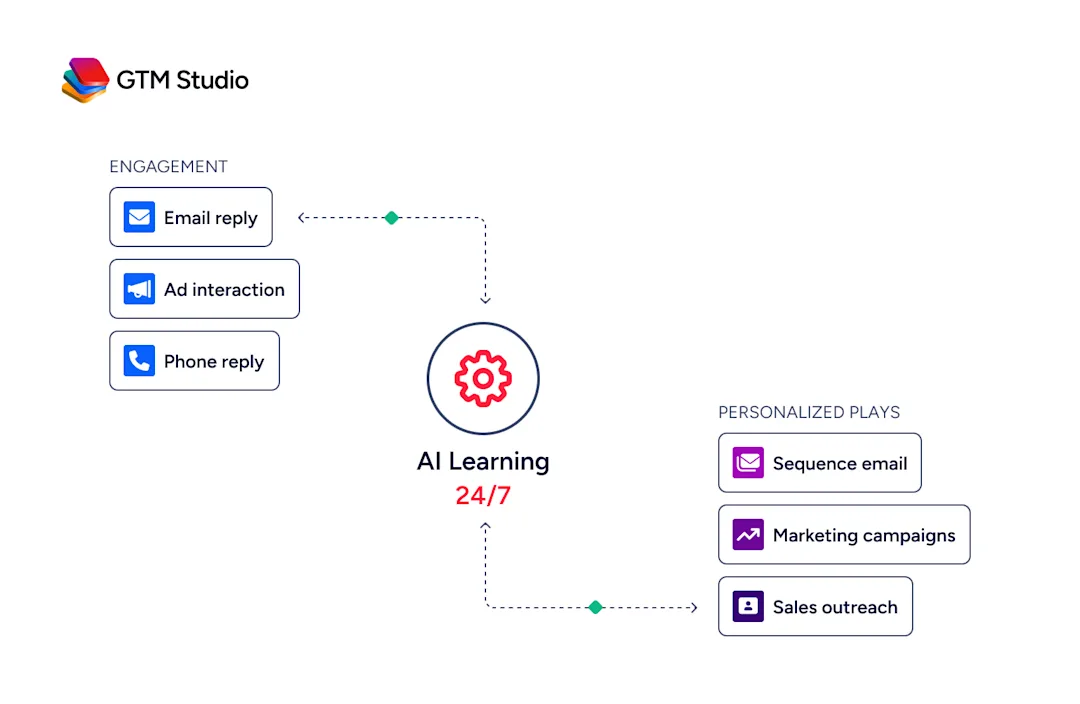
For B2B teams using ZoomInfo, cross-channel execution takes a different form. GTM Studio orchestrates email, calls, ads, and direct mail triggered by buyer behavior, while GTM Workspace delivers those signals and recommended actions directly to sellers.
Source: ZoomInfo
The AI identifies which accounts show buying patterns, drafts personalized outreach based on deal context, and routes active accounts to the right rep.
Support and onboarding reflect different scales
ActiveCampaign offers chat and ticket support on all paid plans, priority support on Professional plans, and a dedicated account team on Enterprise. Free migration of contacts, templates, segments, and campaigns is included.
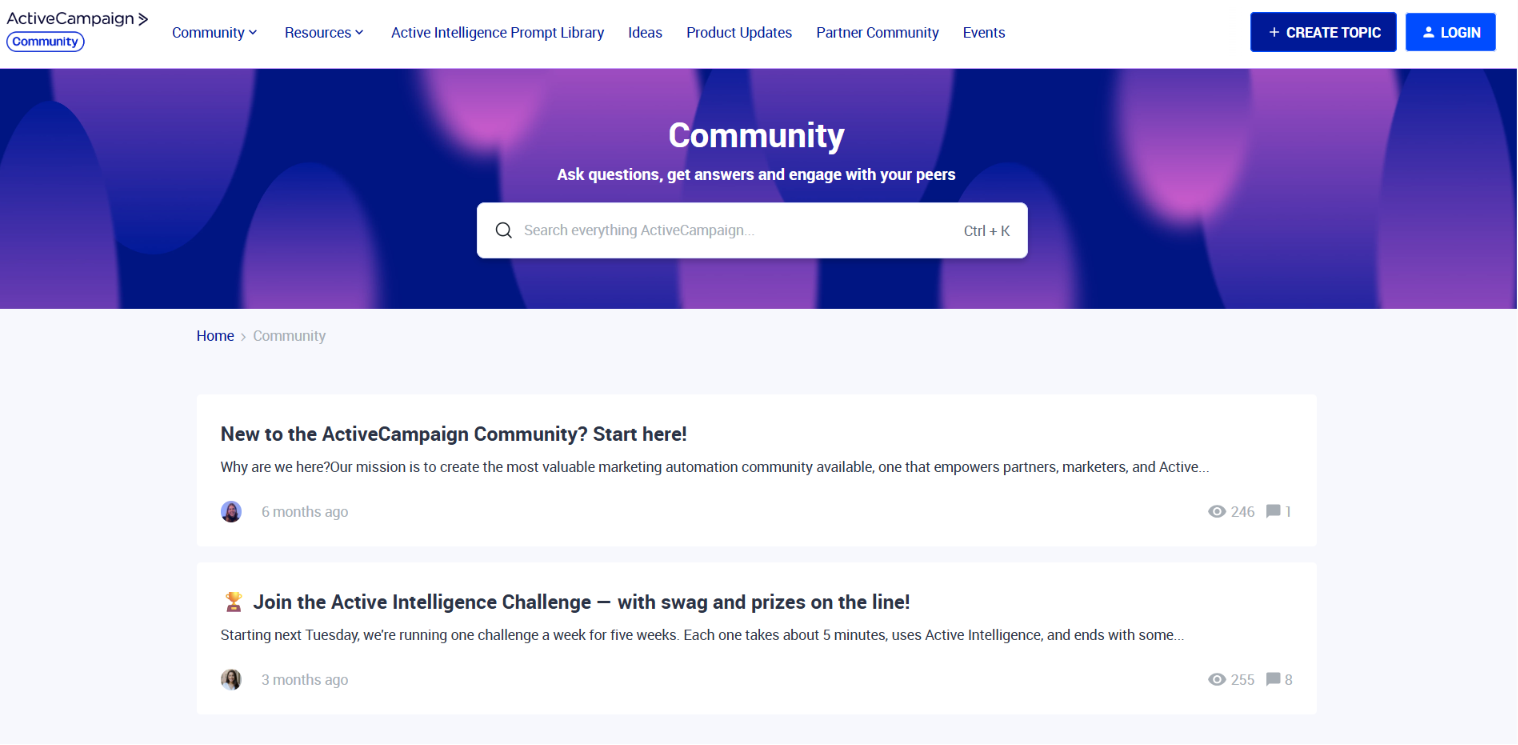
A 180,000+ member community, certified consultant directory, and paid specialist sessions starting at $79 round out the support ecosystem.
Source: ActiveCampaign
The platform earned 300+ G2 badges in Spring 2026, including top rankings for fastest implementation and easiest admin.
Systeme.io support gets consistently high marks. Capterra reviewers rate support 4.8/5 across 2,127+ reviews.
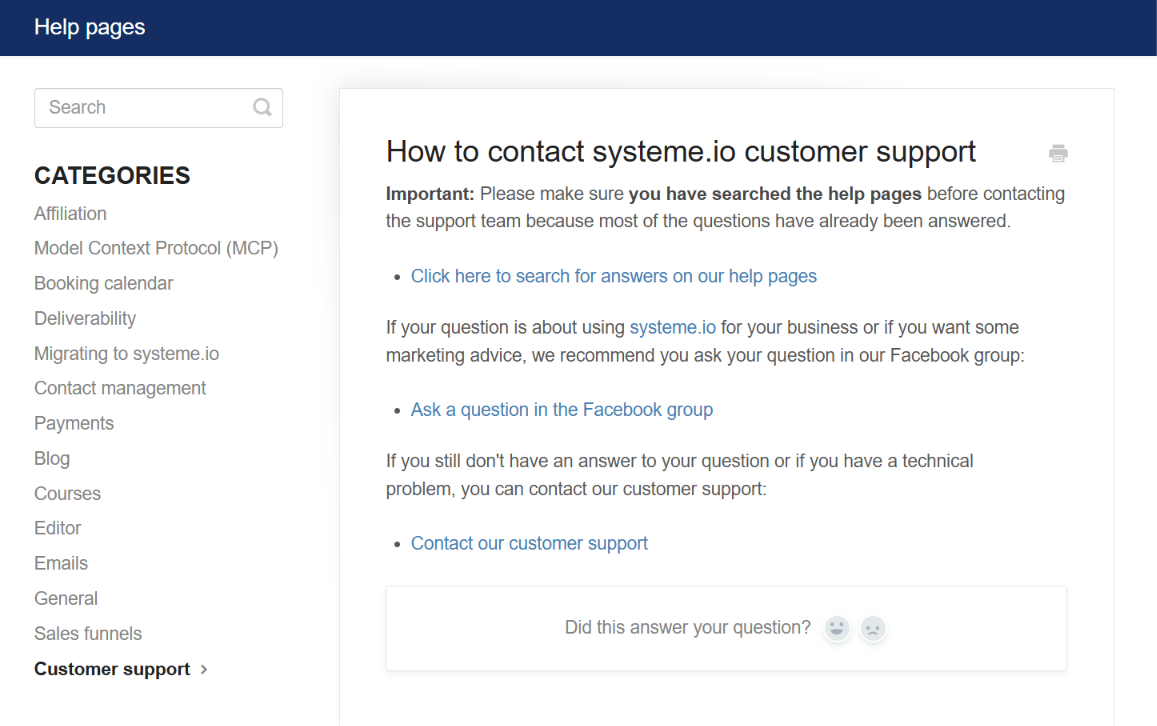
The support path routes users through the help center first, then a Facebook community group, then direct contact for technical issues. There's no live chat or phone support, but G2 reviewers report response times of 20 minutes to 2 hours.
Source: Systeme.io
A free migration service is included with the Unlimited plan or any annual plan, covering funnels, products, email lists, courses, and domains.
ZoomInfo invested in a redesigned onboarding program spanning 30 to 90 days, structured across planning, technical implementation, education, and adoption phases. The redesign produced a 25% improvement in customer satisfaction scores.
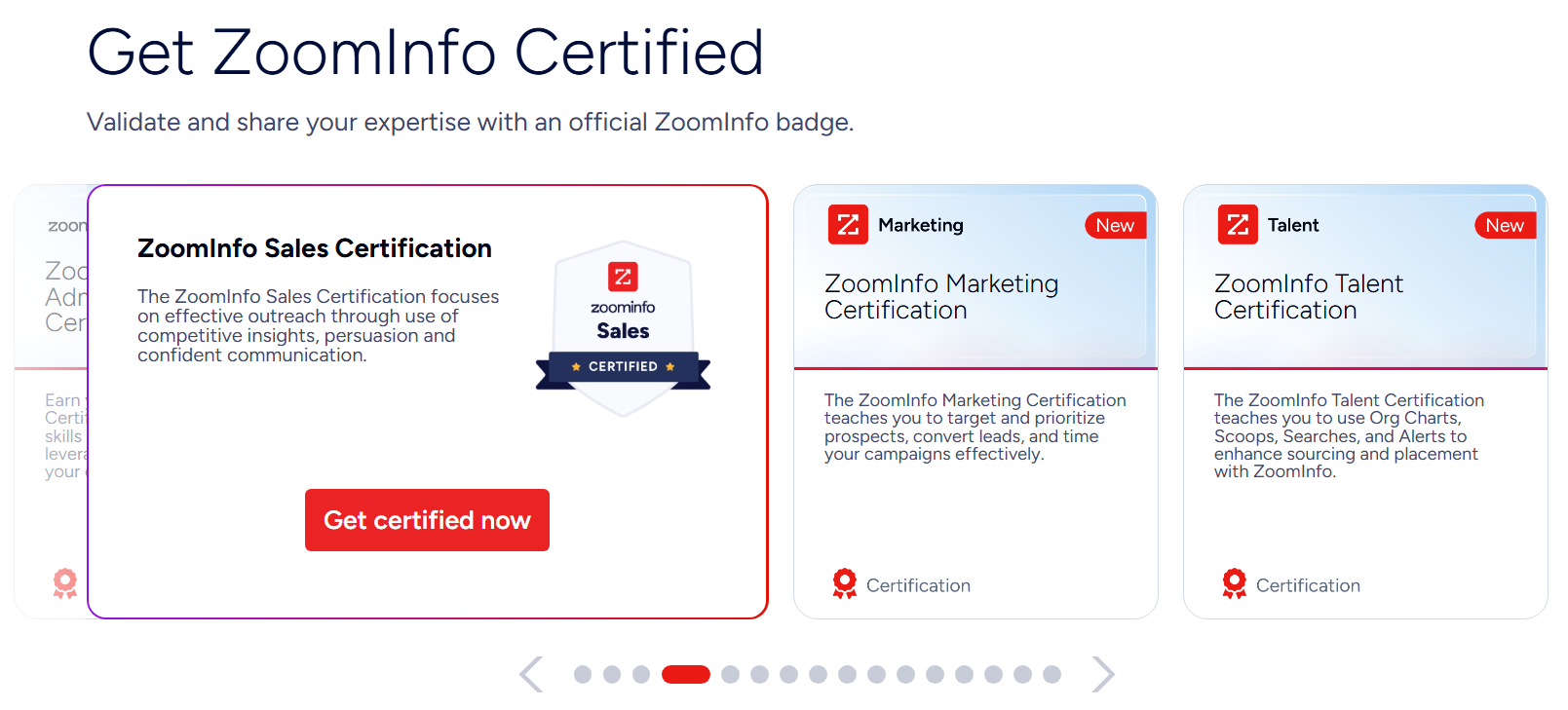
ZoomInfo University provides role-specific learning paths and product certifications.
Source: ZoomInfo
ActiveCampaign vs. Systeme.io vs. ZoomInfo: Which should you choose?
The right choice depends on what you're selling, who you're selling to, and what stage your business has reached.
Choose ActiveCampaign if:
You need marketing automation with behavioral triggers and branching logic
Your business runs on email marketing as a primary revenue channel
You want CRM and marketing automation in one platform without enterprise pricing
You're a B2B or B2C company with a growing contact list that demands precise segmentation
Cross-channel campaigns (email + SMS + WhatsApp) are part of your strategy
Integration with your existing tech stack (Salesforce, Shopify, Calendly, etc.) is important
Choose Systeme.io if:
You're a solopreneur, coach, or creator selling digital products or courses
You want funnels, email, courses, and affiliate management under one login
Budget is a primary concern and you need to minimize monthly tool costs
You're launching your first online business and want to get live quickly
You don't need advanced automation or extensive third-party integrations
Zero transaction fees matter for your margins
Add ZoomInfo if:
You're a B2B company and your pipeline depends on reaching the right accounts
You need verified contact data, direct dials, and business emails, not just opt-in subscribers
You want to know which companies are researching solutions like yours right now
Your marketing and sales teams need a shared intelligence layer, not just shared contacts
You want AI that understands deal context, not just campaign performance
You need your data to work across every tool in your stack, not just one platform
Explore ZoomInfo Lite for free or request a demo of the full platform.
ActiveCampaign and Systeme.io are both capable execution platforms, each built for a different buyer. But for B2B companies, execution without intelligence is guesswork at scale. ZoomInfo provides the data foundation that answers who, when, and why before any campaign is built, and delivers that intelligence into whatever tool your team already uses.
The most effective marketing stacks aren't built around a single tool. They're built around the right data.
ActiveCampaign vs. Systeme.io vs. ZoomInfo FAQ
What is the main difference between ActiveCampaign and Systeme.io?
ActiveCampaign is a marketing automation platform with a built-in CRM, designed for businesses that need email campaigns with behavioral triggers, branching automation logic, and third-party integrations.
Systeme.io is an all-in-one platform for solopreneurs and creators, bundling sales funnels, email marketing, online courses, communities, affiliate management, and a booking calendar under one account at a lower price. ActiveCampaign goes deeper on automation; Systeme.io goes wider on features.
Which platform is more affordable?
Systeme.io costs less, with a permanent free plan (2,000 contacts, unlimited email sends, 3 funnels, 1 course) and a paid Unlimited plan at $97/month covering unlimited contacts and features.
ActiveCampaign has no free plan, starts at $15/month for 1,000 contacts with limited automation, and scales based on list size, reaching $149/month for 10,000 contacts on the Starter plan alone.
For solopreneurs, Systeme.io's pricing is the clear advantage.
Can I use ZoomInfo with ActiveCampaign or Systeme.io?
ZoomInfo integrates directly with ActiveCampaign through its app marketplace, allowing verified B2B contacts, company data, and intent signals to flow into ActiveCampaign's automations and CRM.
Systeme.io lists ActiveCampaign as a native integration on its pricing page, and both ZoomInfo and Systeme.io offer public APIs and MCP server support for custom connections.
ZoomInfo's data works best with platforms that have strong automation and segmentation, making ActiveCampaign the more natural pairing for B2B use cases.
Which platform is best for selling online courses?
Systeme.io is the clear choice for course creators. It includes a full course platform with drip content scheduling, quizzes, assignments, student progress tracking, and mobile-friendly Light courses, all with zero transaction fees on every plan including free.
ActiveCampaign does not include course hosting and would require integration with a separate platform like Teachable or Thinkific. ZoomInfo does not address course creation.
How do the email marketing capabilities compare?
ActiveCampaign offers the most advanced email marketing, with a drag-and-drop editor, 250+ templates, AI-generated campaigns, conditional content blocks, predictive content selection via NLP, per-subscriber send-time optimization, and deliverability infrastructure including private network routing and dedicated IPs.
Systeme.io provides unlimited email sends on all plans with a basic editor, A/B subject line testing, and a five-tier managed IP pool system.
Both are functional; ActiveCampaign gives far more control over personalization and deliverability.
What does ZoomInfo do that ActiveCampaign and Systeme.io don't?
ZoomInfo solves the upstream data and intelligence problem. While ActiveCampaign and Systeme.io handle campaign execution (sending emails, building funnels, running automations), ZoomInfo identifies who to target using 500M contacts, 100M company profiles, 135M+ verified phone numbers, and buyer intent signals that track which companies are researching solutions.
Its GTM Context Graph processes 1.5 billion data points daily, revealing not just what happened in a deal but why, so AI can recommend the right next action. Neither ActiveCampaign nor Systeme.io provides B2B contact data, company intelligence, or intent signals.
Which platform has better automation for B2B lead nurturing?
ActiveCampaign is the stronger choice for B2B lead nurturing. Its visual automation builder supports unlimited actions with conditional branching, dynamic lead scoring that updates based on real-time behavior, CRM deal-stage triggers, and predictive sending that optimizes delivery per contact.
Active Intelligence AI agents can build entire nurture campaigns from a plain-language prompt.
Systeme.io's automation covers basic workflows with triggers, actions, and delays, but lacks the depth needed for multi-touch B2B nurture sequences with behavioral branching.
Is Systeme.io good for B2B businesses?
Systeme.io was designed for digital product creators, coaches, and solopreneurs, not B2B sales teams. Its strengths (course creation, funnel building, affiliate management, zero transaction fees) align with selling digital products directly to consumers.
B2B businesses that need CRM integration, advanced segmentation, lead scoring, or integration with sales tools will find Systeme.io limited.
For B2B, ActiveCampaign paired with ZoomInfo's data layer is a more effective combination.
Other ActiveCampaign matchups worth a look:
