
Choosing between ActiveCampaign and Klaviyo comes down to a question most comparisons skip: what kind of business are you running?
These platforms were built for different markets. The questions that matter:
Are you marketing to businesses, consumers, or both?
Is your revenue tied to an ecommerce store, or do you run a SaaS, services, or multi-channel operation?
Do you need automation workflows that work across industries, or ecommerce flows triggered by cart and purchase behavior?
How important is a built-in CRM for managing sales pipelines alongside your marketing?
Is the contact data feeding your campaigns accurate, verified, and complete?
Here's what we recommend:
ActiveCampaign is the marketing automation platform built for businesses across industries, from SaaS and professional services to ecommerce and education. Its visual automation builder handles conditional logic, multi-step nurture sequences, and behavioral triggers that adapt in real time.
With a built-in CRM, native SMS and WhatsApp messaging, and 1,000+ integrations, ActiveCampaign gives lean marketing teams a single platform for both marketing and sales. The trade-off: a real learning curve for advanced features, and pricing that climbs as your contact list grows.
Klaviyo is the B2C CRM built for ecommerce brands, particularly those on Shopify. Its Shopify integration, 60+ pre-built ecommerce flows, and unified customer profiles make it the default for DTC brands that need abandoned cart recovery, browse abandonment triggers, and predictive customer lifetime value modeling out of the box.
Klaviyo stores customer data with no look-back limits and serves 193,000+ brands in 80+ countries. But its strongest features require Shopify, its pricing scales sharply with list size, and its B2C focus leaves B2B teams underserved.
Both platforms handle marketing execution well. But for B2B teams, there's a problem neither solves: knowing who to target, when they're ready to buy, and how to reach them. The best automation can't compensate for incomplete contact data, missing decision-makers, or campaigns sent to the wrong accounts at the wrong time.
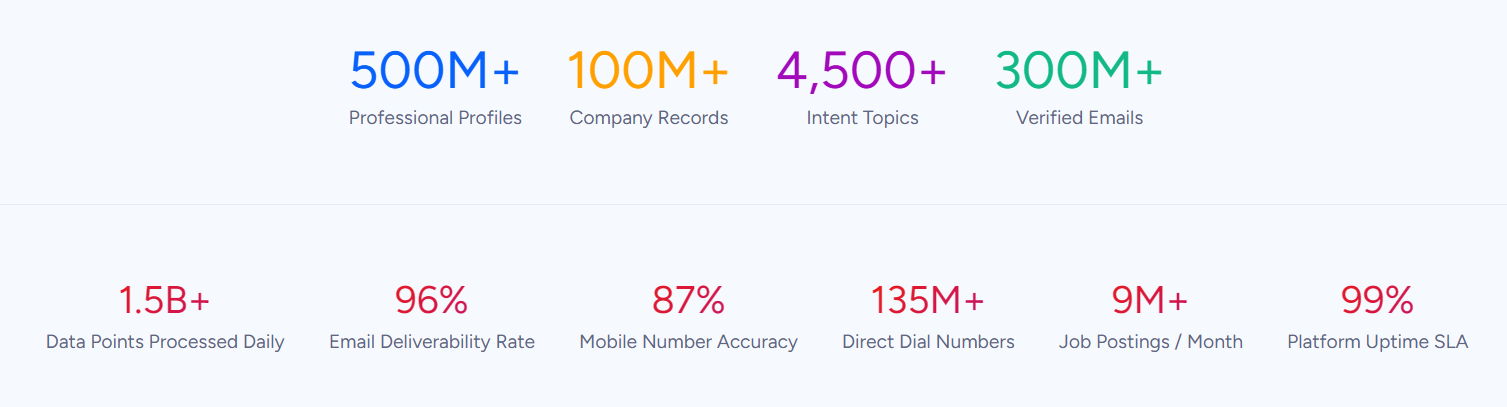
ZoomInfo is a B2B data and GTM platform built on a database of 500M contacts, 100M companies, 135M+ verified phone numbers, and 200M+ verified business emails. Its GTM Context Graph processes 1.5B+ data points daily, combining this data with your CRM records, conversation transcripts, and behavioral signals to map the full context of your accounts.
That context shows not just what happened, but why, and which accounts your marketing automation should target next. Your team can access this intelligence through GTM Workspace for sellers, GTM Studio for marketers and RevOps, or APIs and MCP in any front-end.
If you're running B2B marketing and want to see how verified data and intent signals improve your campaign performance, explore ZoomInfo's free trial.
ActiveCampaign vs. Klaviyo vs. ZoomInfo at a Glance
ActiveCampaign | Klaviyo | ZoomInfo | |
|---|---|---|---|
Primary focus | Marketing automation + CRM | B2C CRM for ecommerce | B2B data intelligence + GTM |
Automation | Visual builder with conditional logic | 60+ ecommerce-specific pre-built flows | GTM plays and signal-triggered workflows |
CRM | Built-in sales CRM with pipelines | B2C customer profiles (not traditional CRM) | B2B contact and company intelligence |
Channels | Email, SMS, WhatsApp | Email, SMS, RCS, WhatsApp, mobile push | Powers the data behind any channel |
AI capabilities | Active Intelligence (12+ agents) | K:AI (40+ features) | GTM Context Graph + AI agents |
Ecommerce depth | Standard integrations | Shopify-native | N/A (B2B focused) |
Free plan | No (14-day trial) | Yes (250 profiles, 500 emails/month) | Yes (ZoomInfo Lite) |
Starting price | $15/month (1,000 contacts) | Scales with profile count | Custom-quoted |
Integrations | 1,000+ | 350+ | 120+ native, plus API and MCP |
Best for | B2B and B2C businesses across industries | Ecommerce brands, especially Shopify | B2B teams needing verified contacts and buying signals |
ActiveCampaign wins on automation versatility
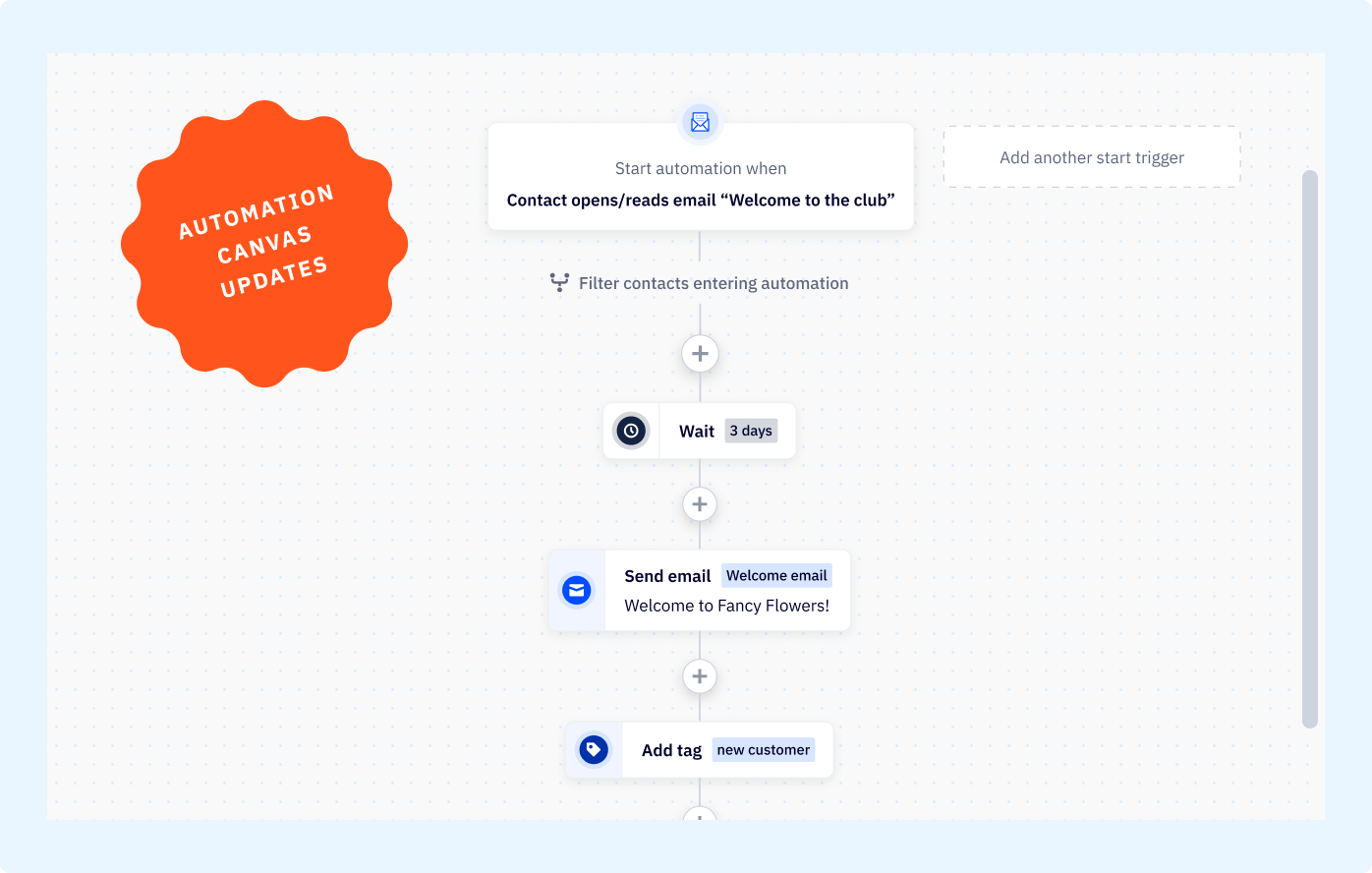
ActiveCampaign built its reputation on a visual automation builder that handles branching logic across any industry.
Source: ActiveCampaign
SaaS trial conversion flows, appointment reminder sequences, franchise marketing campaigns, post-purchase upsells: the builder supports them all with conditional splits, behavioral triggers, and multi-channel actions.
The depth is real. You can trigger different email sequences based on link clicks, tag changes, purchase behavior, or custom field values. Need to route a lead to a specific sales rep when their lead score crosses a threshold, then trigger a personalized email from that rep's address? ActiveCampaign handles that natively, with unlimited automation actions on Plus plans and above.
That versatility extends to the built-in CRM. Deals, pipelines, lead scoring, and automated task creation all live inside the same platform running your email and SMS campaigns. For B2B teams that need marketing and sales to share data without a separate integration layer, this closes the gap between "marketing qualified" and "sales ready."
ActiveCampaign's CRM tracks both lead scores and deal scores, so teams can measure "is this person a good lead?" and "is this deal likely to close?" as separate signals.
Klaviyo doesn't try to compete here.
It has automation workflows, but they're tuned for ecommerce events: cart abandonment, product views, order placement, price drops. If your business doesn't revolve around a product catalog and shopping cart, Klaviyo's pre-built flows won't map to your customer journey.
Klaviyo owns the ecommerce floor
Klaviyo was built from the ground up around ecommerce data: orders, carts, products, SKUs, price changes, stock levels. Every feature reflects this.
The Shopify integration goes beyond a standard connector.
Klaviyo is Shopify's preferred email marketing partner, and the relationship shows: real-time order syncing, browse behavior tracking, locale-aware catalogs for international stores, and customer profiles that carry complete purchase histories with no retention limits. For Shopify merchants, Klaviyo is the default recommendation for a reason.
The 60+ pre-built flow templates cover the ecommerce playbook: welcome series, abandoned cart, browse abandonment, post-purchase, back-in-stock alerts, price drop notifications, replenishment reminders, and win-back sequences.
Each flow includes conditional splits specific to ecommerce (cart value, VIP status, product category, acquisition source). You can launch a working abandoned cart flow in minutes, not hours.
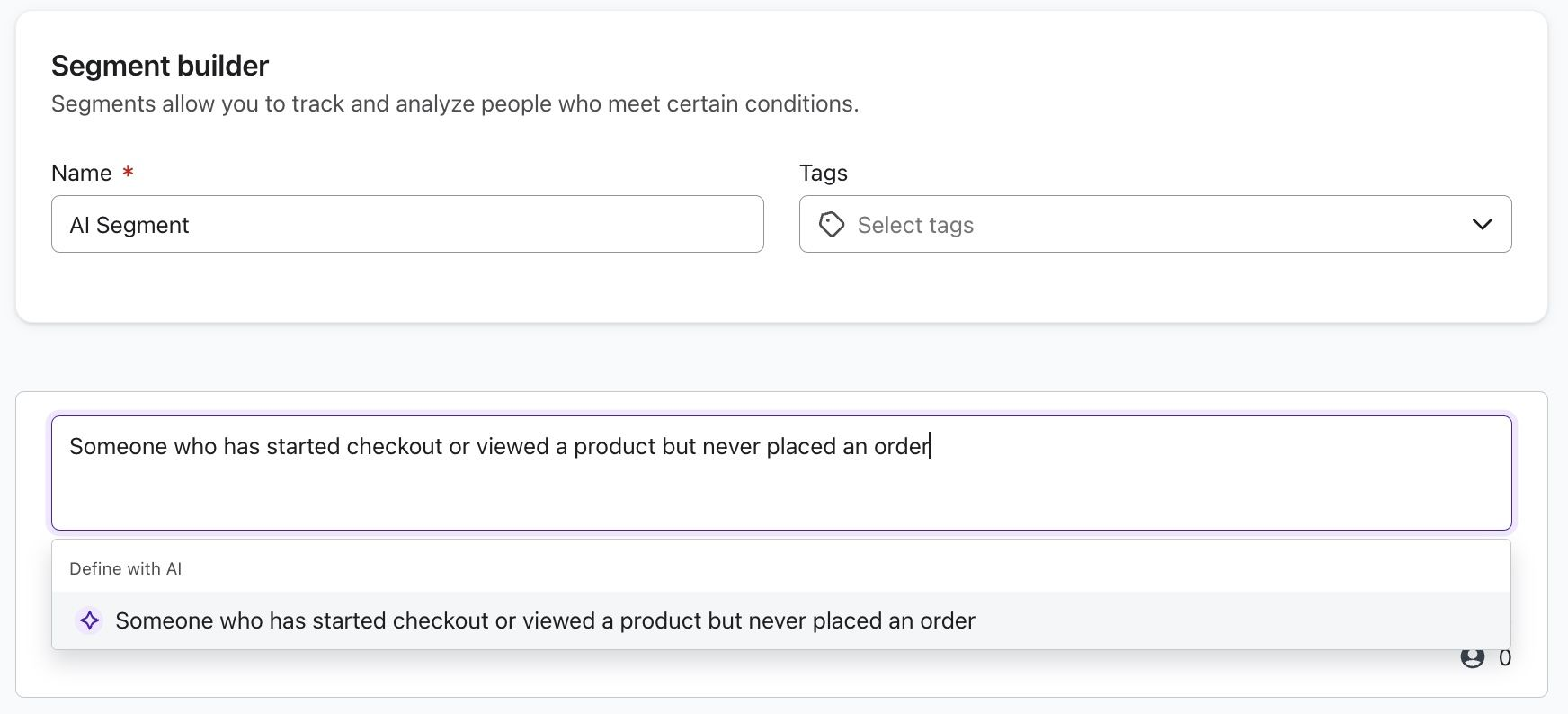
Klaviyo's segmentation engine reinforces this advantage. Segments update in real time based on any combination of behavioral, transactional, and predictive data, with no look-back limits. Need to target customers who bought from a specific product category during last year's holiday season, used a discount code, and haven't purchased since?
Source: Klaviyo
Klaviyo handles that query natively. Segments AI lets you describe the audience in natural language instead of configuring filters manually.
ActiveCampaign integrates with Shopify and WooCommerce, but at a standard level.
Ecommerce is one of many use cases it supports, not its foundation. For brands whose entire business runs through a storefront, Klaviyo's ecommerce depth is hard to match.
AI capabilities take different paths
Both platforms have invested in AI, but their approaches reflect their different audiences.
ActiveCampaign's Active Intelligence, launched May 2025, centers on autonomous marketing.
Instead of requiring marketers to prompt AI for individual tasks, Active Intelligence deploys goal-directed agents that build campaigns, suggest automations, generate segments, and optimize send times from a stated business objective.
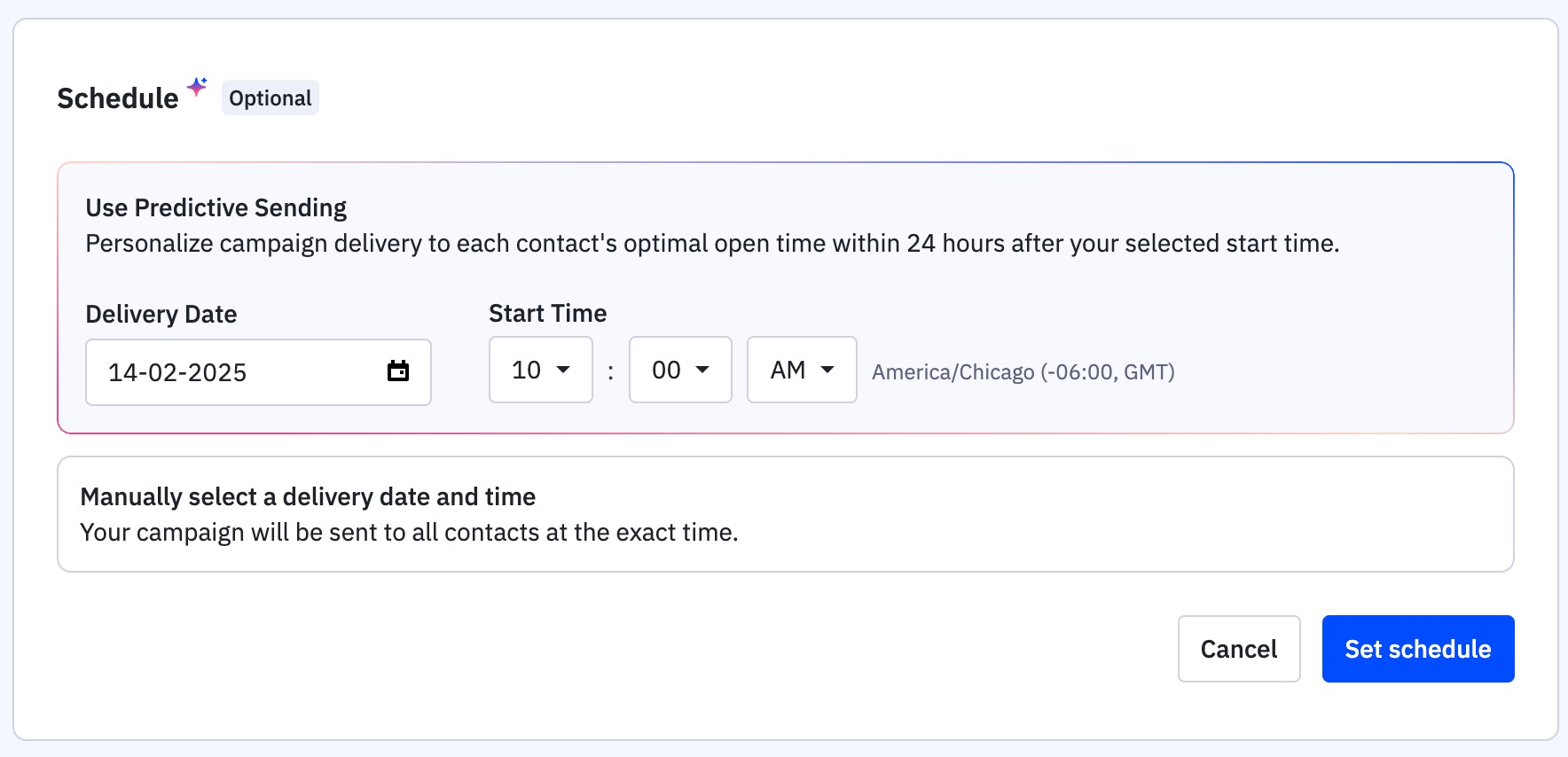
The AI Campaign Builder takes a plain-language prompt and generates a complete campaign (subject line, content, images, layout) in seconds. Predictive Sending optimizes delivery time per subscriber based on their engagement history, not just per list.
Source: ActiveCampaign
ActiveCampaign reports 34+ AI capabilities launched in 2025, though several agents (Forms, Personalization, Goals, Segments) remain in beta. The AI-Suggested Actions feature draws on billions of anonymized data points from similar businesses, creating a network effect where platform scale improves recommendations for individual accounts.
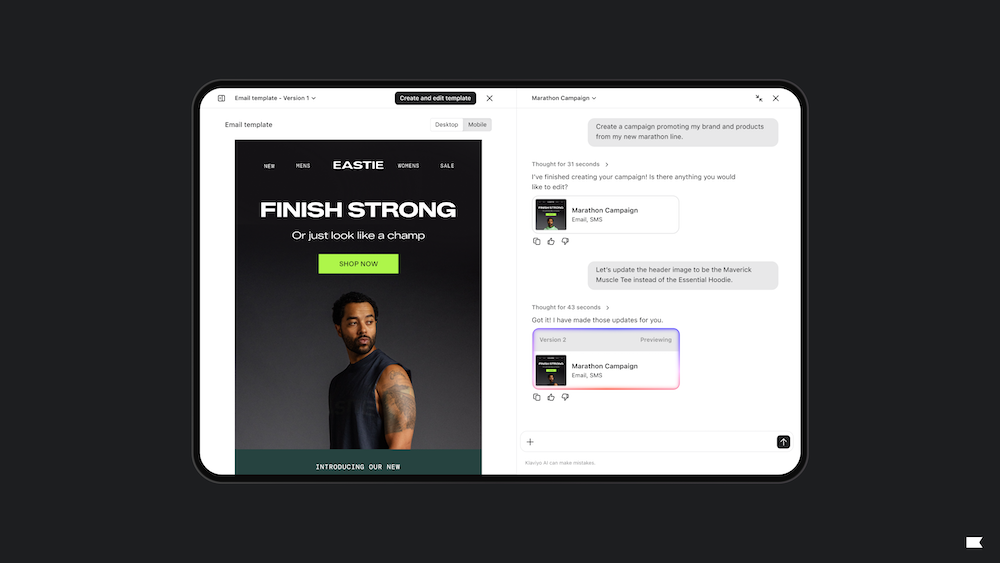
Klaviyo's K:AI suite includes over 40 AI features across predictive, assistive, and autonomous modes.
Source: Klaviyo
The standout is Marketing Agent: enter your website URL, and it analyzes your brand, product catalog, and tone, then generates on-brand campaigns, activates core flows, and launches signup forms.
Once live, it delivers weekly campaign recommendations without prompting. Customer Agent provides 24/7 AI customer support and in-chat product recommendations, including the ability for shoppers to add items to their cart from within the conversation.
Klaviyo has been building AI features since 2017, giving its predictive models (CLV forecasting, churn risk, next-order timing, Channel Affinity) a longer training history for ecommerce use cases. Both platforms include AI at no additional cost, and both offer MCP servers for connecting to external AI tools like Claude and ChatGPT.
Channel coverage: both go beyond email
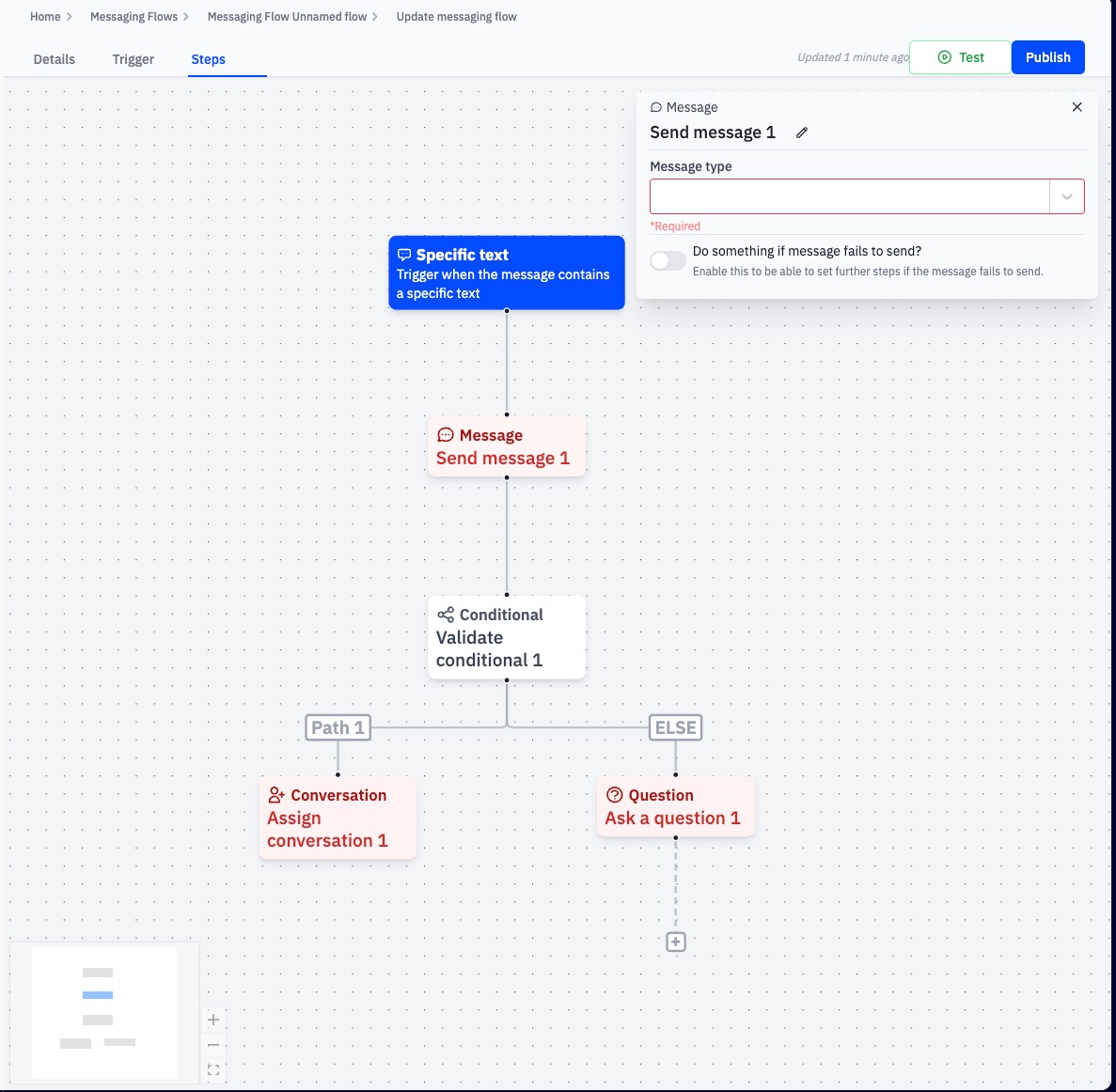
ActiveCampaign supports email, SMS, and WhatsApp as native channels, all orchestrated from the same automation builder.
Source: ActiveCampaign
WhatsApp arrived through the April 2025 Hilos acquisition and includes broadcast messaging, a no-code Flows builder for automated conversations, and a shared inbox for team responses. ActiveCampaign holds Meta Business Partner status for direct WhatsApp Business API access. SMS is available in 180+ countries with a two-way inbox for real conversations.
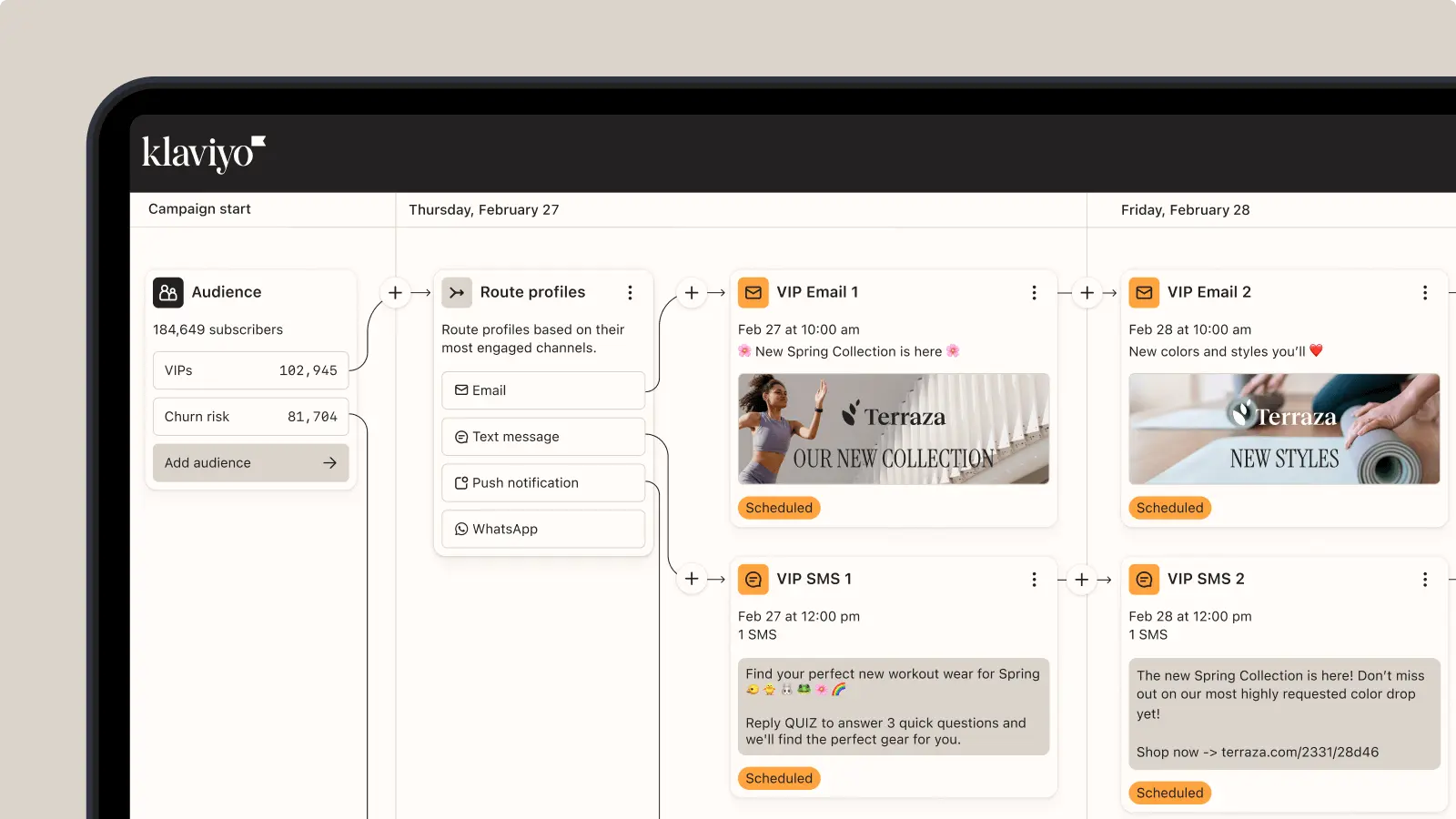
Klaviyo covers more channels: email, SMS/MMS, RCS for Business, mobile push notifications, WhatsApp, and social.
The Omnichannel Campaign Builder manages multi-channel campaigns from a single interface, and Channel Affinity AI learns each customer's preferred channel and routes messages accordingly. RCS for Business (in private beta) adds verified sender branding and rich media to text messaging. SMS is available in 22+ countries.
Source: Klaviyo
For ecommerce brands running campaigns across email, SMS, push, and social at once, Klaviyo's broader channel support and unified routing give it an edge. For B2B marketers who primarily need email plus SMS or WhatsApp for international markets, ActiveCampaign covers the essential channels without the overhead of mobile push and social.
For B2B marketing, the real gap is data
Here's what neither ActiveCampaign nor Klaviyo addresses: where do you get the contacts you're marketing to?
Both platforms assume you already have your list. They're execution engines. Upload your contacts, build your segments, trigger your flows.
But for B2B teams, the contact list is the hardest part: finding verified email addresses for decision-makers at target accounts, identifying which companies are researching your category, building a picture of the buying committee, and keeping all of it current as people change jobs and companies evolve.
This is the problem ZoomInfo solves.
Its B2B database covers 500M contacts, 100M companies, 135M+ verified phone numbers, and 200M+ verified business emails. ZoomInfo verifies this data through a collection system that includes 300+ human researchers and achieves 95% accuracy on first-party data.
In a Fortune 500 competitive RFP analyzing 25 million contacts across vendors, an independent consultant concluded that "no other competitor came even close."
The value goes beyond contact records. ZoomInfo's Buyer Intent data tracks signals from 210 million IP-to-Organization pairings to identify which companies are researching your category right now.
Guided Intent, exclusive to ZoomInfo, identifies the topics historically correlated with closed deals in your segment, instead of requiring you to guess which keywords to track. WebSights resolves anonymous website traffic to companies, surfacing buying team members with direct contact information.
This intelligence feeds directly into your marketing automation. Build a target list in ZoomInfo, export to ActiveCampaign, and trigger nurture sequences to contacts you know are real, at companies you know are in-market.
The difference between sending an email sequence to 500 scraped addresses (half of which bounce) and 500 verified decision-makers at companies showing intent signals is the difference between campaigns that waste budget and campaigns that generate pipeline.
SpringDB used ZoomInfo's enriched data to achieve 2x-3x increases in campaign conversions across channels, a 300% increase in database usability, and a 30-50% uplift in average deal size. (SpringDB)
For marketers building go-to-market plays at scale, GTM Studio lets you describe an audience in natural language, enrich it with first- and third-party data, and launch multi-channel campaigns directly. No engineering tickets, no manual list building. Expansion plays that used to take 3 weeks now launch in 30 minutes.
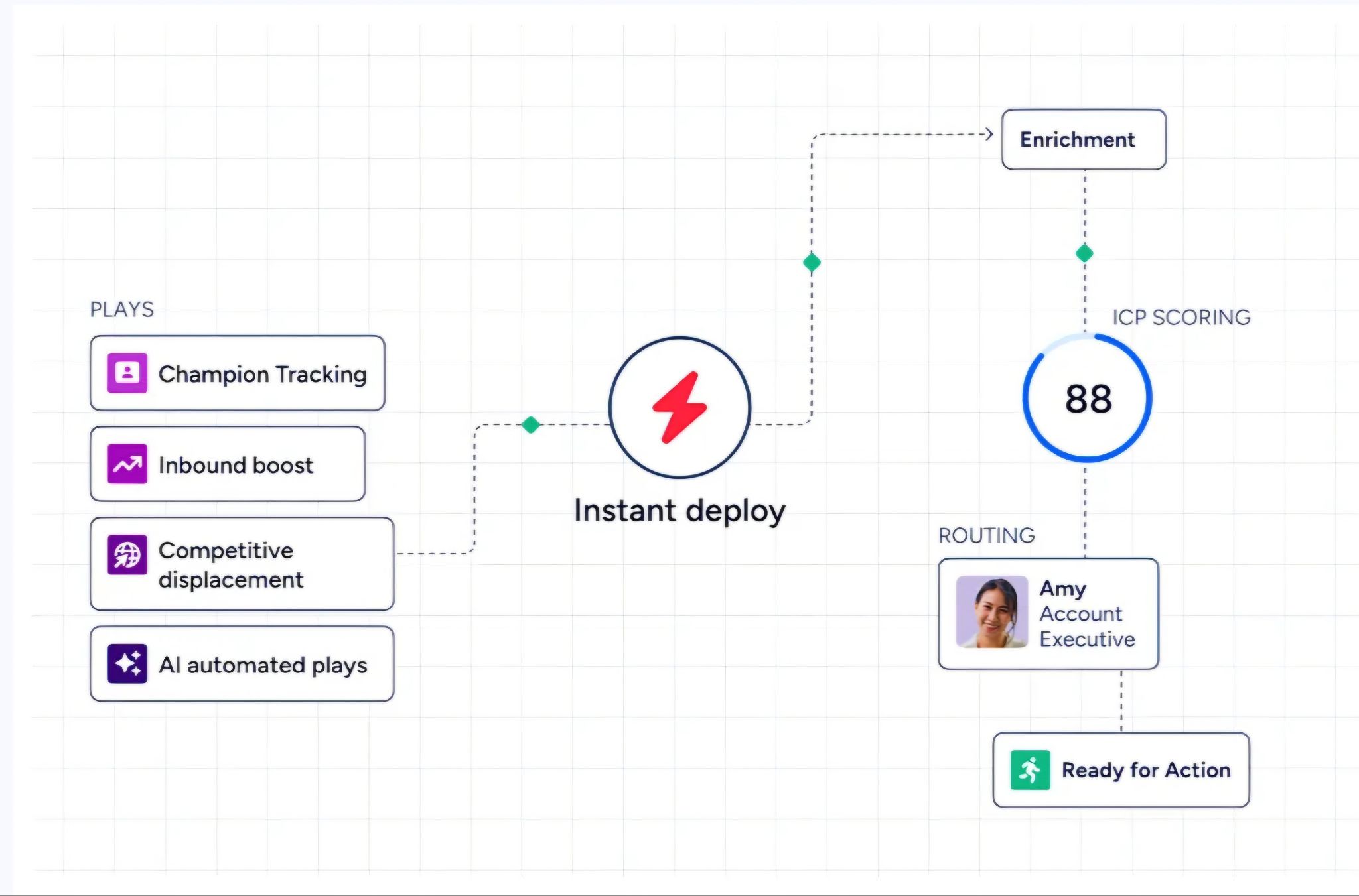
Source: ZoomInfo
ZoomInfo's APIs and MCP server push the same intelligence into any tool in your stack, including ActiveCampaign and other marketing automation platforms.
Deliverability and data quality
Getting emails delivered requires both a well-configured sending platform and clean contact data. ActiveCampaign and Klaviyo each invest in the sending side. ZoomInfo addresses the data side.
ActiveCampaign reports that 93% of surveyed customers see deliverability better than competitors.
The platform routes email through a private network with dedicated IP management, DKIM and DMARC authentication, and pre-warmed dedicated IPs. EmailToolTester named ActiveCampaign the Best Email Marketing Tool of 2025. Its Apple Mail Privacy Protection filter strips inflated open metrics from reporting, so your engagement data reflects actual human behavior.
Klaviyo provides deliverability tools including automated reputation repair, spam folder avoidance alerts, and deliverability score monitoring.
Enterprise customers get a Deliverability Strategist for proactive monitoring, audits, and quarterly reviews. Klaviyo's infrastructure is ISO 27001 certified and SOC 2 Type 2 audited, and handles peak traffic like Black Friday and Cyber Monday without degradation.
Both platforms handle sending infrastructure well. But deliverability depends on more than sending configuration. Bounces from invalid emails damage sender reputation, pushing future messages into spam folders.
This is where ZoomInfo's verified data matters most for B2B teams: starting with 200M+ verified business email addresses means fewer bounces, cleaner engagement metrics, and stronger sender reputation from day one.
Redwood Logistics reported a 99% reduction in CPC and 310% increase in CTR after using ZoomInfo's audience data to reach the right accounts with the right message. (Redwood Logistics)
Pricing models reflect different audiences
The pricing structures reveal each platform's target buyer.
ActiveCampaign uses contact-based pricing across four tiers: Starter, Plus, Professional, and Enterprise.
Starter begins at $15/month for up to 1,000 contacts but caps automations at five actions per workflow and excludes landing pages, conditional content, and advanced segmentation. At 10,000 contacts, Starter costs $149/month. Plus and Professional unlock the full automation builder and advanced features at higher price points.
ActiveCampaign charges once per unique contact regardless of how many automations or segments include that contact. There's no permanent free plan, but a 14-day free trial (no credit card required) and a 30-day money-back guarantee lower the risk.
Klaviyo scales by active profile count and email send volume.
The permanent free plan supports up to 250 active profiles and 500 monthly email sends, with access to all 350+ integrations, segmentation, flows, and Marketing Agent. Paid plans start when you exceed 250 profiles.
Klaviyo's pricing escalates as subscriber lists grow, a common friction point for fast-scaling brands. SMS credits, the Data + Analytics add-on, and the Service add-on are priced separately on top of the base plan. The free tier includes real functionality (not just a demo), making it the lower-risk starting point for small brands.
ZoomInfo uses consumption-based pricing with no published dollar amounts.
Costs scale with users, credits, features, and contract length. ZoomInfo Lite is a permanent free tier (no credit card, no time limit) providing access to the B2B database with 10 monthly export credits and website visitor identification. A separate 7-day free trial with expanded access is also available.
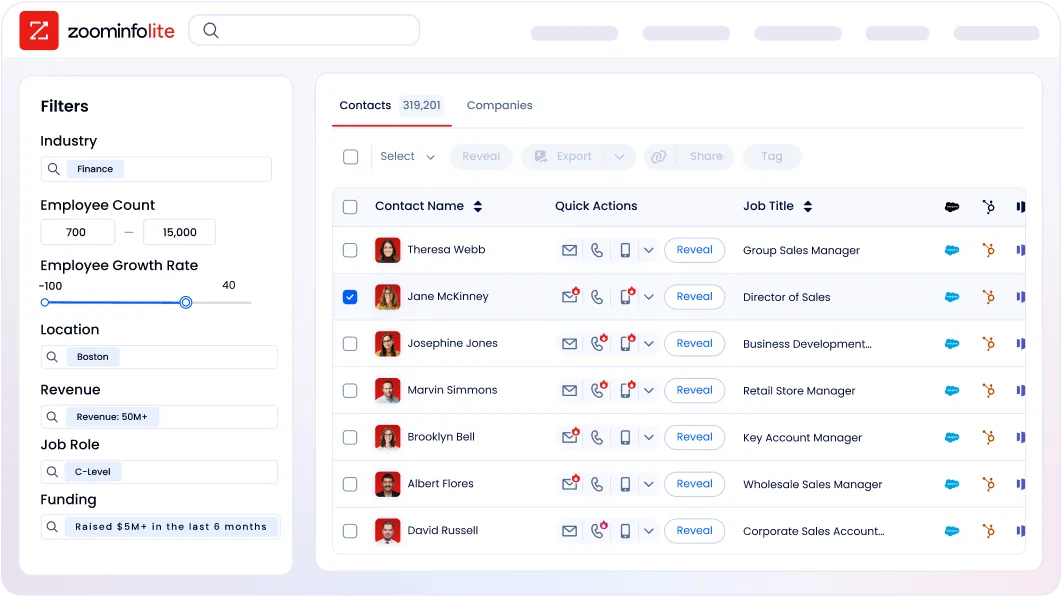
ZoomInfo costs more, but that investment pays off when your campaigns target verified contacts at in-market accounts instead of decaying lists.
ActiveCampaign vs. Klaviyo vs. ZoomInfo: Which Should You Choose?
The right choice depends on your business model, not a feature checklist.
Choose ActiveCampaign if:
You run a B2B company, service business, SaaS, or multi-industry operation
You need automation with branching logic across multiple use cases
A built-in CRM for managing sales pipelines alongside marketing is important
Your marketing spans email, SMS, and WhatsApp without heavy ecommerce requirements
You want a single platform for both marketing automation and lightweight sales management
Choose Klaviyo if:
You run a DTC or ecommerce brand, especially on Shopify
Your revenue depends on abandoned cart recovery, browse abandonment, and post-purchase flows
Predictive customer lifetime value, RFM analysis, and real-time segmentation are core to your strategy
You need mobile push notifications, RCS, and broad omnichannel coverage
You want a free plan to start with before committing to paid tiers
Use ZoomInfo alongside your marketing platform if:
You're a B2B team whose campaigns depend on reaching verified decision-makers at target accounts
You need buyer intent signals to prioritize which accounts to target now
Your current contact data has gaps, bounces, or stale information hurting campaign performance
You want to build audiences using company attributes, technographic data, and intent signals, then activate them through your marketing automation
You're building AI-powered GTM workflows that need accurate B2B data as their foundation
Explore ZoomInfo's free trial to see how verified data and intent signals improve your marketing ROI.
ActiveCampaign and Klaviyo are both strong marketing automation platforms that serve different markets. ActiveCampaign gives B2B and multi-industry businesses the automation depth and CRM integration they need. Klaviyo gives ecommerce brands the data-rich, Shopify-native experience they need.
For B2B teams using either platform, ZoomInfo provides the data layer that ensures your campaigns reach the right people at the right companies when they're ready to buy.
Impartner used ZoomInfo to achieve a 45% increase in website engagement and save 15 hours through automation. As Jeremy Melius, Sr. Director of Marketing Operations, put it: "ZoomInfo has literally changed the way we go to market." (Impartner)
ActiveCampaign vs. Klaviyo vs. ZoomInfo FAQ
What is the core difference between ActiveCampaign and Klaviyo?
ActiveCampaign is a marketing automation platform with a built-in CRM, designed for businesses across industries (B2B, SaaS, services, and ecommerce). Klaviyo is a B2C CRM built for ecommerce brands, with Shopify integration and ecommerce-specific features like abandoned cart flows, predictive CLV, and RFM analysis.
ActiveCampaign offers more automation versatility across use cases; Klaviyo offers more ecommerce depth.
Which platform is better for a B2B company?
ActiveCampaign is the stronger fit for B2B. Its visual automation builder handles complex nurture sequences, lead scoring, and sales handoff workflows, and its built-in CRM connects marketing activity to sales pipelines.
Klaviyo positions itself as a B2C platform, and its data model, pre-built flows, and segmentation logic are optimized for ecommerce transactions rather than B2B buying cycles.
B2B teams should also consider ZoomInfo as a complementary data layer for verified contacts and buyer intent signals.
How does ZoomInfo fit with ActiveCampaign or Klaviyo?
ZoomInfo is not a competitor to either platform. It provides the B2B data that feeds into marketing automation: verified contact information for 500M contacts, company attributes for 100M companies, buyer intent signals, and technographic data.
B2B teams use ZoomInfo to identify and enrich target accounts, then export those contacts into ActiveCampaign for nurture campaigns and automated outreach. ZoomInfo's APIs and MCP server connect its data to any tool in the stack.
Which platform has a better free plan?
Klaviyo offers a permanent free plan with up to 250 active profiles, 500 monthly email sends, access to all 350+ integrations, Marketing Agent, and basic Customer Hub and Helpdesk features.
ActiveCampaign has no permanent free plan, only a 14-day trial with a 30-day money-back guarantee on paid plans.
ZoomInfo offers ZoomInfo Lite, a permanent free tier with 10 monthly export credits, access to its B2B database, and website visitor identification, with no credit card or time limit.
Which platform is better for a Shopify store?
Klaviyo is the clear choice for Shopify merchants. It is Shopify's preferred email marketing partner, with native integration covering real-time order syncing, browse behavior tracking, locale-aware catalogs for international stores, and 60+ ecommerce-specific flow templates.
ActiveCampaign integrates with Shopify at a standard level but lacks the depth of Klaviyo's product-level segmentation and ecommerce-specific conditional logic.
How do the AI features compare between ActiveCampaign and Klaviyo?
ActiveCampaign's Active Intelligence includes 12+ AI agents focused on autonomous campaign creation, predictive sending, and goal-directed marketing. Several agents remain in beta.
Klaviyo's K:AI suite has over 40 features spanning predictive analytics, marketing automation, and customer service, with Marketing Agent and Customer Agent as the flagship autonomous tools. Both platforms offer AI at no extra cost. Klaviyo's AI has a longer training history in ecommerce (since 2017), while ActiveCampaign's covers more industries.
Can I use ActiveCampaign and Klaviyo together?
Running both creates duplicate costs and data synchronization problems. The better approach is choosing the platform that matches your business model (ActiveCampaign for B2B and multi-industry, Klaviyo for B2C ecommerce) and pairing it with specialized tools for specific needs, such as ZoomInfo for B2B data or dedicated analytics platforms for advanced reporting.
Which platform has better email deliverability?
Both platforms invest in deliverability infrastructure. ActiveCampaign reports that 93% of surveyed customers see deliverability better than competitors. EmailToolTester named it Best Email Marketing Tool of 2025. ActiveCampaign routes email through a private network and includes Apple Mail Privacy Protection filtering for accurate reporting.
Klaviyo provides deliverability tools including automated reputation repair, spam avoidance alerts, and dedicated Deliverability Strategists for enterprise customers. Both support dedicated IPs and domain authentication on paid plans.
Keep comparing ActiveCampaign:
