
Choosing between ActiveCampaign and Ontraport for marketing automation and CRM comes down to these questions:
Do you need AI that builds campaigns for you, or a single platform that also handles payments, membership sites, and a full CMS?
Is a large integration ecosystem important, or would you rather consolidate everything under one roof?
Are you selling digital products and subscriptions that need built-in payment processing, or do you handle transactions through separate tools?
How much do you value AI-generated campaigns versus a visual builder where you construct every step yourself?
If you're a B2B company: do you have a verified source of prospect data feeding your automation, or are you working from whatever contacts happen to come in?
In short, here's what we recommend:
ActiveCampaign is the marketing automation pick for businesses that want AI doing the work. Its Active Intelligence system builds complete campaigns from a plain-language prompt, optimizes send times per subscriber, and suggests audience segments you didn't know existed. With 1,000+ integrations, native email, SMS, and WhatsApp channels, and email deliverability that 93% of customers rate better than competitors, ActiveCampaign is the strongest marketing automation platform at the SMB and mid-market level. The built-in CRM covers basic sales pipeline needs but won't replace a dedicated sales tool, and the learning curve steepens once you move past basic automations.
Ontraport is the all-in-one platform for businesses that refuse to juggle multiple subscriptions. It combines CRM, marketing automation, payment processing (subscriptions, payment plans, decline recovery, affiliate tracking), a no-code CMS for membership sites and customer portals, and a shared inbox for team communication. If you run a coaching business, sell online courses, or manage a membership community, Ontraport handles the full lifecycle without third-party tools. The tradeoff: fewer integrations, a steeper learning curve, and no AI that matches ActiveCampaign.
Both platforms automate what happens after someone enters your database. But for B2B companies, the harder problem is often what comes before: identifying the right prospects, verifying their contact data, and knowing when they're ready to buy. That's a different kind of intelligence.
ZoomInfo is a B2B intelligence platform built on a data foundation of 500M contacts, 100M companies, 135M+ verified phone numbers, and 200M+ verified business emails. Its GTM Context Graph (an intelligence layer processing 1.5B+ data points daily) combines this data with your CRM records, conversation transcripts, and behavioral signals to show the full context of your accounts: not just what happened, but why. Whether you build automations in ActiveCampaign or pipelines in Ontraport, your team can reach that intelligence through the GTM Workspace for sellers, GTM Studio for marketers and RevOps, or APIs and MCP in any front-end.
If verified B2B intelligence sounds like the missing layer in your marketing stack, see how ZoomInfo works.
ActiveCampaign vs. Ontraport at a glance
ActiveCampaign | Ontraport | ZoomInfo | |
|---|---|---|---|
Core strength | AI-powered marketing automation | All-in-one business platform | B2B data intelligence and prospecting |
CRM depth | Lightweight, marketing-companion CRM | Full CRM with custom objects and pipelines | GTM-focused with conversation intelligence |
Native payments | No | Yes (subscriptions, plans, decline recovery) | No |
Membership sites / CMS | Basic landing pages | Full no-code CMS with customer portals | No |
AI capabilities | Active Intelligence with 12+ AI agents | Basic AI assistant add-on | GTM Context Graph with AI agents |
Integrations | 1,000+ | 80+ | 120+ marketplace partners, API, MCP |
Email channels | Email, SMS, WhatsApp | Email, SMS | N/A (not an email platform) |
Starting price | $15/month (1,000 contacts) | $29/month | Free tier (ZoomInfo Lite); consumption-based paid plans |
Free trial | 14 days, no credit card | 14 days, no credit card | 7-day trial + permanent free Lite tier |
Best for | Businesses needing automation + integrations | Businesses wanting everything consolidated | B2B teams needing verified prospect data |
Marketing automation: two different philosophies
ActiveCampaign and Ontraport both offer strong marketing automation, but they approach it from opposite directions.
ActiveCampaign bets on AI doing the work.
Its Active Intelligence system, launched May 2025 and called the fastest-growing feature in the platform's history, lets marketers describe a goal in plain language and receive a complete campaign: subject lines, content, images, audience segments, and send-time optimization.
The AI doesn't just generate content. It recommends automations based on billions of anonymized data points from similar businesses, optimizes per-recipient send times through Predictive Sending, and surfaces AI-Suggested Segments that uncover high-value audiences automatically.
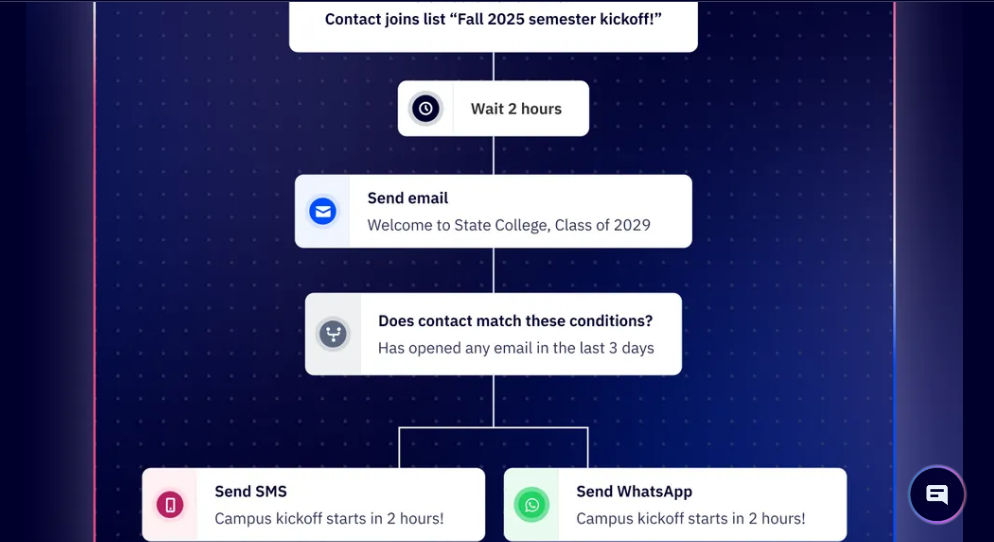
The automation builder is visual and supports unlimited actions on Plus plans and above, with conditional branching, split testing, and triggers based on nearly any behavior (email opens, site visits, purchases, form fills, tag changes).
Source: ActiveCampaign
Ontraport takes the architect's approach.
Its Campaign Builder is a visual canvas where you map complete funnels using goals, conditions, forks, split tests, webhooks, and notifications. No AI builds campaigns for you. Instead, you get granular control over every branch and decision point, with the ability to split-test entire campaign systems and business processes, not just individual emails or landing pages.
Ontraport's automation stands out through its connection to payments and CRM.
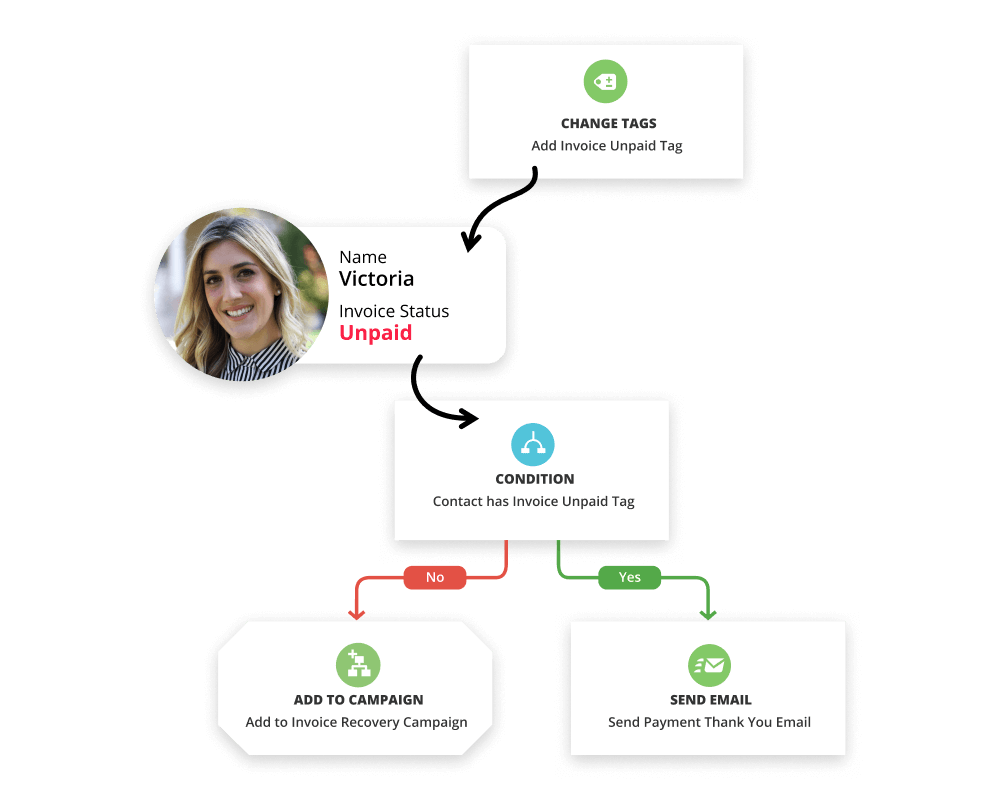
A purchase, a declined credit card, a subscription renewal, a page visit, a call outcome, or any CRM field change can trigger an automation. This matters for businesses with complex customer lifecycles. An online course creator, for example, can build one automation that enrolls a student after payment, drips course content on a schedule, revokes access if a payment fails, sends a recovery sequence, and re-grants access when the card is updated.
Source: Ontraport
Ontraport also offers Campaign Performance Mode, which shows funnel-level conversion data on the campaign canvas, connecting ad spend to revenue in the same view where you build campaigns.
The difference is philosophical.
ActiveCampaign wants to build the campaign for you with AI. Ontraport wants to give you the tools to build exactly what you envision. If you value speed and AI-assisted creation, ActiveCampaign has the edge. If you need automation tied to payment events and content access, Ontraport handles that natively.
CRM: marketing companion vs. full business system
ActiveCampaign's CRM works best as a marketing companion.
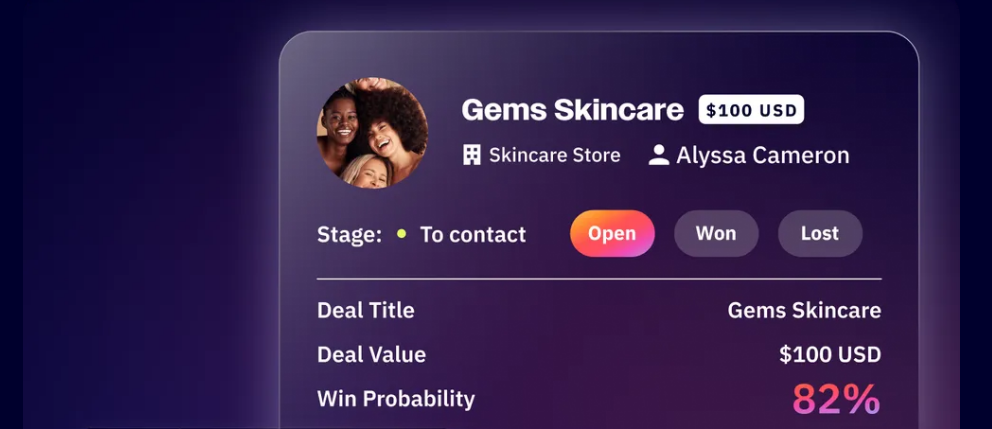
It provides visual Kanban pipelines, deal tracking, lead and deal scoring, automated task creation, and tracked email from deal records. Because the CRM lives in the same platform as email marketing and automation, deal records carry the full behavioral history of each contact without integration. Sales routing assigns deals by round-robin, expertise, lead score, or geography, and Active Intelligence surfaces win probability scores to help reps prioritize.
For a marketing team that also manages a basic sales pipeline, this works well. But users who need advanced pipeline forecasting, territory management, or deal analytics often find it insufficient next to dedicated sales tools. The CRM complements the automation engine; it isn't the platform's center of gravity.
Source: ActiveCampaign
Ontraport's CRM is the center of gravity.
It supports multiple simultaneous pipelines with two-way automation sync (dragging a card triggers automation; automation moves cards in real time), custom objects with one-to-one, one-to-many, and many-to-many relationships, and a unified contact history that logs every interaction chronologically.
Custom objects are Ontraport's biggest CRM differentiator.
The platform calls itself the "only non-enterprise CRM" with custom objects, noting that HubSpot charges $2,000+/month for equivalent capability. Custom objects let businesses model any entity (courses, lessons, properties, applications, tickets) and link them to contacts through defined relationships. For businesses whose data doesn't fit the standard contact-and-deal model, this matters.

Source: Ontraport
Ontraport also offers lead scoring with time-decay (scores drop when engagement goes stale), task automation with outcome-branching (a voicemail triggers a different follow-up than a booked appointment), and four contact views: Card, List, Quick View, and full Contact Record.
ActiveCampaign's CRM fits marketing-driven sales processes. Ontraport's CRM fits businesses that need it as the operational core for managing customer relationships, payments, and content delivery in one system.
For B2B teams: the data layer both platforms leave open
Both ActiveCampaign and Ontraport are built around contacts who come to you: form fills, purchases, sign-ups, inbound inquiries. They handle what happens after that first touch well. But for B2B companies running outbound sales or account-based marketing, both platforms share a fundamental gap: they have no source of external prospect data.
You can build the most sophisticated automation in either platform. If your contact database is incomplete (missing decision-makers at target accounts), inaccurate (wrong emails, outdated job titles), or poorly targeted (wrong companies entirely), those automations underperform. A nurture sequence converts only if it reaches the right person. A segmentation strategy works only if you have enough verified data to segment meaningfully.
This is the problem ZoomInfo solves.
As a B2B intelligence platform, ZoomInfo provides the data layer that feeds your marketing automation with verified, targeted prospect data.
The data foundation spans 500M contacts, 100M companies, 135M+ verified phone numbers, 120M direct dials, and 200M+ verified business email addresses. Data accuracy reaches up to 95% on first-party data, maintained by automated ML scanning of 28 million site domains daily, third-party partner data covering 95 million businesses, and 300+ human researchers.
In a Fortune 500 competitive RFP analyzing 25 million contacts across vendors, the independent consultant concluded that "no other competitor came even close."
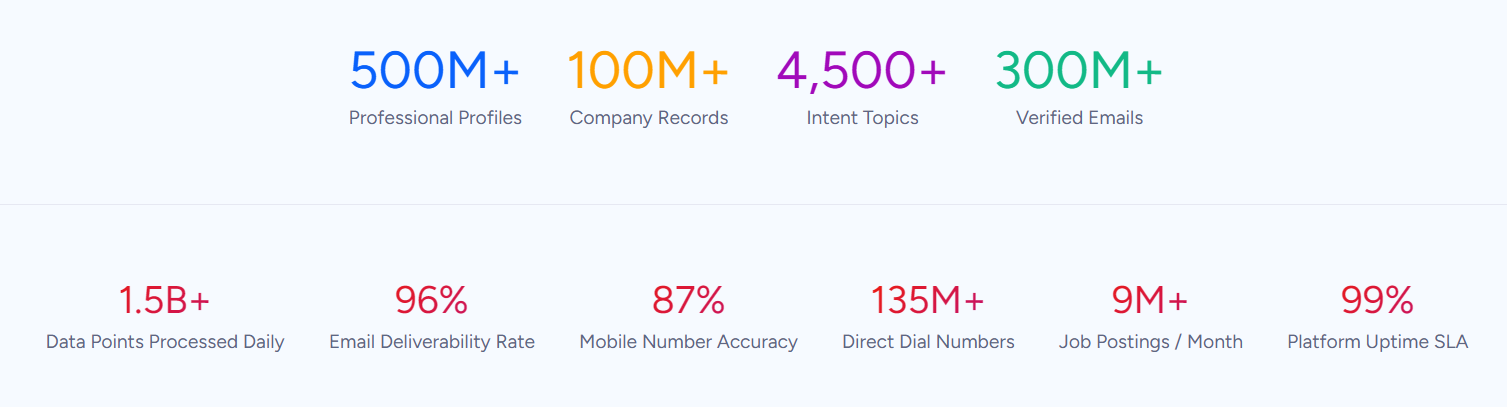
Source: ZoomInfo
Contact data is the starting point.
ZoomInfo's GTM Context Graph (processing 1.5B+ data points daily) combines that data with your CRM records, conversation transcripts, and behavioral signals to show not just who your prospects are, but when they're ready to buy.
Buyer Intent data tracks signals from 210 million IP-to-Organization pairings and 6 trillion+ new keyword-to-device pairings monthly, identifying companies actively researching solutions in your category before they visit your website or fill out a form. Guided Intent, exclusive to ZoomInfo, identifies topics historically correlated with your deal success rather than requiring manual topic selection.
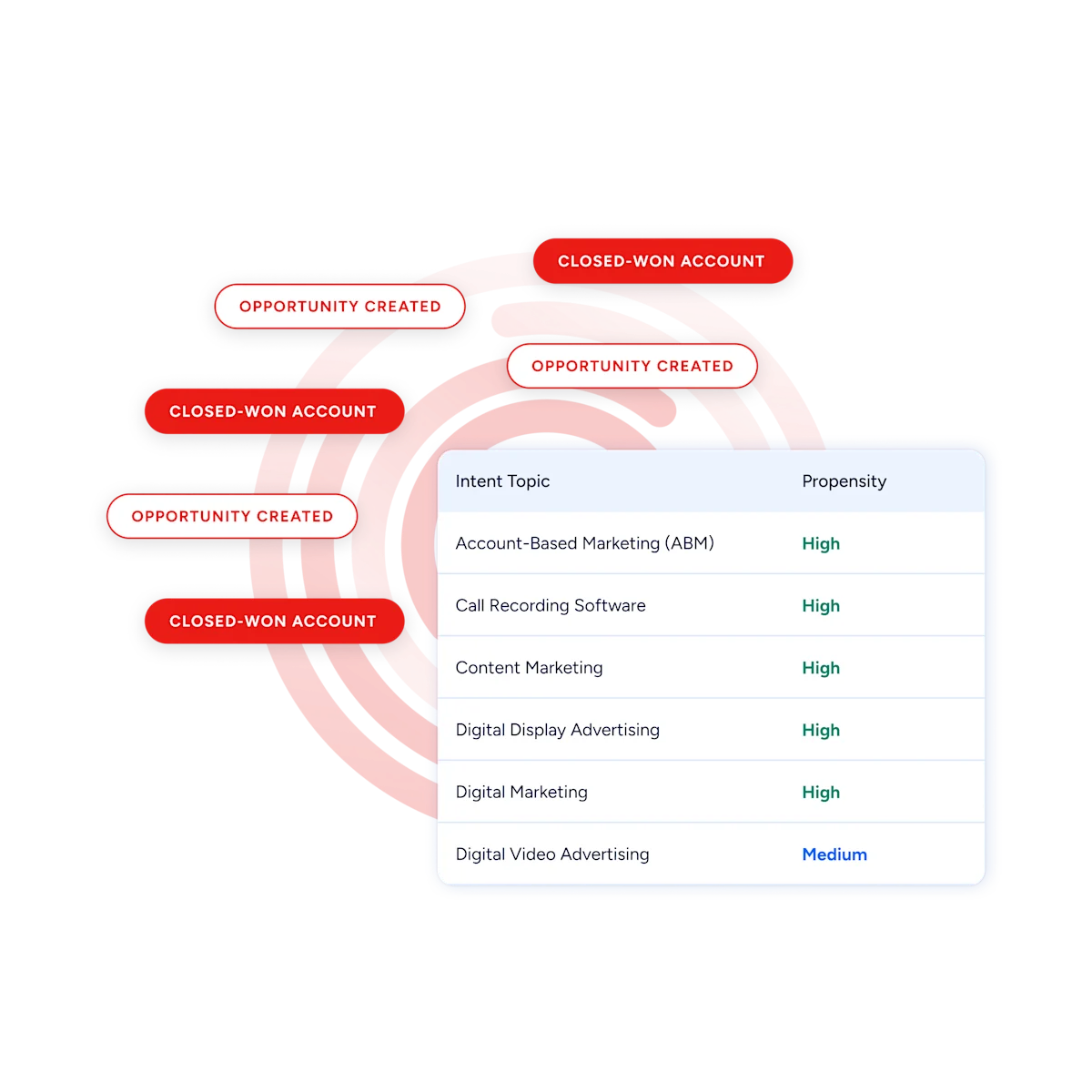
Source: ZoomInfo
For B2B teams using ActiveCampaign or Ontraport, the workflow is direct: ZoomInfo identifies ideal prospects at in-market companies, verifies their contact information, and surfaces buying signals. You export those contacts into your marketing automation platform, where they enter targeted nurture sequences built around the behaviors and intent data ZoomInfo uncovered.
The result: your automation targets verified decision-makers at companies showing active buying intent, rather than waiting for whoever fills out a web form.
ZoomInfo delivers this intelligence three ways: GTM Workspace for sellers who need AI-drafted outreach and deal execution in one screen, GTM Studio for marketers and RevOps who need to build audiences and launch plays without engineering tickets, and APIs and MCP for teams that want ZoomInfo's intelligence inside any third-party tool or AI agent.
"It's not just the data itself. It's more about the right data at the right time to help us reach out with the right message across that full buyer journey." (Redwood Logistics)
Ontraport includes what ActiveCampaign doesn't: payments, CMS, and affiliate tracking
This is where the platforms diverge most sharply.
ActiveCampaign does not process payments.
It integrates with Shopify, WooCommerce, and Stripe through its marketplace, but the transactions happen in those external tools. ActiveCampaign's value is in what happens around the transaction: abandoned cart recovery, post-purchase sequences, upsell automations, and retention workflows.
Ontraport processes payments natively.
Its payment system supports subscriptions, payment plans, one-time fees, and complex offer structures. Because payments connect to the CRM and automation engine, businesses can build workflows that grant or revoke content access based on payment status, send decline recovery sequences when a card fails, and offer one-click upsells and order bumps at checkout without making customers re-enter payment information.
The system is PCI DSS Level 1 certified and includes a Stripe integration for modern checkout.
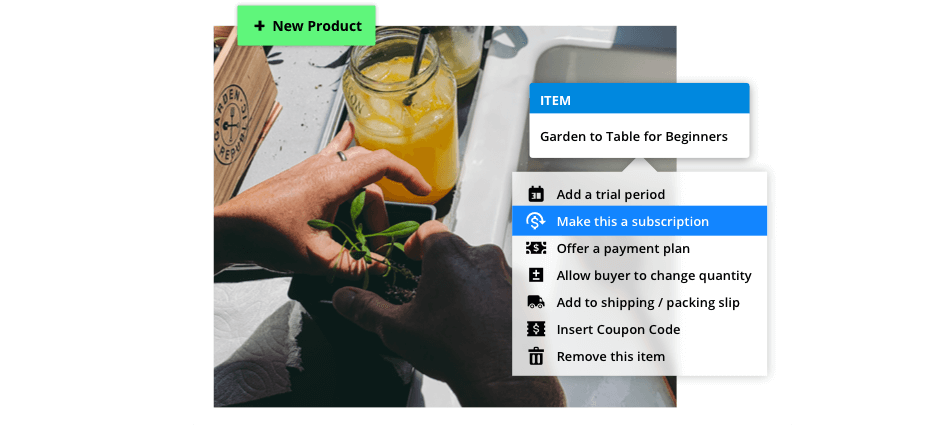
Source: Ontraport
Ontraport also includes partner and affiliate tracking with commission management and a partner analytics dashboard. ActiveCampaign has no equivalent.
The CMS gap is equally significant.
ActiveCampaign offers a landing page builder, but it's designed for conversion pages, not full websites or web applications. Users consistently flag limited page and form customization as a weakness.
Ontraport's Dynamic CMS is a no-code web app builder. It connects custom object records to page templates, so a single template renders different content for each record (one course page template, populated differently for each lesson). Businesses use it to build customer portals, membership sites, online courses, and directories without developers.
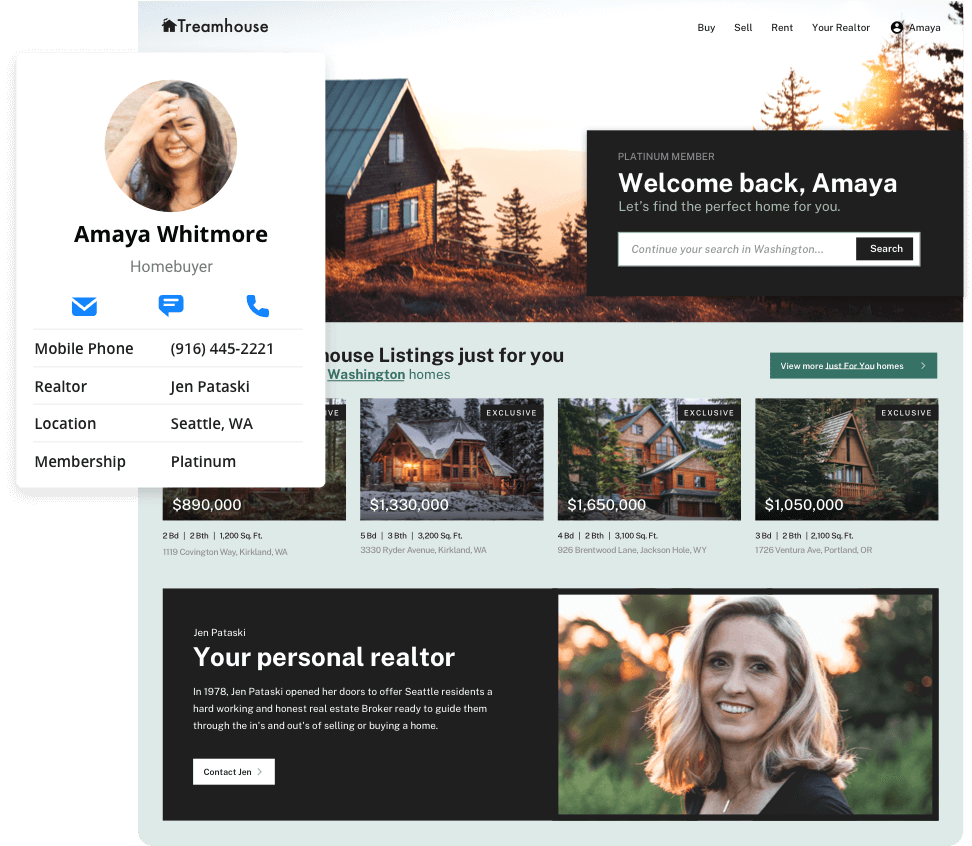
Source: Ontraport
Membership sites gate content by purchase status, subscription tier, or tag. Payment, access control, and content delivery all live in one system.
For businesses selling digital products, courses, or memberships, this consolidation is Ontraport's clearest advantage. ActiveCampaign users building similar experiences typically need Teachable or Thinkific for courses, a membership plugin for gated content, and a separate payment processor, then must connect everything through integrations.
AI capabilities: ActiveCampaign leads, Ontraport trails
ActiveCampaign has made AI its primary bet.
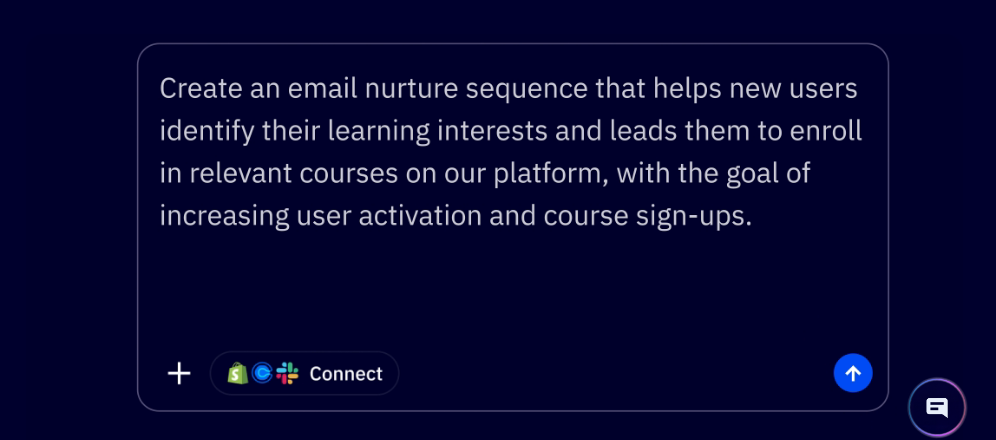
Active Intelligence includes 12+ specialized AI agents covering campaign creation, automation building, segmentation, content generation, image generation, translations, form building, personalization, and analytics. The system follows three phases (Imagine, Activate, Validate) where marketers state a goal and AI agents handle strategy, execution, and optimization.
Key AI capabilities include:
AI Campaign Builder: generates complete campaigns (subject lines, preheaders, body, CTAs, images) from a single prompt
AI-Suggested Segments: analyzes audience data and creates segments automatically
Predictive Sending: picks the optimal send time per subscriber based on engagement history
AI Brand Kit: imports brand assets (logos, fonts, colors) from a website URL
AI Content Generator: produces email sequences, subject lines, SMS campaigns, and landing page copy
AI Image Generator: creates visuals matching campaign goals and brand voice
AI Translations: translates content while preserving brand voice and cultural nuance
MCP connectors for Claude and ChatGPT: lets external AI assistants query campaign stats, update contacts, and trigger automations through natural language
Source: ActiveCampaign
ActiveCampaign was the first marketing platform in Claude's official connector directory. Several agents (Forms, Personalization, Goals, Segments, Campaigns, Automations) remain in beta as of early 2026, so reliability varies.
But the scope of AI investment is clear: ActiveCampaign wants AI to build, optimize, and manage campaigns so marketers set goals rather than configure workflows.
Ontraport offers an AI Assistant as a paid add-on within the Campaign Builder. It helps with content creation and sales call transcript analysis. Beyond that, Ontraport has no AI-powered campaign creation, predictive send-time optimization, AI-generated segments, or AI analytics.
For marketers who want AI to multiply their output, ActiveCampaign is the clear choice. For those who prefer full manual control, Ontraport avoids AI dependency.
Integration ecosystems reflect different strategies
ActiveCampaign's app marketplace lists over 1,000 integrations: Shopify, WooCommerce, WordPress, Salesforce, Slack, Stripe, Calendly, Google Ads, Facebook, Zapier, Make, Clay, and hundreds more.
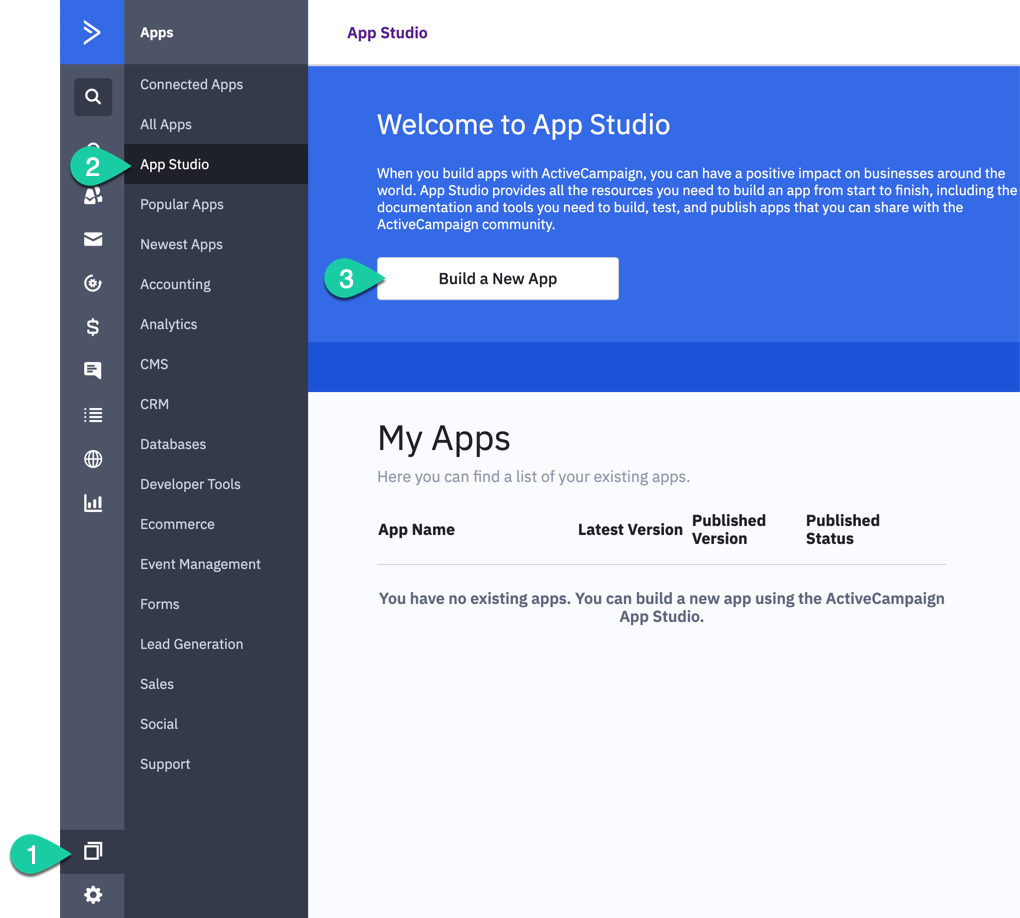
Forty new integrations were added in 2025 alone. A full REST API, webhook system, and an App Studio for building custom integrations round out the developer tooling. The API supports 5 requests per second and covers contacts, deals, campaigns, automations, segments, SMS broadcasts, WhatsApp templates, and custom objects.
Source: ActiveCampaign
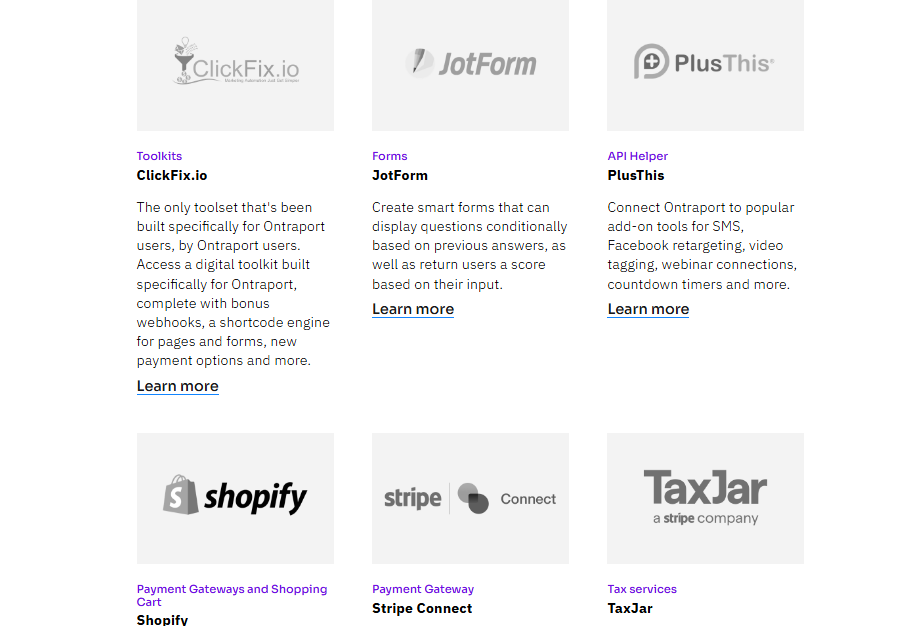
Ontraport's integrations page lists 80+ integrations across 22 categories. Key connections include Stripe Connect, Facebook Custom Audiences, Zoom, JotForm, and several iPaaS platforms (Make, LeadsBridge, Zapier).
Ecosystem-specific tools like PlusThis and ClickFix.io extend connectivity for SMS, Facebook retargeting, and additional payment options. Ontraport's REST API covers nearly every object in the platform with no monthly request limits and a 180-request-per-minute rate cap. An official PHP client library and a live API testing interface are available.
Source: Ontraport
The practical difference: ActiveCampaign assumes your tech stack includes multiple specialized tools and builds bridges to all of them. Ontraport assumes you want fewer tools and builds the functionality itself.
Multiple G2 reviewers note that Ontraport "doesn't connect with a lot of other platforms" compared to competitors. For teams that rely on specific third-party tools, ActiveCampaign connects more easily. For teams consolidating onto one platform, Ontraport's thinner integration layer matters less because the features that would require integration elsewhere are already built in.
Email deliverability: both platforms take it seriously
Email deliverability separates marketing tools that generate revenue from those that generate spam complaints. Both ActiveCampaign and Ontraport invest here, through different infrastructure models.
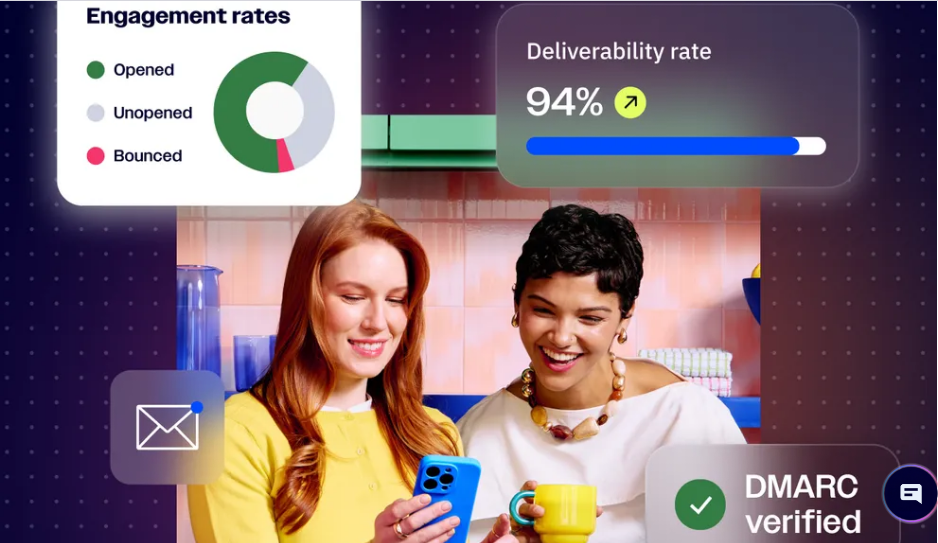
ActiveCampaign reports 99.88% email deliverability (independently measured at 94% by EmailToolTester, which also named it the Best Email Marketing Tool of 2025).
The platform routes emails through a private network rather than the public internet, cutting average send time by 10x. It offers dedicated IP management, DKIM and DMARC authentication, pre-warmed dedicated IPs, and a free DMARC testing tool. ActiveCampaign also provides Apple Mail Privacy Protection filtering to strip inflated open metrics from reporting, and BotSense to remove bot click activity from engagement data.
Source: ActiveCampaign
Ontraport has managed its own delivery infrastructure since 2004, building every component from composition to reporting internally rather than routing through third-party providers like SendGrid. SPF, DKIM, and custom sending domains are available at every plan level.
Private IPs and dedicated IP pools are available for high-volume senders. An in-house postmaster team reviews deliverability problems directly, and the platform handles hundreds of millions of emails per month.

Source: Ontraport
Both approaches work. ActiveCampaign's AI-powered features (Predictive Sending, BotSense, Apple MPP filtering) give it an edge in optimizing for modern inbox environments. Ontraport's proprietary infrastructure gives it direct control over every link in the delivery chain, with a postmaster team accessible at every plan level.
Pricing: different models, different math
ActiveCampaign uses contact-based pricing where cost scales with the number of contacts in your account. The company charges once per unique contact regardless of how many automations or segments that contact appears in.
Starter: $15/month at 1,000 contacts, maxing at 25,000 contacts. Limited to 5 automation actions and 1 user. At 10,000 contacts, Starter costs $149/month.
Plus: Unlocks unlimited automation actions, landing pages, AI content generation, and multichannel automation.
Professional: Adds predictive sending, conditional content, revenue attribution, and 3 user seats.
Enterprise: Custom pricing. Adds SSO, HIPAA support, premium CRM integrations (Salesforce, Microsoft Dynamics 365), and a dedicated account team with 5 user seats.
A 14-day free trial (no credit card required) and 30-day money-back guarantee reduce switching risk. One detail worth watching: G2 reviewers report that pricing has increased over recent years and climbs quickly as contact lists grow.
Ontraport uses flat-fee tiers with contact limits:
Basic: $29/month (email, SMS, web pages, forms)
Plus: $99/month (adds payments, memberships, advanced CRM)
Pro: $149/month (adds marketing tracking, partner programs, advanced customization)
Enterprise: $299/month (unlimited contacts and features)
Annual billing gives you two months free. A 14-day free trial with no credit card required is the standard entry point.
Both platforms cost more than the base price once you add features.
Ontraport bills separately for add-on features including Dynamic CMS, AI Assistant credits, bulk email packages, Shared Inbox, SMS, and Single Sign-On. ActiveCampaign has add-on pricing for SMS credits, WhatsApp credits, Transactional Email, and additional user seats. One contractual detail: Ontraport's terms include a 3% annual price increase on each anniversary of the sign-up date.
ZoomInfo uses consumption-based pricing with no published dollar amounts.
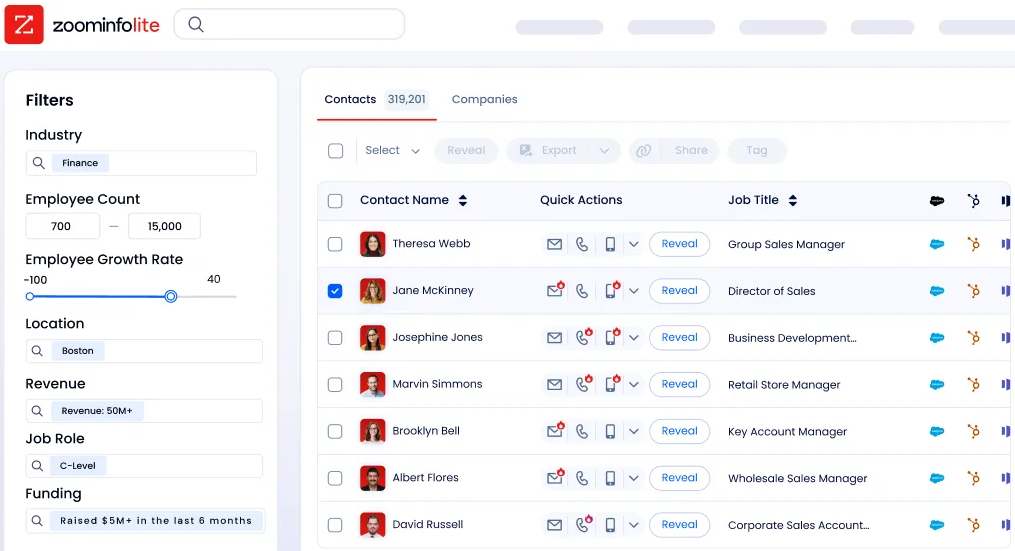
A permanent free tier, ZoomInfo Lite, provides access to the B2B database with 10 monthly export credits, individual and company searches, a Chrome extension, built-in email sending, and HubSpot integration. A separate 7-day free trial of paid features is also available. Paid plans scale around enterprise license agreements, data access, API consumption, and AI activity.
Source: ZoomInfo
ActiveCampaign vs. Ontraport vs. ZoomInfo: Which should you choose?
The right choice depends on what problem you're solving and what kind of business you run.
Choose ActiveCampaign if:
Marketing automation is your primary need and you want AI to accelerate campaign creation
You run an e-commerce store, SaaS product, or service business that needs multi-channel automation across email, SMS, and WhatsApp
You already use specialized tools (Shopify, Stripe, Calendly, WordPress) and need a platform that integrates with all of them
You want a community of 180,000+ members and access to 1,000+ integrations
You value the safety net of a 30-day results guarantee for new customers
Choose Ontraport if:
You want CRM, marketing automation, payments, membership sites, and a CMS in one platform
You sell digital products, online courses, coaching programs, or subscriptions
You need native payment processing with decline recovery, affiliate tracking, and complex offer structures
You value custom objects and a CRM that models your business data at non-enterprise pricing
You prefer full manual control over every automation rather than AI-generated campaigns
Add ZoomInfo if:
You're a B2B company that needs verified prospect data to feed either platform
You want to target decision-makers at specific accounts based on verified contact information, not just inbound form fills
Buyer intent data (knowing which companies are actively researching your category) would change how you prioritize outreach
You need to enrich existing CRM data with verified company attributes, technographics, and org charts
You're building account-based marketing programs that require identifying and reaching specific buying committees
Start with ZoomInfo Lite for free, or request a demo of the full platform.
"You'll get 10x the value if you think of ZoomInfo as a full platform and not just a tool for one team." (SpringDB)
ActiveCampaign and Ontraport both serve different business models well. ActiveCampaign gives you the deepest marketing automation with AI that keeps improving. Ontraport gives you the broadest single-platform coverage, with native payments and a CMS that most marketing tools don't offer.
For B2B companies, ZoomInfo adds the intelligence layer that ensures whichever platform you choose works with the best data, targeting the right accounts at the right time.
ActiveCampaign vs. Ontraport vs. ZoomInfo FAQ
What is the core difference between ActiveCampaign and Ontraport?
ActiveCampaign is a marketing automation platform with a companion CRM, focused on AI-powered campaign creation, omnichannel messaging (email, SMS, WhatsApp), and over 1,000 third-party integrations.
Ontraport is an all-in-one business platform that combines CRM with custom objects, marketing automation, native payment processing (subscriptions, payment plans, decline recovery, affiliate tracking), a no-code CMS for membership sites and customer portals, and a shared team inbox.
ActiveCampaign goes deeper on automation and AI. Ontraport goes wider by including payments, CMS, and affiliate tracking natively.
Which platform is more affordable?
Ontraport starts at $29/month for its Basic plan. ActiveCampaign starts at $15/month for Starter with 1,000 contacts. Both escalate: ActiveCampaign's pricing climbs with contact volume ($149/month at 10,000 contacts on Starter alone), while Ontraport bills separately for Dynamic CMS, AI Assistant, Shared Inbox, and SMS.
Total cost depends on which features you use and how large your contact database is. Ontraport also has a 3% annual price increase built into its Terms of Service.
Does ActiveCampaign have built-in payment processing like Ontraport?
No. ActiveCampaign integrates with Shopify, WooCommerce, Stripe, and other payment processors through its marketplace, but does not handle transactions natively.
Ontraport processes payments directly within the platform, including subscriptions, payment plans, decline recovery, upsells, order bumps, and affiliate commission tracking, all connected to the CRM and automation engine. Ontraport's payment system is PCI DSS Level 1 certified.
Which platform has better AI features?
ActiveCampaign has a significant lead. Its Active Intelligence system includes 12+ AI agents that build complete campaigns from plain-language prompts, optimize send times per subscriber, generate content and images, suggest audience segments, and provide conversational analytics.
Ontraport offers a basic AI Assistant add-on for content creation and call transcript analysis but has no AI-powered campaign building, predictive optimization, or AI-generated segments.
How does ZoomInfo complement ActiveCampaign or Ontraport?
ZoomInfo is not a marketing automation platform. It is a B2B data intelligence platform with 500M contacts and 200M+ verified business emails.
For B2B companies, ZoomInfo identifies ideal prospects, verifies their contact information, and surfaces buyer intent signals showing which accounts are actively researching solutions. Those contacts can then be exported into ActiveCampaign or Ontraport, where they enter targeted nurture sequences. ZoomInfo handles the "who to target" problem; ActiveCampaign or Ontraport handles the "how to reach them" problem.
Which platform is easier to learn?
Neither is simple.
ActiveCampaign's automation builder is accessible for basic use, but mastering conditional logic, tagging systems, and AI features takes time. Ontraport's all-in-one nature means more surface area to learn (CRM, automation, payments, CMS, shared inbox), and reviewers describe the platform as overwhelming for newcomers.
ActiveCampaign offers AI-assisted onboarding, a 180,000+ member community, and free migration services. Ontraport provides Setup Wizards, Ontraport University with 150+ video lessons, and done-for-you migration services.
Which platform has more integrations?
ActiveCampaign, by a wide margin. Its marketplace lists 1,000+ app integrations, including native connections to Shopify, Salesforce, WordPress, Google Ads, Slack, and iPaaS platforms like Zapier and Make. Ontraport lists 80+ integrations and relies on third-party bridge tools like PlusThis and ClickFix.io for extended connectivity.
For businesses with an existing tech stack of specialized tools, ActiveCampaign connects more easily. For businesses consolidating onto one platform, Ontraport's thinner integration layer matters less because the features that would require integration elsewhere are built in.
Can I use ZoomInfo for free?
Yes. ZoomInfo Lite is a permanent free tier with access to the B2B database, 10 monthly export credits, individual and company search, basic contact information and email addresses, a Chrome extension, built-in email sending, and HubSpot integration.
A separate 7-day free trial provides access to additional features including intent signals and advanced workflows. Paid plans are custom-quoted based on usage, number of users, and features selected.
See how ActiveCampaign stacks up elsewhere:
